
Total Wrist Replacement Market Size and Share
Market Overview
| Study Period | 2020 - 2031 |
|---|---|
| Market Size (2026) | USD 210.58 Million |
| Market Size (2031) | USD 267.19 Million |
| Growth Rate (2026 - 2031) | 4.88 % |
| Fastest Growing Market | Asia Pacific |
| Largest Market | North America |
| Market Concentration | Medium |
Major Players *Disclaimer: Major Players sorted in no particular order Image © Mordor Intelligence. Reuse requires attribution under CC BY 4.0. | |
Total Wrist Replacement Market Analysis by Mordor Intelligence
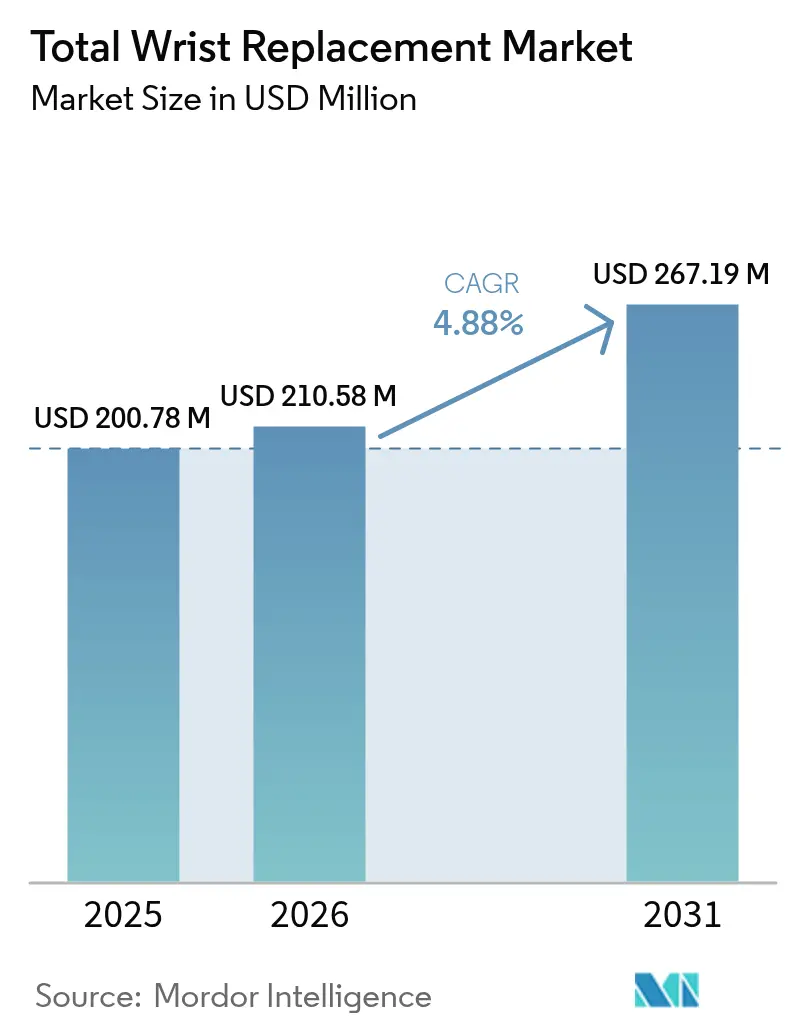
Total Wrist Replacement Market size in 2026 is estimated at USD 210.58 million, growing from 2025 value of USD 200.78 million with 2031 projections showing USD 267.19 million, growing at 4.88% CAGR over 2026-2031.
The transition from experimental procedures to routine motion-preserving solutions reflects fourth-generation implants that achieve more than 90% five-year survivorship, a performance level that encourages wider surgeon adoption while supporting patient demand for functional recovery over fusion solutions. Bundled payment models across major payers have already trimmed Medicare joint-replacement episode costs by 20.8%, creating cost visibility that favors outpatient pathways and drives procedure migration to ambulatory surgical centers. Material science also propels differentiation: cobalt-chromium alloys keep the lead through proven strength, yet ceramic components gain pace as surgeons look to minimize metal-ion release risks. Geographically, North America remains the revenue anchor, but rapid procedure uptake in China, Japan, and India positions Asia for the fastest expansion through 2030.
Key Report Takeaways
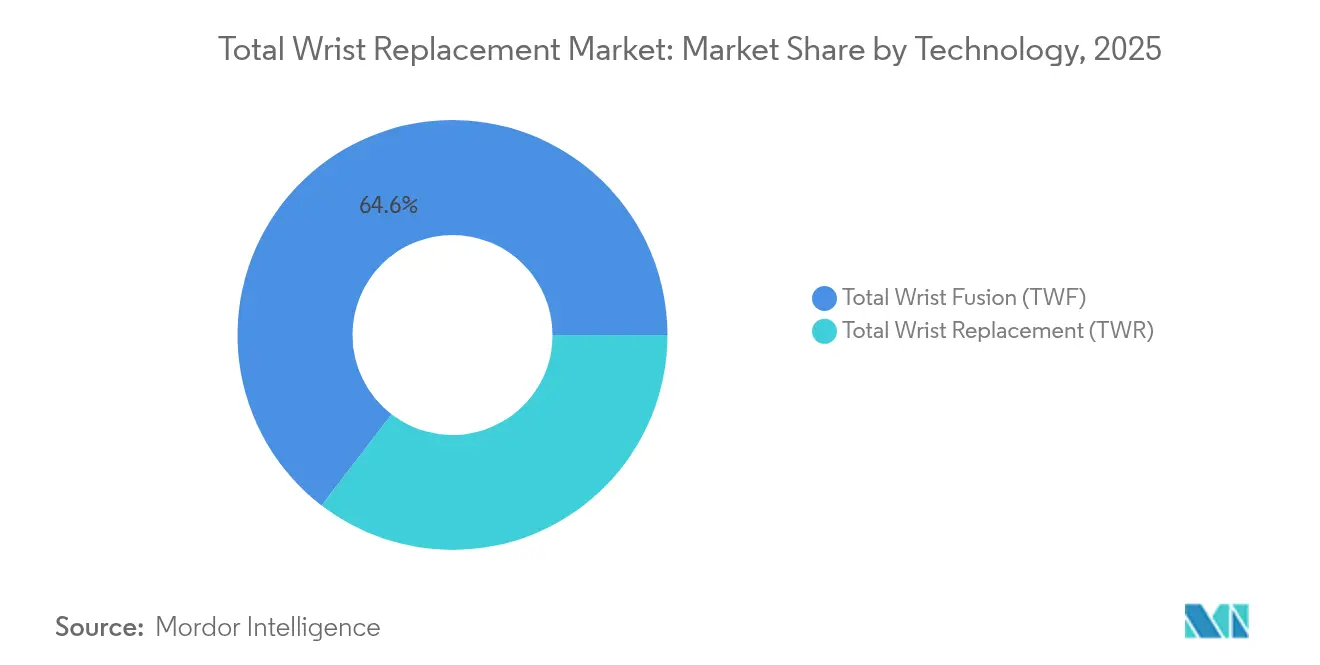
- By technology, total wrist fusion held 64.58% of the total wrist replacement market share in 2025, whereas total wrist replacement is set to climb at a 7.21% CAGR through 2031.
- By material, cobalt-chromium alloys captured 57.88% revenue in 2025, while ceramic-based components will expand at an 8.12% CAGR to 2031.
- By end user, hospitals accounted for 67.95% of the total wrist replacement market size in 2025; ambulatory surgical centers are forecast to grow at 9.68% CAGR up to 2031.
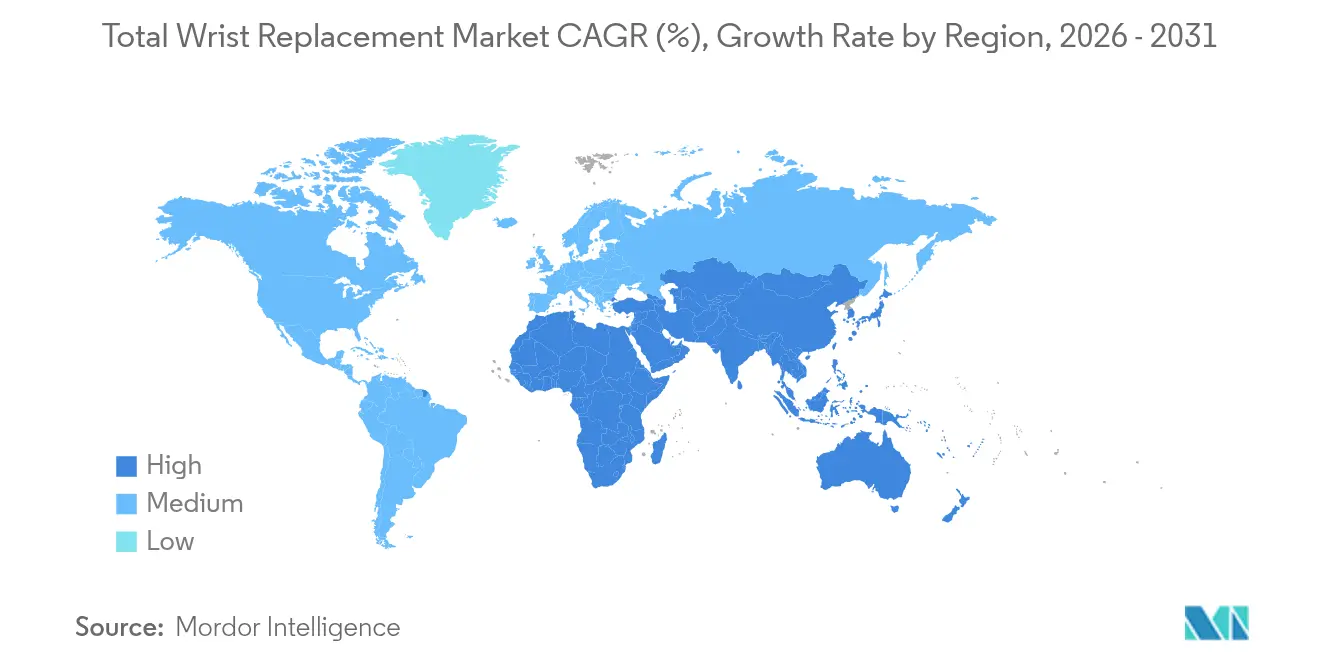
- By geography, North America dominated with 39.35% revenue in 2025, whereas Asia is projected to register the strongest 9.20% CAGR over the forecast period.
Note: Market size and forecast figures in this report are generated using Mordor Intelligence’s proprietary estimation framework, updated with the latest available data and insights as of 2026.
Global Total Wrist Replacement Market Trends and Insights
Drivers Impact Analysis*
| Driver | (~) % Impact on CAGR Forecast | Geographic Relevance | Impact Timeline |
|---|---|---|---|
| Rising prevalence of rheumatoid & osteoarthritis | +1.2% | North America, Europe, high visibility in Asia-Pacific | Long term (≥ 4 years) |
| Advancements in 4th-generation modular implants | +0.9% | North America, Europe | Medium term (2-4 years) |
| Preference for motion-preserving procedures | +0.7% | North America, Europe, spillover into Asia-Pacific | Medium term (2-4 years) |
| Expansion of outpatient/ASC arthroplasty | +0.8% | North America, early adoption in Europe | Short term (≤ 2 years) |
| Emergence of 3-D-printed patient-specific devices | +0.6% | North America, Europe, pilot use in Asia | Long term (≥ 4 years) |
| Bundled-payment models rewarding outcomes | +0.5% | North America, selective uptake in Europe | Medium term (2-4 years) |
| Source: Mordor Intelligence | |||
Rising Prevalence of Rheumatoid & Osteoarthritis
Rheumatoid arthritis affects 2.5 million individuals in the United States, and wrist arthritis is present in 13.6% of the general population, expanding the clinical pool eligible for arthroplasty.[1] Shifting demographics and sedentary work habits bring the earlier onset of pathology that pushes treatment demand among younger, economically active patients. Comparative studies confirm that arthroplasty delivers better functional results than arthrodesis in rheumatoid cohorts despite slightly different complication profiles, strengthening the procedure’s value proposition. Disease-modifying antirheumatic therapies now prolong joint integrity, yet prolonged survival raises the lifetime need for motion-preserving interventions. In practice, the Universal Total Wrist prosthesis improved Disabilities of the Arm, Shoulder and Hand (DASH) scores by 29% while cutting pain scores from 66.3 to 6.7, an outcome that resonates with patient-reported priorities.
Advancements in 4th-Generation Modular Implants
Fourth-generation systems provide four-year survival rates above 90%, dwarfing the 42% mid-term results seen in first-generation devices.[2] Modular trays let surgeons tailor component sizes intraoperatively, minimizing malalignment risk and enabling easier staged revisions. The Freedom prosthesis, for instance, receives patient satisfaction scores of 8.7/10, but radiographic lucency in one-third of implants underlines the need for annual surveillance. Enhanced kinematics via semi-constrained ellipsoidal joints distribute load more evenly across the radiocarpal interface. Titanium-nitride coatings on CoCrMo and Ti6Al4V alloys virtually eliminate detectable ion release, responding to long-term biocompatibility concerns
Preference for Motion-Preserving Procedures
Total wrist arthroplasty restores roughly 50% of physiologic motion, whereas fusion eliminates it entirely, a distinction that matters to patients engaged in fine-motor or athletic activities. Surveys indicate that 91% of revision arthroplasty recipients report no or mild pain, indicating a willingness to accept revision risk to preserve motion. Advancing simulation modules and e-learning streamline surgeon education, shortening the learning curve and widening access. Regionally, the Asia Pacific Wrist Association has become a conduit for cadaveric courses and technique workshops that accelerate adoption of arthroplasty across emerging markets. Shared decision-making platforms further amplify patient demand patterns that favor motion-preserving options.
Expansion of Outpatient/ASC Arthroplasty
Same-day discharge rates for elective total joint arthroplasty are climbing as multimodal pain pathways shrink length of stay and as payer policy changes roll out. Hand procedures performed in ASCs cost 25-30% less than hospital equivalents, yet maintain complication rates below 2.5%, satisfying value-based purchasing criteria. Medicare’s Comprehensive Care for Joint Replacement (CJR) model, covering 324 hospitals through 2024, directly incentivizes episode cost control and spurs site-of-service shifts. With 6,308 ASCs operating in 2023, mainly in dense urban centers, competitive forces now make high-acuity hand cases a strategic growth lane. Robotics and AI analytics further underpin precision and peri-operative monitoring, letting surgeons replicate inpatient standards in lower-cost venues.
Restraints Impact Analysis*
| Restraint | (~) % Impact on CAGR Forecast | Geographic Relevance | Impact Timeline |
|---|---|---|---|
| High Procedure & Device Cost / Limited Reimbursement | -0.8% | Global, particularly acute in emerging markets | Short term (≤ 2 years) |
| High Revision & Complication Rates | -0.6% | Global, with regional variation in surgical expertise | Medium term (2-4 years) |
| Regulatory Caution After Device Withdrawals | -0.4% | North America & Europe, with spillover to global markets | Medium term (2-4 years) |
| Sparse Long-Term Evidence for Novel Biomaterials | -0.3% | Global, with emphasis on developed markets requiring evidence-based adoption | Long term (≥ 4 years) |
| Source: Mordor Intelligence | |||
High Procedure & Device Cost / Limited Reimbursement
U.S. payers have yet to publish national coverage determinations for total wrist arthroplasty, obliging surgeons to secure prior authorization case by case. Several private insurers label the operation experimental outside rheumatoid indications, enforcing restrictive criteria that limit patient throughput. Device prices remain elevated relative to hip and knee counterparts because smaller volumes offer fewer economies of scale, while regulatory hurdles raise commercialization costs. Bundled payment contracts push providers toward lower implant expenditures unless superior outcomes justify premium components. In many emerging markets, state payers favor high-volume orthopedic interventions over niche wrist procedures, delaying reimbursement inclusion.
High Revision & Complication Rates
Five-year revision-free survival sits at 71%, dropping to 60% by 10 years, far below hip and knee benchmarks, deterring surgeons and payers alike.[3] Complication profiles span loosening, dislocation, and infection; revision attempts carry 50% complication rates and 21.6% re-revision risk. Device withdrawals such as the Maestro system by Zimmer Biomet illustrate how liability exposure trims product offerings despite satisfactory mid-term survival data. Complex wrist anatomy, coupled with low procedure volumes, elongates the learning curve, elevating early failure rates in inexperienced hands. FDA recalls of oxidation-prone inserts further raise caution during purchasing decisions.
*Our forecasts treat driver/restraint impacts as directional, not additive. The impact forecasts reflect baseline growth, mix effects, and variable interactions.
Segment Analysis
By Technology: Fusion Dominance Amid Arthroplasty Innovation
Total Wrist Fusion represented 64.58% revenue in 2025, illustrating surgeon trust in reliable pain control and predictable union. In contrast, arthroplasty rises at a 7.21% CAGR as fourth-generation devices prove durable beyond the rheumatoid cohort and into osteoarthritis as well as post-traumatic indications, enlarging the candidate base. The 3D-printed microporous titanium prosthesis (3DMT-Wrist) lowered pain from 66.3 to 6.7 while tripling grip strength, reinforcing momentum behind motion-preserving platforms.
Clinical meta-analyses place arthroplasty complications at 19%, nearly matching the 17% rate seen in fusion among rheumatoid cases, eroding historical perceptions of high failure risk. Seven-year survival of 97% achieved by the Re-motion system underscores progress, though one-third of recipients still face secondary interventions. Artificial-intelligence guidance now offers millimeter-level accuracy on screw trajectory and component alignment, enhancing reproducibility. As evidence solidifies, the total wrist replacement market size for arthroplasty is set to expand faster than any other technology segment through 2031.

By Material: Ceramic Innovation Challenges Metal Dominance
Cobalt-chromium alloys captured 57.88% revenue in 2025 thanks to fatigue strength and decades of clinical familiarity. Ceramics, however, are climbing at an 8.12% CAGR because they curtail wear debris and remove metal-ion exposure, aligning with rising patient safety expectations. Titanium alloys, enhanced with atomic-layer TiO₂ coatings, resist fretting corrosion and extend service life.
Novel high-performance ceramics exhibit lower wear rates and improved osseointegration, supporting wider indication use. Ti-33Mo-0.2C alloys now reach ultimate tensile strength of 960 MPa without compromising biocompatibility. Additive manufacturing lets engineers produce trabecular-like scaffolds that encourage bone in-growth, translating dorsal plate technology from trauma to arthroplasty shells. Against this backdrop, the total wrist replacement market size for ceramics is positioned to carve out substantial incremental revenue despite today’s metal dominance.
By End User: Hospital Expertise Meets ASC Efficiency
Hospitals controlled 67.95% of 2025 revenue, reflecting the multi-disciplinary resources needed for complex wrist implantation and potential revision. Yet ambulatory surgical centers march forward at 9.68% CAGR as enhanced-recovery protocols improve pain control and anesthesia techniques, allowing safe same-day discharge for carefully selected cases. Hand surgery in ASCs costs 25-30% less than hospital surgery while posting sub-3% complication rates, answering payer imperatives for value.
Specialty orthopedic clinics occupy an agile middle ground, offering concentrated expertise without tertiary-hospital overhead. CMS value-based models drive volume from inpatient DRGs toward such outpatient settings, while robotics and imaging platforms deliver OR precision in compact footprints. Consequently, the total wrist replacement market share of hospitals is predicted to slip gradually as ASCs capture complex but protocolized cases over the forecast window.

Geography Analysis
North America maintains leadership with 39.35% revenue in 2025, supported by Medicare initiatives such as CJR that reduce average episode costs and create stable reimbursement for complex wrist implants. Consolidated centers of excellence draw volume nationally, while FDA 510(k) clarity lowers the hurdle for incremental implant upgrades. ASC expansion, driven by payer pressure, accelerates site-of-service conversions without diminishing patient safety metrics.
Asia-Pacific records the fastest 9.20% CAGR through 2031. China’s high procedure volume, together with local manufacturing capability, now positions domestic implants ahead of imported counterparts, dramatically tightening price-performance ratios. Knowledge-sharing through the Asia Pacific Wrist Association plus multinational fellowship exchanges quickly diffuse surgical best practices. Japan and India further elevate regional numbers thanks to national insurance expansion and private-sector hospital networks.
Europe posts moderate, steady growth. The market benefits from methodical adoption following rigorous registry feedback loops that benchmark survivorship and complication metrics. The completion of Enovis’s EUR 800 million purchase of LimaCorporate in 2024 brought additional 3D-printed expertise into continental portfolios, supporting take-up of trabecular titanium designs. Cross-border research consortia, combined with pan-EU medical-device directives, provide an integrated pathway for advanced implants while preserving patient safety obligations.
Regulatory Landscape
In the United States, total wrist arthroplasty systems are generally regulated by the FDA as Class II orthopedic prosthetic devices (21 CFR 888.3800, commonly under Product Code JWJ). They are typically brought to market through the 510(k) pathway, which supports incremental design iterations against predicate devices. Recent clearances show continued product-cycle activity, including an FDA 510(k) clearance for Skeletal Dynamics (K243381, November 2024) and an FDA 510(k) clearance for Ascension Orthopedics for the Freedom Wrist Arthroplasty System (K233674, May 2024).
In Europe, total joint replacement implants fall under the EU Medical Device Regulation (MDR 2017/745). They are generally treated as higher-risk devices (Class III under Rule 8), which increases the burden for clinical evidence, notified body review, and post-market vigilance compared with the US pathway. Harmonized technical expectations also shape design and verification. Standards such as ASTM F1357-23 set requirements for articulating total wrist implants, including material and performance testing for wear and range of motion, which has raised the time and cost needed to maintain legacy lines and has reinforced a portfolio tilt toward better-documented, actively supported systems.
Competitive Landscape
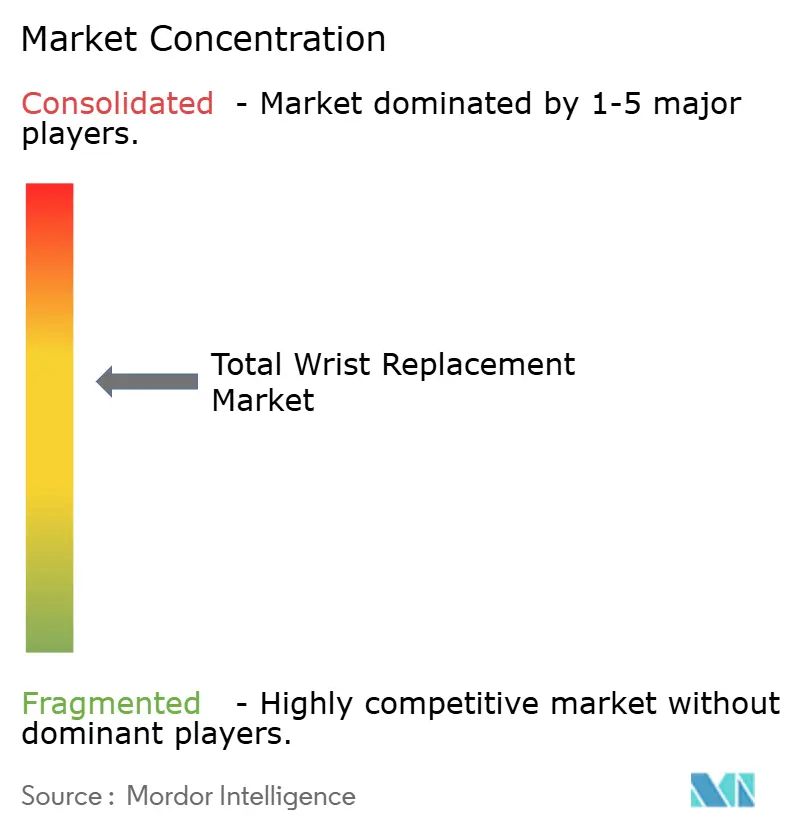
Total wrist replacement competition remains moderately concentrated. Orthopedic multinationals leverage design, marketing, and distribution synergies from hip and knee lines to defend share in this smaller segment. Zimmer Biomet’s exit of the Maestro system despite 90–100% five-year survival rates highlights how liability and recall exposure temper new-product risk appetite. Market leaders increasingly differentiate via survivorship publications, surgeon training academies, and digital navigation tools that uplift technical accuracy.
Strategic consolidation is gathering pace. Enovis absorbed LimaCorporate for EUR 800 million in 2024 to create a USD 1 billion reconstruction unit with advanced 3D-printed trabecular titanium. AI-driven guidance systems embedded in leading platforms offer intra-operative feedback, reducing component malposition and potentially lowering early failure rate. Meanwhile, regional manufacturers in China and India secure local tenders by pairing lower cost with government-mandated localization targets.
White-space opportunities lie in patient-specific instrumentation, robotic enablers for limited surgical fields, and ultra-wear-resistant ceramics. Companies that prove durability and provide robust revision pathways while educating surgeons will extend their lead as procedure volumes climb in outpatient settings globally. The total wrist replacement market therefore rewards scale, clinical data transparency, and capability to engage expanding ASC networks.
Total Wrist Replacement Industry Leaders
-
Zimmer Biomet
-
Johnson and Johnson
-
Stryker Corporation
-
Smith & Nephew plc
-
Enovis
- *Disclaimer: Major Players sorted in no particular order
Market Opportunities and Future Outlook
White space remains in systems and workflows that address the market's core adoption barriers, particularly revision risk and payer scrutiny, while preserving wrist motion. Product development and clinical research in 2025 to 2026 have focused on improving kinematics and functional outcomes across rheumatoid, osteoarthritis, and post-traumatic indications. That emphasis creates openings for modular designs, bone-sparing techniques, and instruments that help surgeons reproduce alignment in a low-volume procedure. The continued cadence of US 510(k) activity for wrist arthroplasty systems and modifications, including Skeletal Dynamics (K243381, November 2024) and Ascension Orthopedics (Freedom Wrist Arthroplasty System, K233674, May 2024), points to differentiated iterations aimed at reproducibility, survivorship documentation, and easier revision pathways.
Site-of-care migration is another commercialization lever. Ambulatory surgical centers that deliver lower-cost hand procedures create a channel for companies to pair implants with standardized perioperative protocols, streamlined sets, and training to reduce variability. Materials and bearing choices also offer opportunity, as established metal and UHMWPE constructs dominate current designs while demand grows for options that address metal-ion sensitivity concerns and wear performance. Manufacturers can only capture this demand if they back claims with verification testing and clinical follow-up aligned with MDR requirements and evidence-driven procurement.
Recent Industry Developments
- July 2026: Enovis announced the launch of its CT-RevitL laser therapy system under Companion Animal Health. While outside human wrist arthroplasty, the release reflects ongoing device-platform investment and commercialization execution that can influence how Enovis funds and prioritizes niche orthopedic portfolios and associated sales infrastructure.
- May 2025: Zimmer Biomet announced its agreement to acquire Paragon 28, expanding its presence in foot and ankle orthopedics. The deal strengthens extremities breadth and surgeon-channel access, which can indirectly support cross-selling and distribution leverage for smaller joint reconstruction categories.
- January 2024: Enovis completed the acquisition of LimaCorporate for approximately EUR 800 million, adding 3D-printed Trabecular Titanium manufacturing capabilities and a broader reconstruction portfolio. The combination increased access to additive manufacturing know-how relevant to next-generation, porous, bone-ingrowth implant designs used across joint replacement applications.
Research Methodology Framework and Report Scope
Market Definition and Coverage
This market is defined as the revenue generated from total wrist replacement systems used to surgically replace a damaged wrist joint and restore motion, across hospitals and ambulatory surgical centers worldwide. Values reflect device and procedure-linked implant sales captured at the manufacturer and authorized distributor level.
Scope exclusions: We exclude partial wrist procedures, wrist fusion systems, external fixation hardware, and non-surgical wrist therapies from this sizing.
Segmentation Overview
- By Technology
- Total Wrist Replacement (TWR)
- Total Wrist Fusion (TWF)
- By Material
- Cobalt–Chromium Alloys
- Titanium Alloys
- Stainless Steel
- Ceramic-based Components
- Polymer Components
- By End User
- Hospitals
- Ambulatory Surgical Centers
- Specialty Orthopedic Clinics
- By Geography
- North America
- United States
- Canada
- Mexico
- Europe
- Germany
- United Kingdom
- France
- Italy
- Spain
- Rest of Europe
- Asia-Pacific
- China
- Japan
- India
- Australia
- South Korea
- Rest of Asia-Pacific
- Middle East & Africa
- GCC
- South Africa
- Rest of Middle East & Africa
- South America
- Brazil
- Argentina
- Rest of South America
- North America
Data Sources, Market Sizing, and Validation
Desk Research
Desk research was used to build the clinical and volume foundation before numbers were modeled. We typically reviewed public sources such as the US CDC and National Center for Health Statistics for arthritis and injury indicators, NIH and PubMed-indexed journals for procedure evidence and implant adoption context, and FDA databases for device clearances and product classifications.
To cross-check the commercial side, we also used company annual reports and investor presentations, reputable medical society pages, and trade and customs statistics where available to sense-check shipment flows for orthopedic devices. Where helpful, a paid subscription for company financials and news was used to track business changes, and patent databases were referenced to understand innovation activity. The sources listed here are illustrative only, and many other public references were used for collection, validation, and clarification.
Primary Interviews and Surveys
Primary work focused on validating what is actually used in operating rooms and how pricing moves by region and care setting. We spoke with a mix of orthopedic and hand surgeons, hospital procurement and materials managers, distributor-side leaders, and product or sales managers to confirm typical implant configurations, replacement rates, and the split between hospital and ambulatory volumes across major regions.
Distribution of primary research fieldwork respondents
| Company type | Respondent position | Region |
|---|---|---|
| Top tier: 33% | CXOs: 13% | APAC: 45% |
| Mid tier: 49% | Functional/Unit leaders: 43% | EMEA: 35% |
| Smaller Players: 18% | Managers: 44% | Americas: 20% |
Market-Sizing & Forecasting
The core model is built using a top-down demand pool that is reconstructed from wrist arthritis and trauma prevalence, the share of patients reaching surgery, and the utilization rate of total wrist replacement within eligible cases. After those steps are set, pricing is applied using an average selling price range that reflects implant system mix (implant components and related disposables), care setting differences, and regional reimbursement realities.
Once the top line is formed, it is corroborated with selective bottom-up approximations so totals stay realistic. Those checks typically include sampled ASP times estimated procedure volumes in key countries, channel conversations on annual unit movement, and consistency checks against manufacturer revenue exposure to upper extremity implants where disclosure allows. For forecasting, we use scenario analysis supported by expert inputs, where procedure recovery patterns, surgeon adoption behavior, and price pressure are flexed to create a reasonable base case path. When local volume signals are thin, gaps are handled by using regional analogs with similar healthcare access and then rechecked during interviews.
Data Validation & Update Cycle
Outputs are checked in layers so obvious mismatches are caught early. We compare modeled procedure volumes and implied device spend against independent signals such as population age mix, arthritis burden trends, and known differences in surgical capacity by region, and then we review any sharp jumps that do not align with clinical adoption reality.
Before sign-off, the model is reviewed by another analyst, and outliers trigger a revisit of the underlying assumptions and often a re-contact with primary respondents for clarification. Reports are refreshed annually, and interim updates are made when material events occur such as regulatory changes, notable product withdrawals, or reimbursement shifts. Right before delivery, a final pass is completed so the published numbers reflect the latest available inputs.
Mordor Intelligence's Total Wrist Replacement Market Size Compared Against Other Published Estimates
Published market sizes for total wrist replacement can look different even when everyone is talking about the same procedure category. The spread usually comes from what is counted as a wrist replacement device sale, which care settings are covered, and how the base year and exchange rates are applied.
A key gap driver is whether wrist fusion systems and adjacent wrist reconstruction hardware are included, and in our case Mordor Intelligence counts only total wrist replacement implants and related disposables while leaving out fusion and partial-wrist solutions, which can materially change the reported 2024 to 2026 starting point depending on how other sources bundle "wrist" procedures.
Benchmark comparison
| Source | Market Size | Gaps in Research Methodology |
|---|---|---|
| Mordor Intelligence | USD 210.58 M (2026) | |
| Specialty Research House A | USD 199.04 M (2024) | Uses a different base year and appears to group total wrist fusion under the same technology umbrella, which increases scope and makes its growth rate and endpoints less comparable to an implants-only definition. |
| Industry Publisher B | USD 186.40 M (2023) | Anchors sizing to an earlier base year and may reflect a broader procedure mix with simplified ASP progression, which can understate near-term price and mix changes seen in recent hospital procurement cycles. |
Looking across the table, the biggest differences come from scope and starting year, and then from how pricing is moved forward over time. By keeping the counted items tied to total wrist replacement implants and checking volumes and prices with real-world users and channel viewpoints, the estimate stays traceable to clear steps that can be repeated when inputs change.
Key Questions Answered in the Report
What is the current size of the total wrist replacement market?
The total wrist replacement market is valued at USD 210.58 million in 2026 and is forecast to reach USD 267.19 million by 2031.
Which technology segment is growing fastest?
Total wrist replacement procedures are advancing at a 7.21% CAGR, outpacing fusion despite the latter’s larger 2025 base.
Why are ceramic components gaining share?
Ceramics lower wear debris and eliminate metal-ion exposure, driving an 8.12% CAGR growth within the material segment.
Which region leads the market, and which grows fastest?
North America leads with 39.35% revenue, while Asia-Pacific is advancing at 9.20% CAGR through 2031.
How does outpatient migration influence the market?
Ambulatory surgical centers show 25-30% lower costs and <3% complication rates, supporting a 9.68% CAGR for procedures performed outside hospitals.
What are the main barriers to wider adoption?
High device costs, reimbursement hurdles, and a 71% five-year revision-free survival rate compared with hip and knee replacements remain primary challenges.