
Surgical Sealant And Adhesives Market Size and Share
Market Overview
| Study Period | 2022 - 2031 |
|---|---|
| Market Size (2026) | USD 2.62 Billion |
| Market Size (2031) | USD 3.51 Billion |
| Growth Rate (2026 - 2031) | 6.05 % |
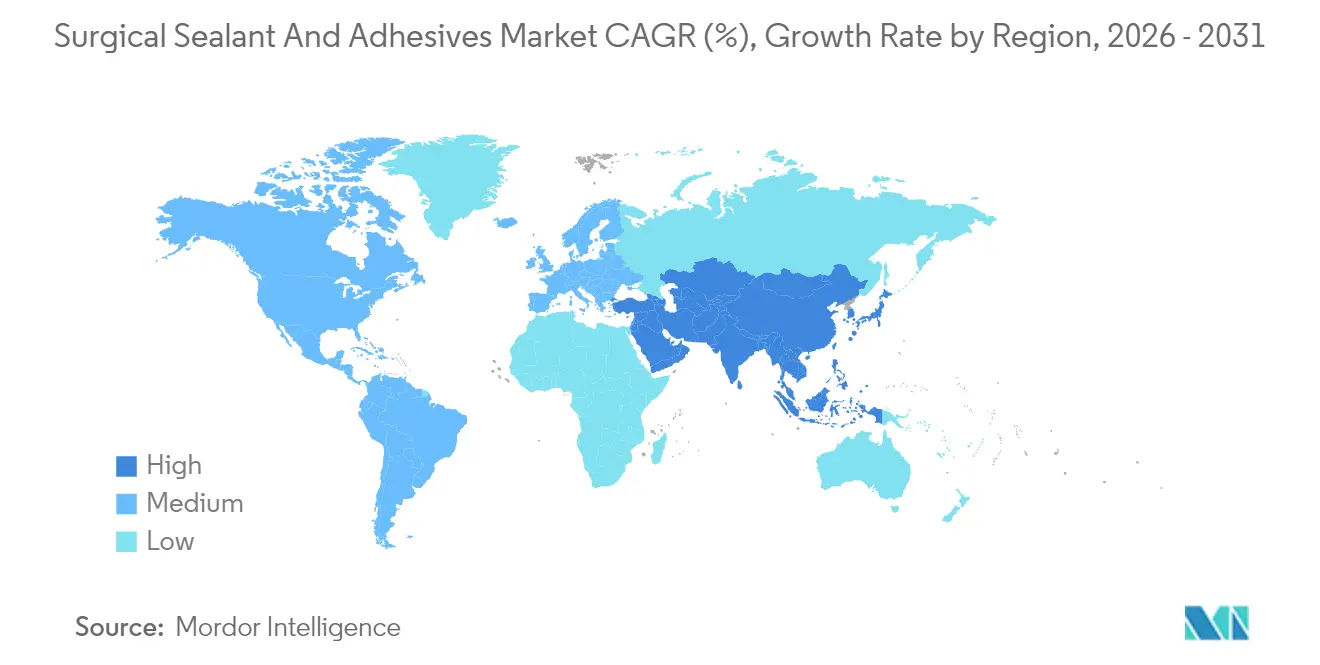
| Fastest Growing Market | Asia Pacific |
| Largest Market | North America |
| Market Concentration | Medium |
Major Players *Disclaimer: Major Players sorted in no particular order Image © Mordor Intelligence. Reuse requires attribution under CC BY 4.0. | |
Surgical Sealant And Adhesives Market Analysis by Mordor Intelligence
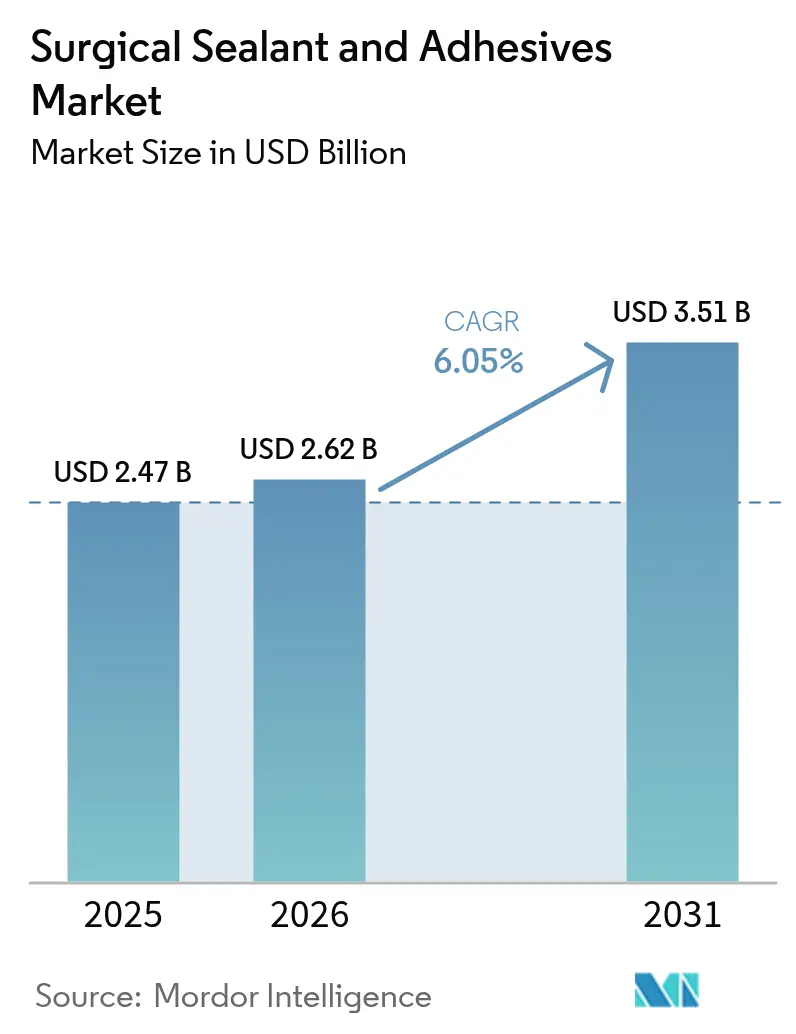
surgical sealants and adhesives market size in 2026 is estimated at USD 2.62 billion, growing from 2025 value of USD 2.47 billion with 2031 projections showing USD 3.51 billion, growing at 6.05% CAGR over 2026-2031. Uptake is propelled by the steady return of elective procedures, the migration of high-volume cases to ambulatory surgical centers, and product innovations that simplify minimally invasive workflows. Natural and biological formulations continue to dominate hospital formularies, yet newer synthetic chemistries are gaining traction as cold-chain constraints and regulatory demands reshape purchasing criteria. Cardiovascular surgery remains the most significant clinical niche, while orthopedic indications post the fastest gains as same-day joint replacements expand. Regionally, North America holds the revenue lead, but Asia-Pacific is advancing more quickly thanks to significant procedure backlogs and expanding reimbursement access.
Key Report Takeaways
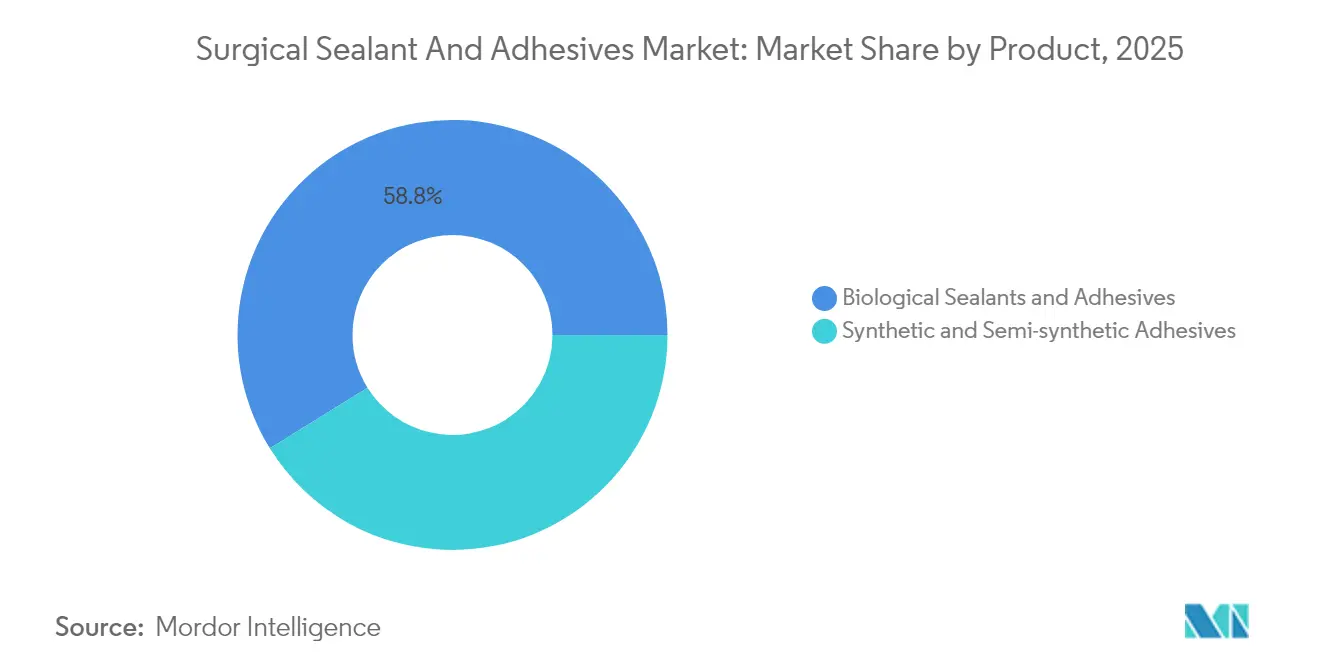
- By product category, natural and biological sealants accounted for 58.84% of the surgical sealants and adhesives market share in 2025.
- By product category, synthetic and semi-synthetic adhesives are forecast to grow at a 7.18% CAGR from 2026-2031.
- By application, cardiovascular surgery led with 28.45% share of the surgical sealants and adhesives market size in 2025.
- By application, orthopedic surgery is projected to advance at a 7.12% CAGR through 2031.
- By geography, North America commanded 38.55% revenue in 2025, whereas Asia-Pacific is set to expand at a 7.26% CAGR over the same horizon.
Note: Market size and forecast figures in this report are generated using Mordor Intelligence’s proprietary estimation framework, updated with the latest available data and insights as of 2026.
Market Trends and Insights
Drivers Impact Analysis of Surgical Sealant And Adhesives Market*
| Driver | (%) Impact on CAGR Forecast | Geographic Relevance | Impact Timeline |
|---|---|---|---|
| Increasing surgical procedures | +1.2% | Global; strongest in APAC & MEA | Medium term (2-4 years) |
| Advances in minimally invasive surgery | +1.5% | North America & EU lead, APAC accelerating | Long term (≥ 4 years) |
| Aging population and chronic-disease burden | +1.8% | Global, concentrated in developed markets | Long term (≥ 4 years) |
| Shift to biocompatible / bio-resorbable materials | +1.0% | EU driven, expanding to US & APAC | Medium term (2-4 years) |
| Growth of ambulatory surgical centers | +0.9% | North America primary, spreading to Europe | Short term (≤ 2 years) |
| Robotic-surgery platform integration | +0.4% | North America & select EU centers | Long term (≥ 4 years) |
| Source: Mordor Intelligence | |||
Increasing Surgical Procedures
Ambulatory surgical centers (ASCs) already exceed pre-pandemic case volumes, and analysts expect 30% of large-joint reconstructions to transition to ASC settings by 2029. Higher throughput lifts unit demand for single-use sealants that shorten hemostasis time and cut readmission risk. Hospitals navigating value-based reimbursement increasingly specify products with demonstrated reductions in transfusion rates and post-operative drainage. Compliance with ISO 13485 and rapid 510(k) clearances further streamlines adoption. As procedure counts climb, the surgical sealants and adhesives market benefits from durable, volume-driven tailwinds.
Advances in Minimally Invasive Surgery
Robotic platforms create spatial constraints that legacy applicators cannot meet. Device makers now offer narrow, multi-directional nozzles and spray tips that interface with common end-effectors on da Vinci systems. Early-2025 sales spikes for LIQUIFIX internal adhesive highlight how robotics-ready designs accelerate contract wins with Group Purchasing Organizations. Flexible hydrogel patches and rapid-polymerizing cyanoacrylates allow surgeons to seal anastomoses through 8-mm ports, limiting leaks to 0.9% in recent colorectal series. The resulting efficiency gains keep the surgical sealants and adhesives market on an upward trajectory.
Aging Population and Chronic Disease Burden
Rising cardiovascular and metabolic comorbidities in older adults increase bleeding risk and slow tissue repair[1]. Topical hemostats now feature enhanced thrombin loads and resorbable scaffolds to control diffuse oozing in patients on antiplatelet therapy. Hospitals note that preventing a single post-operative infection can avoid USD 20,000-27,600 in added stay costs. These economics push purchasing committees toward advanced sealants that turn complicated patients into predictable same-day discharges. Such dynamics reinforce steady expansion for the surgical sealants and adhesives market.
Shift to Biocompatible and Bio-resorbable Materials
Europe’s Medical Device Regulation has catalyzed investment in fully resorbable chemistries that degrade within 12 months and eliminate the need for removal surgery. Integra’s DuraSorb scaffold and silk-elastin-based sealants from Japan recorded triple-digit growth in 2025. Research groups report slug-mucus-inspired formulations and recyclable poly(α-lipoic acid) films that meet performance benchmarks while addressing sustainability targets. As more payers tie approval to long-term histocompatibility data, adoption of next-gen materials should keep the surgical sealants and adhesives market growth curve intact.
Restraints Impact Analysis of Surgical Sealant And Adhesives Market*
| Restraint | (%) Impact on CAGR Forecast | Geographic Relevance | Impact Timeline |
|---|---|---|---|
| Reimbursement gaps in key markets | -0.8% | US Medicare and emerging markets | Medium term (2-4 years) |
| Availability of alternative closure methods | -0.5% | Global; dependent on surgeon preference | Short term (≤ 2 years) |
| Cold-chain fragility for plasma-derived fibrin sealants | -0.4% | Global | Medium term (2-4 years) |
| Regulatory ambiguity for next-gen bio-resorbable adhesives | -0.2% | Global | Medium term (2-4 years) |
| Source: Mordor Intelligence | |||
Reimbursement Gaps Constrain Adoption
Many U.S. procedures bundle tissue adhesive costs into global surgical payments, limiting separate billing under G0168 and depressing uptake in price-sensitive hospitals. International health technology agencies request randomized data proving cost savings before funding premium devices. Nonetheless, a multicountry analysis showed DuraSeal reduced cerebrospinal fluid leak management expenses versus fibrin glue, providing new leverage for formulary bids. If value-based contracts expand, the surgical sealants and adhesives market could recapture some currently forgone volumes.
Availability of Alternative Closure Techniques
Sutures, staples, and electrocautery remain deeply embedded in surgeon training curricula. For many straightforward wounds, low-priced choices suffice, compelling adhesives to deliver clear clinical advantages. Comparative trials demonstrate benefit when managing diffuse bleeding or fragile tissues, yet day-to-day preference still skews toward familiar tools. Broad in-service education and data on reduced operative time will be crucial for the surgical sealants and adhesives market to displace incumbent methods.
*Our forecasts treat driver/restraint impacts as directional, not additive. The impact forecasts reflect baseline growth, mix effects, and variable interactions.
Surgical Sealant And Adhesives Market Segment Analysis
By Product:
Biologics lead while synthetics accelerate growthNatural and biological sealants retained a 58.84% share of the surgical sealants and adhesives market in 2025 . Fibrin matrices secure neurosurgical dura, collagen plugs patch vascular grafts, and gelatin-based powders control liver oozing. Long safety records and native clotting pathways sustain hospital loyalty. Supply disruptions in plasma sourcing, however, expose vulnerabilities. In parallel, synthetic and semi-synthetic lines are scaling quickly, posting a 7.18% CAGR outlook, as cyanoacrylate chemistries deliver room-temperature stability and antimicrobial barriers. PEG hydrogels with controlled degradation rates appeal to pediatric cardiothoracic teams seeking absorbable seals. Competitive bidding within Integrated Delivery Networks keeps pressure on price tiers, yet innovation in applicators and dual-chamber syringes supports steady margin retention across the broader surgical sealants and adhesives market.
Newer flexible films help laparoscopic teams secure stapled anastomoses without bulky patches. Spray atomizers cut waste by 20% versus traditional dual-syringe kits, an operational saving that resonates with procurement departments. Supplier diversification continued in 2025 as regional firms launched chitosan-based prototypes aimed at trauma centers in emerging markets. Although biologics will likely remain the revenue anchor, synthetics’ scalability and storage benefits should slowly rebalance mix in the surgical sealants and adhesives market.

By Application:
Cardiovascular dominance with orthopedic momentumCardiovascular surgery generated 28.45% of global revenue in 2025 after surgeons integrated fibrin and gelatin sealants into standard bypass and aortic repair protocols. High anticoagulant use drives dependence on topical agents that secure hemostasis within minutes. Many centers mandate sealant kits on heart-lung machine carts to handle sudden suture-line leaks, locking in predictable consumption. Orthopedic surgery displays the fastest growth at a 7.12% CAGR, fueled by the shift of joint arthroplasty to ASCs and swelling sports-medicine caseloads. Bone void fillers impregnated with thrombin limit drain output, supporting same-day discharge and lowering opioid needs. As demographic shifts bring more active seniors to operating rooms, both segments together underpin durable expansion for the surgical sealants and adhesives market.
Plastic and reconstructive surgeons employ sprayable adhesives to shorten facelift closure times, while neurosurgeons rely on dural patches like DuraSeal to cap cerebrospinal fluid leaks. Dental implantologists increasingly choose flowable cyanoacrylate gels to seal soft-tissue flaps, avoiding membrane suturing. Each niche layers incremental volume onto the broader surgical sealants and adhesives market.
By Indication:
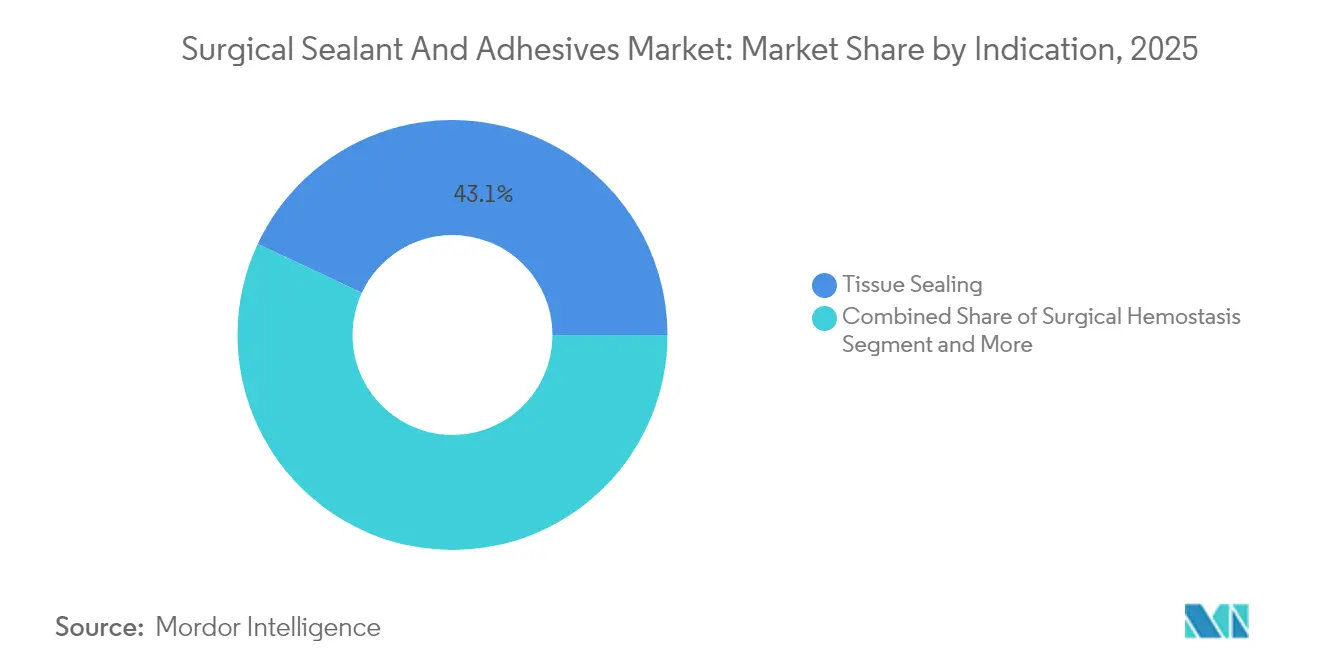
Tissue sealing leads with regeneration acceleratingTissue sealing held 43.05% of the market in 2025, serving as the workhorse across general, thoracic, and neurosurgical suites. Products ensure watertight closures that protect anastomoses and prevent seroma formation. Top-selling dural sealants lowered postoperative leak rates and trimmed ICU stays in posterior fossa cases. Hemostasis follows closely as surgeons deploy flowable matrices on spleen or liver parenchyma where sutures fail to gain purchase.
Regenerative indications are climbing at a 7.68% CAGR through 2031 as polymer science blends scaffolding with bioactive cues. DuraSorb’s fully resorbable mesh supports soft-tissue repair during staged breast reconstruction, yielding strong interest among plastic surgeons. Researchers test hydrogel “cornea-in-a-syringe” constructs that conform to ocular curvature while releasing anti-inflammatory drugs. Sustained clinical validation will decide how fast such technologies broaden addressable revenue inside the surgical sealants and adhesives market.
Geography Analysis
North America Surgical Sealant and Adhesives Market
North America generated 38.55% of global sales in 2025, led by the United States, where ASC penetration topped 6,100 facilities and payers reimburse sealants that speed discharge. Route-to-market optimization and GPO contracts lifted LiquiBand topical adhesive revenue by more than 50% year-on-year. Canada’s health-technology assessment framework now endorses certain PEG hydrogels for cardiovascular repairs, while Mexico accelerates regulatory convergence to open import pathways. This demand sustains a steady cash engine for multinationals and props up overall valuations for the surgical sealants and adhesives market.
Europe Surgical Sealant and Adhesives Market
Europe mirrors mature growth, governed by the EU MDR regime that mandates clinical and post-market vigilance. Germany remains the continent’s largest adopter, supported by the Paul-Ehrlich-Institut’s long-standing familiarity with fibrin products. Favorable cost-utility analyses in France and Italy confirm that preventing cerebrospinal fluid leaks with dural sealants yields net savings even under Diagnosis-Related Group payments. Across the bloc, in-theater training programs now accompany most tenders, reducing skill barriers and protecting share for incumbents inside the surgical sealants and adhesives market.
APAC Surgical Sealant and Adhesives Market
Asia-Pacific posts the swiftest trajectory with a 7.26% CAGR to 2031 as Japan pioneers silk-elastin hemostats and China expands tertiary centers equipped for complex heart surgery. India’s procedure backlog encourages low-temperature cyanoacrylate adoption that bypasses cold-chain hurdles. Australia’s Therapeutic Goods Administration grants priority review to biodegradable PEG-based ocular sealants, sealing a route for rapid roll-out. While reimbursement heterogeneity persists, rising disposable incomes and government insurance schemes underpin a long runway for the surgical sealants and adhesives market.
Regulatory Landscape
Surgical sealants and adhesives use multiple regulatory pathways depending on intended use and anatomy. In the United States, surgical tissue adhesives are regulated under FDA device rules, with topical skin-approximation adhesives falling under Class II (special controls), while internal and non-topical sealing indications can trigger Class III requirements and PMA expectations for safety and effectiveness evidence. ISO 10993 biocompatibility testing remains a core global baseline for submissions and influences material-selection decisions for newer bio-resorbable and synthetic chemistries.
In Europe, the EU Medical Device Regulation (MDR, Regulation 2017/745) continues to raise clinical-evidence and post-market vigilance requirements. Notified-body capacity constraints also shape timelines for legacy-to-MDR transitions. As of May 2026, the EU extended the transitional period for certain legacy Class III devices to December 31, 2026, which allows manufacturers to keep products on the market while completing MDR conformity steps. Taken together, these frameworks increase documentation rigor for technical files, material characterization, and clinical validation against established standards of care, including fibrin-based comparators in hemostasis and sealing.
Competitive Landscape
The field shows moderate concentration, with global leaders leveraging brand depth and manufacturing scale while smaller biotechs carve out niches. Ethicon, Baxter, and Medtronic safeguard formulary positions through bundled instrument deals and broad clinical-education programs. Ethicon’s VISTASEAL fibrin glue pairs with ENSEAL energy devices, offering integrated closure options across cardiac and oncologic surgeries[4]. Baxter capitalizes on plasma-derived supply chains to meet steady demand for TISSEEL and FLOSEAL.
Advanced Medical Solutions accelerated inorganic growth by acquiring Peters Surgical for EUR 132.5 million (USD 155.16 million), securing IFABOND internal cyanoacrylates and expanding its direct sales force in ten European countries. Integra LifeSciences confronted FDA quality-system findings in December 2024, temporarily pausing shipments while committing capital to a Braintree manufacturing hub slated for H1 2026. Such remediation underscores how compliance shapes both reputations and deal valuations within the surgical sealants and adhesives market.
Innovators pursue robotic-compatible applicators, spray atomizers that halve product waste, and bio-engineered polymers that break down into natural metabolites. Regional manufacturers in South Korea and Turkey now export chitosan sealants targeting trauma indications, elevating price competition in middle-income markets. Despite intensifying rivalry, IP portfolios and surgeon loyalty help incumbents maintain defensible share in the surgical sealants and adhesives market.
Surgical Sealant And Adhesives Industry Leaders
-
Becton, Dickinson and Company
-
Baxter International Inc
-
Johnson & Johnson
-
Medtronic PLC
-
B.Braun SE
- *Disclaimer: Major Players sorted in no particular order

Surgical Sealant And Adhesives Market Companies Covered in this Report
- Baxter
- Johnson & Johnson
- B. Braun
- Medtronic
- CryoLife
- CSL Behring
- Cardinal Health
- Beckton Dickinson
- Advanced Medical Solutions Group
- Integra LifeSciences
- Smiths Group
- Sanofi
- Stryker
- Cohera Medical
- Ocular Therapeutix Inc.
- Vivostat
- Tricol Biomedical
- Sealantis Ltd.
- Tissuemed Ltd.
Market Opportunities and Future Outlook
The most actionable opportunity sits at the intersection of minimally invasive workflows and internal sutureless repair, where surgeons need high-adhesion performance in wet, dynamic environments and delivery through small ports and robotic-compatible applicators. 2026 clinical and translational work supports product roadmaps moving away from cold-chain-dependent, plasma-derived materials toward shelf-stable synthetic or bioinspired formulations. In hepatectomy, chitosan-catechol/gelatin formulations (InnoSEAL Plus DL, N=90) demonstrated non-inferiority versus TachoSil, and ETHIZIA hemostatic patch results (N=132) showed stronger early hemostasis performance at 3 minutes versus TachoSil in open liver surgery. Comparator-driven validation like this also helps in hospital value-committee discussions where operating room time, leakage control, and readmission risk are central decision factors.
A second opportunity area is expanding internal sealing indications that require robust biocompatibility packages and predictable degradation profiles, which aligns with payer and regulator emphasis on long-term histocompatibility. 2026 research using FDA-approved components for injectable hydrogel constructs for sutureless gastric perforation repair highlights a direction toward clinically translatable formulations, which can reduce regulatory friction compared with entirely novel monomer systems. In parallel, ambulatory surgical centers create practical demand for room-temperature, ready-to-use products, supporting formulations and packaging that eliminate refrigeration constraints and reduce waste while maintaining performance across cardiovascular, orthopedic, and general surgery settings.
Recent Industry Developments in Surgical Sealant And Adhesives Market
- June 2026: Medtronic announced submission of a 510(k) filing to the US FDA for the LigaSure RAS Maryland instrument for the Hugo robotic-assisted surgery system. The move supports broader integration of vessel sealing into robotic workflows, complementing the shift toward minimally invasive procedures that demand compatible energy and adjunct closure solutions.
- December 2025: Johnson & Johnson MedTech received US FDA approval for an expanded indication of its TruFill n-Butyl cyanoacrylate (n-BCA) liquid embolic system for embolization of the middle meningeal artery to treat subacute and chronic subdural hematoma. The label expansion underscores continued clinical and regulatory momentum for cyanoacrylate-based materials across specialized internal indications where rapid occlusion and handling characteristics matter.
- October 2024: Grifols received US FDA approval for its fibrin sealant solution (VISTASEAL in the United States) for controlling surgical bleeding in pediatric patients. Pediatric labeling broadens addressable use in hospitals and reinforces the role of established biologic sealants where clinical familiarity and safety profiles drive formulary decisions.
Surgical Sealant And Adhesives Market Report Scope and Research Methodology
Market Definition and Coverage
This market covers the revenues earned from surgical sealants and surgical adhesives that are used inside the operating room to seal tissue, prevent fluid or air leakage, and support wound closure across surgical procedures.
Scope exclusions: This sizing excludes non-surgical consumer glues, routine wound dressings, and general hemostats that are not positioned or used as surgical sealants or surgical adhesives.
Segments Covered in This Report
- By Products
- Natural / Biological Sealants & Adhesives
- Fibrin Sealant
- Gelatin-based Adhesive
- Collagen-based Adhesive
- Synthetic & Semi-synthetic Adhesives
- Cyanoacrylates
- Polymeric Hydrogels
- PEG Polymer
- Other Synthetic & Semi-synthetic
- Natural / Biological Sealants & Adhesives
- By Application
- General Surgery
- Dental Surgery
- Cardiovascular Surgery
- Cosmetic Surgery
- Neurosurgery
- Orthopaedic Surgery
- Other Applications
- By Indication
- Tissue Sealing
- Surgical Hemostasis
- Tissue Engineering & Regeneration
- By Geography
- North America
- United States
- Canada
- Mexico
- Europe
- Germany
- United Kingdom
- France
- Italy
- Spain
- Rest of Europe
- Asia-Pacific
- China
- Japan
- India
- Australia
- South Korea
- Rest of Asia-Pacific
- Middle East and Africa
- GCC
- South Africa
- Rest of Middle East and Africa
- South America
- Brazil
- Argentina
- Rest of South America
- North America
Data Sources, Market Sizing, and Validation
Desk Research
Desk research was used to set the boundaries of what counts as a surgical sealant or adhesive, and to build the first demand and supply indicators that guide our model. We referred to public sources such as the US FDA databases (approvals, recalls, and safety communications), the CDC and CMS for procedure and utilization signals, and the WHO and OECD health statistics for cross-country healthcare activity context.
To keep assumptions realistic, we also reviewed peer reviewed clinical literature on sealants and tissue adhesives, association publications that track surgical care patterns, and company filings and investor materials that discuss product portfolios and regional exposure. Where needed, paid subscriptions for company financials and patent landscaping were used only to organize the universe of active participants and technology direction, and not as a direct plug in for market totals. The sources listed here are illustrative, and many other public documents and datasets were also checked to collect, validate, and clarify inputs.
Primary Interviews and Surveys
Primary work was done through expert interviews and structured surveys with a mix of manufacturers, distributors, hospital procurement teams, and clinicians who use sealants and adhesives in different procedures. Because this is a global market, our coverage was balanced across major regions so pricing, tender behavior, and adoption differences by setting of care could be captured, and then used to test the desk assumptions.
Distribution of primary research fieldwork respondents
| Company type | Respondent position | Region |
|---|---|---|
| Top tier: 33% | CXOs: 15% | APAC: 44% |
| Mid tier: 47% | Functional/Unit leaders: 32% | EMEA: 31% |
| Smaller Players: 20% | Managers: 53% | Americas: 25% |
Market-Sizing & Forecasting
Our sizing starts with a top-down build where surgical procedure volumes and therapy adoption rates are used to reconstruct the addressable demand pool for sealants and adhesives, which is then converted into value using typical usage per procedure and average selling price bands. Once those totals are formed, we check them with selective bottom-up approximations, such as sampling product line revenues from public financial disclosures, channel checks with distributors, and price range validation from hospital buying feedback.
Key inputs used in the model include the mix of surgeries by specialty, penetration of sealants in high leakage risk procedures, the shift toward minimally invasive techniques, typical pack utilization (including wastage in the operating room), and pricing progression across biologic versus synthetic formats. Forecasts are built using scenario analysis, where procedure growth and adoption curves are adjusted by region and then reviewed through primary feedback before the final run. If a segment has thin disclosure, gaps are handled by anchoring to procedure-based demand and then applying conservative price and penetration assumptions that were validated by multiple respondent types.
Data Validation & Update Cycle
Validation is done through triangulation across independent signals, followed by step-by-step variance checks at region and product group levels. When the output looks out of line with procedure volumes, regulatory activity, or reported company commentary, the drivers are rechecked, and interview follow ups are triggered to confirm the assumption that caused the mismatch.
Before sign-off, the model goes through multi-stage analyst review so formulas, units, and conversions are consistent across countries and years. Reports are refreshed annually, and interim updates are made when material events occur that can change adoption or pricing. Right before delivery, a final pass is completed so the numbers reflect the latest available public updates and primary feedback.
Mordor Intelligence's Surgical Sealant and Adhesives Market Size Compared With Other Published Estimates
Published market sizes for surgical sealants and adhesives often do not match because the product boundary is set differently, and the demand pool is not always tied back to surgical activity. Differences also come from how biologic versus synthetic products are treated, what year is used for currency conversion, and how quickly pricing is assumed to move.
Procedure volume cross-checks, regulatory product mapping, and hospital buying feedback are the evidence points that keep Mordor Intelligence's estimate aligned to sealant and adhesive use within surgical settings, instead of loosely bundling adjacent wound care categories. When other publications expand scope into broader hemostats, or when they apply a faster adoption curve without re-contacting end users, their totals can look higher even if the underlying surgery base is similar.
Benchmark comparison
| Source | Market Size | Gaps in Research Methodology |
|---|---|---|
| Mordor Intelligence | USD 2.47 B (2025) | |
| Global Consultancy A | USD 2.73 B (2025) | Uses a wider interpretation of the category in some countries, and does not clearly separate surgical sealants and adhesives from neighboring tissue management products, which can inflate the counted revenue pool. |
| Industry Publisher B | USD 2.70 B (2024) | Uses an earlier base year and a different currency timing, and appears to apply aggressive adoption and price growth assumptions without showing procedure-linked utilization checks by specialty. |
The comparison shows that most of the spread can be explained by scope edges and by how adoption and pricing are carried forward year to year. By keeping inputs traceable to procedure activity, verified pricing bands, and repeatable conversion steps, the final number stays easier to reproduce and to pressure test during planning discussions.
Key Questions Answered in the Report
Which product type currently holds the largest share?
The market is forecast to reach USD 3.51 billion by 2031.
Which product type currently holds the largest share?
Natural and biological sealants command 58.84% of global revenue.
Which clinical application is expanding the fastest?
Orthopedic surgery is projected to grow at a 7.12% CAGR through 2031.
Which region offers the strongest growth outlook?
Asia-Pacific is anticipated to post a 7.26% CAGR between 2026 and 2031.
How are ambulatory surgical centers influencing demand?
ASCs favor rapid-deploy sealants that shorten turnover time, boosting volume purchases.
What regulatory trend is shaping product innovation?
Global emphasis on bio-resorbable materials under the EU MDR and similar frameworks is driving next-generation adhesive development.