
Market Overview
| Study Period | 2020 - 2031 |
|---|---|
| Forecast Data Period | 2026 - 2031 |
| Base Year Market Size (2025) | USD 5.08 Billion |
| Market Size (2026) | USD 5.47 Billion |
| Market Size (2031) | USD 7.93 Billion |
| Growth Rate (2026 - 2031) | 7.72 % |
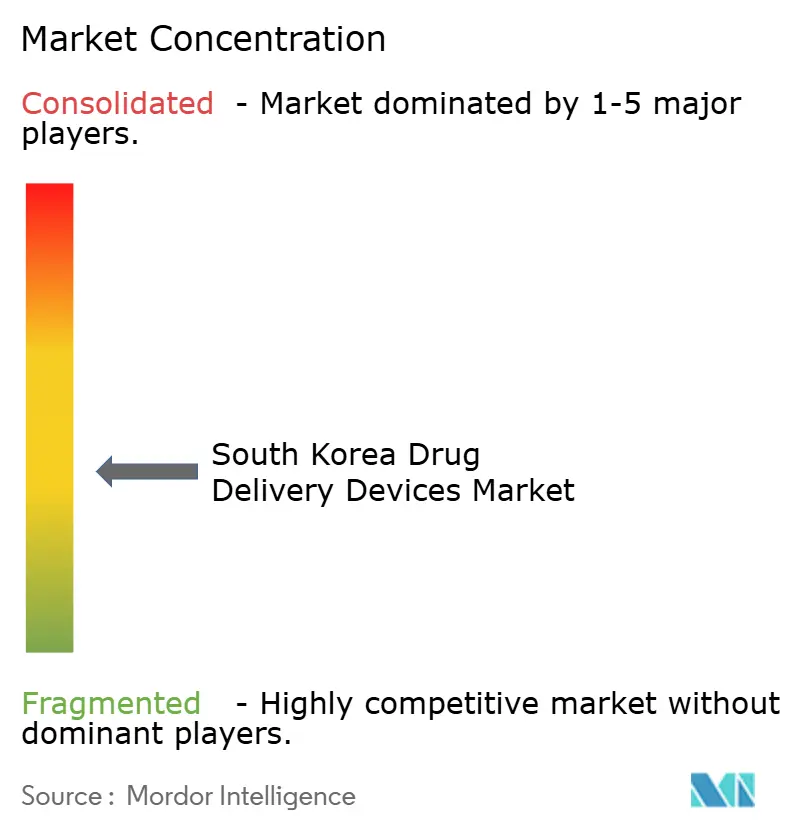
| Market Concentration | Medium |
Major Players *Disclaimer: Major Players sorted in no particular order Image © Mordor Intelligence. Reuse requires attribution under CC BY 4.0. | |
South Korea Drug Delivery Devices Market Analysis by Mordor Intelligence
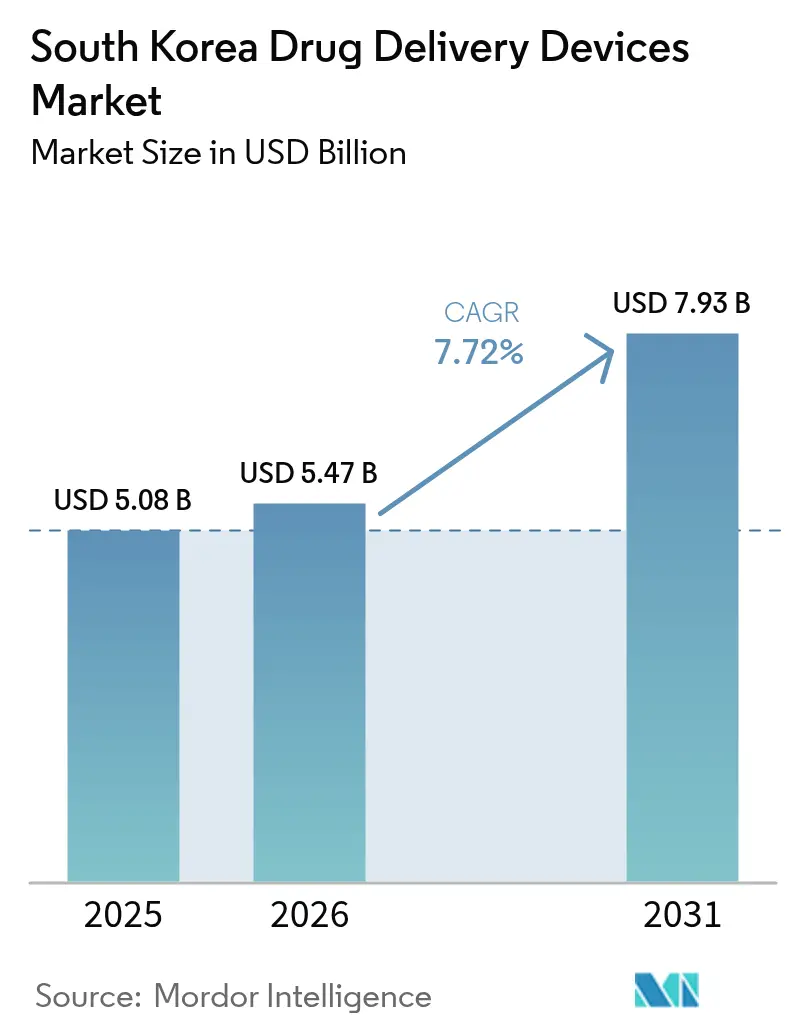
The South Korea drug delivery devices market size was valued at USD 5.08 billion in 2025 and estimated to grow from USD 5.47 billion in 2026 to reach USD 7.93 billion by 2031, at a CAGR of 7.72% during the forecast period (2026-2031). Rising life expectancy, rapid urbanization, and strong domestic production underpin this growth. A national policy focus on chronic disease management, coupled with high digital‐health adoption, is accelerating uptake of connected pumps, smart inhalers, and other patient-centric technologies. Government fast-track approvals for breakthrough devices shorten launch timelines, while a broad biologic pipeline pushes demand for advanced injectable platforms. Competitive intensity is increasing as domestic innovators align with global leaders to commercialize novel formats across oncology, diabetes, and pain care.
Key Report Takeaways
- By device type, injectable delivery devices held 36.12% of South Korea drug delivery devices market share in 2025; implantable systems are projected to expand at a 10.31% CAGR through 2031.
- By route of administration, injectables commanded 56.19% share of the South Korea drug delivery devices market size in 2025, while oral mucosal delivery is forecast to grow at 10.55% CAGR to 2031.
- By application, diabetes accounted for 32.73% of the South Korea drug delivery devices market size in 2025 and oncology is advancing at an 10.96% CAGR through 2031.
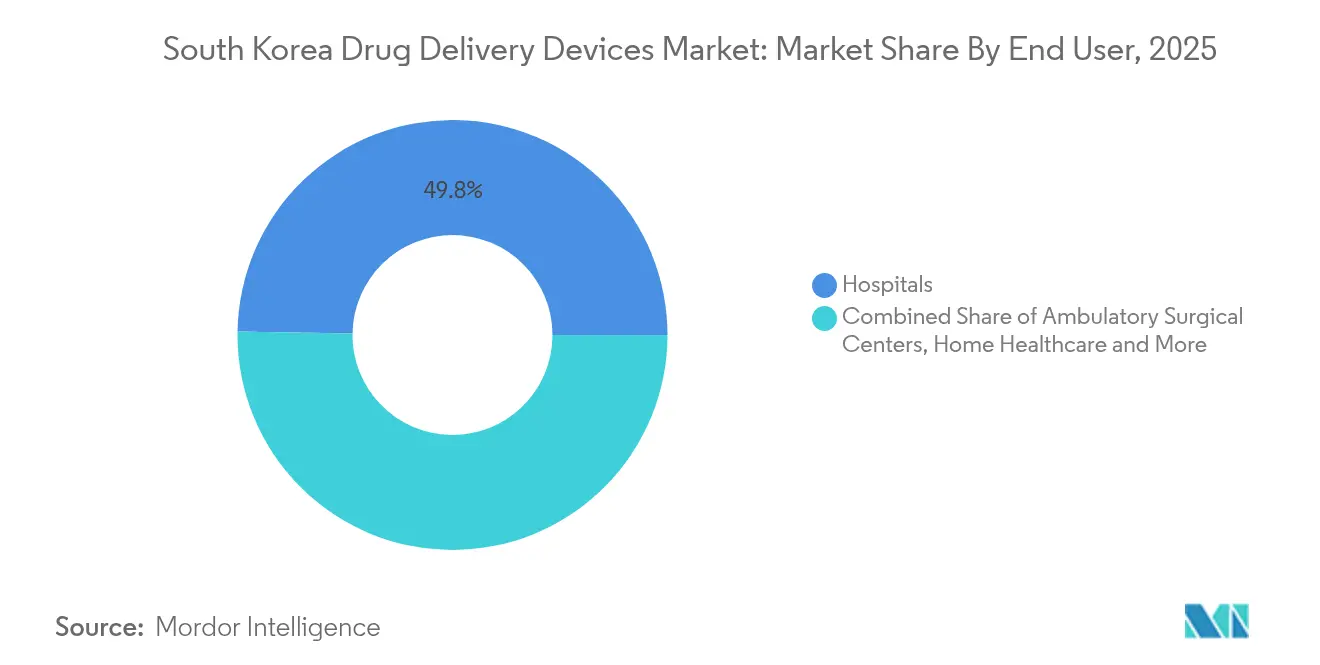
- By end user, hospitals captured 49.75% revenue share in 2025; home healthcare is set to expand at an 10.62% CAGR between 2026-2031.
Note: Market size and forecast figures in this report are generated using Mordor Intelligence’s proprietary estimation framework, updated with the latest available data and insights as of 2026.
South Korea Drug Delivery Devices Market Trends and Insights
Drivers Impact Analysis*
| Driver | (~) % Impact on CAGR Forecast | Geographic Relevance | Impact Timeline |
|---|---|---|---|
| Ageing Population Coupled with High Burden Chronic Disease Burden | +1.8% | National, with concentrated impact in Seoul, Busan, and Daegu metropolitan areas | Long term (≥ 4 years) |
| Technological Advancement and Supportive Government Policies | +1.5% | National, with early adoption in Seoul National University Hospital and Samsung Medical Center networks | Medium term (2-4 years) |
| High Digital Health Adoption Supporting Smart Pumps & Connected Inhalers | +1.2% | National, with accelerated penetration in urban centers and tech-forward healthcare systems | Short term (≤ 2 years) |
| Expanding Domestic Biosimilar & Biologic Pipeline Requiring Injectable Formats | +1.0% | National, with manufacturing hubs in Songdo, Ochang, and Osong bioclusters | Medium term (2-4 years) |
| Expansion of Home Healthcare | +0.9% | National, with early gains in Seoul, Incheon, and Gyeonggi Province | Short term (≤ 2 years) |
| Initiatives for Manufacturing and Infrastructure Boost for Drug Delivery Devices | +0.7% | National, with focused development in K-Bio Belt regions and industrial complexes | Long term (≥ 4 years) |
| Source: Mordor Intelligence | |||
Ageing Population Coupled with High Chronic Disease Burden
More than 20% of citizens will be 65 or older by end-2025, and 54.8% of these older adults manage multiple chronic conditions.[1]Complex medication schedules heighten demand for user-friendly devices that deliver several drugs with minimal disruption. Frequent comorbid clusters, such as cardiometabolic and arthritis, are steering suppliers toward combination systems tailored to specific patient groups. Out-of-pocket costs nearly triple for multimorbid individuals, motivating insurers to endorse efficient delivery tools that improve adherence and lower total care expenditure.
Technological Advancement and Supportive Government Policies
National programs like the High-Tech Bio Initiative and the 1st Master Plan for Fostering and Supporting the Medical Device Industry provide funding, testbeds, and accelerated reviews that shorten commercialization cycles.[2] Reforms at the Ministry of Food and Drug Safety (MFDS) carve dedicated pathways for breakthrough devices, shrinking approval windows and encouraging early market entry.[3] Nanotechnology-enabled carriers, now progressing through clinical pipelines, demonstrate improved drug loading and targeted release, reinforcing South Korea’s ambition to lead AI-integrated, patient-centric healthcare.
High Digital Health Adoption Supporting Smart Pumps & Connected Inhalers
Nationwide 5G coverage and high smartphone penetration underpin rapid rollout of connected drug delivery devices. MFDS has cleared more than 100 ICT-based medical devices, creating a robust regulatory precedent.[3] Companies integrate Bluetooth and cloud analytics to track dosing, deliver alerts, and feed population-level datasets that guide public-health policy. Wearable insulin pumps capable of seven-day operation showcase the shift toward passive, always-on administration that reduces user burden and improves glycemic control.
Expanding Domestic Biosimilar & Biologic Pipeline Requiring Injectable Formats
Local manufacturers are scaling up monoclonal antibodies and other large-molecule drugs, amplifying demand for high-precision injectors and sustained-release implants. Partnerships such as the oral antibody capsule collaboration between Celltrion and Rani Therapeutics illustrate how firms convert hospital-delivered injectables into self-administered oral therapies, easing adoption barriers for patients while maintaining drug integrity.
Restraints Impact Analysis*
| Restraint | (~) % Impact on CAGR Forecast | Geographic Relevance | Impact Timeline |
|---|---|---|---|
| Stringent Approval & Vigilance Delaying Novel Device Launches | -1.3% | National, with regulatory bottlenecks concentrated at MFDS headquarters in Cheongju | Medium term (2-4 years) |
| Risks and Safety Concerns Related to Devices | -0.8% | National, with heightened scrutiny in major hospital networks and academic medical centers | Short term (≤ 2 years) |
| HIRA Price Caps Compressing Premium Device Margins | -1.1% | National, affecting all healthcare providers under National Health Insurance coverage | Long term (≥ 4 years) |
| Hospital Tender Bias Toward Domestic Vendors Limiting Foreign Manufacturers | -0.9% | National, with strongest impact on public hospitals and government-affiliated medical institutions | Medium term (2-4 years) |
| Source: Mordor Intelligence | |||
Stringent Approval and Vigilance Delaying Novel Device Launches
MFDS classifies devices by risk, and Classes II–IV undergo extensive dossier reviews, including quality, safety, and sometimes clinical data.[3] For foreign firms, the mandatory Korean License Holder adds administrative layers. Post-market surveillance lists track 52 device categories, imposing ongoing reporting that can deter small entrants.
Risks and Safety Concerns Related to Devices
Complex electromechanical formats introduce failure points in pumps and implants. MFDS requires manufacturers to institute traceability and field correction protocols, prolonging development timelines. User errors during home use lead suppliers to invest in intuitive interfaces, automated shutoffs, and tamper-proof packaging, adding cost and design constraints.
*Our forecasts treat driver/restraint impacts as directional, not additive. The impact forecasts reflect baseline growth, mix effects, and variable interactions.
Segment Analysis
By Device Type: Injectable Platforms Lead Innovation Wave
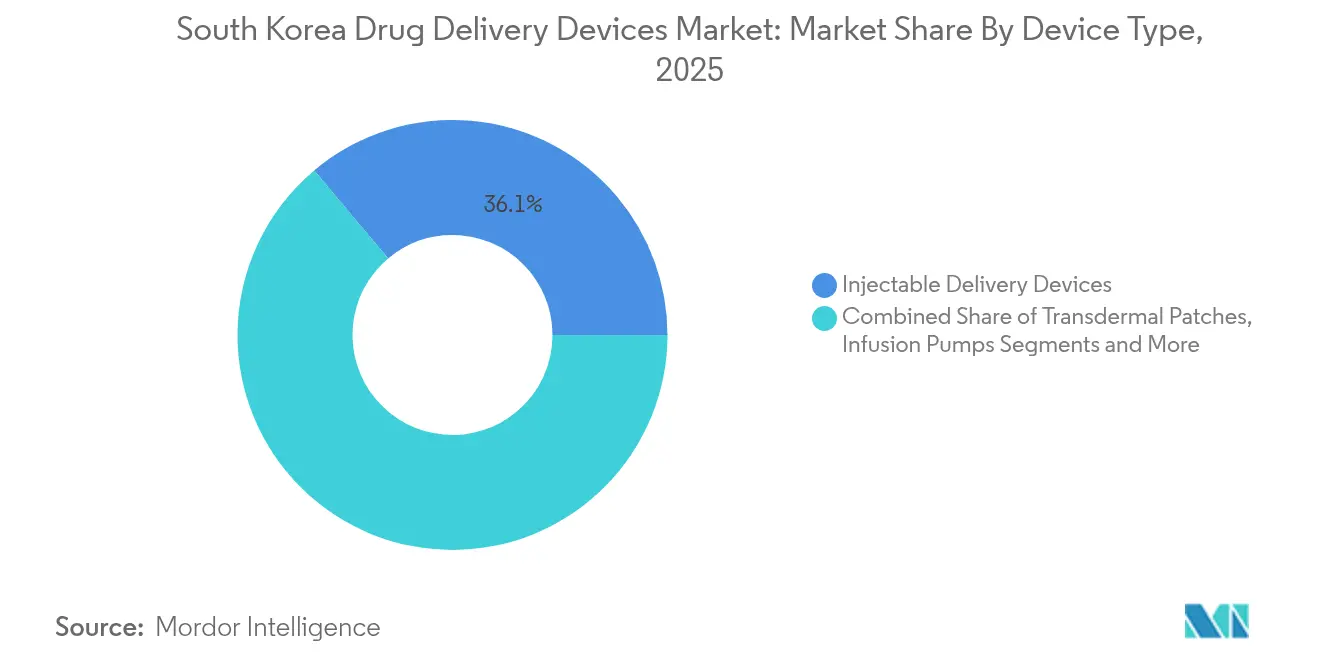
Injectable platforms account for 36.12% of South Korea drug delivery devices market share in 2025, reflecting their versatility across diabetes, oncology, and autoimmune therapy. Demand remains steady as biologics dominate development pipelines. Implantable systems, posting a 10.31% CAGR to 2031, benefit from biocompatible polymers that release drugs over months, lowering dosing frequency for chronic pain and hormone disorders. Clinical data from domestic cohorts confirm reduced opioid exposure when intrathecal pumps replace systemic analgesics.
Wearable injectors, fixed‐dose autoinjectors, and on-body pumps enhance self-management. Transdermal patches broaden options for neurological and pain conditions, with twice-weekly rivastigmine patches easing caregiver workloads. Inhalers, now integrating dose-tracking chips, link to mobile apps for personalized coaching. Nasal and ocular inserts remain niche but attract R&D interest for CNS drugs and ophthalmic biologics. Growing acceptance of these alternatives signals ongoing diversification within the South Korea drug delivery devices market.

By Route of Administration: Patient Preference Shifts
Injectables cover 56.19% of administration routes in 2025, favored for their proven bioavailability and compatibility with complex molecules. Oral mucosal formats show the fastest 10.55% CAGR, drawing traction for rapid onset and ease of use. Thin films dissolving in seconds avoid first-pass metabolism, helping dysphagic patients adhere to regimens. The South Korea drug delivery devices market size for mucosal routes is projected to expand steadily alongside R&D investments that improve permeability enhancers and taste-masking agents.
Transdermal technology advances through micro‐needle arrays that painlessly breach the stratum corneum and deliver steady plasma levels over several days. Respiratory applications hold a stable share as chronic obstructive pulmonary disease and asthma prevalence rises. Ocular and nasal routes gain strategic importance for vaccines and neuro-active peptides that target the brain, bypassing systemic clearance barriers.
By Application: Diabetes Management Drives Demand
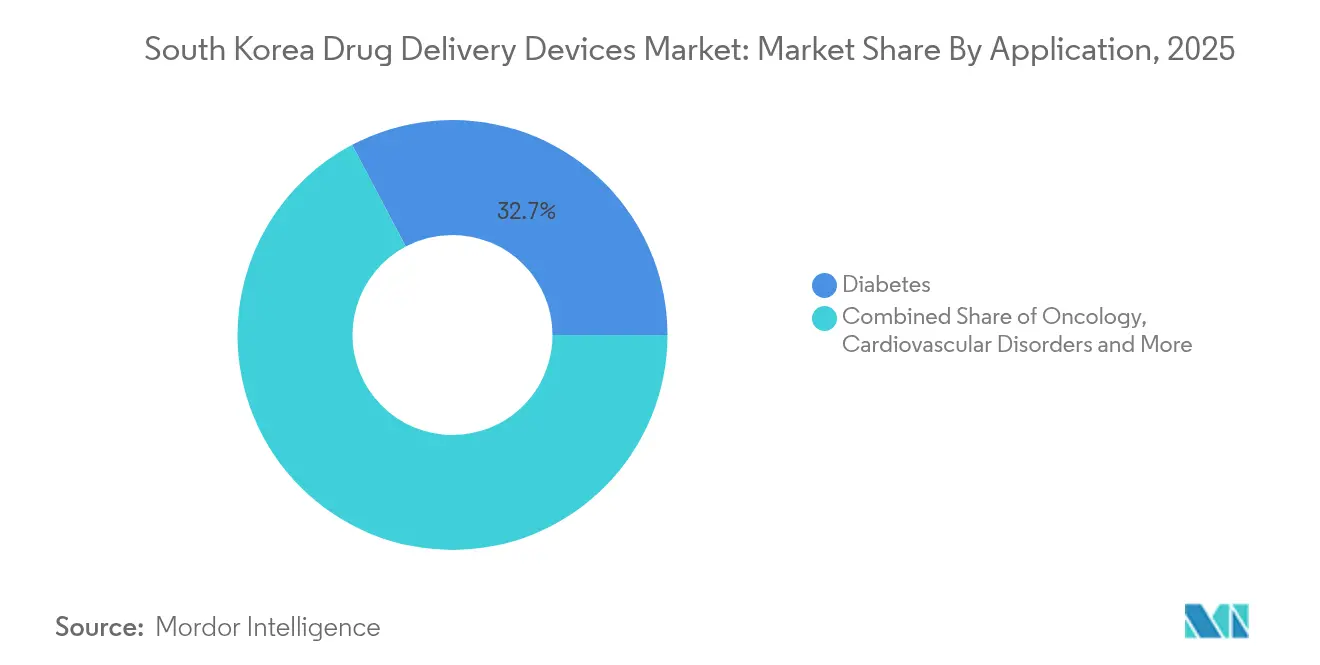
Diabetes commands 32.73% of the South Korea drug delivery devices market size in 2025, propelled by rising prevalence and a push for automated insulin delivery. Closed-loop pump-sensor ecosystems capture continuous glucose data and adjust basal rates in real time, cutting hypoglycemia risk. Oncology, expanding at 10.96% CAGR, leverages sustained-release depots and antibody-drug conjugate injectors to localize therapy, minimizing systemic toxicity.
Cardiovascular applications leverage polymer-based stents and bioresorbable depots to deliver antithrombotics. Respiratory disease management capitalizes on smart inhalers that upload adherence metrics to clinician dashboards. Infectious disease programs seek room-temperature–stable patches and oral vaccines suitable for mass campaigns. Auto-immune disorders round out the market, drawing on self-injectable biologics and novel oral platforms for patient-controlled therapy at home.
By End User: Hospitals Retain Core Role
Hospitals hold 49.75% of 2025 revenue, supported by resources to manage complex infusion and implant procedures. They adopt integrated pump fleets that link with electronic medical records for dose logging and pharmacovigilance. The South Korea drug delivery devices market is pivoting as home healthcare, growing at 10.62% CAGR, absorbs routine chronic care through plug-and-play devices optimized for non‐clinical settings. Urban patients embrace video consultations combined with connected pumps that alert nurses to anomalies.
Ambulatory surgical centers gain relevance by using long-acting local anesthetic depots that shorten recovery times, enabling same-day discharge. Specialty clinics, particularly endocrinology and oncology units, trial novel injectors and patches before home rollout. Seamless transition of devices across sites underscores the integrated care model encouraged by national policy.
Geography Analysis
South Korea’s highly urbanized corridor stretching from Seoul through Incheon to Suwon anchors the largest share of the South Korea drug delivery devices market. High broadband penetration and tertiary hospitals support early adoption of smart pumps and AI-enabled inhalers. Rural provinces face physician shortages; remote-monitoring devices bridge gaps by transmitting adherence and biometric data to regional care teams. Government grants for telemedicine kiosks in county clinics further expand reach for chronic disease tools.
Coastal cities such as Busan and Ulsan show growing demand driven by aging populations employed in industrial sectors with elevated respiratory conditions. Local governments subsidize COPD management programs that bundle connected inhalers and virtual coaching. In central regions, provincial hospitals implement implantable depots for cancer pain, reducing travel frequency for elderly residents.
Jeju’s medical tourism initiatives attract regional patients seeking advanced biologic therapies administered through long-acting injectables. The island’s special regulatory zone expedites studies on micro-needle patches for traveler vaccinations, broadening exposure for device manufacturers. Across all regions, national reimbursement policies equalize patient out-of-pocket costs, sustaining unified growth momentum for the South Korea drug delivery devices market.
Regulatory Landscape
South Korea regulates drug delivery devices and drug-device combinations under the Ministry of Food and Drug Safety (MFDS), with requirements determined by the primary mode of action under the Pharmaceutical Affairs Act or the Medical Devices Act. For higher-risk products, particularly Class III and IV medical devices, MFDS premarket review requires technical documentation and GMP compliance, which can shape timelines for novel pumps, implants, and connected delivery platforms.
Regulatory expectations also extend into lifecycle controls, including vigilance and post-market requirements for defined device categories. This reinforces traceability and field-correction readiness for electromechanical formats used in hospitals and at home. MFDS has also built precedent for digital health oversight, including clearance activity for ICT-based medical devices, supporting the regulatory pathway for connected drug delivery systems that integrate software, connectivity, and dosing analytics.
Value Chain Analysis
In South Korea, the value chain runs from device engineering and materials inputs (polymers, microneedles, electromechanical assemblies, sensors, and connectivity modules) to formulation and fill-finish integration (prefilled syringes, cartridges, and wearable reservoirs). Manufacturing is then completed under GMP requirements before commercialization through hospital procurement and National Health Insurance-linked channels. For combination products, MFDS requirements push earlier alignment between drug formulation teams and device developers, so stability, human factors, and mechanical performance evidence can be assembled within a single program.
Domestic platform companies and manufacturing specialists increasingly sit between biopharma sponsors and end users, providing sustained-release injectable platforms and high-precision device manufacturing infrastructure. CDMOs and biocluster ecosystems also function as demand aggregators for scalable production runs. Downstream, hospital tenders and home healthcare adoption influence product configuration, such as Korean-language software, remote monitoring features, and service networks, while reimbursement and price controls raise the need for modular designs and localized component sourcing to protect margins.
Competitive Landscape
The market hosts a balanced mix of global multinationals and innovative domestic firms. LG Chem advances biologic-compatible prefilled syringes and collaborates with start-ups on AI algorithms that predict dosing schedules. Yuhan Corporation invests in micro-needle patch production lines that promise higher yields and sterile integrity. International leaders supply electromechanical pump assemblies, while local firms customize software and language interfaces, strengthening stickiness with Korean hospitals.
Strategic alliances multiply. Celltrion’s joint work on oral antibody capsules illustrates convergence between pharmaceutical formulation and device engineering, reducing injection frequency. EOFlow pilots seven-day wearable insulin pumps, positioning for overseas licensing. Overseas players set up R&D hubs in Seoul to tap skilled engineers and access MFDS fast-track reviews.
Price pressure from the Health Insurance Review and Assessment Service (HIRA) sparks innovation on materials and manufacturing efficiency. Firms streamline supply chains and shift toward modular pump designs that share components across therapeutic indications. Robust patent portfolios, backed by universities and public research institutes, sustain a pipeline of nanocarriers and biodegradable implants, keeping the South Korea drug delivery devices market competitive and technology-focused.
South Korea Drug Delivery Devices Industry Leaders
-
Baxter International
-
Johnson & Johnson
-
Terumo Corporation
-
Becton, Dickinson and Company
-
Solventum
- *Disclaimer: Major Players sorted in no particular order
Market Opportunities and Future Outlook
Government-backed programs are creating actionable whitespace for localized manufacturing and export-ready compliance in advanced and connected drug delivery devices. In February 2026, multiple ministries, including the Ministry of Science and ICT, Ministry of Trade, Industry and Energy, Ministry of Health and Welfare, and MFDS, initiated a 7-year, KRW 940.8 billion cross-ministerial R&D project (2026-2032) to support full-cycle advanced medical device development and localization. The focus aligns with market needs in pumps, long-acting injectables, and combination platforms.
Commercialization and overseas readiness also provide an opportunity layer for domestic firms seeking faster access to global markets while meeting stringent performance and safety requirements. In March 2026, Korea Testing Laboratory (KTL) launched a 2026 medical device commercialization support project under MOTIE, centered on overseas regulatory requirements and safety and performance evaluations. This lowers barriers for Korean drug delivery device developers to validate products for export pathways, while also supporting domestic adoption through more standardized testing and evidence packages.
Recent Industry Developments
- June 2026: MediThinQ signed a global exclusive supply contract with Baxter to provide the SHIYA three-dimensional surgical visualization solution under the Baxter brand. While not a drug delivery device itself, the deal reinforces Baxter-focused clinical technology channel strength in Korea and supports bundled hospital equipment strategies that can influence infusion and therapy-delivery fleet adoption.
- May 2026: CareMedi launched CareLevo, a 7-day patch-type insulin pump based on proprietary plate electroosmotic pump technology. The launch expands longer-wear, patient-centric insulin delivery options aligned with home-use growth and increases competitive pressure on wearable and on-body pump formats in diabetes care.
- April 2025: Johnson & Johnson MedTech launched the Varipulse platform, a 3D pulsed field ablation solution for atrial fibrillation, in South Korea. The rollout highlights continued investment in advanced hospital-based therapeutic platforms and strengthens the company’s footprint with cardiac care providers that also procure adjunct infusion, anesthesia, and peri-procedural delivery systems.
Research Methodology Framework and Report Scope
Market Definition and Coverage
This market covers the annual sales value of medical devices used to administer or release medicines into the body in South Korea, where the device is the delivery mechanism and drives the purchase decision.
Scope exclusions: Diagnostic catheters, drug-eluting stents, and standalone pharmaceutical formulations without an integrated delivery device are not counted.
Segmentation Overview
- By Device Type
- Injectable Delivery Devices
- Inhalation Delivery Devices
- Infusion Pumps
- Transdermal Patches
- Implantable Drug Delivery Systems
- Ocular Inserts & Delivery Implants
- Nasal & Buccal Delivery Devices
- By Route of Administration
- Injectable
- Inhalation
- Transdermal
- Oral Mucosal (Buccal & Sublingual)
- Ocular
- Nasal
- By Application
- Diabetes
- Oncology
- Cardiovascular Disorders
- Respiratory Diseases
- Infectious Diseases
- Auto-immune & Others
- By End User
- Hospitals
- Ambulatory Surgical Centers
- Home Healthcare Settings
- Specialty Clinics
Data Sources, Market Sizing, and Validation
Desk Research
Desk work starts with building a clear fact base on South Korea healthcare demand, then narrowing it to device-led drug administration. We typically rely on public sources such as the Korean Statistical Information Service (KOSIS), OECD Health Statistics, World Bank health indicators, and the Ministry of Food and Drug Safety (MFDS) for category definitions and the regulatory context.
To ground demand signals, we also review sources such as the National Health Insurance Service (NHIS) and Health Insurance Review and Assessment Service (HIRA) publications for treatment patterns that influence device usage. We cross-check these against customs and trade statistics when import reliance affects availability for specific device categories. Company filings, investor presentations, product literature, and peer-reviewed medical journals are used to cross-check indications, adoption timing, and pricing direction. For hard to find financial line items and product pipeline cues, we use paid subscriptions focused on company financials and news, plus patent databases. These examples are not exhaustive, and many other public and paid sources were also referenced for data collection, validation, and clarification.
Primary Interviews and Surveys
Primary work is used to sanity check what is selling, who is buying, and how pricing is moving across key care settings in South Korea. We speak with a mix of manufacturers and distributors, clinicians and pharmacists, and procurement or operations leaders at hospitals and outpatient settings. Respondent input is then used to confirm what device categories are used in practice and to adjust assumptions where public sources are silent.
Distribution of primary research fieldwork respondents
| Company type | Respondent position |
|---|---|
| Top tier: 32% | CXOs: 18% |
| Mid tier: 46% | Functional/Unit leaders: 39% |
| Smaller Players: 22% | Managers: 43% |
Market-Sizing & Forecasting
The core model is built using a top-down approach where therapy and care setting demand is reconstructed into a device demand pool, then converted into market value using observed pricing and mix. To keep outputs realistic, results are corroborated with selective bottom-up approximations, such as sampled supplier revenue splits, channel checks, and ASP times volume calculations for high-usage device groups.
Key inputs we use include chronic disease treatment load that pulls device usage (such as diabetes and respiratory care), the share of patients on self administration versus facility administration, replacement and refill cycles for device consumables where relevant, procurement patterns across hospitals and retail, and observed price movement when product mix shifts. Forecasting is run with scenario analysis supported by simple trend fits, and adoption of higher-convenience devices plus expected reimbursement tightness are tested with expert feedback. When bottom-up signals are incomplete for smaller categories, the gap is handled by mapping to comparable utilization patterns, then cross-checking totals against overall care pathway volumes.
Data Validation & Update Cycle
Before finalizing, model outputs are checked against independent signals such as import trends, regulatory category movement, and care-setting utilization patterns, and then large variances are investigated. Outliers are reviewed through a second analyst pass, and we re-contact sources when a pricing step change or policy update is likely to alter the near-term trajectory.
The report is refreshed annually, and interim updates are made when a material event happens, such as a reimbursement change or a major product launch. Right before delivery, a final pass is completed so the latest public releases and validated assumptions are reflected in the numbers clients receive.
Mordor Intelligence's South Korea Drug Delivery Devices Market Size Measured Against Other Published Estimates
Published market sizes for South Korea drug delivery devices can look far apart even when the same end use is being discussed, because the included device list and the year labels are often not aligned. Differences also come from how pricing is treated, whether only a few categories are counted, and how often underlying assumptions get refreshed.
The table highlights a spread that is mainly explained by scope breadth and what gets treated as a drug delivery device versus an adjacent medical product. Some estimates appear to lean on a narrower device basket or older base-year pricing, and totals can also shift when currency timing and inflation assumptions are applied differently.
Benchmark comparison
| Source | Market Size | Gaps in Research Methodology |
|---|---|---|
| Mordor Intelligence | USD 5.08 B (2025) | |
| Regional Consultancy A | USD 1.40 B (2024) | This figure appears to reflect a tighter definition and may exclude multiple administration routes or care-setting purchases that are material in South Korea, and it anchors on an earlier base year. |
| Trade Journal B | USD 0.46 B (2023) | This value is consistent with a smaller device basket and conservative pricing, which can understate higher value infusion and self-injection device categories in routine use. |
The table shows that the biggest gap is driven by how wide the counted device universe is, and in Mordor Intelligence's model the total includes purpose-built drug delivery devices across injectable, inhalation, transdermal, implantable, ocular, nasal, oral-mucosal, and infusion routes, while diagnostic catheters and drug-eluting stents are excluded. With those inclusions and exclusions stated clearly, the resulting number stays traceable to demand and pricing inputs that can be checked and repeated.
Key Questions Answered in the Report
What is the current value of the South Korea drug delivery devices market?
The market is valued at USD 5.47 billion in 2026 and is set to grow to USD 7.93 billion by 2031.
Which device type holds the largest share?
Injectable platforms lead with 36.12% share in 2025 due to their broad applicability in diabetes, oncology, and autoimmune conditions.
Which segment is growing the fastest?
Implantable systems are advancing at a 10.31% CAGR as biocompatible materials enable longer-acting therapies with fewer interventions.
Why is home healthcare gaining momentum?
Government incentives to reduce hospitalization costs and widespread digital infrastructure support remote monitoring, driving an 10.62% CAGR in home-use devices.
How are regulations influencing innovation?
MFDS fast-track pathways and the New Bio-Health Industry Regulation Innovation Plan shorten approval times, encouraging rapid introduction of breakthrough technologies.
What role do domestic companies play in the market?
Firms such as LG Chem, Yuhan, and Celltrion are partnering with technology specialists and investing in R&D to compete head-to-head with global multinationals across injectable, patch, and implant platforms.