
| Study Period | 2020 - 2030 |
| Forecast Data Period | 2025 - 2030 |
| Historical Data Period | 2020 - 2023 |
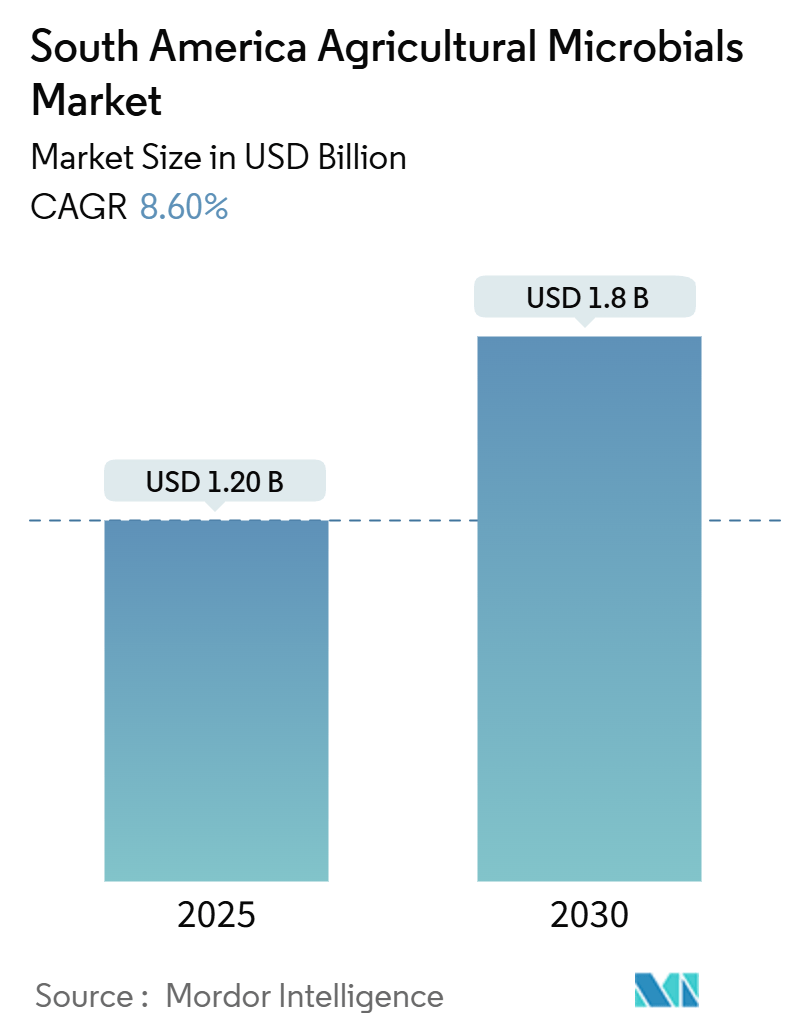
| Market Size (2025) | USD 1.20 Billion |
| Market Size (2030) | USD 1.8 Billion |
| CAGR (2025 - 2030) | 8.60% |
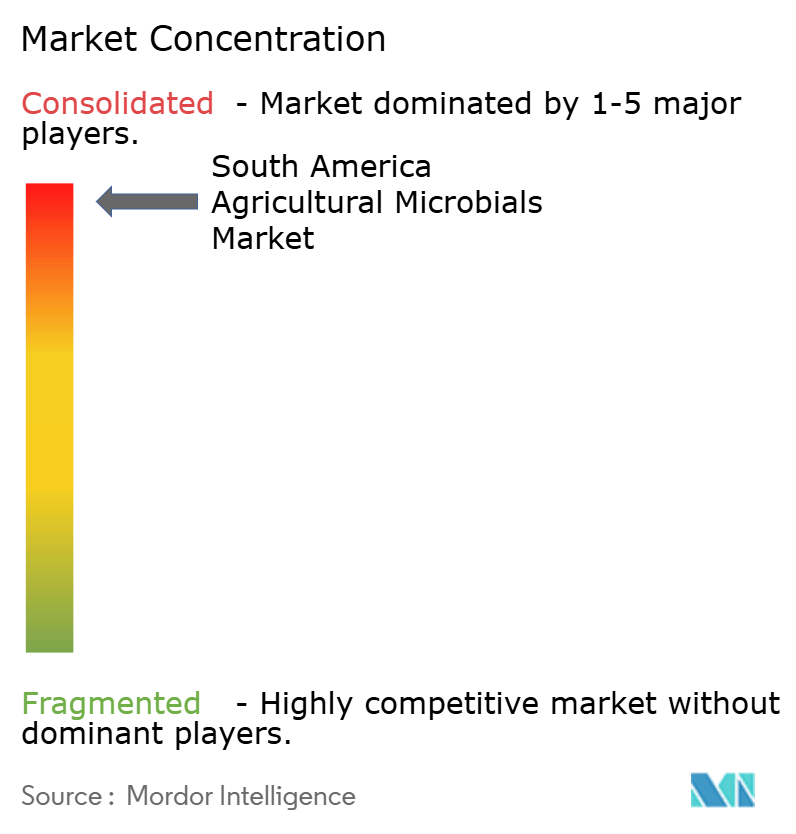
| Market Concentration | High |
Major Players *Disclaimer: Major Players sorted in no particular order |
South America Agricultural Microbial Market Analysis by Mordor Intelligence
The South America Agricultural Microbial Market size is estimated at USD 1.20 billion in 2025, and is expected to reach USD 1.8 billion by 2030, at a CAGR of 8.60% during the forecast period (2025-2030).
Agricultural microbes are derived from naturally occurring microorganisms, including bacteria, fungi, viruses, and protozoa. The South American market is experiencing growth due to increasing awareness and institutional support for agricultural microbial usage. However, manufacturers of microbial seed treatments face challenges, including limited technological advancement in microbial inoculants and difficulties maintaining viable microorganism populations during seed treatment processes.
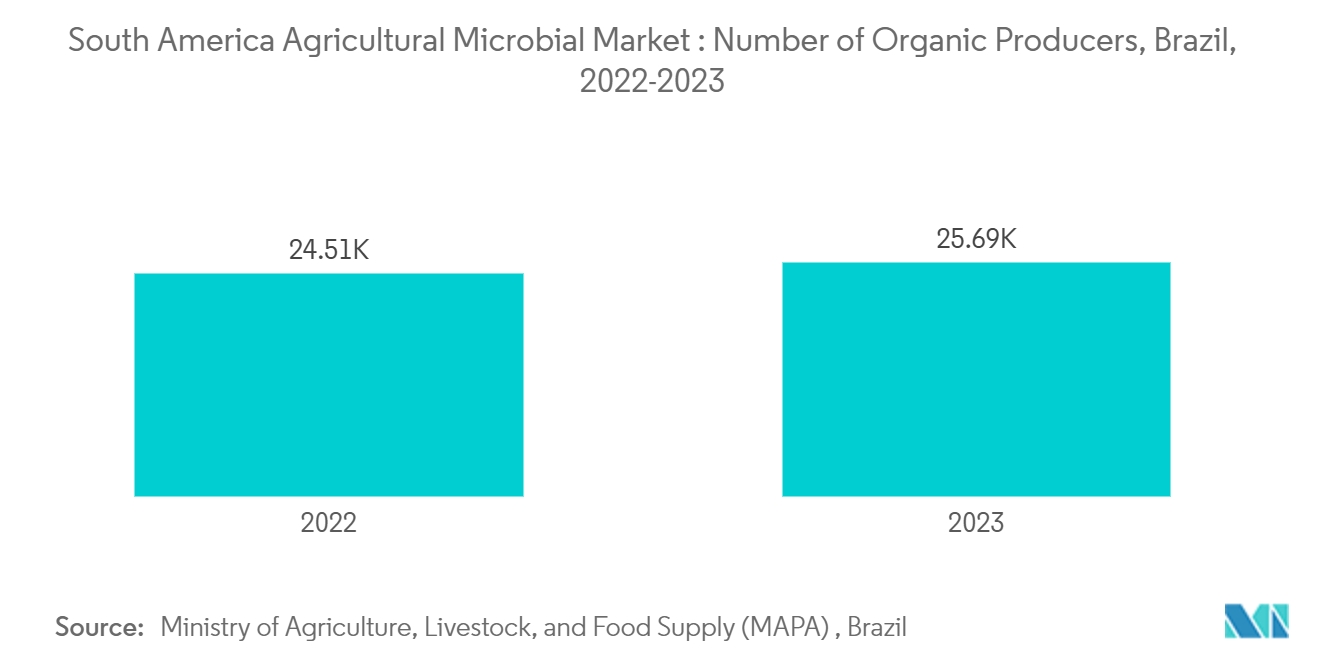
Microbial pesticides are gaining prominence in organic farming, a rapidly expanding segment of the food industry. These biological pesticides specifically target intended pests and closely related organisms, unlike conventional broad-spectrum pesticides that can harm birds, insects, and mammals. The increasing insect resistance to conventional pesticides has prompted farmers to adopt biological alternatives. Microbial pesticides offer advantages through their effectiveness in small quantities and rapid decomposition, reducing exposure levels and environmental pollution risks associated with traditional pesticides. In Latin America and the Caribbean (LAC), Argentina led organic farming in 2023 with 4.1 million hectares, followed by Uruguay with 2.74 million hectares and Brazil with 1.48 million hectares. The total organic farmland in the region exceeded nine million hectares. Brazil's organic producers increased from 24,506 in 2022 to 25,688 in 2023, according to the Ministry of Agriculture, Livestock and Food Supply.
The regional governments are implementing measures to promote microbial products in agriculture due to their environmental safety and effectiveness. The Institute of Agricultural Research (INIA) in Chile initiated a biological control program against Lobesia botrana using entomopathogenic fungi and bacteria. This initiative aims to reduce chemical pesticide usage and introduce environmentally sustainable methods to control the vine moth, a quarantine pest affecting vineyards, blueberries, and plums from the Atacama to Araucanía regions.
Note: Market size and forecast figures in this report are generated using Mordor Intelligence’s proprietary estimation framework, updated with the latest available data and insights as of January 2026.
South America Agricultural Microbial Market Trends and Insights
Growing Focus on Food Security Drives the Market
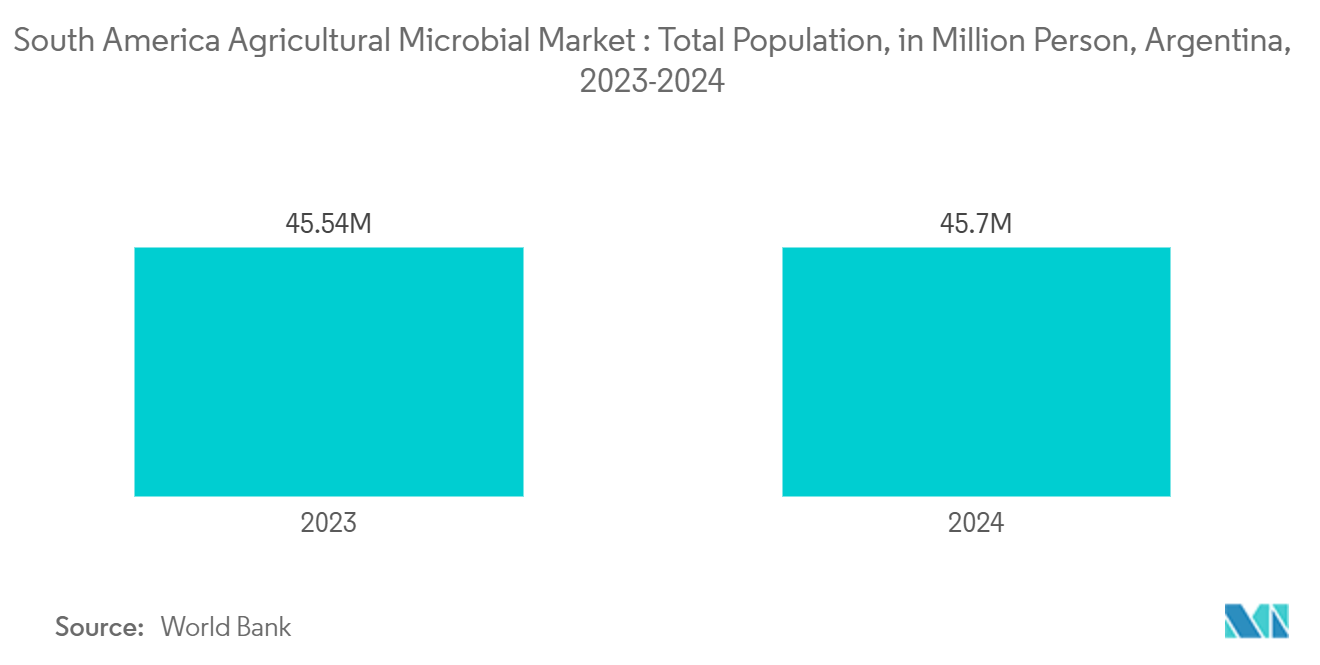
In South America, the growing population and increasing demand for sustainable agricultural practices have driven significant growth in agricultural microbial demand. The decline in arable land per capita and rapid urbanization have prompted farmers to implement efficient crop protection methods. Agricultural microbials have gained wider acceptance due to their proven benefits in farming. As food production needs rise and available farmland decreases, crop yields must increase accordingly. This has led to substantial growth in microbial product demand across South American agricultural production. The primary factor driving microbial demand during the forecast period is the necessity for crop intensification to support population growth.
According to the Food and Agriculture Organization, Latin America's hunger prevalence rate of 6.5% in 2023. The region recorded between 38.5 million and 51 million people affected by hunger. In South America, Bolivia reported the highest hunger prevalence at 19.4% (2.3 million people), followed by Venezuela at 17.9% (5.1 million people) and Ecuador at 13.9% (2.5 million people). Other South American countries showed lower undernourishment rates, including Brazil (4.7%), and Argentina (3.2%), while Chile, Guyana, and Uruguay each reported 2.5%.
The agricultural sector increasingly recognizes the benefits of microbial products. As arable land per person declines and the global population expands, crop yields must increase to meet food production demands. This has led to higher demand for microbial products in agricultural production. While other solutions like improved seed technology and crop protection methods exist, factors such as population growth, rising food demand, government initiatives for food security and sustainable farming, and increased adoption of bio-based pesticides are anticipated to drive market growth during the forecast period.
Brazil Dominates the Market
Brazil dominates the agricultural microbial market in South America, with Argentina ranking second. Virus and bacteria-based microbial products command the largest market share in Brazil. 50% of the country's sugarcane plantations use natural insects or pathogens for treatment. While other countries implement biological control in smaller areas, Brazil faces the challenge of executing these programs across large-scale farms. The market's research and development activities are accelerating, attracting more manufacturers to the Brazilian agricultural microbial sector. Although the registration process has improved recently, it remains bureaucratic and cost-intensive for smaller companies. The government's initiatives to promote agricultural microbial products are expected to significantly drive market growth during the forecast period.
Brazil ranks as the eleventh largest organic producer globally, with 1.48 million hectares of certified and in-conversion areas in 2023, according to the Ministry of Agriculture, Livestock, and Food Supply. The country holds the fourth position among nations with the largest increase in organic area compared to the previous year. Minas Gerais leads Brazilian states with 10,884 organic farms, followed by Parana (7,056) and Pernambuco (5,072). As of June 2023, Brazil had 24,385 certified organic producers, with Parana having the highest number (3,773), followed by Rio Grande do Sul (3,749) and Para (2,886). Tocantins, in the northern region, has the lowest number of producers. The Brazilian Ministry of Agriculture and Livestock (MAPA) has approved 60 phytosanitary products for organic agriculture use. The expansion of organic farming in Brazil has increased agricultural microbial usage, as organic practices prioritize natural inputs over synthetic chemicals. Farmers use beneficial bacteria and fungi as biofertilizers and biopesticides to improve soil health and crop productivity. This transition reflects the increasing consumer demand for organic, residue-free food, encouraging farmers to implement microbial solutions that comply with organic standards.
Brazil's government is implementing measures to reduce pesticide usage across the country. In 2024, Brazil introduced regulations prohibiting the registration of pesticides containing carcinogenic or harmful substances. The proposed Poison Package legislation would restrict pesticide bans to cases with scientifically proven high risks. The government has also limited the use of several active ingredients, including paraquat, which ranked as the seventh-highest-selling pesticide and fourth-highest-selling herbicide after atrazine, 2,4-D, and glyphosate. These growing concerns about chemical pesticides have increased the importance of environmentally friendly alternatives, resulting in higher demand for agricultural microbials in the country.
Competitive Landscape
The South America agricultural microbial market is consolidated, with a few global players leading the market with a highly diversified product portfolio and several acquisitions and agreements taking place to gain a major share in the industry. Some of the major players in the market include Syngenta AG, Bayer AG, BASF SE, UPL Ltd, and Corteva Agriscience are some of the major players who are operating in the region. The companies are not only competing based on product quality or product promotion but are also focused on other strategic moves, like acquisitions and expansions, to acquire a larger share and expand their acquired market size.
South America Agricultural Microbial Industry Leaders
-
BASF SE
-
Bayer AG
-
UPL Ltd
-
Corteva Agriscience
-
Syngenta AG
- *Disclaimer: Major Players sorted in no particular order
Recent Industry Developments
- September 2024: FMC Corporation formed a partnership with Ballagro Agro Tecnologia Ltda., a company specializing in fungi-based bio solutions, to offer Brazilian growers an extensive portfolio of biological products. The agreement aligns with FMC's strategic objectives to expand its biological platform in Brazil. Under this partnership, FMC Brazil will distribute and license Ballagro's key solutions. The collaboration combines FMC's expertise in microbial solutions with Ballagro's knowledge of fungi-based products to enhance the bio-solutions market in Brazil by improving growers' access to advanced crop protection technologies.
- August 2024: BioConsortia, Inc., an agricultural technology company that develops and licenses microbial products to reduce environmental impacts while maintaining crop productivity, presented SOLVARIX bionematicide field test results at an industry meeting in Campinas. In Brazil, SOLVARIX demonstrated effective control of nematode pests and increased corn yields by 578 kilograms per hectare (8.6 bushels per acre) on average.
South America Agricultural Microbial Market Report Scope
Agricultural microbial are a class of microorganisms that are composed of naturally occurring bacteria, viruses, fungi, or protozoans that target a specific problem. The strains of Bacillus thuringiensis and its subspecies are most extensively used in agriculture. Antagonistic fungal agents, such as the Trichoderma species and Beauveria bassiana, are also widely used as agricultural microbial. The South America agricultural microbial market is segmented by Type (Bacteria, Fungi, Viruses, and Other Types), Function (Soil Amendment, and Crop Protection), Formulation (Dry Formulation, and Liquid Formulation), Mode of Application (Soil Treatment, Foliar Spray, and Seed Treatment), Application (Cereals and Grains, Oilseeds and Pulses, Fruits and Vegetables, Turf and Ornamentals, and Other Applications), and Geography (Brazil, Argentina, and Rest of South America). The report offers market estimation and forecasts in value (USD) for the above-mentioned segments.
Type
| Bacteria |
| Fungi |
| Virus |
| Other Types |
Function
| Soil Amendment |
| Crop Protection |
Formulation
| Dry Formulation |
| Liquid Formulation |
Mode of Application
| Soil Treatment |
| Foliar Spray |
| Seed Treatment |
Application
| Cereals and Grains |
| Oilseeds and Pulses |
| Fruits and Vegetables |
| Turf and Ornamentals |
| Other Applications |
Geography
| Brazil |
| Argentina |
| Rest of South America |
| Type | Bacteria |
| Fungi | |
| Virus | |
| Other Types | |
| Function | Soil Amendment |
| Crop Protection | |
| Formulation | Dry Formulation |
| Liquid Formulation | |
| Mode of Application | Soil Treatment |
| Foliar Spray | |
| Seed Treatment | |
| Application | Cereals and Grains |
| Oilseeds and Pulses | |
| Fruits and Vegetables | |
| Turf and Ornamentals | |
| Other Applications | |
| Geography | Brazil |
| Argentina | |
| Rest of South America |
Key Questions Answered in the Report
How big is the South America Agricultural Microbial Market?
The South America Agricultural Microbial Market size is expected to reach USD 1.20 billion in 2025 and grow at a CAGR of 8.60% to reach USD 1.8 billion by 2030.
What is the current South America Agricultural Microbial Market size?
In 2025, the South America Agricultural Microbial Market size is expected to reach USD 1.20 billion.
Who are the key players in South America Agricultural Microbial Market?
BASF SE, Bayer AG, UPL Ltd, Corteva Agriscience and Syngenta AG are the major companies operating in the South America Agricultural Microbial Market.
What years does this South America Agricultural Microbial Market cover, and what was the market size in 2024?
In 2024, the South America Agricultural Microbial Market size was estimated at USD 1.10 billion. The report covers the South America Agricultural Microbial Market historical market size for years: 2020, 2021, 2022, 2023 and 2024. The report also forecasts the South America Agricultural Microbial Market size for years: 2025, 2026, 2027, 2028, 2029 and 2030.
South America Agricultural Microbial Market Report
Statistics for the 2025 South America Agricultural Microbial market share, size and revenue growth rate, created by Mordor Intelligence™ Industry Reports. South America Agricultural Microbial analysis includes a market forecast outlook for 2025 to 2030 and historical overview. Get a sample of this industry analysis as a free report PDF download.