
Market Overview
| Study Period | 2021 - 2031 |
|---|---|
| Forecast Data Period | 2026 - 2031 |
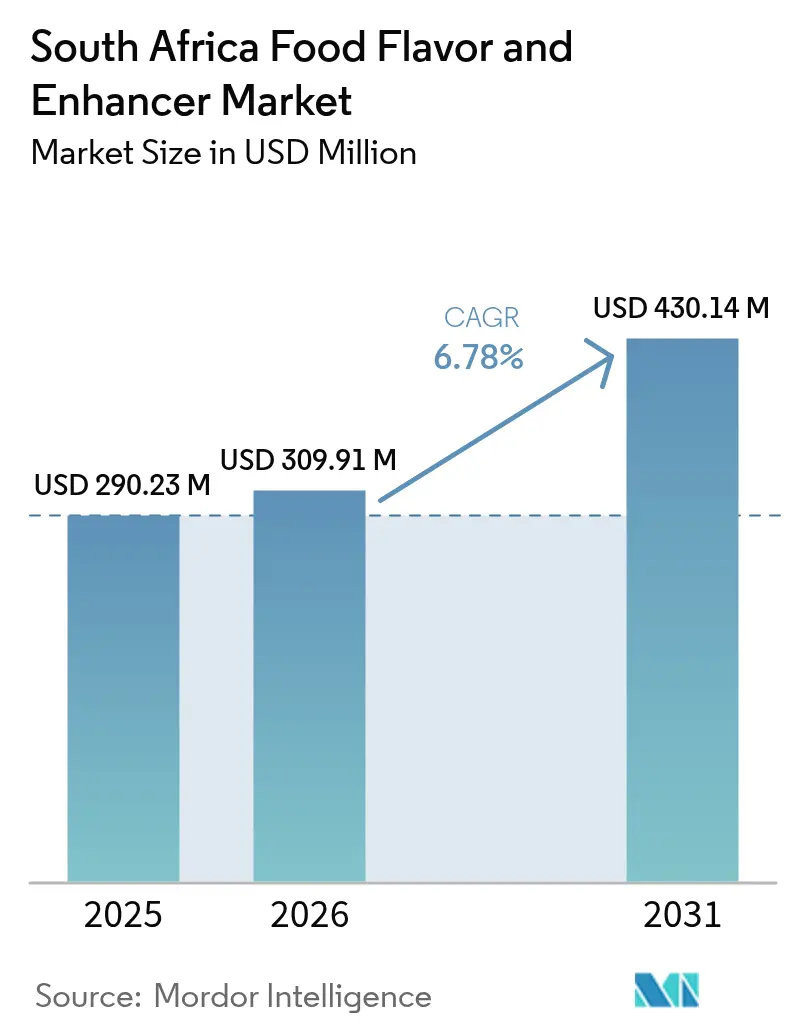
| Base Year Market Size (2025) | USD 290.23 Million |
| Market Size (2026) | USD 309.91 Million |
| Market Size (2031) | USD 430.14 Million |
| Growth Rate (2026 - 2031) | 6.78 % |
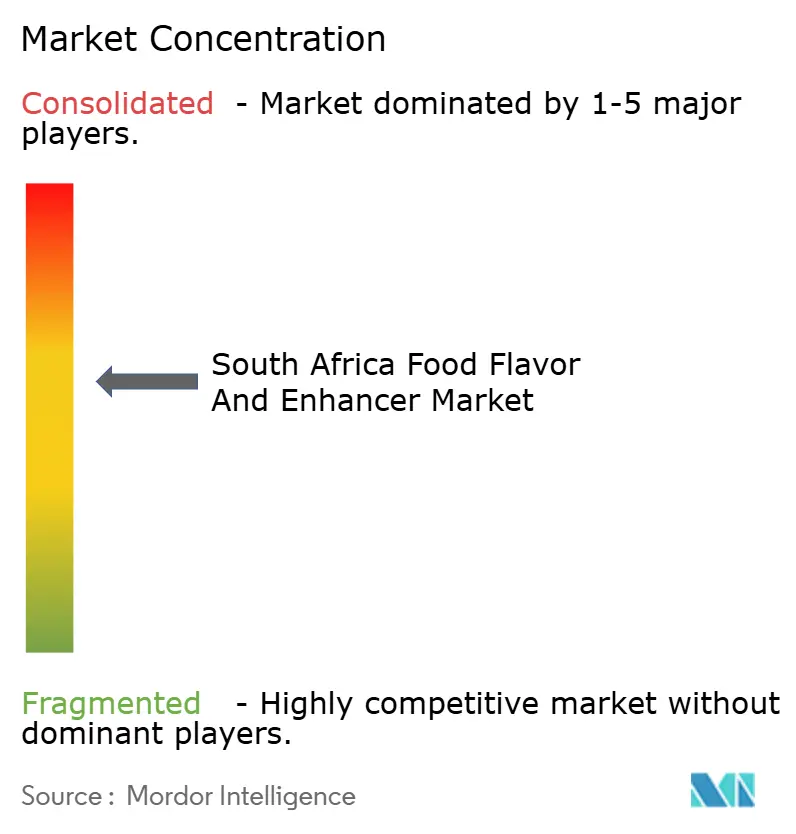
| Market Concentration | Medium |
Major Players
*Disclaimer: Major Players sorted in no particular order Image © Mordor Intelligence. Reuse requires attribution under CC BY 4.0. |
|
South Africa Food Flavors and Enhancers Market Analysis by Mordor Intelligence
The South African flavors and flavor enhancers market size in 2026 is estimated at USD 309.91 million, growing from 2025 value of USD 290.23 million with 2031 projections showing USD 430.14 million, growing at 6.78% CAGR over 2026-2031. South Africa serves as both a food processing hub and an export gateway to Southern African Development Community (SADC) markets, enabling suppliers to achieve economies of scale and expand their regional presence. The increasing urbanization drives demand for convenience foods, while stricter regulations on food additives encourage manufacturers to adopt clean-label alternatives at premium prices. Multinational flavor companies are expanding their local manufacturing capabilities, implementing advanced extraction and biotechnology processes to improve development efficiency and product quality. Additionally, government export-financing initiatives help ingredient suppliers mitigate risks associated with regional expansion, particularly in addressing infrastructure and energy supply challenges in the South African market.
Key Report Takeaways
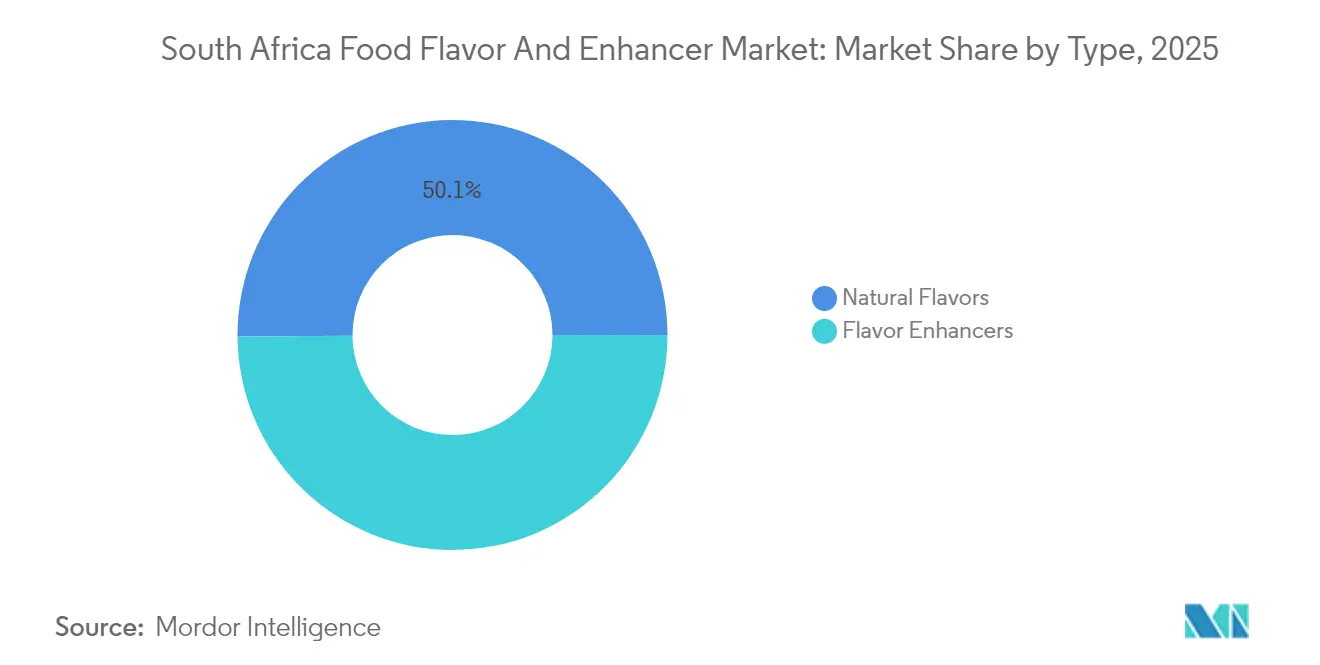
- By type, natural flavors led with 50.12% revenue share in 2025; flavor enhancers are projected to expand at a 7.55% CAGR through 2031.
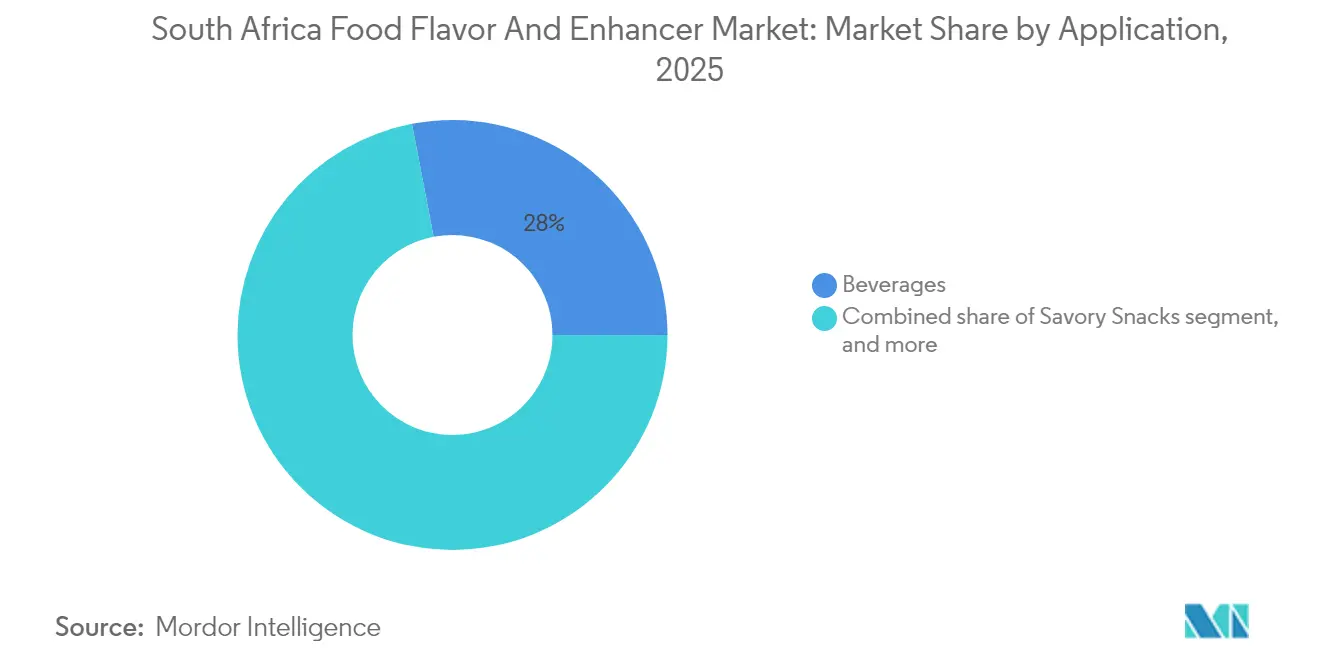
- By application, beverages captured 28.02% of the South African flavors and flavor enhancers market share in 2025, while savory snacks are forecast to post the fastest 8.31% CAGR to 2031.
Note: Market size and forecast figures in this report are generated using Mordor Intelligence’s proprietary estimation framework, updated with the latest available data and insights as of 2026.
South Africa Food Flavors and Enhancers Market Trends and Insights
Drivers Impact Analysis*
| Driver | (~) % Impact on CAGR Forecast | Geographic Relevance | Impact Timeline |
|---|---|---|---|
| Global pivot towards plant-based flavor enhancer ingredients | +1.2% | National, with spillover to SADC region | Medium term (2-4 years) |
| Clean-label and natural flavor adoption | +1.5% | National, concentrated in urban centers | Short term (≤ 2 years) |
| Growth in processed and convenience foods | +1.8% | National, with rural expansion potential | Medium term (2-4 years) |
| Government support for local food processing and value-added agriculture | +0.9% | National, focused on rural development zones | Long term (≥ 4 years) |
| Expansion of multinational flavor houses in local manufacturing | +1.1% | National, concentrated in Gauteng and Western Cape | Medium term (2-4 years) |
| Advances in flavor technology and product formulation | +0.8% | National, with technology transfer benefits | Long term (≥ 4 years) |
| Source: Mordor Intelligence | |||
Global Pivot Towards Plant-Based Flavor Enhancer Ingredients
South Africa's food flavors market is experiencing significant changes due to the global shift toward plant-based flavor enhancer ingredients. This transformation is primarily driven by consumers seeking healthier and more sustainable dietary options. Urban populations and younger consumers are particularly interested in plant-based alternatives that match traditional dairy and meat products in taste and texture. Recent technological developments, such as DSM-Firmenich's Smart Milk flavors and Dynarome DA technology, deliver authentic dairy-like experiences in plant-based beverages. These innovations address both sensory requirements and nutritional needs, increasing the demand for natural, plant-derived flavor enhancers in dairy alternatives, snacks, and beverages. South African food manufacturers are adapting their production processes to incorporate plant-based flavor solutions to meet consumer preferences and maintain market competitiveness. The market demand for clean-label and high-quality flavor enhancers has prompted suppliers to develop and expand their plant-based ingredient offerings. This trend is further supported by government initiatives promoting sustainable food production and the increased presence of international plant-based brands. The emphasis on plant-based flavor enhancers continues to drive market growth, establishing South Africa as an important market for innovative and health-focused flavor solutions.
Clean-Label and Natural Flavor Adoption
The South African food flavors and flavor enhancers market is experiencing transformation due to increasing consumer demand for clean-label and transparent food formulations. South African consumers now show greater awareness of health considerations and ingredient composition, seeking products that are natural, GMO-free, and without synthetic additives. This consumer behavior has led manufacturers to modify their product formulations with clean-label flavor solutions, incorporating natural extracts, plant-based flavors, and organic ingredients instead of artificial compounds. According to Ingredion Inc.'s 2023 ATLAS report, approximately 50% of consumers examine ingredient and nutrition labels before making purchase decisions[1]Source: Ingredion, "Maximize brand value by formulating to 2024 consumer food preferences," ingredion.com. This shift creates opportunities and necessitates strategic changes for manufacturers in South Africa. The market shows increased demand for natural flavor enhancers and preservatives that maintain product quality while ensuring label transparency. This trend particularly affects the beverages, dairy alternatives, snacks, and processed foods segments, where ingredient transparency directly influences consumer trust. The South African flavor and enhancer market continues to develop as it adopts global clean-label innovations and addresses changing consumer preferences.
Growth in Processed and Convenience Foods
The South African food flavors and flavor enhancers market is experiencing growth due to increased consumption of processed and convenience foods. Urbanization, busy lifestyles, and higher disposable incomes have increased consumer demand for ready-to-eat and easy-to-prepare packaged foods. The popularity of products such as instant noodles, frozen meals, sauces, snacks, and processed dairy alternatives has created demand for flavor solutions that enhance taste and aroma. Consumers seek convenience while maintaining taste quality, prompting manufacturers to use flavor enhancers for product differentiation. The market trend has encouraged local and international food manufacturers to increase their use of functional flavor solutions in processed foods. Manufacturers are incorporating flavor enhancers, including natural extracts, savory boosters, and plant-based technologies, to maintain consistency in mass-produced items. The growing consumer interest in fortified and healthier convenience foods has increased demand for flavors that meet clean-label and nutritional requirements. This shift in consumer preferences continues to drive expansion and innovation in the South African food flavors and enhancer market.
Government Support for Local Food Processing and Value-Added Agriculture
The South African government supports food processing expansion through financing mechanisms and trade programs that benefit flavor and ingredient manufacturers. The Small Enterprise Development Agency's Asset Assist programme provides equipment and raw material financing up to R3 million for MSMEs in food manufacturing, specifically targeting 100% South African-owned businesses. Trade framework negotiations between South Africa and the United States include commitments for South African firms to invest USD 3.3 billion in U.S. sectors. These agreements secure exemptions for counter-seasonal agriculture trade and MSME exports under USD 1 million annually, protecting smaller flavor manufacturers from tariff impacts. These policy measures create favorable conditions for the flavor industry's growth while promoting technology transfer and skills development in food processing.
Restraints Impact Analysis*
| Restraint | (~) % Impact on CAGR Forecast | Geographic Relevance | Impact Timeline |
|---|---|---|---|
| Rising concerns over synthetic flavors | -0.8% | National, with urban concentration | Short term (≤ 2 years) |
| Consumer skepticism toward MSG and synthetic enhancers | -1.1% | National, influenced by health awareness campaigns | Medium term (2-4 years) |
| Tightening sodium-reduction regulations | -0.9% | National, with food service sector focus | Medium term (2-4 years) |
| Volatile vanilla and citrus oil prices | -1.3% | Global, with local supply chain impacts | Short term (≤ 2 years) |
| Source: Mordor Intelligence | |||
Rising Concerns Over Synthetic Flavors
Consumer skepticism toward synthetic flavor compounds has increased due to growing health consciousness and stricter regulatory oversight, creating formulation challenges for cost-sensitive product categories. The Department of Health's food safety review has identified widespread usage of unauthorized additives and synthetic chemicals in food preservation, which has increased consumer concerns about artificial ingredients. Regulatory changes include the proposed establishment of a National Food Control Authority to centralize oversight and update the Foodstuffs, Cosmetics, and Disinfectants Act of 1972. While manufacturers are investing in natural alternatives and clean-label formulations, they face higher costs as natural flavor compounds are more expensive than synthetic equivalents. This market shift presents opportunities for local botanical ingredient suppliers but poses challenges for established flavor houses with substantial investments in synthetic production.
Volatile Vanilla and Citrus Oil Prices
The South African food flavors and flavor enhancers market faces significant constraints due to the volatile prices of vanilla and citrus oils. These essential ingredients, widely used in flavor formulations, experience price fluctuations driven by climate variability, inconsistent crop yields, geopolitical issues, and global supply-demand imbalances. South African manufacturers importing natural vanilla and citrus extracts or oils encounter increased production costs during global price spikes, impacting profit margins and necessitating product price adjustments. This volatility particularly affects the adoption of natural flavors in cost-sensitive market segments. The price instability affects market dynamics by deterring small and medium-scale food manufacturers from investing substantially in natural vanilla or citrus-based flavor solutions. These manufacturers often opt for synthetic alternatives or blends to maintain cost stability. The unpredictable pricing also hampers long-term planning for product innovation and portfolio expansion, particularly in the processed foods, beverages, and confectionery segments that depend heavily on these flavors. This ongoing price volatility of essential natural flavor ingredients continues to impede steady growth in South Africa's flavors and enhancers market.
*Our forecasts treat driver/restraint impacts as directional, not additive. The impact forecasts reflect baseline growth, mix effects, and variable interactions.
Segment Analysis
By Type: Natural Flavors Drive Premium Positioning
Natural flavors hold a 50.12% share of the South African market in 2025, driven by consumer demand for clean-label products and regulations favoring botanical ingredients over synthetic options. South Africa's diverse climate supports the cultivation of distinctive flavor-contributing crops, including rooibos, buchu, and indigenous herbs, providing unique taste profiles specific to the region. Flavor enhancers are projected to grow at a 7.55% CAGR through 2031, as processed food manufacturers seek cost-effective solutions for taste enhancement while managing rising raw material costs and sodium reduction requirements.
The Department of Health's ban on Cannabis sativa L.-derived ingredients has increased regulatory oversight of synthetic flavors, indicating heightened government scrutiny of unregulated botanical additives. The flavor enhancer segment continues to evolve through innovations in taste modulation, with manufacturers developing natural solutions such as flavonoid-based platforms that enhance taste profiles without synthetic additives, meeting both regulatory requirements and consumer demands for ingredient transparency.



By Application: Beverages Lead While Snacks Accelerate
Beverages represent the largest application segment with a 28.02% market share in 2025, driven by South Africa's established beverage industry and increasing demand for functional and flavored drinks, particularly in categories such as energy drinks, flavored water, and fortified beverages. The savory snacks segment shows the highest growth potential with an 8.31% CAGR through 2031, influenced by rapid urbanization and premium snack category development across both traditional and modern retail channels. The noodles segment expands as instant noodle consumption rises, particularly in African urban markets where convenience food adoption increases, supported by changing consumer lifestyles and busy urban schedules.
The soups and sauces segment grows through local brand development, exemplified by All Joy Foods achieving 50% growth with their Veri Peri hot sauce brand, which uses 98% African-grown ingredients and ranks among South Africa's top 3 hot sauce brands, demonstrating the potential for locally-sourced product innovation. The dairy products segment adapts to meet protein fortification and sugar reduction requirements, increasing demand for sophisticated flavor systems that mask functional ingredient off-notes while maintaining taste profiles that appeal to local preferences. The bakery and confectionery segment strengthens through significant investments like Tiger Brands' R300 million peanut butter facility, showcasing opportunities for flavor innovation in traditional products while meeting evolving consumer demands for quality and taste.
Geography Analysis
South Africa dominates the regional flavors and flavor enhancers market through its sophisticated food processing infrastructure, diverse agricultural base, and strategic position as a gateway to Sub-Saharan African markets. Gauteng province serves as the manufacturing hub, hosting major facilities including Tiger Brands' R300 million peanut butter plant in Krugersdorp and RCL Foods' operations. The Western Cape utilizes its agricultural advantages for natural ingredient sourcing and citrus-derived flavor compounds, establishing itself as a crucial region for flavor production and innovation in the country.
The Eastern Cape accounts for 24% of national citrus plantings, while Limpopo leads with 50% of citrus cultivation area as of 2024/25, supporting the flavor industry's raw material requirements. These regions contribute significantly to the country's agricultural output and provide essential ingredients for flavor manufacturing, enabling South Africa to maintain its competitive advantage in the regional market. The strategic distribution of agricultural resources across these provinces ensures a stable supply chain for flavor manufacturers and helps maintain production consistency throughout the year.
The African Continental Free Trade Area (AfCFTA) and South Africa's accession to Afreximbank create regional expansion opportunities by providing financing instruments for exporters targeting continental markets. The government's trade diversification strategy focuses on Asia, Europe, Middle East, and Africa as priority markets, including the South Africa-China Trade and Investment Package 2025-2029, which emphasizes regulatory cooperation and may facilitate flavor ingredient exports to Chinese markets. The proposed establishment of a National Food Control Authority aims to centralize oversight and modernize food safety standards, potentially improving international market access for South African flavor producers while increasing compliance requirements for domestic operations, further strengthening the country's position in the global flavor market.
Competitive Landscape
The South African flavors and flavor enhancers market shows moderate concentration, with balanced competition between multinational corporations and local specialists, creating dynamic competitive tensions that drive innovation and market expansion. Strategic consolidation activities continue to reshape the competitive landscape, as exemplified by PepsiCo's 2024 divestiture of its Marmite, Bovril and Savoury Food Ingredients business to Lallemand through Anchor Yeast, demonstrating how global food conglomerates are refocusing their portfolios while specialized ingredient companies expand their African footprint.
This significant transaction shifts the production of yeast extract and hydrolyzed vegetable protein-based flavorings to a company with deep fermentation expertise, which may substantially enhance product development capabilities and strengthen regional market penetration across multiple segments. Companies are increasingly differentiating themselves through substantial technological investments, including sophisticated AI-driven flavor development platforms, advanced biotechnology systems for natural compound production, and innovative extraction technologies that enable solvent-free processing with superior efficiency and sustainability profiles.
Significant market opportunities continue to emerge in functional flavor systems that combine comprehensive taste enhancement with targeted health benefits, sophisticated clean-label formulations that meet complex regulatory requirements without compromising performance metrics, and specialized applications for plant-based proteins requiring advanced masking and enhancement technologies to achieve optimal sensory characteristics.
South Africa Food Flavors and Enhancers Industry Leaders
-
Givaudan
-
DSM-Firmenich
-
Kerry Group
-
International Flavors & Fragrances (IFF)
-
Symrise AG
- *Disclaimer: Major Players sorted in no particular order

Recent Industry Developments
- April 2025: Archer Daniels Midland (ADM) expanded its Johannesburg office to enhance its Human Nutrition and Animal Nutrition divisions. The expanded facility enables the Human Nutrition team to provide customized flavor solutions for beverages, food, and savory applications, while supporting the animal nutrition sector. This expansion strengthens ADM's position in South Africa's food and beverage market by improving local innovation capabilities and response to regional taste preferences.
- November 2024: DSM-Firmenich launched Smart Milk flavors and Dynarome DA technology. These innovations replicate dairy characteristics in plant-based beverages, delivering creamy flavors and authentic textures to alternatives made from oat, pea, and other plant proteins, meeting the growing demand for dairy substitutes.
- May 2024: Döhler upgraded its Paarl production facility, adding new production lines for compounds, emulsions, powdered and liquid flavors, and increasing bulk juice concentrate processing capacity. The facility now includes research and development laboratories to accelerate solution customization and


South Africa Food Flavors and Enhancers Market Report Scope
South Africa Food Flavors and Enhancers Market is segmented by type that includes flavors and flavor enhancers. The flavor section is further segmented into natural flavors, synthetic flavors, and nature-identical flavors. Based on Application, the market is segmented into bakery, confectionery, dairy, beverages, savory snacks, soups and sauces, and others.
By Type
| Flavor | Natural Flavors |
| Nature-Identical Flavors | |
| Synthetic Flavors | |
| Flavor Enhancers |
Application
| Bakery and Confectionery |
| Beverages |
| Dairy Products |
| Noodles |
| Soups and Sauces |
| Savory Snacks |
| Other Applications |
| By Type | Flavor | Natural Flavors |
| Nature-Identical Flavors | ||
| Synthetic Flavors | ||
| Flavor Enhancers | ||
| Application | Bakery and Confectionery | |
| Beverages | ||
| Dairy Products | ||
| Noodles | ||
| Soups and Sauces | ||
| Savory Snacks | ||
| Other Applications |


Key Questions Answered in the Report
What is the current value of the South African flavors and flavor enhancers market?
The sector is worth USD 309.91 million in 2026, with a 6.78% CAGR projected to lift it to USD 430.14 million by 2031.
Which segment generates the highest revenue?
Natural flavors account for 50.12% of 2025 sales, reflecting strong demand for clean-label formulations.
Which application is expanding the fastest?
Savory snacks are forecast to record an 8.31% CAGR between 2026 and 2031 as urban snacking accelerates.
How are government programs supporting industry growth?
Export-finance desks, SME equipment grants up to ZAR 3 million and trade partnerships with Germany and Afreximbank lower capital barriers and open new markets.
Page last updated on:


 Your data is secure and never sold or shared.


