
Market Overview
| Study Period | 2021 - 2031 |
|---|---|
| Market Size (2026) | USD 8.13 Billion |
| Market Size (2031) | USD 11.03 Billion |
| Growth Rate (2026 - 2031) | 6.28 % |
| Fastest Growing Market | Asia Pacific |
| Largest Market | Asia Pacific |
| Market Concentration | Medium |
Major Players
*Disclaimer: Major Players sorted in no particular order Image © Mordor Intelligence. Reuse requires attribution under CC BY 4.0. |
|
Flavor Enhancer Market Analysis by Mordor Intelligence
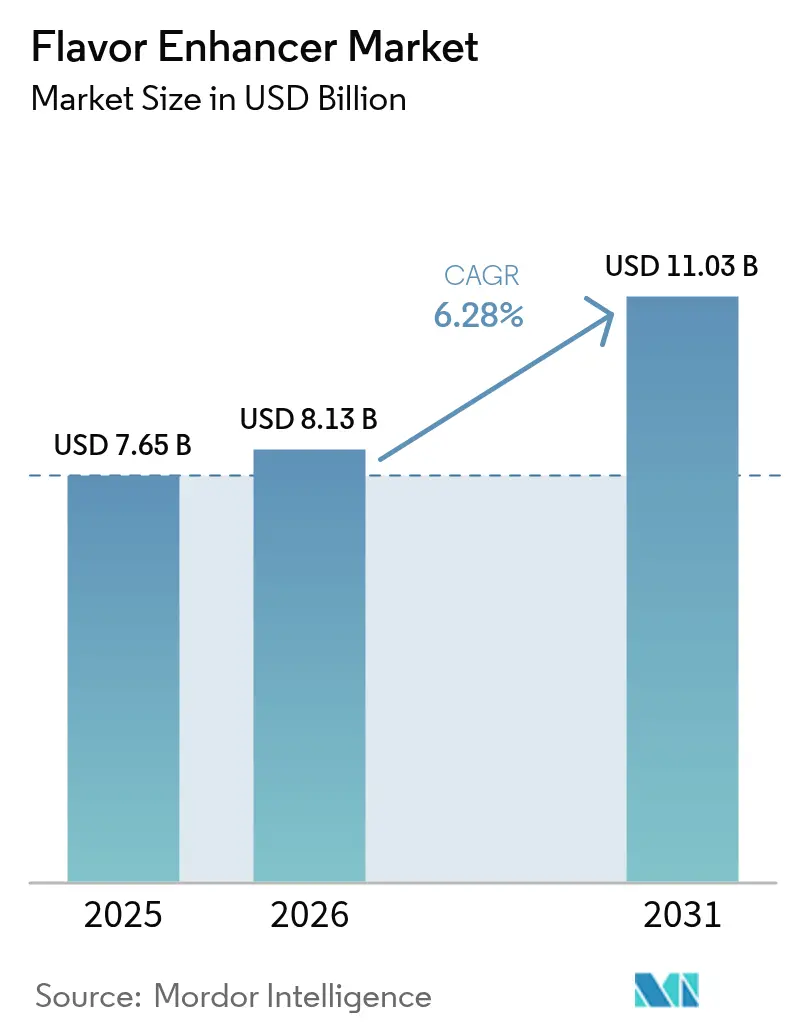
The flavor enhancers market size is expected to grow from USD 7.65 billion in 2025 to USD 8.13 billion in 2026 and is forecast to reach USD 11.03 billion by 2031 at 6.28% CAGR over 2026-2031. This growth trajectory is underpinned by evolving preferences, rising demand for convenience and processed food products, and a significant shift toward natural and clean-label ingredients. The Asia-Pacific region emerges as the largest contributor to global revenue and is anticipated to exhibit the fastest growth during the forecast period. Glutamates continue to dominate the flavor enhancers market; however, yeast extracts are gaining traction as manufacturers increasingly prioritize cleaner-label formulations to align with consumer expectations. In the beverage segment, developers are accelerating the adoption of advanced flavor enhancers to effectively mask botanical off-notes while delivering distinctive and signature taste profiles. In North America and Europe, stringent regulations on food additives are compelling multinational companies to reformulate their products to ensure compliance with global standards. Concurrently, regional players are leveraging localized flavor preferences to establish and strengthen niche market positions.
Key Report Takeaways
- By type, glutamates commanded 40.72% of the flavor enhancers market share in 2025, whereas yeast extracts are on track for a 7.05% CAGR to 2031.
- By application, savory snacks accounted for 33.10% of the flavor enhancers market size in 2025; beverages are positioned to expand at a 6.44% CAGR through 2031.
- By form, liquid products led with 38.86% revenue share in 2025, also liquid is slated to post the quickest 7.21% CAGR between 2026-2031.
- By geography, Asia-Pacific held 28.61% of global revenue in 2025 and is projected to widen its lead at a 7.78% CAGR by 2031.
Note: Market size and forecast figures in this report are generated using Mordor Intelligence’s proprietary estimation framework, updated with the latest available data and insights as of 2026.
Market Trends and Insights
Drivers Impact Analysis of Flavor Enhancer Market*
| Driver | (~) % Impact on CAGR Forecast | Geographic Relevance | Impact Timeline |
|---|---|---|---|
| Growing consumption of convenience food products | +1.4% | Global urban centers | Medium term (2-4 years) |
| Consumer preference for bold and unique flavors | +1.2% | North America, Europe, Asia-Pacific | Long term (≥ 4 years) |
| Growing demand for monosodium glutamate (MSG) as a flavor enhancer in food products | +0.9% | North America, Asia-Pacific | Long term (≥ 4 years) |
| Low cost and wide availability associated with flavor enhancers | +0.8% | Emerging markets | Short term (≤ 2 years) |
| Rising demand for processed and packaged foods | +0.6% | Global | Short term (≤ 2 years) |
| Increasing application of flavor enhancers in the beverage industry | +0.4% | North America, Asia-Pacific | Medium term (2-4 years) |
| Source: Mordor Intelligence | |||
Growing Consumption of Convenience Food Products
With the growing preference for convenience foods, particularly in urban areas, the flavor enhancers market is undergoing significant transformation. Manufacturers are increasingly prioritizing the development of solutions that ensure the preservation of taste quality while extending product shelf life. This shift is driven by the rising demand for ready-to-eat meals and processed foods among time-constrained consumers. In India, this trend is reflected in the consistent growth of the Wholesale Price Index (WPI) for processed, ready-to-eat foods, which increased from 141.2 in 2023 to 146.3 in 2024, as per data from the Office of Economic Advisers[1]Source: Office of Economic Adviser' "Annual Average of Monthly Index" www.eaindustry.nic.in. However, the competitive nature of the market presents an additional challenge for manufacturers: creating distinctive and appealing flavor profiles that enable their products to stand out. To address this, companies are adopting advanced flavor systems that combine traditional enhancers, such as MSG, with innovative alternatives. For example, yeast extracts are being utilized to deliver rich umami flavors while adhering to clean-label requirements, thereby meeting evolving consumer preferences.
Consumer Preference for Bold and Unique Flavors
The growing consumer demand for flavor enhancers reflects a pursuit of complex and authentic sensory experiences. This trend spans various demographics, with younger consumers showing a strong inclination toward globally-inspired flavor profiles. In 2024, China's processed food sector saw a 2.2% growth, reaching USD 1.26 trillion, according to the United States Department of Agriculture[2]Source: United States Department of Agriculture, "China: Food Processing Ingredients Annual", www.fas.usda.gov, exemplifying this shift, with consumers favoring hot, spicy, and smoked flavors. These evolving preferences extend beyond taste, representing cultural dynamics as consumers leverage food choices to express identity and explore new experiences. In response, flavor enhancer manufacturers are developing advanced compounds that replicate authentic regional profiles while ensuring stability across diverse food applications. As consumer preferences shift toward bolder profiles such as tangy, fermented, spicy, or smoky, companies are reformulating existing products or launching new variants. The flavor enhancer suppliers are facilitating these reformulations by delivering tailored ingredient systems designed to meet both sensory and technical requirements, including flavor retention during processes like baking or frying.
Growing Demand for Monosodium Glutamate (MSG) as a Flavor Enhancer in Food Products
MSG has solidified its leadership position in the Flavor Enhancers industry by offering a highly effective umami flavor at an exceptionally low cost, just fractions of a cent per serving. This unparalleled cost-to-impact efficiency remains a significant competitive advantage. Ajinomoto is strategically repositioning MSG, traditionally perceived as a mere additive, as a contributor to health and wellness, with a particular focus on its potential to aid in sodium reduction. This repositioning has encouraged several U.S. school districts to discreetly incorporate MSG into their reduced-sodium meal formulations. Furthermore, recent sensory research has demonstrated that MSG, when combined with potassium chloride, effectively neutralizes the metallic aftertaste associated with the latter. This breakthrough provides product formulators with an innovative solution for salt reformulation. As a result, there is a growing opportunity for increased MSG adoption, even among premium wellness brands, especially if its natural occurrence in ingredients like tomatoes and Parmesan cheese is effectively communicated to consumers.
Low Cost and Wide Availability Associated with Flavor Enhancers
Flavor enhancers, priced at fractions of a cent per serving, provide a significant competitive edge by delivering superior taste profiles, particularly appealing to cost-conscious consumers in regions such as South America, Africa, and parts of Southeast Asia. The ability to incorporate these enhancers at microgram levels enables food processors to reduce dependency on high-cost ingredients like meat stocks, dairy fats, or spice extracts while still achieving optimal flavor standards. For instance, Angel Yeast’s Angeoboost, enriched with 5’-nucleotides, exemplifies how cost-effective yeast-derived powders can outperform traditional salt reduction methods in applications such as snacks and soups, thereby enhancing profitability in emerging markets. As fast-moving consumer goods companies increasingly adopt hybrid cost-plus and value-based pricing models, the flavor enhancers market is poised to remain a vital tool for driving profit margins.
Restraints Impact Analysis of Flavor Enhancer Market*
| Restraint | (~) % Impact on CAGR Forecast | Geographic Relevance | Impact timeline |
|---|---|---|---|
| Stringent regulations and quality standards restraining flavor enhancers market growth | -1.1% | North America, Europe | Medium term (2-4 years |
| Health concerns related to flavor enhancers | -0.7% | Global | Long term (≥ 4 years) |
| Rising awareness of potential allergic reactions further limit market expansion | -0.6% | North America, Europe | Long term (≥ 4 years) |
| Availability of raw materials restraining market growth | -0.4% | Global | Medium term (2-4 years |
| Source: Mordor Intelligence | |||
Stringent Regulations and Quality Standards Restraining Flavor Enhancers Market Growth
Global manufacturers encounter significant compliance challenges due to varying regional standards, complicating efforts to expand into new markets. Regulatory changes, such as the FDA's deauthorization of red dye No. 3 and California's bans on brominated vegetable oil (BVO) and potassium bromate, highlight the fast-evolving regulatory landscape, requiring businesses to promptly adapt and reformulate their products. This environment increases pressure on synthetic flavor enhancers, which, despite being cost-efficient, are under growing regulatory scrutiny. The FDA's March 2024 update on its post-market assessment of food chemicals indicates potential regulatory changes that could impact the approval status of existing flavor enhancers. For multinational companies, navigating this complex regulatory framework necessitates substantial investments in compliance infrastructure and market-specific product development, providing a competitive advantage to larger players with advanced regulatory capabilities.
Health Concerns Related to Flavor Enhancers
The growing emphasis on clean-label products is driving consumers to actively scan QR codes to verify supply-chain transparency. This shift in consumer behavior has resulted in a marked preference for yeast extracts over chemically modified alternatives. In response, companies are strategically enhancing their branding efforts by integrating on-pack storytelling with detailed online nutritional explanations. Additionally, they are repositioning umami peptides as culinary equivalents to the rich, authentic flavors of slow-simmered broths. However, despite these efforts, synthetic flavor enhancer categories continue to face significant consumer skepticism, which often delays product launches by several months. This persistent trust deficit is fueling increased research and development investments in fermentation-derived innovations, a critical area expected to shape product development pipelines within the flavor enhancers market.
*Our forecasts treat driver/restraint impacts as directional, not additive. The impact forecasts reflect baseline growth, mix effects, and variable interactions.
Flavor Enhancer Market Segment Analysis
By Product Type:
Yeast Extracts Challenge Glutamate Pre-eminenceYeast extracts are anticipated to achieve a 7.05% CAGR through 2031, surpassing overall market growth, driven by their compatibility with vegan, vegetarian, and reduced-salt food categories. Advances in tailored autolysis now enable suppliers to develop extracts with precise nucleotide-to-peptide ratios tailored for specific applications such as retorted broths and high-moisture meat analogs. This versatility positions yeast extracts as a strategic option for manufacturers preparing for potential MSG labeling restrictions. Meanwhile, glutamates maintain a 40.72% market share due to their superior cost-performance balance, ensuring steady demand for mass-market snacks. Strategic portfolio managers are increasingly adopting dual-sourcing approaches to secure supply continuity for both traditional umami and clean-label solutions.
In addition to delivering umami, yeast extracts enhance kokumi mouthfeel, allowing product developers to reduce saturated fat without compromising texture, an essential feature for low-fat dairy and alternative meat spreads. Suppliers are also integrating yeast extracts with natural antioxidants to improve oxidative stability and extend shelf life, particularly for export-oriented products. Regulatory authorities have not introduced additional barriers for yeast extracts, offering them a smoother regulatory pathway compared to synthetic alternatives. These combined advantages suggest that yeast extracts will continue to gain market share within the flavor enhancers segment, while glutamates retain their stronghold due to cost efficiency.



By Application:
Beverages Lead Innovation While Savory Snacks Maintain VolumeIn 2025, the savory snack segment secured a substantial 33.10% share of total revenue. Consumer preferences are shifting toward bold and long-lasting flavors in savory snacks, with popular options including masala, cheese, BBQ, peri-peri, and wasabi. To deliver these flavor profiles cost-effectively, manufacturers are leveraging flavor enhancers such as MSG, yeast extract, hydrolyzed vegetable protein, and chili oil powders. The flavor enhancers market for beverages is anticipated to expand at a strong 6.44% CAGR (2026-2031). Energy drink manufacturers are incorporating positive allosteric modulators, such as thaumatin, alongside encapsulated bitterness blockers to highlight key flavor notes like guarana and green tea. The increasing production of non-alcoholic beverages is fueling the demand for flavor enhancers in the beverage market. In May 2025, China reported a production volume of 16.13 million metric tons of non-alcoholic beverages, as per the National Bureau of Statistics of China.
In the beverage sector, the durability of flavor enhancers under acidic pH conditions and pasteurization heat is critical. Suppliers are addressing this need by developing oil-in-water microemulsions that protect aromatic compounds from degradation, ensuring a strong aroma release upon opening. Due to the high rate of consumer trials in beverages, successful flavor launches can achieve rapid scalability compared to solid foods. This dynamic positions the beverage segment as a key testing ground for innovative flavor systems. Consequently, the beverage segment has gained strategic importance within the flavor enhancers market, attracting a disproportionate share of research and devlopment investments despite its smaller volume.
By Form:
Liquid Category DominanceIn 2025, liquid enhancers contributed 38.86% of the revenue, driven by their ease of use and rapid dispersion capabilities, and are expected to achieve a CAGR of 7.21% during the forecast period of 2026-2031. Emulsion carriers at liquid interfaces enable flavor payloads exceeding 20%, reducing transportation costs and aligning with sustainability objectives. The integration of probiotic spores with flavor precursors in a single capsule is an emerging trend, creating opportunities for synbiotic snack claims. These advancements emphasize the role of form innovation in redefining value creation within the flavor enhancers market, benefiting suppliers proficient in both delivery systems and flavor chemistry.
Liquid enhancers outperform powders in achieving uniform dispersion across food matrices, particularly in applications such as sauces, soups, gravies, marinades, and beverages. This ensures consistent and reliable flavor delivery in the final product, a key requirement in industrial food processing. Furthermore, when effectively emulsified or preserved, liquid enhancers demonstrate excellent stability, making them a preferred choice for packaged food products. However, chefs and home cooks alike often turn to powdered flavor enhancers for their convenience and long shelf life. These enhancers boost a dish's taste without overshadowing its primary flavors. Moreover, certain enhancers, such as MSG, can lessen the need for salt, paving the way for healthier culinary choices.
Geography Analysis
APAC Flavor Enhancer Market
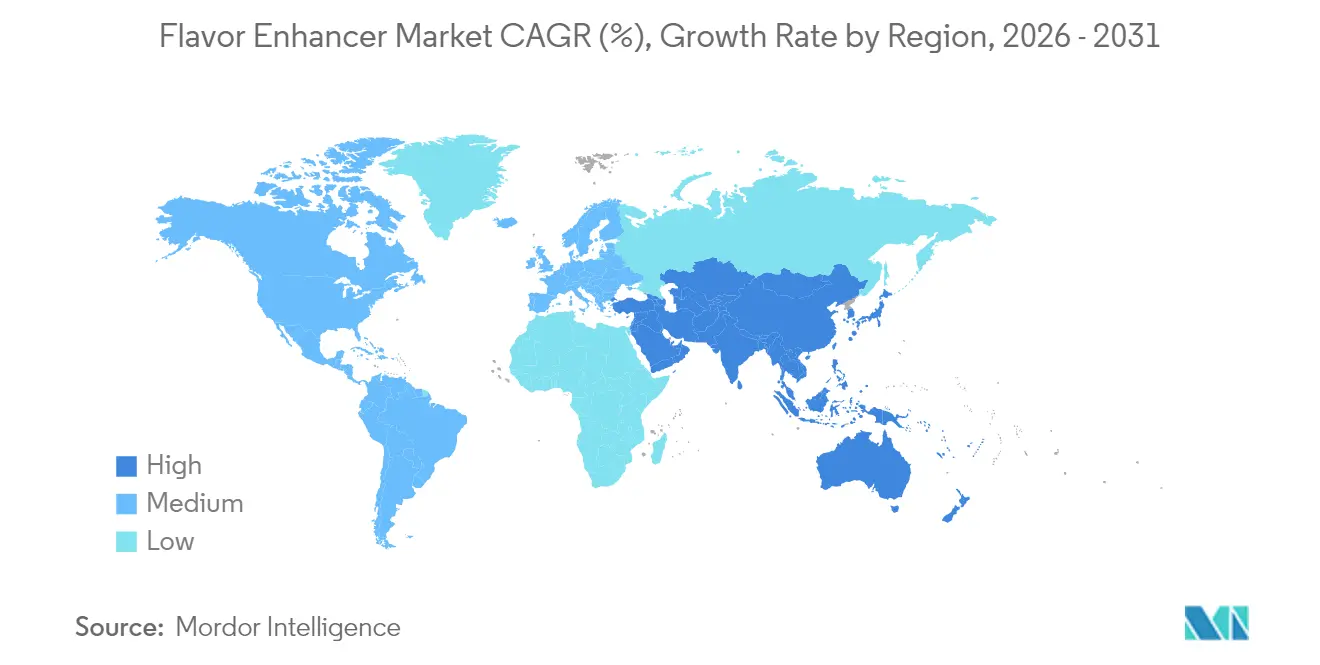
In 2025, Asia-Pacific accounted for the largest market share at 28.61%. Driven by China's robust corn-to-MSG supply chain, the region is positioned to lead global volume and growth. China's Fufeng Group leverages its raw material advantage, while Japan's Ajinomoto enhances enzymatic processes to minimize water consumption, aligning with eco-score standards prioritized by multinational quick-service restaurant chains. Simultaneously, regional start-ups are innovating by transforming indigenous chilies and misos into low-salt savory powders, catering to the growing demand for instant noodles across Southeast Asia. These advancements reinforce Asia-Pacific's role as both a manufacturing hub and a leader in flavor trends within the flavor enhancers market. The region is projected to grow at a strong CAGR of 7.78% during the forecast period of 2026-2031.
North America Flavor Enhancer Market
In North America, regulatory oversight and digital transparency take center stage. The FDA's chemical-safety reviews prompt vigilant label audits, and QR codes now enlighten retail shoppers on ingredient origins. Venture capital is flowing into precision-fermentation hubs, notably the San Francisco Bay Area, with a keen focus on biosynthesizing rare diketopiperazines, heralded for their low-dose mouth-feel enhancement. As a result, North American suppliers are touting "regulatory readiness" as a lucrative commercial service, amplifying their revenue streams in the flavor enhancers market.
EMEA and South America Flavor Enhancer Market
Europe, while setting stringent additive caps, is at the forefront of the sustainability movement. DSM-Firmenich, with its flagship research and development center in the Netherlands, is experimenting with kombucha-derived enhancer bases, eyeing deployment in the Middle East and Africa markets, where halal certification holds significance. Southern European producers are turning grape-pomace amino acids into savory concentrates, a move that echoes the circularity ethos championed by the EU Green Deal. Meanwhile, South America and Africa are focusing on cost-effective enhancers to elevate local staples; for instance, repurposing soybean ferment side-streams into hydrolyzed vegetable proteins, enriching the regional landscape within the broader flavor enhancers market.

Regulatory Landscape
Regulation of flavor enhancers and adjacent food additives continues to tighten across major markets, raising the compliance burden for global suppliers and branded food manufacturers. In the United States, the FDA has been advancing its Human Foods Program priorities and formalizing its food chemical safety approach, including finalizing a Post-Market Assessment Program and initiating reassessments of chemicals such as BHT and ADA in 2026, while also signaling movement toward a proposed rule that would require mandatory notification for substances claimed to be GRAS (with a December 2026 target referenced in the federal regulatory agenda). These steps increase the need for documentation, labeling diligence, and post-market monitoring for ingredient portfolios used in snacks, beverages, and processed foods.
In Europe, authorization and ongoing compliance under the EU additives framework (including Regulation (EC) No 1333/2008) are becoming more data-intensive, with EFSA updating its scientific and administrative guidance for food additive applications in January 2026. Separately, Commission Regulation (EU) 2026/196 introduces amended usage specifications for several additives, including carrageenan (E 407), gums (E 410, E 412, E 414, E 415), and pectins (E 440), with an effective date of August 18, 2026, requiring suppliers to review formulations and specifications for EU-bound products. Together, these US and EU actions reinforce the market shift toward cleaner-label alternatives such as yeast extracts and more robust regulatory-ready technical files for multinational commercialization.
Value Chain Analysis
The flavor enhancers value chain starts with agricultural and bio-based inputs (notably corn, cassava, and sugarcane for fermentation-based pathways) and moves through fermentation and enzymatic hydrolysis, purification (including high-purity nucleotide separation where applicable), blending, and conversion into liquid, powder, or other delivery formats. Large integrated producers and diversified ingredient houses supply core enhancers such as glutamates, yeast extracts, and hydrolyzed vegetable proteins, then tailor them into application-specific systems for savory snacks, convenience foods, and beverages where stability under heat, pH, and processing conditions matters. Regulatory compliance functions (for example, GRAS positioning or food additive approvals), traceability documentation, and quality management are embedded throughout as gate requirements before commercialization.
Downstream, distributors and direct-to-manufacturer channels supply enhancers to multinational food processors and regional formulators, supported by technical service teams and pilot and application labs that speed reformulation and product renovation cycles. Bottlenecks in the current environment include constrained specialized fermentation and purification capacity for clean-label and advanced modulators, raw material and energy cost volatility affecting MSG economics, and the growing importance of application support as a differentiator in competitive bids. Trade associations and industry bodies structure good practice and communication across the chain, while regional manufacturing hubs in Asia-Pacific remain central to global supply due to scale advantages in corn-to-MSG and fermentation-linked infrastructure.
Competitive Landscape
The flavor enhancers market is moderately concentrated, with established players and emerging specialists competing intensely. Prominent companies in the market include Ajinomoto Co. Inc., International Flavors and Fragrances Inc., DSM-Firmenich AG, and Symrise AG. The 2023 merger of DSM and Firmenich, which created a combined entity generating EUR 12.31 billion in sales, highlights the ongoing consolidation trend. Businesses are pursuing mergers to achieve scale advantages in areas such as research, regulatory compliance, and global distribution.
Technological innovation is becoming a critical differentiator, with companies like Givaudan utilizing AI-driven tools such as Customer Foresight for trend forecasting and ATOM for enhancing flavor formulation processes. Regulatory changes, particularly the FDA's ongoing post-market evaluations of food chemicals, are influencing competitive dynamics. These assessments may restrict certain ingredients while creating opportunities for compliant alternatives, thereby reshaping the market landscape.
Regional experts are increasingly establishing their presence by offering tailored formulations that comply with diverse ingredient regulations specific to local markets. The adoption of software-enabled traceability systems is becoming a critical requirement, as these features are now frequently included in bid documents. This development is driving even smaller, boutique suppliers to allocate resources toward implementing cloud-based compliance dashboards to remain competitive. Within the flavor enhancers market, the ability to seamlessly integrate data and demonstrate regulatory expertise is evolving into a significant entry barrier, often surpassing the traditional emphasis on production scale as a determinant of market entry and success.
Flavor Enhancer Industry Leaders
-
Ajinomoto Co., Inc
-
Givaudan S.A.
-
Kerry Group plc
-
International Flavors & Fragrances, Inc.
-
DSM-Firmenich AG
- *Disclaimer: Major Players sorted in no particular order

Flavor Enhancer Market Companies Covered in this Report
- Ajinomoto Co., Inc
- Givaudan S.A.
- Kerry Group plc
- International Flavors & Fragrances, Inc.
- DSM-Firmenich AG
- Sensient Technologies Corporation
- Symrise AG
- The Archer-Daniels-Midland Company
- Corbion N.V.
- AngelYeast Co., Ltd.
- Bell Flavors & Fragrances
- McCormick & Company, Inc
- Flavorchem Corporation
- Associated British Foods plc
- Nikken Foods co. Ltd.
- Takasago International Corporation
- PT Indofood CBP Sukses Makmur Tbk
- Lesaffre Group
- Synthite Industries Ltd.
- Kalsec Inc.

Market Opportunities and Future Outlook
Opportunities are most evident where manufacturers need taste impact with fewer or more scrutinized additives, and where suppliers can combine regulatory readiness with technical performance. Sodium-reduction and clean-label reformulation continue to open room for yeast extracts, fermentation-derived solutions, and advanced masking systems in beverages, aligning with the market shift described in North America and Europe toward tighter additive oversight and consumer-facing transparency. At the same time, the continued scale of convenience foods and savory snacks supports steady demand for cost-effective umami systems, while premium and functional beverages drive innovation for bitterness management and off-note masking.
Recent investments and policy actions also point to where capacity and trade dynamics are concentrating. In June 2026, Givaudan inaugurated a 24,000 square metre production facility in Cikarang, Indonesia, producing savoury, sweet, and snack flavour powders, supporting faster regional supply and localization strategies in Asia-Pacific. In the United States, the continuation of antidumping duty orders on monosodium glutamate from China and Indonesia (effective May 2026 per the USITC process) adds another commercial variable for buyers and distributors managing glutamate sourcing strategies. In Europe, the 2026 EFSA guidance update for food additive applications and the August 2026 effective date tied to amended EU specifications for certain additives reinforce the advantage for suppliers that can provide robust technical dossiers and compliant specifications across multiple geographies.
Recent Industry Developments in Flavor Enhancer Market
- June 2026: Givaudan inaugurated a 24,000 square metre production facility in Cikarang, Indonesia, to manufacture savoury, sweet, and snack flavour powders. The site strengthens in-region production for fast-moving categories and supports shorter lead times for Asia-Pacific customers while improving supply resilience for powdered flavor systems.
- February 2025: Kerry Group partnered with Far Eastern Impex to establish its first international production operation for flavourings in Pakistan. The move advances localization of taste solutions manufacturing and supports faster response to regional customer requirements in an emerging market with expanding packaged food demand.
- July 2024: Ajinomoto Health and Nutrition North America collaborated with Shiru to develop sweet proteins using Shiru's AI platform, Flourish, to identify novel proteins with desired attributes. This partnership reflects the push toward next-generation taste modulation and alternative sweetening tools that can help formulators manage sugar reduction while maintaining sensory performance.


Flavor Enhancer Market Report Scope and Research Methodology
Market Definition and Coverage
For this study, the flavour enhancer market includes ingredients added to food and beverages mainly to intensify, round out, or restore taste, and it is measured as manufacturer level revenue generated from sales of these enhancers across regions.
Scope exclusions: It excludes retail pricing markups, finished packaged foods as a whole, and broader flavors that work mainly through aroma rather than taste.
Segments Covered in This Report
-
By Product Type
- Acidulants
- Glutamates
- Hydrolysed Vegetable Proteins
- Yeast Extracts
- Others Types
-
By Application
- Dairy
- Bakery
- Confectionery
- Savory Snack
- Meat
- Beverage
- Other Applications
-
By Form
- Powder
- Liquid
- Others
-
By Geography
-
North America
- United States
- Canada
- Mexico
- Rest of North America
-
Europe
- United Kingdom
- Germany
- Spain
- France
- Italy
- Russia
- Rest of Europe
-
Asia-Pacific
- China
- India
- Japan
- Australia
- Rest of Asia-Pacific
-
South America
- Brazil
- Argentina
- Rest of South America
-
Middle East and Africa
- Saudi Arabia
- South Africa
- Rest of Middle East and Africa
-
North America
Data Sources, Market Sizing, and Validation
Desk Research
Desk work started with building a clean view of demand signals for processed foods and beverages, because enhancers typically track packaged food output and reformulation cycles. We used public sources such as the US FDA food additive inventory, the European Commission food additive regulations, Codex Alimentarius references, and statistics series from FAO and UN Comtrade to understand usage boundaries and trade flows.
We also reviewed company annual reports, investor presentations, and reputable press coverage to map how manufacturers describe volume changes, pricing, and product mix. Patent databases were used selectively to sense where formulation activity is increasing (for example, yeast extracts and savory boosters). A paid subscription for company financials and news was used in a limited way to cross-check reported revenue splits and major capacity or expansion announcements. The sources named here are illustrative, and many other public documents and data points were also referenced for data collection, validation, and clarification.
Primary Interviews and Surveys
Primary discussions were used to pressure test the demand pool and pricing logic behind different enhancer families, since label claims and substitution can quickly change what buyers count as an enhancer. We spoke with manufacturers, distributors, food formulators, and procurement or quality leaders across APAC, EMEA, and the Americas, then we used the feedback to confirm adoption patterns by application and to adjust assumptions that could not be read directly from public data.
Distribution of primary research fieldwork respondents
| Company type | Respondent position | Region |
|---|---|---|
| Top tier: 29% | CXOs: 13% | APAC: 50% |
| Mid tier: 52% | Functional/Unit leaders: 27% | EMEA: 31% |
| Smaller Players: 19% | Managers: 60% | Americas: 19% |
Market-Sizing & Forecasting
The sizing model starts from a top-down build where packaged food and beverage production, trade movements for relevant ingredient families, and typical inclusion rates are used to reconstruct a realistic demand pool by region. Once that structure is set, we corroborate it using selective bottom-up checks such as sampled supplier revenues by enhancer family, channel feedback on mix, and a simple ASP times volume cross-check for high-usage categories.
Key inputs treated as the main dials in the model included processed food output growth, application mix shifts (snacks, ready meals, beverages), clean label substitution from glutamates toward yeast extracts, average price movement for major enhancer families, and regional regulatory or labeling constraints that change formulation behavior. Where bottom-up data was patchy, gaps were handled by applying conservative penetration ranges agreed during interviews, then stress testing them against import-export and capacity signals.
For forecasting, scenario analysis was used so that changes in reformulation intensity, pricing pass-through, and application growth can be flexed without breaking the model. The base case was anchored to consensus interview expectations, and it was checked against public indicators like packaged food volume trends and ingredient trade direction before final sign-off.
Data Validation & Update Cycle
Outputs were checked through multiple passes, starting with basic variance checks across regions and product families, followed by sanity checks against independent signals like trade direction, processed food growth, and known capacity additions. If an outlier appeared, the assumptions behind inclusion rates, pricing progression, or mix were reopened, and when needed interview respondents were re-contacted to clarify the cause.
Every report is refreshed on an annual cycle, and interim updates are added when major events change supply, pricing, or regulation in a material way. Before delivery, a final review pass is done so the numbers and the narrative reflect the latest available public updates and confirmed field feedback.
Mordor Intelligence's Flavour Enhancer Market Sizing Compared With Other Published Estimates
Published market values for flavour enhancers do not always match because firms often draw the product boundary differently, then apply different pricing and demand indicators to scale the total. Differences also show up when one estimate leans more on ingredient sales signals, and another leans more on finished food spending or a broader definition of flavors.
Trade flow direction for major enhancer inputs, packaged food output trends, and interview-confirmed inclusion rate ranges are the checks used to keep Mordor Intelligence tied to enhancer ingredient demand in food and beverage applications, rather than counting broader flavor systems that work mainly through aroma.
Benchmark comparison
| Source | Market Size | Gaps in Research Methodology |
|---|---|---|
| Mordor Intelligence | USD 8.13 B (2026) | |
| Global Consultancy A | USD 12.50 B (2026) | Often counts a wider set of taste and flavor systems, which can pull in adjacent ingredient revenues beyond core enhancer families used mainly for taste intensification. |
| Regional Consultancy B | USD 10.30 B (2025) | Uses a different base year and may assume faster price progression or higher adoption across applications without consistently reconciling those assumptions to trade signals and realistic inclusion rates. |
The spread in the table is mainly explained by product scope, base year timing, and how pricing and adoption are carried through the forecast. Our method stays repeatable because the totals can be traced back to observable indicators and then rechecked when new public signals or field feedback change the inputs.


Key Questions Answered in the Report
What is the projected flavor enhancers market size by 2031?
The market is expected to reach USD 11.03 billion in 2031 on a 6.28% CAGR.
Which region leads the flavor enhancers market?
Asia-Pacific holds 28.61% of global revenue in 2025 and is projected to grow the fastest through 2031.
Why are yeast extracts growing so quickly?
They deliver umami while satisfying clean-label rules, supporting a projected 7.05% CAGR versus the overall 6.28%.
How does MSG support sodium-reduction efforts?
Clinical research shows MSG can cut sodium by up to 40% in formulations without compromising taste.
Page last updated on:





