
Pseudomonas Aeruginosa Infection Treatment Market Size and Share
Market Overview
| Study Period | 2020 - 2031 |
|---|---|
| Market Size (2026) | USD 2.3 Billion |
| Market Size (2031) | USD 3.02 Billion |
| Growth Rate (2026 - 2031) | 5.58 % |
| Fastest Growing Market | Asia-Pacific |
| Largest Market | North America |
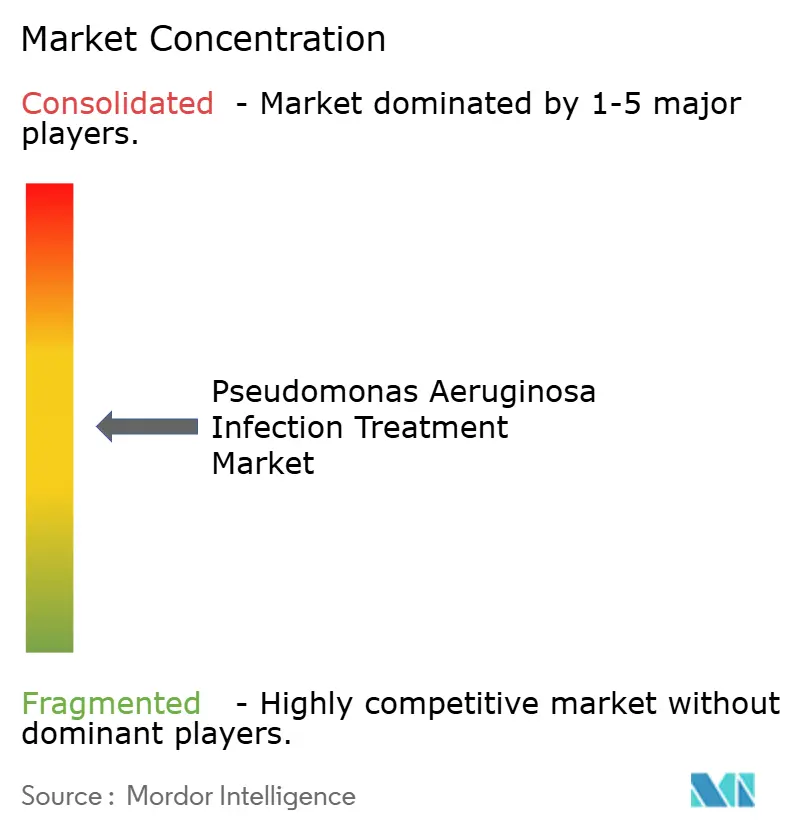
| Market Concentration | Medium |
Major Players *Disclaimer: Major Players sorted in no particular order Image © Mordor Intelligence. Reuse requires attribution under CC BY 4.0. | |
Pseudomonas Aeruginosa Infection Treatment Market Analysis by Mordor Intelligence
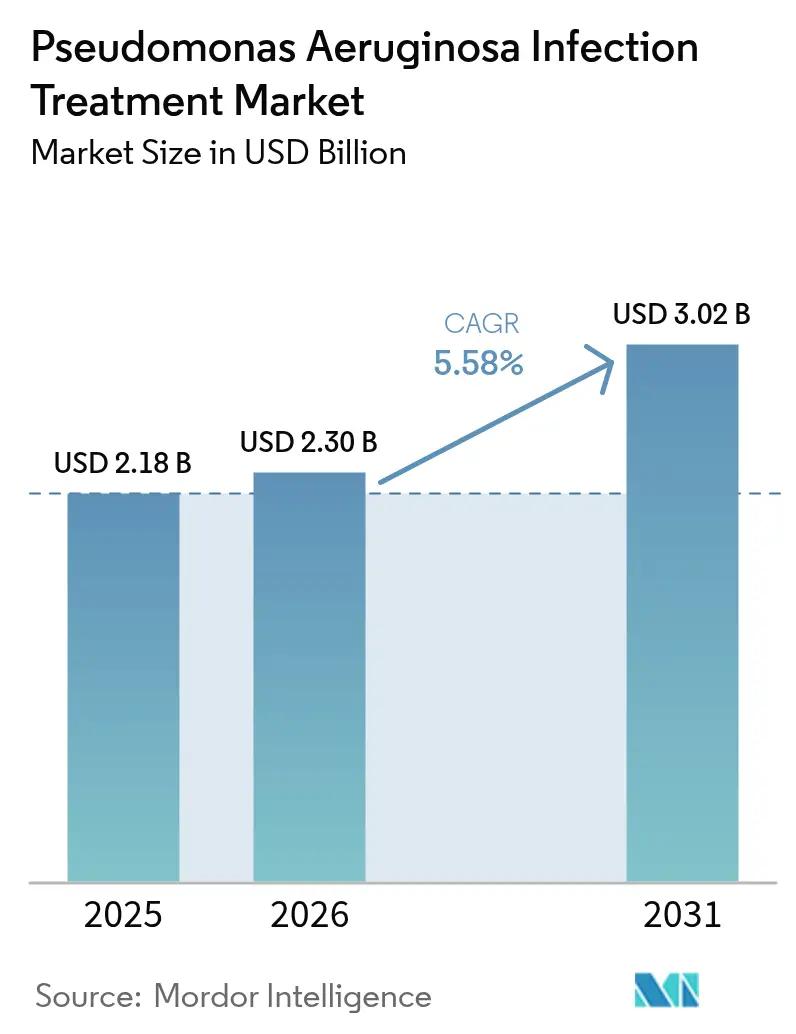
The pseudomonas aeruginosa infection treatment market size in 2026 is estimated at USD 2.3 billion, growing from 2025 value of USD 2.18 billion with 2031 projections showing USD 3.02 billion, growing at 5.58% CAGR over 2026-2031. This growth trajectory underscores how healthcare systems are racing to contain hospital-acquired infections, particularly those caused by carbapenem-resistant strains that now account for 29.7% of Pseudomonas cases in European hospitals.[1] A widening pipeline of β-lactam/β-lactamase inhibitor combinations, rising investments in phage therapies, and the spread of rapid molecular diagnostics collectively boost demand for advanced therapeutics. North America continues to shape clinical protocols through robust stewardship programs, while Asia-Pacific gains momentum on the back of accelerating healthcare expenditure and molecular surveillance networks. Innovation intensity is further stoked by FDA fast-track pathways and CARB-X grants, both of which shorten time-to-market for next-generation agents.
Key Report Takeaways
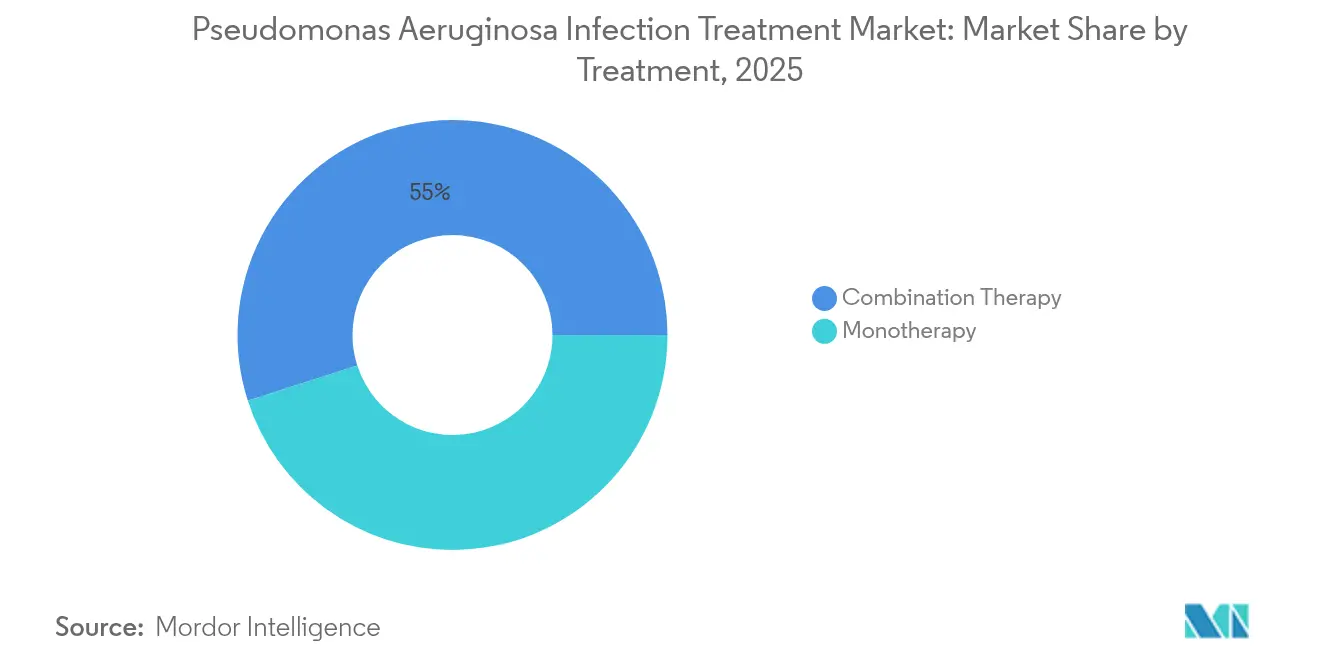
- By treatment type, combination therapy led with 54.95% of the Pseudomonas aeruginosa infection treatment market share in 2025, and the segment is projected to post a 9.58% CAGR through 2031.
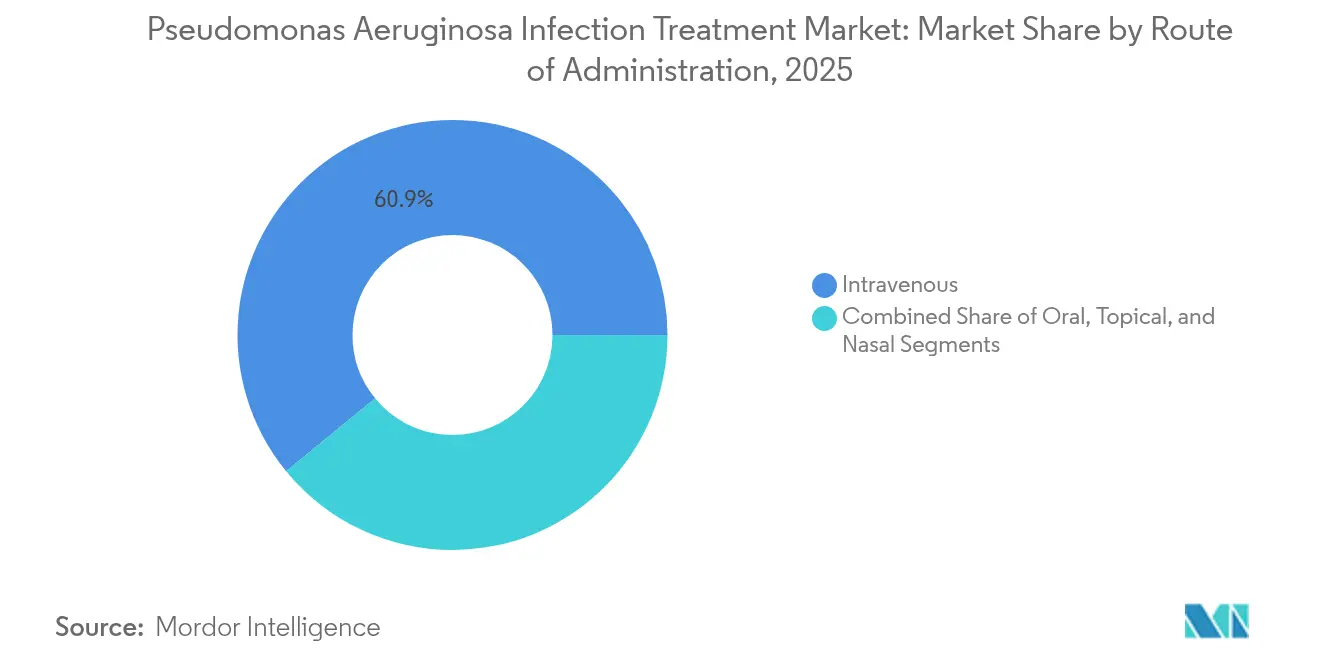
- By route of administration, intravenous products accounted for 60.92% of the Pseudomonas aeruginosa infection treatment market size in 2025, while inhalation therapies are poised to grow at an 7.95% CAGR.
- By distributional channel, hospital pharmacies contributed 63.98% revenue in 2025; Online/ Mail order pharmacies is forecast to register the fastest 8.89% CAGR to 2031
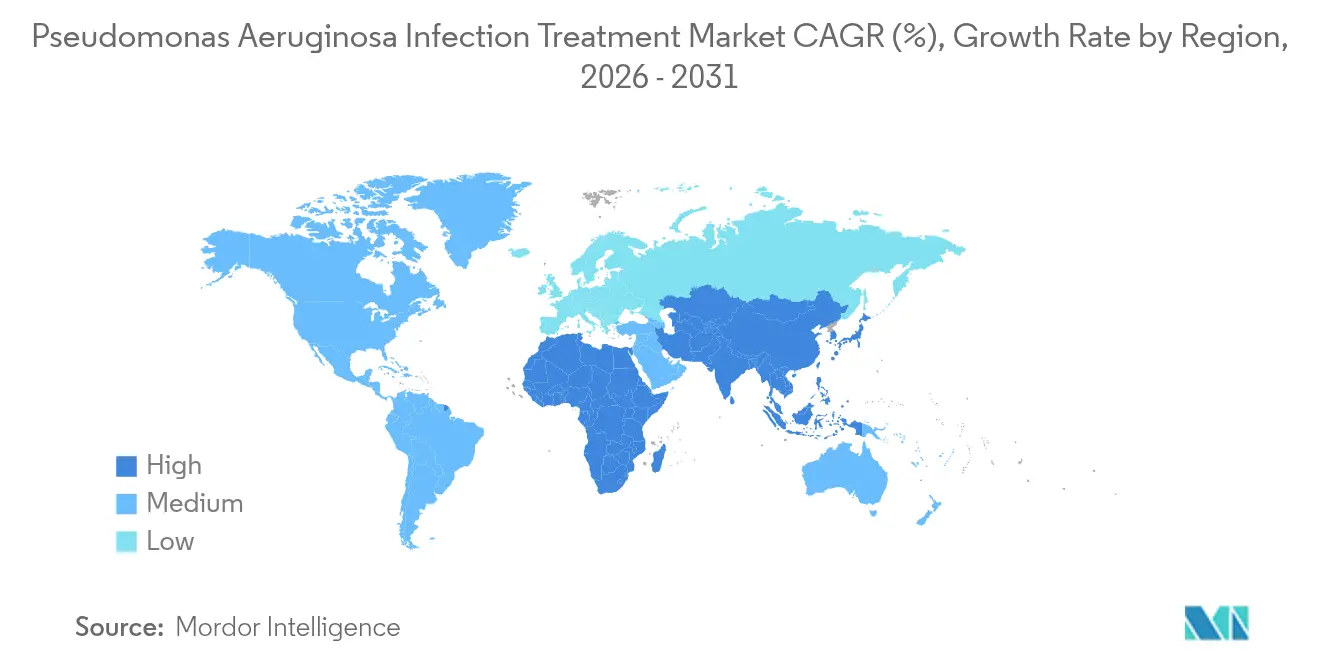
- By region, North America contributed 34.02% revenue in 2025; Asia-Pacific is forecast to register the fastest 8.55% CAGR to 2031.
Note: Market size and forecast figures in this report are generated using Mordor Intelligence’s proprietary estimation framework, updated with the latest available data and insights as of 2026.
Market Trends and Insights
Drivers Impact Analysis of Pseudomonas Aeruginosa Infection Treatment Market*
| Driver | (~) % Impact on CAGR Forecast | Geographic Relevance | Impact Timeline |
|---|---|---|---|
| Rising Prevalence Of Hospital-Acquired Infections | +1.2% | Global, with highest impact in North America & Europe | Medium term (2-4 years) |
| Growing R&D Investment In Antipseudomonal Drugs | +0.8% | North America & EU core, spill-over to APAC | Long term (≥ 4 years) |
| Increasing Chronic Lung Disease Burden (CF, COPD) | +1.0% | Global, with concentrated impact in developed markets | Long term (≥ 4 years) |
| Regulatory Incentives For Phage & Novel Antibiotic Platforms | +0.6% | North America & EU regulatory frameworks | Medium term (2-4 years) |
| Adoption Of Inhaled Nano-Formulations Improving Adherence | +0.9% | Global, early adoption in North America & Europe | Medium term (2-4 years) |
| Expansion Of Rapid Molecular Diagnostics | +0.7% | APAC core, expanding to MEA | Short term (≤ 2 years) |
| Source: Mordor Intelligence | |||
Rising Prevalence of Hospital-Acquired Infections
Hospital environments create a near-ideal reservoir for Pseudomonas aeruginosa, especially where intensive care units rely on mechanical ventilation and invasive catheters. European surveillance indicates more than 3.5 million healthcare-associated infections yearly, leading to over 90,000 deaths, of which 71% involve antibiotic-resistant organisms. Ventilator-associated pneumonia remains a critical subset, with mortality climbing to 35.1% in extensively drug-resistant episodes.[2]These statistics spur hospitals to favor dual-agent protocols able to break through biofilms and tackle adaptive resistance.
Growing R&D Investment in Antipseudomonal Drugs
Funding consortia such as CARB-X have channelled significant capital toward novel mechanisms, exemplified by support for Forge Therapeutics’ metallo-enzyme inhibitors and Phico Therapeutics’ engineered phage platform. The GAIN Act has granted 147 qualified infectious disease product designations, accelerating review cycles for breakthrough agents.[3]Partnerships such as Eli Lilly–OpenAI illustrate how artificial intelligence now underpins lead-compound discovery pipelines.
Increasing Chronic Lung Disease Burden (CF, COPD)
Persistent colonization is commonplace in cystic fibrosis airways, where dense biofilms blunt systemic antibiotic penetration. Microbiome research shows Bacteroides species moderating inflammatory cascades, hinting at adjunct probiotic interventions. COPD animal models demonstrate that nanoparticle-borne antibiotics drop pulmonary bacterial loads and dampen inflammation more effectively than standard formulations.[4] As CFTR modulators extend life expectancy, therapy algorithms must reconcile chronic inhaled regimens with systemic tolerance thresholds.
Regulatory Incentives for Phage & Novel Antibiotic Platforms
The FDA’s QIDP pathway reduces review times and awards 5-year exclusivity extensions, while Europe’s Innovative Medicines Initiative nurtures adaptive trial designs that fit microbiology-specific endpoints. Such frameworks helped advance EMBLAVEO from submission to approval in under 12 months.
Restraints Impact Analysis of Pseudomonas Aeruginosa Infection Treatment Market*
| Restraint | (~) % Impact on CAGR Forecast | Geographic Relevance | Impact Timeline |
|---|---|---|---|
| Rapid Emergence Of Multidrug Resistance | -1.8% | Global, with highest impact in Asia-Pacific & MEA | Short term (≤ 2 years) |
| High Cost Of Next-Generation Antibiotics | -1.1% | Global, disproportionate impact in LMICs | Medium term (2-4 years) |
| Cold-Chain Gaps For Liposomal Inhaled Products In LICs | -0.7% | Sub-Saharan Africa, Southeast Asia, Latin America | Long term (≥ 4 years) |
| Tighter Antimicrobial-Stewardship Protocols In High-Income Health Systems | -0.9% | North America & EU core markets | Medium term (2-4 years) |
| Source: Mordor Intelligence | |||
Rapid Emergence of Multidrug Resistance
Genetic plasticity fuels swift adaptation, with Portuguese tertiary centers reporting 3.7% extensively drug-resistant prevalence and 35.1% mortality. OprD porin loss confers carbapenem resistance, yet complete multidrug resistance requires intertwined efflux and β-lactamase pathways that force clinicians toward dual agents.
High Cost of Next-Generation Antibiotics
Premium pricing collides with limited reimbursement windows, especially in public hospitals across low- and middle-income regions where essential antibiotic availability can drop to 23.76%. Pharmaceutical company exits from emerging markets, exemplified by GSK and Sanofi departures from Nigeria, further constrain access to quality antimicrobials and increase reliance on substandard medications that accelerate resistance development.
*Our forecasts treat driver/restraint impacts as directional, not additive. The impact forecasts reflect baseline growth, mix effects, and variable interactions.
Pseudomonas Aeruginosa Infection Treatment Market Segment Analysis
By Treatment:
Combination Protocols Drive Resistance ManagementCombination regimens commanded 54.95% of the Pseudomonas aeruginosa infection treatment market in 2025 and are advancing at a 9.58% CAGR through 2031. This dominance is anchored in robust Phase 3 evidence showing ceftolozane-tazobactam plus amikacin outperforming monotherapy for carbapenem-resistant infections. The Pseudomonas aeruginosa infection treatment market size for combination therapy is expected to reach USD 2.07 billion by 2031 on the back of synergistic mechanisms that block efflux, disable β-lactamases, and disrupt biofilm matrices. Even as monotherapies remain pivotal for fully susceptible isolates and select outpatient indications, next-generation hybrids such as aztreonam/avibactam or cefepime/enmetazobactam are redefining clinical thresholds for adequate coverage. Phage-antibiotic cocktails further expand the clinical toolkit, leveraging bacteriophages to perforate biofilms and ferry antibiotics into protected micro-colonies.
A deeper examination reveals how dual-agent protocols also mitigate supply-chain disruptions. Hospitals cushion against single-drug shortages by stocking versatile combinations spanning multiple mechanisms, thereby tempering the 42% higher shortage rate seen with antimicrobials. Meanwhile, stewardship committees favor combinations that deliver rapid bactericidal activity, shorten hospital stays, and cut downstream costs associated with prolonged ICU support. These clinical and economic advantages explain why the Pseudomonas aeruginosa infection treatment market continues to gravitate toward dual-agent strategies.

By Route of Administration:
Inhalation Gains Momentum Through InnovationIntravenous formulations retained 60.92% revenue in 2025, driven by their indispensability in sepsis management and surgical prophylaxis. Nevertheless, inhalation products are outpacing every other route with an 7.95% CAGR. The inhaled segment’s Pseudomonas aeruginosa infection treatment market size is forecast to cross USD 0.67 billion by 2031, buoyed by nano-enabled dry-powder systems achieving a 40% fine-particle fraction ideal for deep-lung deposition. Chronic bronchiectasis and cystic fibrosis cohorts champion inhaled delivery because localized doses reach 50-fold higher airway concentrations than systemic infusions, all while lowering nephrotoxicity risk.
Technological leaps include silver-nanoparticle adjuncts that slash required antibiotic doses and hyaluronic-acid complexes designed for viscous CF mucus. Regulatory confidence builds in parallel: the PROMIS trials confirmed that inhaled colistimethate sodium significantly reduces exacerbation frequency over 12 months. As device portability improves and dosing regimens shrink from thrice daily to once daily, patient adherence is set to climb, reinforcing the inhaled route’s role within the broader Pseudomonas aeruginosa infection treatment market.
By Distribution Channel:
Digital Transformation Reshapes Access PatternsHospital pharmacies accounted for 63.98% of the Pseudomonas aeruginosa infection treatment market share in 2025, reflecting the need for on-site access to broad-spectrum and combination agents in critical‐care settings. These outlets integrate clinical pharmacists with stewardship teams and maintain real-time inventory controls that keep newly approved drugs such as EXBLIFEP and EMBLAVEO immediately available. Their embedded role inside hospitals also supports rapid dose adjustments for septic patients and minimizes treatment delays. Retail pharmacies play a complementary role by dispensing inhaled and oral follow-up therapies that allow earlier discharge and reduce inpatient costs.
Online and mail-order pharmacies are the fastest-growing channel, advancing at a 8.89% CAGR through 2031 as digital health platforms expand remote prescribing and adherence tracking . These distributors offer temperature-controlled logistics that protect liposomal or nanoparticle inhaled products, a capability that is increasingly valuable given the 42% higher shortage rate facing antimicrobials compared with other medicines. Automated refill reminders and connected inhaler data help clinicians monitor dosing fidelity in chronic cases, especially cystic fibrosis and bronchiectasis patients. As hybrid care models spread, the Pseudomonas aeruginosa infection treatment market increasingly relies on digital channels to close last-mile gaps and safeguard uninterrupted therapy.
Geography Analysis
North America Pseudomonas Aeruginosa Infection Treatment Market
North America holds firm at a 34.02% revenue share thanks to well-funded hospitals, aggressive stewardship mandates, and early uptake of QIDP-designated drugs. The region’s Veterans Health Administration surveillance shows shifting resistance profiles across 14 years, prompting continuous protocol updates and shifting formulary priorities. The United States accelerated approvals for EXBLIFEP and EMBLAVEO in less than a year, reinforcing a pragmatic regulatory environment that accelerates innovation. Canada’s provincial health reforms emphasize rapid diagnostic reimbursement, while Mexico increasingly codifies stewardship into national accreditation programs, giving the Pseudomonas aeruginosa infection treatment market strong regional headroom.
APAC Pseudomonas Aeruginosa Infection Treatment Market
Asia-Pacific is the fastest riser, clocking an 8.55% CAGR as health ministries expand universal coverage and molecular labs. Carbapenem resistance reaches a mean 31.3% across the region, necessitating robust investment in rapid diagnostics and phage research. Japan exemplifies best-practice alignment, with 78.8% adherence to febrile neutropenia guidelines that pivot toward β-lactamase inhibitor combinations. China’s national surveillance network now integrates real-time genomic tracking, while India balances its role as the world’s antibiotic supplier with quality-control initiatives to curb substandard exports.
Europe Pseudomonas Aeruginosa Infection Treatment Market
Europe demonstrates stable but sizable opportunity. Coordinated ECDC surveillance links antimicrobial use to resistance, informing guideline updates that favor rapid switch-to-oral strategies and high-dose prolonged infusions. Regulatory alignment enabled the European Commission to green-light EMBLAVEO for pathogen-limited options, illustrating responsive policy to clinical evidence. Southern Europe’s higher resistance burden drives combination therapy uptake, while Scandinavian countries leverage low antibiotic consumption to maintain comparatively lower resistance levels. Overall, the Pseudomonas aeruginosa infection treatment market remains primed for steady gains within western European strongholds and accelerated growth in central and eastern transition economies.
Regulatory Landscape
Regulation for Pseudomonas aeruginosa infection therapeutics is shaped by accelerated antibacterial pathways and stewardship-linked use controls across major markets. In the United States, FDA approvals and incentive frameworks that include QIDP-type benefits continue to support faster review and longer exclusivity for eligible anti-infectives, which aligns with the market shift toward newer beta-lactam/beta-lactamase inhibitor combinations and other resistance-focused products.
Recent actions reinforce this direction. In May 2026, the US FDA approved Wockhardt's ZAYNICH (cefepime and zidebactam) for adult complicated urinary tract infections (including pyelonephritis), with susceptible pathogens including P. aeruginosa, and DCGI approval in India followed on May 27, 2026. In Europe, EMA marketing authorizations in March 2024 (EXBLIFEP, cefepime/enmetazobactam) and April 2024 (EMBLAVEO, aztreonam/avibactam) expanded the hospital armamentarium for difficult Gram-negative infections. In December 2025, CHMP supported a label expansion for Recarbrio in adults with limited treatment options, reinforcing how regulator-endorsed pathways address high unmet need.
Value Chain Analysis
The value chain covers discovery and preclinical screening (including beta-lactamase inhibition, biofilm disruption, and non-antibiotic modalities), clinical development and regulatory filing, scale-up manufacturing (sterile injectables and inhalation formulations), and hospital-led procurement and administration. Large pharma and specialized anti-infective developers rely on CROs, academic collaborators, and grant-linked consortia (for example, CARB-X referenced in the report context) to advance assets against multidrug-resistant P. aeruginosa. At the same time, stewardship committees and formularies remain key gatekeepers that influence treatment sequencing and the mix of monotherapy versus combination regimens.
Manufacturing and distribution differ by route. IV antibiotics move through sterile fill-finish networks into hospital pharmacies, which accounted for the leading channel in 2025, while inhaled therapies add device compatibility and cold-chain requirements for certain advanced formulations. A concrete supply-side inflection in inhaled generics occurred in October 2025 when The Ritedose Corporation received FDA approval to manufacture a generic Tobramycin Inhalation Solution, expanding U.S. supply options for chronic P. aeruginosa infection in cystic fibrosis. Upstream innovation also feeds future commercialization pathways, as MicrobiotiX initiated a Phase 1 study in Korea (NCT07492771) on June 15, 2026 for MP101, a bacteriophage cocktail evaluated as an adjunct to standard antibiotics in acute P. aeruginosa pneumonia. The program highlights growing specialization in biologics and phage production, along with the clinical operations needed to run these studies.
Competitive Landscape
The Pseudomonas aeruginosa infection treatment market is moderately fragmented, with top players competing across β-lactam/β-lactamase inhibitor platforms, inhaled formulations, and bacteriophage pipelines. Shionogi’s acquisition of Qpex Biopharma underscores a consolidation trend aimed at marrying discovery-stage assets with global commercialization muscle. AbbVie, Pfizer, and Roche pursue differentiated β-lactamase inhibitors tailored to Metallo-β-lactamases and difficult-to-treat intra-abdominal infections.
Competitive intensity also plays out in delivery-system innovation. Armata and BiomX both advance inhaled phage cocktails targeting chronic bronchiectasis and cystic fibrosis, each armed with orphan-drug incentives that grant seven-year exclusivity in the United States. In parallel, B. Braun’s DUPLEX system simplifies hospital compounding logistics by co-packing piperacillin-tazobactam in ready-to-use infusors, mitigating nurse workload and contamination risk.
Geographic reach remains pivotal. GSK’s return to the antibiotic arena via gepotidacin highlights a renewed pipeline that blends novel topoisomerase inhibition with existing distribution strength. Meanwhile, Allecra’s FDA nod for cefepime/enmetazobactam broadens U.S. hospital formularies just as European rollouts commence. Strategic partnerships, orphan-drug designations, and AI-enabled discovery collectively push competitors to sharpen differentiation, suggesting the Pseudomonas aeruginosa infection treatment market will see continued pipeline breadth rather than a winner-takes-all scenario.
Pseudomonas Aeruginosa Infection Treatment Industry Leaders
-
Teva Pharmaceutical Industries Ltd
-
Johnson & Johnson
-
Pfizer Inc
-
Merck & Co Inc
-
AbbVie Inc. (Allergan)
- *Disclaimer: Major Players sorted in no particular order
Pseudomonas Aeruginosa Infection Treatment Market Companies Covered in this Report
- Abbvie
- Teva Pharmaceutical Industries
- Pfizer
- Lupin
- AstraZeneca
- Merck
- Bristol-Myers Squibb
- Johnson & Johnson
- Neopharma
- CARB-X
- Sanofi
- Shionogi & Co.
- GlaxoSmithKline
- Novartis
- Roche
- Basilea Pharmaceutica
- Insmed
- Zambon S.p.A.
- Cipla
- Hikma Pharmaceuticals
Read Analysis of Pseudomonas Aeruginosa Infection Treatment Companies
Market Opportunities and Future Outlook
White space is concentrated where resistance, biofilm biology, and recurrent respiratory colonization restrict outcomes with conventional antibiotics, particularly in chronic lung disease cohorts (cystic fibrosis, bronchiectasis, COPD) and in hospital-acquired infections with limited options. The need is reinforced by reported carbapenem-resistant strains accounting for 29.7% of Pseudomonas cases in European hospitals (ECDC 2022-2023 survey cited in the report context), which raises demand for therapies that pair broad Gram-negative coverage with resistance-breaking mechanisms and supports uptake of combination protocols that already lead market revenue.
Near-term opportunity also shows up in expanding therapeutic choice and modality breadth. May 2026 approvals for Wockhardt's ZAYNICH (cefepime and zidebactam) in the United States and India add a new IV option relevant to P. aeruginosa coverage in complicated urinary tract infections, which improves hospital formulary depth for difficult-to-treat Gram-negative pathogens. On the chronic pulmonary side, October 2025 FDA approval enabling The Ritedose Corporation to manufacture generic Tobramycin Inhalation Solution supports broader access to inhaled antipseudomonal therapy in cystic fibrosis. Clinical momentum in alternatives to classic antibiotics also remains visible through published early-stage evidence for phage cocktails (for example, BiomX trial results in 2025) and 2026 research on mRNA-encoded antibody fragments in MDR P. aeruginosa lung infection models. Together, these developments indicate commercialization headroom in adjunctive biologics (phage and anti-virulence approaches), improved inhaled delivery and supply resilience, and rapid-diagnostics-linked stewardship workflows that support earlier moves to targeted therapy.
Recent Industry Developments in Pseudomonas Aeruginosa Infection Treatment Market
- July 2026: Omnix Medical announced the first patient was dosed in a Phase II trial of its lead antimicrobial compound OMN6. While the program primarily targets Acinetobacter baumannii, the company has referenced prior in vitro testing of a related compound against Pseudomonas aeruginosa, reflecting continued industry investment in new mechanisms relevant to difficult Gram-negative pathogens.
- May 2026: Wockhardt received US FDA approval for ZAYNICH (cefepime and zidebactam), an intravenous antibiotic for adult complicated urinary tract infections, including pyelonephritis, with susceptible pathogens including Pseudomonas aeruginosa. The product also received DCGI approval in India on May 27, 2026, expanding access across two major regulatory jurisdictions and adding a new hospital option aligned with combination-therapy strategies used against resistant Gram-negative infections.
- December 2024: Armata Pharmaceuticals reported positive topline Phase 2 Tailwind data for inhaled AP-PA02 in non-cystic-fibrosis bronchiectasis patients. The update supported clinical validation of multi-phage approaches in chronic pulmonary P. aeruginosa disease settings, reinforcing pipeline diversification beyond traditional antibiotics.
Pseudomonas Aeruginosa Infection Treatment Market Report Scope and Research Methodology
Market Definition and Coverage
This market covers revenues generated from drug-based treatment used to manage or clear infections caused by Pseudomonas aeruginosa across inpatient and outpatient settings, captured at the point where therapies are purchased and administered.
Scope exclusions: Diagnostics testing, infection-control consumables, and general hospital services are excluded, even when they influence treatment selection.
Segments Covered in This Report
- By Treatment
- Monotherapy
- Combination Therapy
- By Route of Administration
- Intravenous
- Oral
- Inhalation / Nasal
- Topical
- By Distribution Channel
- Hospital Pharmacies
- Retail Pharmacies
- Online / Mail-Order Pharmacies
- By Geography
- North America
- United States
- Canada
- Mexico
- Europe
- Germany
- United Kingdom
- France
- Italy
- Spain
- Rest of Europe
- Asia-Pacific
- China
- Japan
- India
- Australia
- South Korea
- Rest of Asia-Pacific
- Middle East and Africa
- GCC
- South Africa
- Rest of Middle East and Africa
- South America
- Brazil
- Argentina
- Rest of South America
- North America
Data Sources, Market Sizing, and Validation
Desk Research
Desk research was used to establish the clinical and epidemiology starting point, then convert it into an addressable treated population by major region. Public sources were used for disease burden and resistance context, including CDC surveillance updates and HAI reporting, WHO antimicrobial resistance materials, NIH and PubMed articles on P. aeruginosa burden and resistance patterns, and FDA drug labels with approved indications and dosing, which helped keep assumptions grounded.
To anchor the commercial side, we reviewed company annual reports and investor presentations for antibiotic portfolios, product filings where available, and distribution and access notes from hospital pharmacy and formulary publications. Paid company financials and intelligence subscriptions, along with a paid patent database, were used selectively to screen pipeline timing and to cross-check reported revenue context. These examples are not exhaustive, and other public sources were also reviewed for data collection, validation, and clarification.
Primary Interviews and Surveys
Primary discussions were conducted with infectious disease physicians, hospital pharmacists, microbiology or stewardship stakeholders, and commercial roles connected to antibiotic access and contracting. Respondent input helped us validate treated case splits by setting (ICU versus non-ICU), typical therapy duration, switching behavior after culture results, and how resistance and local guidelines influence drug selection across major regions.
Distribution of primary research fieldwork respondents
| Company type | Respondent position | Region |
|---|---|---|
| Top tier: 25% | CXOs: 13% | APAC: 41% |
| Mid tier: 61% | Functional/Unit leaders: 37% | EMEA: 34% |
| Smaller Players: 14% | Managers: 50% | Americas: 25% |
Market-Sizing & Forecasting
The core model uses a top-down, prevalence-to-treated-cohort build-up, where infection incidence, hospitalization mix, and resistance patterns are converted into a therapy-demand pool and then priced using region-adjusted treatment cost. Because the patient journey is not identical across countries, we applied correction factors for culture testing rates, empiric therapy share, and de-escalation after susceptibility results. We then pressure-tested the main totals with selective bottom-up checks.
For the bottom-up side, we used sampled therapy volumes for key drug classes, typical regimen days (DOT), and approximate per-day costs to confirm that implied spend by setting was directionally consistent. Key market fingerprints included hospital-acquired infection burden, carbapenem resistance share, ICU bed days, uptake of newer beta-lactam plus beta-lactamase inhibitor combinations, and the balance between IV and inhalation routes in chronic lung disease use cases. Forecasts were developed using scenario analysis linked to resistance trends, guideline shifts, and new product entry timing, then refined using expert consensus on access hurdles and expected price progression. Where country-level data gaps existed, we applied regional analogs with similar case mix and stewardship intensity, and rechecked outputs using interview feedback.
Data Validation & Update Cycle
Validation was done through multiple passes, starting with unit checks on incidence, treated shares, and pricing assumptions, then followed by variance checks versus independent signals such as antibiotic consumption trends and hospital utilization indicators. Any outliers were investigated, and when a mismatch persisted, we re-contacted respondents or expanded desk checks until the underlying driver was clear.
Before sign-off, the model and narrative go through multi-step analyst review to ensure assumptions are consistent across regions and across years. The report is refreshed annually, with interim updates when material events occur such as major approvals, safety warnings, or meaningful resistance shifts. A final data pass is completed right before delivery so clients receive the most current view available.
Mordor Intelligence's Pseudomonas Aeruginosa Infection Treatment Market Size Measured Against Other Published Estimates
Published market numbers for this therapy area can vary widely, even when studies appear to cover the same infection, because the counted products, pricing level, and base year can differ across sources. Variation also comes from whether estimates lean more on epidemiology, on revenue capture, or on broader anti-infective spending grouped into wider categories.
Diagnostics revenue and infection-prevention supplies are outside Mordor Intelligence's scope, which keeps the model focused on drug treatment value rather than broader hospital spend that can inflate totals. Gaps also show up when one publisher uses factory-gate revenue versus payer-level pricing, applies faster uptake for new agents without checking formulary access, or uses aggressive resistance growth to expand the treated pool too quickly, which can shift the year-2025 and year-2026 starting points.
Benchmark comparison
| Source | Market Size | Gaps in Research Methodology |
|---|---|---|
| Mordor Intelligence | USD 2.30 B (2026) | |
| Global Consultancy A | USD 2.65 B (2025) | Uses a different base year and a factory-gate style revenue construct, and it may blend drug sales with related services, which changes the price layer versus therapy cost at use. |
| Industry Publisher B | USD 2.64 B (2025) | Anchors on a 2025 base and a longer forecast window, and it can assume faster expansion in treated cohorts from resistance trends without the same level of country-level stewardship and access adjustments. |
The table shows that the spread is mainly a year and scope alignment issue, followed by how treated patients and pricing are converted into revenue. When inputs are kept traceable to infection incidence, treated shares, route mix, and realistic therapy costs, the resulting size is easier to replicate and easier to explain during planning discussions.
Key Questions Answered in the Report
What is the current size of the Pseudomonas aeruginosa infection treatment market?
The market stands at USD 2.3 billion in 2026 and is projected to reach USD 3.02 billion by 2031 at a 5.58% CAGR over 2026-2031.
Which treatment modality leads global sales?
Combination regimens dominate with 54.95% 2025 revenue and are expanding at a 9.58% CAGR through 2031 due to superior performance against multidrug-resistant strains.
Why is Asia-Pacific the fastest-growing region?
High carbapenem resistance prevalence, rising healthcare expenditure, and rapid diagnostic adoption collectively drive an 8.55% regional CAGR.
How are inhalation therapies changing the treatment landscape?
Nano-enabled dry powders and liposomal aerosols deliver high local drug concentrations with fewer systemic effects, underpinning an 7.95% CAGR for inhaled products.
What hurdles limit broader access to new antibiotics?
High drug acquisition costs and cold-chain requirements create access gaps, especially across low- and middle-income countries where essential medicines availability is already constrained.