
Gram-positive Bacterial Infections Market Size and Share
Market Overview
| Study Period | 2021 - 2032 |
|---|---|
| Market Size (2027) | USD 17.68 Billion |
| Market Size (2032) | USD 23.5 Billion |
| Growth Rate (2027 - 2032) | 5.86 % |
| Fastest Growing Market | Asia-Pacific |
| Largest Market | North America |
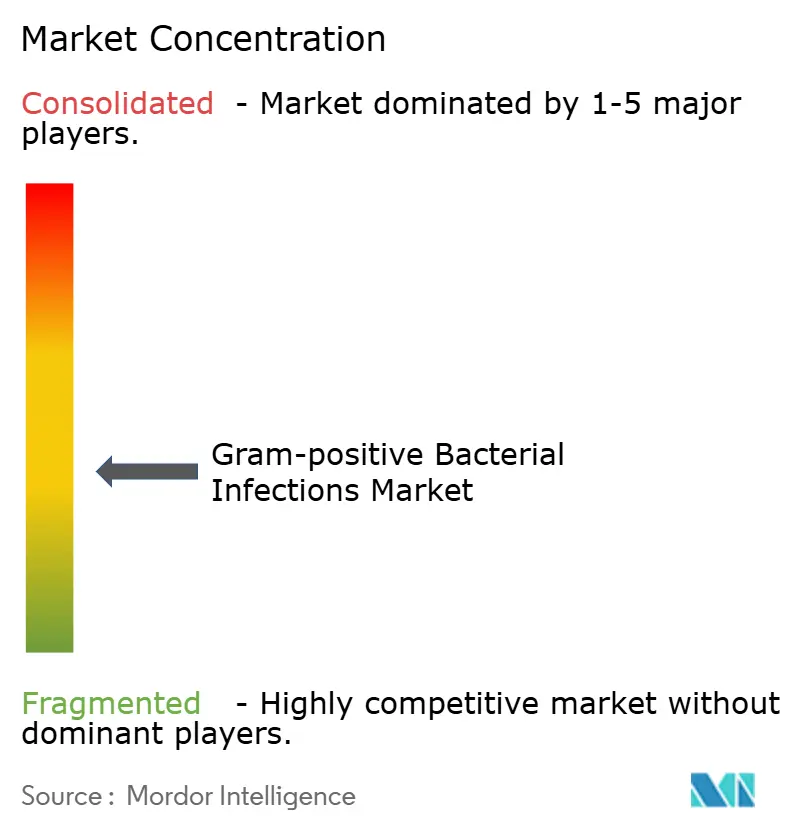
| Market Concentration | Medium |
Major Players *Disclaimer: Major Players sorted in no particular order Image © Mordor Intelligence. Reuse requires attribution under CC BY 4.0. | |
Gram-positive Bacterial Infections Market Analysis by Mordor Intelligence
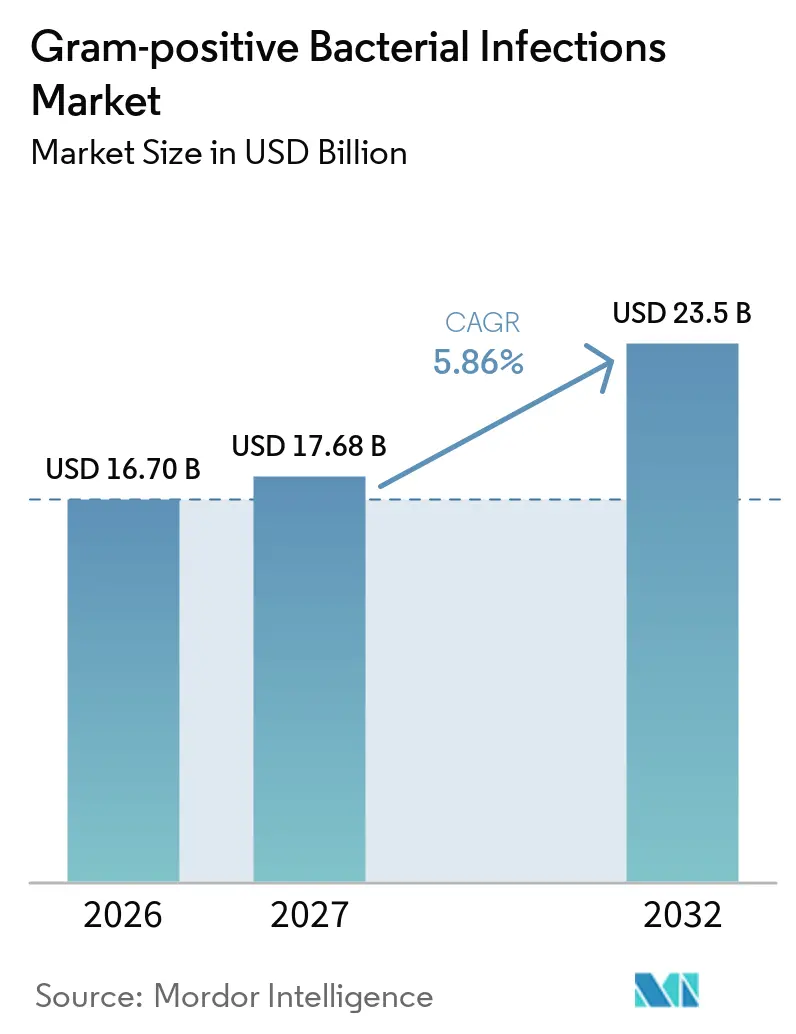
The Gram-positive Bacterial Infections Market size is expected to grow from USD 16.70 billion in 2026 to USD 17.68 billion in 2027 and is forecast to reach USD 23.5 billion by 2032 at 5.86% CAGR over 2027-2032.
Robust pipeline progress, a steady stream of regulatory approvals, and rising deployment of rapid molecular diagnostics are reshaping therapeutic decision-making, trimming time-to-targeted therapy, and tempering empirical broad-spectrum use. Hospitals are accelerating adoption of phenotypic rapid antimicrobial susceptibility testing that delivers actionable profiles within one work-shift, which shortens average length of stay for septic patients by up to 1.2 days. Meanwhile, inventive reimbursement models in the United States and selected European markets are rewarding prophylactic narrow-spectrum regimens that lower resistance pressure. Competitive intensity remains moderate as no individual supplier controls more than 12% of global antibiotic revenue, allowing niche innovators in biofilm disruption, phage therapy, and microbiome-based recurrence prevention to secure venture backing.
Key Report Takeaways
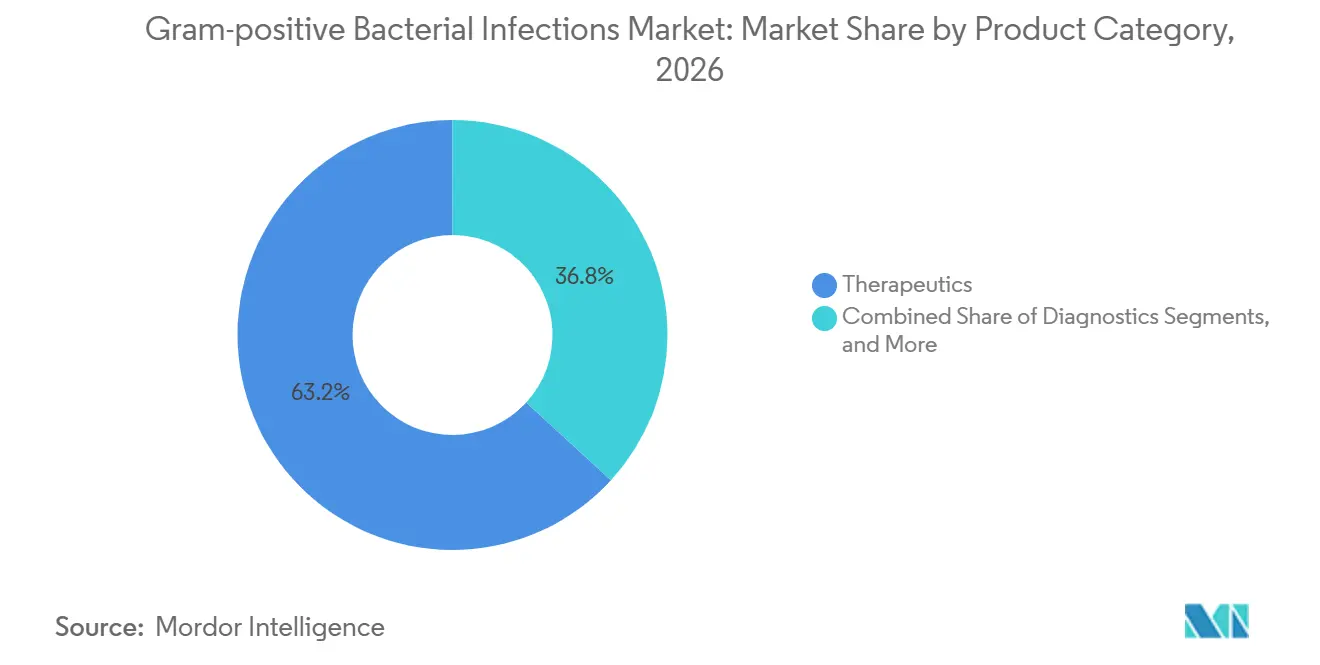
- By product category, therapeutics led with 63.20% of 2026 revenue, whereas diagnostics are forecast to grow fastest at a 6.79% CAGR through 2032.
- By pathogen, Staphylococcus aureus infections captured 28.5% of pathogen-specific demand in 2026, and Clostridioides difficile is set to advance at a 6.96% CAGR to 2032.
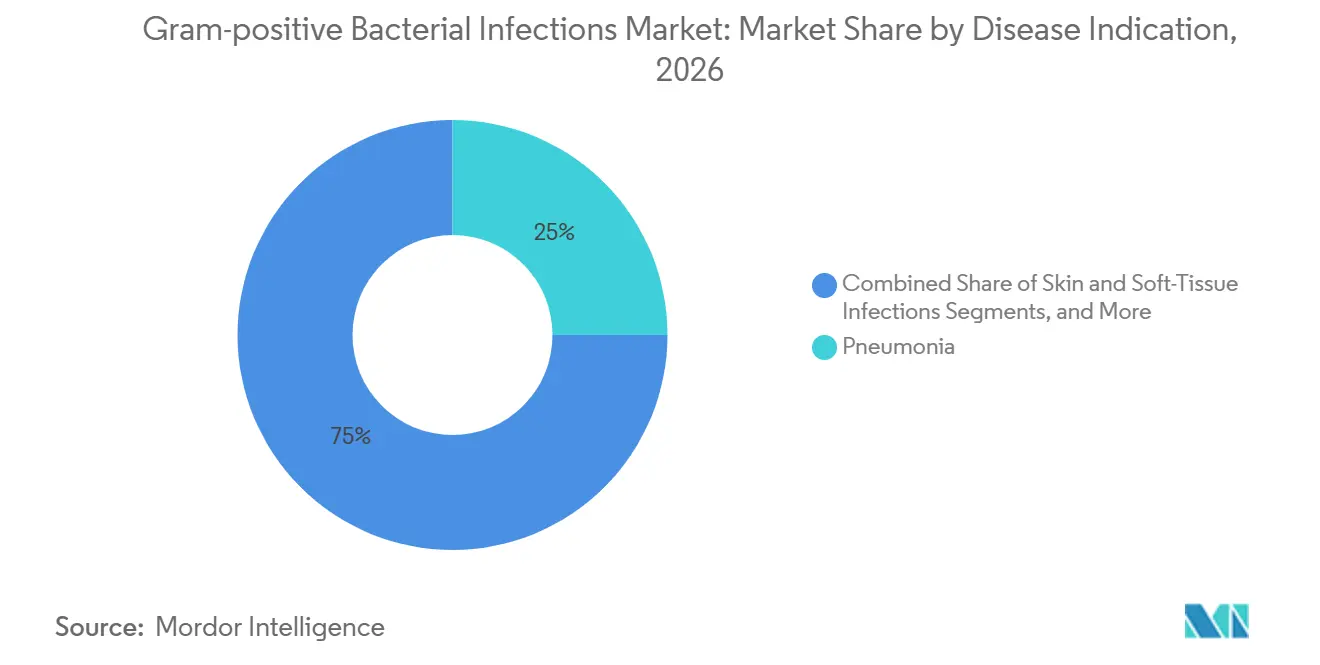
- By disease indication, pneumonia accounted for 24.95% of indication revenue in 2026, yet sepsis and bloodstream infections will expand at a 7.15% CAGR, the swiftest pace across indications.
- By end user, hospitals held 45.40% of end-user spending in 2026, while reference laboratories are on track to grow at a 7.89% CAGR on the back of next-generation sequencing (NGS) centralization.
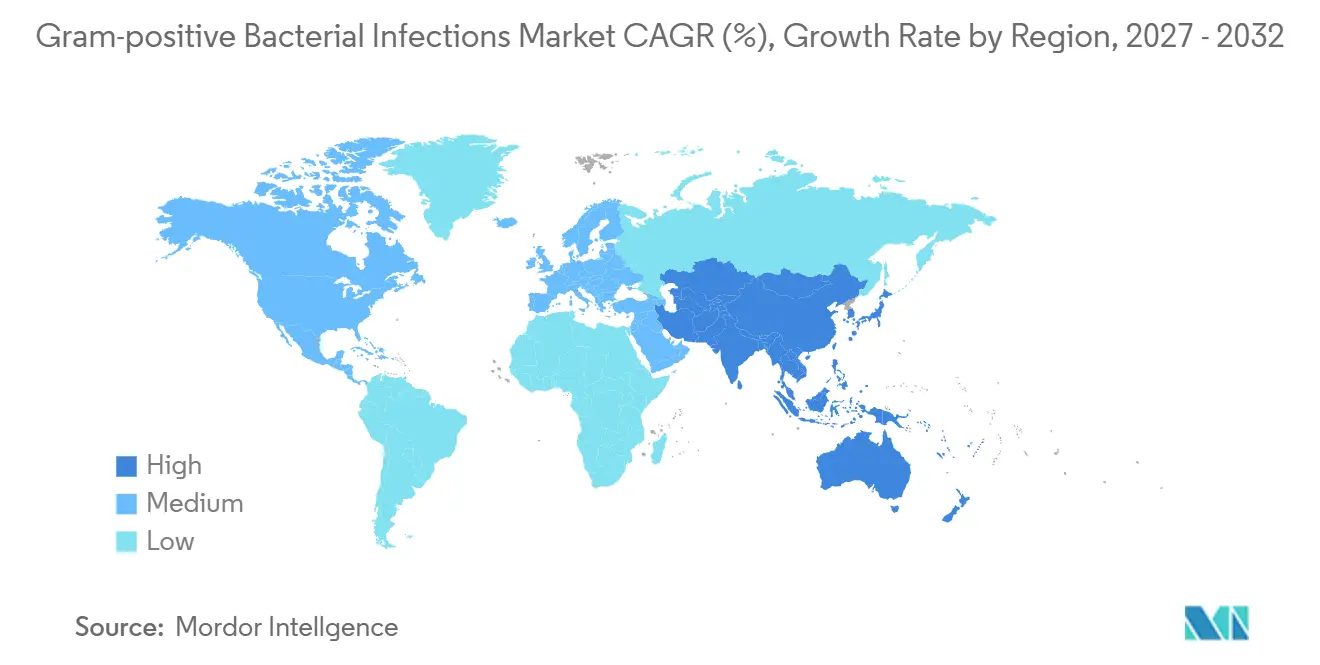
- By geography, North America captured 41.25% share in 2026, whereas Asia-Pacific is set to post an 8.25% CAGR between 2027 and 2032.
Note: Market numbers in this report are based on Mordor Intelligence's proprietary estimation framework, which combines nine months of actuals with Q4 projections for base year 2026.
Market Trends and Insights
Drivers Impact Analysis of Gram-positive Bacterial Infections Market*
| DRIVER | (~) % IMPACT ON CAGR FORECAST | GEOGRAPHIC RELEVANCE | IMPACT TIMELINE |
|---|---|---|---|
| Rising prevalence of gram-positive infections | +1.2% | Global, with highest burden in North America, Western Europe, and urban Asia-Pacific | Medium term (2–4 years) |
| Increasing number of drug approvals & late-stage pipelines | +0.9% | Global, concentrated regulatory activity in U.S. (FDA), EU (EMA), and Japan (PMDA) | Short term (≤2 years) |
| Growing healthcare spending in emerging economies | +1.5% | Asia-Pacific (China, India), Middle East (GCC), Latin America (Brazil) | Long term (≥4 years) |
| Adoption of rapid molecular diagnostics enabling targeted therapy | +1.1% | North America, Western Europe; early uptake in tertiary hospitals in APAC and MEA | Medium term (2–4 years) |
| Bundled-payment rules boosting prophylactic narrow-spectrum use | +0.6% | United States (CMS programs); pilot schemes in select European countries | Short term (≤2 years) |
| Climate-driven geographic expansion of gram-positive pathogens | +0.4% | Northern latitudes (Scandinavia, Canada); temperate zones with warming winters | Long term (≥4 years) |
| Source: Mordor Intelligence | |||
Rising Prevalence of Gram-Positive Infections
In 2024, invasive S. aureus bloodstream infections reached 37.9 per 100,000 population in EU/EEA countries, ranking second only to E. coli bacteremia. The backlog of surgeries during the pandemic has led to an increase in prosthetic joint implantations, raising the risk of late-onset staphylococcal infections over the lifespan of these devices. Between 2020 and 2024, the incidence of invasive S. pneumoniae disease doubled as respiratory pathogens began circulating more widely. Clostridioides difficile remains the leading cause of healthcare-associated diarrhea, resulting in 223,900 hospitalizations and 12,800 deaths annually in the U.S. Additionally, recurrence rates after vancomycin therapy remain as high as 30%.
Increasing Number of Drug Approvals & Late-Stage Pipelines
The 2025 antibacterial pipeline includes 90 clinical-stage assets, with half targeting gram-positive organisms. Tostatoxumab, a human monoclonal antibody, successfully completed Phase 3 trials for severe S. aureus pneumonia, demonstrating significant benefits for elderly patients and prompting a confirmatory study focused on this demographic. The anti-biofilm antibody TRL1068 showed promising results in Phase 1 trials for prosthetic joint infections, achieving synovial penetration and bacterial load reduction, thereby validating non-traditional treatment approaches.
Growing Healthcare Spending in Emerging Economies
Between 2020 and 2025, China’s healthcare spending grew at an annual rate of 8.2%, driving demand for culture-based susceptibility testing and premium antimicrobials. During the same period, India increased its public health expenditure from 1.3% to 2.1% of GDP, improving access to diagnostics in non-metropolitan areas. GCC countries allocated USD 4.2 billion to laboratory upgrades between 2023 and 2025 to meet accreditation requirements mandating species-level identification within 48 hours.
Adoption Of Rapid Molecular Diagnostics Enabling Targeted Therapy
The growing adoption of rapid molecular diagnostics is improving the management of gram-positive bacterial infections by enabling earlier and more accurate identification of pathogens such as methicillin-resistant Staphylococcus aureus (MRSA), Streptococcus pneumoniae, and vancomycin-resistant enterococci (VRE). Advanced diagnostic technologies, including multiplex PCR assays, MALDI-TOF mass spectrometry, and syndromic testing panels, are reducing the time required for pathogen identification and antimicrobial susceptibility assessment compared with conventional culture-based methods. Faster diagnosis allows clinicians to initiate targeted therapies sooner, optimize antibiotic selection, and reduce the inappropriate use of broad-spectrum antibiotics. As healthcare systems increasingly emphasize antimicrobial stewardship and improved clinical outcomes, the adoption of rapid molecular diagnostics is expected to support growth in the gram-positive bacterial infections market.
Restraints Impact Analysis of Gram-positive Bacterial Infections Market*
| RESTRAINT | (~) % IMPACT ON CAGR FORECAST | GEOGRAPHIC RELEVANCE | IMPACT TIMELINE |
|---|---|---|---|
| Escalating antimicrobial resistance among gram-positive bacteria | -1.3% | Global, with highest resistance prevalence in Southern/Eastern Europe, South Asia, Sub-Saharan Africa | Medium term (2–4 years) |
| Patent expiries driving generic erosion | -0.8% | Global, concentrated impact in North America and Europe where branded penetration is highest | Short term (≤2 years) |
| Diagnostic stewardship curbing unnecessary test ordering | -0.4% | North America, Western Europe; emerging in Australia and select APAC markets | Medium term (2–4 years) |
| Vc pullback for narrow-spectrum antibiotic start-ups | -0.5% | United States, European Union; limited impact in Asia-Pacific where government R&D funding dominates | Long term (≥4 years) |
| Source: Mordor Intelligence | |||
Escalating Antibiotic Resistance Among Gram-Positive Pathogens
The growing prevalence of difficult-to-treat gram-positive bacterial infections has increased dependence on newer and more expensive antimicrobial therapies, creating financial challenges for healthcare providers and payers. For instance, recently approved antibiotics designed for severe bacterial infections often carry a substantially higher treatment cost than conventional generic antibiotics, which can limit their adoption, particularly in cost-conscious healthcare settings. In addition, antimicrobial stewardship programs frequently reserve these novel therapies for patients with limited treatment options, reducing their routine use and slowing market uptake. These factors may restrict the widespread adoption of advanced treatment options and act as a restraint on the growth of the gram-positive bacterial infections market.
Patent Expiries Driving Generic Erosion
The expiration of patents for established therapies used in the treatment of gram-positive bacterial infections is intensifying generic competition and placing downward pressure on branded drug revenues. As lower-cost generic alternatives enter the market, healthcare providers and payers increasingly favor cost-effective treatment options, reducing the commercial potential of innovator products. For instance, the launch of generic versions of widely used antibiotics has accelerated price erosion across mature therapeutic segments, limiting revenue growth opportunities for branded manufacturers. This pricing pressure, combined with the high costs and risks associated with antibiotic development, may discourage investment in novel anti-infective therapies and act as a restraint on the growth of the gram-positive bacterial infections market.
*Our forecasts treat driver/restraint impacts as directional, not additive. The impact forecasts reflect baseline growth, mix effects, and variable interactions.
Gram-positive Bacterial Infections Market Segment Analysis
By Product Category:
Diagnostics Outpace Therapeutics on Stewardship TailwindsDiagnostics represented the smaller revenue base in 2026, yet they are set to post a 6.79% CAGR through 2032, the swiftest growth among product categories. Stewardship mandates that favor same-day organism detection reinforce hospital demand for multiplex PCR panels and rapid phenotypic systems. Glycopeptides retained an 18% slice of therapeutic revenue, but margin pressure is accelerating as clinical guidance adopts shorter, higher-dose courses requiring therapeutic drug monitoring.
Rapid testing also underpins greater use of oral step-down regimens, boosting oxazolidinone demand. Hospitals gain workflow efficiencies when multiplex systems reduce ancillary culture labor, while payers view faster de-escalation as a lever to trim length of stay. These operational savings are beginning to offset the higher upfront cost of molecular tests, further widening the diagnostics adoption curve and enlarging the gram-positive bacterial infections market.

By Pathogen:
MRSA Dominates, C. difficile Surges on Novel MechanismsStaphylococcus aureus infections, including methicillin-resistant strains, delivered 28.5% of 2026 pathogen revenue, reflecting their central role in surgical site and indwelling device infection. Despite a 20.4% decline in MRSA bloodstream incidence across the EU, hospital networks still reserve anti-MRSA cephalosporins and lipoglycopeptides for high-risk cohorts.
Clostridioides difficile is projected to grow at 6.96% CAGR to 2032, the fastest pathogen trajectory, fueled by agents such as CRS3123 and ibezapolstat that spare gut microbiota and sharply cut recurrence. Regulatory agencies are signaling acceptance of composite endpoints that emphasize sustained cure, a development likely to accelerate approval timelines and solidify commercial uptake once Phase 3 data read out.
By Disease Indication:
Sepsis Outpaces Pneumonia on Rapid-AST AdoptionSepsis and bloodstream infections will advance at a 7.15% CAGR through 2032. Laboratories adopting rapid phenotypic AST slash turnaround from 72 hours to around seven, letting clinicians narrow therapy within the first day of positivity. Earlier streamlining supports reduced nephrotoxic exposure and smaller pharmacy budgets, encouraging wider deployment.
Pneumonia maintained 24.95% of revenue in 2026, with MRSA and macrolide-resistant S. pneumoniae shaping empirical guideline updates that include high-dose amoxicillin or respiratory fluoroquinolones. Enhanced vaccine serotype coverage ahead of 2027 is expected to rebalance prescribing toward narrow beta-lactams, moderating pneumonia revenue growth relative to sepsis.
By End User:
Reference Labs Gain on NGS ConsolidationHospitals generated 45.40% of end-user spending in 2026; critical care wards and transplant centers remain heavy consumers of intravenous anti-staphylococcal agents and rapid assays. Even so, reference laboratories are forecast to expand at a 7.89% CAGR because they amortize the capital cost of NGS workflows across large sample volumes.
The joint Cepheid–Oxford Nanopore project will further lower barriers by linking sample preparation on GeneXpert with real-time sequencing, yielding organism ID and resistance prediction in one shift. Such integrated pipelines are well-suited to reference lab environments where volume aggregation keeps per-test pricing competitive, helping those facilities gain share of the gram-positive bacterial infections market.
Geography Analysis
North America Gram-positive Bacterial Infections Market
North America delivered 41.25% of 2026 revenue, anchored by 6,200 U.S. hospital laboratories and sustained capital budgets for rapid molecular systems. Urban facilities favor platforms such as Accelerate Pheno and BioFire FilmArray; however, rural centers still rely on manual culture workflows that can exceed 96 hours before result release, leaving opportunity for low-footprint direct-from-blood solutions. Federal stewardship targets now link reimbursement bonuses to timely de-escalation metrics, further entrenching rapid diagnostics.
Europe Gram-positive Bacterial Infections Market
Europe recorded a 20.4% decline in MRSA bloodstream incidence from 2019 to 2024, yet eight countries documented vancomycin-resistant Enterococcus faecium prevalence above 50%. Germany’s 2025 technology assessment endorsed reimbursement for systems that trim AST turnaround by at least 12 hours. QuickMIC validation met this threshold, prompting procurement consortia to negotiate volume-linked contracts. With combined penicillin and macrolide resistance in S. pneumoniae at 11.1%, guideline panels now recommend empiric regimens containing either higher-dose beta-lactams or fluoroquinolones in community-acquired pneumonia.
APAC and South America Gram-positive Bacterial Infections Market
Asia-Pacific is poised for an 8.25% CAGR through 2032, the highest regional pace. China’s 8.2% annual healthcare spending expansion between 2020 and 2025 has lifted procurement budgets for automated blood culture and MALDI-TOF identification. India’s Ayushman Bharat scale-up enables district hospitals to transition from syndromic management to culture-based therapy. Harmonization with EUCAST breakpoints across China, India, and Brazil tightens susceptibility interpretation for glycopeptides and oxazolidinones, reducing treatment failure masquerading as susceptibility. South America contributes 6% of global 2025 revenue; Brazil’s breakpoint adoption is already steering hospitals toward reserve agents for refractory VRE and MRSA infections.
Competitive Landscape
The gram-positive bacterial infections market remains moderately fragmented, with key players such as Pfizer, Merck, GSK, Novartis, and Sanofi collectively accounting for 42% of global antibiotic revenue. However, no single company holds more than a 12% market share. In diagnostics, market leadership is concentrated among Roche Diagnostics, bioMérieux, Becton Dickinson, and Danaher’s Cepheid, while niche players are gaining traction in areas like direct-from-blood pathogen detection and biofilm disruption.
Danaher is advancing its vertical integration strategy by combining Cepheid’s sample preparation capabilities with Oxford Nanopore sequencing. This approach aims to deliver rapid organism identification, resistance gene detection, and genomic susceptibility predictions within hours of blood-culture positivity. Roche is expanding its cobas Liat point-of-care portfolio with new cartridges for Group B Streptococcus and MRSA, offering results in just 15-20 minutes. Similarly, bioMérieux is innovating with its VITEK Revealed prototype, which integrates microscopy and microfluidics to achieve a two-hour AST.
Despite these advancements, significant opportunities remain unaddressed. The in-vitro diagnostic landscape has identified only T2Bacteria and SepsiTest as culture-independent whole-blood solutions, both of which are currently limited to tertiary centers. Vedanta Biosciences is progressing with a Phase 3 study of VE303, a live biotherapeutic designed for recurrent C. difficile. At the same time, Crestone Pharma’s CRS3123 is advancing into late-phase trials, demonstrating high clinical cure rates and minimal recurrence. These diverse initiatives underscore the innovation pipeline driving sustained growth in the gram-positive bacterial infections market.
Gram-positive Bacterial Infections Industry Leaders
-
Novartis AG
-
Pfizer
-
Merck & Co. Inc.
-
GlaxoSmithKline Plc
-
Johnson & Johnson (Janssen)
- *Disclaimer: Major Players sorted in no particular order
Gram-positive Bacterial Infections Market Companies Covered in this Report
- Abbott Laboratories
- AstraZeneca
- Basilea Pharmaceutica Ltd.
- Becton Dickinson & Co.
- bioMérieux
- Cepheid (Danaher)
- Cumberland Pharmaceuticals
- Dr Reddy's Laboratories Ltd.
- GlaxoSmithKline
- Hikma Pharmaceuticals
- Johnson & Johnson
- Lupin
- Melinta Therapeutics
- Merck
- Novartis
- Paratek Pharmaceuticals
- Pfizer
- Roche
- Sanofi
- Shionogi & Co., Ltd.
- Sun Pharma Industries Ltd.
- Thermo Fisher Scientific
Read Analysis of Gram-positive Bacterial Infections Companies
Recent Industry Developments in Gram-positive Bacterial Infections Market
- April 2026: Cepheid and Oxford Nanopore expanded their strategic partnership to create an integrated rapid genomic workflow for bloodstream infections, targeting early physician-scientist access in Q3 2026.
- April 2026: Longhorn Vaccines and Diagnostics presented preclinical data showing bispecific IgM antibody DRG5 BD11 has broad activity against gram-positive, gram-negative, and mycobacterial pathogens at ESCMID 2026.
- March 2026: Longhorn Vaccines and Diagnostics reported new preclinical findings for half-life-extended monoclonal antibody LHNVD-501 targeting peptidoglycan, underscoring its potential for broad bacterial coverage.
- January 2026: Cepheid received FDA clearance for the Xpert GI Panel, a multiplex PCR that detects 11 gastrointestinal pathogens, including C. difficile, in 74 minutes.
Global Gram-positive Bacterial Infections Market Report Scope
As per the scope of the report, gram-positive bacteria are among the most common human pathogens associated with clinical infections, which range from mild skin infections to sepsis. Gram-positive bacterial infections include virulence, pathogenesis, immune response, inflammatory response, and drug resistance. Several classic gram-positive species cause disease in humans. The ram-positive bacterial infections market is segmented by product category, pathogen, disease indication, end-user, and geography. By product category, the market includes therapeutics (β-lactam antibiotics, cephalosporins, penicillins, fluoroquinolones, lipopeptides, oxazolidinones, glycopeptides, vaccines & mAbs), diagnostics (culture & susceptibility testing, rapid molecular [PCR, isothermal], immunoassays, point-of-care lateral-flow), and adjunctive prevention products. By pathogen, the market is segmented into Staphylococcus aureus (including MRSA), Streptococcus pneumoniae, Enterococcus faecalis/faecium (including VRE), Clostridioides difficile, and Listeria monocytogenes. By disease indication, the market is categorized into pneumonia, sepsis/BSI, skin & soft-tissue infections, pharyngitis (strep throat), endocarditis, and meningitis. By end-user, the market is segmented into hospitals, reference laboratories, ambulatory surgery centers, and retail & online pharmacies. By geography, the market is analyzed across North America, Europe, Asia-Pacific, the Middle East and Africa, and South America. The report also covers the estimated market sizes and trends for 17 countries across major regions globally. The report offers the market sizes and forecasts in terms of value (USD) for the above segments.
Segmentation Overview
| Therapeutics | ?-lactam antibiotics |
| Cephalosporins | |
| Penicillins | |
| Fluoroquinolones | |
| Lipopeptides | |
| Oxazolidinones | |
| Glycopeptides | |
| Vaccines & mAbs | |
| Diagnostics | Culture & susceptibility testing |
| Rapid molecular (PCR, isothermal) | |
| Immunoassays | |
| Point-of-care lateral-flow | |
| Adjunctive Prevention Products |
| Staphylococcus aureus (incl. MRSA) |
| Streptococcus pneumoniae |
| Enterococcus faecalis/faecium (incl. VRE) |
| Clostridioides difficile |
| Listeria monocytogenes |
| Pneumonia |
| Sepsis / BSI |
| Skin & Soft-Tissue Infections |
| Pharyngitis (Strep throat) |
| Endocarditis |
| Meningitis |
| Hospitals |
| Reference Laboratories |
| Ambulatory Surgery Centers |
| Retail & Online Pharmacies |
| North America | United States |
| Canada | |
| Mexico | |
| South America | Brazil |
| Argentina | |
| Rest of South America | |
| Europe | Germany |
| United Kingdom | |
| France | |
| Italy | |
| Spain | |
| Rest of Europe | |
| Asia-Pacific | China |
| Japan | |
| India | |
| South Korea | |
| Australia | |
| Rest of Asia-Pacific | |
| Middle East & Africa | GCC |
| South Africa | |
| Rest of Middle East & Africa |
| By Product Category | Therapeutics | ?-lactam antibiotics |
| Cephalosporins | ||
| Penicillins | ||
| Fluoroquinolones | ||
| Lipopeptides | ||
| Oxazolidinones | ||
| Glycopeptides | ||
| Vaccines & mAbs | ||
| Diagnostics | Culture & susceptibility testing | |
| Rapid molecular (PCR, isothermal) | ||
| Immunoassays | ||
| Point-of-care lateral-flow | ||
| Adjunctive Prevention Products | ||
| By Pathogen | Staphylococcus aureus (incl. MRSA) | |
| Streptococcus pneumoniae | ||
| Enterococcus faecalis/faecium (incl. VRE) | ||
| Clostridioides difficile | ||
| Listeria monocytogenes | ||
| By Disease Indication | Pneumonia | |
| Sepsis / BSI | ||
| Skin & Soft-Tissue Infections | ||
| Pharyngitis (Strep throat) | ||
| Endocarditis | ||
| Meningitis | ||
| By End User | Hospitals | |
| Reference Laboratories | ||
| Ambulatory Surgery Centers | ||
| Retail & Online Pharmacies | ||
| By Geography | North America | United States |
| Canada | ||
| Mexico | ||
| South America | Brazil | |
| Argentina | ||
| Rest of South America | ||
| Europe | Germany | |
| United Kingdom | ||
| France | ||
| Italy | ||
| Spain | ||
| Rest of Europe | ||
| Asia-Pacific | China | |
| Japan | ||
| India | ||
| South Korea | ||
| Australia | ||
| Rest of Asia-Pacific | ||
| Middle East & Africa | GCC | |
| South Africa | ||
| Rest of Middle East & Africa | ||
Key Questions Answered in the Report
What is the size of the gram-positive bacterial infections market in 2027?
The gram-positive bacterial infections market size stood at USD 17.68 billion in 2027 and is forecast to reach USD 23.50 billion by 2032.
Which product category is growing fastest?
Diagnostics are projected to grow at a 6.79% CAGR through 2032 because recent approvals such as contezolid improve safety while retaining potency.
Why does staphylococcus aureus (incl. MRSA) remain the largest disease segment?
Staphylococcus aureus (incl. MRSA) causes high hospital-acquired infection rates and accounted for 28.5% market share in 2026, sustaining demand for potent anti-MRSA agents despite stewardship controls.
Which region offers the highest growth potential?
Asia-Pacific leads with a 8.25% CAGR thanks to expanding healthcare coverage, rapid diagnostic uptake, and domestic approval of novel agents such as contezolid.