
Penicillin Drug Market Size and Share
Market Overview
| Study Period | 2020 - 2031 |
|---|---|
| Market Size (2026) | USD 10.72 Billion |
| Market Size (2031) | USD 12.68 Billion |
| Growth Rate (2026 - 2031) | 3.41 % |
| Fastest Growing Market | Middle East and Africa |
| Largest Market | Asia Pacific |
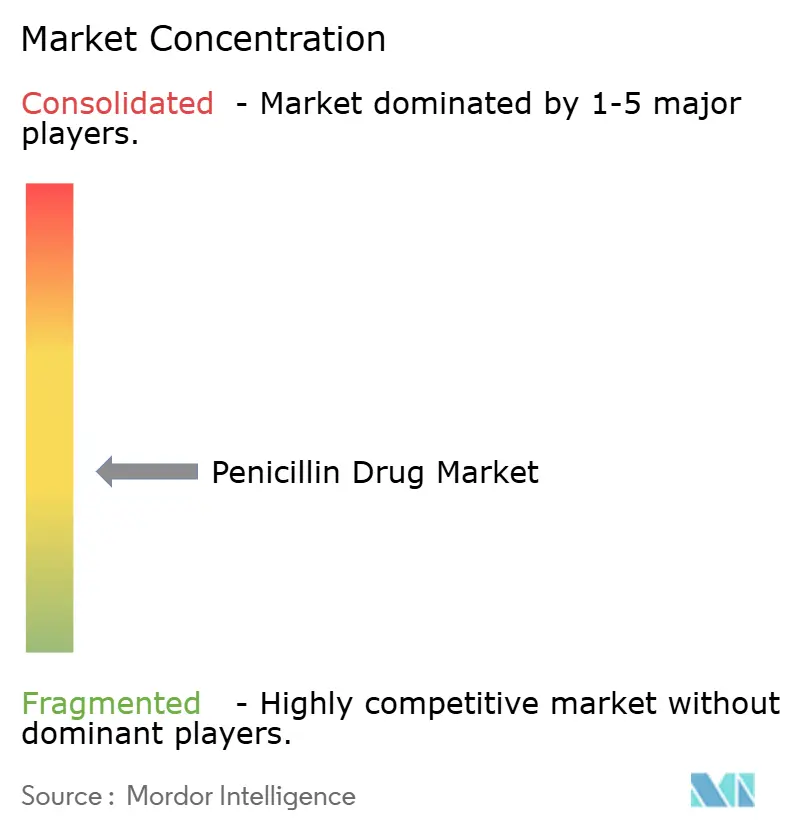
| Market Concentration | Medium |
Major Players *Disclaimer: Major Players sorted in no particular order Image © Mordor Intelligence. Reuse requires attribution under CC BY 4.0. | |
Penicillin Drug Market Analysis by Mordor Intelligence
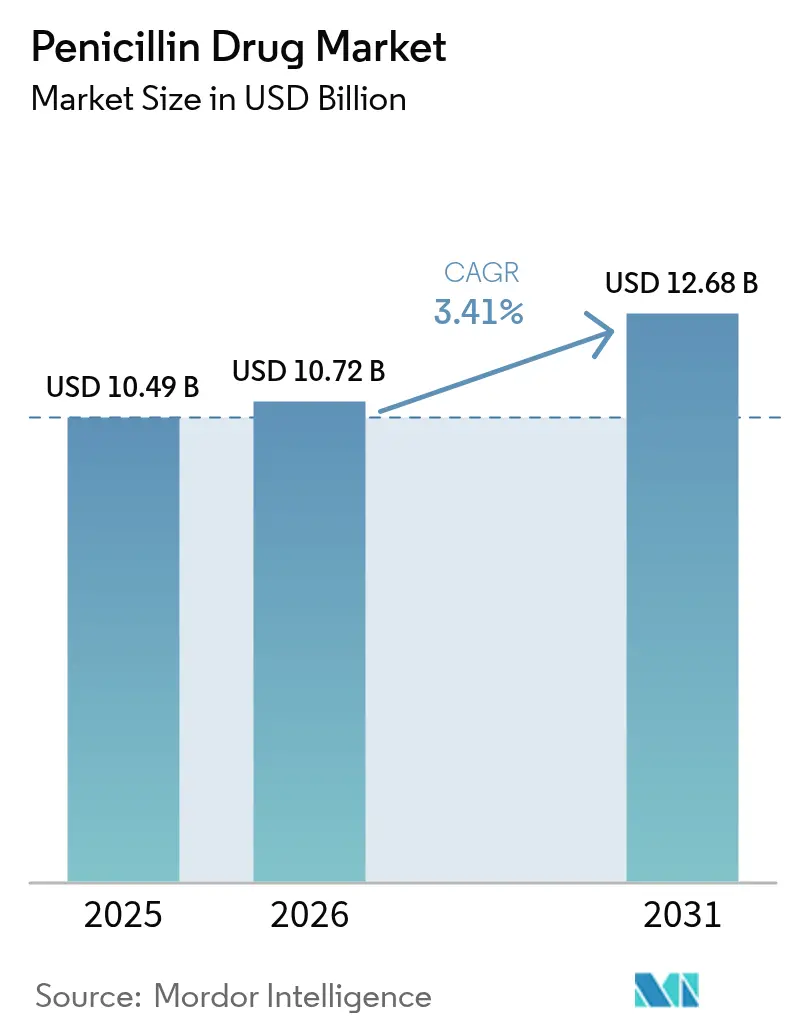
The Penicillin Drug Market size is projected to expand from USD 10.49 billion in 2025 and USD 10.72 billion in 2026 to USD 12.68 billion by 2031, registering a CAGR of 3.41% between 2026 to 2031.
A confluence of persistent community-acquired infections, cost-focused procurement in emerging economies, and incremental innovation in β-lactamase inhibition continues to underpin steady demand. Hospitals are upgrading formularies to extended-spectrum combinations that blunt the rise of extended-spectrum β-lactamase pathogens, while community pharmacies in the United Kingdom and Australia now initiate oral amoxicillin therapy, accelerating self-care. India’s January 2026 Minimum Import Price (MIP) of USD 35 per kilogram on bulk penicillin has begun to reset Asian cost structures, favoring domestic producers over Chinese imports.[1] At the same time, artificial-intelligence-enabled fermentation is squeezing variable costs by up to 11% at advanced facilities.[2] Counterbalancing these positives, antimicrobial resistance continues to erode first-line efficacy, and novel β-lactam/β-lactamase inhibitor agents, priced an order of magnitude higher than legacy molecules, are cannibalizing high-acuity volumes in North America and Europe.
Key Report Takeaways
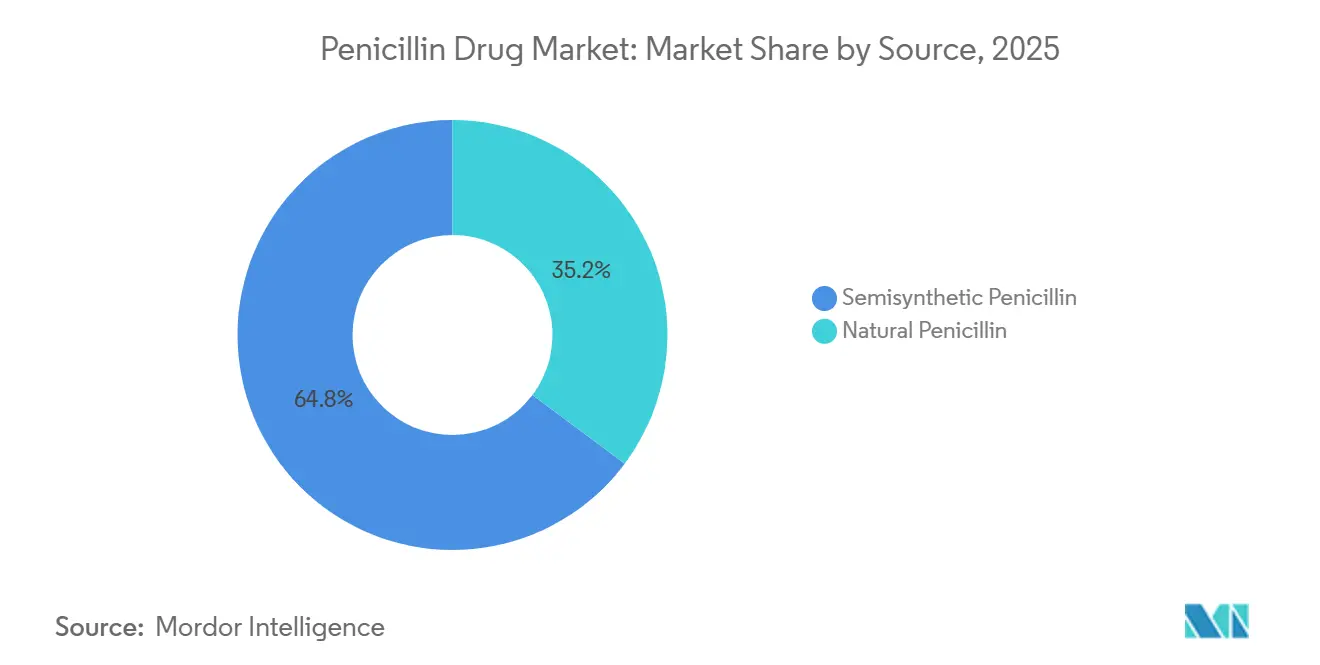
- By source, semisynthetic penicillin captured 64.78% of 2025 sales and is also the fastest-growing source category at a 5.26% CAGR through 2031, reflecting sustained aminopenicillin demand in community care.
- By product type, aminopenicillin led with 41.63% of 2025 revenue, while β-lactamase-inhibitor combinations are projected to record the highest CAGR at 5.88% through 2031.
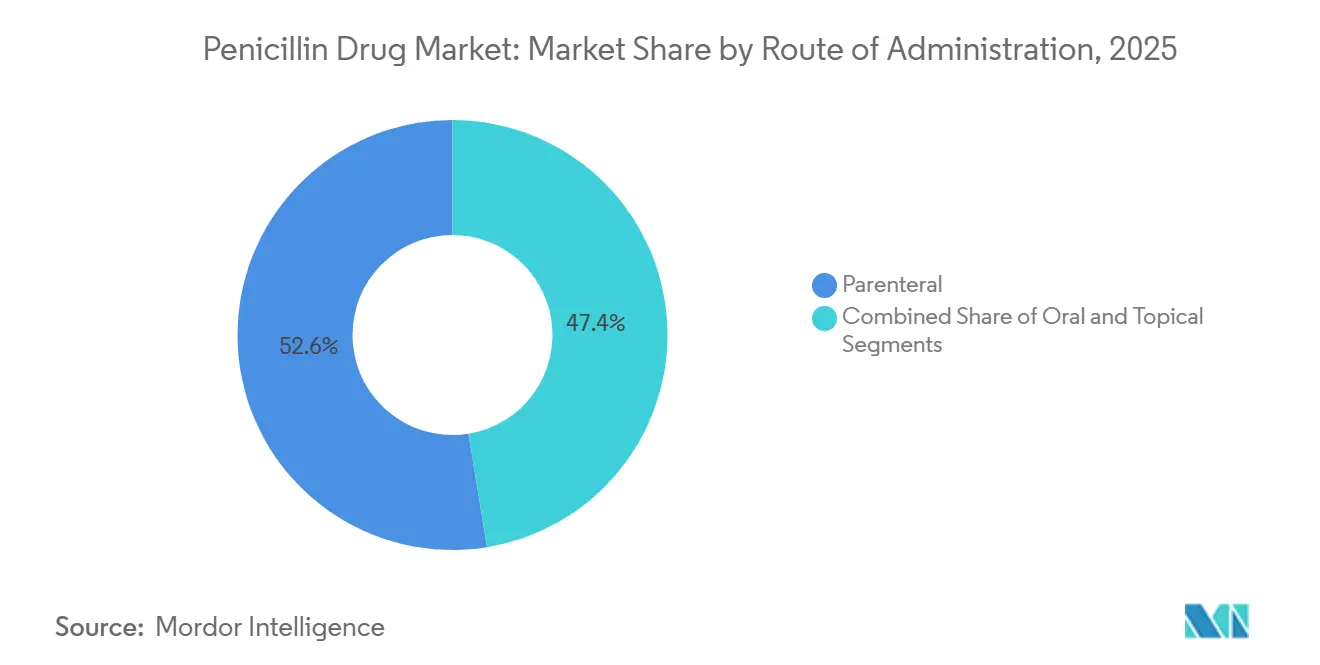
- By route of administration, parenteral formulations retained 52.56% share in 2025, whereas oral formulations are forecast to expand at a 7.32% CAGR to 2031.
- By spectrum of activity, broad-spectrum agents held 46.82% of 2025 revenue, but extended-spectrum penicillins are expected to grow fastest at 6.44% through 2031.
- By distribution channel, drug and retail pharmacies accounted for 44.74% of 2025 volumes, while online pharmacies are poised to advance at a 7.82% CAGR through 2031.
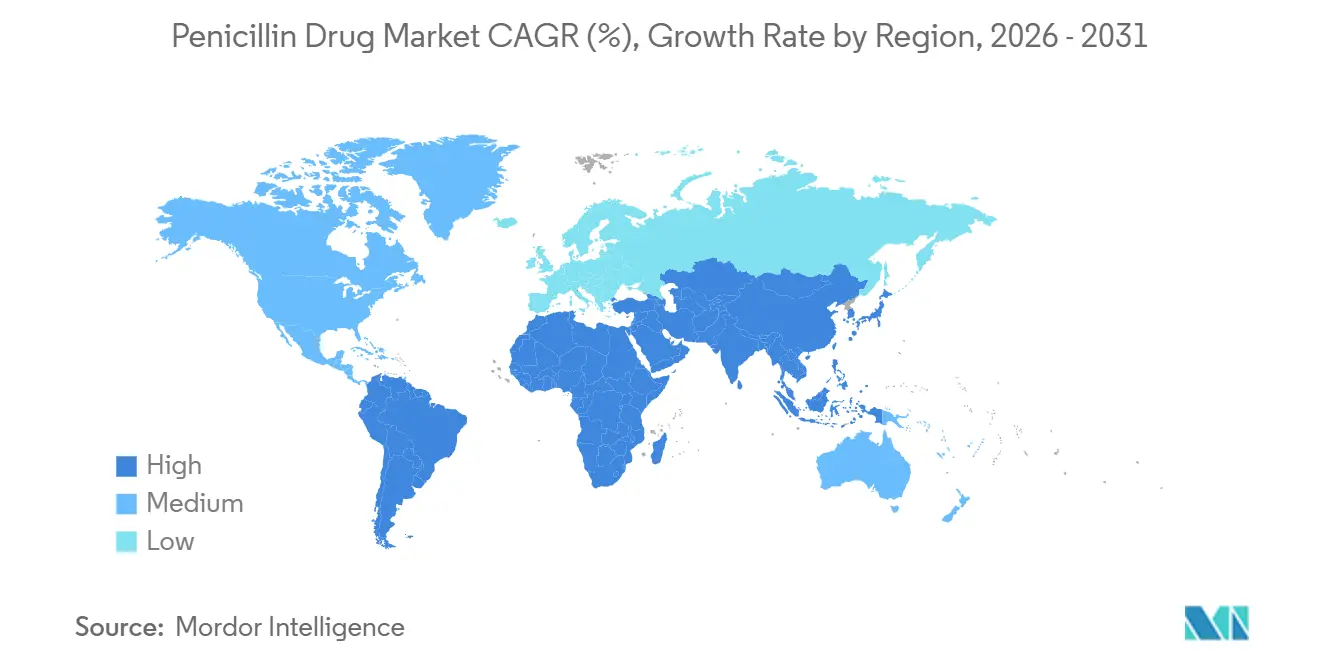
- By geography, Asia-Pacific led with 34.57% of 2025 sales, whereas the Middle East and Africa region is projected to register the quickest growth, at a 6.36% CAGR to 2031.
Note: Market size and forecast figures in this report are generated using Mordor Intelligence’s proprietary estimation framework, updated with the latest available data and insights as of 2026.
Market Trends and Insights
Drivers Impact Analysis of Penicillin Drug Market*
| Driver | (~) % Impact on CAGR Forecast | Geographic Relevance | Impact Timeline |
|---|---|---|---|
| Growing Prevalence of Bacterial Infections | +0.8% | Global | Medium term (2–4 years) |
| Rising Demand for Affordable Generics in Emerging Markets | +0.7% | APAC, South America, MEA | Medium to Long term (2–4+ years) |
| Government Incentives for Domestic API Production | +0.5% | India, China, ASEAN | Medium term (2–4 years) |
| Pharmacy-First Retail Initiatives Boosting Community Dispensing | +0.4% | UK, Australia, Canada | Short to Medium term (≤4 years) |
| AI-Enabled Fermentation Cost Efficiencies | +0.3% | Global | Long term (≥4 years) |
| Penicillin Prophylaxis Programs for Rheumatic Heart Disease | +0.4% | Sub-Saharan Africa, South Asia, Pacific Islands | Medium to Long term (2–4+ years) |
| Source: Mordor Intelligence | |||
Growing Prevalence of Bacterial Infections
Respiratory, urinary tract, and skin infections now drive more than 70% of penicillin prescriptions, and their incidence is climbing with urban air-pollution levels in megacities such as Delhi and Jakarta.[3] Amoxicillin remains the empiric mainstay for uncomplicated pneumonia, while aging demographics in OECD countries triple UTI incidence among those older than 65. Influenza seasons continue to spawn secondary bacterial pneumonia; U.S. amoxicillin-clavulanate scripts spiked 18% during the 2024-2025 flu season. These trends cement penicillin relevance in outpatient care, especially where diagnostic microbiology is scarce.
Rising Demand for Affordable Generics in Emerging Markets
Dose-prices between USD 0.10 and 0.50 keep generic penicillins at the top of essential-medicine lists in regions where out-of-pocket payments exceed 40% of total health expenditure. India exported 42,000 metric tons of penicillin APIs in 2024, with 60% destined for sub-Saharan Africa and Southeast Asia. Brazil cleared 37 new generic registrations in 2025, the highest in seven years. Chinese amoxicillin capsules traded at USD 8 per 1,000 units in early 2026, down one-third from 2023, underpinning volumes across rural pharmacy outlets.
Government Incentives for Domestic API Production
India’s Production Linked Incentive scheme earmarked USD 830 million for domestic penicillin intermediates, shrinking Chinese import reliance to 55% by end-2025. Aurobindo’s Andhra Pradesh plant adds 15,000 metric tons of capacity, the world’s largest single-site investment in a decade. China’s 2025 mandate that 30% of public-hospital antibiotics be sourced from domestic APIs has galvanized CSPC and NCPC expansions. Similar incentives appear in the European Union’s draft Critical Medicines Act.
Pharmacy-First Retail Initiatives Boosting Community Dispensing
The United Kingdom’s Pharmacy First program enabled pharmacists to dispense oral antibiotics for seven minor infections without physician scripts, issuing 1.2 million penicillin courses in its first year. Australia’s 2025 rule change lets pharmacists initiate amoxicillin for UTIs, shifting 300,000 GP visits annually. Early Canadian pilots show a 14-hour reduction in time-to-treatment for acute sinusitis.
Restraints Impact Analysis of Penicillin Drug Market*
| Restraint | (~) % Impact on CAGR Forecast | Geographic Relevance | Impact Timeline |
|---|---|---|---|
| Escalating Antimicrobial Resistance (AMR) | -0.9% | Global, acute in South Asia & Southern Europe | Long term (≥4 years) |
| Stringent GMP & Regulatory Compliance Costs | -0.5% | Global, hardest on SMEs | Short to Medium term (≤4 years) |
| Fermentation-Feedstock Supply Volatility | -0.3% | North America, Europe | Short term (≤2 years) |
| Uptake of Novel β-Lactam/BLI Combinations Cannibalizing Demand | -0.4% | North America, Western Europe | Medium term (2–4 years) |
| Source: Mordor Intelligence | |||
Escalating Antimicrobial Resistance (AMR)
Penicillin non-susceptibility in Streptococcus pneumoniae hit 18.3% across the European Union in 2024, up 3.6 percentage points from 2020. Indian data show 42% of community Escherichia coli UTIs now harbor ESBL genes, sidelining amoxicillin. U.S. deaths linked to penicillin-resistant pneumococci total 3,600 annually. Stewardship programs have responded by curbing empiric penicillin use in intensive care units, trimming high-margin volumes.
Stringent GMP & Regulatory Compliance Costs
FDA warning letters to penicillin API plants jumped to 14 in 2024-2025, often for aseptic lapses that triggered costly shutdowns. Europe’s Annex 1 revision now requires isolator technology for sterile processes, a USD 5.4 million upgrade per line. Indian exporters spent USD 120 million on compliance upgrades in 2024 alone, shaving 3 percentage points off operating margins. Smaller firms unable to fund such capex are exiting, concentrating production among the top players.
*Our forecasts treat driver/restraint impacts as directional, not additive. The impact forecasts reflect baseline growth, mix effects, and variable interactions.
Penicillin Drug Market Segment Analysis
By Source:
Semisynthetic Maintains LeadSemisynthetic variants generated 64.78% of 2025 sales, and their 5.26% CAGR keeps the penicillin drug market ahead of natural derivatives. Amoxicillin and ampicillin together cover over 60% of prescriptions, while benzathine penicillin-G sustains rheumatic heart disease programs. Sandoz’s 20% capacity expansion for 6-aminopenicillanic acid in 2024 underscores ongoing investment.
Natural penicillin remains critical for syphilis and rheumatic fever, but fermentation limitations and slower innovation limit upside. Nonetheless, donor-funded prophylaxis ensures a stable niche, particularly in Africa and Southeast Asia

By Product Type:
β-Lactamase Inhibitors AccelerateAminopenicillins held 41.63% of 2025 revenue, yet β-lactamase-inhibitor combinations grow fastest at 5.88%. EMA’s 2025 approval of a high-dose amoxicillin-clavulanate option should lift adherence. Piperacillin-tazobactam continues to dominate antipseudomonal use in ICUs, while extended-spectrum agents such as ticarcillin-clavulanate leverage stewardship demand for carbapenem-sparing regimens.
By Route of Administration:
Oral Rises QuicklyOral formulations are growing at 7.32% as community pharmacists in the UK and Australia dispense antibiotics without GP scripts. Pediatric suspensions account for 40% of oral volumes; Cipla’s dispersible amoxicillin tablet rapidly reached 8% domestic share in India. High-dose oral regimens show pharmacokinetic profiles sufficient for select meningitis cases. Parenteral agents, however, remain indispensable for severe hospital infections.
By Spectrum of Activity:
Extended-Spectrum Gains GroundExtended-spectrum combinations expand at 6.44% as hospitals chase carbapenem stewardship targets. Piperacillin-tazobactam achieved non-inferiority to meropenem for ESBL bloodstream infections, bolstering positioning. Narrow-spectrum agents endure for pharyngitis and syphilis but face prescribing inertia toward broader coverage.
By Distribution Channel:
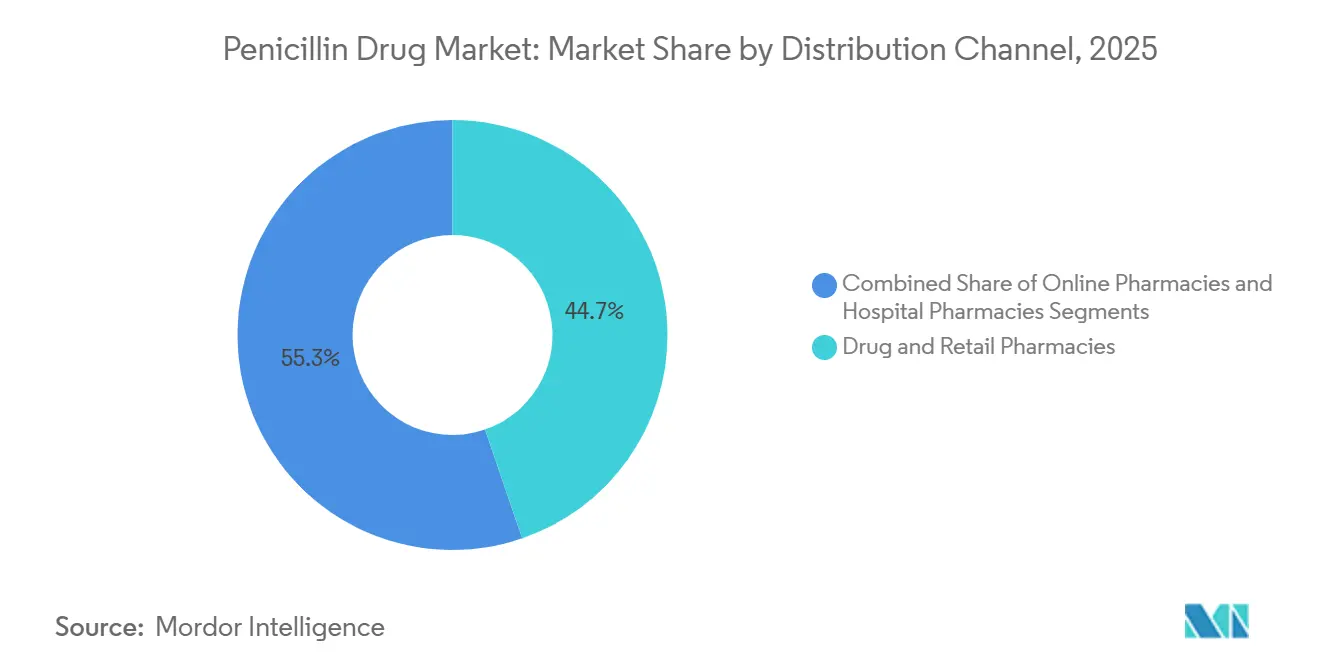
Online DisruptionDrug and retail pharmacies still deliver 44.74% of 2025 penicillin volumes, but online platforms climb at 7.82% after India’s e-pharmacy rule change and Brazil’s similar approval. Hospital channels remain insulated for parenteral therapies procured via tenders.
Geography Analysis
APAC Penicillin Drug Market
Asia-Pacific captured 34.57% of 2025 sales, with India’s MIP and API incentives tipping production toward local champions, while China’s stricter prescribing guidelines reduced empiric penicillin volume but improved appropriateness metrics. Japan’s super-aging demographics keep UTI and pneumonia incidence high. Australian pharmacist prescribing powers bolster community uptake.
North America and Europe Penicillin Drug Market
Rapid strep diagnostics in the United States drive a pivot back to narrow-spectrum penicillin-V, even as Germany negotiated 15% generic price cuts. The UK’s Pharmacy First maintains oral growth despite overall antibiotic decline, while France and Spain trimmed penicillin volumes double digits via awareness campaigns.
MEA Penicillin Drug Market
The Middle East and Africa show the fastest pace at 6.36%. Saudi Vision 2030 funds 120 new primary-care centers and 20 tertiary hospitals, expanding antibiotic reach. UAE telemedicine-linked e-pharmacies accelerate oral dispensing without in-person visits. Rwanda’s prophylaxis blueprint offers a replicable model for neighboring countries.
South America Penicillin Drug Market
South America is recovering as Brazil streamlines generic approvals and Argentina normalizes import flows. Brazil’s 37 generic registrations in 2025 expand Farmácia Popular coverage to high-dose combinations.
Regulatory Landscape
Penicillin drugs operate under strict quality and contamination-control regimes, with GMP requirements shaping facility design and operating costs. In the United States, 21 CFR 211.176 requires controls to prevent and detect penicillin cross-contamination in non-penicillin products. This reinforces the need for segregated air handling and dedicated manufacturing lines for penicillin. In April 2026, the US FDA issued draft guidance, Establishing Impurity Specifications for Antibiotics, which sets out approaches to define impurity limits for antibiotics made by fermentation and semi-synthesis. The guidance directly affects penicillin-class dossiers and how manufacturers plan release testing.
Internationally, procurement-facing quality frameworks and AMR-related environmental expectations are tightening. In June 2026, the WHO Expert Committee on Specifications for Pharmaceutical Preparations published its fifty-ninth report, updating pharmaceutical quality assurance and regulatory expectations that influence multisource antibiotic manufacturing and inspection readiness. At the same time, the AMR Industry Alliance updated its Antibiotic Manufacturing Standard in May 2025 to align with WHO guidance on manufacturing emissions and waste management, increasing compliance focus on antibiotic API discharge controls across global supply bases.
Value Chain Analysis
The penicillin value chain runs from fermentation feedstocks and utilities through upstream fermentation to produce Penicillin-G, conversion to key intermediates such as 6-aminopenicillanic acid (6-APA), and downstream API synthesis such as amoxicillin and ampicillin. It then moves into formulation for oral and parenteral dosage forms, followed by distribution via hospital tenders, wholesalers, retail pharmacies, and online pharmacies. Upstream concentration remains a structural constraint. Evidence points to China controlling around 90% of global 6-APA capacity, with only a small number of qualified sites worldwide, which exposes suppliers and buyers to price undercutting and supply disruption risks. These dynamics raise the value of vertical integration and multi-region qualification for both API and finished-dose manufacturers.
Downstream, branded and generic formulators depend on regulated packaging, cold-chain or controlled storage for selected injectables, and pharmacovigilance and antimicrobial stewardship compliance in end markets. India-focused supply rebalancing is visible through large fermentation investments, including Aurobindo Pharma (via Lyfius Pharma) commissioning a major Penicillin-G facility in Kakinada, while Europe retains limited upstream alternatives, with Centient Pharmaceuticals referenced as a major Penicillin-G producer outside of China. Policy also feeds into value-chain economics. In June 2026, US lawmakers reintroduced the PASTEUR Act concept for subscription-style payments to support antibiotic developers, signaling continued experimentation with pull incentives that can affect investment decisions tied to manufacturing and supply resilience.
Competitive Landscape
The penicillin drug market indicates moderate concentration. Indian and Chinese API players enjoy 30-40% cost advantages from large-scale fermentation. Aurobindo’s 2024 greenfield plant underscores capital barriers to entry. Downstream formulation remains fragmented, though digital platforms like PharmEasy are trialing private-label antibiotics that compress the wholesaler layer.
Differentiation pivots on next-generation inhibitors, sustainability, and digital supply chains. Sandoz cut glucose use 6% through AI process control, defending European share against cheaper imports. Cipla’s pediatric dispersible tablets illustrate unaddressed formulation niches. Market participants that combine cost leadership with regulatory excellence and omnichannel distribution are best placed to outpace the penicillin drug market.
Penicillin Drug Industry Leaders
-
Pfizer Inc.
-
Aurobindo Pharma Ltd.
-
Centrient Pharmaceuticals
-
GlaxoSmithKline plc
-
Sandoz
- *Disclaimer: Major Players sorted in no particular order
Penicillin Drug Market Companies Covered in this Report
- Abbott Laboratories
- Aurobindo Pharma Ltd.
- Bayer
- Cipla
- CSPC Zhongrun Pharmaceutical
- Dr. Reddy’s Laboratories
- GlaxoSmithKline
- Johnson & Johnson
- Lupin
- North China Pharmaceutical Group
- Pfizer
- Sandoz Group
- Sanofi
- Sinopharm Weiqida Pharmaceutical
- Sun Pharmaceuticals Industries
- Takeda Pharmaceuticals
- Teva Pharmaceutical Industries
- The United Laboratories
Market Opportunities and Future Outlook
Supply resilience programs and essential-medicine shortage responses are creating whitespace for regionally anchored penicillin APIs and formulations, particularly as tender buyers reassess single-source risk. India is an example. Lyfius Pharma (Aurobindo Pharma subsidiary) inaugurated a large Penicillin-G manufacturing facility in Kakinada in October 2024 under the Production Linked Incentive scheme. In February 2026, Aurobindo communicated a ramp plan targeting 10,000 metric tonnes per year within 12 months, with a longer-term 15,000 metric tonne ambition. Upstream scale-up of this kind increases optionality for domestic 6-APA and aminopenicillin chains, supporting cost-competitive generics while addressing buyer concerns about continuity of supply.
In Europe, policy emphasis on essential medicines is translating into procurement and industrial-support mechanisms that favor diversified sourcing for critical active substances. In May 2026, the European Parliament reached a deal on measures to tackle shortages of essential medicines, including support for strategic projects and procurement practices that broaden supply bases. That outcome provides a clearer pathway for European antibiotic network investments to compete beyond lowest-price tenders. Manufacturing investments also reinforce this shift, including Boryung beginning construction to expand its penicillin manufacturing facility in Ansan, South Korea in November 2025, suggesting essential-antibiotic capacity additions are still active across multiple regions and can unlock new contracting opportunities for both APIs and finished dosage forms.
Recent Industry Developments in Penicillin Drug Market
- February 2026: Aurobindo Pharma announced plans to ramp Penicillin-G production at its Kakinada, Andhra Pradesh facility to over 10,000 metric tonnes annually within 12 months. The scale-up strengthens India-based upstream supply options for penicillin-derived intermediates and APIs, supporting regional sourcing strategies amid concentration risks in key intermediates.
- November 2025: Boryung began construction to expand its penicillin manufacturing facility in Ansan, South Korea. The project adds regional production capacity for essential antibiotics and supports procurement efforts that prioritize supply continuity and diversified manufacturing footprints.
- March 2024: Sandoz fully commissioned a new penicillin finished dosage form manufacturing facility at its Kundl site in Austria as part of a broader European antibiotics investment program exceeding EUR 250 million. The added European finished-dose capacity improves local availability for key penicillin therapies and helps reduce dependence on long international supply lines for essential medicines.
Penicillin Drug Market Report Scope and Research Methodology
Market Definition and Coverage
For this methodology, the market covers revenues from penicillin class antibacterial drugs used in human healthcare, counted across common formulations and routes of administration and tracked across major geographies.
Scope exclusions: We exclude veterinary-only penicillin usage and non-penicillin antibiotic classes, and we also do not count diagnostic testing or hospital service revenues.
Segments Covered in This Report
- By Source
- Natural Penicillin
- Semisynthetic Penicillin
- By Product Type
- Aminopenicillin
- Penicillinase-Resistant
- Antipseudomonal
- β-lactamase-Inhibitor Combinations
- Extended-Spectrum
- By Route of Administration
- Oral
- Parenteral
- Topical
- By Spectrum of Activity
- Narrow-Spectrum
- Broad-Spectrum
- Extended-Spectrum
- By Distribution Channel
- Hospital Pharmacies
- Drug & Retail Pharmacies
- Online Pharmacies
- By Geography
- North America
- United States
- Canada
- Mexico
- Europe
- Germany
- France
- United Kingdom
- Italy
- Spain
- Rest of Europe
- Asia-Pacific
- China
- Japan
- India
- South Korea
- Australia
- Rest of Asia-Pacific
- Middle East & Africa
- GCC
- South Africa
- Rest of Middle East & Africa
- South America
- Brazil
- Argentina
- Rest of South America
- North America
Data Sources, Market Sizing, and Validation
Desk Research
Desk research helped us set the demand context and build initial guardrails for volumes, pricing, and regional dynamics. We referenced public health and surveillance sources such as the WHO and its GLASS updates, the US CDC, and ECDC reports, to understand infection burden and stewardship direction that can cap or shift usage.
Trade and supply-side signals were also reviewed, using sources such as UN Comtrade, national customs releases, and US FDA drug shortage communications. These sources help explain temporary swings in availability and substitution. We further used company annual reports, investor presentations, and reputable press to cross-check portfolio focus and manufacturing footprint. Where available, we also used a paid subscription for company financials and another for shipment-level trade screening, to support validation. These sources are illustrative and not exhaustive, and many other public and internal references were used to collect, verify, and clarify data points.
Primary Interviews and Surveys
Primary interviews and surveys were used to pressure-test desk assumptions, especially where publicly reported data is thin for molecule-level demand. We spoke with a mix of manufacturers, distributors, hospital pharmacy stakeholders, and clinicians, so that treatment patterns, channel mix, and pricing behavior could be validated across major regions before we finalized the model.
Distribution of primary research fieldwork respondents
| Company type | Respondent position | Region |
|---|---|---|
| Top tier: 31% | CXOs: 20% | APAC: 39% |
| Mid tier: 49% | Functional/Unit leaders: 28% | EMEA: 35% |
| Smaller Players: 20% | Managers: 52% | Americas: 26% |
Market-Sizing & Forecasting
The sizing starts with a top-down build where treatment demand is reconstructed from infection incidence signals, typical prescribing patterns for penicillin eligible conditions, and the split between inpatient and outpatient settings. We then convert that demand pool into sales using dosage and pack assumptions. Once the demand pool is shaped, pricing is applied using region-level average selling price ranges that reflect route of administration and channel mix.
To keep the totals realistic, we corroborate the output with selective bottom-up approximations, such as manufacturer and distributor revenue indications, sample pack level volume checks, and import or export movement as a directional control where trade is meaningful. Inputs used in the model include penicillin usage restrictions from stewardship programs, shortage and backorder periods, substitution into other beta-lactams, changes in generic penetration, and shifts in online pharmacy share for retail filled prescriptions. When gaps exist at the country level, proxy ratios are used from comparable markets and later adjusted after expert feedback.
For forecasting, we use scenario analysis so different paths for resistance patterns, stewardship intensity, and supply continuity can be reflected without overfitting the data. Assumptions are finalized only after the short-term outlook (next 12 to 24 months) matches the direction shared by channel stakeholders and clinical respondents, and then the longer-term trajectory is extended using stable demand drivers and realistic price progression.
Data Validation & Update Cycle
Outputs are checked against independent signals, such as public shortage notices, trade flow direction, and broad antibiotics category growth. We then review the larger variances line by line to identify the driver. If a country shows an unexpected jump, we re-check the route mix, the implied dosage per course, and the price assumptions before accepting the model output.
A multi-step review is followed where another analyst replicates key calculations and sanity checks the inputs. Any open questions trigger a re-contact with selected primary respondents. Reports are refreshed annually, with interim updates when there are material events such as prolonged supply disruption, major regulatory actions, or a clear change in prescribing guidance. Before delivery, we do a final pass so clients receive the latest updated view available at that time.
Mordor Intelligence's Penicillin Drug Market Size Compared Against Other Published Estimates
Published market values for penicillin drugs can differ because groups do not always count the same products, channels, and end uses, and even the same year can be measured with different pricing and currency timing. Differences also come from how shortages are treated, how combination products are classified, and how often the underlying assumptions are refreshed.
Key gaps usually show up around scope and price logic. Some figures roll up the wider penicillin supply chain or include veterinary consumption, while others use list prices that overstate realized selling prices in high generic markets. This effect can be amplified when regional mix is not validated with channel checks.
Benchmark comparison
| Source | Market Size | Gaps in Research Methodology |
|---|---|---|
| Mordor Intelligence | USD 10.49 B (2025) | |
| Trade Journal A | USD 10.15 B (2024) | Uses an earlier base year and often relies on stated market growth without showing how shortages, channel mix, and generic price erosion are reconciled into the revenue series. |
| Industry Publisher B | USD 11.00 B (2024) | Blends adjacent penicillin spend signals and applies broad pricing assumptions, which can inflate totals when veterinary or supply chain revenues are not cleanly separated from human drug sales. |
The spread in the table largely comes from what gets counted and how price is translated into realized revenue by region. Veterinary-only penicillin demand sits outside Mordor Intelligence's scope, which reduces the total versus figures that blend human and animal use. The remaining revenue is kept in line through channel-specific price ranges and cross-checks against supply disruption signals.
Key Questions Answered in the Report
How large will global sales of penicillin drugs be by 2031?
The penicillin drug market is forecast to reach USD 12.68 billion by 2031, reflecting a 3.41% CAGR from 2026.
Which product type is growing fastest?
Β-lactamase-inhibitor combinations such as amoxicillin-clavulanate are projected to grow at 5.88% through 2031.
Why are oral formulations gaining share?
Pharmacy-first schemes in the United Kingdom and Australia allow pharmacists to initiate therapy, pushing oral growth to a 7.32% CAGR.
What impact does India’s Minimum Import Price have?
The USD 35 per kg MIP on bulk penicillin, effective in 2026, shifts sourcing toward domestic API producers and may lift India’s production share to 35% by 2029.
How serious is antimicrobial resistance for penicillin?
Non-susceptibility in Streptococcus pneumoniae has reached 18.3% in the EU, prompting hospitals to restrict empiric penicillin use in high-risk settings.
Which region will grow fastest?
The Middle East and Africa, supported by Saudi Vision 2030 investments and expanded tele-pharmacy in the Gulf, is projected to rise at a 6.36% CAGR.