
Product Design And Development Market Size and Share
Market Overview
| Study Period | 2020 - 2031 |
|---|---|
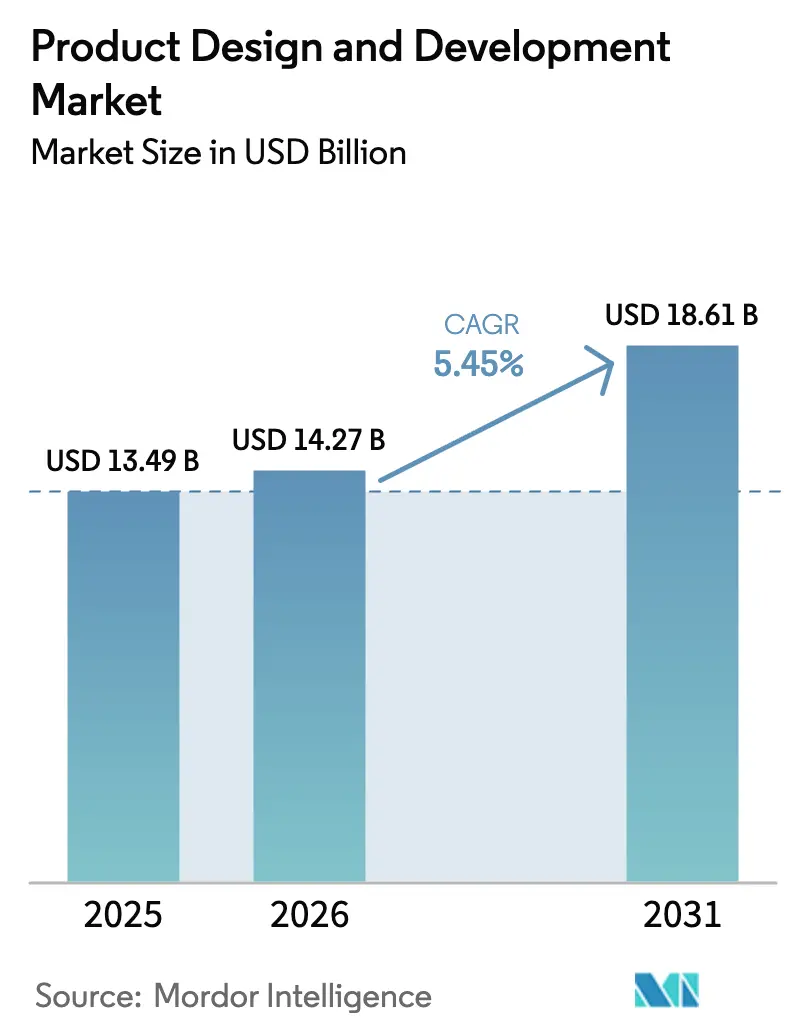
| Market Size (2026) | USD 14.27 Billion |
| Market Size (2031) | USD 18.61 Billion |
| Growth Rate (2026 - 2031) | 5.45 % |
| Fastest Growing Market | Asia-Pacific |
| Largest Market | North America |
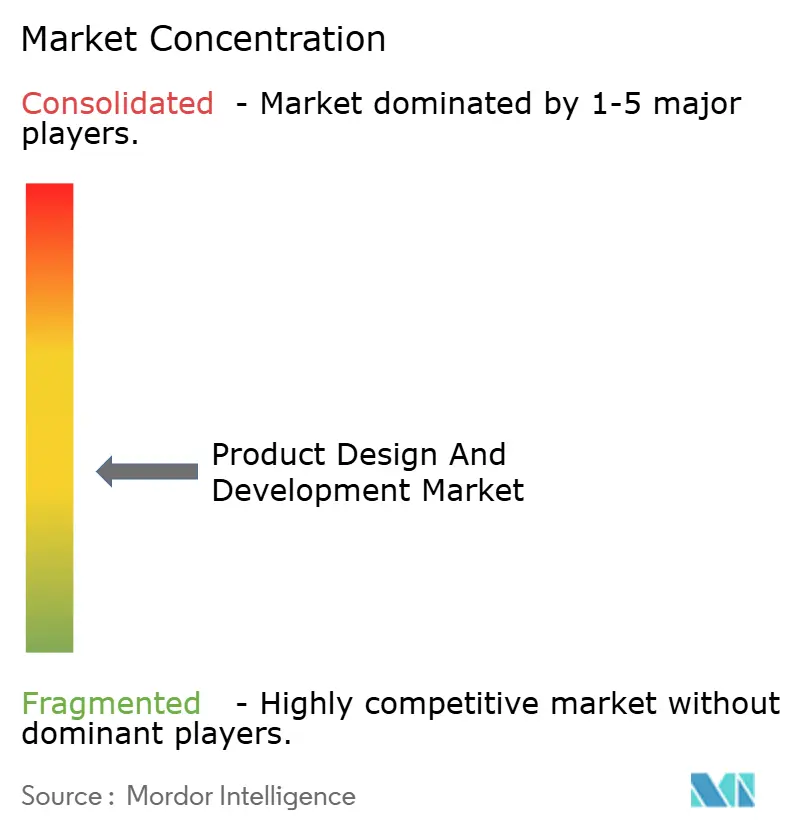
| Market Concentration | Medium |
Major Players *Disclaimer: Major Players sorted in no particular order Image © Mordor Intelligence. Reuse requires attribution under CC BY 4.0. | |
Product Design And Development Market Analysis by Mordor Intelligence
The Product Design And Development Market size is expected to increase from USD 13.49 billion in 2025 to USD 14.27 billion in 2026 and reach USD 18.61 billion by 2031, growing at a CAGR of 5.45% over 2026-2031.
Momentum stems from original-equipment manufacturers (OEMs) that shift toward asset-light strategies, outsourcing engineering to specialist partners able to absorb ISO 13485 compliance overheads, AI-based simulation licenses, and growing cybersecurity validation costs. Generative design platforms shorten concept-to-prototype cycles, while miniaturized implants and wearable patches require multidisciplinary systems engineering that few in-house teams can fund sustainably. Private-equity owners press mid-tier OEMs to redeploy capital into clinical evidence and market access, reinforcing demand for variable-cost external design talent. Regionally, Asia-Pacific accelerates on sovereign manufacturing incentives, yet North America retains the largest installed client base for high-complexity projects. Competitive intensity is moderate; the top 10 design houses hold 40% of global revenue, leaving ample scope for niche specialists in single-use surgical tools and software-as-a-medical-device applications.
Key Report Takeaways
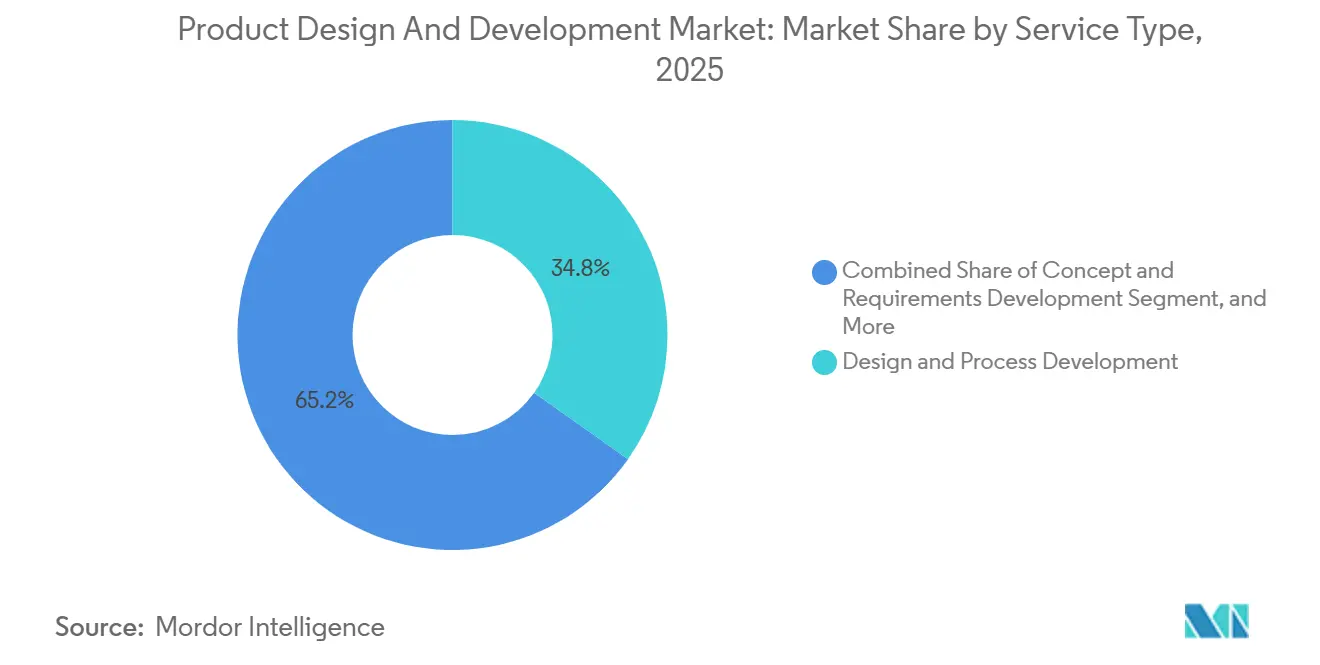
- By service type, design & process development led with 34.81% revenue share in 2025; design & process verification is projected to expand at a 6.96% CAGR to 2031.
- By application, diagnostic equipment accounted for 29.37% of the product design and development market in 2025, while therapeutic equipment is projected to grow at a 7.41% CAGR through 2031.
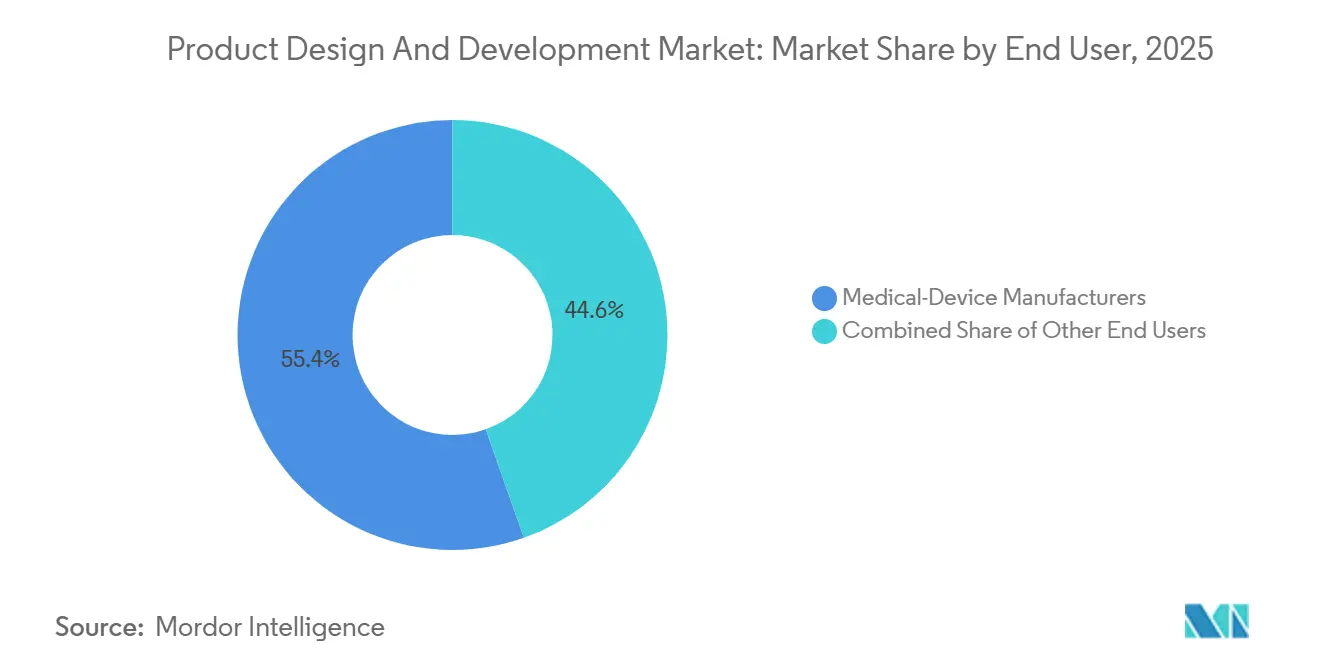
- By end user, medical-device manufacturers held 55.38% of the product design and development market share in 2025, whereas contract research and manufacturing organisations recorded the fastest 6.08% CAGR through 2031.
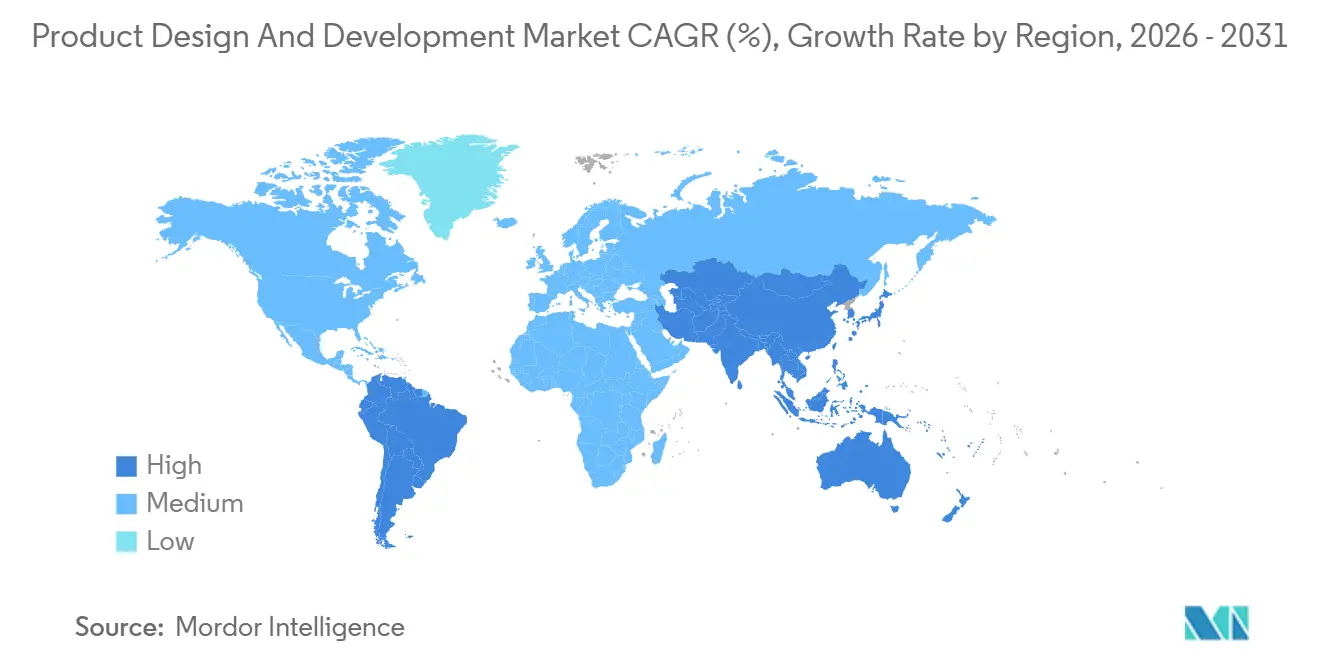
- By geography, North America commanded a 39.24% share in 2025, and the Asia-Pacific region is forecast to register an 8.73% CAGR from 2026 to 2031.
Note: Market size and forecast figures in this report are generated using Mordor Intelligence’s proprietary estimation framework, updated with the latest available data and insights as of January 2026.
Global Product Design And Development Market Trends and Insights
Drivers Impact Analysis*
| Driver | (~) % Impact on CAGR Forecast | Geographic Relevance | Impact Timeline |
|---|---|---|---|
| AI-Enabled Design-Automation Platforms Reduce Concept-To-Prototype Cycle-Time | +1.2% | Global, with early adoption in North America & EU | Medium term (2-4 years) |
| Miniaturisation of Implantable & Wearable Devices Demands Advanced Systems-Engineering | +0.9% | Global, APAC manufacturing hubs accelerating | Long term (≥ 4 years) |
| Med-Tech VC Funding Surge in Robotics & Cardiovascular Devices | +0.8% | North America & EU core, spill-over to APAC | Short term (≤ 2 years) |
| OEM Pivot to Asset-Light Models Outsourcing Design to Control R&D Burn | +1.3% | Global, particularly North America & EU mid-tier OEMs | Medium term (2-4 years) |
| Regulatory Harmonisation Favours Specialist Design Partners | +0.7% | EU & APAC regulatory convergence zones | Long term (≥ 4 years) |
| Sustainability Mandates Push Eco-Design & Circular-Economy Services | +0.6% | EU leading, North America & APAC following | Long term (≥ 4 years) |
| Source: Mordor Intelligence | |||
AI-Enabled Design-Automation Platforms Reduce Concept-to-Prototype Cycle Time
Generative algorithms iterate thousands of geometries in hours, optimizing for strength, biocompatibility, and manufacturability that once required weeks of manual CAD effort.[1]Siemens Healthineers, “Annual Report 2025,” siemens-healthineers.com Hospitals seeking faster 510(k) clearances favor suppliers who slash first-article lead times by up to 35%. Smaller startups are now entering the product design and development market with cloud simulations rather than establishing whole internal engineering departments. The approach also cuts material waste by more than 20% and supports early verification under ISO 14971 risk management. Regulators have yet to codify how AI-generated design rationale must be documented, adding uncertainty to Design History File requirements.
Miniaturization of Implantable & Wearable Devices Demands Advanced Systems Engineering
Continuous glucose monitors, loop recorders, and neurostimulators now package multisensor arrays, antennas, and rechargeable batteries into sub-10 g footprints.[2]Abbott Laboratories, “FreeStyle Libre 3 Product Overview,” abbott.com Precision micro-assembly combines semiconductor techniques with medical-grade encapsulation, prompting design houses to recruit RF engineers, materials scientists, and human factors specialists. Demand is amplified by patch-based biosensors that support remote patient monitoring reimbursement models. ISO 14708 active-implant standards add electromagnetic compatibility and battery safety layers that most OEMs prefer to outsource. As payers reimburse earlier interventions, wearable volumes expand, fortifying a long-term tailwind for the product design and development market.
Med-Tech Venture Capital Funding Surge in Robotics & Cardiovascular Devices
Cardio-robotic startups attracted USD 8.2 billion in 2025, a 28% annual increase that fuels prototype, verification, and first-in-human programs. Modular robotic arms and haptic feedback systems require deep mechatronics, sterile-interface materials, and accelerated fatigue testing—all core competencies of specialist design partners. Cardiovascular innovators focus on transcatheter valves and bioresorbable stents, demanding iterative finite-element analysis that pushes projects to external labs. Design houses often accept equity stakes, aligning incentives yet introducing revenue volatility that sophisticated firms offset by portfolio diversification across therapeutic franchises.
OEM Pivot to Asset-Light Models Outsourcing Design to Control R&D Burn
Private-equity-owned OEMs reduce fixed engineering headcount, shifting USD 42 million toward external partners in 2025 alone.[3]Stryker Corporation, “Form 10-K 2025,” stryker.com Variable project fees protect EBITDA during regulatory delays and allow capital redeployment into commercialization. Multi-year master-service agreements guarantee minimum volumes for design firms, improving revenue visibility. The trend is particularly strong in single-use surgical instruments and consumables, which have three-to-five-year refresh cycles, generating recurring redesign work that stabilizes earnings and strengthens supplier relationships across the product design and development market.
Restraints Impact Analysis*
| Restraint | (~) % Impact on CAGR Forecast | Geographic Relevance | Impact Timeline |
|---|---|---|---|
| Rising Cybersecurity Liability Drives Reluctance to Share Design IP | -0.8% | Global, acute in North America & EU | Short term (≤ 2 years) |
| Talent Deficit in ISO 13485 Systems-Engineers Inflates Project Cost | -0.6% | Global, most severe in North America & EU | Medium term (2-4 years) |
| Fragmented Data Interoperability Standards Slow Software-Heavy Device Programmes | -0.5% | Global, particularly impacting digital health segments | Medium term (2-4 years) |
| Inflationary Metals & Electronics Pricing Erodes Design-To-Value Gains | -0.7% | Global, with acute pressure in APAC manufacturing hubs | Short term (≤ 2 years) |
| Source: Mordor Intelligence | |||
Rising Cybersecurity Liability Drives Reluctance to Share Design IP
Health-sector ransomware attacks increased by 19% year-over-year in 2025, with several incidents attributed to vulnerabilities in third-party firmware. OEMs now require air-gapped development environments and prohibit contractors from retaining code, which adds weeks to each iteration. Liability insurance premiums for design houses have increased by 30–40%, and underwriters now require ISO 27001 certification, as well as annual penetration testing. Compliance costs strain small consultancies and delay collaborations, tempering growth in the product design and development market. Draft FDA guidance mandates a software bill of materials and vulnerability disclosure protocols, heightening documentation overhead for all parties.
Talent Deficit in ISO 13485 Systems Engineers Inflates Project Cost
A 2025 consortium survey found that 62% of design firms ranked skilled labor shortages as their top bottleneck. Median time-to-fill for senior systems engineers exceeds five months, and salaries rose 12% in North America. To compensate, design houses increased hourly rates by 8–10%, inflating client budgets. Offshore centers in India and Eastern Europe offer relief but introduce time-zone friction that can elongate project schedules by up to 20%. Some firms invest in six-month internal academies co-run with notified bodies, delaying billable productivity yet building a sustainable pipeline for the medical device product design and development industry.
*Our forecasts treat driver/restraint impacts as directional, not additive. The impact forecasts reflect baseline growth, mix effects, and variable interactions.
Segment Analysis
By Service Type: Verification Momentum Outpaces Front-End Development
The service-mix continues to pivot toward verification as regulators intensify scrutiny of usability, software validation, and real-world evidence. Design & process verification is projected to grow at a 6.96% CAGR through 2031. FDA human-factors guidance now mandates formative and summative studies with representative users, adding USD 150,000–USD 300,000 to typical verification budgets. In parallel, the design community embeds AI-driven test automation, lowering per-iteration costs while increasing the number of iterations within fixed timelines. The product design and development market size for verification services is therefore set to expand as software-heavy devices require continuous risk monitoring even after commercial launch.
The design & process verification segment accounted for 34.81% of revenue in 2025, reflecting robust demand for early-stage ideation, feasibility, and initial architecture definition. However, OEMs often postpone large-scale concept programs until financing is secured, introducing revenue lumpiness that design houses offset by engaging in post-launch lifecycle optimization. Jabil, for example, reported that lifecycle services accounted for 18% of its medical device revenue in 2025. Pilot-to-volume manufacturing transfer remains crucial when clients shift production to low-cost regions; process validation under ISO 14644 cleanroom standards commands premium fees. As regulatory expectations intensify, service providers with integrated quality management systems can close verification and transfer loops more efficiently, thereby strengthening their competitive position within the product design and development market.



By Application: Therapeutic Equipment Surges on Robotics and Cardiovascular Innovation
Diagnostic equipment maintained a 29.37% share in 2025, driven by point-of-care analyzers and AI-enhanced imaging systems that compress time-to-diagnosis in outpatient settings. Portable ultrasound devices and handheld analyzers benefit from declining CMOS sensor costs, enabling decentralized diagnostics. Yet the fastest growth is in therapeutic equipment, forecast to expand at a 7.41% CAGR through 2031, driven by surgical robotics, transcatheter valves, and neurostimulators that integrate real-time software and haptic feedback. Robotics programs often involve five-year co-development pipelines, providing high-margin recurring work for design specialists.
Consumables & disposables generate steady revenue because OEMs regularly re-engineer form factors to reduce material intensity and comply with sustainability mandates. Clinical Laboratory Equipment projects focus on high-throughput automation platforms subject to ISO 15189 accreditation, while Surgical Equipment design centers on single-use end effectors that must tolerate repeated sterilization or support cost-effective disposability. Digital & Connected Health Solutions add demand for cybersecurity hardening and interoperable data architectures. As Medicare expanded coverage for remote patient monitoring in 2024, volumes of wearable patches surged, reinforcing growth prospects for the product design and development market size across application lines.
By End User: CMOs Gain Share as Pharma Deepens Device Involvement
Medical-device manufacturers retained 55.38% of 2025 revenue, but growth is tempered as they offload design complexity to focus on commercialization. Contract research & manufacturing organisations (CMOs) are projected to grow at a 6.08% CAGR, buoyed by pharmaceutical firms that lack internal device expertise but seek delivery platforms for biologics and combination products. The FDA guidance now permits a single submission for drug-device hybrids when the primary mode of action is pharmaceutical, thereby reducing redundant testing.
Pharmaceutical firms are increasingly sourcing connected auto-injectors and smart inhalers, thereby elevating demand for ISO 13485-compliant design partners that understand pharmaceutical filling, sterilization, and cold-chain logistics. CMOs offering integrated design-to-fill-finish services therefore expand wallet share within the product design and development market. For device OEMs, design transfer projects surge when production migrates from high-cost geographies to Malaysia, Mexico, or Eastern Europe, necessitating process capability studies and supplier requalification. Digital therapeutics further blur lines between software and hardware, prompting end users across all categories to tap software-as-a-medical-device specialists.
Geography Analysis
North America accounted for 39.24% of 2025 revenue, supported by a dense ecosystem of OEM headquarters, venture funding, and a transparent FDA path that design partners navigate efficiently. Clients prize local design support for high-complexity implants and Class III robotics, leading to average project values 25% above global norms. The product design and development market size in the United States also benefits from Medicare reimbursement that accelerates adoption of remote-monitoring devices and stimulates design refresh projects directed at home use.
Asia-Pacific is projected to grow at 8.73% CAGR through 2031, the highest regional pace. China’s regulator approved 87 innovative Class III devices in 2025, aided by expedited pathways for domestic intellectual property. India’s Production-Linked Incentive scheme offers 5% rebates on incremental sales, prompting multinationals to establish engineering hubs in Bangalore and Hyderabad. South Korea’s fast-track review program for AI-driven diagnostics further boosts regional demand. Design firms with ISO 13485 certificates across multiple APAC sites gain a structural edge as clients seek simultaneous U.S., EU, and China submissions without redundant documentation.
Europe faces growth headwinds from Medical Device Regulation (MDR) and In-Vitro Diagnostic Regulation (IVDR) bottlenecks. Notified-body queues stretched CE-marking lead times to 24 months in 2025, causing some OEMs to prioritize U.S. or APAC launches. Nevertheless, specialist consultancies with pre-certified quality management systems win share by navigating MDR rigor efficiently. In the Middle East & Africa and South America, hospital capacity expansion drives modest demand for diagnostic and surgical instrumentation. Brazil’s ANVISA alignment with FDA and EU standards simplifies dossier reuse, fostering cross-border design engagements. GCC countries fund medical-device industrial zones that reward local-content design partnerships, broadening the long-term addressable base for the product design and development market.

Regulatory Landscape
Regulation for medical device product design and development continues to tighten around software, AI-enabled functions, and lifecycle documentation, which increases the compliance load built into design and verification services. In the United States, FDA draft guidance on artificial intelligence-enabled device software functions (January 2025) and the finalized Computer Software Assurance guidance (February 2026) reinforce a risk-based approach for software used in production and quality management systems, raising expectations for validation planning, traceability, and documentation packages prepared by design partners.
In Europe, the Medical Device Regulation (MDR) and IVDR keep driving design controls and conformity assessment planning, while 2026 added further standardization steps, including Implementing Regulation (EU) 2026/977 on uniform requirements connected to conformity assessment and notified bodies. The European Commission adopted the European Biotech Act on December 16, 2025, introducing modernization measures such as sandbox concepts for data-driven innovation. In Q2 2026, the European Medicines Agency (EMA) launched an EU breakthrough device pilot to provide enhanced support and priority scientific advice for innovative technologies, shaping earlier regulatory strategy work across concept, verification, and design transfer phases.
Value Chain Analysis
In regulated healthcare, the value chain for product design and development is anchored by OEMs, including medical device manufacturers and pharmaceutical companies developing combination products, that contract specialist engineering and design houses for concept development, design controls, verification and validation, and design transfer into regulated manufacturing. Upstream inputs that shape design-for-manufacture include components and subassemblies (electronics, sensors, and materials), software toolchains (CAD/PLM, simulation, and test automation), and compliance systems (ISO 13485 quality management, ISO 14971 risk management, and cybersecurity processes), with downstream handoffs into pilot builds, process validation, and scale manufacturing through CMOs/CDMOs and qualified component suppliers.
Supply continuity and supplier qualification increasingly influence development plans because shortages and concentrated upstream sourcing create redesign and revalidation loops. The United States Pharmacopeia (USP) 2026 Annual Drug Shortages Report highlighted structural exposure, noting that 44% of drugs in shortage have at least one key starting material (KSM) solely manufactured in a single country, while the American Society of Health-System Pharmacists (ASHP) reported 227 active US drug shortages at the close of Q2 2026. These constraints shift emphasis toward second-sourcing, alternate-material selection, and earlier manufacturing risk assessments during design and process verification, particularly for drug-device combinations and software-heavy platforms that require controlled change management.
Competitive Landscape
The competitive arena remains moderately fragmented. Integer Holdings, Jabil, Flex, and Plexus deliver vertically integrated offerings that span concept, prototyping, tooling, and volume manufacturing, attracting OEMs seeking one-stop solutions. Their global factory networks and multi-site ISO 13485 certifications enable synchronized product launches in the United States, Europe, and China, justifying fee premiums of 15–20%. Cambridge Consultants, TTP, and Exponent differentiate themselves through deep domain expertise, such as neurostimulation algorithms, microfluidics, and cybersecurity validation, which commands premium hourly rates that smaller clients accept to mitigate technical risk.
Design houses increasingly deploy digital threads that link CAD, PLM, manufacturing execution, and post-market surveillance databases, enabling closed-loop improvements based on field data. AI-native platforms promise to compress early-stage engineering by up to 40%, potentially disrupting fee structures centered on billable hours. Meanwhile, patent filings in medical robotics increased by 22% in 2025, underscoring an innovation race that fuels recurring demand for high-value design services. Providers that bundle design with post-market analytics lock in multi-year revenue through continuous improvement mandates.
White-space niches persist in software-as-a-medical-device, eco-design for circular economy compliance, and human factors engineering for home-use devices. Barriers to entry escalate in cybersecurity, where ISO 27001 certification and dedicated penetration testing teams become necessary credentials. The top 10 firms capture roughly 40% of revenue, implying moderate concentration that leaves space for regional and therapeutic specialists to thrive within the product design and development market.
Product Design And Development Industry Leaders
Jabil Inc.
Sterling Medical Devices
Flex Ltd.
DeviceLab Inc.
Ximedica (Veranex)
- *Disclaimer: Major Players sorted in no particular order

Market Opportunities and Future Outlook
Service providers are finding whitespace in programs that combine regulated product development with adjacent capabilities that reduce handoff friction, particularly for combination products and diagnostic instrumentation. Jabil's shift toward end-to-end delivery illustrates the trend, with its February 2025 acquisition of Pharmaceutics International, Inc. (Pii) to add drug product development and sterile fill-finish capabilities, followed by the expansion of specialized engineering infrastructure with an Advanced Catheter Development Lab in St. Petersburg, Florida (December 2025). Together, these steps support an end-to-end model linking requirements, design verification, and transfer activities with manufacturing and fill-finish readiness, aligning with the report's asset-light outsourcing framing.
The next opportunities cluster around regulatory-heavy and software-centric work, where documentation and lifecycle controls are becoming more explicit. FDA actions, including the finalized Computer Software Assurance guidance (February 2026) and ongoing guidance activity around device software functions, increase demand for verification, validation, and quality system software assurance embedded within development engagements. In Europe, the EMA breakthrough device pilot launched in Q2 2026 and the European Commission's adoption of the European Biotech Act (December 16, 2025) create practical pull for earlier scientific advice preparation, evidence planning, and design history file readiness, which benefits design partners with multi-region submission experience and integrated cybersecurity and software validation capabilities.
Recent Industry Developments
- June 2026: Jabil and HSE formalized a strategic, non-exclusive collaboration to support early design and development of diagnostic and life sciences instrumentation with earlier manufacturing integration. The arrangement strengthens an end-to-end pathway from concept through production transfer, tightening feedback loops between design decisions and manufacturability constraints for regulated instrumentation programs.
- July 2025: Veranex launched its Innovation CRO (iCRO) platform, integrating product development with preclinical, clinical, regulatory, and manufacturing services for medical devices and IVDs. The bundled operating model increases competitive pressure on standalone design consultancies by positioning integrated providers to capture longer program scope across development phases.
- January 2024: Integer Holdings completed the acquisition of Pulse Technologies for USD 285 million, adding advanced cardiac rhythm management and neuromodulation capabilities. The combination broadened Integer's design and development toolkit in high-complexity implantable segments where verification, reliability engineering, and regulated transfer are central to client selection.


Research Methodology Framework and Report Scope
Market Definition and Coverage
For this study, the market covers third party product design and product development work that supports taking a physical product from early concept through engineering, validation, and readiness for production. The market is measured in revenue terms in USD.
Scope exclusions: In this sizing, we exclude in house design costs that are not billed externally, and we exclude pure manufacturing or assembly services that do not include design or development activity.
Segmentation Overview
- By Service Type
- Research, Strategy & Concept Generation
- Concept & Requirements Development
- Design & Process Development
- Design & Process Verification
- Pilot-to-Volume Manufacturing Transfer
- Post-Launch Lifecycle Optimisation
- By Application
- Diagnostic Equipment
- Therapeutic Equipment
- Clinical Laboratory Equipment
- Surgical Equipment
- Consumables & Disposables
- Digital & Connected Health Solutions
- By End User
- Medical-Device Manufacturer
- Pharmaceutical & Biopharmaceutical Firms
- Contract Research & Manufacturing Organisations
- By Geography
- North America
- United States
- Canada
- Mexico
- Europe
- Germany
- United Kingdom
- France
- Italy
- Spain
- Rest of Europe
- Asia-Pacific
- China
- Japan
- India
- Australia
- South Korea
- Rest of Asia-Pacific
- Middle East & Africa
- GCC
- South Africa
- Rest of Middle East & Africa
- South America
- Brazil
- Argentina
- Rest of South America
- North America
Data Sources, Market Sizing, and Validation
Desk Research
Desk research was used to set the market perimeter, build the first demand and supply logic, and create a list of measurable indicators that can be refreshed each year. We relied on public sources such as the US Bureau of Labor Statistics (employment and wage trends tied to industrial design and engineering roles), the US Census Bureau and UN Comtrade style trade statistics (signals for manufactured goods flows that influence outsourced engineering work), and standards bodies such as ISO and IEC (which shape verification and documentation needs).
We also reviewed public company filings, annual reports, investor presentations, and reputable business press to map service offerings, delivery footprints, and the common pricing units used in this space (project fees, hourly rates, and milestone billing). Where needed, our team used paid subscriptions for company financials and news coverage, and for patent databases to understand activity levels in product innovation and to sanity check category momentum. The sources named here are illustrative rather than exhaustive, and other public and paid references were also used to collect data, validate assumptions, and clarify definitions.
Primary Interviews and Surveys
Primary work focused on checking what is actually being outsourced, how projects are priced, and how demand is shifting by end customer needs. We used it to correct the desk built model where gaps were found.
We spoke with service providers, engineering and design leaders on the buyer side, and channel partners involved in tooling, prototyping, and testing support. We then rechecked key assumptions when responses did not align with public signals.
For this global market, the outreach was balanced across major delivery and demand regions so that growth drivers like new product launches, compliance workloads, and engineering talent availability were reflected in a realistic way.
Distribution of primary research fieldwork respondents
| Company type | Respondent position | Region |
|---|---|---|
| Top tier: 26% | CXOs: 13% | APAC: 40% |
| Mid tier: 59% | Functional/Unit leaders: 33% | EMEA: 33% |
| Smaller Players: 15% | Managers: 54% | Americas: 27% |
Market-Sizing & Forecasting
Sizing starts with a top-down build where overall outsourced engineering and design spend is reconstructed using service scope rules and observable demand signals from end markets that launch and refresh products. Once that structure is in place, we corroborate it with selective bottom-up approximations, such as sampling typical project fee ranges, converting known activity into hours, and rolling up supplier revenues where disclosures are available, and then we adjust totals when the checks do not reconcile.
Key inputs used in the model include the mix of concept work versus detailed engineering, typical project cycle time, the share of work that requires verification and documentation, average rate cards by region, and the share of programs that include physical prototyping support. Because not every provider discloses clean service line revenue, gaps are handled through peer grouping, ratio based allocations from public financial notes, and interview led corrections that are rechecked against independent indicators.
Forecasting is done using scenario analysis supported by variable level expectations collected during interviews. Outsourcing budgets can shift quickly with product launch pipelines and macro conditions, so we apply growth rates by region using signals such as manufacturing activity, product innovation intensity, and expected compliance burden. The final outlook is reviewed to keep year to year shifts realistic.
Data Validation & Update Cycle
Outputs are validated through multiple checks, where modeled totals are compared with independent market signals and with what buyers and suppliers describe as typical spend patterns. When an anomaly appears, such as a regional jump that is not supported by hiring trends or trade linked production signals, we revisit assumptions, re-run sensitivity cases, and re-contact sources to confirm what changed.
Before sign-off, the work goes through a second analyst review that focuses on unit logic, currency treatment, and year alignment across inputs. Reports are refreshed annually, and interim updates are made when material events occur, such as sharp rate changes, supply chain disruptions that shift development timelines, or policy updates that increase verification work. Right before delivery, we do a final pass so clients receive the most current view available.
Mordor Intelligence's Product Design and Development Market Size Versus Other Published Estimates
Published market values for product design and development often differ because groups do not count the same services, and they also use different timing, currency conversion choices, and growth assumptions. Another common reason is that some estimates lean more heavily on single sector demand, which can inflate or compress the total depending on the chosen end markets.
The biggest gap usually comes from whether late-stage verification and validation work, plus related documentation support, is counted as part of design and development services, and this also shifts the assumed pricing basis when hourly rate cards are converted into project revenue. Some estimates apply aggressive expansion rates for outsourced work without rechecking against practical constraints like project cycle time and rework loops. By tying the value build to measured service stages and then refreshing rate progression with interview checks, Mordor Intelligence keeps the total aligned to what is actually billed as design and development work.
Benchmark comparison
| Source | Market Size | Gaps in Research Methodology |
|---|---|---|
| Mordor Intelligence | USD 14.27 B (2026) | |
| Industry Publisher A | USD 34.70 B (2025) | Uses a broader services wrapper that can fold in adjacent product engineering and consulting revenue, and the larger total can also reflect different year alignment and currency timing versus a 2026 base. |
| Trade Brief B | USD 9.51 B (2022) | Anchors on an earlier base year and may be limited to a narrower set of outsourced design and development activities, which can undercount later stage verification, documentation, and related support work. |
The table shows that the spread mainly comes from scope expansion on the high side and narrower early year snapshots on the low side. When service stages, pricing units, and year timing are made explicit, it becomes easier to trace what is included and to rerun the math as assumptions change.


Key Questions Answered in the Report
What is the current value of the product design and development market?
The market is valued at USD 14.27 billion in 2026 and is projected to reach USD 18.61 billion by 2031.
Which service category is expanding the fastest?
Design & Process Verification is the fastest-growing service, advancing at a 6.96% CAGR through 2031.
Which application area offers the highest growth potential?
Therapeutic Equipment, particularly surgical robotics and cardiovascular devices, is forecast to grow at 7.41% CAGR.
Why are CMOs gaining traction among pharmaceutical companies?
Pharma firms increasingly require integrated device expertise for combination products and therefore partner with CMOs that provide end-to-end design-to-fill-finish solutions.
Which region will grow most rapidly through 2031?
Asia-Pacific is projected to expand at an 8.73% CAGR, driven by manufacturing incentives and streamlined regulatory pathways.
Page last updated on:





