
Potassium Citrate Market Size and Share
Market Overview
| Study Period | 2021 - 2031 |
|---|---|
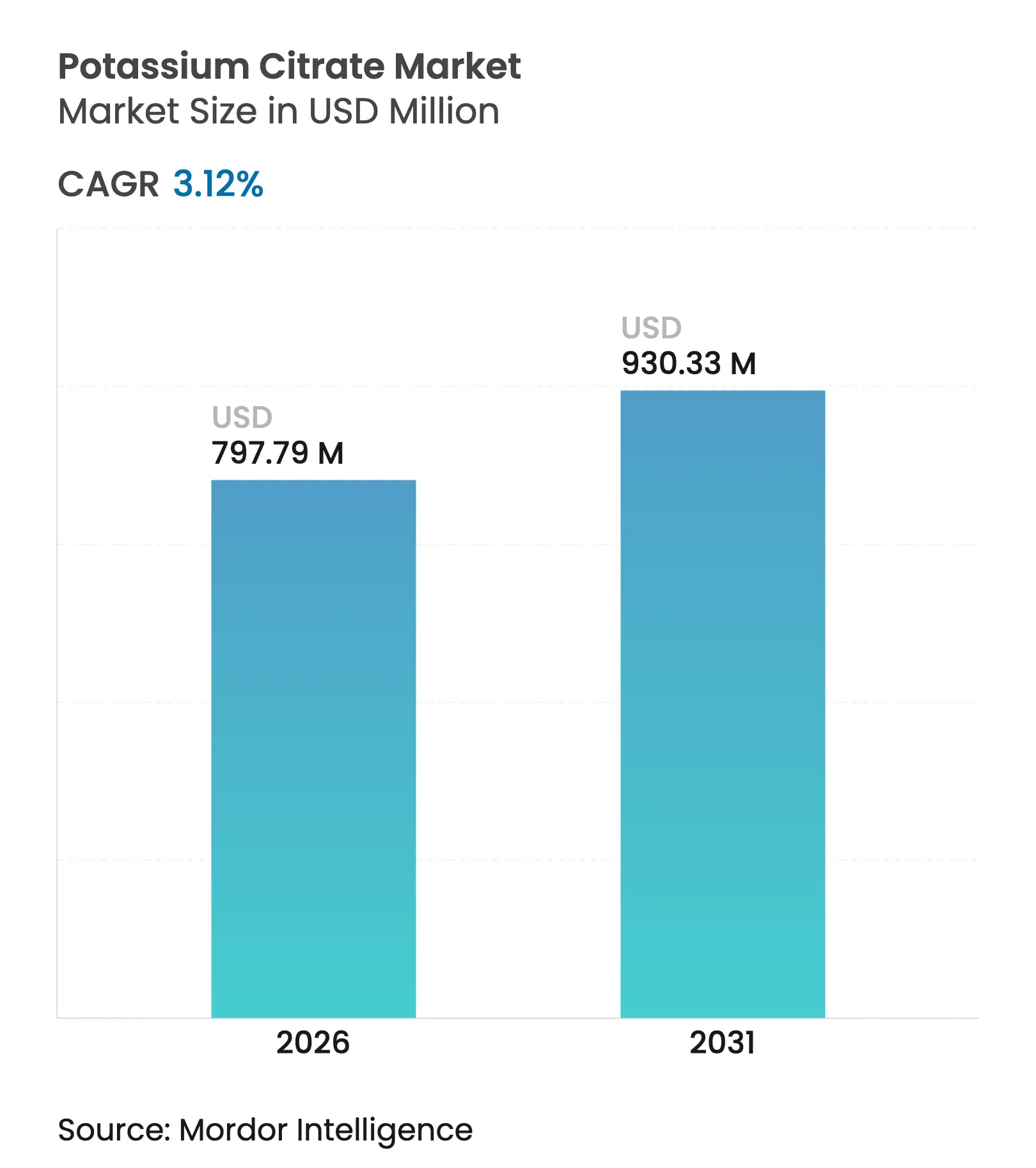
| Market Size (2026) | USD 797.79 Million |
| Market Size (2031) | USD 930.33 Million |
| Growth Rate (2026 - 2031) | 3.12 % CAGR |
| Fastest Growing Market | Asia Pacific |
| Largest Market | Asia Pacific |
| Market Concentration | Medium |
Major Players *Disclaimer: Major Players sorted in no particular order. Image © Mordor Intelligence. Reuse requires attribution under CC BY 4.0. |

Potassium Citrate Market Analysis by Mordor Intelligence
The global potassium citrate market size was valued at USD 773.65 million in 2025 and estimated to grow from USD 797.79 million in 2026 to reach USD 930.33 million by 2031, at a CAGR of 3.12% during the forecast period (2026-2031). This moderate yet consistent growth trajectory reflects the compound's entrenched position across multiple high-value applications, from sodium reduction initiatives in processed foods to specialized pharmaceutical formulations for renal health management. The market's resilience stems from potassium citrate's unique dual functionality as both a food additive and active pharmaceutical ingredient, positioning it at the intersection of two robust end-use sectors that continue to prioritize health-conscious formulations. Regulatory momentum significantly amplifies market dynamics, particularly through the FDA's Phase II sodium reduction guidance issued in August 2024, which targets average sodium intake reduction to 2,750 mg per day[1]. This initiative directly benefits potassium citrate manufacturers, as food processors increasingly substitute sodium-based additives with potassium alternatives to meet regulatory targets while maintaining product functionality. Simultaneously, the beverage sector's growing emphasis on pH control agents for product stability and taste enhancement creates additional demand vectors, particularly in functional and sports drink categories where electrolyte balance remains paramount.
Key Report Takeaways
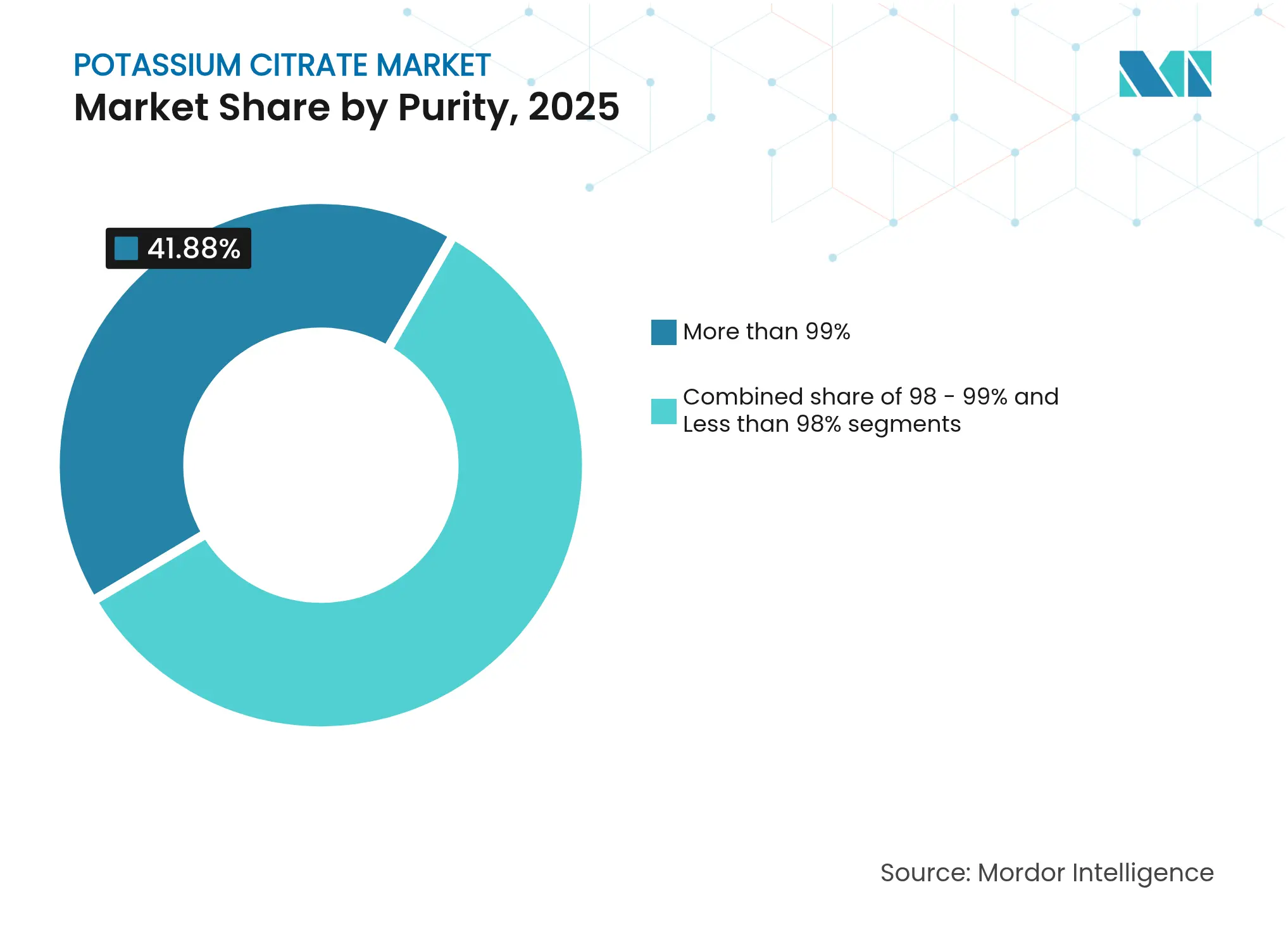
- By purity, more than 99% grades led with 41.88% revenue share in 2025; the less than 98% purity segment is projected to post the fastest 4.42% CAGR through 2031.
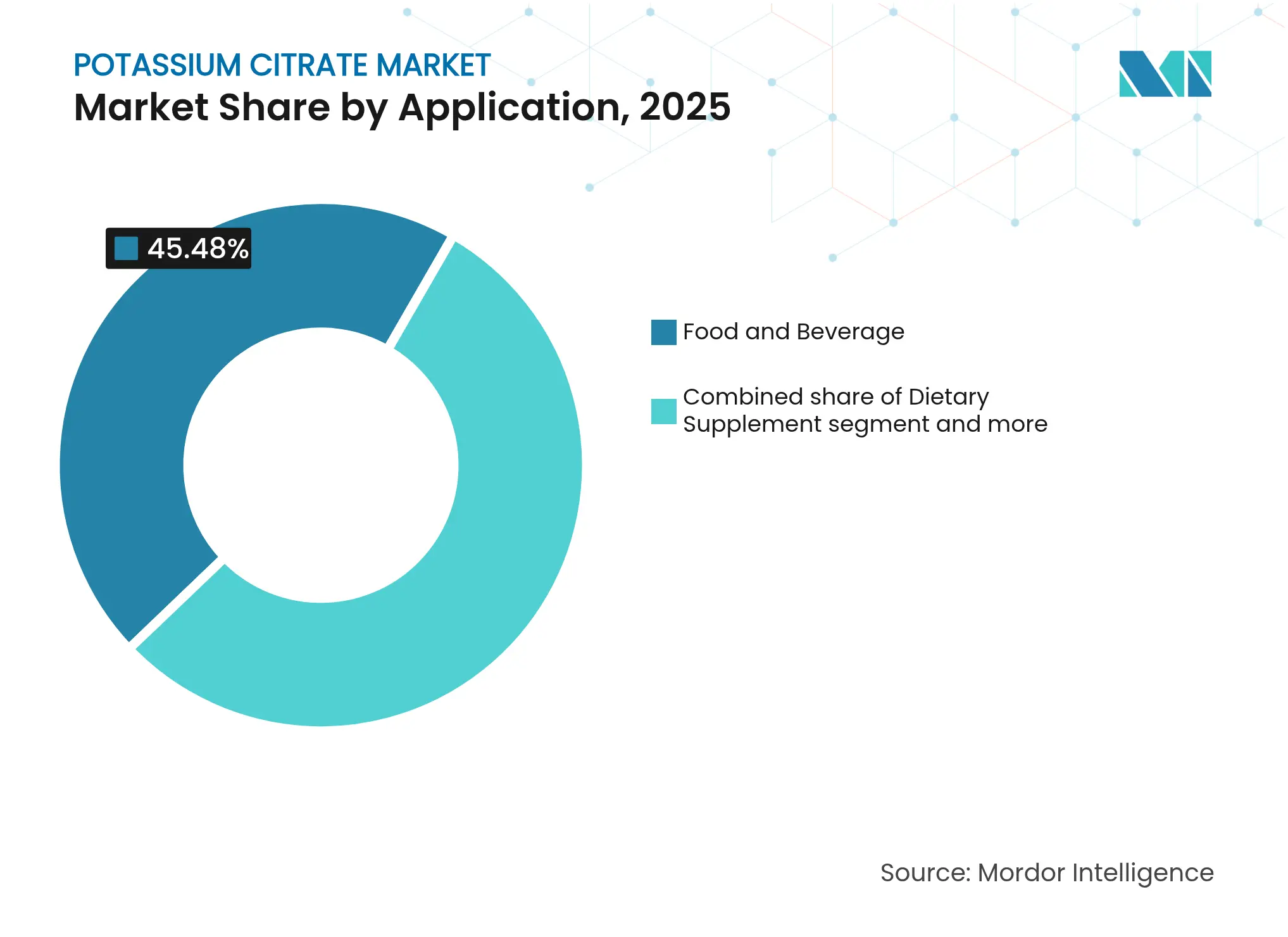
- By application, food and beverages accounted for 45.48% of the potassium citrate market share in 2025, whereas dietary supplements are advancing at a 4.82% CAGR to 2031.
- By geography, Asia-Pacific captured 30.89% of 2025 revenue and is set to expand at 5.17% CAGR, the fastest among all regions.
Note: Market size and forecast figures in this report are generated using Mordor Intelligence's proprietary estimation framework, updated with the latest available data and insights as of 2026.
Global Potassium Citrate Market Trends and Insights
Drivers Impact Analysis
| Driver | (~) % Impact on CAGR Forecast | Geographic Relevance | Impact Timeline |
|---|---|---|---|
Surging use as a sodium-free food additive | +0.8% | North America and Europe | Medium term (2-4 years) |
Rising clean-label and health-focused demand | +0.6% | Developed markets | Long term (≥ 4 years) |
Shift toward biodegradable cosmetic chelants | +0.4% | North America, Europe, Asia-Pacific | Medium term (2-4 years) |
Vegan and plant-based supplement expansion | +0.3% | Urban global markets | Long term (≥ 4 years) |
Growing adoption of natural preservatives | +0.5% | Europe and United States | Medium term (2-4 years) |
Beverage sector demand for pH control | +0.4% | Asia-Pacific then global | Short term (≤ 2 years) |
| Source: Mordor Intelligence | |||
Surging Use of Potassium Citrate as a Sodium-Free Food Additive
Global efforts to reduce sodium in food systems are propelling the growth of the potassium citrate market. With regulatory bodies advocating for reduced sodium consumption, potassium citrate stands out as a viable substitute. Being sodium-free, it can replace conventional sodium-based additives, preserving crucial functions like buffering, emulsification, and mineral fortification. This is especially vital in processed foods, where sodium salts have long been essential. Data from the Centers for Disease Control and Prevention (January 2024) highlights the issue: Americans average 3,400 milligrams of sodium daily, well above the federal recommendation of 2,300 milligrams for teens and adults. This overconsumption is linked to serious health concerns. From August 2021 to August 2023, adult hypertension in the U.S. hit 47.7%, with men at 50.8% and women at 44.6%, and rates climbing with age [2]. The regulatory landscape is shifting, with a clear push for sodium-reduction measures in the industry, aiming for compliance by 2026. This urgency boosts the demand for potassium citrate as a reliable sodium alternative. Potassium citrate can be easily incorporated into current food formulations, sparing manufacturers from intricate adjustments. This ensures product quality and shelf stability while adhering to health standards. Heightened consumer health awareness, solid epidemiological links between sodium and cardiovascular risks, and tightening regulatory sodium limits fuel the growing adoption of potassium citrate in various food applications.
Increasing Preference for Clean-Label and Health-Focused Ingredients
Driven by evolving consumer preferences for clean-label and health-centric formulations, the food and beverage industry is undergoing a significant transformation, with notable repercussions for the potassium citrate market. While potassium citrate is industrially synthesized, it enjoys a favorable consumer perception, largely due to its association with naturally occurring citric acid. In-depth consumer studies reveal a growing inclination towards ingredients perceived as natural or those that offer pronounced nutritional advantages. This trend is particularly evident in the European natural food additives market, where regulatory frameworks are increasingly endorsing ingredients sourced from natural origins or processes [3]. Manufacturers have adeptly repositioned potassium citrate, emphasizing its ties to traditional food preservation and its role as a potassium source, vital for cardiovascular health and electrolyte balance. Highlighting this trend, the International Food Information Council's 2023 research found that about 26% of U.S. respondents view "natural and low-sodium" as the foremost indicator of healthy food [4]. This underscores a rising consumer demand for straightforward, natural formulations.
Surge in Cosmetic and Personal Care Formulations Using Chelating Agents
As the personal care industry shifts away from EDTA-based formulations, potassium citrate emerges as a prime biodegradable chelating alternative. As wellness, transparency, and premium formulations take center stage for consumers, brands feel the heat to innovate with safer, multifunctional, and sustainable ingredients. Data from the Bureau of Labor Statistics reveals that in 2023, U.S. consumers spent an average of USD 263.42 annually on cosmetics, perfumes, and bath products, marking the peak in the observed timeframe. In skincare, potassium citrate's chelating prowess is invaluable, controlling metal ions to prevent oxidation and ensuring product efficacy throughout its shelf life. Additionally, its pH buffering capability stabilizes emulsions in intricate cosmetic formulations, reducing the need for multiple additives. Notable players like Jungbunzlauer, Dr. Paul Lohmann, Gadot Biochemical Industries, Merck KGaA, Ava Chemicals, FBC Industries, Spectrum Chemical, and American International Foods (AIFI) are rolling out high-purity, cosmetic-grade potassium citrate.
Rising Popularity of Vegan and Plant-Based Supplementation Solution
The vegan supplement market expansion creates specific demand for potassium citrate as a mineral source compatible with plant-based lifestyles. The synthetic production process of potassium citrate ensures vegan compatibility, unlike potassium from animal sources or materials. The high bioavailability of potassium citrate compared to inorganic potassium salts increases its appeal among formulators and consumers seeking effective supplementation. This aligns with the supplement industry's premium segment growth, where consumers accept higher prices for ingredients they consider more effective, safer, or better matched to their health preferences. The regulatory environment supports market growth, with the FDA permitting health claims for potassium-containing foods, particularly regarding cardiovascular benefits. This provides marketing opportunities for supplement manufacturers using potassium citrate. The trend's global presence, especially in urban areas across developed and emerging markets, offers geographic expansion opportunities for potassium citrate suppliers in the nutraceutical industry.
Restraints Impact Analysis
| Restraint | (~) % Impact on CAGR Forecast | Geographic Relevance | Impact Timeline |
|---|---|---|---|
Stringent regulatory compliance in pharmaceutical and food sector | -0.3% | Global, with varying intensity by region | Long term (≥ 4 years) |
Taste alteration in food limiting wider acceptance | -0.2% | Global, particularly in taste-sensitive applications | Medium term (2-4 years) |
Storage and stability challenges during long-term use | -0.4% | Global, with higher impact in humid climates | Short term (≤ 2 years) |
Consumer skepticism towards chemical-sounding additives | -0.3% | Developed markets, spreading to emerging economies | Long term (≥ 4 years) |
| Source: Mordor Intelligence | |||
Stringent Regulatory Compliance in Pharmaceutical and Food Sector
Pharmaceutical applications of potassium citrate face increasingly complex regulatory requirements that extend development timelines and increase compliance costs for manufacturers. The FDA's drug master file requirements for pharmaceutical-grade potassium citrate demand extensive documentation of manufacturing processes, impurity profiles, and stability data, creating barriers for smaller suppliers seeking to enter high-value pharmaceutical markets. USP monograph requirements specify stringent purity standards exceeding 99.5% for pharmaceutical applications, necessitating sophisticated manufacturing processes and quality control systems that increase production costs. International harmonization efforts, while beneficial long term, create short-term compliance complexity as manufacturers must navigate varying requirements across major markets. The regulatory landscape becomes particularly challenging for combination products where potassium citrate interacts with other active ingredients, requiring extensive stability and compatibility testing. These compliance requirements favor established pharmaceutical suppliers with existing regulatory infrastructure while creating market entry barriers that limit competitive intensity in premium segments.
Taste Alteration in Food Limiting Wider Acceptance
The bitter and metallic taste of potassium citrate presents a significant constraint in its widespread adoption across the food industry. This taste characteristic particularly affects products where flavor subtleties are essential, including dairy, beverages, and confectionery items. Consumer demand for superior taste experiences and flavor consistency makes the off-flavor of potassium citrate a substantial barrier, resulting in decreased consumer acceptance and product appeal. Food manufacturers encounter difficulties in balancing the functional advantages of potassium citrate while addressing its taste limitations. This often requires incorporating additional ingredients to mask the undesirable flavor, increasing production costs. The taste-related challenges restrict potassium citrate usage in various product categories, impacting its market growth potential. The industry shift toward clean-label and natural products compounds these challenges. Consumers increasingly avoid ingredients that modify natural food flavors, prompting manufacturers to explore alternative ingredients that deliver comparable functional benefits without compromising taste. This taste limitation affects both consumer acceptance and potassium citrate's potential adoption in the natural and minimally processed food segments.
Segment Analysis
By Purity: Premium Applications Drive Market Sophistication
In 2025, the high-purity potassium citrate segment, boasting purity levels more than 99%, commanded a dominant 41.88% market share. This trend highlights a growing appetite for ultra-refined formulations, particularly in premium pharmaceuticals and niche food applications. Stringent regulatory standards and the paramount importance of formulation precision primarily drive the surge in demand. In sectors like pharmaceuticals, where even minute impurities can jeopardize safety or therapeutic outcomes, this emphasis on purity is critical. Potassium citrate, in these settings, plays dual roles: as an active ingredient and a buffering agent, notably in renal health treatments and extended-release drugs. The segment's dominance underscores the industry's unwavering commitment to purity and stringent quality benchmarks. Meanwhile, the 98–99% purity tier finds its niche in food processing and select industrial applications, where functional performance is key, but ultra-high purity isn't a prerequisite.
Meanwhile, the segment with purity levels below 98% is witnessing the most rapid expansion, boasting a notable CAGR of 4.42%. Its growth trajectory is fueled by its attractiveness in high-volume applications that prioritize cost-effectiveness and consistent operations over absolute purity. Key drivers include its burgeoning use in animal nutrition, bulk food production, and pH regulation across diverse sectors. In response, manufacturers are pivoting, rolling out more budget-friendly potassium citrate formulations that fulfill essential functional needs, sidestepping the premium of ultra-refinement. This divergence in purity preferences paints a picture of a maturing market landscape. Potassium citrate has evolved from a generic commodity to a tailored solution, catering to varied end-user demands. Such an evolution not only sparks innovation but also enhances supply chain adaptability and competitive edge, spanning both premium and budget-conscious market segments.
Note: Segment shares of all individual segments available upon report purchase
By Application: Food Sector Dominance Meets Supplement Growth
In 2025, food and beverage applications captured a 45.48% market share, largely due to potassium citrate's versatile roles as a preservative, pH buffer, and sodium-reduction agent. This segment's stronghold stems from its established regulatory approvals and technical adaptability. For instance, in bakery items, potassium citrate maintains pH balance, while in beverages, it boosts electrolyte content and extends shelf life. Beyond food and beverage, industrial applications drive demand for bulk pH regulation and water treatment. Meanwhile, the personal care sector is emerging as a promising niche. In cosmetics, potassium citrate is becoming a favored biodegradable substitute for EDTA, providing chelating advantages in premium skincare and clean beauty formulations.
While the dietary supplement segment is smaller in volume, it boasts the fastest growth rate, with a CAGR of 4.82% projected through 2031. This surge is driven by heightened consumer awareness of potassium deficiency and the superior bioavailability of potassium citrate over inorganic salts. This trend dovetails with a broader shift towards preventive healthcare and an aging population. Notably, potassium citrate is clinically acknowledged for its benefits in preventing kidney stones and bolstering cardiovascular health. The segment's growth is further fueled by its increasing presence in wellness-focused formulations and functional nutrition products.
Note: Segment shares of all individual segments available upon report purchase
Geography Analysis
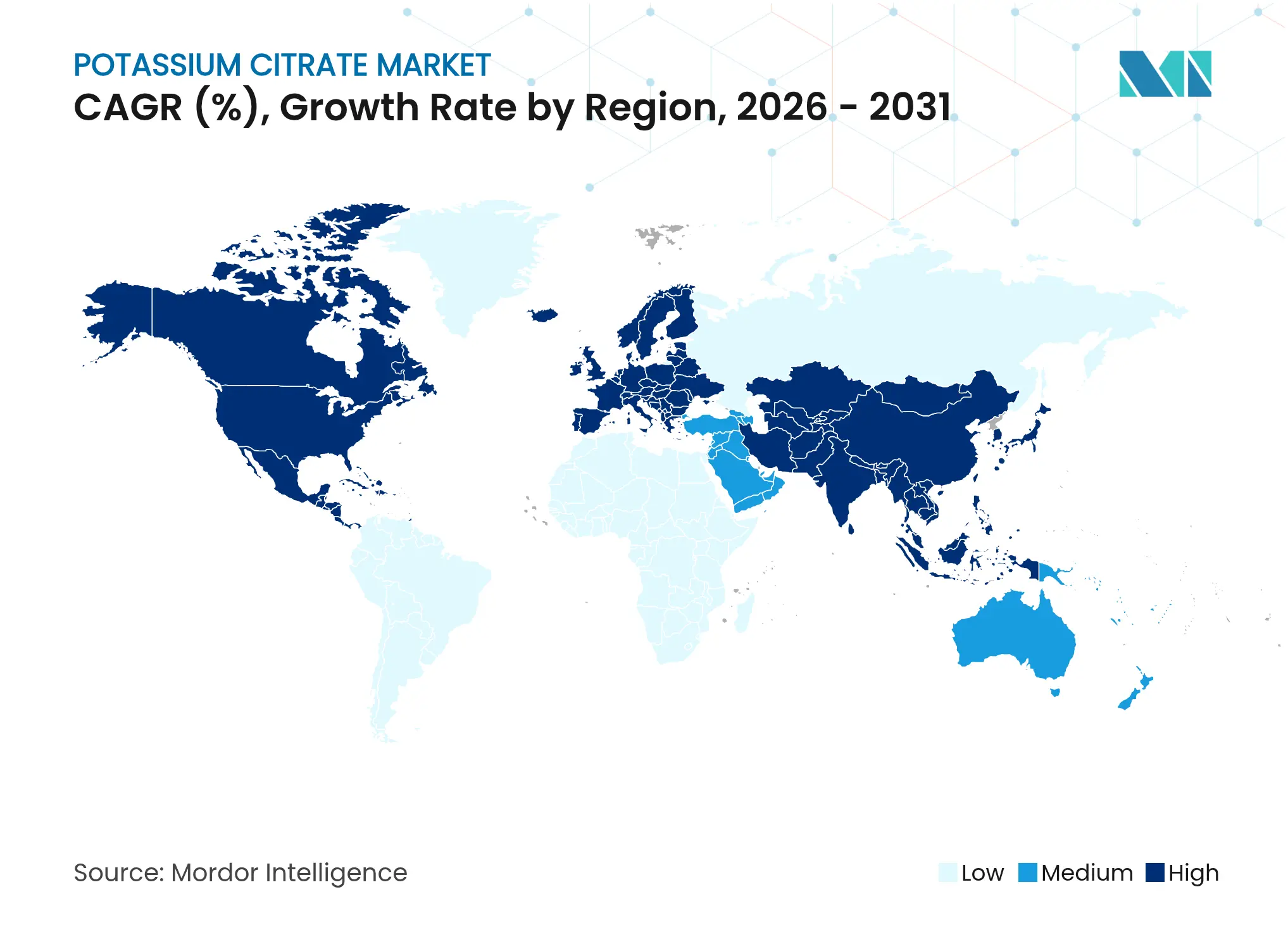
In 2025, Asia-Pacific not only emerged as the largest regional market, holding a 30.89% share, but also showcased its rapid growth, boasting a 5.17% CAGR projected through 2031. This growth is largely attributed to the region's expanding food processing infrastructure and a heightened health consciousness among its urban populace. Ongoing trade investigations and antidumping reviews underscore China's leading role in citrate production. In India, the burgeoning pharmaceutical sector fuels the demand for high-purity potassium citrate, essential for generic drug manufacturing. Simultaneously, India's expanding processed food industry presents significant volume opportunities for food-grade applications. Meanwhile, Japan and Australia are driving regional growth by focusing on premium applications in functional foods and dietary supplements, with consumers willing to pay a premium for perceived health benefits.
North America, while mature, is undergoing an evolution, largely driven by regulatory initiatives reshaping demand. The FDA's guidance on sodium reduction has spurred a consistent demand for potassium citrate as a sodium substitute. Concurrently, North America's advanced pharmaceutical sector ensures a steady appetite for high-purity grades tailored for specialized therapeutic uses. Notably, Canada's involvement in trade investigations, alongside China, underscores the region's intertwined supply chains and the resultant competitive dynamics influencing pricing and product availability. Additionally, Mexico's burgeoning food processing sector amplifies the demand, especially for health-conscious consumers seeking reduced-sodium options in traditional foods.
Europe stands at the forefront of clean-label and natural ingredient trends, with potassium citrate gaining traction as a natural substitute for synthetic additives. The EU's regulatory stance, which leans towards natural preservatives, has elevated potassium citrate's market value, especially in organic and premium food sectors. Furthermore, Europe's sophisticated cosmetic industry is increasingly turning to potassium citrate as a preferred alternative to EDTA in personal care products. With a pronounced emphasis on sustainability,

Competitive Landscape
Market Concentration
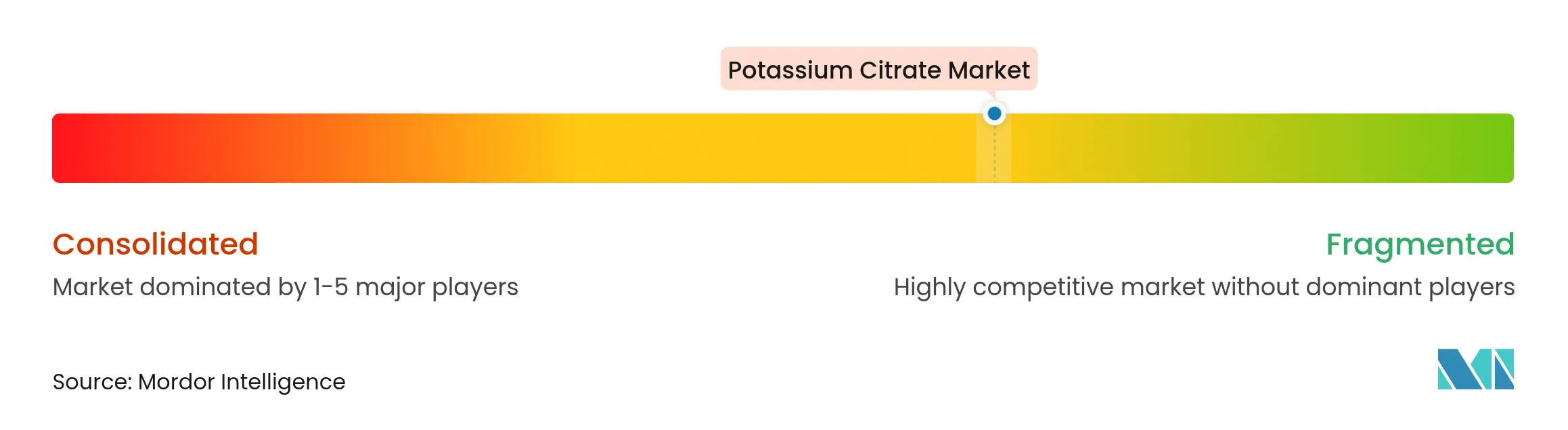
The potassium citrate market shows moderate fragmentation, with several key players operating across different application segments. Major companies in the market include Cargill, Incorporated, Tate & Lyle PLC, Jungbunzlauer Suisse AG, Gadot Biochemical Industries, and Weifang Ensign Industry. Specialized manufacturers, including Jungbunzlauer and Dr. Paul Lohmann, maintain premium pricing in pharmaceutical and high-purity applications through their technical expertise and regulatory compliance capabilities.
These strengths create significant entry barriers for general competitors. The market demonstrates competitive differentiation through technology adoption, particularly in crystallization control and purification processes, which influence product quality and manufacturing costs. New opportunities are emerging in applications such as biodegradable chelating agents for cosmetics and specialized pharmaceutical formulations, where regulatory requirements favor established suppliers.
The market structure allows smaller companies to target niche segments through technical specialization, while larger companies leverage economies of scale in commodity applications. This balance promotes both innovation and cost efficiency across market segments. The competitive environment drives ongoing investments in process optimization and sustainable manufacturing practices. The potassium citrate market is moving toward consolidation, with manufacturers focusing on technological advancement and regulatory compliance, particularly in high-purity and pharmaceutical-grade segments.
Potassium Citrate Industry Leaders

*Disclaimer: Major Players sorted in no particular order
Recent Industry Developments
- November 2024: Jungbunzlauer has enhanced its research capabilities through collaboration with the Technical University of Vienna, supporting research at the Christian Doppler Laboratory for Anthropogenic Resources. This partnership aims to develop sustainable and circular chemistry solutions by exploring new methods to use renewable raw materials and by-products in industrial processes.
- June 2024: Merck KGaA invested EUR 62 million to build a new 10,000 m² quality control facility at its Darmstadt, Germany site. This investment is part of a larger EUR1.5 billion initiative to improve R&D, manufacturing, and testing capabilities. The facility, designed to meet the German Sustainable Building Council's GOLD standard, incorporates regenerative energy systems, low-CO₂ construction methods, and safety standards for genetic engineering and clean-room environments.
Table of Contents for Potassium Citrate Industry Report
1. INTRODUCTION
- 1.1 Study Assumptions and Market Definition
- 1.2 Scope of the Study
2. RESEARCH METHODOLOGY
3. EXECUTIVE SUMMARY
4. MARKET LANDSCAPE
- 4.1 Market Overview
- 4.2 Market Drivers
- 4.2.1 Surging Use of Potassium Citrate as a Sodium-Free Food Additive
- 4.2.2 Increasing Preference for Clean-Label and Health-Focused Ingredients
- 4.2.3 Surge in Cosmetic and Personal Care Formulations Using Chelating Agents
- 4.2.4 Rising Popularity of Vegan and Plant-Based Supplementation Solution
- 4.2.5 Growing Awarness of Natural Preservatives in Food Safety
- 4.2.6 Amplyfing Demand from the Beverage Sector for pH Control Agents
- 4.3 Market Restraints
- 4.3.1 Stringent Regulatory Compliance in Pharmaceutical and Food Sector
- 4.3.2 Taste Alteration in Food Limiting Wider Acceptance
- 4.3.3 Storage and Stability Challenges During Long-Tem Use
- 4.3.4 Consumer Skepticism Towards Chemical-Sounding Additives
- 4.4 Supply Chain Analysis
- 4.5 Regulatory Outlook
- 4.6 Porter’s Five Forces
- 4.6.1 Threat of New Entrants
- 4.6.2 Bargaining Power of Buyers/Consumers
- 4.6.3 Bargaining Power of Suppliers
- 4.6.4 Threat of Substitute Products
- 4.6.5 Intensity of Competitive Rivalry
5. MARKET SIZE AND GROWTH FORECASTS (VALUE)
- 5.1 By Purity
- 5.1.1 Less than 98%
- 5.1.2 98 – 99%
- 5.1.3 More than 99%
- 5.2 By Application
- 5.2.1 Food and Beverage
- 5.2.2 Industrial
- 5.2.3 Dietary Supplement
- 5.2.4 Personal Care and Cosmetics
- 5.2.5 Others
- 5.3 By Geography
- 5.3.1 North America
- 5.3.1.1 United States
- 5.3.1.2 Canada
- 5.3.1.3 Mexico
- 5.3.1.4 Rest of North America
- 5.3.2 Europe
- 5.3.2.1 Germany
- 5.3.2.2 France
- 5.3.2.3 United Kingdom
- 5.3.2.4 Spain
- 5.3.2.5 Netherlands
- 5.3.2.6 Italy
- 5.3.2.7 Rest of Europe
- 5.3.3 Asia-Pacific
- 5.3.3.1 China
- 5.3.3.2 India
- 5.3.3.3 Japan
- 5.3.3.4 Australia
- 5.3.3.5 Singapore
- 5.3.3.6 Rest of Asia-Pacific
- 5.3.4 South America
- 5.3.4.1 Brazil
- 5.3.4.2 Argentina
- 5.3.4.3 Rest of South America
- 5.3.5 Middle East and Africa
- 5.3.5.1 United Arab Emirates
- 5.3.5.2 South Africa
- 5.3.5.3 Saudi Arabia
- 5.3.5.4 Rest of Middle East and Africa
6. COMPETITIVE LANDSCAPE
- 6.1 Market Concentration
- 6.2 Strategic Moves
- 6.3 Market Ranking Analysis
- 6.4 Company Profiles (includes Global-level Overview, Market-level Overview, Core Segments, Financials (if available), Strategic Information, Market Rank/Share, Products and Services, Recent Developments)
- 6.4.1 Cargill, Incorporated
- 6.4.2 Tate & Lyle PLC
- 6.4.3 Archer Daniels Midland (ADM)
- 6.4.4 Jungbunzlauer Suisse AG
- 6.4.5 Gadot Biochemical Industries
- 6.4.6 Cofco Biochemical
- 6.4.7 Huangshi Xinghua Biochemical
- 6.4.8 Biofuran Materials
- 6.4.9 American Tartaric Products
- 6.4.10 Juxian Hongde Citric Acid
- 6.4.11 Wang Pharmaceuticals & Chemicals
- 6.4.12 Vishal Laboratories
- 6.4.13 DPL-US
- 6.4.14 Weifang Ensign Industry
- 6.4.15 Spectrum Chemical Mfg Corp.
- 6.4.16 Adani Pharmachem Private Limited
- 6.4.17 Merck KGaA
- 6.4.18 Dr. Paul Lohmann
- 6.4.19 FBC Industries
- 6.4.20 Ava Chemicals Private Limited,
7. MARKET OPPORTUNITIES AND FUTURE OUTLOOK
Global Potassium Citrate Market Report Scope
Global Potassium Citrate Market is segmented by Grade into Industrial, Food and Pharmaceutical. By Application the market is divided into Food and Beverage, Industrial, Pharmaceuticals and Cosmetics. The Geographical analysis of the market is also included in the market.
| By Purity | Less than 98% | |
| 98 – 99% | ||
| More than 99% | ||
| By Application | Food and Beverage | |
| Industrial | ||
| Dietary Supplement | ||
| Personal Care and Cosmetics | ||
| Others | ||
| By Geography | North America | United States |
| Canada | ||
| Mexico | ||
| Rest of North America | ||
| Europe | Germany | |
| France | ||
| United Kingdom | ||
| Spain | ||
| Netherlands | ||
| Italy | ||
| Rest of Europe | ||
| Asia-Pacific | China | |
| India | ||
| Japan | ||
| Australia | ||
| Singapore | ||
| Rest of Asia-Pacific | ||
| South America | Brazil | |
| Argentina | ||
| Rest of South America | ||
| Middle East and Africa | United Arab Emirates | |
| South Africa | ||
| Saudi Arabia | ||
| Rest of Middle East and Africa | ||
