
Curcumin Market Size and Share
Market Overview
| Study Period | 2021 - 2031 |
|---|---|
| Market Size (2026) | USD 120.88 Million |
| Market Size (2031) | USD 204.95 Million |
| Growth Rate (2026 - 2031) | 11.14 % |
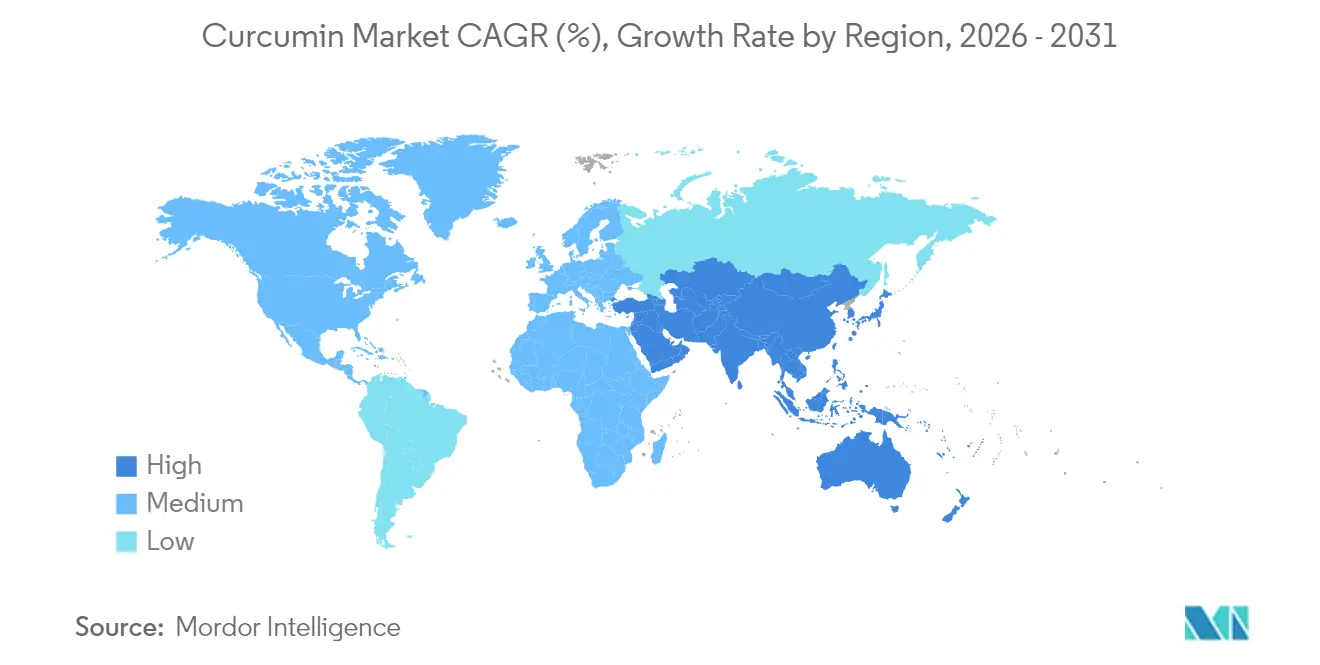
| Fastest Growing Market | Middle East and Africa |
| Largest Market | Asia Pacific |
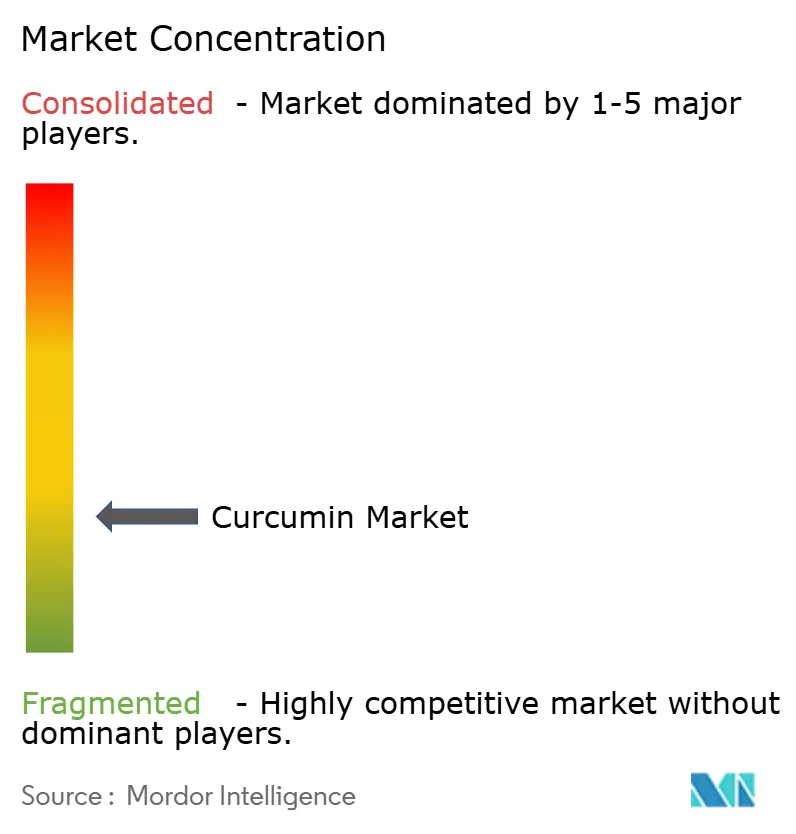
| Market Concentration | Low |
Major Players *Disclaimer: Major Players sorted in no particular order Image © Mordor Intelligence. Reuse requires attribution under CC BY 4.0. | |
Curcumin Market Analysis by Mordor Intelligence
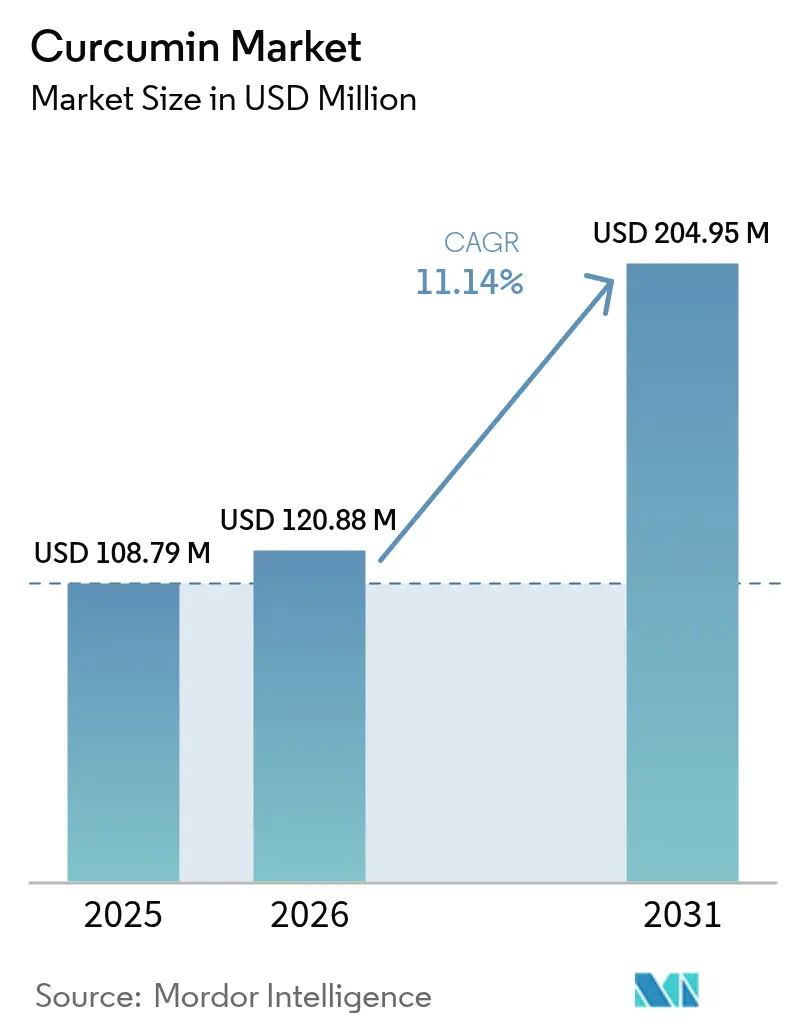
curcumin market size in 2026 is estimated at USD 120.88 million, growing from 2025 value of USD 108.79 million with 2031 projections showing USD 204.95 million, growing at 11.14% CAGR over 2026-2031. Curcumin, the bioactive compound in turmeric, plays a significant role in the dietary supplements market due to its recognized health benefits, particularly its anti-inflammatory and antioxidant properties. It is widely utilized in supplements targeting conditions such as arthritis, metabolic syndrome, and certain neurological disorders. According to the World Health Organization, as of March 2025, approximately one-sixth of India's population experiences musculoskeletal pain, with millions suffering from various forms of arthritis. The growing prevalence of such health conditions across various parts of the globe is expected to drive demand for curcumin-based products. Innovative formulations, including water-dispersible cyclodextrin complexes, piperine-enhanced capsules, and fermented turmeric extracts, are increasingly appealing to wellness-conscious millennials. Additionally, the rise of direct-to-consumer e-commerce platforms is expanding global accessibility. Market growth is further supported by Asia-Pacific's expanding middle-income population, Europe's advanced nutraceutical distribution channels shaped by the European Food Safety Authority (EFSA) approvals, and North America's revitalized specialty retail and food-service supplement offerings. Industry participants are gaining competitive advantages through vertically integrated organic supply chains and the adoption of green extraction technologies, which help reduce costs and minimize environmental impact.
Key Report Takeaways
- By form, powder maintained 72.86% revenue share in 2025, while liquid formulations are set to grow at an 11.72% CAGR through 2031.
- By nature, conventional products held 77.75% of the curcumin market share in 2025; organic lines are projected to expand at a 12.34% CAGR.
- By application, food and beverage accounted for 33.58% of the curcumin market size in 2025, whereas cosmetics and personal care lead growth at 12.36% CAGR.
- By geography, Asia-Pacific commanded 34.12% of global revenue in 2025; the Middle East and Africa region is poised for a 13.05% CAGR through 2031.
Note: Market size and forecast figures in this report are generated using Mordor Intelligence’s proprietary estimation framework, updated with the latest available data and insights as of 2026.
Market Trends and Insights
Drivers Impact Analysis of Curcumin Market*
| Driver | (~) % Impact on CAGR Forecast | Geographic Relevance | Impact Timeline |
|---|---|---|---|
| Shift towards plant-based and herbal ingredients in dietary supplements | +2.8% | Global, strongest in North America and Europe | Medium term (2-4 years) |
| Rising demand for anti-inflammatory nutraceuticals in joint-health formulations | +2.1% | North America and Europe core, expanding in Asia-Pacific | Medium term (2-4 years) |
| Curcumin as a natural antioxidant in anti-aging cosmetics | +1.9% | Global, led by premium markets in North America and Europe | Long term (≥4 years) |
| Curcumin in immune-support supplements | +1.7% | Global, accelerated in Asia-Pacific post pandemic | Short term (≤2 years) |
| Curcumin as a natural food colorant with health benefits | +2.2% | Global, strongest in Asia-Pacific | Medium term (2-4 years) |
| Bioavailability enhancers expanding functional product efficacy | +2.3% | North America and Europe core, expanding in South America | Medium term (2-4 years) |
| Source: Mordor Intelligence | |||
Shift towards plant-based and herbal ingredients in dietary supplements
Growing consumer demand for plant-based ingredients is driving a transformation in supplement formulation strategies, with curcumin positioned as a pivotal botanical ingredient bridging traditional medicine and modern wellness solutions. This shift is particularly prominent in North America and Europe, where regulatory environments increasingly support natural ingredients with proven safety credentials. The FDA's GRAS Notice 822 for curcumin reinforces its safety for food applications, enabling manufacturers to confidently expand their product offerings[1]. Companies are leveraging this trend by producing standardized curcumin extracts that meet pharmaceutical-grade requirements, exemplified by Sabinsa Corporation's Curcumin C3 Complex, which has received EFSA approval for the European market. Additionally, the trend is advancing beyond ingredient substitution to include whole-plant extracts that retain synergistic compounds. For instance, Cellavent's fermentation technology enhances turmeric's bioactive properties through controlled Lactobacillus fermentation, showcasing innovation in the sector.
Rising demand for anti-inflammatory nutraceuticals in joint health formulations
Curcumin has established itself as a scientifically validated solution in the joint health market, gaining significant adoption among aging demographics and active lifestyle consumers due to growing clinical evidence. Its mechanism of action involves inhibiting key inflammatory mediators, such as cyclooxygenase-2 and lipoxygenase, positioning it as a natural alternative to non-steroidal anti-inflammatory drugs. This scientific validation is driving commercial growth, with companies developing targeted joint health formulations that integrate curcumin with complementary ingredients like glucosamine and hyaluronic acid. The segment's expansion is further supported by its applications in sports nutrition, where curcumin's anti-inflammatory properties enhance exercise recovery and optimize performance. Indena's Meriva curcumin phytosome technology exemplifies this market trend, with clinical studies demonstrating measurable benefits for chronic kidney disease patients, including reduced inflammatory mediators and improved oxidative stress management.
Curcumin as a natural antioxidant in anti-aging cosmetic formulations
Curcumin, traditionally used as a colorant, is now emerging as a high-value active ingredient in anti-aging formulations, driven by the cosmetic industry's focus on functional ingredients with proven biological efficacy. With an antioxidant capacity 1.5 times greater than vitamin E, curcumin effectively combats free radicals, offering protection against photoaging. Its anti-inflammatory properties further address skin irritation and redness. Historically hindered by poor skin penetration, curcumin's bioavailability is now being enhanced through advanced delivery systems such as liposomal encapsulation and nanostructured lipid carriers. Premium cosmetic brands are leveraging curcumin's dual role as an active ingredient and natural colorant to develop clean-label formulations that align with consumer demand for multifunctional and sustainable beauty products. The rising demand for anti-aging cosmetics is closely tied to global demographic trends. In 2024, the United Nations Population Fund reports that 10.3% of the global population is aged 65 and above[2].
Boosting immunity naturally-curcumin in immune support supplements
Post-pandemic, consumer preferences have shifted decisively toward proactive immune health solutions. Curcumin, a key component of traditional Ayurvedic medicine, has emerged as a scientifically validated ingredient with significant potential in modern immunology. It strengthens the immune system through multiple mechanisms, including enhancing T-cell functionality, regulating cytokine production, and supporting gut microbiome diversity, which accounts for 70% of immune activity. The immune support market is experiencing robust growth as consumers increasingly favor natural alternatives over synthetic immune boosters. Curcumin's proven safety profile positions it as a strong competitor against newer botanical ingredients. Advances in manufacturing are addressing bioavailability challenges, with combination formulations of curcumin and piperine achieving up to a 2,000% increase in absorption, as reported by the UK Food Standards Agency[3]. This market expansion is further driven by growing clinical evidence, including studies demonstrating curcumin's ability to improve vaccine efficacy and reduce infection durations. Companies are capitalizing on this trend by developing targeted immune support products that combine curcumin with complementary ingredients such as vitamin D, zinc, and elderberry, delivering synergistic benefits while maintaining clean-label standards.
Restraints Impact Analysis of Curcumin Market*
| Restraint | (~) % Impact on CAGR Forecast | Geographic Relevance | Impact Timeline |
|---|---|---|---|
| High cost of advanced extraction technologies | -1.8% | Global, most acute in price-sensitive Asia-Pacific markets | Medium term (2-4 years) |
| Strict EU and US scrutiny on health claims | -0.9% | Europe and North America with spillover to export markets | Long term (≥4 years) |
| Strict regulatory scrutiny in the EU and U.S. for heath claims | -0.6% | Europe and North America | Medium term (2-4 years) |
| Shelf life instability and degradation in light and heat | -0.4% | Europe and North America | Medium term (2-4 years) |
| Source: Mordor Intelligence | |||
High cost associated with extraction technologies
Producing high-purity curcumin extracts using advanced extraction technologies presents a significant cost challenge, restricting market penetration, particularly in price-sensitive segments and emerging markets. The incorporation of bioavailability enhancement technologies further escalates the cost structure. This cost pressure is driving industry consolidation, as smaller manufacturers face difficulties competing with vertically integrated companies managing the entire value chain, from turmeric cultivation to finished product manufacturing. The USDA NIFA's investment in green technology research, focusing on high-bioavailability curcumin nanoparticles through supercritical CO2 drying methods, reflects governmental efforts to lower extraction costs via technological advancements. In response, companies are adopting hybrid extraction processes to balance purity standards with cost efficiency, while exploring FDA-approved alternative solvents to reduce operational expenses without compromising product quality.
Strict regulatory scrutiny in the EU and U.S. for health claims
Regulatory authorities are increasing scrutiny on curcumin health claims, driving up compliance costs and creating market entry challenges. These developments are particularly burdensome for smaller manufacturers and companies introducing innovative formulations. The FDA requires substantial scientific evidence to support therapeutic claims under its qualified health claims process, with enforcement actions targeting unauthorized claims that exceed established safety thresholds. Recently, Italy and France issued warnings against curcumin supplements for individuals with liver conditions, following cases of acute cholestatic hepatitis linked to high-dose curcumin products. Additionally, the German Federal Institute for Risk Assessment highlighted concerns over curcumin supplements with piperine, citing potential breaches of acceptable daily intake (ADI) levels. This reflects growing regulatory focus on bioavailability-enhanced formulations. In response, companies are prioritizing investments in clinical research to substantiate claims, developing standardized testing protocols to ensure consistent product quality, and strengthening quality management systems to comply with international regulatory standards. This regulatory shift is creating competitive advantages for established players with extensive clinical data while raising entry barriers for new competitors.
*Our forecasts treat driver/restraint impacts as directional, not additive. The impact forecasts reflect baseline growth, mix effects, and variable interactions.
Curcumin Market Segment Analysis
By Form:
Liquid Innovations Challenge Powder DominancePowder formulations command 72.86% market share in 2025, reflecting established manufacturing infrastructure and cost advantages that make curcumin accessible across diverse price points and applications. The dominance of the powder segment is attributed to its versatility in encapsulation, tablet production, and direct integration into food products, coupled with superior stability and extended shelf life compared to liquid alternatives. However, liquid curcumin formulations are poised for significant growth, with a projected CAGR of 11.72% from 2026 to 2031, propelled by increasing consumer demand for convenient delivery formats and advancements in solubility-enhancing technologies.
The rapid growth of the liquid segment is underpinned by innovations in water-soluble curcumin complexes and emulsion technologies that address curcumin's hydrophobic nature. Companies are investing in advanced delivery systems, such as liposomal curcumin, which improves bioavailability through phospholipid encapsulation. When combined with ultrasound-mediated release mechanisms, these systems demonstrate notable efficacy in cancer treatment. Additionally, the Facilitated Self-Assembling Technology (FAST) represents a breakthrough by enabling nanoparticle production without the need for surfactants or stabilizers, making liquid curcumin formulations more cost-effective and consumer-friendly. Liquid formulations are gaining significant traction in functional beverages and sports nutrition, where their rapid absorption and convenience offer a competitive edge over traditional powder formats.

By Application:
Cosmetics Emerge as High-Growth FrontierFood and beverage applications dominate with 33.58% market share in 2025, leveraging curcumin's dual functionality as a natural colorant and health-promoting ingredient that aligns with clean-label trends and regulatory approval as a color additive under FDA guidelines. The food segment benefits from curcumin's established safety profile and GRAS status, enabling widespread use in products ranging from beverages to baked goods at levels consistent with good manufacturing practices. Dietary supplement applications maintain a significant market presence, driven by growing consumer awareness of curcumin's anti-inflammatory and antioxidant properties, though facing regulatory scrutiny regarding health claims and dosage recommendations.
The cosmetics and personal care segment, projected to grow at a 12.36% CAGR (2026-2031), represents the fastest-growing application area. Beauty brands are leveraging curcumin's multifunctional benefits, including antioxidant protection, anti-inflammatory properties, and natural coloring capabilities. Premium beauty brands are utilizing curcumin's heritage appeal and scientific validation to develop differentiated anti-aging products that command higher margins compared to traditional food and supplement applications. This segment benefits from relatively lenient regulatory requirements compared to dietary supplements and offers opportunities for premium positioning and storytelling centered on natural ingredients and traditional medicine heritage.
By Nature:
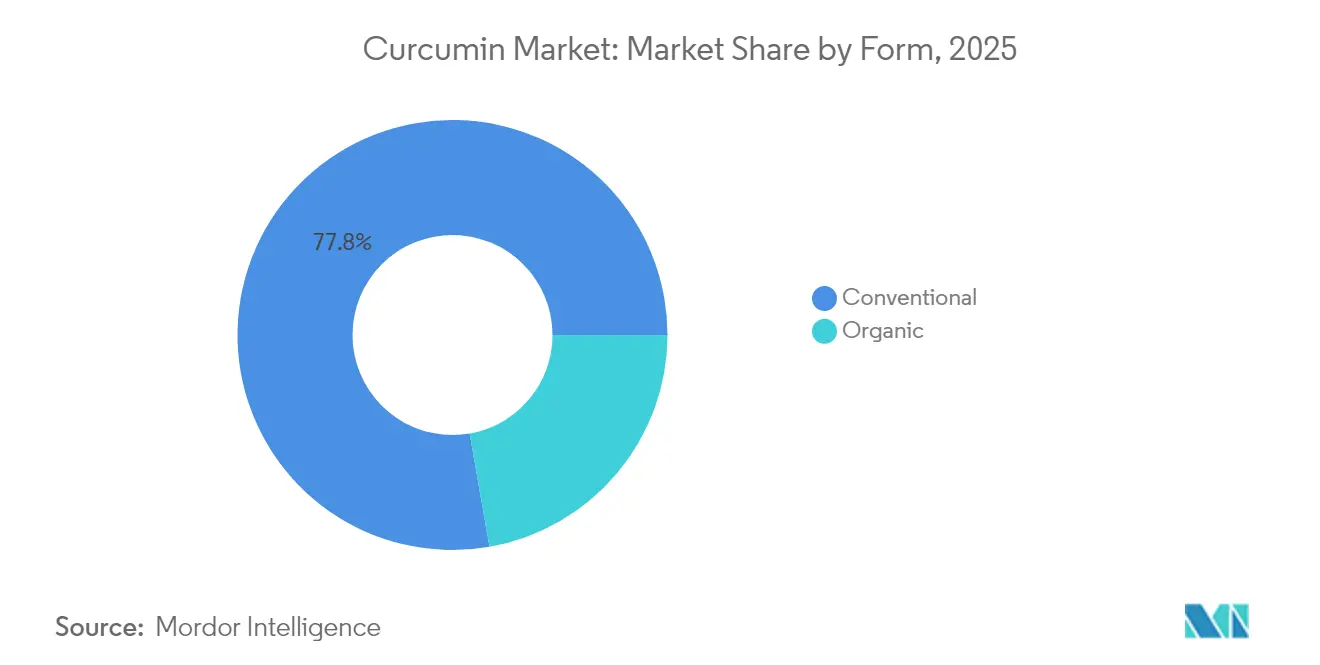
Organic Acceleration Driven by Certification StandardsConventional curcumin maintains 77.75% market share in 2025, supported by established supply chains and cost advantages that enable mass market penetration across food, supplement, and cosmetic applications. The conventional segment benefits from mature extraction technologies and standardized quality control processes that ensure consistent product specifications at competitive price points. However, organic curcumin is experiencing accelerated growth at 12.34% CAGR (2026-2031), driven by stringent USDA organic certification requirements and consumer willingness to pay premium prices for clean-label products.
The organic segment's growth trajectory underscores a shifting consumer mindset, increasingly attuned to agricultural practices and the tenets of environmental sustainability. Notably, USDA organic standards stipulate a three-year transition period and meticulous documentation of farming practices. In response, companies are channeling investments into developing organic supply chains. A select few are even forging direct partnerships with certified organic turmeric farmers, ensuring rigorous quality control and traceability from the farm to the final product.
Geography Analysis
APAC Curcumin Market
Asia-Pacific commands a significant 34.12% share of global revenue, bolstered by India's dominant position, contributing over 65% to the world's turmeric harvest. In the 2023-24 season, India exported 162,018 tonnes of turmeric, fetching a value of USD 226.5 million. The establishment of the National Turmeric Board in January 2025 highlights a policy shift towards promoting higher-margin, value-added exports. Additionally, as disposable incomes rise in Southeast Asia, there's a noticeable uptick in local consumption of supplements.
North America and Europe Curcumin Market
North America and Europe, while established markets, are hubs of innovation. The evolving dossier requirements set by EFSA have spurred a demand for standardized extracts, benefiting tech leaders like Sabinsa, Indena, and Wacker. In these regions, the market share for premium grades of curcumin is witnessing the fastest growth, particularly driven by functional beverages and joint-health capsules.
MEA Curcumin Market
The Middle East and Africa are leading with the highest regional CAGR at 13.05%. Countries like Ethiopia, Madagascar, and Nigeria are ramping up turmeric cultivation, aiming to provide European buyers with dependable alternatives to Indian sources. At the same time, nations within the Gulf Cooperation Council are broadening their supplement offerings, catering to a younger demographic that emphasizes preventive wellness. This shift is notably boosting the popularity of private-label products in the region.
Regulatory Landscape
Curcumin is governed by use-specific requirements, particularly when it is positioned as a color additive versus a functional ingredient or dietary supplement. In the EU and UK, curcumin is authorized as the food color E 100, with purity specifications aligned to Regulation (EU) No 231/2012 (and assimilated in UK law), which focuses on meeting compositional criteria and controlling contaminants and residues for compliant market access.
In the United States, curcumin is listed within FDA color additive listings while FDA GRAS notice outcomes also support certain intended uses, including GRN 686 and GRN 822. Internationally, Codex Alimentarius includes provisions for Curcumin (100(i)) in the GSFA, updated through its 48th Session (2025), which helps align cross-border trade where national rules reference Codex.
Value Chain Analysis
The curcumin value chain starts with turmeric cultivation and primary processing (harvesting, curing, drying, and milling), then moves into extraction and purification of curcuminoids before final standardization to customer specifications for food, supplements, and personal care. Asia remains the main sourcing and processing hub, with India and China prominent across rhizome supply and extraction capacity, and India also underpinning export-oriented supply due to its scale in turmeric production and established export channels.
Key costs and risks arise in post-harvest losses (moisture removal and shrink), milling yields, sterilization and microbiological control, and the purification steps needed for high-potency grades. Downstream activities also depend on end-use classification and compliance documentation. Food-color positioning (such as E 100 in the EU/UK and regulated color additive use in the US) creates different labeling and paperwork demands than supplement positioning, which pushes ingredient suppliers toward stronger traceability, standardization, and quality testing before distribution through nutraceutical distributors, contract manufacturers, and direct-to-consumer brands.
Competitive Landscape
Curcumin market competition remains fragmented, with top producers integrating backward into farming and forward into finished-dose production to stabilize supply and margin. Sanofi’s acquisition of Qunol places a leading pharmaceutical house directly in the high-growth botanical supplement aisle
Key manufacturers are mostly concentrated in Asia-Pacific due to proximity to raw material suppliers and relatively high curcumin content in Indian turmeric varieties. Additionally, industry players are developing innovative products to increase their consumer reach in the global marketplace, which has enhanced the business landscape. Some major companies in the curcumin market are Arjuna Natural Pvt Ltd., Sabinsa Corporation, Synthite Industries Ltd., OmniActive Health Technologies, and Wacker Chemie AG.
Organizations prioritize technology-driven differentiation by investing significantly in proprietary delivery systems and bioavailability enhancement technologies to establish defensible market positions. At the same time, biotechnology firms are emerging as disruptors by advancing fermentation-based production methods and innovative extraction technologies, which threaten to reshape traditional supply chain models and cost structures.
Curcumin Industry Leaders
-
Arjuna Natural Pvt Ltd.
-
Sabinsa Corporation
-
Synthite Industries Ltd.
-
Synthite Industries Ltd.
-
OmniActive Health Technologies
- *Disclaimer: Major Players sorted in no particular order
Curcumin Market Companies Covered in this Report
- Arjuna Natural Pvt Ltd.
- Sabinsa Corporation
- Synthite Industries Ltd.
- OmniActive Health Technologies
- Wacker Chemie AG
- Indena S.p.A.
- The Green Labs LLC
- S V Agro Foods
- Hebei Tianxu Biotech Co. Ltd.
- Herboveda India Pvt Ltd.
- Konark Herbals and Health Care
- DolCas Biotech LLC
- Lipoid GmbH
- Hindustan Mint and Agro Products Pvt. Ltd.
- Phyto Life Sciences
- Ennature Biopharma
- Sichuan Benepure Pharmaceutica
- Sunpure Extracts Pvt Ltd
- Sunriver Biotech
- Akay Group
Market Opportunities and Future Outlook
A practical opportunity is expanding food and beverage color applications, where curcumin already has established regulatory standing, including the EU/UK E 100 framework and US color additive listings, and is reinforced by FDA GRAS notice outcomes for certain ingredient uses (for example, GRN 000686). That baseline supports broader formulation work across categories such as dairy and prepared foods, while also leaving space for suppliers that can provide application-specific systems (water-dispersible formats, encapsulation, and emulsions) to manage low water solubility and sensitivity to light, heat, and alkaline conditions.
Process and platform innovation is another active opportunity area, supported by research momentum around greener extraction approaches that reduce reliance on organic solvents, including NADES-based systems combined with microwave-ultrasound-assisted extraction reported in 2025 literature. Alongside that, alternative production routes, including microbial or bio-based production discussed in 2025-2026 technical publications, offer a way to diversify supply away from single-crop dependence and to serve higher-purity or specialty-format demand where conventional extraction economics and yield volatility can be limiting.
Recent Industry Developments in Curcumin Market
- June 2026: Arjuna Natural Pvt Ltd. announced a strategic collaboration in China with local nutrition company UndoAge, including the establishment of a joint laboratory for R&D and product development. The collaboration supports Arjuna Natural's localization of formulation and evidence-building for its curcumin portfolio in one of the largest nutraceutical markets.
- January 2025: India's Ministry of Commerce and Industry inaugurated the National Turmeric Board to upgrade cultivation, processing, and export competitiveness. The program is intended to support value-added turmeric and curcumin exports by formalizing industry development priorities across farming, quality, and trade promotion.
- October 2024: Cocrystal Health Industry introduced a curcumin powder positioned for enhanced bioavailability using its proprietary cocrystal powder technology. The release targets a key performance limitation of curcumin ingredients and supports product differentiation for supplement and functional-ingredient formulations.
Curcumin Market Report Scope and Research Methodology
Market Definition and Coverage
For this study, the curcumin market is defined as the value of curcumin ingredient sold into end-use industries, where pricing reflects ingredient-grade sales rather than finished retail product prices.
Scope exclusions: finished supplements, packaged foods, and ready-to-use cosmetics are excluded when curcumin is only one input.
Segments Covered in This Report
- By Form
- Powder
- Liquid
- By Nature
- Organic
- Conventional
- By Application
- Dietary Supplement
- Food and Beverage
- Cosmetic and Personal Care
- Others
- By Geography
- North America
- United States
- Canada
- Mexico
- Rest of North America
- Europe
- Germany
- United Kingdom
- Italy
- France
- Spain
- Netherlands
- Poland
- Belgium
- Sweden
- Rest of Europe
- Asia-Pacific
- China
- India
- Japan
- Australia
- Indonesia
- South Korea
- Thailand
- Singapore
- Rest of Asia-Pacific
- South America
- Brazil
- Argentina
- Colombia
- Chile
- Peru
- Rest of South America
- Middle East and Africa
- South Africa
- Saudi Arabia
- United Arab Emirates
- Nigeria
- Egypt
- Morocco
- Turkey
- Rest of Middle East and Africa
- North America
Data Sources, Market Sizing, and Validation
Desk Research
Desk research was used to build the base structure of the market and to understand how supply and demand are moving across regions. We leaned on public and official references such as customs trade statistics portals, FDA and EFSA public guidance pages, national agriculture and spice boards, and peer-reviewed journals that discuss curcumin extraction yields and purity standards. These inputs helped us map typical forms, common use areas, and the wording used in labeling and compliance.
Company annual reports, investor presentations, and reputable press releases were also reviewed to spot capacity expansions, margin direction, and major end-market focus areas. Where needed, we used paid subscriptions that cover company financials and news, patent databases for innovation signals, and an import and export shipment-level database to sanity-check trade direction for turmeric extracts and related ingredients. The desk research sources listed above are illustrative, and additional sources were consulted as part of data collection, validation, and clarification.
Primary Interviews and Surveys
Primary work focused on validating what is actually sold as curcumin ingredient, and how pricing and mix are changing by end use. We spoke with manufacturers, distributors, and formulators, and we also checked views from quality, regulatory, and procurement roles to confirm purity ranges, typical contract terms, and demand seasonality.
For a global market like this, inputs were balanced across APAC, EMEA, and the Americas so regional differences in sourcing and application mix could be reflected in the final model.
Distribution of primary research fieldwork respondents
| Company type | Respondent position | Region |
|---|---|---|
| Top tier: 33% | CXOs: 12% | APAC: 53% |
| Mid tier: 52% | Functional/Unit leaders: 29% | EMEA: 29% |
| Smaller Players: 15% | Managers: 59% | Americas: 18% |
Market-Sizing & Forecasting
Sizing started from a top-down build where production, trade flows for extracts, and regional consumption indicators were used to reconstruct the addressable ingredient demand pool, and then the output was allocated by major application uses. The totals were then corroborated using selective bottom-up checks, such as sampled supplier revenue visibility, channel checks on ingredient volumes, and an ASP times volume cross-check by form (powder versus liquid) where enough evidence was available.
Key model inputs included turmeric raw material availability and price movement, extraction and standardization yields, purity and curcuminoid content mix, application mix shifts across supplements and food uses, and regional regulatory acceptance that influences formulation rates. Forecasts were built using scenario analysis supported by expert feedback, where price progression and mix shift assumptions were stress-tested under conservative and aggressive demand cases. When bottom-up signals were missing for smaller countries, gaps were handled by using proxy ratios from comparable markets, followed by a recheck against trade and consumption signals.
Data Validation & Update Cycle
Outputs were cross-checked against independent signals such as import and export direction, capacity announcements, and observed pricing ranges for common purity grades, before final sign-off. Variance checks were run across regions and applications, and any outliers triggered a deeper review of assumptions. When needed, we re-contacted primary respondents to confirm the driver behind the variance.
Each report is refreshed annually, and interim updates are made when material events occur, such as major regulatory shifts or large capacity additions. Before delivery, a final analyst pass is completed to ensure the numbers reflect the most recent public signals and the latest validated assumptions.
Mordor Intelligence's Curcumin Market Estimate Compared With Other Published Estimates
Published numbers for curcumin often differ because sources do not treat the same product boundary, price point, and use-case mix in the same way, and then those differences get amplified in forecasts. In practice, the spread usually comes from whether the estimate tracks ingredient-level sales or rolls up into finished products, plus how purity grades and forms are priced over time.
Finished supplement and cosmetic retail values sit outside Mordor Intelligence's scope, which keeps the estimate focused on ingredient sales that can be traced back to volumes, purity mix, and realistic ASP ranges by application. Other studies can also diverge when they apply a single global price curve, use older currency conversion timing, or do not re-validate extraction yield and standardization assumptions with industry participants.
Benchmark comparison
| Source | Market Size | Gaps in Research Methodology |
|---|---|---|
| Mordor Intelligence | USD 120.88 M (2026) | |
| Industry Publisher A | USD 98.90 M (2024) | Uses a different base year and may apply broader turmeric-extract framing, which can shift the counted volume and the average price level used for curcumin ingredient. |
| Industry Publisher B | USD 126.80 M (2024) | Long-horizon forecast assumptions and limited clarity on included purity grades can lead to a higher or lower starting value depending on how curcuminoid content mix is treated. |
Across the table, most of the gap can be explained by what is counted as ingredient revenue versus finished product value, along with year selection and how purity mix is priced. By keeping the model tied to observable volume signals and realistic ASP bands, the resulting market size stays easier to reconcile and repeat when new data points come in.
Key Questions Answered in the Report
What is the current value of the curcumin market?
The curcumin market is valued at USD 120.88 million in 2026 and is projected to grow to USD 204.95 million by 2031.
Which region holds the largest curcumin market share today?
Asia-Pacific leads with 34.12% of global revenue, driven by India’s dominant turmeric production and export base.
Which application segment is expanding most rapidly?
Cosmetic and personal-care products using curcumin as an antioxidant and natural colorant are advancing at a 12.36% CAGR through 2031.
What growth rate is expected for organic curcumin products?
Organic variants are forecast to grow at a 12.34% CAGR between 2026 and 2031 as certification and sustainability concerns rise.