
Pet Allergy Treatment Market Size and Share
Market Overview
| Study Period | 2020 - 2031 |
|---|---|
| Market Size (2026) | USD 2.47 Billion |
| Market Size (2031) | USD 3.28 Billion |
| Growth Rate (2026 - 2031) | 5.89 % |
| Fastest Growing Market | Asia Pacific |
| Largest Market | North America |
| Market Concentration | Medium |
Major Players *Disclaimer: Major Players sorted in no particular order Image © Mordor Intelligence. Reuse requires attribution under CC BY 4.0. | |
Pet Allergy Treatment Market Analysis by Mordor Intelligence
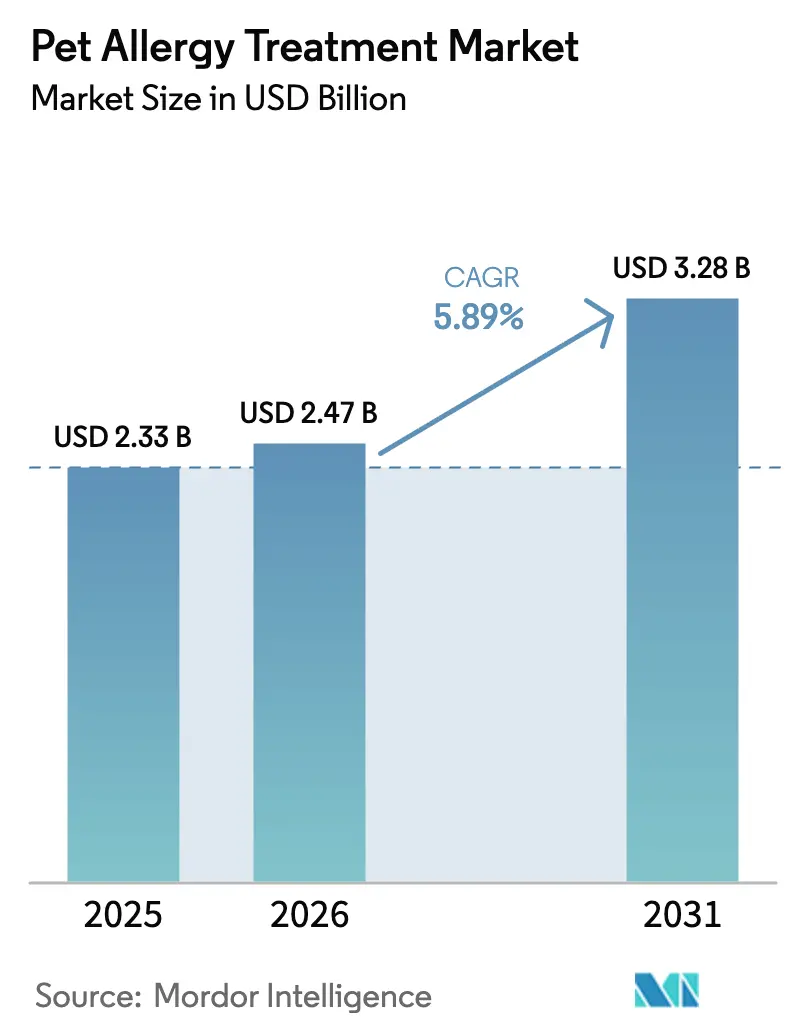
The Pet Allergy Treatment market size is expected to grow from USD 2.33 billion in 2025 to USD 2.47 billion in 2026 and is forecast to reach USD 3.28 billion by 2031 at 5.89% CAGR over 2026-2031.
Rising medicalization of companion-animal care, deeper human–animal bonds, and wider insurance coverage collectively strengthen the pet allergy treatment market growth outlook. Demand concentrates around oral antihistamines, yet pipeline originality in Janus kinase (JAK) inhibitors and microbiome-based therapeutics is shifting clinician preference toward precision interventions. Dogs remain the largest treated population, but feline cases accelerate as diagnostics improve and households diversify their pet mix. Geographically, North America leads revenue, whereas Asia-Pacific posts the quickest expansion thanks to urban pet humanization and widening middle-class disposable income. Rapid digitalization and tele-veterinary adoption extend therapeutic reach, enabling owners to access prescriptions and follow-up care online, which further fuels the pet allergy treatment market trajectory.
Key Report Takeaways
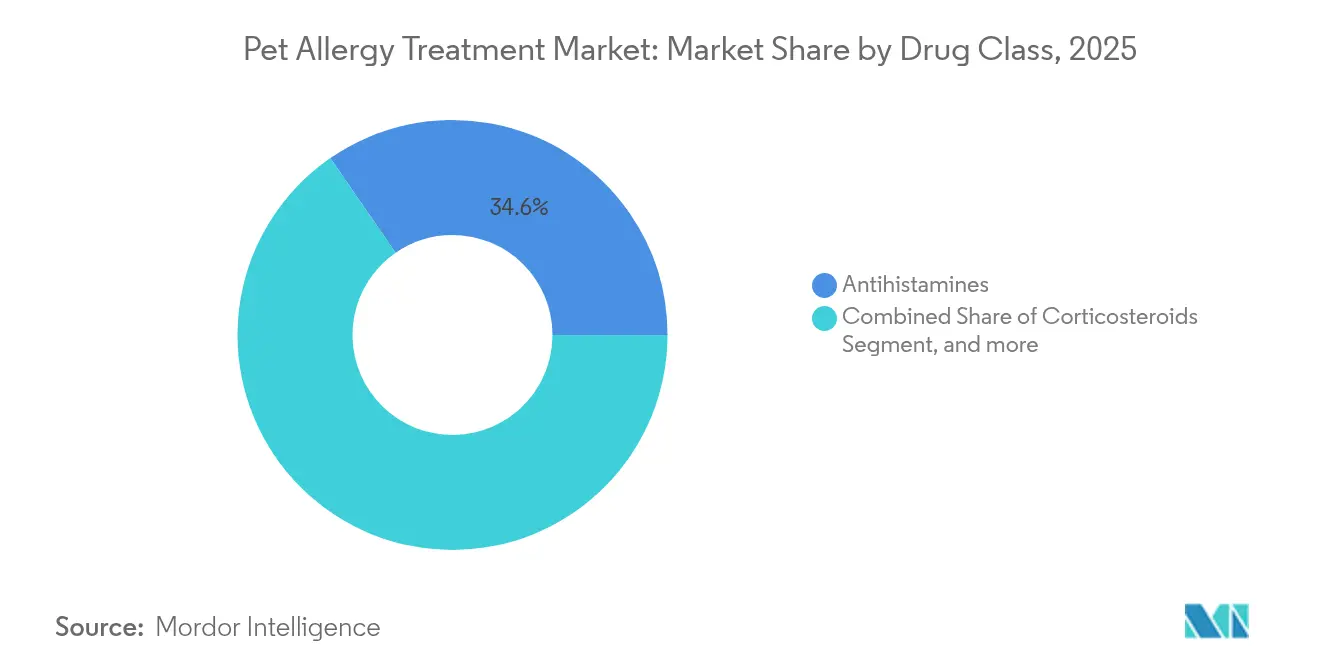
- By drug class, antihistamines led with 34.62% revenue share in 2025, while immunotherapy posted the highest 6.67% CAGR through 2031.
- By pet type, dogs accounted for 61.84% of the pet allergy treatment market share in 2025; cats represent the fastest growing segment at an 8.22% CAGR to 2031.
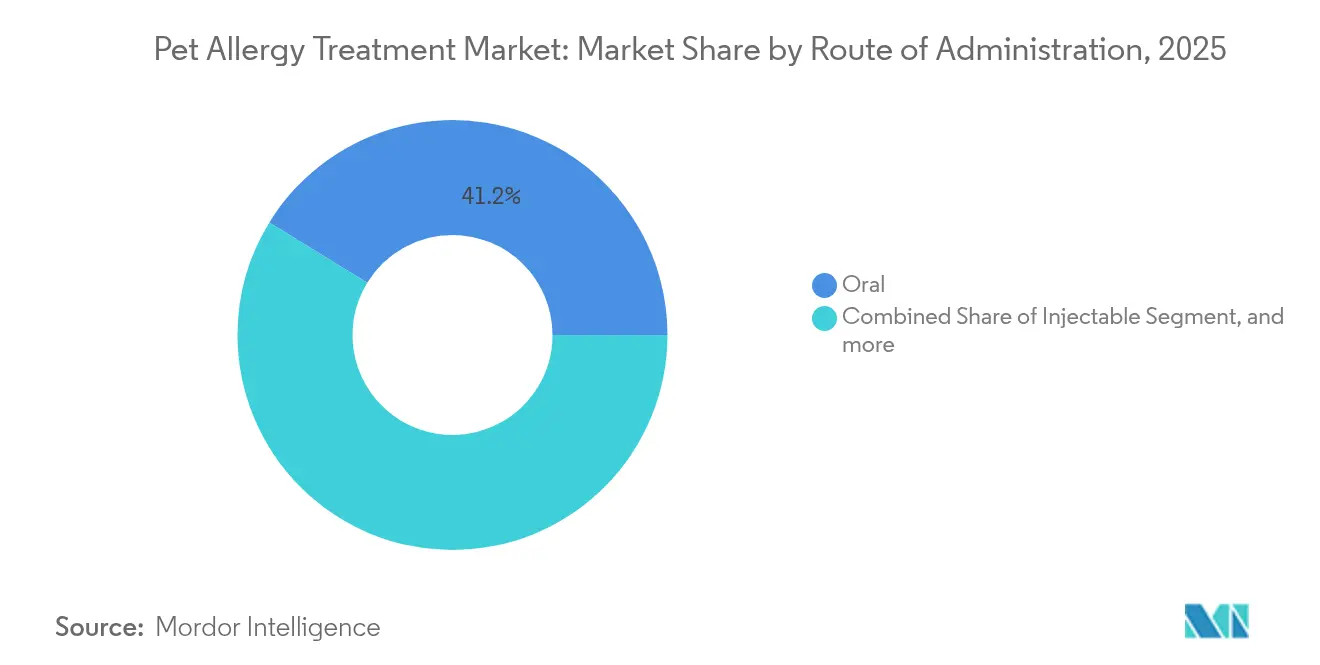
- By route of administration, oral products held 41.23% share of the pet allergy treatment market size in 2025, whereas sublingual delivery is set to expand at 7.98% CAGR.
- By distribution channel, veterinary clinics secured 47.71% revenue share in 2025, but online pharmacies show the strongest 7.66% CAGR through 2031.
- By geography, North America captured 43.78% market share in 2025, yet Asia-Pacific is projected to register the highest 8.91% CAGR during the forecast period.
Note: Market size and forecast figures in this report are generated using Mordor Intelligence’s proprietary estimation framework, updated with the latest available data and insights as of 2026.
Market Trends and Insights
Drivers Impact Analysis of Pet Allergy Treatment Market*
| Driver | (~) % Impact on CAGR Forecast | Geographic Relevance | Impact Timeline |
|---|---|---|---|
| Increase Awareness of Animal Allergies | +1.5% | Global, with early adoption in North America & EU | Medium term (2-4 years) |
| Growing Pet Ownership Across Urban Households | +0.8% | APAC core, spill-over to urban centers globally | Long term (≥ 4 years) |
| Rising Adoption of Pet Health Insurance | +0.6% | North America & EU, emerging in APAC | Medium term (2-4 years) |
| Advancements in Veterinary Dermatology Diagnostics | +0.4% | Global, concentrated in developed markets | Short term (≤ 2 years) |
| Tele-Veterinary Platforms Accelerating Allergy Diagnosis | +0.3% | North America, expanding to EU and urban APAC | Short term (≤ 2 years) |
| Emergence of Microbiome-Based Therapeutics | +0.2% | Global, led by research hubs in US and EU | Long term (≥ 4 years) |
| Source: Mordor Intelligence | |||
Increase Awareness of Animal Allergies
Owner education is reshaping health-seeking behavior as allergies are now viewed as chronic diseases requiring veterinarian management rather than episodic irritation. More than 17 million dogs in the United States suffer allergic skin disease, underscoring a sizable addressable pool.[1] Diagnostic conversations across social media and practice webinars highlight how untreated cases can trigger secondary infections and behavioral issues. Enhanced visibility of success stories—some achieving 80% clinical benefit with targeted immunotherapy—reinforces early intervention. The result is earlier clinic presentations and greater acceptance of multi-step treatment plans that sustain revenue momentum for the pet allergy treatment market.
Growing Pet Ownership Across Urban Households
Millennials and Gen Z now dominate the urban pet demographic, equating companion animals with family members and directing discretionary income toward premium veterinary care. In China, this cohort forms 50% of owners, spending USD 50–100 each month on pet services and medicine. Dense metropolitan living elevates indoor allergen exposure and pushes demand for advanced therapies such as monoclonal antibodies. Global players, including Mars Inc., have responded by investing in specialty clinics to capture rising demand across India and other emerging economies.
Rising Adoption of Pet Health Insurance
Insurance penetration has ballooned from USD 1.6 billion in 2019 to USD 4.5 billion in 2024 in the United States alone. Broader policy coverage for chronic dermatological disorders makes cost-intensive biologics and long-term immunotherapy more accessible. As insurers negotiate formularies with manufacturers, steady reimbursement streams underpin the pet allergy treatment market’s mid-single-digit growth. This insurance-enabled spending power directly correlates with adoption of premium treatments like JAK inhibitors and monoclonal antibodies, which require sustained financial commitment for optimal outcomes.
Advancements in Veterinary Dermatology Diagnostics
Molecular testing, intradermal skin tests, and allergen-specific IgE assays refine case profiling, driving protocol customization and superior outcomes. Microbiome sequencing reveals gut-skin interactions, opening tailored probiotic regimens that complement conventional drugs.[2] Tele-diagnostics extend specialist insight to general practitioners, although FDA rules still require in-person exams before prescription issuance.[3] Diagnostic precision cuts trial-and-error cycles, shortens time-to-relief, and elevates pet owner satisfaction.
Restraints Impact Analysis of Pet Allergy Treatment Market*
| Restraint | (~) % Impact on CAGR Forecast | Geographic Relevance | Impact Timeline |
|---|---|---|---|
| Limited Pipeline of Curative Therapies | -0.7% | Global, particularly impacting innovation-dependent markets | Long term (≥ 4 years) |
| High Cost of Immunotherapy & Biologics | -0.5% | Emerging markets and price-sensitive segments globally | Medium term (2-4 years) |
| Regulatory Scrutiny of Off-Label Human Drugs for Pets | -0.3% | North America & EU, with emerging impact in APAC | Medium term (2-4 years) |
| Owner Adherence Challenges for Long-Term Regimens | -0.2% | Global, with higher impact in price-sensitive markets | Short term (≤ 2 years) |
| Source: Mordor Intelligence | |||
Limited Pipeline of Curative Therapies
The market still depends on symptomatic relief from antihistamines, corticosteroids, and immunosuppressants as no therapy eliminates the underlying allergic tendency. Lengthy approval cycles Zenrelia required expansive safety data before FDA clearance in 2024 slow the rate at which breakthrough modalities reach clinics. Promising microbiome and genomic projects are early-stage, leaving a near-term innovation gap that tempers the pet allergy treatment industry’s revenue ceiling.
High Cost of Immunotherapy & Biologics
Annualized expenses can exceed USD 600 per pet for sublingual immunotherapy, while injectables cost substantially more, constraining uptake in households with restricted budgets. Generic antihistamines priced at USD 4 per 30-day supply through mass retailers intensify price visibility and raise barriers for premium drugs. Consequently, the pet allergy treatment market’s premium tier remains skewed toward insured or high-income owners.
*Our forecasts treat driver/restraint impacts as directional, not additive. The impact forecasts reflect baseline growth, mix effects, and variable interactions.
Pet Allergy Treatment Market Segment Analysis
By Drug Class:
JAK Inhibitors Drive InnovationAntihistamines retained leadership with 34.62% revenue in 2025, underscoring their role as affordable first-line medications. However, the pet allergy treatment market size for immunotherapy is forecast to rise at 6.67% CAGR as owners seek durable control. The competitive narrative centers on JAK inhibition; Zenrelia attained 77% normal-itch outcomes compared with 53% for prior options. Over-reliance on corticosteroids declines due to metabolic side effects, while monoclonal antibodies such as Cytopoint keep 87% of dogs below baseline pruritus at 12 months. Another horizon involves probiotics that modulate immune signaling, signaling a new evidence-based layer of therapy. Pharmaceutical firms invest in differentiated mechanisms to erode antihistamine dominance and re-shape future revenue mixes within the pet allergy treatment market.
Pipeline maturity determines near-term revenue distribution. Antihistamine revenues are steady but show limited growth potential, whereas JAK inhibitors and biologics attract strategic capital expenditure, including a USD 130 million monoclonal facility expansion by Elanco to safeguard supply continuity. Topical agents and combination packs occupy niche care pathways for localized or multi-symptom cases. The interplay of efficacy, safety, and cost will dictate future shifts in pet allergy treatment market share among drug classes.

By Pet Type:
Feline Market AccelerationDogs generated 61.84% of 2025 revenue, anchored by higher diagnosed prevalence and treatment acceptance. Still, cats record the fastest 8.22% CAGR as diagnostic awareness grows. Education material now emphasizes subtle feline signs, encouraging earlier presentations. This uptake enhances the pet allergy treatment market size for feline care and incentivizes manufacturers to tailor flavoring and dosing formats. The canine segment maintains an expansive research base; 17 million U.S. dogs present chronic dermatitis, highlighting ongoing volume potential.
Smaller companion species such as rabbits enter clinical focus, reflecting broader diversification in pet ownership. Their inclusion broadens the addressable market but requires novel formulations and packaging. Compliance challenges vary by species; injectable or transdermal options often supersede tablets for cats, reshaping product development priorities. Overall, broadening species coverage sustains long-term demand for the pet allergy treatment market.
By Route of Administration:
Sublingual InnovationOral products commanded 41.23% of revenue in 2025 due to familiarity and at-home convenience. Sublingual immunotherapy, however, posts an 7.98% CAGR, delivering 80% clinical benefit while avoiding injection discomfort. The pet allergy treatment market size generated by injectables remains stable for severe cases demanding immediate onset. Topical formats serve localized lesions but face variable absorption.
Innovation in drug delivery aims to tackle adherence barriers. Transdermal patches and depot injections cut dose frequency, aiding owner compliance. Veterinarians adopt an individualized approach, aligning route choice with temperament, allergy severity, and caretaker capacity. Consequently, channel strategy and product messaging increasingly emphasize flexibility and lifestyle fit within the pet allergy treatment market.
By Distribution Channel:
Digital DisruptionVeterinary clinics retained 47.71% revenue in 2025, leveraging diagnostic infrastructure and professional counsel. Online pharmacies, though, deliver an 7.66% CAGR, benefitting from one-click refill convenience and competitive pricing. Legislative changes, such as the Fairness to Pet Owners Act, could compel prescribers to provide written scripts, intensifying channel competition. Retail chains stock USD 4 generics, challenging clinic margins and reshaping buyer expectations.
Still, complex biologics often require cold-chain logistics and professional administration, anchoring them within clinic and hospital channels. Hybrid tele-vet models combine virtual consults with doorstep drug delivery, fulfilling chronic therapy needs while sustaining professional oversight. These shifts diversify revenue streams and broaden patient access across the pet allergy treatment market.
Geography Analysis
North America Pet Allergy Treatment Market
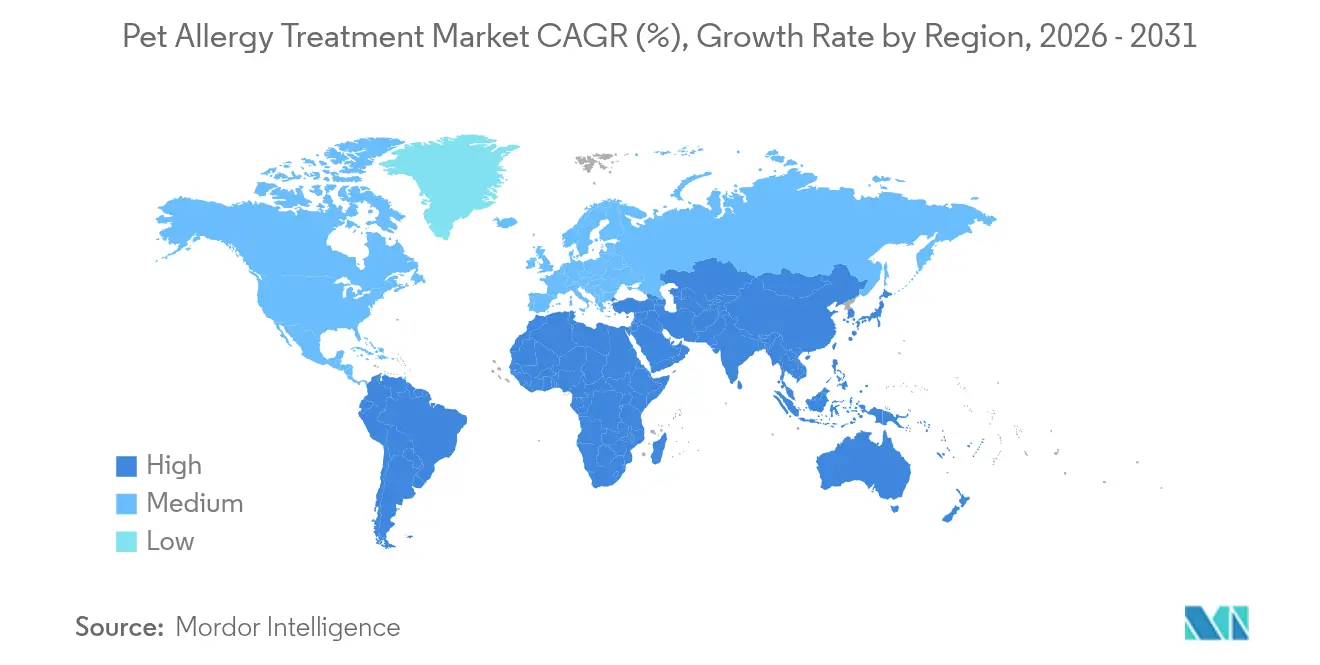
North America held 43.78% revenue in 2025, buoyed by sophisticated veterinary infrastructure and pet health spending. Insurance premiums plus clear FDA pathways foster rapid uptake of novel JAK inhibitors and monoclonal antibodies. Canada benefits from growing specialty referral networks, while Mexico’s maturing middle class drives outpatient allergy care.
Europe Pet Allergy Treatment Market
Europe manifests steady growth under a harmonized regulatory umbrella. EMA approvals such as Emevet illustrate a healthy development pipeline. Nordic countries demonstrate the correlation between high insurance penetration and advanced therapy adoption, evidenced by Sweden’s projected premium volume. Eastern Europe lags but registers incremental opportunities as GDP per capita rises.
APAC Pet Allergy Treatment Market
Asia-Pacific charts a 8.91% CAGR, anchored by urbanization and pet humanization. Chinese millennials and Gen Z, spending USD 50–100 monthly on pets, reshape demand patterns and encourage multinationals to invest in local facilities. Japanese consumers extend longevity care to aging pets, while Australia’s established vet hospitals integrate precision dermatology. India enjoys capital inflows from Mars Inc. to scale multisite specialty clinics. Regulatory opacity in China still slows launches of innovative biologics, yet rising disposable income and e-commerce offset some hurdles, ensuring Asia-Pacific remains the fastest expanding region within the pet allergy treatment market.
Competitive Landscape
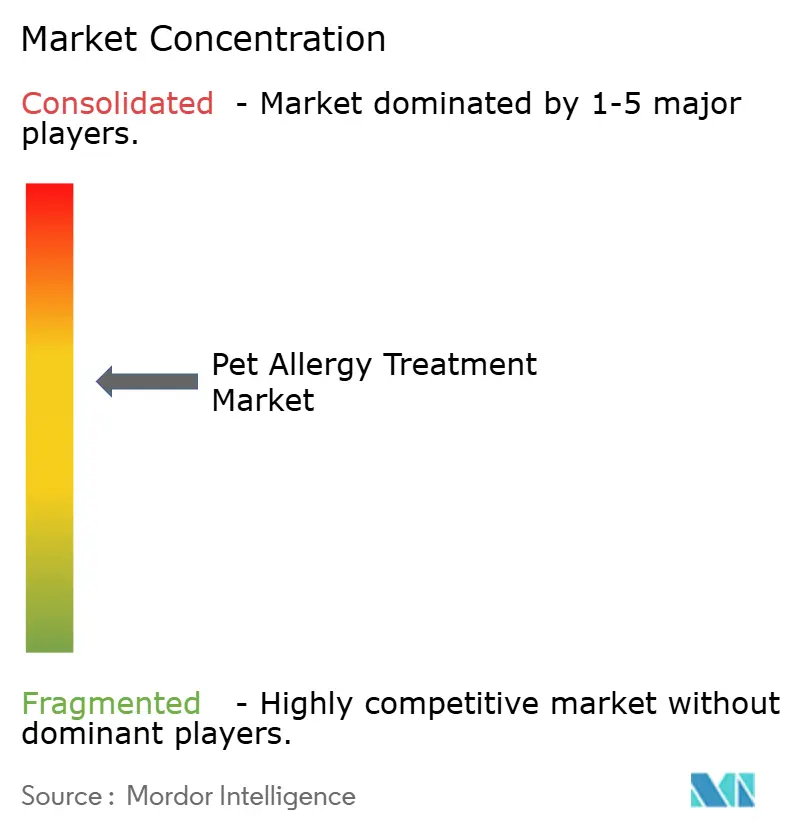
The market shows moderate consolidation as Zoetis, Elanco, and Merck Animal Health leverage broad portfolios and R&D scale. Zoetis generated USD 8.5 billion in 2024, with 66% tied to companion animals and a strategic focus on dermatology. Elanco lifted its 2025 innovation revenue outlook to USD 660–740 million following Zenrelia approval, reflecting first-mover advantage in second-generation JAK inhibition.
Capital investment in biologics capacity is a key differentiator; Elanco’s USD 130 million Kansas expansion supports future monoclonal antibody output. Boehringer Ingelheim’s acquisition of Saiba Animal Health secures vaccine technology that complements allergy-focused pipelines. Emerging biotech firms explore microbiome therapeutics and sustained-release devices, yet high regulatory costs and established distributor relationships pose entry barriers. Overall, proprietary science, regulatory agility, and omnichannel reach determine competitive positioning within the pet allergy treatment market.
Pet Allergy Treatment Industry Leaders
-
Boehringer Ingelheim International GmbH
-
Neogen Corporation
-
Provetica LLC
-
Elanco Animal Health
-
Zoetis Animal Health
- *Disclaimer: Major Players sorted in no particular order
Pet Allergy Treatment Market Companies Covered in this Report
- Zoetis Animal Health
- Merck & Co., Inc. (MSD Animal Health)
- Boehringer Ingelheim
- Elanco
- Ceva Santé Animale
- Virbac
- Dechra Pharmaceuticals
- Vetoquinol
- Neogen
- Phibro Animal Health
- Provetica LLC
- Nextmune (Allermed/Artuvet)
- Bioiberica
- NAV Biologicals
- Aratana Therapeutics (Elanco)
- Kindred Biosciences (Zoetis)
- IDEXX
- Toray Industries (Allerpet)
- PetIQ Inc.
- Allergy Therapeutics plc
Recent Industry Developments in Pet Allergy Treatment Market
- February 2025: Mars Inc. invested in Crown Veterinary Services in India, signaling multinational recognition of Asia-Pacific market potential and commitment to expanding veterinary infrastructure in emerging markets.
- September 2024: Elanco received FDA approval for Zenrelia (ilunocitinib tablets), the second JAK inhibitor approved for canine allergic dermatitis, with demonstrated superior efficacy compared to existing treatments.
- September 2024: Boehringer Ingelheim acquired Saiba Animal Health to enhance its R&D capabilities with innovative therapeutic vaccines targeting chronic diseases in pets, including allergic conditions.
- April 2024: Boehringer Ingelheim expanded dog parasite protection options in India with NexGard SPECTRA (afoxolaner and milbemycin oxime). This new addition to the NexGard product line follows its approval by the Central Drugs Standard Control Organization (CDSCO).
Global Pet Allergy Treatment Market Report Scope
Pets can be allergic to a variety of substances known as allergens, which include plant particles and other airborne or food-borne substances. Allergens are substances inhaled or absorbed by the skin, respiratory system, or gastrointestinal tract. These reactions result in skin redness, swelling, and itching.
The pet allergy treatment market is segmented into drug class, pet type, route of administration, and geography. By drug class, the market is segmented into antihistamines, corticosteroids, immunotherapy, and other drug classes (nasal irrigation, decongestants, etc.). By pet type, the market is segmented into dogs, cats, rabbits, and other pet types (rodents, horses, etc.). By route of administration, the market is segmented into oral, injectable, and topical. By geography, the market is segmented into North America, Europe, Asia-Pacific, South America, and Middle East and Africa. The report also offers the market size and forecasts for 17 countries across the region. For each segment, the market sizing and forecasts were made on the basis of value (USD).
Segmentation Overview
| Antihistamines |
| Corticosteroids |
| Immunotherapy |
| Monoclonal antibodies |
| Microbiome-modulating agents |
| Other Drug Classes |
| Dogs |
| Cats |
| Rabbits |
| Other Companion Animals |
| Oral |
| Injectable |
| Topical |
| Sublingual |
| Veterinary Clinics & Hospitals |
| Retail Pharmacies |
| Online Pharmacies |
| North America | United States |
| Canada | |
| Mexico | |
| Europe | Germany |
| United Kingdom | |
| France | |
| Italy | |
| Spain | |
| Rest of Europe | |
| Asia-Pacific | China |
| Japan | |
| India | |
| Australia | |
| South Korea | |
| Rest of Asia-Pacific | |
| Middle East & Africa | GCC |
| South Africa | |
| Rest of Middle East & Africa | |
| South America | Brazil |
| Argentina | |
| Rest of South America |
| By Drug Class | Antihistamines | |
| Corticosteroids | ||
| Immunotherapy | ||
| Monoclonal antibodies | ||
| Microbiome-modulating agents | ||
| Other Drug Classes | ||
| By Pet Type | Dogs | |
| Cats | ||
| Rabbits | ||
| Other Companion Animals | ||
| By Route of Administration | Oral | |
| Injectable | ||
| Topical | ||
| Sublingual | ||
| By Distribution Channel | Veterinary Clinics & Hospitals | |
| Retail Pharmacies | ||
| Online Pharmacies | ||
| By Geography | North America | United States |
| Canada | ||
| Mexico | ||
| Europe | Germany | |
| United Kingdom | ||
| France | ||
| Italy | ||
| Spain | ||
| Rest of Europe | ||
| Asia-Pacific | China | |
| Japan | ||
| India | ||
| Australia | ||
| South Korea | ||
| Rest of Asia-Pacific | ||
| Middle East & Africa | GCC | |
| South Africa | ||
| Rest of Middle East & Africa | ||
| South America | Brazil | |
| Argentina | ||
| Rest of South America | ||
Key Questions Answered in the Report
What is the current valuation of the pet allergy treatment market?
The pet allergy treatment market size is USD 2.47 billion in 2026.
Which region grows fastest in this market?
Asia-Pacific posts the highest 8.91% CAGR through 2031 thanks to urban pet humanization and rising disposable income.
Which drug class is gaining momentum over antihistamines?
Janus kinase inhibitors, led by Zenrelia, are expanding rapidly due to superior itch-control efficacy.
How big is the canine segment compared with feline?
Dogs hold 61.84% of revenue, but the feline segment records an 8.22% CAGR, making it the fastest growing pet type.
What channel is disrupting traditional veterinary sales?
Online pharmacies are growing at 7.66% CAGR, leveraging tele-veterinary services and competitive pricing to capture share.
Why does insurance matter for allergy treatment growth?
Rising pet health insurance coverage reduces out-of-pocket costs for chronic therapies, enabling greater adoption of premium biologics and immunotherapy.