
Pet Hair Care Market Size and Share
Market Overview
| Study Period | 2020 - 2031 |
|---|---|
| Market Size (2026) | USD 4.13 Billion |
| Market Size (2031) | USD 5.17 Billion |
| Growth Rate (2026 - 2031) | 4.58 % |
| Fastest Growing Market | Asia Pacific |
| Largest Market | North America |
| Market Concentration | Medium |
Major Players *Disclaimer: Major Players sorted in no particular order Image © Mordor Intelligence. Reuse requires attribution under CC BY 4.0. | |
Pet Hair Care Market Analysis by Mordor Intelligence
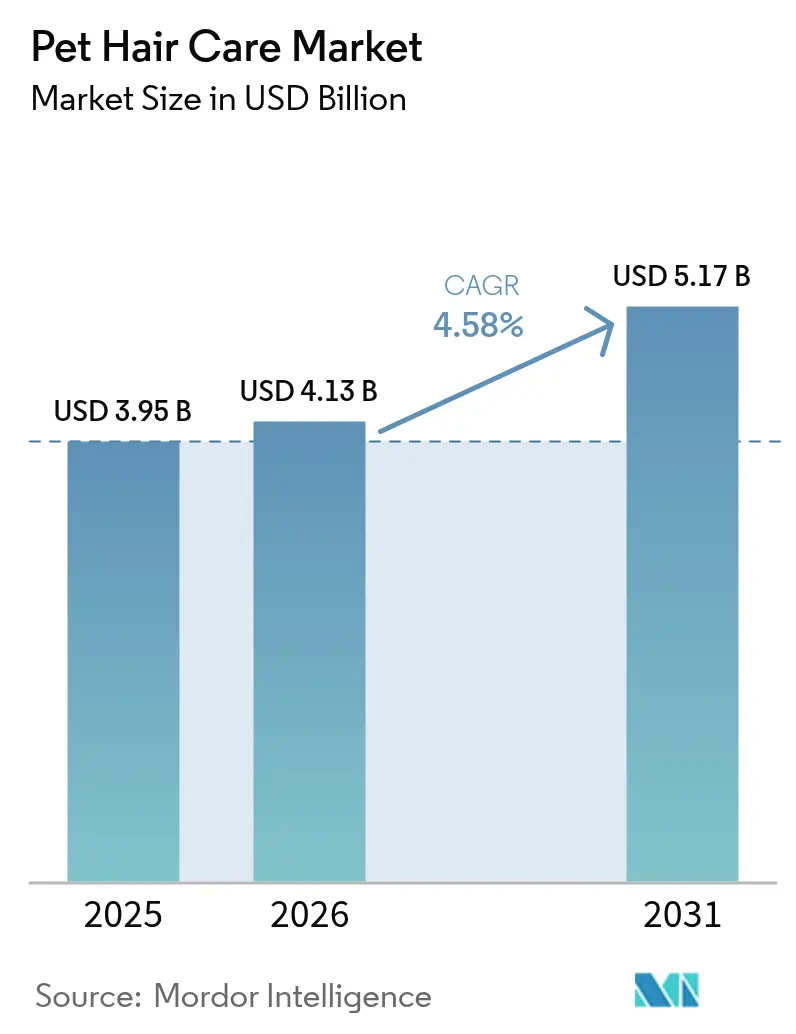
The pet hair care market size is expected to grow from USD 3.95 billion in 2025 to USD 4.13 billion in 2026 and is forecast to reach USD 5.17 billion by 2031 at 4.58% CAGR over 2026-2031. Consistent household spending on premium grooming products, rising veterinary endorsements for therapeutic formulations, and a widening array of at-home grooming tools sustain the sector’s steady expansion. Demand intensifies as owners treat coat maintenance as part of holistic wellness, prompting brands to invest in microbiome-friendly shampoos and AI-enabled clippers that replicate professional results at home. North America contributes the largest revenue, but Asia-Pacific’s urban middle class fuels the fastest incremental growth as pet ownership rises alongside disposable income. Regulatory scrutiny in the United States, European Union, and China is reshaping ingredient choices and packaging decisions, nudging manufacturers toward naturally derived actives and reduced-plastic formats.
Key Report Takeaways
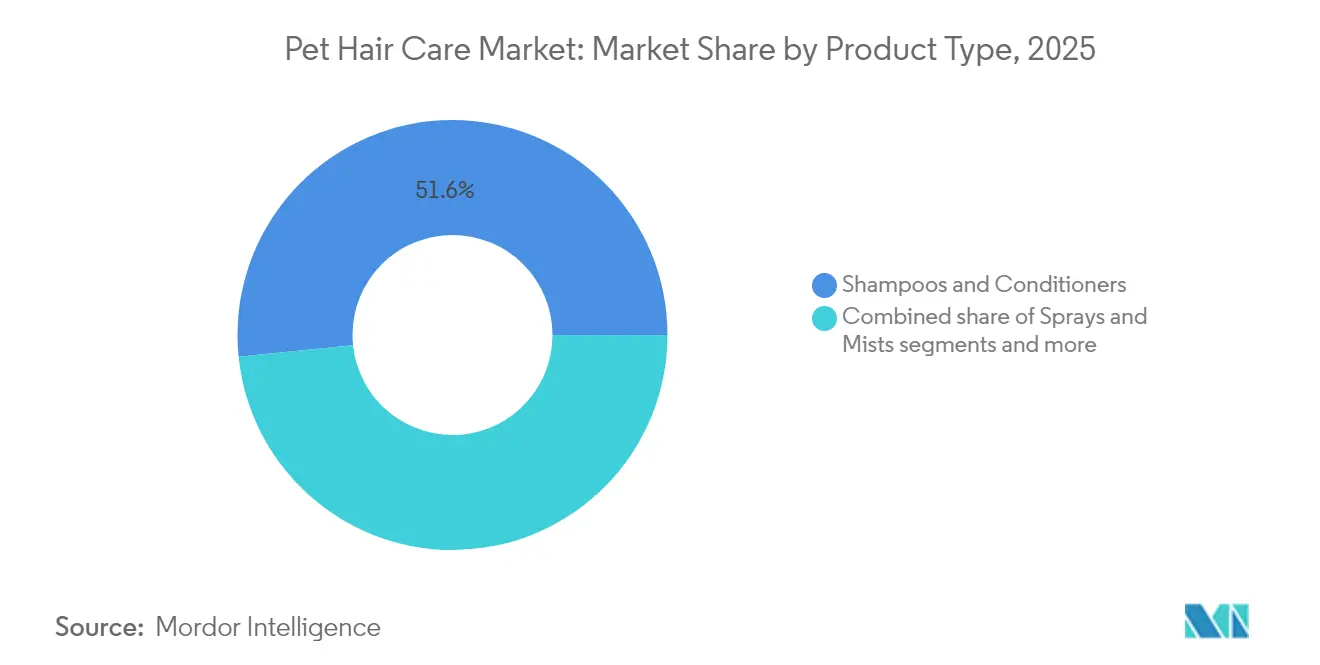
- By product type, shampoos & conditioners led with 51.62% revenue share in 2025, whereas hair removal tools are forecast to expand at a 4.96% CAGR through 2031.
- By pet type, dogs captured 62.54% of the pet hair care market share in 2025, while cats record the highest projected CAGR at 5.63% to 2031.
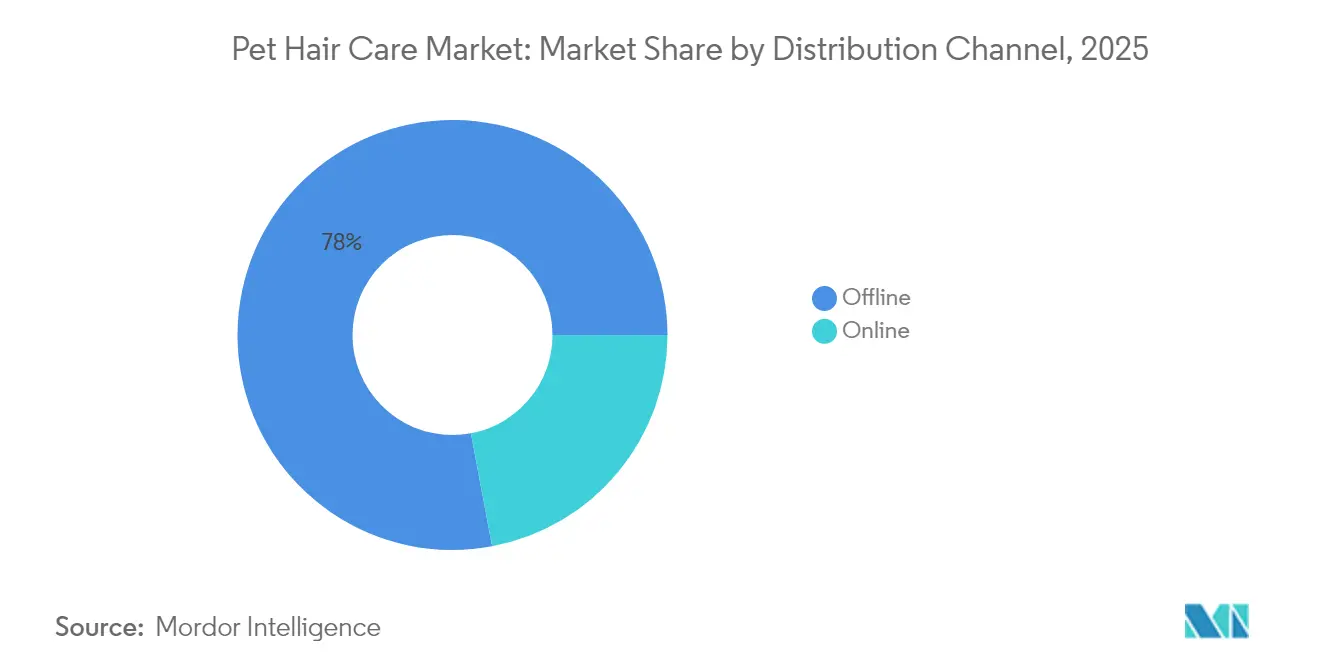
- By distribution channel, offline retail accounted for 77.95% of the pet hair care market size in 2025 and remains dominant; online channels are advancing at a 5.31% CAGR through 2031.
- By geography, North America held 37.08% revenue share in 2025, whereas Asia-Pacific is set to expand at a 5.18% CAGR during the same period.
Note: Market size and forecast figures in this report are generated using Mordor Intelligence’s proprietary estimation framework, updated with the latest available data and insights as of 2026.
Market Trends and Insights
Drivers Impact Analysis of Pet Hair Care Market*
| Driver | (~) % Impact on CAGR Forecast | Geographic Relevance | Impact Timeline |
|---|---|---|---|
| Humanization of pets drives premium spend | +1.8% | Global, strongest in North America & Europe | Long term (≥ 4 years) |
| Rising pet ownership in emerging markets | +1.2% | Asia-Pacific core, spill-over to Latin America | Medium term (2-4 years) |
| Growing dermatological issues in pets | +0.9% | Global, acute in urban areas | Short term (≤ 2 years) |
| Expansion of e-commerce pet retail | +0.7% | Global, accelerated in Asia-Pacific | Short term (≤ 2 years) |
| Vet-endorsed microbiome-friendly formulas | +0.4% | North America & EU, expanding to APAC | Medium term (2-4 years) |
| AI-enabled smart grooming devices | +0.3% | North America, early adoption in urban centers | Long term (≥ 4 years) |
| Source: Mordor Intelligence | |||
Pet humanization drives premium spend
Owners increasingly view grooming as an extension of personal care, elevating demand for salon-grade shampoos infused with argan oil, probiotics, and fragrance-neutralizing enzymes. U.S. pet expenditure is projected to reach USD 279 billion by 2030, led by millennials who equate pet well-being with family wellness. Celebrity-backed launches such as Jennifer Aniston’s Puppy Love Dog Shampoo validate premium positioning and spur broader retail adoption. Veterinary clinics increasingly recommend microbiome-friendly cleansers that support skin barrier function, reinforcing the perception that specialized grooming is preventive healthcare.
Rising pet ownership in emerging markets
Urbanization and smaller household sizes in China, South Korea, and India are lifting pet adoption; China’s wider pet economy is poised to exceed EUR 104.3 billion in 2025, nearly triple 2023 levels. Younger consumers prioritize quality ingredients over price, creating fertile ground for premium import brands and locally formulated alternatives. Regional players use social-commerce platforms to bundle shampoos with hair removal tools, meeting rising do-it-yourself grooming appetites. Veterinary associations across Southeast Asia are also rolling out coat-care education campaigns, further normalizing routine bathing and deshedding.
Growing dermatological issues in pets
Environmental allergens and breed-specific sensitivities push demand for therapeutic cleansers; canine atopic dermatitis affects up to 15% of dogs globally. FDA approval of Zenrelia tablets in 2024 underscored the medical importance of skin health. Grooming protocols that combine pH-balanced shampoos with hypoallergenic wipes are increasingly prescribed to relieve itching and reduce veterinary visits. Owners facing high treatment costs are therefore more willing to invest in preventive grooming products, enhancing recurring demand for specialty hair care ranges.
Expansion of e-commerce pet retail
Online pet supplies sales are projected to top USD 72 billion in 2024, rising at double-digit rates through 2028. Mobile commerce now accounts for nearly three-quarters of digital pet care transactions, giving agile direct-to-consumer brands a cost-effective route to market. Subscription bundles timed to bathing cycles improve customer retention and reduce last-minute out-of-stock anxiety. Established retailers respond by enhancing click-and-collect options and offering exclusive web-only grooming lines.
Restraints Impact Analysis of Pet Hair Care Market*
| Restraint | (~) % Impact on CAGR Forecast | Geographic Relevance | Impact Timeline |
|---|---|---|---|
| High price sensitivity in developing nations | -0.8% | Asia-Pacific emerging markets, Latin America | Medium term (2-4 years) |
| Stringent restrictions on harsh chemicals | -0.6% | EU, North America, expanding globally | Long term (≥ 4 years) |
| Supply bottlenecks for sustainable packaging | -0.4% | Global, acute in North America & EU | Short term (≤ 2 years) |
| DIY substitution with human cosmetics | -0.3% | Global, higher in price-sensitive markets | Short term (≤ 2 years) |
| Source: Mordor Intelligence | |||
High price sensitivity in developing nations
In many low-income regions, grooming formulations compete with essential pet nutrition for limited household budgets. Affordability studies show pet food alone can consume a disproportionate share of disposable income, curtailing appetite for premium shampoos. Budget-friendly lines employing local botanicals and simplified packaging are therefore critical for penetration. Non-profit clinics offering subsidized grooming highlight latent demand but also illustrate the financial barriers mass-market producers must overcome.
Stringent restrictions on harsh chemicals
The EU Cosmetics Regulation 1223/2009 and forthcoming Chemicals Strategy for Sustainability limit preservatives, colorants, and surfactants permissible in pet care. Similar oversight from the FDA and China’s GB/T 43839-2024 standard raises formulation costs and prolongs time-to-market for smaller brands. Investment in naturally derived alternatives and thorough safety dossiers becomes mandatory, tightening margins yet simultaneously differentiating compliant brands in the eyes of safety-conscious shoppers.
*Our forecasts treat driver/restraint impacts as directional, not additive. The impact forecasts reflect baseline growth, mix effects, and variable interactions.
Pet Hair Care Market Segment Analysis
By Product Type:
Shampoos & Conditioners Remain Core While Tools AccelerateShampoos & conditioners accounted for 51.62% of the pet hair care market in 2025, underlining their indispensability in routine hygiene. Hair removal tools, including widened ceramic-edge blades and AI-guided clippers, are forecast to grow at 4.96% CAGR, outpacing all other product groups. The segment’s uptrend mirrors rising do-it-yourself grooming and the appeal of professional-grade finishes delivered at home. Sprays, wipes, and niche balms deliver incremental convenience but struggle to match the repeat-purchase cadence of cleansing detergents. Premiumization is evident across categories as brands integrate coconut-milk yogurt probiotics and odor-absorbing enzymes, commanding higher price points and nurturing brand loyalty.
Sustainable packaging deepens competitive differentiation. The AeroFlexx pouch for Furminator shampoos uses 66% less plastic yet protects viscosity and shelf life, reflecting broader environmental commitments. Larger players seek to pre-empt regulatory mandates by trialing compostable films and refill-station pilots in specialty stores. Meanwhile, tech-enabled dryers that monitor skin temperature promise cross-selling opportunities, further entrenching the pet hair care market within holistic wellness routines.



By Pet Type:
Dogs Dominate, Cats Catch UpDogs generated 62.54% of 2025 revenue, benefitting from higher bathing frequency and a culture of breed-specific styling. Cats, however, are poised for the fastest 5.63% CAGR as urban residents in Asia lean toward lower-maintenance companions. Scientific breakthroughs reducing Fel d 1 allergens make feline ownership viable for previously sensitive households, expanding the consumer base. Segment suppliers now craft pH-balanced formulations for feline skin and quieter clippers that minimize stress, responding to cat-specific behavioral traits.
Small mammals and exotics represent niche but growing micro-segments where natural botanicals resonate with eco-centric owners. Breed-tailored lines for Golden Retrievers or Persian cats target known dermatological predispositions, commanding price premiums by promising condition-specific relief. Tele-grooming consultations and AI-powered coat assessments further individualize product recommendations, deepening engagement and subscription uptake across species.
By Distribution Channel:
Bricks-and-Mortar Dominant, Digital FastestPhysical outlets retained 77.95% revenue share in 2025, driven by pet specialty chains, grooming salons, and veterinary clinics where tactile evaluation and professional guidance add value. Shelf presence and in-store demonstrations foster impulse purchases, particularly for new-to-market brushes and detangling sprays. Veterinary retailers leverage clinical trust to upsell medicated shampoos prescribed for chronic dermatitis.
Online platforms nonetheless post the highest 5.31% CAGR, as smartphone-centric shoppers gravitate to frictionless reordering and curated bundles. Direct-to-consumer startups differentiate through interactive quizzes that personalize routines and through loyalty programs offering refill discounts. Hybrid click-and-collect models bridge convenience with immediate product access, while livestream tutorials on social-commerce apps stimulate real-time purchasing. Omnichannel mastery thus becomes pivotal to margin preservation and market reach.
Geography Analysis
North America Pet Hair Care Market
North America commands 37.08% of global revenue, anchored by high per-capita spend and a mature ecosystem of grooming salons, specialty chains, and subscription boxes. U.S. legislation governing cosmetic safety and state-level pet welfare statutes foster consumer trust and premium uptake. Canadian retailers rapidly expand private-label coat care lines, while Mexico sees rising penetration of mid-tier shampoos positioned as affordable upgrades.
APAC, EMEA and South America Pet Hair Care Market
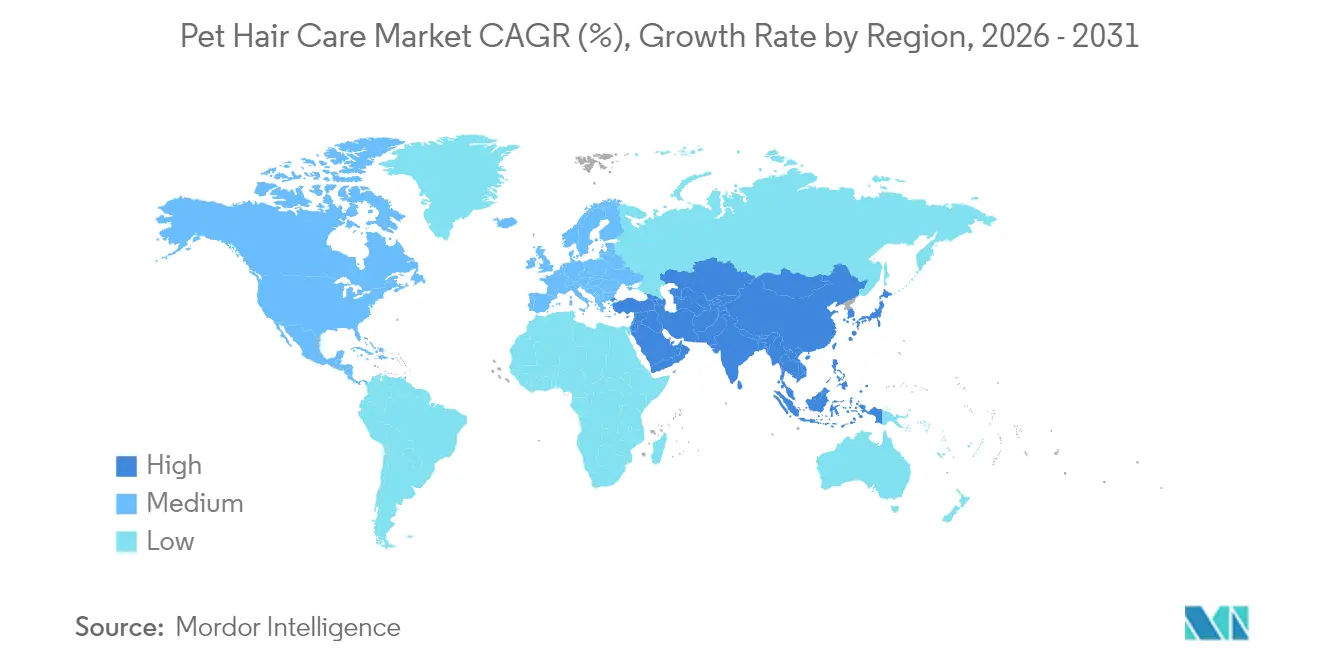
Asia-Pacific represents the fastest expanding region at a 5.18% CAGR through 2031. China’s single-child households elevate pets as family members, driving demand for luxurious cleansers and waterless foams suitable for apartment living. Korea’s popularity of designer dog breeds boosts sales of detangling sprays and whitening conditioners. India’s burgeoning e-commerce infrastructure democratizes access to specialty imports, though price tiers must align with varying income segments. Across the region, livestream shopping events foster discovery and impulsive grooming kit purchases, reinforcing digital pathways to growth. Europe maintains steady momentum underpinned by stringent product safety and sustainability regulation. Germany, the United Kingdom, and France collectively account for a majority of regional turnover, with eco-certified packaging and vegan formulas resonating with environmentally conscious shoppers. Southern European markets show increased influence of mobile groomers offering bundled services and retail products. South America and Middle East & Africa remain nascent, but Brazil’s growing middle class and the United Arab Emirates’ expatriate population exhibit rising appetite for premium grooming, tempered by import tariffs and limited cold-chain logistics that challenge product integrity.

Regulatory Landscape
Regulatory requirements for pet hair care differ by product claims and jurisdiction, which can split the market between cosmetic-style grooming aids and items positioned with therapeutic or pesticidal benefits. In the United States, FDA guidance for animal grooming aids generally treats cleansing or beautifying products as non-drug unless they make disease, structure, or function claims. Where products are regulated as pesticides or as new animal drug-type items, EPA and FDA oversight frameworks become relevant, such as for flea and tick or antimicrobial positioning. This claim-driven classification affects labeling, dossier depth, and the compliance burden for brands moving from routine shampoos and wipes into medicated, antiseptic, or parasite-control adjacent coat offerings.
In Europe, animal by-product rules intersect with cosmetics and derived product pathways, and Commission Regulation (EU) 2025/1377 (July 2025) updated requirements related to animal by-products and derived products, with clarifications for industrial and cosmetic-use derived materials. In Australia, APVMA notes that animal cosmetic products used on healthy skin or hair for appearance generally do not require APVMA registration unless therapeutic or antimicrobial effects are claimed. This supports a broader retail grooming assortment while tightening oversight for problem-skin and parasite-related messaging. Cross-border movement of certain treated hair and fur materials can also require traceability documentation, such as UK APHA import documentation expectations for treated wool, hair, and fur, which reinforces the need for supplier records where animal-derived inputs are used or where brands trade internationally.
Value Chain Analysis
The pet hair care value chain starts with inputs and formulation and then moves through manufacturing and multi-channel distribution. Upstream suppliers provide surfactants, conditioning polymers, botanicals and natural oils, probiotics and enzymes, packaging substrates, and tool components including blades, motors, ceramics, and electronics. Midstream work includes R&D (stability, skin compatibility, fragrance and preservative systems), regulatory and claims substantiation, and production through in-house plants or OEM/ODM partners. Contract manufacturing supports faster line extensions across shampoos, wipes, sprays, and grooming tools while reducing capital intensity, and manufacturers such as PetIQ, SynergyLabs, and BodyLife Pets are positioned as enabling partners for branded and private-label programs.
Downstream, products flow via wholesalers and distributors into offline-heavy retail channels (pet specialty stores, supermarkets/hypermarkets, grooming salons, and veterinary clinics) and also into faster-growing e-commerce and company-owned webshops. Logistics matters for bulky, liquid-heavy assortments and for tool SKUs that require inventory precision, especially given challenges around long lead times from offshore production, demand forecasting, and inventory visibility. Beyond formal regulatory compliance, industry and government-backed welfare codes and standards shape service-linked demand and usage practices in professional grooming settings. Australia-focused codes of practice (for example, NSW and ACT grooming establishment guidance) and skills or best-practice standards referenced by grooming bodies (such as AKC educational standards and CFSG/PPGSA guidelines) help standardize protocols that reinforce repeat purchase of consumables (shampoos, wipes) and replacement cycles for tools.
Competitive Landscape
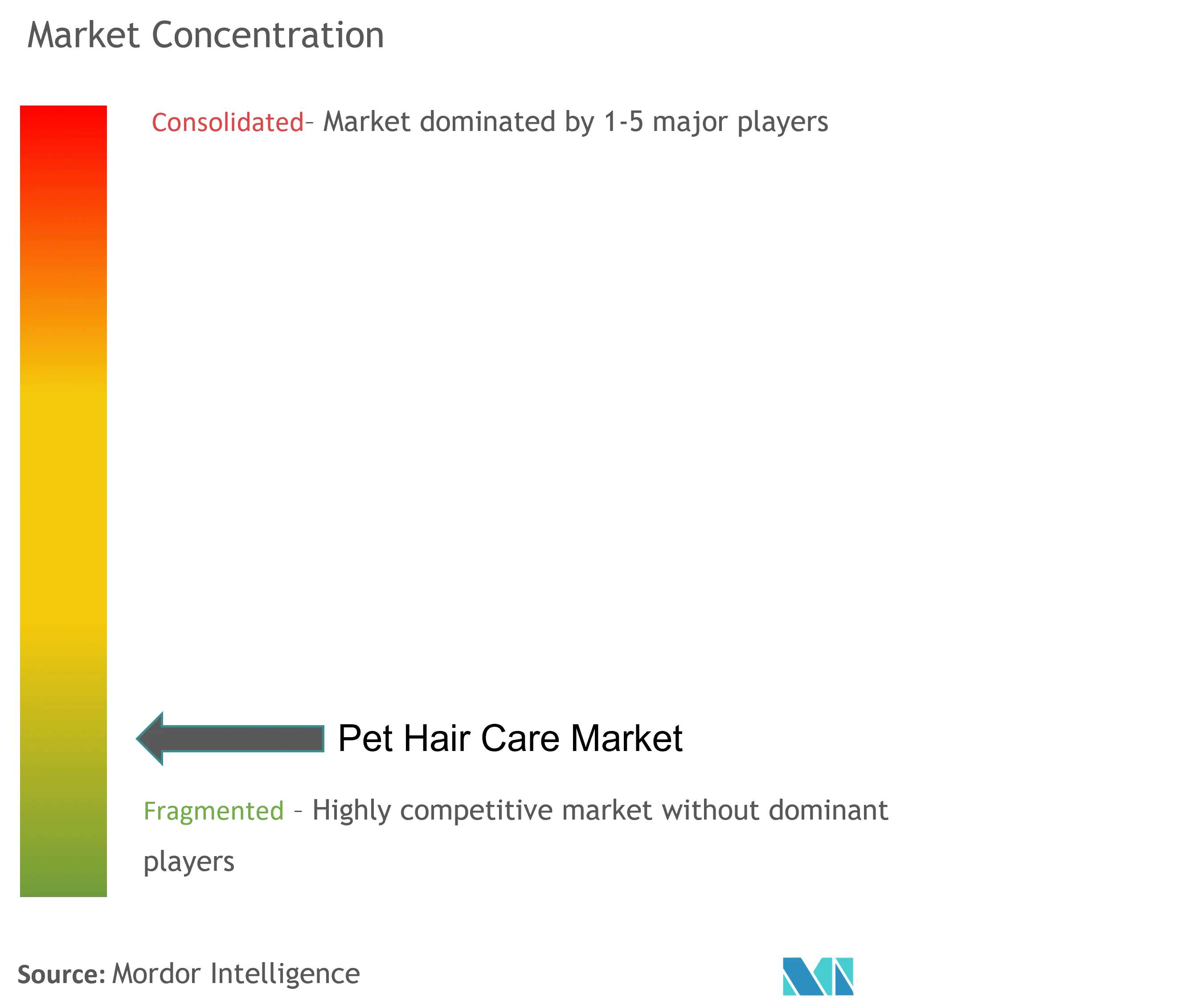
The pet hair care market displays moderate fragmentation; no single brand controls an overwhelming share, enabling continual entry of boutique innovators. Legacy tool specialists like Wahl Clipper Corporation and Andis Company protect core franchises through incremental blade design, while shampoo incumbents diversify via ingredient innovation and veterinarian co-branding. Celebrity-launched lines garner rapid social-media traction, forcing established players to refresh messaging around natural credentials and charitable partnerships.
Strategic M&A accelerates scale and channel reach. Tractor Supply’s purchase of Allivet signals retailers’ intent to own the veterinary pharmacy adjacency, positioning them to bundle therapeutic cleansers with prescription skin medications. National Veterinary Associates’ acquisition of PetWell Partners widens clinic footprints, expanding professional influence over grooming product recommendations. Technology entrants such as PETKIT merge hardware and software, offering AI-enabled devices that capture coat data and feed proprietary recommendation engines.
Sustainability forms a battleground for differentiation. Partnerships with packaging innovators like AeroFlexx shrink plastic use while enhancing ergonomics. Companies also pilot solid-bar cleansers and aluminum refill stations to align with zero-waste consumer movements. Overall, agile innovation pipelines, omnichannel fluency, and credible eco-claims emerge as critical levers for defending or winning share in the pet hair care market.
Pet Hair Care Industry Leaders
Petkin Inc.
Elanco Animal Health Incorporated
Global Vet Care
The Clorox Company (Scoop Away)
SynergyLabs
- *Disclaimer: Major Players sorted in no particular order
Pet Hair Care Market Companies Covered in this Report
- Spectrum Brands Holdings Inc.
- Wahl Clipper Corporation
- The Hartz Mountain
- Cosmos Corporation
- Andis Company
- Sunbeam Products Inc. (Oster)
- Beaphar B.V.
- Petco Health & Wellness Co. Inc.
- Earthbath LLC
- PetAg Inc.
- Garmon Corp. (NaturVet)
- Groomer’s Choice Pet Products
- Animology (Group55 Ltd.)
- Petco Health & Wellness Co. Inc.
- Animology (Group55 Ltd.)
- Earth Rated Inc.
- Pogi’s Inc. (Pogi’s Pet Supplies)

Market Opportunities and Future Outlook
Technology-enabled grooming ecosystems are creating whitespace beyond stand-alone consumables, particularly when tools, software, and service operations connect. Recent platform activity reflects this direction, including Groomify launching an AI-native pet grooming software platform (June 2026) centered on automated reception, scheduling, CRM, and route optimization, and UNIPET introducing an automated resource-allocation system for pet grooming salon appointments in Tokyo (April 2026). These developments create room for brands and retailers to bundle products with workflow tools for salons and mobile groomers, tie replenishment programs to appointment cadence, and use data-driven recommendations to increase attachment to coat-care routines.
In product categories, at-home grooming performance and safety remain a clear commercialization lane, supported by named launches such as Wahl Professional Bravura2 Animal Clipper (March 2026), which emphasizes upgraded motor performance and blade technology. There is also room for compliant, claim-disciplined dermocosmetic-style coat care that sits between everyday grooming and veterinary treatment, particularly as tightened chemical restrictions and claim-driven classification affect major markets. Sustainability-oriented packaging and reduced-plastic formats offer a practical differentiation route, especially in offline retail where shelf ergonomics and refill or reduced-plastic packs influence conversion and repeat purchase behavior.
Recent Industry Developments in Pet Hair Care Market
- June 2026: Petkin introduced Petkin Big n Thick Pet Wipes, positioned as larger-format wipes for bigger cleanups and larger pet breeds. The launch expands the convenience-led end of the hair care basket where wipes are used between baths and after outdoor activity, supporting higher purchase frequency in mass retail channels.
- March 2026: Wahl Professional launched the Bravura2 Animal Clipper with upgraded motor performance and a coated 5-in-1 blade design. This refresh reinforces the shift toward pro-grade, at-home grooming tools that help consumers replicate salon results and lift average order value through tool-and-consumable bundles.
- December 2024: Tractor Supply completed its acquisition of Allivet, expanding its footprint in veterinary pharmacy adjacency. The move strengthens the ability to merchandise therapeutic grooming items alongside skin-health regimens, increasing the influence of large retailers on product selection and cross-category purchasing.


Pet Hair Care Market Report Scope and Research Methodology
Market Definition and Coverage
For this study, the pet hair care market includes products used to clean, condition, detangle, trim, or manage shedding of pet hair and coat, sold for routine at-home grooming and basic hygiene needs across dogs, cats, and other pets.
Scope exclusions: Professional grooming services, veterinary treatment products that are prescribed for medical conditions, and unrelated pet care items that do not act on hair or coat are not counted.
Segments Covered in This Report
- By Product Type (Value)
- Shampoos & Conditioners
- Sprays & Mists
- Hair Removal Tools & Clippers
- Cleansing Wipes
- Other Grooming Aids
- By Pet Type (Value)
- Dogs
- Cats
- Small Mammals
- Other Companion Animals
- By Distribution Channel (Value)
- Offline
- Pet Specialty Stores
- Supermarkets & Hypermarkets
- Veterinary Clinics
- Online
- E-commerce Marketplaces
- Company-Owned Webshops
- Offline
- By Geography (Value)
- North America
- United states
- Canada
- Mexico
- Europe
- Germany
- United Kingdom
- France
- Italy
- Spain
- Rest of Europe
- Asia-Pacific
- China
- India
- Japan
- South Korea
- Australia
- Rest of Asia-Pacific
- South America
- Brazil
- Argentina
- Rest of South America
- Middle East and Africa
- GCC
- South Africa
- Rest of Middle East and Africa
- North America
Data Sources, Market Sizing, and Validation
Desk Research
Desk research was used to set the market boundary, build the demand story by region, and define realistic price and volume markers that can be checked later. We relied on public sources such as the US FDA (pet product safety and labeling context), USDA and APHIS (pet and animal health information), US Census Bureau trade statistics, Eurostat, and UN Comtrade to understand import and export direction for grooming-related goods.
On top of this, we reviewed company annual reports, investor presentations, retailer category pages, and reputable press coverage to track product launches, channel shifts, and pricing changes for grooming essentials. Where available, we referenced paid subscription databases for company financials and for patent activity to cross-check innovation focus around coat care formats and tools. The desk sources listed here are illustrative only, and many other public documents and data tables were reviewed to collect, validate, and clarify the final assumptions.
Primary Interviews and Surveys
Primary work focused on validating what is actually purchased within hair care, how often it is replenished, and how prices move across channels. We spoke with a mix of brand-side leaders, distributors, and retail-facing managers, and we included informed views from grooming professionals to understand product substitution between shampoos, conditioners, and shedding or trimming tools across major regions.
Feedback was used to confirm adoption trends (for example, at-home grooming frequency and grooming tool upgrades), to correct desk assumptions on typical pack sizes, and to align the model with realistic channel mix splits and promotional intensity.
Distribution of primary research fieldwork respondents
| Company type | Respondent position | Region |
|---|---|---|
| Top tier: 25% | CXOs: 12% | APAC: 49% |
| Mid tier: 61% | Functional/Unit leaders: 34% | EMEA: 31% |
| Smaller Players: 14% | Managers: 54% | Americas: 20% |
Market-Sizing & Forecasting
Sizing started with a top-down demand pool build that links pet population and ownership trends to grooming frequency and product usage, and then translates that into value using observed price bands by product type. The model was structured around a small set of measurable inputs, such as dog and cat ownership levels, average grooming occasions at home, typical replacement cycles for shedding and trimming tools, channel mix shifts toward online, and regional price dispersion driven by packaging and ingredient positioning.
After the top-down totals were formed, they were cross-checked with selective bottom-up approximations, including sampled product price tracking and volume logic by category, along with supplier and channel checks from interviews to adjust totals that looked unrealistic for the defined scope. When direct visibility was limited, gaps were handled using proxy indicators such as import intensity, pet spending direction, and confirmed shelf space changes, then normalized back to the defined scope.
For forecasting, scenario analysis was applied around a base case, with growth rates informed by expert views on premiumization, e-commerce share, and grooming tool adoption. The final trajectory was also tested for consistency with expected pet care spending growth and plausible price progression over the forecast period.
Data Validation & Update Cycle
Model outputs were validated through multiple checks, with each region and product group reviewed against independent signals such as trade movement direction, category pricing patterns, and the interview-derived view of replenishment behavior. Outliers were flagged, assumptions were revisited, and follow-up calls were triggered when a variance could not be explained by scope, timing, or currency effects.
Before sign-off, the estimates go through a step-by-step analyst review so the numbers remain consistent across segments and add up cleanly at the total market level. The report is refreshed on an annual cycle, and interim updates are made when material events occur, such as major regulatory shifts impacting ingredients or large channel disruptions. Right before delivery, a fresh review pass is completed so the output reflects the latest available information.
Mordor Intelligence's Pet Hair Care Market Size Versus Other Published Estimates
Published market sizes can vary even when the topic sounds the same, because the counted product basket, the reference year, and the way price and volume are converted into USD can change the result. Differences also show up when one estimate is built around consumer grooming consumption, while another leans more heavily on broader grooming and coat care retail categories.
The table shows a spread that mainly comes from scope overlap with adjacent grooming categories and the pace assumed for price premiumization over the forecast window. In Mordor Intelligence's model, the total is built from shampoos, conditioners, and shedding or trimming tools, and it is counted only when the product is directly used for hair and coat care rather than wider grooming supplies, which keeps the value closer to the defined demand pool.
Benchmark comparison
| Source | Market Size | Gaps in Research Methodology |
|---|---|---|
| Mordor Intelligence | USD 4.13 B (2026) | |
| Industry Publisher A | USD 4.50 B (2025) | Uses an earlier base year and a broader product list that can fold in adjacent grooming items (such as detangling sprays and hair removal tools), which can lift the starting value versus a narrower hair and coat definition. |
| Industry Publisher B | USD 1.55 B (2026) | Likely applies a tighter inclusion rule that appears closer to a limited subset of hair care products, and the page-level scope detail is thin, which makes category coverage and regional build assumptions harder to verify. |
Looking across the three values, most of the gap is explained by what gets counted as hair care versus broader grooming, and whether the model treats tools and consumables with similar depth. By tying the market to observable usage drivers and then checking the totals against pricing reality and interview feedback, the estimate stays traceable to clear steps that can be repeated when inputs change.


Key Questions Answered in the Report
What is the forecast value of the pet hair care market in 2031?
The sector is projected to reach USD 5.17 billion by 2031, up from USD 4.13 billion in 2026.
Which product category leads sales today?
Shampoos & conditioners hold the top position with a 51.62% share of 2025 revenue.
Which region is expanding the fastest?
Asia-Pacific is expected to post a 5.18% CAGR between 2026 and 2031, outpacing all other regions.
How are online channels influencing growth?
E-commerce platforms are the fastest-growing channel at a 5.31% CAGR, driven by mobile shopping and subscription models.
Which pet segment offers the highest growth potential?
Cats exhibit the strongest outlook, with a 5.63% CAGR as urban adoption rises and allergen-reducing innovations expand ownership.
Page last updated on:





