
Overnight Face Mask Market Size and Share
Market Overview
| Study Period | 2021 - 2031 |
|---|---|
| Market Size (2026) | USD 24.60 Billion |
| Market Size (2031) | USD 36.20 Billion |
| Growth Rate (2026 - 2031) | 8.05 % |
| Fastest Growing Market | North America |
| Largest Market | Asia-Pacific |
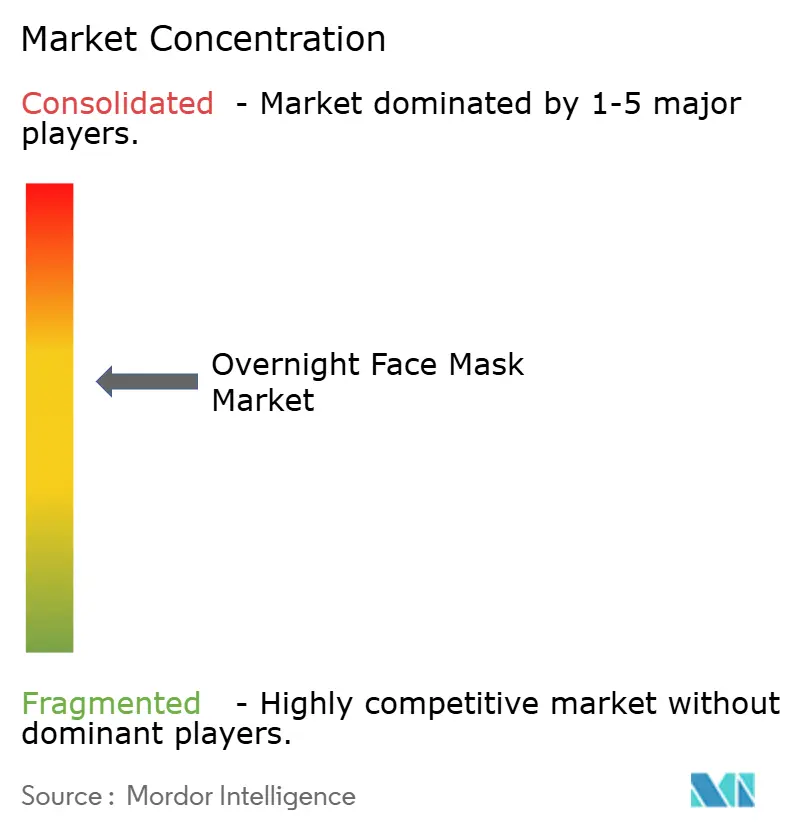
| Market Concentration | Medium |
Major Players
*Disclaimer: Major Players sorted in no particular order Image © Mordor Intelligence. Reuse requires attribution under CC BY 4.0. |
|
Overnight Face Mask Market Analysis by Mordor Intelligence
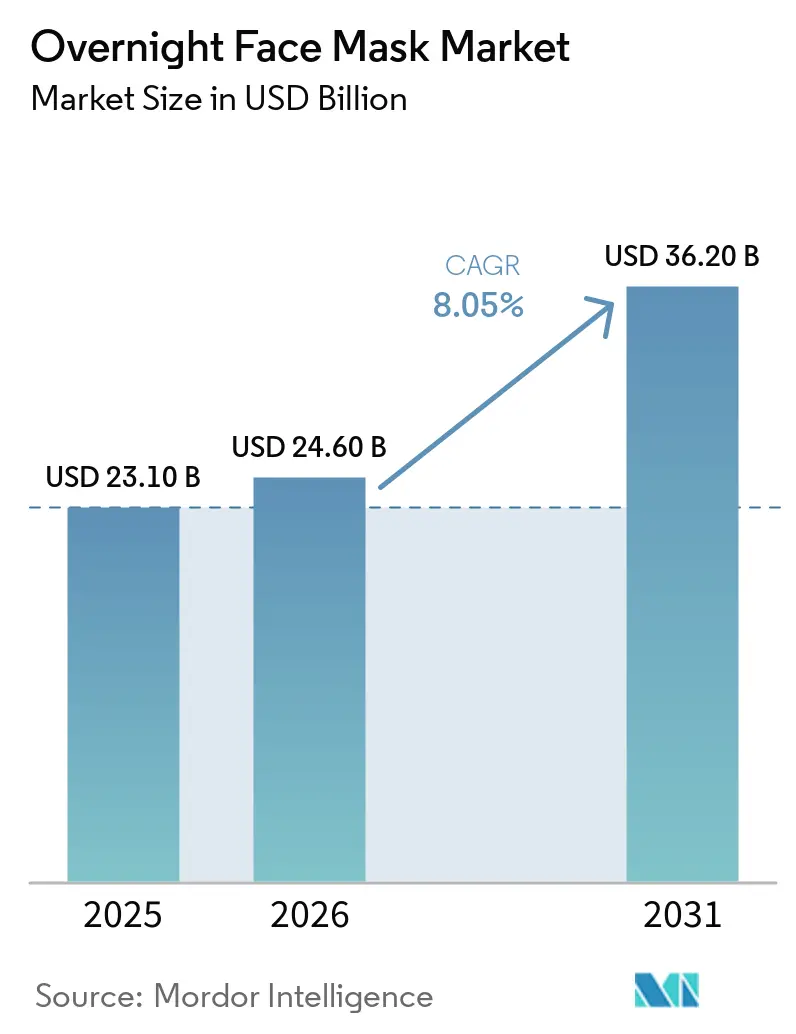
The overnight face mask market was valued at USD 23.10 billion in 2025 and reached USD 24.60 billion in 2026. It is projected to grow to USD 36.20 billion by 2031, with a CAGR of 8.05% over 2026–2031. This growth highlights a significant shift in consumer skincare habits, with nighttime increasingly regarded as a dedicated period for skin repair rather than mere rest. The integration of wellness, dermatology, and convenience has expanded the overnight face mask segment beyond basic hydration to include clinically focused barrier-repair and chronobiology-based formulations. These innovations appeal to both repeat premium consumers and first-time buyers. Additionally, rising demand for high-efficacy, leave-on skincare solutions, combined with the influence of social media-driven beauty trends and K-beauty advancements, is driving product adoption in both established and emerging skincare markets.
Key Report Takeaways
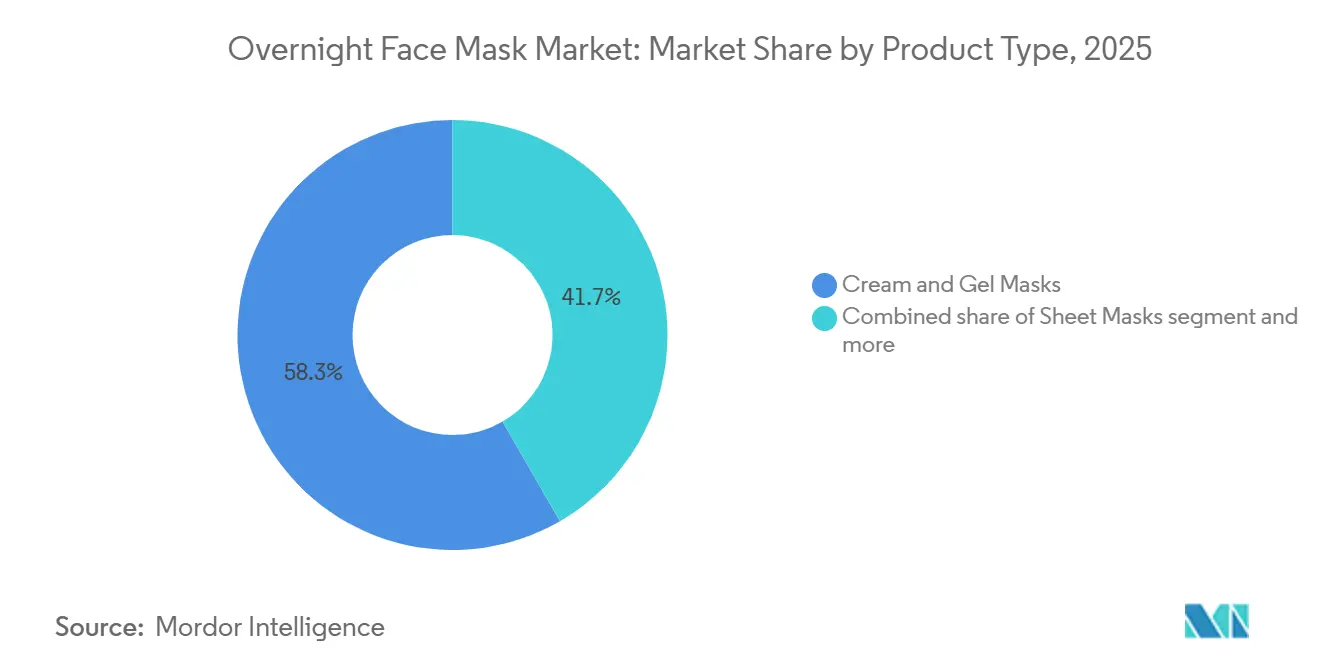
- By product type, cream and gel masks held 58.34% of 2025 revenue, while sheet masks will post an 8.89% CAGR through 2031.
- By ingredient type, hydrators and humectants led with 38.19% in 2025; peptides and bio-actives recorded the fastest 9.83% CAGR to 2031.
- By functionality, hydration and moisturization generated 38.76% of 2025 demand, whereas the anti-aging and firming segment is forecast to accelerate at a 9.37% CAGR through 2031.
- By consumer group, women captured a 68.34% share in 2025, while the unisex segment is forecast to register a 9.31% CAGR over 2026-2031.
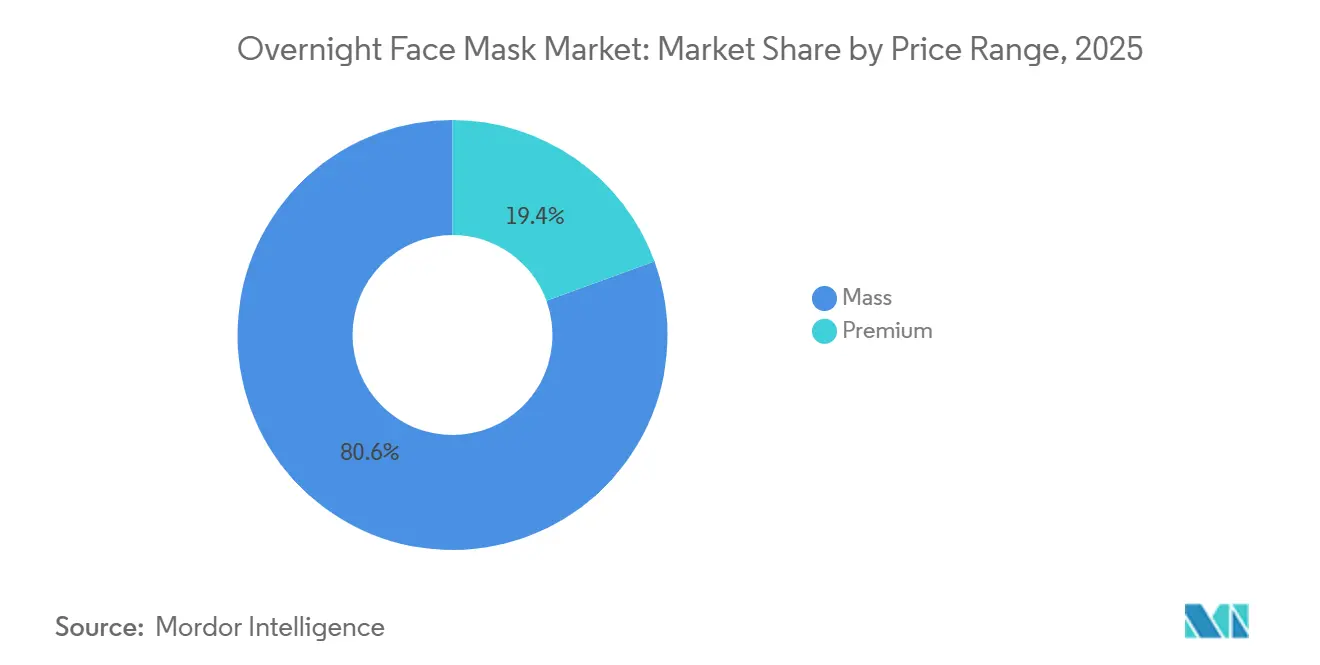
- By price range, the mass segment held 80.56% share in 2025, and the premium segment recorded the fastest 9.90% CAGR to 2031.
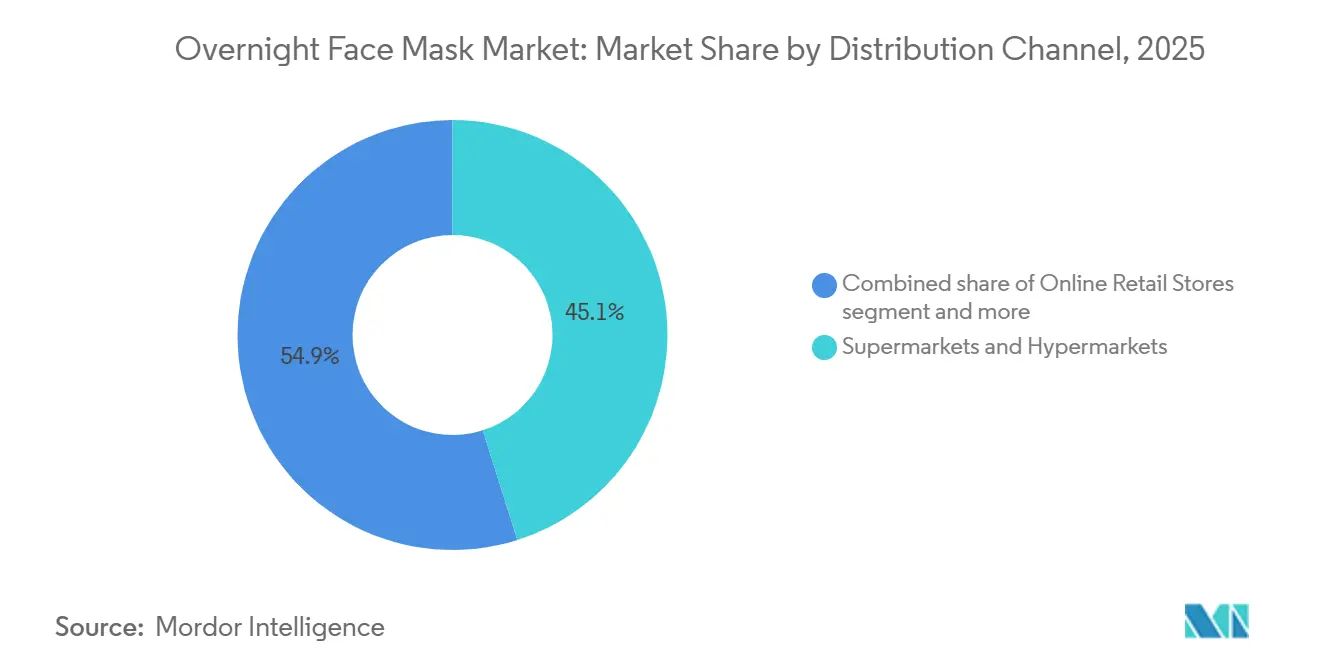
- By distribution channel, supermarkets and hypermarkets accounted for 45.11% of 2025 revenue, while online retail stores are forecast to register a 9.96% CAGR through 2031.
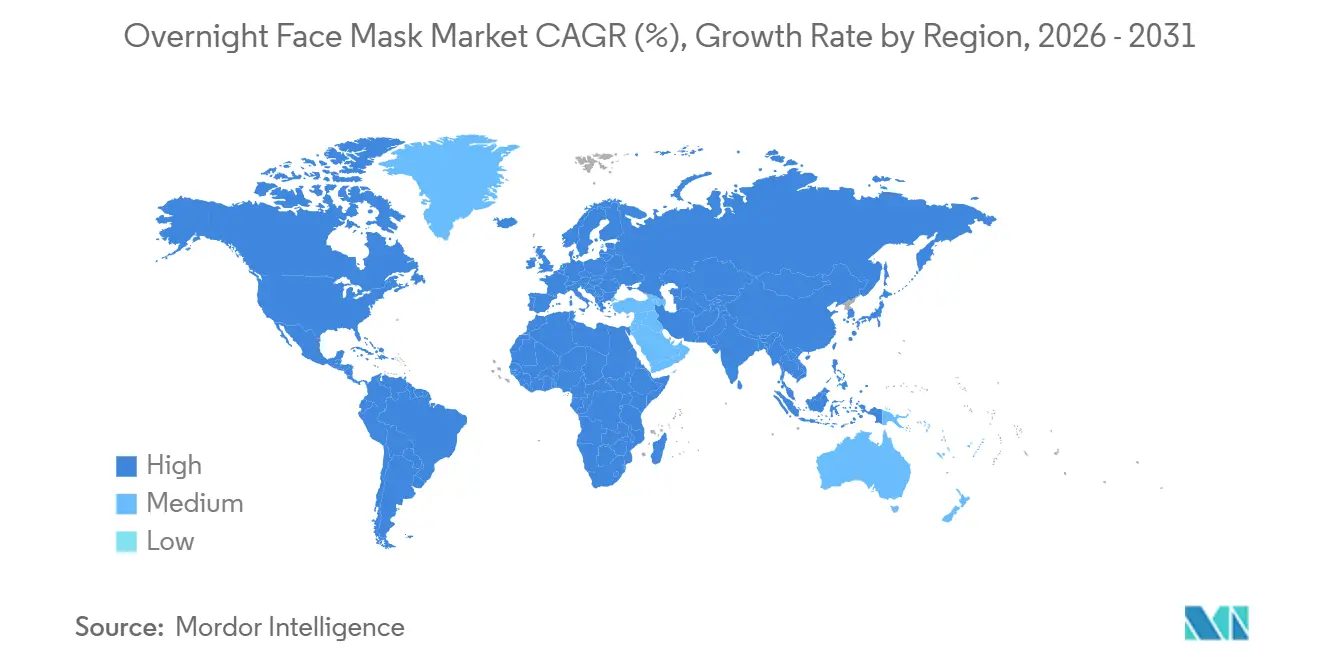
- By geography, Asia-Pacific commanded 40.02% of 2025 sales; while North America will expand at a 8.88% CAGR to 2031.
Note: Market size and forecast figures in this report are generated using Mordor Intelligence’s proprietary estimation framework, updated with the latest available data and insights as of January 2026.
Global Overnight Face Mask Market Trends and Insights
Drivers Impact Analysis*
| Driver | (~) % Impact on CAGR Forecast | Geographic Relevance | Impact Timeline |
|---|---|---|---|
| Time-efficiency and convenience appeal of overnight face masks | +1.4% | Global, with strongest pull in North America and Western Europe | Short term (≤ 2 years) |
| Premiumization of skin barrier repair and sleep-optimized formulations | +1.6% | North America and European Union, spill-over to Asia-Pacific premium tier | Medium term (2–4 years) |
| Social commerce, creator reviews, and dermatologist-backed claims | +1.3% | Global; particularly United States, South Korea, and Southeast Asia | Short term (≤ 2 years) |
| Clean beauty and natural ingredient demand | +0.9% | Western Europe (European Union COSMOS-driven), North America | Medium term (2–4 years) |
| Rise of refillable and sustainable packaging in prestige skincare | +0.5% | European Union core, spill-over to North America and Japan | Long term (≥ 4 years) |
| Growth of Asia-Pacific beauty rituals and K-beauty influence | +1.8% | APAC core (Korea, Japan, China); spill-over to United States, United Kingdom, Middle East | Short to Medium term (≤ 3 years) |
| Source: Mordor Intelligence | |||
Time-efficiency and convenience appeal of overnight face masks
The increasing demand for time-efficient and convenient skincare solutions is driving the growth of the overnight face mask market. Consumers are seeking products that provide visible results without complicating their daily routines, making overnight face masks a preferred choice. Unlike traditional masks that require application, waiting, and rinsing, overnight masks are leave-on treatments that work during sleep, enabling users to achieve skincare benefits with minimal effort. These masks offer prolonged hydration, nourishment, barrier repair, and skin rejuvenation throughout the night, catering to the needs of busy professionals, students, and urban consumers. As convenience remains a significant factor in beauty purchasing decisions, the rising popularity of multifunctional overnight face masks that deliver hydration, anti-aging, brightening, and soothing benefits in a single application is expected to drive market growth further.
Premiumization of skin barrier repair and sleep-optimized formulations
The growing focus on premium skin barrier repair and sleep-optimized skincare formulations is driving the expansion of the overnight face mask market. Consumers are increasingly willing to invest in high-performance skincare products that deliver targeted benefits, including barrier restoration, intensive hydration, anti-aging properties, and overnight skin recovery. This trend is particularly evident among affluent consumers, who account for a significant share of discretionary beauty spending. In the first quarter of 2025, the top 10% of earners in the United States held nearly two-thirds of the nation's total wealth, while the bottom 50% accounted for only 2.5% [1]Source: Federal Reserve, "DFA: Distributional Financial Accounts", federalreserve.gov. This wealth concentration supports demand for premium skincare products that incorporate dermatologist-recommended ingredients, advanced delivery systems, and formulations synchronized with the skin's natural nighttime repair processes. As consumers increasingly emphasize skin health and preventative care, premium overnight face masks focusing on barrier repair, recovery, and regenerative benefits are anticipated to gain significant traction in both developed and emerging beauty markets.
Social commerce, creator reviews, and dermatologist-backed claims
The rising impact of social commerce, creator reviews, and dermatologist-endorsed claims is driving significant growth in the overnight face mask market. Consumers are increasingly turning to digital platforms, beauty influencers, skincare creators, and dermatology professionals to discover, assess, and purchase skincare products, making online engagement a crucial factor in purchasing decisions. Overnight face masks, known for their visible benefits such as enhanced hydration, improved skin radiance, and smoother texture, align well with social media-driven marketing and user-generated content. This trend is further supported by the expanding digital ecosystem; as of 2024, approximately 73% of the global population has internet access, offering brands extensive opportunities to reach skincare consumers through social platforms and e-commerce channels. Moreover, advancements in internet infrastructure and content accessibility, such as Indonesia surpassing the Internet Society's target with 80% of the 1,000 most-visited websites accessible via local servers or caches, are improving online user experiences and boosting engagement with digital beauty content[2]Source: Pulse Internet Society Organization, "Indonesia", pulse.internetsociety.org. As consumers increasingly prioritize trusted product recommendations and evidence-based skincare solutions, social commerce and expert-backed endorsements are anticipated to remain key growth drivers for the overnight face mask market.
Clean beauty and natural ingredient demand
Consumer preference for clean beauty and naturally derived skincare products is driving growth in the overnight face mask market. Increasing awareness of ingredient transparency, product safety, and the long-term impact of skincare formulations on skin health has fueled demand for overnight face masks made with naturally sourced ingredients such as aloe vera, hyaluronic acid, botanical extracts, green tea, chamomile, and plant-based oils. Consumers are avoiding products containing ingredients perceived as harsh or unnecessary. In response, brands are focusing on clean-label formulations that prioritize sustainability, transparency, and skin-friendly components. This trend is particularly prominent among younger consumers who value wellness, environmental responsibility, and holistic beauty. As clean beauty gains wider acceptance, overnight face masks featuring natural, gentle, and ethically sourced ingredients are expected to see continued growth in global skincare markets.
Restraints Impact Analysis*
| Restraint | (~) % Impact on CAGR Forecast | Geographic Relevance | Impact Timeline |
|---|---|---|---|
| Skepticism about efficacy and results | -0.9% | Global, most pronounced in Europe and North America | Short to Medium term (≤ 3 years) |
| Limited product differentiation and market saturation | -0.7% | Global; particularly Korea and China domestic markets | Medium term (2–4 years) |
| Intense competition from alternative nighttime skincare products | -0.8% | North America, Europe | Short term (≤ 2 years) |
| Proliferation of counterfeit and low-quality products | -0.6% | Emerging e-commerce markets in Southeast Asia, Middle East | Short to Medium term (≤ 3 years) |
| Source: Mordor Intelligence | |||
Skepticism about efficacy and results
Consumer skepticism regarding the efficacy and visible results of overnight face masks remains a notable restraint on market growth. While many products claim benefits such as enhanced hydration, skin brightening, anti-aging effects, and barrier repair, consumers often question whether these outcomes justify the premium prices associated with overnight treatments. The abundance of competing skincare products, including serums, moisturizers, and targeted treatment creams, further contributes to uncertainty about the unique value proposition of overnight face masks. Additionally, skincare results can vary significantly based on individual skin types, concerns, and usage consistency, leading to mixed consumer experiences and reviews. In an increasingly informed skincare landscape, consumers are demanding greater scientific validation, clinical testing, and transparent performance claims before committing to repeat purchases. As a result, brands that fail to demonstrate clear, measurable benefits may face challenges in driving product adoption and long-term consumer loyalty.
Proliferation of counterfeit and low-quality products
The rise of counterfeit skincare and personal care products presents a significant challenge to the overnight face mask market. The growing presence of imitation products on online marketplaces, social media platforms, and unauthorized retail channels undermines consumer trust in authentic brands and adversely affects market growth. Counterfeit overnight face masks often replicate premium products but include unverified ingredients, raising concerns about safety, efficacy, and potential skin-related adverse effects. According to the fiscal year 2023-24 Annual Customs Report, personal care and body care products accounted for 6.5% of all counterfeit goods seized by customs authorities, underscoring the ongoing issue of intellectual property infringement in the beauty and personal care industry [3]Source: Union Des Fabricants, "Annual customs report 2023 Musée de la contrefaçon", musee-contrefacon.com. As counterfeit products become increasingly sophisticated and harder for consumers to distinguish, established brands face heightened challenges safeguarding their reputations, maintaining consumer trust, and ensuring product authenticity.
*Our forecasts treat driver/restraint impacts as directional, not additive. The impact forecasts reflect baseline growth, mix effects, and variable interactions.
Segment Analysis
By Product Type: Cream and Gel Masks Anchor the Market, Sheet Masks Accelerate
Cream and gel masks led the overnight face mask market in 2025, contributing 58.34% of total revenue. This dominance is attributed to their broad consumer acceptance, ease of integration into nighttime skincare routines, and ability to provide extended hydration and active ingredient absorption overnight. These formulations are versatile, addressing various skin concerns such as dryness, barrier damage, dullness, and visible aging signs. Their compatibility with diverse skincare ingredients and suitability for different skin types have solidified their position as the preferred choice among both mass-market and premium skincare consumers.
Sheet masks are anticipated to be the fastest-growing product type during the forecast period from 2026 to 2031, with a projected CAGR of 8.89%. This growth is driven by increasing consumer preference for convenient, single-use skincare solutions that offer targeted treatment benefits with minimal effort. The influence of K-beauty trends, social media-driven skincare practices, and innovations in serum-infused and prolonged-wear sheet masks are further fueling the segment's expansion. Additionally, the portability and hygienic appeal of sheet masks resonate strongly with younger consumers and frequent travelers, positioning the segment for robust growth throughout the forecast period.



By Ingredient Type: Hydrators Lead, Peptides Define the Next Growth Cycle
In 2025, hydrators and humectants accounted for the largest share of the overnight face mask market, representing 38.19% of total revenue. This segment's prominence is attributed to the critical role hydration plays in maintaining skin health, supporting the skin barrier, and improving overall skin appearance. Ingredients such as hyaluronic acid, glycerin, aloe vera, and panthenol are commonly used in overnight face masks due to their ability to attract and retain moisture during the skin's natural nighttime recovery process. With hydration being a prevalent skincare concern across all age groups and skin types, products containing hydrators and humectants continue to experience widespread consumer adoption and consistent demand.
Peptides and bioactives are projected to be the fastest-growing ingredient segment from 2026 to 2031, with a CAGR of 9.83%. This growth is driven by rising consumer interest in advanced, science-based skincare solutions that offer targeted benefits such as anti-aging, skin repair, improved firmness, and collagen support. The increasing demand for premium skincare products, coupled with greater awareness of ingredient efficacy, has prompted manufacturers to integrate peptides, biomimetic actives, and other regenerative compounds into overnight face mask formulations. As consumers place greater emphasis on performance-driven skincare and preventative skin health, the demand for peptide- and bio-active-based overnight masks is expected to grow significantly during the forecast period.
By Functionality: Hydration Leads, Anti-Aging Gains Scientific Momentum
Hydration and moisturization represented the largest functionality segment in the overnight face mask market in 2025, accounting for 38.76% of total revenue. The segment's dominance reflects the fundamental role of hydration in maintaining healthy skin, supporting barrier function, and addressing common concerns such as dryness, dehydration, and environmental stress. Overnight face masks designed for hydration and moisturization are widely used across all age groups and skin types, leveraging ingredients such as hyaluronic acid, glycerin, ceramides, and botanical extracts to provide sustained moisture throughout the night. The universal demand for hydration-focused skincare continues to make this functionality the cornerstone of the overnight face mask category.
Anti-aging and firming are expected to be the fastest-growing functionality segment during the forecast period from 2026 to 2031, registering a CAGR of 9.37%. Growth is being driven by increasing consumer focus on preventative skincare, age-management solutions, and products that support skin elasticity and firmness. Rising awareness of ingredients such as peptides, retinol alternatives, collagen-supporting compounds, and bio-active complexes has fueled demand for overnight treatments that target fine lines, wrinkles, and loss of skin firmness while the skin undergoes its natural nighttime repair processes. As consumers increasingly seek high-performance skincare solutions that deliver visible long-term benefits, the anti-aging and firming segment is expected to witness robust expansion over the forecast period.
By Consumer Group: Women Dominate, Unisex Redefines the Growth Opportunity
In 2025, women accounted for the largest share of the overnight face mask market, contributing 68.34% of total revenue. This dominance is attributed to higher adoption rates of skincare products, greater involvement in multi-step beauty routines, and increased demand for specialized treatments addressing concerns such as hydration, anti-aging, brightening, and skin repair. Women also represent the primary consumer base for premium skincare products and are more likely to integrate overnight face masks into their regular skincare practices. Furthermore, ongoing product innovation, targeted marketing efforts, and the influence of beauty influencers and skincare communities continue to drive strong demand among female consumers.
The unisex segment is anticipated to be the fastest-growing consumer group during the forecast period from 2026 to 2031, with a projected CAGR of 9.31%. This growth is driven by the rising adoption of gender-neutral skincare products, shifting beauty perceptions, and increasing consumer preference for inclusive product positioning. Brands are focusing on developing overnight face masks that address universal skin concerns, such as hydration, barrier repair, and skin recovery, rather than relying on gender-specific marketing. Additionally, the growing participation of male consumers in skincare routines, along with broader acceptance of self-care and wellness practices, is expected to support significant growth in the unisex segment during the forecast period.
By Price Range: Mass Leads in Volume, Premium Drives Value-Per-Occasion Economics
In 2025, the mass segment led the overnight face mask market, contributing 80.56% of the total revenue. This dominance is attributed to its broad consumer accessibility, affordable pricing, and widespread availability through supermarkets, pharmacies, beauty retailers, and e-commerce platforms. Mass-market overnight face masks appeal to a wide consumer base seeking effective skincare solutions for hydration, nourishment, and skin repair at a lower cost compared to luxury products. Additionally, continuous product innovation, appealing packaging, and the inclusion of popular ingredients such as hyaluronic acid, niacinamide, and botanical extracts have strengthened the value proposition of mass-market brands, maintaining their leading position in the market.
The premium segment is anticipated to be the fastest-growing price category during the forecast period from 2026 to 2031, with a projected CAGR of 9.90%. This growth is driven by increasing consumer willingness to invest in high-performance skincare products featuring advanced formulations, clinically validated ingredients, and targeted benefits such as anti-aging, barrier repair, and overnight skin regeneration. Factors such as rising disposable incomes, heightened awareness of ingredient efficacy, and the trend of premiumization within the beauty and personal care industry are further boosting demand for premium overnight face masks. As consumers place greater emphasis on skin health and seek dermatologist-inspired, science-based skincare solutions, the premium segment is expected to witness significant growth throughout the forecast period.
By Distribution Channel: Supermarkets Lead on Volume, Online Redefines Growth Velocity
Supermarkets and hypermarkets accounted for the largest share of the overnight face mask market in 2025, representing 45.11% of total revenue. This segment's dominance is attributed to its extensive product variety, strong brand visibility, and the convenience of a one-stop shopping experience. These retail channels allow consumers to compare products across various brands, price ranges, and skincare needs while benefiting from promotional offers and in-store displays. Additionally, the widespread presence of supermarkets and hypermarkets in both developed and emerging markets has enhanced the accessibility and adoption of overnight face masks among a diverse consumer base.
Online retail stores are projected to be the fastest-growing distribution channel during the forecast period from 2026 to 2031, with a CAGR of 9.96%. This growth is driven by increasing e-commerce penetration, the rising influence of social commerce and beauty influencers, and consumer preference for convenient shopping experiences. Online platforms offer access to a broader range of products, detailed ingredient information, customer reviews, and personalized recommendations, enabling consumers to make more informed purchasing decisions. Moreover, the growing popularity of direct-to-consumer skincare brands, subscription-based beauty services, and digital marketing strategies is expected to further boost the sales of overnight
Geography Analysis
In 2025, Asia-Pacific accounted for 40.02% of global revenue in the overnight face mask market, maintaining its leadership position. This dominance is attributed to a well-established skincare culture, high consumer awareness of preventive skincare, and the influence of K-beauty and J-beauty trends. Key countries such as China, South Korea, Japan, and India are driving demand through increased beauty expenditure, a growing middle-class population, and the adoption of advanced skincare routines. Additionally, the availability of innovative skincare products through both online and offline retail channels has further solidified the region's position as the largest market for overnight face masks.
North America is projected to be the fastest-growing regional market from 2026 to 2031, with a CAGR of 8.88%. This growth is driven by rising consumer interest in premium skincare products, increased awareness of skin barrier health, and demand for science-backed formulations containing ingredients like peptides, ceramides, and hyaluronic acid. The region also benefits from dermatologist recommendations, social media-driven skincare trends, and the growing popularity of wellness-focused beauty routines. As consumers prioritize effective and convenient nighttime skincare solutions, demand for overnight face masks is expected to rise across the United States and Canada.
Europe remains a significant market for overnight face masks, supported by strong consumer preferences for premium beauty products, clean-label formulations, and sustainable skincare solutions. Countries such as Germany, France, and the United Kingdom are key contributors, driven by high skincare penetration and growing interest in natural and dermatologically tested products. South America, the Middle East, and Africa are emerging as promising growth markets. South America is witnessing rising beauty consciousness, expanding e-commerce penetration, and increasing accessibility of international skincare brands.

Competitive Landscape
The overnight face mask market exhibits a moderate concentration. This reflects a market environment where a few Tier-1 multinational companies operate alongside a growing number of K-beauty specialists and independent derma brands. The market is characterized by the coexistence of established players and emerging brands, creating a dynamic competitive landscape. The presence of K-beauty specialists and indie brands has introduced innovative approaches and product offerings, contributing to the market's growth and diversification.
Three key strategies shape competitive positioning in this market. The first is clinical credentialing, where brands secure patents for bioactive ingredients to establish unique product differentiation. This strategy allows companies to create defensible niches and cater to consumers seeking scientifically backed skincare solutions. The second is geographic expansion, with K-beauty specialists leveraging distributor-led market entry strategies in regions such as India and the Middle East. These regions present significant growth potential due to increasing consumer interest in skincare products. The third is format premiumization, aimed at consumers willing to invest in chronobiology-aligned or single-dose clinical treatments, which cater to specific skincare needs and preferences.
White-space opportunities are particularly evident in the Men and Unisex segments, where the availability of overnight mask SKUs remains limited despite increasing demand. These segments represent untapped potential for brands looking to expand their product portfolios. Emerging disruptors in the market include brands utilizing AI-powered skin microbiome analysis to offer personalized sleeping mask formulations. This innovative approach enables brands to provide tailored solutions, enhancing customer satisfaction and loyalty. Amorepacific is one such company exploring this strategy while also expanding its distribution through Amazon, further strengthening its market presence.
Overnight Face Mask Industry Leaders
-
L'Oréal S.A.
-
The Estée Lauder Companies Inc.
-
Amorepacific Corporation
-
Shiseido Company, Limited
-
Unilever PLC
- *Disclaimer: Major Players sorted in no particular order

Recent Industry Developments
- June 2026: L’Oréal has acquired a majority stake in Innovist, an Indian beauty and personal care company, marking its first acquisition in India in nearly 13 years. This move underscores L’Oréal's commitment to one of the world's fastest-growing beauty markets. Innovist operates as a digital-first, science-driven personal care platform, owning brands such as Bare Anatomy, Chemist at Play, Sunscoop, and Vinci Botanicals, which focus on ingredient-based haircare, skincare, and sun care products.
- May 2026: Sulwhasoo, the luxury skincare brand under Amorepacific, has introduced the 'Yeoyun Pack' Overnight Mask. This product is designed to provide intensive nighttime skincare by enhancing skin firmness and restoring energy during sleep. Leveraging the skin's natural overnight regeneration cycle, the mask delivers hydration, revitalization, and elasticity benefits, catering to the increasing consumer demand for premium overnight skincare solutions.
- January 2026: Deinde has launched the Radiance-Restoring Overnight Mask, a biotechnology-based skincare treatment designed to enhance skin hydration, radiance, texture, and resilience during the skin's natural nighttime repair cycle. The formulation includes 10% gluconolactone (PHA) for gentle exfoliation, biotech-derived naringenin to address inflammation-related aging, squalane for moisture retention, and glycerin for deep hydration. The product aligns with the growing trend of science-backed, non-invasive skincare solutions that optimize overnight recovery and deliver visible results by morning.
- March 2024: Laneige, a skincare brand under Amorepacific, has launched the Bouncy & Firm Face Sleeping Mask as part of its strategy to strengthen its position in the overnight skincare category. The mask features the brand's Peony & Collagen Complex and peptides, which aim to improve skin elasticity, firmness, and radiance while supporting the skin's natural overnight recovery process. Clinical testing by the company demonstrated improvements in skin elasticity, hydration, and wrinkle appearance, positioning the product as a premium, performance-focused overnight treatment.


Global Overnight Face Mask Market Report Scope
| Cream and Gel Masks |
| Sheet Masks |
| Oil-Based Masks |
| Others |
| Hydrators and Humectants |
| Barrier Lipids and Ceramides |
| Peptides and Bio-Actives |
| Botanical and Clean Beauty Actives |
| Hydration and Moisturization |
| Anti-Aging and Firming |
| Brightening and Tone Correction |
| Acne and Sensitive Skin Care |
| Women |
| Men |
| Unisex |
| Mass |
| Premium |
| Supermarkets and Hypermarkets |
| Online Retail Stores |
| Specialty Beauty Retailers |
| Pharmacies and Drugstores |
| Others |
| North America | United States |
| Canada | |
| Mexico | |
| Rest of North America | |
| Europe | United Kingdom |
| Germany | |
| France | |
| Italy | |
| Spain | |
| Russia | |
| Sweden | |
| Belgium | |
| Poland | |
| Netherlands | |
| Rest of Europe | |
| Asia-Pacific | China |
| Japan | |
| India | |
| Thailand | |
| Singapore | |
| Indonesia | |
| South Korea | |
| Australia | |
| New Zealand | |
| Rest of Asia-Pacific | |
| South America | Brazil |
| Argentina | |
| Colombia | |
| Chile | |
| Rest of South America | |
| Middle East and Africa | United Arab Emirates |
| South Africa | |
| Saudi Arabia | |
| Nigeria | |
| Egypt | |
| Morocco | |
| Turkey | |
| Rest of Middle East and Africa |
| By Product Type | Cream and Gel Masks | |
| Sheet Masks | ||
| Oil-Based Masks | ||
| Others | ||
| By Ingredient Type | Hydrators and Humectants | |
| Barrier Lipids and Ceramides | ||
| Peptides and Bio-Actives | ||
| Botanical and Clean Beauty Actives | ||
| By Functionality | Hydration and Moisturization | |
| Anti-Aging and Firming | ||
| Brightening and Tone Correction | ||
| Acne and Sensitive Skin Care | ||
| By Consumer Group | Women | |
| Men | ||
| Unisex | ||
| By Price Range | Mass | |
| Premium | ||
| By Distribution channel | Supermarkets and Hypermarkets | |
| Online Retail Stores | ||
| Specialty Beauty Retailers | ||
| Pharmacies and Drugstores | ||
| Others | ||
| By Geography | North America | United States |
| Canada | ||
| Mexico | ||
| Rest of North America | ||
| Europe | United Kingdom | |
| Germany | ||
| France | ||
| Italy | ||
| Spain | ||
| Russia | ||
| Sweden | ||
| Belgium | ||
| Poland | ||
| Netherlands | ||
| Rest of Europe | ||
| Asia-Pacific | China | |
| Japan | ||
| India | ||
| Thailand | ||
| Singapore | ||
| Indonesia | ||
| South Korea | ||
| Australia | ||
| New Zealand | ||
| Rest of Asia-Pacific | ||
| South America | Brazil | |
| Argentina | ||
| Colombia | ||
| Chile | ||
| Rest of South America | ||
| Middle East and Africa | United Arab Emirates | |
| South Africa | ||
| Saudi Arabia | ||
| Nigeria | ||
| Egypt | ||
| Morocco | ||
| Turkey | ||
| Rest of Middle East and Africa | ||


Key Questions Answered in the Report
What is the size of the overnight face mask market?
The overnight face mask market was valued at USD 23.10 billion in 2025 and is projected to reach USD 36.20 billion by 2031.
Which product type holds the largest share in the overnight face mask market?
Cream and gel masks dominated the market in 2025, accounting for 58.34% of total revenue.
Which distribution channel is growing the fastest?
Online retail stores are expected to be the fastest-growing distribution channel, registering a 9.96% CAGR during 2026–2031.
Which region holds the largest share of the overnight face mask market?
Asia-Pacific led the market in 2025, accounting for 40.02% of total revenue.
Page last updated on:


 Your data is secure and never sold or shared.


