
Face Wash and Cleanser Market Size and Share
Market Overview
| Study Period | 2021 - 2031 |
|---|---|
| Market Size (2026) | USD 48.97 Billion |
| Market Size (2031) | USD 69.39 Billion |
| Growth Rate (2026 - 2031) | 7.22 % |
| Fastest Growing Market | Asia-Pacific |
| Largest Market | Europe |
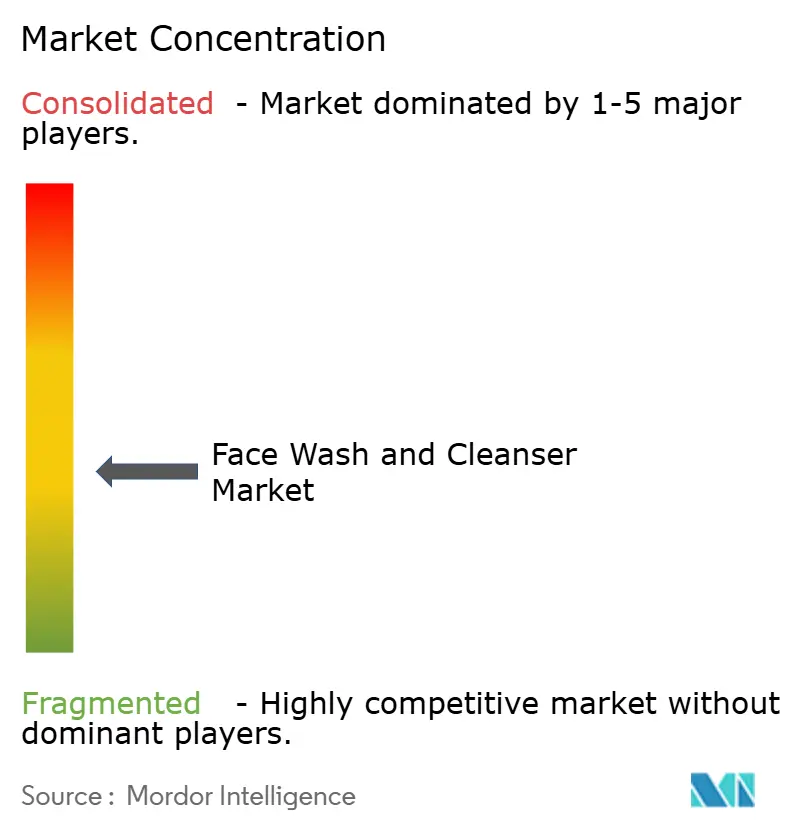
| Market Concentration | Medium |
Major Players
*Disclaimer: Major Players sorted in no particular order Image © Mordor Intelligence. Reuse requires attribution under CC BY 4.0. |
|
Face Wash and Cleanser Market Analysis by Mordor Intelligence
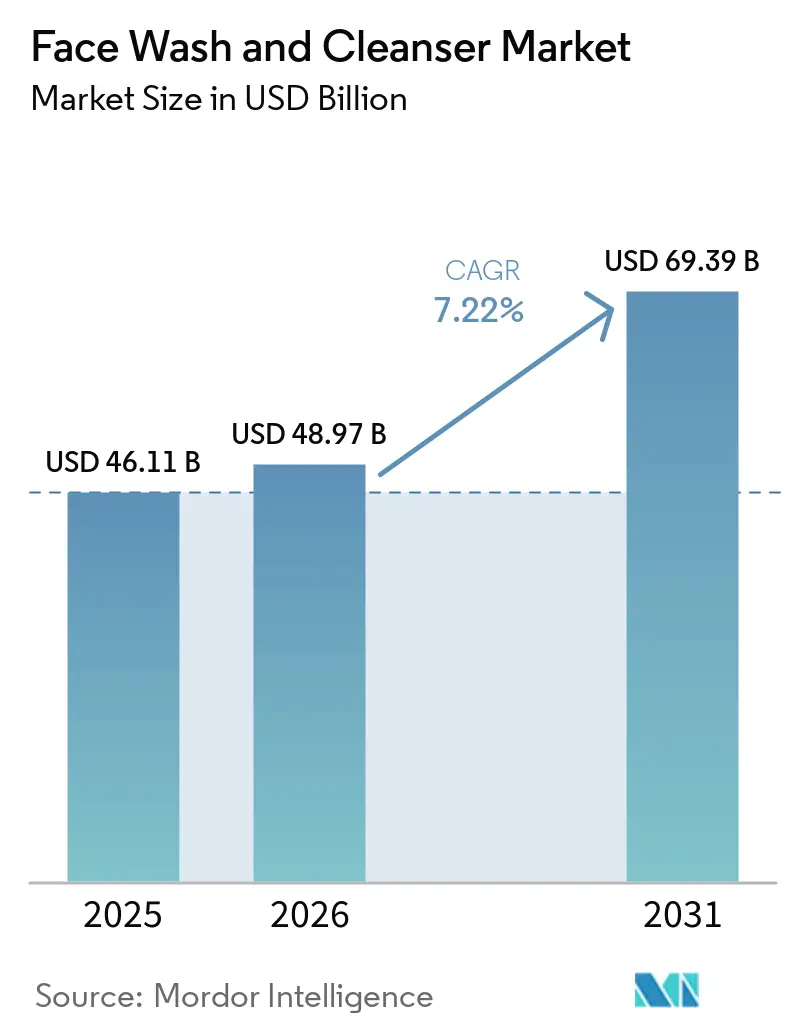
The face wash and cleanser market was valued at USD 46.11 billion in 2025 and is projected to reach USD 48.97 billion in 2026, further increasing to USD 69.39 billion by 2031, with a CAGR of 7.22% during the forecast period of 2026–2031. The market's growth is primarily attributed to rising awareness of skincare and facial hygiene, as consumers increasingly adopt regular cleansing routines to maintain healthy skin and address common skin concerns. Advancements in formulation technologies, such as mild cleansing systems, multifunctional products, and solutions aimed at protecting the skin barrier, are improving product performance and driving consumer acceptance. Furthermore, evolving beauty routines and a growing interest in personalized skincare solutions are fostering opportunities for innovative product development.
Key Report Takeaways
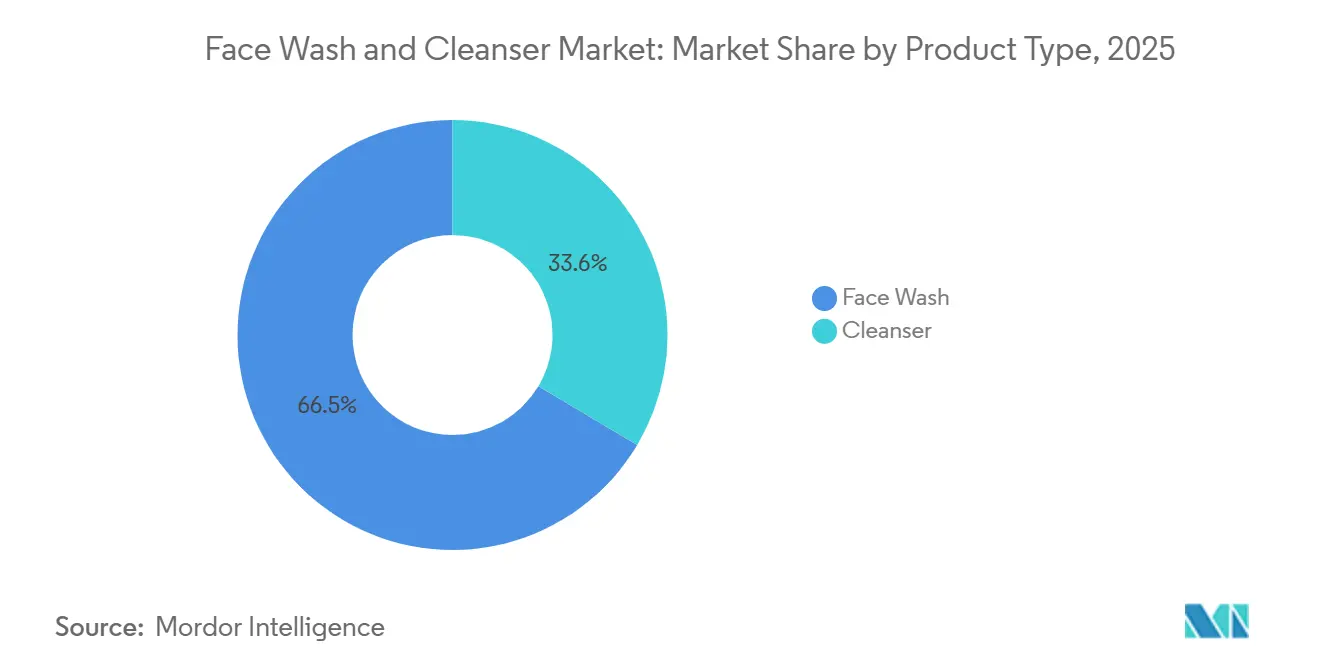
- By product type, face wash led with 66.45% revenue share in 2025, while cleanser is forecast to expand at a 7.51% CAGR through 2031.
- By skin type, normal skin held 32.33% of revenue in 2025, while sensitive skin recorded the highest projected CAGR at 9.11% through 2031.
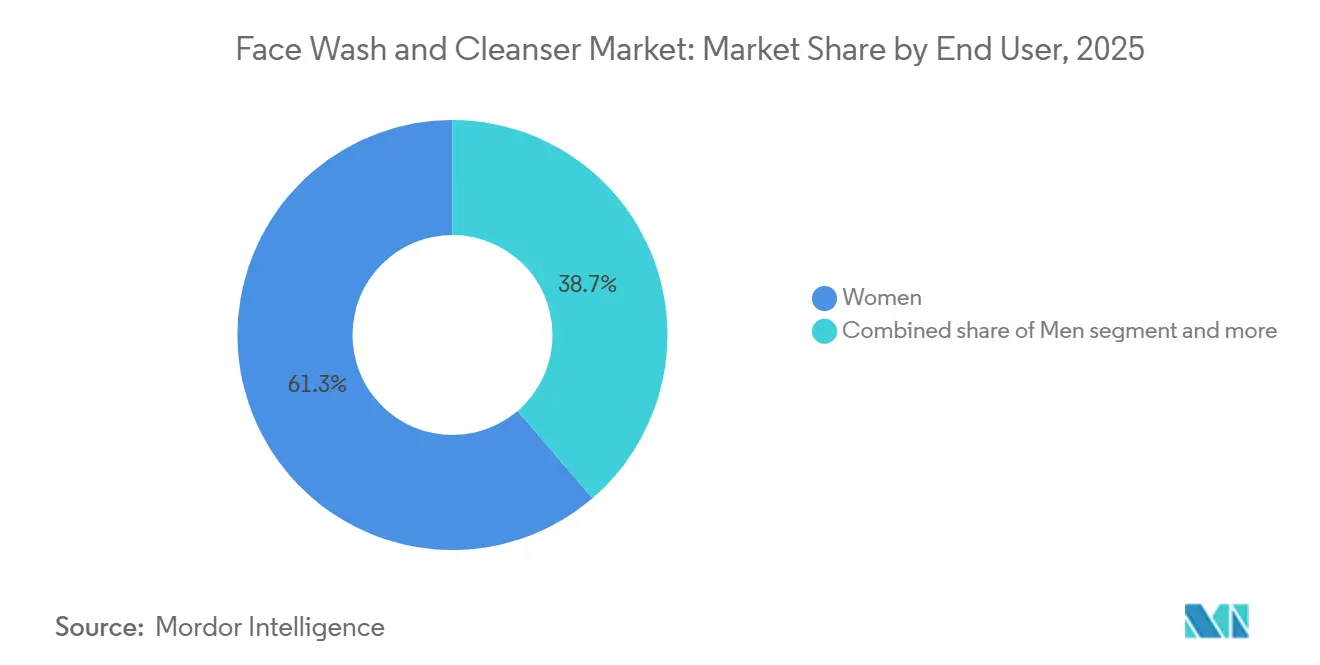
- By end user, women accounted for 61.29% of revenue in 2025, while men posted the fastest projected CAGR at 8.71% through 2031.
- By ingredient type, conventional formulations captured 63.92% of revenue in 2025, while natural and organic formulations are projected to grow at an 8.26% CAGR through 2031.
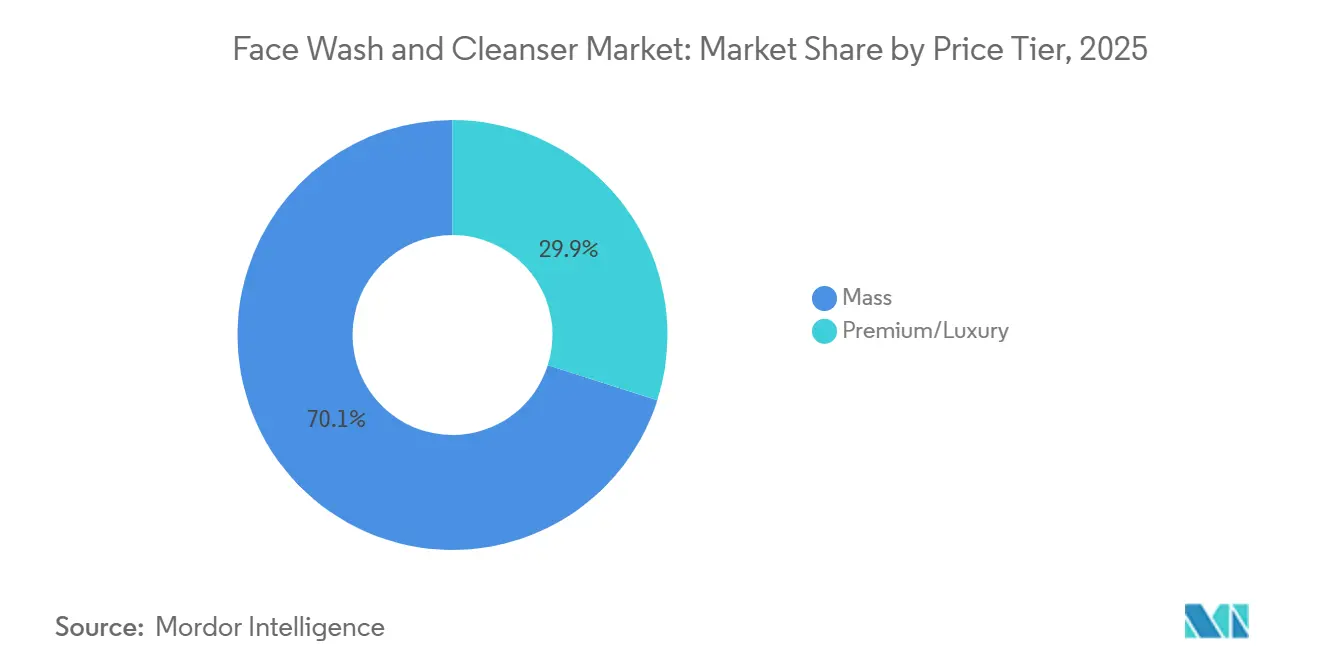
- By price tier, mass represented 70.09% of revenue in 2025, while premium and luxury are forecast to advance at an 8.34% CAGR through 2031.
- By distribution channel, health and beauty stores held 31.06% of revenue in 2025, while online retail stores are projected to grow at a 9.16% CAGR through 2031.
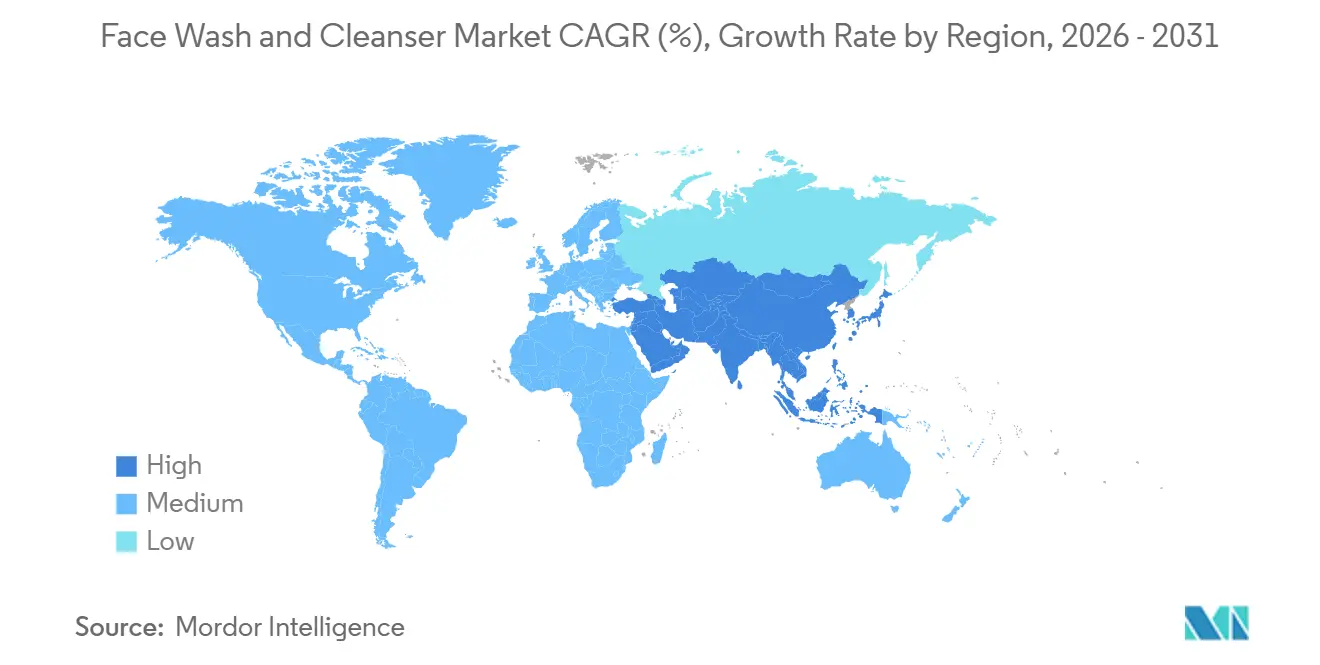
- By geography, Europe led with a 36.55% revenue share in 2025, while Asia-Pacific is forecast to expand at an 8.29% CAGR through 2031.
Note: Market size and forecast figures in this report are generated using Mordor Intelligence’s proprietary estimation framework, updated with the latest available data and insights as of January 2026.
Market Trends and Insights
Drivers Impact Analysis of Face Wash and Cleanser Market*
| Driver | (~) % Impact on CAGR Forecast | Geographic Relevance | Impact Timeline |
|---|---|---|---|
| Growing Awareness of Skincare and Facial Hygiene | +1.8% | Global, strongest inAsia-Pacific and Middle East and Africa | Short term (≤ 2 years) |
| Rising Prevalence of Skin Concerns and Dermatological Issues | +1.4% | Global, concentrated in high-SDI regions and Asia-Pacific | Medium term (2–4 years) |
| Product Innovation and Advanced Formulation Technologies | +1.2% | Global, led by South Korea, United States, Germany, France | Medium term (2–4 years) |
| Demand for Natural, Organic, and Clean Beauty Products | +1.0% | Global, strongest in North America, Europe, India | Medium term (2–4 years) |
| Rising Preference for Personalized and Skin-Type Specific Solutions | +0.8% | North America, Europe, Asia-Pacific core | Long term (≥ 4 years) |
| Demand for Anti-Pollution and Protective Skincare Products | +0.6% | Asia-Pacific core, spill-over to Middle East and Africa and South America | Medium term (2–4 years) |
| Source: Mordor Intelligence | |||
Growing Awareness of Skincare and Facial Hygiene
Growing awareness of skincare and facial hygiene is a significant factor driving the face wash and cleanser market. Consumers are increasingly recognizing the importance of maintaining clean, healthy, and balanced skin through consistent skincare practices. The transition from basic cleansing habits to structured skincare routines has led to greater adoption of facial cleansers designed to remove impurities, excess oil, sweat, and environmental pollutants while promoting overall skin health. Enhanced understanding of the role of proper cleansing in preventing clogged pores, dullness, and other skin concerns has encouraged consumers to view face wash and cleanser products as essential daily-use items. Additionally, the rising influence of skincare education, digital beauty content, and increased awareness of ingredient benefits has further driven demand for products tailored to various skin needs.
Rising Prevalence of Skin Concerns and Dermatological Issues
The increasing prevalence of skin concerns and dermatological issues is driving consumer demand for targeted skincare solutions to address conditions such as acne, excess oil production, clogged pores, dryness, and skin sensitivity. Growing awareness of the role of proper facial cleansing in maintaining skin health has led to higher adoption of products containing active ingredients designed to promote clearer and healthier skin. For example, the American Academy of Dermatology Association (AAD) reports that acne is the most common skin condition in the United States, affecting up to 50 million Americans annually [1]Source: American Academy of Dermatology Association (AAD), "Skin conditions by the numbers", aad.org. This underscores the rising need for skincare products that support effective cleansing and care routines. As consumers take a more proactive approach to managing skin-related issues, the demand for specialized face washes and cleansers with dermatologist-tested, gentle, and problem-specific formulations continues to grow.
Product Innovation and Advanced Formulation Technologies
Product innovation and advanced formulation technologies are driving the development of specialized skincare solutions that address evolving consumer needs and enhance product performance. The rising demand for multifunctional products has led to the creation of advanced formulations that combine benefits such as cleansing, hydration, oil control, skin barrier support, exfoliation, and targeted care. Innovations including gentle surfactant systems, active ingredient-based formulations, microbiome-friendly technologies, and skin-specific solutions are improving product effectiveness while aligning with consumer preferences for safer and more personalized skincare. For example, in November 2025, Garnier Men introduced Garnier Men’s AcnoFight Gentle Cleanser, designed to provide targeted cleansing while addressing the needs of acne-prone skin, highlighting the increasing emphasis on science-driven and problem-solving facial care products.
Demand for Natural, Organic, and Clean Beauty Products
The rising demand for natural, organic, and clean beauty products is significantly driving growth in the face wash and cleanser market, as consumers increasingly prioritize ingredient safety, transparency, and the long-term effects of skincare formulations. The strong preference for plant-based extracts, naturally derived ingredients, and products free from harsh chemicals has encouraged manufacturers to innovate and develop cleaner, more sustainable facial care solutions. Consumers are actively seeking formulations that not only provide effective cleansing but also align with their preferences for gentle, eco-conscious, and skin-friendly products. According to NSF, a global public health and safety organization, 74% of consumers in 2024 considered organic ingredients important in personal care products, highlighting the accelerating shift toward naturally positioned skincare options [2]Source: NSF, "74% of Consumers Consider Organic Ingredients Important in Personal Care Products", nsf.org.
Restraints Impact Analysis of Face Wash and Cleanser Market*
| Restraint | (~) % Impact on CAGR Forecast | Geographic Relevance | Impact Timeline |
|---|---|---|---|
| Concerns Over Synthetic Ingredients and Skin Irritation | -1.5% | Global, highest in Europe, North America, Japan | Medium term (2–4 years) |
| Increasing Competition from Alternative Skincare Products | -1.2% | Global, particularly North America, South Korea, China | Medium term (2–4 years) |
| Regulatory Challenges and Ingredient Restrictions | -0.8% | Europe, United States (MoCRA), Asia-Pacific | Long term (≥ 4 years) |
| Rising Consumer Skepticism Toward Product Claims | -0.6% | Global, highest in North America and Northern Europe | Medium term (2–4 years) |
| Source: Mordor Intelligence | |||
Concerns Over Synthetic Ingredients and Skin Irritation
Concerns regarding synthetic ingredients and skin irritation are limiting the growth of the face wash and cleanser market, as consumers increasingly scrutinize the components of daily skincare products. Formulations containing harsh surfactants, artificial fragrances, preservatives, and other chemical additives can lead to dryness, redness, irritation, or sensitivity, particularly for individuals with delicate skin conditions. Rising awareness of these potential adverse effects has prompted consumers to carefully examine ingredient labels and avoid products deemed harmful or unsuitable for long-term use. This trend poses challenges for manufacturers relying on traditional formulations, requiring them to reformulate products, enhance safety profiles, and sustain consumer trust.
Increasing Competition from Alternative Skincare Products
Increasing competition from alternative skincare products is limiting the growth of the face wash and cleanser market. Consumers now have access to a broader range of facial care solutions that can substitute or reduce the use of traditional cleansing products. The growing popularity of cleansing balms, cleansing oils, micellar waters, exfoliating pads, facial wipes, and multifunctional skincare products has heightened competition within the facial care category. Many consumers are opting for alternatives that offer convenience, specialized benefits, or simplified routines, which has impacted the demand for conventional face washes and cleansers. Additionally, ongoing innovation in the broader skincare industry has led to significant product overlap, making it more difficult for brands to differentiate their products and maintain consumer loyalty.
*Our forecasts treat driver/restraint impacts as directional, not additive. The impact forecasts reflect baseline growth, mix effects, and variable interactions.
Face Wash and Cleanser Market Segment Analysis
By Product Type:
Cleansers Gaining Ground Through Barrier-First FormatsIn 2025, face wash accounted for 66.45% of product-type revenue, driven by its role as a key component of daily skincare routines and the growing consumer focus on maintaining clean and healthy skin. The segment's growth is supported by increased awareness of the importance of regular facial cleansing to remove dirt, excess oil, impurities, and environmental pollutants that contribute to skin concerns. Additionally, the rising demand for products offering benefits beyond basic cleansing, such as hydration, oil balance, gentle exfoliation, and skin barrier protection, has boosted the adoption of advanced face wash formulations. Ongoing advancements in ingredient technologies, including mild cleansing systems, pH-balanced formulas, and skin-friendly active ingredients, have further improved product performance and encouraged consistent usage.
The cleanser segment is expected to achieve the fastest growth, with a projected CAGR of 7.51% from 2026 to 2031. This growth is fueled by a shift toward advanced skincare routines and increasing demand for gentle yet effective facial care solutions. Consumers are moving beyond traditional cleansing practices, opting for products that promote overall skin wellness. This trend has driven the adoption of formulations enriched with soothing, nourishing, and restorative ingredients. The growing popularity of double-cleansing routines, minimal-irritation formulas, and solutions designed to maintain the skin's natural moisture barrier is further accelerating the segment's expansion. Innovations in textures and formats, such as balm, oil, milk, cream, and micellar-based cleansers, are attracting consumers seeking personalized skincare experiences.


By Skin Type:
Sensitive Skin Leads Growth, Normal Skin Anchors VolumeIn 2025, the normal skin segment accounted for 32.33% of the skin-type segment revenue, driven by its broad consumer base and strong demand for everyday skincare products aimed at balanced skin maintenance. This segment benefits from the widespread use of facial care products that prioritize preserving natural hydration, freshness, and overall skin appearance rather than addressing specific skin concerns. Consumers with normal skin often favor versatile formulations that offer gentle cleansing, nourishment, and long-term skincare benefits, promoting consistent product usage. The availability of lightweight, non-irritating, and daily-use formulations has further supported product adoption. Additionally, the growing interest in preventive skincare habits and maintaining a healthy skin routine continues to reinforce the segment’s leading position in the face wash and cleanser market.
The sensitive skin segment is projected to achieve the fastest growth, with a CAGR of 9.11% from 2026 to 2031. This growth is driven by increasing consumer demand for gentle skincare solutions that minimize irritation and enhance skin comfort. Rising awareness of skin sensitivity caused by external stressors, harsh ingredients, and evolving skincare habits has fueled demand for products formulated with mild, calming, and protective properties. Consumers are increasingly opting for fragrance-free, hypoallergenic, dermatologically tested, and barrier-supporting formulations that help maintain skin balance. Advancements in soothing ingredients, microbiome-friendly technologies, and clean-label formulations are further enhancing product acceptance among sensitive skin users. Additionally, the growing preference for transparent ingredient lists and clinically validated skincare solutions is accelerating the adoption of sensitive skin-focused face washes and cleansers.
By End User:
Men's Segment Closes the Gap on Women's DominanceWomen accounted for 61.29% of end-user revenue in 2025, driven by higher penetration of skincare routines and consistent use of facial cleansing products as part of daily personal care habits. This segment benefits from increasing awareness of skin health, preventive skincare practices, and a growing preference for products that enhance hydration, cleansing efficiency, and overall skin maintenance. Additionally, the rising participation of women in professional and social environments has amplified the focus on personal grooming and regular skincare routines. For example, according to the Bureau of Labor Statistics, in 2025, approximately 80.29 million women were employed or actively seeking employment, representing a significant consumer base with evolving lifestyle needs and increased engagement in personal care practices [3]Source: Bureau of Labor Statistics, "Civilian female labor force in the United States", bls.gov .
The men segment is anticipated to grow at the fastest rate, with a projected CAGR of 8.71% from 2026 to 2031. This growth is attributed to the rising adoption of structured grooming habits and increased awareness of facial skincare among male consumers. The shift from basic hygiene products to specialized skincare solutions has driven demand for face washes and cleansers tailored to address specific concerns such as oil control, deep cleansing, hydration, and skin freshness. Changing perceptions of male grooming, greater acceptance of self-care routines, and heightened interest in appearance-focused products are encouraging more frequent product usage. Furthermore, the introduction of male-oriented formulations featuring lightweight textures, multifunctional benefits, and convenient formats is bolstering market adoption.

By Ingredient Type:
Conventional Leads, Natural/Organic Defines the Growth TrajectoryConventional formulations accounted for 63.92% of the market share in 2025, driven by their long-standing presence, extensive product availability, and strong consumer familiarity in the face wash and cleanser market. This segment benefits from established formulation technologies that provide consistent cleansing performance, extended product stability, appealing textures, and effective results for various skincare needs. Consumers continue to prefer conventional products due to their accessibility, wide range of options, and ability to incorporate multiple functional ingredients, including cleansing agents, moisturizers, exfoliants, and skin-conditioning elements. Ongoing advancements in formulation safety, dermatological testing, and ingredient optimization have further enabled manufacturers to enhance product quality and sustain consumer trust.
Natural and organic formulations are expected to be the fastest-growing segment, with a projected CAGR of 8.26% from 2026 to 2031. This growth is driven by increasing consumer demand for ingredient transparency, plant-based solutions, and cleaner skincare options. Concerns about synthetic additives, harsh chemicals, and potential skin irritation are prompting a shift toward formulations featuring botanical extracts, naturally sourced actives, and environmentally conscious ingredients. The growing popularity of clean beauty trends has further fueled demand for products with gentle, biodegradable, cruelty-free, and sustainably sourced components. Innovations in natural preservation systems, bio-based surfactants, and advanced botanical formulations are enhancing product efficacy while meeting evolving consumer expectations.
By Price Tier:
Mass Commands Volume as Premium/Luxury Captures Value GrowthThe mass price tier accounted for 70.09% of market revenue in 2025, driven by strong consumer preference for accessible and practical skincare solutions suitable for regular use. This segment benefits from high demand for daily-use face washes and cleansers that offer essential skincare benefits, including effective cleansing, freshness, hydration support, and oil control, while remaining affordable for frequent purchase. Ongoing advancements in product formulations have allowed mass-market offerings to include popular skincare ingredients, improved textures, and enhanced performance features, broadening their appeal to a wider consumer base. Additionally, the availability of diverse product formats and solutions catering to various skincare needs has encouraged consistent adoption.
The premium and luxury tiers are expected to be the fastest-growing segment, with a projected CAGR of 8.34% from 2026 to 2031. This growth is driven by increasing consumer interest in high-performance skincare solutions featuring advanced formulations and enhanced product experiences. The segment is gaining traction as consumers seek face washes and cleansers enriched with specialized ingredients, innovative textures, and targeted skincare benefits beyond basic cleansing. A growing preference for science-backed formulations, dermatological research, premium botanical extracts, and advanced active ingredients is supporting adoption among skincare-conscious consumers. Furthermore, demand for elevated experiences through superior sensory attributes, refined packaging, and personalized skincare solutions is contributing to the segment’s growth.
By Distribution Channel:
Online Retail Reshapes Discovery and Purchase ConversionHealth and beauty stores accounted for the largest distribution channel share at 31.06% in 2025, primarily due to their role as trusted destinations for skincare purchases and product exploration. These stores cater to consumers' preferences for browsing a wide range of face wash and cleanser options, comparing formulations, and selecting products tailored to their skincare needs. The availability of professional recommendations, product demonstrations, and personalized guidance further enhances consumer confidence during the purchasing process. Moreover, these stores strengthen brand visibility through organized product displays, exclusive offerings, and dedicated skincare sections, which improve consumer engagement. Their ability to provide a specialized shopping environment focused on personal care and beauty products continues to solidify their position as a leading distribution channel in the face wash and cleanser market.
Online retail stores are expected to be the fastest-growing distribution channel, with a projected CAGR of 9.16% from 2026 to 2031. This growth is driven by the increasing shift toward digital beauty shopping and the rising demand for convenient product discovery. Online platforms offer easy access to a diverse range of face wash and cleanser options, detailed ingredient information, customer reviews, and personalized recommendations, enabling informed purchasing decisions. The expansion of digital beauty platforms, virtual skincare consultations, subscription models, and AI-based product suggestions is further enhancing the online shopping experience. Additionally, social media-driven skincare trends, influencer-led product awareness, and direct-to-consumer strategies are contributing to the accelerated growth of online sales.
Geography Analysis
Europe Face Wash and Cleanser Market
Europe accounted for the largest geographic revenue share at 36.55% in 2025, driven by strong consumer awareness of skincare, established facial care routines, and high demand for quality-focused face wash and cleanser products. The region's growth is supported by an increasing preference for dermatologically tested, clean-label, and ingredient-conscious formulations that align with evolving beauty standards. The adoption of sustainable beauty practices, interest in gentle skincare solutions, and demand for products targeting skin health maintenance continue to reinforce Europe’s leading position in the face wash and cleanser market.
APAC Face Wash and Cleanser Market
Asia-Pacific is projected to be the fastest-growing region, with a CAGR of 8.29% from 2026 to 2031. This growth is fueled by the rapid evolution of skincare habits and the rising influence of beauty trends across the region. Consumers are increasingly adopting multi-step skincare routines, driving demand for specialized cleansing products with advanced ingredients and targeted benefits. Innovation in formulations, a growing preference for natural and functional skincare solutions, and increased engagement through digital beauty platforms are accelerating market expansion.
The Americas and MEA Face Wash and Cleanser Market
North America, led by the United States and Canada, continues to grow steadily due to strong demand for science-backed skincare, premium formulations, and personalized facial care solutions. The region's focus on innovation and consumer preference for high-quality products contribute to its sustained market performance. South America, led by Brazil, Argentina, and Colombia, represents a growing market as consumers increasingly adopt skincare routines focused on facial hygiene, wellness, and appearance maintenance. The Middle East and Africa region is evolving as a structured market, supported by increasing awareness of skincare practices, demand for products suited to diverse skin needs, and the growing availability of international and specialized beauty offerings through expanding retail channels.

Competitive Landscape
The global face wash and cleanser market is moderately concentrated, with key players such as L'Oréal S.A., Unilever PLC, Procter & Gamble Company, Beiersdorf AG, and The Estée Lauder Companies Inc. maintaining strong positions. These companies leverage extensive product portfolios, continuous innovation, and established brand presence to remain competitive. Efforts are focused on expanding skincare offerings to address evolving consumer needs, including gentle cleansing, hydration, support for sensitive skin, and multifunctional benefits. Significant investments in research and development, ingredient innovation, and consumer-focused formulations are enhancing competitiveness across the market.
Technology is emerging as a critical competitive factor, with brands integrating advanced solutions to enhance personalization and consumer engagement. Companies are increasingly utilizing AI-powered skin diagnostics, digital skincare analysis tools, and direct-to-consumer platforms to offer customized cleanser recommendations and foster stronger customer relationships through personalized beauty experiences. Additionally, advancements in formulations, such as postbiotic actives, fermented ingredients, microbiome-supporting technologies, and enzymatic exfoliation systems, are enabling brands to differentiate their products and meet the growing demand for science-backed skincare solutions.
Product innovation and dermatological expertise remain key strategies for market participants as consumers prioritize effective and clinically supported facial care products. For example, Kenvue’s Neutrogena introduced the Evenly Clear range in February 2026, developed in collaboration with dermatologists, underscoring the importance of research-driven skincare solutions. Furthermore, companies are emphasizing sustainable packaging, clean formulations, and premium product experiences to build brand loyalty and capitalize on emerging opportunities in the face wash and cleanser market
Face Wash and Cleanser Industry Leaders
-
Procter and Gamble Company
-
L’Oréal S.A.
-
Unilever PLC
-
The Estée Lauder Companies Inc.
-
Beiersdorf AG
- *Disclaimer: Major Players sorted in no particular order
Face Wash and Cleanser Market Companies Covered in this Report
- Procter and Gamble Company
- L'Oreal S.A.
- Unilever PLC
- The Estee Lauder Companies Inc.
- Johnson and Johnson
- Beiersdorf AG
- Shiseido Company, Limited
- Colgate-Palmolive Company
- Kenvue Inc.
- Kao Corporation
- Galderma Group AG
- Himalaya Wellness Company
- Godrej Consumer Products Limited
- Amorepacific Corporation
- Natura and Co
- Coty Inc.
- Clarins Group
- Mary Kay Inc.
- Revlon, Inc.
- Pierre Fabre Group

Recent Industry Developments in Face Wash and Cleanser Market
- June 2026: L'Oréal has entered into an agreement to acquire a majority stake in Innovist, an Indian digital-first personal care company. The company's skincare and haircare products are distributed through its direct-to-consumer platforms, as well as e-commerce and quick commerce channels.
- June 2026: Garnier has launched the Even & Bright Serum Cleanser in the East African market. The product is now available in stores across Kenya, providing consumers with access to brightening skincare solutions.
- June 2026: Tatcha introduced the Matcha Foam Cleanse, which features matcha and green clay as key ingredients. The product is packaged in a vibrant pale blue-green bottle with gold accents, consistent with Tatcha's signature design style.


Global Face Wash and Cleanser Market Report Scope
The face wash and cleanser market encompasses the global demand and business activities related to skincare products specifically formulated for facial cleansing. The face wash and cleanser market is segmented by product type, skin type, end user, ingredient type, price tier, distribution channel, and geography. Based on product type, the market is segmented into face wash and cleanser. Based on skin type, the market is segmented into oily skin, dry skin, combination skin, sensitive skin, and normal skin. Based on end user, the market is segmented into men, women, and kid's/children. Based on ingredient type, the market is segmented into conventional and natural/organic. Based on price tier, the market is segmented into mass and premium/luxury. Based on distribution channel, the market is segmented into supermarkets/hypermarkets, health and beauty stores, online retail stores, and other distribution channels. Based on geography, the market is segmented into North America, Europe, Asia-Pacific, South America, and Middle East and Africa. For each segment, the market sizing and forecast have been done based on the value (in USD million).
| Face Wash |
| Cleanser |
| Oily Skin |
| Dry Skin |
| Combination Skin |
| Sensitive Skin |
| Normal Skin |
| Men |
| Women |
| Kid's/Children |
| Conventional |
| Natural/Organic |
| Mass |
| Premium/Luxury |
| Supermarkets/Hypermarkets |
| Health and Beauty Stores |
| Online Retail Stores |
| Other Distribution Channels |
| North America | United States |
| Canada | |
| Mexico | |
| Rest of North America | |
| Europe | Germany |
| United Kingdom | |
| Italy | |
| France | |
| Spain | |
| Netherlands | |
| Poland | |
| Belgium | |
| Sweden | |
| Rest of Europe | |
| Asia-Pacific | China |
| India | |
| Japan | |
| Australia | |
| Indonesia | |
| South Korea | |
| Thailand | |
| Singapore | |
| Rest of Asia-Pacific | |
| South America | Brazil |
| Argentina | |
| Colombia | |
| Chile | |
| Peru | |
| Rest of South America | |
| Middle East and Africa | South Africa |
| Saudi Arabia | |
| United Arab Emirates | |
| Nigeria | |
| Egypt | |
| Morocco | |
| Turkey | |
| Rest of Middle East and Africa |
| By Product Type | Face Wash | |
| Cleanser | ||
| By Skin Type | Oily Skin | |
| Dry Skin | ||
| Combination Skin | ||
| Sensitive Skin | ||
| Normal Skin | ||
| By End User | Men | |
| Women | ||
| Kid's/Children | ||
| By Ingredient Type | Conventional | |
| Natural/Organic | ||
| By Price Tier | Mass | |
| Premium/Luxury | ||
| By Distribution Channel | Supermarkets/Hypermarkets | |
| Health and Beauty Stores | ||
| Online Retail Stores | ||
| Other Distribution Channels | ||
| By Geography | North America | United States |
| Canada | ||
| Mexico | ||
| Rest of North America | ||
| Europe | Germany | |
| United Kingdom | ||
| Italy | ||
| France | ||
| Spain | ||
| Netherlands | ||
| Poland | ||
| Belgium | ||
| Sweden | ||
| Rest of Europe | ||
| Asia-Pacific | China | |
| India | ||
| Japan | ||
| Australia | ||
| Indonesia | ||
| South Korea | ||
| Thailand | ||
| Singapore | ||
| Rest of Asia-Pacific | ||
| South America | Brazil | |
| Argentina | ||
| Colombia | ||
| Chile | ||
| Peru | ||
| Rest of South America | ||
| Middle East and Africa | South Africa | |
| Saudi Arabia | ||
| United Arab Emirates | ||
| Nigeria | ||
| Egypt | ||
| Morocco | ||
| Turkey | ||
| Rest of Middle East and Africa | ||


Key Questions Answered in the Report
How large will the face wash and cleanser market be by 2031?
The face wash and cleanser market is projected to reach USD 69.39 billion by 2031, up from USD 48.97 billion in 2026, at a 7.22% CAGR over 2026-2031.
What is driving growth in face wash and cleanser demand?
Growth is being supported by stronger facial hygiene awareness, rising dermatitis and sensitivity concerns, product innovation, and higher demand for clean-label and barrier-supporting formulations.
Which product type leads sales and which one is growing faster?
Face wash led revenue with 66.45% share in 2025, while cleanser is the faster-growing product type with a 7.45% CAGR through 2031.
Which consumer group is expanding fastest in this category?
The men’s segment is projected to grow the fastest at 8.71% CAGR, while women remained the largest end-user group with 61.29% revenue share in 2025.
Page last updated on:


 Your data is secure and never sold or shared.


