
Oral Thin Films Market Size and Share
Market Overview
| Study Period | 2020 - 2031 |
|---|---|
| Market Size (2026) | USD 3.61 Billion |
| Market Size (2031) | USD 5.64 Billion |
| Growth Rate (2026 - 2031) | 9.35 % |
| Fastest Growing Market | Asia Pacific |
| Largest Market | North America |
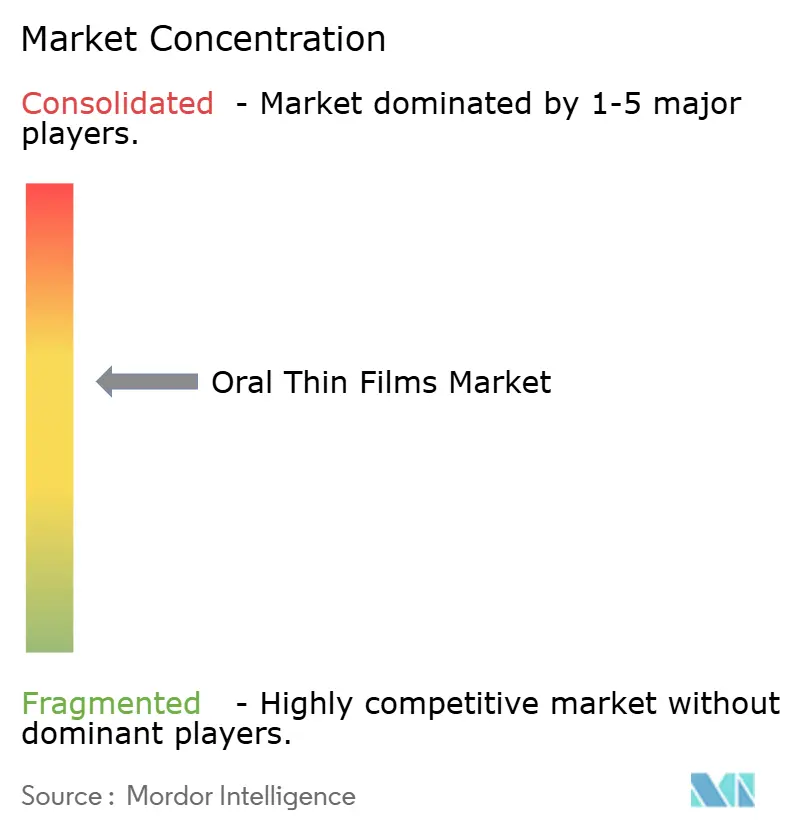
| Market Concentration | Medium |
Major Players *Disclaimer: Major Players sorted in no particular order Image © Mordor Intelligence. Reuse requires attribution under CC BY 4.0. | |
Oral Thin Films Market Analysis by Mordor Intelligence
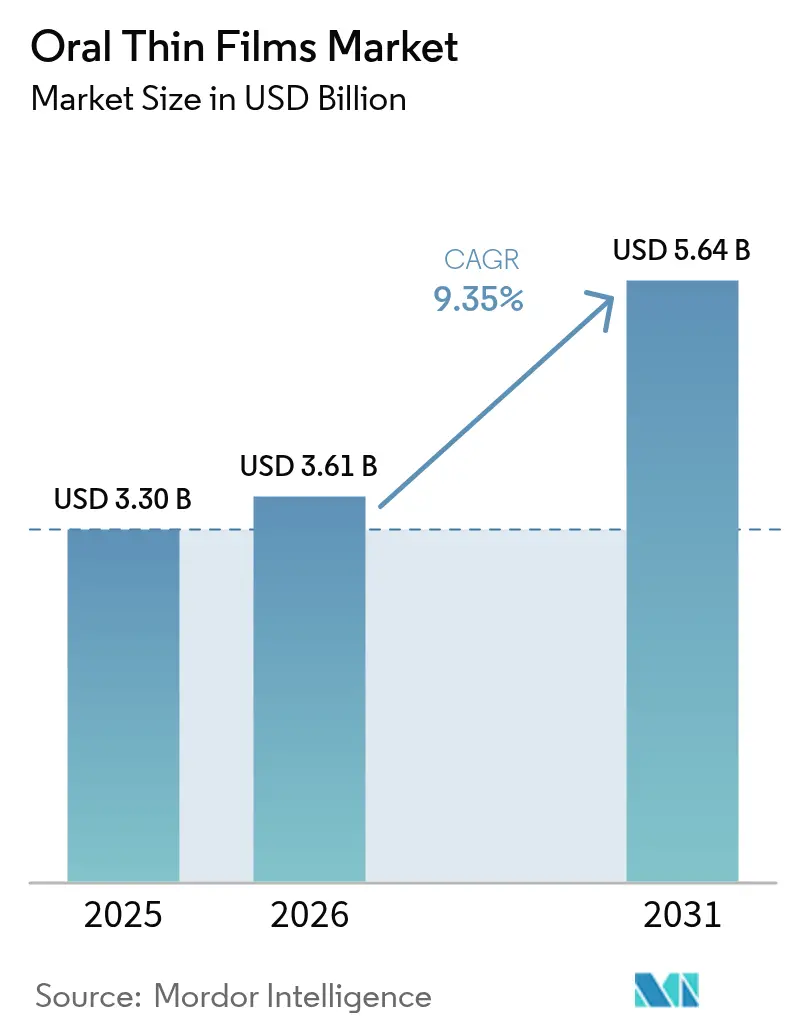
The oral thin films market size was valued at USD 3.30 billion in 2025 and estimated to grow from USD 3.61 billion in 2026 to reach USD 5.64 billion by 2031, at a CAGR of 9.35% during the forecast period (2026-2031). Demand accelerates as pharmaceutical developers prioritize patient-centric formats that bypass swallowing difficulties, avoid first-pass hepatic metabolism, and deliver rapid therapeutic onset. Population aging, higher chronic disease prevalence, and the need for pediatric-friendly medicines all reinforce a structural shift toward thin-film delivery. Technology improvements in polymer science, moisture barrier coatings, and continuous manufacturing add further momentum by lowering unit costs and widening the range of compatible active pharmaceutical ingredients. Competitive intensity grows as both branded innovators and generic manufacturers employ 505(b)(2) reformulation pathways to repurpose existing molecules, expanding the oral thin films market into indications once dominated by tablets and capsules.
Key Report Takeaways
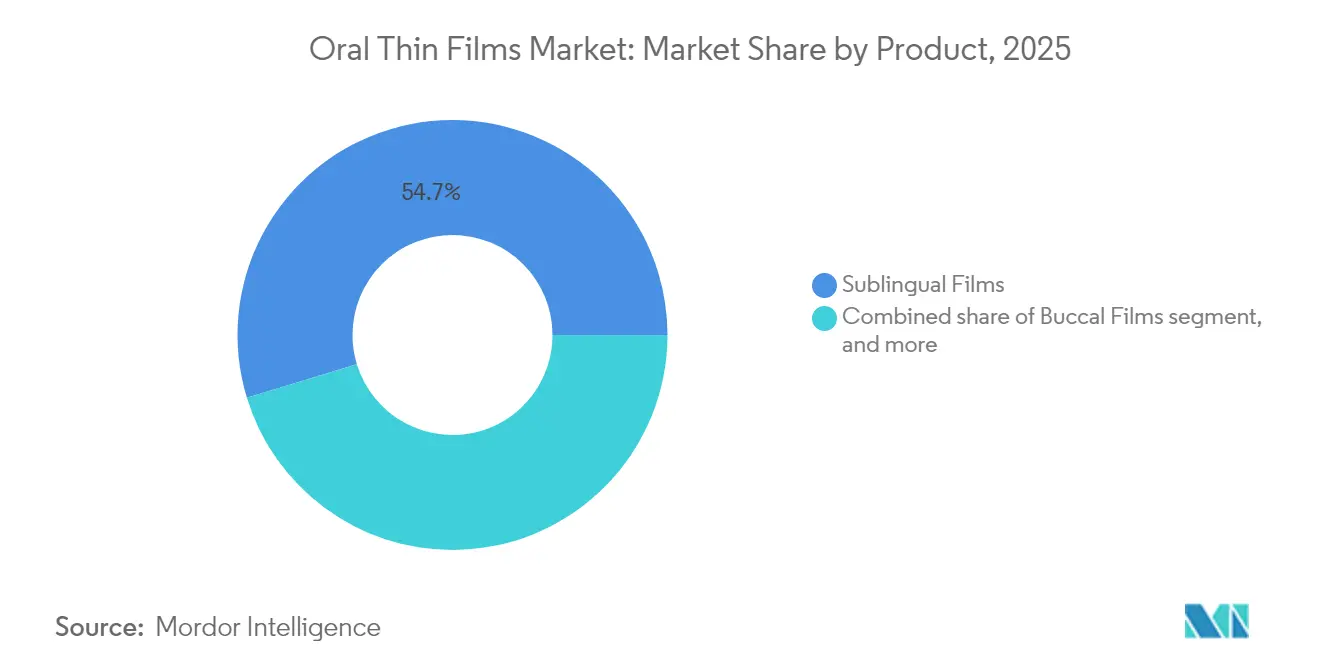
- By product, sublingual films led with 54.72% revenue share in 2025; buccal films are projected to deliver the fastest 11.12% CAGR through 2031.
- By disease indication, opioid dependence accounted for 39.12% of market share in 2025, while migraine therapies are set to expand at a 11.86% CAGR over the same period.
- By distribution channel, retail pharmacies captured 48.10% share in 2025, whereas online pharmacies are expected to post a 12.08% CAGR to 2031.
- By technology, solvent-casting held 54.21% share in 2025; 3-D printing is forecast to grow at an 11.34% CAGR.
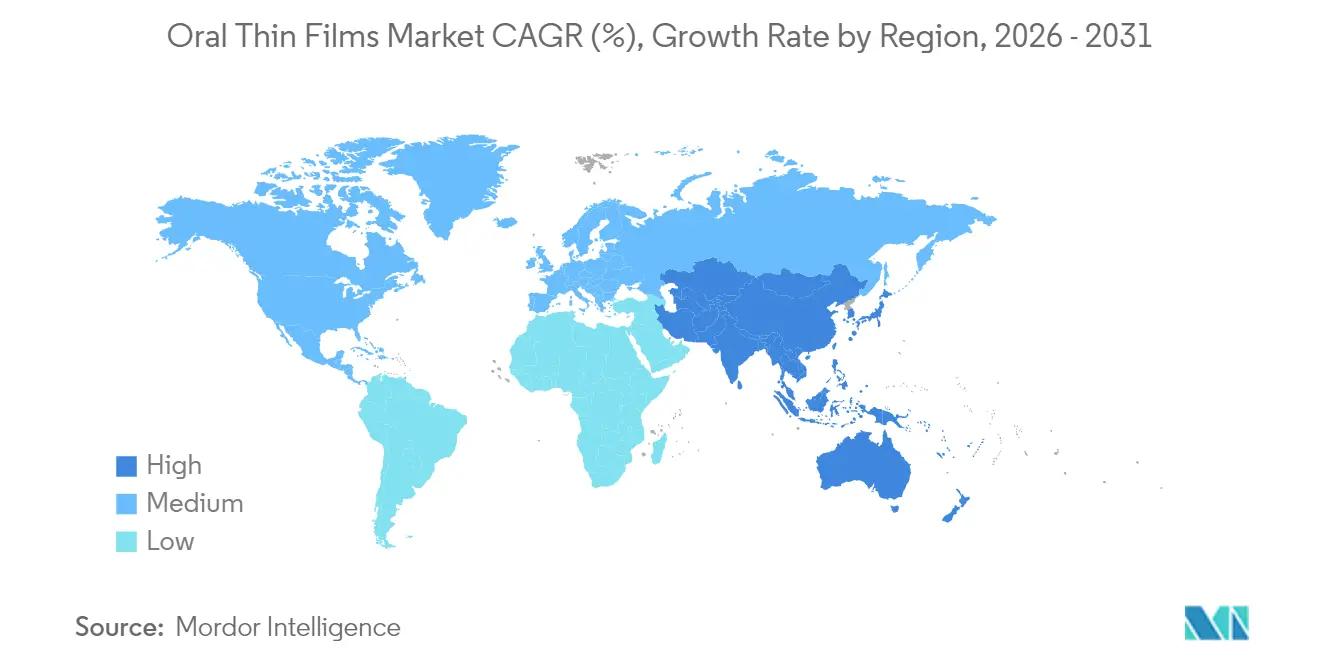
- By geography, North America dominated with 41.20% share in 2025, while Asia-Pacific is anticipated to record a 10.12% CAGR through 2031.
Note: Market size and forecast figures in this report are generated using Mordor Intelligence’s proprietary estimation framework, updated with the latest available data and insights as of 2026.
Market Trends and Insights
Drivers Impact Analysis of Oral Thin Films Market*
| Driver | % Impact on CAGR Forecast | Geographic Relevance | Impact Timeline |
|---|---|---|---|
| Rising Prevalence Of Chronic Diseases | +2.1% | Global, with concentration in North America & Europe | Long term (≥ 4 years) |
| Growing Preference For Patient-Friendly Drug Delivery | +1.8% | Global, led by developed markets | Medium term (2-4 years) |
| Increasing Geriatric And Pediatric Populations | +1.5% | North America, Europe, Asia-Pacific | Long term (≥ 4 years) |
| Accelerated 505(B)(2) Reformulation Strategies | +1.2% | North America, expanding to Europe | Short term (≤ 2 years) |
| Expanding Cannabis And Nutraceutical Applications | +0.9% | North America, select European markets | Medium term (2-4 years) |
| Technological Advancements In Polymeric Film Engineering | +0.7% | Global, R&D concentrated in North America & Europe | Medium term (2-4 years) |
| Source: Mordor Intelligence | |||


Rising Prevalence of Chronic Diseases
Chronic non-communicable illnesses heighten the clinical urgency for dosage forms that improve adherence in patients with swallowing difficulties. Dysphagia affects 25% of adults older than 50 and up to 50% of nursing-home residents, and those patients experience longer inpatient stays and higher treatment costs. Sublingual buprenorphine films have become the preferred formulation in opioid use disorder programs because they reduce diversion risk and simplify directly observed therapy, reinforcing the oral thin films market expansion in addiction care. Clinicians also favor film products in hypertension and diabetes, where daily dosing regimens require steady compliance. Together, these disease trends supply a consistent patient base that shields the oral thin films market from economic slowdowns.
Growing Preference for Patient-Friendly Drug Delivery
An evidence base linking palatability and adherence now guides formulation design in pediatric and geriatric pharmacotherapy. A systematic review of 225 pediatric studies confirmed taste as a top barrier to completion of antibiotic and anticonvulsant regimens[1]D. Cram, “Taste and Acceptability in Pediatric Formulation,” Frontiers in Drug Delivery, frontiersin.org. Dissolvable films overcome this barrier by embedding flavor-masking excipients, leading to higher completion rates in head-to-head trials against liquids. Regulators also recognize the value proposition: FDA clearance of the dissolvable oral contraceptive Femlyv in July 2024 highlighted benefits in user convenience and dose accuracy. As prescribers increasingly factor ease of use into therapy selection, the oral thin films market captures prescriptions that once defaulted to tablets.
Increasing Geriatric and Pediatric Populations
Demographic shifts compound demand because very young and very old patients exhibit limited swallowing capacity yet require precise dosing. Clinical work on Anaphylm epinephrine sublingual film demonstrated favorable pharmacokinetics in children aged 7–17, widening the future addressable base. In elder care, film dosage avoids crushing tablets, reducing nursing-time burden and aspiration incidents. With the United Nations projecting that persons over 65 will reach 1.0 billion by 2030, swallowing-friendly formats cement their status as essential, not optional, therapeutic tools.
Accelerated 505(b)(2) Reformulation Strategies
The streamlined 505(b)(2) pathway allows sponsors to rely partly on reference drug safety data, cutting clinical programmes to bioequivalence and palatability studies. FDA’s 2024 guidance covering minor changes to solid oral dose forms codified dissolution-media standards that specifically reference films. Sponsors now time product launches to coincide with originator patent cliffs, using films as lifecycle-management instruments that counter generic erosion. These competitive dynamics channel investment into the oral thin films market and hasten product cadence.
Restraints Impact Analysis of Oral Thin Films Market*
| Restraints Impact Analysis | (~) % Impact on CAGR Forecast | Geographic Relevance | Impact Timeline |
|---|---|---|---|
| Limited Active Pharmaceutical Ingredient Loading Capacity | -1.4% | Global, particularly affecting high-dose medications | Medium term (2-4 years) |
| High Regulatory And Quality Assurance Barriers | -1.1% | Global, most stringent in North America & Europe | Long term (≥ 4 years) |
| Pricing Pressure From Generic Competition | -0.9% | Global, with heightened intensity in Europe and emerging markets | Medium term (2-4 years) |
| Insufficient Good Manufacturing Practice Infrastructure | -0.6% | Emerging regions in Asia-Pacific, Latin America & Africa | Short term (≤ 2 years) |
| Source: Mordor Intelligence | |||
Limited Active Pharmaceutical Ingredient Loading Capacity
Thin films typically accommodate no more than 30% drug by weight before mechanical integrity fails, capping single-strip payloads around 30 mg in commercial practice[2]Boyd Biomedical Engineering, “Enhancing Drug Loading in Oral Films,” boydbiomedical.com. High-dosage therapies such as non-steroidal anti-inflammatory drugs must resort to multiple-strip administration schedules, negating some convenience benefits. Research into multilayer designs shows promise yet still confronts dissolution-time trade-offs. Until material science pushes that ceiling higher, the oral thin films market will focus on potent actives where lower milligram doses suffice.
High Regulatory and Quality Assurance Barriers
Moisture sensitivity demands climate-controlled manufacturing suites, foil-pouch primary packs, and humidity-validated distribution chains. FDA and EMA require uniformity and content assays across ten film zones, a tighter specification than tablet weight variation. Smaller firms lacking capital for segregated cleanrooms often license out production to large contract manufacturers, adding royalty layers that raise cost-of-goods. Harmonization lags across Asia-Pacific, compelling separate dossier submissions that elongate time-to-market beyond the United States baseline.
*Our forecasts treat driver/restraint impacts as directional, not additive. The impact forecasts reflect baseline growth, mix effects, and variable interactions.
Oral Thin Films Market Segment Analysis
By Product:
Sublingual Films Continue to Anchor GrowthSublingual films accounted for 54.72% of oral thin films market share in 2025, reflecting entrenched physician familiarity in opioid addiction therapy and emergency seizure management. The format ensures rapid transmucosal uptake, delivering therapeutic plasma concentrations within minutes. Competitive pipelines remain active, with at least six new sublingual candidates in late-stage studies targeting anaphylaxis, hypotension, and migraine.
Buccal films, forecast to advance at an 11.12% CAGR, harness mucoadhesive polymers that prolong residence time against the cheek and slow payload release. This kinetic profile attracts hormone-replacement and chronic pain developers seeking once-daily dosing. 3-D printing further individualizes buccal thickness and drug load, enabling dose-titration without new stability studies. Over the outlook period, investors expect smaller yet faster-growing buccal lines to chip away at the dominant but maturing sublingual base.


By Disease Indication:
Addiction Care Dominates, Migraine Therapy AcceleratesOpioid dependence retained 39.12% of the oral thin films market size in 2025 and gains policy support under expanded medication-assisted treatment mandates in North America. Mandatory insurance coverage guarantees high prescription volumes, and thin-film packaging deters diversion through unit-dose blisters.
Migraine programs achieve a 11.86% CAGR, stimulated by RizaFilm’s 2023 US approval that set a regulatory precedent for future triptan films. The format addresses patients who experience nausea and risk vomiting tablets during acute attacks. As additional molecules such as lasmiditan migrate to film, neurologists foresee wider adoption. Nausea-and-vomiting as well as schizophrenia segments also benefit, but their combined growth trails migraine’s surge.
By Distribution Channel:
Traditional Retail Holds, Digital Chains SurgeRetail pharmacies received 48.10% of oral thin films market revenue in 2025 because pharmacists counsel on correct sublingual placement and moisture handling. Storefront dominance persists, yet consumer behaviour changes post-pandemic accelerate authenticated e-pharmacy options.
Online channels are set for a 12.08% CAGR, supported by regulatory schemes permitting shipment of Schedule III buprenorphine films under controlled-substance telehealth waivers. Temperature-indicator mailers assure stability, and refill automation raises adherence over in-store pickups. Hospital pharmacies concentrate on seizure rescue and anesthesia-adjunct films for immediate use, sustaining a lower but steady share.

By Technology:
Solvent-Casting Maturity Meets 3-D Printing UpsideSolvent-casting lines produced 54.21% of oral thin films market size in 2025 owing to decades-long scale-up knowledge, predictable yields, and regulator comfort. Continuous web systems reach 100 m/min, translating into million-dose batches that satisfy blockbuster drugs at low cost.
Three-dimensional printing achieves the highest 11.34% CAGR by allowing geometry-driven dissolution control. Personalized pediatric doses become feasible by varying surface area rather than excipient ratios, simplifying validation. FDA’s Center for Drug Evaluation expanded its Emerging Technology Program in 2025 to guide film-printing applicants, smoothing adoption. Hot-melt extrusion provides solvent-free processing for heat-stable APIs, while electrospinning explores nanofiber films suitable for transmucosal vaccines in future pipelines.
Geography Analysis
North America Oral Thin Films Market
North America commanded 41.20% of oral thin films market share in 2025. Robust reimbursement, clinician education, and clear FDA guidance accelerate uptake across pain, addiction, and pediatric allergy care. The regional pipeline includes eight NDA submissions under review as of July 2025, indicating sustained product flow. Retail pricing remains premium in the United States, underpinned by patent protection and limited generic competition.
APAC Oral Thin Films Market
Asia-Pacific is forecast to expand at 10.12% CAGR through 2031, propelled by contract manufacturing clusters in India and regulatory alignment efforts in the ASEAN Pharmaceutical Harmonization Scheme. Chinese producers invest in solvent-casting capacity, seeking WHO prequalification for export-oriented buprenorphine films. Rising middle-class incomes heighten acceptance of patient-friendly dosage forms, while domestic e-pharmacy platforms solve rural access gaps. Favorable cost structures position the region as both a supply base and a fast-growing demand center within the global oral thin films market.
Europe Oral Thin Films Market
Europe maintains steady volume under single-payer systems that scrutinize cost per quality-adjusted life-year. The European Medicines Agency’s December 2024 approval of buprenorphine Neuraxpharm film underscores regulatory continuity despite Brexit. Country-level price controls spur reference-pricing erosion but also promote generics. In response, innovators pivot toward 3-D printed personalized therapies to secure differentiation. Tele-pharmacy directives embedded in the EU Pharmaceutical Strategy support cross-border mail order, likely nudging the online share upward over time.

Regulatory Landscape
Oral thin films are regulated as non-sterile solid oral drug products, but terminology and compendial framing vary across regions. The FDA commonly refers to oral soluble films, while the European Pharmacopoeia describes single- or multilayer sheets designed for rapid dispersion in the mouth. In the United States and Europe, compliance typically ties to GMP frameworks (21 CFR Parts 210/211 and EU GMP Volume 4, respectively) and CTD dossier expectations under ICH, with emphasis on dosage-unit uniformity, dissolution performance, and stability of film-forming polymers and moisture-sensitive packaging.
Quality-by-Design expectations, including ICH Q8(R2) and related specification approaches, reinforce tight control of critical process parameters for casting, drying, and cutting. This also supports data-driven justifications for control strategies such as real-time release testing when process understanding is mature. Compendial testing expectations for oral drug products (including USP product quality test chapters) and region-specific inspection practices raise the compliance bar for smaller and mid-sized developers, often pushing them toward qualified CMOs with validated humidity control, in-process inspection, and tamper-evident unit-dose packaging capabilities.
Competitive Landscape
The oral thin films market remains moderately fragmented. Aquestive Therapeutics leverages its licensed PharmFilm platform across epilepsy, allergy, and endocrine programs, generating USD 50.6 million in royalty revenue during 2023. IntelGenx partners with Gensco to co-promote RizaFilm, while LTS Lohmann and Catalent serve as contract development leaders with multi-client pipelines.
Strategic alliances intensify. Merck entered a USD 493 million licensing deal with Cyprumed in April 2025 for an oral peptide technology intended to transition injectable biologics to film dosage. Roquette’s USD 1 billion acquisition of IFF Pharma Solutions enriches excipient portfolios critical to next-generation films. Such transactions signal that control over polymer intellectual property and manufacturing expertise, rather than sheer marketing spend, will determine future leadership.
Patent activity focuses on mucoadhesive layers and moisture-barrier laminates. As portfolios mature, smaller specialty firms ally with regional distributors to penetrate niche indications, while large multinationals exploit global detailing networks. Competitive advantage will hinge on demonstrating bioequivalence with fewer clinical subjects, shortening time-to-cash flow for each new molecule.
Dynamic Market with Strong Growth Potential
The oral thin films market exhibits a mix of large pharmaceutical conglomerates and specialized technology-focused companies, creating a diverse competitive landscape. Global players like Viatris leverage their extensive distribution networks and manufacturing capabilities, while specialized firms like IntelGenx and Cure Pharmaceutical focus on technological innovation and niche applications. The market shows moderate consolidation, with larger companies actively pursuing acquisitions to strengthen their position, as evidenced by LTS Lohmann's acquisition of Tapemark Inc. to enhance their manufacturing capabilities and market presence.
The industry is characterized by significant barriers to entry due to technical expertise requirements and stringent regulatory standards, particularly in pharmaceutical applications. Companies are increasingly forming strategic alliances to combine technological capabilities with market access, especially in emerging markets. Regional players, particularly in Asia-Pacific markets, are gaining prominence through a focus on generic versions and cost-effective manufacturing, while established players maintain their dominance through patent protection and brand recognition. The market demonstrates a trend toward vertical integration, with companies investing in end-to-end capabilities from research and development to commercialization.
Innovation and Adaptability Drive Market Success
Success in the oral thin films market increasingly depends on companies' ability to develop proprietary technologies while maintaining cost competitiveness. Incumbent players must focus on continuous innovation in drug delivery systems, expanding therapeutic applications, and strengthening their patent portfolios to maintain market leadership. Building strong relationships with healthcare providers and ensuring consistent product quality are crucial for market success. Companies need to invest in advanced manufacturing capabilities while simultaneously developing strategies to navigate complex regulatory environments across different regions.
For new entrants and smaller players, focusing on niche therapeutic areas and developing specialized applications presents opportunities for market penetration. Success factors include establishing strong research and development capabilities, forming strategic partnerships with established pharmaceutical companies, and developing cost-effective manufacturing processes. The increasing demand for patient-friendly drug delivery systems and the growing acceptance of oral thin films in various therapeutic applications create opportunities for market expansion. However, companies must carefully navigate challenges such as high development costs, regulatory compliance requirements, and the need to demonstrate clear therapeutic advantages over conventional dosage forms. Leading oral film manufacturers and oral dissolving film manufacturers are particularly well-positioned to capitalize on these trends.
Oral Thin Films Industry Leaders
ZIM Laboratories Limited
Aquestive Therapeutics, Inc.
IntelGenx Corp.
C.L.Pharm
CURE Pharmaceutical
- *Disclaimer: Major Players sorted in no particular order
Oral Thin Films Market Companies Covered in this Report
- Aquestive Therapeutics
- Intelgenx
- LTS Lohmann Therapie-Systeme
- Viatris
- NAL Pharma
- ZIM Laboratories Ltd.
- Sunovion Pharmaceuticals
- CURE Pharmaceutical
- C.L. Pharm
- Indivior
- BioDelivery Sciences International
- Rapid Dose Therapeutics
- AdhexPharma
- Catalent
- Tapemark
- IBSA Group
- Dr.Thins
- DK Livkon Healthcare
- NutraStrips
- Pharmedica
- Nova Thin Film Pharmaceuticals
- Orcosa
- Labtec GmbH
- Aavishkar Oral Strips

Market Opportunities and Future Outlook
New therapy-area entries and platform innovation expand the whitespace beyond the market's established opioid dependence and acute-care use cases, especially where rapid onset and water-free administration matter. IBSA USA's February 2026 FDA approval of VYBRIQUE (sildenafil) oral film for erectile dysfunction points to commercial viability for high-volume, established molecules in an oral film format. It also supports additional lifecycle-management and reformulation programs that can use 505(b)(2)-style approaches where applicable.
Opportunities also show up in enabling technologies that broaden the range of addressable actives and patient-specific dosing needs. Patent activity such as OFD Life Sciences' March 2026 award for its LyoPastille oral delivery platform, along with ongoing development programs like BioNxt Solutions' 2026 updates on a sublingual semaglutide ODF collaboration with Gen-Plus GmbH, indicate efforts to move complex or adherence-sensitive therapies into film or film-adjacent oral formats. Technical work publicized by LTS Lohmann on foam-based oral thin films further highlights product differentiation around faster dissolution and flexible release profiles, though manufacturing readiness and regulatory-grade quality systems remain the gate for scaling into regulated markets.
Recent Industry Developments in Oral Thin Films Market
- March 2026: Aquestive Therapeutics completed an in-person Type A meeting with the US FDA regarding the resubmission path for its Anaphylm (dibutepinephrine) sublingual film NDA. The update clarified the companys regulatory next steps and positioned the program for a planned resubmission timeline, keeping competitive focus on emergency-use film formats that require rapid onset and high manufacturing reliability.
- July 2025: ZIM Laboratories secured its first marketing authorization in Australia from the Therapeutic Goods Administration for Rizatriptan Benzoate orally disintegrating films. The approval broadened the companys regulated-market footprint and supported migraine as a scaling indication for film delivery, where nausea during attacks can reduce tablet usability.
- April 2024: IntelGenx (now Nualtis) reported that partner Chemo Research SL received a Complete Response Letter from the FDA for an ANDA for buprenorphine buccal film. The requests centered on additional pharmaceutical quality information and no new facility inspections, reinforcing the categorys quality and CMC sensitivity and affecting development timelines for generic and reformulated film products.


Oral Thin Films Market Report Scope and Research Methodology
Market Definition and Coverage
This market covers pharmaceutical oral thin films that carry an active ingredient and are designed to dissolve in the mouth or adhere to oral mucosa for local or systemic drug delivery. Values reflect revenues generated from these drug films across major regions.
Scope exclusions: Non-drug oral care strips (such as breath fresheners), packaging films, and other non-pharmaceutical thin film materials are excluded.
Segments Covered in This Report
- By Product
- Sublingual Films
- Buccal Films
- Orodispersible Films
- Fast-Dissolving Oral Films
- By Disease Indication
- Opioid Dependence
- Nausea And Vomiting
- Schizophrenia
- Migraine
- Pain Management
- Others
- By Distribution Channel
- Hospital Pharmacies
- Retail Pharmacies
- Online Pharmacies
- Other Distribution Channel
- By Technology (Manufacturing Method)
- Solvent-Casting
- Hot-Melt Extrusion
- 3-D Printing
- Other Technologies
- Geography
- North America
- United States
- Canada
- Mexico
- Europe
- Germany
- United Kingdom
- France
- Italy
- Spain
- Rest of Europe
- Asia-Pacific
- China
- Japan
- India
- Australia
- South Korea
- Rest of Asia-Pacific
- Middle East & Africa
- GCC
- South Africa
- Rest of Middle East & Africa
- South America
- Brazil
- Argentina
- Rest of South America
- North America
Data Sources, Market Sizing, and Validation
Desk Research
To ground the size model, we start by mapping approved oral thin film products, dosage forms, and delivery routes, and then cross-check basic demand signals. Public sources that helped here include US FDA databases (drug labels and approvals), the National Library of Medicine (clinical trial registry), and US NIH resources for therapy-area background.
We also used US CDC health statistics for condition prevalence direction, WHO health data for cross-country comparability, and peer-reviewed journals that report bioavailability, adherence, and patient acceptability for film formats. Company filings, investor presentations, and reputable press were used to capture product launch timing and broad geographic exposure, and paid subscriptions for company financials, news, and patent databases supported financial normalization and innovation tracking. These examples are not exhaustive, and many other public sources were reviewed for data collection, cross-checking, and clarification.
Primary Interviews and Surveys
Primary discussions were used to confirm which products are commercially meaningful, how pricing typically moves by therapy area, and what share of demand is routed through hospital versus retail and online pharmacies. We spoke with a mix of formulation and manufacturing experts, distributors, and commercial leaders across the Americas, EMEA, and APAC so assumptions could be adjusted when desk inputs did not match field reality.
Distribution of primary research fieldwork respondents
| Company type | Respondent position | Region |
|---|---|---|
| Top tier: 33% | CXOs: 14% | APAC: 42% |
| Mid tier: 46% | Functional/Unit leaders: 40% | EMEA: 32% |
| Smaller Players: 21% | Managers: 46% | Americas: 26% |
Market-Sizing & Forecasting
For sizing, we use a top-down build that starts from the addressable treated population in key indications where oral thin films are used, which is then converted into annual film demand using treatment rates and typical dosing patterns. Revenue is then derived by applying indicative price ranges by therapy area and channel, and the totals are rolled up by region after currency normalization.
To keep results realistic, we corroborate with selective bottom-up checks, such as rolling up a sample of product revenues where disclosures exist, and validating price and volume direction through channel checks. Inputs that commonly move the model include new film product approvals, patient preference for swallow-free dosing, the mix shift between sublingual and other film formats, distribution channel weighting, and regional uptake differences linked to reimbursement and prescribing norms.
Forecasts are produced using scenario analysis supported by simple trend fitting, where the core drivers are projected with conservative, base, and faster adoption paths. When coverage gaps show up in bottom-up checks (for example, limited disclosure for privately held manufacturers), we fill them with peer benchmarking and then re-test the totals through interview feedback before finalizing.
Data Validation & Update Cycle
Validation is done in layers so the final number is not driven by one assumption. We compare implied per-patient spending and implied film volumes against independent indicators like approval cadence, channel mix signals, and therapy-area growth, then investigate outliers before sign-off.
A second analyst review is completed for model logic, unit consistency, and currency treatment, followed by a final variance check against prior editions. Reports are refreshed annually, and interim updates are triggered when material events occur (such as major launches, regulatory actions, or step changes in pricing). Before delivery, an analyst performs a fresh pass so clients receive the latest updated view.
Mordor Intelligence's Oral Thin Films Market Size Versus Other Published Estimates
Published market values for oral thin films do not always match because different studies mix product types differently, choose different starting years, and apply different price and uptake assumptions by indication. Variance also shows up when a study uses a longer forecast horizon and then back-solves a current year, or when currency conversion timing is not aligned across regions.
Non-drug oral dissolvable strips (like breath freshening films) sit outside Mordor Intelligence's scope, which keeps the modeled demand tied to pharmaceutical film dosing and indication-level uptake rather than broader consumer strip volumes.
Benchmark comparison
| Source | Market Size | Gaps in Research Methodology |
|---|---|---|
| Mordor Intelligence | USD 3.61 B (2026) | |
| Trade Journal A | USD 3.70 B (2024) | Uses an earlier base year and mixes orodispersible and oromucosal film revenues with broader channel definitions, which can shift totals when pricing is averaged across indications and regions. |
| Industry Research Portal B | USD 3.50 B (2024) | Shorter forecast window and limited clarity on how therapy-area uptake and dosing are converted into volumes, which can understate markets where new film approvals are still ramping. |
The spread is mainly explained by what gets counted as an oral thin film product, which base year is used, and how pricing and uptake are carried through each indication. By keeping the steps visible from treated demand to volume to value, the estimate stays traceable to practical variables that can be rechecked and updated when market conditions change.


Key Questions Answered in the Report
What is the current valuation of the oral thin films market?
The oral thin films market size is USD 3.61 billion in 2026 and is projected to reach USD 5.64 billion by 2031.
Which product type dominates sales?
Sublingual films lead with 54.72% oral thin films market share in 2025 on the back of entrenched opioid-dependence and seizure-rescue use cases.
Which segment is expanding fastest?
Buccal films are set to grow at 11.12% CAGR through 2031 thanks to superior mucoadhesion and controlled-release properties.
How quickly is the Asia-Pacific region growing?
Asia-Pacific revenue is forecast to climb at a 10.12% CAGR through 2031, faster than any other region.
What technology holds the highest share?
Solvent-casting accounts for 54.21% of the oral thin films market size, although 3-D printing shows the fastest upside.
Which distribution channel is gaining momentum?
Online pharmacies are registering a 12.08% CAGR as telehealth and direct-to-consumer models normalize.
Page last updated on:





