
Open Pollinated Seeds Market Size and Share
Market Overview
| Study Period | 2021 - 2031 |
|---|---|
| Market Size (2026) | USD 80.73 Billion |
| Market Size (2031) | USD 104.76 Billion |
| Growth Rate (2026 - 2031) | 5.35 % |
| Fastest Growing Market | South America |
| Largest Market | North America |
| Market Concentration | Medium |
Major Players *Disclaimer: Major Players sorted in no particular order Image © Mordor Intelligence. Reuse requires attribution under CC BY 4.0. | |
Open Pollinated Seeds Market Analysis by Mordor Intelligence
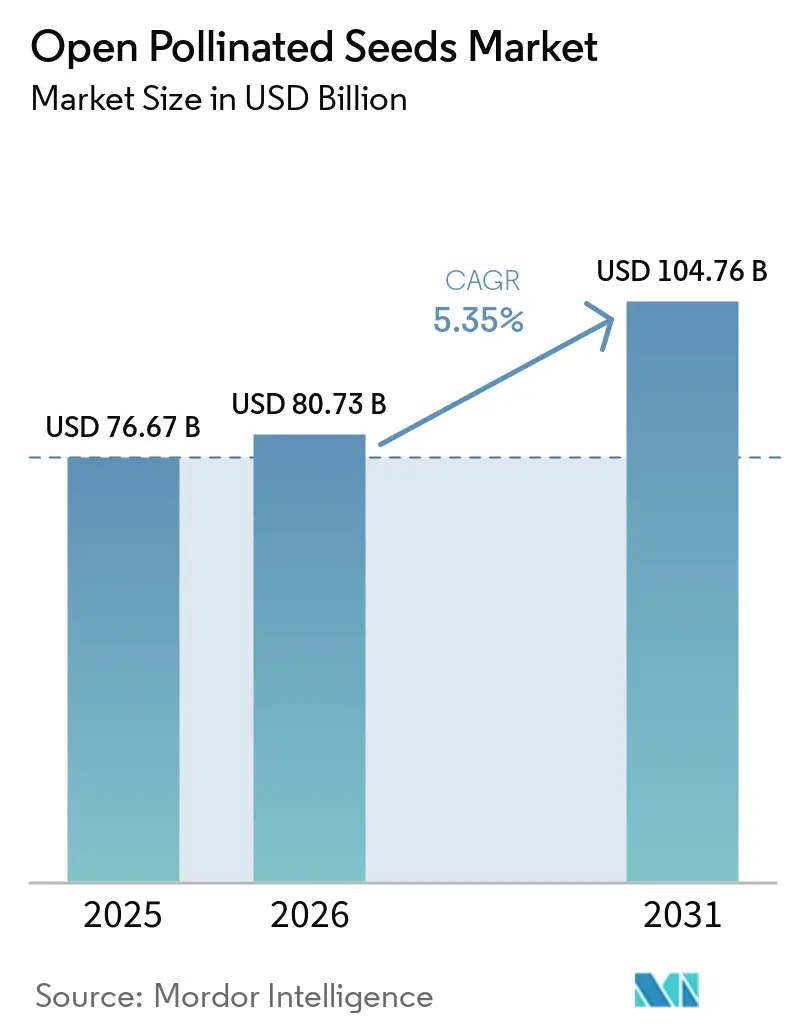
The open pollinated seeds market was valued at USD 76.67 billion in 2025 and is projected to grow from USD 80.73 billion in 2026 to USD 104.76 billion by 2031, at a CAGR of 5.35% during the forecast period from 2026 to 2031. The open pollinated seeds market encompasses both hybrid seeds and open-pollinated varieties (OPVs), covering row crops and vegetables across commercial, smallholder, and institutional farming systems. Seed technology continues to be one of the most cost-effective tools for farmers to enhance agricultural output. Climate variability is influencing the crop seeds market in two distinct ways through the adoption of hybrid trait stacking in high-intensity farming systems and the renewed interest in locally adapted OPVs in climate-stressed smallholder environments. Additionally, factors such as regulatory divergence, uneven research and development focus, and rising phytosanitary compliance costs are shaping regional supply dynamics. Despite these challenges, the crop seeds market benefits from consistent annual seed replacement in commercial farming, growing demand for protected horticulture, and an increasing need for climate-resilient seed varieties across both formal and informal seed systems.
Key Report Takeaways
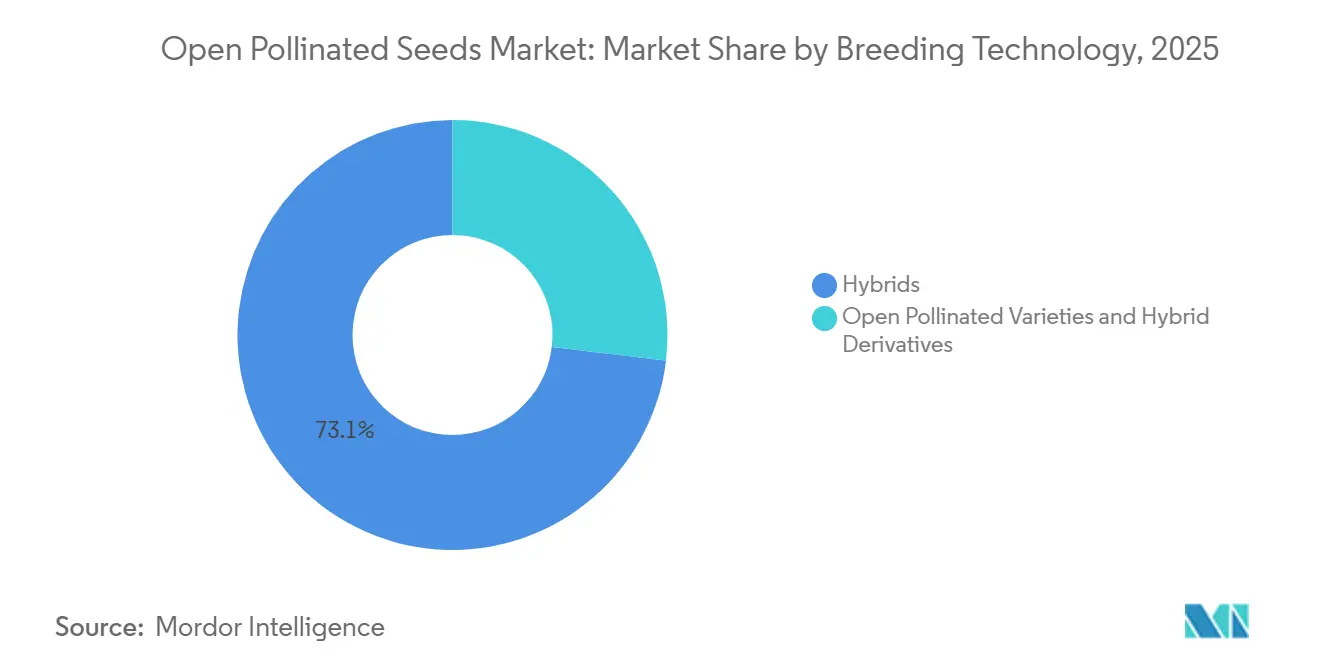
- By breeding technology, the open pollinated seeds market share for hybrids segment accounted for the largest 73.1% in 2025, and the hybrid market size is projected to grow at the fastest CAGR of 5.5% from 2026 to 2031.
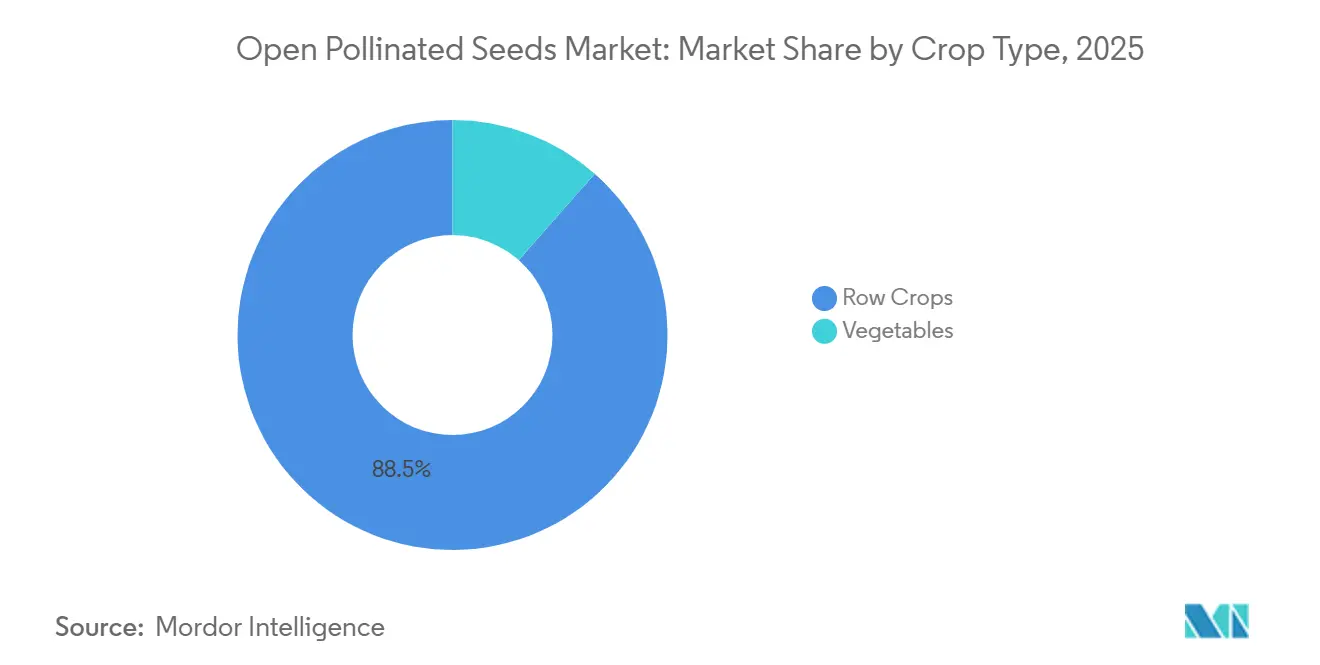
- By crop type, row crops held the largest 88.5% revenue share in 2025, while vegetables are forecast to grow at the fastest CAGR of 5.5% from 2026 to 2031.
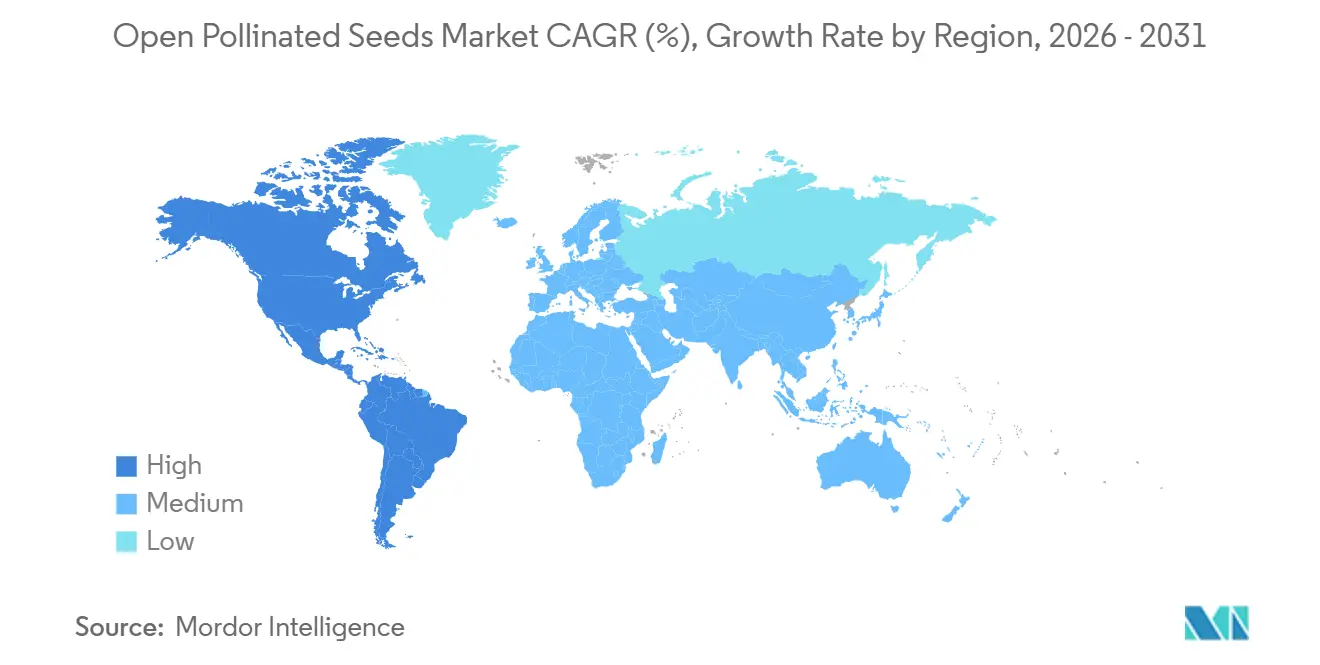
- By geography, North America accounted for the largest 35.2% revenue share in 2025, while South America is projected to grow at the fastest CAGR of 6.3% from 2026 to 2031.
Note: Market size and forecast figures in this report are generated using Mordor Intelligence’s proprietary estimation framework, updated with the latest available data and insights as of January 2026.
Market Trends and Insights
Drivers Impact Analysis of Open Pollinated Seeds Market*
| Driver | (~) % Impact on CAGR Forecast | Geographic Relevance | Impact Timeline |
|---|---|---|---|
| Rising demand for organic and heirloom produce | +1.4% | North America and Europe | Medium term (2-4 years) |
| Seed-saving economics for smallholder farmers | +1.1% | Asia-Pacific and Africa | Long term (≥ 4 years) |
| Need for climate-resilient locally adapted varieties | +1.2% | Global, with early gains in Africa and South Asia | Medium term (2-4 years) |
| Expansion of regenerative and low-input farming systems | +0.8% | North America and Europe, spill-over to Asia-Pacific | Medium term (2-4 years) |
| European Union organic seed derogation phaseout to 2036 | +0.7% | Europe | Long term (≥ 4 years) |
| Participatory breeding and farmer-led trial platforms | +0.6% | Africa and Asia-Pacific | Long term (≥ 4 years) |
| Source: Mordor Intelligence | |||
Rising Demand for Organic and Heirloom Produce
Consumer preference for organic and heirloom produce is bolstering the open pollinated seeds market, elevating the commercial value of traditional and organically bred crop varieties. This trend gained further momentum in April 2024, when the European Parliament adopted its position on the proposed Plant Reproductive Material (PRM) regulation[1]Source: European Parliament, “Production and Marketing of Plant Reproductive Material in the Union,” europarl.europa.eu.. The new provisions ease the marketing and exchange of conservation varieties and organic heterogeneous material. This reform is poised to enhance market access for diverse open-pollinated cultivars, prized for their genetic diversity, local adaptation, and distinct product characteristics. With retailers and organic producers on the lookout for differentiated crop varieties, these regulatory shifts are solidifying the long-term demand for open pollinated seeds throughout Europe.
Seed-Saving Economics for Smallholder Farmers
Smallholder farmers, aiming to cut production costs, are increasingly turning to open-pollinated seeds, primarily due to the ability to save and reuse these seeds. A study published in the Food Security journal in March 2026 highlights that population-based cultivars, akin to open-pollinated varieties, offer an economical breeding strategy for resource-limited farming. These cultivars demonstrate consistent performance across varied agroecological settings. While hybrids necessitate repeated purchases, open-pollinated varieties empower farmers to save seeds for subsequent planting cycles. This not only enhances affordability but also boosts adoption rates among small-scale producers. Such economic benefits are bolstering the sustained demand for open-pollinated seeds, especially in developing agricultural regions.
Need for Climate-Resilient Locally Adapted Varieties
As climate variability intensifies, the demand for locally adapted germplasm surges, bolstering the market for open-pollinated seeds in regions grappling with drought, heat stress, and erratic growing conditions. Traditional open-pollinated varieties, boasting broader genetic diversity, often adapt more effectively to local agroecological environments than their uniform commercial counterparts. The Food and Agriculture Organization, in its 2025 report on the global state of plant genetic resources for food and agriculture, noted that farmers cultivate varieties and landraces across 35 million hectares in 51 countries[2]Source: Food and Agriculture Organization of the United Nations, “The Third Report on the State of the World’s Plant Genetic Resources for Food and Agriculture,” fao.org.. This effort aims to conserve genetic diversity and bolster climate resilience. The persistent reliance on these locally adapted crop varieties underscores their pivotal role in sustaining productivity amidst environmental challenges, ensuring a robust long-term demand for open-pollinated seeds.
Expansion of Regenerative and Low-Input Farming Systems
Open-pollinated seeds are thriving as regenerative and low-input farming systems gain traction. These seeds align perfectly with farming practices that prioritize minimal synthetic inputs, on-site seed management, and local adaptability. The momentum for this trend surged in May 2026, highlighted by the launch of a regenerative agriculture framework by the Sustainable Agriculture Initiative (SAI) Platform, backed by over 40 organizations. This move underscores a growing commitment within the supply chain towards regenerative practices. With food companies amplifying their sustainability mandates and advocating for reduced-input production, the demand for seeds that resonate with these regenerative methods is set to rise, bolstering the open pollinated seeds market in the long run.
Restraints Impact Analysis of Open Pollinated Seeds Market*
| Restraint | (~) % Impact on CAGR Forecast | Geographic Relevance | Impact Timeline |
|---|---|---|---|
| Lower yield ceiling versus hybrid seeds | -0.5% | Global | Short term (≤ 2 years) |
| Lower private R and D intensity than hybrid-led categories | -0.4% | Global | Medium term (2-4 years) |
| Pollinator-dependent seed production risk | -0.3% | Europe and North America | Short term (≤ 2 years) |
| Seed-health and phytosanitary compliance burden | -0.3% | Global | Medium term (2-4 years) |
| Source: Mordor Intelligence | |||
Lower Yield Ceiling versus Hybrid Seeds
Farmers, especially in commercial production systems where output directly impacts profitability, often prioritize yield maximization. As a result, they frequently opt for hybrid varieties, drawn by their higher yield potential, uniformity, and responsiveness to intensive management. This preference not only attracts investments from growers and seed companies but also curtails the adoption of open-pollinated seeds in high-productivity systems. The Food and Agriculture Organization of the United Nations reports that hybrid maize seeds dominate, covering over 60% of the global maize area. This underscores the strong inclination towards hybrid genetics in one of the world's largest seed markets, intensifying the competitive pressure on open-pollinated varieties and stifling the growth of the open-pollinated seeds market.
Seed-Health and Phytosanitary Compliance Burden
Stricter seed-health and phytosanitary regulations are tightening their grip on the open pollinated seeds market, affecting both domestic and international seed movements. Heightened concerns over seed-borne pests and diseases have led regulatory authorities to bolster inspection, documentation, and pest-risk management protocols in seed trading. In March 2025, the Bureau of Plant Industry (BPI), under the Philippine Council for Agriculture and Fisheries (PCAF), held a public consultation on updated phytosanitary guidelines for seed movement[3]Source: Philippine Council for Agriculture and Fisheries, “BPI Taps PCAF NSCS on Guidelines for Phytosanitary Requirements for Seed Movement,” pcaf.da.gov.ph.. This move underscores the intensified regulatory scrutiny on seed health and cross-border trading. While these regulations aim to bolster biosecurity, they inadvertently escalate compliance and administrative challenges for seed producers. This is especially true for small-scale seed enterprises and community seed networks, which may hinder the growth of the open pollinated seeds market.
*Our forecasts treat driver/restraint impacts as directional, not additive. The impact forecasts reflect baseline growth, mix effects, and variable interactions.
Open Pollinated Seeds Market Segment Analysis
By Breeding Technology:
Hybrids Hold the Revenue Base While Open Pollinated Varieties Retain Strategic ImportanceThe open pollinated seeds market share for the hybrid segment was the largest 73.1% in 2025, reflecting the strong preference for high-yielding and uniform seed varieties across commercial agriculture. Hybrids dominate major field crops due to their enhanced productivity, consistency, and adaptability to modern farming systems. This dominance is driven by continuous advancements in breeding, improved disease resistance, and compatibility with mechanized farming practices. Commercial growers increasingly view hybrid seed purchases as a critical production input, sustaining demand and reinforcing the segment's leading position in both developed and emerging agricultural markets.
The hybrid market size is forecast to grow at the fastest CAGR of 5.5% from 2026 to 2031, supported by ongoing advances in breeding technologies and the introduction of improved crop genetics. The expansion of hybrid development into additional crop categories is broadening their commercial significance beyond traditional applications. Seed companies are investing in breeding programs to enhance stress tolerance, yield stability, and agronomic performance. Meanwhile, open-pollinated varieties remain significant in seed-saving systems, localized farming practices, and organic production, creating a balanced market structure that supports both commercial innovation and farmer diversity.



By Crop Type:
Row Crops Drive Scale While Vegetables Support Faster GrowthRow crops accounted for the largest 88.5% revenue share in 2025, reflecting their central role in global agricultural production. Crops such as corn, wheat, rice, soybean, cotton, canola, sorghum, forage crops, and pulses dominate seed demand due to their importance in food, feed, fiber, and industrial value chains. Seed replacement remains a common practice in commercial row-crop farming, ensuring consistent demand for both hybrid and open-pollinated varieties. This segment also benefits from substantial breeding investments aimed at enhancing productivity, resilience, and agronomic performance across various growing environments and production systems.
Vegetables are projected to grow at the fastest CAGR of 5.5% from 2026 to 2031, driven by increasing demand for high-value horticultural crops. The vegetable seed market benefits from increased varietal specialization, shorter product development cycles, and a growing emphasis on quality attributes such as appearance, shelf life, and disease resistance. Producers are increasingly adopting improved seed varieties to meet evolving consumer preferences and adapt to changing production conditions. Growth opportunities are particularly notable in crops requiring specialized breeding solutions, fostering continuous innovation and enhancing the role of vegetable seeds in overall market growth.
Geography Analysis
North America Open Pollinated Seeds Market
North America held the largest 35.2% revenue share in 2025, supported by advanced seed technology adoption, strong commercial farming systems, and extensive investment in crop breeding. The region benefits from well-established seed replacement practices and a highly developed agricultural value chain that encourages continuous adoption of improved varieties. Farmers increasingly utilize advanced genetics to improve productivity, resilience, and profitability across major crops. Strong research capabilities, extensive distribution networks, and ongoing product innovation continue to reinforce North America’s leadership position in the global seed industry and support sustained market demand.
South America Open Pollinated Seeds Market
South America is forecast to grow at the fastest CAGR of 6.3% from 2026 to 2031, driven by expanding cultivation areas, rising adoption of improved seed varieties, and increasing agricultural exports. Countries across the region continue to invest in modern farming practices that support higher yields and better crop performance. Seed companies are strengthening their presence through breeding programs tailored to local growing conditions and evolving farmer requirements. The combination of favorable agricultural resources, expanding commercial production, and growing technology adoption continues to create attractive opportunities for seed industry expansion throughout the region.
North America and MEA Open Pollinated Seeds Market
Africa and the Middle East are becoming increasingly important growth regions as governments and agricultural organizations prioritize productivity improvements and seed system development. According to the United States Department of Agriculture Economic Research Service, more than 90% of corn, soybean, and cotton acreage in the United States utilized genetically engineered varieties in 2025, demonstrating the continuing importance of advanced breeding technologies in commercial agriculture. Similar efforts to improve seed quality, varietal performance, and farmer access are supporting modernization initiatives across emerging agricultural economies and encouraging broader adoption of improved seed varieties.

Competitive Landscape
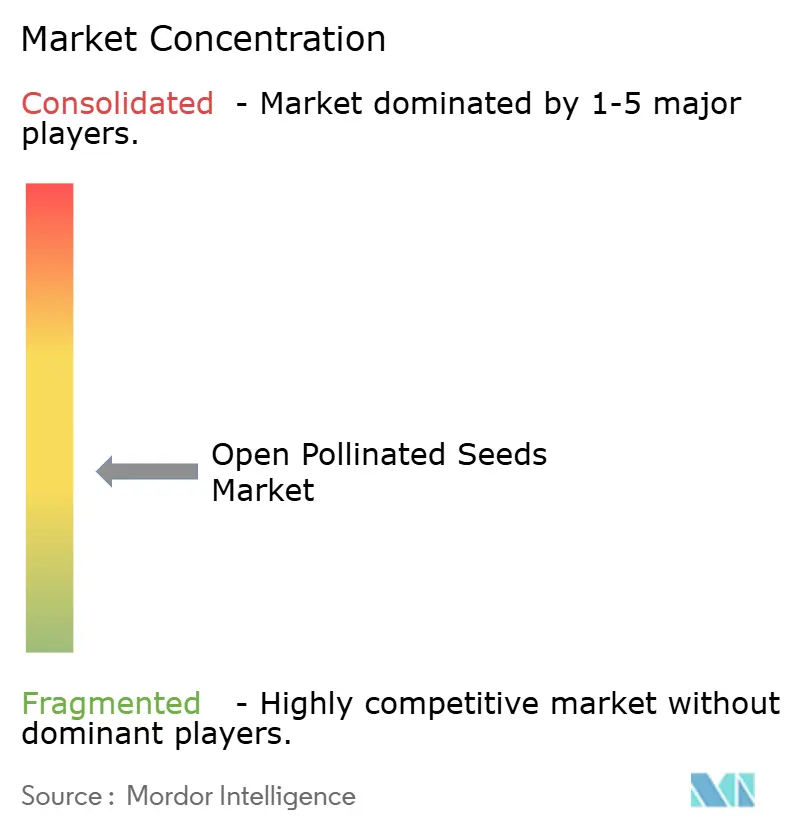
The open pollinated seeds market is moderately fragmented, with key players including Groupe Limagrain Holding, East-West Seed International Ltd., Takii & Co., Ltd., Sakata Seed Corporation, and Bayer AG. These companies focus on enhancing varietal performance, strengthening breeding pipelines, and providing locally adapted seed solutions. Competitive differentiation increasingly hinges on the development of varieties that meet productivity, resilience, and sustainability requirements. To achieve this, companies are investing in research infrastructure, advanced breeding technologies, and strategic collaborations aimed at delivering improved seed products across diverse agricultural systems.
Innovation plays a critical role in the competitive strategies of seed companies as they aim to strengthen their portfolios and address evolving grower needs. Investments in breeding efficiency, seed quality improvement, and advanced genetics are driving the development of enhanced varieties for both row crops and vegetables. Additionally, companies are expanding research initiatives focused on climate resilience, disease resistance, and resource-use efficiency. The growing emphasis on sustainable agricultural practices is fostering the creation of products capable of maintaining productivity under changing environmental conditions while supporting long-term agricultural development objectives.
Competitive positioning in the market is increasingly shaped by investments in seed production and supply chain infrastructure. For instance, in February 2026, Bayer AG inaugurated a new vegetable seeds production center in Khon Kaen, Thailand, with an investment of THB 310 million (USD 8.6 million). This facility is designed to enhance regional and global seed supply capabilities by consolidating activities such as seed processing, storage, quality testing, and distribution. Such investments highlight the importance of integrated production infrastructure in strengthening market competitiveness and ensuring reliable seed availability.
Open Pollinated Seeds Industry Leaders
Groupe Limagrain Holding
East-West Seed International Ltd.
Takii & Co., Ltd.
Sakata Seed Corporation
Bayer AG
- *Disclaimer: Major Players sorted in no particular order
Open Pollinated Seeds Market Companies Covered in this Report
- Groupe Limagrain Holding
- East-West Seed International Ltd.
- Takii & Co., Ltd.
- Sakata Seed Corporation
- Rijk Zwaan Zaadteelt en Zaadhandel B.V.
- Bejo Zaden B.V.
- KWS SAAT SE & Co. KGaA
- Bayer AG
- Namdhari Seeds Pvt Ltd.
- Syngenta Crop Protection AG (Syngenta Group)
- Enza Zaden Beheer B.V.
- DLF Seeds A/S (DLF amba)
- RAGT Semences SAS (RAGT SA)
- Nongwoo Bio Co., Ltd. (NongHyup Group)
- Beidahuang Kenfeng Seed Co., Ltd. (Beidahuang Agribusiness Group Co., Ltd.)

Recent Industry Developments in Open Pollinated Seeds Market
- May 2026: Corteva, Inc. has announced that its advanced seed and genetics business will operate under the name Vylor, Inc. following its planned separation in the fourth quarter of 2026. Vylor will commence operations with over 4,000 germplasm patents and a robust seed innovation portfolio, enhancing its presence in both hybrid and open-pollinated crop seed markets.
- February 2026: Bayer AG has announced the expansion of its Ground Breakers Field Trial Program for the Preceon Smart Corn System, aiming to cover approximately 85,000 acres by 2025 as part of its plans for a broader commercial launch. This initiative enhances Bayer’s seed breeding capabilities and agronomic traits, which may also support advancements in open-pollinated seed varieties for various crop production systems.
- November 2025: Enza Zaden Beheer B.V. entered into a strategic agreement to license Pairwise's Fulcrum precision plant breeding platform. This collaboration focuses on gene-editing research for vegetable breeding, with potential future applications in developing disease-resistance traits for open-pollinated and hybrid vegetable varieties.


Global Open Pollinated Seeds Market Report Scope
Open-pollinated seeds are produced through natural pollination processes, allowing plants to reproduce true-to-type over successive generations. These seeds enable farmers to save and replant seeds from harvested crops, offering a cost-effective solution for traditional, organic, and smallholder farming systems. The Open Pollinated Crop Seeds Market Report is Segmented by Breeding Technology (Hybrids and Open Pollinated Varieties and Hybrid Derivatives), by Crop Type (Row Crops and Vegetables), and by Geography (North America, South America, Europe, Asia-Pacific, Middle East, and Africa). The Market Forecasts are Provided in Terms of Value (USD) and Volume (Metric Tons).
| Hybrids | Non-Transgenic Hybrids | |
| Transgenic Hybrids | Insect Resistant Hybrids | |
| Open Pollinated Varieties and Hybrid Derivatives | ||
| Row Crops | Fiber Crops | Cotton |
| Other Fiber Crops | ||
| Forage Crops | Alfalfa | |
| Forage Corn | ||
| Forage Sorghum | ||
| Other Forage Crops | ||
| Grains and Cereals | Corn | |
| Rice | ||
| Sorghum | ||
| Wheat | ||
| Other Grains and Cereals | ||
| Oilseeds | Canola, Rapeseed and Mustard | |
| Soybean | ||
| Sunflower | ||
| Other Oilseeds | ||
| Pulses | ||
| Vegetables | Brassicas | Cabbage |
| Cauliflower and Broccoli | ||
| Other Brassicas | ||
| Cucurbits | Cucumber and Gherkin | |
| Pumpkin and Squash | ||
| Other Cucurbits | ||
| Roots and Bulbs | Garlic | |
| Onion | ||
| Potato | ||
| Other Roots and Bulbs | ||
| Solanaceae | Chilli | |
| Eggplant | ||
| Tomato | ||
| Other Solanaceae | ||
| Unclassified Vegetables | Asparagus | |
| Lettuce | ||
| Okra | ||
| Peas | ||
| Spinach | ||
| Other Unclassified Vegetables | ||
| North America | United States |
| Canada | |
| Mexico | |
| Rest of North America | |
| South America | Brazil |
| Argentina | |
| Rest of South America | |
| Europe | Germany |
| France | |
| Italy | |
| Spain | |
| United Kingdom | |
| Russia | |
| Rest of Europe | |
| Asia-Pacific | China |
| India | |
| Japan | |
| Thailand | |
| Philippines | |
| Indonesia | |
| Australia | |
| Rest of Asia-Pacific | |
| Middle East | Iran |
| Turkey | |
| Saudi Arabia | |
| Rest of Middle East | |
| Africa | South Africa |
| Tanzania | |
| Nigeria | |
| Rest of Africa |
| Breeding Technology | Hybrids | Non-Transgenic Hybrids | |
| Transgenic Hybrids | Insect Resistant Hybrids | ||
| Open Pollinated Varieties and Hybrid Derivatives | |||
| By Crop Type | Row Crops | Fiber Crops | Cotton |
| Other Fiber Crops | |||
| Forage Crops | Alfalfa | ||
| Forage Corn | |||
| Forage Sorghum | |||
| Other Forage Crops | |||
| Grains and Cereals | Corn | ||
| Rice | |||
| Sorghum | |||
| Wheat | |||
| Other Grains and Cereals | |||
| Oilseeds | Canola, Rapeseed and Mustard | ||
| Soybean | |||
| Sunflower | |||
| Other Oilseeds | |||
| Pulses | |||
| Vegetables | Brassicas | Cabbage | |
| Cauliflower and Broccoli | |||
| Other Brassicas | |||
| Cucurbits | Cucumber and Gherkin | ||
| Pumpkin and Squash | |||
| Other Cucurbits | |||
| Roots and Bulbs | Garlic | ||
| Onion | |||
| Potato | |||
| Other Roots and Bulbs | |||
| Solanaceae | Chilli | ||
| Eggplant | |||
| Tomato | |||
| Other Solanaceae | |||
| Unclassified Vegetables | Asparagus | ||
| Lettuce | |||
| Okra | |||
| Peas | |||
| Spinach | |||
| Other Unclassified Vegetables | |||
| By Geography | North America | United States | |
| Canada | |||
| Mexico | |||
| Rest of North America | |||
| South America | Brazil | ||
| Argentina | |||
| Rest of South America | |||
| Europe | Germany | ||
| France | |||
| Italy | |||
| Spain | |||
| United Kingdom | |||
| Russia | |||
| Rest of Europe | |||
| Asia-Pacific | China | ||
| India | |||
| Japan | |||
| Thailand | |||
| Philippines | |||
| Indonesia | |||
| Australia | |||
| Rest of Asia-Pacific | |||
| Middle East | Iran | ||
| Turkey | |||
| Saudi Arabia | |||
| Rest of Middle East | |||
| Africa | South Africa | ||
| Tanzania | |||
| Nigeria | |||
| Rest of Africa | |||


Key Questions Answered in the Report
What is the forecast value of the crop seeds market by 2031?
The crop seeds market is forecast to reach USD 104.76 billion by 2031.
Which region leads global crop seed demand in 2025?
North America led with the largest 35.2% of market share in 2025.
Which region is growing the fastest in crop seeds?
South America is projected to record the fastest regional growth at a 6.3% CAGR from 2026 to 2031.
Why do hybrids dominate seed sales?
Hybrids held the largest 73.1% of value in 2025 because they offer strong yield economics, annual replacement demand, and deep integration with modern trait packages in major row crops.
Page last updated on:





