
Market Overview
| Study Period | 2021 - 2031 |
|---|---|
| Forecast Data Period | 2026 - 2031 |
| Base Year Market Size (2025) | USD 61.17 Billion |
| Market Size (2026) | USD 64.72 Billion |
| Market Size (2031) | USD 85.82 Billion |
| Growth Rate (2026 - 2031) | 5.80 % |
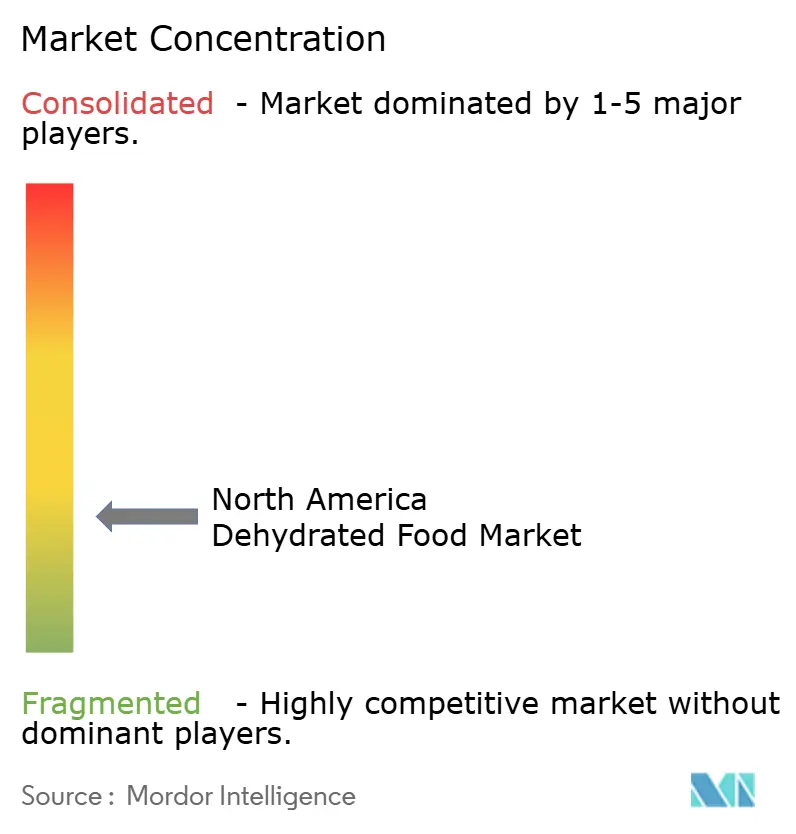
| Market Concentration | Low |
Major Players *Disclaimer: Major Players sorted in no particular order Image © Mordor Intelligence. Reuse requires attribution under CC BY 4.0. | |
North America Dehydrated Food Market Analysis by Mordor Intelligence
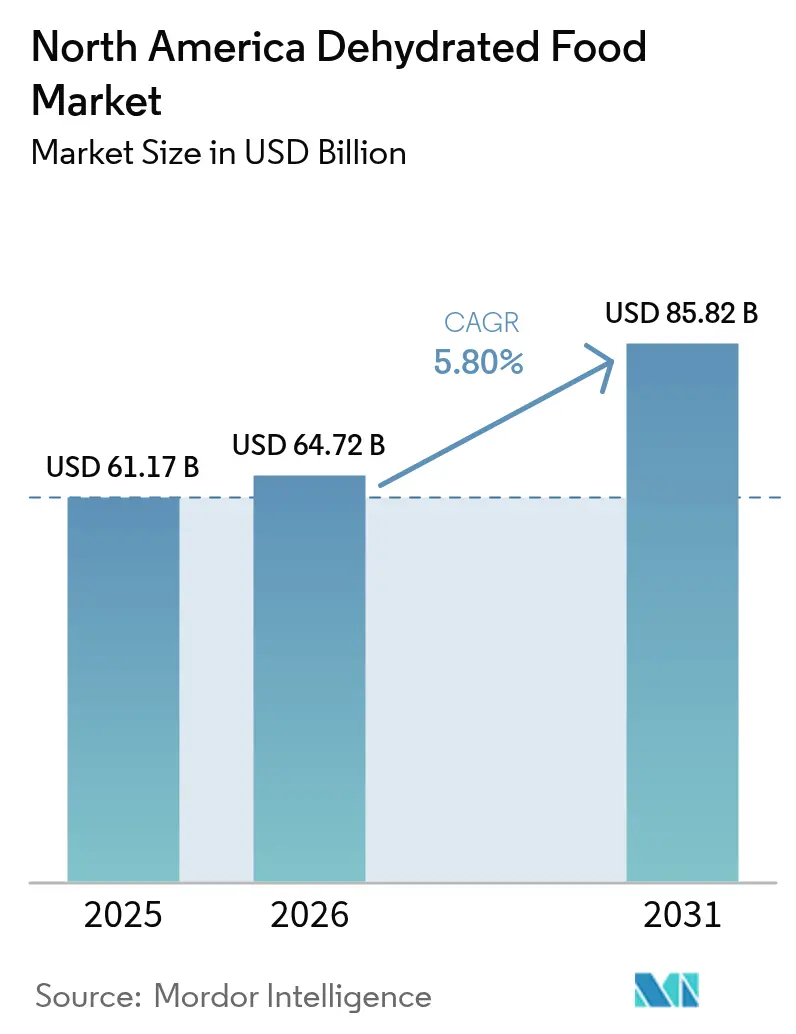
The North America dehydrated food market size was valued at USD 61.17 billion in 2025 and estimated to grow from USD 64.72 billion in 2026 to reach USD 85.82 billion by 2031, at a CAGR of 5.80% during the forecast period (2026-2031). This growth is primarily driven by consumers in the United States, Canada, and Mexico, who increasingly prioritize convenience, nutritional value, and extended shelf life in their food choices. Urban households are increasingly adopting shelf-stable meal solutions as a precautionary measure against potential supply chain disruptions, ensuring food availability during uncertain times. Simultaneously, outdoor enthusiasts, such as hikers and campers, are favoring lightweight, nutrient-dense food options that cater to their needs during back-country travel and other outdoor activities. The trend of premiumization within the market has gained significant momentum, supported by advancements in freeze-drying technologies and the growing demand for clean-label formulations. These developments align with the rising disposable incomes of consumers, enabling them to opt for higher-quality products. Producers are increasingly leveraging direct-to-consumer sales channels, subscription-based programs, and e-commerce logistics to expand their market reach. These strategies not only enhance accessibility but also provide valuable data-driven insights that inform and refine product development processes. Furthermore, investments in energy-efficient dehydration equipment and vertically integrated organic supply chains are playing a pivotal role in reducing operational costs. These advancements are creating sustainable and profitable opportunities for both established market players and new entrants, ensuring long-term growth and competitiveness within the industry.
Key Report Takeaways
- By drying technology, spray-dried products led with 40.62% of North America dehydrated food market share in 2025, while freeze-dried formats are projected to expand at a 6.37% CAGR through 2031.
- By product category, fruits and vegetables held 34.92% share of the North America dehydrated food market size in 2025; nutraceutical and functional powders are advancing at a 6.41% CAGR to 2031.
- By nature, conventional offerings accounted for 80.92% share of the North America dehydrated food market size in 2025, whereas organic variants are forecast to climb at a 6.52% CAGR.
- By end user, industrial packaged food captured 48.12% revenue in 2025, yet retail is expanding at a 6.66% CAGR on the strength of e-commerce and subscription models.
- By geography, the United States contributed 77.61% of 2025 regional sales, but Mexico is expected to register the fastest 6.29% CAGR through 2031 as its middle class expands.
Note: Market size and forecast figures in this report are generated using Mordor Intelligence’s proprietary estimation framework, updated with the latest available data and insights as of 2026.
Market Trends and Insights
Drivers Impact Analysis of North America Dehydrated Food Market*
| Driver | (~) % Impact on CAGR Forecast | Geographic Relevance | Impact Timeline |
|---|---|---|---|
| Rising demand for convenient, shelf-stable foods among busy urban households | +1.2% | United States, Canada (urban cores), Mexico (emerging middle class) | Short term (≤ 2 years) |
| Growth in outdoor and adventure activities | +0.8% | United States (national parks, trail networks), Canada (wilderness tourism) | Medium term (2-4 years) |
| Advancements in dehydration technologies | +1.1% | United States and Canada | Medium term (2-4 years) |
| Shift toward clean-label, organic, and natural dehydrated foods | +1.0% | United States, Canada (coastal markets), Mexico (urban centers) | Long term (≥ 4 years) |
| Expansion of plant-based and vegan diets | +0.9% | United States, Canada (metropolitan areas) | Long term (≥ 4 years) |
| Growing consumer awareness of nutritional retention in dehydrated products | +0.7% | United States, Canada, Mexico | Medium term (2-4 years) |
| Source: Mordor Intelligence | |||
Rising Demand for Convenient, Shelf-Stable Foods Among Busy Urban Households
Time-starved professionals and dual-income families are increasingly adapting their meal-planning strategies to prioritize products that eliminate the need for refrigeration and help minimize food waste. Dehydrated soups, instant meals, and vegetable powders are particularly well-suited for urban micro-kitchens, where limited freezer space poses a challenge. According to the US Census Bureau, single-person households represented 38.1% of all American homes in 2023[1]. This demographic group demonstrates a strong preference for food options that are portion-controlled and have extended shelf lives. However, this shift is not solely driven by convenience. It also reflects a broader risk-averse mindset that emerged during the pandemic, when stockpiling behaviors became commonplace, normalizing the practice of maintaining a 30-day pantry reserve. In response to these evolving consumer preferences, retailers have expanded the shelf space allocated to dehydrated meal kits. These products are often strategically placed alongside ambient pasta and canned goods to encourage basket-building and maximize sales opportunities.
Growth in Outdoor and Adventure Activities
With the outdoor recreation industry on the rise, hiking, camping, and adventure sports enthusiasts are increasingly demanding lightweight, nutrient-dense food solutions. According to the Outdoor Foundation, over 56 million Americans aged six and older went camping in 2024, marking a significant increase compared to previous decades[2]. Freeze-dried entrees deliver a critical 4:1 weight-to-nutrition advantage over canned alternatives, an essential factor for multi-day treks where carrying all provisions is necessary. Similarly, Canada's outdoor recreation economy has grown, with Parks Canada reporting a rise in backcountry camping permits in 2024, particularly in British Columbia and Alberta. This trend also benefits from crossover appeal, as emergency-preparedness enthusiasts stockpile the same freeze-dried products used by backpackers, creating dual revenue streams that mitigate the seasonal demand fluctuations typical in outdoor recreation. Additionally, the growing popularity of van life and overlanding has expanded the target audience. Beyond traditional backpackers, car campers and RV travelers now value the storage efficiency and convenience of dehydrated foods.
Advancements in Dehydration Technologies
Since 2024, manufacturers of freeze-drying equipment have successfully reduced cycle times by 15-20%. This achievement stems from advancements in vacuum-pump efficiency and heat-transfer optimization, which have significantly lowered production costs per unit. These cost reductions have enabled processors to target mid-tier price points, a segment previously dominated by spray-dried products. The introduction of next-generation freeze-dryers has further revolutionized the industry by preserving the cellular structure of fruits and vegetables more effectively than older systems. This improvement ensures better texture and color retention during rehydration, enhancing the overall quality of freeze-dried products. Simultaneously, spray-drying technology has also seen notable progress with the development of multi-stage drying towers. These towers are specifically designed to retain volatile flavor compounds, particularly in products like coffee and dairy powders, which are highly sensitive to flavor loss. These technological advancements hold strategic importance as they significantly reduce the quality gap between premium freeze-dried products and commodity spray-dried alternatives. Consequently, industry players are now compelled to shift their focus toward differentiation through innovative formulations and branding strategies, rather than relying solely on the drying process to maintain a competitive edge.
Shift Toward Clean-Label, Organic, and Natural Dehydrated Foods
As consumers pay closer attention to ingredient panels, manufacturers are under growing pressure to reformulate their legacy products. The scrutiny primarily targets artificial preservatives, anti-caking agents, and synthetic colors, as failing to address these concerns could result in losing shelf space to clean-label competitors. In 2024, U.S. sales of certified organic products experienced significant growth, achieving an annual growth rate of 5.2%, which is more than double the growth rate of the overall market, according to the Organic Trade Association [3]. Retailers have observed that organic dehydrated vegetables and fruits command a price premium of 20-30%, yet their sell-through rates remain comparable to non-organic alternatives. This trend highlights that consumers perceive organic certification as an indicator of superior quality and safety. Additionally, this shift aligns with the growing adoption of plant-based diets, as vegan consumers increasingly prefer dehydrated products that exclude dairy-derived flow agents and other additives sourced from animals.
Restraints Impact Analysis of North America Dehydrated Food Market*
| Restraint | (~) % Impact on CAGR Forecast | Geographic Relevance | Impact Timeline |
|---|---|---|---|
| High energy consumption in advanced dehydration processes | -0.6% | United States, Canada (regions with high electricity costs) | Short term (≤ 2 years) |
| Intense competition from fresh produce and frozen foods | -0.5% | United States, Canada (urban areas with robust cold-chain infrastructure) | Medium term (2-4 years) |
| Stringent food safety and labeling regulations | -0.3% | United States (FDA oversight), Canada (CFIA), Mexico (COFEPRIS) | Long term (≥ 4 years) |
| Dependence on seasonal raw material availability | -0.4% | United States (agricultural regions), Mexico (fruit-growing zones) | Short term (≤ 2 years) |
| Source: Mordor Intelligence | |||
High Energy Consumption in Advanced Dehydration Processes
Freeze-drying and vacuum-drying processes require a controlled environment with consistently low pressure and precise temperature management. These operations are significantly energy-intensive, consuming 3-5 times more electricity per kilogram of the finished product compared to spray-drying. The energy costs associated with these processes are largely fixed, leaving processors with limited opportunities to reduce expenses through operational efficiencies. As utility providers transition away from coal-fired power generation and adopt intermittent renewable energy sources, challenges related to grid reliability and demand-charge structures further complicate cost management. Smaller freeze-dry operators, who lack access to captive solar or wind energy installations, are at a structural disadvantage when compared to multinational corporations. These larger competitors benefit from economies of scale, enabling them to distribute energy procurement across multiple facilities and negotiate favorable long-term power-purchase agreements, thereby reducing their overall energy costs.
Intense Competition from Fresh Produce and Frozen Foods
Supermarket chains have made substantial investments in expanding their refrigerated and frozen-food sections. This strategic move provides consumers with year-round access to a variety of products, including berries, vegetables, and prepared meals, which closely replicate the sensory qualities of fresh food. Frozen vegetables, in particular, benefit from advanced flash-freezing technologies that preserve nutrients at their peak ripeness. This feature appeals strongly to health-conscious consumers, who often perceive frozen foods as "less processed" compared to dehydrated alternatives. The competitive intensity is especially pronounced in urban markets, where well-developed cold-chain infrastructure supports the availability of frozen products. In these markets, consumers tend to prioritize taste and texture over extended shelf life. Consequently, dehydrated-food manufacturers are focusing on highlighting specific use cases, such as outdoor activities like camping, emergency preparedness kits, and international shipping, where frozen products are less practical or viable.
*Our forecasts treat driver/restraint impacts as directional, not additive. The impact forecasts reflect baseline growth, mix effects, and variable interactions.
North America Dehydrated Food Market Segment Analysis
By Drying Technology:
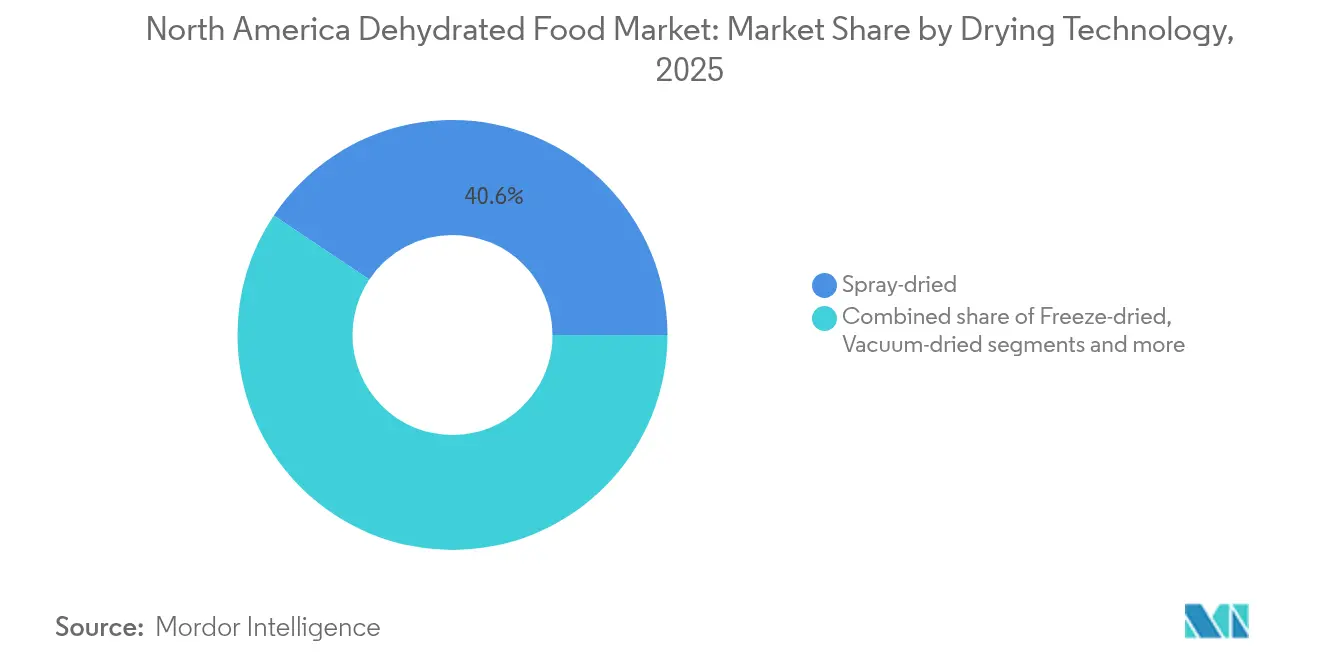
Freeze-Drying Gains Despite Spray-Dried DominanceSpray-dried products accounted for 40.62% of market share in 2025, supported by significant investments in atomization towers and strong partnerships with instant-coffee roasters and dairy cooperatives. Although freeze-dried products represent a smaller volume, they are growing at a robust 6.37% CAGR through 2031, driven by rising demand from outdoor recreation and premium retail positioning. Vacuum-dried products cater to niche markets, such as pharmaceutical-grade nutraceuticals and specialty tea blends, where gentle moisture removal preserves delicate bioactive compounds. In Mexico and rural US regions, sun and solar-drying methods remain prominent in artisanal fruit and herb segments, benefiting from low labor costs and favorable climate conditions. Meanwhile, innovative drying technologies, such as microwave-assisted and infrared methods, are still in pilot phases but show potential for reducing energy consumption.
The gap between the dominant market share of spray-drying and the rapid growth of freeze-drying highlights a divergence in the value chain. Industrial bakeries and snack manufacturers favor the cost efficiency of spray-drying for commodity ingredients. Conversely, consumer brands are increasingly adopting freeze-drying to achieve premium pricing and stand out with unique textures. This dynamic presents a strategic challenge for processors: whether to sustain the high-volume, low-margin spray-dried business or transition to the capital-intensive, smaller-batch freeze-dried production. Hybrid facilities that can switch between technologies based on seasonal demand and contract requirements are emerging as a competitive advantage, particularly for mid-sized processors serving both industrial and retail markets.

By Product Category:
Nutraceuticals Surge as Fruits DominateIn 2025, fruits and vegetables contributed 34.92% of product-category revenue, highlighting their versatility in retail snacking, foodservice applications, and industrial soup and sauce production. Although nutraceutical and functional powders represent a smaller segment, they are experiencing growth, expanding at a 6.41% CAGR through 2031. This growth is primarily driven by sports-nutrition brands and meal-replacement formulators focusing on clean-label protein and fiber sources. While food-safety concerns and consumer skepticism about rehydrated animal proteins pose challenges, niche players have successfully positioned themselves in jerky-adjacent snacks and survival-food kits. Dairy and egg powders primarily serve institutional bakeries and food-aid programs, with demand closely linked to commodity milk prices and government procurement cycles. In North America, instant coffee and beverage powders face mature growth trends, but innovations like single-serve pod systems and cold-brew concentrates are reshaping coffee consumption habits.
Prepared meals and soups are a competitive category where dehydrated formats directly compete with frozen and refrigerated alternatives. Success in this segment requires expertise in formulation, balancing sodium content, ensuring quick rehydration, and enhancing flavor complexity, along with strategic distribution partnerships, particularly with outdoor retailers and emergency-preparedness channels. Spices, herbs, and seasonings maintain steady demand from foodservice operators and home cooks, with differentiation largely limited to organic certifications and country-of-origin labeling. The growing prominence of nutraceuticals is significant, reflecting a shift in consumer perception of dehydrated products. These products are increasingly seen not just as shelf-stable alternatives to fresh foods but as concentrated nutrient-delivery solutions that align with modern wellness and performance goals.
By Nature:
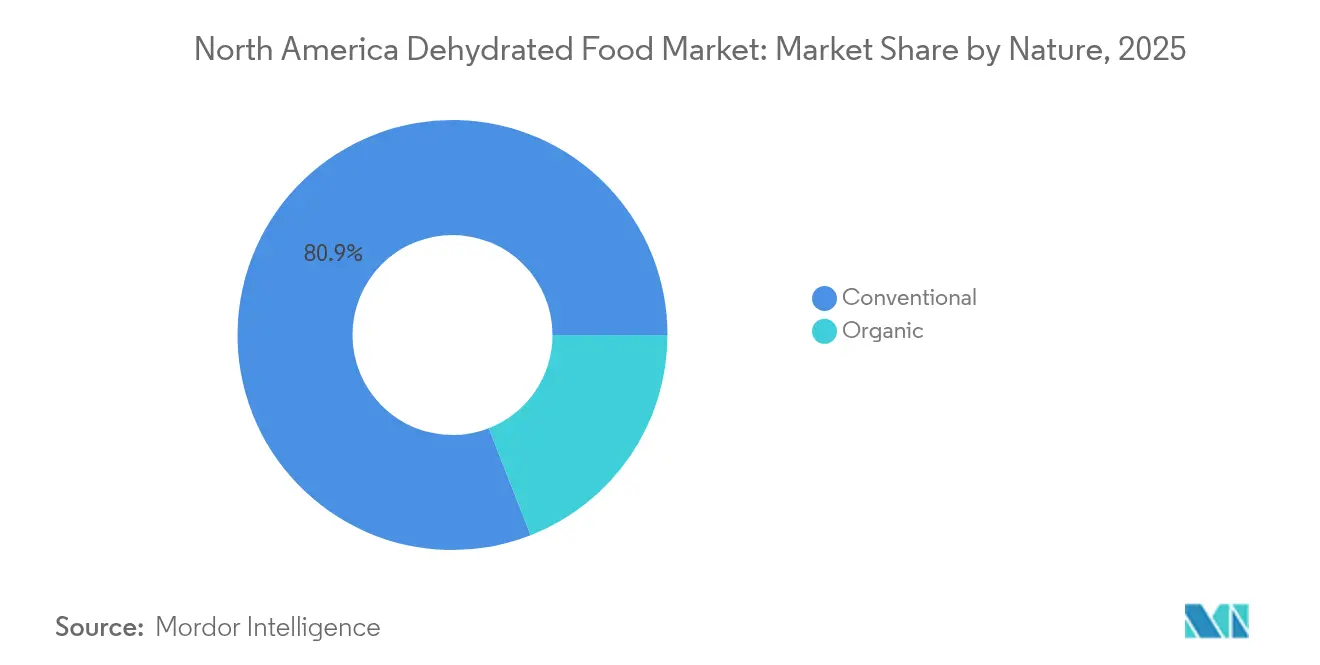
Organic Accelerates Amid Conventional ScaleConventional dehydrated products accounted for 80.92% of the market share in 2025, driven by established agricultural supply chains and pricing strategies designed for the mass market. At the same time, organic variants are experiencing significant growth, with a 6.52% CAGR projected through 2031. This growth is particularly evident in coastal urban markets, where higher disposable incomes support premium pricing. Retailers are increasingly prioritizing USDA-certified products to align with corporate sustainability objectives. The organic growth rate surpasses the overall market CAGR by nearly one percentage point, highlighting strong consumer demand for organic certification despite broader economic challenges. On the supply side, organic fruit and vegetable acreage in the U.S. expanded in 2024, easing procurement challenges that previously hindered organic dehydrated food production.
Processors are carefully evaluating the decision to pursue organic certification. The USDA National Organic Program enforces strict record-keeping and facility-segregation requirements, which increase compliance costs and pose challenges for smaller operators. However, organic certification provides access to natural-foods retailers and e-commerce platforms that typically exclude conventional products, creating a segmented distribution landscape. To address this, many forward-thinking manufacturers are investing in dual production lines, one for organic and one for conventional products, ensuring they can serve both markets without cross-contamination risks. Although this approach requires significant upfront investment, it positions companies to capture market share as organic products gain traction beyond early adopters and into mainstream grocery channels.
By End User:
Retail Surges as Industrial HoldsIn 2025, industrial packaged food constituted 48.12% of end-user demand, supported by long-term supply agreements with snack producers, ready-meal assemblers, and institutional foodservice distributors. Retail channels, expanding at a 6.66% CAGR through 2031, are surpassing industrial segments. This growth is fueled by direct-to-consumer brands bypassing traditional wholesalers and capitalizing on subscription models and branded e-commerce platforms. Foodservice operators, including restaurants and catering companies, consistently utilize dehydrated ingredients for soups, sauces, and seasoning blends. However, growth in this segment is limited by labor shortages and the cyclical nature of menu innovations. In the retail sector, supermarkets and hypermarkets continue to dominate transaction volumes, but online stores are rapidly expanding. This trend is particularly evident for bulkier freeze-dried meal kits, which consumers increasingly prefer to have delivered rather than carrying home from physical stores.
Specialty and convenience stores occupy distinct niches. Specialty retailers focus on organic and artisanal dehydrated products, appealing to health-conscious consumers. Conversely, convenience stores stock single-serve dehydrated soups and instant noodles, catering to on-the-go customers. The retail growth trajectory reflects a shift in consumer behavior: younger demographics are more inclined to research products online, read reviews, and subscribe to auto-replenishment programs that reduce per-unit costs. In contrast, industrial buyers prioritize consistent supply and price stability, often placing less emphasis on brand narratives. This divergence necessitates tailored sales and marketing strategies. Manufacturers excelling in both areas typically establish separate business units with distinct market approaches, recognizing that a unified sales force cannot effectively address the needs of both industrial procurement managers and retail consumers.
Geography Analysis
United States Dehydrated Food Market
In 2025, the United States. led North America's dehydrated food market, capturing a significant 77.61% share. This dominance stems from its well-established distribution networks, high per-capita consumption of prepared meals, and a strong outdoor recreation infrastructure. Freeze-dried backpacking meals, instant soups, and dehydrated vegetable powders are widely available across grocery chains, outdoor specialty stores, and e-commerce platforms. However, the U.S. market's maturity results in slower growth compared to Mexico's emerging segments, where urbanization and increasing disposable incomes are expanding the consumer base. The U.S. Food and Drug Administration's 2024 updates to food-labeling regulations, focusing on allergen declarations and nutrient-content claims, have raised compliance costs for dehydrated-food manufacturers while creating higher entry barriers for smaller players lacking regulatory expertise.
Mexico Dehydrated Food Market
Mexico is projected to grow at a 6.29% CAGR through 2031, the fastest rate among North American regions. This growth is driven by the expanding middle class in cities like Mexico City, Guadalajara, and Monterrey, who are increasingly adopting convenience-focused meal solutions. Government initiatives, such as subsidized loans for small and medium-sized enterprises, are modernizing food processing infrastructure and reducing capital barriers for domestic dehydrated-food producers. Mexican consumers' strong cultural preference for dried chiles, herbs, and spices provides a natural entry point for broader adoption of dehydrated products. However, cold-chain limitations in rural areas and a fragmented retail landscape give shelf-stable dehydrated formats a structural advantage over frozen alternatives, supporting sustained market penetration.
Canada, Caribbean and Central America Dehydrated Food Market
Canada's dehydrated food market is growing steadily but faces limitations due to its smaller population and demand concentration in Ontario, Quebec, and British Columbia. The Canadian Food Inspection Agency's regulations closely align with U.S. FDA standards, facilitating cross-border trade but limiting differentiation opportunities for Canadian processors. Outdoor recreation, particularly backcountry camping and wilderness tourism, remains a key driver of demand, sustaining freeze-dried meal sales in Alberta and British Columbia. Meanwhile, the "Rest of North America," which includes Caribbean and Central American regions with economic ties to the U.S. and Canada, accounts for a minor market share. However, it offers niche opportunities for exporters targeting the tourism and hospitality sectors in resort destinations.
Regulatory Landscape
In the United States, dehydrated foods are regulated under the FDA framework (Federal Food, Drug, and Cosmetic Act and Fair Packaging and Labeling Act), with labeling governed by 21 CFR Part 101 covering identity, net quantity, ingredient statements, and required disclosures for nutrient content and allergens. Certain dehydrated categories also fall under standards of identity, for example dried eggs under 21 CFR 160.105, which influences how optional ingredients such as anti-caking agents are declared on-pack.
In Canada, the Safe Food for Canadians Act and the Food and Drugs Act, administered through the Canadian Food Inspection Agency (CFIA) and the Food and Drug Regulations (FDR), drive labeling and traceability expectations for prepackaged foods, including detailed ingredient and allergen listings. Cross-border operators benefit from the FDA-CFIA and Health Canada Food Safety Systems Recognition Arrangement, which supports alignment in food-safety system principles and helps streamline compliance programs for suppliers serving customers across the United States and Canada.
Competitive Landscape
The North American dehydrated food market is moderately fragmented. Multinational conglomerates control the spray-drying capacity for commodity ingredients, while specialized freeze-dry operators dominate premium niches such as outdoor and emergency-preparedness markets. Incumbents leverage scale advantages in procurement, energy contracting, and distribution. However, technology-driven disruptors are utilizing direct-to-consumer channels and subscription models to bypass traditional retail gatekeepers. Key strategies in the market include vertical integration into organic farming, co-packing partnerships to distribute fixed costs across multiple brands, and geographic expansion into Mexico to capture faster-growing demand.
Opportunities remain untapped in hybrid retail-foodservice formats, such as dehydrated meal kits designed for restaurant chains aiming to reduce kitchen labor. Additionally, functional-food formulations that integrate adaptogens or probiotics into dehydrated bases present growth potential. Manufacturers are focusing on product innovation to align with shifting consumer preferences. Expansion is a critical strategy for players seeking to enhance competitiveness. Production innovation is particularly favored, as key players strive to meet demand and stay competitive in the market. Leading players include Thrive Foods, LLC, Van Drunen Farms, Harmony House Foods Inc., Mother Earth Products, andThe Kraft Heinz Company.
Patent filings in 2024 indicate growing interest in energy-efficient drying methods and texture-optimization techniques, with many applicants focusing on microwave-assisted freeze-drying systems. Emerging disruptors include plant-based meal-kit startups promoting dehydrated ingredients as zero-waste solutions and e-commerce-native brands leveraging customer data to customize flavor profiles and portion sizes. Compliance with ISO 22000 food-safety management standards and FSSC 22000 certification has become a standard requirement for suppliers serving major retail chains. While these certifications increase quality-assurance costs, they also consolidate market share among well-capitalized players capable of managing third-party audits and traceability systems.
North America Dehydrated Food Industry Leaders
-
Van Drunen Farms
-
Harmony House Foods Inc.
-
Mother Earth Products
-
Thrive Foods, LLC
-
The Kraft Heinz Company
- *Disclaimer: Major Players sorted in no particular order
North America Dehydrated Food Market Companies Covered in this Report
- Nestle S.A.
- Kerry Group plc
- The Kraft Heinz Company
- Van Drunen Farms
- Thrive Foods, LLC
- Harmony House Foods Inc.
- Dohler GmbH
- Basic American Foods
- OFD Foods, LLC (Mountain House)
- Chaucer Foods Ltd.
- Mother Earth Products
- Open Farm
- Backpacker's Pantry
- Buropean Freeze Dry Ltd.
- Green Rootz
- Ajinomoto Co., Inc.
- Tate and Lyle PLC
- SunOpta Inc.
- Conagra Brands, Inc.
- General Mills, Inc.
Market Opportunities and Future Outlook
Capacity additions and portfolio expansion around alternative dehydration technologies are a visible whitespace for ingredient suppliers and co-packers serving retail and industrial users. MicroDrieds April 2025 purchase of a 60 kW Radiant Energy Vacuum (REV) machine for its Nampa, Idaho facility, followed by a July 2025 expansion of its royalty-bearing license to cover products such as mochi and multiple dairy formats and the opening of a new dairy-focused processing facility in Washington State, illustrate how processors are using new equipment and licensing to broaden applications beyond traditional fruit and vegetable drying.
In parallel, brand and channel strategies in North America continue to create room for differentiated dehydrated offerings, particularly premium freeze-dried formats for outdoor use and clean-label powders for packaged food and nutraceutical formulations. As more production moves into higher-value formats, operational opportunities concentrate in automation and process control that reduce batch variability and strengthen food-safety documentation, especially for low-moisture facilities managing preventive controls and verification testing as part of their compliance programs.
Recent Industry Developments in North America Dehydrated Food Market
- July 2026: EnWave Corporation signed a second agreement with Procescir S.A. de C.V. for a 120 kW Radiant Energy Vacuum dehydration machine. The deal adds incremental drying capacity for fruit and vegetable ingredients and reinforces REV-based systems as a scale-up route for processors supplying shelf-stable ingredients.
- April 2025: BCFoods completed the full integration of Culinary Farms into the BCFoods brand. The move consolidated product portfolios and supply-chain resources under one operating identity, supporting broader customer coverage across dehydrated ingredients.
- March 2024: Brothers All Natural expanded distribution, strengthening national availability of dehydrated fruit products across multiple retailers.
North America Dehydrated Food Market Report Scope and Research Methodology
Market Definition and Coverage
This market is defined as the value of commercially sold food products in North America that are preserved mainly by removing moisture through dehydration, and then sold in dried or powdered form for household, foodservice, and industrial food use.
Scope exclusions: It excludes fresh and frozen foods, chilled ready meals, and products where dehydration is not the primary preservation step.
Segments Covered in This Report
- By Drying Technology
- Spray-dried
- Freeze-dried
- Vacuum-dried
- Sun / Solar-dried
- Other Drying Technologies
- By Product Category
- Fruits and Vegetables
- Meat and Seafood
- Dairy and Eggs
- Instant Coffee and Other Beverages
- Prepared Meals and Soups
- Spices, Herbs, and Seasonings
- Nutraceutical and Functional Powders
- By Nature
- Conventional
- Organic
- By End User
- Industrial Packaged Food
- Foodservice
- Retail
- Supermarkets/Hypermarkets
- Specialty Stores
- Convenience Stores
- Online Retail Stores
- By Country
- United States
- Canada
- Mexico
- Rest of North America
Data Sources, Market Sizing, and Validation
Desk Research
Desk research was used to set the factual base for supply, demand, and pricing signals that influence dehydrated foods across the United States, Canada, and Mexico. We relied on public sources such as USDA and Statistics Canada datasets for food supply and consumption indicators, and sources such as UN Comtrade and national customs releases to understand trade flows for dried and preserved food items.
To keep assumptions grounded, references were also taken from sources such as the US International Trade Commission, food safety and labeling guidance from regulators such as the FDA and Health Canada, and peer reviewed journals that document dehydration methods and shelf life outcomes. Company filings, investor presentations, and reputed press coverage were reviewed to map product portfolios and route to market changes, and a paid subscription database was used selectively for company financials, news tracking, and patent lookups. These sources are illustrative only, and many other public documents and datasets were also used for data collection, validation, and clarification.
Primary Interviews and Surveys
Primary work was done through expert interviews and structured surveys with manufacturers, ingredient suppliers, brand owners, distributors, and large buyers in retail and foodservice. We used these conversations to confirm what is counted as dehydrated in real purchasing, to stress test pricing and mix shifts, and to align the final model with on-the-ground demand patterns across the region.
Distribution of primary research fieldwork respondents
| Company type | Respondent position |
|---|---|
| Top tier: 36% | CXOs: 15% |
| Mid tier: 49% | Functional/Unit leaders: 26% |
| Smaller Players: 15% | Managers: 59% |
Market-Sizing & Forecasting
Sizing starts from a top-down build where regional packaged food activity and preserved food indicators are reconstructed into a dehydrated food demand pool, then filtered using dehydration-specific splits validated by interviews. Once the pool is formed, results are corroborated through selective bottom-up approximations, such as sampled price per pound times estimated volumes for key categories, distributor channel checks, and supplier roll ups for high-usage ingredients, and then totals are adjusted where the two views do not align.
Key inputs used in the model include import and export trends for dried food items, price movement and mix across powders versus pieces, the share of dehydrated ingredients used by packaged food makers, retail and foodservice demand shifts, and technology mix changes between spray drying and freeze drying. Where data gaps appear in smaller product groups, we estimate using proxy categories with similar price bands and usage patterns, and then confirm direction and magnitude with practitioners.
Forecasting uses a scenario based approach supported by multivariate regression, where the key drivers include inflation adjusted food spending, trade flows, and adoption of convenience and shelf stable formats. Assumptions on future mix and pricing are reviewed with experts so the final forecast stays realistic, even when short term volatility affects commodity-linked food inputs.
Data Validation & Update Cycle
Validation is handled through multiple checks so the final numbers do not depend on one data stream. We compare model outputs against independent signals like trade direction, category level pricing movement, and reported business updates from relevant companies, and then anomalies are investigated before sign-off.
If a variance is material, analysts re-contact selected respondents to confirm whether it is a real market shift or a modeling issue, and then assumptions are corrected and documented. Reports are refreshed annually, with interim updates when major events occur, and a fresh pre-delivery review is completed so clients receive the latest view at the time of access.
Mordor Intelligence's North America Dehydrated Food Market Size Compared With Other Published Estimates
Published market sizes for dehydrated foods in North America can look far apart, even when they describe similar demand trends. This usually happens because groups define what counts as dehydrated differently, select different base years, and apply their own price and mix assumptions when converting volume into value.
The table shows a wide spread mainly because adjacent categories are sometimes bundled into the total, and because different studies do not apply the same pricing logic or refresh timing. In Mordor Intelligence's model, the scope is aligned to dehydrated food sold across the United States, Canada, and Mexico with dehydration as the primary preservation step, and pricing is cross-checked with trade and category signals before forecasts are extended.
Benchmark comparison
| Source | Market Size | Gaps in Research Methodology |
|---|---|---|
| Mordor Intelligence | USD 61.17 B (2025) | |
| Global Consultancy A | USD 18.40 B (2024) | Uses a different base year and appears to apply a narrower product boundary that leans toward selected dehydrated categories, which can undercount industrial ingredient usage that still qualifies as dehydrated food purchases. |
| Regional Consultancy B | USD 13.12 B (2025) | Often focuses on a tighter set of retail visible products and a limited value build, and it can miss cross category mix effects where powders and dried ingredients are bought through B2B channels at different price points. |
Looking across the three figures, the biggest drivers are what is included as dehydrated, how industrial versus consumer demand is treated, and how prices are stepped forward year to year. By keeping the inputs tied to observable trade, pricing, and buyer validation points, our estimate stays traceable and repeatable when the model is updated.
Key Questions Answered in the Report
What is the forecast value of the North America dehydrated food market in 2031?
The market is projected to reach USD 85.82 billion by 2031, reflecting a 5.80% CAGR.
Which drying technology is expanding fastest in North America?
Freeze-drying is growing at a 6.37% CAGR, driven by premium positioning and outdoor recreation demand.
Why is Mexico expected to outpace the United States in growth?
Rising middle-class incomes and government loans for food-processing modernization support a 6.29% CAGR in Mexico.
How large is the organic segment compared with conventional products?
Organic products hold a smaller base but are advancing at 6.52% CAGR, outpacing conventional growth.