
Night Creams Market Size and Share
Market Overview
| Study Period | 2021 - 2031 |
|---|---|
| Market Size (2026) | USD 9.89 Billion |
| Market Size (2031) | USD 13.97 Billion |
| Growth Rate (2026 - 2031) | 7.15 % |
| Fastest Growing Market | Asia Pacific |
| Largest Market | Europe |
| Market Concentration | Medium |
Major Players
*Disclaimer: Major Players sorted in no particular order Image © Mordor Intelligence. Reuse requires attribution under CC BY 4.0. |
|
Night Creams Market Analysis by Mordor Intelligence
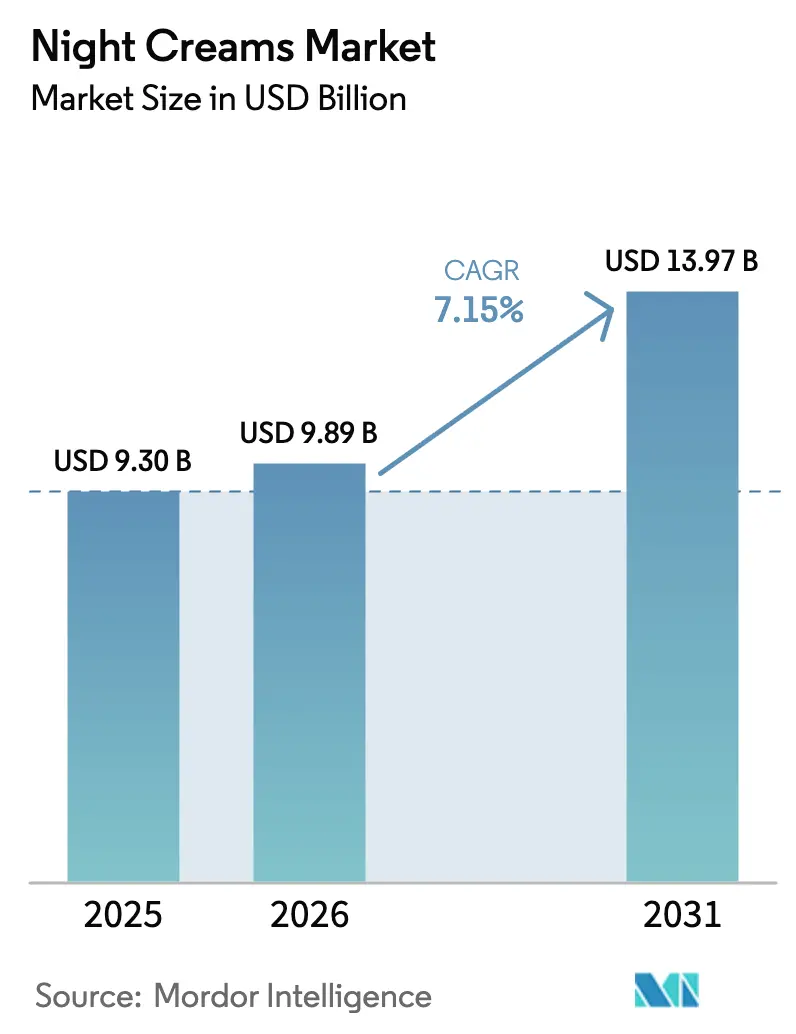
The night creams market size was valued at USD 9.30 billion in 2025 and is estimated to grow from USD 9.89 billion in 2026 to reach USD 13.97 billion by 2031, at a CAGR of 7.15% during the forecast period (2026-2031). Consumer interest in overnight skin repair, new regulatory developments regarding allergen labeling, and the growing popularity of simplified skincare routines with multi-benefit products are driving this trend. Advances in technology, particularly in encapsulation and delivery systems aligned with chronobiology (the study of biological rhythms), are enhancing the effectiveness of targeted night treatments compared to traditional moisturizers. Digital commerce plays a critical role in product discovery and repeat purchases, with social-commerce platforms accelerating the conversion of awareness into quick sales. Mid-tier brands offering clinically validated products at affordable prices are narrowing the gap between prestige and mass-market segments. However, challenges such as counterfeit products and stricter ingredient regulations continue to impact supply chain stability and consumer trust in brands.
Key Report Takeaways
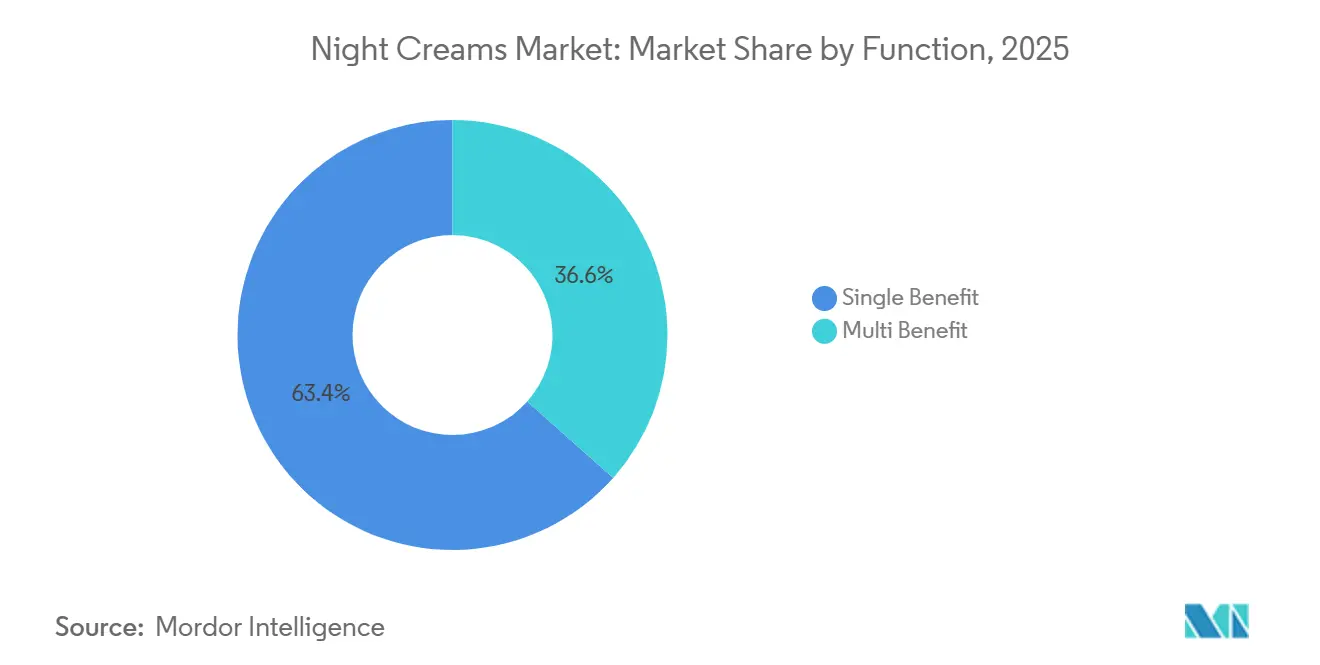
- By function, multi-benefit creams advanced at 7.92% CAGR through 2031, while single-benefit products held 63.43% of the night cream market share in 2025.
- By skin concern, combination-skin variants posted an 8.43% CAGR to 2031, whereas normal-skin formulas accounted for 27.94% of the night cream market size in 2025.
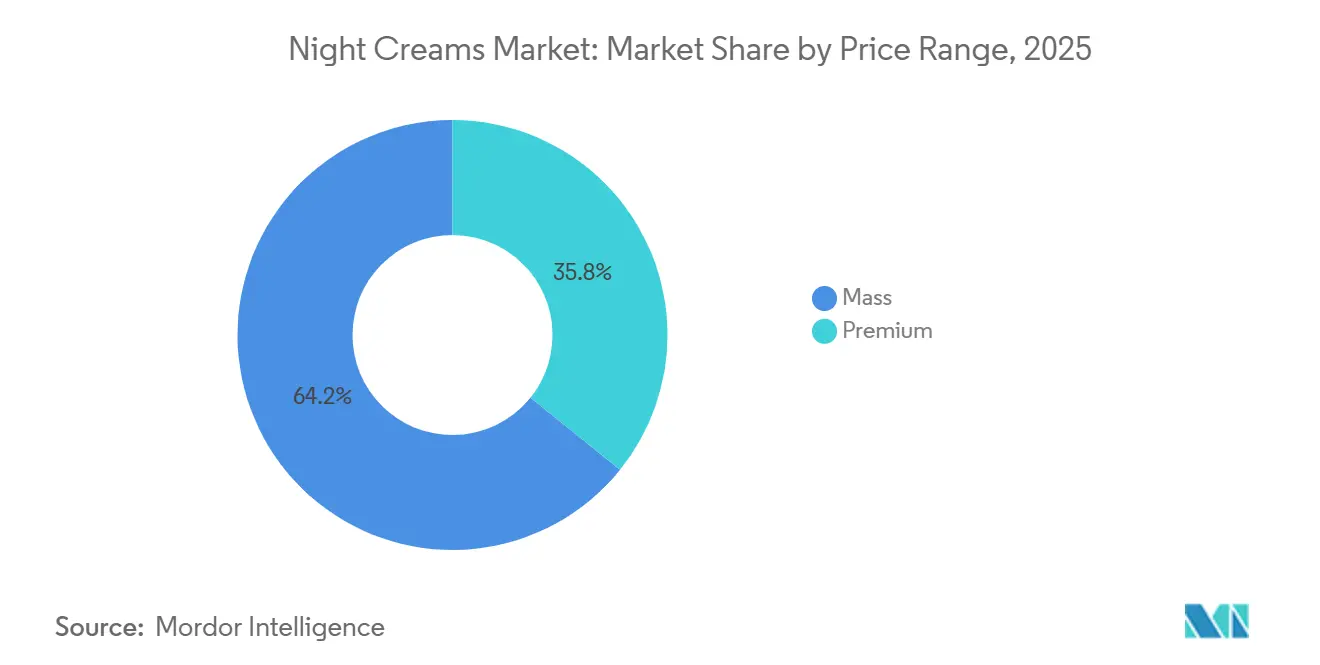
- By price range, the premium tier increased at 7.82% CAGR, while mass offerings retained 64.21% revenue share in 2025, confirming a two-speed value landscape.
- By distribution channel, health and beauty specialty stores captured 62.94% of sales in 2025, yet online platforms advanced at 8.83% CAGR as social-commerce checkout gained traction.
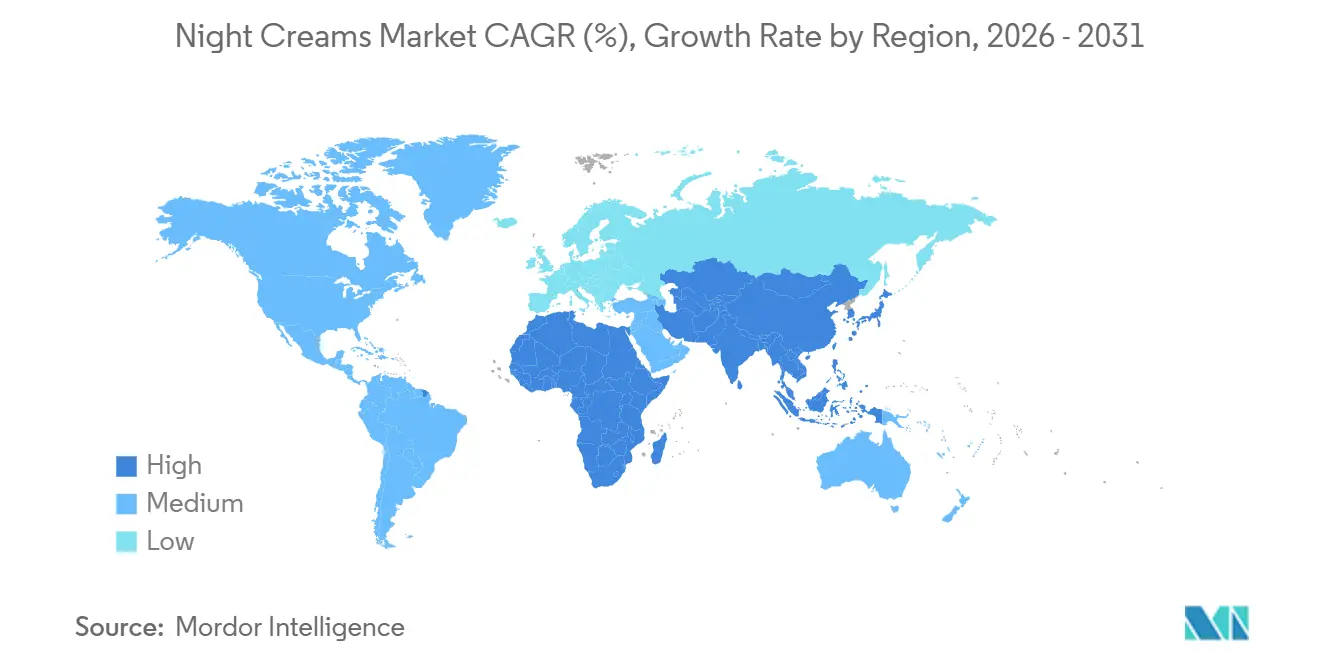
- By geography, Europe led with 33.21% market share in 2025, whereas Asia-Pacific recorded the fastest regional CAGR of 8.08% through 2031.
Note: Market size and forecast figures in this report are generated using Mordor Intelligence’s proprietary estimation framework, updated with the latest available data and insights as of January 2026.
Market Trends and Insights
Drivers Impact Analysis of Night Creams Market*
| Drivers | (~) % Impact on CAGR Forecast | Geographic Relevance | Impact Timeline |
|---|---|---|---|
| Rising concern about skin aging pushing demand for overnight repair products | +1.2% | Global, with concentration in North America, Europe, and urban Asia-Pacific | Long term (≥ 4 years) |
| Growing awareness that skin regeneration is higher at night, boosting interest in dedicated night routines | +1.0% | Global, particularly Europe and North America | Medium term (2-4 years) |
| Shift from basic moisturizers to targeted dermal night-care as consumers seek result-oriented products | +0.9% | North America and Europe, spillover to Asia-Pacific | Medium term (2-4 years) |
| Expansion of multi-benefit night creams making night creams central to routines | +1.3% | Global, led by North America and Asia-Pacific | Medium term (2-4 years) |
| Technological advances in actives increasing efficacy and differentiation | +1.1% | Global, with R&D hubs in Japan, France, United States | Long term (≥ 4 years) |
| Strong consumer shift toward clean, natural, and organic formulations in night creams | +0.8% | Europe and North America, emerging in Asia-Pacific | Short term (≤ 2 years) |
| Source: Mordor Intelligence | |||
Rising concern about skin aging pushing demand for overnight repair products
Demographic shifts are influencing the anti-aging skincare market, which is expected to experience substantial growth in the coming years. Younger generations, particularly Generation Z and Millennials, are increasingly adopting preventive night-care routines in their early twenties. This represents a departure from the corrective approach traditionally favored by older consumers. The emphasis on prevention is driving demand for products such as retinoid-based night creams, peptide complexes, and ceramide-rich formulations aimed at delaying visible signs of aging rather than reversing them. For instance, Elizabeth Arden's recently launched Retinol plus High-Performance Retinoid Ceramide Capsules combine encapsulated retinol with high-performance retinoid and ceramides to minimize irritation while promoting cell turnover during sleep. The economic implications are notable: older consumers are willing to pay premium prices for products with clinically validated efficacy, whereas younger consumers prioritize ingredient transparency and endorsements from dermatologists. This creates a dual value proposition that brands need to address strategically.
Growing awareness that skin regeneration is higher at night, boosting interest in dedicated night routines
Circadian dermatology has transitioned from an academic concept to a commercial focus, driven by peer-reviewed research showing that epidermal permeability, DNA repair, and collagen synthesis peak between 11 PM and 4 AM. No7's Future Renew Damage Reversal Night Cream, launched in 2024, incorporates chronopeptide technology to align active ingredient delivery with nocturnal repair cycles. Independent clinical trials have demonstrated noticeable improvements in skin elasticity within four weeks of use. This scientific foundation is reshaping consumer education, encouraging brands to focus on content marketing that highlights the biological rationale for specialized night formulations instead of generic moisturizers. As a result, the basic moisturizer category is gradually declining, as consumers increasingly view night creams as essential components of effective skincare routines. Shiseido's Vital Perfection Overnight Firming Treatment, introduced in 2025, uses Vital Perfection 8 (VP8) technology to address resilience loss during sleep, further strengthening the connection between circadian biology and product differentiation.
Shift from basic moisturizers to targeted dermal night-care as consumers seek result-oriented products
The shift from general-purpose moisturizers to specialized night treatments highlights a broader trend of premiumization, where clinical efficacy claims take precedence over price sensitivity for an expanding consumer base. CeraVe's Skin Renewing Night Cream, reformulated in 2024 to include encapsulated retinol, niacinamide, and three essential ceramides, exemplifies how mass-market brands are incorporating high-performance ingredients to compete on effectiveness rather than cost. This trend is supported by data: 94 percent of consumers purchased multitasking skincare products in the past year, and 67 percent regularly buy multi-functional items, indicating a preference for concentrated solutions over multi-step routines. The competitive landscape suggests that brands unable to validate efficacy through peer-reviewed studies or dermatologist endorsements face the risk of losing relevance, as increasingly informed consumers scrutinize ingredient lists and demand transparency regarding active concentrations and delivery methods.
Expansion of multi-benefit night creams making night creams central to routines
Multi-benefit formulations are gaining market share by addressing multiple skin concerns such as hydration, anti-aging, brightening, and barrier repair in a single product. These products appeal to time-constrained consumers by simplifying skincare routines. For example, Medik8's Crystal Retinal Ceramide Eye, launched in the year 2025, combines stable retinal with ceramides to target fine lines, dark circles, and barrier integrity simultaneously. Clinical trials reported a significant reduction in crow's feet depth within eight weeks of use. The growing "skinimalism" movement, which promotes the use of two to four essential products instead of extensive ten-step regimens, is further driving this trend. Notably, a large majority of consumers prefer simplified routines. However, over one-third of consumers express concerns that multi-functional products may be less effective for individual benefits compared to single-purpose alternatives. This creates a trust gap that brands must address through transparent communication about active ingredient concentrations and independent testing. The strategic opportunity lies in developing products that deliver measurable results across multiple concerns without compromising efficacy. Achieving this requires advanced encapsulation technologies and synergistic ingredient combinations.
Restraints Impact Analysis of Night Creams Market*
| Restraint | (~) % Impact on CAGR Forecast | Geographic Relevance | Impact Timeline |
|---|---|---|---|
| Proliferation of counterfeit and grey-market night creams eroding brand trust and undercutting legitimate players | -0.7% | Asia-Pacific, Middle East, Africa, and online marketplaces globally | Short term (≤ 2 years) |
| Health concerns over potentially harmful or irritating ingredients | -0.5% | Global, with heightened scrutiny in Europe and North America | Medium term (2-4 years) |
| Stringent and evolving cosmetic regulations increasing compliance complexity | -0.6% | Europe, North America, ASEAN | Short term (≤ 2 years) |
| Rising scrutiny of certain chemical UV filters, preservatives, and microplastics, prompting reformulation and delistings | -0.4% | Europe primarily, spreading to North America and Asia-Pacific | Medium term (2-4 years) |
| Source: Mordor Intelligence | |||
Proliferation of counterfeit and grey-market night creams eroding brand trust and undercutting legitimate players
Counterfeit cosmetics represent a significant illicit market in South Korea. These products, including night creams, often contain harmful substances such as beryllium oxide, heavy metals, and bacterial contaminants, posing serious health risks to consumers. The United Kingdom Intellectual Property Office has reported a rise in counterfeit cosmetics purchases, leading to financial losses for legitimate brands. Online marketplaces and social media platforms have accelerated the distribution of counterfeit products that closely replicate premium packaging. In response, South Korea's Ministry of Food and Drug Safety and the Korea Intellectual Property Office have implemented artificial intelligence-powered monitoring systems to identify counterfeit listings. However, enforcement efforts remain inconsistent across jurisdictions. Strategic initiatives include investments in anti-counterfeit packaging technologies such as holograms, quick response codes, and blockchain-based authentication. The global anti-counterfeit packaging market is expected to witness significant growth. Brands that do not protect their intellectual property or educate consumers on authentication methods risk losing trust and market share to grey-market operators permanently.
Health concerns over potentially harmful or irritating ingredients
Consumer awareness regarding contact allergens and irritants in cosmetics is increasing, driven by dermatological research identifying substances such as fragrances, parabens, formaldehyde releasers, methylisothiazolinone, and para-phenylenediamine as primary causes of allergic contact dermatitis [1]Source: American Academy of Dermatology, “Top Contact Allergens in Skincare,” aad.org. The European Union's amendment to Annex III of the Cosmetics Regulation, effective from July 2026, requires the labeling of 80 fragrance allergens, a significant increase from the previous 26 [2]Source: European Commisson, "Fragrance Allergens Labelling," commission.europa.eu. This change compels brands to reformulate their products to comply with regulations and avoid potential consumer backlash. Preservatives like parabens, while effective in preventing microbial contamination, are under scrutiny due to concerns about potential endocrine system disruption. In response, brands such as The Ordinary have introduced paraben-free formulations across their night-care product lines. The key challenge for manufacturers lies in balancing microbiological safety with growing consumer demand for preservative-free products. Addressing this challenge requires investment in alternative preservation methods, including multifunctional ingredients, airless packaging, and hurdle technology, which combines low water activity with natural antimicrobials.
*Our forecasts treat driver/restraint impacts as directional, not additive. The impact forecasts reflect baseline growth, mix effects, and variable interactions.
Night Creams Market Segment Analysis
By Function:
Multi-Benefit Formulations Redefine Routine SimplicityMulti-benefit night creams are growing at a compound annual growth rate (CAGR) of 7.92% through 2031, surpassing single-benefit formulations, which held a 63.43% market share in 2025. This growth is driven by consumer demand for products that combine hydration, anti-aging, brightening, and barrier repair in a single application. The "skinimalism" movement, which advocates for simplified skincare routines with a focus on essential products, is significantly influencing consumer preferences. A majority of consumers now prefer streamlined regimens, with many opting for multitasking skincare products over the past year. For example, Medik8's Crystal Retinal Ceramide Eye, launched in 2025, reflects this trend by combining stable retinal with ceramides to address fine lines, dark circles, and barrier integrity simultaneously. Clinical trials have shown a notable reduction in crow's feet depth within weeks of use. Similarly, CeraVe's Skin Renewing Night Cream, reformulated in 2024, features encapsulated retinol, niacinamide, and three essential ceramides, demonstrating how mass-market brands are incorporating high-performance ingredients traditionally associated with premium brands. This shift highlights a competitive focus on product performance rather than cost alone.
For brands, the strategic implications are clear: those unable to validate the effectiveness of multi-benefit products through peer-reviewed studies or dermatologist endorsements risk losing relevance in the market. Consumers are increasingly examining ingredient lists and seeking transparency regarding active ingredient concentrations and delivery mechanisms. Despite these evolving consumer expectations, the regulatory framework for this market segment remains consistent. Both single- and multi-benefit formulations must comply with the same safety and labeling standards under the regulatory frameworks of the European Union (EU), United States (US), and Association of Southeast Asian Nations (ASEAN).


By Skin Concern:
Combination Skin Formulations Capture Fastest GrowthCombination skin formulations are projected to grow at a Compound Annual Growth Rate (CAGR) of 8.43% through 2031, reflecting a shift from the traditional dry-oily categorization to more detailed dermatological segmentation. This approach addresses mixed concerns, such as T-zone oiliness combined with cheek dryness. In 2025, normal skin formulations accounted for 27.94% of the market share, driven by their broad appeal and lower risk of adverse reactions. However, the fastest growth is observed in specialized variants targeting combination, acne-prone, and wrinkle-prone skin types. Dry skin formulations maintain a significant market share, particularly in colder climates and among older consumers, while oily skin variants are gaining popularity in humid regions like Southeast Asia and among younger demographics prone to sebum overproduction.
There is a strategic opportunity in developing adaptive formulations that cater to varying skin conditions across different facial zones. This requires advanced emulsion technologies and zone-specific active ingredient delivery. For example, Elizabeth Arden's Retinol plus High-Performance Retinoid (HPR) Ceramide Capsules, launched in 2025, address combination skin by combining encapsulated retinol with high-performance retinoid and ceramides. This formulation minimizes irritation in sensitive areas while enhancing cell turnover in more resilient zones. Similarly, No7's Future Renew Damage Reversal Night Cream, introduced in 2024, uses chronopeptide technology to synchronize active ingredient delivery with nocturnal repair cycles, achieving measurable improvements in skin elasticity across multiple skin types within four weeks.
By Price Range:
Premium Segment Gains Despite Mass DominanceThe premium segment is expected to grow at a Compound Annual Growth Rate (CAGR) of 7.82% through 2031. However, mass-market offerings held 64.21% of the market share in 2025, reflecting a divided market landscape. In this scenario, consumers are increasingly prioritizing efficacy claims over price categories, with many opting to combine high-end active ingredients with affordable base products. Masstige brands, which offer the accessibility of mass-market products along with the quality of prestige-level ingredients, have shown significant growth, outperforming both the pure mass and pure prestige segments in recent years. Only a small percentage of consumers believe that higher prices automatically indicate better quality. Additionally, nearly half of consumers use a mix of premium and mass-market products in their routines, highlighting the growing importance of ingredient transparency and clinical validation over traditional brand reputation.
Cosnova, the parent company of essence and Catrice, reported revenue of EUR 991 million in 2024, exceeding USD 1 billion annually. This achievement established it as the second-largest cosmetics company by volume, proving that mass-market brands can achieve both scale and profitability without relying on premium pricing. Similarly, L'Oréal's acquisition of Aesop for USD 2.5 billion in 2024 expanded its prestige portfolio into ritualistic night-care regimens, targeting affluent consumers who prioritize sensory experiences and brand storytelling alongside clinical efficacy. The strategic takeaway for brands is the importance of clearly communicating their value proposition, whether it is clinical efficacy, sensory luxury, or accessible performance. Brands should avoid positioning themselves in the middle ground where neither mass-market nor prestige attributes are sufficiently distinct. From a regulatory standpoint, the requirements remain consistent across both mass and premium formulations, as all products must meet the same safety and labeling standards. However, premium brands face greater reputational risks from adverse events due to higher consumer expectations.
By Distribution Channel:
Online Retail Disrupts Traditional Specialty StoresOnline retail channels are expected to grow at a compound annual growth rate (CAGR) of 8.83% through 2031. This growth is driven by factors such as TikTok Shop's beauty sales exceeding USD 1 billion, mobile checkout accounting for 59% of digital transactions, and social commerce influencing 68% of impulse purchases [3]Source: IMRG, "Fashion and Beauty eCommerce trends for 2026," imrg.org. Health and beauty specialty stores, which accounted for 62.94% of distribution in 2025, are losing market share as consumers increasingly prefer e-commerce platforms that provide a wider assortment, competitive pricing, and personalized recommendations powered by artificial intelligence (AI) algorithms.
Supermarkets and hypermarkets continue to play a significant role in convenience-driven purchases and mass-market brands. At the same time, other distribution channels, including direct-to-consumer websites, subscription boxes, and beauty vending machines, are gaining traction by appealing to niche segments seeking curated experiences or exclusive formulations. In 2026, the average order value in beauty e-commerce increased by 9% year-over-year, reflecting a consumer shift toward premium products. This trend is supported by online platforms offering detailed ingredient information, customer reviews, and virtual try-on tools that help reduce the risk of purchase.
Geography Analysis
Europe Night Creams Market
Europe accounted for 33.21% of the market share in 2025, led by Germany, France, and the United Kingdom. The implementation of the European Union (EU) Cosmetics Regulation Omnibus VIII amendments on May 1, 2026, introduced stricter allergen labeling for 80 fragrance substances and accelerated the phase-out of microplastics between 2027 and 2035. Germany's focus on dermatologically tested formulations and France's leadership in prestige skincare innovation have created a competitive environment where clinical efficacy and sensory appeal coexist. Meanwhile, the United Kingdom's post-Brexit regulatory changes, such as the oxybenzone restriction effective January 2026, have added compliance challenges for brands operating across Europe. Emerging markets like Spain, the Netherlands, Poland, Belgium, and Sweden are also witnessing growth, driven by rising disposable incomes, increased awareness of circadian skincare, and the expansion of clean-beauty retailers such as Douglas and Sephora. Regulatory developments are significant, with brands reformulating to eliminate microplastics, parabens, and controversial preservatives gaining a competitive advantage over those facing compliance-related product delistings and reputational risks.
APAC Night Creams Market
The Asia-Pacific region is the fastest-growing market, with a projected compound annual growth rate (CAGR) of 8.08% through 2031. Growth is driven by rising disposable incomes in China and India, innovation in Korean beauty (K-beauty) pipelines in South Korea, and Japan's advancements in chronobiology-based formulations, such as KANEBO's night-repair product lines. In China, the expanding middle class and the rise of e-commerce platforms like Tmall and Douyin are making premium night creams more accessible. India's Honasa Consumer (Mamaearth) achieved a valuation of USD 1.2 billion by focusing on transparent ingredient sourcing and direct-to-consumer models that resonate with younger, digitally savvy consumers. South Korea's efforts to combat counterfeit cosmetics, including the deployment of artificial intelligence (AI) powered monitoring systems by the Ministry of Food and Drug Safety and the Korea Intellectual Property Office in 2025, are critical for protecting brand equity in a market affected by a USD 970 million illicit cosmetics trade.
The Americas and MEA Night Creams Market
North America, South America, and the Middle East and Africa collectively present significant opportunities. In North America, the United States leads the market due to high per-capita skincare spending and the popularity of dermatologist-recommended brands like CeraVe and Neutrogena. In Canada, demand for barrier-repair formulations containing ceramides and hyaluronic acid is driven by the colder climate, while Mexico benefits from a growing middle class and its proximity to United States distribution networks, positioning it as a high-growth market. In South America, Brazil dominates the market, supported by a strong beauty culture and the increasing adoption of K-beauty and Japanese beauty (J-beauty) routines. Emerging markets such as Argentina, Colombia, Chile, and Peru are characterized by affordability and accessibility as key purchase drivers. In the Middle East, Saudi Arabia and the United Arab Emirates exhibit strong demand for luxury night creams, driven by high disposable incomes and a preference for prestige brands. Meanwhile, markets like South Africa, Nigeria, Egypt, Morocco, and Turkey face challenges such as fragmented distribution and underdeveloped e-commerce infrastructure, which also present opportunities for brands willing to invest in market development.

Competitive Landscape
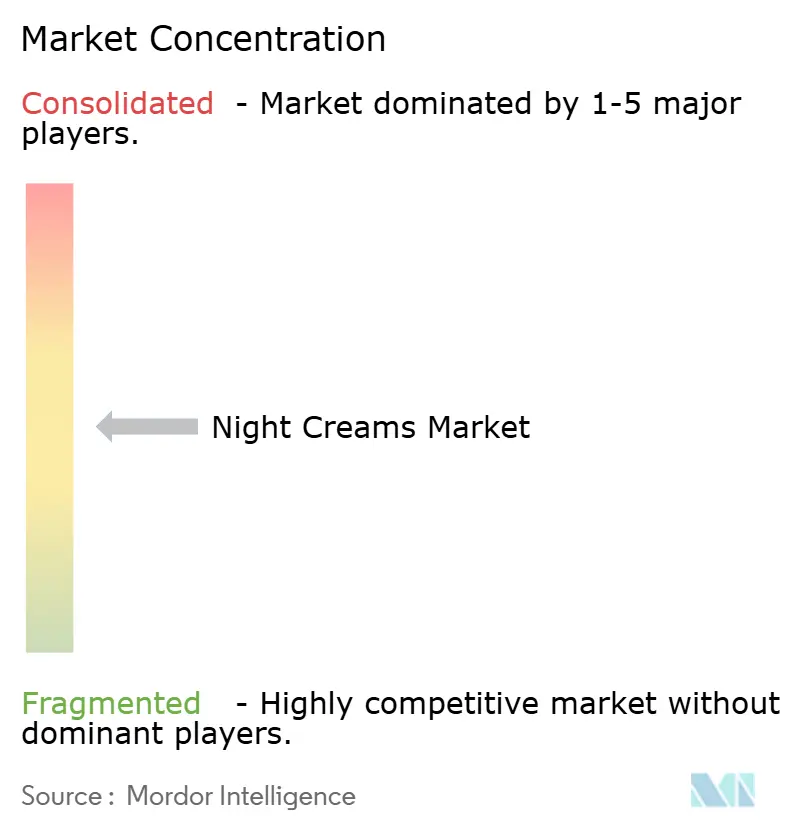
The night cream market exhibits moderate concentration, with established multinational companies such as L'Oréal, Estée Lauder, Shiseido, Beiersdorf, Unilever, and Procter & Gamble operating alongside emerging clean-beauty brands like DECIEM's The Ordinary and India's Honasa Consumer (Mamaearth). Key strategic developments include L'Oréal's acquisition of Aesop for USD 2.5 billion in 2024, which expanded its prestige portfolio into ritualistic night-care regimens, and Estée Lauder's launch of the Advanced Night Repair Synchronized Multi-Recovery Complex in 2025, featuring chronopeptides and bifidus extract to support mitochondrial repair during sleep. Smaller players are focusing on niches such as microbiome-friendly formulations, refillable packaging, and personalized diagnostic tools utilizing artificial intelligence (AI)-powered skin analysis, addressing gaps that legacy brands have been slower to fill. The competitive landscape is further intensified by the rise of direct-to-consumer models, which bypass traditional retail markups, allowing emerging brands to offer high-quality formulations at competitive prices while collecting valuable first-party data on consumer preferences and purchasing behavior.
Technology is becoming a key differentiator in the night cream market, with brands investing in encapsulation technologies, time-release polymers, and chronobiology-based formulations that align active ingredient delivery with nocturnal repair cycles. For instance, Shiseido's patent filings in 2025 for VP8 technology, designed to address loss of skin resilience during sleep, highlight how intellectual property can create competitive advantages and support premium pricing strategies. Meanwhile, the regulatory environment, shaped by the European Union (EU) Cosmetics Regulation Omnibus VIII and the United States (US) Food and Drug Administration (FDA) Modernization of Cosmetics Regulation Act (MoCRA), is increasing compliance costs and creating barriers to entry for smaller players. This dynamic is consolidating market share among multinational companies with dedicated regulatory teams and global supply chains.
The proliferation of counterfeit night creams, particularly in the Asia-Pacific region, poses significant challenges. In South Korea alone, the illicit cosmetics market reached USD 970 million in 2025, undermining brand equity and exposing consumers to potentially hazardous formulations. To combat this issue, companies are investing in anti-counterfeit packaging technologies, including holograms, quick response (QR) codes, and blockchain-based authentication, to protect their products and maintain consumer trust.
Night Creams Industry Leaders
-
Beiersdorf AG
-
Unilever Plc
-
L’Oréal S.A.
-
Th Estée Lauder Companies, Inc.
-
Shiseido Company Limited
- *Disclaimer: Major Players sorted in no particular order
Night Creams Market Companies Covered in this Report
- L’Oréal S.A.
- The Estée Lauder Companies Inc.
- Shiseido Company Limited
- Beiersdorf AG
- Unilever plc
- The Procter & Gamble Co.
- Johnson & Johnson
- Kenvue Inc.
- KOSE Corporation
- Natura &Co
- Chanel S.A.
- Clarins Group
- Mary Kay Inc.
- Revlon Inc.
- DECIEM
- Honasa Consumer Ltd.
- Lotus Herbals Pvt. Ltd.
- Eveline Cosmetics
- Weleda AG
- Oriflame Holding AG

Recent Industry Developments in Night Creams Market
- July 2025: Kao Corporation has broadened its product portfolio by introducing two new skincare products under its global prestige brand KANEBO: KANEBO CREAM IN DAY II and KANEBO CREAM IN NIGHT II. According to the brand, the KANEBO CREAM IN NIGHT II contains Niacinamide, which penetrates the skin to target both the dermis and epidermis, aiming to reduce wrinkles. Furthermore, it is designed to inhibit excessive melanin production, helping to prevent the formation of dark spots.
- May 2025: Savannah James introduced her skincare brand, Reframe, which includes a clinically supported product line featuring a brightening serum, a day cream, and a night cream. The brand was developed in collaboration with beauty expert Nick Axelrod-Welk and tested in partnership with Howard University’s dermatology department across a range of skin tones. Reframe focuses on efficacy, inclusivity, and cultural expression, distinguishing itself from conventional celebrity beauty products.
- April 2025: Obagi Medical, a subsidiary of Waldencast plc, launched its Retinol + PHA Refining Night Cream. The company states that this formulation is designed to enhance skin renewal by combining Entrapped Retinol with the gentle exfoliating properties of Polyhydroxy Acid (PHA) Gluconolactone, which are scientifically validated.


Global Night Creams Market Report Scope
Night creams are moisturizing skincare products specifically designed for nighttime use. These products are formulated with richer and more concentrated ingredients to deeply hydrate the skin, repair damage, and support the skin’s natural regeneration process during sleep. The market for night creams can be segmented by function, including single benefit and multi-benefit products; by skin concern, such as normal skin, dry skin, combination skin, and other concerns like oily skin, wrinkle-prone skin, and acne-prone skin; by price range, categorized into mass and premium products; by distribution channel, including supermarkets and hypermarkets, health and beauty stores, online retail stores, and other distribution channels; and by geography, covering regions such as North America, Europe, Asia-Pacific, South America, and the Middle East and Africa. The market sizing has been done in value terms in USD for all the abovementioned segments.
| Single Benefit |
| Multi Benefit |
| Normal Skin |
| Dry Skin |
| Combination Skin |
| Other Skin Concern (Oily Skin, Wrinkle-Prone Skin, Acne-Prone Skin) |
| Mass |
| Premium |
| Supermarkets and Hypermarkets |
| Health and Beauty Stores |
| Online Retail Stores |
| Other Distribution Channels |
| North America | United States |
| Canada | |
| Mexico | |
| Rest of North America | |
| Europe | Germany |
| United Kingdom | |
| Italy | |
| France | |
| Spain | |
| Netherlands | |
| Poland | |
| Belgium | |
| Sweden | |
| Rest of Europe | |
| Asia-Pacific | China |
| India | |
| Japan | |
| Australia | |
| Indonesia | |
| South Korea | |
| Thailand | |
| Singapore | |
| Rest of Asia-Pacific | |
| South America | Brazil |
| Argentina | |
| Colombia | |
| Chile | |
| Peru | |
| Rest of South America | |
| Middle East and Africa | South Africa |
| Saudi Arabia | |
| United Arab Emirates | |
| Nigeria | |
| Egypt | |
| Morocco | |
| Turkey | |
| Rest of Middle East and Africa |
| By Function | Single Benefit | |
| Multi Benefit | ||
| By Skin Concern | Normal Skin | |
| Dry Skin | ||
| Combination Skin | ||
| Other Skin Concern (Oily Skin, Wrinkle-Prone Skin, Acne-Prone Skin) | ||
| By Price Range | Mass | |
| Premium | ||
| By Distribution Channel | Supermarkets and Hypermarkets | |
| Health and Beauty Stores | ||
| Online Retail Stores | ||
| Other Distribution Channels | ||
| By Geography | North America | United States |
| Canada | ||
| Mexico | ||
| Rest of North America | ||
| Europe | Germany | |
| United Kingdom | ||
| Italy | ||
| France | ||
| Spain | ||
| Netherlands | ||
| Poland | ||
| Belgium | ||
| Sweden | ||
| Rest of Europe | ||
| Asia-Pacific | China | |
| India | ||
| Japan | ||
| Australia | ||
| Indonesia | ||
| South Korea | ||
| Thailand | ||
| Singapore | ||
| Rest of Asia-Pacific | ||
| South America | Brazil | |
| Argentina | ||
| Colombia | ||
| Chile | ||
| Peru | ||
| Rest of South America | ||
| Middle East and Africa | South Africa | |
| Saudi Arabia | ||
| United Arab Emirates | ||
| Nigeria | ||
| Egypt | ||
| Morocco | ||
| Turkey | ||
| Rest of Middle East and Africa | ||


Key Questions Answered in the Report
How fast is the night cream market projected to grow to 2031?
It is forecast to advance at a 7.15% CAGR from 2026 to 2031, reaching USD 13.97 billion by the end of the period.
Which region is expanding the quickest in night-cream sales?
Asia-Pacific is leading with an 8.08% CAGR, fueled by rising incomes and K-beauty innovation.
What drives consumer preference for multi-benefit night creams?
Shoppers seek routine simplicity, proven efficacy, and cost-per-use savings, pushing multi-benefit lines to a 7.92% CAGR.
How are regulations shaping future night-cream formulations?
EU allergen rules, U.S. MoCRA, and global microplastics bans compel brands to reformulate for safety and sustainability.
Why are counterfeit night creams a growing concern?
Online marketplaces enable rapid spread of look-alike products that may contain harmful contaminants, eroding brand trust and sales.
Page last updated on:


 Your data is secure and never sold or shared.


