
Nail Salon Market Size and Share
Market Overview
| Study Period | 2021 - 2031 |
|---|---|
| Market Size (2026) | USD 4.08 Billion |
| Market Size (2031) | USD 5.86 Billion |
| Growth Rate (2026 - 2031) | 7.50 % |
| Fastest Growing Market | Asia-Pacific |
| Largest Market | North America |
| Market Concentration | Low |
Major Players
*Disclaimer: Major Players sorted in no particular order Image © Mordor Intelligence. Reuse requires attribution under CC BY 4.0. |
|
Nail Salon Market Analysis by Mordor Intelligence
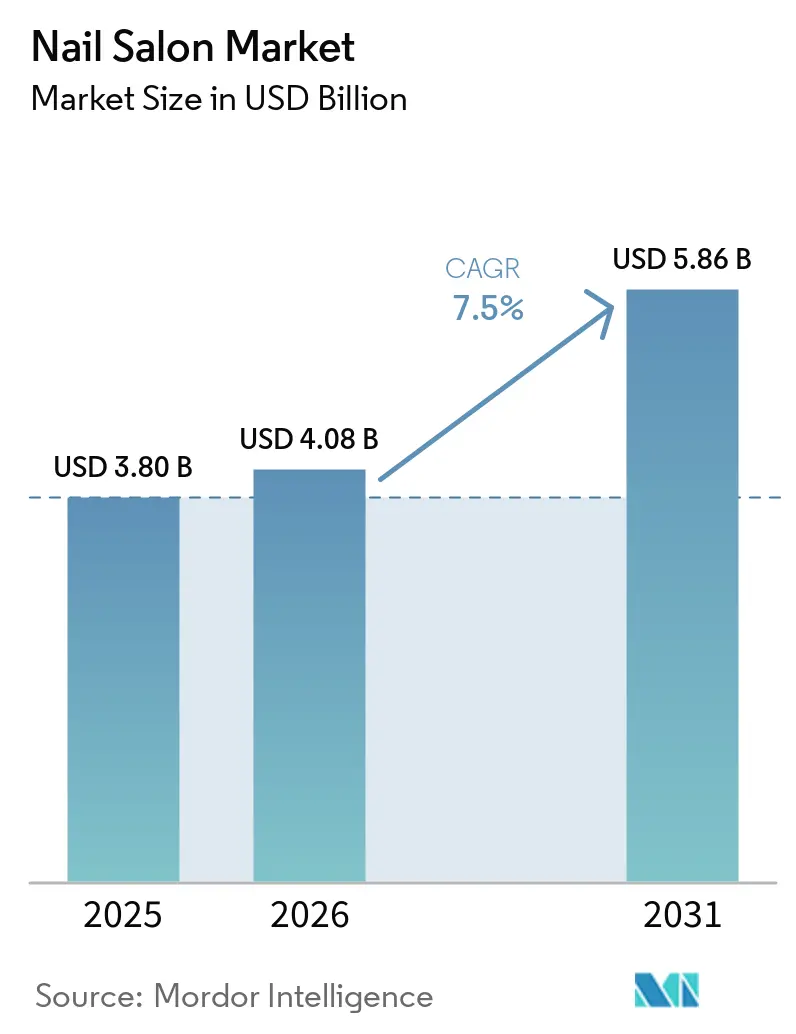
The Nail Salon Market size was valued at USD 3.80 billion in 2025 and is estimated to grow from USD 4.08 billion in 2026 to reach USD 5.86 billion by 2031, at a CAGR of 7.5% during the forecast period (2026-2031). This growth is driven by the increasing integration of professional nail care services into routine personal grooming, beauty maintenance, and self-care practices. Consumers are placing greater emphasis on appearance enhancement, wellness-oriented beauty experiences, and personalized grooming services, leading to consistent demand for manicures, pedicures, nail art, nail strengthening treatments, and premium salon services. The influence of social media, celebrity beauty trends, and digital fashion culture has elevated nail aesthetics as a significant form of personal expression, motivating consumers to explore new designs, finishes, and customized nail styles. Additionally, advancements in gel systems, dip powders, non-toxic formulations, and long-lasting cosmetic technologies are contributing to market growth by enhancing treatment quality, durability, and overall consumer satisfaction.
Key Report Takeaways
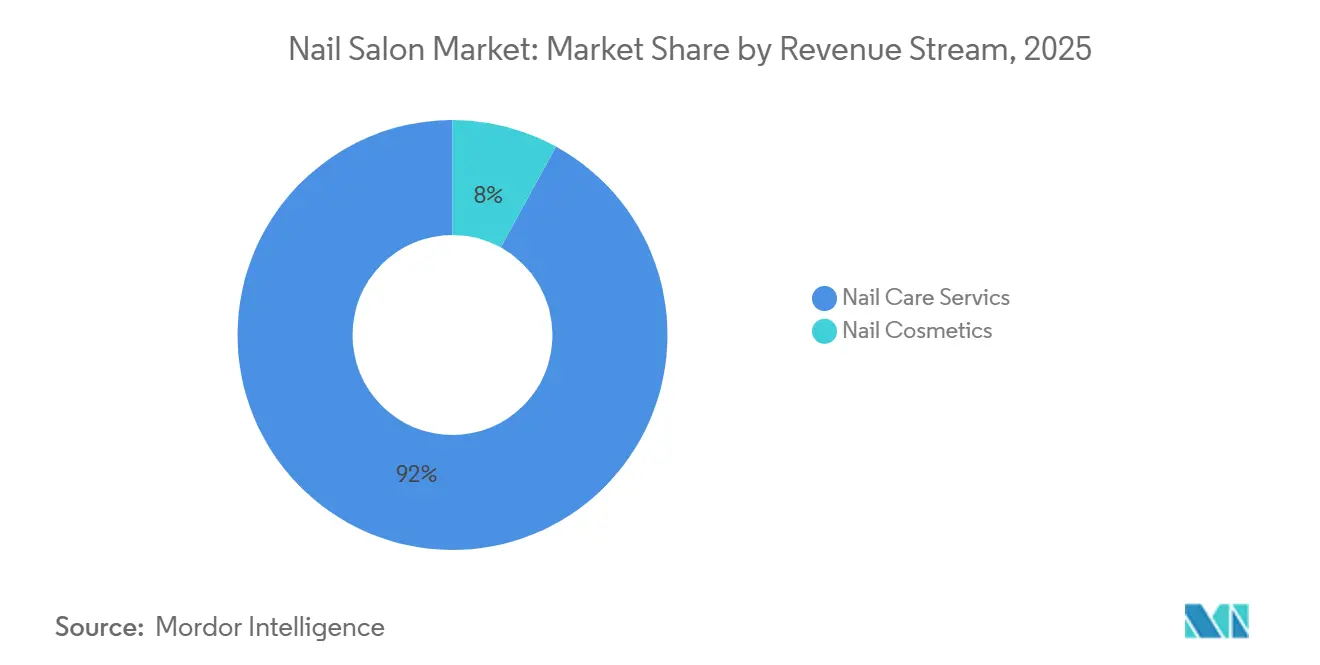
- By revenue stream, nail care services held 92.0% of revenue in 2025, while nail cosmetics recorded the fastest projected growth at 8.09% through 2031.
- By structure, independent salons held 74.31% of revenue in 2025, while chained salons are forecast to grow at an 7.62% CAGR through 2031.
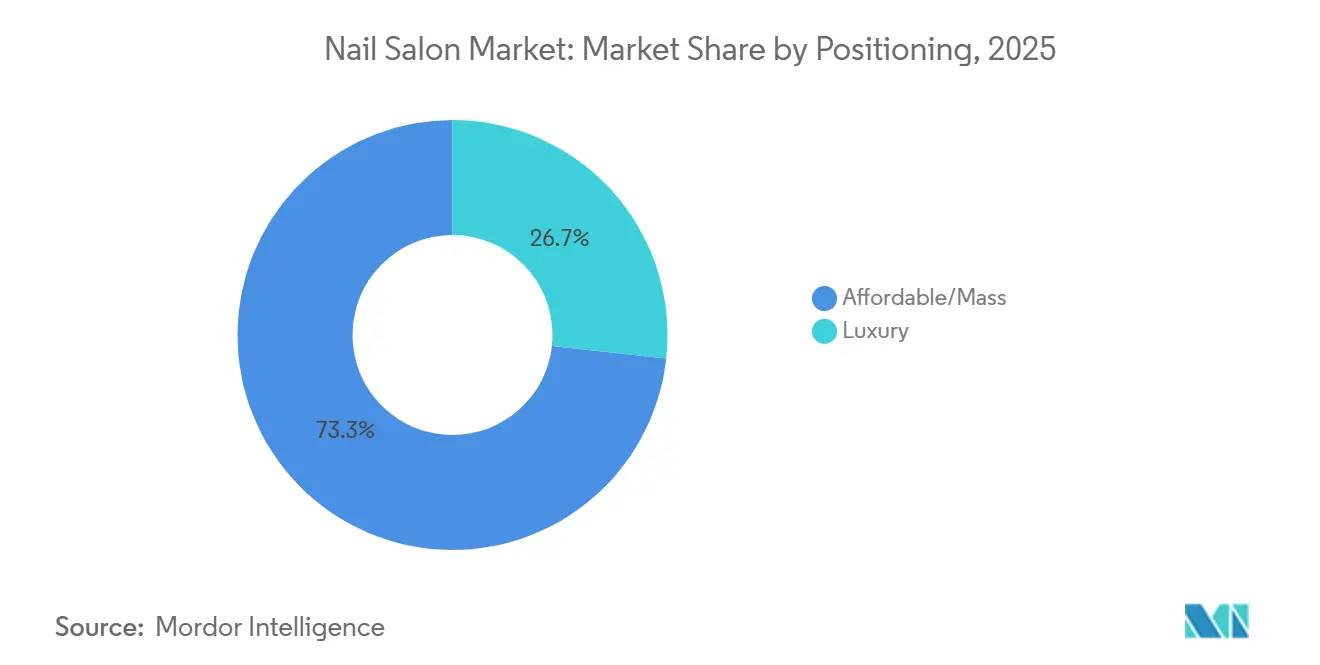
- By positioning, affordable and mass-market salons accounted for 73.26% of revenue in 2025, while luxury salons are projected to expand at a 9.16% CAGR through 2031.
- By geography, North America held 33.19% of revenue in 2025, while Asia-Pacific is forecast to record the fastest growth at an 8.23% CAGR through 2031.
Note: Market size and forecast figures in this report are generated using Mordor Intelligence’s proprietary estimation framework, updated with the latest available data and insights as of January 2026.
Market Trends and Insights
Drivers Impact Analysis of Nail Salon Market*
| Driver | (~) % Impact on CAGR Forecast | Geographic Relevance | Impact Timeline |
|---|---|---|---|
| Rising self-care and wellness culture | +1.8% | Global | Medium term (2-4 years) |
| Growing emphasis on personal grooming and beauty routines | +1.5% | Global, led by North America and Asia-Pacific | Medium term (2-4 years) |
| Increased awareness of nail health and hygiene | +0.9% | Global | Long term (≥ 4 years) |
| Explosion of nail art and design trends | +1.2% | Asia-Pacific core, spill-over to North America and Europe | Short term (≤ 2 years) |
| Influence of social media and digital inspiration | +1.0% | Global, concentrated in North America and Asia-Pacific | Short term (≤ 2 years) |
| Advancement in nail product and technology | +0.8% | North America, Asia-Pacific, Europe | Medium term (2-4 years) |
| Source: Mordor Intelligence | |||
Rising self‑care and wellness culture
The growing self-care and wellness culture is a key driver for the nail salon market, as consumers increasingly perceive professional nail care services as part of their overall personal wellness, relaxation, and lifestyle enhancement routines rather than solely cosmetic treatments. The emphasis on stress relief, self-pampering, appearance maintenance, and mental well-being is motivating consumers to visit nail salons regularly for services such as manicures, pedicures, spa therapies, hydration treatments, and personalized grooming. Nail salons are being positioned as wellness-oriented beauty destinations, offering comfort, relaxation, and experiential services alongside aesthetic improvements. This trend is further bolstered by a rising preference for premium self-care rituals, the influence of social media-driven wellness lifestyles, and growing demand for services that integrate beauty, relaxation, and personal rejuvenation. The evolving view of nail care as an integral part of holistic self-care is driving increased service frequency, customer retention, and spending on professional nail salon services worldwide.
Growing emphasis on personal grooming and beauty routines
The increasing focus on personal grooming and beauty routines is driving growth in the nail salon market, as consumers prioritize regular beauty maintenance, appearance enhancement, and professional grooming services as part of their daily lives. The incorporation of nail care into routine self-care practices is boosting demand for services such as manicures, pedicures, nail art, gel treatments, and wellness-oriented salon offerings across various consumer segments. Factors such as social media influence, evolving fashion trends, workplace appearance standards, and heightened beauty consciousness are prompting consumers to seek professional nail services more frequently. For example, data from the Office for National Statistics indicates that consumer spending on hairdressing salons and personal grooming in the United Kingdom surpassed GBP 10.0 billion in 2024, marking an increase from the previous year [1]Source: Office for National Statistics, "Consumer spending on hairdressing salons and personal grooming establishments in the United Kingdom", ons.gov.uk. This rising expenditure on personal care and grooming services underscores the growing consumer emphasis on beauty and self-maintenance, which continues to drive the expansion of the global nail salon market.
Increased awareness of nail health and hygiene
Consumers are increasingly aware of nail health and hygiene, with a growing focus on professional nail maintenance, sanitation standards, and preventive care practices. Concerns about fungal infections, brittle nails, cuticle damage, and the risks of improper at-home treatments are driving demand for professional salon services that prioritize hygienic procedures, sterilized tools, and trained technicians. Salons adhering to strict cleanliness protocols, using high-quality products, and offering treatments for nail strengthening, hydration, repair, and overall wellness are becoming a priority for consumers. The availability of non-toxic formulations, breathable nail polishes, and safer treatment systems is further boosting confidence in professional nail care services. Additionally, increased awareness through beauty influencers, dermatology education, and social media discussions about nail hygiene and long-term nail health is contributing to the growing demand for professionally managed nail treatments and wellness-focused salon experiences worldwide.
Explosion of nail art and design trends
The growing popularity of nail art and design trends is significantly driving the nail salon market, as consumers increasingly view nail aesthetics as a means of personal expression, fashion enhancement, and social identity. Rapidly evolving beauty trends, influenced by social media platforms, celebrities, fashion shows, and beauty influencers, are encouraging consumers to experiment with customized nail designs, seasonal themes, intricate artwork, textures, embellishments, chrome finishes, and creative color combinations. This shift has elevated nail services from basic grooming to highly personalized beauty experiences, fostering greater customer engagement and repeat visits to salons. The rising demand for premium nail art techniques, including 3D nail art, minimalist designs, hand-painted artwork, ombré styles, and themed nail aesthetics, is also driving the need for skilled nail technicians and specialized salon services. Furthermore, ongoing innovation in nail cosmetics, decorative accessories, and advanced application techniques is enabling salons to provide more creative and fashion-forward services, thereby enhancing consumer interest and spending on professional nail treatments worldwide.
Restraints Impact Analysis of Nail Salon Market*
| Restraint | (~) % Impact on CAGR Forecast | Geographic Relevance | Impact Timeline |
|---|---|---|---|
| Technician shortages and turnover | -1.4% | North America and Europe | Medium term (2-4 years) |
| Chemical-safety and sanitation compliance burden | -0.8% | North America, Europe | Long term (≥ 4 years) |
| Regulatory and licensing hurdles | -0.6% | North America | Medium term (2-4 years) |
| Competition from at-home and DIY options | -1.1% | Global | Short term (≤ 2 years) |
| Source: Mordor Intelligence | |||
Technician shortages and turnover
Technician shortages and high employee turnover significantly constrain the nail salon market by limiting service capacity, reducing operational efficiency, and posing challenges in maintaining consistent service quality. Nail salons depend heavily on skilled technicians to deliver specialized treatments, customized nail art, gel applications, and wellness-oriented services, making workforce availability essential for business growth and customer retention. However, the industry often faces staffing instability due to physically demanding work conditions, irregular schedules, skill migration, and intense competition for experienced professionals. These challenges can result in longer appointment wait times, inconsistent customer experiences, reduced service availability, and increased recruitment and training costs for salon operators. For example, the United States Bureau of Labor Statistics reported that manicurists and pedicurists held approximately 210,100 jobs in 2024, underscoring the labor-intensive nature of the industry and the critical need for a stable, skilled workforce [2]Source: United States Bureau of Labor Statistics, "Manicurists and Pedicurists", bls.gov.
Chemical-safety and sanitation compliance burden
The burden of chemical safety and sanitation compliance poses a significant restraint on the nail salon market. Salon operators must adhere to stringent hygiene regulations, chemical handling standards, ventilation requirements, and workplace safety protocols. Nail salons frequently use products containing chemicals such as acrylic compounds, solvents, adhesives, and curing agents, which necessitate careful storage, application, and disposal to ensure the safety of both customers and employees. Increasing regulatory scrutiny on indoor air quality, sterilization procedures, product ingredient transparency, and infection prevention measures has added to the operational complexity for salon businesses. Compliance often demands continuous investments in ventilation systems, sterilization equipment, protective gear, technician training, and safer product formulations, leading to higher operational costs and administrative responsibilities. Furthermore, concerns about allergic reactions, respiratory exposure, skin sensitivities, and potential health risks from prolonged chemical exposure have elevated consumer expectations for safer and cleaner salon environments.
*Our forecasts treat driver/restraint impacts as directional, not additive. The impact forecasts reflect baseline growth, mix effects, and variable interactions.
Nail Salon Market Segment Analysis
By Revenue Stream:
Services Dominate, but Cosmetics Accelerate FastestNail care services are projected to account for 92.0% of total market revenue in 2025, driven by the recurring demand for professional nail grooming and maintenance services, as well as the growing incorporation of nail treatments into regular self-care and beauty routines. Consumers increasingly opt for professional salons for services such as manicures, pedicures, gel polish applications, nail extensions, cuticle treatments, nail strengthening therapies, and spa-based nail wellness services. This preference is attributed to the superior finish, long-lasting results, hygiene standards, and technical expertise provided by trained professionals. The segment has also benefited from evolving beauty and fashion trends, with consumers frequently seeking customized nail art, seasonal designs, premium finishes, and personalized styling inspired by social media, celebrity influence, and digital beauty culture.
The nail cosmetics segment is expected to grow at a CAGR of 8.09% through 2031, driven by rising consumer interest in premium nail aesthetics, fashion-oriented self-expression, and ongoing innovation in nail beauty products. Increasing demand for long-lasting nail polishes, gel coatings, dip powders, chrome finishes, nail embellishments, and specialty nail art products is significantly contributing to the segment's growth. Social media trends, influencer-driven beauty culture, celebrity-inspired nail designs, and seasonal fashion trends are further accelerating the adoption of advanced nail cosmetics, encouraging frequent experimentation with colors, textures, finishes, and decorative styles.



By Structure:
Independents Hold Ground as Chains AccelerateIndependent salons accounted for 74.31% of the market in 2025, driven by their accessibility, personalized customer experiences, flexible pricing, and widespread presence in urban, suburban, and local neighborhood markets. These salons maintain dominance in the nail salon industry due to their ability to quickly adapt to changing consumer preferences, beauty trends, and service innovations, without the operational constraints often faced by larger chains. Independent operators typically provide customized nail services, personalized customer interactions, and creative nail art solutions, appealing to consumers seeking unique beauty experiences. Their strong client relationships significantly contribute to high customer retention, repeat visits, and word-of-mouth referrals.
Chained salons are projected to grow at a CAGR of 7.62% through 2031, driven by increasing consumer preference for standardized service quality, professional hygiene practices, brand reliability, and technology-integrated salon experiences. This segment benefits from the rising demand for organized beauty service providers offering consistent customer experiences, transparent pricing, trained technicians, and standardized operations across multiple locations. Consumers are increasingly drawn to chained salons due to their focus on sanitation, certified products, modern interiors, digital appointment systems, and loyalty-based membership programs, which enhance convenience and trust.
By Positioning:
Mass Market Anchors Volume as Luxury Commands GrowthAffordable and mass-market salons accounted for 73.26% of projected revenues in 2025, driven by their broad consumer accessibility, competitive pricing, and frequent service usage among mainstream customers. This segment continues to dominate the nail salon market by catering to a large customer base seeking regular grooming and beauty maintenance services at cost-effective prices, without compromising on convenience or basic service quality. The growing perception of nail care as a routine aspect of personal grooming has led to consistent demand for affordable services such as manicures, pedicures, nail polish applications, and basic nail treatments. These salons benefit from strong customer footfall due to their strategic locations in commercial areas, shopping centers, neighborhood spots, and high-traffic urban zones, enabling them to attract a diverse range of customers.
The luxury segment is projected to grow at a CAGR of 9.16% through 2031, driven by increasing consumer demand for premium beauty experiences, personalized wellness services, and high-end grooming treatments that combine aesthetics with relaxation and self-care. Consumers are increasingly willing to invest in luxury nail salon experiences that offer advanced nail artistry, premium-quality products, sophisticated salon environments, and highly personalized customer service. This segment benefits from the growing perception of nail care as a lifestyle and fashion statement, with customers seeking exclusive treatments, customized nail designs, spa-style therapies, and elevated service experiences beyond basic grooming. Luxury salons also appeal to consumers prioritizing quality and safety, as they emphasize hygiene standards, employ skilled technicians, and use premium organic and non-toxic formulations alongside technologically advanced nail treatment systems.
Geography Analysis
North America Nail Salon Market
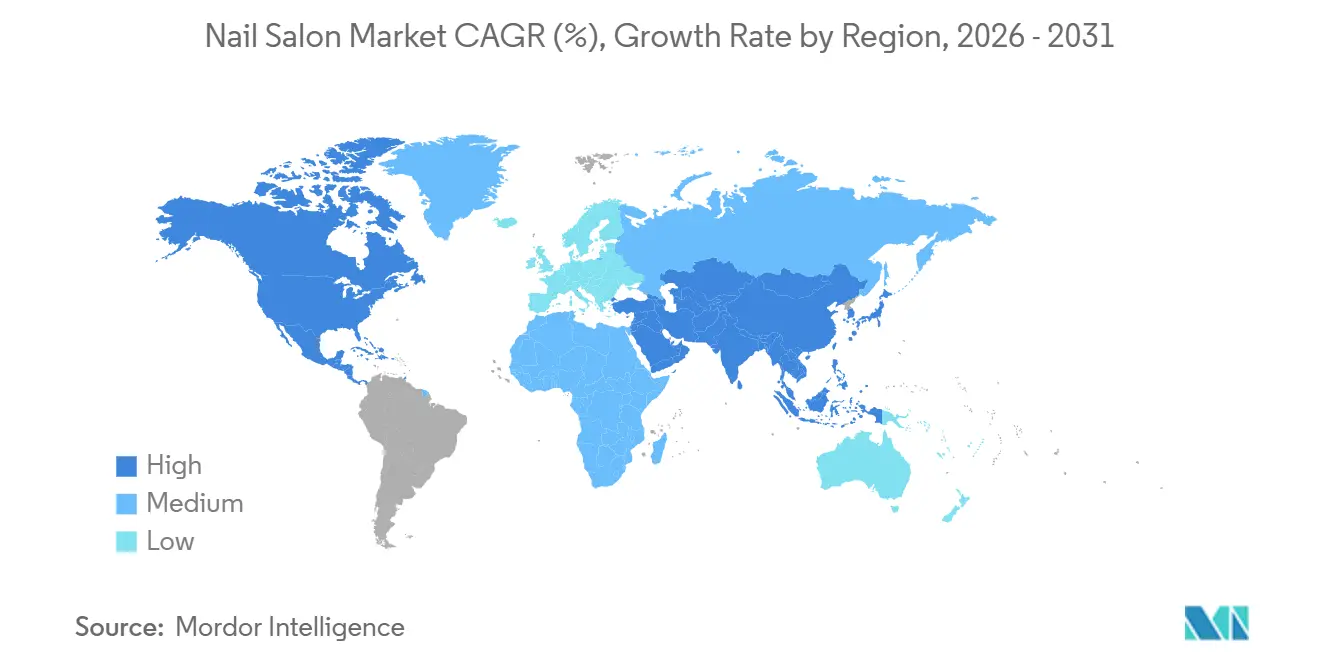
North America accounted for 33.19% of the global nail salon market in 2025, driven by its well-established beauty and personal care industry, strong consumer preference for routine grooming services, and widespread adoption of professional nail care treatments. The market benefits from high demand for services such as manicures, pedicures, gel applications, acrylic extensions, nail wellness therapies, and trend-driven nail art, which have become integral to self-care and lifestyle routines. Consumers in the region increasingly prioritize premium salon experiences, high hygiene standards, non-toxic cosmetic formulations, and personalized nail aesthetics, contributing to strong service frequency and customer retention. Additionally, the region's mature salon infrastructure, advanced appointment technologies, availability of skilled nail technicians, and rapid adoption of innovative nail cosmetics and treatment techniques further support market growth.
APAC Nail Salon Market
Asia-Pacific is the fastest-growing region, with a CAGR of 8.23% projected through 2031. Growth is driven by the maturing professional salon culture in countries like Japan and South Korea, rising beauty consciousness, and increasing adoption of fashion-oriented nail aesthetics across both emerging and developed markets. Consumers are incorporating professional nail services into routine grooming and self-expression, fueling demand for nail art, customized designs, gel systems, and advanced nail treatments. The region is witnessing rapid salon modernization, greater penetration of organized beauty service providers, and growing popularity of premium salon experiences influenced by evolving beauty trends and digital culture. For example, the Ministry of Health, Labour and Welfare reported that the number of beauty salons in Japan reached approximately 274.07 thousand facilities in 2024, highlighting the expanding professional beauty service infrastructure that supports market growth [3]Source: Ministry of Health, Labour and Welfare, "Number of beauty salons in Japan", mhlw.go.jp.
EMEA and South America Nail Salon Market
Europe and South America exhibit moderate growth trajectories, supported by rising consumer interest in beauty maintenance, increased adoption of salon-based grooming services, and growing popularity of nail wellness and fashion-oriented treatments. Consumers in these regions are increasingly seeking professional nail services that emphasize hygiene, premium cosmetic formulations, and customized beauty experiences, driving gradual market expansion. The Middle East and Africa are in earlier stages of market development but present significant growth potential. Factors such as expanding beauty retail infrastructure, increasing visibility of international beauty trends, and rising demand for organized personal care services contribute to the attractiveness of these markets.

Competitive Landscape
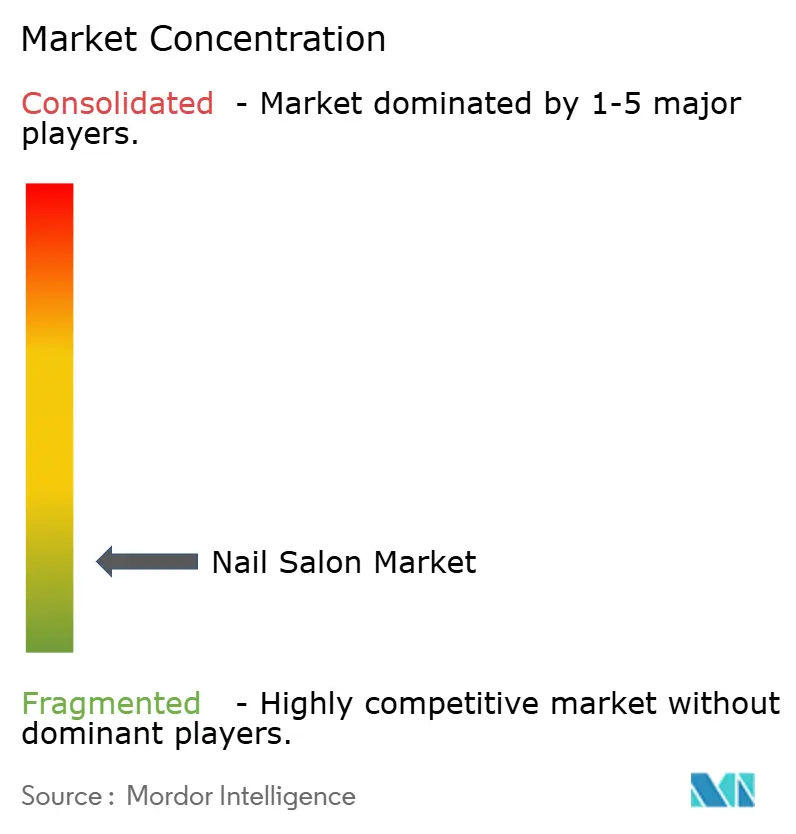
The global nail salon market is highly fragmented, with numerous independent salons, regional operators, boutique studios, franchise-based chains, and premium beauty service providers competing across various customer segments. The competitive landscape is influenced by factors such as service quality, pricing strategies, technician expertise, hygiene standards, customer experience, responsiveness to trends, and brand positioning. A significant portion of the market is dominated by small, independently operated salons that focus on personalized services, customized nail art, flexible pricing, and strong local customer relationships. Meanwhile, organized salon chains are steadily increasing their market presence through standardized service models, scalable franchise networks, digital customer engagement, and premium salon experiences.
Key players in the market include Regal Nails Salon & Spa, DaVi Nails, PROSE Nails, Frenchies Modern Nail Care, and Townhouse Group Limited. These companies are prioritizing the expansion of salon networks, strengthening customer loyalty programs, enhancing digital booking capabilities, and introducing premium wellness-oriented nail services to improve their market positioning. Organized operators are leveraging technology infrastructure, customer relationship management systems, mobile applications, online appointment platforms, and membership-based business models to enhance operational efficiency and customer retention. Additionally, many companies are investing in technician training, modern salon interiors, non-toxic product offerings, and advanced sanitation systems to meet growing consumer expectations regarding hygiene, safety, and premium beauty experiences.
Ethical branding and sustainability-focused positioning are becoming increasingly important competitive factors in the nail salon industry. Consumers are showing a stronger preference for salons that offer cruelty-free, vegan, non-toxic, and environmentally conscious nail care solutions, along with transparent hygiene and safety practices. Consequently, market participants are emphasizing clean beauty concepts, safer formulations, sustainable packaging, reduced chemical exposure, and wellness-oriented service experiences as part of their brand identity. Social media visibility, influencer collaborations, customer-generated content, and trend-driven marketing strategies are also playing a significant role in attracting younger consumers and enhancing brand engagement.
Nail Salon Industry Leaders
-
Regal Nails Salon & Spa
-
DaVi Nails
-
PROSE Nails
-
Frenchies Modern Nail Care
-
Townhouse Group Limited.
- *Disclaimer: Major Players sorted in no particular order
Nail Salon Market Companies Covered in this Report
- Regal Nails Salon & Spa
- DaVi Nails
- PROSE Nails
- Frenchies Modern Nail Care
- Townhouse Group Limited.
- Bellacures
- Hammer & Nails
- Nail Garden
- MiniLuxe
- The Ten Spot Ltd.
- Nailaholics
- Milano Nail Spa
- Lotus Nailbar & Spa
- Soho Beauty & Nail Boutique
- Revive Nails
- Nail Love
- GLOSSLAB
- Trophy Wife
- Goddess Nails & Spa
- Soho Nail Bar

Recent Industry Developments in Nail Salon Market
- March 2026: Tip and Toe Salon has launched the first outlet of YBE Nails Lashes Brows in Chennai as part of its strategy to establish a youth-focused beauty bar format. The outlet spans approximately 400 square feet and features four nail stations, three pedicure loungers, and a dedicated lash and brow area.
- November 2025: Townhouse has introduced a new festive nail art collection available across its salons. Each shade in the collection has been curated by Huber-Millet to align with Townhouse’s signature aesthetic.


Global Nail Salon Market Report Scope
A nail salon is a specialty beauty establishment that primarily provides cosmetic treatments for fingernails and toenails. The nail salon market is segmented by revenue stream, structure, positioning, and geography. Based on revenue stream, the market is segmented into nail cosmetics and nail care services. Based on structure, the market is segmented into chained salons and independent salons. Based on positioning, the market is segmented into luxury and affordable/mass salons.Based on geography, the market is segmented into North America, Europe, Asia-Pacific, South America, and the Middle East and Africa. The report provides market size and forecasts in both value (USD) and volume (tons) for all the mentioned segments.
| Nail Cosmetics |
| Nail Care Services |
| Chained Salons |
| Independent Salons |
| Luxury |
| Affordable/Mass |
| North America | United States |
| Canada | |
| Mexico | |
| Rest of North America | |
| Europe | Germany |
| United Kingdom | |
| Italy | |
| France | |
| Spain | |
| Netherlands | |
| Poland | |
| Belgium | |
| Sweden | |
| Rest of Europe | |
| Asia-Pacific | China |
| India | |
| Japan | |
| Australia | |
| Indonesia | |
| South Korea | |
| Thailand | |
| Singapore | |
| Rest of Asia-Pacific | |
| South America | Brazil |
| Argentina | |
| Colombia | |
| Chile | |
| Peru | |
| Rest of South America | |
| Middle East and Africa | South Africa |
| Saudi Arabia | |
| United Arab Emirates | |
| Nigeria | |
| Egypt | |
| Morocco | |
| Turkey | |
| Rest of Middle East and Africa |
| By Revenue Stream | Nail Cosmetics | |
| Nail Care Services | ||
| By Structure | Chained Salons | |
| Independent Salons | ||
| By Positioning | Luxury | |
| Affordable/Mass | ||
| By Geography | North America | United States |
| Canada | ||
| Mexico | ||
| Rest of North America | ||
| Europe | Germany | |
| United Kingdom | ||
| Italy | ||
| France | ||
| Spain | ||
| Netherlands | ||
| Poland | ||
| Belgium | ||
| Sweden | ||
| Rest of Europe | ||
| Asia-Pacific | China | |
| India | ||
| Japan | ||
| Australia | ||
| Indonesia | ||
| South Korea | ||
| Thailand | ||
| Singapore | ||
| Rest of Asia-Pacific | ||
| South America | Brazil | |
| Argentina | ||
| Colombia | ||
| Chile | ||
| Peru | ||
| Rest of South America | ||
| Middle East and Africa | South Africa | |
| Saudi Arabia | ||
| United Arab Emirates | ||
| Nigeria | ||
| Egypt | ||
| Morocco | ||
| Turkey | ||
| Rest of Middle East and Africa | ||


Key Questions Answered in the Report
What is the current size of the nail salon business worldwide?
The nail salon market size stands at USD 4.1 billion in 2026 and is forecast to reach USD 5.9 billion by 2031, growing at a 7.5% CAGR over 2026 to 2031.
Which part of the business generates the most revenue?
Nail care services remain the largest revenue stream, holding 92.0% of total revenue in 2025, which shows that in-salon service delivery is still the category’s economic core.
Which format is growing faster, independent salons or chains?
Independent salons still lead with 74.31% of revenue in 2025, but chained salons are forecast to grow faster at a 7.62% CAGR through 2031.
Which customer positioning is expanding the fastest?
Luxury salons are expected to record the highest growth at a 9.16% CAGR through 2031, while affordable and mass-market formats continue to anchor overall volume.
Page last updated on:





