
Latent Tuberculosis Infection Detection Market Size and Share
Market Overview
| Study Period | 2019 - 2030 |
|---|---|
| Market Size (2025) | USD 1.91 Billion |
| Market Size (2030) | USD 2.53 Billion |
| Growth Rate (2025 - 2030) | 5.74 % |
| Fastest Growing Market | Asia Pacific |
| Largest Market | North America |
| Market Concentration | Medium |
Major Players *Disclaimer: Major Players sorted in no particular order Image © Mordor Intelligence. Reuse requires attribution under CC BY 4.0. | |
Latent Tuberculosis Infection Detection Market Analysis by Mordor Intelligence
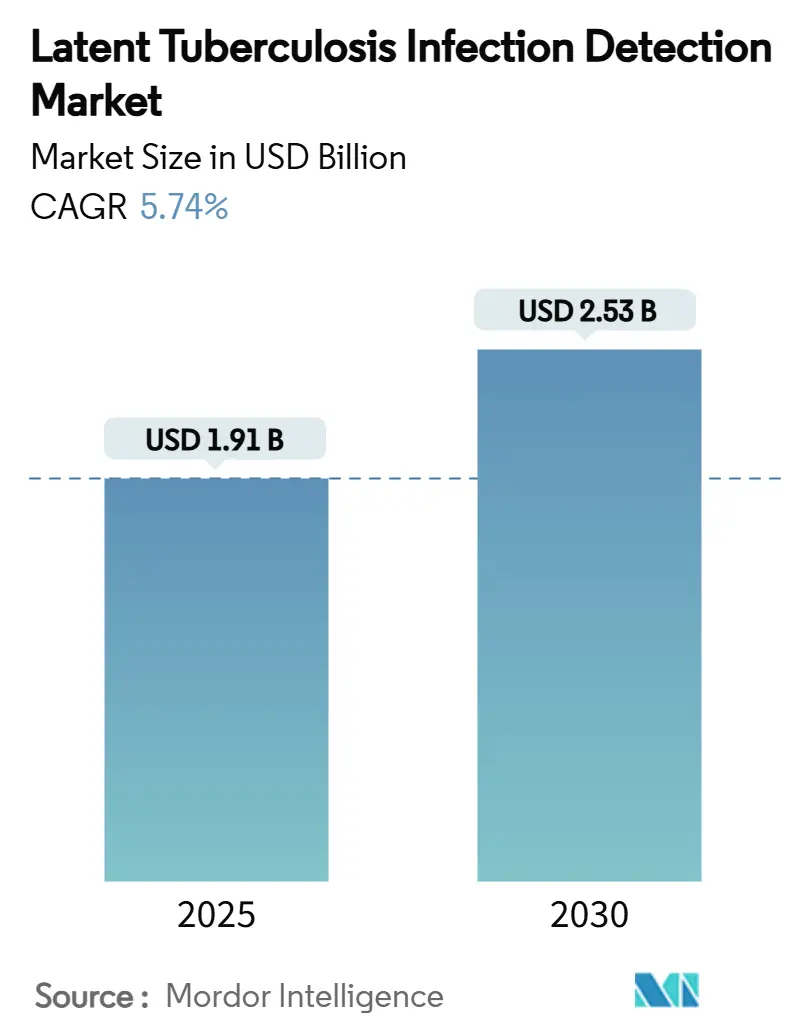
The latent tuberculosis infection detection market size stands at USD 1.91 billion in 2025 and is forecast to reach USD 2.53 billion by 2030, reflecting a 5.74% CAGR over the period. Rising recognition of latent infection as a public-health priority, broader reimbursement for preventive testing, and accelerating use of interferon-gamma release assays (IGRAs) in BCG-vaccinated populations collectively underpin expansion. Healthcare payers in North America and Europe continue to fund routine screening of high-risk groups, while Asia-Pacific governments are scaling national programs that couple screening with chemoprophylaxis. Leading diagnostic companies are deepening IGRA distribution as hospitals and reference laboratories consolidate testing, and new point-of-care formats are opening decentralized channels in rural markets. Supply shortfalls in purified protein derivative (PPD) antigens and the high per-test cost of advanced assays remain headwinds, but ongoing technology investment and bundled payment models are offsetting these pressures, sustaining the latent tuberculosis infection detection market growth trajectory.
Key Report Takeaways
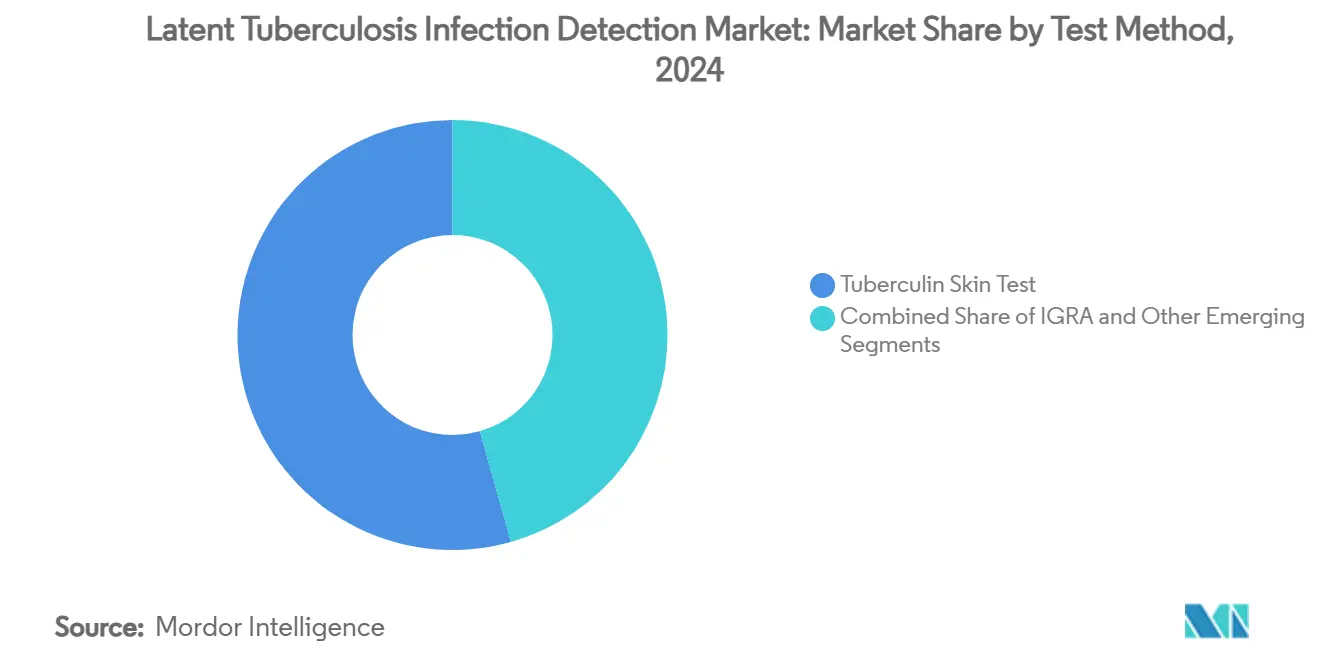
- By test method, the tuberculin skin test held 54.38% of the latent tuberculosis infection detection market share in 2024, whereas IGRAs are projected to post the fastest 9.46% CAGR to 2030.
- By sample type, blood-based assays accounted for 62.57% of the latent tuberculosis infection detection market size in 2024 and are expanding at an 8.52% CAGR.
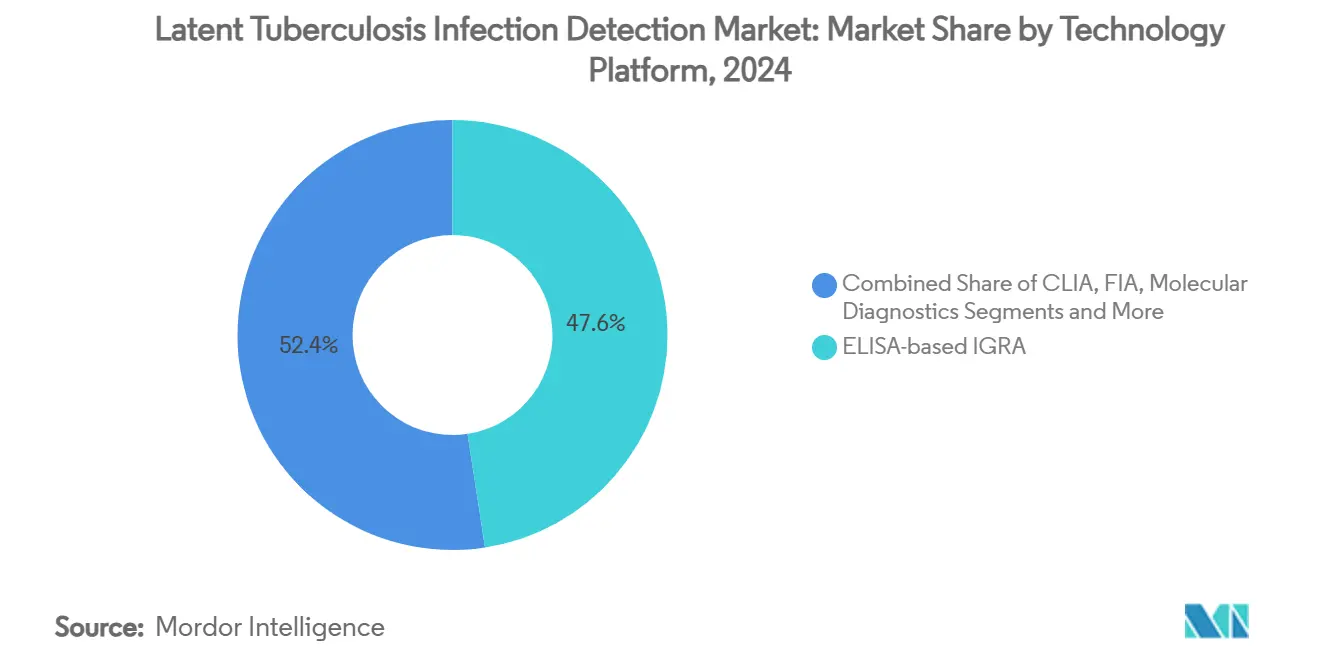
- By technology platform, ELISA-based IGRAs led with 47.59% revenue share in 2024, while lateral-flow and point-of-care formats are advancing at a 9.06% CAGR through 2030.
- By end-user, hospitals commanded 37.59% of the 2024 latent tuberculosis infection detection market size; diagnostic laboratories register the fastest 8.42% CAGR to 2030.
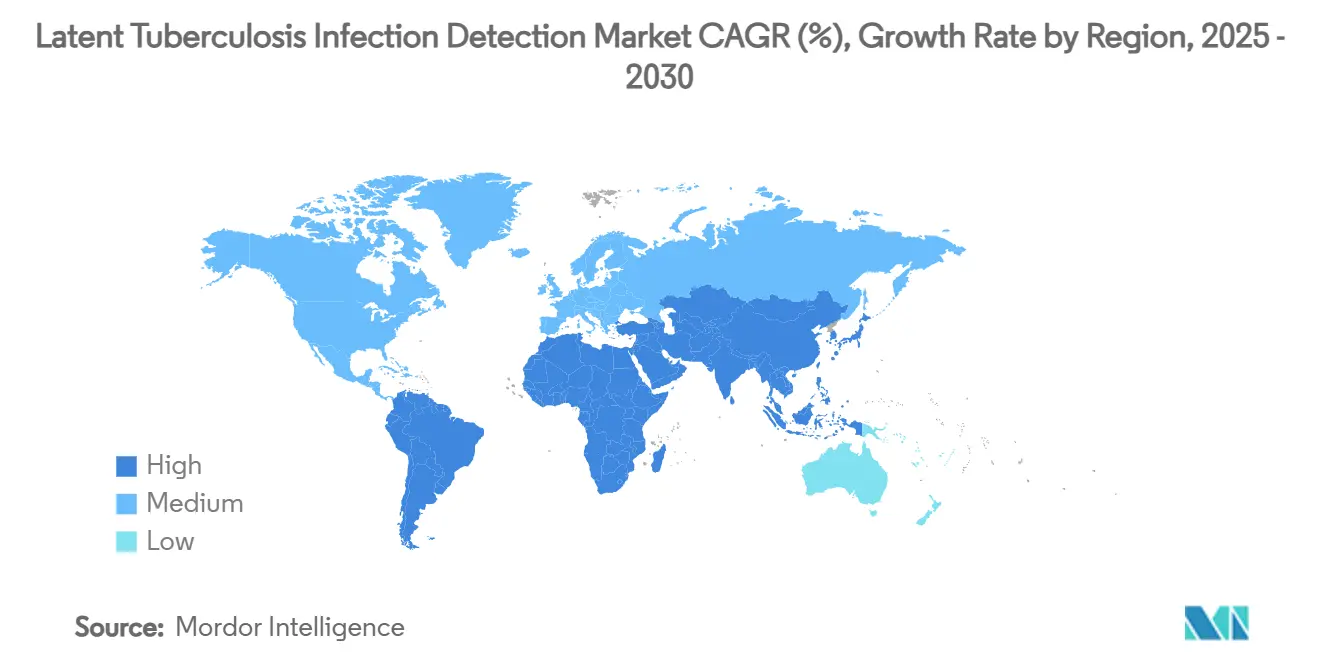
- By geography, North America maintained 32.49% share in 2024, while Asia-Pacific is projected to be the fastest region at 7.52% CAGR.
Note: Market size and forecast figures in this report are generated using Mordor Intelligence’s proprietary estimation framework, updated with the latest available data and insights as of January 2026.
Market Trends and Insights
Drivers Impact Analysis of Latent Tuberculosis Infection Detection Market*
| Driver | (~) % Impact on CAGR Forecast | Geographic Relevance | Impact Timeline |
|---|---|---|---|
| Government-funded LTBI screening mandates | +1.2% | North America, European Union | Medium term (2 – 4 years) |
| Expansion of migrant & refugee programs | +0.9% | Europe, North America, Australia | Short term (≤ 2 years) |
| Uptake of IGRAs in low-incidence nations | +1.1% | North America, Europe, developed Asia-Pacific | Medium term (2 – 4 years) |
| Bundled reimbursement for LTBI diagnostics | +0.8% | North America, select European markets | Long term (≥ 4 years) |
| AI-assisted triage tools | +0.7% | Early adopters in developed markets | Long term (≥ 4 years) |
| Targeted control in immunocompromised groups | +0.6% | Global, strongest where populations are aging | Medium term (2 – 4 years) |
| Source: Mordor Intelligence | |||
Government-funded LTBI screening mandates
National and state agencies now require routine latent tuberculosis testing for healthcare workers, immunocompromised patients, and immigrants from high-burden regions. The 2024 CDC preventive-service update removed out-of-pocket costs for these tests under the Affordable Care Act, catalyzing stable demand. U.S. states such as Colorado and Rhode Island enforce annual screening rules, and California has rolled out statewide TB risk-assessment tools for hospitals.[1] Comparable policies across the European Union provide a compliance-driven backbone, anchoring consistent test volumes that buffer the latent tuberculosis infection detection market from economic cycles. IGRAs benefit most, given their single-visit workflow and accuracy in BCG-vaccinated cohorts.
Expansion of migrant & refugee health programs
Continued geopolitical instability has heightened TB vigilance among asylum seekers. WHO guidance published in November 2024 recommends structured screening on arrival, prompting adoption of dual active-TB and latent-TB algorithms in Europe, Canada, and Australia.[2] ECDC data show Ukrainian refugees screened in 2023 presented TB notification rates of 16.9 per 100,000, more than double host-country averages.[3] South Korea’s pilot IGRA program in immigrants revealed latent infection incidence of 312.5 per 100,000 person-years among untreated IGRA-positive participants, reinforcing the importance of early detection. These findings are accelerating funding for portable IGRA analyzers at border clinics, contributing to latent tuberculosis infection detection market expansion.
Rising uptake of IGRAs in low-incidence countries
Low-incidence regions struggle with tuberculin skin-test false positives due to historic BCG vaccination. WHO’s 2024 diagnostic module recommends IGRAs in these contexts, leading to swift guideline updates across Western Europe and Japan. QIAGEN’s 24% revenue jump in its QuantiFERON franchise during 2023 illustrates practitioner preference for IGRA accuracy. EMA’s 2024 positive opinion on a recombinant ESAT-6/CFP-10 IGRA expands the product landscape, signaling further growth.
Bundled reimbursement for LTBI diagnostics
Payers increasingly bundle TB tests with related outpatient visits, protecting providers from piecemeal reimbursement risk. Updated Medicare guidance distinguishes between ELISA IGRA (CPT 86480) and T-cell enumeration assays (CPT 86481), clarifying payment for both formats. Medicaid covers TB-infected individuals for diagnostics under 42 CFR 435.215, ensuring continuity of testing once infection is confirmed. Such clarity encourages providers to incorporate the latest IGRA technology without financial uncertainty, fortifying the latent tuberculosis infection detection market.
Restraints Impact Analysis of Latent Tuberculosis Infection Detection Market*
| Restraint | (~) % Impact on CAGR Forecast | Geographic Relevance | Impact Timeline |
|---|---|---|---|
| PPD antigen supply shortages | -0.8% | Global, acute in low-resource tuberculin skin-test markets | Short term (≤ 2 years) |
| High IGRA cost in LMICs | -1.1% | Sub-Saharan Africa, South Asia | Medium term (2 – 4 years) |
| False positives in BCG-vaccinated cohorts | -0.6% | Nations with universal BCG | Medium term (2 – 4 years) |
| Limited lab capacity for ELISA IGRA throughput | -0.9% | Rural areas, lower-income countries | Long term (≥ 4 years) |
| Source: Mordor Intelligence | |||
Supply shortages of purified protein derivative antigens
Manufacturing bottlenecks periodically constrain tuberculin skin-test availability. Because many LMIC screening programs rely on skin tests for cost reasons, stockouts disrupt surveillance schedules, widen testing backlogs, and erode confidence in routine programs. While shortages often push stakeholders to evaluate IGRA alternatives, transition requires capital investment, creating interim gaps that temper latent tuberculosis infection detection market momentum.
High per-test IGRA cost in LMICs
IGRA reagents can cost up to 10 times more than tuberculin vials. When budgets are tight, public TB programs ration advanced assays to narrow cohorts, slowing widespread replacement of skin tests. External donor grants reduce the gap, yet many ministries of health still struggle to scale procurement, limiting the latent tuberculosis infection detection market in high-burden regions
*Our forecasts treat driver/restraint impacts as directional, not additive. The impact forecasts reflect baseline growth, mix effects, and variable interactions.
Latent Tuberculosis Infection Detection Market Segment Analysis
By Test Method:
IGRA Adoption AcceleratesIn 2024 the tuberculin skin test retained 54.38% share of the latent tuberculosis infection detection market size, while IGRAs recorded a 9.46% CAGR that will steadily erode the dominance of skin testing. Cost-sensitive public programs continue purchasing skin-test kits, yet operational drawbacks—two-visit workflow and subjective reading—dampen their long-term utility. Developed nations, employer health plans, and immunology clinics increasingly select IGRAs for single-visit accuracy. The WHO 2024 diagnostic pathway places molecular rapid diagnostics at the head of the algorithm, a policy that indirectly favors IGRA confirmation after abnormal radiography.
The latent tuberculosis infection detection market now sees novel biomarker assays entering early commercial pilots. Recombinant antigen cocktails and host-RNA signatures seek to distinguish latent from active infection, a feature that could shorten clinical work-ups. Academic consortia testing T-cell metabolism panels report promising sensitivity, but regulatory approval timelines place widespread rollout beyond 2030.

By Sample Type:
Blood-Based Testing PrevailsBlood draws accounted for 62.57% of the latent tuberculosis infection detection market share in 2024, and this format leads growth at 8.52% CAGR to 2030. Venous sampling supports automated IGRA workflows, allows simultaneous chemistry panels, and minimizes inter-reader variability. Rapid plasma separation and microfluidic cartridges now let health posts process samples on site, widening rural reach.
Skin-based tests linger in pediatric and field campaigns where phlebotomy is impractical. Researchers explore saliva and stool matrices to improve diagnosis in HIV-positive and very young cohorts. While early results are encouraging, validation cohorts remain small, keeping these alternatives a niche within the latent tuberculosis infection detection market.
By Technology Platform:
Rapid Testing Gains GroundELISA IGRA analyzers held 47.59% of 2024 revenue, capitalizing on lab familiarity, high throughput, and mature quality-control frameworks. Point-of-care lateral-flow systems, however, are posting a 9.06% CAGR through 2030 as policymakers prioritize same-day diagnosis for mobile populations. Roche’s 2024 LumiraDx acquisition inserts a multinational into the handheld immunoassay race and validates investor confidence.
Chemiluminescence and fluorescence immunoassay platforms address hospitals that demand tighter analytical precision. AI integration now differentiates platform value; algorithm-guided result interpretation reduces human error and supports automatic electronic-health-record feeds, further streamlining latent tuberculosis infection detection market workflows.
By End-User:
Laboratory Centralization ExpandsHospitals delivered 37.59% of latent tuberculosis infection detection market revenue in 2024 thanks to embedded occupational screening routines for staff and routine pre-surgical workups. Infection-control committees fund IGRA analyzers to comply with OSHA mandates, ensuring high baseline testing volumes.
Reference laboratories post an 8.42% CAGR as health systems outsource complex diagnostics. Central labs negotiate reagent discounts, run night-shift ELISA batches, and dispatch results by dawn, delivering economic scale unattainable for smaller hospitals. Public-health agencies, meanwhile, continue to procure skin-test kits for community drives, preserving a mixed-method environment within the latent tuberculosis infection detection market.
Geography Analysis
North America Latent Tuberculosis Infection Detection Market
North America controlled 32.49% of latent tuberculosis infection detection market size in 2024, anchored by federal coverage mandates and OSHA compliance testing for healthcare workers. Private insurers uniformly reimburse IGRAs, driving a steady migration from tuberculin skin tests. Canada’s immigration physicals incorporate IGRA screening, further solidifying demand.
APAC Latent Tuberculosis Infection Detection Market
Asia-Pacific is forecast to expand at 7.52% CAGR through 2030 as India, China, and Indonesia invest in national TB elimination programs that integrate latent infection screening. South Korea’s immigrant IGRA pilot confirmed high reactivation risk, nudging regional policymakers toward widespread use of blood-based assays. Deployment of AI-enabled X-ray triage in rural clinics creates fresh referral flows, boosting latent tuberculosis infection detection market test volumes.
EMEA and South America Latent Tuberculosis Infection Detection Market
Europe maintains substantial share through structured migrant and refugee health checks. Systematic screening of Ukrainian arrivals recorded 1,247 TB cases in 2023, with latent infection detection rates of 16.9 per 100,000 among screened cohorts. Multi-country reimbursement alignment underlines stable procurement of IGRAs, sustaining marketplace resilience. The Middle East, Africa, and South America present long-term upside as economic growth funds laboratory upgrades, although budget constraints and intermittent reagent supply temper near-term latent tuberculosis infection detection market acceleration.
Competitive Landscape
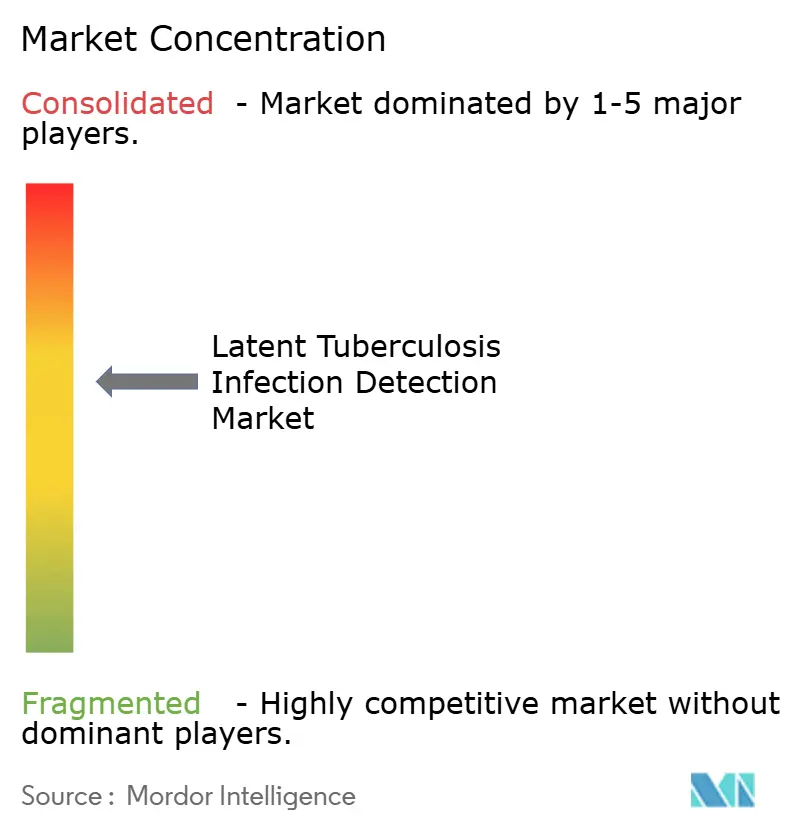
The latent tuberculosis infection detection market remains moderately fragmented. QIAGEN leverages its QuantiFERON-TB Gold Plus and QuantiFERON-TB Access lines, which grew 24% in 2023, to defend share in hospitals and reference laboratories. Abbott and Thermo Fisher Scientific bundle TB tests within multi-pathogen panels, positioning for integrated laboratory contracts. Roche’s USD 295 million purchase of LumiraDx’s point-of-care platform ushers a diversified giant into handheld IGRA cartridges, highlighting a pivot toward decentralized diagnostics.
bioMérieux accelerated entry into rapid immunoassays by acquiring SpinChip Diagnostics in January 2025, adding a 10-minute whole-blood platform that could undercut conventional ELISA workflows. AI vendors partner with manufacturers to embed automated result interpretation; mobile digital X-ray screening programs in Nigeria demonstrate efficiency gains that lift test referrals by 25%. Patent litigation signals intensifying rivalry: QIAGEN filed a 2025 infringement complaint against bioMérieux to shield QuantiFERON intellectual property, affirming IGRAs’ strategic value. Despite consolidation, niche innovators focusing on ultra-low-cost reagents or digital-reader apps continue to surface, ensuring competitive churn and sustained latent tuberculosis infection detection market evolution.
Latent Tuberculosis Infection Detection Industry Leaders
-
QIAGEN N.V.
-
Revvity
-
Abbott Laboratories
-
SD Biosensor Inc.
-
Thermo Fisher Scientific Inc.
- *Disclaimer: Major Players sorted in no particular order
Latent Tuberculosis Infection Detection Market Companies Covered in this Report
- QIAGEN
- Revvity
- Abbott Laboratories
- Thermo Fisher Scientific
- Danaher
- Bio-Rad Laboratories
- Hologic
- SD Biosensor Inc.
- Beijing Wantai Biological Pharmacy
- Creative Diagnostics
- Lionex GmbH
- Serum Institute of India Pvt Ltd
- ZeptoMetrix Corp.
- R-Biopharm
- GenoScreen SAS
- Alpha Laboratories Ltd
- Ansh Labs
- Arkray
- Tulip Diagnostics
- Diasorin SpA
Recent Industry Developments in Latent Tuberculosis Infection Detection Market
- April 2025: Revvity received FDA clearance for the Auto-Pure 2400 system integrated with the T-SPOT.TB assay, lifting automated IGRA throughput in U.S. reference laboratories.
- March 2025: QIAGEN filed a patent-infringement suit against bioMérieux to defend QuantiFERON proprietary technology in latent tuberculosis testing.
Global Latent Tuberculosis Infection Detection Market Report Scope
Segmentation Overview
| Tuberculin Skin Test (TST) |
| Interferon-Gamma Release Assays (IGRA) |
| Other Emerging Tests |
| Blood |
| Other (e.g., skin) |
| ELISA-based IGRA |
| Chemiluminescence Immunoassay (CLIA) |
| Fluorescence Immunoassay (FIA) |
| Lateral Flow / Point-of-Care Assay |
| Molecular Diagnostics (PCR/NGS) |
| Hospitals |
| Diagnostic Laboratories |
| Public Health Agencies |
| Others |
| North America | United States |
| Canada | |
| Mexico | |
| Europe | Germany |
| United Kingdom | |
| France | |
| Italy | |
| Spain | |
| Rest of Europe | |
| Asia-Pacific | China |
| Japan | |
| India | |
| Australia | |
| South Korea | |
| Rest of Asia-Pacific | |
| Middle East and Africa | GCC |
| South Africa | |
| Rest of Middle East and Africa | |
| South America | Brazil |
| Argentina | |
| Rest of South America |
| By Test Method | Tuberculin Skin Test (TST) | |
| Interferon-Gamma Release Assays (IGRA) | ||
| Other Emerging Tests | ||
| By Sample Type | Blood | |
| Other (e.g., skin) | ||
| By Technology Platform | ELISA-based IGRA | |
| Chemiluminescence Immunoassay (CLIA) | ||
| Fluorescence Immunoassay (FIA) | ||
| Lateral Flow / Point-of-Care Assay | ||
| Molecular Diagnostics (PCR/NGS) | ||
| By End-user | Hospitals | |
| Diagnostic Laboratories | ||
| Public Health Agencies | ||
| Others | ||
| By Geography | North America | United States |
| Canada | ||
| Mexico | ||
| Europe | Germany | |
| United Kingdom | ||
| France | ||
| Italy | ||
| Spain | ||
| Rest of Europe | ||
| Asia-Pacific | China | |
| Japan | ||
| India | ||
| Australia | ||
| South Korea | ||
| Rest of Asia-Pacific | ||
| Middle East and Africa | GCC | |
| South Africa | ||
| Rest of Middle East and Africa | ||
| South America | Brazil | |
| Argentina | ||
| Rest of South America | ||
Key Questions Answered in the Report
What is the 2025 market value for latent TB infection detection?
The latent tuberculosis infection detection market size is USD 1.91 billion in 2025.
How fast is the market expected to grow to 2030?
It is projected to register a 5.74% CAGR, reaching USD 2.53 billion by 2030.
Which region shows the highest growth potential?
Asia-Pacific leads with a 7.52% CAGR, driven by large-scale screening investments.
Why are IGRAs displacing tuberculin skin tests?
IGRAs provide higher specificity in BCG-vaccinated populations and require only one patient visit.
What factor most limits IGRA adoption in low-income countries?
High per-test cost relative to skin tests remains the largest barrier.
Which company recently expanded into rapid point-of-care IGRA cartridges?
Roche entered this space through its 2024 acquisition of LumiraDx’s technology platform.