
Infectious Disease Diagnostics Market Size and Share
Market Overview
| Study Period | 2020 - 2031 |
|---|---|
| Market Size (2026) | USD 48.38 Billion |
| Market Size (2031) | USD 57.05 Billion |
| Growth Rate (2026 - 2031) | 3.35 % |
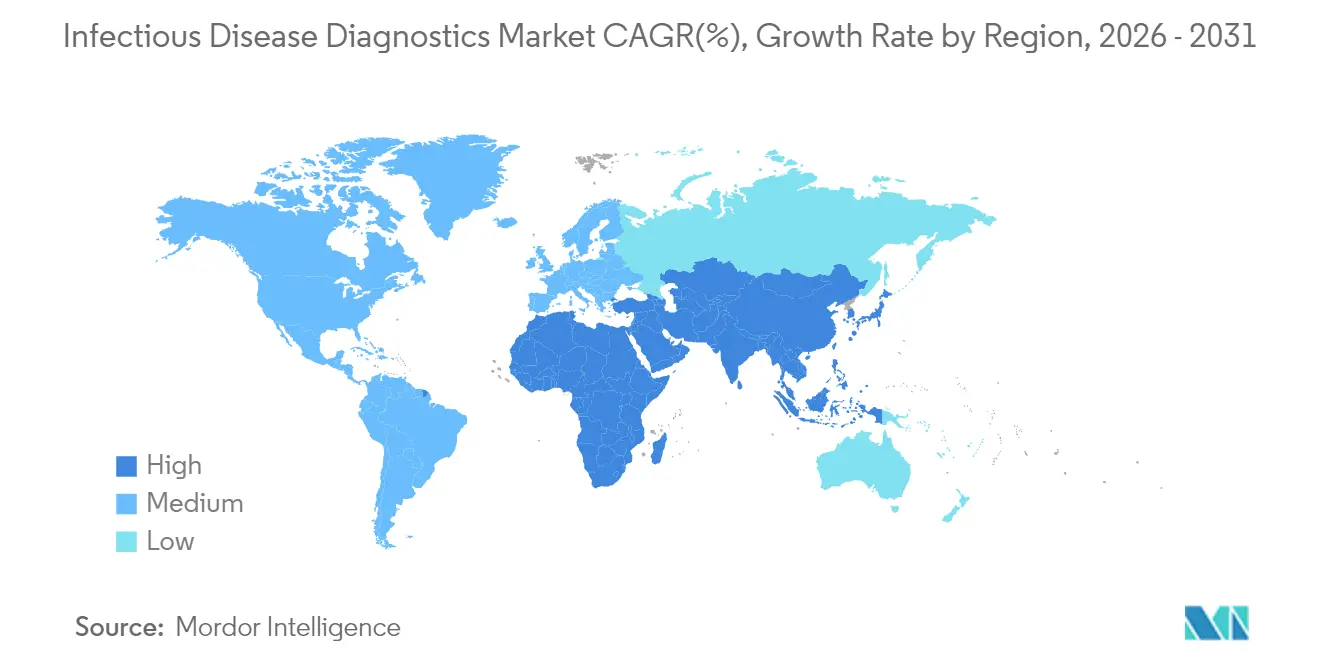
| Fastest Growing Market | Asia Pacific |
| Largest Market | North America |
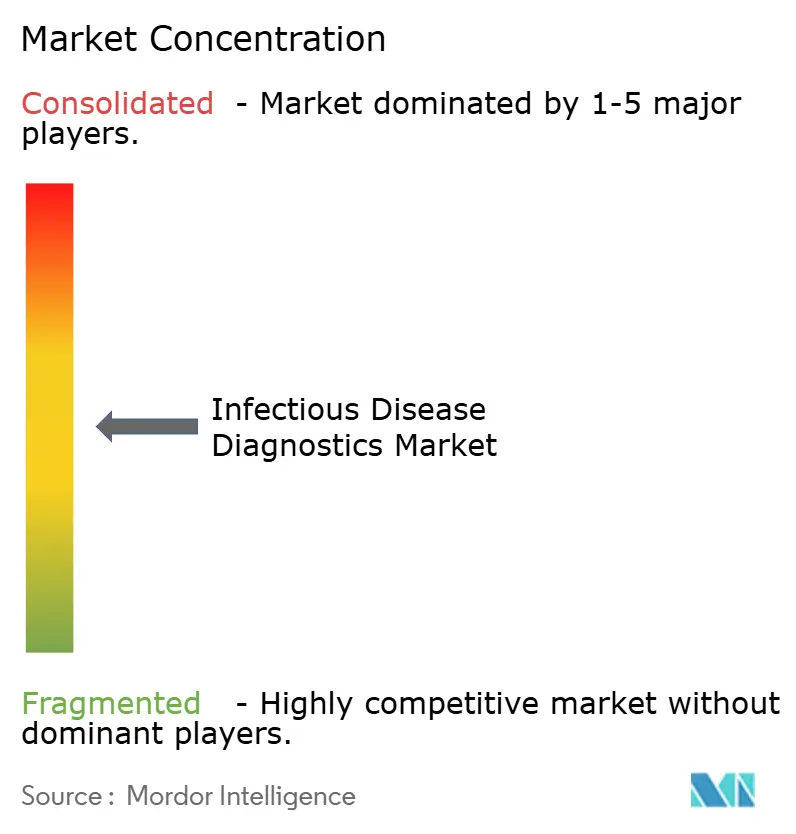
| Market Concentration | Medium |
Major Players *Disclaimer: Major Players sorted in no particular order Image © Mordor Intelligence. Reuse requires attribution under CC BY 4.0. | |
Infectious Disease Diagnostics Market Analysis by Mordor Intelligence
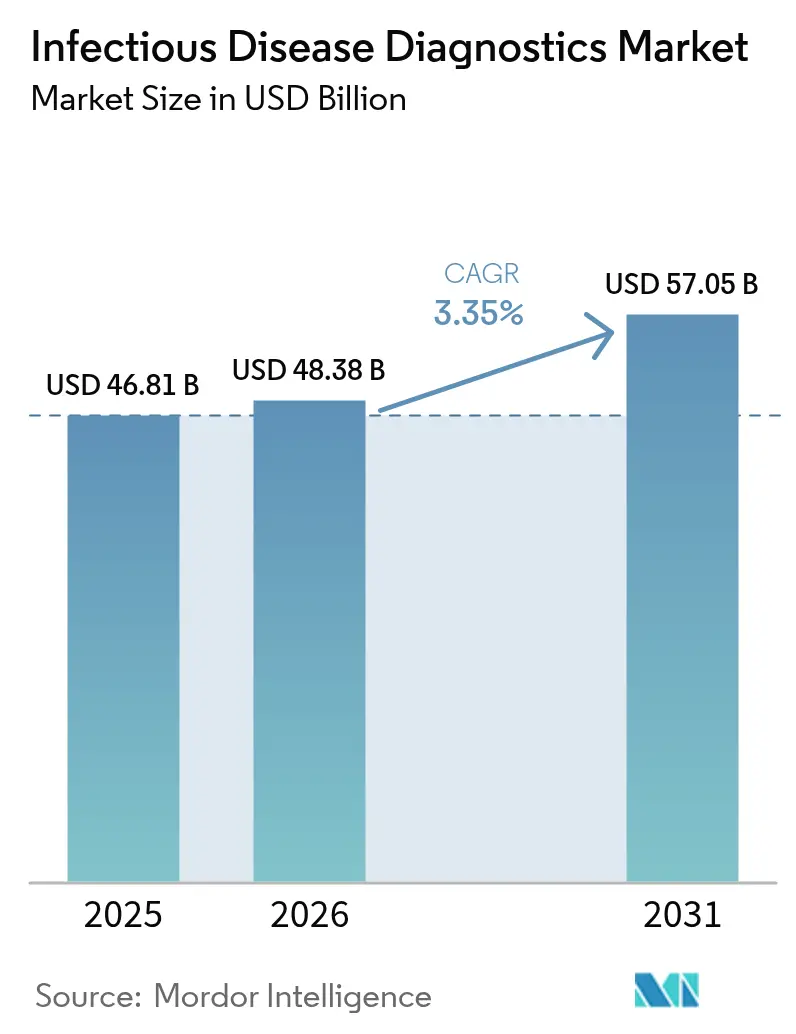
The infectious disease diagnostics market size was valued at USD 46.81 billion in 2025 and estimated to grow from USD 48.38 billion in 2026 to reach USD 57.05 billion by 2031, at a CAGR of 3.35% during the forecast period (2026-2031). This steady trajectory shows how the infectious disease diagnostics market is moving from pandemic-driven demand toward long-term growth anchored in endemic disease management, climate-linked outbreaks, and ongoing technology upgrades. Spending is broadening beyond respiratory tests to include vector-borne, antimicrobial-resistant, and emerging pathogens, helping laboratories offset lower COVID-19 volumes. Reagent sales remain the revenue backbone, yet software-enabled workflow tools are scaling fast as labs seek automation efficiencies. Competitive intensity is rising because new entrants armed with CRISPR, isothermal, and AI capabilities are challenging incumbents for share in the infectious disease diagnostics market.
Key Report Takeaways
- By application, respiratory infections led with 19.85% of infectious disease diagnostics market share in 2025, while vector-borne and emerging pathogen tests are projected to expand at a 5.52% CAGR to 2031.
- By product and service category, assays, kits, and reagents commanded 52.90% of the infectious disease diagnostics market size in 2025; software and informatics are set to grow the fastest at a 5.48% CAGR.
- By technology, PCR and qPCR platforms held 34.20% of infectious disease diagnostics market size in 2025, whereas CRISPR-based diagnostics are expected to record the highest 5.18% CAGR.
- By end user, hospital and clinical laboratories accounted for 46.00% of infectious disease diagnostics market share in 2025; the home-care and OTC channel is advancing at a 6.62% CAGR.
- By test setting, laboratory-based testing dominated with 67.90% share in 2025, but over-the-counter and at-home formats are forecast to grow at a 6.74% CAGR.
- By sample type, blood, plasma, and serum tests made up 42.95% of 2025 revenue, while swab-based assays are rising fastest at a 4.12% CAGR.
- By region, North America led with a 44.85% revenue share in 2025, whereas Asia-Pacific is projected to expand at a 5.20% CAGR through 2031.
Note: Market size and forecast figures in this report are generated using Mordor Intelligence’s proprietary estimation framework, updated with the latest available data and insights as of 2026.
Market Trends and Insights
Drivers Impact Analysis of Infectious Disease Diagnostics Market*
| Driver | (~) % Impact on CAGR Forecast | Geographic Relevance | Impact Timeline |
|---|---|---|---|
| Escalating prevalence and resurgence of infectious diseases | +0.8% | Global, higher in Asia-Pacific and Africa | Medium term (2-4 years) |
| Growing demand for point-of-care and at-home testing | +0.6% | North America, Europe expanding to Asia-Pacific | Short term (≤ 2 years) |
| Continuous innovation in PCR/NGS platforms and chemistries | +0.5% | Global, concentrated in developed markets | Long term (≥ 4 years) |
| Government initiatives for prevention, diagnosis, and awareness | +0.4% | Global, policy-driven | Medium term (2-4 years) |
| Expansion of molecular and rapid antigen testing | +0.3% | Global, faster in emerging markets | Short term (≤ 2 years) |
| AI-driven laboratory workflows | +0.2% | North America and Europe first, Asia-Pacific following | Long term (≥ 4 years) |
| Source: Mordor Intelligence | |||
Escalating Prevalence and Resurgence of Infectious Diseases
Vector-borne illnesses are climbing, with dengue cases running 15% above the five-year average in early 2025.[1]Climate change is widening mosquito habitats, so providers now test for pathogens once restricted to the tropics. The World Health Organization classified mpox as a grade 3 emergency in August 2024, prompting a 160% jump in test demand over the prior year. Antimicrobial resistance adds pressure: the WHO’s 2024 priority list highlights 15 resistant bacterial families that need rapid diagnostics. As new threats surface, laboratories must refresh menus frequently, creating recurring revenue for firms across the infectious disease diagnostics market.
Growing Demand for Point-of-Care and At-Home Testing
Regulators are green-lighting consumer tests at pace. In August 2024 the FDA cleared the first OTC syphilis assay, ushering retail diagnostics into mainstream practice.[2] Syphilis incidence rose 80% from 2018 to 2022, so community pharmacies and e-commerce portals now stock rapid kits. Cepheid’s finger-stick hepatitis C test adds same-visit viral confirmation, closing care gaps in primary clinics. Payers value earlier therapy starts that reduce downstream costs, so reimbursement processes are catching up, even as coding complexity persists.
Continuous Innovation in PCR/NGS Platforms and Chemistries
CRISPR systems are approaching PCR-level sensitivity yet dispense with lengthy thermocycling steps. Portable devices such as the Dragonfly deliver 96.1% sensitivity for mpox without cold chain, fitting remote clinics. Isothermal nucleic-acid amplification bridges the gap between lab-based accuracy and field expediency. Metagenomic sequencing enables pathogen-agnostic detection, letting physicians identify unknown agents swiftly. Early adopters gain speed and menu breadth that cement competitive positioning in the infectious disease diagnostics market.
AI-Driven Laboratory Workflows for Testing
Machine-learning tools now auto-classify blood cultures and flag antimicrobial resistance patterns in minutes.[3]Automated quality-control algorithms catch analytic drift and improve consistency. Fully robotic “dark” labs use AI to maintain throughput despite staffing gaps. Vendors who embed analytics directly into instruments or LIS platforms see faster adoption, because laboratories value productivity gains that offset shrinking reimbursement.
Restraints Impact Analysis of Infectious Disease Diagnostics Market*
| Restraint | (~) % Impact on CAGR Forecast | Geographic Relevance | Impact Timeline |
|---|---|---|---|
| Fragmented and inadequate reimbursement frameworks | -0.7% | Global, acute in emerging markets | Medium term (2-4 years) |
| Budget squeeze after COVID-19 testing wind-down | -0.5% | North America and Europe | Short term (≤ 2 years) |
| Over-capacity of swab and PCR kit manufacturing assets | -0.3% | Global production hubs | Short term (≤ 2 years) |
| Regulatory grey zones for multiplex CRISPR assays | -0.2% | Global, varies by regulator maturity | Long term (≥ 4 years) |
| Source: Mordor Intelligence | |||
Fragmented and Inadequate Reimbursement Frameworks
Payers insist on stringent coding before honoring claims, and the added paperwork stretches cash cycles for smaller labs. Government fee schedules, especially in low- and middle-income countries, rarely cover the full cost of advanced molecular platforms, limiting uptake. Laboratories in such settings rely on donor programs, slowing commercial momentum despite clear clinical need. Harmonized payment models would unlock wider adoption across the infectious disease diagnostics market.
Budget Squeeze After COVID-19 Testing Wind-Down
COVID-19 volumes collapsed in 2024, cutting 17.6% off Abbott’s diagnostics sales. Public-health budgets likewise fell after USD 76 billion in emergency funds expired, slowing capital purchases. Many regional labs merged into larger networks to survive lower volumes, raising concentration but trimming near-term equipment orders.
*Our forecasts treat driver/restraint impacts as directional, not additive. The impact forecasts reflect baseline growth, mix effects, and variable interactions.
Infectious Disease Diagnostics Market Segment Analysis
By Application:
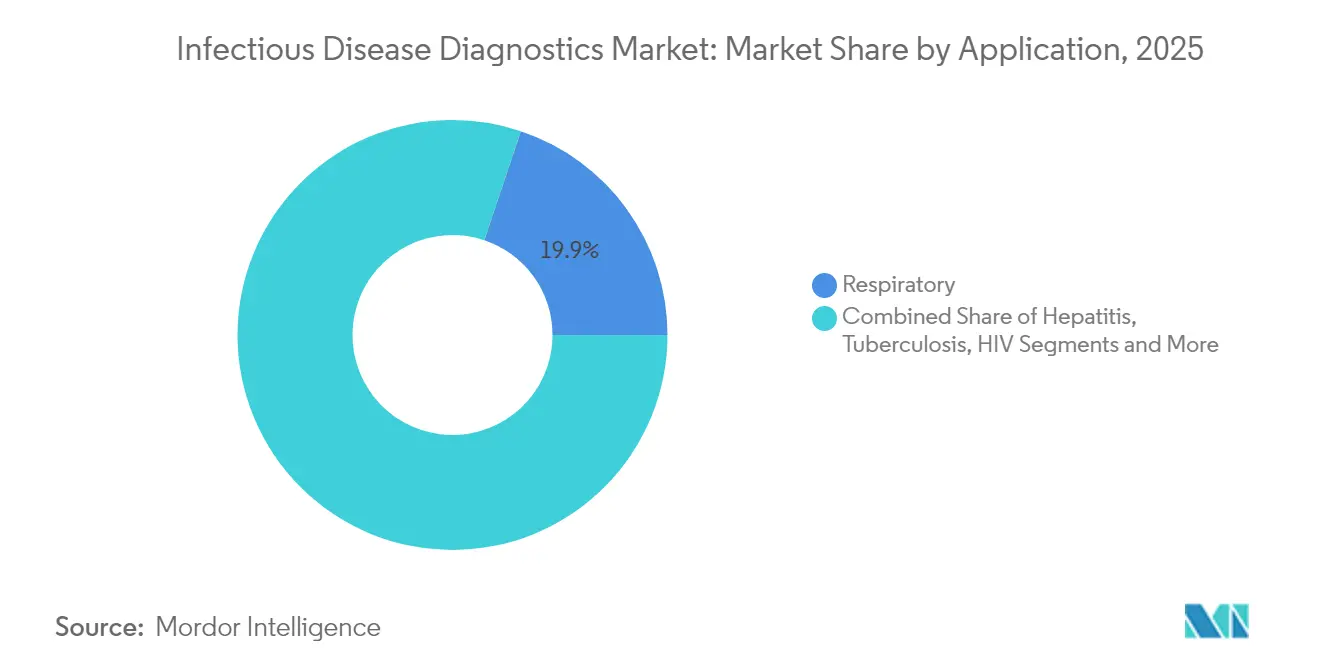
Vector-Borne Diseases Drive Growth Beyond Respiratory DominanceRespiratory panels held 19.85% of infectious disease diagnostics market share in 2025, yet vector-borne and emerging pathogens are set to climb at a 5.52% CAGR to 2031. A record 13 million dengue cases in 2024-2025 forced hospitals to expand test menus. Mpox, hepatitis, HIV self-tests, and AI-assisted tuberculosis assays broaden the clinical mix. The infectious disease diagnostics market size attached to vector-borne testing will keep rising as global mobility and climate change alter transmission zones.
Growth relies on rapid antimicrobial susceptibility tools for hospital-acquired infections and FDA OTC clearances for STI home kits. Laboratories value platforms that update quickly when the WHO adds bacteria to its resistance list; such flexibility strengthens vendor stickiness inside the infectious disease diagnostics market.

By Product & Service:
Software Integration Accelerates Amid Hardware MaturityAssays, kits, and reagents contributed 52.90% of infectious disease diagnostics market size in 2025 because consumables drive recurring revenue. Software and informatics, though smaller, will post the quickest 5.48% CAGR as labs digitize workflows. Instruments now compete on automation depth, sample-to-answer speed, and AI tie-ins rather than raw throughput alone.
Contract-testing services grow when hospitals outsource complex sequencing or drug-resistance panels. Cloud-based analytics link raw data to actionable reports, enhancing value per test. Vendors bundling reagents with informatics maintain share even as hardware margins tighten across the infectious disease diagnostics market.
By Technology:
CRISPR Emergence Challenges PCR DominancePCR and qPCR kept 34.20% of infectious disease diagnostics market size in 2025, anchored by entrenched protocols and broad regulatory clearance. CRISPR assays will record a 5.18% CAGR because they reach PCR-grade sensitivity without full thermocycling steps. Isothermal NAAT devices and multiplex microarrays add flexibility for field teams.
Sequencing is pushing into routine care, aided by AI pipelines that shorten interpretation time. Pathogen-agnostic metagenomics is particularly useful for unexplained sepsis. The infectious disease diagnostics market benefits when multiple modalities converge in single instruments that cover screening, confirmation, and resistance profiling.
By End User:
Home-Care Expansion Reshapes Market DynamicsHospitals and clinical labs retained 46.00% infectious disease diagnostics market share in 2025, yet OTC demand is rising fastest at 6.62% CAGR after FDA policies favor home testing. Reference labs absorb overflow and specialized NGS workloads, often contracting with regional facilities to standardize quality.
Telemedicine pairs with self-collection kits to widen access. Academic centers continue to pilot emerging tech and hand proven workflows to industry. As consumers take more control, vendors must design intuitive packaging and remote support to sustain adoption within the infectious disease diagnostics market.
By Test Setting:
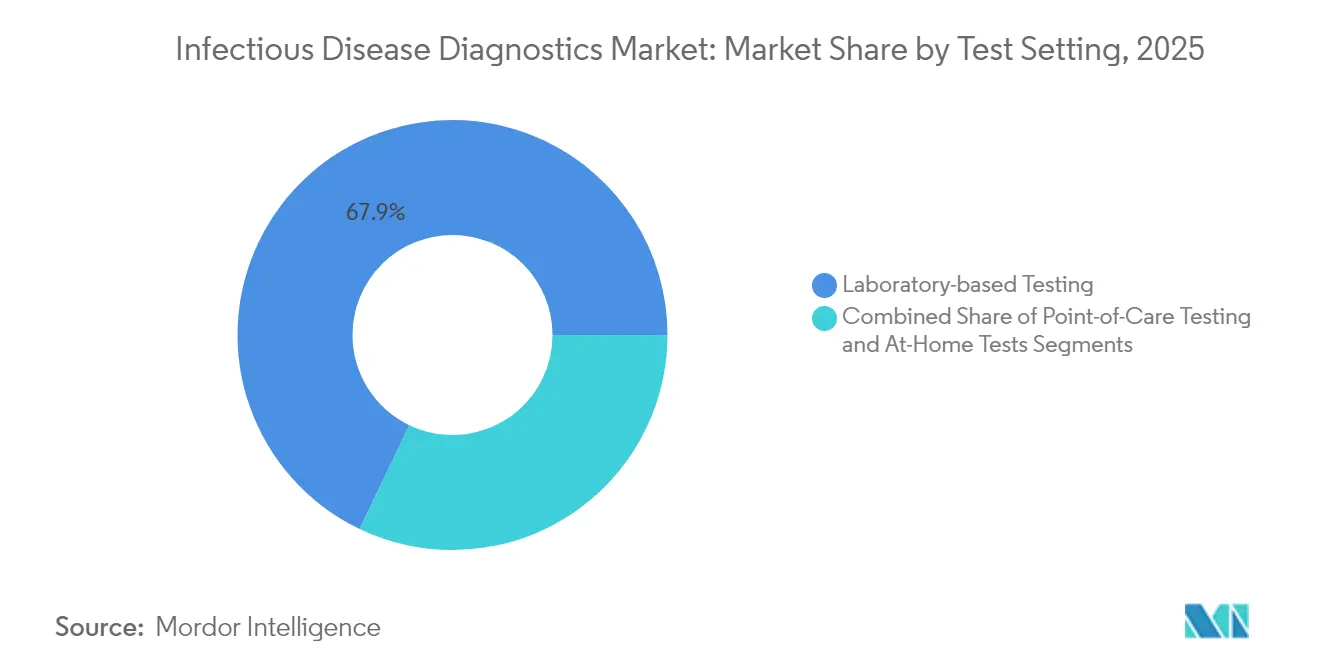
Over-the-Counter Testing Transforms Healthcare AccessCentral laboratories still handle 67.90% of tests in 2025 because complex panels need stringent oversight. Yet OTC and at-home formats show a 6.74% CAGR, helped by CLIA-waived respiratory and STI minisystems. Regulators now demand embedded digital reporting to protect surveillance data as tests move outside labs.
Point-of-care molecular analyzers fit urgent-care clinics and ambulances, giving clinicians results in under 20 minutes. These shifts stretch supply chains but also introduce fresh channels for growth in the infectious disease diagnostics market.
By Sample Type:
Swab Innovation Drives Non-Invasive TestingBlood, plasma, and serum accounted for 42.95% of testing revenue in 2025, yet saliva and anterior-nares swabs are growing at 4.12% CAGR as collection becomes more comfortable. Multiplex saliva panels show sensitivity comparable to nasopharyngeal sticks. Urine NAATs expand STI screening, while AI-supported stool reviews improve parasite detection.
Improved buffers and extraction chemistries raise pathogen yield from low-volume samples. Portable devices now accept multiple matrices, boosting versatility and advancing decentralized adoption across the infectious disease diagnostics market.
Geography Analysis
North America Infectious Disease Diagnostics Market
North America generated 44.85% of global revenue in 2025, supported by established reimbursement rules, fast FDA clearances, and high routine screening volume. However, the region is now confronting budget compression as COVID-19 testing revenues fade, prompting labs to broaden menus and accelerate automation.
APAC Infectious Disease Diagnostics Market
Asia-Pacific is projected to grow at a 5.20% CAGR to 2031 owing to infrastructure investment and rising infectious-disease burdens. Government programs in China, India, and Japan subsidize rapid dengue, mpox, and antimicrobial-resistance panels, which shortens adoption cycles. Digital health pilots link remote kits to teleconsults, increasing reach in rural regions.
EMEA Infectious Disease Diagnostics Market
Europe maintains steady demand and leads syndromic multiplex adoption. Fragmented reimbursement and data-privacy legislation slow cross-border digital-health scaling, yet antimicrobial-stewardship initiatives keep pressure on hospitals to deploy rapid diagnostics. Middle East and Africa markets remain smaller but are receiving donor-funded upgrades that create footholds for suppliers seeking geographic diversification within the infectious disease diagnostics market.
Regulatory Landscape
Regulatory requirements for infectious disease diagnostics are tightening around formal clinical evidence, quality systems, and traceability as testing expands into near-patient and at-home settings. In the United States, the FDA Final Rule for laboratory developed tests (LDTs) became effective on July 5, 2024, launching a phased approach to reduce enforcement discretion, with the first stage beginning May 6, 2025. This shift raises compliance expectations for hospital and reference labs that have relied on LDT pathways for specialty infectious disease assays, and it increases the value of cleared or authorized test menus for routine deployment.
In Europe, the In Vitro Diagnostic Regulation (IVDR, Regulation (EU) 2017/746) continues to reshape market access for infectious disease IVDs through Notified Body oversight and EUDAMED requirements. Under Regulation (EU) 2024/1860, many legacy Class C tests must submit a formal conformity assessment application to a Notified Body by May 26, 2026, and secure a signed contract by September 26, 2026 to remain on the market. EUDAMED module use for device registration is mandatory for new IVDs from May 28, 2026. Separately, the WHO’s prequalification process changed effective January 1, 2026 by making performance evaluation a prerequisite for prequalification assessment, increasing upfront study and dossier work for suppliers targeting procurement-driven markets.
Value Chain Analysis
The infectious disease diagnostics value chain starts with critical raw materials (enzymes, primers/probes, monoclonal antibodies, nitrocellulose membranes, specialty plastics, and electronic or optical components), then moves through assay formulation and instrument manufacturing, software integration, regulatory validation, and distribution to hospitals, clinical labs, reference labs, decentralized sites, and retail or OTC channels. Post-pandemic product strategies increasingly bundle consumables with instruments and informatics. Service organizations also support installation, calibration, and workflow optimization as labs prioritize sample-to-answer automation and digital reporting.
Supply continuity remains a competitive differentiator because even small disruptions in specialized inputs can halt high-volume testing. In July 2024, the FDA flagged a shortage tied to Becton Dickinson’s BACTEC blood culture media packaging, underscoring how packaging and plastics can become bottlenecks for bloodstream infection workflows. Manufacturers are also managing regulatory constraints that limit rapid component substitution, since changes in critical suppliers often require re-validation and extend lead times. To reduce trade and logistics risk, production footprints are diversifying beyond traditional hubs, with more multi-regional manufacturing and sourcing across locations such as Malaysia, Vietnam, Thailand, Mexico, Costa Rica, and the Dominican Republic.
Competitive Landscape
M&A is accelerating as incumbents snap up niche innovators to access new chemistries and channels. Roche paid USD 295 million for LumiraDx’s point-of-care assets, bolstering its decentralized reach. Danaher’s USD 5.5 billion Abcam deal expanded its specialty reagent portfolio. bioMérieux acquired SpinChip to gain a 10-minute immunoassay for acute settings.
Disruptors such as BugSeq partner with BARDA to pair agnostic sequencing with AI analytics. QIAGEN is launching three prep instruments by 2026 to reinforce automation depth. Supply-chain lessons from COVID-19 are driving reshoring and dual-sourcing strategies, which could rebalance cost structures while enhancing resilience across the infectious disease diagnostics market.
Regulatory filings for multiplex panels, AI decision-support tools, and home kits hit record numbers in 2025. Early FDA clearances confer first-mover advantages and translate to shelf-space wins in retail channels. Consolidation among regional labs is concentrating buying power, so vendors with broad menus and integrated informatics tend to secure multi-year service bundles.
Infectious Disease Diagnostics Industry Leaders
-
BioMérieux SA
-
F. Hoffmann-La Roche Ltd
-
Abbott Laboratories
-
Becton, Dickinson and Company
-
Danaher
- *Disclaimer: Major Players sorted in no particular order
Infectious Disease Diagnostics Market Companies Covered in this Report
- Abbott Laboratories
- Roche
- Danaher (Cepheid & Beckman Coulter)
- bioMérieux
- Thermo Fisher Scientific
- Beckton Dickinson
- Siemens Healthineers
- Bio-Rad Laboratories
- DiaSorin (Luminex)
- Quidel-Ortho
- Hologic
- QIAGEN
- Sysmex
- Seegene
- Quest Diagnostics
- Lucira Health
- GenMark Diagnostics
- Oxford Nanopore Technologies
- T2 Biosystems
- Sherlock Biosciences
Market Opportunities and Future Outlook
White-space is widening in pathogen-agnostic and antimicrobial resistance (AMR) enabled workflows, where laboratories want faster identification and treatment guidance beyond traditional culture. Bruker’s July 2026 acquisition of the DISQVER clinical metagenomics platform expands sequencing-based infection detection capabilities, and bioMérieux’s integration work in sequencing and bioinformatics reinforces the same direction for complex infections such as unexplained sepsis. This creates room for vendors that can package metagenomics or targeted NGS with interpretation software that fits routine lab operations and reimbursement documentation.
Decentralized molecular testing and menu expansion under IVDR also support commercial openings for near-patient syndromic panels and higher-throughput automation, particularly where labor constraints and turnaround-time targets drive purchasing decisions. bioMérieux’s March 2026 IVDR CE-marking for BIOFIRE SPOTFIRE respiratory and sore throat panels shows continued platform migration into IVDR-compliant offerings, while BD’s November 2025 FDA 510(k) clearance and CE-IVDR certification for enteric bacterial panels on the BD COR System supports scale-up in gastrointestinal testing. WHO’s April 2026 R&D roadmaps for pathogen families under Collaborative Open Research Consortia (CORC) provide a clearer priority list for assay developers and partners, supporting coordinated development efforts across emerging threats. At the same time, tighter claims documentation requirements for multiplex panel reimbursement in the United States (MolDX guidance implemented in April 2026) increase the incentive for vendors to embed ordering support, medical-necessity documentation, and results reporting features into software and LIS-facing tools.
Recent Industry Developments in Infectious Disease Diagnostics Market
- July 2026: QIAGEN launched the CE-IVDR certified QIAstat-Dx BCID GN Plus AMR Panel in Europe, adding 13 gram-negative targets and 18 antimicrobial resistance markers for bloodstream infection testing. The expanded menu supports faster escalation from identification to resistance-informed treatment decisions in acute care pathways. It also strengthens QIAGEN’s competitive position in syndromic testing where IVDR-compliant breadth and AMR coverage increasingly influence platform selection.
- November 2025: BD received U.S. FDA 510(k) clearance and CE-IVDR certification for high-throughput enteric bacterial panels (EBP and EBP plus) on the BD COR System. The dual clearances support deployment across regulated markets with a single automated workflow for gastrointestinal pathogens. High-throughput capability aligns with consolidation among clinical labs seeking standardized menus and productivity gains.
- June 2024: The FDA granted a CLIA waiver to the BIOFIRE SPOTFIRE Respiratory/Sore Throat Panel Mini, enabling rapid multiplex PCR use in outpatient and near-patient settings. This clearance expanded access to molecular respiratory and sore throat testing without centralized lab infrastructure. It reinforced the shift toward decentralized sample-to-answer systems that can support timely treatment decisions and surveillance reporting.
Infectious Disease Diagnostics Market Report Scope and Research Methodology
Market Definition and Coverage
This market covers revenues from diagnostic tests used to detect, identify, or quantify human infectious pathogens across laboratory, point-of-care, and at-home settings. It includes the consumables and systems that enable testing, plus software and service support when directly tied to infectious disease testing.
Scope exclusions: Veterinary infectious disease testing and blood-donor screening panels are excluded from this sizing.
Segments Covered in This Report
- By Application
- Hepatitis (A, B, C, D, E)
- HIV / AIDS
- CT/NG & Other STIs
- Tuberculosis
- Respiratory (Influenza, RSV, COVID-19, Others)
- Vector-borne & Emerging Pathogens (Dengue, Zika, Mpox)
- Hospital-Acquired Infections (MRSA, C. diff, etc.)
- Others (Malaria, Lyme, Toxoplasmosis)
- By Product & Service
- Assays, Kits & Reagents
- Instruments & Analyzers
- Software & Informatics
- Services & Contract Testing
- By Technology
- PCR & qPCR
- Isothermal NAAT (LAMP, INAAT, TMA)
- Immunodiagnostics (ELISA, CLIA, LFIA)
- DNA/RNA Sequencing & NGS
- Microarray & Multiplex Panels
- CRISPR-based Diagnostics
- Metagenomic & Shotgun Sequencing
- By End User
- Hospital & Clinical Laboratories
- Reference / Central Laboratories
- Point-of-Care / Decentralised Settings
- Home-care & OTC Consumers
- Academic & Research Institutes
- By Test Setting
- Laboratory-based Testing
- Point-of-Care Testing
- Over-the-Counter / At-Home Testing
- By Sample Type
- Blood / Plasma / Serum
- Swab (NP/OP, Saliva)
- Urine
- Stool
- Other Fluids (CSF, Sputum, etc.)
- By Geography
- North America
- United States
- Canada
- Mexico
- Europe
- Germany
- United Kingdom
- France
- Italy
- Spain
- Rest of Europe
- Asia-Pacific
- China
- Japan
- India
- Australia
- South Korea
- Rest of Asia-Pacific
- Middle East and Africa
- GCC
- South Africa
- Rest of Middle East and Africa
- South America
- Brazil
- Argentina
- Rest of South America
- North America
Data Sources, Market Sizing, and Validation
Desk Research
We start with desk research to set clear boundaries and to build the first set of demand and supply indicators that can be checked later in interviews. Public health surveillance and testing guidance from sources such as the US CDC and the World Health Organization are used to understand testing pathways and when a test is typically ordered.
To ground the model in measurable signals, we also review sources such as the World Bank and OECD for healthcare spending context, along with peer-reviewed articles indexed in PubMed for test adoption patterns and clinical practice changes. Trade and import export statistics are used selectively to sense-check equipment and reagent flows where it is relevant, and company filings and investor presentations help us connect reported diagnostic revenue exposure to infectious disease areas. In a few cases, we also use paid subscriptions for company financials and intelligence, patent databases, and shipment-level import export data to clarify product positioning and validate assumptions. These are illustrative examples of sources used, and many other public references were also reviewed for data collection, validation, and research clarification.
Primary Interviews and Surveys
Primary work is used to pressure-test assumptions that desk sources cannot fully answer, especially on mix shifts across molecular, immunoassay, and microbiology methods, and on how often tests are repeated in real care settings. We speak with a mix of manufacturers, distributors, reference labs, hospital labs, and public health stakeholders across APAC, EMEA, and the Americas so inputs reflect different reimbursement levels and testing access.
Distribution of primary research fieldwork respondents
| Company type | Respondent position | Region |
|---|---|---|
| Top tier: 32% | CXOs: 18% | APAC: 42% |
| Mid tier: 48% | Functional/Unit leaders: 34% | EMEA: 31% |
| Smaller Players: 20% | Managers: 48% | Americas: 27% |
Market-Sizing & Forecasting
The sizing starts with a top-down build where disease burden and testing pathways are translated into a realistic demand pool, and then totals are aligned to what labs and care sites can practically run in a year. For infectious disease diagnostics, inputs include reported testing volumes for major conditions, the share of tests run in centralized labs versus point-of-care, the reagent pull-through linked to installed instruments, and the average selling price direction for key assay formats.
Once the first totals are built, they are corroborated with selective bottom-up approximations, such as sampled supplier exposure checks, channel feedback on reagent and kit consumption, and a volume times ASP cross-check for a few high-volume disease areas. When data is thin in smaller countries or niche test types, gaps are handled using proxy indicators like population coverage, lab density, and spending per test, which are then adjusted after interviews to avoid overstating uptake.
For forecasting, we use scenario analysis supported by expert views on how respiratory seasonality, outbreak cycles, and public health funding affect year-to-year testing intensity. Inputs such as molecular penetration trends, decentralization to near-patient testing, and expected price compression in mature assays are updated so the forecast stays tied to observable shifts rather than a single straight-line growth assumption.
Data Validation & Update Cycle
We validate the model by triangulating outputs across independent signals, and by running variance checks across regions, methods, and care settings to spot values that drift away from what interviews and desk indicators suggest. When an anomaly appears, assumptions are revisited, and follow-up questions are triggered with respondents to confirm if the issue is scope, pricing, or volume related.
Before sign-off, the model goes through multi-step internal reviews so inputs and calculations are checked for consistency and unit logic. Reports are refreshed annually, and interim updates are made when material events change testing demand or supply (for example, guideline changes or major outbreaks). Right before delivery, an analyst performs a fresh pass on key inputs so clients receive the latest updated view.
Mordor Intelligence's Infectious Disease Diagnostics Market Estimate Compared With Other Published Estimates
Published market sizes for infectious disease diagnostics can look far apart, even when the topic name sounds similar. The differences usually come from what revenue streams are counted, what is treated as infectious disease versus adjacent IVD areas, and which year is used as the starting point for the forecast.
By tracking included revenue lines across assays, analyzers, software, and service contracts and then refreshing scope checks annually, Mordor Intelligence keeps the total tied to human infectious disease testing activity, with veterinary testing and blood-donor screening panels excluded from the market.
Benchmark comparison
| Source | Market Size | Gaps in Research Methodology |
|---|---|---|
| Mordor Intelligence | USD 48.38 B (2026) | |
| Global Consultancy A | USD 24.30 B (2024) | Uses a different base year and is framed specifically as infectious disease IVD, which can exclude some workflow revenue linked to testing, such as certain software and service components counted only when tied to infectious disease diagnostics. |
| Industry Publisher B | USD 23.00 B (2025) | Starts from a different year and may apply a tighter inclusion around product categories, which can shift what gets counted when platforms are shared across infectious and non-infectious testing. |
The spread in the table is mainly explained by base-year choice and by how narrowly the scope is drawn around IVD products versus the broader testing ecosystem that supports infectious disease diagnosis. Our steps stay easy to follow, with clear inclusion rules and practical cross-checks that can be repeated when new testing and pricing signals emerge.
Key Questions Answered in the Report
What is the current value of the infectious disease diagnostics market?
The market is valued at USD 48.38 billion in 2026 and is forecast to reach USD 57.05 billion by 2031.
Which application segment is expanding the fastest?
Vector-borne and emerging pathogen testing is projected to grow at a 5.52% CAGR through 2031.
How quickly are CRISPR-based diagnostic technologies growing?
CRISPR assays are expected to post a 5.18% CAGR, challenging traditional PCR platforms.
Why is Asia-Pacific considered a high-growth region?
Rising healthcare investment, increasing disease burden, and supportive regulatory reforms drive a 5.20% CAGR in the region.
What factors are propelling at-home testing adoption?
Recent FDA approvals, consumer preference for convenience, and telemedicine integration are accelerating OTC diagnostics.
How will AI influence future infectious disease testing?
AI streamlines data analysis, improves quality control, and enables fully automated labs, thereby boosting productivity and accuracy.