
Market Overview
| Study Period | 2020 - 2031 |
|---|---|
| Forecast Data Period | 2026 - 2031 |
| Historical Data Period | 2020 - 2024 |
| Growth Rate | 3.11 % |
Major Players *Disclaimer: Major Players sorted in no particular order Image © Mordor Intelligence. Reuse requires attribution under CC BY 4.0. | |
Japan Wound Care Management Devices Market Analysis by Mordor Intelligence
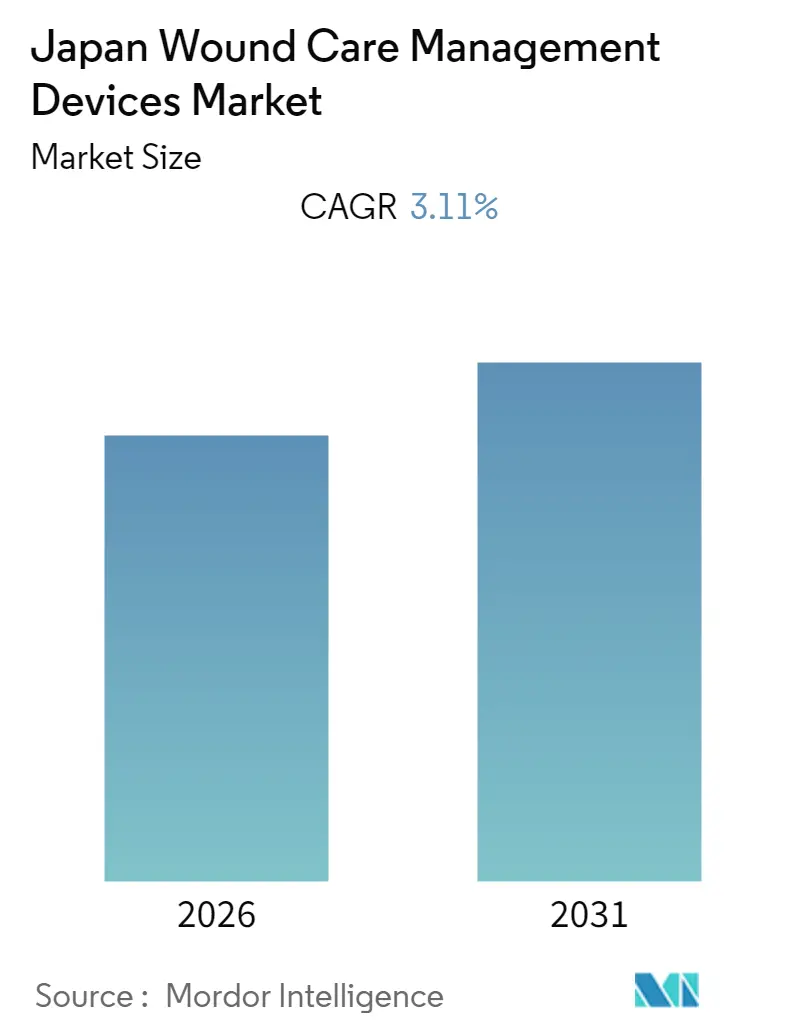
The Japan Wound Care Management Devices Market size is expected to register a CAGR of 3.11% during the forecast period (2026-2031).
COVID-19 had an impact on the growth of the market. This was mainly due to the disrupted wound care management during the pandemic. For instance, according to the article published by the Journal of General Internal Medicine in May 2021, there was a 61% reduction in diabetic foot care services in Japan during the pandemic. Thus, the outbreak of COVID-19 had a significant impact on the growth of the market during the pandemic period. However, telemedicine services in the region are helping patients to continue healthcare management, which includes wound care management. For instance, as per the report published by JMIR Form Res in September 2022, in Japan, pandemic areas had much greater access to telehealth using mobile apps for better healthcare management, which made the services continue and is expected to continue which help the market to grow over the study period.
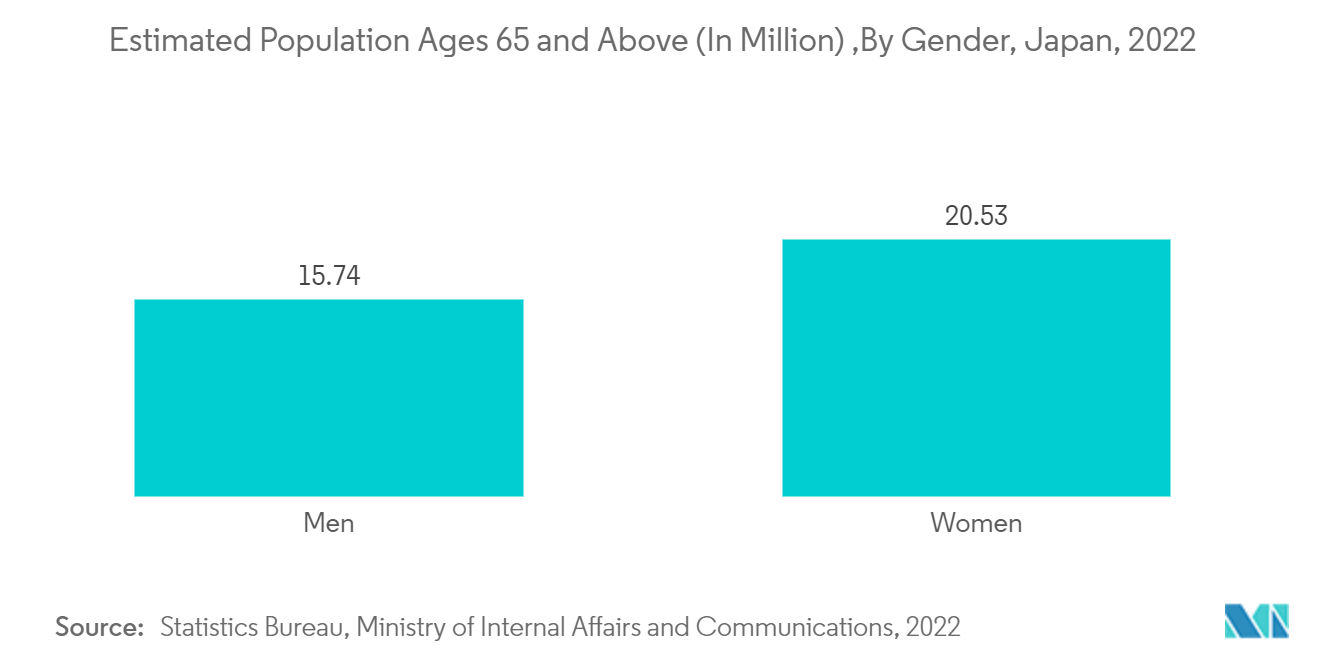
The wound care market in Japan is expected to grow owing to factors like the rising geriatric population in Japan, as the elderly tend to have vulnerable skin and require expert wound care management. As per the population estimates compiled by the Ministry of Internal Affairs and Communications, the number of seniors aged 65 years and older increased by 60,000 for a record total of 36.27 million in 2022. Furthermore, per the article published by the Journal of Nursing in June 2021, skin damage in the elderly contributes to pressure ulcer formation due to increased friction and shear forces. Thus, the increase in the geriatric population is also expected to contribute to the market's growth.
Moreover, the new guidelines for wound care management help increase the consensus among the healthcare team and are likely to increase the market's growth. For instance, as per the report published by Acute Medicine & Surgery in April 2022, the third version of guidelines for the inpatient treatment of burn injuries in Japan was released by the Japanese Society for Burn Injuries (JSBI). This work toward a consensus on burn care and develop new research to establish evidence for burn care and treatment, which drive the market's growth over the forecast period.
However, the high treatment costs of wound care management are the hindering factor for the growth of the studied market.
Note: Market size and forecast figures in this report are generated using Mordor Intelligence’s proprietary estimation framework, updated with the latest available data and insights as of 2026.
Japan Wound Care Management Devices Market Trends and Insights
Diabetic Foot Ulcer Under Chronic Wound Segment is Expected to Have a Significant Share in the Market
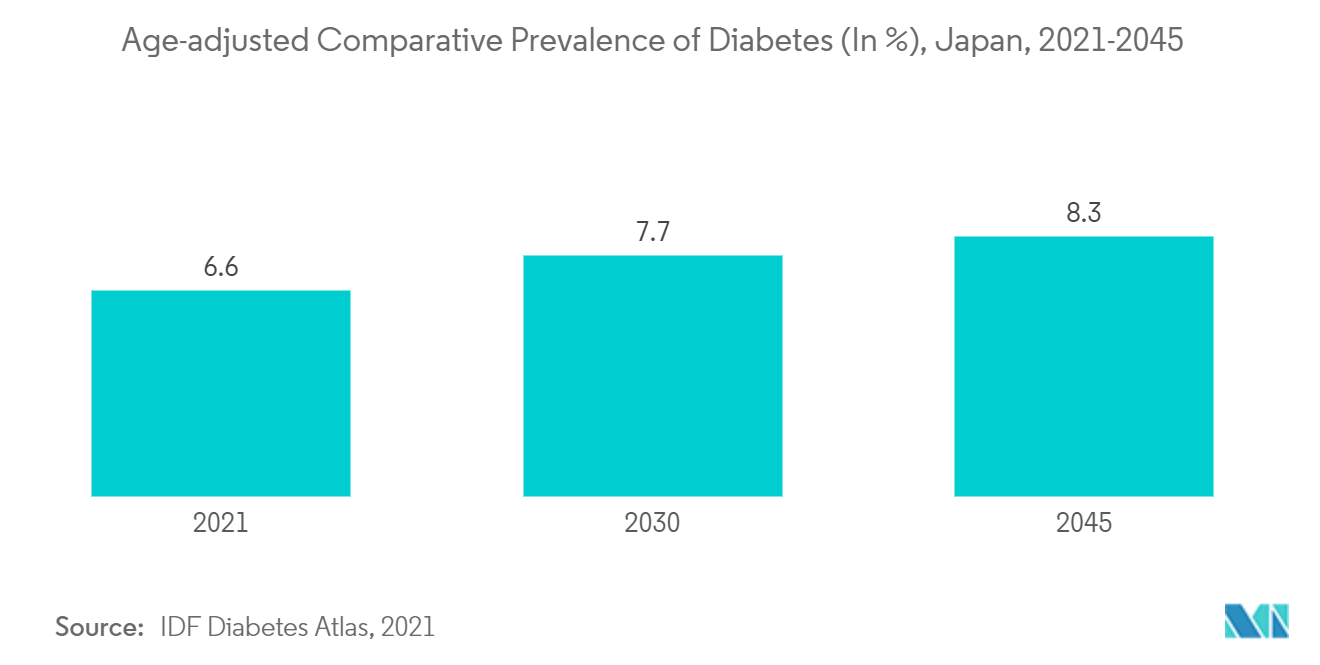
One of the most prevalent consequences for those with poorly controlled diabetes mellitus is diabetic foot ulcers. Poor foot care, peripheral vascular disease, underlying neuropathy, and poor glycemic control are the usual causes. For instance, as per the IDF Diabetes Atlas 2021, the number of patients aged 20-79 years with diabetes in Japan for 2021 was estimated at 11.0 million. Thus, with a high burden of diabetes, there is an increased risk for diabetic foot ulcers, which need proper wound care management and is expected to drive the market over the forecast period.
Furthermore, the high prevalence or incidence of diabetic foot ulcers is expected to be the major wound type that requires wound care management in the Japanese population. According to the article published by the Journal of Foot and Ankle Research in April 2021, the incidence of diabetic foot ulcers was 2.9 per 1000 person-years in Japan. Such risk of wound healing due to diabetes is expected to drive the demand for wound care management devices in Japan, thereby contributing to the growth of the studied segment during the forecast period.
Moreover, the new product approvals and launches for diabetic foot ulcer management are expected to drive the market due to the effective and safe use of products. For instance, in June 2021, MIMEDX Group, Inc. received regulatory approval from the JMHLW to market EPIFIX in Japan. EPIFIX was approved for hard-to-heal chronic wounds, such as diabetic foot ulcers (DFUs), to protect the wound bed to aid in the development of granulation tissue and deliver a human biocompatible extracellular matrix. Hence, new product approvals and better advantages of those products increase the usage of wound care management products and boost the market's growth over the study period.


Dressings Under Wound Care Segment is Expected to Register the Highest CAGR in the Market Over the Forecast Period
A wound dressing is a sterile pad or compresses applied to promote healing and protect the wound from further harm. A dressing is designed to be in direct contact with the wound, as distinguished from a bandage, which is most often used to hold a dressing in place. Moreover, the increasing number of surgeries in the region due to old age and other factors increases the demand for dressings, which helps the market to grow.
For instance, the report by Asian Plastic Surgery in April 2022 stated that plastic surgery has a long history as a discreet but popular procedure with the fourth-highest estimated number of plastic surgeons in Japan. As per the same source mentioned above, in 2021, a study revealed that the most common motivators for increasing attitudes toward aesthetic procedures in Japanese patients were self-investment and self-confidence. Hence, with the increase in plastic surgeries, the demand for surgical dressings increases, which is expected to boost the market through this segment.
Competitive Landscape
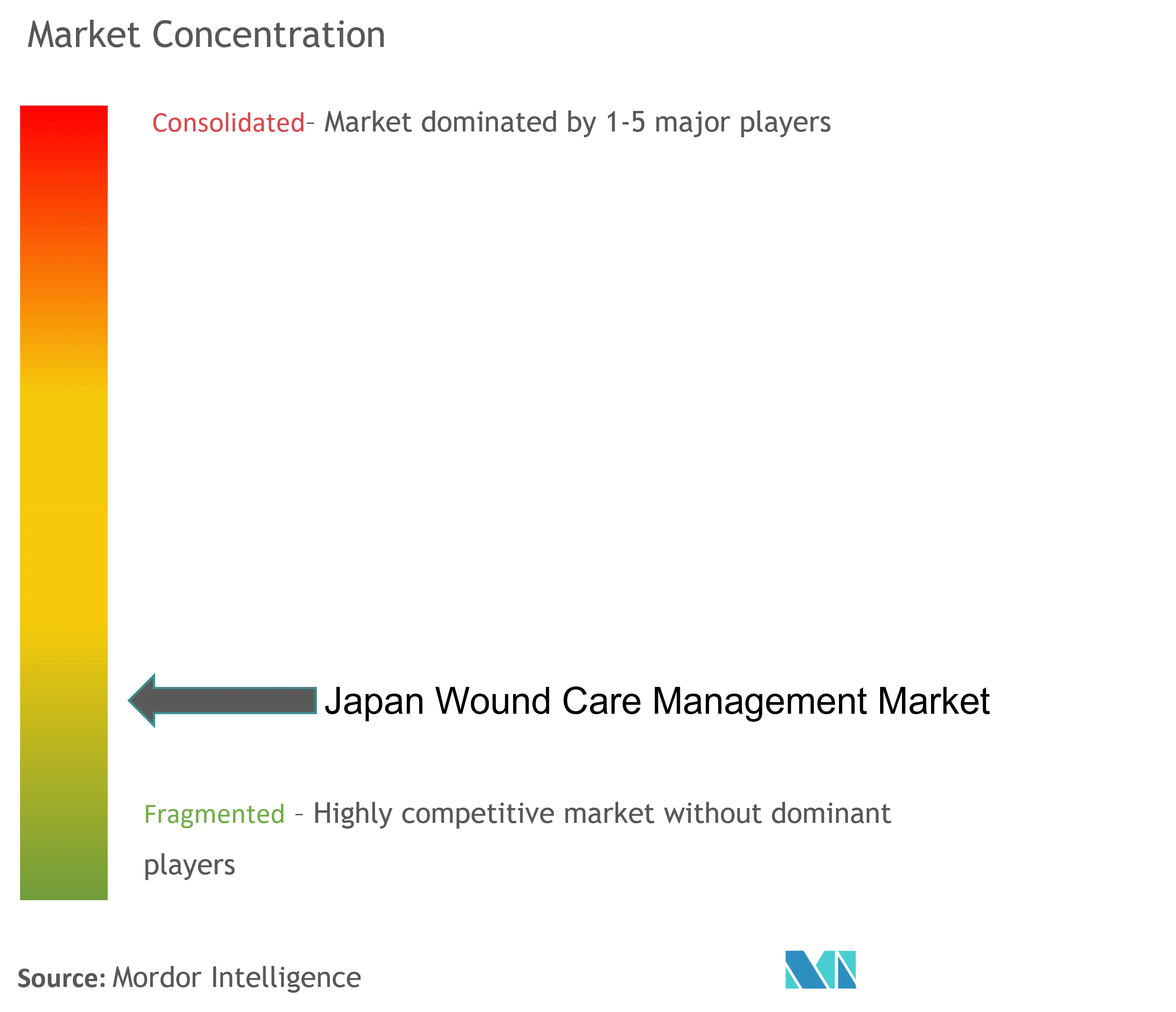
Japan is a developed country and has trade relations with other developed nations. As a result, it enjoys the presence of most of the global players in the Japanese wound care management market. Moreover, some domestic Japanese companies are also in the wound care management market. This, along with the presence of other global players, has made the Japanese market very competitive and fragmented for the wound care management market. Some of the major market players include Smith & Nephew, Medtronic, B. Braun SE, 3M, and Coloplast Group.
Japan Wound Care Management Devices Industry Leaders
Smith & Nephew
Medtronic
B. Braun SE
3M
Coloplast Group
- *Disclaimer: Major Players sorted in no particular order

Market Opportunities and Future Outlook
Japan's wound care management devices market offers room for faster uptake of advanced dressings and NPWT within chronic wound pathways, supported by the ongoing burden of diabetes (IDF Diabetes Atlas 2021: 11.0 million people aged 20-79 with diabetes in Japan) and the aging population (Ministry of Internal Affairs and Communications: 36.27 million people aged 65+ in 2022). Product access and clinical standardization remain practical levers, particularly as guideline work supports consensus-based care where specialized dressings and closure products are used. For example, the Japanese Society for Burn Injuries (JSBI) released the third version of inpatient burn treatment guidelines (reported in April 2022).
On the market access side, device manufacturers face a shifting approval and documentation environment that is moving toward more digitized submissions and health system connectivity. In April 2026, PMDA mandated eCTD v4.0 for new medical device applications, and Medical DX measures in FY2026 include standardized low-cost EMR rollouts to connect smaller clinics to national medical data networks, which can improve interoperability for wound documentation and care coordination. Innovation-led entry points also continue through domestic and academic-industry programs, including AMED-funded research in 2025 on novel wound dressing approaches for intractable wounds (Nichiban with Tohoku University and Bioken), and Kyoto University Hospital announcing regulatory approval in May 2025 for a Silk Elastin wound care sheet developed with Sanyo Chemical. This positions differentiated, Japan-origin wound materials alongside multinational product portfolios.
Recent Industry Developments
- May 2026: Smith & Nephew highlighted progress in chronic wound care around its ALLEVYN COMPLETE CARE dressing and RENASYS EDGE NPWT platform in conjunction with EWMA 2026 communications. The update reinforced the company's near-term commercial focus on integrated dressing and NPWT workflows aimed at reducing leakage management burden and improving therapy usability across care settings.
- April 2026: Smith & Nephew launched the RENASYS EDGE negative pressure wound therapy device in Japan (launch referenced as April 1, 2026, approval number 30700BZX00179000). Bringing a new NPWT platform to the local market raises competitive intensity in therapy devices used for complex and hard-to-heal wounds and supports portfolio refresh cycles in hospital and outpatient procurement.
- May 2025: Kyoto University Hospital announced regulatory approval of a Silk Elastin wound care sheet developed with Sanyo Chemical, described as the first Japanese medical device using genetic recombination technology. This approval broadened the set of domestically developed advanced wound materials, supporting clinician choice in difficult wound indications and strengthening university-industry translation pathways in Japan.


Research Methodology Framework and Report Scope
Market Definition and Coverage
This market covers the value of devices and consumable products used in Japan to prevent, treat, and close acute and chronic wounds across hospital and outpatient care, including advanced and traditional wound care solutions sold through medical channels.
Scope exclusions: We exclude purely cosmetic skin repair items and general consumer first-aid products that are not positioned or sold as medical wound management devices.
Segmentation Overview
- By Product
- Wound Care
- Dressings
- Bandages
- Other Wound Care Products
- Wound Closure
- Suture
- Surgical Staplers
- Other Wound Closure Products
- Wound Care
- By Wound Type
- Chronic Wound
- Diabetic Foot Ulcer
- Pressure Ulcer
- Other Chronic Wounds
- Acute Wound
- Surgical Wounds
- Burns
- Other Acute Wounds
- Chronic Wound
Data Sources, Market Sizing, and Validation
Desk Research
Desk work starts with building a clean view of the addressable patient pool and care setting mix in Japan, so the model is tied to real clinical demand and reimbursement realities. We use public healthcare statistics and clinical context, such as releases from the Japan health ministry (for hospital activity and care delivery signals), OECD health data (for system level utilization), and peer reviewed wound care studies indexed on PubMed (for prevalence and treatment patterns).
Then, we align the market scope to what is actually sold and used, by checking product classifications and regulatory listings from the Pharmaceuticals and Medical Devices Agency, along with relevant trade and customs statistics published by Japan Customs for import and export signals on selected device categories. Company filings, investor presentations, and reputable medical press are used to sense check pricing direction, product mix shifts, and distribution changes. We also use paid subscriptions for company financials and intelligence, plus patent databases, mainly to validate innovation intensity and to avoid missing new device categories. The sources listed above are illustrative only, and many other public references were also used for cross checks and clarification during the study.
Primary Interviews and Surveys
Primary work focuses on how wound care is actually practiced and purchased in Japan, where desk sources can be thin or publish with long lags. We speak with a mix of clinicians, procurement and distribution participants, and product specialists across major care settings, and then we use their inputs to validate utilization per case, typical therapy pathways, and realistic pricing and mix shifts.
Distribution of primary research fieldwork respondents
| Company type | Respondent position |
|---|---|
| Top tier: 36% | CXOs: 14% |
| Mid tier: 50% | Functional/Unit leaders: 31% |
| Smaller Players: 14% | Managers: 55% |
Market-Sizing & Forecasting
We size the market using a top-down build that starts from Japan wound incidence and treated cases by setting, and then converts that demand pool into product value using typical care pathways and per patient usage. Where the public trail is not complete, the gaps are filled using interview led ranges for utilization (for example, frequency of dressing changes, share of advanced therapies, and use rates of closure devices by procedure type), followed by conservative midpoint selection.
To avoid over counting, the model is anchored on a few practical inputs that can be cross checked, such as chronic wound case mix (including diabetic foot and pressure ulcers), surgical volume signals for acute wounds, penetration of advanced dressings and negative pressure therapies, average selling price progression by product group, and the shift of care to outpatient and home settings. Forecasts are built using scenario analysis, where growth is driven by aging demographics, diabetes burden, procedure recovery, and pricing and mix changes agreed with expert feedback. Selective bottom-up approximations are also run, such as sampled SKU price checks and distributor channel validation, so totals can be adjusted when one view looks out of line.
Data Validation & Update Cycle
Model outputs are checked against independent signals, including treatment volumes implied by clinical pathways, import and trade direction for selected categories, and the visible pace of product launches and tenders. When the model shows sharp year to year shifts, the assumptions are reopened, and we re contact sources to confirm if the change is real or driven by a data artifact.
Before sign off, the work goes through multi step analyst reviews, where segment totals must reconcile to the national total and where pricing, volume, and mix movements must make sense together. Reports are refreshed annually, and interim updates are made when material events occur, such as reimbursement changes, major regulatory actions, or a step change in hospital procedure activity. Right before delivery, a fresh pass is completed so clients receive the latest updated view.
Mordor Intelligence's Japan Wound Care Management Devices Market Size Versus Other Published Estimates
Published market values for wound care in Japan can look far apart because the scope and the counted products are not always the same, and because the assumed usage per patient can vary by care setting. Differences also come from which year is treated as the starting point, how currency is handled, and whether pricing changes are kept realistic or pushed aggressively.
Consumer first-aid wound kits and retail bandages sit outside Mordor Intelligence's scope, and that exclusion alone can make some broader wound care totals look larger even when the underlying clinical demand is similar. In addition, some sources mix overall wound care products with narrower device only views, or they assume faster adoption of advanced therapies without validating utilization per case with Japan specific clinical practice.
Benchmark comparison
| Source | Market Size | Gaps in Research Methodology |
|---|---|---|
| Mordor Intelligence | USD 0.00 M (2024) | |
| Trade Journal A | USD 1562.84 M (2024) | This estimate appears to cover a broader Japan wound care basket, which can include retail oriented wound products and adjacent categories beyond medical channel wound management devices, thereby inflating the total versus a device focused scope. |
| Regional Consultancy B | USD 1435.40 M (2025) | The figure is stated for a different base year and may use a wider product grouping or different care pathway assumptions, especially around advanced dressing penetration and price progression, which shifts the value even with similar patient volumes. |
The spread in the table is mainly explained by what gets counted as wound care and how quickly advanced products are assumed to penetrate routine care. Our sizing keeps the steps traceable to treated cases, setting level usage, and realistic pricing and mix assumptions, which makes the result easier to replicate and to challenge during decision making.


Key Questions Answered in the Report
What is the current Japan Wound Care Management Devices Market size?
The Japan Wound Care Management Devices Market is projected to register a CAGR of 3.11% during the forecast period (2026-2031)
Who are the key players in Japan Wound Care Management Devices Market?
Smith & Nephew, Medtronic, B. Braun SE, 3M and Coloplast Group are the major companies operating in the Japan Wound Care Management Devices Market.
What years does this Japan Wound Care Management Devices Market cover?
The report covers the Japan Wound Care Management Devices Market historical market size for years: 2019, 2020, 2021, 2022, 2023 and 2024. The report also forecasts the Japan Wound Care Management Devices Market size for years: 2025, 2026, 2027, 2028, 2029 and 2030.
Page last updated on:





