
Market Overview
| Study Period | 2022 - 2031 |
|---|---|
| Forecast Data Period | 2026 - 2031 |
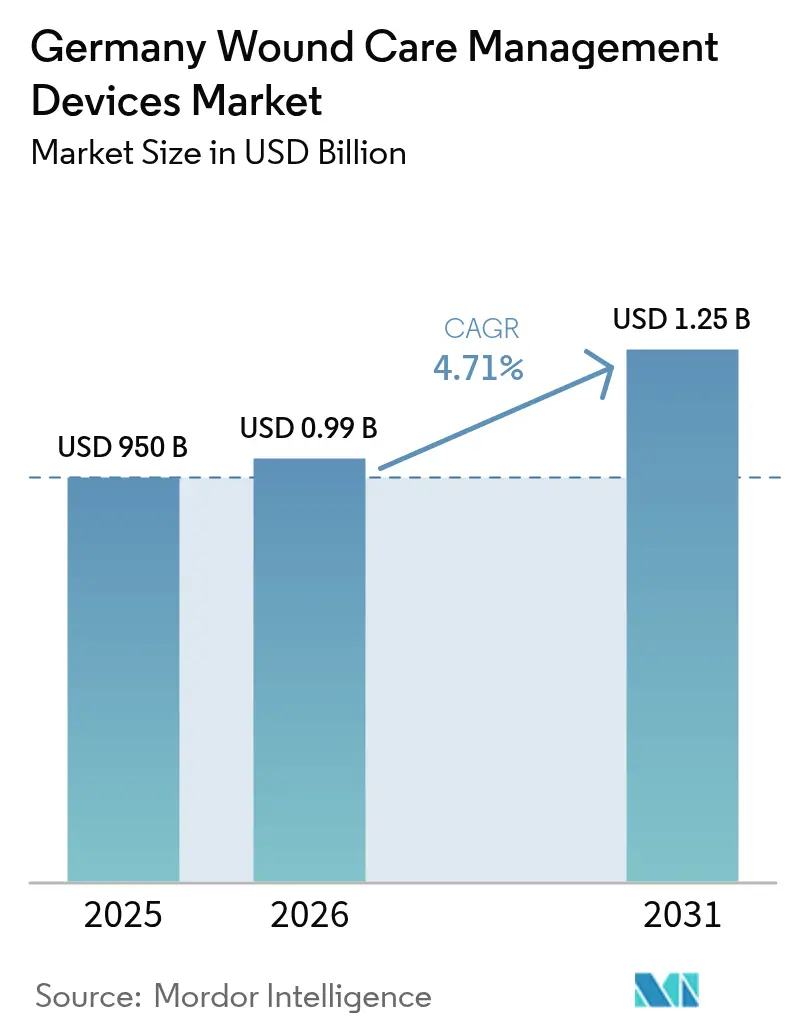
| Base Year Market Size (2025) | USD 950 Billion |
| Market Size (2026) | USD 0.99 Billion |
| Market Size (2031) | USD 1.25 Billion |
| Growth Rate (2026 - 2031) | 4.71 % |
| Market Concentration | Medium |
Major Players *Disclaimer: Major Players sorted in no particular order Image © Mordor Intelligence. Reuse requires attribution under CC BY 4.0. | |
Germany Wound Care Management Devices Market Analysis by Mordor Intelligence
Germany wound care management devices market size in 2026 is estimated at USD 994.75 million, growing from 2025 value of USD 950 million with 2031 projections showing USD 1.25 billion, growing at 4.71% CAGR over 2026-2031. Demand is propelled by an ageing population, the high clinical burden of diabetes, and a reimbursement framework that rewards clinically validated innovation. Hospitals are still the prime buyers of advanced dressings and negative-pressure systems, yet digital therapeutics and extended-wear products have begun to shift care toward homes and community settings. The EU Medical Device Regulation (MDR) [1] now shapes competitive strategy by favouring companies that already possess extensive quality-management infrastructure. Meanwhile, the Digital Healthcare Act allows physicians to prescribe reimbursable digital health applications (DiGAs), a policy that is gradually pulling sensor-enabled bandages and tele-monitoring platforms into routine practice. Taken together, these forces signal that the Germany wound care management devices market will keep expanding even as institutional budgets tighten and skilled nursing capacity shrinks.
Key Report Takeaways
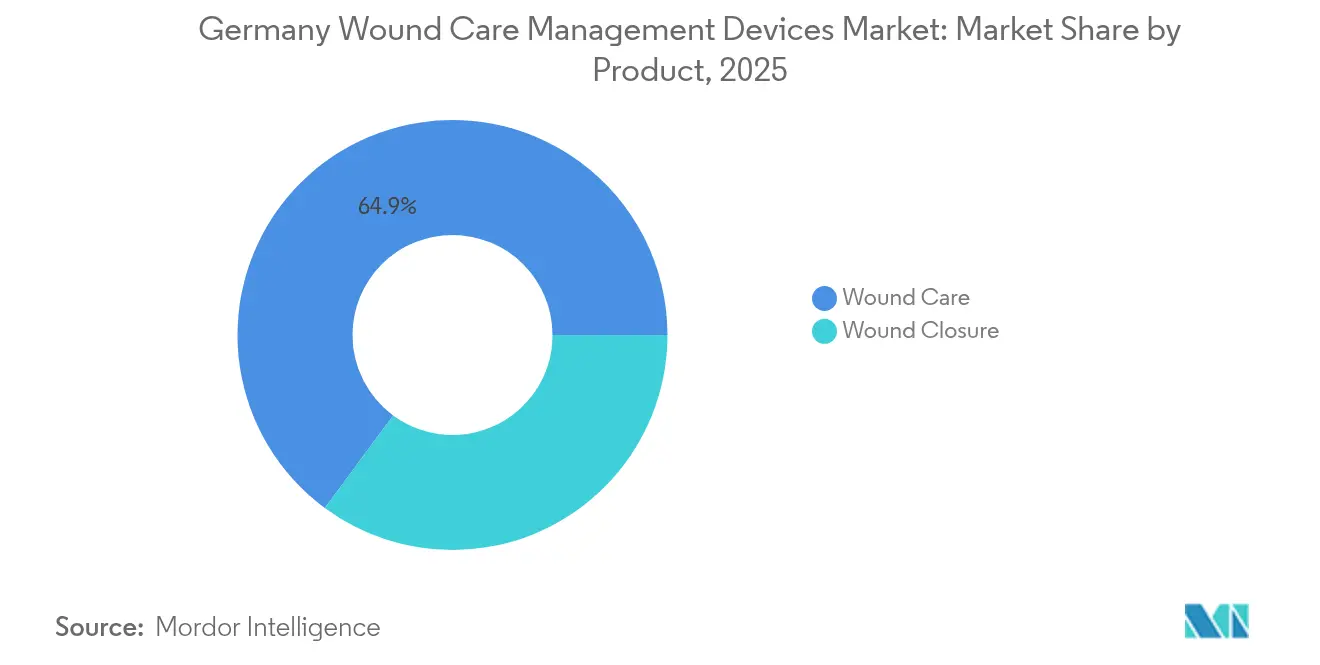
- By product type, wound care dressings captured 64.88% of Germany wound care management devices market share in 2025, while wound closure products are advancing at a 5.12% CAGR through 2031.
- By wound type, chronic wounds accounted for 59.95% of cases in 2025; acute wounds are set to grow at a 5.37% CAGR to 2031.
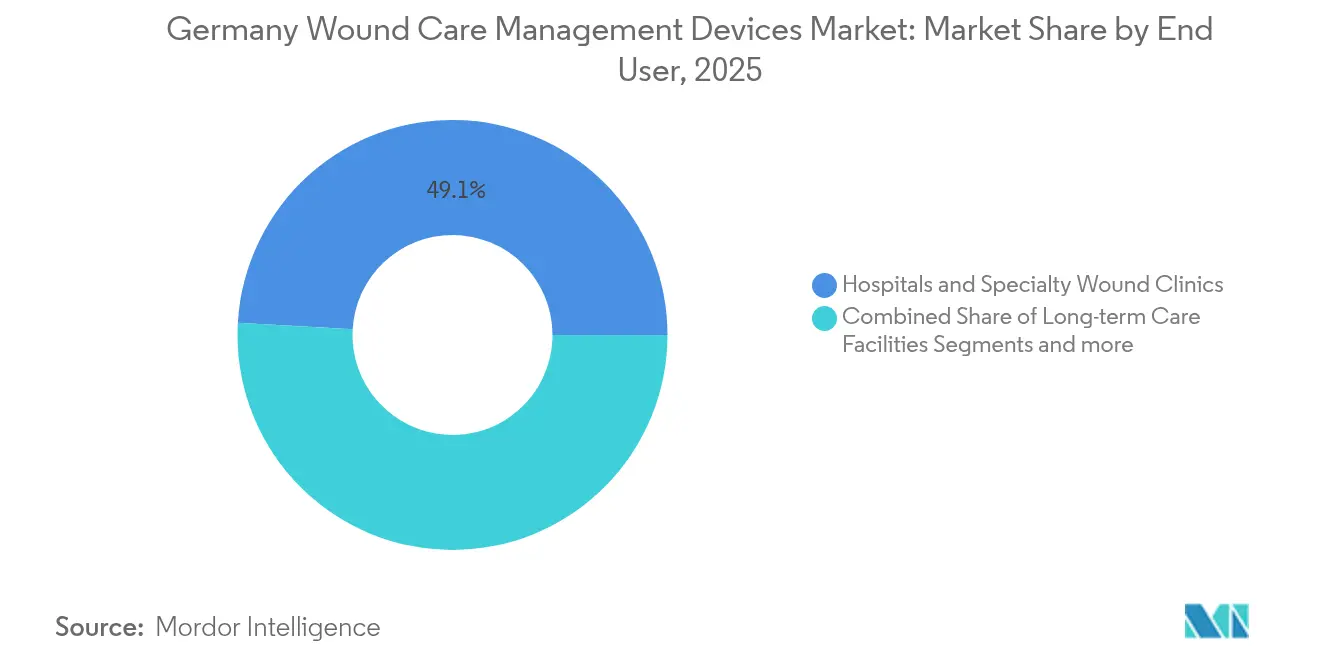
- By end user, hospitals and specialty wound clinics held 49.10% revenue share in 2025, whereas the home-healthcare segment is forecast to expand at a 5.62% CAGR.
- By mode of purchase, the institutional channel commanded 67.85% of Germany wound care management devices market size in 2025; retail/OTC purchases are rising at a 5.55% CAGR.
Note: Market size and forecast figures in this report are generated using Mordor Intelligence’s proprietary estimation framework, updated with the latest available data and insights as of 2026.
Germany Wound Care Management Devices Market Trends and Insights
Drivers Impact Analysis*
| Driver | (~) % Impact on CAGR Forecast | Geographic Relevance | Impact Timeline |
|---|---|---|---|
| Rising chronic wounds & geriatric population | +1.2% | Nationwide, rural concentration | Long term (≥ 4 years) |
| Diabetes prevalence fuelling diabetic foot ulcers | +0.9% | Nationwide, higher in eastern states | Medium term (2-4 years) |
| Continuous product innovation (silicone super-absorbers, NPWTi-d) | +1.1% | Nationwide, urban centres first | Short term (≤ 2 years) |
| Hospital-digitalisation grants | +0.8% | Nationwide, federal variations | Medium term (2-4 years) |
| Reimbursed wound-care apps & tele-monitoring | +0.6% | Metro areas lead | Short term (≤ 2 years) |
| Strong cost-effectiveness evidence for NPWT | +0.7% | Institutional focus | Medium term (2-4 years) |
| Source: Mordor Intelligence | |||
Rising chronic wounds & geriatric population
Germany already counts 17.3 million citizens aged 65 years or older, and the proportion living with severe disability continues to climb. Prevalence surveys place chronic wounds among nursing-home residents at 7.8%, with pressure ulcers representing half of these lesions. As hospital consolidation reduces inpatient beds, more care shifts toward the community, elevating the need for dressings that simplify self-application without compromising clinical outcomes. Patients with diabetes show a higher chronic-wound prevalence than non-diabetics, which pushes demand for premium multilayer dressings and sensor-equipped negative-pressure systems able to sustain therapy between less frequent nursing visits.
Diabetes prevalence fuelling diabetic-foot ulcers
Roughly 7.2% of German adults carry a formal diabetes diagnosis, and surveillance studies estimate that another 2% remain undiagnosed. Clinical registries record 250,000 new diabetic-foot ulcers each year and 13,000 major amputations despite multidisciplinary care pathways [2]. Evidence that specialised centres can cut amputation risk by 80% has accelerated procurement of advanced monitoring technologies and antimicrobial dressings capable of detecting sub-clinical infection markers.
Continuous product innovation including silicone super-absorbers and NPWTi-d
Manufacturers are embedding super-absorbent polymers within silicone borders to balance exudate control with atraumatic removal. In parallel, negative-pressure wound therapy with instillation and dwell (NPWTi-d) shortens dressing changes and lowers bacterial burden. Academic teams have unveiled smart bandages that track nitric-oxide and hydrogen-peroxide levels, signalling infection days before visual cues emerge. These advances resonate strongly with Germany’s reimbursement ethos, which rewards technologies that prevent costly complications.
Hospital-digitalisation grants accelerating advanced wound-tech uptake
Federal stimulus programmes provide hospitals with capital for electronic documentation and connected devices. As facilities modernise, procurement committees favour wound systems that integrate seamlessly with electronic health records, streamlining outcome reporting for payers. However, physician familiarity remains a barrier: only 12% of doctors have ever prescribed a DiGA, and self-assessed knowledge still averages below mid-scale levels.
Restraints Impact Analysis*
| Restraint | (~) % Impact on CAGR Forecast | Geographic Relevance | Impact Timeline |
|---|---|---|---|
| High device costs & reimbursement gaps | -0.7% | Nationwide, acute in rural areas | Medium term (2-4 years) |
| Stringent EU-MDR post-market compliance burden | -0.5% | Nationwide | Long term (≥ 4 years) |
| Fragmented outpatient-financing limits home-care uptake | -0.4% | Nationwide, underserved regions | Medium term (2-4 years) |
| Shortage of specialised wound-care nurses | -0.6% | Nationwide, rural deficit | Long term (≥ 4 years) |
| Source: Mordor Intelligence | |||
Shortage of specialised wound-care nurses
Federal projections show a possible deficit of 690,000 nurses by 2049 [3] Fewer professionals mean less frequent dressing changes and greater reliance on products that maintain efficacy for a week or more without specialist intervention.
Stringent EU-MDR post-market compliance burden
The MDR requires manufacturers to run continuous post-market surveillance and maintain unique device identification systems. Smaller German companies face multi-year investment cycles to meet these demands, and some have withdrawn legacy lines rather than re-certify. Resulting product scarcity could curb price competition.
*Our forecasts treat driver/restraint impacts as directional, not additive. The impact forecasts reflect baseline growth, mix effects, and variable interactions.
Segment Analysis
By Product: Advanced Solutions Drive Market Evolution
Wound-care products generated 64.88% of Germany wound care management devices market revenue in 2025, reflecting a preference for multifunctional foams, hydrofibers, and silicone super-absorbers that address exudate control and skin integrity simultaneously. Negative-pressure systems, now equipped with automated pressure monitors, are gaining institutional traction as payers accept their cost-saving profile for complex surgical wounds. Smart hydrogels infused with antibiofilm peptides are moving from research labs toward commercial pipelines, promising additional gains in healing speed. Traditional gauze still serves primary-care settings but faces encroachment from low-cost composite dressings. Disposable NPWT kits target outpatient settings where pump rental logistics once constrained adoption. Together, these innovations ensure that the Germany wound care management devices market maintains a technology-led growth curve.
Wound-closure devices exhibit the fastest CAGR at 5.12% through 2031 as hospitals resume deferred surgeries and adopt bioresorbable staples and tissue adhesives. Bioengineered skin substitutes increasingly bridge extensive tissue defects, shortening hospital stays and enabling earlier discharge to home-care programmes. Smart bandages capable of real-time biomarker sensing, such as the iCares prototype, foreshadow an era in which closure products double as diagnostic platforms. These trends align closely with statutory insurance goals of complication prevention, indicating sustained procurement momentum despite overall budgetary constraints in the Germany wound care management devices industry.

By Wound Type: Chronic Conditions Shape Market Dynamics
Chronic lesions commanded 59.95% of Germany wound care management devices market size in 2025. Diabetic-foot ulcers alone account for 250,000 new cases every year, spurring hospital investment in multidisciplinary limb-saving teams. Pressure-ulcer prevalence remains highest in long-term-care institutions, reinforcing demand for dressings that can distribute shear forces while absorbing high exudate volumes. Venous leg ulcers also drive utilisation of compression-compatible materials with antimicrobial silver or polyhexanide. Clinical guidelines now recommend point-of-care fluorescence imaging to detect bacterial load, creating a pull-through effect for compatible dressings.
Acute wounds are expanding at a 5.37% CAGR, buoyed by rising orthopaedic and oncologic surgery volumes as pandemic backlogs clear. Extended-wear NPWT dressings now remain in situ for seven days, limiting theatre-to-ward hand-offs and freeing nursing resources. Skin-grafting adjuncts containing growth-factor matrices shorten recovery after burns and trauma, and absorbable sutures coated with antimicrobials lessen the risk of surgical-site infections. These developments collectively raise the performance expectations for all acute-care devices sold into the Germany wound care management devices market.
By End User: Home Healthcare Transforms Delivery Models
Hospitals and specialty clinics retained 49.10% of Germany wound care management devices market share in 2025. Large academic centres spearhead adoption of high-end imaging tools and robotic debridement platforms, while regional clinics focus on protocol standardisation to meet tightened length-of-stay targets. Institutional buyers increasingly evaluate total cost of ownership rather than headline price, awarding contracts to suppliers that bundle training and digital documentation modules.
Home-healthcare settings deliver the fastest growth at a 5.62% CAGR. Fifty-six DiGAs are reimbursable, yet only a fraction of physicians routinely issue prescriptions, highlighting education gaps. Pilot projects using intelligent plasters demonstrated reductions in nurse travel time and emergency admissions, but reimbursement codes still lag behind product capabilities. As the nursing shortage deepens, solutions that allow relatives or non-clinical carers to perform routine changes will capture a growing share of the Germany wound care management devices market.
By Mode of Purchase: Digital Channels Reshape Procurement
Institutional procurement represented 67.85% of Germany wound care management devices market size in 2025. Tendering cycles now attach greater weight to MDR compliance history and real-world-evidence dossiers, favouring incumbents with mature surveillance systems. Some university hospitals have already inserted “digital-connectivity” clauses into tender documents, effectively screening out legacy pumps lacking remote-monitoring functions.
Retail and OTC sales are rising at a 5.55% CAGR. Community pharmacies stock silicone-bordered foams and simplified NPWT kits, while e-commerce portals let patients reorder supplies in quantities tailored to their dressing-change schedules. Tele-consultations guide product selection, ensuring adherence to guideline-based care plans and reinforcing patient confidence. These dynamics add incremental revenue streams and extend brand reach for manufacturers in the Germany wound care management devices industry.
Geography Analysis
Germany’s federal insurance system provides a unified reimbursement baseline, yet state-level execution produces regional adoption gaps. Urban centres such as Berlin, Hamburg and Munich benefit from concentrated specialist clinics and digital-innovation grants, creating clusters where advanced NPWT adoption exceeds the national mean. Eastern states, including Saxony-Anhalt and Brandenburg, report higher diabetes prevalence, pushing local demand for diabetic-foot management solutions and driving device utilisation above per-capita averages. Rural areas face longer travel distances and fewer wound-care nurses, accentuating the appeal of long-wear dressings and tele-monitoring patches that can bridge gaps in professional coverage.
Hospital-consolidation plans project a reduction from 1,900 to 1,250 facilities by 2033, disproportionately affecting low-volume rural hospitals. As a result, outpatient clinics and home-care providers in those districts expect rising caseloads, stimulating demand for easy-to-use dressings that maintain integrity over multiple days. States such as North Rhine-Westphalia have earmarked digital health subsidies to assist smaller providers in adopting connected wound platforms, creating a multiplier effect for companies whose products integrate with standard telehealth dashboards.
Cross-border influences add another layer: Germany’s central location and MDR alignment make it a preferred launch pad for multinational manufacturers. Domestic players like HARTMANN export established dressings across the EU, yet also face intensified competition from global firms introducing sensor-based platforms. The DiGA framework positions Germany as an early-adopter market for digital wound care, encouraging foreign start-ups to partner with German clinics to secure pivotal real-world data. However, physician uptake remains modest, indicating that sustained educational outreach will be critical to unlock the full regional potential of the Germany wound care management devices market.
Regulatory Landscape
Germany regulates wound care management devices under the EU Medical Device Regulation (EU) 2017/745 (MDR), implemented nationally through the Medical Device Law Implementation Act (MPDG), with the Federal Institute for Drugs and Medical Devices (BfArM) serving as a central competent authority for medical device oversight, reporting pathways, and market surveillance. A key compliance milestone is the EUDAMED transition: as of May 28, 2026, use of EUDAMED modules for actors and device/UDI information is mandatory for devices placed on the German market, and national DMIDS registration for new products was deactivated, shifting registration and traceability workflows toward EU-level systems.
On reimbursement, Germany's statutory health system relies heavily on rules set by the Federal Joint Committee (G-BA), including requirements within the Pharmaceutical Directive (Arzneimittel-Richtlinie) and related listings (including Appendix V) that define eligibility and evidentiary expectations for wound treatment products. This creates a practical market-access split between products treated as standard bandages and association materials and other wound treatment products that may require additional demonstrations of clinical utility, which affects portfolio strategy and the level of clinical documentation manufacturers maintain alongside MDR post-market surveillance obligations.
Competitive Landscape
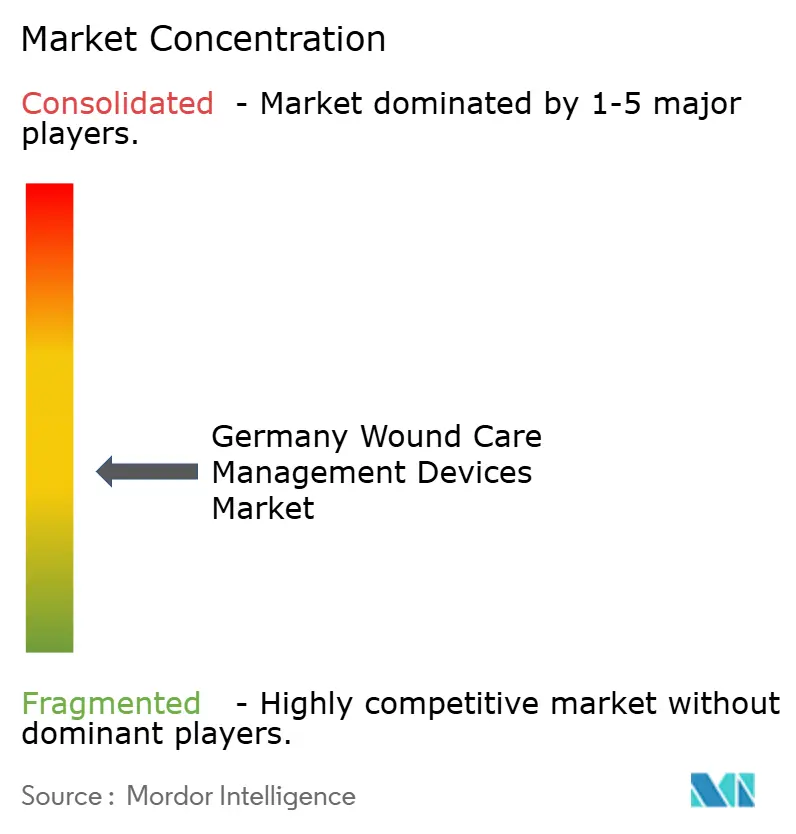
The Germany wound care management devices market features moderately fragemented concentration. HARTMANN leverages domestic manufacturing and an extensive sales force to maintain leadership in traditional and silicone-lined dressings. Smith+Nephew’s technology-focused portfolio, highlighted by its RENASYS EDGE negative-pressure platform, posted 12.2% underlying growth in its Advanced Wound Management division during 2024. Coloplast expands via direct-to-consumer channels and consistently ranks high in patient-satisfaction scores for post-surgical dressings.
Strategic moves increasingly revolve around digital augmentation. Healiva’s acquisition of Smith+Nephew’s cell-therapy assets signals renewed interest in biologics capable of accelerating healing in chronic indications. Convatec plans a 2025 market debut for its nitric-oxide releasing ConvaNiox dressing, aiming to address resistant biofilms while conforming to EU antimicrobial-resistance targets. Manufacturers also court payer acceptance by funding economic-outcome studies that quantify reductions in home-visit frequency or hospital readmissions.
Regulatory readiness under MDR emerged as a key differentiator in 2025. Firms with mature quality-management systems completed re-certifications early, avoiding supply disruptions. Smaller entities, however, struggled with notified-body backlog, leading some distributors to rationalise catalogues and prioritise high-volume SKUs. Digital-health alignment offers a route to competitiveness for newcomers capable of embedding Bluetooth sensors or cloud-based dashboards into otherwise mature dressing categories.
Germany Wound Care Management Devices Industry Leaders
-
Smith & Nephew
-
Coloplast Group
-
Medtronic
-
Solventum
-
ConvaTec Group plc
- *Disclaimer: Major Players sorted in no particular order
Market Opportunities and Future Outlook
A near-term opportunity area sits at the intersection of MDR-driven traceability and workflow digitization. The May 28, 2026 shift to mandatory EUDAMED use for device and UDI information increases the value of suppliers that can support hospitals and outpatient providers with complete, audit-ready documentation, German-language labeling/IFUs, and streamlined device identification processes. With institutional procurement representing 67.85% of 2025 purchasing, tender criteria that already emphasize compliance history and real-world evidence create whitespace for manufacturers that bundle connected wound therapy systems with outcome reporting and training, particularly for negative pressure wound therapy where German buyers increasingly evaluate total cost of ownership rather than unit price.
A second opportunity is reimbursement-linked clinical evidence generation for home and community care models under the DiGA pathway. BfArM-listed digital health applications can be prescribed within statutory insurance, and this framework offers a route for telemonitoring platforms and sensor-enabled wound solutions to move from pilots into routine use when evidence packages are strong enough for payer acceptance. Market signals also point to active portfolio repositioning: in March 2026, HARTMANN noted pressure from reimbursement changes while highlighting growth in atraumatic silicone-based dressing segments (for example, Zetuvit Silicone), reinforcing commercial pull for advanced products that reduce dressing-change frequency amid the projected nursing workforce gap.
Recent Industry Developments
- July 2026: Smith+Nephew highlighted the publication of a new German expert consensus in Die Chirurgie that provides risk-based recommendations for using single-use negative pressure wound therapy on closed surgical incisions. By formalizing patient selection logic in a German clinical context, the guidance supports more standardized adoption in hospitals and strengthens the evidence narrative used in procurement and pathway design.
- January 2026: Solventum introduced the V.A.C. Peel and Place Dressing in Germany for negative pressure wound therapy, positioning it to reduce application time versus traditional foam dressings. Faster, simpler application aligns with hospital productivity needs and helps lower training burden, which can accelerate uptake of NPWT kits in settings facing staffing constraints.
- March 2025: Merieux Equity Partners acquired a majority stake in German manufacturer Curea Medical to expand its advanced dressing footprint. The transaction added investment capacity and scale to a domestic supplier base, supporting broader portfolio development and competitive pressure in higher-value dressing categories.
Research Methodology Framework and Report Scope
Market Definition and Coverage
This market covers devices used to manage wounds in Germany, from cleaning and debridement through closure, pressure management, and monitoring, across hospital, clinic, and home care settings. Values are modeled in USD, using a consistent selling-price basis across the supply chain.
Scope exclusions: We exclude consumable dressings, gels, and topical agents because those products follow a different usage and pricing logic than devices.
Segmentation Overview
- By Product
- Wound Care
- Dressings
- Traditional Gauze & Tape Dressings
- Advanced Dressings
- Wound-Care Devices
- Negative Pressure Wound Therapy (NPWT)
- Oxygen & Hyperbaric Systems
- Electrical Stimulation Devices
- Other Wound Care Devices
- Other Wound Care Products
- Dressings
- Wound Closure
- Sutures
- Surgical Staplers
- Tissue Adhesives, Strips, Sealants & Glues
- Wound Care
- By Wound Type
- Chronic Wounds
- Diabetic Foot Ulcer
- Pressure Ulcer
- Venous Leg Ulcer
- Other Chronic Wounds
- Acute Wounds
- Surgical/Traumatic Wounds
- Burns
- Other Acute Wounds
- Chronic Wounds
- By End User
- Hospitals & Specialty Wound Clinics
- Long-term Care Facilities
- Home-Healthcare Settings
- By Mode of Purchase
- Institutional Procurement
- Retail / OTC Channel
Data Sources, Market Sizing, and Validation
Desk Research
Desk research was used to map the demand pool and to keep the model tied to measurable healthcare activity in Germany. We referred to public sources such as Federal Statistical Office (Destatis) healthcare and population tables, OECD health statistics, WHO health indicators, and Germany focused publications from bodies like the Robert Koch Institute where wound-related burden and risk factors are discussed.
To translate demand into a device market, we also used payer and regulatory context from sources such as the Federal Joint Committee (G-BA) and the Federal Institute for Drugs and Medical Devices (BfArM), followed by product and price signals from company annual reports, investor presentations, tender notices, and reputable medical press. A paid subscription for company financials and another for shipment level import and export signals were used selectively to sanity check supplier exposure and pricing ranges. The desk sources listed here are illustrative only, and many other public documents were reviewed to collect, validate, and clarify inputs.
Primary Interviews and Surveys
Primary work focused on checking what is actually purchased and used in German care pathways, and then validating pricing progression and adoption drivers. We spoke with a mix of manufacturers, distributors, procurement teams, clinicians, and home care stakeholders so that assumptions on utilization, setting shift, and reimbursement impact could be confirmed and adjusted.
Distribution of primary research fieldwork respondents
| Company type | Respondent position |
|---|---|
| Top tier: 29% | CXOs: 14% |
| Mid tier: 57% | Functional/Unit leaders: 40% |
| Smaller Players: 14% | Managers: 46% |
Market-Sizing & Forecasting
Sizing starts with a top-down build where procedure activity, chronic wound prevalence, and treated patient pools are translated into device-eligible episodes, which are then converted into value using typical usage rates and price bands. The totals were then checked using selective bottom-up approximations, such as sampling key device categories with average selling price times estimated units, followed by channel checks on hospital versus home care splits.
A few practical variables drive the model because they move device demand in a visible way, including diabetes prevalence and aging mix, surgical volumes that create acute wounds, adoption of negative pressure wound therapy in outpatient settings, reimbursement and coding changes that affect uptake, and the share of care delivered outside hospitals. Forecasting uses scenario analysis supported by short time series smoothing, where the scenarios mainly flex setting shift speed, pricing pressure, and technology substitution (for example, portable systems versus older inpatient use). When bottom-up inputs are missing for smaller device niches, we fill gaps using proxy utilization ratios anchored to clinical activity and then re-check them in follow-up calls.
Data Validation & Update Cycle
Outputs are validated through triangulation across independent signals, including public healthcare activity, trade and production indicators, and the price logic heard in interviews. If a category grows faster than the related clinical drivers, the assumptions are re-opened, and respondents are re-contacted to confirm whether the change is real or an artifact of timing, pricing, or scope.
Before sign-off, the model goes through analyst-to-analyst review so that unit logic, currency handling, and year alignment are checked step by step. The report is refreshed each year, and interim updates are made when material events occur, such as reimbursement shifts or major regulatory impacts. Right before delivery, a final pass is done so clients receive the most current view available.
Mordor Intelligence's Germany Wound Care Management Devices Market Size Measured Against Other Published Estimates
Published market sizes for Germany wound care management devices can look different even when the topic name is similar, because the counted product pool and pricing basis are not always aligned. Differences often come from what gets treated as a device versus a consumable, which care settings are included, and whether values reflect manufacturer selling prices or downstream markups.
The main gap comes from whether advanced dressings and topical wound products are mixed into the device total, where Mordor Intelligence counts only wound care management devices and keeps consumables modeled outside the device number to avoid double counting. Results also spread when one publisher anchors the demand pool to chronic wound treatment only, while another adds broad hospital consumables tied to surgical volume. Timing matters too, since currency conversion windows and refresh cadence can shift the current-year figure, especially when reimbursement changes alter adoption mid-year.
Benchmark comparison
| Source | Market Size | Gaps in Research Methodology |
|---|---|---|
| Mordor Intelligence | USD 0.99 B (2026) | |
| Global Consultancy A | USD 1.26 B (2023) | Uses an earlier base year and appears to apply a broader interpretation of wound care management devices, which can pull adjacent wound care products into the total and inflate value versus a devices-only build. |
| Trade Journal B | USD 0.61 B (2024) | Looks closer to a chronic-wound care view rather than the full device pool, which typically undercounts acute-wound driven device demand and misses parts of the hospital channel. |
Taken together, the spread is largely explained by what is counted and how the demand pool is constructed, not by a simple math disagreement. By keeping scope tied to device-eligible episodes, checking setting mix with interviews, and applying a consistent price basis, the resulting number stays traceable to clear drivers and can be repeated when assumptions are updated.
Key Questions Answered in the Report
What is the current value of the Germany wound care management devices market?
The market stands at USD 994.75 million in 2026 and is forecast to reach USD 1.25 billion by 2031.
Which product category holds the largest revenue share?
Advanced wound-care products lead with 64.88% of Germany wound care management devices market share in 2025.
Why are home-healthcare settings growing faster than hospitals?
A looming nursing shortage and supportive reimbursement for digital health tools are shifting routine wound management toward the home, driving a 5.62% CAGR in that segment.
How does EU-MDR influence competitive dynamics?
Stricter post-market surveillance and re-certification requirements favour companies with robust quality-management systems, creating barriers for smaller manufacturers.
What digital health policies affect wound-care adoption?
Germany’s Digital Healthcare Act allows physicians to prescribe reimbursable DiGAs, enabling remote monitoring systems and sensor-equipped dressings to gain traction.