
Active Wound Care Market Size and Share
Market Overview
| Study Period | 2020 - 2031 |
|---|---|
| Market Size (2026) | USD 3.15 Billion |
| Market Size (2031) | USD 3.91 Billion |
| Growth Rate (2026 - 2031) | 4.38 % |
| Fastest Growing Market | Asia-Pacific |
| Largest Market | North America |
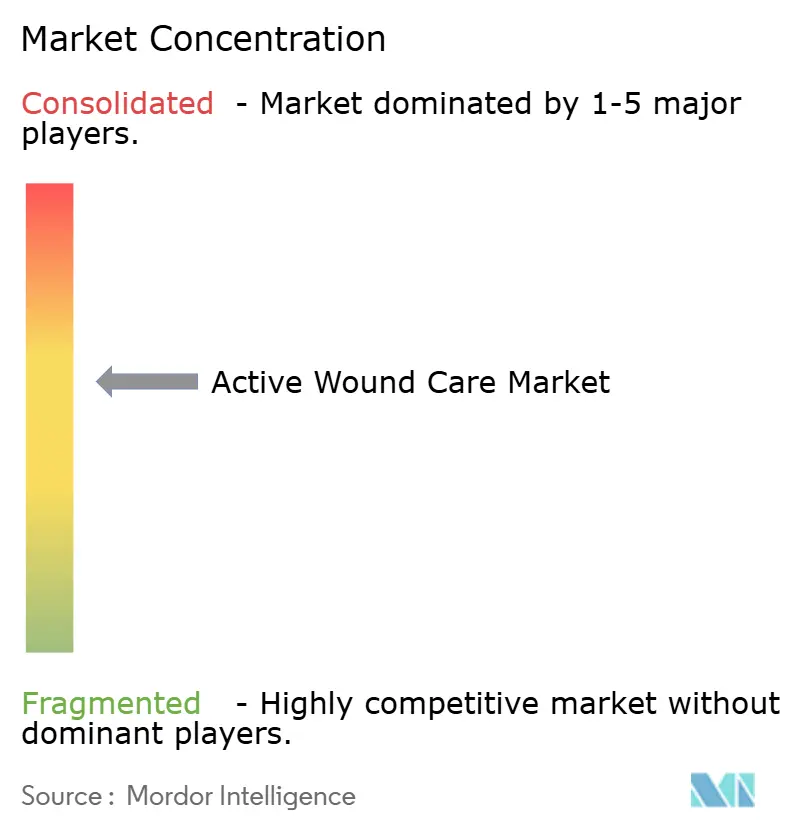
| Market Concentration | Medium |
Major Players *Disclaimer: Major Players sorted in no particular order Image © Mordor Intelligence. Reuse requires attribution under CC BY 4.0. | |
Active Wound Care Market Analysis by Mordor Intelligence
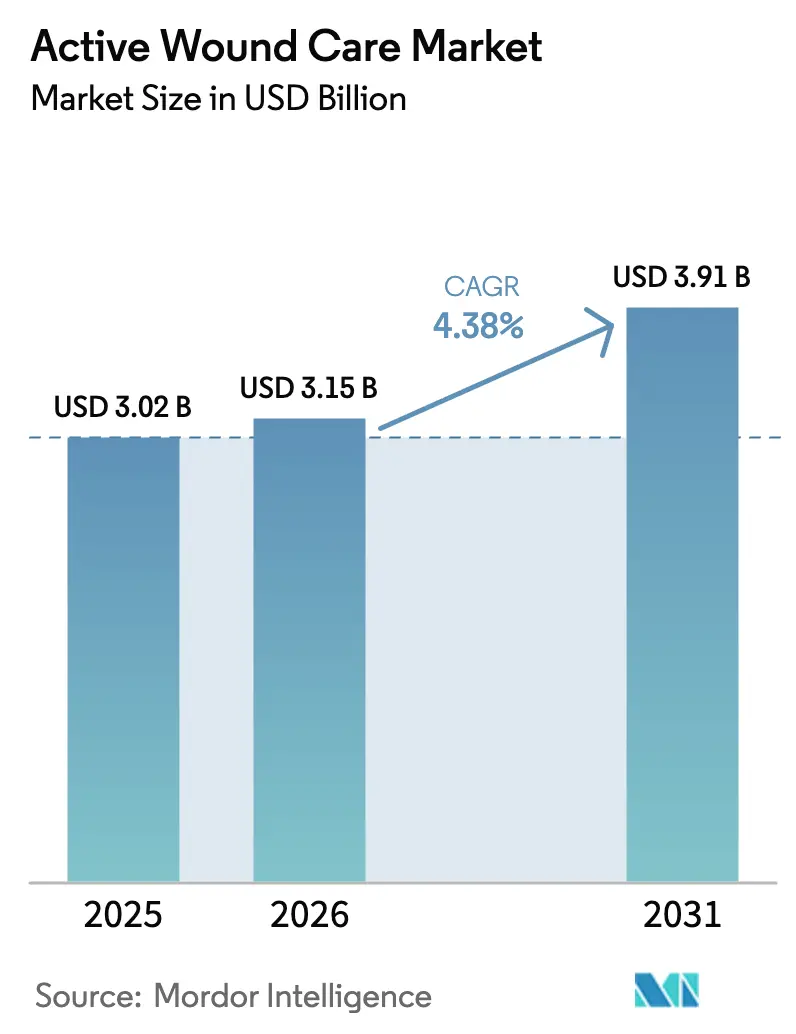
The Active Wound Care market size is expected to grow from USD 3.02 billion in 2025 to USD 3.15 billion in 2026 and is forecast to reach USD 3.91 billion by 2031 at 4.38% CAGR over 2026-2031. This expansion reflects a migration from passive dressings toward bioengineered therapies that accelerate tissue regeneration and shorten healing timelines. Aging populations, higher chronic disease incidence, and validated clinical outcomes for cellular-based products are sustaining demand, while military-funded regenerative research is seeding breakthrough technologies that later flow into civilian settings. North America leads adoption thanks to comprehensive reimbursement and a dense network of specialist centers, whereas Asia-Pacific’s healthcare build-out and policy incentives position the region for the fastest growth through 2030. Regulatory momentum—most notably the United States Food and Drug Administration (FDA) proposal to tighten quality requirements for antimicrobial dressings—signals a market moving toward evidence-driven differentiation.[1]Source: Food and Drug Administration, “Medical Devices; Quality System Regulation Amendments,” federalregister.gov
Key Report Takeaways
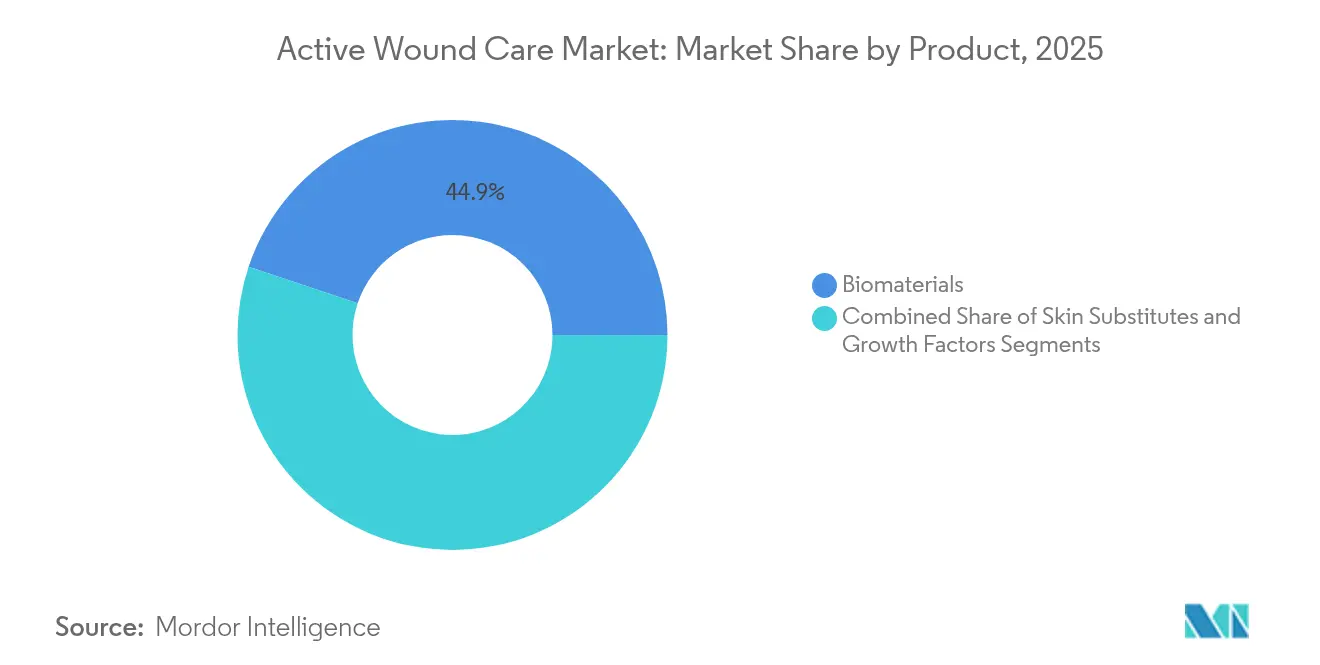
- By product type, biomaterials held 44.86% of the active wound care market share in 2025, while skin substitutes are projected to grow at a 4.78% CAGR to 2031.
- By end user, hospitals accounted for 48.10% of the active wound care market in 2025; home healthcare is expected to expand at a 5.55% CAGR between 2026-2031.
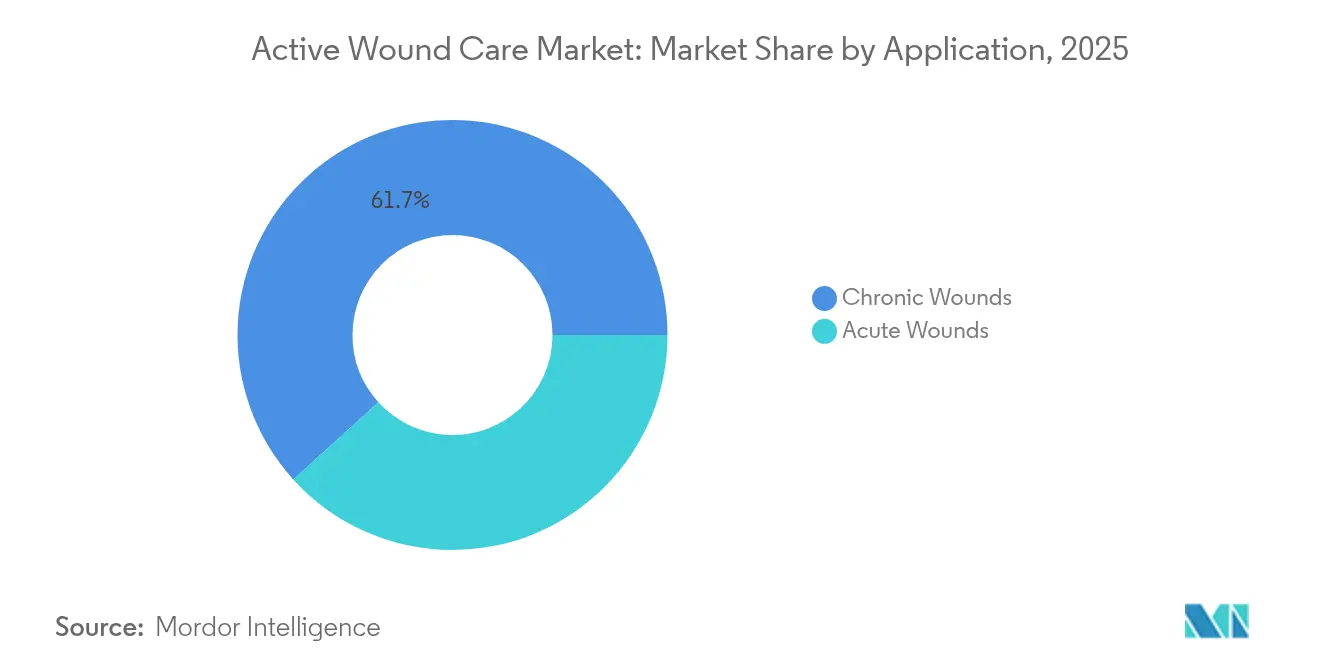
- By application, chronic wounds commanded 61.72% share of the active wound care market size in 2025, yet acute wounds are forecast to increase at a 5.02% CAGR through 2031.
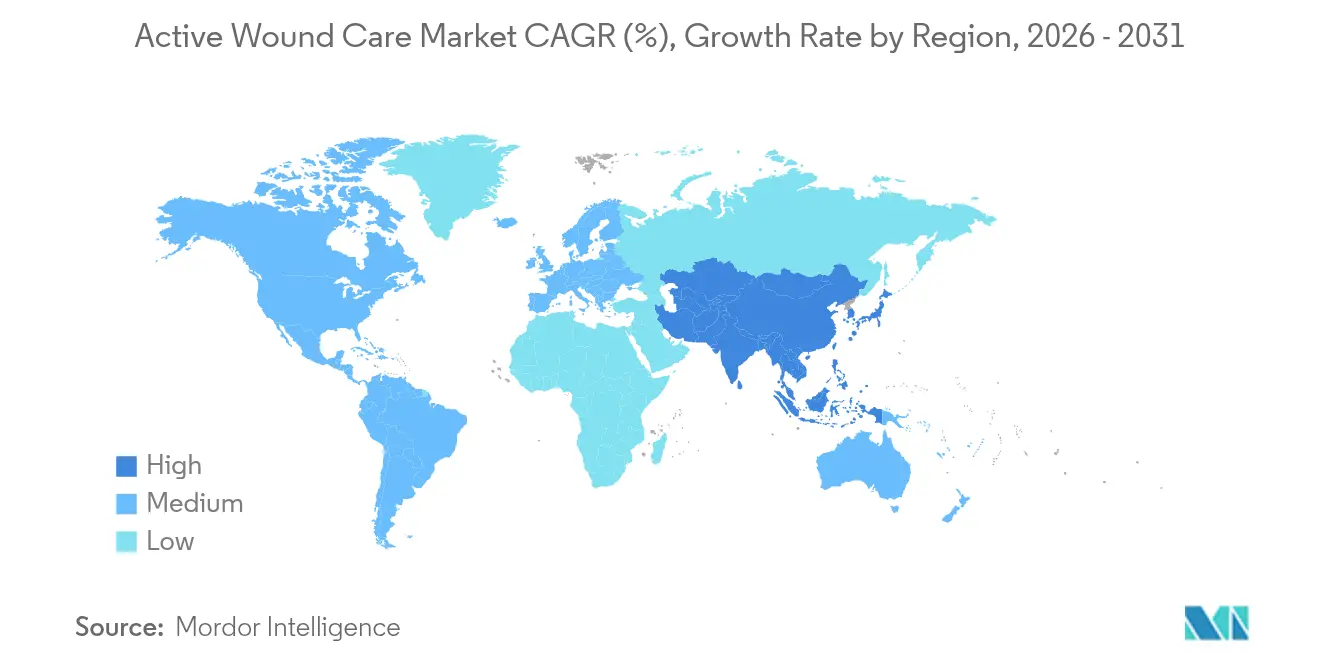
- By geography, North America dominated with 41.30% revenue share in 2025, whereas Asia-Pacific is projected to grow at 5.92% CAGR to 2031.
Note: Market size and forecast figures in this report are generated using Mordor Intelligence’s proprietary estimation framework, updated with the latest available data and insights as of 2026.
Market Trends and Insights
Drivers Impact Analysis of Active Wound Care Market*
| Driver | (~) % Impact on CAGR Forecast | Geographic Relevance | Impact Timeline |
|---|---|---|---|
| Rising Prevalence of Chronic Wounds (Diabetes, Obesity) | +1.2% | Global, concentrated in North America & APAC | Long term (≥ 4 years) |
| Surge In Surgical and Trauma Procedures | +0.8% | Global, with higher impact in developed markets | Medium term (2-4 years) |
| Technological Innovations in Bioengineered Substitutes and Growth Factors | +1.0% | North America & Europe leading, APAC adoption | Medium term (2-4 years) |
| Expanding Reimbursement for Cellular/Tissue-Based Products | +0.7% | North America & Europe primarily | Short term (≤ 2 years) |
| Smart Sensor-Embedded Active Dressings Adoption | +0.5% | Developed markets initially, global expansion | Medium term (2-4 years) |
| Military and Space-Medicine Funded Regenerative R&D | +0.3% | Global impact, originated in North America | Long term (≥ 4 years) |
| Source: Mordor Intelligence | |||


Rising Prevalence of Chronic Wounds (Diabetes, Obesity)
The global diabetes epidemic is fundamentally reshaping wound care demand patterns, with diabetic foot ulcers representing a USD 13 billion annual treatment burden that traditional therapies fail to address effectively. China’s nationwide push of wound centers illustrates how health systems are scaling capacity to manage a mounting caseload of complex ulcers. The intersection of metabolic disorders with population aging ensures that chronic wounds stay the dominant revenue driver in the active wound care market through 2030.
Technological Innovations in Bioengineered Substitutes and Growth Factors
The 2024 FDA approval of Zevaskyn, a gene-based skin substitute that achieved an 81% closure rate in recessive dystrophic epidermolysis bullosa lesions, confirms rapid clinical translation of cellular reprogramming techniques.[2]Source: Abeona Therapeutics Inc., “FDA Approves Zevaskyn Gene Therapy for Patients With Recessive Dystrophic Epidermolysis Bullosa,” drugs.com Emerging 3D-bioprinting processes enable patient-specific grafts containing vascularized constructs, addressing the long-standing hurdle of poor graft integration. These advances reposition the active wound care market from commodity supplies to precision, biologically active platforms capable of tailoring therapy to individual wound microenvironments.
Surge in Surgical and Trauma Procedures
Global surgical volumes are climbing in parallel with aging demographics and elective procedure recovery. Newly cleared hemostatic agents that stop bleeding in seconds provide life-saving advantages in both civilian trauma centers and battlefield medicine, broadening acute wound indications for active therapies. Integration of antimicrobial additives with bioelectric stimulation into emergent dressings allows a single device to control hemorrhage, fight infection, and trigger cellular proliferation in one step—an attractive value proposition for hospital procurement teams seeking efficiency gains.
Expanding Reimbursement for Cellular/Tissue-Based Products
United States Centers for Medicare & Medicaid Services (CMS) payment rule updates in 2025 extend coverage to a wider range of cellular matrices and authorize home-based wound management reimbursement, lowering access barriers for high-value therapies. European health services are following with bundled-payment pilots that reward verifiable healing outcomes, setting a precedent likely to influence policy adoption in Asia-Pacific’s larger economies. Manufacturers able to support payers with real-world data and digital monitoring will secure preferred-vendor status in the active wound care market.
Restraints Impact Analysis of Active Wound Care Market*
| Restraint | (~) % Impact on CAGR Forecast | Geographic Relevance | Impact Timeline |
|---|---|---|---|
| High Product Costs and Uneven Reimbursement in EMs | -0.9% | Emerging markets primarily, spillover to developed markets | Medium term (2-4 years) |
| Stringent Biologics Approval Pathways | -0.6% | Global, with varying regulatory intensity | Long term (≥ 4 years) |
| Supply-Chain Limits for Human/Animal ECM Sourcing | -0.4% | Global, concentrated in biologics-dependent regions | Medium term (2-4 years) |
| Rising Antimicrobial Resistance Impacting Bioactive Dressings | -0.5% | Global, accelerating in hospital settings | Long term (≥ 4 years) |
| Source: Mordor Intelligence | |||
High Product Costs and Uneven Reimbursement in Emerging Markets
Advanced matrices and growth-factor formulations carry price tags many multiples higher than gauze, impeding penetration where public systems cover only basic care. Localized manufacturing hubs in China and India bring down costs, yet reimbursement lags behind clinical guidelines, forcing patients to self-pay. Infrastructure limitations, including cold-chain distribution and trained application specialists, further restrict active product uptake outside Tier-1 hospitals, curbing the full potential of the active wound care market in low- and middle-income economies.
Stringent Biologics Approval Pathways
The FDA proposal to elevate antimicrobial dressings into Class III status lengthens pre-market timelines and raises clinical evidence requirements, a burden disproportionately felt by smaller biotechnology entrants. Harmonized global quality system revisions add complexity for firms operating across jurisdictions. The active wound care industry therefore faces a dual challenge: demonstrating safety and efficacy robustly enough for regulators while maintaining speed to market.
*Our forecasts treat driver/restraint impacts as directional, not additive. The impact forecasts reflect baseline growth, mix effects, and variable interactions.
Active Wound Care Market Segment Analysis
By Product:
Biomaterials Remain the Anchor While Substitutes AccelerateBiomaterials contributed 44.86% of revenue in 2025, affirming their role as first-line therapy across wound etiologies. Enhanced hydrogels, alginates, and foam composites offer moisture balance and exudate control at competitive price points, ensuring broad adoption in the active wound care market. Skin substitutes—biological, biosynthetic, and synthetic—are scaling faster, with a 4.78% CAGR forecast as next-generation matrices integrate viable cells and growth factors. The active wound care market growth propelled by approvals such as NexoBrid for severe burns that validate clinical efficacy.
Manufacturers increasingly embed micro-sensors and wireless modules into foam and hydrocolloid dressings, transforming a passive bandage into an IoT-enabled therapeutic with on-board diagnostics. Synthetic polymers derived from plant or fish collagen provide performance parity to human-derived extracellular matrices, mitigating supply constraints and ethical concerns. This product diversification supports resilience in the active wound care market against sourcing disruptions.


By End User:
Hospitals Hold Dominance While Home Care Transforms DeliveryHospitals generated 48.10% of 2025 sales, leveraging operating-room demand for complex reconstruction and immediate product availability. However, payers’ shift toward site-of-service neutrality is redirecting growth toward decentralized models. Home healthcare is set to grow at 5.55% CAGR as telehealth platforms incorporate AI-driven wound-image analytics that flag non-healing trajectories for early intervention. The active wound care market size for the home segment is expected to grow in the coming years, reflecting cost avoidance from preventable readmissions.
Specialty wound clinics fill a strategic gap by offering advanced modalities without the overhead of acute-care hospitals. Venture-backed providers integrate point-of-care 3D printing for custom scaffolds, reinforcing the migration of sophisticated therapy into ambulatory settings. Collectively, these care-model evolutions widen the active wound care market addressable base while adhering to value-based payment imperatives.
By Application:
Chronic Wounds Dominate Revenue Despite Acute MomentumChronic wounds captured 61.72% of 2025 sales owing to their lengthy treatment cycles and high material utilization, especially in diabetic foot ulcers and pressure injury management. Yet the acute segment’s 5.02% CAGR highlights growing reliance on active modalities in trauma, burn, and surgical settings. Hemostatic gels capable of sealing wounds in under a minute reduce transfusion needs and enable faster transport to definitive care, a benefit driving adoption in emergency departments.
The distinction between acute and chronic indications is narrowing as real-time monitoring identifies non-healing acute wounds earlier, preventing progression to chronicity. The active wound care market share for trauma-related acute applications is projected to rise by 2.7 percentage points by 2031 as defense-sector innovations permeate civilian care pathways.
Geography Analysis
North America Active Wound Care Market
North America retained 41.30% of global revenue in 2025 thanks to favorable reimbursement and a dense cluster of academic medical centers spearheading first-in-human trials. Ongoing Medicare Advantage expansion is accelerating private-sector investment in digital-therapeutic pairings that display quantifiable outcome gains, reinforcing regional leadership in the active wound care market.
APAC Active Wound Care Market
Asia-Pacific registers the highest trajectory at 5.92% CAGR through 2031, galvanized by infrastructure upgrades and government backing of chronic disease management programs. China’s continued allocation of innovation grants for biotech startups underpins a rapid skills and capacity build-out. In India and Indonesia, public insurance expansions are beginning to reimburse bioactive substitutes for diabetic ulcers, unlocking new patient cohorts for the active wound care market.
EMEA and South America Active Wound Care Market
Europe presents a steady yet opportunity-rich environment shaped by stringent medical-device regulations that prioritize sustainability. Demand for biodegradable dressings and plant-based collagen is growing, driven by environmental directives and hospital green-procurement mandates. Middle East & Africa and South America contribute a smaller collective share but are moving into double-digit growth zones in select Gulf Cooperation Council (GCC) states and Brazil, respectively, as tertiary hospitals seek parity with OECD wound-care protocols.

Regulatory Landscape
Active wound care products sit across medical devices and biologics, so market access depends on both device quality-system compliance and, for cellular and tissue-based products, biologics-grade evidence packages. In the United States, FDA oversight continues to use 510(k) pathways for many wound dressing product codes, while the agency has also advanced risk-based reclassification proposals for certain solid wound dressings in response to antimicrobial-resistance and performance concerns, raising the bar for clinical and manufacturing documentation for affected categories.
A major 2026 compliance anchor is the FDA Quality Management System Regulation (QMSR), effective February 2, 2026, which incorporates ISO 13485:2016 by reference and tightens expectations around design controls, supplier management, and post-market processes for device manufacturers. In Europe, Regulation (EU) 2017/745 (MDR) continues to drive risk-based classification and Notified Body dependence for higher-risk and interactive wound care devices (commonly Class IIb). MDR Annex VIII, Rule 21 also frames classification for topical substance-based devices, pushing more robust conformity assessment and clinical evaluation for products with pharmacological-like action at the wound site.
Competitive Landscape
The active wound care market exhibits moderate concentration, with diversified device majors—Smith+Nephew, Solventum, Mölnlycke Health Care—absorbing niche biotech innovators to control regenerative platforms and distribution. Organogenesis and MiMedx specialize in amniotic and placental tissue matrices, commanding premium ASPs and defending share with clinical datasets accepted by leading insurers. Larger contenders pursue vertical integration to secure human or animal-derived extracellular matrix supply, offsetting volatility and compliance exposures.
Competitive strategy is shifting from single-product superiority to integrated ecosystems combining diagnostics, therapeutics, and monitoring. Platform propositions include sensor-equipped dressings that transmit pH and temperature data for automated healing prediction. Entrants harness machine-learning models trained on millions of wound images to recommend optimal dressing regimens, a capability that resonates with payers under value-based contracts.
Regulatory complexity is simultaneously raising entry thresholds and favoring incumbents with specialized compliance teams. FDA’s decision to shift oversight of medical maggots and leeches to the Center for Biologics Evaluation and Research underscores growing recognition of biologic complexity in wound care. Firms able to generate pivotal-trial evidence and manage cold-chain logistics stand to consolidate advantage, suggesting sustained, albeit dynamic, oligopolistic structure in the active wound care market.
Active Wound Care Industry Leaders
Smith & Nephew plc
Solventum
Mölnlycke Health Care AB
Organogenesis Inc.
Integra LifeSciences Holdings Corp.
- *Disclaimer: Major Players sorted in no particular order
Active Wound Care Market Companies Covered in this Report
- Smiths Group
- Solventum
- Molnlycke Health Care
- Organogenesis
- Integra LifeSciences Holdings Corp.
- MiMedx Group Inc.
- Tissue Regenix
- Stryker
- ConvaTec Group plc
- Baxter
- Coloplast
- Johnson & Johnson
- Medtronic
- Axio Biosolutions
- Fibroheal Woundcare Pvt. Ltd.
- Human BioSciences
- BSN medical (Essity)
- Aroa Biosurgery Ltd.
- Regenesis Biomedical
- Gunze Limited

Market Opportunities and Future Outlook
Clinical and regulatory milestones in diabetic foot ulcer (DFU) care are widening whitespace for regenerative and bioengineered skin platforms that can show closure outcomes under payer scrutiny. A concrete 2026 signal is PolarityBio's July 2026 Biologics License Application submission to the FDA for SkinTE in Wagner Grade 1 DFUs following Phase III completion, which highlights active industry investment in biologics-grade pathways for chronic wound indications where standard dressings underperform.
The opportunity also sits at the intersection of advanced materials and streamlined clinical workflows, particularly where home-based care is being reimbursed and monitored more tightly. Research published in 2026 points to translational directions such as mechanically adaptive artificial skin constructs and ready-to-use 3D-bioprinted scaffolds loaded with autologous platelet-rich growth factors, suggesting product roadmaps that combine scaffold, biologic payload, and manufacturability. Against this backdrop, FDA QMSR taking effect in February 2026 is an impetus for manufacturers to build ISO 13485-aligned systems that support scale-up, supplier qualification, and real-world evidence collection, helping differentiate vendors that can sustain both compliance and outcomes documentation across hospital and decentralized settings.
Recent Industry Developments in Active Wound Care Market
- July 2026: PolarityBio submitted a Biologics License Application to the US FDA for SkinTE for the treatment of Wagner Grade 1 diabetic foot ulcers following Phase III trial completion. The filing reinforces the shift of parts of active wound care toward biologics-style development and commercialization, with higher clinical-evidence and manufacturing controls than traditional dressings.
- March 2026: Smith+Nephew launched ALLEVYN COMPLETE CARE Foam Dressing for pressure injury prevention and wound management. The launch reflects portfolio refresh cycles focused on all-in-one, easier-to-apply formats that aim to standardize care across varied clinical skill levels and settings.
- December 2025: Solventum completed the acquisition of Acera Surgical for an upfront cash payment of USD 725 million, adding synthetic tissue matrix capabilities to its advanced wound care portfolio. The deal strengthens access to regenerative and matrix-based products and broadens the technology base beyond negative pressure wound therapy consumables.


Active Wound Care Market Report Scope and Research Methodology
Market Definition and Coverage
This market covers revenues from active wound care products used to support healing in acute and chronic wounds, mainly in hospital, clinic, and home-care settings, and is counted at the point of sale to care providers.
Scope exclusions: Traditional wound dressings and passive supplies (such as gauze, tapes, and standard bandages) are excluded from this market sizing.
Segments Covered in This Report
- By Product
- Biomaterials
- Skin Substitutes
- Biological Skin Substitutes
- Synthetic and Biosynthetic Skin Substitutes
- Growth Factors
- By End User
- Hospitals
- Specialty Wound Clinics
- Home Healthcare
- Others
- By Application
- Chronic Wounds
- Acute Wounds
- By Geography
- North America
- United States
- Canada
- Mexico
- Europe
- Germany
- United Kingdom
- France
- Italy
- Spain
- Rest of Europe
- Asia-Pacific
- China
- Japan
- India
- Australia
- South Korea
- Rest of Asia-Pacific
- Middle East and Africa
- GCC
- South Africa
- Rest of Middle East and Africa
- South America
- Brazil
- Argentina
- Rest of South America
- North America
Data Sources, Market Sizing, and Validation
Desk Research
Desk work started with public healthcare and epidemiology sources to anchor the demand pool for wounds that typically require advanced healing support. We referenced sources such as the US CDC for diabetes and related complication burdens, the WHO for chronic disease and aging indicators, and OECD health statistics for care delivery patterns and hospital activity. For clinical context on which wound types tend to use active products, peer reviewed journals and clinical guideline publications were reviewed.
On the supply and commercialization side, we used company filings, investor presentations, and reputable press coverage to understand product mix language, geographic exposure, and pricing commentary. Import and export statistics and customs headings were checked in a limited way to sanity check cross border movement where product categorization was clear. We also used paid database subscriptions for company financials and intelligence, along with patent databases to sense innovation intensity and timing, although patents were not used as a direct sizing input. The desk sources listed here are illustrative, and other public documents were also used to collect data, cross check figures, and resolve inconsistencies.
Primary Interviews and Surveys
Primary work focused on interviews and surveys with manufacturers, distributors, clinicians involved in wound care pathways, and procurement and reimbursement focused stakeholders. The respondent input was used to confirm which active products are actually used by wound type, how pricing behavior differs by care setting, and which adoption triggers carry the most weight across major regions.
Distribution of primary research fieldwork respondents
| Company type | Respondent position | Region |
|---|---|---|
| Top tier: 35% | CXOs: 13% | APAC: 42% |
| Mid tier: 50% | Functional/Unit leaders: 42% | EMEA: 33% |
| Smaller Players: 15% | Managers: 45% | Americas: 25% |
Market-Sizing & Forecasting
Sizing was built using a top-down demand reconstruction that starts with wound incidence and prevalence pools, then applies treatment pathways to estimate how many cases reach settings where active products are commonly used. After the treated cohort was built, average product utilization and price bands were applied to convert volumes into revenue, and those revenues were then split by region using healthcare activity and access proxies.
To keep totals realistic, results were corroborated with selective bottom-up approximations, such as rolling up sampled supplier revenues by product family and cross checking channel feedback on mix and price points. Key inputs that moved the model included chronic wound prevalence trends (especially diabetes linked ulcers), surgical procedure volumes that drive acute wounds, the share of wounds managed in outpatient versus inpatient settings, product adoption rates by indication, and observed ASP progression by geography and care setting.
Forecasts were generated using scenario analysis. Baseline growth rates were shaped by expert views on chronic disease trends, aging, and reimbursement stability, then stress tested for faster or slower uptake of skin substitutes and growth factor based therapies. Where bottom-up data had gaps, we used conservative interpolation across similar markets and rechecked assumptions through follow-up calls before finalizing.
Data Validation & Update Cycle
Outputs were checked in several steps so the final numbers align with real world signals. Modeled revenues were compared against independent indicators, such as procedure trends, wound burden proxies, and the direction of pricing and mix shared during interviews, and any outliers were investigated before sign-off.
Before publication, the work is reviewed by another analyst to confirm math integrity, consistent currency conversion timing, and that assumptions match the defined scope. Reports are refreshed annually, and interim updates are made when material events change demand, pricing, or access. Right before delivery, a final review pass is completed so clients receive the most current view available at that time.
Mordor Intelligence's Active Wound Care Market Sizing Compared With Other Published Estimates
Published values for active wound care often vary because sources do not always count the same set of products, and the usage intensity per wound can be modeled in different ways. Differences also show up when one study relies mainly on list prices or single region utilization patterns, while another uses treated cohort logic with care setting adjustments.
Traditional wound dressings and passive supplies sit outside Mordor Intelligence's scope, which removes a large adjacent spend bucket that some broader wound care estimates blend in when they label the market as active. Other gaps are created by how skin substitutes are priced (invoice-like net pricing versus nominal ASPs), whether home-care usage is fully captured, and how quickly assumptions are refreshed when reimbursement or clinical practice shifts.
Benchmark comparison
| Source | Market Size | Gaps in Research Methodology |
|---|---|---|
| Mordor Intelligence | USD 3.15 B (2026) | |
| Trade Journal A | USD 1.26 B (2024) | Uses a narrower product basket centered on regenerative therapies and does not clearly adjust for treated cohort expansion by care setting, which can understate total addressable revenue. |
| Industry Publisher B | USD 1.10 B (2025) | Focuses heavily on graft categories and applies high growth assumptions with limited visibility on utilization per wound and regional price normalization, which changes the starting base. |
Across the three figures, the spread is mainly explained by product scope and the conversion from wound burden to treated revenue, not just growth rates. When scope is kept consistent and utilization and pricing are anchored to care setting realities, the resulting number becomes easier to trace back to repeatable inputs and to update as practice patterns change.


Key Questions Answered in the Report
What is the current value of the active wound care market?
The market is valued at USD 3.15 billion in 2026.
How fast is the active wound care market expected to grow?
It is projected to rise at a 4.38% CAGR, reaching USD 3.91 billion by 2031.
Which region leads in revenue share?
North America holds 41.30% of global sales due to robust reimbursement and early technology adoption.
Which product category is expanding the fastest?
Skin substitutes are forecast to grow at a 4.78% CAGR through 2031.
Why is home healthcare gaining traction in wound management?
Telehealth and AI-enabled monitoring reduce hospital visits, prompting a 5.55% CAGR for home-based care between 2026-2031.
How will tighter FDA regulations influence future product launches?
Greater clinical evidence requirements may lengthen approval timelines but will strengthen quality standards, favoring companies with solid trial data and manufacturing expertise.
Page last updated on:


 Your data is secure and never sold or shared.


