
Influenza Diagnostics Market Size and Share
Market Overview
| Study Period | 2020 - 2031 |
|---|---|
| Forecast Data Period | 2026 - 2031 |
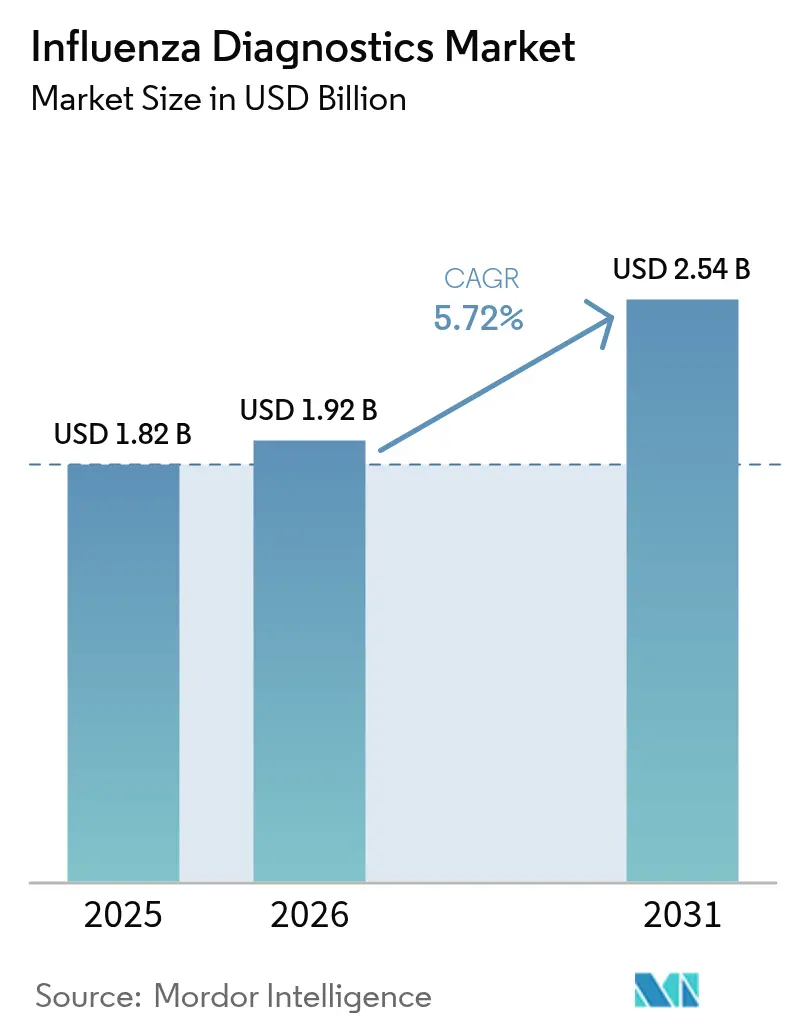
| Market Size (2026) | USD 1.92 Billion |
| Market Size (2031) | USD 2.54 Billion |
| Growth Rate (2026 - 2031) | 5.72 % |
| Fastest Growing Market | Asia Pacific |
| Largest Market | North America |
Major Players *Disclaimer: Major Players sorted in no particular order Image © Mordor Intelligence. Reuse requires attribution under CC BY 4.0. | |
Influenza Diagnostics Market Analysis by Mordor Intelligence
The influenza diagnostics market size was valued at USD 1.82 billion in 2025 and estimated to grow from USD 1.92 billion in 2026 to reach USD 2.54 billion by 2031, at a CAGR of 5.72% during the forecast period (2026-2031). This healthy trajectory follows the market’s transition from pandemic-era volatility toward routine, technology-led respiratory disease management. Growth is anchored by wider adoption of molecular platforms that offer higher accuracy than legacy rapid antigen tests, steady government funding for surveillance infrastructure, and rising consumer demand for at-home and point-of-care (POC) solutions. Vendors are consolidating to combine molecular accuracy with near-patient speed, while AI-enabled software is shortening laboratory turnaround times and improving quality control. Regional dynamics further shape demand: North America leads on installed base and reimbursement clarity, whereas Asia Pacific records the fastest uptake thanks to ongoing investment in public-health laboratories.
Key Report Takeaways
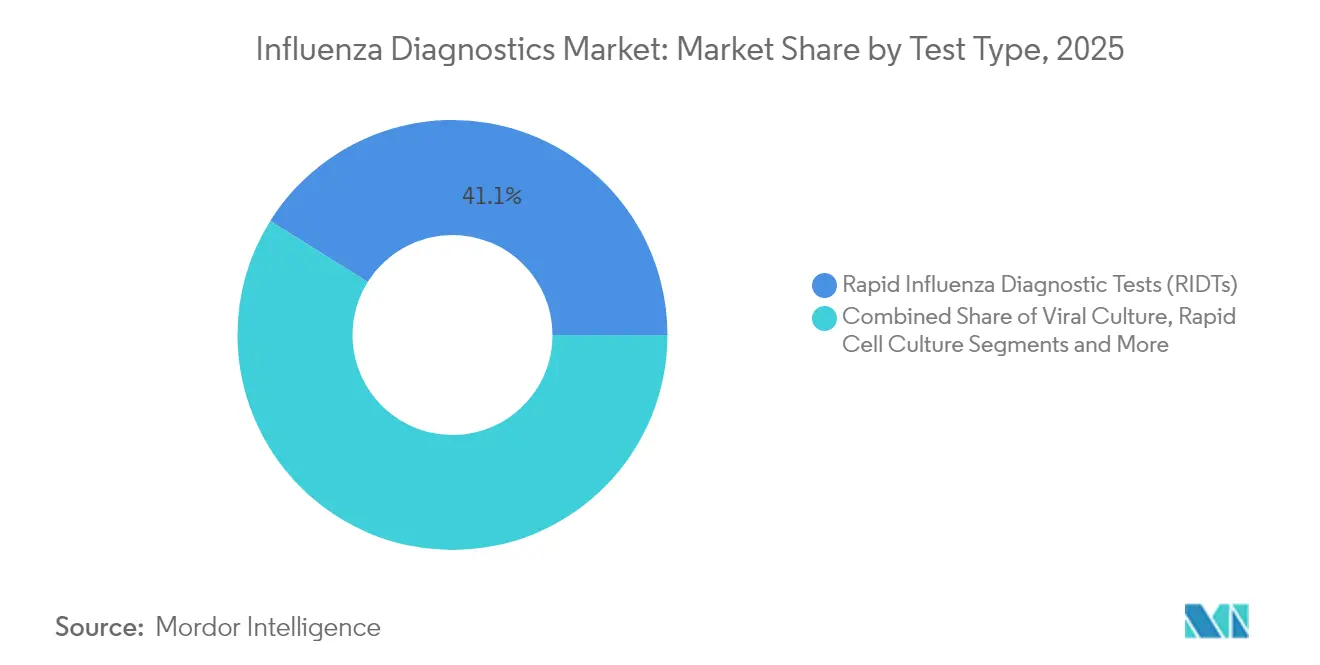
- By test type, rapid influenza diagnostic tests captured 41.10% of the influenza diagnostics market share in 2025, whereas CRISPR-based assays are projected to expand at a 9.28% CAGR through 2031.
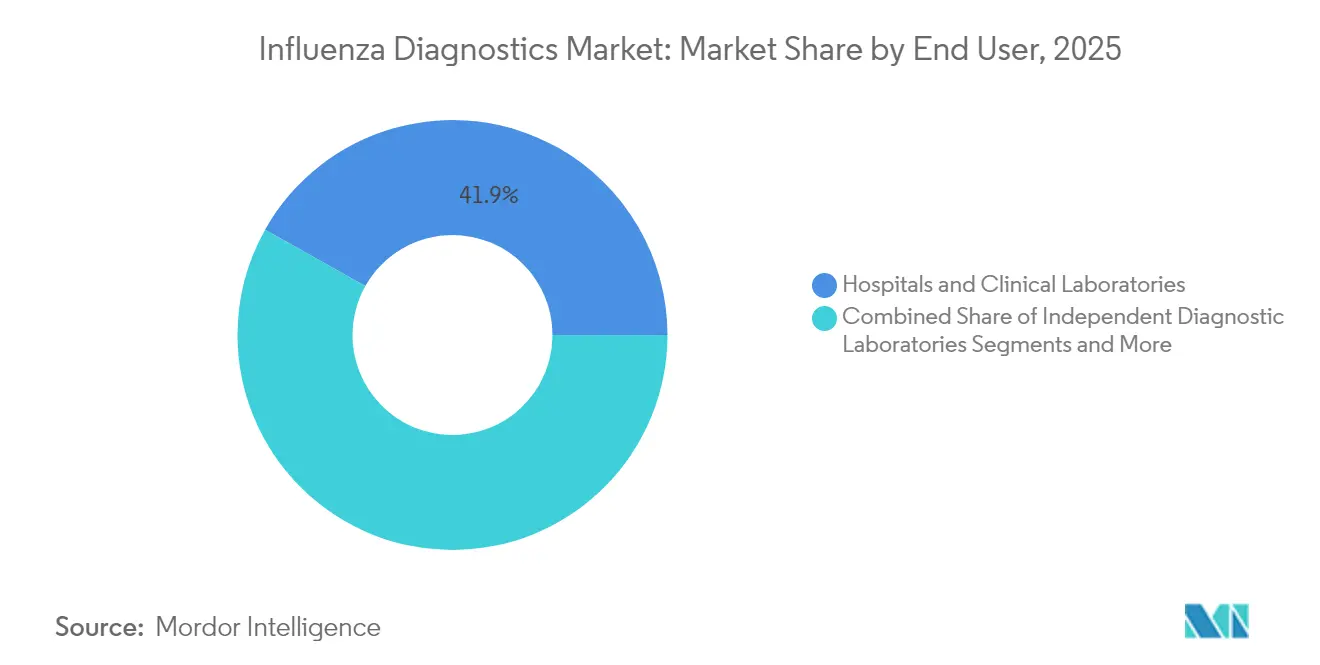
- By end user, hospitals and clinical laboratories held 41.85% of the market in 2025; point-of-care settings record the highest forecast CAGR at 9.12% to 2031.
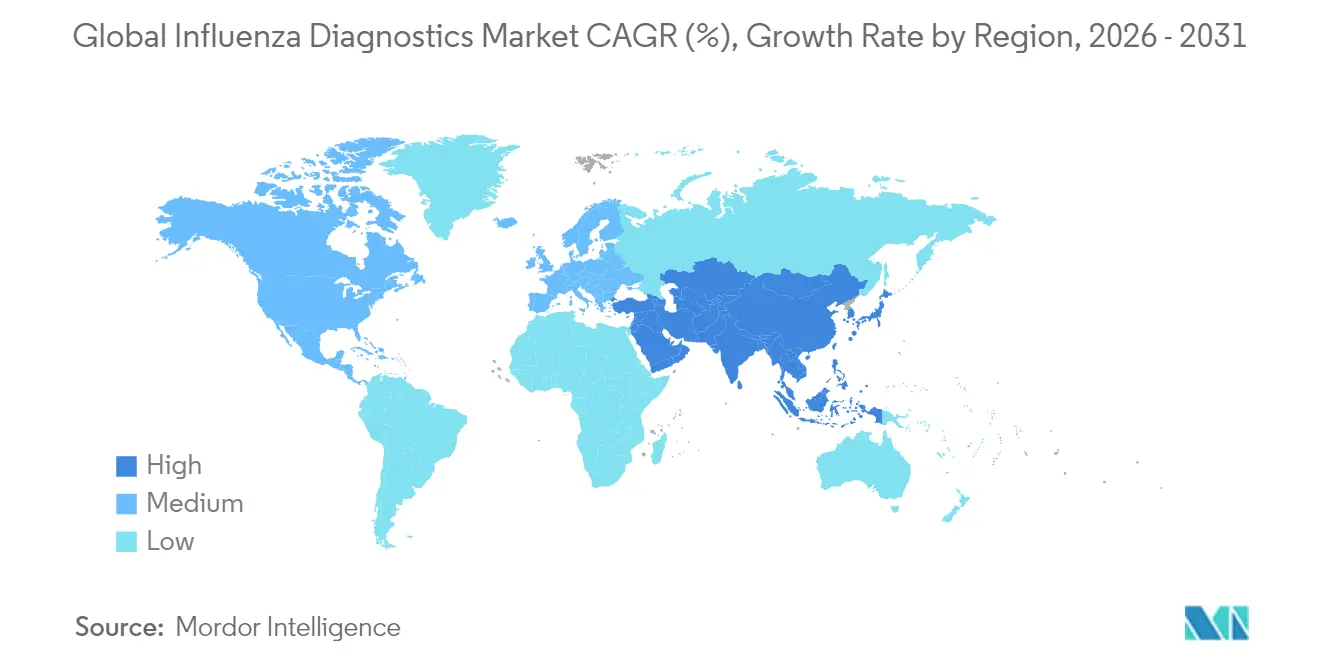
- By geography, North America commanded 37.25% revenue share in 2025; Asia Pacific is anticipated to grow at an 7.78% CAGR to 2031.
Note: Market size and forecast figures in this report are generated using Mordor Intelligence’s proprietary estimation framework, updated with the latest available data and insights as of 2026.
Market Trends and Insights
Drivers Impact Analysis of Influenza Diagnostics Market*
| Driver | (~) % Impact on CAGR Forecast | Geographic Relevance | Impact Timeline |
|---|---|---|---|
| Rising Prevalence & Severity Of Seasonal And Zoonotic Influenza Outbreaks | +1.20% | Global, with heightened impact in Asia Pacific and North America | Medium term (2-4 years) |
| Growing Adoption Of Rapid Point-Of-Care (POC) Tests In Outpatient Settings | +0.90% | North America & EU, expanding to APAC | Short term (≤ 2 years) |
| Government-Funded Surveillance Programs & Pandemic Preparedness Budgets | +0.80% | Global, concentrated in developed markets | Long term (≥ 4 years) |
| AI-Powered Result-Interpretation Software Boosting Molecular Workflow Throughput | +0.70% | North America & EU core, spill-over to APAC | Medium term (2-4 years) |
| Commercialization Of Combo SARS-CoV-2/Flu Multiplex Panels Expanding Installed Base | +0.60% | Global, with early adoption in North America | Short term (≤ 2 years) |
| Increasing Integration Of Telehealth With Home-Based Flu Testing Kits | +0.50% | North America & EU, gradual APAC adoption | Medium term (2-4 years) |
| Source: Mordor Intelligence | |||
Rising Prevalence & Severity of Seasonal and Zoonotic Influenza Outbreaks
A resurgence in seasonal influenza activity has intensified global diagnostic demand, with the CDC logging 39,053 laboratory-confirmed hospitalizations during the 2024-2025 season, the highest rate since 2010-2011.[1]Concurrently, highly pathogenic H5N1 outbreaks generated 38 human cases in California among dairy workers, prompting expanded livestock surveillance. New kits, such as Singapore’s Steadfast assay, differentiate highly and low pathogenic strains within three hours, enhancing outbreak response. These events push health systems to retain emergency-level testing capacity year-round, sustaining procurement of high-accuracy molecular platforms.
Growing Adoption of Rapid Point-of-Care Tests in Outpatient Settings
Hospital studies from the University of Southampton showed that POC influenza testing cuts result time to under one hour, enabling faster antiviral initiation and shorter patient stays. Platforms now include molecular options like Abbott’s ID NOW, which returns influenza A/B results in 13 minutes with 96.3% sensitivity. AI-enhanced readers further reduce interpretation time to two minutes.[2] Lower transport costs and same-visit treatment support economic arguments for widespread POC deployment in clinics and retail health sites.
Government-Funded Surveillance Programs & Pandemic-Preparedness Budgets
Post-COVID lessons spurred higher allocations, with the U.S. Department of Health and Human Services earmarking USD 172 million for influenza preparedness in FY 2025. The CDC now partners with commercial labs such as Quest Diagnostics and Labcorp to expand avian influenza testing capacity. Meanwhile, WHO achieved full national influenza center coverage across 11 South-East Asian countries in 2024, a milestone that elevates baseline demand for standardized diagnostic kits. These programs stabilize procurement cycles and set performance benchmarks that steer private-sector R&D.
AI-Powered Result-Interpretation Software Boosting Molecular Workflow Throughput
Machine-learning pipelines now classify viral sequences and flag mutations faster than manual processes, increasing laboratory throughput without new hardware.[3]BugSeq’s collaboration with BARDA brings AI-driven reporting to clinical metagenomics, underpinning pathogen-agnostic surveillance. TIMESAVER, a deep-learning algorithm, lifted the sensitivity of lateral-flow assays for influenza A/B to 93.8% while slashing read time to two minutes. Laboratories deploying such tools improve quality-control consistency and can flex capacity during seasonal peaks.
Restraints Impact Analysis of Influenza Diagnostics Market*
| Restraint | (~) % Impact on CAGR Forecast | Geographic Relevance | Impact Timeline |
|---|---|---|---|
| Variable Sensitivity & False-Negative Rate Of RIDTs | -0.80% | Global, particularly impacting resource-limited settings | Short term (≤ 2 years) |
| High Capital & Running Cost Of Molecular Diagnostic Platforms | -0.60% | APAC and emerging markets, moderate impact in developed regions | Medium term (2-4 years) |
| Regulatory Uncertainty For CRISPR-Based Influenza Assays | -0.40% | Global, with varying regional approval timelines | Long term (≥ 4 years) |
| Supply Chain Disruptions Affecting Critical Reagents For PCR Assays | -0.50% | Global, with heightened impact during geopolitical tensions | Short term (≤ 2 years) |
| Source: Mordor Intelligence | |||
Variable Sensitivity & False-Negative Rate of RIDTs
Many RIDTs miss early infections when viral load is low; studies place false-negative rates above 30% for certain commercial kits. The Panbio COVID-19/Flu A&B panel delivered only 80.8% sensitivity for influenza. WHO’s 2024 guidance now recommends nucleic-acid tests for severe or high-risk cases. Clinics have introduced confirmatory PCR workflows that erase the speed advantage of RIDTs, curbing segment expansion.
High Capital & Running Cost of Molecular Diagnostic Platforms
Comprehensive systems like Roche’s Cobas 6800 require significant capital plus service contracts beyond many mid-size hospitals’ budgets. Reagents, maintenance, and skilled labor keep operating expenses elevated; supply-chain shocks further lift logistics outlays, which reached nearly 20% of revenue for device makers in 2024. In lower-income markets, limited reimbursement for syndromic panels slows adoption despite clinical advantages.
*Our forecasts treat driver/restraint impacts as directional, not additive. The impact forecasts reflect baseline growth, mix effects, and variable interactions.
Influenza Diagnostics Market Segment Analysis
By Test Type:
CRISPR Innovation Challenges Traditional DominanceRapid formats remained dominant with a 41.10% revenue share, yet the influenza diagnostics market is repositioning as clinicians prioritize sensitivity and multiplexing. CRISPR assays show 9.28% CAGR by 2031, led by the Broad Institute’s SHINE test that discriminates subtypes in 15 minutes. Molecular panels that bundle influenza A/B, RSV, and SARS-CoV-2 deliver operational efficiency for emergency departments. The influenza diagnostics market size for CRISPR platforms is forecast to expand fastest among all modalities, driven by simplified workflows and shrinking instrument footprints. Direct fluorescent antibody and viral culture testing continue to serve research niches where strain typing or antiviral susceptibility is required, but they no longer influence mainstream purchasing decisions.
Molecular diagnostics, including RT-PCR and isothermal formats, see accelerated uptake as AI tools streamline result interpretation. Multiplex CRISPR-Cas13a strips achieved 100% concordance with RT-qPCR while removing amplification steps. Hospitals prefer syndromic panels that differentiate overlapping respiratory symptoms within a single sample, whereas retail clinics adopt CLIA-waived molecular cartridges for rapid walk-in encounters. This convergence of accuracy and speed positions molecular solutions to erode RIDT leadership as capital barriers abate.

By End User:
Hospital Consolidation Versus POC ExpansionHospitals and clinical laboratories generated 41.85% of 2025 revenue by leveraging high-throughput instruments and in-house microbiology expertise. Consolidation among health systems concentrates purchasing power, allowing bulk reagent contracts that stabilize supply. Point-of-care venues, however, exhibit the highest 9.12% CAGR as physicians require immediate answers for treatment during a single visit. The influenza diagnostics market share held by pharmacies and urgent-care centers continues to climb as retailers like CVS deploy 3-in-1 combo tests across 1,600 sites.
Independent diagnostic laboratories maintain relevance by servicing outpatient clinics and specialist practices, but face referral declines where hospitals move tests in-house. Home testing forms an emerging sub-segment after the FDA cleared the first OTC combo flu/COVID assay in 2024. Across all settings, the influenza diagnostics industry leverages telehealth connections to relay results directly into electronic health records, supporting antiviral e-prescriptions without extra clinic visits. Source: https://www.mordorintelligence.com/industry-reports/global-influenza-diagnostics-market
Geography Analysis
North America Influenza Diagnostics Market
North America’s leadership stems from comprehensive surveillance systems and mature reimbursement models. The CDC coordinates eight regional surveillance hubs spanning 125 countries, yet maintains its largest testing footprint domestically. The influenza diagnostics market size in North America benefits from Thermo Fisher Scientific’s USD 2 billion investment to expand domestic manufacturing, aimed at insulating supply chains. Retail pharmacies integrate CLIA-waived molecular cartridges for same-visit care, while health insurers increasingly reimburse home-collection kits, broadening consumer access.
APAC Influenza Diagnostics Market
Asia Pacific posts the fastest 7.78% CAGR owing to rapid laboratory build-outs and government funding. WHO’s milestone of 11 fully operational national influenza centers across South-East Asia evidences this progress. Japan updated quality-management regulations to align with ISO 13485:2016, smoothing approval pathways for foreign assay developers. China and India funnel vaccine-related mRNA investments into diagnostics, fostering locally made CRISPR cartridges for regional distribution.
EMEA and South America Influenza Diagnostics Market
Europe remains influential through the In Vitro Diagnostic Regulation (IVDR), which raises conformity-assessment requirements from 15% to nearly 90% of assays. Transition extensions granted in 2024 prevent immediate supply shortages but raise compliance costs that could shift R&D to fewer, higher-value tests. Middle East & Africa and South America pursue capacity growth via multilateral aid and public-private partnerships; the OECD urges diversified sourcing to mitigate logistic shocks experienced during the pandemic. This uneven readiness shapes divergent adoption curves, yet shared emphasis on respiratory surveillance sustains global demand for robust assays. Source: https://www.mordorintelligence.com/industry-reports/global-influenza-diagnostics-market
Regulatory Landscape
Influenza diagnostics are regulated as in vitro diagnostics, with pathway and evidence requirements that vary by risk class and intended use. In the United States, many influenza tests fall under FDA Class II frameworks with 510(k) premarket review. Special controls for influenza virus antigen detection test systems include ongoing analytical reactivity expectations against contemporary strains, with annual reactivity testing and time-bound testing following FDA notification when characterized samples become available. FDA also maintains device classifications and guidance for influenza diagnostic tests, including reagents intended for detection of specific novel influenza viruses.
In Europe, implementation of the In Vitro Diagnostic Regulation (EU) 2017/746 (IVDR) raises conformity-assessment and performance evaluation requirements, particularly for higher-risk assays. For Class D IVDs, the European system incorporates expert input through mechanisms such as the Performance Evaluation Consultation Procedure (PECP) and expert panel views coordinated via EMA processes. Globally, WHO guidance and standard methods under the Global Influenza Surveillance and Response System (GISRS) influence laboratory practices and quality benchmarks, including recommended protocols for detection, characterization, and surveillance of influenza viruses.
Value Chain Analysis
The influenza diagnostics value chain covers upstream suppliers of critical inputs, including antibodies, enzymes, primers/probes, synthetic oligonucleotides, plastics, and microfluidic components. It also includes assay and instrument manufacturers, such as those offering RIDTs, RT-PCR and other molecular platforms, and multiplex panels, plus regulated packaging and cold-chain logistics for time- and temperature-sensitive reagents. Midstream activities include validation, quality systems, and regulatory submissions, such as FDA 510(k) clearances, followed by downstream commercialization through direct sales and specialized distributors serving hospitals, clinical laboratories, and point-of-care (POC) sites such as urgent care and retail clinics.
Distribution partnerships and public-sector procurement influence go-to-market speed and installed base utilization. For example, Quest Diagnostics received CDC contracts (October 2024) supporting testing readiness for H5 avian influenza and other threats, reinforcing demand for equipment and reagents and strengthening the commercial lab role in outbreak-linked testing capacity. In the US hospital channel, the January 2026 exclusive distribution agreement between Fisher Scientific (Thermo Fisher Scientific) and DiaSorin for the LIAISON NES molecular POC platform highlights how large distributors can accelerate adoption of CLIA-waived and 510(k)-cleared molecular systems, while also tightening competition for shelf space and service coverage.
Competitive Landscape
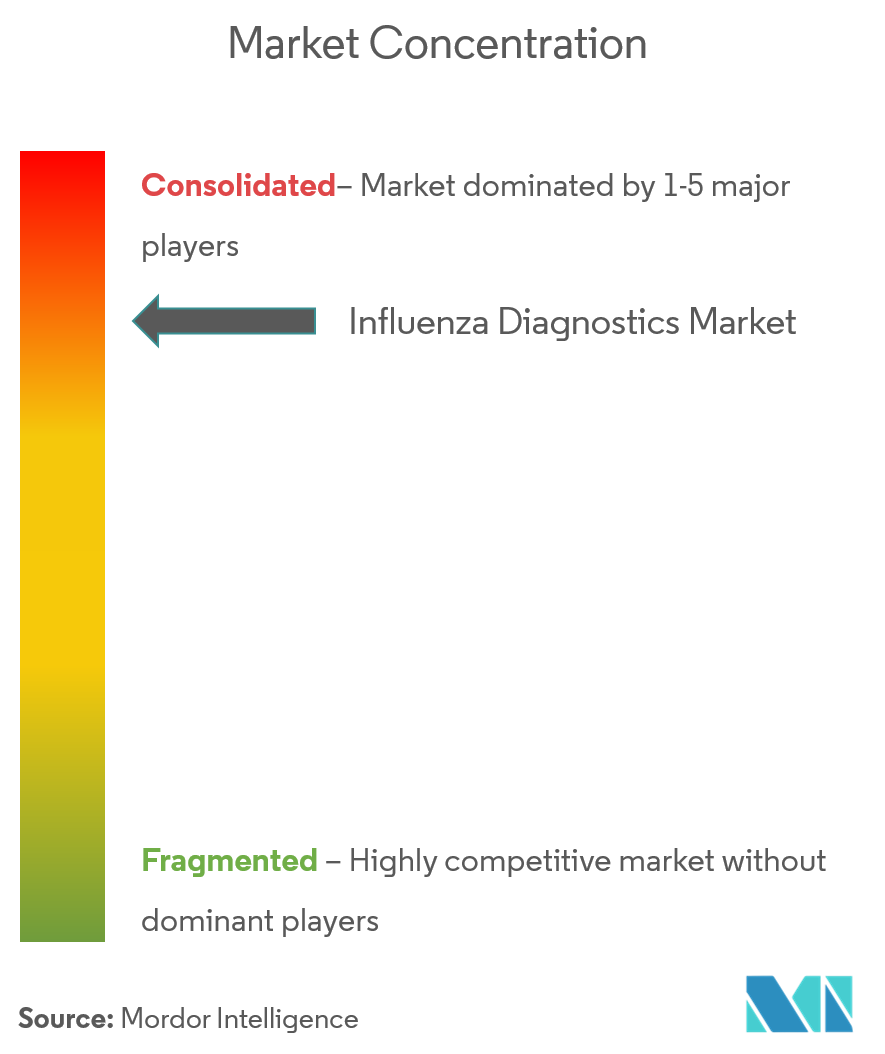
The influenza diagnostics market shows moderate consolidation: the top five firms account for nearly 60% of global revenue, yet nimble innovators still capture white-space niches. Roche’s USD 295 million purchase of LumiraDx’s POC technology underscores strategic moves to unite molecular accuracy with handheld convenience. bioMérieux’s EUR 111 million acquisition of SpinChip brings 10-minute whole-blood immunoassays into its stable. Abbott and QuidelOrtho continue to iterate CLIA-waived combo tests covering influenza A/B, RSV, and SARS-CoV-2 for retail settings where throughput and simplicity supersede broader panels.
Emergent competitors differentiate on CRISPR or AI capabilities. The Broad Institute’s paper-strip SHINE assay promises molecular-grade sensitivity in 15 minutes without instrumentation. BugSeq integrates AI reporting with nanopore sequencing for pathogen-agnostic detection. Supply-chain resilience now factors into competitive advantage; Thermo Fisher’s four-year plan earmarks USD 1.5 billion to boost domestic production, responding to PCR reagent shortages experienced in 2024. As reimbursement shifts toward bundled respiratory panels, platform versatility and cost-per-reportable outcome will dictate future market share allocations. Source: https://www.mordorintelligence.com/industry-reports/global-influenza-diagnostics-market
Influenza Diagnostics Industry Leaders
-
Becton, Dickinson and Company
-
F. Hoffmann-La Roche Ltd
-
Thermo Fisher Scientific
-
Abbott Laboratories
-
QuidelOrtho Corporation
- *Disclaimer: Major Players sorted in no particular order
Influenza Diagnostics Market Companies Covered in this Report
- Roche
- Abbott Laboratories (incl. ID NOW)
- QuidelOrtho
- Thermo Fisher Scientific (Cepheid, Mesa Bio)
- Beckton Dickinson
- bioMérieux
- Hologic
- Siemens Healthineers
- Danaher Corp. (Cepheid)
- Sekisui Diagnostics
- GenMark Diagnostics (Roche)
- Meridian Bioscience
- Luminex Corp. (DiaSorin)
- QIAGEN
- Bio-Rad Laboratories
- Fujirebio
- Cue Health
- Ellume
- Genetic Signatures
- Lucira Health
Market Opportunities and Future Outlook
An opportunity area is ultra-rapid, CLIA-waived molecular testing that enables multiplex respiratory differentiation in near-patient settings without compromising sensitivity. FDA actions in 2026 support this direction. Autonomous Medical Devices Incorporated (AMDI) received 510(k) clearance and a CLIA waiver (June 2026) for a multiplex RT-PCR mini respiratory panel that reports RSV, influenza A, influenza B, and SARS-CoV-2 in under 10 minutes. Baebies received FDA 510(k) clearance and a CLIA waiver (March 2026) for a triplex respiratory test on its Finder system, positioning multifunctional POC devices that pair molecular testing with other modalities as an adoption lever for decentralized care sites.
A second whitespace involves standardized, surveillance-aligned molecular testing that can be deployed across networks while maintaining comparable performance and reporting, supported by public-health guidance and lab quality programs. CDC resources on influenza and influenza/SARS-CoV-2 multiplex assays, along with WHO laboratory manuals and GISRS methods, keep RT-PCR and validated multiplex workflows central to both seasonal and novel influenza response. Commercial traction for integrated respiratory panels is reinforced by continued 510(k) clearances, including DiaSorin LIAISON NES FLU A/B, RSV and COVID-19 (December 2025) and Nano-Ditech dual influenza and COVID-19 antigen test (June 2025), which helps expand the installed base that laboratories and POC operators can use for year-round respiratory testing pathways.
Recent Industry Developments in Influenza Diagnostics Market
- June 2026: Autonomous Medical Devices Incorporated (AMDI) received FDA 510(k) clearance and a CLIA waiver for its Fast PCR Instrument and Mini Respiratory Panel, providing multiplex RT-PCR detection of RSV, influenza A, influenza B, and SARS-CoV-2 in under 10 minutes. The clearance expands the set of molecular options competing for urgent care and physician office workflows where sample-to-answer time drives utilization and throughput.
- December 2025: Becton, Dickinson and Company expanded its BD MAX System respiratory menu in Europe through IVDR-certified VIASURE assays developed in partnership with Certest Biotec. The move supports laboratory transition under EU IVDR by keeping assay availability aligned with the tighter performance and conformity expectations that influence purchasing and menu standardization.
- September 2024: Roche launched the cobas Respiratory flex test using TAGS (Temperature-Activated Generation of Signal) technology for high-throughput detection of multiple respiratory pathogens, including influenza A and B. Broader syndromic coverage on scalable platforms strengthens the case for consolidating respiratory testing into multiplex workflows, affecting competitive dynamics for both standalone flu tests and broader panels.
Influenza Diagnostics Market Report Scope and Research Methodology
Market Definition and Coverage
This market covers the revenues generated from tests used to detect and confirm influenza infection, across laboratory and point-of-care settings. It includes traditional rapid and culture-based methods, plus molecular assays, along with the related consumables used to run those tests.
Scope exclusions: We exclude influenza vaccines, antiviral drugs, general respiratory panels that are not influenza-specific unless influenza testing value is separable, and broader laboratory equipment not directly tied to influenza test use.
Segments Covered in This Report
- By Test Type
- Traditional Diagnostic Tests
- Rapid Influenza Diagnostic Tests (RIDTs)
- Direct Fluorescent Antibody (DFA) Tests
- Viral Culture
- Rapid Cell Culture
- Molecular Diagnostic Tests
- Reverse-Transcriptase PCR (RT-PCR)
- Loop-Mediated Isothermal Amplification (LAMP)
- Nicking-Enzyme Amplification Reaction (NEAR)
- CRISPR-based Assays
- Syndromic Multiplex PCR Panels
- Traditional Diagnostic Tests
- By End User
- Hospitals & Clinical Laboratories
- Independent Diagnostic Laboratories
- Point-of-Care Settings
- Others
- By Geography
- North America
- United States
- Canada
- Mexico
- Europe
- Germany
- United Kingdom
- France
- Italy
- Spain
- Rest of Europe
- Asia Pacific
- China
- Japan
- India
- South Korea
- Australia
- Rest of Asia Pacific
- Middle East & Africa
- GCC
- South Africa
- Rest of Middle East & Africa
- South America
- Brazil
- Argentina
- Rest of South America
- North America
Data Sources, Market Sizing, and Validation
Desk Research
Desk research was used to build the starting structure for the model and to avoid missing any major demand signals. We relied on public health surveillance and testing guidance, such as US CDC materials, WHO outputs, and national health agency reporting in Europe and Asia, which track seasonal influenza activity and laboratory confirmation trends.
To keep assumptions realistic, we also reviewed peer-reviewed clinical journals on test performance, customs and trade statistics where diagnostic reagent shipments can be directionally tracked, and procurement or tender notices that reflect public buying cycles. Company filings and investor presentations were reviewed to understand product mix and channel emphasis, and a paid subscription for company financials and intelligence was used selectively to standardize reported revenue references. The desk sources listed here are illustrative only, and additional public references were used for cross-checks and clarification during the work.
Primary Interviews and Surveys
Primary work was used to pressure-test what desk sources cannot fully confirm, especially the split between rapid antigen use, molecular uptake, and how pricing changes by setting. We spoke with a mix of manufacturers, distributors, lab decision-makers, and clinicians across key regions so that utilization patterns, seasonality effects, and replacement cycles could be validated before finalizing the model.
Distribution of primary research fieldwork respondents
| Company type | Respondent position | Region |
|---|---|---|
| Top tier: 35% | CXOs: 12% | APAC: 41% |
| Mid tier: 46% | Functional/Unit leaders: 29% | EMEA: 34% |
| Smaller Players: 19% | Managers: 59% | Americas: 25% |
Market-Sizing & Forecasting
The market size is first reconstructed using a top-down approach. We build seasonal influenza testing demand from surveillance intensity, testing rates in clinical workflows, and the shift in the share of confirmatory methods across care settings. After forming that demand pool, we apply market-consistent pricing logic using average selling price ranges that differ by test method and setting, then convert the result into an annual value total.
To keep it grounded, we corroborate totals with selective bottom-up approximations, such as sampled supplier revenue mix checks, channel feedback on test volumes, and sanity checks on consumables pull-through for molecular platforms, where reagents typically scale with the number of tests run. Key inputs used in the model include influenza season timing and severity signals, adoption levels of molecular assays versus rapid tests, point-of-care penetration in outpatient settings, test turnaround expectations that influence method choice, and public funding or procurement cycles that affect lab purchasing. For forecasting, we mainly use scenario analysis supported by expert input, where the baseline path is adjusted based on expected season variability, technology mix shift, and pricing normalization. Where bottom-up references are incomplete in smaller countries, gaps are handled by proxying comparable health system coverage and testing intensity indicators, then reviewing for reasonableness.
Data Validation & Update Cycle
Outputs are validated through multiple checks so that extreme values do not slip into the final numbers. We compare modeled totals with independent signals such as reported influenza positivity trends, lab capacity utilization direction, and whether implied test volumes align with typical seasonal patterns across regions.
When large variances appear, assumptions are revisited and relevant experts are re-contacted to confirm what changed, including procurement timing shifts and faster molecular adoption. Before sign-off, the work is reviewed in more than one analyst pass, including consistency checks across years and segments. Reports are refreshed annually, and interim updates are made when material events occur, followed by a final pre-delivery review to keep the view current.
Mordor Intelligence's Influenza Diagnostics Market Size Measured Against Other Published Estimates
Published market sizes for influenza diagnostics often vary because the product boundary and the timing of the base year are not consistent across sources. Differences also show up when one estimate leans more on stated company revenue, while another leans more on demand signals from testing behavior.
By tracking seasonal testing intensity, method mix shifts, and currency timing, Mordor Intelligence keeps the value tied to influenza-specific test demand. In contrast, some estimates blend in broader respiratory testing or apply a faster price growth curve without the same level of channel validation.
Benchmark comparison
| Source | Market Size | Gaps in Research Methodology |
|---|---|---|
| Mordor Intelligence | USD 1.92 B (2026) | |
| Trade Journal A | USD 1.90 B (2025) | Uses a different base year and a longer forecast window, and the method is less explicit about separating influenza-only tests from adjacent respiratory testing bundles when values are aggregated. |
| Regional Consultancy B | USD 1.46 B (2024) | The estimate appears anchored to an earlier year and may undercount molecular test expansion during stronger post-2020 surveillance cycles, which can reduce implied volumes and keep pricing assumptions conservative. |
Looking at the three values together, most of the spread can be explained by what gets counted as influenza-only, which year is treated as the starting point, and how quickly pricing and molecular adoption are assumed to move. Our approach stays repeatable because each step is tied back to observable testing signals and a clear price-by-method structure, and then adjusted only after cross-checks confirm the assumptions are realistic.
Key Questions Answered in the Report
What is the current value of the influenza diagnostics market?
The influenza diagnostics market size reached USD 1.92 billion in 2026.
How fast is the influenza diagnostics market projected to grow?
It is forecast to expand at a 5.72% CAGR from 2026 to 2031.
Which region holds the largest share of global influenza testing revenue?
North America led with 37.25% market share in 2025.
Why are CRISPR-based assays gaining traction in influenza testing?
CRISPR platforms combine molecular-level accuracy with rapid, equipment-light workflows that match point-of-care needs.
What restrains broader molecular platform adoption in emerging markets?
High equipment costs, ongoing reagent expenses, and specialized staffing requirements limit uptake outside well-funded health systems.
How are AI tools transforming influenza diagnostics?
AI pipelines accelerate result interpretation, increase sensitivity, and automate quality checks, boosting laboratory throughput during seasonal peaks.