
Hair Wigs and Extensions Market Size and Share
Market Overview
| Study Period | 2021 - 2031 |
|---|---|
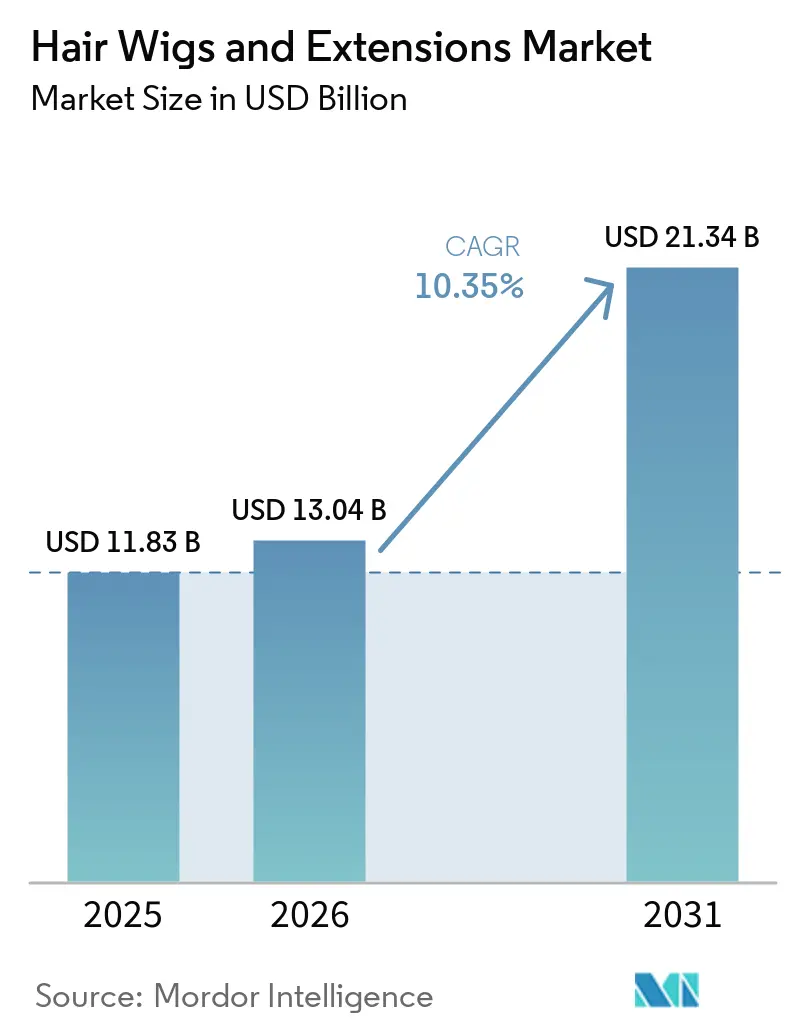
| Market Size (2026) | USD 13.04 Billion |
| Market Size (2031) | USD 21.34 Billion |
| Growth Rate (2026 - 2031) | 10.35 % |
| Fastest Growing Market | Middle East and Africa |
| Largest Market | North America |
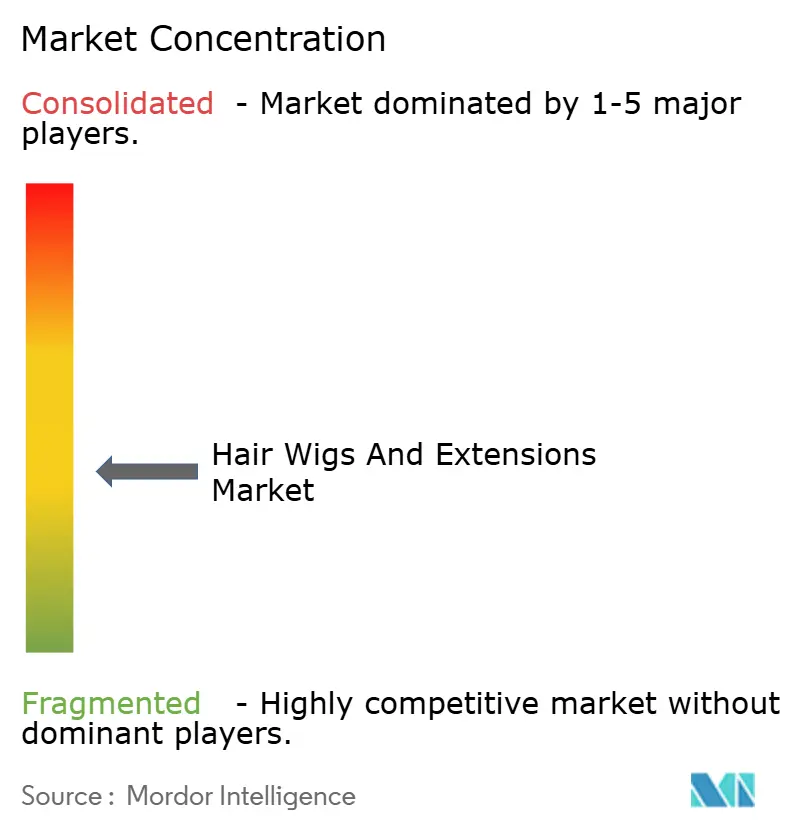
| Market Concentration | Medium |
Major Players *Disclaimer: Major Players sorted in no particular order Image © Mordor Intelligence. Reuse requires attribution under CC BY 4.0. | |
Hair Wigs and Extensions Market Analysis by Mordor Intelligence
The hair wigs and extensions market size is expected to grow from USD 11.83 billion in 2025 to USD 13.04 billion in 2026 and is forecast to reach USD 21.34 billion by 2031 at a 10.35% CAGR over 2026-2031. The hair wigs and extensions market is expanding as medical need and appearance-driven spending reinforce each other, rather than operating as separate demand pools. Faster product adoption is also being observed as live commerce, direct brand websites, and creator-led demonstrations reduce the gap between product discovery and purchase intent. Product quality improvements are trending toward natural appearance, easier wear, and lower installation difficulty, broadening the addressable base for both salon users and first-time buyers. The market remains moderately fragmented, offering opportunities for both established and emerging brands to grow through product innovation, premium human hair offerings, omnichannel retail strategies, and rising demand from medical and fashion-oriented consumers.
Key Report Takeaways
- By product type, hair extensions accounted for 63.95% of 2025 revenue and are also projected to record the fastest CAGR of 10.97% through 2031.
- By material, human hair accounted for 73.01% of 2025 revenue, while synthetic hair is forecast to grow at the fastest CAGR of 11.23% through 2031.
- By end user, individual consumers held 68.19% of 2025 revenue, while commercial users are projected to grow at the fastest CAGR of 11.44% through 2031.
- By gender, female consumers accounted for 82.33% of 2025 revenue, while male consumers are projected to record the fastest CAGR of 11.75% through 2031.
- By distribution channel, offline stores accounted for 55.62% of 2025 revenue, while online stores are expected to grow at the fastest CAGR of 12.05% through 2031.
- By geography, North America accounted for 42.54% of 2025 revenue, while the Middle East and Africa is forecast to grow at the fastest CAGR of 11.65% through 2031.
Note: Market size and forecast figures in this report are generated using Mordor Intelligence’s proprietary estimation framework, updated with the latest available data and insights as of January 2026.
Market Trends and Insights
Drivers Impact Analysis of Hair Wigs and Extensions Market*
| Driver | (~) % Impact on CAGR Forecast | Geographic Relevance | Impact Timeline |
|---|---|---|---|
| Rising prevalence of hair loss and alopecia | +2.1% | Global, highest burden in Middle East and Africa, North America, and Europe | Long term (≥ 4 years) |
| Strong influence of fashion, social media, and beauty trends | +2.5% | Global, concentrated in North America, Europe, and Asia-Pacific | Short term (≤ 2 years) |
| Growing preference for natural-looking, custom-fit hair solutions | +1.8% | North America and Europe, emerging in Asia-Pacific | Medium term (2-4 years) |
| Increasing societal acceptance and normalization of hair enhancement products | +1.3% | Global, accelerating in Asia-Pacific and Middle East and Africa | Medium term (2-4 years) |
| Rising demand for ethically sourced and traceable human hair | +1.0% | North America and Europe, with spillover globally | Medium term (2-4 years) |
| Improvements in aftercare, reusability, and overall cost of ownership | +1.0% | Global, strongest in premium segments in North America and Europe | Short term (≤ 2 years) |
| Source: Mordor Intelligence | |||
Rising Prevalence of Hair Loss and Alopecia
The rising prevalence of hair loss and alopecia is a key growth driver for the hair wigs and extensions market, as more consumers seek immediate, non-invasive aesthetic solutions. According to the National Council on Aging, Inc. (NCOA), December 2025, androgenetic alopecia (AGA) affects around 80% of men and 50% of women during their lifetime, while 85% of men and 33% of women experience some form of hair loss[1]. The report also states that 25% of men begin losing hair by age 30, while 53% of men and 37% of women experience baldness by age 65, expanding the potential consumer base for hair replacement products. The increasing global incidence of hair loss, coupled with its emotional impact, is further driving demand for wigs and hair extensions. NCOA reports that 250 million people in China, nearly 63% of men aged 21–61 in India, and 8 million women and 6.5 million men in the United Kingdom are affected by hair loss. The report also notes that nearly 30% of women with hair loss exhibit two signs of depression, encouraging greater adoption of wigs and extensions as accessible solutions to restore appearance and confidence.
Strong Influence of Fashion, Social Media, and Beauty Trends
The growing influence of social media and digital beauty trends is driving demand for hair wigs and extensions by increasing consumer exposure to evolving hairstyles, celebrity looks, and influencer-driven fashion. According to the Pew Research Center (July 2025), 90% of United States teens use YouTube, while 63% use TikTok, 61% use Instagram, and 55% use Snapchat[2]. Additionally, 73% of teens use YouTube daily, and a majority access TikTok every day, making these platforms significant channels for promoting hair styling trends and beauty products. High social media engagement is encouraging greater experimentation with personal appearance, supporting demand for wigs and hair extensions as convenient styling accessories. The Pew Research Center reports that 63% of teens say social media provides a platform to express their creativity, while around three-quarters believe it helps them stay connected with friends. Furthermore, one-third of teens use at least one major social media platform almost constantly, reinforcing the rapid spread of beauty trends and increasing consumer willingness to adopt hair enhancement products inspired by online content creators and influencers.
Growing Preference for Natural-Looking, Custom-Fit Hair Solutions
Growing consumer preference for natural-looking and personalized hair enhancement solutions is supporting demand for wigs and extensions that closely match individual hair characteristics. According to a 2024 study indexed by the National Library of Medicine (NLM), 46% of 56 US comprehensive cancer centers had affiliated wig boutiques, while 53% of the assessed boutiques offered yaki-textured wigs and 37% offered Type IV curl or afro-textured wigs, highlighting demand for solutions suited to diverse hair textures[3]. Consumers are increasingly seeking wigs and extensions that provide realistic texture, color, density, fit, and scalp appearance, encouraging greater use of lace-front, monofilament, hand-tied, and customized constructions. Improvements in cap design, ventilation, adjustable fittings, and human hair quality are further supporting comfort, authenticity, and styling flexibility.
Increasing Societal Acceptance and Normalization of Hair Enhancement Products
Growing societal acceptance of wigs and hair extensions is emerging as a significant growth driver for the hair wigs and extensions market. Once primarily associated with medical conditions or aging, these products are now widely embraced as everyday beauty and fashion accessories across different age groups and genders. Changing beauty standards and greater emphasis on self-expression have encouraged more individuals to incorporate hair enhancement products into their regular grooming routines. Declining stigma surrounding hair loss and cosmetic hair enhancement has further expanded the market's consumer base. Increased visibility of wigs and extensions through celebrities, influencers, fashion campaigns, and public discussions on hair loss has helped normalize their use for both aesthetic transformation and confidence building. As consumers become more comfortable experimenting with different hairstyles while addressing hair thinning or volume concerns, demand for premium, natural-looking hair enhancement products continues to grow.
Restraints Impact Analysis of Hair Wigs and Extensions Market*
| Restraint | (~) % Impact on CAGR Forecast | Geographic Relevance | Impact Timeline |
|---|---|---|---|
| High upfront cost of premium human hair products | -2.3% | Global, most acute in South America and Middle East and Africa | Long term (≥ 4 years) |
| Increasing regulatory scrutiny of hair sourcing and import documentation | -1.5% | North America and Europe | Medium term (2-4 years) |
| Hygiene, maintenance, and long-wear usability challenges | -0.9% | Global | Short term (≤ 2 years) |
| Availability of alternative medical hair-loss treatments | -1.0% | North America and Europe, growing in Asia-Pacific | Long term (≥ 4 years) |
| Source: Mordor Intelligence | |||
High Upfront Cost of Premium Human Hair Products
The high upfront cost of premium human hair wigs and extensions is a key restraint in the hair wigs and extensions market, particularly among price-sensitive consumers. Products made from ethically sourced, high-quality human hair are significantly more expensive than synthetic alternatives due to costs associated with sourcing, processing, customization, and skilled craftsmanship. As a result, many consumers opt for lower-priced synthetic products despite their shorter lifespan and less natural appearance. The premium pricing of custom-fit wigs and high-end hair extensions can limit repeat purchases and slow adoption in emerging markets where disposable incomes remain constrained. Beyond the initial purchase price, ongoing maintenance costs, including specialized shampoos, conditioning treatments, professional styling, and repairs, further increase the total cost of ownership. These affordability challenges continue to restrict broader market penetration, particularly among first-time buyers and budget-conscious consumers.
Increasing Regulatory Scrutiny of Hair Sourcing and Import Documentation
Increasing regulatory scrutiny over the sourcing, traceability, and cross-border trade of human hair is emerging as a key restraint for the hair wigs and extensions market. Governments and regulatory agencies are strengthening import documentation requirements and monitoring supply chains to curb illegal trade, smuggling, and unethical sourcing practices. These measures require manufacturers and exporters to maintain greater transparency regarding the origin, processing, and movement of human hair, increasing administrative and compliance burdens. This challenge is particularly evident in major sourcing countries, where authorities are intensifying efforts to combat illegal exports. As regulatory oversight over sourcing practices and import documentation continues to tighten, manufacturers may face higher compliance costs, longer procurement timelines, and potential disruptions in the global supply chain.
*Our forecasts treat driver/restraint impacts as directional, not additive. The impact forecasts reflect baseline growth, mix effects, and variable interactions.
Hair Wigs and Extensions Market Segment Analysis
By Product Type:
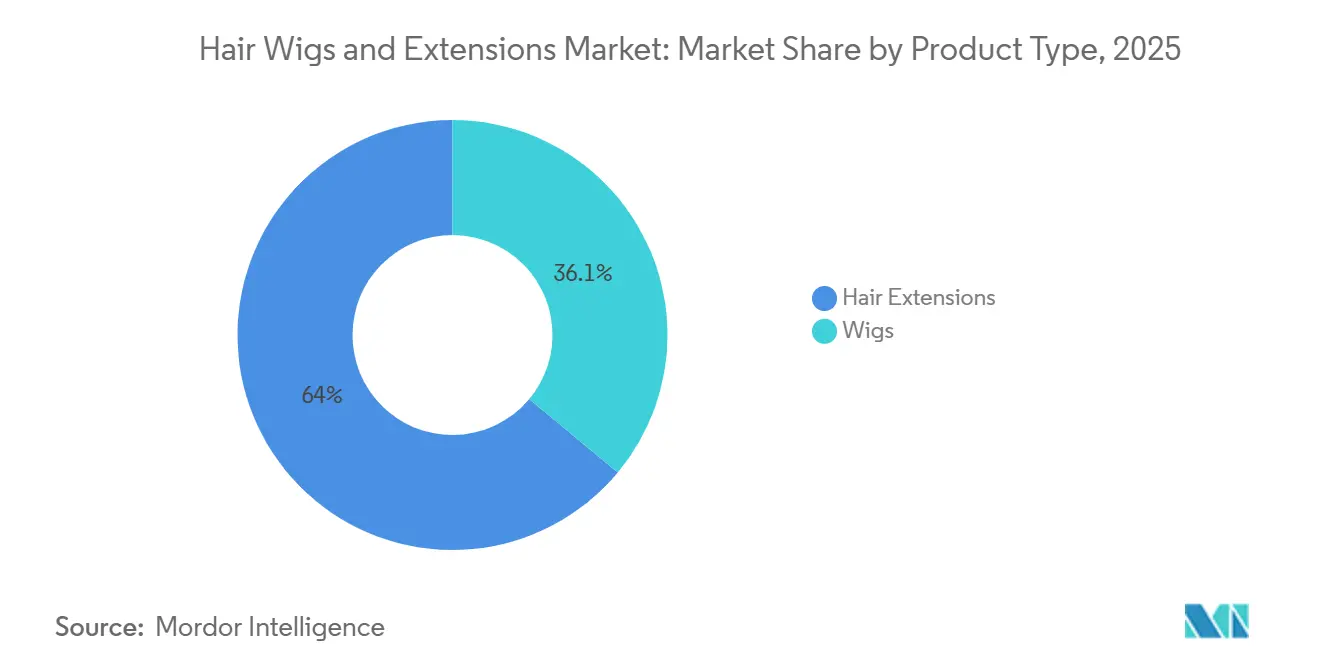
Extensions Anchor Revenue While Wigs Gain Medical and Professional DepthHair extensions accounted for 63.95% of the market revenue in 2025 and are projected to remain the fastest-growing product type, registering a CAGR of 10.97% during 2026-2031. Their dominant position is supported by a broad range of formats, including clip-in, tape-in, sew-in/weave, and pre-bonded extensions, catering to diverse consumer preferences and price points. Advancements in application techniques, improved attachment systems, and reusable premium extensions are enhancing convenience, reducing hair damage, and encouraging wider consumer adoption across both professional salons and at-home users.
Wigs, comprising full wigs and half wigs, represented the remaining 36.05% of the market in 2025. Demand for wigs is supported by both medical applications, including hair loss associated with chemotherapy and alopecia, and fashion-driven adoption for everyday styling and appearance enhancement. Product innovations focused on improved comfort, lightweight construction, natural aesthetics, and customization are strengthening consumer acceptance, while expanding manufacturing capabilities and distribution networks continue to improve product accessibility across global markets.
By Material:
Human Hair Holds Value Leadership While Synthetic Innovation Draws Faster GrowthHuman hair accounted for 73.01% of the hair wigs and extensions market in 2025, making it the dominant material segment. Its position is driven by its natural appearance, heat styling compatibility, durability, and suitability for premium salon services. Consumers seeking realistic texture, longer product life, and greater styling flexibility continue to prefer human hair over alternative materials. Strong demand from fashion-conscious buyers and medical hair replacement users further reinforces its position as the preferred material across premium product categories.
Synthetic hair is projected to record the fastest CAGR of 11.23% through 2031, supported by ongoing advancements in fiber technology and affordability. In 2025, Ruka secured USD 4.5 million in funding to expand its synthetic fibers while advancing shape-memory materials that better replicate the performance of human hair. These innovations are improving product quality, comfort, and sustainability, making synthetic hair more appealing to a broader consumer base. As manufacturers continue to enhance realism and safety, synthetic hair is expected to see faster adoption across both fashion and protective styling applications.
By End User:
Individual Consumers Provide Scale While Commercial Users Lift Growth MomentumIndividual consumers accounted for 68.19% of the hair wigs and extensions market in 2025, making them the largest end-user segment. This dominance is driven by growing consumer interest in personal grooming, fashion trends, and at-home styling solutions. The increasing availability of products through online and offline retail channels has made wigs and extensions more accessible to a broader consumer base. Rising awareness of non-permanent hair enhancement options and expanding product choices across different price ranges continue to support demand from individual buyers.
Commercial users are projected to register the fastest CAGR of 11.44% through 2031, supported by rising demand from salons, beauty professionals, and the entertainment and fashion industries. Increasing adoption of premium hair systems for professional styling services and specialized applications is driving segment growth. The growing emphasis on advanced styling techniques, certified product offerings, and high-quality service standards is encouraging greater commercial usage. As professional hair care services continue to expand globally, demand from commercial users is expected to grow at a faster pace than the overall market.
By Gender:
Female Demand Sets the Base While Male Adoption Improves the Growth ProfileFemale consumers accounted for 82.33% of the hair wigs and extensions market in 2025, making them the largest consumer segment. This dominance is driven by strong demand for hair enhancement products across beauty, fashion, protective styling, and hair loss solutions. A wide range of products tailored to different styling preferences and occasions continues to support high adoption among female consumers. Growing spending on personal appearance and premium hair products further reinforces the segment's position in the market.
The male consumer segment is projected to register the fastest CAGR of 11.75% through 2031, supported by increasing awareness of hair grooming and hair loss solutions. Rising social acceptance of aesthetic treatments, expanding availability of men's hair systems, and greater focus on personal appearance are encouraging wider adoption. Manufacturers are also introducing products designed specifically for male styling and hair restoration needs, improving accessibility and consumer confidence. These trends are expected to drive faster growth in the male consumer segment over the forecast period.
By Distribution Channel:
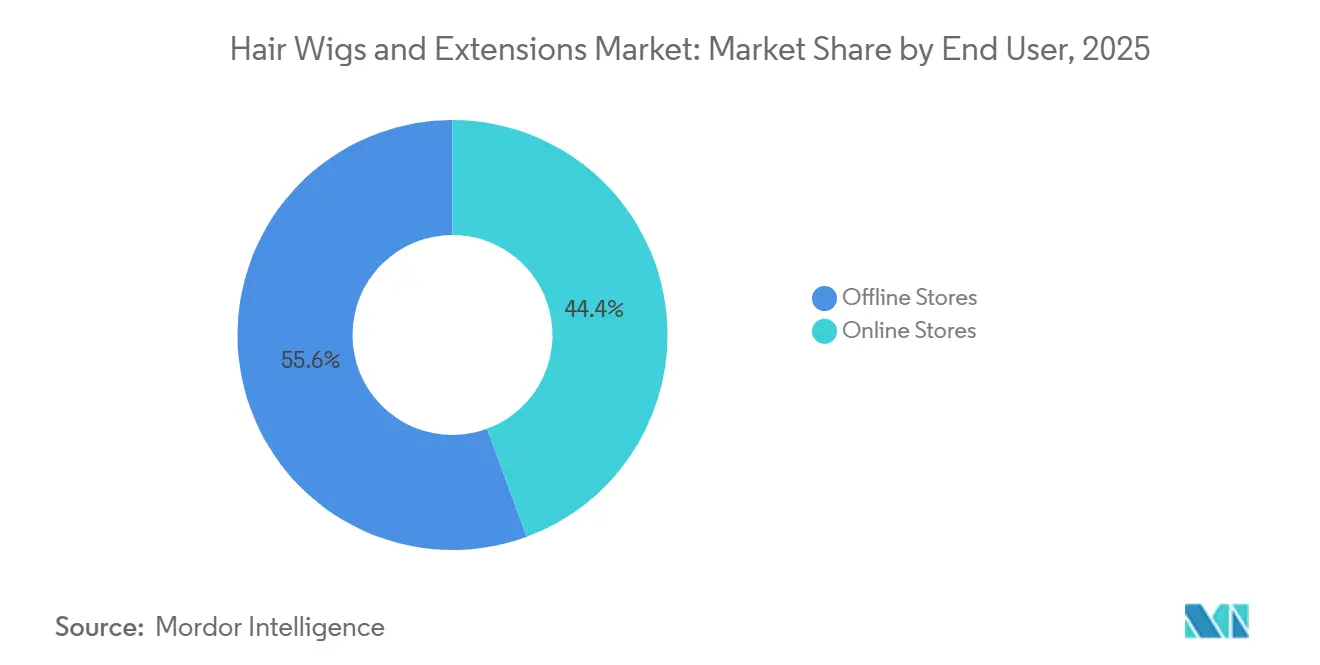
Offline Stores Retain the Revenue Base While Online Stores Lead ExpansionOffline stores accounted for 55.62% of the hair wigs and extensions market in 2025, making them the dominant distribution channel. This position is supported by the personalized shopping experience they offer, allowing consumers to assess product quality, color, texture, and fit before purchase. Professional consultation, installation services, and after-sales support available through specialty stores and beauty retailers continue to drive consumer preference. These advantages make offline channels particularly important for premium and customized hair products.
Online stores are projected to register the fastest CAGR of 12.05% through 2031, driven by the rapid expansion of e-commerce and increasing consumer preference for convenient shopping. Improved product visualization, virtual consultations, customer reviews, and flexible return policies are enhancing buyer confidence in online purchases. Growing smartphone penetration and digital marketing are further supporting online sales across both developed and emerging markets. As consumers increasingly seek convenience and broader product selection, online channels are expected to record the strongest growth during the forecast period.
Geography Analysis
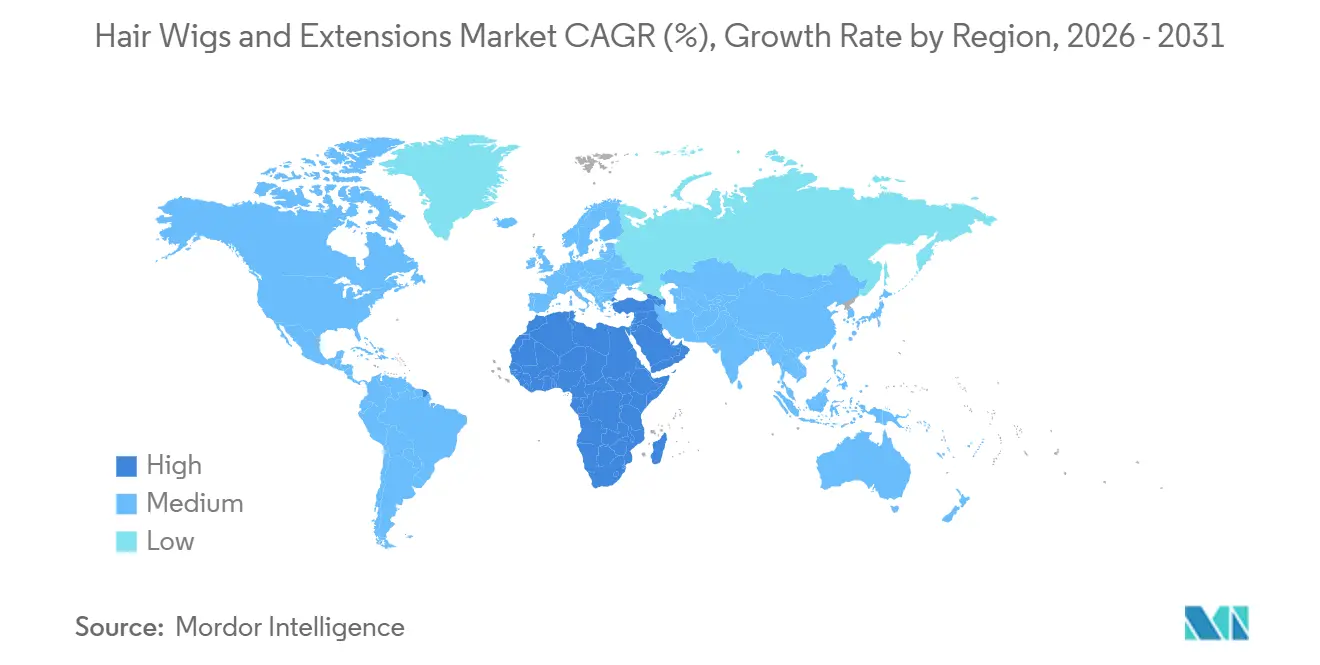
North America held the largest share of the Hair Wigs and Extensions Market, accounting for 42.54% of 2025 market revenue. The region benefits from established beauty and salon industries, widespread consumer acceptance of wigs and extensions, and demand spanning fashion, hair enhancement, and hair-loss-related applications. The United States represents the primary regional market, supported by a broad professional distribution network and strong presence of specialized hair-enhancement providers. Canada and Mexico further contribute through diverse consumer demographics and expanding salon and beauty-service channels.
Middle East and Africa is projected to be the fastest-growing regional market, with a CAGR of 11.65% during 2026-2031. Growth is supported by increasing beauty and personal-care expenditure, greater acceptance of hair-enhancement products, and demand for premium and natural-looking wigs and extensions. Gulf countries contribute through demand for premium beauty products, while African markets benefit from established wig and protective-styling practices. Growing availability through salons, specialty retailers, and organized distribution channels is also supporting market development across the region.
Europe, Asia-Pacific, and South America represent other important regional markets, with distinct demand and supply characteristics. Europe is supported by mature salon networks, premiumization, and consumer interest in professionally installed and customized hair solutions. Asia-Pacific serves as a major production base for wigs and extensions while also recording rising domestic consumption, particularly across China, Japan, and India. South America, led by Brazil, is supported by established salon usage and widespread adoption of extensions for styling and volume enhancement.
Competitive Landscape
The hair wigs and extensions market is moderately fragmented. Established companies such as Beauty Industry Group (BELLAMI), Aderans, Rebecca Hair Products, Great Lengths, and Hairdreams hold a significant share through strong brand portfolios, extensive distribution networks, and professional salon partnerships. Competition is based on product quality, sourcing capabilities, innovation, and geographic reach rather than price alone. Leading players continue to strengthen their market positions by expanding their retail presence, investing in stylist training, and building integrated service ecosystems that improve customer retention and brand loyalty.
Leading companies are increasingly competing through innovation and strategic expansion. Beauty Industry Group strengthened its professional ecosystem by expanding BELLAMI's stylist certification network and introducing Halo Pro, making premium extensions more accessible to first-time users. Aderans expanded its distribution footprint through its Salon Couture program, improving access to customized wig solutions via partner salons. Ruka accelerated its growth by securing new funding and expanding its United States distribution capabilities to support the commercialization of advanced synthetic hair technologies. These initiatives reflect the industry's growing emphasis on product innovation, customer experience, and omnichannel expansion.
Emerging players are differentiating themselves by focusing on sustainable materials, direct-to-consumer business models, and digital commerce. Manufacturers in major production hubs such as Xuchang, China, are increasingly leveraging cross-border e-commerce to reach international consumers directly, while companies including Rebecca Hair Products continue to expand their digital sales channels to strengthen customer engagement. As competition intensifies, newer entrants are emphasizing ethical sourcing, innovative fiber technologies, and online brand building, while established players continue to leverage scale, professional networks, and diversified distribution to maintain their competitive advantage.
Hair Wigs and Extensions Industry Leaders
-
Aderans Co., Ltd.
-
Great Lengths S.p.A.
-
Rebecca Hair Products Co., Ltd.
-
BELLAMI Hair
-
Hairdreams Haarhandels GmbH
- *Disclaimer: Major Players sorted in no particular order
Hair Wigs and Extensions Market Companies Covered in this Report
- Aderans Co., Ltd.
- Evergreen Products Group Ltd.
- Great Lengths S.p.A.
- Rebecca Hair Products Co., Ltd.
- Artnature Co., Ltd.
- HairUWear Inc.
- Luxy Hair Co.
- Indique Hair
- Mayvenn Inc.
- Hairdreams Haarhandels GmbH
- So.Cap USA
- Donna Bella Hair
- Strands of Love
- Shake-N-Go, Inc.
- Luvme Hair
- Glam Seamless Hair Extensions
- BELLAMI Hair
- Easihair Pro
- Beautyforever Hair
- Vin Hair
Recent Industry Developments in Hair Wigs and Extensions Market
- April 2026: BELLAMI Hair launched Halo Pro, a ready-to-wear human hair extension system designed to provide instant length and volume with easy at-home application. The product incorporates proprietary technologies to improve comfort, fit, and natural appearance while also serving as a consultation tool for professional stylists, expanding accessibility to hair extensions for first-time users.
- September 2025: BELLAMI announced a strategic partnership with Highlight Artists and introduced its "Be Full of Yourself" campaign to strengthen professional engagement and expand awareness of hair extensions among stylists and consumers. The company also launched Tape-In Deluxe and Tape-In Express Weft extensions featuring RootReplica Technology, designed to improve installation efficiency, comfort, customization, and natural-looking results.
- March 2025: Luvme Hair released the Luvme All-Day Comfort Wig, which featured a redesigned wig cap that improved fit and breathability. The wig incorporated three key design elements: a 3-Adjustment Clasp Design, a Zero-Gravity Wig Cap Design, and a C-Shape Ear-to-Ear Design. These features enhanced the wig's comfort and security during wear.
Global Hair Wigs and Extensions Market Report Scope
This report provides a comprehensive analysis of the hair wigs and extensions market across product types, materials, end users, gender, distribution channels, and key geographic regions. It covers market size, growth trends, competitive dynamics, and future opportunities.
The product type analysis covers wigs, including full wigs and half wigs, along with hair extensions such as clip-in, tape-in, sew-in/weave, and pre-bonded/micro-link extensions. It evaluates the performance, demand patterns, and growth potential of each product category.
The material segmentation examines human hair, synthetic hair, and mixed and blended hair, highlighting their market positioning, consumer preferences, and adoption trends across different applications.
The market is also assessed by end user, covering individual consumers and commercial users, and by gender, analyzing demand across male and female consumers to identify key usage patterns and growth opportunities.
The distribution channel analysis evaluates offline stores and online stores, focusing on changing purchasing behavior, retail expansion, and the growing role of digital commerce alongside traditional sales channels.
The geographic assessment covers North America, Europe, Asia-Pacific, South America, and the Middle East and Africa, with detailed country-level analysis across major markets, providing insights into regional demand trends, market dynamics, and growth opportunities.
Segmentation Overview
| Wigs | Full Wigs |
| Half Wigs | |
| Hair Extensions | Clip-In Extensions |
| Tape-In Extensions | |
| Sew-In/ Weave Extensions | |
| Pre-Bonded/ Micro-Link Extensions |
| Human Hair |
| Synthetic Hair |
| Mixed and Blended Hair |
| Individual Consumers |
| Commercial Users |
| Male |
| Female |
| Offline Stores |
| Online Stores |
| North America | United States |
| Canada | |
| Mexico | |
| Rest of North America | |
| Europe | Germany |
| United Kingdom | |
| Italy | |
| France | |
| Spain | |
| Netherlands | |
| Poland | |
| Belgium | |
| Sweden | |
| Rest of Europe | |
| Asia-Pacific | China |
| India | |
| Japan | |
| Australia | |
| Indonesia | |
| South Korea | |
| Thailand | |
| Singapore | |
| Rest of Asia-Pacific | |
| South America | Brazil |
| Argentina | |
| Colombia | |
| Chile | |
| Peru | |
| Rest of South America | |
| Middle East and Africa | South Africa |
| Saudi Arabia | |
| United Arab Emirates | |
| Nigeria | |
| Egypt | |
| Morocco | |
| Turkey | |
| Rest of Middle East and Africa |
| By Product Type | Wigs | Full Wigs |
| Half Wigs | ||
| Hair Extensions | Clip-In Extensions | |
| Tape-In Extensions | ||
| Sew-In/ Weave Extensions | ||
| Pre-Bonded/ Micro-Link Extensions | ||
| By Material | Human Hair | |
| Synthetic Hair | ||
| Mixed and Blended Hair | ||
| By End User | Individual Consumers | |
| Commercial Users | ||
| By Gender | Male | |
| Female | ||
| By Distribution Channel | Offline Stores | |
| Online Stores | ||
| By Geography | North America | United States |
| Canada | ||
| Mexico | ||
| Rest of North America | ||
| Europe | Germany | |
| United Kingdom | ||
| Italy | ||
| France | ||
| Spain | ||
| Netherlands | ||
| Poland | ||
| Belgium | ||
| Sweden | ||
| Rest of Europe | ||
| Asia-Pacific | China | |
| India | ||
| Japan | ||
| Australia | ||
| Indonesia | ||
| South Korea | ||
| Thailand | ||
| Singapore | ||
| Rest of Asia-Pacific | ||
| South America | Brazil | |
| Argentina | ||
| Colombia | ||
| Chile | ||
| Peru | ||
| Rest of South America | ||
| Middle East and Africa | South Africa | |
| Saudi Arabia | ||
| United Arab Emirates | ||
| Nigeria | ||
| Egypt | ||
| Morocco | ||
| Turkey | ||
| Rest of Middle East and Africa | ||
Key Questions Answered in the Report
What is driving growth in hair wigs and extensions in 2026 and beyond?
Growth is being supported by rising medical need, stronger social acceptance, easier online discovery, and product upgrades that improve natural appearance and wear comfort. The market is projected to grow from USD 13.04 billion in 2026 to USD 21.34 billion by 2031 at a 10.35% CAGR.
Which product category leads revenue in this space?
Hair extensions lead revenue with a 63.95% share in 2025, and they also post the fastest product CAGR at 10.97% through 2031, supported by versatile formats and easier installation paths.
Which buyer group is growing fastest?
Commercial users are the fastest-growing end-user group at 11.44% CAGR through 2031, while male consumers are the fastest-growing gender segment at 11.75% CAGR. Both trends reflect greater use of certified systems and medically adjacent demand.
How is competition changing among leading brands?
Leading players are building advantages through stylist training, product technology, and better sourcing controls. Examples include BELLAMI’s Halo Pro launch, HairClub’s turnaround under Aderans, and Ruka’s funding and United States expansion.