
Market Overview
| Study Period | 2021 - 2031 |
|---|---|
| Forecast Data Period | 2026 - 2031 |
| Base Year Market Size (2025) | USD 3.18 Billion |
| Market Size (2026) | USD 3.31 Billion |
| Market Size (2031) | USD 4.03 Billion |
| Growth Rate (2026 - 2031) | 4.01 % |
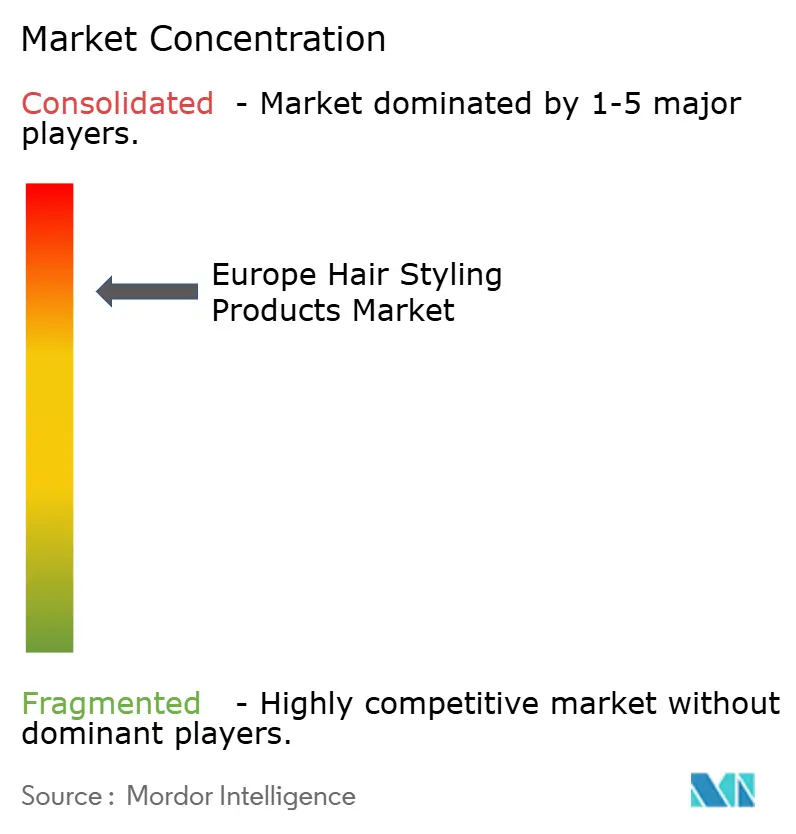
| Market Concentration | High |
Major Players *Disclaimer: Major Players sorted in no particular order Image © Mordor Intelligence. Reuse requires attribution under CC BY 4.0. | |
Europe Hair Styling Products Market Analysis by Mordor Intelligence
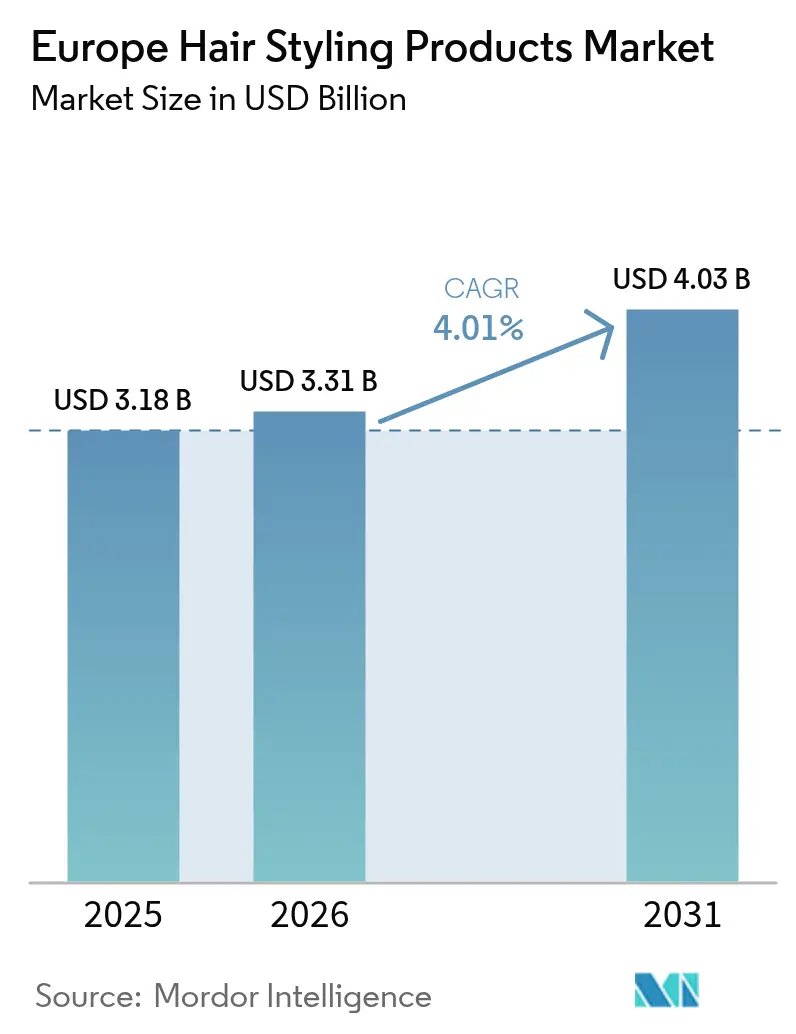
The European hair styling products market size was valued at USD 3.18 billion in 2025 and estimated to grow from USD 3.31 billion in 2026 to reach USD 4.03 billion by 2031, at a CAGR of 4.01% during the forecast period (2026-2031). This growth stems from changing consumer preferences, particularly the increased demand for clean, sustainable, and health-focused beauty products. European consumers are showing a stronger preference for sulfate-free and silicone-free hair styling products, driven by concerns about scalp health, hair damage, and chemical exposure. In response, manufacturers are developing new formulations that align with clean beauty requirements. The market expansion is further supported by growing haircare awareness, influenced by social media and online professional haircare content, which drives the consumption of styling products like gels, sprays, waxes, and creams. The market benefits from urbanization, higher disposable incomes, and increased personal grooming focus, particularly among male consumers and younger age groups. The availability of organic and plant-based products, combined with expanded e-commerce distribution, has improved market access for both established and new brands.
Key Report Takeaways
- By product type, creams, gels, and wax collectively captured 77.85% of the European hair styling products market share in 2025, while sprays and mousses are projected to expand at a 4.18% CAGR through 2031.
- By ingredient class, conventional/synthetic formulations commanded 72.95% of the European hair styling products market size in 2025; the natural/organic tier is expected to grow at a 4.39% CAGR to 2031.
- By end user, male consumers contributed 79.55% of the European hair styling products market size in 2025, whereas the female segment is on track for a 4.69% CAGR between 2026 and 2031.
- By distribution channel, specialty stores led with 33.05% revenue share in 2025; online retail is forecast to post the highest 4.88% CAGR.
- By country, Germany led the regional market with a 29.35% revenue share in 2025, while Spain is projected to grow at a 5.32% CAGR.
Note: Market size and forecast figures in this report are generated using Mordor Intelligence’s proprietary estimation framework, updated with the latest available data and insights as of 2026.
Market Trends and Insights
Drivers Impact Analysis of Europe Hair Styling Products Market*
| Driver | (~) % Impact on CAGR Forecast | Geographic Relevance | Impact Timeline |
|---|---|---|---|
| Surge of sulfate-free and silicone-free formulations | +0.2% | Western Europe, spreading to Eastern Europe | Medium term (3-4 years) |
| Influence of social media and celebrity endorsement | +0.4% | Pan-European, strongest in United Kingdom, France, Germany | Short term (≤ 2 years) |
| Shift towards natural and organic products | +0.5% | Nordics, Germany, France, United Kingdom | Long term (≥ 5 years) |
| Technological innovations in product formulations | +0.2% | Germany, France, United Kingdom, Italy | Medium term (3-4 years) |
| Increasing focus on personal grooming | +0.3% | Pan-European, strongest in urban centers | Long term (≥ 5 years) |
| Growing male grooming segment | +0.2% | Western Europe, expanding to Eastern Europe | Medium term (3-4 years) |
| Source: Mordor Intelligence | |||
Surge of Sulfate-Free and Silicone-Free Formulations
The European hair styling products market demonstrates a significant transition toward sulfate-free and silicone-free formulations, primarily attributed to heightened consumer awareness and increasing demand for healthier, sustainable alternatives. The market evolution reflects a fundamental shift in consumer preferences toward natural ingredients and environmentally conscious products. Contemporary technological advancements in formulation methodologies facilitate superior styling performance while incorporating essential benefits such as thermal protection, enhanced moisturization, and structural repair properties. For instance, in May 2023, Maria Nila introduced the Coils & Curls haircare line, incorporating specialized nourishing ingredients designed to deliver optimal hydration and refined washing and styling processes. The entire Coils & Curls product range maintains strict exclusion of sulfates, parabens, and silicone compounds.
Influence of Social Media and Celebrity Endorsement
The European hair styling products market has experienced a significant transformation through social media platforms' influence on marketing and consumption patterns. Companies strategically implement celebrity endorsements as a primary marketing approach, wherein prominent personalities promote products to drive consumer purchasing decisions. The effectiveness of these endorsements is contingent upon the strategic alignment between the celebrity's profile and the product attributes, coupled with their capacity to effectively convey brand messaging to the target demographic. Companies are demonstrating increased commitment to marketing investments in the European region. For instance, according to L'Oréal's universal registration document, the company's global advertising and promotional expenditure increased from EUR 13.3 billion in 2023 to EUR 14 billion in 2024.
Shift Towards Natural and Organic Products
The European hair styling products market is experiencing a significant shift toward natural and organic formulations. Consumer awareness about the health and environmental impacts of synthetic chemicals has increased the demand for safer and sustainable alternatives. The European Commission's Green Deal initiatives, particularly the Chemicals Strategy for Sustainability, require chemical use in consumer products, including cosmetics, to meet strict safety and sustainability standards. These regulations have led manufacturers to reformulate hair styling products with natural ingredients. Europe maintains its position as the world's largest importer of vegetable and essential oils, key components in natural hair styling products. In 2023, the region represented 48% of global import volume and 42% of value in this category, according to the Ministry of Foreign Affairs. This import strength demonstrates Europe's ability to maintain high natural ingredient usage, supporting the growth of organic hair styling formulations across the region.
Technological Innovations in Product Formulations
Technological advancements in product formulations are driving significant changes in the European hair styling products market. Research and development efforts focus on improving product performance, sustainability, and consumer safety. European manufacturers are developing high-performance hair styling solutions that meet consumer demands for clean-label, environmentally conscious, and multi-functional products. The integration of nanotechnology, encapsulation techniques, and bio-based polymers has improved ingredient delivery systems, providing better texture, hold, and finish while maintaining hair health. Additionally, biotechnology applications have enabled the development of natural active compounds and biodegradable formulations that comply with European regulations. The European Commission's Horizon Europe program, with a budget of EUR 93.5 billion for 2021-2027, supports these developments through funding for scientific research, climate change initiatives, and United Nations Sustainable Development Goals (SDGs) [1]. This coordination between government initiatives and industry research is increasing the availability of advanced, environmentally responsible hair styling products in the European market.
Restraints Impact Analysis of Europe Hair Styling Products Market*
| Restraint | (~) % Impact on CAGR Forecast | Geographic Relevance | Impact Timeline |
|---|---|---|---|
| Health concerns over chemical ingredients | -0.3% | Pan-European, strongest in Nordics and Germany | Long term (≥ 5 years) |
| Proliferation of counterfeit products | -0.3% | Eastern Europe, Southern Europe, Online channels | Medium term (3-4 years) |
| Salon service competition impacts retail market share | -0.2% | Urban centers, professional salon districts | Medium term (3-4 years) |
| Sustainability concerns affect product packaging and manufacturing | -0.2% | Nordics, Germany, Netherlands, France | Long term (≥ 5 years) |
| Source: Mordor Intelligence | |||
Health Concerns Over Chemical Ingredients
The increasing consumer awareness about harmful chemical ingredients in European hair styling products presents a significant market restraint. In 2024, the European Chemicals Agency expanded its Candidate List of substances of very high concern, including several ingredients commonly used in traditional hair styling formulations. This development has compelled manufacturers to reevaluate their product formulations and compliance strategies. The European Commission reported 4,137 alerts for dangerous products from European Union Members and EEA countries in 2024, marking the highest number of validated notifications in the "alert" category since the Rapid Alert System for Dangerous Non-food Products began [2]. This increase demonstrates the system's effectiveness in identifying potentially harmful products in the European market, which influences consumer purchasing decisions and manufacturers' product development strategies.
Proliferation of Counterfeit Products
The proliferation of counterfeit luxury hair styling products in the European market presents a substantial impediment to market growth by compromising brand integrity and eroding consumer confidence. These unauthorized replications systematically duplicate the packaging and branding elements of established luxury manufacturers, resulting in consumer deception and the purchase of substandard, potentially hazardous formulations. These counterfeit merchandise, distributed through unauthorized and unregulated distribution channels at substantially reduced price points, create direct market competition with authentic products, particularly affecting consumer segments with price sensitivity. The utilization of these inferior products frequently results in adverse consumer experiences, subsequently diminishing market confidence in legitimate luxury brands.
*Our forecasts treat driver/restraint impacts as directional, not additive. The impact forecasts reflect baseline growth, mix effects, and variable interactions.
Europe Hair Styling Products Market Segment Analysis
By Product Type:
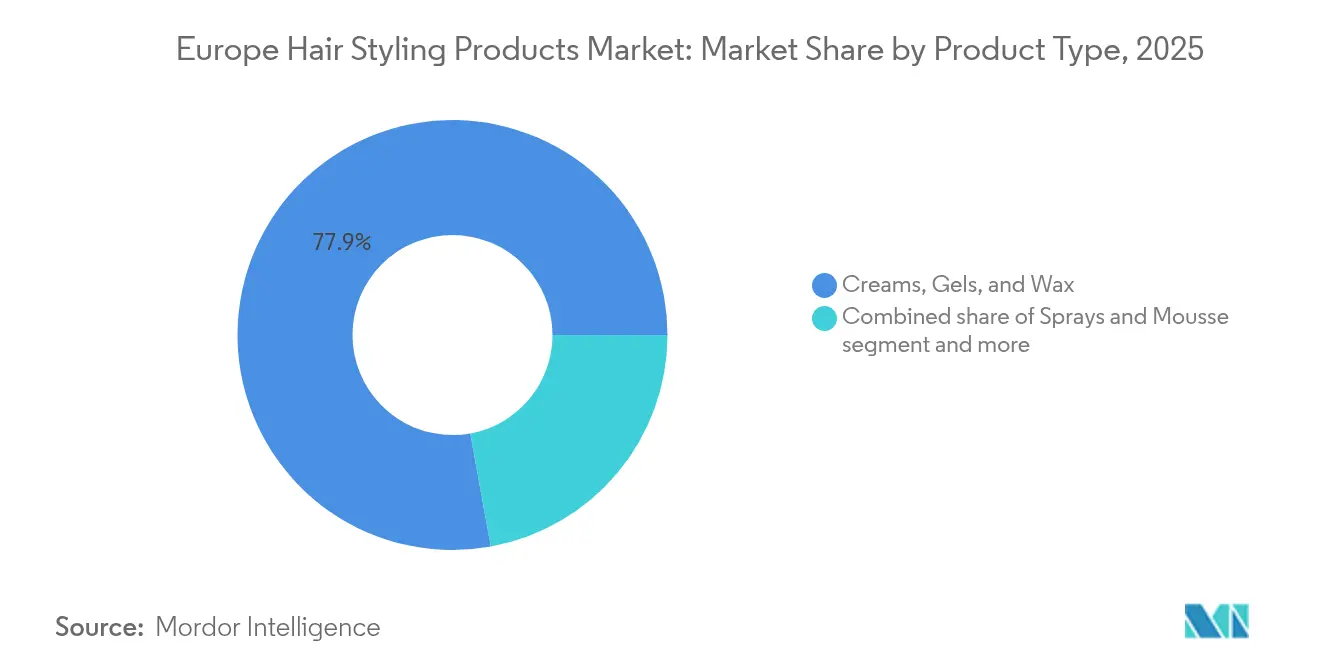
Creams, Gels, and Wax Dominate While Sprays Gain MomentumCreams, gels, and wax products hold a 77.85% share of the European hair styling market in 2025. These products maintain their market leadership through versatility, effectiveness, and consumer preference. Gels and waxes represent the largest segment, a position expected to continue due to their styling capabilities across different hair types. The products deliver hold, shine, and frizz control through ingredients such as silicones and synthetic polymers, which form a protective barrier to enhance manageability and smoothness.
Sprays and mousse products are projected to grow at a CAGR of 4.18% from 2026 to 2031. This growth stems from consumer demand for lightweight, versatile, and easy-to-use styling solutions. These products offer volume, hold, and texture without heaviness, meeting requirements for natural-looking, flexible styles. Heat protectant and UV-shielding sprays have increased in popularity as consumers focus on hair health and multifunctional products. Mousse products appeal to consumers with fine or curly hair seeking professional results at home. Market adoption has increased through fashion trends, social media influence, and advancements in aerosol technology and eco-friendly packaging.

By Ingredient:
Conventional Dominates While Natural Grows FastestConventional/synthetic ingredients dominate the European hair styling products market with a 72.95% share in 2025. These products maintain their market leadership due to established consumer habits, widespread availability, and the strong presence of multinational brands. Conventional products remain popular for their proven efficacy, affordability, and broad distribution, especially among consumers prioritizing performance and convenience.
The natural/organic segment is experiencing faster growth with a CAGR of 4.39%. This growth is driven by health-conscious and environmentally aware consumers seeking natural and organic alternatives. Brands are responding by developing plant-based, sulfate-free, and eco-friendly formulations. The shift toward natural products stems from concerns about synthetic chemicals, increasing demand for clean beauty, and regulatory support for safer, non-toxic ingredients. This trend is particularly strong in countries like Germany, where ingredient transparency and sustainability are consumer priorities. While conventional products currently generate the majority of sales, the rapid expansion of the natural segment indicates a transformation in the market's competitive landscape.
By Distribution Channel:
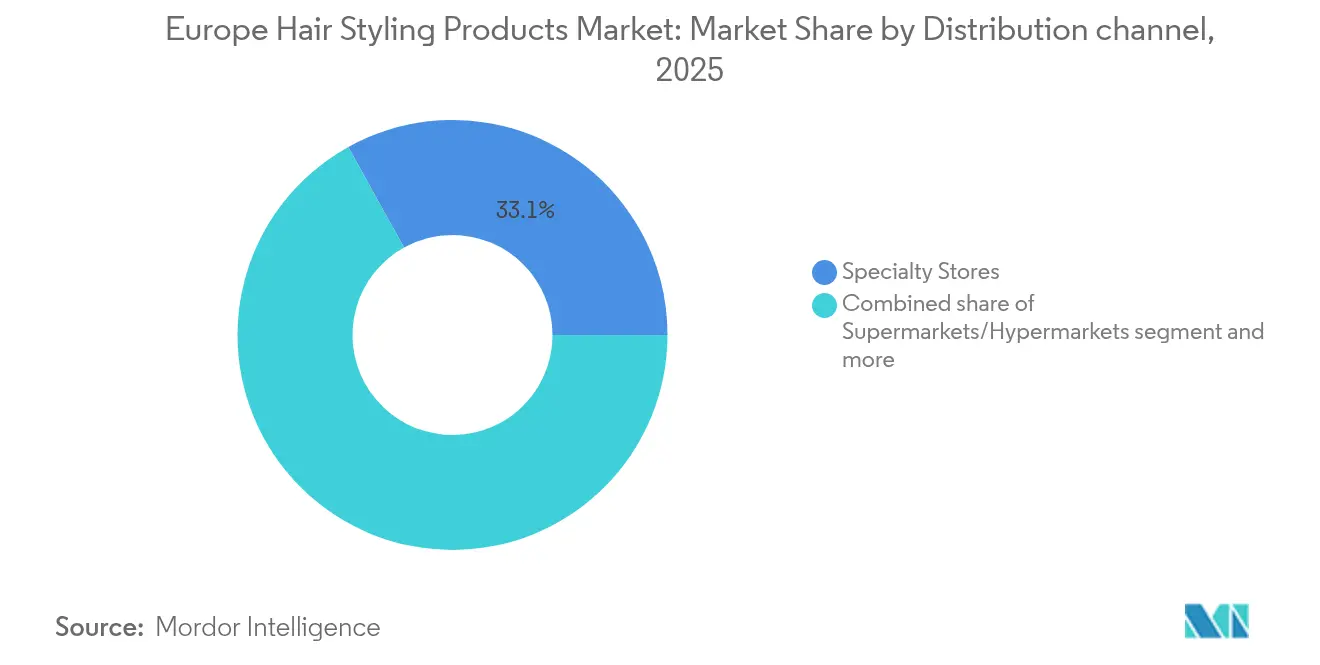
Specialty Stores Lead While Online Retail Grows FastestThe European hair styling products market demonstrates a distinctive distribution pattern, with specialty stores maintaining a commanding market leadership position, holding a 33.05% share in 2025. This market dominance is further substantiated by Eurostat's retail trade statistics, which reveal that the seasonally adjusted retail trade volume in February 2025 exhibited an increase of 0.3% in the euro area and 0.2% in the EU compared to January 2025.
The distribution landscape is experiencing a significant transformation through digital channels, with online retail stores emerging as the fastest-growing segment, projecting a CAGR of 4.88% between 2026 and 2031. This digital evolution is validated by comprehensive Eurostat data, which indicates a remarkable progression in e-commerce adoption across the European Union, with 77% of EU internet users actively participating in online purchases in 2024, representing a substantial increase from 59% in 2014, thus highlighting the shifting consumer preferences in the hair styling products market.
By End User:
Male Consumers Lead While Female Segment Grows FasterMale consumers dominate the European hair styling products market with an 79.55% share in 2025. The market has experienced significant growth due to increased awareness and demand for products addressing men's specific hair requirements. These products contain ingredients formulated for men's grooming needs, such as coarser hair, and feature masculine packaging designs.
The female segment is projected to grow at a CAGR of 4.69% between 2026 and 2031. This growth is driven by cultural, social, and economic factors, emphasizing personal grooming and beauty among women. Fashion trends, celebrity styles, and major events like the Paris and Milan Fashion Weeks influence European women's hairstyling choices. Social media and beauty influencers contribute to increased product adoption as women explore new styles. The rising number of working women and millennials seeking solutions for hair concerns, including damage and hair fall caused by stress and lifestyle changes, has increased demand for specialized, high-quality hair styling products.
Geography Analysis
Germany Hair Styling Products Market
Germany holds a 29.35% share of the European hair styling products market in 2025, driven by its large market size, robust consumer demand, and focus on personal grooming and innovation. German Gen Z consumers show high engagement with hair styling and frequently try new products and trends. The country's diverse population creates demand for specialized products addressing various hair types, textures, and needs, prompting brands to develop both traditional and natural formulations.
United Kingdom Hair Styling Products Market
The United Kingdom represents a significant portion of the European hair styling products market, with growth expected across consumer and professional segments. The market benefits from the cultural importance of personal grooming, fashion, and celebrity influence, along with increased digital product accessibility. According to the Office for National Statistics (UK), households in the fifth decile group allocated an average of GBP 3.8 weekly to hair and cosmetic products in 2023 .
Spain Hair Styling Products Market
The Spain segment demonstrates the strongest growth potential in the European hair styling products market, with a projected compound annual growth rate (CAGR) of 5.32% from 2026 to 2031. The market expansion is attributed to heightened grooming awareness, fashion trend adoption, and increased demand for multifunctional and natural hair styling products. Companies such as Revlon Professional and Salerm Cosmetics are expanding their styling product portfolios in Spain by introducing formulations that combine hold properties with hair nourishment and heat protection capabilities.
Regulatory Landscape
Hair styling products sold across Europe are governed primarily by EU Cosmetics Regulation (EC) No 1223/2009, which requires a responsible person, a product information file (PIF), a safety assessment, and notification via the Cosmetic Products Notification Portal (CPNP). Ingredient compliance is managed through the Regulation annexes and tools such as the European Commission CosIng database, alongside ECHA information on restricted substances, which together shape formulation choices and ongoing compliance monitoring.
In 2026, regulatory pressure on ingredients and labeling tightened further through updates to the cosmetics framework, including Commission Regulation (EU) 2026/909 (published April 2026) amending annexes to restrict or prohibit substances used in cosmetics. In parallel, the EU also applied CMR-related cosmetics restrictions from May 1, 2026, reinforcing the need for continuous formula audits and faster reformulation cycles for styling formats that rely on fragrance components, polymers, and performance additives.
Competitive Landscape
The European hair styling products market operates as a consolidated industry, where multinational corporations and regional companies control the competitive landscape. Major companies such as L'Oréal S.A., Henkel AG & Co. KGaA, Procter & Gamble Co., Unilever PLC, and Coty Inc. focus on developing premium products and implementing sustainable practices, including natural formulations and eco-friendly packaging. Independent brands focusing on clean beauty and sustainability have emerged as significant market challengers.
European consumers' growing concerns about traditional hair styling products potential harmful effects have increased demand for natural and organic alternatives. This shift has created opportunities for research and development in natural ingredients that address contemporary hair and scalp issues, particularly those arising from long-term use of chemical-based products. The market has also seen increased competition from local manufacturers who develop products aligned with regional preferences.
The evolving consumer preferences have prompted both established companies and new entrants to adapt their product development strategies. This adaptation includes incorporating natural ingredients, sustainable packaging solutions, and formulations that address specific regional requirements. The market continues to witness a transformation as companies balance innovation with sustainability to meet changing consumer demands.
Europe Hair Styling Products Industry Leaders
-
L’Oréal S.A.
-
Henkel AG & Co. KGaA
-
Unilever PLC
-
Coty Inc.
-
Procter & Gamble Company
- *Disclaimer: Major Players sorted in no particular order
Europe Hair Styling Products Market Companies Covered in this Report
- L’Oréal S.A.
- Henkel AG & Co. KGaA
- Procter & Gamble Company
- Unilever PLC
- Coty Inc.
- Kao Corporation
- Revlon Inc.
- Mandom Corp.
- Oriflame Holding AG
- Church & Dwight Co. Inc.
- Shiseido Company, Limited
- Davines Group
- John Paul Mitchell Systems
- Alfaparf Milano S.p.A
- Suavecito Pomade
- Puig Brands, S.A.
- Federici Brands LLC
- Moroccanoil Israel Ltd.
- Maria Nila
- The Estée Lauder Companies Inc.
Market Opportunities and Future Outlook
Regulatory-driven reformulation is creating room for styling products that deliver hold and manageability while avoiding substances newly restricted under EU updates such as Regulation (EU) 2026/909 and the May 1, 2026 application of CMR-related cosmetics prohibitions. This is increasing demand for alternatives to legacy polymers and fragrance-linked ingredients, and it is prompting supplier and brand innovation around bio-based film formers, upcycled inputs, and safer fragrance design that still meets performance requirements in gels, sprays, waxes, and creams.
Sustainability-oriented packaging and refill systems are moving from positioning to rollout, which supports differentiated styling assortments that pair clean-formula claims with circular packaging. L'Oreal's 2026 actions, including Kerastase refillable packaging and its JoinTheRefillMovement campaign with dedicated refill manufacturing investments, including a haircare site in Burgos, suggest operational follow-through that can raise packaging benchmarks for Europe. Ingredient innovation has also gathered momentum, with CH-Bioforce introducing an upcycled, bio-based styling ingredient (Hairforsense) positioned as a replacement for fossil-based polymers, aligning product development with evolving EU environmental and chemical compliance expectations and consumer demand for natural and sustainable styling performance.
Recent Industry Developments in Europe Hair Styling Products Market
- July 2026: Henkel completed its acquisition of premium hair care brand OLAPLEX after meeting closing conditions and regulatory approvals. The deal broadens Henkel's access to higher-margin, performance-led hair categories that shape styling routines, strengthening its competitive position across professional and prestige channels.
- June 2025: L'Oreal signed an agreement to acquire professional hair care brand Color Wow. The planned acquisition expands L'Oreal's salon and professional-grade portfolio, supporting cross-selling into styling-heavy regimens and reinforcing its presence in premium distribution channels across Europe.
- August 2024: Dyson introduced its first integrated haircare and styling product range featuring chitosan derived from oyster mushrooms and the company's Triodetic technology for flexible hold. The launch supports ingredient-led differentiation in styling performance, and it raises innovation pressure on incumbents to pair styling benefits with hair health and novel material choices.
Europe Hair Styling Products Market Report Scope and Research Methodology
Market Definition and Coverage
For this study, the Europe hair styling products market covers leave-on formulations used to shape, hold, and texture hair, and it is measured in value terms across key European countries and the Rest of Europe.
Scope exclusions: Electric styling tools, rinse-off shampoos and conditioners, hair colorants, and salon-only chemical straightening kits are not counted.
Segments Covered in This Report
- By Product Type
- Creams, Gels, and Wax
- Sprays and Mousse
- Others
- By Ingredient
- Natural/Organic
- Conventional/Synthetic
- By End User
- Male
- Female
- By Distribution Channel
- Supermarkets/Hypermarkets
- Specialty Stores
- Online Retail Stores
- Others
- By Country
- Germany
- United Kingdom
- Italy
- Spain
- France
- Russia
- Rest of Europe
Data Sources, Market Sizing, and Validation
Desk Research
Desk work starts by building the boundary and the demand context using public statistics and trade references, and then we map that to how styling products are sold across Europe. Sources used include, for example, Eurostat retail and trade series, UN Comtrade categories that help sanity check cross-border flows, European Chemicals Agency postings that clarify regulated ingredients, and consumer and cosmetics bodies such as Cosmetics Europe.
After that, we add company public disclosures like annual reports and investor presentations, along with press releases and reputable business press, to track product mix shifts and pricing behavior. Where it helps fill gaps, we also reference paid subscriptions for company financials and intelligence, news and financials, and patent databases to confirm innovation and portfolio activity. The sources listed here are illustrative, and many other public references were also used for data collection, validation, and clarification.
Primary Interviews and Surveys
To confirm what the desk signals mean in real selling conditions, we run interviews and surveys with a mix of manufacturers, distributors, retailers, and salon channel participants who see both volumes and price movements. Inputs are checked across major European markets and the Rest of Europe, so shifts in promotions, channel mix, and consumer preferences do not get overgeneralized from one country.
Distribution of primary research fieldwork respondents
| Company type | Respondent position |
|---|---|
| Top tier: 30% | CXOs: 14% |
| Mid tier: 56% | Functional/Unit leaders: 31% |
| Smaller Players: 14% | Managers: 55% |
Market-Sizing & Forecasting
Sizing is built using a top-down approach where consumer spend and category splits are reconstructed for Europe, and then apportioned into hair styling products based on product mix signals and channel coverage. To keep the total grounded, we corroborate it with selective bottom-up approximations, such as sampled average selling prices multiplied by observed volume run rates, and distributor and retailer channel checks for a few countries before adjusting the regional roll-up.
A few of the key inputs used in the model include styling product penetration within overall hair care baskets, price per unit movements (including promotion intensity), distribution channel share shifts between supermarkets, specialty retail, and online, and the pace of premium and natural or organic adoption. Country weights are also stress tested using import and export directionality where it is relevant, and by checking whether professional channel demand is rising or flattening.
For forecasting, we typically use scenario analysis supported by short variable-based projections, since category growth is sensitive to inflation, discretionary spend, and channel mix. Where history supports it, simple time series smoothing is applied to stabilize outlier years, and gaps in country or channel detail are handled by using proxy splits that are then rechecked with interview feedback before finalizing.
Data Validation & Update Cycle
Outputs are validated in several passes, starting with basic checks like currency consistency, unit economics realism, and whether country totals add up to the Europe roll-up. We then compare the modeled totals against independent signals, such as hair care spend direction, retail price inflation patterns, and trade movement indicators, and any large variance triggers a deeper review.
Before sign-off, another analyst reviews assumptions, calculations, and the logic behind key splits, and follow-up calls are triggered when a material mismatch remains. Reports are refreshed annually, with interim updates added when major events change pricing, regulation, or channel behavior, and a fresh final pass is done right before delivery so clients receive the latest view.
Mordor Intelligence's Europe Hair Styling Products Market Size Versus Other Published Estimates
It is normal to see different market sizes for the same topic because each publisher draws the market boundary differently and does not always use the same pricing point, countries, or base year. Differences also come from how inflation is treated and whether retail values or manufacturer selling prices are used.
By tracking leave-on styling-only sales values at manufacturer selling price and refreshing country weights annually, Mordor Intelligence keeps the Europe total tied to a clear product boundary, which is then checked against channel mix and price movement signals. A second driver of spread is scope creep, where some estimates fold in rinse-off hair care or tools, and another is timing, since some updates lag behind recent pricing and premiumization shifts.
Benchmark comparison
| Source | Market Size | Gaps in Research Methodology |
|---|---|---|
| Mordor Intelligence | USD 3.18 B (2025) | |
| Trade Journal A | USD 2.66 B (2024) | Uses a broader combined scope (hair care products plus styling tools) and a different base year, so the reported value can sit lower when styling-only spend is not isolated and pricing points differ. |
| Regional Consultancy B | USD 1.22 B (2023) | Reports incremental growth over a period with 2023 as the base, and product inclusions are not fully transparent in the public summary, which can lead to undercounting when leave-on styling categories are only partially covered. |
Taken together, the gap is mainly explained by scope boundaries, year selection, and the price basis used for valuation. When the counted products are clearly limited to leave-on styling items and the country roll-up is checked with channel and pricing signals, the resulting market size becomes easier to trace and repeat across updates.
Key Questions Answered in the Report
What is the current value of the Europe hair styling products market?
The market generated USD 3.31 billion in 2026 and is set to reach USD 4.03 billion by 2031.
Which product type holds the largest share?
Creams, gels, and waxes lead with 77.85% share, driven by their versatile hold and finish options.
How fast is the natural and organic segment growing?
Natural and organic styling products are forecast to expand at a 4.39% CAGR between 2026 and 2031, outpacing conventional formulas.
Why is Germany the largest national market?
High purchasing power, a strong salon culture, and early adoption of clean-label innovations give Germany a 29.35% revenue share.