
Guillain-Barre Syndrome Market Size and Share
Market Overview
| Study Period | 2020 - 2031 |
|---|---|
| Market Size (2026) | USD 0.81 Billion |
| Market Size (2031) | USD 1.07 Billion |
| Growth Rate (2026 - 2031) | 5.70 % |
| Fastest Growing Market | Asia Pacific |
| Largest Market | North America |
| Market Concentration | Medium |
Major Players *Disclaimer: Major Players sorted in no particular order Image © Mordor Intelligence. Reuse requires attribution under CC BY 4.0. | |
Guillain-Barre Syndrome Market Analysis by Mordor Intelligence
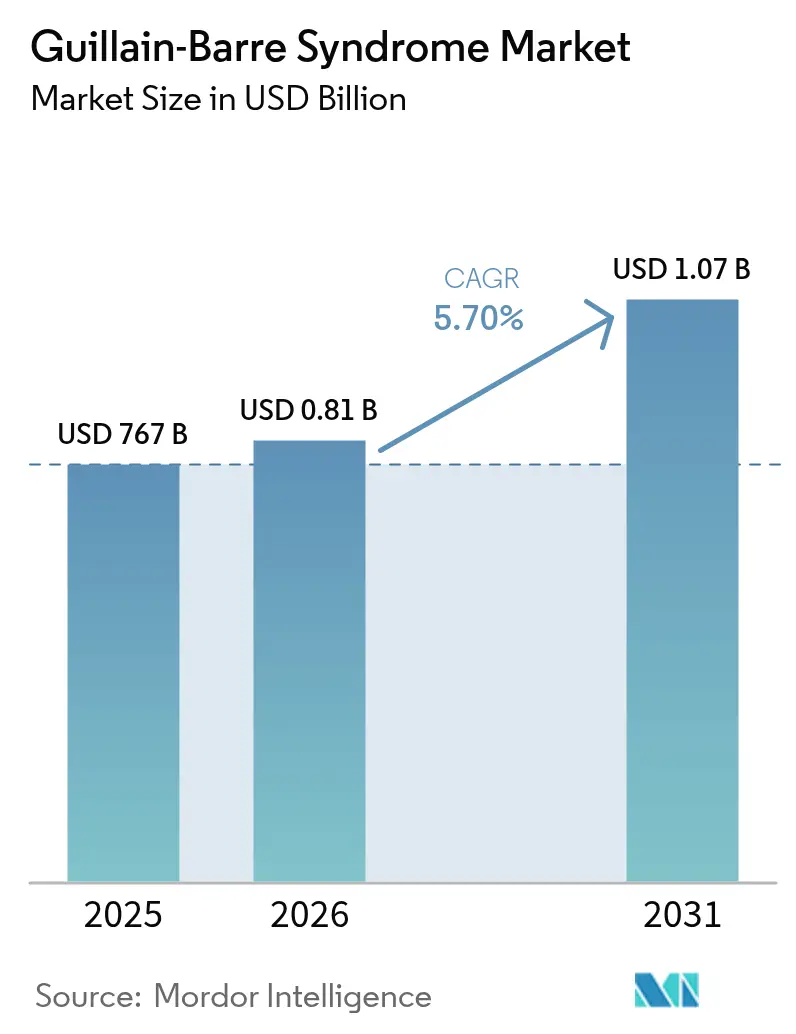
The Guillain-Barré Syndrome market size is expected to grow from USD 767 million in 2025 to USD 810.7 million in 2026 and is forecast to reach USD 1.07 billion by 2031 at 5.7% CAGR over 2026-2031. Demand is pivoting from traditional immunomodulators toward precision-targeted biologics, influenced by complement inhibitor breakthroughs, Medicare-backed home infusion coverage, and post-COVID neurological complications that have widened patient pools. IVIG still leads today, yet rising biologic adoption signals an inflection in clinical practice toward disease-specific inhibition strategies. Capacity expansions at fractionation plants, especially in Asia-Pacific, are easing supply bottlenecks while sharpening regional competition. Even so, Europe’s continued reliance on US plasma donors underscores structural fragility that may temper global growth despite rising clinical need.[1]
Key Report Takeaways
- By therapeutics, intravenous immunoglobulin retained 71.92% of Guillain-Barré Syndrome market share in 2025, whereas complement-inhibitors and novel biologics are tracking a 9.32% CAGR through 2031.
- By route of administration, the intravenous segment commanded 78.85% of the Guillain-Barré Syndrome market size in 2025, while subcutaneous delivery shows a 7.64% CAGR to 2031.
- By distribution channel, hospital pharmacies held 57.55% share of the Guillain-Barré Syndrome market in 2025; home infusion providers are expanding at a 9.18% CAGR.
- By patient age, adults (18-64) accounted for 60.68% share of the Guillain-Barré Syndrome market size in 2025; the geriatric cohort (≥65) is rising at an 8.69% CAGR.
- By disease variant, AIDP held 66.05% share of the Guillain-Barré Syndrome market in 2025, whereas AMAN is the fastest-growing variant at an 8.58% CAGR.
- By geography, North America represented 44.18% share of the Guillain-Barré Syndrome market in 2025, yet Asia-Pacific is projected to grow at an 8.45% CAGR.
Note: Market size and forecast figures in this report are generated using Mordor Intelligence’s proprietary estimation framework, updated with the latest available data and insights as of 2026.
Global Guillain-Barre Syndrome Market Trends and Insights
Drivers Impact Analysis*
| Driver | (~) % Impact on CAGR Forecast | Geographic Relevance | Impact Timeline |
|---|---|---|---|
| Rising Global Prevalence Of GBS & Ageing Population | 1.2% | Global, with highest impact in North America & Europe | Long term (≥ 4 years) |
| Sustained Capacity Additions By Plasma-Fractionators Are Boosting IVIG Supply | 0.8% | Global, concentrated in North America & Europe | Medium term (2-4 years) |
| Faster Regulatory Pathways Boosting Novel Biologics | 1.5% | North America & EU, expanding to APAC | Medium term (2-4 years) |
| Growing IVIG/PLEX Capacity Expansions By Plasma-Fractionators | 0.7% | Global, with Asia-Pacific leading expansion | Medium term (2-4 years) |
| COVID-19–Linked Spike In Post-Infectious GBS Incidence | 0.9% | Global, higher in regions with low vaccination coverage | Short term (≤ 2 years) |
| Precision-Dosing Analytics Reducing Wastage & Enabling Payor Uptake | 0.6% | North America & EU, pilot programs in APAC | Long term (≥ 4 years) |
| Source: Mordor Intelligence | |||
Rising Global Prevalence of GBS & Ageing Population
Global demographic shifts are reshaping the Guillain-Barré Syndrome market as geriatric patients (≥65 years) represent the fastest-growing group at 8.83% CAGR through 2030. NIH has earmarked USD 3 million to pinpoint genetic susceptibility markers that may refine personalized protocols.[2] Years lived with disability for GBS almost doubled from 2020 to 2021, showing the pandemic’s amplifying effect on disease burden. WHO’s surveillance in Pune continues to confirm elevated case counts in low-to-middle-income regions, emphasizing the need for tailored immunotherapy pathways.
Sustained Capacity Additions by Plasma Fractionators Are Boosting IVIG Supply
Plasma fractionators are expanding to alleviate chronic IVIG shortages. CSL posted 15% immunoglobulin sales growth, reflecting robust uptake despite historical supply gaps. Indonesia’s 600,000-liter fractionation plant marks Southeast Asia’s largest build-out and trims regional dependence on imports. Kedrion’s FDA-cleared facility underscores quality gains that help stabilize therapeutic protein yields. Yet Europe’s need for 2 million more plasma donors shows that structural shortages persist.
Faster Regulatory Pathways Boosting Novel Biologics
The US FDA and EMA are streamlining review timelines for ultra-rare neurology drugs. Annexon’s ANX005 received both fast-track and orphan designations, lining it up for a 2025 BLA filing and potentially becoming the first GBS-specific biologic. EMA’s alignment on Vyvgart shows that transatlantic harmonization is shortening the classic 15-year discovery-to-launch cycle to nearer seven years.[3]
Large-scale capacity investments such as Grifols’ Dublin site and Takeda’s indication broadening for GAMMAGARD LIQUID widen access and diversify revenue streams. Small-volume plasmapheresis protocols are also rising in resource-limited settings, demonstrating clinical equivalence to IVIG at lower cost.
Restraints Impact Analysis*
| Restraint | (~)% Impact on CAGR Forecast | Geographic Relevance | Impact Timeline |
|---|---|---|---|
| Chronic IVIG Shortages & High Therapy Cost | -1.8% | Global, most severe in Europe & emerging markets | Long term (≥ 4 years) |
| Adverse-Event & Thrombo-Embolism Concerns Limiting Repeat-Dose IVIG | -0.9% | Global, higher impact in elderly populations | Medium term (2-4 years) |
| Tighter Reimbursement Audits On Off-Label IVIG In LMICs | -0.7% | Low-to-middle income countries, Asia-Pacific & Africa | Medium term (2-4 years) |
| Evidence Of Higher Relapse Risk And Cost-Effectiveness Concerns For Plasma Exchange | -0.4% | Global, particularly in resource-limited settings | Short term (≤ 2 years) |
| Source: Mordor Intelligence | |||
Chronic IVIG Shortages & High Therapy Cost
A full IVIG course costs USD 5,000–10,000, imposing heavy budget pressure, especially when supply disruptions arise from quality-related lot withdrawals. Qatar’s 10-year audit logged USD 10 million spent on just 669 patients, highlighting economic burdens in emerging systems.
Adverse-Event & Thrombo-Embolism Concerns Limiting Repeat-Dose IVIG
Thromboembolic events and acute kidney injury—seen in up to 30% of high-dose users—require stricter monitoring, dissuading repeat courses in high-risk elders. These safety risks elevate interest in complement-targeting biologics that may deliver equal benefit with fewer systemic effects.
*Our forecasts treat driver/restraint impacts as directional, not additive. The impact forecasts reflect baseline growth, mix effects, and variable interactions.
Segment Analysis
By Therapeutics: Novel Biologics Challenge IVIG Dominance
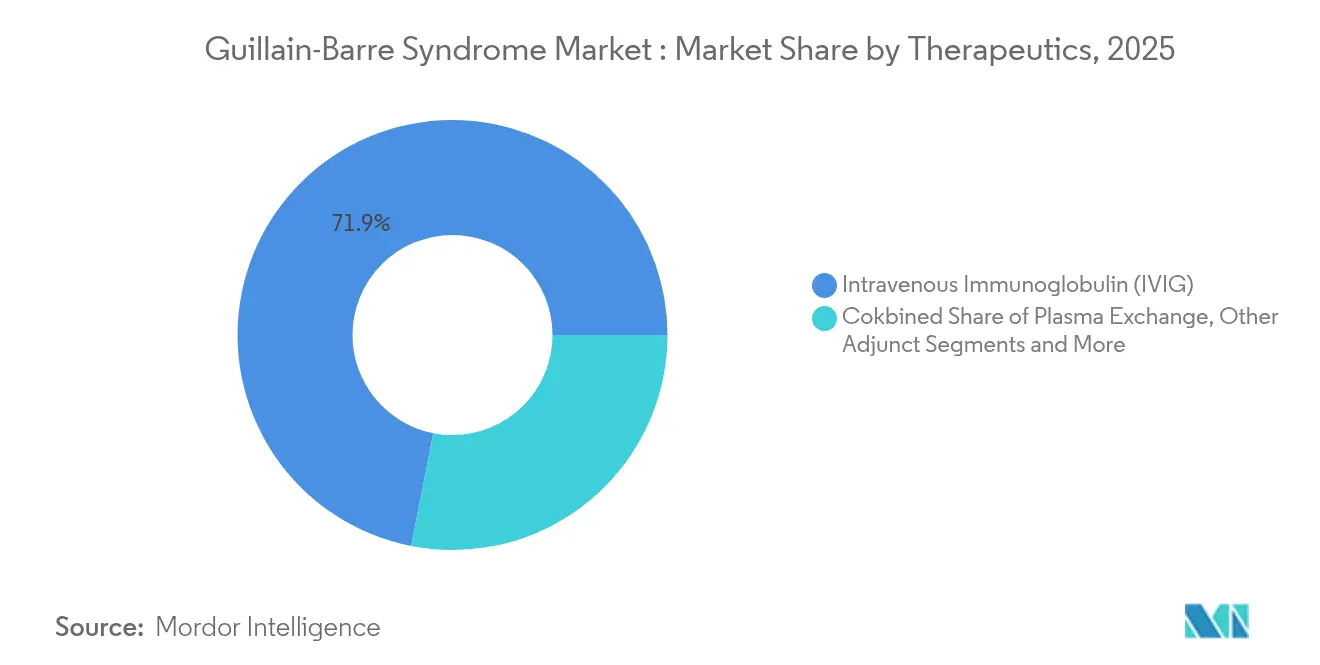
Intravenous immunoglobulin led the Guillain-Barré Syndrome market with a 71.92% share in 2025, yet complement-inhibitors and other novel biologics are growing at 9.32% CAGR through 2031. The Guillain-Barré Syndrome market size for these targeted biologics is projected to surpass USD 337.6 million by 2031 as positive Phase 3 data from ANX005 show 2.4-fold functional improvements over placebo. Efgartigimod has delivered compelling results in refractory AMAN cases, confirming the shift toward mechanism-specific intervention.
Traditional plasma exchange remains vital in cost-constrained settings, and its share of the Guillain-Barré Syndrome market is steady where donor plasma availability aligns with treatment protocols. Adjunct supportive care—such as physiotherapy and ventilatory support—continues to integrate with precision dosing analytics to ensure optimal biological exposure. Collectively, these trends illustrate how the Guillain-Barré Syndrome market is transitioning from broad immunomodulation to targeted pathway inhibition.

By Route of Administration: Subcutaneous Delivery Gains Momentum
The intravenous route accounted for 78.85% of the Guillain-Barré Syndrome market in 2025, supported by hospital infrastructure and clinician familiarity. Subcutaneous immunoglobulin, however, is the fastest-growing at 7.64% CAGR, propelled by biweekly dosing regimens under the expanded XEMBIFY label. Manual push Ig20Gly simplifies self-administration and reduces pump costs, broadening adoption among stable patients.
Home-based care is reshaping therapeutic logistics and driving payer alignment with value-based models. Precision dosing further supports subcutaneous uptake by minimizing wastage. The Guillain-Barré Syndrome market size for subcutaneous modalities is forecast to grow steadily as new formulations reach regulatory approval.
By Distribution Channel: Home Infusion Providers Accelerate Growth
Hospital pharmacies held 57.55% share of the Guillain-Barré Syndrome market in 2025 due to their central role in acute care. Home infusion services, however, are expanding at 9.18% CAGR, catalyzed by the CMS bundled payment that covers professional services, supplies, and equipment. Specialty and retail pharmacies provide medication management and patient education, acting as linchpins between hospital discharge and home-based treatment.
This distribution shift reflects the broader health-system move toward outpatient modalities that reduce nosocomial infection risk and improve patient convenience. As reimbursement stabilizes, the Guillain-Barré Syndrome market is likely to see an even larger share transitioning to home infusion.
By Patient Age Group: Geriatric Segment Drives Market Expansion
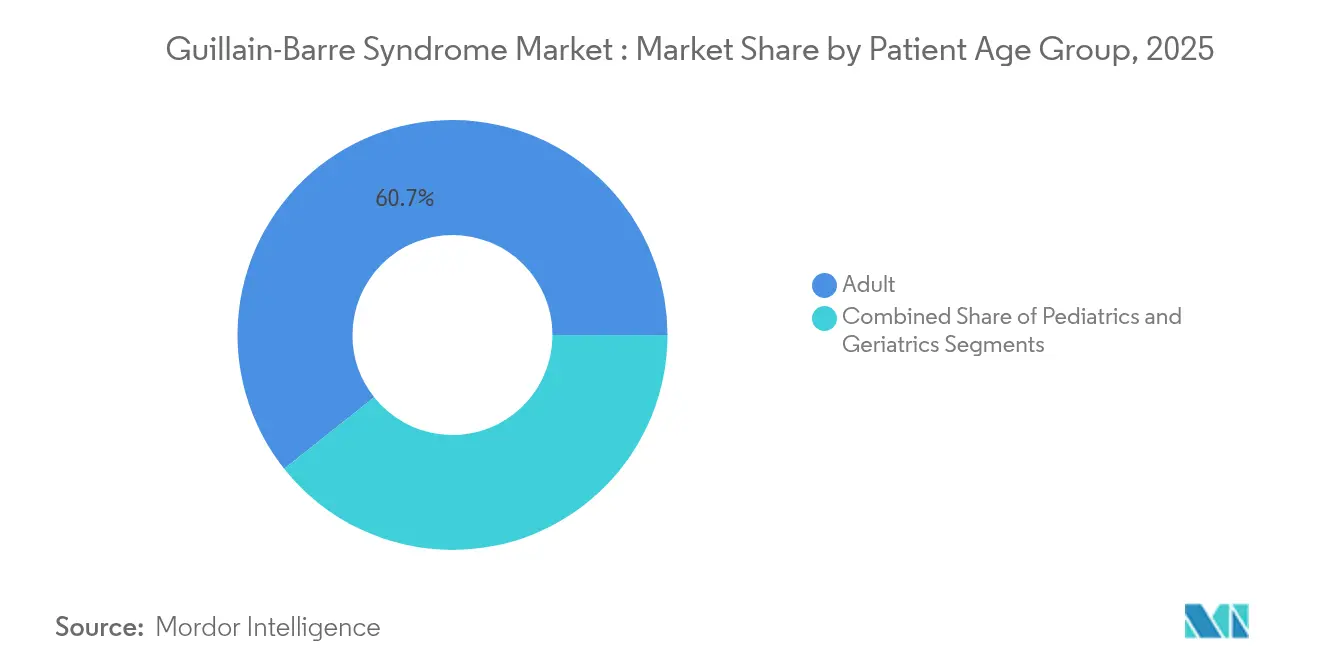
Adults aged 18-64 years captured 60.68% share of the Guillain-Barré Syndrome market in 2025. The geriatric cohort is advancing fastest at 8.69% CAGR, fueled by ageing populations and heightened vaccine-associated surveillance that flags higher susceptibility in older adults. Pediatric cases, though smaller, necessitate specialized protocols, with therapeutic plasma exchange offering viable outcomes in severe presentations.
Thromboembolic risk and slower functional recovery in seniors demand personalized regimens. Adaptive dosing analytics and subcutaneous delivery stand out as solutions to balance efficacy and safety in this demographic.
By Disease Variant: AIDP Dominance Faces AMAN Challenge
AIDP controlled 66.05% share of the Guillain-Barré Syndrome market in 2025, but AMAN is growing at 8.58% CAGR thanks to improved electrodiagnostic tools that refine subtype identification. Variant-specific responses to therapies such as complement inhibitors further support precision medicine direction.
Regional heterogeneity matters: AMAN is more prevalent in certain Asian countries, guiding local clinical pathways. Novel biologics like efgartigimod showcase effectiveness in refractory AMAN cases, potentially narrowing the recovery gap.
Geography Analysis
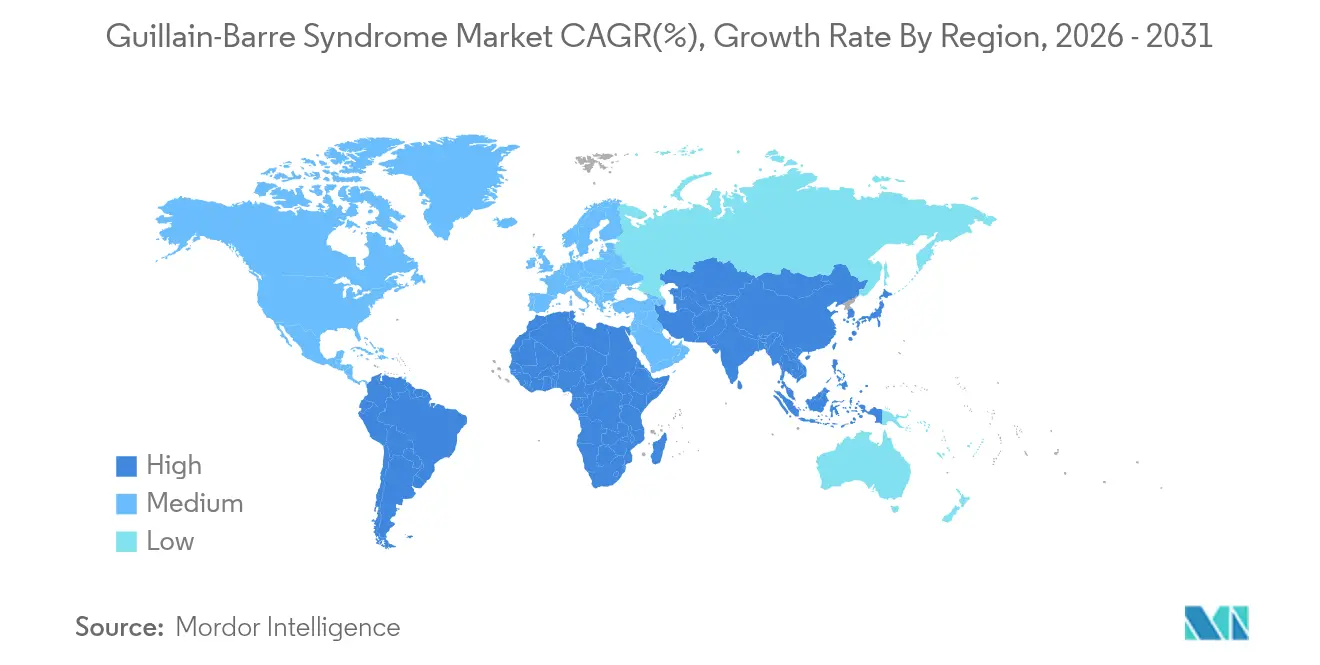
North America led the Guillain-Barré Syndrome market with a 44.18% share in 2025, supported by Medicare reimbursement for home infusion and ubiquitous access to precision analytics platforms. Granular electronic health records facilitate earlier diagnosis and outcome tracking, reinforcing payer confidence in high-cost biologics. Research consortia, such as those spearheaded by NIH, continue to draw funding into breakout discovery programs that amplify innovation spill-overs across the region.
Europe trails at second but confronts supply fragility, importing roughly 40% of its plasma-derived medicines from the United States. Regulatory agencies are encouraging domestic donor recruitment, yet demographic aging complicates collection targets. Despite advanced healthcare infrastructure, uncertain reimbursement for newer biologics could temper growth.
Asia-Pacific is the fastest-expanding at 8.45% CAGR, powered by large investments in local fractionation capacity such as Indonesia’s new 600,000-liter plant. Rising urbanization and improved surveillance reveal a larger underlying patient pool. China’s heterogeneous incidence profiles emphasize the need for regionally tailored product portfolios.
Latin America, the Middle East, and Africa follow with niche opportunities. Small-volume plasmapheresis protocols and mobile infusion units reduce infrastructure barriers, offering cost-effective alternatives in resource-limited settings. Collectively, these regions underscore the Guillain-Barré Syndrome market’s drive toward localized manufacturing and distribution resilience.
Regulatory Landscape
The regulatory landscape for Guillain-Barre syndrome (GBS) therapeutics is shaped by reliance on plasma-derived standard of care and accelerated pathways for first-in-class biologics. In the United States and Europe, orphan-drug and expedited review mechanisms have been used to advance targeted programs, including FDA Fast Track and Orphan Drug designations and EMA Orphan Drug designation for Annexon Biosciences tanruprubart (ANX005). There are no FDA-approved disease-modifying therapies specifically indicated for GBS, so IVIG and plasma exchange remain central to treatment access and reimbursement.
Clinical use and payer decisions are also anchored in evidence-based guidance from professional bodies, including recommendations from the European Academy of Neurology (EAN) and the Peripheral Nerve Society (PNS) for diagnosis and management, alongside national clinical protocols such as Brazil Ministry of Health Portaria No. 1.171 (2015) that defines a regulated access pathway for GBS care within the SUS system. Safety-led labeling and pharmacovigilance continue to influence utilization patterns for immune-modulating products, reinforcing monitoring requirements and shaping hospital-to-home transition criteria for infusion-based care.
Value Chain Analysis
The GBS treatment value chain starts with diagnosis and acute-care triage, then moves into therapy selection dominated by IVIG and plasma exchange (PE), followed by procurement, infusion delivery, and post-acute follow-up. For IVIG, the upstream chain centers on plasma collection (human donors), testing, fractionation, fill-finish, and distribution. Vertically integrated manufacturers such as CSL Behring, Grifols, Takeda, Octapharma, and Kedrion control significant parts of supply through owned or aligned collection and fractionation networks. On the delivery side, hospital pharmacies still anchor initiation in acute settings, while home-infusion providers increasingly manage continuation where coverage and clinical stability permit.
Bottlenecks are concentrated upstream, where dependence on donor plasma and quality-related disruptions can tighten IVIG availability and raise costs. Capacity additions and regionalization efforts, including new fractionation investments such as Indonesia's 600,000-liter plant, aim to reduce import dependence and stabilize supply, but structural donor constraints persist in some regions. Payer and utilization management policies also influence flow through the chain, because insurers typically require documented diagnostic criteria for IVIG/SCIG coverage, which reinforces guideline-aligned ordering, dose optimization, and site-of-care controls affecting specialty distribution and inventory planning.
Competitive Landscape
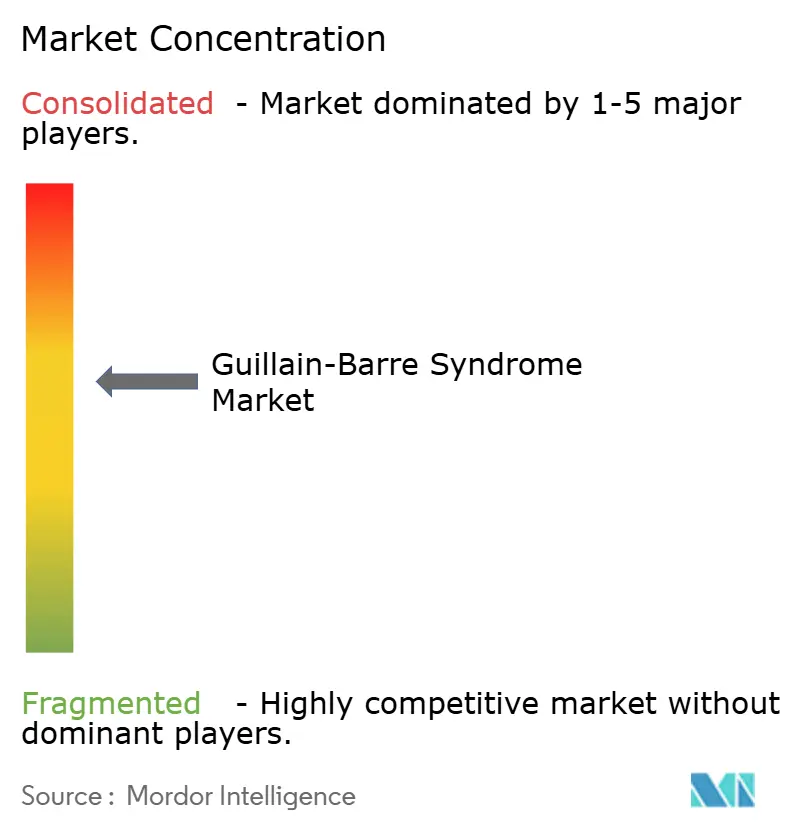
The Guillain-Barré Syndrome market is moderately consolidated. CSL, Takeda, and Grifols anchor the IVIG domain using vertically integrated plasma networks. CSL’s 15% immunoglobulin revenue growth to USD 3.174 billion in H1 2025 evidences scale advantages that consolidate share. Takeda’s label expansion for GAMMAGARD LIQUID into CIDP highlights portfolio leveraging that extracts more value from existing plants.
Emerging players such as Annexon and Argenx are reshaping the competitive mix through targeted complement inhibition. Annexon’s ANX005 posted 2.4-fold disability-score improvements, positioning it to secure early-mover credibility in biologic therapy. These biotech entrants often turn to strategic alliances with fractionation firms to shore up distribution.
Technology differentiation guides competition. While plasma giants invest in donor-management software and fractionation automation, biologics developers channel resources into accelerated clinical programs and companion diagnostic tools. White-space remains in pediatric-friendly formulations and variant-specific protocols, inviting collaboration between established and emerging players.
Guillain-Barre Syndrome Industry Leaders
-
CSL Behring LLC
-
Takeda Pharmaceutical Company Limited
-
Grifols SA
-
Kedrion Biopharma Inc.
-
Octapharma AG
- *Disclaimer: Major Players sorted in no particular order
Market Opportunities and Future Outlook
A primary whitespace in GBS is the lack of approved disease-modifying, indication-specific pharmacologic therapies, which leaves targeted biologics positioned to reduce complement-driven or antibody-mediated nerve injury. Annexon Biosciences' January 2026 submission of a Marketing Authorization Application to the European Medicines Agency for tanruprubart, supported by orphan designations (EMA) and FDA Fast Track and Orphan Drug designations, provides a concrete signal that regulators are engaging with first-in-class pathways for GBS-specific treatment. At the same time, real-world and retrospective clinical literature in 2026 has increased attention on FcRn inhibition, including efgartigimod, as a mechanism that can be positioned against IVIG and plasma exchange in selected refractory presentations, reinforcing a shift toward mechanism-specific intervention.
Operational opportunities are tied to improving access and continuity of infusion-based care while managing plasma constraints. CMS-backed home-infusion coverage and the rise of subcutaneous immunoglobulin regimens support site-of-care migration for appropriate patients, increasing the role of home infusion providers and specialty pharmacies in care transitions. On the supply side, investments in fractionation capacity, particularly in Asia-Pacific, and efforts to improve donor recruitment in constrained regions highlight opportunities for manufacturers and providers to combine reliable supply, precision dosing analytics, and contracted distribution networks to reduce wastage and strengthen payer acceptance of high-cost therapy pathways.
Recent Industry Developments
- April 2026: The EMA Committee for Medicinal Products for Human Use (CHMP) adopted a positive opinion for a variation to the marketing authorisation for CSL Behring's Privigen (human normal immunoglobulin). The action supports product lifecycle management for a core IVIG brand used in immune-mediated neurology care pathways. It also reinforces the role of regulatory variations in maintaining supply continuity and updating use conditions for high-demand plasma-derived medicines.
- January 2026: Annexon Biosciences submitted a Marketing Authorization Application to the European Medicines Agency for tanruprubart for the treatment of Guillain-Barre syndrome. The filing advances a C1q-blocking antibody program positioned as a GBS-specific targeted biologic, contrasting with current reliance on IVIG and plasma exchange. Moving into formal review increases competitive pressure on incumbent immunoglobulin-centered approaches and supports payer and provider planning for potential new care pathways.
- December 2025: Grifols announced expansion of its plasma fractionation capacity to support broader immunoglobulin supply. The expansion aligns with a broader strategy to stabilize IVIG supply amid donor variability and regional demand shifts. The announcement highlights how plasma-derived manufacturers are scaling up capacity to reduce disruption risk and meet payer expectations.
Research Methodology Framework and Report Scope
Market Definition and Coverage
This market is defined as the revenue generated from treating Guillain-Barre syndrome in clinical settings, covering drug and procedure based care used during acute management and early recovery, measured at manufacturer level pricing and converted to USD.
Scope exclusions: Screening and monitoring diagnostics, physiotherapy and rehabilitation service fees, and over-the-counter pain relievers are excluded from this sizing.
Segmentation Overview
- By Therapeutics
- Intravenous Immunoglobulin (IVIG)
- Plasma Exchange (PLEX)
- Complement-inhibitors & Novel Biologics
- Other Adjunct / Supportive Care
- By Route of Administration
- Intravenous
- Sub-cutaneous
- Oral / Enteral
- By Distribution Channel
- Hospital Pharmacies
- Specialty & Retail Pharmacies
- Home-Infusion Providers
- By Patient Age Group
- Pediatric (<18 yrs)
- Adult (18 – 64 yrs)
- Geriatric (≥65 yrs)
- By Disease Variant
- AIDP (Acute Inflammatory Demyelinating)
- AMAN (Acute Motor Axonal)
- AMSAN (Acute Motor-Sensory Axonal)
- Miller-Fisher Syndrome
- Other rare variants (PCB, PNC, etc.)
- By Geography
- North America
- United States
- Canada
- Mexico
- Europe
- Germany
- United Kingdom
- France
- Italy
- Spain
- Rest of Europe
- Asia-Pacific
- China
- Japan
- India
- Australia
- South Korea
- Rest of Asia-Pacific
- Middle East and Africa
- GCC
- South Africa
- Rest of Middle East and Africa
- South America
- Brazil
- Argentina
- Rest of South America
- North America
Data Sources, Market Sizing, and Validation
Desk Research
Desk work starts by grounding the disease pool and care pathways using public sources such as WHO updates, CDC clinical resources, NIH and PubMed indexed studies, and national health statistics agencies where available. We also referenced FDA drug labels and safety communications, along with payer or health system publications that describe typical treatment sequences and supportive care use.
To keep assumptions realistic, pricing and volume guardrails were built from company annual reports and investor materials, hospital and pharmacy procurement cues from public commentary, and reputable press coverage on IVIG supply and plasma availability. Where needed, licensed datasets were used for company financials and for patent activity signals that indicate pipeline momentum. The desk sources listed here are illustrative, and many other public references were reviewed for data collection, cross-checks, and clarification.
Primary Interviews and Surveys
Primary inputs were collected through expert interviews and structured surveys with neurologists, hospital pharmacists, plasma center linked stakeholders, and treatment protocol influencers. The respondent input was used to confirm treated patient shares, the typical IVIG versus plasma exchange split, relapse and retreatment patterns, and how access differs by region (with checks across APAC, EMEA, and the Americas).
Distribution of primary research fieldwork respondents
| Company type | Respondent position | Region |
|---|---|---|
| Top tier: 25% | CXOs: 14% | APAC: 41% |
| Mid tier: 57% | Functional/Unit leaders: 36% | EMEA: 34% |
| Smaller Players: 18% | Managers: 50% | Americas: 25% |
Market-Sizing & Forecasting
For sizing, a top-down demand pool was reconstructed by building annual incident GBS cases by geography and then filtering to diagnosed and treated cohorts, followed by mapping the standard of care into revenue. The core steps were kept simple so the logic stays auditable, where case volumes and treatment intensity are turned into spending using average dosing patterns and procedure utilization.
Selective bottom-up approximations were then used to sanity check totals, including sampled price points for IVIG grams, typical number of inpatient days tied to acute care, and rough supplier roll ups where public financial disclosures allow it. Key model inputs included GBS incidence and triggers linked to infections, diagnosis and hospitalization rates, IVIG versus plasma exchange mix, average IVIG dose per patient by weight band, and country level pricing and currency timing. Forecasts were produced using scenario analysis supported by expert consensus on variables that move the market most, such as IVIG supply tightness, access expansion in hospitals, and uptake of newer biologics. When local data gaps appeared, ranges were applied and then narrowed after follow-up calls, so outliers did not over-pull the final number.
Data Validation & Update Cycle
Validation is done through several checks that compare the model output against independent signals, including IVIG category growth, plasma collection capacity cues, hospitalization trends for acute neuropathy care, and expected regional share patterns. If a country result looks off, assumptions are reopened and re-tested with a second pass that includes re-contacting select experts and re-checking unit math and currency conversions.
Before sign-off, numbers are reviewed by another analyst to confirm the logic trail is consistent and that sensitivities behave as expected when key inputs move. The report is refreshed annually, and interim updates are added when material events occur, such as major guideline changes, supply disruptions, or meaningful approvals. Right before delivery, a final update sweep is performed so clients receive the most current view available.
Mordor Intelligence's Guillain Barre Syndrome Market Estimate Compared With Other Published Estimates
Published market numbers for Guillain-Barre syndrome can look different even when the topic sounds the same, because teams count different revenue lines and anchor to different base years. The spread usually comes from what is included around treatment costs, how dosing and procedure use are converted into value, and how currency and inflation timing are handled.
A common gap driver in this market is whether diagnostic testing and longer-term rehab services are added on top of acute treatment revenues, since those items can inflate the total even if drug and procedure volumes are unchanged. Another driver is how IVIG pricing is trended forward, since supply conditions and contracting practices can shift average realized prices, and models that apply a flat price curve can drift. Because the current sizing here only counts therapeutics and acute procedure revenues while keeping diagnostics and rehab outside the total, the 2025 value aligns to the stated scope used by Mordor Intelligence.
Benchmark comparison
| Source | Market Size | Gaps in Research Methodology |
|---|---|---|
| Mordor Intelligence | USD 0.77 B (2025) | |
| Global Consultancy A | USD 0.73 B (2024) | Uses an earlier base year and may apply different IVIG price progression and channel mix assumptions, which can shift the implied 2025 level even if volumes are similar. |
| Industry Publisher B | USD 0.64 B (2025) | Often combines broader items like diagnostics and supportive services with a factory-gate revenue framing, and it may also rely on generalized growth rates rather than treated-cohort and dosing based build-ups. |
The comparison shows that most of the difference is explained by scope boundaries and how IVIG and plasma exchange value is translated from treated cohorts into revenue by year. When assumptions are tied back to incident cases, treatment mix, dosing, and currency timing, the resulting market value becomes easier to trace and re-check across regions and refresh cycles.
Key Questions Answered in the Report
What is driving growth in the Guillain-Barré Syndrome market?
Demand is rising due to ageing populations, post-COVID neurological complications, and faster biologic approvals that introduce new targeted therapies.
How big is the Guillain-Barré Syndrome market today?
The Guillain-Barré Syndrome market is valued at USD 810.7 million in 2026 and is forecast to reach USD 1.07 billion by 2031 at a 5.7% CAGR.
Why are complement inhibitors gaining attention?
Phase 3 data show complement inhibitors like tanruprubart improve disability scores more than IVIG, positioning them as potential first-line options once approved.
Which route of administration is expanding fastest?
Subcutaneous immunoglobulin is growing at 7.64% CAGR as home infusion and patient autonomy gain traction.
How are supply shortages being addressed?
Capacity expansions in Asia-Pacific and strategic donor recruitment in Europe aim to reduce dependence on US plasma and stabilize IVIG availability.
What risk does the market face from safety concerns?
Thromboembolic and renal events linked to high-dose IVIG prompt tighter monitoring, potentially shifting usage toward safer targeted biologics in susceptible groups.