
Greece HVAC Market Size and Share
| Study Period | 2019 - 2030 |
| Forecast Data Period | 2025 - 2030 |
| Historical Data Period | 2019 - 2023 |
| Market Size (2025) | USD 0.5 Billion |
| Market Size (2030) | USD 0.66 Billion |
| CAGR (2025 - 2030) | 5.70% |
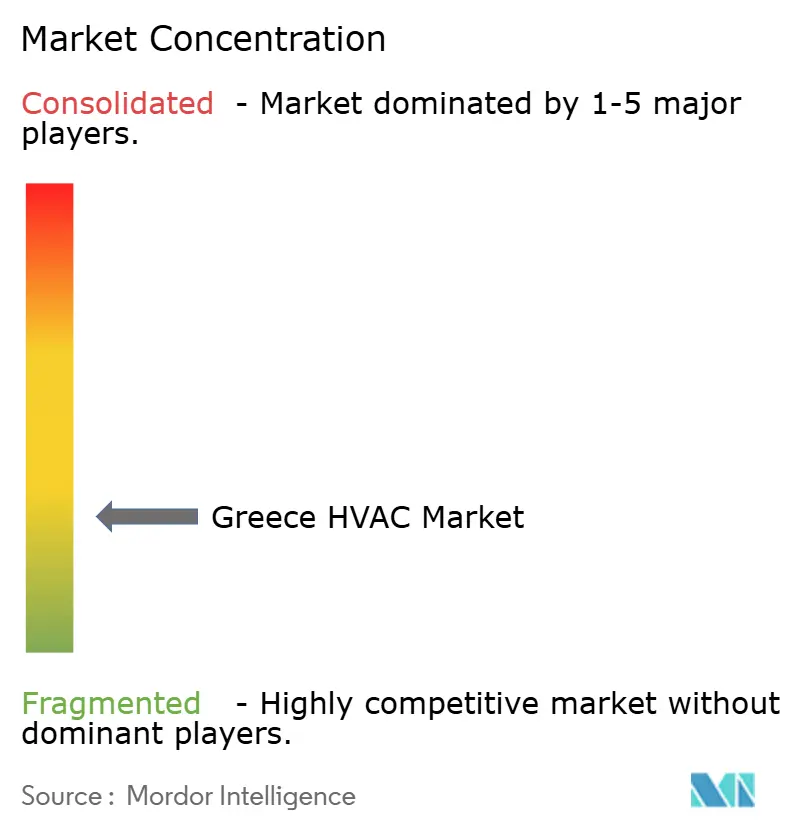
| Market Concentration | Low |
Major Players *Disclaimer: Major Players sorted in no particular order |
Greece HVAC Market Analysis by Mordor Intelligence
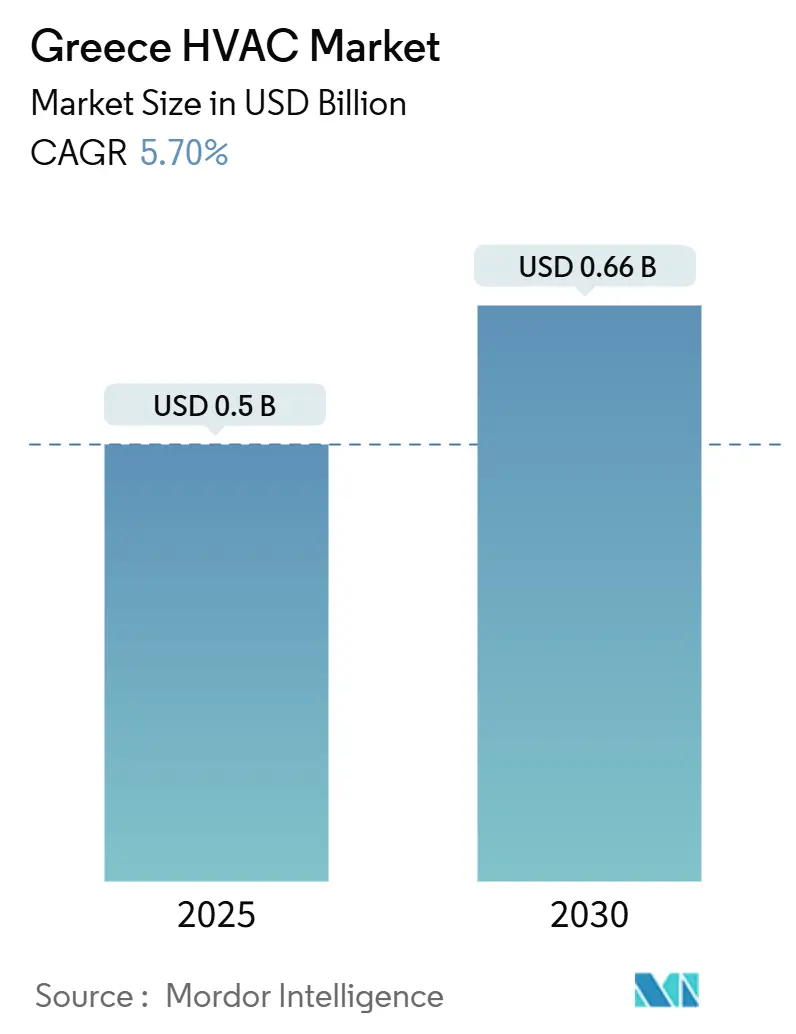
The Greece HVAC Market size is estimated at USD 0.5 billion in 2025, and is expected to reach USD 0.66 billion by 2030, at a CAGR of 5.70% during the forecast period (2025-2030).
- Greece's HVAC market is undergoing a significant transformation spurred by stricter energy efficiency standards and proactive climate change measures. There's an increasing focus on integrating smart controls and sensors into building ecosystems, especially HVAC systems, to enhance energy management, operational efficiency, and indoor environmental quality. Furthermore, Greece's aging building stock is driving a rising demand for energy-efficient HVAC retrofits. The HVAC market in Greece is rapidly evolving, influenced by climate emergencies, stringent regulations, and a wave of digital transformation.
- In a bid to reduce environmental risks and curb carbon emissions, the Greek government has set benchmarks for energy-efficient equipment production. Many governments, alongside tax incentives and rebate initiatives, offer perks to encourage consumers to choose energy-efficient products, be it those that consume less power or harness renewable energy, thereby amplifying demand. In January 2025, the government rolled out a EUR 223.2 Million (USD 256.56 Million) initiative to champion green heating solutions for households, encompassing rooftop solar heaters and heat pumps. This initiative, part of the broader RePowerEU policy, is in harmony with Greece's National Recovery and Resilience Plan 2.0.
- Additionally, the burgeoning expansion of data centers is poised to create lucrative opportunities for HVAC in Greece. For instance, in September 2024, Data4, a prominent European data center provider, declared a EUR 300 million (USD 346.75 million) investment to set up a data center campus in Pallini, close to Athens. This announcement, made during the Platform Global 2024 event, underscores Data4’s ambition to strengthen its European presence. Named ATH1, this new campus marks Data4’s debut investment in Greece. The company views Greece as a strategic hub, given its strong connectivity to key markets across Europe, Africa, and Asia. This venture is just a fraction of Data4’s grand vision, eyeing a total investment of EUR 7 billion (USD 8.08 billion) by 2030, with the goal of emerging as Europe’s leading data center operator.
- While major cities like Athens and Thessaloniki benefit from a solid natural gas infrastructure, many rural regions and Greek islands grapple with sporadic access. This inconsistency hampers the use of gas boilers, pushing residents to depend on electricity, biomass, or oil for heating. The challenges of extending the gas grid to these remote areas, both in terms of cost and logistics, further hinder the adoption of gas boilers. Moreover, the installation of gas boilers in Greece often faces delays due to a maze of approvals from local authorities and utility companies, stalling the market's growth.
- Greece's HVAC sector, which leans heavily on imports, faces hurdles from broader macroeconomic trends. Rising costs for refrigerants, semiconductors, and HVAC units have translated to price increases for end users, dampening their purchasing enthusiasm. Additionally, Greece has been subject to significant energy price fluctuations, a consequence of the European energy crisis and its geopolitical ties. These rising electricity costs not only inflate the operational expenses of HVAC systems but also dissuade both residential and commercial clients from investing in or upgrading their systems.
Greece HVAC Market Trends and Insights
Residential Sector is Expected to Hold a Largest Market Share
- Greece's burgeoning population has amplified the demand for heating solutions in its residential sector. In response, Greece has enacted regulations aimed at promoting the development of nearly zero-energy buildings. This initiative encourages residential structures to boost their energy efficiency, prominently through the adoption of heat pumps. Traditionally, heat pumps have served as primary heat sources in single-family homes and terraced houses. Their application, however, is witnessing a steady expansion into apartment buildings.
- During Greece's sweltering summer months, residential air conditioning systems are indispensable for comfort. The choice of air conditioning systems in homes hinges on various factors, including climate, architectural design, energy accessibility, and cultural inclinations. Central air conditioning systems dominate the residential landscape in Greece. Ductless mini-split systems, another favored choice, offer zoned cooling, empowering homeowners to independently regulate temperatures in distinct areas of their homes.
- As Greece intensifies its shift away from fossil fuels, the demand for residential heating equipment surges. Policymakers in Greece are amplifying this increasing demand, unveiling incentives and favorable regulations. These measures motivate homeowners to seamlessly incorporate heating systems into their new residences, leading to a pronounced preference for heat pumps in Greek homes.
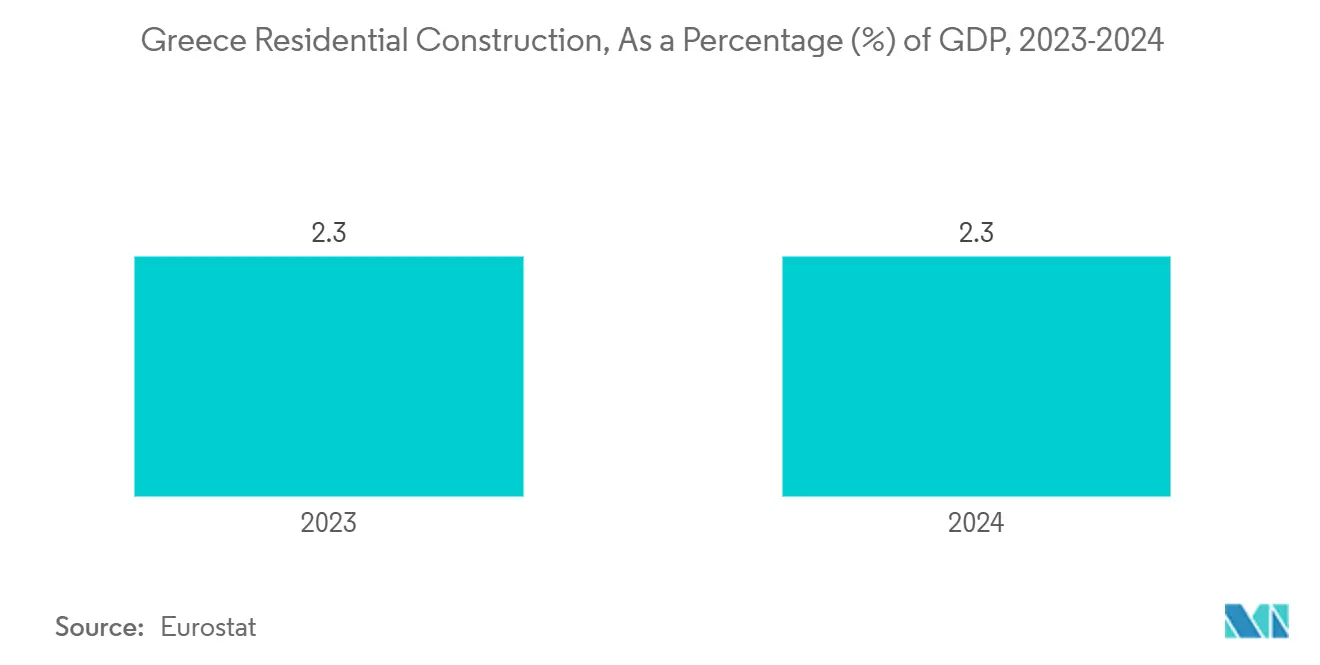
- With residential construction on the rise in Greece, HVAC equipment markets are poised for growth. Many of Greece's new urban residential projects feature multi-unit buildings or complexes, prime candidates for centralized heating systems. High-efficiency gas boilers power these systems, allowing developers to standardize installations. This not only curtails costs per unit but also guarantees consistent and effective heating. Eurostat data highlights the significance of this sector, noting that in December 2024, residential construction constituted 2.30% of Greece's GDP (Gross Domestic Product).


Heating Equipment is Expected to Witness a Significant Growth
- Heat pumps utilize a refrigeration cycle to shift heat from cooler areas to warmer ones. This process not only cools the designated cooler area but also raises the temperature of the warmer zone. Heat pumps extract warmth from the frigid outside air to heat homes during winters. Conversely, in summer, they can be adjusted to release heat from the home to the already warm outdoor air. This heat-transfer capability, as opposed to merely generating heat, grants heat pumps a notable edge in energy efficiency over conventional heating and cooling methods.
- For example, air-source heat pumps are prevalent in residential settings, adeptly transferring heat between indoor and outdoor air. In contrast, ground-source heat pumps, or geothermal heat pumps, shift heat between the external ground and a home's interior air. In Greece, the demand for heat pumps is on rise, spurred by government incentives and tax rebates for energy-efficient product installations.
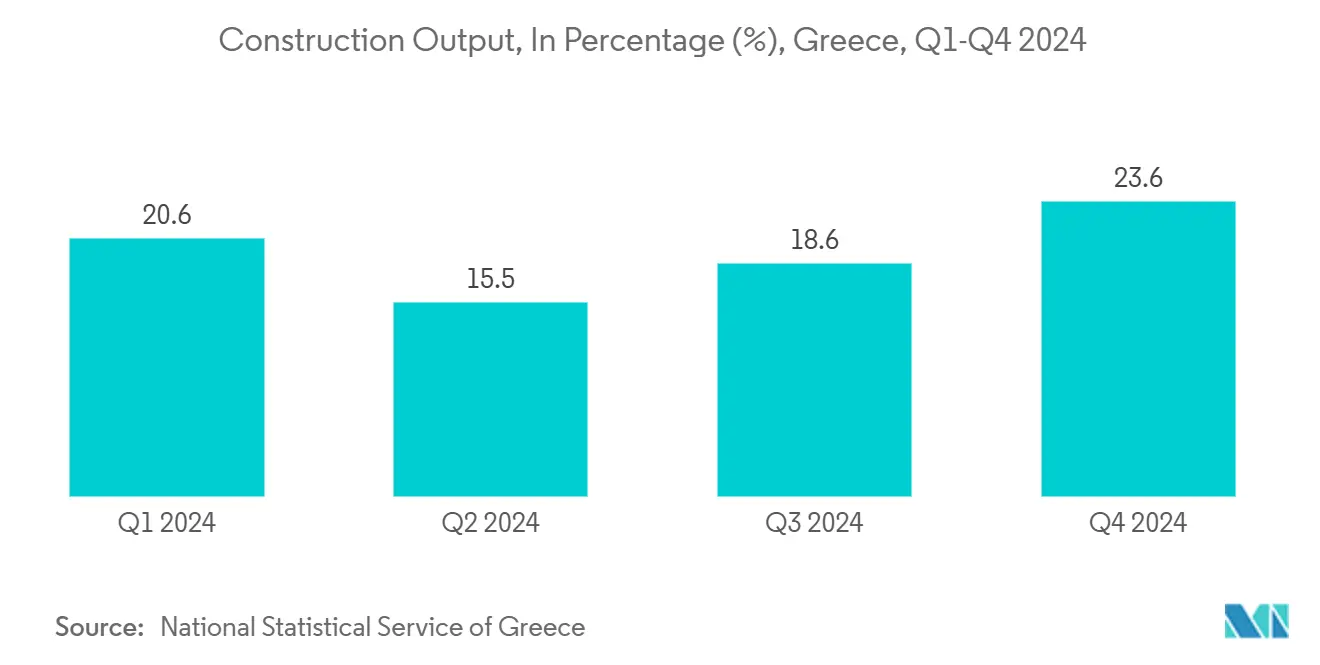
- According to the National Statistical Service of Greece, Greece's construction output witnessed a robust 23.6% year-on-year surge in Q4 2024, building on an 18.6% increase in the previous quarter. Civil engineering projects saw a significant uptick (38.7% compared to 24.5% in Q3), while building construction climbed by 18.9%, up from 16.2%. However, specialized construction faced a deceleration, growing by 11.7% versus the prior 15.5% increase. On a quarterly basis, construction output in December surged by 52%, rebounding from a minor 0.1% decline earlier. With these advancements in the construction sector, the demand for HVAC equipment is set to rise, leading to an increased need for associated services in Greece.
- Heat pumps are gaining traction as a modern solution for heating, cooling, refrigeration, and supplying hot service water. These systems derive approximately 25% of their heat from electricity and the remaining 75% from environmental thermal energy, earning accolades for their energy efficiency and diminished environmental footprint. In December 2024, Greece launched a program aimed at enhancing energy efficiency in businesses and homes, introducing grants for heat pumps slated for 2025. Through the Exoikonomo 2025 initiative, these grants promise to cover up to 100% of heat pump costs, with a ceiling set at EUR 35,000.

Competitive Landscape
The Greece HVAC market is fragmented, with specialized players and regional conglomerates operating across various segments. While multiple large multinational companies dominate certain high-value segments, numerous regional and niche players contribute to the overall competition, making the market highly diverse. This competition is driven by the wide range of applications for HVAC equipment, allowing both small and large companies to coexist and thrive in the market.
Several leading companies in the Greece HVAC market include Trane Inc. (Trane Technologies Plc), LG Electronics Inc., Panasonic Corporation, Robert Bosch GmbH, Ariston Holding N.V., and many others. With strong brand recognition and extensive regional operations, these companies command a significant market share. Their strengths include innovation, a broad solutions portfolio, and robust distribution networks. To maintain their competitive edge and broaden their market reach, these leaders frequently pursue strategic acquisitions and partnerships.
In the competitive landscape of the Greece HVAC market, companies are increasingly prioritizing innovation across key product categories: heating, ventilation, and air conditioning equipment. As industries seek out advanced solutions, HVAC equipment is set to become a pivotal differentiator. Additionally, expanding service offerings and enhancing customer support are essential for fostering enduring relationships and securing repeat business. Firms that invest in emerging markets and tailor their products to regional needs are poised to gain a significant advantage in this fragmented arena.
Greece HVAC Industry Leaders
Trane Inc. (Trane Technologies Plc)
LG Electronics Inc.
Panasonic Corporation
Robert Bosch GmbH
Ariston Holding N.V.
- *Disclaimer: Major Players sorted in no particular order

Recent Industry Developments
- March 2024: Panasonic Corporation's Heating & Ventilation A/C Company (HVAC) introduced three new models of commercial air-to-water (A2W) heat pumps. These pumps, designed for multi-dwelling units, stores, offices, and light commercial properties, utilize eco-friendly natural refrigerants. Boasting compact designs that set industry standards, these models expand Panasonic's offerings, complementing their existing lineup designed for stand-alone homes. A2W harnesses ambient air heat to produce hot water for building use.
- February 2024: Athens-based General Refrigeration secured the ATMO Approved Natural Refrigerants Label from ATMOsphere. This accolade highlights the company's commitment to environmentally friendly HVAC solutions, emphasizing their use of natural refrigerants such as CO₂, ammonia, and propane. General Refrigeration's offerings include refrigeration installations for supermarkets, cold room construction, energy-efficient retrofits, and comprehensive maintenance services.


Greece HVAC Market Report Scope
HVAC is a comprehensive system designed to create and maintain comfortable indoor environmental conditions in residential, commercial, and industrial spaces. Heating is the first component, which involves warming interior spaces during cold weather through various methods such as furnaces, heat pumps, and radiant heating systems. These technologies convert energy into heat, distributing warmth evenly throughout a building to ensure occupant comfort and prevent temperature-related issues.
Ventilation represents the critical process of exchanging indoor and outdoor air, ensuring proper air circulation, removing pollutants, controlling humidity, and maintaining air quality. This aspect of HVAC involves mechanical and natural ventilation techniques that introduce fresh air, filter contaminants, and regulate oxygen levels. Proper ventilation is essential for preventing the buildup of harmful gases, reducing moisture-related problems, and creating a healthy indoor environment.
Air Conditioning focuses on cooling and dehumidifying interior spaces during warm weather. Modern air conditioning systems use refrigeration cycles to remove heat and moisture from the air, creating a comfortable and controlled climate. These systems range from central air conditioning units to ductless mini-splits, providing precise temperature management and improving overall indoor comfort. The integration of these three components- heating, ventilation, and air conditioning- creates a sophisticated environmental control system that adapts to changing weather conditions and occupant needs.
The study tracks the revenue accrued through the sale of HVAC product types by various players in Greece. The study also tracks the key market parameters, underlying growth influencers, and major vendors operating in the industry, which supports the market estimations and growth rates over the forecast period. The study further analyses the overall impact of macroeconomic factors on the market. The report's scope encompasses market sizing and forecasts for the various market segments.
The Greece HVAC Market is Segmented by product type (heating equipment [heat pumps (air source, ground source), furnaces (gas, electric, oil), boilers (condensing, non-condensing), unit heaters, and others (radiators & baseboard heaters, solar water heating systems)], ventilation equipment [air handling units (AHUs), energy recovery ventilators (ERVs)/heat recovery, ventilators (HRVs), exhaust and supply fans, dehumidifiers/humidifiers], air conditioning equipment [unitary air conditioners, variable refrigerant flow (VRF) systems, chillers (air-cooled, water-cooled), fan coil units (FCUs), and others (window and portable air conditioners)]) and end-user industry (residential, commercial, and industrial). The market sizes and forecasts are provided in terms of value (USD) for all the above segments.
| Heating Equipment | Heat Pumps (Air Source, Ground Source) | |
| Furnaces (Gas, Electric, Oil) | ||
| Boilers (Condensing, Non-condensing) | ||
| Unit Heaters | ||
| Others (Radiators & Baseboard Heaters, Solar Water Heating Systems) | ||
| Ventilation Equipment | Air Handling Units (AHUs) | |
| Energy Recovery Ventilators (ERVs) / Heat Recovery Ventilators (HRVs) | ||
| Exhaust and Supply Fans | ||
| Dehumidifiers / Humidifiers | ||
| Air Conditioning Equipment | Unitary Air Conditioners | Split Air Conditioners |
| Packaged Terminal ACs (PTACs) | ||
| Rooftop Packaged Units (RTUs) | ||
| Variable Refrigerant Flow (VRF) Systems | ||
| Chillers (Air-Cooled, Water-Cooled) | ||
| Fan Coil Units (FCUs) | ||
| Others (Window and Portable Air Conditioners) | ||
| Residential |
| Commercial |
| Industrial |
| By Product Type | Heating Equipment | Heat Pumps (Air Source, Ground Source) | |
| Furnaces (Gas, Electric, Oil) | |||
| Boilers (Condensing, Non-condensing) | |||
| Unit Heaters | |||
| Others (Radiators & Baseboard Heaters, Solar Water Heating Systems) | |||
| Ventilation Equipment | Air Handling Units (AHUs) | ||
| Energy Recovery Ventilators (ERVs) / Heat Recovery Ventilators (HRVs) | |||
| Exhaust and Supply Fans | |||
| Dehumidifiers / Humidifiers | |||
| Air Conditioning Equipment | Unitary Air Conditioners | Split Air Conditioners | |
| Packaged Terminal ACs (PTACs) | |||
| Rooftop Packaged Units (RTUs) | |||
| Variable Refrigerant Flow (VRF) Systems | |||
| Chillers (Air-Cooled, Water-Cooled) | |||
| Fan Coil Units (FCUs) | |||
| Others (Window and Portable Air Conditioners) | |||
| By End-user Industry | Residential | ||
| Commercial | |||
| Industrial | |||


Key Questions Answered in the Report
How big is the Greece HVAC Market?
The Greece HVAC Market size is expected to reach USD 0.5 billion in 2025 and grow at a CAGR of 5.70% to reach USD 0.66 billion by 2030.
What is the current Greece HVAC Market size?
In 2025, the Greece HVAC Market size is expected to reach USD 0.5 billion.
Who are the key players in Greece HVAC Market?
Trane Inc. (Trane Technologies Plc), LG Electronics Inc., Panasonic Corporation, Robert Bosch GmbH and Ariston Holding N.V. are the major companies operating in the Greece HVAC Market.
What years does this Greece HVAC Market cover, and what was the market size in 2024?
In 2024, the Greece HVAC Market size was estimated at USD 0.47 billion. The report covers the Greece HVAC Market historical market size for years: 2019, 2020, 2021, 2022, 2023 and 2024. The report also forecasts the Greece HVAC Market size for years: 2025, 2026, 2027, 2028, 2029 and 2030.
Page last updated on:
Greece HVAC Market Report
Statistics for the 2025 Greece HVAC market share, size and revenue growth rate, created by Mordor Intelligence™ Industry Reports. Greece HVAC analysis includes a market forecast outlook for 2025 to 2030 and historical overview. Get a sample of this industry analysis as a free report PDF download.





