
Glucose Market Size and Share
Market Overview
| Study Period | 2021 - 2031 |
|---|---|
| Market Size (2026) | USD 27.88 Billion |
| Market Size (2031) | USD 33.26 Billion |
| Growth Rate (2026 - 2031) | 3.60 % |
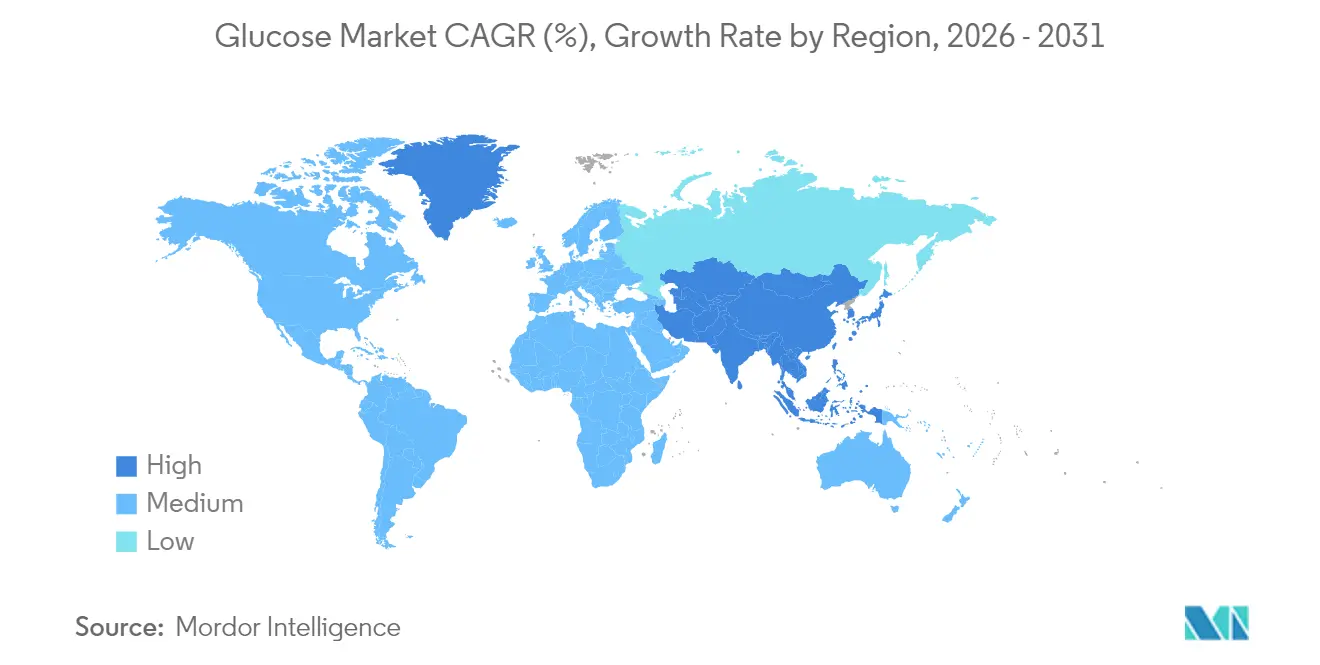
| Fastest Growing Market | Asia Pacific |
| Largest Market | North America |
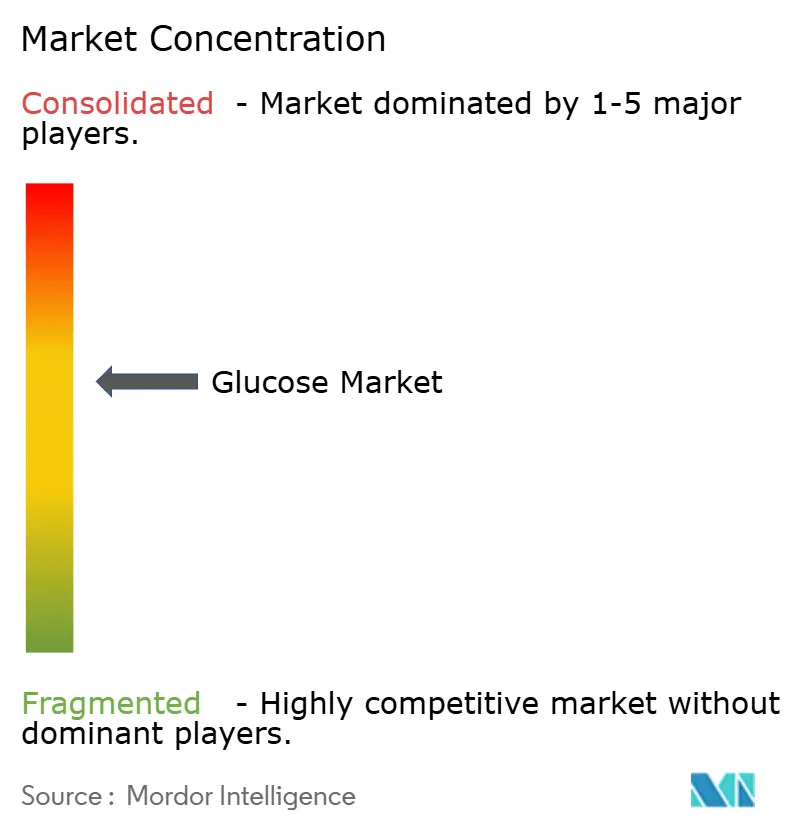
| Market Concentration | Medium |
Major Players *Disclaimer: Major Players sorted in no particular order Image © Mordor Intelligence. Reuse requires attribution under CC BY 4.0. | |
Glucose Market Analysis by Mordor Intelligence
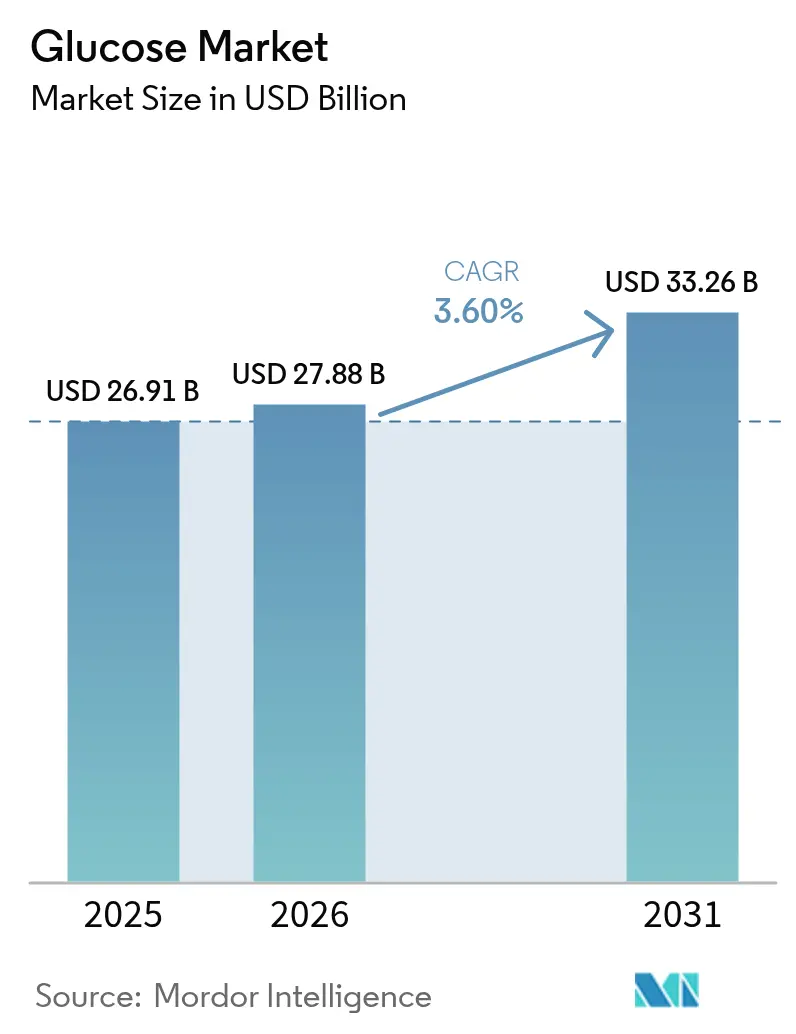
The glucose market size is expected to grow from USD 26.91 billion in 2025 to USD 27.88 billion in 2026 and is forecast to reach USD 33.26 billion by 2031 at 3.6% CAGR over 2026-2031. Glucose, a pivotal component of the glucose market, is widely used as a sweetener in various products, including baked goods, dairy items, and confections, offering 60-70% of sucrose's sweetness. In confectionery applications, glucose enhances fruity flavors, provides a cooling sensation, and balances sweetness. Additionally, glucose is utilized in beverages, ice creams, culinary dishes, meat curing processes, and pharmaceuticals. In milk-based beverages, such as chocolate and flavored drinks, glucose helps regulate sweetness when combined with other sugars. The food and beverage segment's glucose usage is increasing due to changing food habits and growing preference for snacks and desserts. Market growth is driven by rising demand for convenience foods and versatile sweeteners that offer health benefits across confectionery, bakery, and dairy sectors. However, the market faces challenges from fluctuating corn prices, supply chain disruptions, and economic changes. Global glucose producers are exploring wheat and cooked starch as sustainable alternatives for producing glucose syrups used in baked goods, beverages, and ice creams. The industry is experiencing increased demand for clean-label solutions, creating opportunities for glucose manufacturers, while companies are enhancing their portfolios through technology-supported product innovation.
Key Report Takeaways
- By source, corn led with 52.12% of glucose market share in 2025 and is forecast to post a 3.05% CAGR through 2031, whereas wheat is set to grow fastest at a 4.98% CAGR.
- By form, syrup held 71.78% of revenue in 2025; solid glucose is projected to expand at a 4.76% CAGR to 2031.
- By grade, food-grade commanded 60.54% of revenue in 2025; pharmaceutical-grade is anticipated to rise at a 5.48% CAGR.
- By application, food and beverage retained 55.83% share in 2025, yet personal care and cosmetics are expected to log a 5.26% CAGR.
- By region, North America accounted for 37.68% of 2025 revenue; Asia-Pacific is on track for the fastest 4.98% CAGR to 2031.
Note: Market size and forecast figures in this report are generated using Mordor Intelligence’s proprietary estimation framework, updated with the latest available data and insights as of 2026.
Market Trends and Insights
Drivers Impact Analysis of Glucose Market*
| Driver | (~) % Impact on CAGR Forecast | Geographic Relevance | Impact Timeline |
|---|---|---|---|
| Growing demand for natural food sweeteners | +0.8% | Global, with concentration in North America & Europe | Medium term (2-4 years) |
| Surging demand for convenience and processed foods | +0.9% | Asia-Pacific core, spill-over to Latin America | Short term (≤ 2 years) |
| Increasing adoption of glucose-based medical solutions | +1.2% | North America & Europe, expanding to Asia-Pacific | Long term (≥ 4 years) |
| Expanding use of glucose in fermentative bioplastic production | +0.4% | Global, with early adoption in Europe & North America | Long term (≥ 4 years) |
| Growth in sports and energy nutrition products | +0.3% | North America & Europe, emerging in Asia-Pacific | Medium term (2-4 years) |
| Rising incorporation of glucose in infant and pediatric formulas | +0.5% | Global, with regulatory focus in developed markets | Medium term (2-4 years) |
| Source: Mordor Intelligence | |||
Growing Demand for Natural Food Sweeteners
The glucose market is experiencing significant expansion as food processors increasingly replace synthetic additives with glucose that complies with FDA GRAS (Generally Recognized as Safe) status [1]U.S. Food and Drug Administration, “Generally Recognized as Safe (GRAS),” fda.gov. According to the International Food Information Council (IFIC) Food & Health Survey published in 2024, approximately 43% of American consumers prefer natural sources of sweetness. [2]IFIC Food & Health Survey, “The International Food Information Council’s annual survey of American consumers,” foodinsight.org, indicating robust market growth and strong consumer preferences for natural alternatives. Green Plains' Clean Sugar Technology enables low-carbon production methods, demonstrating the compatibility between sustainability and functionality in modern glucose manufacturing processes. Suppliers who can verify renewable energy usage in production gain substantial competitive advantages as retailers implement stricter environmental certification requirements across their supply chains. The premium segment has evolved beyond traditional quality metrics, now emphasizing both superior product quality and verified environmental performance, reflecting a broader industry transformation toward sustainable practices.
Surging Demand for Convenience and Processed Foods
The shift toward urban lifestyles in the Asia-Pacific region maintains high production capacity in bakery, beverage, and ready-meal manufacturing facilities, where liquid glucose is essential for moisture retention and browning control. The rapid urbanization across major economies like China, India, and Southeast Asian countries has transformed traditional food consumption patterns, driving increased demand for processed and convenience foods. Chinese food processors import significant quantities of corn-based ingredients from the United States due to consistent supply quality and established trade relationships. Food manufacturers prefer glucose as it provides multiple functions - sweetness, fermentation support, and texture enhancement - through a single ingredient, reducing procurement complexity and operational costs. The growth of e-commerce platforms increases packaged food production, with major online retailers expanding their food delivery services and digital grocery segments. This digital transformation ensures steady demand growth even during periods of reduced consumer spending, as consumers increasingly rely on packaged food products for convenience and longer shelf life.
Increasing Adoption of Glucose-Based Medical Solutions
The pharmaceutical-grade glucose market has experienced higher demand compared to other segments, driven by the expansion of GLP-1 drug manufacturing capacity. Eli Lilly's USD 3 billion investment in peptide therapeutic production in December 2024 established a new premium baseline for glucose suppliers in the pharmaceutical industry. The global prevalence of diabetes, affecting 10% of adults worldwide, provides manufacturers with long-term volume visibility. This market stability encourages processors to invest in GMP-compliant production lines, which offer higher margins than food-grade glucose production. The pharmaceutical glucose market is evolving as manufacturers upgrade their facilities to meet strict quality requirements and increased demand from pharmaceutical companies.
Expanding Use of Glucose in Fermentative Bioplastic Production
Biotechnology advances enable sustainable plastic production from glucose, addressing environmental concerns while creating new opportunities for glucose producers. Research demonstrates glucose's applications in producing biobased polyethylene terephthalate (PET) and other bioplastics, though production costs currently affect economic viability. In November 2024, Solugen and ADM partnered to establish a biomanufacturing facility that uses ADM-sourced dextrose to produce low-carbon organic acids, with a capacity of 120 kilotonnes per year. Their fermentation process reduces carbon emissions compared to traditional chemical manufacturing, aligning with corporate sustainability initiatives and increasing environmental regulations. Integrated biorefineries using both first and second-generation feedstocks can enhance profitability and optimize glucose utilization across multiple product streams. This development represents glucose's evolution from a food ingredient to an essential chemical in sustainable material manufacturing.
Restraints Impact Analysis of Glucose Market*
| Restraint | (~) % Impact on CAGR Forecast | Geographic Relevance | Impact Timeline |
|---|---|---|---|
| Raw material price volatility | -0.7% | Global, with acute impact in import-dependent regions | Short term (≤ 2 years) |
| Availability of alternative sweeteners | -0.6% | North America & Europe, expanding to Asia-Pacific | Medium term (2-4 years) |
| Growing preference for low-glycemic index foods | -0.4% | Developed markets, emerging in urban Asia-Pacific | Medium term (2-4 years) |
| Rising adoption of low-sugar diets | -0.5% | Global, with concentration in health-conscious demographics | Long term (≥ 4 years) |
| Source: Mordor Intelligence | |||
Raw Material Price Volatility
Corn and wheat prices significantly influence the majority of glucose production costs. The Russia-Ukraine conflict severely disrupted grain exports, leading to substantial constraints in spot market supplies. The World Bank anticipates a decrease in overall crop prices in 2025 but indicates persistent price volatility in agricultural commodities [3]World Bank, “Commodity Markets Outlook,” worldbank.org. ADM's financial reports demonstrate considerable margin pressures in its Carbohydrate Solutions segment, primarily attributed to fluctuating raw material costs in the global markets. In response to these challenges, processors are implementing strategic measures, including the extension of forward-purchase agreements and incorporation of alternative feedstocks such as wheat and cassava. While these adaptations help manage market uncertainties, they only partially mitigate the ongoing price risks faced by industry participants.
Availability of Alternative Sweeteners
Natural sweeteners such as allulose, tagatose, and stevia are capturing increased market share due to their low-calorie properties and minimal impact on blood sugar levels. Consumer demand for healthier alternatives has established these sweeteners as essential ingredients in food and beverage manufacturing. South Korean manufacturers are expanding their allulose production capabilities, supported by government incentives and favorable regulations. Roquette and Bonumose are deploying new technologies in July 2024 to enhance tagatose production efficiency, enabling price competition with glucose in premium confectionery segments. The increasing demand for reduced-sugar products has reshaped the sweetener market. Glucose manufacturers have adapted by highlighting their products' natural origin, sustainable sourcing, and diverse applications across food categories, moving beyond price-based competition.
*Our forecasts treat driver/restraint impacts as directional, not additive. The impact forecasts reflect baseline growth, mix effects, and variable interactions.
Glucose Market Segment Analysis
By Source:
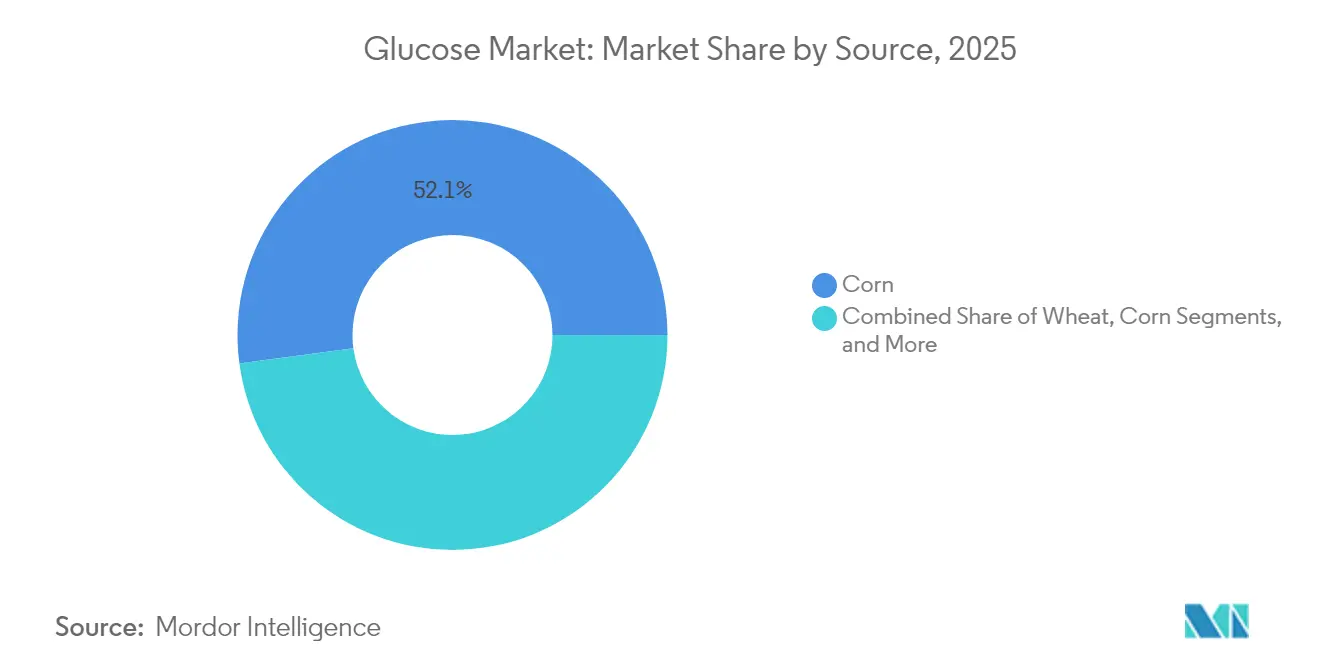
Corn Dominance Faces Wheat InnovationCorn-based glucose represented a 52.12% market share in 2025 and projected a 3.05% CAGR to 2031. Integrated U.S. wet-milling complexes give processors structural cost benefits, including rail access and ethanol coproduct credits. ADM alone grinds millions of bushels annually, reinforcing supply reliability that beverage and confectionery majors value. Yet climate-driven yield variability and biofuel policy swings inject volatility, motivating contingency strategies.
Wheat-derived glucose grows at 4.98% CAGR as European and Asian processors hedge against corn price risk and leverage regional grain surpluses. EU starch plants re-tool lines for dual-feed capability, ensuring continuity if Black Sea logistics tighten again. Potato and cassava occupy niche but profitable corners where allergen-free labeling or tropical agronomy offer localized advantage. Clean Sugar Technology highlights how feedstock choice can dovetail with carbon-reduction branding, positioning glucose producers for scope-3 audits demanded by global CPG buyers.



By Grade:
Food-Grade Stability Meets Pharmaceutical PremiumFood-grade streams delivered 60.54% of 2025 sales, underpinned by global GMP and Codex compliance that secures multi-country label acceptance. Mass-market drinks, canned fruit, and frozen desserts all continue to draw high-five-figure-tonne contracts underpinning baseline glucose market demand.
In contrast, pharmaceutical-grade volumes are smaller but fetch prices up to 60% higher. The glucose market size for injectable-class material is projected to climb from USD 2.43 billion in 2026 to USD 3.17 billion by 2031 on a 5.48% CAGR. Certification under ICH-Q7 and USP protocols raises production costs, yet investments such as Novo Nordisk’s North Carolina plant lock in multi-year off-take agreements. Technical-grade outputs aimed at fermentation nutrients or concrete admixtures round out portfolios, allowing plants to shift streams depending on margin signals.
By Form:
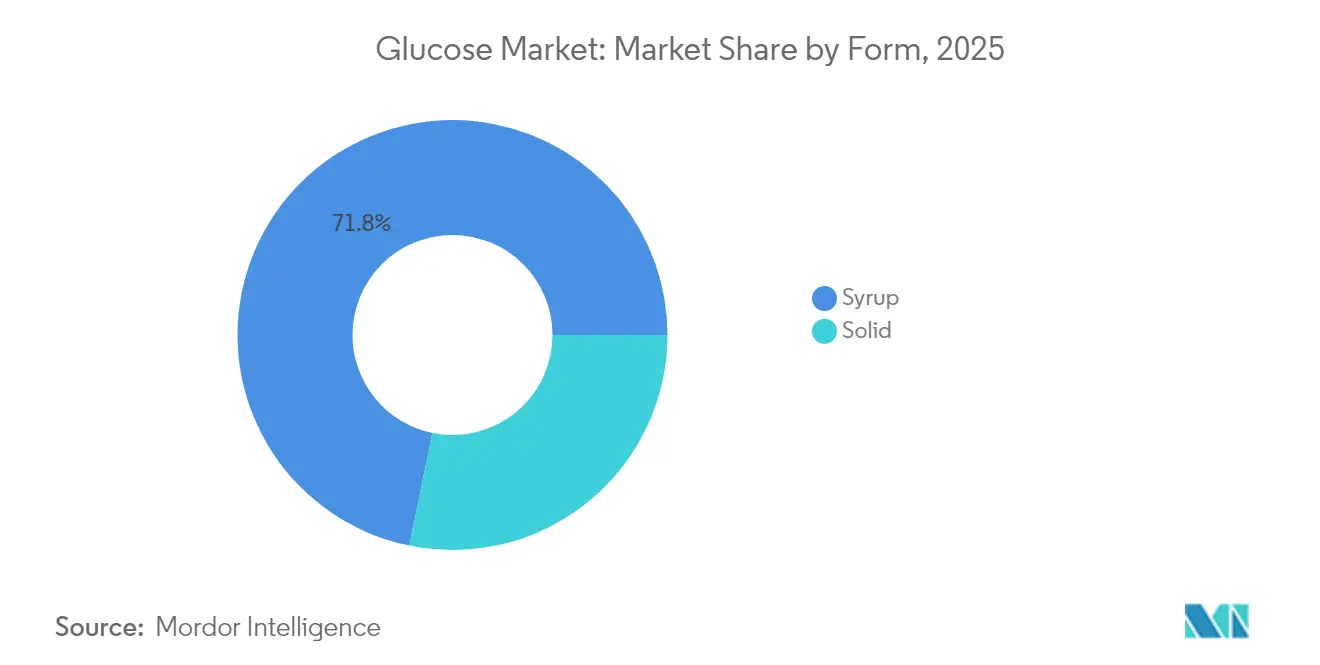
Syrup Leadership Challenged by Solid GrowthThe Syrup segment accounted 71.78% revenue share in 2025 owing to industrial pipelines built for liquid handling in beverage, bakery, and canning facilities. The glucose market benefits from syrup’s immediate miscibility, color-control attributes, and lower capital outlay versus crystallization. Automated dosage pumps and closed tanks also reduce microbial risks in continuous lines, a key in high-throughput snack plants.
Solid formats are estimated to register a 4.76% CAGR, attracting pharmaceutical, sports nutrition, and premium bakery users who prize precise gram dosing and extended shelf life. Pharmaceutical cleanrooms rely on crystalline glucose for injectable diluents, demanding microbial counts near zero. Energy-gel and supplement brands prefer agglomerated powders that dissolve rapidly yet resist caking in humid climates. Finer-mesh grades also enable 3D-printed food substrates, widening application innovation and pulling incremental volumes away from liquids.
By Application:
Food Dominance Faces Personal Care DisruptionFood and beverage kept 55.83% share in 2025, equivalent to USD 15.03 billion of the glucose market size, with a modest 2.92% forecast CAGR. Liquid syrups continue to anchor confectionery, breweries, and dairy mixers because sucrose substitution lowers crystallization risk. However, lower-sugar positioning among premium brands caps volume upside, nudging processors to court adjacent categories.
Personal care rises at a 5.26% CAGR as formulators leverage glucose as a humectant and fermentation substrate for skin microbiome products. Japanese and Korean beauty routines spotlight naturally sourced moisturizers, translating into double-digit growth for glucose esters in serums. Pharmaceutical use, already analyzed, accelerates further as injectables and oral rehydration solutions expand across emerging markets. Animal nutrition and bioplastic feedstock segments round out demand, each buffered from dietary sugar substitution cycles.
Geography Analysis
North America Glucose Market
North America held 37.68% market share in 2025 on the strength of an integrated corn belt, deep chemical processing expertise, and a robust pharmaceutical value chain. ADM, Cargill, and Ingredion concentrate starch-milling assets near Midwestern grain origination then ship syrups by rail to coastal bottlers. The region also hosts the largest cluster of GLP-1 drug facilities, guaranteeing steady draw for USP-grade glucose even when snack-food reformulation slows. Regulatory familiarity with FDA and USP codes lowers compliance friction, sustaining export competitiveness into Latin America.
APAC Glucose Market
Asia-Pacific records the fastest 4.98% CAGR to 2031 as China, India, and Southeast Asia urbanize. Expanded cold-chain and modern retail spur packaged-food penetration, while domestic starch processors scale to replace imports. Chinese mills integrate corn, wheat, and cassava to smooth feedstock costs, and local governments subsidize downstream candy exports that hinge on glucose inputs. Rising chronic disease incidence likewise fuels pharmaceutical-grade penetration, with multinationals building fill-finish sites inside the region to shorten supply lines.
EMEA and South America Glucose Market
Europe’s glucose market matures yet remains opportunity-rich in premium niches. Consumer aversion to artificial sweeteners channels demand toward grain-sourced syrups, while decarbonization policy amplifies interest in glucose-to-bioplastic ventures. Central European plants process both corn and wheat, mitigating Black Sea supply risks and keeping duty-free access within the Single Market. South America and Middle East & Africa stay emergent, but bakery and beverage investments in Brazil, Egypt, and Nigeria signal rising baseline demand once macro headwinds stabilize.

Regulatory Landscape
In the United States, glucose ingredients used in foods are governed through FDA food standards and additive provisions, alongside labeling and claims requirements. A compositional anchor for liquid glucose is the identity standard for glucose syrup, which specifies minimum solids (70%) and reducing sugars (20%) under 21 CFR. These specifications shape procurement requirements and quality testing for industrial syrup users. In February 2026, the FDA Human Foods Program also listed as a 2026 priority deliverable a proposed rule to require submission of GRAS notices for new substances claimed to be GRAS, increasing compliance burden for novel processing aids, enzymes, or new ingredient iterations used around glucose production and application.
In the European Union, glucose-containing foods and related additive systems must align with the EU food additives framework (including Regulation (EC) No 1333/2008 and updates assessed via EFSA processes), as well as Codex Alimentarius references used by many exporters for multi-market alignment. Commission Regulation (EU) 2026/196 updated usage conditions and specifications for several thickeners and stabilizers, with compliance dates linked to 18 August 2026. This affects reformulation and documentation timelines for finished products that frequently pair glucose syrups with hydrocolloids. Separately, Commission Implementing Regulation (EU) 2026/312 renewed approval of maltodextrin as a low-risk active substance, reinforcing regulatory continuity around glucose-derived carbohydrate materials in downstream applications.
Value Chain Analysis
The glucose value chain starts with starch-rich agricultural feedstocks (corn, wheat, potato, cassava) sourced from crop origination regions, then processed through wet milling and enzymatic or acid hydrolysis into syrups or crystalline products, followed by refinement to meet food-grade or higher pharmaceutical specifications. Large integrated processors such as ADM, Cargill, Ingredion, Roquette, Tate & Lyle, and Tereos help anchor global supply through multi-product complexes that co-produce starches and other carbohydrate derivatives, which supports resilience against margin swings tied to grain prices and energy costs.
Commercialization is weighted toward direct industrial sales to multinational food and beverage and pharmaceutical customers, supported by bulk liquid logistics (tanks, rail, and truck) for syrup and packaged formats for solids. Downstream users include bakery and confectionery, beverages, dairy and frozen desserts, pharmaceuticals (including excipients and IV solutions), personal care (humectants and fermentation substrates), and emerging fermentation or biomanufacturing routes. Key bottlenecks and risks cluster around feedstock volatility (weather and geopolitics), trade and customs friction that can shift sourcing toward regional supply, and the need for dual quality systems when serving both food-grade and pharma-grade demand, where GMP documentation and tighter microbial controls raise conversion costs and extend qualification cycles.
Competitive Landscape
The glucose market features moderate fragmentation, with multinational corporations competing against regional processors and emerging technology companies focused on sustainable production methods. Market concentration varies by geography and application. North America and Europe exhibit higher consolidation, dominated by major players like ADM, Cargill, and Ingredion. In contrast, the Asia-Pacific region remains more fragmented, with numerous local and regional processors serving domestic food industries. Pharmaceutical applications drive competitive intensity by creating premium pricing opportunities, attracting new entrants, and prompting capacity expansions from existing players.
The market demonstrates key strategic trends focused on vertical integration, sustainability initiatives, and application diversification as companies seek competitive advantages beyond cost leadership. Tate & Lyle's USD 1.8 billion acquisition of CP Kelco in November 2024 exemplifies this trend through consolidation that combines glucose production capabilities with specialty ingredients for comprehensive sweetening solutions. Companies such as Green Plains emphasize technological advancement, implementing Clean Sugar Technology to enhance production efficiency and achieve low-carbon glucose production.
White-space opportunities are emerging in pharmaceutical applications, bioplastics production, and personal care formulations, where glucose's natural origin and functional properties offer differentiation potential. Biotechnology companies are disrupting the market with fermentation-based production methods, while specialty processors are targeting niche applications with premium pricing structures. These developments underscore the evolving competitive landscape and the growing emphasis on innovation and sustainability within the glucose market.
Glucose Industry Leaders
Cargill, Incorporated.
Tereos S.A.
Wilmar International Limited
Louis Dreyfus Holding B.V.
Archer Daniels Midland Company
- *Disclaimer: Major Players sorted in no particular order
Glucose Market Companies Covered in this Report
- Archer Daniels Midland Company
- Cargill Incorporated
- Ingredion Incorporated
- Roquette Frères
- Tate and Lyle PLC
- Tereos SA
- Südzucker AG (AGRANA Group)
- Wilmar International Ltd
- Louis Dreyfus Company B.V.
- Grain Processing Corporation
- Bunge Ltd
- Global Bio-Chem Technology Group
- Corn Products China Co.
- Zhucheng Dongxiao Biotechnology
- Matsutani Chemical Co.
- Gulshan Polyols Ltd
- Avebe U.A.
- Shandong Fuyang Biotechnology
- Royal Cosun
- SSP Co. for Sugar and Integrated Ind.

Market Opportunities and Future Outlook
Capacity additions and asset repositioning in Asia are creating whitespace for suppliers that differentiate beyond commodity liquid glucose, especially in higher-spec grades and derivative positioning. In May 2026, Regaal Resources commissioned new liquid glucose (180 TPD) and maltodextrin powder (50 TPD) plants at its Kishanganj, Bihar site, while doubling maize crushing capacity to 1,650 TPD. This highlights how integrated regional processors are scaling to serve local food manufacturing and reduce logistics costs. In China, COFCO Biotech outlined a 2026 plan that includes a 550,000-ton/year starch sweetener project in Taicang and a proposed acquisition of a 100,000-ton/year tapioca starch plant in Thailand, pointing to both volume growth and feedstock diversification (corn to tapioca) to manage raw material risk.
A second opportunity band is the pull-through of glucose into industrial biomanufacturing and green chemistry value chains, where customers pay for verified process efficiency and lower-carbon attributes rather than sweetness alone. The Solugen and ADM biomanufacturing project in Minnesota (120 kilotonnes per year) shows industrial demand for dextrose as a fermentation input for low-carbon organic acids, and 2026 research advances in catalytic routes that co-produce gluconic acid and sorbitol from glucose suggest ongoing technology optionality for converting glucose into higher-value chemicals. For incumbent glucose producers, these shifts favor portfolios that combine stable food and beverage contracts with selectively upgraded quality systems for pharmaceutical excipients, alongside partnerships that support offtake into specialty chemicals and packaging-linked bio-based materials.
Recent Industry Developments in Glucose Market
- May 2026: Riddhi Siddhi Gluco Biols completed the acquisition of Cargill India’s corn wet milling facility in Davangere, Karnataka, including land, production infrastructure, warehouses, and corn silos. The deal expands Riddhi Siddhi’s starch and sweeteners footprint in India and reshapes regional supply options for glucose and related starch derivatives. It also signals continued portfolio optimization by multinational processors and a shift of operating assets toward local players with downstream growth focus.
- September 2025: Tereos partnered with Avantium and LVMH GAIA to accelerate industrial production of PEF (polyethylene furanoate), a renewable polymer used in packaging applications. The collaboration strengthens demand pathways for carbohydrate-based feedstocks and intermediates connected to starch and sweetener groups. It also reinforces the strategic linkage between glucose value chains and decarbonization-led materials innovation in Europe.
- November 2024: Tate & Lyle completed its USD 1.8 billion acquisition of CP Kelco, expanding its specialty ingredients platform across texture and formulation systems used alongside sweeteners. The combined portfolio supports bundled solutions for food and beverage customers seeking functionality and label-friendly reformulation. The transaction also heightened competitive pressure on glucose suppliers to pair sweetening with complementary ingredient systems and application support.


Glucose Market Report Scope and Research Methodology
Market Definition and Coverage
For this methodology, the glucose market covers commercial sales of glucose (often referred to as dextrose) supplied as syrup or solid ingredients for downstream use across food, pharma, personal care, animal feed, and similar end uses, measured on a value basis.
Scope exclusions: This sizing excludes blood glucose monitoring devices, diabetes testing consumables, and clinical glucose measurement services.
Segments Covered in This Report
- By Source
- Corn
- Wheat
- Potato
- Cassava
- Others
- By Form
- Syrup
- Solid
- By Grade
- Food-Grade
- Pharmaceutical-Grade
- Others
- By Application
- Food and Beverage
- Bakery and Confectionery
- Snacks and Cereals
- Beverages
- Dairy and Frozen Desserts
- Others Food and Beverages
- Pharmaceuticals
- Personal Care and Cosmetics
- Animal Feed
- Others
- Food and Beverage
- By Geography
- North America
- United States
- Canada
- Mexico
- Rest of North America
- Europe
- Germany
- United Kingdom
- Italy
- France
- Spain
- Netherlands
- Rest of Europe
- Asia-Pacific
- China
- India
- Japan
- Australia
- South Korea
- Rest of Asia-Pacific
- South America
- Brazil
- Argentina
- Rest of South America
- Middle East and Africa
- South Africa
- Saudi Arabia
- United Arab Emirates
- Rest of Middle East and Africa
- North America
Data Sources, Market Sizing, and Validation
Desk Research
Desk research helped us set the guardrails for what counts as glucose as an ingredient and where it is consumed in practice. We referenced public sources such as USDA supply and use tables, FAOSTAT agriculture and starch crop series, UN Comtrade trade flows for glucose and related sweeteners, and Eurostat food manufacturing indicators to understand production, trade, and demand direction. For pharma and food use context, we also reviewed sources such as FDA food ingredient and labeling references, EFSA publications, and peer reviewed articles that discuss dextrose functionality in formulations.
We then paired those signals with company filings, investor presentations, and trade association websites to map capacity additions and plant utilization commentary, and we used reputed press where it helped explain end use momentum. Where it supported consistency checks, we also used paid database subscriptions for company financials and intelligence, patent databases, and shipment-level import and export tracking. The sources listed here are illustrative, and many other public references were also used for data collection, validation, and clarification.
Primary Interviews and Surveys
Primary work focused on validating what portion of starch sweetener sales is actually marketed and priced as glucose, and how pricing moves by form and grade. We spoke with ingredient suppliers, distributors, and large end users, and then cross-checked themes across APAC, EMEA, and the Americas to test regional conversion factors and assumptions directly.
Distribution of primary research fieldwork respondents
| Company type | Respondent position | Region |
|---|---|---|
| Top tier: 34% | CXOs: 15% | APAC: 51% |
| Mid tier: 48% | Functional/Unit leaders: 38% | EMEA: 29% |
| Smaller Players: 18% | Managers: 47% | Americas: 20% |
Market-Sizing & Forecasting
Sizing was built using a top-down approach where production and trade data for glucose and close starch sweetener streams are reconstructed into an addressable demand pool by region, and then narrowed using conversion shares for syrup versus solid and for food versus pharma type demand. Since official statistics do not always separate glucose cleanly from nearby sweeteners, the model leans on practical split factors that were validated during interviews and then applied consistently.
To keep totals grounded, results were corroborated with selective bottom-up approximations such as sampled supplier revenues, channel checks on typical price bands, and volume times average selling price calculations for a few major consuming categories. Inputs that mattered most included starch feedstock availability (corn and wheat), import and export intensity for glucose syrup, food and beverage processing output, grade mix shifts between food-grade and pharmaceutical-grade, and regional price movement patterns linked to crop cycles and energy costs. Forecasts were developed using scenario analysis, where those drivers were stress-tested into base, conservative, and faster-growth paths, and then the final trajectory was aligned to what industry respondents considered achievable. When bottom-up checks had gaps for smaller countries, ratios from similar markets were used, followed by a final reconciliation to regional totals.
Data Validation & Update Cycle
Findings were validated through triangulation across independent signals, and any large variances were flagged for a second review before being accepted into the model. Checks included year over year swings in implied consumption, trade balance consistency, and whether price and volume combinations created unrealistic jumps for a given region.
Before sign-off, assumptions are reviewed in multiple steps, and callbacks are triggered when an input conflicts with interview feedback or newer public data releases. Reports are refreshed annually, and interim updates are made when material events occur such as major capacity additions, trade policy shifts, or sudden feedstock price shocks. Right before delivery, we complete a fresh pass so clients receive the latest updated view.
Mordor Intelligence's Glucose Market Estimate Compared With Other Published Estimates
Published glucose market numbers can look far apart, even when they talk about the same ingredient, because the market boundary is not always drawn the same way. Differences usually come from what gets counted as glucose versus adjacent starch sweeteners, which year is treated as the base, and how pricing is converted across regions.
The benchmark table shows a much smaller 2026 value than some other sources, and in Mordor Intelligence's model the scope is limited to glucose (dextrose) by source, form, grade, and application, rather than bundling the broader starch sweetener pool or counting downstream finished foods. When a study rolls glucose into wider sweetener categories, uses a different base year, or applies aggressive price escalation without checking crop-linked price cycles, the resulting value can move sharply upward.
Benchmark comparison
| Source | Market Size | Gaps in Research Methodology |
|---|---|---|
| Mordor Intelligence | USD 27.88 B (2026) | |
| Global Consultancy A | USD 52.13 B (2024) | Uses a wider definition that appears to include broader glucose-related categories and end-user groupings, and the base year is different, which makes direct comparison to a 2026 ingredient-only scope difficult. |
| Industry Research Publisher B | USD 98.52 B (2023) | Sizes a much broader market that can fold in additional sweeteners and wider application accounting, and it is anchored to an earlier base year with a different price and volume structure. |
Taken together, the spread is mainly explained by scope expansion and base-year choice, followed by how prices are carried forward across regions. By tying the model to observable production and trade signals, and then pressure-testing splits and price bands with industry respondents, our estimate stays traceable to clear assumptions that can be repeated and audited.


Key Questions Answered in the Report
What is the current value of the glucose market?
The glucose market is valued at USD 27.88 billion in 2026 and is projected to reach USD 33.26 billion by 2031.
Which glucose source accounts for the largest revenue share?
Corn-based glucose leads with 52.12% of 2025 revenue, supported by mature processing infrastructure in North America.
Which source is growing fastest?
Wheat-derived glucose is forecast to expand at a 4.98% CAGR between 2026 and 2031 due to diversification and regional crop availability.
How dominant is syrup compared with solid glucose?
Syrup captured 71.78% of 2025 sales, while solid formats are expected to grow at a 4.76% CAGR as pharmaceutical and sports nutrition demand rises.
Page last updated on:


 Your data is secure and never sold or shared.


