
Seaweed Market Size and Share
Market Overview
| Study Period | 2021 - 2031 |
|---|---|
| Market Size (2026) | USD 19.92 Billion |
| Market Size (2031) | USD 29.62 Billion |
| Growth Rate (2026 - 2031) | 8.26 % |
| Fastest Growing Market | North America |
| Largest Market | Asia-Pacific |
| Market Concentration | Low |
Major Players
*Disclaimer: Major Players sorted in no particular order Image © Mordor Intelligence. Reuse requires attribution under CC BY 4.0. |
|
Seaweed Market Analysis by Mordor Intelligence
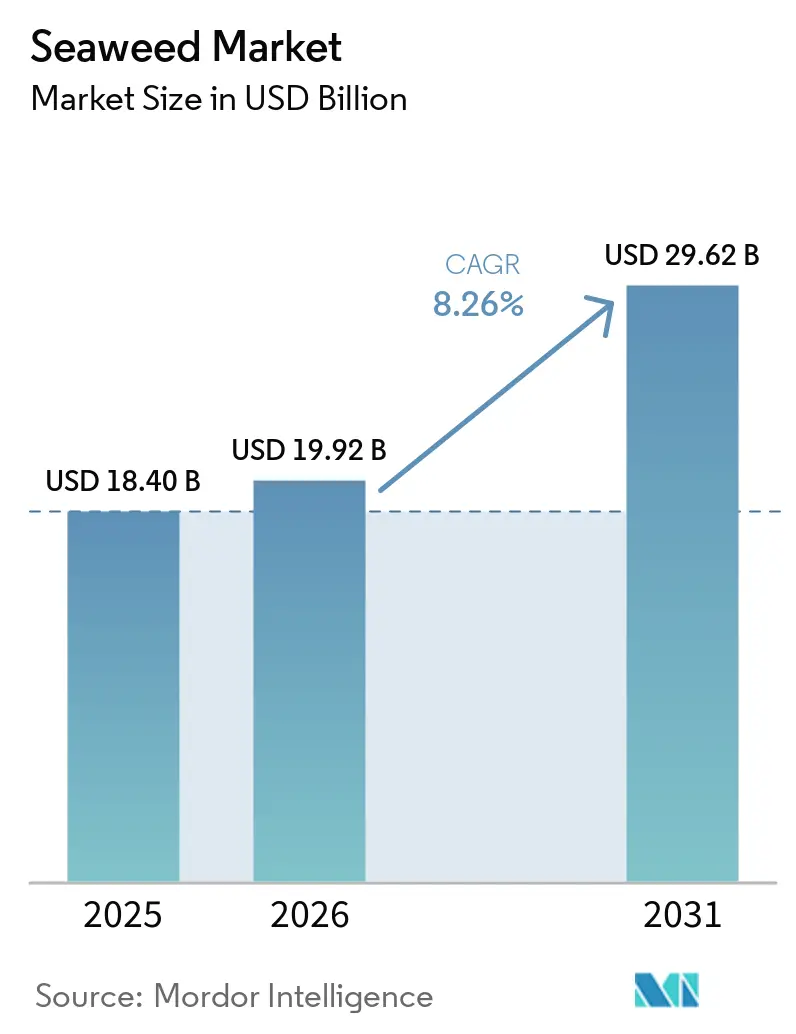
The global seaweed market size is expected to grow from USD 18.4 billion in 2025 to USD 19.92 billion in 2026, and is forecast to reach USD 29.62 billion by 2031, at an 8.26% CAGR over 2026-2031. The global seaweed market is undergoing a transformation from a traditional commodity to a strategic input across key industries such as food manufacturing, pharmaceuticals, agriculture, and personal care. This growth is propelled by increasing consumer preference for natural ingredients, regulatory incentives promoting sustainable alternatives, and the expanding industrial adoption of seaweed-based solutions. Established cultivation regions are leveraging their expertise to develop competitive export networks, while emerging markets are investing in infrastructure and wellness-focused retail channels to capitalize on growing demand. Additionally, seaweed's contribution to climate-resilient agriculture and sustainable supply chains is reinforcing its strategic importance. Innovations like biological stimulants (biostimulants) are providing effective substitutes for synthetic inputs. The fragmented competitive landscape continues to drive innovation while maintaining market volatility, solidifying seaweed's position as a critical component of the global market.
Key Report Takeaways
- By type, red seaweed led the global seaweed market with a share of 46.80% in 2025, while brown seaweed is anticipated to register the fastest CAGR of 9.46% during 2026-2031.
- By form, powder retained 52.30% share in 2025, whereas liquid is forecast to expand at a 10.08% CAGR through 2031.
- By application, food and beverages held 56.45% of 2025 revenue, but animal feed and pet food are expected to grow fastest at 9.74% through 2031.
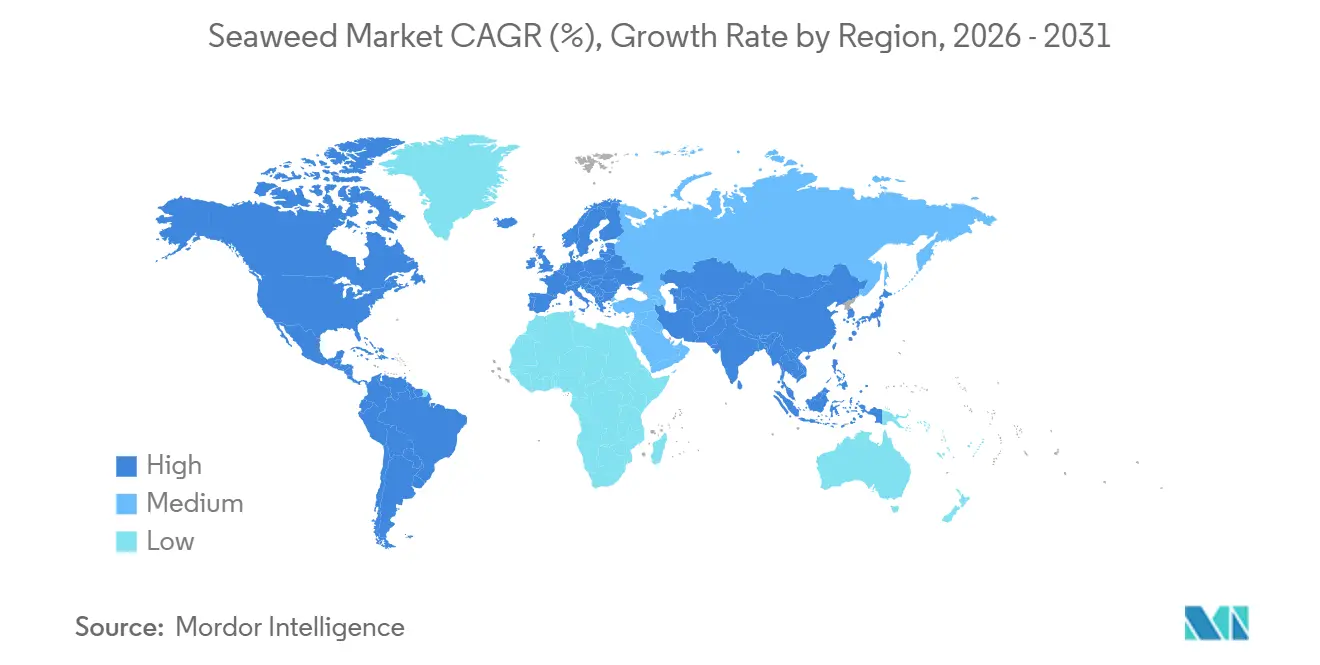
- By geography, Asia-Pacific led the seaweed market with a share of 39.21% in 2025, while North America is anticipated to register the fastest CAGR of 10.32% during 2026-2031.
Note: Market size and forecast figures in this report are generated using Mordor Intelligence’s proprietary estimation framework, updated with the latest available data and insights as of January 2026.
Market Trends and Insights
Drivers Impact Table of Seaweed Market*
| Driver | (~) % Impact on CAGR Forecast | Geographic Relevance | Impact Timeline |
|---|---|---|---|
| Expanding demand for plant-based and sustainable ingredients | +2.1% | Global, with concentrated pull from North America, European Union, and East Asia | Medium term (2–4 years) |
| Growing consumer preference for natural and clean-label products | +1.5% | North America and European Union, spill-over to urban Asia-Pacific | Medium term (2–4 years) |
| Increasing adoption of seaweed in dietary supplements and functional nutrition | +1.2% | Asia-Pacific core, North America, European Union (Novel Food pathways) | Short term (≤ 2 years) |
| Growing use of seaweed in animal feed to improve productivity and sustainability | +0.9% | Global, with early gains in North America, Northern Europe, and Australia | Medium term (2–4 years) |
| Rising demand for marine-based ingredients in cosmetics and personal care | +0.8% | North America, Western Europe, and urban East Asia | Short term (≤ 2 years) |
| Increasing commercialization of seaweed-based biostimulants and biofertilizers | +0.9% | European Union, North America, Brazil; spill-over to Southeast Asia and Middle East and Africa | Long term (≥ 4 years) |
| Source: Mordor Intelligence | |||
Expanding demand for plant-based and sustainable ingredients
Originally a staple in Asian cuisines, the global seaweed market has now established itself as a critical component in sustainability-driven and plant-based innovation strategies. Beyond its traditional culinary applications, seaweed has become an essential input across multiple industries, including food production, agriculture, pharmaceuticals, and personal care. Its distinctive characteristics as a net-positive resource, requiring no freshwater or synthetic fertilizers while actively sequestering carbon dioxide, have elevated its importance from a sustainability perspective to a strategic procurement priority. Companies aiming to develop clean-label reformulations and climate-aligned supply chains are increasingly incorporating seaweed into their operations. Extracts such as carrageenan, alginate, and agar have gained widespread adoption as natural stabilizers in plant-based dairy products, meat alternatives, and processed foods, aligning with the growing consumer demand for transparent and recognizable ingredients. Furthermore, regulatory frameworks, particularly in Europe, such as the European Commission’s Farm-to-Fork strategy, are driving institutional adoption, ensuring that the growth in demand is structural and not merely cyclical[1]Source: European Commission, "Farm to Fork Strategy," food.ec.europa.eu . With productivity levels significantly surpassing those of terrestrial protein crops, seaweed is transitioning from a niche ingredient to a scalable solution for achieving food system decarbonization and enhancing long-term resilience.
Growing consumer preference for natural and clean-label products
The global seaweed market is being driven by a strong shift toward natural and clean-label products, as consumers increasingly reject synthetic stabilizers and preservatives in favor of traceable, certified alternatives. Seaweed-derived hydrocolloids such as carrageenan, alginate, and agar are now central to reformulations in plant-based dairy, meat substitutes, and processed foods, aligning with demand for recognizable ingredients. In 2025, Cargill expanded its WavePure range, offering native texturizing seaweed solutions specifically designed for plant-based dairy and clean-label formulations across North America and Europe, directly operationalizing this trend at scale for large food manufacturers. Beyond food, sea moss has gained traction in nutraceuticals, particularly in immunity and gut-health supplements, broadening seaweed’s relevance into premium wellness categories. Accelerated by social media, direct-to-consumer brands, and science-backed positioning, adoption cycles for new seaweed formats have shortened significantly, reshaping supply chains and creating structural demand that benefits cultivators, processors, and innovators across the ecosystem.
Growing use of seaweed in animal feed to improve productivity and sustainability
Propelled by its growing application in animal feed, the global seaweed market is experiencing significant growth. Beyond providing basic nutrition, seaweed delivers functional bioactivity that drives both productivity improvements and sustainability advancements. Bioactive compounds derived from seaweed enhance gut health, optimize feed efficiency, and strengthen the immune systems of livestock. Specifically, species such as 'Asparagopsis taxiformis' have demonstrated exceptional effectiveness in reducing methane emissions, representing a critical breakthrough aligned with global climate change mitigation objectives. A comprehensive peer-reviewed meta-analysis published in the 'Journal of Advanced Veterinary Research' (October 2025) highlighted the advantages of supplementing livestock feed with 'Kappaphycus alvarezii' and 'Chondrus crispus'[2]Source: Journal of Advanced Veterinary Research, "Seaweed a sustainable and functional broiler feed additive," advetresearch.com. This supplementation not only improved broiler growth performance and feed efficiency but also enhanced microbiome diversity and immune response. Breed-specific benefits were particularly evident in the Ross 308 and Arbor Acres broiler chicken lines. This dual impact of productivity enhancement and methane emission reduction positions seaweed as a high-value input in precision livestock nutrition. Furthermore, government-supported initiatives and large-scale commercial projects are reinforcing seaweed's strategic importance in transforming agricultural practices and advancing sustainability objectives.
Increasing commercialization of seaweed-based biostimulants and biofertilizers
The commercialization of seaweed-based biostimulants and biofertilizers is driving growth in the global seaweed market. These products are increasingly recognized as sustainable and environmentally friendly alternatives to synthetic agricultural inputs. Scientific research has demonstrated their ability to enhance photosynthesis, improve nutrient absorption, and promote root development, while also increasing crop resilience under stress conditions. A review published in *Frontiers in Soil Science* in April 2025 highlighted that approximately 59 seaweed species deliver superior crop yield improvements compared to artificial fertilizers[3]Source: Frontiers, "Seaweed-derived plant boosters: revolutionizing sustainable farming and soil health," frontiersin.org. Their proven efficacy across key crops such as rice, tomatoes, brinjal (eggplant), and barley reinforces their agronomic credibility. Leading corporations are capitalizing on this trend, as evidenced by BASF's agreement with Acadian Plant Health to distribute biostimulants derived from *Ascophyllum nodosum*. Furthermore, stricter regulations on synthetic pesticides and policy commitments under the European Union’s Farm-to-Fork strategy are accelerating the adoption of seaweed biostimulants. This combination of scientific validation, corporate investment, and regulatory support positions seaweed-based biostimulants as a strategically significant growth driver within the broader seaweed market.
Restraints Impact Analysis of Seaweed Market*
| Restraint | (~) % Impact on CAGR Forecast | Geographic Relevance | Impact Timeline |
|---|---|---|---|
| High dependence on climatic and oceanic conditions affecting raw material supply | -1.2% | Southeast Asia (Indonesia, Philippines), South Atlantic production zones | Medium term (2–4 years) |
| Limited consumer awareness outside traditional consumption market | -0.7% | Middle East and Africa, Latin America, Central and Eastern Europe | Short term (≤ 2 years) |
| Heavy metal and contaminant concerns affecting consumer confidence | -0.6% | European Union, North America, and export-driven Asia-Pacific processors | Short term (≤ 2 years) |
| Regulatory complexity across food, supplement, feed, and cosmetic applications | -0.6% | Global, most acute in North America and emerging markets without harmonized frameworks | Long term (≥ 4 years) |
| Source: Mordor Intelligence | |||
High dependence on climatic and oceanic conditions affecting raw material supply
Climatic and oceanic conditions, critical to the global seaweed market, are causing substantial disruptions. These conditions directly impact the supply of raw materials and the feasibility of seaweed cultivation. Key production regions have already experienced setbacks, with declining seedstock quality and increasing sea-surface temperatures disrupting output. This underscores the susceptibility of traditional farming systems to the effects of climate change. Research indicates that shifting climate patterns will not only challenge existing operations but also constrain the availability of suitable locations for new farms. As a result, operators are incorporating climate modeling into farm design from the initial stages to mitigate risks. Consequently, cultivation practices are transitioning toward inland recirculating aquaculture systems (RAS) and offshore deepwater platforms. However, these alternatives require significant capital investment, leading to higher baseline costs. This cost escalation is compressing profit margins for processors and formulators, particularly in price-sensitive market applications. To address these challenges, supply chain stakeholders are diversifying geographically by investing in cooler-water regions and advanced biorefineries. These strategic investments reflect a structural adaptation aimed at ensuring long-term supply stability in the face of evolving environmental conditions.
Heavy metal and contaminant concerns affecting consumer confidence
Concerns regarding heavy metal and contaminant accumulation, particularly in Brown seaweed species, are impacting the global seaweed market. These species inherently absorb elements such as arsenic, cadmium, lead, and nickel from marine ecosystems. Laboratory research demonstrates that contamination levels vary considerably depending on the species, harvesting location, and seasonal conditions, creating uncertainty for both processors and end consumers. Regulatory frameworks are becoming increasingly stringent. For example, the European Commission (EC) has implemented specific limits on nickel, cadmium, and lead in seaweed-based food products and dietary supplements. This regulatory shift has accelerated the transition from wild harvesting to certified aquaculture practices. However, this transition presents challenges, including higher entry barriers for smaller producers and a clear differentiation between traceable, cultivated products and bulk wild-harvested supply. Additionally, regulatory inconsistencies between the European Union and the United States further complicate the market landscape. While the European Union has established contaminant limits, the United States federal government has yet to define such standards. This regulatory disparity introduces potential liability and market-access risks for businesses operating across both regions. Collectively, these dynamics emphasize the growing influence of contaminant concerns on the seaweed industry's supply chains, consumer confidence, and competitive positioning.
*Our forecasts treat driver/restraint impacts as directional, not additive. The impact forecasts reflect baseline growth, mix effects, and variable interactions.
Seaweed Market Segment Analysis
By Type:
Red Seaweed Leads While Brown Species Accelerate Across High-Value ChannelsIn 2025, red seaweed accounted for a significant 46.80% share of the global seaweed market revenue. Its market dominance is attributed to its role as the primary source of carrageenan and agar, which are essential components in the food, pharmaceutical, and microbiological industries. While this established position ensures structural stability, future growth opportunities for red seaweed are increasingly linked to innovations in health-oriented products. For example, cultivated dulse (Palmaria palmata), recognized for its prebiotic gut-health benefits, has garnered attention from nutraceutical (nutrition and pharmaceutical) manufacturers. This development highlights red seaweed's strategic shift, diversifying beyond its traditional reliance on hydrocolloids while maintaining its leadership position in the market.
Brown seaweed is emerging as the fastest-growing segment, with a projected CAGR of 9.46% during the forecast period of 2026 to 2031. This growth trajectory is driven by its diversified demand across multiple high-value industries: alginates are utilized for their textural properties in food and pharmaceutical applications, fucoidan is increasingly used in immune-health and anti-aging supplements, and extracts from Ascophyllum nodosum are gaining prominence as biostimulants in sustainable agricultural practices. Unlike red seaweed, which has traditionally depended on single-application markets, brown seaweed's broad applicability positions it as a dynamic growth driver with strategic importance across the food, wellness, and agricultural industries.
By Form:
Powder Anchors Volumes as Liquid Extracts Expand Across Biostimulant and Nutraceutical ChannelsIn 2025, powder dominated the global seaweed market, accounting for 52.30% of the revenue share. Its dominance is supported by practical advantages such as extended shelf stability, precise dosing capabilities, compatibility with encapsulation technologies, and cost-efficient logistics. These characteristics position powder as the preferred format for industrial-scale applications, particularly in the food and beverage sector, where dried biomass is processed into carrageenan, agar, and alginate. Due to its established role in hydrocolloid production, powder is expected to maintain its leadership in terms of volume. Meanwhile, flakes continue to cater to niche applications in specialty and traditional foods, sustaining consistent demand in Asian-origin consumer packaged goods, especially as these products expand into Western markets.
Conversely, the liquid segment is anticipated to be the fastest-growing category, with a CAGR of 10.08% projected from 2026 to 2031. This growth is driven by two key demand factors: agricultural biostimulants and premium nutritional supplements. In the agricultural sector, liquid extracts are preferred for foliar and soil applications due to their ease of use. Concurrently, in consumer markets, they align with the increasing demand for fast-acting, easily absorbed functional beverages and supplement drops. Innovations backed by investors, such as Aqua Theon's marine-based drinks, highlight the commercial potential of liquid formats. This combination of widespread adoption in agriculture and strong consumer appeal positions liquid seaweed extracts as a dynamic growth driver, expected to surpass both powder and flakes during the forecast period.
By Application:
Food and Beverages Anchors Revenue as Animal Feed and Specialty Uses Gain Strategic WeightIn 2025, the food and beverages sector dominated the global seaweed market, capturing a significant 56.45% share of the revenue. This sustained leadership is attributed to the global food manufacturing industry's extensive use of carrageenan, agar, and alginate as natural stabilizers and texture modifiers. The growing momentum of the clean-label movement further strengthens this position. Plant-based dairy alternatives, such as oat milk, almond milk, and vegan cheese, are increasingly incorporating native seaweed texturizers as replacements for chemically modified stabilizers. Concurrently, dietary supplements are experiencing heightened demand, particularly in Asian markets, driven by the popularity of fucoidan-rich brown seaweed extracts. Additionally, the pharmaceuticals and cosmetics industries are steadily expanding, supported by substantial institutional investments in seaweed-infused skincare products. Collectively, these factors reinforce the critical role of the Food and Beverages sector in maintaining seaweed's commercial significance.
The animal feed and pet food sector is anticipated to be the fastest-growing application segment, with a CAGR of 9.74% forecasted for the period from 2026 to 2031. This growth is propelled by two key drivers: firstly, the use of seaweed polysaccharides and minerals to enhance feed conversion ratios, thereby improving productivity; and secondly, the application of species such as Asparagopsis to mitigate methane emissions in livestock, addressing climate compliance requirements. This dual functionality positions seaweed as both a performance enhancer and a sustainability solution, aligning with regulatory frameworks in regions such as the European Union (EU), Australia, and New Zealand. Beyond its role in feed, specialized applications such as biofertilizers and bioplastics are attracting significant investment. For instance, initiatives like Origin by Ocean’s kelp biorefinery in Finland exemplify long-term diversification strategies. These developments highlight the evolving strategic importance of the Animal Feed and Pet Food sector, along with specialty applications, in driving seaweed's relevance across agriculture and sustainability-focused industries.
Geography Analysis
APAC Seaweed Market
In 2025, the Asia-Pacific region dominated the global market, accounting for 39.21% of global revenue. This dominance is bolstered by China's extensive cultivation and processing infrastructure, Japan's ingrained consumer culture for seaweed spanning food, health, and cosmetics, and South Korea's burgeoning export industry for gim. Japan's stringent regulatory frameworks, prioritizing traceability and ecosystem protection, are increasingly recognized as quality benchmarks in export markets. Meanwhile, South Korea is pioneering controlled land-based aquaculture, aiming to lessen its dependence on oceanic conditions. In Southeast Asia, producers from Indonesia, the Philippines, and Vietnam grapple with climate-induced yield challenges. Notably, Indonesia's dwindling output has spurred investments in downstream processing hubs to fortify its value chains.
The Americas Seaweed Market
North America is emerging as the region with the most rapid growth, with projections indicating a robust 10.32% CAGR from 2026 to 2031. This surge is attributed to a structural transformation, underscored by the establishment of new processing infrastructures, scientifically backed ingredient marketing, and conducive trade conditions. In Canada, Cascadia Seaweed is making strides with its vertically integrated capacity. Simultaneously, the United States market is witnessing a surge in clean-label food ingredients and wellness retail channels, with sea moss and kelp supplements becoming increasingly popular. The elimination of tariffs on seasoned seaweed products from Korea further bolsters this retail growth. South America, spearheaded by Chile and Brazil, stands out as both a production powerhouse and a demand center. Notably, Brazil's regulatory green lights are easing the path for seaweed in food applications.
EMEA Seaweed Market
While Europe may not be the quickest to grow, its regulatory clout is undeniable. The EU's contaminant frameworks are setting the gold standard for global market access. The European Commission's ambitious goal of ramping up seaweed production to 8 million tonnes by 2030 is catalyzing investments in Ireland, France, Norway, and Finland. These regions, with their cooler waters, promise cleaner profiles. A testament to this industrial-scale innovation is Origin by Ocean's kelp biorefinery in Finland. Meanwhile, the Middle East and Africa are still in their infancy. However, Morocco and South Africa are laying the groundwork with early-stage farming, and nations in the Gulf are delving into seaweed's potential for food security and biofertilizers.


Competitive Landscape
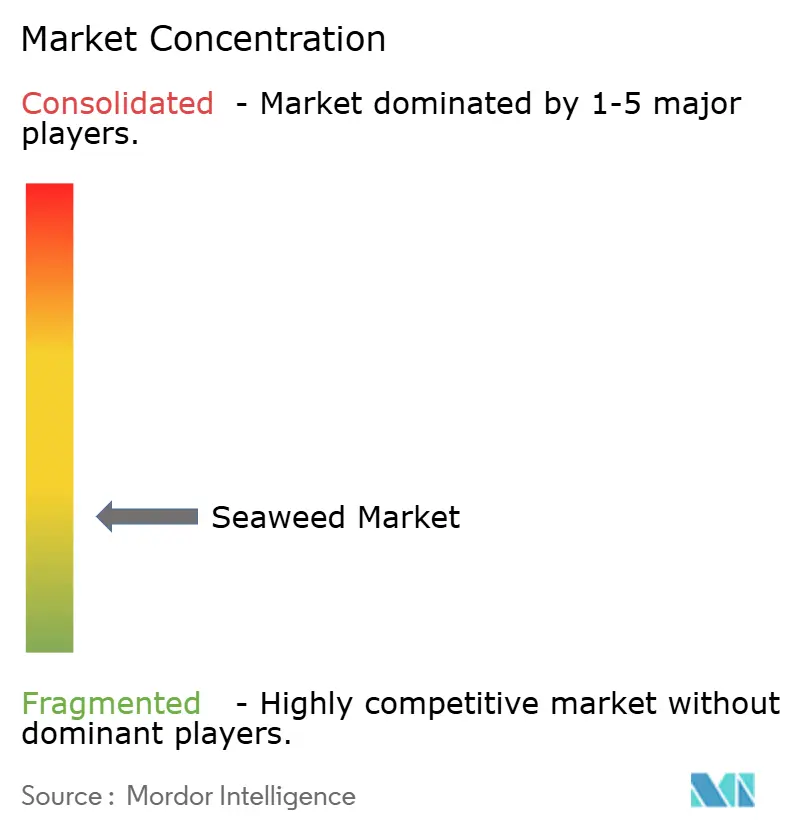
The global seaweed market is fragmented, led by market players such as Acadian Seaplants, Cargill, International Flavors & Fragrances (IFF), and Qingdao Bright Moon Seaweed Group, which anchor the market, utilizing proprietary extraction technologies and established hydrocolloid supply chains. Meanwhile, regional players such as Gelymar in South America, KIMICA in Japan, and Groupe Roullier in Europe bolster their standings by tapping into regulatory expertise and certified supply chains. Innovators like BioAtlantis and Ocean Rainforest are also making significant advancements, focusing on traceable cultivation and premium applications.
New entrants are disrupting the competitive landscape with innovations such as offshore wind co-location, land-based recirculating aquaculture systems, and artificial intelligence (AI)-driven quality grading. A notable example is the collaboration between Simply Blue Group and Arctic Seaweed, which demonstrates the potential of offshore wind integration to reduce production costs in Europe. Concurrently, there is a clear trend of consolidation in consumer-facing segments. This is exemplified by Samchully Group’s acquisition of Sung Gyung Food and Korea’s K-Gim Supply Chain Innovation program, both of which aim to enhance the presence of branded seaweed products in global retail markets. Despite the market's fragmentation, established players are defending their positions by leveraging patents and long-term supply agreements to maintain a technical advantage.
Europe and Asia play pivotal roles in shaping the market's competitive dynamics. European firms are effectively navigating regulatory frameworks to gain a competitive edge, while their Asian counterparts are focusing on scaling branded products to maximize export premiums. Ultimately, the market's competitive strength is defined not merely by scale, but by technological innovation, regulatory compliance, and alignment with premium and sustainability-driven consumer demands.
Seaweed Industry Leaders
-
Cargill Incorporated
-
Tate & Lyle Public Limited Company
-
International Flavors & Fragrances (IFF)
-
Gelymar S.A.
-
Acadian Seaplants Limited
- *Disclaimer: Major Players sorted in no particular order
Seaweed Market Companies Covered in this Report
- Acadian Seaplants Limited
- Cargill Incorporated
- Tate & Lyle Public Limited Company
- International Flavors & Fragrances (IFF)
- KIMICA Corporation
- Gelymar S.A.
- Qingdao Bright Moon Seaweed Group Co., Ltd.
- W Hydrocolloids, Inc.
- TBK Manufacturing Corporation
- Gather Great Ocean Group (GGO)
- FMC Corporation
- Ocean Rainforest
- Groupe Roullier
- Seasol International Pty Ltd.
- BioAtlantis Ltd.
- Irish Seaweeds Group Ltd.
- Mara Seaweed
- Maine Coast Sea Vegetables, Inc.
- Leili Group Co., Ltd.
- Ceamsa

Recent Industry Developments in Seaweed Market
- June 2026: Pulmuone established Korea's first land-based seaweed (gim) farming research and development center at the Saemangeum National Industrial Complex in North Jeolla Province. This initiative aimed to secure advanced seaweed production technology. The project was pursued in alignment with the Ministry of Oceans and Fisheries' national initiative on "developing sustainable, high-quality seaweed seed production and land-based farming technology."
- May 2026: Origin by Ocean constructed its first industrial-scale biorefinery in Kokkola, Finland. The facility processed invasive Sargassum seaweed into premium ingredients for global markets, including cosmetics, personal care, food, nutraceuticals, and other specialty applications. To support this initiative, the European Investment Bank had evaluated a proposed participation of EUR 30 million, contributing to a larger EUR 65 million blended finance round.
- June 2026: Cascadia Seaweed opened a state-of-the-art seaweed processing facility in Port Edward, British Columbia. This milestone highlighted the company's progression into a vertically integrated seaweed production and biomanufacturing business. The facility enabled the large-scale production of natural liquid kelp extracts for agricultural markets across North America. Additionally, it marked the completion of a multi-year development of Cascadia Seaweed's Northern Hub.


Global Seaweed Market Report Scope
Seaweed is a collective term for diverse species of marine algae that grow in oceans, seas, and other aquatic environments. Unlike land plants, seaweeds lack roots, stems, and leaves, but they perform photosynthesis through specialized tissues and thrive by absorbing nutrients directly from surrounding water.
The seaweed market is segmented by type, form, application, and geography. By type, the market is segmented by red seaweed, brown seaweed, and green seaweed. By form, the market is segmented by powder, flakes, and liquid. By application, the market is segmented by food and beverages, dietary supplements, pharmaceuticals, cosmetics and personal care, animal feed and pet food, and others. By geography, the market is segmented by North America, Europe, Asia-Pacific, South America, and Middle East and Africa. The market forecasts are provided in terms of value (USD).
| Red Seaweed |
| Brown Seaweed |
| Green Seaweed |
| Powder |
| Flakes |
| Liquid |
| Food and Beverages |
| Dietary Supplements |
| Pharmaceuticals |
| Cosmetics and Personal Care |
| Animal Feed and Pet Food |
| Others |
| North America | United States |
| Canada | |
| Mexico | |
| Rest of North America | |
| Europe | Germany |
| United Kingdom | |
| Italy | |
| France | |
| Spain | |
| Netherlands | |
| Poland | |
| Belgium | |
| Sweden | |
| Rest of Europe | |
| Asia-Pacific | China |
| India | |
| Japan | |
| Australia | |
| Indonesia | |
| South Korea | |
| Thailand | |
| Singapore | |
| Rest of Asia-Pacific | |
| South America | Brazil |
| Argentina | |
| Colombia | |
| Chile | |
| Peru | |
| Rest of South America | |
| Middle East and Africa | South Africa |
| Saudi Arabia | |
| United Arab Emirates | |
| Nigeria | |
| Egypt | |
| Morocco | |
| Turkey | |
| Rest of Middle East and Africa |
| By Type | Red Seaweed | |
| Brown Seaweed | ||
| Green Seaweed | ||
| By Form | Powder | |
| Flakes | ||
| Liquid | ||
| By Application | Food and Beverages | |
| Dietary Supplements | ||
| Pharmaceuticals | ||
| Cosmetics and Personal Care | ||
| Animal Feed and Pet Food | ||
| Others | ||
| By Geography | North America | United States |
| Canada | ||
| Mexico | ||
| Rest of North America | ||
| Europe | Germany | |
| United Kingdom | ||
| Italy | ||
| France | ||
| Spain | ||
| Netherlands | ||
| Poland | ||
| Belgium | ||
| Sweden | ||
| Rest of Europe | ||
| Asia-Pacific | China | |
| India | ||
| Japan | ||
| Australia | ||
| Indonesia | ||
| South Korea | ||
| Thailand | ||
| Singapore | ||
| Rest of Asia-Pacific | ||
| South America | Brazil | |
| Argentina | ||
| Colombia | ||
| Chile | ||
| Peru | ||
| Rest of South America | ||
| Middle East and Africa | South Africa | |
| Saudi Arabia | ||
| United Arab Emirates | ||
| Nigeria | ||
| Egypt | ||
| Morocco | ||
| Turkey | ||
| Rest of Middle East and Africa | ||


Key Questions Answered in the Report
What is the size of the global seaweed market?
The global seaweed market was valued at USD 18.4 billion in 2025 and is projected to reach USD 29.62 billion by 2031, growing at a CAGR of 8.26% (2026–2031).
Which type of seaweed dominates the market?
Red seaweed led with 46.80% share in 2025, while brown seaweed is the fastest-growing at 9.46% CAGR (2026–2031).
What is the leading form of seaweed?
Powder held 52.30% share in 2025, while liquid extracts are growing fastest at 10.08% CAGR (2026–2031).
Which application segment contributes the most revenue?
Food and beverages led with 56.45% share in 2025, while animal feed and pet food is expanding fastest at 9.74% CAGR (2026–2031).
Which region leads the global seaweed market?
Asia-Pacific held 39.21% share in 2025, while North America is the fastest-growing at 10.32% CAGR (2026–2031).
Page last updated on:





