
Milk Thistle Market Size and Share
Market Overview
| Study Period | 2021 - 2031 |
|---|---|
| Market Size (2026) | USD 136.06 Million |
| Market Size (2031) | USD 205.46 Million |
| Growth Rate (2026 - 2031) | 8.59 % |
| Fastest Growing Market | Asia Pacific |
| Largest Market | Europe |
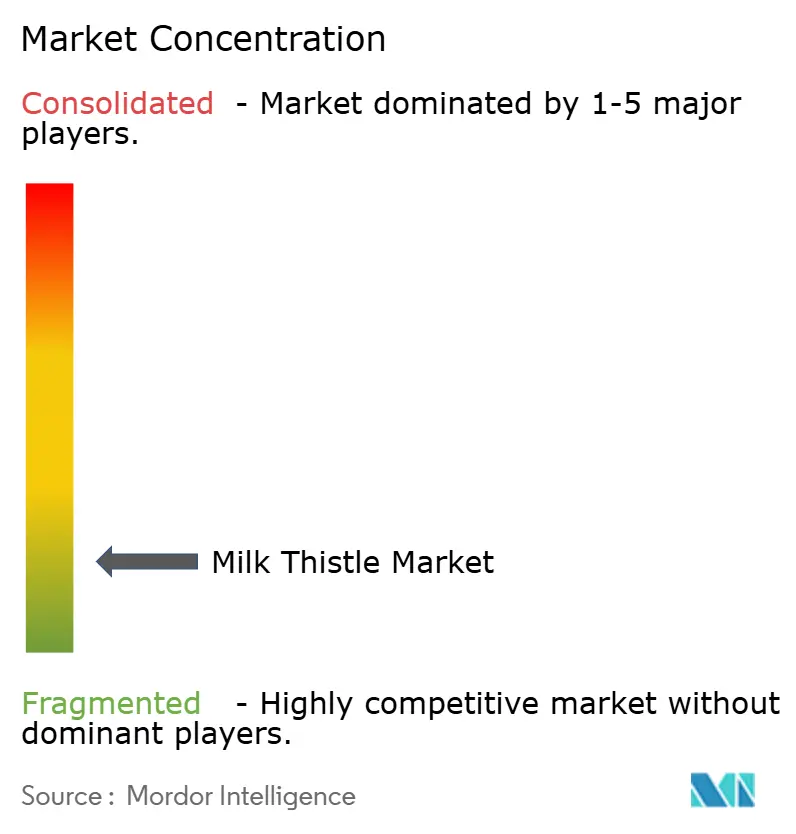
| Market Concentration | Low |
Major Players
*Disclaimer: Major Players sorted in no particular order Image © Mordor Intelligence. Reuse requires attribution under CC BY 4.0. |
|
Milk Thistle Market Analysis by Mordor Intelligence
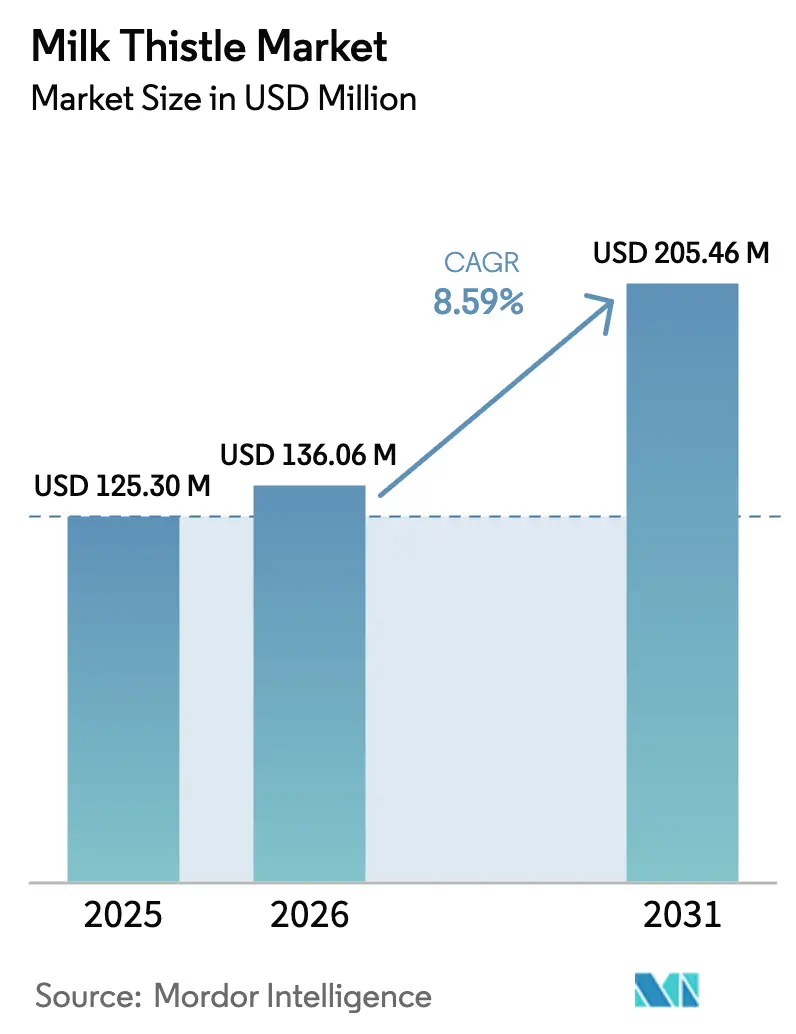
The milk thistle market size was valued at USD 125.30 million in 2025 and estimated to grow from USD 136.06 million in 2026 to reach USD 205.46 million by 2031, at a CAGR of 8.59% during the forecast period (2026-2031). The global milk thistle market is expanding due to its effectiveness in treating liver and biliary disorders. Its primary component, silymarin, protects liver and kidney cells from drug-induced damage, particularly during chemotherapy. Clinical studies demonstrate milk thistle's ability to reduce liver enzyme levels and provide anti-inflammatory benefits through T-cell modulation. The supplement's safety profile, characterized by minimal side effects such as gastrointestinal discomfort and mild laxative effects, enhances its appeal among health-conscious consumers. The cosmetic industry's integration of milk thistle in anti-aging products leverages its antioxidant properties, which protect skin cells from oxidative stress caused by UV radiation and pollution, reducing photoaging, fine lines, and wrinkles. Recent regulatory developments, including EFSA's [1]European Food Safety Authority, "novel-foods guidance", www.efsa.europa.eu updated novel-foods guidance reducing approval timelines by 30%, facilitate faster product launches in Europe. Health Canada's 2025[2]Government of Canada, "Daily intakes of silymarin", www.canada.caapproval for daily silymarin intake up to 600 mg further strengthens the North American market potential.
Key Report Takeaways
- By form, liquid extracts led with 40.05% of the milk thistle market share in 2025, while powder formulations are projected to expand at 9.48% CAGR through 2031.
- By nature, conventional milk thistle held 85.10% revenue share in 2025, whereas organic milk thistle offerings are forecast to grow at a 10.05% CAGR to 2031.
- By source, seeds accounted for 90.26% of the milk thistle market size in 2025 and are rising at a 10.02% CAGR through 2031.
- By distribution channel, industrial sales commanded 65.98% share of the milk thistle market size in 2025; retail channels are set to climb at 9.39% CAGR to 2031.
- By geography, Europe contributed 40.72% revenue share in 2025; Asia-Pacific is advancing at a 9.28% CAGR to 2031.
Note: Market size and forecast figures in this report are generated using Mordor Intelligence’s proprietary estimation framework, updated with the latest available data and insights as of 2026.
Market Trends and Insights
Drivers Impact Analysis of Milk Thistle Market*
| Driver | (~) % Impact on CAGR Forecast | Geographic Relevance | Impact Timeline |
|---|---|---|---|
| Growing demand for functional and fortified foods | +2.1% | Global, with concentrated growth in North America & Europe | Medium term (2-4 years) |
| Enhancing consumer awareness about natural health supplements and herbal remedies | +1.8% | Global, particularly strong in Asia-Pacific emerging markets | Long term (≥ 4 years) |
| Escalating prevalence of liver diseases and disorders worldwide | +1.5% | Global, with highest impact in developed markets | Short term (≤ 2 years) |
| Rising adoption of preventive healthcare practices | +1.3% | North America & Europe core, expanding to Asia-Pacific | Medium term (2-4 years) |
| Integration of milk thistle in pharmaceutical formulations | +0.9% | Europe & North America regulatory-driven markets | Long term (≥ 4 years) |
| Increasing use in cosmetic and skincare products | +0.7% | Global, with premium segment concentration | Medium term (2-4 years) |
| Source: Mordor Intelligence | |||
Growing Demand for Functional and Fortified Foods
The functional foods sector's transformation is reshaping milk thistle market dynamics as manufacturers integrate silymarin into mainstream food products beyond traditional supplements. This shift reflects consumer preference for nutritional enhancement through regular consumption rather than isolated supplementation, with functional beverages representing a particularly high-growth application segment. The trend gains momentum from regulatory clarity, as the EU's novel foods framework now provides streamlined pathways for botanical ingredient approvals, reducing time-to-market by approximately 6 months. Advanced extraction technologies are enabling food manufacturers to incorporate standardized silymarin concentrations while maintaining product stability and palatability. The convergence of health consciousness and convenience drives adoption across demographic segments, particularly among millennials and Gen Z consumers who prioritize preventive wellness through dietary choices.
Enhancing Consumer Awareness About Natural Health Supplements and Herbal Remedies
Digital health platforms and social media amplification are accelerating consumer education about milk thistle's therapeutic properties, creating demand pull across traditional and emerging markets. The increasing awareness of herbal supplements is prominent in the Asia-Pacific regions, where the acceptance of traditional medicine supports the adoption of milk thistle products. E-commerce platforms enable direct-to-consumer brands to educate customers through content marketing, bypassing traditional retail gatekeepers and building brand loyalty through educational engagement. The trend toward personalized nutrition creates opportunities for targeted milk thistle formulations addressing specific health concerns, supported by biomarker testing and individualized supplementation protocols. Consumer willingness to pay premium prices for scientifically validated natural products drives market value expansion beyond volume growth.
Escalating Prevalence of Liver Diseases and Disorders Worldwide
Milk thistle products is poised for growth amidst rising global liver disease prevalence. Global liver disease prevalence creates substantial market opportunity for milk thistle products, with chronic liver conditions affecting an estimated 844 million people worldwide and contributing to approximately 2 million annual deaths according to the Frontier's of Pharmacology. The therapeutic gap between conventional pharmaceuticals and patient needs creates opportunities for evidence-based natural products, particularly as healthcare systems seek cost-effective interventions for chronic disease management. Healthcare provider acceptance increases as peer-reviewed research demonstrates silymarin's safety profile and therapeutic potential, facilitating integration into conventional treatment paradigms. The shift toward preventive hepatology creates demand for maintenance therapies that support long-term liver health rather than acute intervention. Growing consumer awareness of natural remedies and their benefits in liver health management further propels market expansion. The increasing adoption of milk thistle supplements in complementary medicine practices strengthens its position in the global healthcare market.
Rising Adoption of Preventive Healthcare Practices
The shift toward preventive healthcare significantly influences the milk thistle market, as consumers focus on maintaining health rather than treating illnesses. In developed markets, rising healthcare costs encourage individuals to take greater responsibility for their wellness, increasing the demand for evidence-based preventive products. Companies incorporate natural health products into their wellness programs, recognizing the financial benefits of preventive care over reactive medical treatments. The integration of health monitoring technology enables consumers to track liver function and adjust milk thistle supplementation based on personal health data. The growth of telemedicine services provides easier access to healthcare provider guidance on supplement usage. The expanding preventive healthcare market supports higher pricing for scientifically-validated products, as consumers prioritize long-term health benefits over cost considerations.
Restraints Impact Analysis of Milk Thistle Market*
| Restraint | (~) % Impact on CAGR Forecast | Geographic Relevance | Impact Timeline |
|---|---|---|---|
| High production costs due to specific cultivation requirements | -1.2% | Global, particularly affecting Mediterranean and temperate growing regions | Medium term (2-4 years) |
| Competition from alternative herbal supplements and conventional medicines | -0.8% | Global, with intensified competition in mature markets | Long term (≥ 4 years) |
| Supply-chain volatility due to climate-linked yield swings | -0.6% | Mediterranean Europe, North Africa, and emerging cultivation regions | Short term (≤ 2 years) |
| Complex extraction processes increasing manufacturing costs | -0.4% | Global manufacturing hubs, particularly affecting smaller producers | Medium term (2-4 years) |
| Source: Mordor Intelligence | |||
High Production Costs Due to Specific Cultivation Requirements
Milk thistle cultivation demands precise agronomic conditions that limit geographic expansion and increase production costs, constraining market growth in price-sensitive segments. The plant requires specific soil pH levels, drainage conditions, and temperature ranges that restrict viable cultivation areas primarily to Mediterranean climates, creating supply concentration risks and limiting scalability. The specialized knowledge required for optimal cultivation creates barriers to entry for new producers, maintaining supply constraints that support premium pricing but limit market accessibility. Seed dormancy characteristics and germination requirements add complexity to cultivation planning, requiring sophisticated agricultural management that increases operational costs compared to conventional crops. Weather fluctuations and climate change further impact crop yields, creating additional uncertainty in supply chains. Limited processing facilities and strict quality control requirements for medicinal-grade extracts also contribute to production bottlenecks.
Competition from Alternative Herbal Supplements and Conventional Medicines
The milk thistle market faces competitive pressure from alternative hepatoprotective compounds and conventional pharmaceuticals, especially in clinical applications with strict efficacy requirements. The market encounters challenges from botanical extracts with comparable therapeutic benefits and synthetic pharmaceutical alternatives that provide standardized dosing and regulatory compliance. The fragmented herbal supplements market allows multiple competitors to serve different consumer segments through various formats, ranging from traditional medicines to modern nutraceutical formulations. Medical professionals' reservations about herbal remedies create market entry barriers in clinical environments, where pharmaceutical products with extensive clinical trial data receive preference. Multi-ingredient botanical formulations affect milk thistle's market differentiation, as consumers often prefer combination products. Additionally, low-cost alternatives, particularly in emerging markets, impact the pricing and profit margins of established milk thistle products.
*Our forecasts treat driver/restraint impacts as directional, not additive. The impact forecasts reflect baseline growth, mix effects, and variable interactions.
Milk Thistle Market Segment Analysis
By Form:
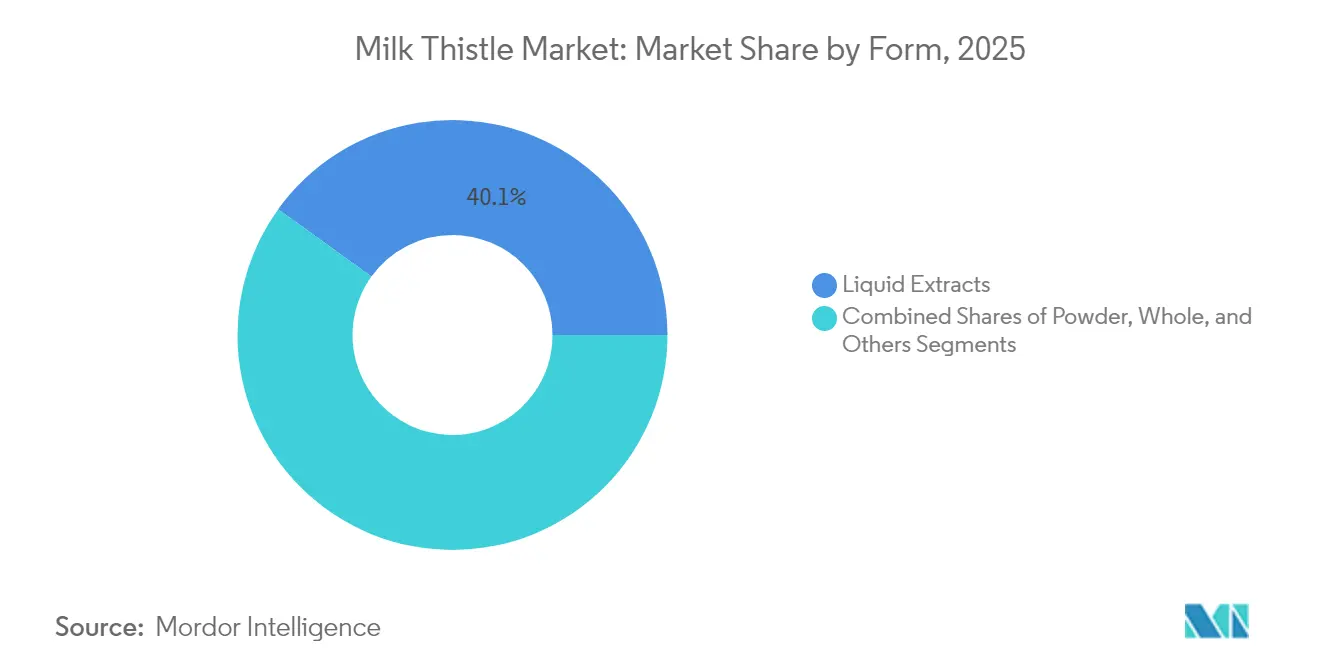
Liquid Extracts Lead Despite Powder InnovationLiquid extracts command 40.05% market share in 2025, reflecting pharmaceutical and nutraceutical manufacturers' preference for standardized silymarin concentrations that enable precise dosing and quality control. This dominance stems from liquid formulations' superior bioavailability and faster absorption rates, making them preferred for therapeutic applications where consistent blood levels are critical. However, powder formulations are experiencing the fastest growth at 9.48% CAGR through 2031, driven by functional food integration and consumer preference for convenient delivery formats.
The powder segment's growth trajectory reflects the broader functional foods trend, as manufacturers seek ingredients that integrate seamlessly into beverages, baked goods, and nutritional bars without compromising taste or texture. Whole milk thistle products maintain a niche position serving traditional medicine markets and consumers preferring minimally processed formulations. Other forms, including capsules and tablets, serve the dietary supplement market but face increasing competition from innovative delivery systems that enhance bioavailability and consumer convenience. The form segmentation evolution indicates market maturation, with different formats targeting distinct use cases and consumer preferences rather than competing directly.



By Nature:
Organic Segment Capitalizes on Premium PositioningConventional milk thistle holds 85.10% market share in 2025, due to established supply chains and cost advantages that make these products accessible to mainstream consumers. This segment leverages economies of scale in cultivation and processing, enabling competitive pricing that supports widespread market penetration across regions. The organic milk thistle segment projects a 10.05% CAGR through 2031, supported by premium positioning and consumers' willingness to pay higher prices for certified organic products. This growth aligns with clean-label trends and increasing consumer awareness of environmental and health impacts of agricultural practices.
The organic certification process creates supply limitations that maintain premium pricing but restrict market accessibility, especially in price-sensitive emerging markets. The certification requirements increase production costs and complexity, requiring specialized knowledge and infrastructure that benefits established organic producers. Consumer understanding of organic benefits drives adoption in developed markets where higher disposable income supports premium purchases. This market segmentation shows a clear divide, with conventional products serving volume-driven markets while organic products attract consumers seeking quality differentiation.
By Source:
Seeds Maintain Dominance Through Therapeutic ConcentrationSeeds maintain overwhelming dominance at 90.26% market share in 2025, driven by their high silymarin content and established therapeutic applications that form the foundation of milk thistle's commercial value. This concentration reflects seeds' superior bioactive compound density compared to other plant parts, making them the preferred source for pharmaceutical and nutraceutical applications requiring standardized potency. The seeds segment also benefits from 10.02% CAGR growth through 2031, indicating sustained demand expansion across all application categories.
Fruits and other plant parts serve specialized applications but remain limited by lower bioactive concentrations and less established therapeutic profiles. The source segmentation stability reflects the mature understanding of milk thistle's therapeutic properties, with seeds representing the optimal balance of efficacy, availability, and processing efficiency. Cultivation research focuses on optimizing seed production through improved agronomic practices rather than exploring alternative plant parts, reinforcing seeds' market dominance. The segment's growth trajectory aligns with overall market expansion, indicating that seed-based products will continue driving market development across all application categories.
By Distribution Channel:
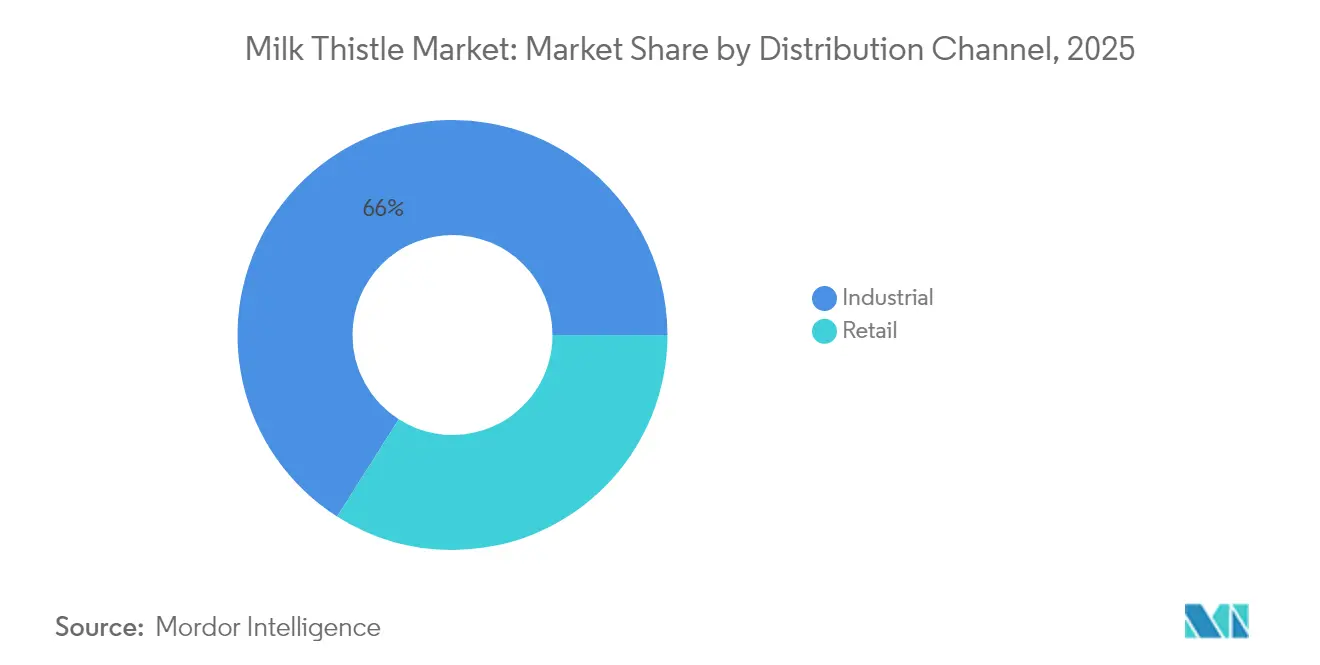
Retail Gains Ground on Industrial DominanceThe industrial distribution channel commands 65.98% market share in 2025, serving pharmaceutical companies, dietary supplement manufacturers, and functional food producers who require bulk quantities and standardized specifications. This dominance reflects milk thistle's primary role as an ingredient in finished products rather than direct consumer sales, with industrial buyers prioritizing quality consistency, regulatory compliance, and supply chain reliability. Within the industrial segment, dietary supplements companies represent the largest sub-segment, followed by functional foods and beverages companies that are increasingly incorporating milk thistle into mainstream products.
Retail channels are experiencing faster growth at 9.39% CAGR through 2031, indicating a shift toward direct-to-consumer products and brand-building strategies that bypass traditional ingredient supply chains. This growth reflects increasing consumer awareness and willingness to purchase milk thistle products directly, supported by e-commerce platforms that enable specialized brands to reach targeted audiences. The retail expansion creates opportunities for premium positioning and higher margins, as direct-to-consumer brands can communicate therapeutic benefits and build customer loyalty through educational marketing.
Geography Analysis
Europe Milk Thistle Market
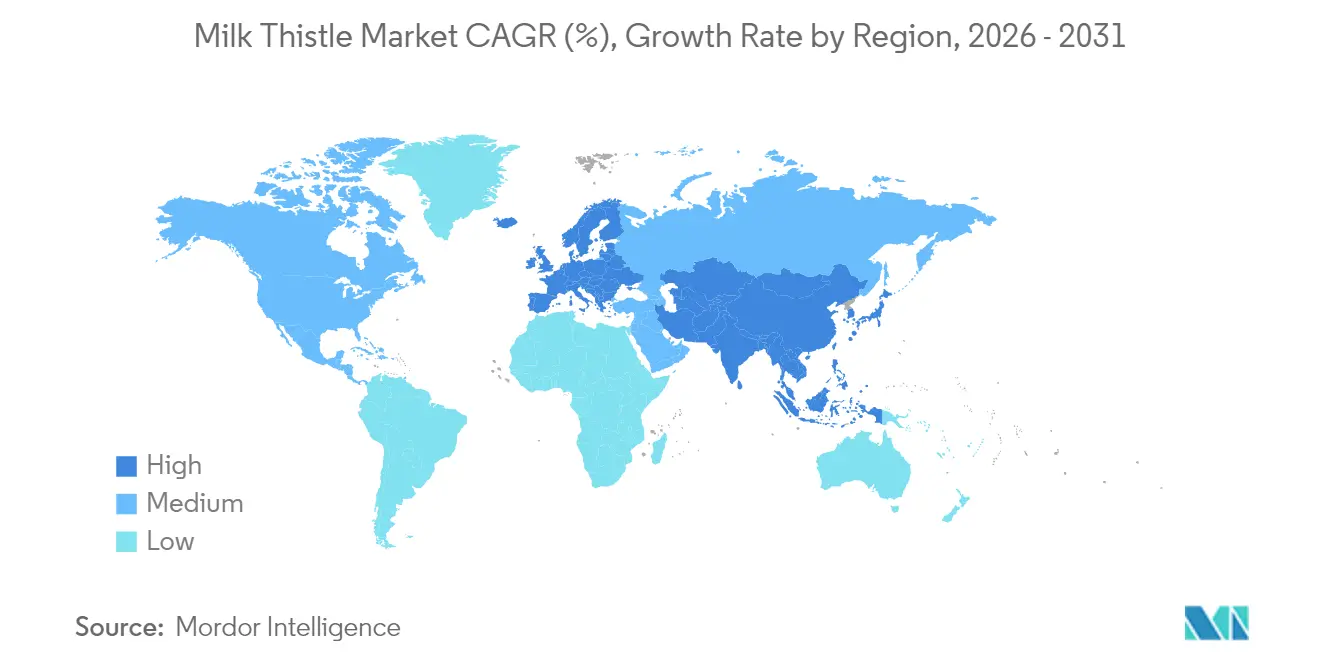
Europe's market leadership at 40.72% share in 2025 stems from deep-rooted herbal medicine traditions and sophisticated regulatory infrastructure that ensures product quality while facilitating market access. The region benefits from EU Directive 2004/24/EC, which provides streamlined registration procedures for traditional herbal medicinal products with demonstrated safety profiles, creating competitive advantages for established European producers.Germany leads individual country markets through its Commission E monographs system that provides scientific validation for herbal products, while Italy and France contribute through strong pharmaceutical industries and cultural acceptance of botanical therapeutics.
APAC Milk Thistle Market
Asia-Pacific emerges as the fastest-growing region with 9.28% CAGR through 2031, driven by expanding middle-class populations, increasing healthcare expenditure, and government policies that integrate traditional medicine with modern healthcare systems. China's nutraceutical market expansion creates substantial opportunities for milk thistle products, particularly as regulatory frameworks evolve to support botanical ingredient commercialization while maintaining safety standards. Australia's established dietary supplement market and regulatory clarity provide a foundation for regional expansion, while Southeast Asian markets show increasing potential as economic development and healthcare infrastructure improve.
North America Milk Thistle Market
North America maintains steady growth supported by established dietary supplement consumption patterns and recent regulatory developments that clarify market access requirements. Health Canada's 2025 approval of milk thistle seed extract as a supplemental ingredient with specific safety parameters provides regulatory certainty that supports market expansion and product innovation. Mexico's growing middle class and increasing health consciousness drive demand for natural health products, while the broader North American market benefits from cross-border trade facilitation and harmonized regulatory approaches.
Note: Segment shares of all Individual segments will be available upon report purchase

Competitive Landscape
The global milk thistle market demonstrates fragmentation with a concentration ratio of 2 out of 10. Established botanical extract companies compete with new market entrants who utilize advanced extraction technologies and direct-to-consumer distribution models. Companies like Givaudan and E. Merck KG. maintain their market positions through vertical integration, quality certifications, and established relationships with pharmaceutical and nutraceutical manufacturers.
New market entrants are transforming traditional supply chains by implementing advanced extraction methods, direct-to-consumer marketing, and specialized formulations for specific health applications. Companies increasingly focus on vertical integration by controlling cultivation, extraction, and distribution processes to maintain quality standards and optimize profit margins. The market's competitive dynamics align with nutraceutical industry developments in scientific validation, regulatory compliance, and consumer awareness initiatives.
The increasing number of patents in extraction and formulation technologies indicates continuous innovation in the industry, potentially creating entry barriers for traditional market participants. Market players are investing in research and development to enhance product efficacy and expand their product portfolios. Additionally, companies are forming strategic partnerships to strengthen their market presence and access new distribution channels.
Milk Thistle Industry Leaders
-
E. Merck KG
-
Dermapharm Group
-
Finzelberg GmbH & Co. KG
-
Botanic Healthcare Pvt. Ltd.
-
Givaudan S.A
- *Disclaimer: Major Players sorted in no particular order
Milk Thistle Market Companies Covered in this Report
- Botanic Healthcare Pvt. Ltd.
- Givaudan SA
- Finzelberg GmbH & Co. KG
- E. Merck KG (Merck KGaA)
- Dermapharm Group (Euromed S.A.)
- Green Spring Technology Co., Ltd
- Shaanxi Jiahe Phytochem Co., Ltd.
- Naturalin Bio-Resources Co., Ltd.
- Nutra Green Biotechnology Co., Ltd
- Indena S.p.A
- HERBO NUTRA EXTRACT PRIVATE LIMITED
- Alchem International Pvt. Ltd.
- Plamed Green Science Group
- Fettle Pets LTD
- Bio-Botanica, Inc.
- Greenjeeva
- Frontier Co-op.
- NATIVE EXTRACTS Pty Ltd
- Monterey Bay Herb Company
- ETChem

Recent Industry Developments in Milk Thistle Market
- February 2025: Health Canada approved milk thistle seed extract as a supplemental ingredient in foods, capping adult intake at 600 mg silymarin and opening versatile product pathways in North America.
- June 2024: Pet wellness company Fettle introduced Ground Seed Milk Thistle Powder, a natural supplement for cats and dogs. The product contains silymarin, an antioxidant that supports liver function and detoxification. The supplement helps reduce inflammation, assists in fat metabolism, and maintains liver health. It is suitable for pets aged 8 weeks and older, with specific benefits for senior pets that have received long-term medication.


Global Milk Thistle Market Report Scope
Milk thistle, also known as silymarin, is a botanical plant that belongs to the daisy and ragweed family. The plant is known for its antioxidant properties, which are primarily derived from the seeds of the milk thistle plant. The global milk thistle market is segmented by form, application, distribution channel, and geography. By form, the market is segmented into extract, powder, and whole. By application, the market is segmented into dietary supplements, food and beverage, and cosmetics. By distribution, the market is segmented into retail and industrial. By geography, the market is segmented into North America, Europe, Asia-Pacific, and Rest of the World. The market sizing has been provided in value terms (USD) for all the abovementioned segments.
| Liquid Extracts |
| Powder |
| Whole |
| Others |
| Conventional Milk Thistle |
| Organic Milk Thistle |
| Seeds |
| Fruits |
| Others |
| Retail | |
| Industrial | Dietary Supplements Companies |
| Functional Foods and Beverages Companies | |
| Cosmetics and Personal-care Companies | |
| Veterinary and Animal Nutrition Companies | |
| Others |
| North America | United States |
| Canada | |
| Mexico | |
| Rest of North America | |
| Europe | Germany |
| United Kingdom | |
| Italy | |
| France | |
| Spain | |
| Netherlands | |
| Rest of Europe | |
| Asia-Pacific | China |
| India | |
| Japan | |
| Australia | |
| Rest of Asia-Pacific | |
| South America | Brazil |
| Argentina | |
| Rest of South America | |
| Middle East and Africa | South Africa |
| Saudi Arabia | |
| Rest of Middle East and Africa |
| By Form | Liquid Extracts | |
| Powder | ||
| Whole | ||
| Others | ||
| By Nature | Conventional Milk Thistle | |
| Organic Milk Thistle | ||
| By Source | Seeds | |
| Fruits | ||
| Others | ||
| By Distribution Channel | Retail | |
| Industrial | Dietary Supplements Companies | |
| Functional Foods and Beverages Companies | ||
| Cosmetics and Personal-care Companies | ||
| Veterinary and Animal Nutrition Companies | ||
| Others | ||
| By Geography | North America | United States |
| Canada | ||
| Mexico | ||
| Rest of North America | ||
| Europe | Germany | |
| United Kingdom | ||
| Italy | ||
| France | ||
| Spain | ||
| Netherlands | ||
| Rest of Europe | ||
| Asia-Pacific | China | |
| India | ||
| Japan | ||
| Australia | ||
| Rest of Asia-Pacific | ||
| South America | Brazil | |
| Argentina | ||
| Rest of South America | ||
| Middle East and Africa | South Africa | |
| Saudi Arabia | ||
| Rest of Middle East and Africa | ||


Key Questions Answered in the Report
What is the current valuation of the milk thistle market?
The milk thistle market is valued at USD 136.06 million in 2026 and is projected to reach USD 205.46 million by 2031.
Which form of milk thistle is most widely used?
Liquid extracts dominate with 40.05% revenue share in 2025, supported by precise dosing and strong pharmaceutical demand.
Why is Asia-Pacific considered the fastest-growing region?
Rising disposable income, government support for traditional medicine and evolving nutraceutical regulations push Asia-Pacific toward a 9.28% CAGR through 2031.
What are the main restraints on market expansion?
High cultivation costs and competition from alternative botanicals or pharmaceuticals compress margins and slow adoption in price-sensitive segments.
Page last updated on:


 Your data is secure and never sold or shared.


