
Market Overview
| Study Period | 2020 - 2031 |
|---|---|
| Market Size (2026) | USD 28.56 Billion |
| Market Size (2031) | USD 46.45 Billion |
| Growth Rate (2026 - 2031) | 10.21 % |
| Fastest Growing Market | Asia-Pacific |
| Largest Market | North America |
| Market Concentration | Medium |
Major Players *Disclaimer: Major Players sorted in no particular order Image © Mordor Intelligence. Reuse requires attribution under CC BY 4.0. | |
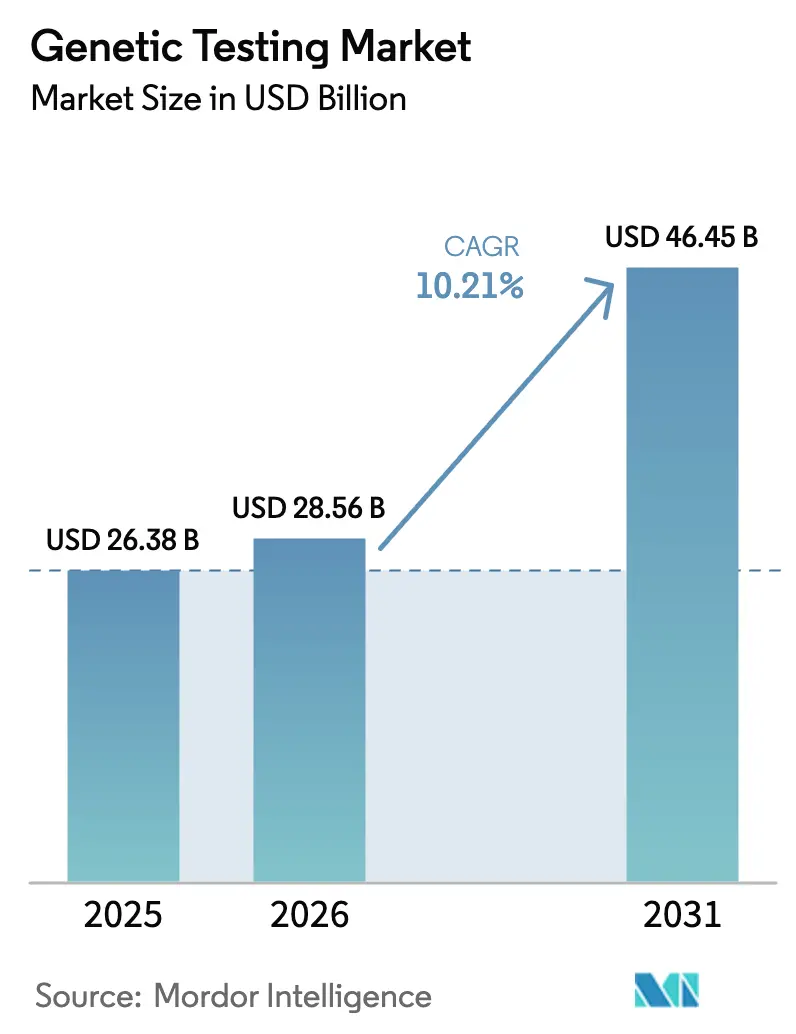
Genetic Testing Market Analysis by Mordor Intelligence
The Genetic Testing Market size is expected to increase from USD 26.38 billion in 2025 to USD 28.56 billion in 2026 and reach USD 46.45 billion by 2031, growing at a CAGR of 10.21% over 2026-2031.
Mainstream reimbursement for multigene panels, whole-genome sequencing costs that will dip below USD 100 after 2027, and employer-funded genomic wellness programs are scaling demand in the genetic testing market. Non-invasive prenatal testing (NIPT) and newborn screening mandates in 30 U.S. states add steady volume, while FDA-cleared liquid-biopsy pathways from 2024 onward accelerate oncology adoption. Cloud-based AI interpretation platforms such as Illumina DRAGEN on Microsoft Azure now compress analysis from weeks to hours, enabling same-visit clinical decisions. Rapid payer uptake, falling sequencing costs, and real-time analytics collectively keep the genetic testing market on a double-digit growth trajectory.
Key Report Takeaways
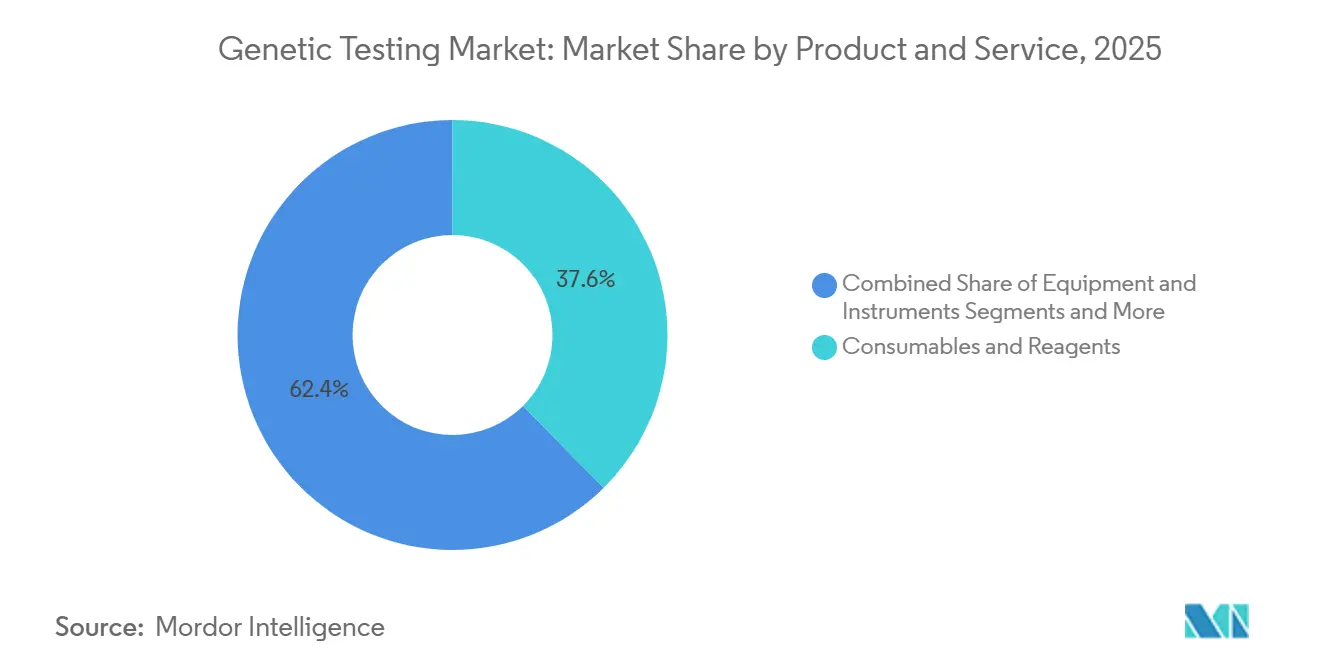
- By product & service, consumables and reagents led with 37.57% revenue share in 2025, whereas software and services are projected to post a 14.57% CAGR through 2031.
- By test type, prenatal and newborn assays held 36.25% of the 2025 genetic testing market share, while carrier screening is expected to grow at 13.34% CAGR to 2031.
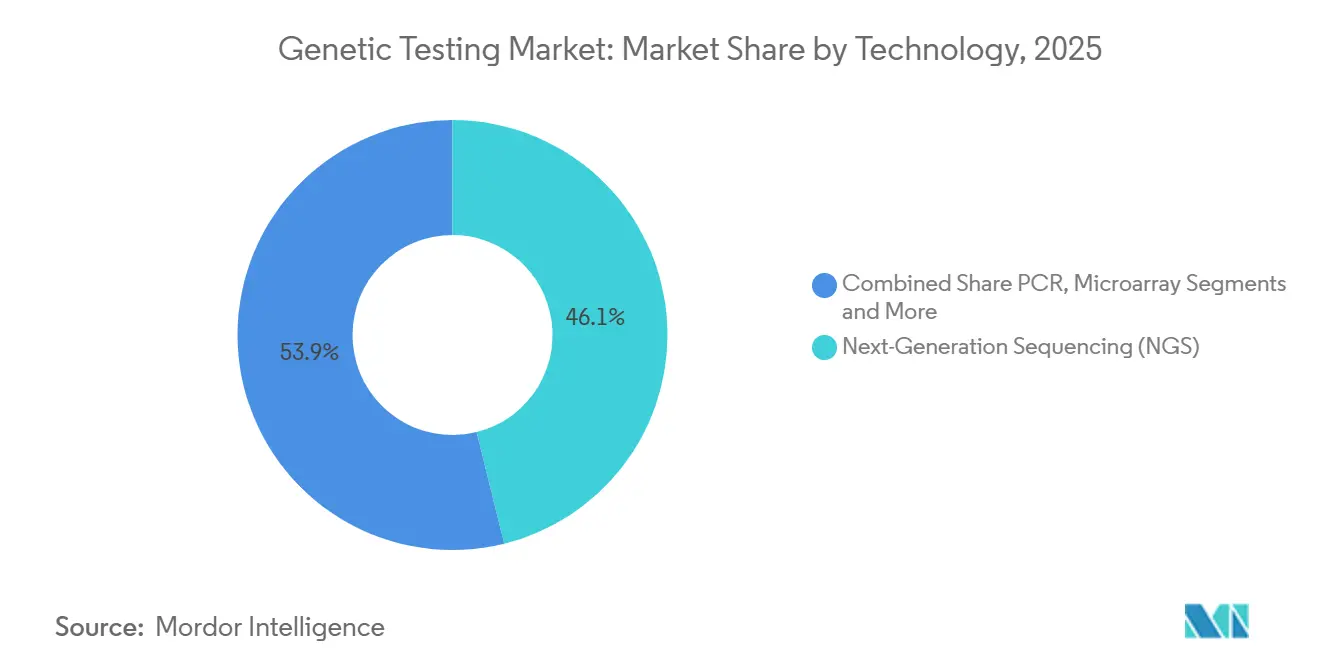
- By technology, next-generation sequencing captured 46.13% of 2025 revenue and will continue expanding at a 12.67% CAGR through the forecast window.
- By application, genetic disease diagnosis commanded 39.63% of 2025 revenue, yet oncology leads growth with a 13.88% CAGR to 2031.
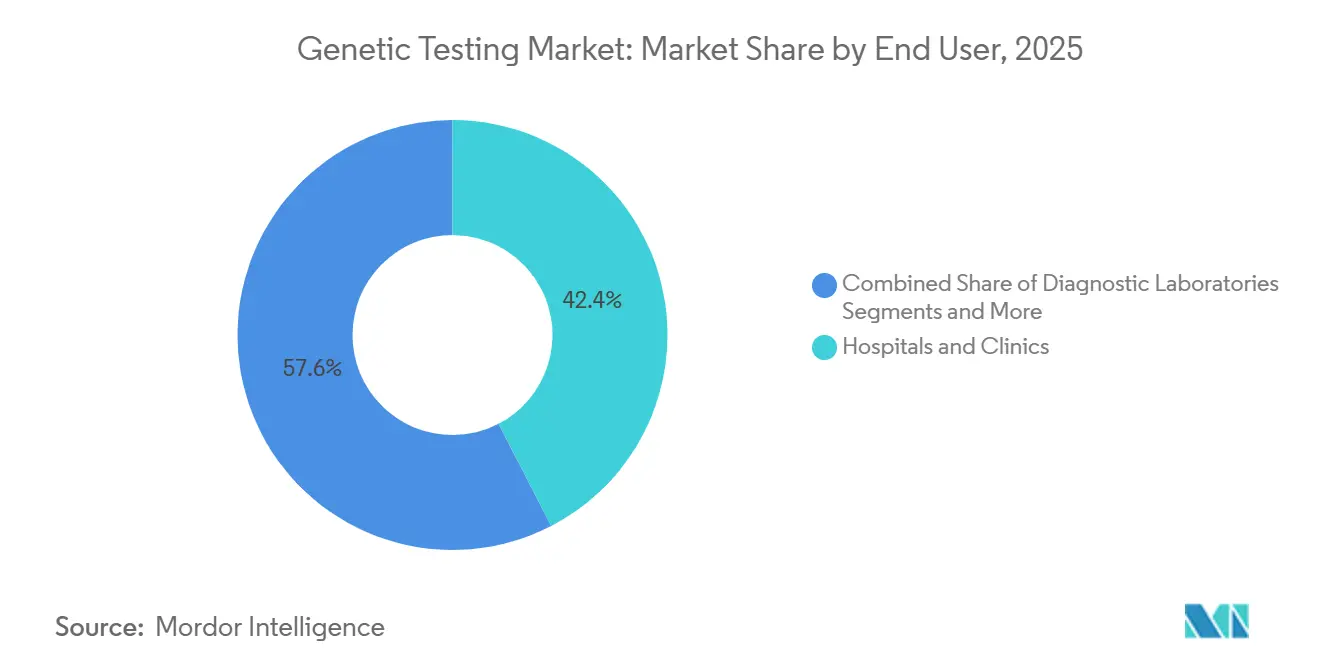
- By end user, hospitals and clinics accounted for 42.41% in 2025, whereas research and academic institutes will register a 12.21% CAGR.
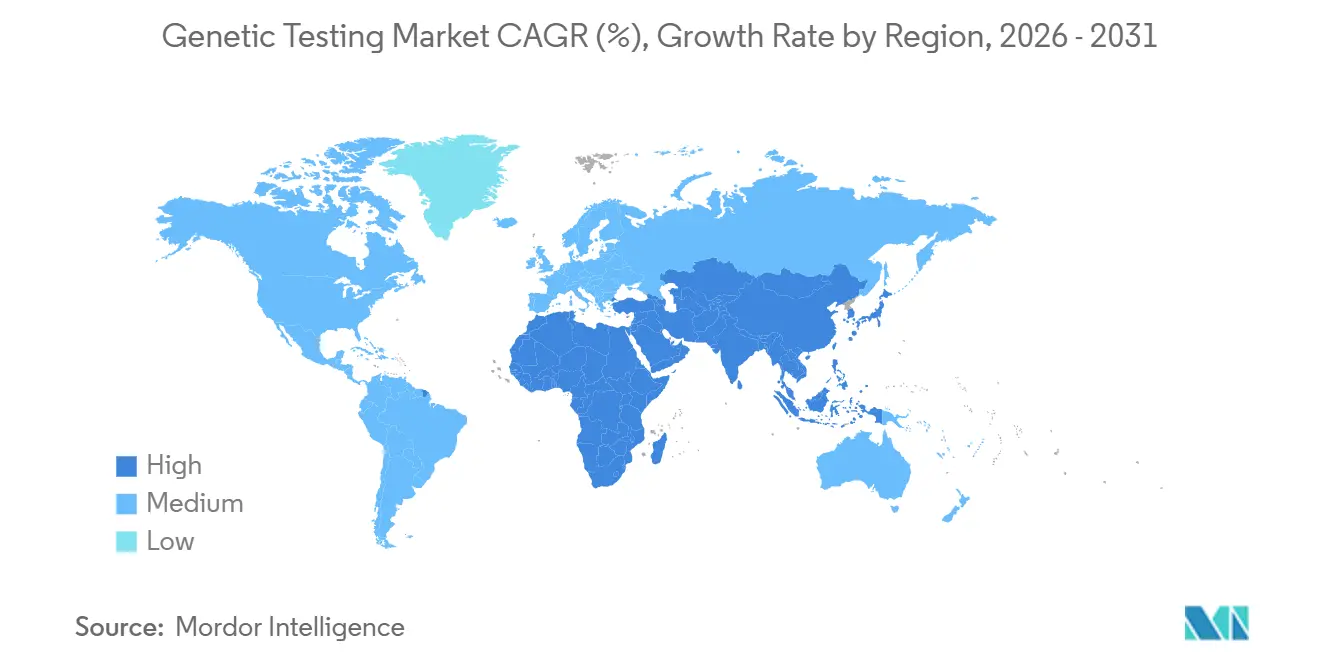
- By geography, North America held 43.13% in 2025, while Asia-Pacific is poised for a 12.63% CAGR through 2031.
Note: Market size and forecast figures in this report are generated using Mordor Intelligence’s proprietary estimation framework, updated with the latest available data and insights as of January 2026.
Market Trends and Insights
Drivers Impact Analysis of Genetic Testing Market*
| Driver | (~) % Impact on CAGR Forecast | Geographic Relevance | Impact Timeline |
|---|---|---|---|
| Rapid Adoption of NIPT & Newborn Screening | +1.8% | North America, Europe, APAC core | Short term (≤ 2 years) |
| Mainstream Insurance Coverage for Multigene Panels | +2.1% | North America, Western Europe | Medium term (2-4 years) |
| Falling NGS Cost to Less Than USD 100/Whole Genome (Post-2027) | +1.5% | Global | Long term (≥ 4 years) |
| Cloud-Based AI Genomic Interpretation Ecosystems | +1.3% | Global, with early adoption in North America & EU | Medium term (2-4 years) |
| Liquid-Biopsy-Ready Regulatory Pathways | +1.6% | North America, Europe, Japan | Short term (≤ 2 years) |
| Employer-Sponsored Genomic Wellness Benefits Surge | +1.2% | North America, select APAC markets | Medium term (2-4 years) |
| Source: Mordor Intelligence | |||
Rapid Adoption of NIPT & Newborn Screening
Commercial payers in the United States covered NIPT for trisomies 13, 18, and 21 without prior authorization by 2025, lifting penetration above 80%.[1]UnitedHealthcare Editorial Team, “Prior Authorization Requirements for Non-Invasive Prenatal Testing,” UnitedHealthcare Provider, uhcprovider.com Thirty states simultaneously expanded newborn panels to 35 core conditions, boosting demand for Natera Panorama and PerkinElmer platforms. Updated American College of Obstetricians and Gynecologists guidance designated NIPT as a first-tier option for all pregnancies in 2024, removing risk-based barriers.[2]ACOG Advocacy Team, “Non-Invasive Prenatal Testing,” American College of Obstetricians and Gynecologists, acog.org The shift converted prenatal testing from niche to universal coverage, shortening reimbursement cycles and enabling direct-to-consumer channels. China began reimbursing NIPT in tier-1 cities in 2025, yet rural provinces remain self-pay, creating uneven adoption.
Mainstream Insurance Coverage for Multigene Panels
Medicare added BRCA1/2, PALB2, and ATM to its hereditary cancer panel coverage in 2024, aligning with NCCN guidelines. Commercial payers followed by reimbursing 25- to 80-gene panels for eligible members, pushing Myriad MyRisk and Invitae volumes up 40% year-over-year. Average panel reimbursement settled near USD 250, down steeply from historical levels, making proactive testing financially attractive to payers focused on avoiding late-stage cancer costs. Germany still limits BRCA testing to post-diagnosis use, curbing preventive uptake.
Falling NGS Cost below USD 100/Genome
Illumina’s NovaSeq X Plus reached USD 200 per genome in 2024, and the firm projects sub-USD 100 pricing by 2028 as chemistry and throughput improve.[3]Illumina Newsroom, “Illumina's Revolutionary NovaSeq X Exceeds 200th Order Milestone in First Quarter 2023,” Illumina Investor Relations, investor.illumina.com Competing releases from Complete Genomics and BGI are targeting the same benchmark in 2025. Lower costs enable population-scale projects such as the NHS Genomic Medicine Service, which sequenced 500,000 genomes by 2025 and reported actionable findings in 25% of participants. India’s 10,000-genome pilot launched in 2025 at sub-USD 500 per sample, illustrating the democratization of sequencing.
Cloud-Based AI Genomic Interpretation Ecosystems
Illumina DRAGEN on Microsoft Azure cut variant calling from 24 hours to 30 minutes in 2025, supporting same-day neonatal results. Nvidia Clara Parabricks lowers compute costs by 60% versus CPU pipelines, letting regional labs rent capacity instead of buying servers. The FDA released draft guidance on AI-driven genomic software in 2024, clarifying compliance pathways for cloud platforms. Interoperability hurdles persist because proprietary data formats require middleware for seamless EHR integration in resource-constrained sites.
Restraints Impact Analysis of Genetic Testing Market*
| Restraint | (~) % Impact on CAGR Forecast | Geographic Relevance | Impact Timeline |
|---|---|---|---|
| Cross-Border Data Sovereignty Restrictions | -0.9% | Global, acute in EU & China | Short term (≤ 2 years) |
| Skilled Genetic Counselor Shortage Bottlenecks | -0.7% | Global, severe in emerging markets | Medium term (2-4 years) |
| Patchy Reimbursement in Emerging Economies | -1.1% | APAC (ex-Japan), MEA, South America | Long term (≥ 4 years) |
| NGS Chip Supply-Chain Dependency on 2 Fabs | -0.6% | Global | Short term (≤ 2 years) |
| Source: Mordor Intelligence | |||
Cross-Border Data Sovereignty Restrictions
The EU Health Data Space regulation effective May 2025 mandates EU server residency for genomic data, fragmenting multinational datasets. China’s rules likewise require domestic storage and government approval for sharing human genetic material abroad, limiting global collaboration. These policies raise compliance costs as labs must maintain separate infrastructures and navigate conflicting consent frameworks, delaying cross-border assay launches.
Skilled Genetic Counselor Shortages
Only about 7,000 certified counselors serve a global testing volume topping 10 million annually. The American Board of Genetic Counseling graduated 400 professionals in 2025, far short of demand. Tele-counseling expands reach, yet reimbursement remains patchy, especially across U.S. Medicaid programs. Emerging economies such as India have fewer than 50 counselors, forcing labs to rely on clinicians who lack bandwidth for in-depth guidance, thereby prolonging test ordering and elevating misinterpretation risk.
*Our forecasts treat driver/restraint impacts as directional, not additive. The impact forecasts reflect baseline growth, mix effects, and variable interactions.
Genetic Testing Market Segment Analysis
By Product & Service:
Software Scales Interpretation BottlenecksConsumables and reagents held 37.57% of 2025 revenue, reinforcing their role as the consumable backbone of the genetic testing market. Software and services, however, will advance at a 14.57% CAGR to 2031 as interpretation rather than sequencing becomes the primary bottleneck. The genetic testing market size for software offerings is projected to widen as laboratories shift from high-capex servers to cloud subscriptions billed below USD 50,000 per year. EU IVDR rules that require CE-marked interpretation software further drive migration away from in-house pipelines. Equipment sales face semiconductor delays that stretch instrument lead times to a year, but reagent purchases remain recurring and predictable.
Recurring revenue models improve vendor cash flows while lowering startup costs for mid-tier labs. Each NovaSeq X shipped in 2025 consumes roughly USD 1 million in reagents annually at full utilization, creating annuity-like sales for Illumina. Software vendors monetize variant databases through tiered analytics, enabling community hospitals to run pan-cancer panels without dedicated bioinformaticians. Genetic testing industry players offering bundled counseling, interpretation, and billing support gain a competitive edge with payers that assess total episode cost.



By Test Type:
Carrier Screening Extends Beyond Ancestry-Based PanelsPrenatal and newborn assays accounted for 36.25% in 2025, yet carrier screening is poised to grow at 13.34% CAGR as guidelines shift toward pan-ethnic panels. The genetic testing market size for carrier screening will broaden because expanded menus now cover over 400 conditions, replacing earlier Ashkenazi-focused offerings. Diagnostic testing remains high-volume but faces price pressure as exome sequencing displaces single-gene assays. Predictive panels continue to benefit from Medicare and commercial payer coverage, although uptake among unaffected adults remains modest due to privacy concerns despite GINA protections.
Expanded carrier screening surged after ACMG recommended universal panels in 2024. Adoption among fertility clinics rose 50% in 2025 for Natera Horizon. Payers, however, increasingly demand evidence of negative targeted tests before approving exome claims, a dynamic that pushes patients through stepwise testing. Pharmacogenomic panels advance at roughly 10% CAGR, but lack of EHR decision support slows physician adoption. Direct-to-consumer ancestry tests saw contraction in 2024 as privacy concerns drove 23andMe to pivot away from therapeutics and cut staff.
By Technology:
NGS Dominates While Long-Read Platforms Enter ClinicsNext-generation sequencing captured 46.13% of technology revenue in 2025 and is expected to retain double-digit growth. Cost declines and multi-gene flexibility make NGS the default for oncology and rare disease diagnostics. Polymerase chain reaction retains niches in high-throughput single-gene testing, while microarray use contracts as NIPT supplants it in prenatal care. Cytogenetic techniques and FISH remain standard for certain hematologic disorders due to rapid turnaround and established reimbursement.
Long-read sequencing moved from research to clinics when Pacific Biosciences Revio cut per-genome costs to USD 1,000 in 2024. Oxford Nanopore’s MinION devices, deployed in field outbreaks, underscore NGS versatility in infectious disease surveillance. Guardant360 CDx and similar assays exemplify NGS utility in liquid biopsy, reducing tissue-based turnaround from 14 days to 7 days. The genetic testing market share for NGS will therefore expand as both short- and long-read platforms climb clinical adoption curves.
By Application:
Oncology Surpasses Genetic Disease Diagnosis in Growth PaceGenetic disease diagnosis topped 39.63% in 2025, yet oncology testing is projected to register a 13.88% CAGR, the highest among applications. Liquid biopsy assays tap large addressable populations; Medicare coverage for Natera Signatera in colorectal and breast cancer scaled eligible patients tenfold in 2024. Early detection tests such as Exact Sciences Cologuard Plus broaden screening beyond colonoscopy.
Reproductive health remains robust but is nearing saturation in developed markets, shifting future growth to emerging regions where reimbursement is debuting. Direct-to-consumer wellness testing declined as consumer trust eroded. Pharmacogenomics lags because clinical decision support integration into EHRs is incomplete, though over 300 drug labels carry FDA pharmacogenomic guidance.
By End User:
Research Institutes Lead Population GenomicsHospitals and clinics generated 42.41% of 2025 revenue by embedding genetic services into integrated care pathways. Diagnostic laboratories face squeezed margins as payers negotiate bundled pricing and hospitals repatriate testing. Research and academic institutes, however, will post a 12.21% CAGR thanks to population genomics projects such as the U.S. All of Us, which enrolled 500,000 participants by 2025.
Hospital systems like Mayo Clinic embed pharmacogenomics into e-prescribing, automatically flagging gene-drug interactions for prescriptions such as warfarin. Research campuses, led by the Broad Institute, sequenced 100,000 genomes in 2025 alone, fueling demand for high-throughput services. Laboratories lacking capital for IVDR compliance are expected to consolidate, redirecting market share to better-funded research centers and large hospital groups.
Geography Analysis
North America Genetic Testing Market
North America retained 43.13% of 2025 revenue in the genetic testing market and will rise at 9.8% CAGR through 2031. Medicare and major insurers reimburse hereditary cancer, NIPT, and liquid biopsy assays, while employers broaden genomic wellness benefits. The FDA cleared 12 genetic tests in 2024, cutting approval cycles from 18 to 9 months under its Precision Medicine Initiative. Canada reimburses DPYD genotyping in Ontario and British Columbia, whereas Mexico remains largely self-pay, restricting access to urban private facilities.
APAC Genetic Testing Market
Asia-Pacific is forecast to log a 12.63% CAGR, underpinned by China’s national sequencing infrastructure and India’s expanding diagnostics network. BGI runs the world’s largest sequencing hub, processing over 1 million samples monthly and launching a USD 100 genome service in 2025. Japan reimburses comprehensive genomic profiling for advanced cancer; India’s leading chains offer NIPT at USD 300, one-third U.S. prices. South Korea added BRCA testing in 2024, and Australia reimburses pharmacogenomics for thiopurine drugs at AUD 150 (USD 100).
EMEA and South America Genetic Testing Market
Europe reshapes the laboratory landscape. Germany reimburses hereditary cancer panels at EUR 1,500 (USD 1,650); the U.K. NHS sequenced 100,000 cancer genomes with 30% actionable findings. France invested EUR 670 million (USD 737 million) in its Genomic Medicine Plan. Middle East and Africa will grow at an 11% CAGR, led by the UAE’s plan to sequence 1 million Emirati genomes by 2030. South America advances at a 10.5% CAGR, with Brazil’s Fleury and Dasa introducing hereditary panels at BRL 3,000 (USD 600).

Regulatory Landscape
In the United States, FDA oversight is tightening across genetic diagnostics as laboratory developed tests (LDTs) move toward device-style regulation. A May 6, 2024 FDA final rule classified IVD products manufactured by laboratories as medical devices and initiated a multi-year phaseout of enforcement discretion. This raises quality system and evidence expectations for high-volume hereditary, oncology, and prenatal workflows that have historically been offered as LDTs.
Product classifications and guidance are also clarifying compliance pathways for advanced sequencing and interpretation. FDA actions in 2024-2026 include class II (special controls) classifications for sequencing-based systems (including whole exome sequencing constituent devices) and a class II classification effective April 22, 2026 for a setmelanotide eligibility gene variant detection system. In Europe, genetic diagnostic devices remain governed by EU IVDR (EU 2017/746). Many genetic, prenatal, and oncology IVDs fall under Class C, with transitional timelines extending to December 31, 2028 for Class C (and December 31, 2027 for Class D). This timeline is pushing manufacturers and laboratories to prioritize performance evaluation, notified body capacity planning, and CE-marked software and interpretation readiness.
Value Chain Analysis
The genetic testing value chain starts with sequencing and assay input suppliers, including instrumentation platforms, chips and flow cells, and consumables and reagents. It then moves through test development, such as wet-lab protocols, bioinformatics pipelines, and clinical validation. Delivery is handled through hospital-based labs, independent reference labs, and physician-ordered or consumer-initiated channels. Recurring consumables pull-through remains central to economics, particularly for high-throughput NGS systems, while cloud-based interpretation increasingly acts as the scaling layer by compressing turnaround time and reducing the need for local compute.
Bottlenecks and control points concentrate around specialized components, including reliance on a limited number of semiconductor fabs for NGS-related supply, plus data governance and clinical workflow capacity, notably genetic counseling. Cross-border data sovereignty constraints, such as the EU Health Data Space regime effective May 2025, reinforce regionalized storage and processing. This shifts value toward in-region cloud deployments and middleware that integrates results into EHRs. Downstream, payer policy and compliance requirements shape ordering behavior and test menus, visible in the growing emphasis on reimbursable multigene panels, pharmacogenomics add-ons, and oncology companion diagnostic-aligned workflows.
Competitive Landscape
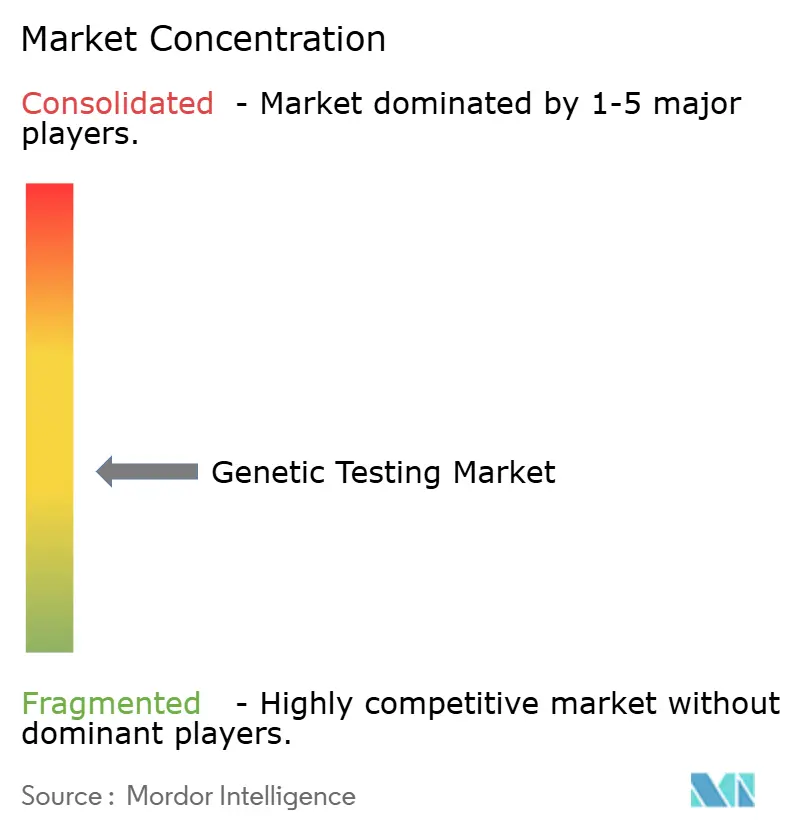
The genetic testing market remains moderately fragmented; the top five firms command roughly 40% of global revenue. Illumina dominates sequencing instruments with over 70% installed NGS base, although price pressure emerges from BGI and Pacific Biosciences. LabCorp’s 2024 purchase of Invitae created an end-to-end testing, counseling, and data analytics platform. Guardant Health’s liquid biopsy delivers seven-day turnaround, appealing to oncologists needing rapid therapy decisions.
Oxford Nanopore’s portable sequencers open point-of-care niches, exemplified by Médecins Sans Frontières’ deployment for tuberculosis drug resistance profiling. FDA Breakthrough Device designations favored incumbents; six of eight 2024 designations went to major players such as Roche and Exact Sciences. Robust patent portfolios like Illumina’s 1,000-plus sequencing claims raise barriers for entrants. Upcoming IVDR enforcement in Europe is expected to spur acquisitions of smaller labs unable to afford compliance upgrades.
Genetic Testing Industry Leaders
Illumina Inc.
F Hoffmann-La Roche AG
Thermo Fisher Scientific Inc
QIAGEN
Myriad Genetics
- *Disclaimer: Major Players sorted in no particular order
Genetic Testing Market Companies Covered in this Report
- 23andMe
- Abbott Laboratories
- Agilent Technologies
- BGI
- Centogene
- Color Health
- Eurofins
- Exact Sciences
- Roche
- Guardant Health
- Illumina
- Invitae
- LabCorp
- Myriad Genetics
- Natera
- Oxford Nanopore Technologies
- Pacific Biosciences
- PerkinElmer
- QIAGEN
- Quest Diagnostics
- Thermo Fisher Scientific

Market Opportunities and Future Outlook
Clinical-grade whole genome sequencing (WGS) is moving into more routine decision making as vendors broaden access to difficult-to-map regions and automate interpretation. This is creating whitespace beyond traditional exome and panel testing. The direction of travel is visible in new 2026 product activity, with GeneDx launching GenomeDx Prenatal (phenotype-informed, trio-based WGS for fetal anomalies), Illumina launching TruPath Genome for comprehensive variant detection, and Natera commercially launching its Zenith genomics WGS assay for rare disease diagnosis. These launches widen the set of clinical questions addressed by a single assay and support consolidation of fragmented send-out workflows into fewer, higher-yield tests.
Preventive genomics and pharmacogenomics also create near-term commercialization space for employers, health systems, and insurers that are already experimenting with genomic benefits and medication-risk stratification. Scaling, however, depends on privacy and reimbursement clarity. Australia enacted the Treasury Laws Amendment (Genetic Testing Protections in Life Insurance and Other Measures) Act 2026, which limits how life insurers can use genetic information and supports consumer willingness to test in markets that are sensitive to discrimination risk. At the same time, policy fragmentation is intensifying for direct-to-consumer providers, including South Dakota's SB 49 with provisions effective July 1, 2026. Reimbursement actions can reset economics as well, including Germany finalized clinical sequencing reimbursement cuts exceeding 30% effective October 1, 2026. Vendors that package compliant consent and data workflows, localized compute, and payer-ready evidence generation alongside assays and interpretation are positioned to capture these pockets of demand.
Recent Industry Developments in Genetic Testing Market
- June 2026: Roche reported FDA approval for the VENTANA PTEN (SP218) RxDx Assay as an immunohistochemistry companion diagnostic for assessing PTEN protein loss in prostate adenocarcinoma. The approval strengthens Roche Diagnostics position in therapy-linked oncology testing. It also supports broader adoption of biomarker-driven treatment pathways that increase downstream genetic and molecular testing volumes.
- May 2026: Roche signed a definitive merger agreement to acquire PathAI for USD 750 million upfront, with additional milestone-based payments, to expand AI-enabled pathology and diagnostics capabilities. Folding AI-driven interpretation into a major IVD portfolio reinforces the shift toward integrated workflows. These combine testing, image or molecular analytics, and clinical decision support.
- December 2025: Zydus Lifesciences and Myriad Genetics agreed to introduce MyRisk hereditary cancer testing and related assays across India. The collaboration expands access to multigene hereditary cancer panels in a price-sensitive market. It also creates a broader local channel for payer discussions, clinician education, and follow-on services such as counseling and cascade testing.


Genetic Testing Market Report Scope and Research Methodology
Market Definition and Coverage
This market covers revenue generated from genetic testing used on human samples to detect, confirm, or assess risk for inherited and acquired conditions, across clinical and at-home settings, including required instruments, test kits, and interpretation services.
Scope exclusions: We exclude animal genetics, toxicology assays, and sequencing reagents sold purely for research use.
Segments Covered in This Report
- By Product & Service
- Consumables and Reagents
- Equipments and Instruments
- Software and Services
- By Test Type
- Diagnostic
- Prenatal & Newborn
- Predictive & Presymptomatic
- Carrier
- Pharmacogenomic
- By Technology
- Next-Generation Sequencing (NGS)
- Polymerase Chain Reaction (PCR)
- Microarray
- Cytogenetic / FISH
- Other Technologies
- By Application
- Oncology
- Genetic Disease Diagnosis
- Reproductive Health
- Ancestry & DTC Wellness
- Others
- By End User
- Hospitals & Clinics
- Diagnostic Laboratories
- Research & Academic Institutes
- By Geography
- North America
- United States
- Canada
- Mexico
- Europe
- Germany
- France
- United Kingdom
- Italy
- Spain
- Rest of Europe
- Asia-Pacific
- China
- Japan
- India
- South Korea
- Australia
- Rest of Asia-Pacific
- Middle East & Africa
- GCC
- South Africa
- Rest of Middle East & Africa
- South America
- Brazil
- Argentina
- Rest of South America
- North America
Data Sources, Market Sizing, and Validation
Desk Research
Desk work starts by grounding the size model in public health and testing activity signals that can be traced year to year. We reference sources such as the World Health Organization for disease burden context, the US CDC for screening program direction, NIH and PubMed indexed papers for test adoption and clinical pathways, and OECD style health statistics for system capacity indicators.
To convert those signals into market value, inputs were checked against company annual reports, investor decks, and reputable press coverage around lab expansions, reimbursement changes, and assay launches. Where needed, paid subscriptions for company financials and news intelligence, patent databases, and shipment-level import and export data were used to verify supplier presence and pricing direction. These desk sources are not exhaustive, and many other public and paid references were also used for data collection, cross-checks, and clarification.
Primary Interviews and Surveys
Primary work was used to stress test what we saw in desk findings, especially on test mix shifts, pricing movements, and how volumes are split across clinical labs, hospitals, and at-home channels. We spoke with test developers, lab operators, distributors, and healthcare stakeholders across APAC, EMEA, and the Americas, which helped adjust assumptions to match observed purchase and utilization patterns by channel and use case.
Distribution of primary research fieldwork respondents
| Company type | Respondent position | Region |
|---|---|---|
| Top tier: 28% | CXOs: 16% | APAC: 53% |
| Mid tier: 56% | Functional/Unit leaders: 35% | EMEA: 29% |
| Smaller Players: 16% | Managers: 49% | Americas: 18% |
Market-Sizing & Forecasting
Sizing starts from a top-down build where testing demand is reconstructed from disease and screening pools, guideline driven utilization, and lab throughput capacity, which are then translated into spending using typical price bands. Once that structure is in place, selective bottom-up approximations are used to corroborate totals, such as rolling up sampled supplier revenues, applying average selling price assumptions to estimated test volumes, and doing channel checks for at-home kits.
Key model inputs include the share of population eligible for prenatal and newborn screening, oncology testing penetration, the installed base and utilization of sequencing and PCR platforms, reimbursement and out-of-pocket payment mix, and average price movement as test menus broaden. When data is patchy by country, gaps are handled through proxying from similar healthcare spending profiles and then re-scaled using local lab capacity and regulatory access. Forecasts are built using scenario analysis supported by expert views on adoption speed, pricing compression, and policy changes, and then the outputs are compared back to the underlying drivers for consistency.
Data Validation & Update Cycle
Outputs are checked through a triangulation routine where demand indicators, capacity signals, and pricing logic must align before numbers are finalized. Variance checks are run by region and by major use case so outliers can be explained, and any unexplained swings trigger follow-up calls with interviewees or a re-check of desk assumptions.
Before sign-off, a second analyst reviews the model flow, input sources, and arithmetic, followed by a final pass that verifies the latest public announcements and policy changes. The report is refreshed annually, and interim updates are made when material events occur that can shift testing volumes or realized pricing.
Mordor Intelligence's Global Genetic Testing Market Market Estimate Compared With Other Published Estimates
Published estimates for genetic testing often differ because the market can be counted at different levels, and because pricing and volume assumptions move fast as menus expand and costs fall. Differences also show up when firms pick different base years, exchange rate timing, and what they treat as in-scope revenue.
The main gap comes from whether research-use sequencing reagents and adjacent lab services are counted. Mordor Intelligence treats the market as human genetic tests sold through clinical and at-home channels, including instruments, kits, and interpretation, while leaving out animal genetics, toxicology assays, and research-only reagents.
Benchmark comparison
| Source | Market Size | Gaps in Research Methodology |
|---|---|---|
| Mordor Intelligence | USD 26.38 B (2025) | |
| Global Consultancy A | USD 24.45 B (2025) | Uses a narrower realized-revenue lens in several regions, with more conservative assumptions on oncology and prenatal test penetration and slower price band expansion for multi-gene panels. |
| Industry Publisher B | USD 37.32 B (2025) | Often bundles research-use consumables and broader genomic services into the same total, and applies a higher blended ASP assumption that lifts the value even if volumes are similar. |
Across the three figures, the spread is mainly explained by what is included around research-use consumables and how quickly ASPs are assumed to decline as adoption grows. By keeping scope rules explicit and tying volumes to eligible cohorts and lab throughput, the final estimate stays traceable to inputs that can be re-checked and updated as the market shifts.


Key Questions Answered in the Report
How large was the genetic testing market in 2026?
The genetic testing market size reached USD 28.56 billion in 2026 and is projected to rise sharply through 2031.
What CAGR is expected through 2031?
The market is set to expand at a 10.21% CAGR, supported by payer coverage, falling sequencing costs, and AI-driven analysis.
Which technology dominates current revenue?
Next-generation sequencing led with 46.13% of 2025 revenue and continues to outpace other methods with a 12.67% CAGR.
Why is oncology the fastest-growing application?
Liquid biopsy approvals and minimal residual disease monitoring fuel a 13.88% CAGR, overtaking traditional genetic disease diagnostics.
Which region is forecast to grow the fastest?
Asia-Pacific is poised for a 12.63% CAGR, propelled by large-scale initiatives in China and expanded lab networks in India.
Page last updated on:


 Your data is secure and never sold or shared.


