
Feminine Wipes Market Size and Share
Market Overview
| Study Period | 2021 - 2031 |
|---|---|
| Market Size (2026) | USD 1.45 Billion |
| Market Size (2031) | USD 2.06 Billion |
| Growth Rate (2026 - 2031) | 7.28 % |
| Fastest Growing Market | Asia Pacific |
| Largest Market | North America |
| Market Concentration | Medium |
Major Players
*Disclaimer: Major Players sorted in no particular order Image © Mordor Intelligence. Reuse requires attribution under CC BY 4.0. |
|
Feminine Wipes Market Analysis by Mordor Intelligence
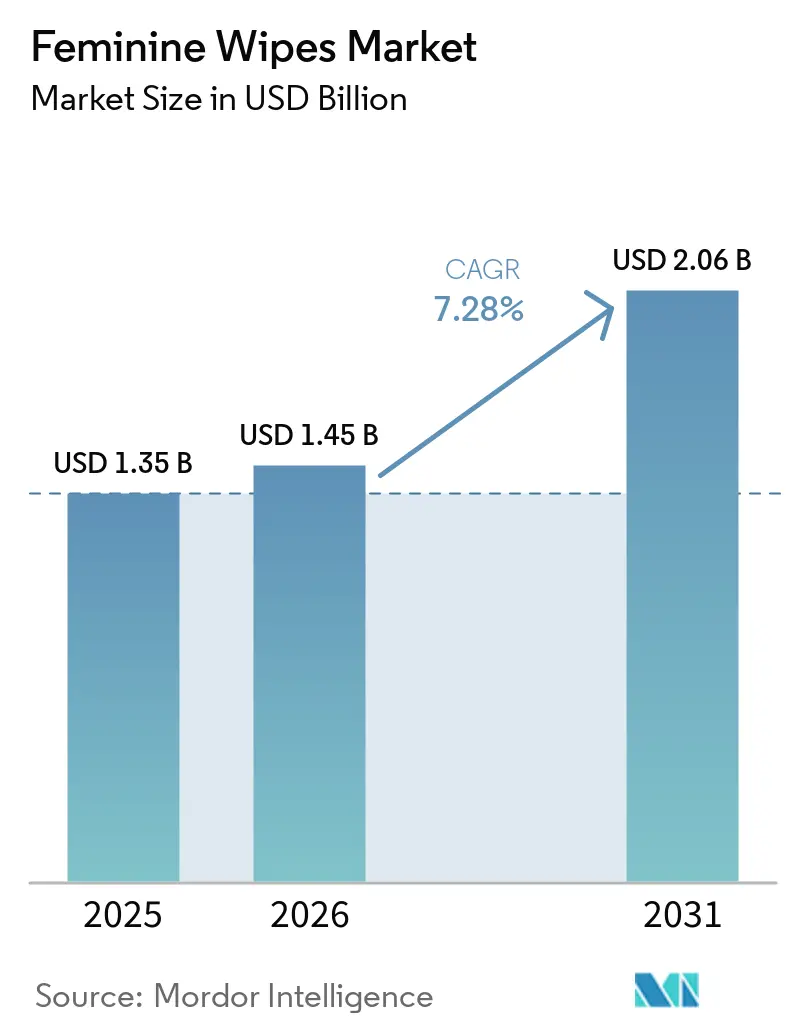
The feminine wipes market is projected to grow from USD 1.35 billion in 2025 to USD 1.45 billion in 2026 and is expected to reach USD 2.06 billion by 2031, registering a CAGR of 7.28% during the forecast period through 2026-2031. This growth is primarily driven by awareness about intimate hygiene, a growing preference for premium personal care products, and rising demand from urban women who are becoming more conscious of the ingredients used in intimate care products. Intimate hygiene wipes are expected to grow, while pH-balanced wipes are anticipated to grow faster through 2031, as consumers increasingly seek products that maintain the skin's natural pH balance. In terms of product nature, conventional feminine wipes dominated the market. However, natural and organic products are gaining traction due to growing consumer preference for eco-friendly, chemical-free options, and this segment is expected to grow through 2031. The market remains moderately consolidated, with key players focusing on innovation and product differentiation to capture a larger share of the growing demand.
Key Report Takeaways
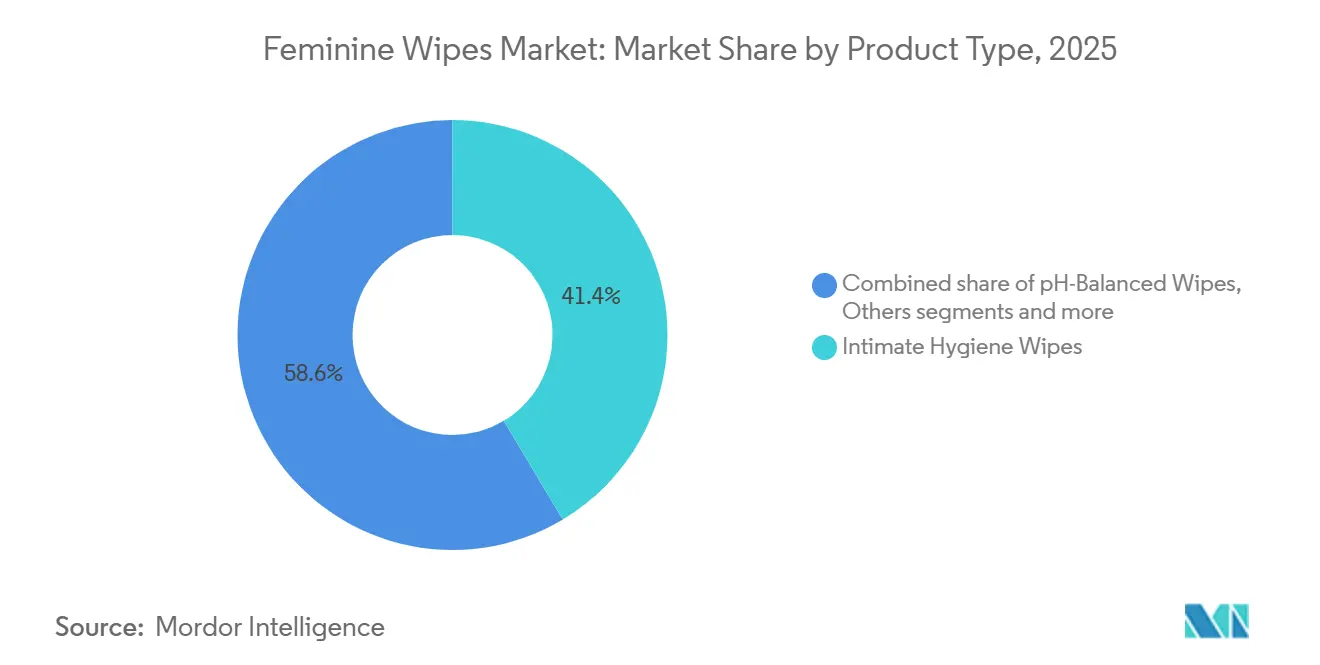
- By product type, intimate hygiene wipes held 41.43% share in 2025, while pH-balanced wipes are projected to grow at 8.54% CAGR through 2031.
- By nature, conventional products held 73.58% share in 2025, while natural/organic products are projected to expand at 8.11% CAGR through 2031.
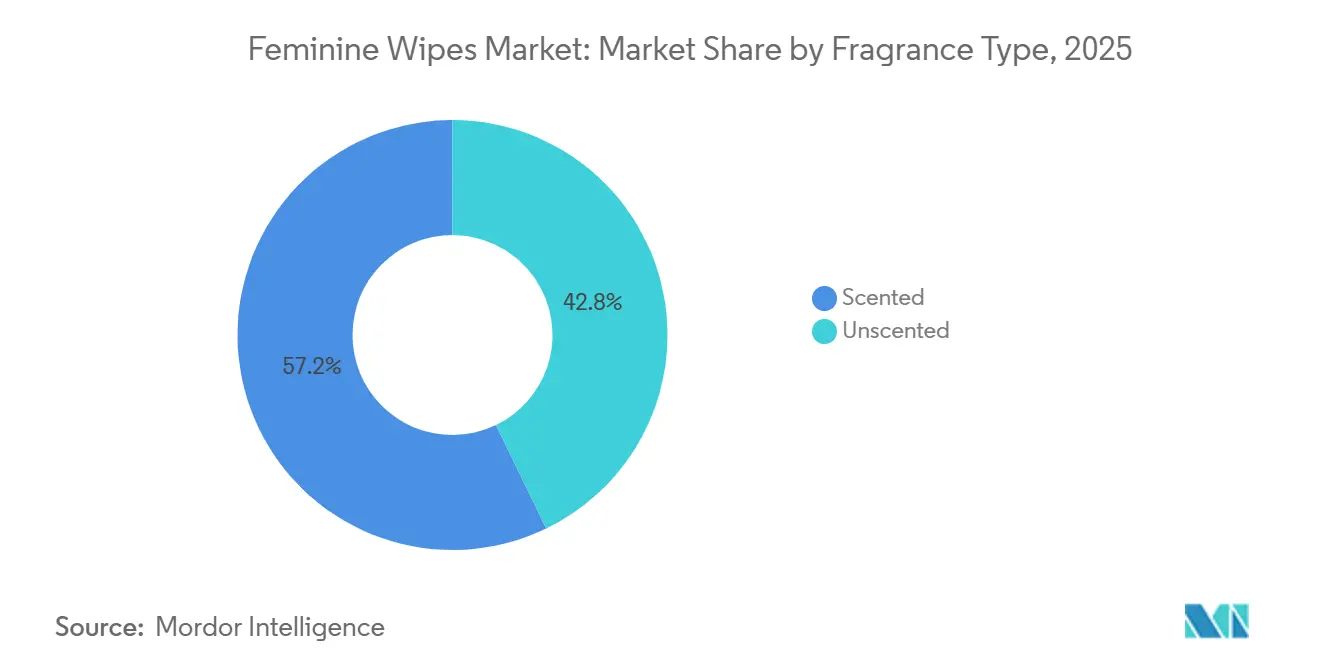
- By fragrance type, scented products held a 57.18% share in 2025, while unscented products are projected to grow at an 8.48% CAGR through 2031.
- By distribution channel, supermarkets and hypermarkets held 37.24% share in 2025, while online retail stores are projected to grow at 10.72% CAGR through 2031.
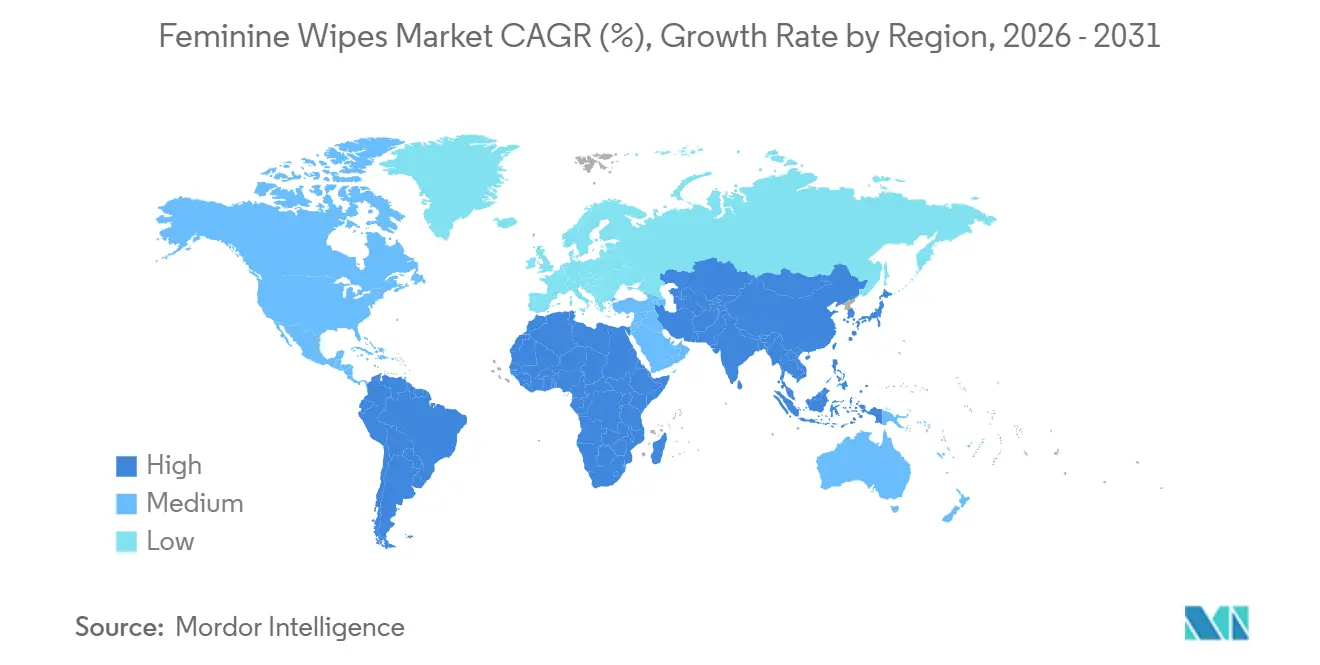
- By geography, North America held a 36.83% share in 2025, while Asia-Pacific is projected to expand at an 8.43% CAGR through 2031.
Note: Market size and forecast figures in this report are generated using Mordor Intelligence’s proprietary estimation framework, updated with the latest available data and insights as of January 2026.
Market Trends and Insights
Drivers Impact Analysis of Feminine Wipes Market*
| Driver | (~) % Impact on CAGR Forecast | Geographic Relevance | Impact Timeline |
|---|---|---|---|
| Increasing awareness regarding intimate hygiene and personal wellness | +1.8% | Global, strongest in South Asia, Southeast Asia, and Sub-Saharan Africa | Medium term (2–4 years) |
| Growing demand for pH-balanced and skin-friendly intimate care products | +1.3% | North America, Europe, East Asia (Japan, South Korea) | Short term (≤ 2 years) |
| Increasing participation of brands in educational initiatives related to feminine health | +0.7% | Global, with early gains in India, Indonesia, Nigeria, and Brazil | Medium term (2–4 years) |
| Innovation in biodegradable and flushable wipe technologies | +1.1% | North America and Europe, spill-over to Asia-Pacific core | Short to medium term (1–3 years) |
| Demand for organic, natural, and chemical-free formulations | +0.9% | North America, Europe, urban Asia-Pacific | Short term (≤ 2 years) |
| Demand for dermatologist-tested and gynecologist-approved products | +0.7% | North America, Europe, South Korea | Short to medium term (1–3 years) |
| Source: Mordor Intelligence | |||
Increasing awareness regarding intimate hygiene and personal wellness
Growing awareness about intimate hygiene and personal wellness is significantly driving the global feminine wipes market. As women become more health-conscious and better educated about hygiene, they are increasingly opting for products that ensure cleanliness, comfort, and convenience in their daily lives. This trend is supported by the World Health Organization's data, which highlights that over 300 million women worldwide are menstruating at any given time, showcasing the vast need for menstrual and intimate care solutions[1]Source: World Health Organization, "Menstrual Health and Hygiene", worldbank.org . Feminine wipes are gaining popularity due to their ease of use, portability, and ability to provide quick hygiene solutions, especially for women with busy schedules. These wipes are designed to meet the rising demand for effective and specialized hygiene products. As awareness of personal wellness continues to grow, the market for feminine wipes is expected to expand steadily, driven by the need for practical, reliable hygiene options.
Growing demand for pH-balanced and skin-friendly intimate care products
The increasing demand for pH-balanced, gentle intimate care products is driving growth in the global feminine wipes market. Consumers are becoming more aware of the importance of maintaining intimate health and avoiding irritation, leading them to prefer products specifically designed to address these needs. There is also a growing understanding of the microbiome and skin sensitivity, prompting a shift from basic cleansing wipes to specialized, gentle formulations. According to the Cleveland Clinic, the natural vaginal pH typically ranges from 3.8 to 4.5, underscoring the need for products that help maintain this balance to support overall intimate health[2]Source: Cleveland Clinic, "Vaginal pH", clevelandclinic.org. In response, manufacturers are focusing on creating feminine wipes that are pH-balanced, dermatologist-tested, and safe for sensitive skin. These efforts aim to build consumer trust and meet the rising demand for products that align with personal wellness and hygiene preferences.
Innovation in biodegradable and flushable wipe technologies
Advancements in biodegradable and flushable wipe technologies are key drivers of the global feminine wipes market. As consumers become more aware of the environmental impact of disposable hygiene products, demand for eco-friendly, sustainable alternatives is increasing. Many people now prefer products that are not only effective but also environmentally responsible. Stricter environmental regulations are pushing manufacturers to develop innovative solutions, such as wipes made from biodegradable materials and plastic-free alternatives. Companies are focusing on creating flushable, dissolvable wipes that break down easily after use, thereby reducing their environmental impact. These efforts aim to meet consumer expectations for sustainable products while ensuring regulatory compliance, helping brands remain competitive in the market.
Demand for organic, natural, and chemical-free formulations
The global feminine wipes market is witnessing growing demand for organic, natural, and chemical-free products as consumers increasingly seek safer, more transparent personal care products. Many individuals are becoming more aware of the potential risks posed by synthetic chemicals and harsh ingredients, and of their impact on sensitive skin. As a result, they are opting for products perceived as gentler and more skin-friendly. This trend has pushed manufacturers to develop feminine wipes with simpler ingredient lists, plant-based materials, and naturally derived components to meet consumer expectations. For instance, in 2026, WaterWipes entered the feminine care segment with products made using over 99% water, emphasizing microbiome-friendly benefits. As more consumers shift toward wellness-focused, clean-label products, demand for natural, chemical-free feminine wipes is expected to grow further, creating opportunities for innovation and expansion.
Restraints Impact Analysis of Feminine Wipes Market*
| Restraint | (~) % Impact on CAGR Forecast | Geographic Relevance | Impact Timeline |
|---|---|---|---|
| Concerns regarding the presence of chemicals, fragrances, and preservatives | -0.7% | North America, Europe, South Korea | Short to medium term (1–3 years) |
| Concerns regarding disruption of natural pH balance and microbiome health | -0.5% | North America, Europe | Short term (≤ 2 years) |
| Stringent regulations regarding product ingredients, labeling, and safety claims | -0.6% | North America, Europe, emerging Asia-Pacific | Medium to long term (2–5 years) |
| Availability of low-cost substitutes and homemade hygiene solutions | -0.4% | South Asia, Sub-Saharan Africa, Latin America rural markets | Long term (≥ 4 years) |
| Source: Mordor Intelligence | |||
Concerns regarding the presence of chemicals, fragrances, and preservatives
Concerns about the use of chemicals, fragrances, and preservatives are becoming a significant challenge for the global feminine wipes market. Consumers are increasingly aware of issues such as skin sensitivity, allergic reactions, and potential health risks associated with certain ingredients. This growing awareness has led to more scrutiny of product formulations, with many questioning the safety and transparency of intimate care products, especially those containing synthetic additives and harsh preservatives. As a result, there is a growing demand for products free of harmful chemicals and gentle on the skin. To address these concerns, manufacturers are being pushed to reformulate their products with safer, more natural ingredients. They are also focusing on providing clearer labeling and improving ingredient transparency to build consumer trust. This shift toward cleaner and more skin-friendly options is reshaping the market and influencing product development strategies.
Stringent regulations regarding product ingredients, labeling, and safety claims
Strict regulations about product ingredients, labeling, and safety claims are becoming a major challenge for the global feminine wipes market. Governments and regulatory bodies in key regions are introducing tougher rules that require companies to disclose ingredients more transparently, conduct thorough safety testing, and back up any claims made in their marketing. For example, the United States Food and Drug Administration issued draft guidelines in November 2025 that call for clearer ingredient labeling and stricter safety evaluations for feminine care products[3]Source: Food and Drug Administration, "Menstrual Products - Performance Testing and Labeling Recommendations", fda.gov. These changes are making it harder for manufacturers to comply, as they need to invest more in testing, reformulating products, and meeting documentation requirements. This is especially difficult for smaller companies, as the added costs and complexities can strain their resources. Overall, these regulations are pushing the industry to prioritize transparency and safety, but they also pose significant operational and financial challenges for many market participants.
*Our forecasts treat driver/restraint impacts as directional, not additive. The impact forecasts reflect baseline growth, mix effects, and variable interactions.
Feminine Wipes Market Segment Analysis
By Product Type:
Clinical Differentiation Elevates pH-Balanced WipesIn 2025, intimate hygiene wipes led the global feminine wipes market, capturing 41.43% of the market. This dominance is attributed to the increasing focus on personal hygiene and the convenience these wipes provide for everyday use and travel. Many consumers prefer these wipes because they offer a quick, effective way to maintain cleanliness and freshness. Their easy availability in retail stores and growing awareness about intimate care have further boosted their demand, making them a staple in personal hygiene routines.
pH-balanced wipes are anticipated to be the fastest-growing segment in the market, with a projected CAGR of 8.54% through 2031. The rising awareness of intimate health and the importance of maintaining the skin's natural pH balance are key drivers of this growth. Consumers are increasingly seeking products that are gentle on the skin, reduce irritation, and promote overall skin health. To cater to this demand, manufacturers are introducing dermatologist-tested, sensitive-skin-friendly options that are gaining popularity among health-conscious buyers. This trend is expected to further expand the market for pH-balanced wipes in the coming years.



By Nature:
Natural/Organic Erodes Conventional’s LeadIn 2025, conventional products led the global feminine wipes market, capturing 73.58% of the market. This segment's success is primarily driven by its affordability, widespread availability, and strong retail presence in both developed and emerging regions. Consumers often choose conventional feminine wipes because they are familiar, easy to find, and budget-friendly, especially in areas where cost is a significant factor. Additionally, the presence of well-known brands and a variety of product options further strengthens the demand for these products, ensuring their continued dominance in the market.
Meanwhile, natural or organic feminine wipes are expected to grow the fastest through 2031, with a projected CAGR of 8.11% over the forecast period. This growth is attributed to rising consumer preference for products free of harmful chemicals, environmentally sustainable, and gentle on the skin. As consumers become more aware of ingredient safety and sustainability, they are increasingly opting for clean-label and eco-friendly personal care products. To meet this demand, manufacturers are developing wipes made from plant-based, naturally derived ingredients, which align with the growing focus on health, wellness, and environmental responsibility. This trend is helping the organic segment attract a wider range of consumers.
By Fragrance Type:
Unscented Gains As Safety Awareness SharpensScented wipes made up 57.18% of the global feminine wipes market value in 2025, holding the top spot in the fragrance segment. These wipes are highly favored by consumers who prioritize freshness, cleanliness, and a pleasant personal care experience. Their popularity spans various age groups, as they are seen as effective in providing long-lasting odor control and comfort. Additionally, the wide availability of scented wipes and the variety of options offered by manufacturers have helped maintain their strong market demand.
On the other hand, unscented wipes are expected to grow at the fastest rate through 2031, with a projected CAGR of 8.48% during the forecast period. This growth is driven by increasing consumer awareness of skin sensitivity and a preference for gentle, irritant-free products. Many consumers are now opting for fragrance-free wipes to avoid potential allergic reactions or harsh chemicals. The rising demand for dermatologist-tested and skin-friendly products has further boosted the adoption of unscented wipes, making them a key growth area in the feminine wipes market.
By Distribution Channel:
Online Retail Rewrites The Acquisition FunnelSupermarkets and hypermarkets accounted for 37.24% of the global feminine wipes market value in 2025, making them the top distribution channel. These stores remain popular because they allow customers to physically browse products, compare options, and purchase in bulk conveniently. Their widespread presence and frequent promotional campaigns help increase product visibility and attract more buyers. Many consumers prefer the familiarity and ease of shopping in physical stores, which continues to drive sales through this channel.
Online retail stores are expected to grow the fastest through 2031, with a projected CAGR of 10.72% during the forecast period. The increasing use of smartphones and the convenience of home delivery are encouraging more consumers to shop online. E-commerce platforms offer a broader range of products, subscription services, and access to customer reviews, making them appealing to buyers. Furthermore, the demand for discreet and personalized shopping experiences is boosting the popularity of online channels, especially for products like feminine wipes.
Geography Analysis
North America Feminine Wipes Market
North America held 36.83% of the global feminine wipes market share in 2025, maintaining its position as the leading region. This dominance is driven by high consumer spending power, widespread use of premium personal care products, and strong awareness of intimate hygiene. The demand for clean-label and high-quality products continues to grow, further boosting the market. Additionally, the presence of well-established brands and a robust retail and e-commerce network supports the region's market growth.
APAC Feminine Wipes Market
The Asia-Pacific region is expected to grow at the fastest rate, with a projected CAGR of 8.43% through 2031. Factors such as rapid urbanization, increased hygiene awareness, and greater access to modern retail and online shopping platforms are driving this growth. The region's large population, rising disposable incomes, and growing interest in personal care products among younger consumers are also key contributors. Emerging economies in the region present significant opportunities as awareness and product availability improve.
Europe Feminine Wipes Market
Europe is another significant market, shaped by changing consumer preferences, a focus on sustainability, and stricter product safety standards. Consumers in the region are increasingly seeking eco-friendly products, such as biodegradable and skin-safe feminine wipes. Manufacturers are responding by developing products with cleaner ingredients and sustainable packaging to meet these demands. Both developed and developing markets in Europe continue to offer opportunities for innovation and market expansion, driven by evolving consumer needs.

Competitive Landscape
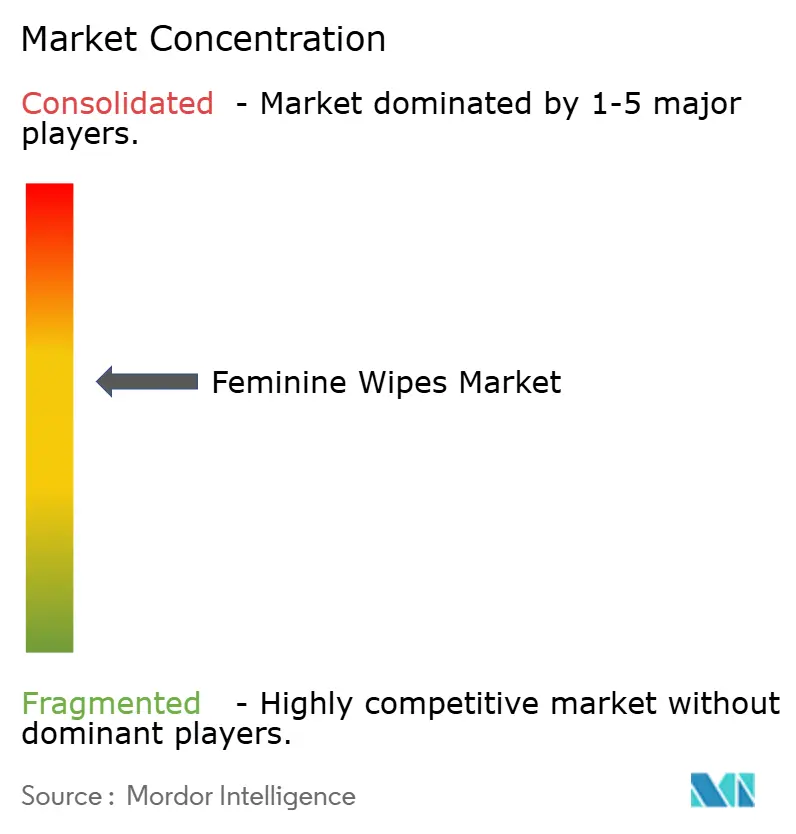
The global feminine wipes market is moderately consolidated, with key players including Procter & Gamble Company, Kimberly-Clark Corporation, Unicharm Corporation, Prestige Consumer Healthcare Inc., and Edgewell Personal Care Company. These companies hold strong positions due to their wide product ranges, established distribution networks, and strong brand recognition among consumers. Competition in the market is driven by product quality, formulation credibility, and the ability to meet changing consumer demands. To maintain their market share, these companies are expanding their product portfolios and strategically positioning themselves in key regions.
Manufacturers are increasingly focusing on developing products with cleaner, safer formulations to stand out in the market. There is a growing demand for feminine wipes that are gentle on the skin, pH-balanced, and clinically tested. Consumers are also seeking transparency in ingredient lists and wellness-focused products, which has pushed companies to innovate and offer premium options. As a result, brands are shifting their focus from competitive pricing alone to building trust with consumers by emphasizing the safety, quality, and performance of their products.
Sustainability and online retail are becoming critical factors in the feminine wipes market. Companies are working on developing biodegradable and eco-friendly products to meet consumer preferences and comply with environmental regulations. Additionally, the rise of e-commerce platforms, subscription-based models, and discreet delivery services is making feminine wipes more accessible to customers. These trends are helping both established brands and new entrants strengthen their presence in the market by reaching a wider audience through retail stores and online channels.
Feminine Wipes Industry Leaders
-
Kimberly-Clark Corporation
-
Unicharm Corporation
-
Edgewell Personal Care Company
-
Prestige Consumer Healthcare Inc.
-
The Procter & Gamble Company
- *Disclaimer: Major Players sorted in no particular order
Feminine Wipes Market Companies Covered in this Report
- The Procter & Gamble Company
- Kimberly-Clark Corporation
- Unicharm Corporation
- Prestige Consumer Healthcare Inc.
- Edgewell Personal Care Company
- The Honey Pot Company, LLC
- Healthy HooHoo
- Bodywise (UK) Ltd
- TZMO Group
- Ontex Group
- VH Essentials
- Forum Brands, LLC
- Lovability
- Diamond Wipes Intl.
- Rael Inc.
- Reckitt Benckiser plc (Queen V)
- Pixie Cup LLC
- Combe Inc.
- Lagom Labs Pvt Ltd
- Urban Essentials India Pvt Ltd

Recent Industry Developments in Feminine Wipes Market
- April 2026: WaterWipes expanded its product range with the launch of new Feminine and Incontinence Care Wipes. This move marked the company’s entry into personal care categories beyond baby care. The launch aligned with its strategy to offer sensitive-skin-friendly products and cater to different life stages.
- April 2025: Niches & Nooks launched its intimate care product line exclusively at Target, introducing pH-balanced body care items. The product range included a gentle cleanser, refreshing towelettes, an anti-chafing barrier spray, and a body fragrance mist, addressing intimate wellness and personal hygiene needs. The brand's initial collection comprised Wash Your Nooks Gentle Cleanser, Wipe Your Nooks Refreshing Towelettes, Dry Your Nooks Sweat Absorbing Chafing Barrier Spray, and Freshen Your Nooks Body & Fabric Fragrance Mist.
- November 2024: The Honey Pot introduced its first Witch Hazel Intimate Wash and Wipes line, which provided comfort during postpartum recovery. The wipes helped relieve irritation, itching, and burning associated with hemorrhoids, while maintaining a healthy vaginal pH balance. The products were flushable and septic-safe.
- May 2024: Summer's Eve introduced its Ultimate Odor Protection product line to address intimate hygiene needs. The range comprised Daily Refreshing Spray, Daily Refreshing Wash, and Daily Refreshing Wipes. The wipes contained a patented odor-reducing ingredient and a boric acid complex to maintain pH balance aligned with the body's natural chemistry. All products in the line were gynecologist-tested.


Global Feminine Wipes Market Report Scope
Feminine wipes are single-use hygiene products made to clean and refresh the intimate area, ensuring comfort and cleanliness for daily care. The global feminine wipes market is classified into product type, nature, fragrance type, distribution channel, and geography. Based on product type, the market is classified into intimate hygiene wipes, menstrual/sanitary wipes, pH-balanced wipes, and others. Based on nature, the market is classified into conventional and natural/organic. Based on fragrance type, the market is classified into scented and unscented. Based on distribution channel, the market is classified into supermarkets/hypermarkets, pharmacies and drug stores, convenience stores, online retail stores, and other channels. Based on geography, the market is classified into North America, Europe, Asia-Pacific, South America, and the Middle East and Africa. The market forecasts are provided in terms of value (USD).
Segmentation Overview
| Intimate Hygiene Wipes |
| Menstrual/Sanitary Wipes |
| pH-Balanced Wipes |
| Others |
| Conventional |
| Natural/Organic |
| Scented |
| Unscented |
| Supermarkets/Hypermarkets |
| Pharmacies and Drug Stores |
| Convenience Stores |
| Online Retail Stores |
| Other Channels |
| North America | United States |
| Canada | |
| Mexico | |
| Rest of North America | |
| Europe | Germany |
| United Kingdom | |
| Italy | |
| France | |
| Spain | |
| Poland | |
| Belgium | |
| Sweden | |
| Rest of Europe | |
| Asia-Pacific | China |
| Japan | |
| India | |
| Australia | |
| Indonesia | |
| South Korea | |
| Thailand | |
| Singapore | |
| Rest of Asia-Pacific | |
| South America | Brazil |
| Argentina | |
| Colombia | |
| Chile | |
| Peru | |
| Rest of South America | |
| Middle East and Africa | South Africa |
| Saudi Arabia | |
| United Arab Emirates | |
| Nigeria | |
| Egypt | |
| Morocco | |
| Turkey | |
| Rest of Middle East and Africa |
| By Product Type | Intimate Hygiene Wipes | |
| Menstrual/Sanitary Wipes | ||
| pH-Balanced Wipes | ||
| Others | ||
| By Nature | Conventional | |
| Natural/Organic | ||
| By Fragrance Type | Scented | |
| Unscented | ||
| By Distribution Channel | Supermarkets/Hypermarkets | |
| Pharmacies and Drug Stores | ||
| Convenience Stores | ||
| Online Retail Stores | ||
| Other Channels | ||
| By Geography | North America | United States |
| Canada | ||
| Mexico | ||
| Rest of North America | ||
| Europe | Germany | |
| United Kingdom | ||
| Italy | ||
| France | ||
| Spain | ||
| Poland | ||
| Belgium | ||
| Sweden | ||
| Rest of Europe | ||
| Asia-Pacific | China | |
| Japan | ||
| India | ||
| Australia | ||
| Indonesia | ||
| South Korea | ||
| Thailand | ||
| Singapore | ||
| Rest of Asia-Pacific | ||
| South America | Brazil | |
| Argentina | ||
| Colombia | ||
| Chile | ||
| Peru | ||
| Rest of South America | ||
| Middle East and Africa | South Africa | |
| Saudi Arabia | ||
| United Arab Emirates | ||
| Nigeria | ||
| Egypt | ||
| Morocco | ||
| Turkey | ||
| Rest of Middle East and Africa | ||


Key Questions Answered in the Report
What is the projected value of feminine wipes by 2031?
The feminine wipes market is projected to reach USD 2.06 billion by 2031, rising from USD 1.45 billion in 2026 at a 7.28% CAGR.
Which product category leads demand today?
Intimate Hygiene Wipes led in 2025 with a 41.43% share, making them the largest product type in current sales.
Which product type is growing the fastest through 2031?
PH-Balanced Wipes are forecast to grow the fastest, with an 8.54% CAGR, as buyers place more weight on skin-friendly and microbiome-aware formulations.
Which sales channel is expanding the quickest?
Online Retail Stores are the fastest-growing channel, projected to expand at a 10.72% CAGR through 2031 because discreet delivery and subscriptions are reshaping purchase behavior.
Page last updated on:





