
Market Overview
| Study Period | 2021 - 2031 |
|---|---|
| Forecast Data Period | 2026 - 2031 |
| Base Year Market Size (2025) | USD 1.10 Billion |
| Market Size (2026) | USD 1.18 Billion |
| Market Size (2031) | USD 1.68 Billion |
| Growth Rate (2026 - 2031) | 7.33 % |
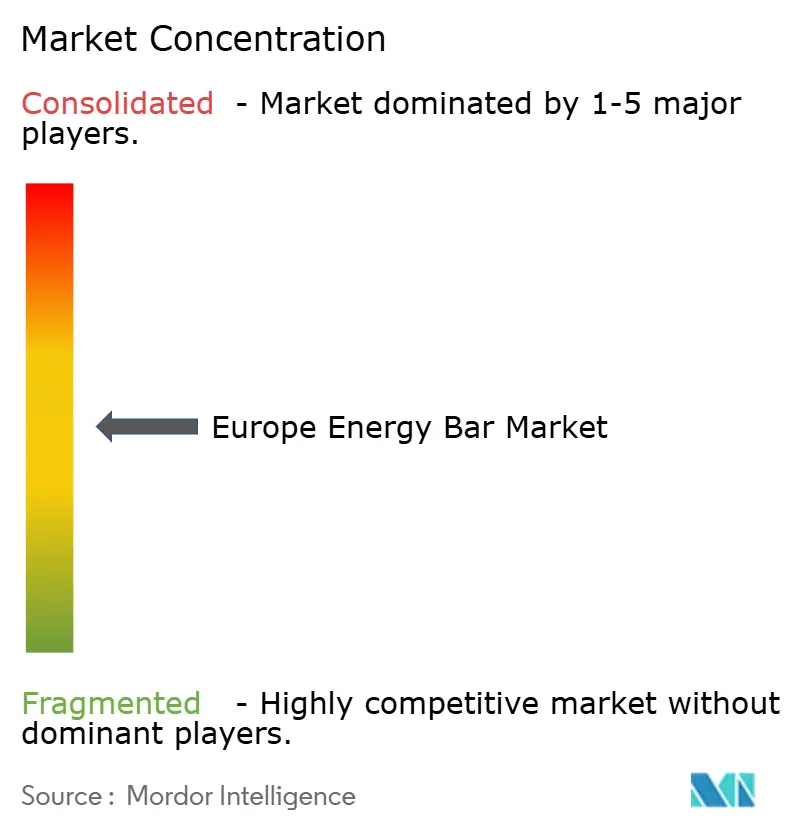
| Market Concentration | Medium |
Major Players *Disclaimer: Major Players sorted in no particular order Image © Mordor Intelligence. Reuse requires attribution under CC BY 4.0. | |
Europe Energy Bar Market Analysis by Mordor Intelligence
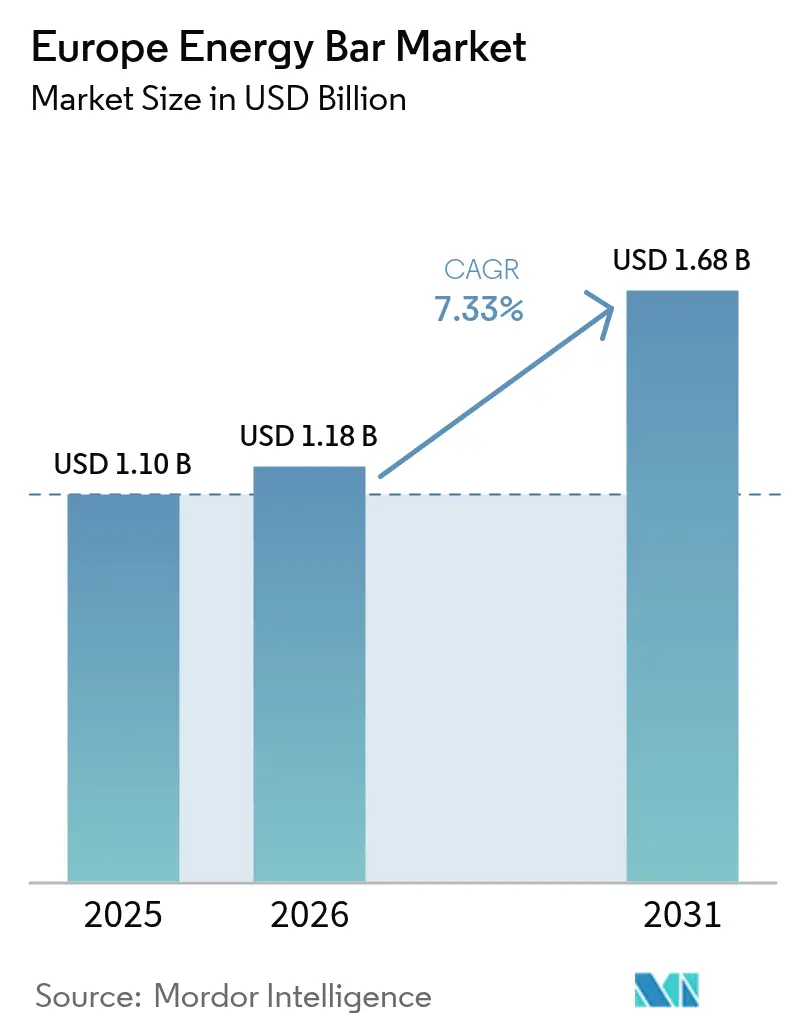
The European energy bar market size was valued at USD 1.10 billion in 2025 and estimated to grow from USD 1.18 billion in 2026 to reach USD 1.68 billion by 2031, at a CAGR of 7.33% during the forecast period (2026-2031). This growth is driven by the increasing shift of energy bars from being a niche product for sports nutrition to becoming a popular choice for everyday healthy snacking. Factors such as a 3.9 million rise in gym memberships across Europe between 2023 and 2024, and the growing availability of energy bars in meal deals at major grocery stores, are making these products more accessible to consumers. Manufacturers are capitalizing on this trend by developing energy bars with high-protein and low-sugar content, incorporating plant-based or allergen-free ingredients, and ensuring their products meet sustainability standards in line with stricter EU regulations. The market remains moderately fragmented, with competition intensifying as new players enter the space. These emerging companies are gaining market share by focusing on indulgent textures, functional ingredients, and efficient direct-to-consumer delivery models, challenging established multinational brands.
Key Report Takeaways
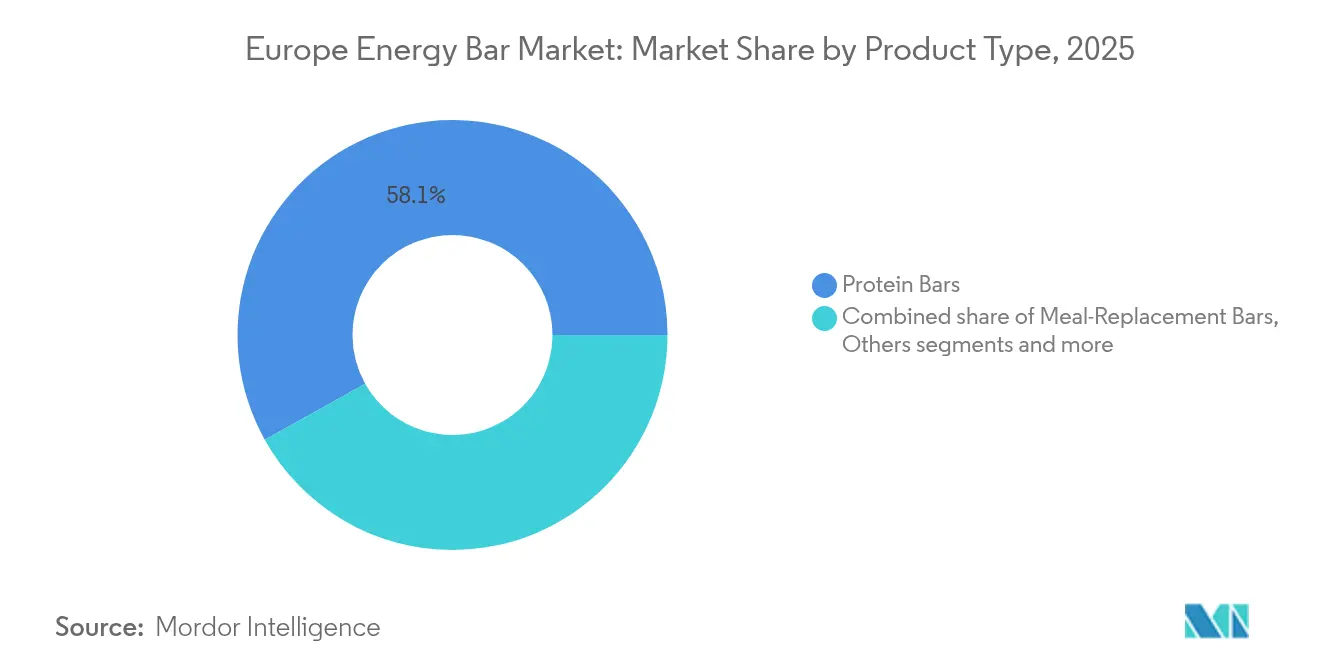
- By product type, protein bars led with a 58.10% share of the European energy bar market in 2025, while meal-replacement bars are forecast to register the fastest growth of 7.41% CAGR through 2031.
- By flavor profile, chocolate-based variants captured 64.20% of the European energy bar market share in 2025; nut- and seed-based bars are expected to expand at an 8.3% CAGR through 2031.
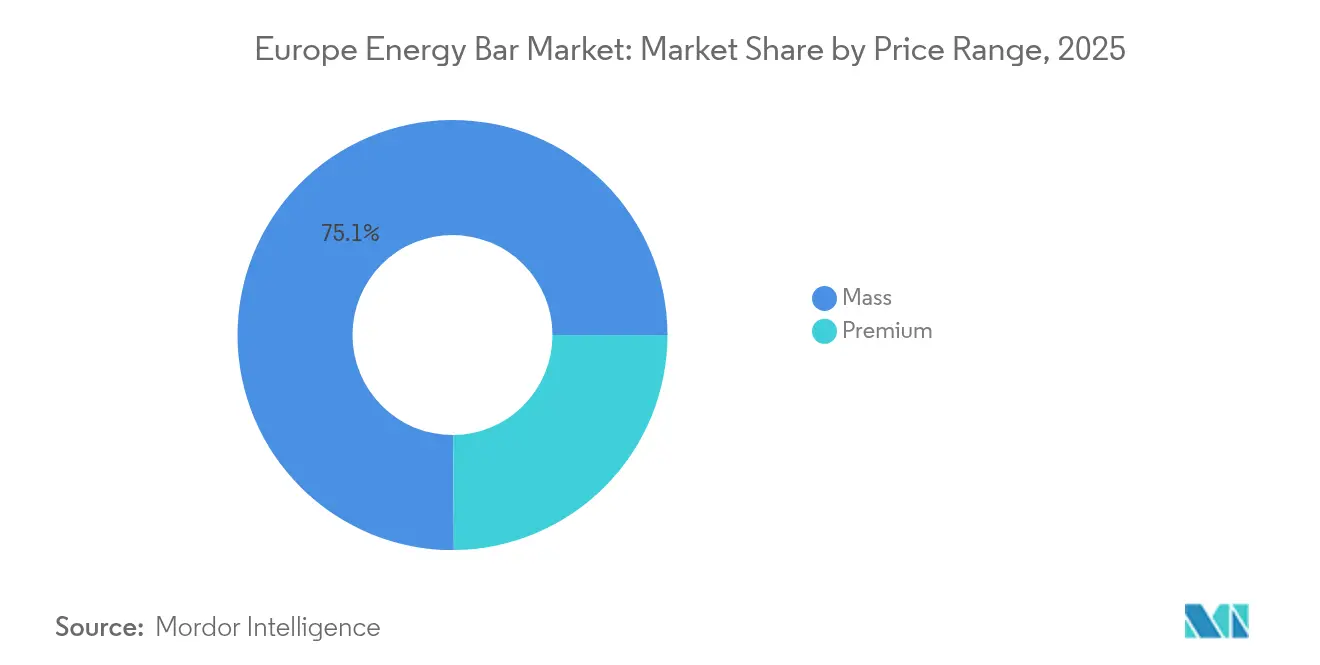
- By price range, the mass tier accounted for 75.10% of the European energy bar market in 2025, whereas premium products are projected to log the highest 7.85% CAGR over the forecast period.
- By distribution channel, supermarkets and hypermarkets accounted for 51.70% of 2025 revenue, while online retail is expected to be the fastest riser, with a 7.62% CAGR through 2031.
- By country, Germany dominated the European energy bar market with a 25.20% share in 2025, while France is projected to have the strongest growth, with a 7.38% CAGR from 2026 to 2031.
Note: Market size and forecast figures in this report are generated using Mordor Intelligence’s proprietary estimation framework, updated with the latest available data and insights as of 2026.
Europe Energy Bar Market Trends and Insights
Drivers Impact Analysis*
| Driver | (~) % Impact on CAGR Forecast | Geographic Relevance | Impact Timeline |
|---|---|---|---|
| Shift toward reduced sugar and high-fiber diets | +1.2% | Western Europe (Germany, France, United Kingdom, Netherlands); moderate in Southern Europe | Medium term (2-4 years) |
| Rising adoption of energy bars as meal replacements or healthy snacking options | +1.5% | United Kingdom, Germany, France; expanding to convenience-focused markets (Spain, Poland) | Short term (≤ 2 years) |
| Expanding fitness and sports culture in Europe | +1.3% | United Kingdom, Germany, Netherlands, Sweden; emerging in Poland, Spain | Long term (≥ 4 years) |
| Popularity of high-protein diets and weight management routines | +1.4% | Western Europe (United Kingdom, Germany, France, Netherlands); growing in Southern Europe | Medium term (2-4 years) |
| Increasing preference for clean-label, natural and plant-based ingredients | +1.0% | Western Europe (Germany, Netherlands, Sweden); niche but growing in France, Italy | Medium term (2-4 years) |
| Demand for allergen-free bars due to prevalence of lactose intolerance and gluten sensitivity | +0.8% | Northern Europe (Sweden, Netherlands, Germany); moderate in United Kingdom, France | Long term (≥ 4 years) |
| Source: Mordor Intelligence | |||
Shift toward reduced sugar and high-fiber diets
The growing focus on healthier eating habits is driving demand for energy bars with less sugar and more fiber in Europe. According to the European Food Safety Authority, as of September 2025, around 34% of Europeans prioritize healthier diets[1]. This trend is prompting manufacturers to reduce added sugars in their products and incorporate soluble fibers that help regulate blood sugar levels. Challenges in the sugar market are contributing to this shift. With EU sugar production expected to decline, products that rely heavily on sugar are facing higher costs. To meet consumer preferences for low-sugar, high-fiber options, manufacturers are increasingly using alternative sweeteners, such as stevia, erythritol, and allulose. These are often combined with ingredients such as inulin or chicory root fibers, which not only improve digestion but also help consumers feel fuller for a longer period.
Expanding fitness and sports culture in Europe
Growing awareness about fitness and health across Europe is driving the demand for energy bars designed to enhance performance. Consumers are increasingly focusing on nutrition as a key part of their wellness routines. According to the Agriculture and Horticulture Development Board as of January 2025, 90% of consumers believe that maintaining a healthy diet is essential for overall well-being, while 86% consider fitness equally important[2]. This highlights a strong and ongoing interest in products that support active and healthy lifestyles. The rising number of people joining gyms further boosts this trend, as energy bars are seen as convenient options for pre- and post-workout nutrition, offering quick protein intake and aiding in recovery. Additionally, large fitness chains are contributing to market growth by selling these products through in-club retail outlets, vending machines, and loyalty programs.
Popularity of high-protein diets and weight management routines
The growing popularity of high-protein diets and weight management plans is driving demand for protein-rich energy bars in Europe. Consumers are looking for convenient snack options that help them feel full and support muscle maintenance. This trend is further highlighted by public health data, such as the United Kingdom Government’s report showing that 64% of adults in England were either overweight or living with obesity between 2022 and 2023[3]. This suggests a growing demand for snacks that are both calorie-controlled and rich in essential nutrients. Protein has become a key ingredient in the development of new energy and cereal bars, with whey and plant-based proteins being widely used. However, manufacturers still face challenges in improving the texture and flavor of certain protein isolates. Despite these hurdles, brands that manage to offer products with a satisfying taste and a protein content of 18–20 grams per serving can attract health-conscious consumers.
Rising adoption of energy bars as meal replacements or healthy snacking options
Energy bars are gaining popularity as meal replacements and healthier snack options, expanding beyond their traditional use as post-workout snacks. In Europe, people are increasingly opting for energy bars for breakfast or lunch because they offer quick, convenient, and portion-controlled alternatives to regular meals. These bars are now widely available in meal deals, convenience stores, and on-the-go retail formats, making them a practical choice for busy consumers. To meet this growing demand, manufacturers are creating bars with softer textures, filled centers, and balanced macronutrient profiles that provide the satisfaction of a light meal while being easy to carry. Clearer nutrition labeling under EU Regulation 1169/2011 enables consumers to compare energy bars with traditional foods, making it easier for them to choose the former as a healthier option. These developments are expanding the occasions when energy bars are consumed and solidifying their role as a convenient part of daily diets.
Restraints Impact Analysis*
| Restraint | (~) % Impact on CAGR Forecast | Geographic Relevance | Impact Timeline |
|---|---|---|---|
| Growing competition from healthier snack alternatives | -0.9% | Western Europe (United Kingdom, Germany, France, Netherlands); intensifying in convenience channels | Short term (≤ 2 years) |
| Premium pricing of high-quality or protein-rich bars | -0.6% | Price-sensitive markets (Spain, Poland, Italy); moderate in United Kingdom, Germany | Medium term (2-4 years) |
| Rising concerns about usage of artificial sweeteners, preservatives and additives | -0.5% | Germany, Netherlands, Sweden (high clean-label awareness); emerging in France, United Kingdom | Medium term (2-4 years) |
| Increasing sustainability expectations are pressuring brands | -0.4% | Western Europe (Germany, Netherlands, France, Sweden); regulatory pressure from Europe directives | Long term (≥ 4 years) |
| Source: Mordor Intelligence | |||
Growing competition from healthier snack alternatives
The European energy bar market is facing growing competition from healthier, whole-food snacks, as consumers increasingly prefer minimally processed options, such as roasted almonds, mixed nut blends, dried fruits, seed mixes, and protein-fortified crisps. The strong availability of these alternatives in the region supports this trend. For instance, the European Union is expected to contribute approximately 10% of global almond production for the 2024–2025 period, according to the United States Department of Agriculture, ensuring a steady supply and competitive pricing for nut-based snacks[4]. These whole-food options are perceived as more natural and healthier due to their clean-label appeal, which resonates with consumers seeking simpler and less processed products. These snacks often provide a more cost-effective source of protein compared to many energy bars, especially in discount retail stores.
Rising concerns about artificial sweeteners, preservatives and additives
Concerns about artificial sweeteners, preservatives, and other additives are increasingly limiting the growth of the energy bar market in Europe. Consumers are becoming more cautious about products with highly processed ingredients. Many are now paying closer attention to labels, especially those who prioritize health and prefer clean-label products. This trend is driving demand for simpler, more natural energy bars made with whole-food ingredients and naturally derived sweeteners, while avoiding excessive processing. However, manufacturers face significant challenges in meeting these expectations. Reformulating products to use natural ingredients without compromising on taste, texture, or affordability is a complex task. As consumers grow more aware of ingredient quality, products perceived as overly artificial are losing popularity, with cleaner and more transparent alternatives gaining traction in the market.
*Our forecasts treat driver/restraint impacts as directional, not additive. The impact forecasts reflect baseline growth, mix effects, and variable interactions.
Segment Analysis
By Product Type: Protein Bars Lead, Meal-Replacement Bars Accelerate
Protein bars maintained their leadership position in the European energy bar market in 2025, accounting for 58.10% of the market share. These bars have become a staple for consumers seeking products that support sports recovery, muscle building, and high-protein snacking. Their widespread appeal is driven by their alignment with health and fitness trends, a broad range of flavors, and their availability across various retail channels, including supermarkets, drugstores, and e-commerce platforms. Manufacturers are increasingly focusing on product innovation, such as cleaner ingredient labels, higher protein content, and improved textures, to meet the growing demand. These factors collectively reinforce the role of protein bars as a key driver of growth and consumer engagement in the energy bar market.
Meal-replacement bars are projected to witness a significant compound annual growth rate (CAGR) of 7.41% through 2031, reflecting their growing popularity as convenient meal alternatives. This segment is gaining traction among busy professionals, students, and travelers who prioritize portion-controlled options that offer a balance of macronutrients and functional ingredients. Enhanced taste profiles and claims of better satiety are further broadening their appeal to a wider audience beyond fitness-focused consumers. These developments position meal-replacement bars as a rapidly expanding segment with the potential to reshape the competitive landscape of the energy bar market in the coming years.

By Flavor Profile: Chocolate Dominates, Nut- and Seed-Based Bars Rise
Chocolate-based formulations dominated the European energy bar market in 2025, accounting for 64.20% of total sales. This dominance is attributed to their widespread consumer appeal, offering indulgent flavors that effectively mask the taste of fortified proteins. These formulations cater to both mainstream consumers and fitness enthusiasts, making them a versatile choice across various demographics. Manufacturers continue to innovate with premium chocolate pairings, unique textures, and diverse inclusions, ensuring sustained consumer interest and strong retail presence. As a result, chocolate-based energy bars remain a cornerstone of the market, driving significant sales and consumer loyalty.
Nut- and seed-based energy bars are projected to grow at a robust CAGR of 8.3% from 2026 to 2031, reflecting a shift in consumer preferences toward plant-based nutrition and clean-label products. These bars appeal to health-conscious consumers seeking natural sources of fats, fiber, and minimally processed ingredients. The growing popularity of vegan and flexitarian diets further supports the demand for nut- and seed-based formulations. With their alignment to trends in wellness, sustainability, and simplicity, this segment is poised for rapid expansion, offering significant opportunities for manufacturers to capture a larger share of the evolving energy bar market.
By Price Range: Mass Tier Prevails, Premium Tier Expands
The mass segment held a significant share of 75.10% in the European energy bar market in 2025, primarily due to its affordability and widespread availability. This segment thrives on high sales volumes, facilitated by mainstream retail outlets such as supermarkets, discount stores, and convenience stores. The consistent demand is supported by the availability of a wide range of flavors and frequent promotional campaigns, which appeal to a broad consumer base. These products are particularly popular among casual snackers rather than niche, performance-oriented consumers, making the mass segment a fundamental driver of the market's growth in the region.
The premium segment is projected to expand at a compound annual growth rate (CAGR) of 7.85% through 2031, driven by the rising consumer preference for health-focused and functional nutrition products. This segment caters to individuals seeking energy bars with natural ingredients, reduced sugar content, and higher protein levels to align with their wellness objectives. Premium offerings often stand out due to their distinctive packaging and branding, which resonate with lifestyle-conscious consumers. Furthermore, the increasing availability of these products in pharmacies, specialty nutrition stores, and online platforms is broadening their market reach. These factors collectively position the premium segment as a rapidly growing and dynamic category within the European energy bar market.
By Distribution Channel: Stores Hold Scale, Online Gains Velocity
Supermarkets and hypermarkets were responsible for 51.70% of Europe’s energy bar turnover in 2025, driven by their ability to provide strong shelf visibility and frequent in-store promotions. These retail formats effectively position energy bars as convenient additions to daily lunch routines through bundled meal deals. Their widespread presence across urban and suburban areas ensures consistent consumer exposure and high foot traffic. The availability of diverse flavors and formats caters to both casual snackers and health-conscious consumers, while competitive pricing strategies, including private-label offerings, further enhance category performance. These factors collectively establish supermarkets and hypermarkets as key contributors to the energy bar market's revenue.
E-commerce and direct-to-consumer platforms are anticipated to grow at a 7.62% CAGR through 2031, emerging as the fastest-growing distribution channel. The rise of subscription models and personalized recommendation systems is fostering repeat purchases by aligning products with individual dietary preferences and nutritional goals. Online platforms also provide a broader product range compared to physical stores, enabling niche, premium, and limited-edition energy bars to gain traction among consumers. Furthermore, faster delivery options and the increasing prevalence of mobile-first shopping behaviors are accelerating the adoption of these channels. As digital engagement continues to expand, e-commerce is expected to play a pivotal role in shaping consumer loyalty and driving innovation within the energy bar market.
Geography Analysis
Germany is identified as the leading market for energy bars in Europe, contributing 25.20% of the region's sales in 2025. This leadership is attributed to its advanced retail infrastructure, which effectively caters to both premium and value-oriented consumers. The availability of dedicated sports nutrition sections in mainstream retail outlets further enhances product visibility and accessibility. German consumers exhibit a strong preference for functional snacking, which drives demand for a diverse range of energy bar options. The market's extensive distribution network and broad price range make it a key destination for established brands and new entrants aiming to expand their presence.
France is expected to emerge as the fastest-growing market for energy bars in Europe, with a projected CAGR of 7.38% from 2026 onward. The increasing consumer focus on clean-label products and environmentally sustainable options is significantly shaping purchasing decisions. This trend is further supported by EU-wide sustainability regulations, which are encouraging companies to adopt transparent sourcing and eco-friendly labeling practices. These regulatory and consumer-driven shifts are fostering innovation, particularly in premium product segments, positioning France as a critical market for next-generation energy bars. The growing emphasis on health-conscious and sustainable consumption is anticipated to drive substantial growth in this market.
The United Kingdom continues to hold a significant position in the European energy bar market, driven by strong consumer engagement with fitness trends, high-protein snacks, and convenient on-the-go formats. The country's well-established grocery and convenience store networks provide extensive visibility for both mainstream and performance-focused brands. Other European countries such as Italy, Spain, the Netherlands, Sweden, and Poland present distinct growth opportunities influenced by local consumer preferences and retail dynamics. Variations in flavor preferences, wellness priorities, and distribution channels across these markets highlight the need for tailored innovation.
Regulatory Landscape
Energy bars sold across Europe operate under the EU food information and claims framework, led by Regulation (EU) No 1169/2011 on food information to consumers and Regulation (EC) No 1924/2006 on nutrition and health claims. For bar brands positioned around protein, fiber, energy, and performance benefits, claim substantiation and labeling compliance are central to go-to-market execution, covering ingredient lists, allergens, nutrition declarations, and the controlled use of claims (including conditions for nutrition claims and the Union list process for health claims). Regulation (EC) No 1925/2006 (addition of vitamins and minerals) also anchors fortification strategies used in energy and meal-replacement formats.
Enforcement signals continue to affect both formulation choices and marketing language. In May 2026, the European Commission issued Commission Regulation (EU) 2026/1118 (26 May 2026) refusing to authorize a creatine-related health claim under Regulation (EC) No 1924/2006, highlighting the risk of relying on non-authorized performance claims in bar communications. Alongside these controls, EU-level work on food-rule simplification and digital efficiency is visible in the European Commission 2026 action planning, which can influence how quickly businesses update labels, dossiers, and compliance workflows across multi-country distribution.
Value Chain Analysis
The Europe energy bar value chain begins with ingredient sourcing, including cereals and grains, sweeteners, nuts and seeds, inclusions (fruit pieces and chocolate), functional fibers, and proteins (whey and plant proteins such as pea, rice, and soy). Formulation is then converted into finished bars through extrusion, baking, cold-press, and molding or layering processes, followed by primary packaging and case packing designed for ambient stability and high retail handling. Compliance runs as an overlay across the chain, with labeling under Regulation (EU) No 1169/2011 and controlled use of nutrition and health claims under Regulation (EC) No 1924/2006 shaping artwork lead times, SKU localization, and whether performance positioning is feasible.
Manufacturing is handled by both brand-owned plants and specialized co-manufacturers, including CDMO-style production for premium and functional SKUs. Finished product then moves through wholesalers and retailers into supermarkets and hypermarkets, convenience and specialist nutrition outlets, and online retail. Cross-border distribution is a key feature of the European market, so transport costs and service levels influence how efficiently brands manage low-weight, high-SKU bar assortments. Downstream, supermarkets and hypermarkets remain the largest channel by revenue, while online and direct-to-consumer models increasingly affect assortment breadth, trial packs, and repeat purchase behavior, tightening the link between new product development and consumer feedback.
Competitive Landscape
The European energy bar market is characterized by moderate concentration, with multinational food corporations utilizing their extensive retail networks and well-established brand recognition to secure prominent shelf space. These companies benefit from economies of scale and consistent product availability, which strengthen their market presence. However, digital-first sports nutrition brands and performance-focused companies are increasingly disrupting the market by introducing innovative offerings and leveraging targeted online campaigns to engage directly with consumers. This dynamic has created a competitive environment where established players and emerging challengers vie for market share, striking a balance between traditional influence and modern agility.
Key strategies employed by market participants include premiumization, omnichannel distribution, and a focus on sustainability. Companies are expanding their footprint in convenience stores, travel retail outlets, and specialty nutrition shops while simultaneously enhancing their e-commerce platforms to meet the growing demand for quick delivery and personalized product assortments. Established confectionery-backed brands are leveraging their robust logistics networks to accelerate market penetration across Europe, while niche nutrition-focused brands are emphasizing clean-label formulations and functional benefits to appeal to health-conscious consumers. These approaches reflect a broader industry shift toward delivering higher-value products and improving accessibility for a diverse customer base.
Innovation within the European energy bar market is increasingly centered on sustainability and personalization. Companies are prioritizing the use of upcycled ingredients, compostable or reduced-plastic packaging, and other eco-friendly initiatives to align with consumer preferences for environmentally responsible products. Digital tools are being developed to provide personalized product recommendations tailored to individual consumer goals. With the implementation of stricter EU regulations, such as the Green Claims Directive, brands are now required to substantiate their sustainability claims through independent verification. This regulatory shift is expected to create a competitive divide between companies with credible environmental, social, and governance (ESG) practices and those relying on unverified claims.
Europe Energy Bar Industry Leaders
-
General Mills Inc
-
PepsiCo Inc.
-
Kellanova
-
Mars Inc.
-
Mondelēz International, Inc.
- *Disclaimer: Major Players sorted in no particular order
Market Opportunities and Future Outlook
Capacity additions and manufacturing control are active whitespace areas as brands and regional producers invest to support higher-protein, lower-sugar, and texture-forward bar formats. In July 2026, Newon Food completed a EUR 3.5 million investment in Lithuania to lift capacity to 50 million bars annually, showing how mid-sized European producers are scaling specialized output. A second lever is vertical integration and CDMO capability: in July 2026, Vitamin Well Group agreed to acquire Belgium-based nutritional bar CDMO EMPWR (deal stated to close in Q4 2026), reflecting demand for in-house manufacturing access to speed innovation cycles and secure supply for functional and premium segments.
Regional expansion opportunities are also linked to new and upgraded plants in Central and Eastern Europe that can supply multiple markets with competitive logistics. In April 2025, Healthy Bars began constructing a new protein bar factory in Sofia, Bulgaria, with financing support cited from UniCredit Bulbank and the EBRD, and Cerbona completed an October 2024 expansion in Hungary to double granola bar production to 4,000 tonnes per year. On the commercial side, the opportunity set centers on compliant functional positioning (protein, fiber, reduced sugar) within the EU claims and labeling framework, along with faster SKU rotation through online and grocery meal-deal placement, where brands can test new formats, plant-based proteins, and allergen-aware recipes while remaining within Regulation (EU) No 1169/2011 and Regulation (EC) No 1924/2006 requirements.
Recent Industry Developments
- July 2026: Vitamin Well Group agreed to acquire Belgium-based nutritional bar CDMO EMPWR, with the deal closing anticipated in Q4 2026. The acquisition expands in-house manufacturing access to speed development cycles and secure supply for functional and premium segments.
- June 2026: Kellanova expanded RXBAR innovation with launches that extend the brand beyond classic bars, including RXBAR Protein Energy Bites and new RXBAR High Protein Bar varieties. The moves broaden usage occasions into smaller, portioned formats and reinforce the shift toward higher-protein snacking in mainstream retail.
- March 2026: Mondelez International introduced fiber-focused Luna Berry Bars featuring oats and real fruit as part of a broader Luna brand investment. The launch targets shoppers seeking satiety and digestive-health cues, supporting portfolio renovation amid tighter scrutiny of sugar and additive perceptions in snacking.
Research Methodology Framework and Report Scope
Market Definition and Coverage
This market covers packaged energy bars sold for quick energy and functional snacking across Europe, tracked in value terms at the consumer level. We treat energy bars as ready-to-eat bar formats positioned around energy, fitness, or active-lifestyle usage.
Scope exclusions: We exclude homemade bars, loose snack mixes, and non-bar formats such as beverages or powders, even when marketed for energy.
Segmentation Overview
- By Product Type
- Protein Bars
- Cereal and Granola Bars
- Meal-Replacement Bars
- Others
- By Flavor Profile
- Chocolate-Based Bars
- Fruit-Based Bars
- Nut and Seed-Based Bars
- Others
- By Price Range
- Mass
- Premium
- By Distribution Channel
- Supermarkets/Hypermarkets
- Specialist Retailers
- Convenience Stores
- Online Retail
- Others
- By Country
- United Kingdom
- Germany
- France
- Italy
- Spain
- Netherlands
- Sweden
- Poland
- Switzerland
- Rest of Europe
Data Sources, Market Sizing, and Validation
Desk Research
Desk work starts by building a clean fact base on the packaged snack and nutrition bar landscape in Europe, then narrowing it to energy bars using consistent definitions. For the core demand context, we reviewed public inputs such as Eurostat consumption and price indices, FAOSTAT food balance references where relevant to ingredients, and national statistical offices for packaged food and retail indicators in major European countries.
To tighten the assumptions, we also checked trade association publications and food labeling guidance from European and national authorities, and we cross-referenced peer-reviewed nutrition and consumer-behavior journals that discuss snack usage and functional claims. Company annual reports, investor presentations, and reputable press were used to confirm shifts in channel mix and premiumization, and patent databases were referenced selectively to understand formulation and functional ingredient activity. The sources listed here are illustrative only, and many other public references were also used to collect, cross-check, and clarify data points.
Primary Interviews and Surveys
Primary work was used to pressure-test the desk assumptions on what is counted as an energy bar, how price tiers are moving, and how online and modern retail are changing purchase patterns. Interviews covered manufacturers, ingredient suppliers, distributors, retailers, and category specialists across Europe, so the inputs reflect different go-to-market realities across countries.
Distribution of primary research fieldwork respondents
| Company type | Respondent position |
|---|---|
| Top tier: 33% | CXOs: 13% |
| Mid tier: 49% | Functional/Unit leaders: 28% |
| Smaller Players: 18% | Managers: 59% |
Market-Sizing & Forecasting
Market sizing is built using a top-down approach where regional packaged snack and nutrition bar spending is reconstructed through country-level demand indicators, then filtered to the energy bar subset using category shares validated through interviews. With this structure, the main task is getting category boundaries right, followed by checking that implied per-capita consumption and the price levels look reasonable by country.
To keep totals grounded, we corroborate the outputs with selective bottom-up approximations, including sampled brand and channel price points, retailer assortment checks, and supplier and distributor views on volume momentum in key markets. The main inputs used in the model include average selling price progression by price tier (mass versus premium), channel mix split (especially online retail versus supermarkets and convenience), flavor and format rotation that affects repeat purchase, promotional intensity in modern trade, and country-level macro signals such as real disposable income and food inflation.
For forecasting, scenario analysis is used, with a base case reflecting the most common expert expectations, then mild upside and downside cases tested around pricing, online penetration, and premium mix. Where country data is sparse, gaps are handled using comparable-market proxies, and then we re-check the implied results with primary feedback before finalizing the series.
Data Validation & Update Cycle
Validation is done through repeated triangulation between the model outputs, independent indicators, and interview feedback, which helps prevent extreme outcomes from slipping through. We run variance checks across countries to spot unusual jumps in implied consumption, pricing, or channel shares, and then revisit the drivers until the movements are explainable.
Before sign-off, the numbers go through a multi-step analyst review so assumptions stay consistent across the time series and match the documented scope. Reports are refreshed annually, and interim updates are triggered when material events occur, such as sharp input cost changes, labeling shifts, or major channel disruptions. Right before delivery, a fresh pass is completed so clients receive the latest updated view available at that time.
Mordor Intelligence's Europe Energy Bar Market Size Compared Against Other Published Estimates
Published market sizes for Europe energy bars can look far apart, even when the topic sounds identical, because each publisher may draw the boundary differently and may use a different base year or currency timing. Differences also come from how pricing is treated, which channels are counted, and whether the country set is truly Europe-wide or only a subset.
By tracking channel-level price tier shifts and country coverage rules, Mordor Intelligence keeps the estimate tied to what is actually sold as energy bars in retail, instead of blending in adjacent nutrition bar types or mixing base years without clear conversion logic.
Benchmark comparison
| Source | Market Size | Gaps in Research Methodology |
|---|---|---|
| Mordor Intelligence | USD 1.10 B (2025) | |
| Global Databook Publisher A | USD 1.92 B (2023) | Uses an earlier base year and revenue framing that can reflect different channel scope and category mapping, which may pull in broader nutrition bar demand beyond energy-led positioning. |
| Regional Consultancy B | USD 0.36 B (2024) | Reports a much smaller total that likely reflects a narrower product definition and selective country inclusion, and it may treat only specific bar types or sales channels as in-scope. |
The spread across sources is largely explained by category boundaries, year choice, and how pricing and channel coverage are handled in practice. When the scope is consistently applied across countries and then checked against realistic price and consumption signals, the result becomes easier to reconcile and repeat in future updates.
Key Questions Answered in the Report
How large is the Europe energy bar market in 2026?
The Europe energy bar market size is USD 1.18 billion in 2026 and is projected to reach USD 1.68 billion by 2031.
Which product type is growing fastest?
Meal-replacement bars are forecast to expand at a 7.41% CAGR between 2026 and 2031 as consumers replace sit-down meals with portable nutrition.
Which country leads regional sales?
Germany holds the largest national share at 25.20% thanks to a mature fitness culture and high disposable income.
What distribution channel is gaining momentum?
Online direct-to-consumer and e-grocery platforms are set for the quickest 7.62% CAGR through 2031.