
Market Overview
| Study Period | 2020 - 2031 |
|---|---|
| Base Year Market Size (2025) | USD 2.89 Billion |
| Historical Data Period | 2020 - 2024 |
| Market Size (2026) | USD 2.97 Billion |
| Market Size (2031) | USD 3.44 Billion |
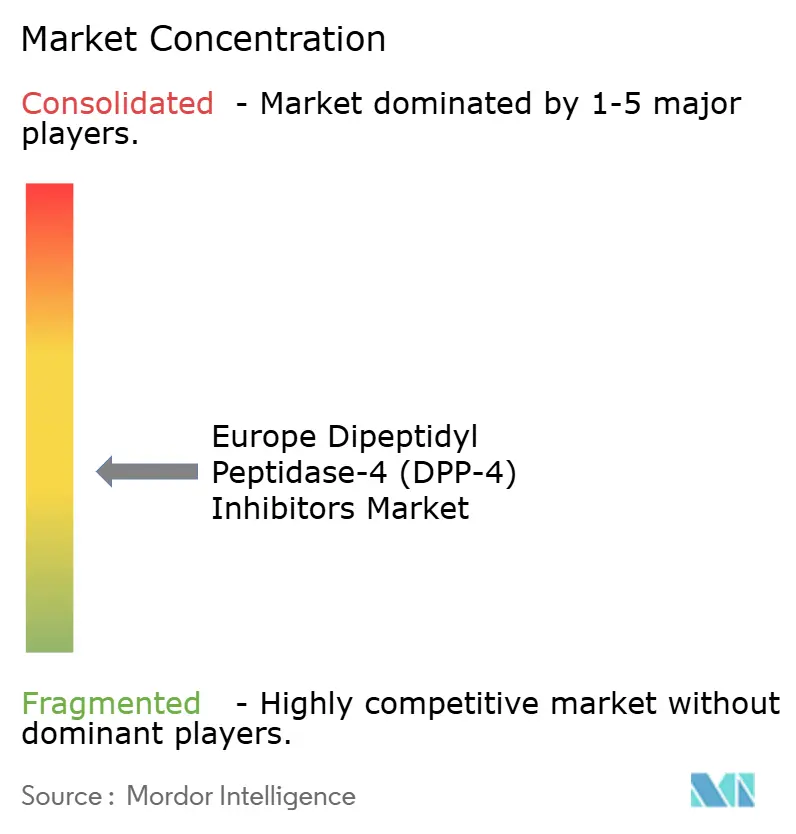
| Market Concentration | Medium |
Major Players *Disclaimer: Major Players sorted in no particular order Image © Mordor Intelligence. Reuse requires attribution under CC BY 4.0. | |
Europe Dipeptidyl Peptidase-4 (DPP-4) Inhibitors Market Analysis by Mordor Intelligence
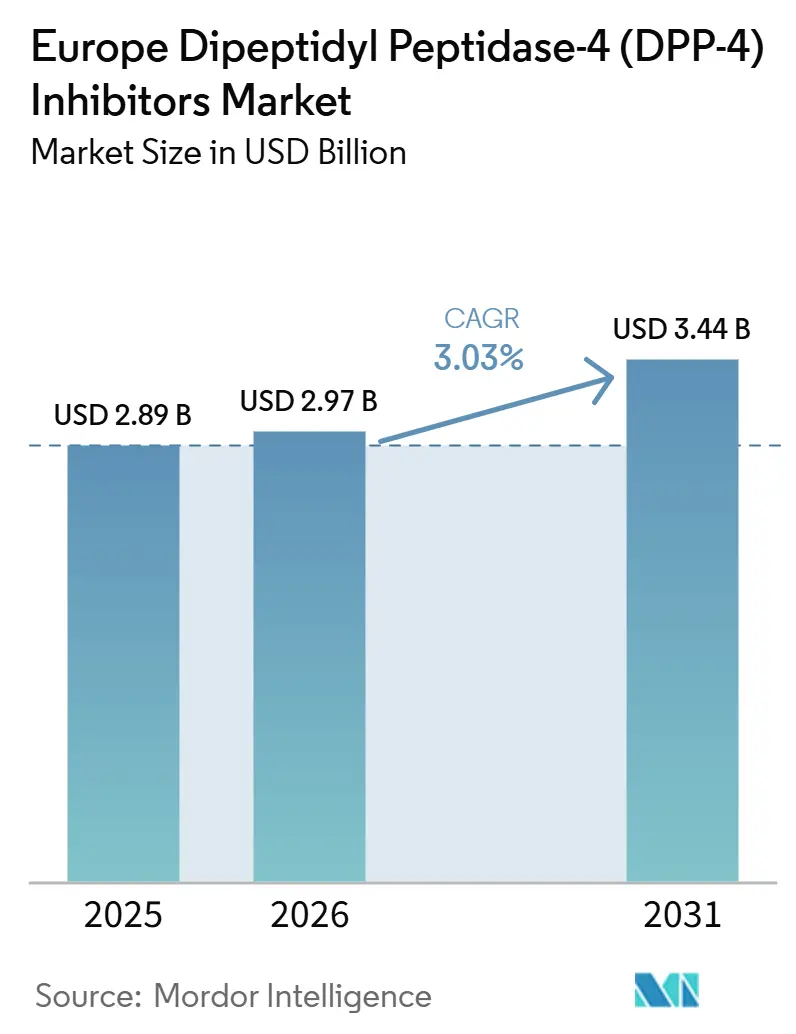
The Europe Dipeptidyl Peptidase-4 Inhibitors Market size is projected to expand from USD 2.89 billion in 2025 and USD 2.97 billion in 2026 to USD 3.44 billion by 2031, registering a CAGR of 3.03% between 2026 to 2031.
The European DPP-4 inhibitors market continues to hold relevance because the region has a large elderly diabetes population that still depends on oral therapies with a low risk of hypoglycemia and fewer treatment handling challenges in routine care. The European DPP-4 inhibitors market also benefits from strong prescribing continuity in primary care, where older patients with multiple conditions are less likely to be moved quickly to more complex therapy pathways. Newer classes are taking a larger role in higher risk diabetes care, yet supply limits, access controls, and patient suitability issues still leave room for DPP-4 inhibitors in second line oral treatment across major European countries. Competition in the European DPP-4 inhibitors market is split between established originator brands and a broad generic field, so price pressure is intense in mature molecules while value is being protected through combination products and therapy positioning. This structure keeps the European DPP-4 inhibitors market stable rather than expansive, with the most durable opportunities centered on elderly, renal-impaired, and polypharmacy-heavy patient groups.
Key Report Takeaways
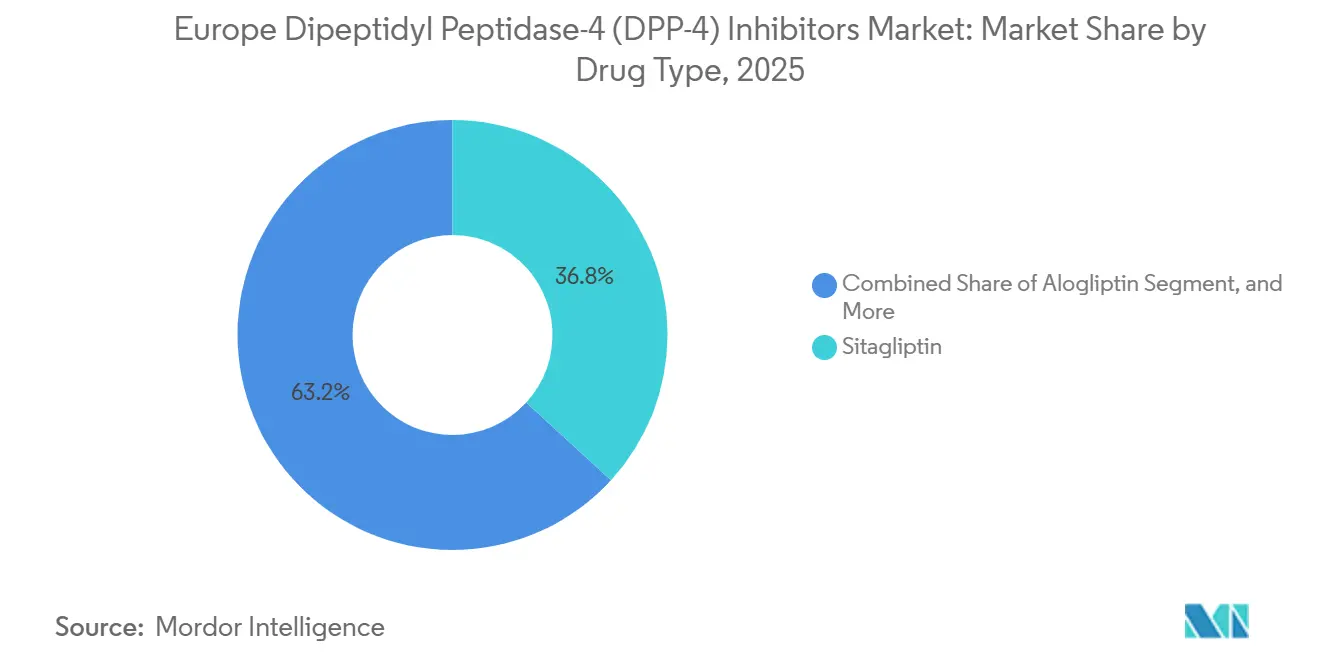
- By drug type, sitagliptin held 36.83% share in 2025, while alogliptin is forecast to expand at a 4.62% CAGR through 2031.
- By medication type, generic medications held 59.38% share in 2025, while branded medications recorded the highest projected CAGR at 5.77% through 2031.
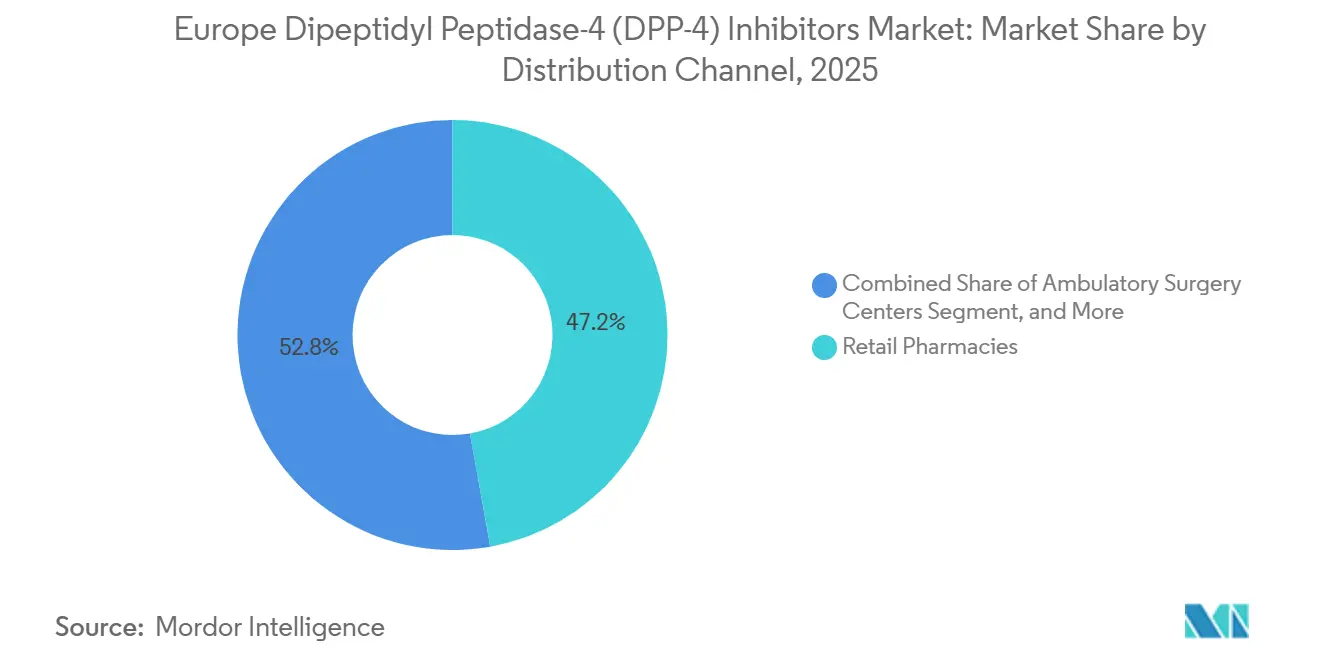
- By distribution channel, retail pharmacies accounted for 47.16% share in 2025, while online pharmacies are advancing at a 6.46% CAGR through 2031.
- By geography, Germany held 29.63% share in 2025, while the United Kingdom is forecast to grow at a 3.79% CAGR through 2031.
Note: Market size and forecast figures in this report are generated using Mordor Intelligence’s proprietary estimation framework, updated with the latest available data and insights as of January 2026.
Europe Dipeptidyl Peptidase-4 (DPP-4) Inhibitors Market Trends and Insights
Drivers Impact Analysis*
| Driver | (~) % Impact on CAGR Forecast | Geographic Relevance | Impact Timeline |
|---|---|---|---|
| Rising Type 2 Diabetes Burden And Older Patient Pool | +0.7% | Germany, France, Italy, Spain, with spillover across the EU | Long term (≥ 4 years) |
| Preference For Oral, Low-Hypoglycemia Therapies In Europe | +0.5% | Pan-European, concentrated in primary care in Germany, the United Kingdom, and France | Medium term (2-4 years) |
| Role In Renal-Impaired And Polypharmacy Patients | +0.4% | Germany, Italy, and France | Long term (≥ 4 years) |
| Wider Use In Cost-Sensitive Second-Line Treatment Pathways | +0.5% | Spain, Italy, and lower cost markets in wider Europe | Medium term (2-4 years) |
| Local Guideline Stickiness In Primary Care And Elderly Care | +0.3% | Germany, the United Kingdom, and France | Short term (≤ 2 years) |
| Generic Availability Supporting Access Expansion | +0.4% | Pan-European, strongest in Spain, Italy, and Central Europe | Medium term (2-4 years) |
| Source: Mordor Intelligence | |||
Rising Type 2 Diabetes Burden and Older Patient Pool
The European DPP-4 inhibitors market is supported by the steady rise in type 2 diabetes among older adults, especially in countries with aging populations and large primary care systems. Germany alone saw type 2 diabetes prevalence rise from 9.0% in 2011 to 9.6% in 2023, and the longer-term outlook still points to a much larger patient pool by 2040. Across older adults in the wider European survey base used in the IDF Diabetes Atlas, 21.2% had a total diabetes diagnosis, including undiagnosed cases, which shows that treatment demand in late-life care remains substantial. This matters because older patients are more likely to need oral therapies that fit routine use and create fewer dose-management issues across multiple medicines. The European DPP-4 inhibitors market, therefore keeps a durable role in the high-age patient pool even while newer therapies gain more attention in younger or more aggressive treatment pathways.
Preference for Oral, Low-Hypoglycemia Therapies in Europe
The European DPP-4 inhibitors market also benefits from a clear preference for oral therapies in older and clinically complex patients, where injection burden and hypoglycemia risk both affect treatment choice. A German claims study based on Barmer data found that DPP-4 inhibitors reduced severe hypoglycemia by 49% versus sulfonylureas among new users and by 69% in patients with severe renal insufficiency.[1]P. Starke, P. Thürmann, T. Grobe, T. Friede, and T. Mathes, “Real-World Harm Reduction of Metformin Plus DPP4 Inhibitors Versus Metformin Plus Sulfonylureas in Older Adults: A Target Trial Emulation Using German Claims Data,” Drugs & Aging, doi.org That evidence aligns with geriatric prescribing practice, where safer oral agents are favored when patients already manage several conditions and medicines. A large comparative effectiveness study also showed that hospitalization-requiring hypoglycemia across all DPP-4 inhibitors stayed at 0.2%, which reinforces their safer profile for older adults. As a result, the European DPP-4 inhibitors market retains support from physicians who need stable glucose control without adding avoidable treatment risk in long-term care and primary care settings.
Role in Renal-Impaired and Polypharmacy Patients
The European DPP-4 inhibitors market retains an important place in patients with advanced kidney disease and in those already exposed to heavy polypharmacy. Published clinical discussion in severe chronic kidney disease continues to support careful oral antihyperglycemic choice when treatment options narrow with worsening renal function. An Italian population-based study in older diabetic patients found DPP-4 inhibitor use was strongly present in polypharmacy settings, which confirms how embedded these medicines already are in complex real-world treatment regimens. That embedded role matters because switching stable patients to alternative classes is rarely a simple one-step decision when comorbidities and medication interactions are already being managed closely. The European DPP-4 inhibitors market, therefore, keeps a protected niche in renal-impaired and high-comorbidity care even as broader diabetes guidelines give more prominence to newer classes.
Wider Use in Cost-Sensitive Second-Line Treatment Pathways
The European DPP-4 inhibitors market continues to benefit from cost-sensitive second-line treatment pathways, especially in systems that focus heavily on reimbursement discipline and practical access. Generic availability has lowered the cost threshold for DPP-4 therapy, which makes the class easier to keep in broad oral treatment use after metformin. In France, stricter prescribing-justification requirements for GLP-1 receptor agonists from February 2025 created a more restrictive access environment for that class in non-specialist settings.[2]“Antidiabétiques: Une Période Transitoire Permet Le Remboursement Des Patients Après Avance De Frais,” Assurance Maladie, ameli.fr That kind of administrative friction indirectly preserves space for DPP-4 inhibitors, where physicians need a simpler oral option for newly diagnosed or less complicated patients. For that reason, the European DPP-4 inhibitors market still holds relevance in Italy, Spain, and other reimbursement-conscious settings where affordability and ease of use carry weight in day-to-day prescribing.
Restraints Impact Analysis*
| Restraint | (~) % Impact on CAGR Forecast | Geographic Relevance | Impact Timeline |
|---|---|---|---|
| Substitution Pressure From SGLT-2 Inhibitors And GLP-1 Agents | -0.9% | Strongest in Germany and the United Kingdom, with spillover across all major European markets | Short term (≤ 2 years) |
| Mature Class Positioning Limits Premium Pricing Power | -0.5% | Pan-European, strongest in the United Kingdom and Germany | Medium term (2-4 years) |
| Generic Erosion And Tender-Driven Price Compression | -0.5% | Spain, Italy, and tender-led markets across Europe | Medium term (2-4 years) |
| Safety Perception And Modest Differentiation Versus Newer Classes | -0.3% | Germany, the United Kingdom, and the Netherlands | Long term (≥ 4 years) |
| Source: Mordor Intelligence | |||
Substitution Pressure from SGLT-2 Inhibitors and GLP-1 Agents
The main restraint on the European DPP-4 inhibitors market is stronger substitution pressure from SGLT-2 inhibitors and GLP-1 receptor agonists. In the Netherlands, the National Health Care Institute advised in July 2025 that reimbursement conditions for four SGLT-2 inhibitors should be removed from the basic package for type 2 diabetes, which lowers access barriers for that competing class.[3]National Health Care Institute, “Advice, Discontinue Conditions of SGLT2 Inhibitors for the Treatment of Type 2 Diabetes Mellitus,” Zorginstituut Nederland, english.zorginstituutnederland.nl European cardiology guidance also favors replacing DPP-4 inhibitors with SGLT-2 inhibitors or GLP-1 receptor agonists in patients with established cardiovascular disease, renal impairment, or heart failure. That change matters because it reduces the addressable pool for DPP-4 inhibitors at the more severe end of diabetes care, where outcome-driven treatment choices now carry more weight. The European DPP-4 inhibitors market still keeps a role in selected oral pathways, but competitive displacement from newer classes is now a persistent structural challenge.
Generic Erosion and Tender-Driven Price Compression
The European DPP-4 inhibitors market also faces pressure from generic erosion and the broader pricing discipline that follows maturity. Sitagliptin, vildagliptin, and saxagliptin are now well into the phase where branded revenue is being squeezed by lower-priced equivalents and by procurement systems that favor cheaper supply. This reduces premium pricing power for originator companies and narrows the commercial upside of standalone molecules. It also shifts competition toward volume retention, contract wins, and supply consistency rather than therapeutic novelty in the core class. The European DPP-4 inhibitors market, therefore, remains commercially active, but the value pool is becoming harder to defend outside branded combinations and differentiated positioning.
*Our forecasts treat driver/restraint impacts as directional, not additive. The impact forecasts reflect baseline growth, mix effects, and variable interactions.
Segment Analysis
By Drug Type: Sitagliptin Dominates, Alogliptin Gains Specialist Traction
Sitagliptin held 36.83% of the European DPP-4 inhibitors market share in 2025, which kept it as the largest drug-type segment across the region. That lead reflects long-standing prescribing habits in Germany, France, and Italy, even though branded revenue has been pressured by generic entry since 2022. Generic manufacturers such as Accord Healthcare, Sandoz, and Dr. Reddy’s Laboratories have expanded sitagliptin availability, which supports continued volume through both retail and institutional channels. In the Europe DPP-4 inhibitors market, sitagliptin has moved from being a clear branded growth story to being a high-volume backbone with strong familiarity in routine diabetes care.
Alogliptin is the fastest-growing drug type in the European DPP-4 inhibitors market, with a 4.62% CAGR projected through 2031. A 2025 comparative effectiveness study found that alogliptin had the lowest 1-year MACE rate at 1.7% and the lowest heart-failure hospitalization rate at 0.37% among DPP-4 inhibitors, which gives it a stronger profile in cardiometabolic prescribing discussions. Saxagliptin and linagliptin remain important mid-tier options, though they are used more selectively in settings where patient profile and treatment history shape choice. Vildagliptin still holds a stable role in parts of Europe, but price pressure and substitution keep that position narrower than before. The Europe DPP-4 inhibitors industry is therefore seeing a shift within the class, where sitagliptin sustains scale while alogliptin gains attention from outcome-sensitive specialists.



By Medication Type: Generics Lead by Volume, Branded Combinations Retain Value
Generic medications held 59.38% share in 2025, which shows how far the European DPP-4 inhibitors market has moved toward volume-led competition. This shift followed generic launches across key molecules after the earlier patent expiries of sitagliptin, vildagliptin, and saxagliptin. Generic supply has widened access and made DPP-4 inhibitors easier to preserve in routine oral treatment sequences where payer discipline remains strong. As a result, the European DPP-4 inhibitors market now relies on generics for broad patient reach, especially in health systems that prioritize cost control and practical prescribing continuity.
Branded medications are the fastest-growing sub-segment, and the European DPP-4 inhibitors market size for branded medications is projected to expand at 5.77% CAGR through 2031. That growth persists because the branded category increasingly reflects combination therapies rather than simple monotherapy products. Combination products can preserve value when they offer a clearer clinical position or sit outside the most direct generic comparison points. This is why the European DPP-4 inhibitors industry is not losing all branded relevance even as generic penetration rises. The segment has become more split between generic volume and branded value retention, rather than a simple branded-to-generic replacement cycle.
By Distribution Channel: Retail Pharmacy Anchors Volume, Digital Dispensing Accelerates
Retail pharmacies accounted for 47.16% share in 2025, making them the main dispensing route in the European DPP-4 inhibitors market. Their lead reflects the chronic nature of DPP-4 therapy, where repeat oral prescriptions are filled through familiar community channels over long treatment periods. Hospital pharmacies still play a meaningful role through inpatient initiation and institutional procurement, especially in academic and specialist settings. Even so, everyday volume in the European DPP-4 inhibitors market remains centered on retail networks because these medicines are widely used in stable outpatient diabetes management.
Online pharmacies are the fastest-growing distribution channel, and the European DPP-4 inhibitors market size for online pharmacies is projected to grow at 6.46% CAGR through 2031. That expansion is tied to wider e-prescription use and to the convenience of digital repeat ordering for chronic oral medicines. The online shift is especially relevant for the European DPP-4 inhibitors market because these therapies are often renewed on a predictable cycle and do not require special administration support. Greater price visibility online also raises pressure on premium products, which tends to favor generic fulfillment over branded defense. This leaves the distribution landscape more digital, but still anchored by the broad reach of retail pharmacies.
Geography Analysis
Germany held 29.63% of the European DPP-4 inhibitors market share in 2025, which made it the largest country market in the region. That position reflects a large diabetes population, strong formulary familiarity with DPP-4 inhibitors, and a care system that still uses oral therapies heavily in older patients. Germany’s type 2 diabetes burden has continued to rise, with age-standardized prevalence among men increasing from 10.24% in 2011 to 10.93% in 2023. Longer-range projections still point to 10.9 million to 14.2 million patients by 2040, which supports a large treatment base even as therapy mix changes over time. The European DPP-4 inhibitors market remains deeply rooted in Germany because the country combines high demand, a broad prescriber base, and entrenched use of oral diabetes agents.
The United Kingdom is the fastest-growing geography, and the European DPP-4 inhibitors market size for the United Kingdom is forecast to advance at 3.79% CAGR through 2031. Growth there is supported by digital pharmacy expansion, ongoing formulary adaptation, and strong use cases for patients where hypoglycemia avoidance remains important. Scotland’s quality prescribing strategy for 2024 to 2027 places DPP-4 inhibitors ahead of sulfonylureas when avoiding hypoglycemia is a clinical priority, which supports continued class relevance in British primary care. The United Kingdom also offers favorable conditions for repeat oral dispensing, which makes it a supportive market for chronic maintenance medicines. That combination keeps the European DPP-4 inhibitors market on a firmer path in the United Kingdom than in some other higher-substitution environments.
France, Italy, and Spain account for the remainder of the European DPP-4 inhibitors market, and each country supports demand through a different mix of reimbursement practices, patient profiles, and care delivery. In France, tighter prescribing-justification rules for GLP-1 receptor agonists from February 2025 have indirectly preserved room for DPP-4 inhibitors in non-specialist settings. Italy keeps meaningful DPP-4 volumes through large hospital-outpatient networks, and a 2025 multicenter real-world study confirmed active sitagliptin and metformin extended-release use in broad internal medicine populations. Spain remains one of the more price-sensitive settings, which supports access through lower-cost options while keeping originator pricing under pressure. Together, these markets give the European DPP-4 inhibitors market breadth beyond Germany and the United Kingdom, even though the drivers of demand differ by country.
Competitive Landscape
The European DPP-4 inhibitors market has a moderate concentration profile at the originator level and a fragmented structure in generics. Merck & Co., Boehringer Ingelheim, and Novartis remain the main reference companies on the innovator side through sitagliptin, linagliptin, and vildagliptin. Merck entered 2026 under visible pressure, and its own full-year 2025 results highlighted the effect of the upcoming loss of exclusivity for Januvia and Janumet in the United States from May 2026 onward. That matters for the European DPP-4 inhibitors market because European generic pressure had already weakened sitagliptin economics before the U.S. event added a second layer of revenue stress. The branded tier, therefore, remains important, but it is no longer defined by simple molecule ownership alone.
A key strategic move in the European DPP-4 inhibitors market has been the shift toward fixed-dose combinations, especially for players that want to keep value after monotherapy maturity. Boehringer Ingelheim’s repositioning of linagliptin through the Glyxambi combination with empagliflozin reflects that approach and ties DPP-4 exposure to a broader cardiometabolic treatment story. That kind of lifecycle management gives originator companies a better chance of defending reimbursement and physician attention than standalone mature products can offer. Novartis still holds relevance through vildagliptin, though that position is narrower in a market where pricing discipline is strong, and generics are widely available.
The generic tier of the European DPP-4 inhibitors market includes STADA Arzneimittel, Sandoz, Zentiva, Viatris, Teva Pharmaceutical Industries, Dr. Reddy’s Laboratories, and Sun Pharmaceutical Industries. Competition among these companies is now shaped less by first entry and more by tender execution, supply reliability, and price consistency across national channels. Another strategic move in the European DPP-4 inhibitors market is the effort by generic companies to target molecules with lower penetration and room for further value extraction, especially where originator pricing still carries some premium. The competitive picture is therefore two-layered, with originators protecting value through combinations and generic manufacturers widening reach through scale and price. This keeps rivalry high, but it also prevents any single company or small group from exerting dominant control across the whole market.
Europe Dipeptidyl Peptidase-4 (DPP-4) Inhibitors Industry Leaders
AstraZeneca
Eli Lilly and Company
Bristol Myers Squibb
Boehringer Ingelheim
Novartis AG
- *Disclaimer: Major Players sorted in no particular order

Recent Industry Developments
- February 2026: MSD (Merck & Co.) issued 2026 full-year guidance of USD 65.5-67.0 billion, materially below analyst consensus, explicitly citing impending loss of exclusivity for Januvia (sitagliptin) and Janumet in the US from May 2026 onward. The announcement signals accelerated revenue contraction in the sitagliptin franchise, compounding the 64% decline from the 2017 peak already driven by European generic entry since 2021.
- July 2025: The Netherlands National Health Care Institute (Zorginstituut) advised the Minister of Health to remove List 2 reimbursement conditions for four SGLT-2 inhibitors (canagliflozin, dapagliflozin, empagliflozin, ertugliflozin) in the basic healthcare package, significantly lowering barriers to SGLT-2 prescribing and directly increasing competitive pressure on DPP-4 inhibitors in the Dutch market.
- June 2025: A real-world study published in Drugs & Aging based on German Barmer statutory insurance claims data confirmed DPP-4 inhibitors produced a 49% reduction in severe hypoglycemia vs sulfonylureas among new users and a 69% reduction in patients with severe renal insufficiency. These results provide prescribers with robust evidentiary support for continued DPP-4 use in high-risk elderly patients, reinforcing formulary retention.
- February 2025: France's Assurance Maladie introduced mandatory prescribing-justification documentation for GLP-1 receptor agonists (semaglutide, dulaglutide, liraglutide, exenatide) from February 1, 2025, with pharmacy-level enforcement phased in through September 2025. The policy tightens GLP-1 access in non-specialist primary care settings and has indirectly channeled prescribing toward DPP-4 inhibitors in newly diagnosed patients ineligible for specialist referral.


Europe Dipeptidyl Peptidase-4 (DPP-4) Inhibitors Market Report Scope
The Europe Dipeptidyl Peptidase-4 (DPP-4) Inhibitors Market comprises the sales and utilization of DPP-4 inhibitor drugs used for the treatment of type 2 diabetes mellitus across European countries. DPP-4 inhibitors improve glycemic control by increasing incretin hormone activity, thereby stimulating insulin secretion and reducing glucagon release in a glucose-dependent manner. The market includes both branded and generic medications distributed through various pharmacy channels and covers major European countries.
The Europe Dipeptidyl Peptidase-4 (DPP-4) Inhibitors Market is segmented by drug type into Sitagliptin, Saxagliptin, Linagliptin, Alogliptin, Vildagliptin, and Other Drug Types. By medication type, the market is categorized into Branded Medication and Generic Medication. Based on distribution channel, the market is divided into Hospital Pharmacies, Retail Pharmacies, and Online Pharmacies. Geographically, the market is analyzed across Germany, the United Kingdom, France, Italy, Spain, and the Rest of Europe.
By Drug Type
| Sitagliptin |
| Saxagliptin |
| Linagliptin |
| Alogliptin |
| Vildagliptin |
| Other Drug Types |
By Medication Type
| Branded Medication |
| Generic Medication |
By Distribution Channel
| Hospital Pharmacies |
| Retail Pharmacies |
| Online Pharmacies |
By Country
| Germany |
| United Kingdom |
| France |
| Italy |
| Spain |
| Rest of Europe |
| By Drug Type | Sitagliptin |
| Saxagliptin | |
| Linagliptin | |
| Alogliptin | |
| Vildagliptin | |
| Other Drug Types | |
| By Medication Type | Branded Medication |
| Generic Medication | |
| By Distribution Channel | Hospital Pharmacies |
| Retail Pharmacies | |
| Online Pharmacies | |
| By Country | Germany |
| United Kingdom | |
| France | |
| Italy | |
| Spain | |
| Rest of Europe |


Key Questions Answered in the Report
What is the projected value of the European DPP-4 inhibitors market by 2031?
The European DPP-4 inhibitors market is projected to reach USD 3.4 billion by 2031, up from USD 3.0 billion in 2026, with a 3.0% CAGR over 2026-2031.
Which drug type leads sales in Europe DPP-4 inhibitors?
Sitagliptin leads the region with a 36.83% share in 2025, supported by broad physician familiarity and wide generic availability.
Which segment is growing fastest in this space?
Alogliptin is the fastest-growing drug type at a 4.62% CAGR through 2031, while online pharmacies are the fastest-growing distribution channel at 6.46%.
Why do DPP-4 inhibitors still matter when newer diabetes therapies are available?
They still matter because they fit elderly, renal-impaired, and polypharmacy-heavy patients well, and they carry a lower severe hypoglycemia risk than sulfonylureas in real-world evidence.
Which country leads demand across Europe?
Germany leads with 29.63% share in 2025, supported by a large diabetes population and strong use of oral therapies in established care pathways.
Page last updated on:





