
Peptide Drug Conjugates Market Size and Share
| Study Period | 2019 - 2030 |
| Market Size (2025) | USD 1.74 Billion |
| Market Size (2030) | USD 4.40 Billion |
| CAGR (2025 - 2030) | 20.30% |
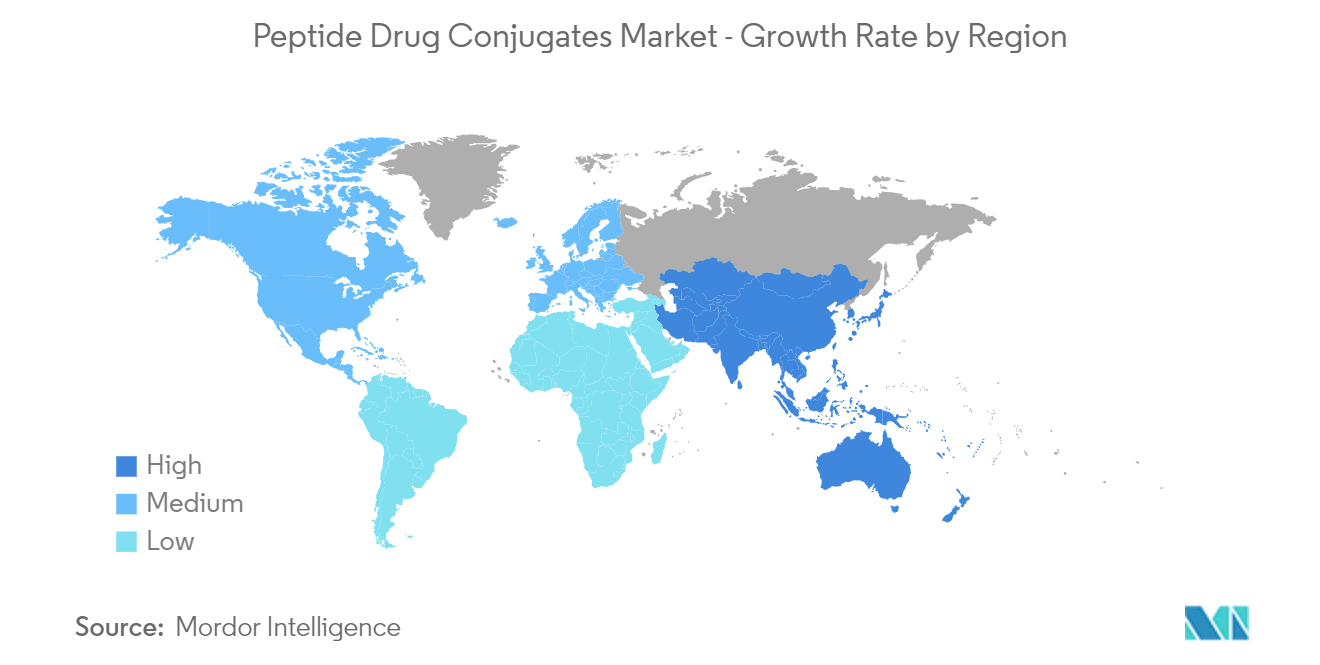
| Fastest Growing Market | Asia Pacific |
| Largest Market | North America |
| Market Concentration | High |
Major Players *Disclaimer: Major Players sorted in no particular order |
Peptide Drug Conjugates Market Analysis by Mordor Intelligence
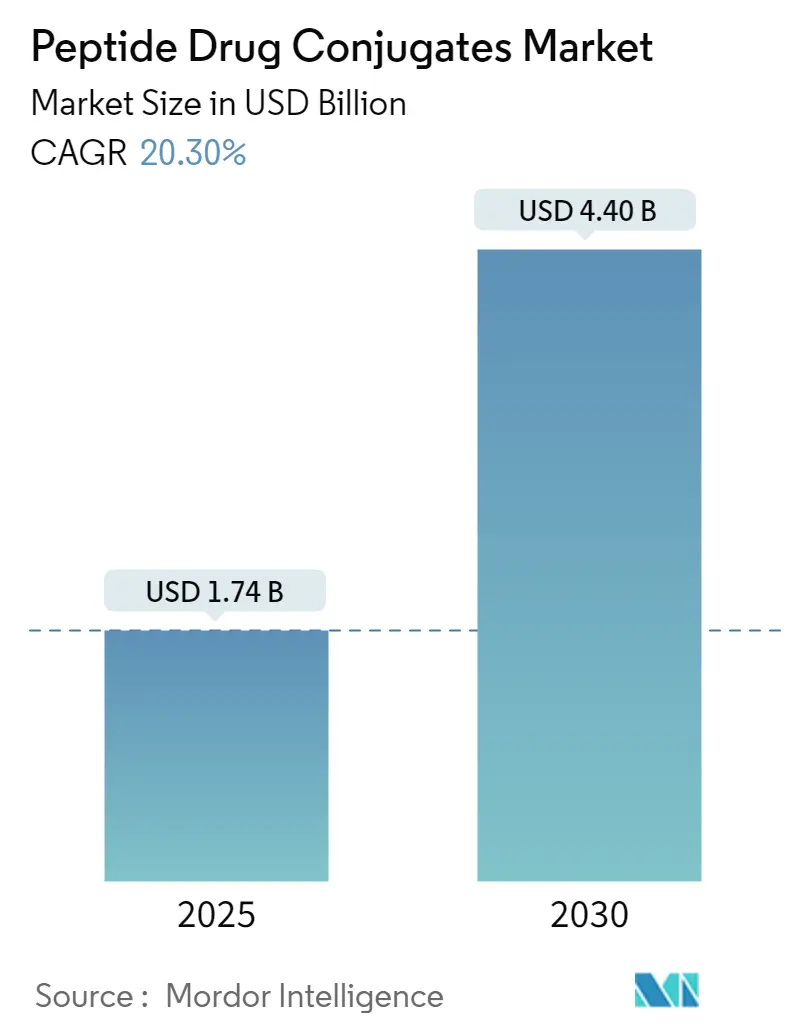
The Peptide Drug Conjugates Market size is estimated at USD 1.74 billion in 2025, and is expected to reach USD 4.40 billion by 2030, at a CAGR of 20.3% during the forecast period (2025-2030).
Key drivers fueling the expansion of this market include the heightened demand for targeted therapies, the continuous evolution of peptide engineering technologies, and the increasing prevalence of complex diseases. As the pharmaceutical industry seeks more precise and effective treatment modalities, peptide drug conjugates offer a distinctive advantage in delivering potent therapeutic agents directly to precise cells or tissues, reducing off-target effects. Similarly, despite advancements in diagnostic methods and treatments, cancer continues to be a significant disease with high mortality rates. For instance, according to February 2024 estimates of the World Health Organization's (WHO) cancer agency, the International Agency for Research on Cancer (IARC), 35 million new cancer incidences are estimated to occur in 2050 globally, a 77% increase from approximately 20 million cases in 2022. Cancer occurs at the genetic level due to cellular DNA alterations, leading to abnormal gene expressions.
Consequently, the normal functions of genes controlling cell growth, survival, invasion, and motility are disrupted. Various treatment approaches, such as surgery, chemotherapy, radiotherapy, and immunotherapy, can be used to combat cancer. However, chemotherapy drugs often face challenges in penetrating solid tumors effectively, highlighting the need for these peptide drug conjugates. The overexpression of cancer-associated antigens provides opportunities for targeted drug delivery, such as using antibody-drug conjugates or peptide-drug conjugates. These targeted approaches aim to minimize the impact on healthy cells while delivering drugs directly to cancer cells. Peptide drug conjugates offer a highly targeted therapeutic approach by combining the specificity of peptides with the potency of cytotoxic agents. This targeted delivery minimizes off-target effects, enhancing therapeutic efficacy and reducing systemic toxicity.
Advancements in targeted cancer therapies significantly drive the peptide drug conjugates market by enhancing precision in diagnosis and treatment. For instance, in December 2023, researchers from two closely collaborating labs at Children's Hospital of Philadelphia (CHOP) solved a three-dimensional protein structure that explains how Peptide-centric CARs (PC-CARs) recognize the "backbones" of human leukocyte antigens (HLAs). This structural information will help researchers understand how tumor-associated antigens are recognized by CARs among different polymorphic HLA alleles, thereby opening up better possibilities for designing precision medicine approaches for more complex and difficult-to-treat tumors. Hence, the peptide drug conjugates industry is propelled by a convergence of factors, including the growing advancements and robust product pipeline, expanding therapeutic applications, and rising collaborations and investments by key players.
These drivers collectively underscore the pivotal role of peptide drug conjugates in shaping the future of medicine and cancer care. While the peptide drug conjugates market is poised for significant growth, challenges such as complex manufacturing processes and immunogenicity concerns restrain the market to some extent.
Global Peptide Drug Conjugates Market Trends and Insights
The Therapeutic Segment is Expected to Dominate the Peptide Drug Conjugates Market During the Forecast Period
Oncology remains a primary therapeutic focus in the peptide drug conjugates market. The targeted delivery of cytotoxic agents to cancer cells, leveraging the specificity of peptides, continues to drive advancements in precision oncology. For instance, in May 2024, Novartis and PeptiDream bolstered their peptide discovery collaboration, signing a new deal valued at more than USD 2.8 billion. Under this multi-program agreement, PeptiDream will leverage its proprietary Peptide Discovery Platform System to pinpoint and enhance macrocyclic peptides tailored explicitly to Novartis’ selected targets.
Similarly, in December 2023, Nerviano Medical Sciences Srl (NMS), a clinical-stage biotechnology company and a member of the NMS group, inked a licensing deal with Italfarmaco SpA (ITF), a specialized pharmaceutical firm. The agreement focuses on developing and commercializing a cutting-edge peptide-drug conjugate (PDC). As per the terms, ITF will leverage NMS's exclusive linker-payload technology to craft a pioneering PDC product. NMS has already set up GMP manufacturing and supply of the linker payload through a CDMO, as recommended by NMS. Meanwhile, ITF will spearhead the production of the target peptide and oversee all pre-clinical, clinical, and commercialization endeavors for the resultant proprietary products. Such trends are anticipated to promote the application of peptide drug conjugates and drive the market's growth.
Additionally, the market's dominance is mainly due to the availability of approved PDCs like Lutathera and Pepaxto, which specifically target tumor cells. The ongoing clinical trials for targeting therapeutic drugs such as ANG1005 (Angiochem Inc.) and BT5528 and BT1718 (Bicycle Therapeutics) are anticipated to contribute to the market's growth during the forecast period. Also, pharmaceutical companies are focusing on developing targeted therapeutic PDCs for metabolic and COVID-19 diseases, recognizing the considerable advantages of PDCs in therapeutics.
Moreover, according to an article published in the European Journal of Medicinal Chemistry in February 2024, peptide drug conjugates have expanded the therapeutic window, improved the therapeutic effect, and changed people's understanding of drug therapy for cancer compared with traditional chemotherapy drugs. Additionally, molecular docking, molecular dynamics simulation, and artificial intelligence (AI) of computer technology play an increasingly important role in the research and development of peptide drug conjugates, such as researching mechanisms of action and discovering new targets.
North America is Expected to Dominate the Peptide Drug Conjugates Market
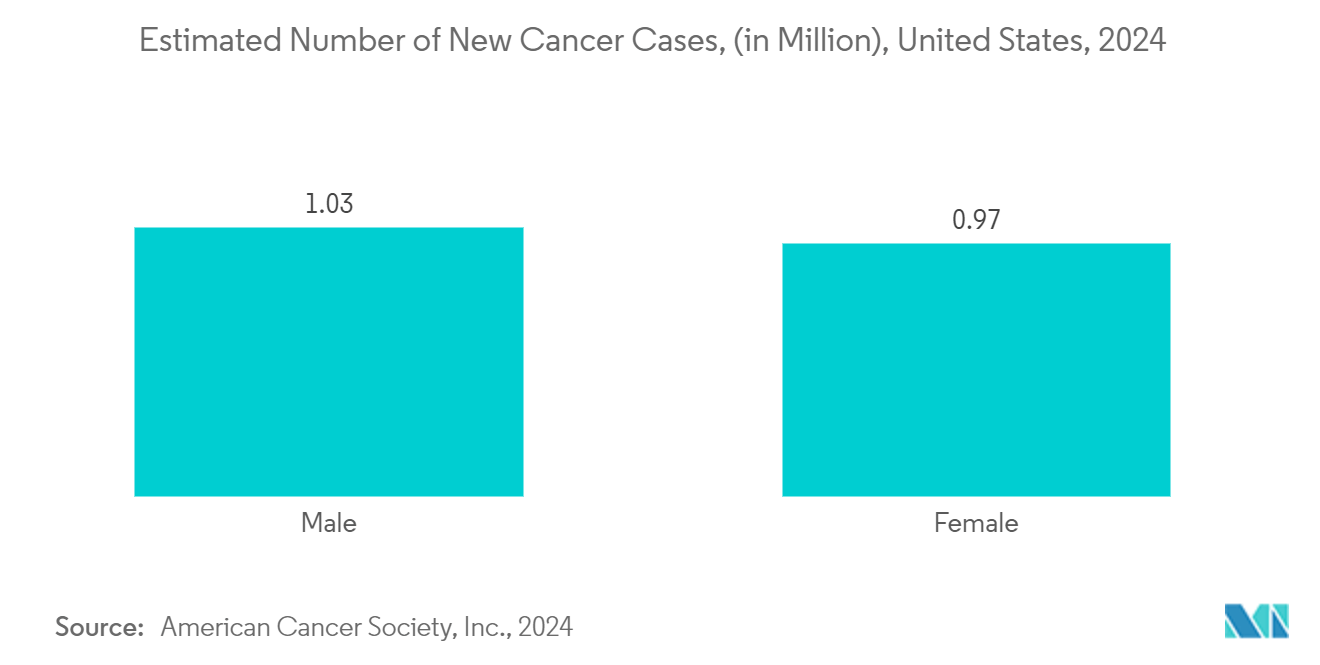
North America’s leadership in the peptide drug conjugates market is driven by factors such as high chronic disease prevalence, the need for new therapies for treatment, strategic collaborations, and a commitment to adopting cutting-edge technologies in the healthcare industry. Cancer is a significant global public health issue and ranks as the second most common cause of death in the United States. For instance, according to the American Cancer Society, 2.0 million new cancer cases are projected to occur in the United States in 2024. These factors collectively position the region as a frontrunner in shaping the future of peptide drug conjugate solutions for precision medicine.
The United States Food and Drug Administration (FDA) often engages in strategic initiatives to facilitate the development, production, and commercializing of peptide drug conjugate products, contributing to market leadership and playing a pivotal role in regulating and approving medical products. For instance, in September 2023, the FDA unveiled a draft guidance delineating its clinical pharmacology and labeling considerations for peptide drug products. The primary objective of this guidance was to articulate the FDA’s stance on development programs for new drug applications (NDAs) related to peptide drugs and to offer advice to the industry in executing these programs. Furthermore, the FDA advised against conducting radiolabeled mass balance studies for peptide drugs with well-understood metabolism and elimination pathways.
Hence, North American companies and institutions have been at the forefront of developing advanced technology. Key product launches, high concentration of technological advancement, or manufacturer’s presence are some of the factors driving the growth of the peptide drug conjugates market in the country. For instance, in March 2024, ProteinQure, a computational peptide drug design startup, unveiled a groundbreaking peptide drug conjugate. This conjugate showcased remarkable efficacy across a range of Patient-Derived Xenograft (PDX) models. The experiments were conducted at the esteemed Princess Margaret Cancer Centre, affiliated with the University Health Network, recognized as one of the world’s top five cancer research hubs. Therefore, owing to the factors above, the market’s growth is anticipated in North America.
Competitive Landscape
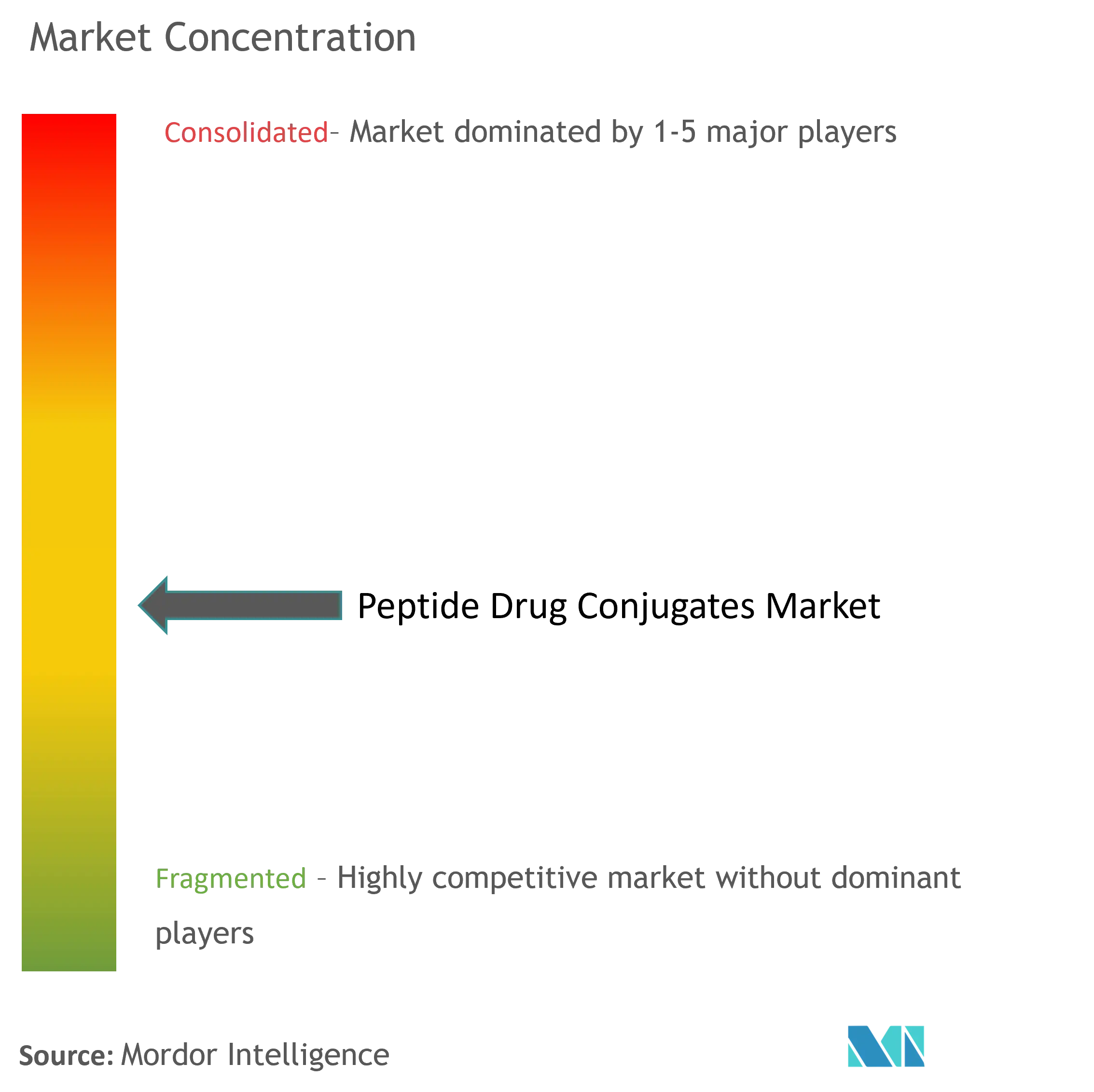
The peptide drug conjugates market is fragmented due to numerous smaller and specialized companies actively engaged in research and development. These smaller entities often focus on specific therapeutic areas or innovative conjugation technologies, adding a degree of fragmentation to the market.
Peptide Drug Conjugates Industry Leaders
-
Curium US LLC
-
Oncopeptides AB
-
Angiochem Inc.
-
Novartis AG
-
AstraZeneca
- *Disclaimer: Major Players sorted in no particular order
Recent Industry Developments
- February 2024: Cybrexa Therapeutics, a clinical-stage oncology biotechnology company developing a new type of peptide drug conjugate therapeutics targeting tumors, announced that it regained all rights to CBX-12 (alphalex exatecan). CBX-12 is a first-in-class peptide drug conjugate utilizing Cybrexa Therapeutics' propriety alphalex technology to enhance the delivery of exatecan to tumor cells. This was previously a partnership with Exelixis Inc.
- September 2023: PeptiDream, the Japan-headquartered biopharmaceutical company, entered a multi-target partnership and license agreement with Genentech to discover and develop new macrocyclic peptide-radioisotope (peptide-RI) drug conjugates.
- April 2023: WuXi STA, a prominent global contract research, development and manufacturing organization (CRDMO), increased its peptide manufacturing facility at Changzhou.
Global Peptide Drug Conjugates Market Report Scope
As per the scope of the report, the peptide drug conjugates market involves the development, manufacturing, and commercialization of therapeutic compounds that combine peptides with other molecules, such as cytotoxic drugs or imaging agents. These conjugates leverage peptide targeting specificity, offering diverse applications in areas such as oncology, infectious diseases, and autoimmune disorders. The market scope encompasses research, clinical trials, and commercialization of peptide drug conjugates, reflecting the increasing interest in precision medicine and targeted therapeutic approaches. The peptide drug conjugates market is segmented by type (therapeutic and diagnostic), disease (gastroenteropancreatic neuroendocrine tumors, multiple myeloma, and other diseases), and geography (North America, Europe, Asia-Pacific, Middle East and Africa, and South America). The report offers the value (in USD) for the above segments.
| Therapeutic |
| Diagnostic |
| Gastroenteropancreatic Neuroendocrine Tumors |
| Multiple Myeloma |
| Other Diseases |
| North America | United States |
| Canada | |
| Mexico | |
| Europe | Germany |
| United Kingdom | |
| France | |
| Italy | |
| Spain | |
| Rest of Europe | |
| Asia-Pacific | China |
| Japan | |
| India | |
| Australia | |
| South Korea | |
| Rest of Asia-Pacific | |
| Middle East and Africa | GCC |
| South Africa | |
| Rest of Middle East and Africa | |
| South America | Brazil |
| Argentina | |
| Rest of South America |
| By Type | Therapeutic | |
| Diagnostic | ||
| By Disease | Gastroenteropancreatic Neuroendocrine Tumors | |
| Multiple Myeloma | ||
| Other Diseases | ||
| Geography | North America | United States |
| Canada | ||
| Mexico | ||
| Europe | Germany | |
| United Kingdom | ||
| France | ||
| Italy | ||
| Spain | ||
| Rest of Europe | ||
| Asia-Pacific | China | |
| Japan | ||
| India | ||
| Australia | ||
| South Korea | ||
| Rest of Asia-Pacific | ||
| Middle East and Africa | GCC | |
| South Africa | ||
| Rest of Middle East and Africa | ||
| South America | Brazil | |
| Argentina | ||
| Rest of South America | ||
Key Questions Answered in the Report
How big is the Peptide Drug Conjugates Market?
The Peptide Drug Conjugates Market size is expected to reach USD 1.74 billion in 2025 and grow at a CAGR of 20.30% to reach USD 4.40 billion by 2030.
What is the current Peptide Drug Conjugates Market size?
In 2025, the Peptide Drug Conjugates Market size is expected to reach USD 1.74 billion.
Who are the key players in Peptide Drug Conjugates Market?
Curium US LLC, Oncopeptides AB, Angiochem Inc., Novartis AG and AstraZeneca are the major companies operating in the Peptide Drug Conjugates Market.
Which is the fastest growing region in Peptide Drug Conjugates Market?
Asia Pacific is estimated to grow at the highest CAGR over the forecast period (2025-2030).
Which region has the biggest share in Peptide Drug Conjugates Market?
In 2025, the North America accounts for the largest market share in Peptide Drug Conjugates Market.
What years does this Peptide Drug Conjugates Market cover, and what was the market size in 2024?
In 2024, the Peptide Drug Conjugates Market size was estimated at USD 1.39 billion. The report covers the Peptide Drug Conjugates Market historical market size for years: 2019, 2020, 2021, 2022, 2023 and 2024. The report also forecasts the Peptide Drug Conjugates Market size for years: 2025, 2026, 2027, 2028, 2029 and 2030.
Peptide Drug Conjugates Market Report
Statistics for the 2025 Peptide Drug Conjugates market share, size and revenue growth rate, created by Mordor Intelligence™ Industry Reports. Peptide Drug Conjugates analysis includes a market forecast outlook for 2025 to 2030 and historical overview. Get a sample of this industry analysis as a free report PDF download.