
Market Overview
| Study Period | 2021 - 2031 |
|---|---|
| Forecast Data Period | 2026 - 2031 |
| Base Year Market Size (2025) | USD 2.95 Billion |
| Market Size (2026) | USD 3.13 Billion |
| Market Size (2031) | USD 4.21 Billion |
| Growth Rate (2026 - 2031) | 6.09 % |
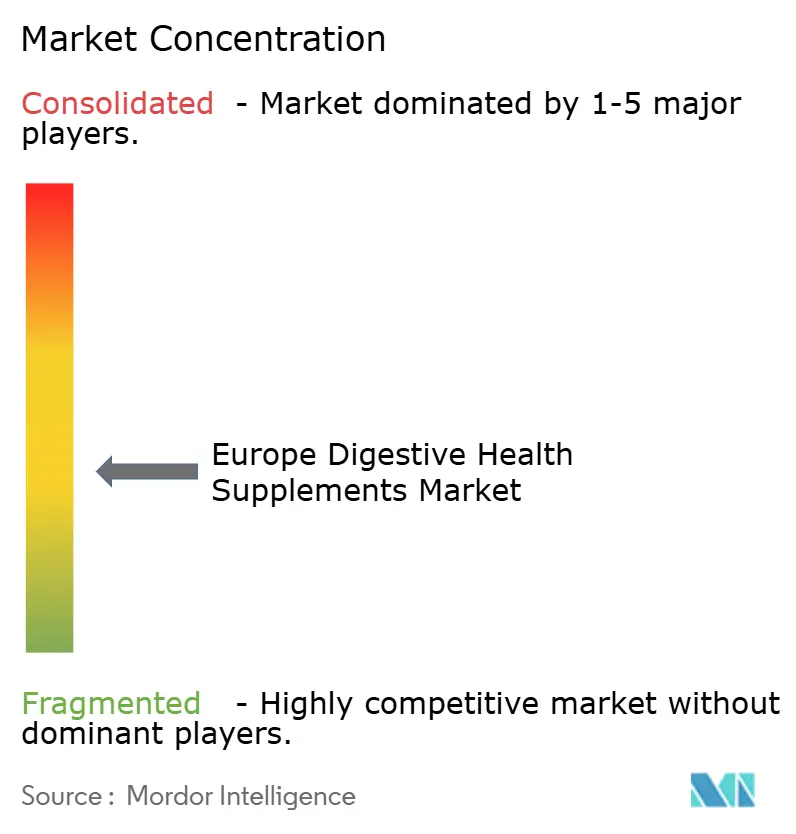
| Market Concentration | Low |
Major Players *Disclaimer: Major Players sorted in no particular order Image © Mordor Intelligence. Reuse requires attribution under CC BY 4.0. | |
Europe Digestive Health Supplements Market Analysis by Mordor Intelligence
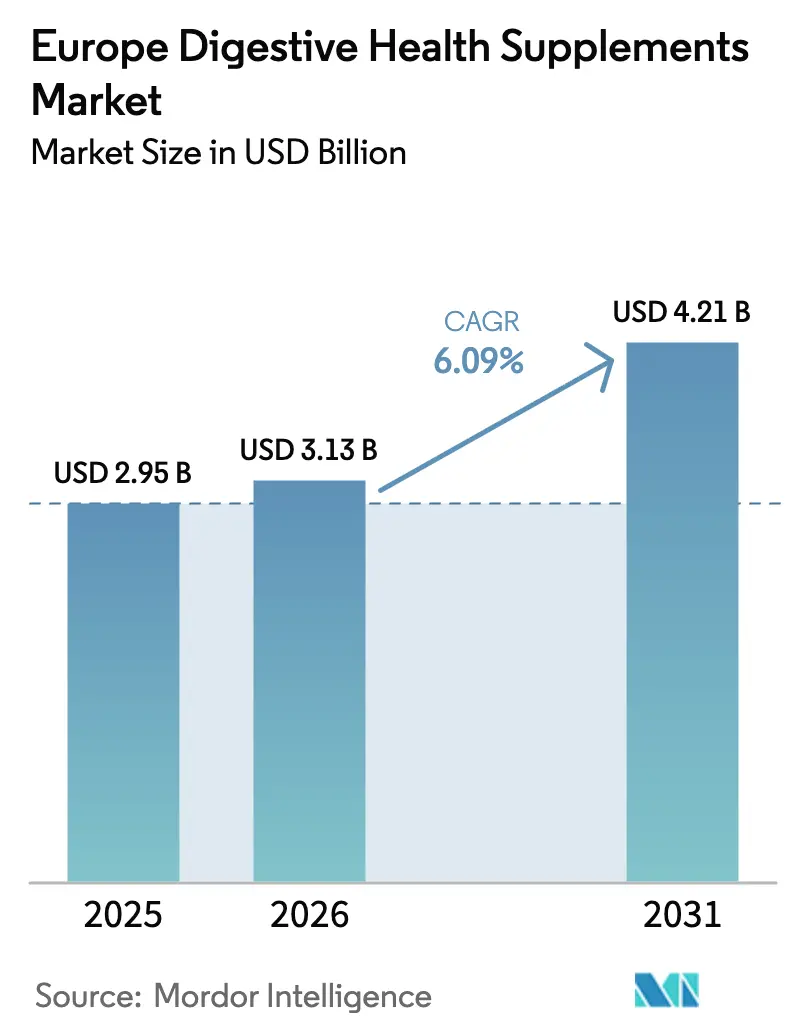
The European digestive health supplements market size in 2026 is estimated at USD 3.13 billion, growing from 2025 value of USD 2.95 billion with 2031 projections showing USD 4.21 billion, growing at 6.09% CAGR over 2026-2031. This growth is primarily driven by Europe's aging population, who increasingly turn to preventive supplements as digestive disorders strain healthcare systems. Consumer awareness of probiotics, combined with the rising prevalence of irritable bowel syndrome affecting one in five adults, and favorable EU regulatory frameworks continue to fuel market expansion. While manufacturers focus on developing evidence-based formulations and strengthening e-commerce partnerships to reach consumers effectively, the industry faces significant quality challenges, with adulteration rates surpassing 60% across European supplement products. In response, established companies are prioritizing quality assurance protocols to distinguish themselves in this competitive landscape.
Key Report Takeaways
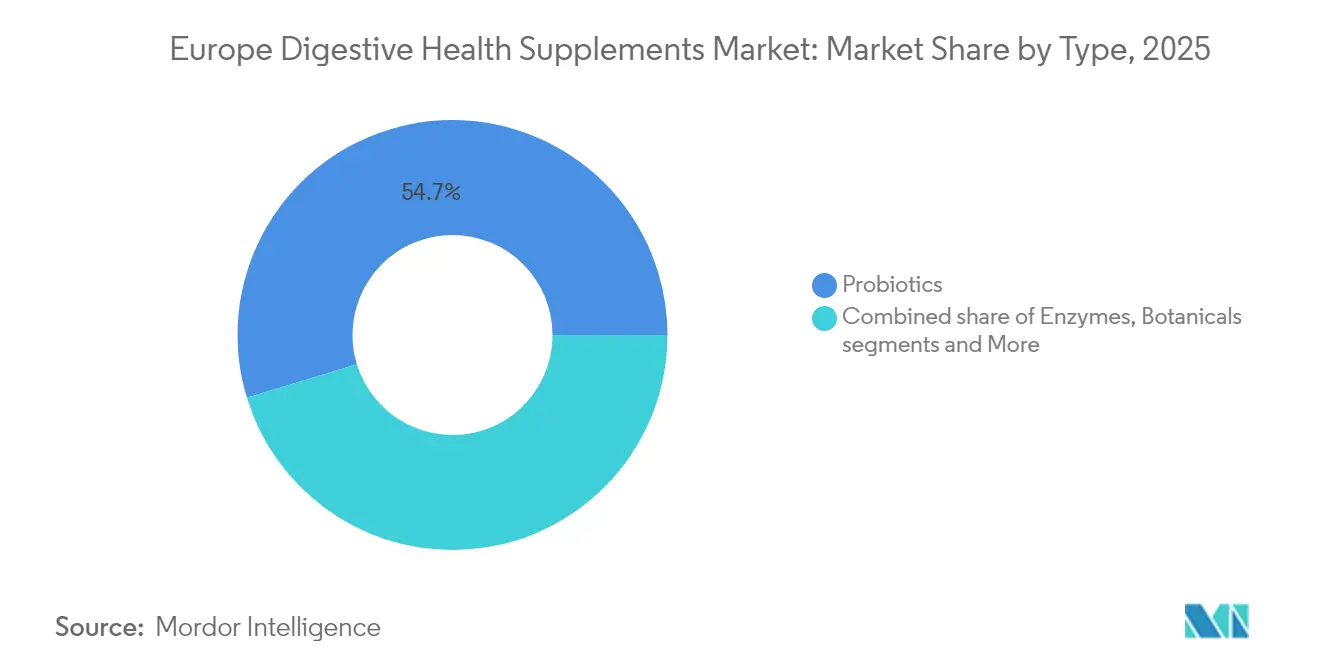
- By type, probiotics led with 54.72% of the European digestive health supplements market share in 2025, whereas enzymes are projected to grow at an 8.32% CAGR from 2026-2031.
- By form, capsules and softgels held 44.85% of revenue in 2025; gummies and chewables are expected to log an 8.01% CAGR through 2031.
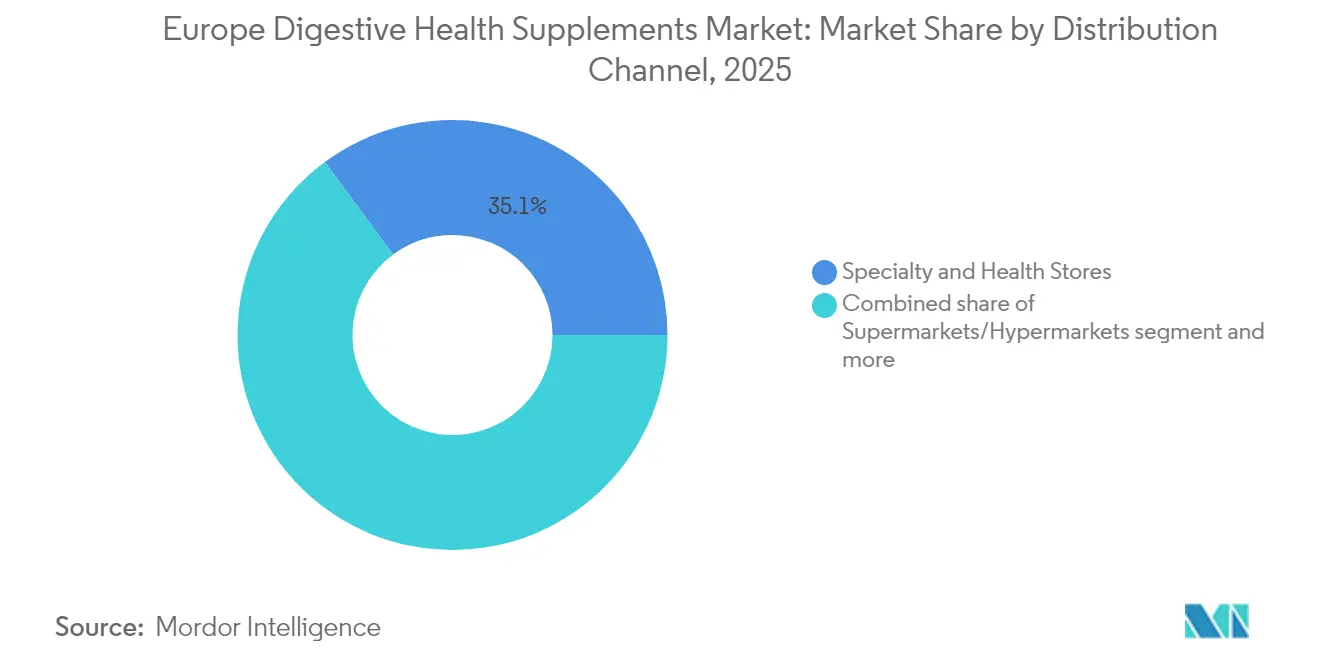
- By distribution channel, specialty and health stores captured 35.12% of sales in 2025, while online retailers will advance at a 6.92% CAGR during 2026-2031.
- By geography, Germany accounted for 23.10% of 2025 revenue; Spain is forecast to register a 7.31% CAGR between 2026-2031.
Note: Market size and forecast figures in this report are generated using Mordor Intelligence’s proprietary estimation framework, updated with the latest available data and insights as of 2026.
Europe Digestive Health Supplements Market Trends and Insights
Drivers Impact Analysis*
| DRIVER | (~) % IMPACT ON CAGR FORECAST | GEOGRAPHIC RELEVANCE | IMPACT TIMELINE |
|---|---|---|---|
| Rising prevalence of IBS and functional GI disorders across Western Europe | +1.2% | Western Europe, particularly Germany, France, United Kingdom | Medium term (2-4 years) |
| Ageing population in Europe boosting demand for digestive enzymes | +1.5% | Europe-wide, concentrated in Germany, Italy, Netherlands | Long term (≥ 4 years) |
| Integration of digestive supplements into daily nutritional regimens drives growth | +0.8% | Global, with early adoption in Nordic countries | Short term (≤ 2 years) |
| Enhanced digestive health awareness through digital media platforms adds to its growth | +0.9% | Europe-wide, strongest in urban centers | Short term (≤ 2 years) |
| Growth of vegan and flexitarian consumers favoring plant-based formulations | +0.7% | Western Europe, particularly Netherlands, Germany, United Kingdom | Medium term (2-4 years) |
| Increased lactose and gluten intolerance awareness | +0.6% | Northern and Western Europe, concentrated in Scandinavia, United Kingdom | Medium term (2-4 years) |
| Source: Mordor Intelligence | |||
Rising prevalence of IBS and functional GI disorders across Western Europe
The European digestive health supplements market is experiencing growth, driven by the prevalence of irritable bowel syndrome in 10-20% of the population. Women, who show higher IBS rates than men, are actively seeking alternatives to conventional medications for symptom relief. This trend mirrors broader supplement usage patterns, where women make up 57% of German supplement consumers compared to 45% of men. Healthcare systems across Europe have noted the rising economic burden of inflammatory bowel disease and gastrointestinal disorders, prompting patients to adopt preventive supplement strategies. With strong clinical evidence, clear demographic trends, and improved digital access, IBS management continues to fuel the expansion of the digestive health supplements market in Europe. Tech-savvy European consumers are increasingly drawn to digital health platforms that offer personalized symptom tracking and tailored supplement recommendations. This blend of clinical insights, shifting demographics, and digital advancements underscores the rising prominence of IBS management in propelling growth within Europe's digestive health supplements market.
Ageing population in Europe boosting demand for digestive enzymes
Pancreatic enzyme production decreases with age, affecting protein digestion. European research demonstrates reduced amino acid absorption after meals in older adults. This age-related change increases the demand for enzyme combinations that support nutrient breakdown. The connection between gut health and muscle maintenance encourages older consumers to use enzyme and probiotic combinations. As we age, our gut microbiome experiences significant shifts. Beneficial bacteria, such as Faecalibacterium and Lachnospiraceae, see a decline, while potentially harmful species become more prevalent. This shift has sparked heightened interest in prebiotic and probiotic interventions, as highlighted in Nutrients. Studies on centenarians indicate that a healthy aging process is linked to distinct microbiota profiles. Notably, these profiles showcase increased levels of Akkermansia and Butyricimonas. This correlation hints that tailored probiotic formulations might bolster longevity, a sentiment echoed in Current Gastroenterology Reports. Furthermore, the emerging understanding of the gut-muscle connection has spurred innovations in fermented solutions, aiming to enhance both digestive health and muscle upkeep. FrieslandCampina Ingredients responded to this trend by introducing a fermented gut-muscle product in 2024. These demographic factors contribute to the growth of the European digestive health supplements market.
Integration of digestive supplements into daily nutritional regimens drives growth
A significant portion of German consumers use dietary supplements, with most choosing formulations that support immune function through gut health. Physician recommendations influence many supplement purchases. The availability of convenient formats, such as gummies, encourages regular consumption and increases repeat purchases. This routine usage expands the consumer base beyond those seeking specific treatments and enhances recurring revenue potential for companies in the European digestive health supplements market. As consumers become more aware of the gut-immune connection, there's a noticeable shift towards proactive health management, underscoring the importance of digestive health in bolstering immunity and enhancing overall wellness outcomes, as highlighted by Frontiers in Aging. In Europe, consumers are now seeking vitamins or supplements specifically for digestive concerns, signaling a shift in perception: these supplements are increasingly seen as vital daily nutritional components rather than mere reactive solutions. This trend of integration is further validated by healthcare professionals, with a notable 49% of German supplement users acting on recommendations from their doctors, thereby anchoring supplement use within the realm of conventional medicine.
Enhanced digestive health awareness through digital media platforms adds to its growth
Digital health platforms are accelerating consumer education about gut microbiome science, supported by strong e-commerce adoption in Europe, where 77% of internet users make online purchases in 2024, with 16% specifically buying health supplements through digital channels[1]. Social media platforms and health applications provide consumers with personalized digestive health insights, enabling symptom tracking, dietary monitoring, and supplement response evaluation. The increased availability of direct-to-consumer microbiome testing platforms generates data-driven supplement recommendations for European consumers. This integration of health awareness and digital accessibility has transformed supplement purchasing from occasional transactions into continuous health management relationships, reshaping market dynamics.
Restraints Impact Analysis*
| RESTRAINT | (~) % IMPACT ON CAGR FORECAST | GEOGRAPHIC RELEVANCE | IMPACT TIMELINE |
|---|---|---|---|
| EFSA's low health-claim approval rate for probiotics restricting on-pack claims | -0.8% | Europe-wide regulatory impact | Long term (≥ 4 years) |
| Adulteration and potency degradation during supply-chain affecting brand trust | -1.1% | Global supply chains, strongest impact in Eastern Europe | Medium term (2-4 years) |
| Price sensitivity limiting premium supplement uptake | -0.6% | Southern and Eastern Europe | Short term (≤ 2 years) |
| Competition from alternative natural remedies affects growth | -0.4% | Traditional medicine regions, particularly Mediterranean | Medium term (2-4 years) |
| Source: Mordor Intelligence | |||
EFSA's low health-claim approval rate for probiotics restricting on-pack claims
The European probiotics market faces significant regulatory challenges, as the European Food Safety Authority (EFSA) continues to enforce rigorous evaluation standards for health claims. Companies operating in this space must adapt to a complex regulatory environment where the term "probiotic" remains unauthorized under EU regulations, leading to diverse national interpretations. While the Czech Republic recognizes "probiotics" as a nutrition claim, France and Northern Ireland allow it as a general health claim, and Italy considers it outside health claim definitions altogether. This regulatory complexity has prompted the International Probiotics Association Europe to push for unified terminology standards, emphasizing the need for clear criteria in species characterization and safety documentation[2]. The situation becomes more challenging with EFSA's upcoming novel food application guidelines in February 2025, which will require manufacturers to provide comprehensive safety data and detailed production information[3]. These requirements not only increase compliance costs and development timelines but also create particular difficulties for smaller companies looking to introduce innovative products, especially in areas like personalized probiotics and new bacterial strains for digestive health.
Adulteration and potency degradation during supply-chain affecting brand trust
European supplement quality monitoring indicates significant adulteration issues, with studies showing two-thirds of supplements experiencing composition integrity problems that affect consumer confidence and regulatory compliance. The Europe Heads of Food Safety Agencies identified 117 substances for potential restriction in food supplements, with 13 priority substances, including coumarin, curcumin, and melatonin, presenting health risks in supplement form. The European Health Products Manufacturers Association emphasizes implementing rigorous Good Manufacturing Practices and Hazard Analysis Critical Control Point systems to ensure product safety and efficacy across the supply chain. These quality concerns provide competitive advantages to manufacturers with strong supply chain controls while disadvantaging companies that prioritize cost reduction over quality assurance, ultimately limiting market growth through decreased consumer confidence.
*Our forecasts treat driver/restraint impacts as directional, not additive. The impact forecasts reflect baseline growth, mix effects, and variable interactions.
Segment Analysis
By Type: Probiotics Lead While Enzymes Accelerate
The European digestive health supplements market shows a clear consumer preference for probiotics, which currently command a 54.72% market share in 2025. This dominance stems from years of consumer trust in the effectiveness of bacterial strains, supported by extensive clinical studies validating their benefits for various gastrointestinal conditions.
In the evolving market landscape, enzyme supplements have emerged as the most dynamic segment, growing at an 8.32% CAGR from 2026-2031. This growth reflects the increasing needs of Europe's aging population, who often face challenges with pancreatic enzyme production and protein digestion. The market has also expanded to include younger consumers through specialized enzyme blends targeting lactose and gluten sensitivities. While prebiotics, botanicals, and innovative compounds such as magnesium L-threonate maintain their specific market positions, enzyme supplements are expected to deliver the highest incremental value to the European digestive health supplements market through 2031.

By Form: Capsules Dominate While Gummies Gain Momentum
Capsules and softgels retained a 44.85% share in 2025 because they safeguard probiotic viability and offer dosage precision. They remain the default professional recommendation across pharmacies within the European digestive health supplements industry. Even so, gummies post an 8.01% CAGR as flavor and convenience overcome pill fatigue among younger and female consumers. Encapsulation technology now embeds micro-coated probiotic spores in low-moisture pectin gummies, ensuring stability over shelf life. Tablets hold traction in price-sensitive markets, whereas powders and effervescent sticks cater to athletes and seniors preferring beverage formats. These varied delivery systems allow the European digestive health supplements market to meet divergent tastes without sacrificing efficacy.
Gummy formats are gaining traction, mirroring a wider consumer preference for convenience and taste. This trend is especially pronounced among younger Germans, aged 16-39, who make up 59% of the nation's supplement users, as reported by IKK Classic. Thanks to cutting-edge encapsulation technologies, probiotics can now thrive in gummy forms. This breakthrough addresses past challenges, ensuring bacterial strains remain stable even in moisture-prone settings. As technology progresses, the landscape of supplement formats is shifting, introducing innovative delivery methods without compromising ingredient effectiveness or consumer attraction.
By Distribution Channel: Specialty Stores Lead Digital Transformation
Specialty and health outlets supplied 35.12% of the 2025 turnover thanks to in-store expertise and premium assortment. However, online retailers will secure the highest incremental gains with a 6.92% CAGR, driven by algorithm-based recommendations and autoship discounts that lift retention. Pharmacies maintain a strong position in Germany as consumers primarily follow physician recommendations when purchasing supplements, according to IKK classic. While supermarkets expand their offerings of basic supplement products, they have limited shelf space for advanced formulations. The European digestive health supplements market's distribution landscape is evolving through integrated approaches combining click-and-collect services, remote consultations, and customized mobile applications.
Digital transformation is reshaping distribution dynamics. Subscription models, personalized recommendations, and direct-to-consumer platforms are bypassing traditional retail markups. These platforms not only enhance customer data but also boost engagement opportunities, as noted by BMC Health Services Research. The merging of digital health platforms with e-commerce is enabling features like symptom tracking, monitoring supplement efficacy, and automated reordering. These innovations foster strong customer relationships and create predictable revenue streams. Specialty stores are evolving, employing omnichannel strategies. By blending physical expertise with digital convenience, they're offering online consultations and click-and-collect services. This approach maintains personal interaction while fully embracing digital efficiency.
Geography Analysis
Germany holds a dominant position in the European digestive health supplements market, contributing 23.10% of market sales in 2025. The country's market strength stems from its wealthy consumer base, well-established retail network, and science-based regulatory framework. The robust reimbursement policies for functional foods further reinforce the widespread adoption of supplements among German consumers. Spain emerges as the fastest-growing market with a 7.31% CAGR, driven by its aging population and strong cultural connection to Mediterranean herbal digestive aids. This demographic shift, combined with increasing consumer awareness of digestive health, positions Spain as a key market for companies offering botanical supplement portfolios.
Other European markets demonstrate distinct characteristics that shape their market dynamics. France advances through its structured approach to vitamin and mineral content regulations, while Italy shows high per-capita spending backed by traditional acceptance of digestive supplements. The Netherlands maintains its position as a crucial logistics hub for botanical ingredients. The remaining European markets present diverse regulatory environments and income levels, offering both challenges and opportunities for market expansion.
While the European Union's harmonized regulations ease cross-border trade, variations among member states in health claim approvals and maximum ingredient levels complicate pan-European product launches. Regional preferences shape product formulations: Nordic countries lead in adopting functional foods, whereas Southern European markets lean towards traditional botanical ingredients. This geographic landscape mirrors broader European trends, such as a shift towards preventive healthcare, managing an aging population, and embracing digital commerce, all fueling market expansion across varied cultural and economic landscapes.
Competitive Landscape
The European digestive health supplements market shows a low concentration where pharmaceutical companies and nutrition firms actively operate. Prominent players in the market include Amway Corporation, Bayer AG, Herbalife Nutrition Ltd., BioGaia AB, and Symrise AG. These companies grow through innovation, acquisitions, and regulatory expertise. Large players maintain integrated operations from sourcing to distribution to control quality and costs, while smaller companies succeed with specialized products and direct consumer sales. Companies invest in clinical studies to validate health claims and differentiate their products in the market.
Companies gain competitive advantages through digital health platforms, personalized nutrition programs, and modern manufacturing methods that improve product quality and customer engagement. The market offers new opportunities in postbiotic formulations, gut-muscle supplements, and age-specific digestive enzymes, driven by ongoing research and development. Supply chain control and quality assurance are essential factors for market success. Quality management has become critical due to stricter regulations and increased consumer awareness. The market is moving toward consolidation, benefiting companies with robust resources and established compliance frameworks.
Companies leverage technology adoption to gain a competitive edge, utilizing digital health platforms, personalized nutrition algorithms, and advanced manufacturing processes. These innovations not only boost product efficacy but also deepen customer engagement. A notable trend is the emphasis on clinical validation. Firms are pouring resources into human studies, bolstering health claims and setting their products apart in a saturated market. Here, regulatory compliance acts as a gatekeeper, sidelining competitors with fewer resources.
Europe Digestive Health Supplements Industry Leaders
-
Amway Corporation
-
Bayer AG
-
Herbalife Nutrition Ltd.
-
BioGaia AB
-
Symrise AG
- *Disclaimer: Major Players sorted in no particular order
Market Opportunities and Future Outlook
Europe's digestive health supplements market continues to evolve as regulators steer product design and health claims. Regulation (EC) No 1924/2006 continues to shape labeling strategy, giving an advantage to vitamins, minerals, and other ingredients with authorized EU claims, while botanicals and probiotic strains face tougher EFSA evidence hurdles. This gap supports development of compliant combinations, including probiotics paired with prebiotic fibers, enzymes positioned for lactose and gluten sensitivity support, and newer approaches such as postbiotics, which can be presented with stronger stability and quality-control narratives.
Opportunities are also growing through changes in how consumers buy, particularly online. Subscription models, symptom-tracking journeys, and faster formulation iteration can move without waiting for slower retail resets. Named company moves point to this direction: Amway commercialized a structured gut-microbiome-oriented wellness program (Nutrilite Begin 30) in 2025, while BioGaia expanded its European probiotic portfolio with products such as Gastrus PURE ACTION (introduced in Finland in 2024) and Protectis Plus (launched in the United Kingdom in 2026). At the same time, quality concerns around adulteration and potency degradation across supplement supply chains raise the payoff for brands that invest in verified sourcing, GMP/HACCP discipline, and stability-protecting delivery technologies across capsules, softgels, and advanced gummies.
Recent Industry Developments
- June 2026: Bayer AG launched Alka-Seltzer in India featuring a dual-action antacid with Lactobacillus probiotic. The launch expands Bayer's biotics portfolio in an emerging market and adds to its regional presence.
- May 2026: BioGaia AB launched BioGaia Protectis Plus, a dual-strain probiotic supplement for infants, in the United Kingdom. The rollout extends BioGaia's European line and keeps focus on infant digestive health.
- September 2025: Bayer AG opened a new R&D and production laboratory in Darmstadt dedicated to phytomedicines and biotics. The new facility increases capacity for science-backed digestive health products and supports supply-chain resilience.
Research Methodology Framework and Report Scope
Market Definition and Coverage
This market covers retail and online sales of digestive health supplements across Europe, where consumers typically buy products to support gut comfort, digestion, and microbiome balance in everyday routines.
Scope exclusions: This sizing excludes prescription digestive medicines and hospital administered nutrition, even when they are used for digestive conditions.
Segmentation Overview
- By Type
- Prebiotics
- Probiotics
- Enzymes
- Botanicals
- Others
- By Form
- Capsules and Softgels
- Tablets
- Gummies and Chewables
- Powders and Granules
- Others
- By Distribution Channel
- Supermarkets/Hypermarkets
- Specialty and Health Stores
- Online Retailers
- Other Distribution Channels
- By Geography
- United Kingdom
- Germany
- France
- Italy
- Spain
- Russia
- Netherlands
- Rest of Europe
Data Sources, Market Sizing, and Validation
Desk Research
Desk research was used to set the market frame and to anchor country level demand signals that can be checked year over year. We leaned on public health and population indicators, together with food supplement rules and trade context, so the model stays tied to realistic consumption and pricing conditions across Europe.
Sources typically reviewed include European Commission and national food supplement guidance, EFSA scientific opinions and public registers, Eurostat datasets for population and macro indicators, OECD health statistics, and WHO Europe health and nutrition references. Company annual reports, investor presentations, and reputable business press were also used to interpret channel shifts and product mix changes. Where needed, we complemented this with paid subscription coverage for company financials and another for patent lookups, to sanity check innovation intensity and portfolio focus. These examples are not exhaustive, and many other public and reference sources were consulted for data collection, validation, and clarification.
Primary Interviews and Surveys
Primary work focused on validating what actually sells in each major market, and which formats are gaining share at shelf. We spoke with informed participants across brands, ingredient suppliers, distributors, and retail channel specialists, and we also pressure tested assumptions with professionals who track consumer supplement use across Europe, so gaps from desk research could be narrowed.
Distribution of primary research fieldwork respondents
| Company type | Respondent position |
|---|---|
| Top tier: 37% | CXOs: 20% |
| Mid tier: 42% | Functional/Unit leaders: 27% |
| Smaller Players: 21% | Managers: 53% |
Market-Sizing & Forecasting
Market sizing was built using a top-down demand pool assessment, reconstructing country consumption potential from the adult population, supplement usage penetration, and an average annual spend for digestive support categories. These totals were then adjusted by channel mix and price bands. We corroborated those results with selective bottom-up approximations, mainly sampled brand and retailer price checks, typical pack sizes, and a limited supplier and distributor roll up, which helped correct outliers without forcing a fully bottom-up build.
A few inputs that mattered most were the share of consumers buying food supplements, the split between pharmacy, mass retail, and e-commerce, probiotic and prebiotic adoption within digestive claims, average selling price movement by form (capsules, powders, gummies), and the pace of new product launches tied to allowed claims and labeling practice. For forecasting, scenario analysis was used, and the core case was shaped by primary feedback on expected penetration lift, realistic price progression, and channel growth, followed by country level macro checks so the curve does not overshoot.
Data Validation & Update Cycle
Outputs were checked against independent signals such as per capita supplement spend ranges, observed shelf pricing, and how country channel structures typically behave in Europe. When a country result looked too high or too low, we revisited the assumptions, and we triggered targeted re-contacts to confirm whether it reflected a real shift or a modeling artifact.
Before sign-off, the model goes through multiple analyst review steps, including variance checks across countries, and a final consistency pass on units, currency timing, and growth rates. Reports are refreshed annually, and interim updates are made when material events occur, followed by a last pre-delivery review so clients receive the latest updated view.
Mordor Intelligence's Europe Digestive Health Supplement Market Estimate Compared With Other Published Estimates
Published market sizes for digestive health supplements in Europe often do not match because the included product boundaries and price assumptions differ more than readers expect. The widest spreads usually come from what gets counted as a supplement versus adjacent digestive solutions, and from whether growth is built on observed channel behavior or from a broader wellness uplift.
Functional foods and fortified yogurts sit outside Mordor Intelligence's scope, which keeps the estimate focused on supplement form factors sold through supplement channels and priced as supplements. Some publishers blend in food based gut health and even OTC digestive remedies, and they also vary on whether they apply a single Europe wide ASP or use country specific price ladders, which can swing totals when e-commerce discounting is high.
Benchmark comparison
| Source | Market Size | Gaps in Research Methodology |
|---|---|---|
| Mordor Intelligence | USD 2.95 B (2025) | |
| Trade Journal A | USD 4.11 B (2025) | Typically wider inclusion where gut health foods and broader wellness digestive products are grouped with supplements, and Europe is priced using fewer country level ASP checks. |
| Global Consultancy B | USD 8.70 B (2026) | Often uses a gut health umbrella definition that can fold in OTC digestive aids and medical nutrition alongside supplements, and the year base shift can also inflate comparisons if currency timing is not aligned. |
The comparison shows that the spread is mostly explained by category boundaries and how pricing is localized across Europe. By keeping the steps traceable to consumer penetration, channel mix, and country level price reality, the final number is easier to reproduce and to stress test when assumptions change.
Key Questions Answered in the Report
What is the current value of the Europe digestive health supplements market?
The market stands at USD 3.13 billion in 2026 and is projected to grow to USD 4.21 billion by 2031.
Which country is expanding the fastest?
Spain is set to post a 7.31% CAGR between 2026-2031.
Why are gummy supplements gaining ground?
Gummies combine flavor, convenience, and now improved probiotic stability, driving an 8.01% CAGR for this format over 2026-2031.
How does EFSA regulation influence market growth?
Stringent health-claim approvals for probiotics raise compliance costs and slow product launches, trimming the growth rate by an estimated 0.8%.