
Endoscopic Ultrasound Needles Market Size and Share
Market Overview
| Study Period | 2020 - 2031 |
|---|---|
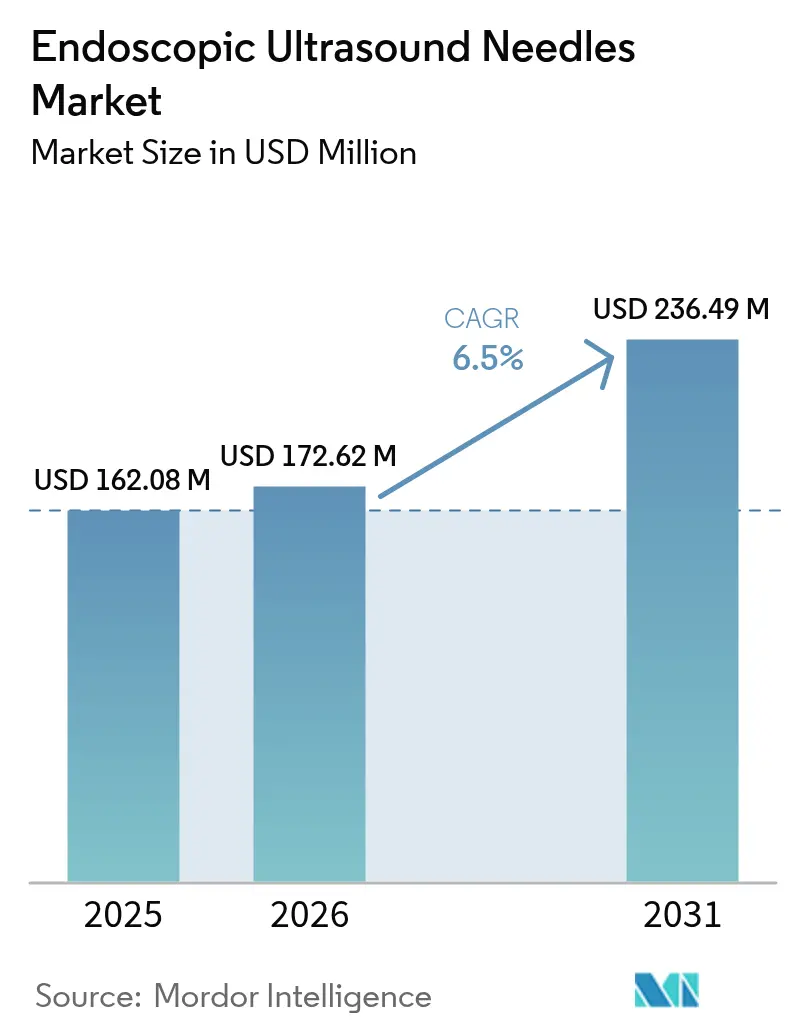
| Market Size (2026) | USD 172.62 Million |
| Market Size (2031) | USD 236.49 Million |
| Growth Rate (2026 - 2031) | 6.50 % |
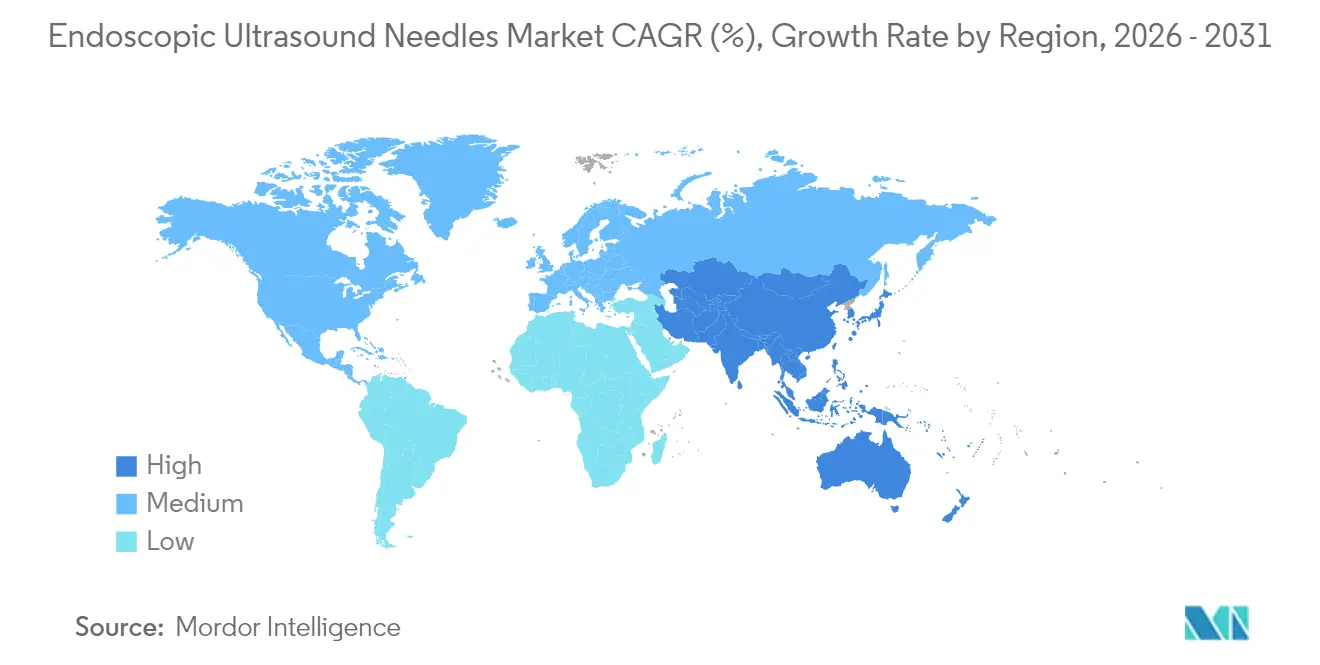
| Fastest Growing Market | Asia Pacific |
| Largest Market | North America |
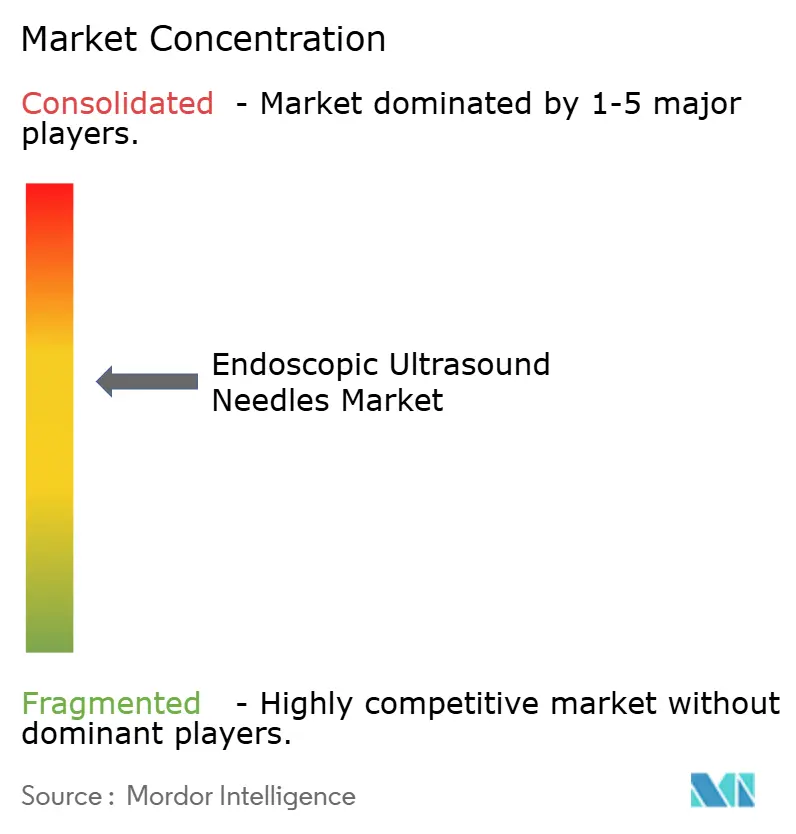
| Market Concentration | Medium |
Major Players *Disclaimer: Major Players sorted in no particular order Image © Mordor Intelligence. Reuse requires attribution under CC BY 4.0. | |
Endoscopic Ultrasound Needles Market Analysis by Mordor Intelligence
The endoscopic ultrasound needles market size was valued at USD 162.08 million in 2025 and estimated to grow from USD 172.62 million in 2026 to reach USD 236.49 million by 2031, at a CAGR of 6.50% during the forecast period (2026-2031). The growing demand for precision diagnostics, the rapid convergence of artificial intelligence with needle design, and the shift away from surgical biopsies underpin the steady expansion of the endoscopic ultrasound needles market. Hospitals continue to anchor global volumes, yet ambulatory surgical centers are winning share as outpatient biopsies gain traction. Fork-tip geometries, 25G gauges, and Nitinol construction collectively redefine sampling efficiency, while North America sustains its leadership through comprehensive reimbursement policies. Competitive intensity is shaped by proprietary tip designs, AI-enabled targeting technology, and strict FDA Class II requirements that raise entry barriers.
Key Report Takeaways
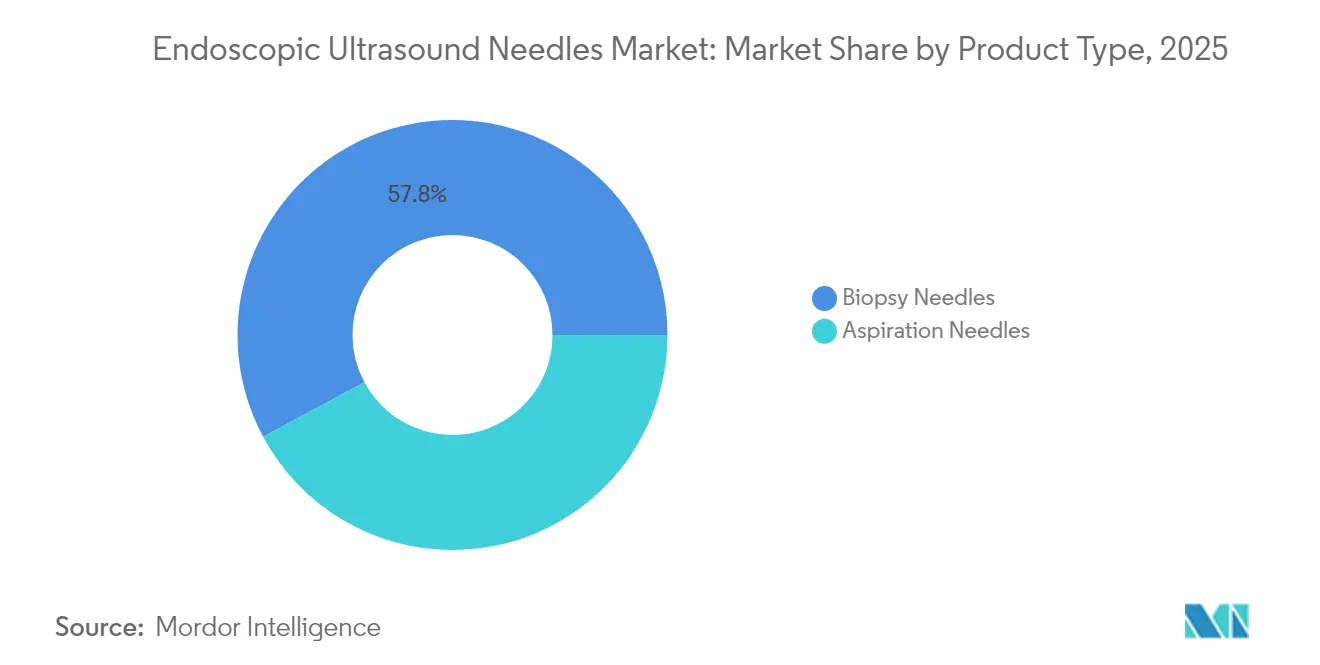
- By product type, biopsy needles captured 57.84% revenue share in 2025 and are projected to grow at 8.29% CAGR through 2031.
- By needle gauge, 22 G held 28.22% of the endoscopic ultrasound needles market share in 2025, while 25 G is projected to advance at a 7.41% CAGR to 2031.
- By tip design, Franseen needles led with a 30.05% share in 2025, and fork-tip designs are expanding at a 7.08% CAGR.
- By application, pancreatic lesions accounted for a 28.52% share in 2025, while bronchial or mediastinal lesions are projected to rise at an 8.62% CAGR.
- By end user, hospitals retained 42.98% share in 2025 and ambulatory surgical centers are growing at 8.74% CAGR.
- By geography, North America held 41.95% share in 2025 and Asia-Pacific is registering the fastest 7.29% CAGR.
Note: Market size and forecast figures in this report are generated using Mordor Intelligence’s proprietary estimation framework, updated with the latest available data and insights as of 2026.
Market Trends and Insights
Drivers Impact Analysis of Endoscopic Ultrasound Needles Market*
| Driver | (~) % Impact on CAGR Forecast | Geographic Relevance | Impact Timeline |
|---|---|---|---|
| Growing Burden Of Gastrointestinal And Pancreatic Cancers | 1.80% | North America, Asia-Pacific | Medium term (2–4 years) |
| Rising Preference For Minimally Invasive Diagnostic Procedures | 1.50% | Global, led by developed markets | Short term (≤ 2 years) |
| Increasing Geriatric Population With Comorbidities | 1.20% | North America, Europe, Japan | Long term (≥ 4 years) |
| Favorable Reimbursement Policies For Endoscopic Ultrasound Procedures | 1.10% | United States, Western Europe | Short term (≤ 2 years) |
| Rapid Adoption Of Franseen And Fork-Tip Fine Needle Biopsy Technology | 1.00% | Global, higher uptake in tertiary centers | Medium term (2–4 years) |
| Integration Of AI-Guided Targeting Systems In EUS Platforms | 0.90% | North America, Europe, expanding to Asia-Pacific | Medium term (2–4 years) |
| Source: Mordor Intelligence | |||
Growing Burden of Gastrointestinal and Pancreatic Cancers
Early-onset pancreatic cancer diagnoses have risen 2.47% annually since 2019, increasing reliance on tissue sampling for definitive staging[1]. Molecular profiling protocols now accompany most pancreatic biopsy requests, which boosts daily use of EUS needles in oncology centers. Higher sample-volume requirements favor biopsy rather than aspiration tools and reinforce hospital procurement of premium designs. The endoscopic ultrasound needles market, therefore, benefits from the oncology community’s shift toward large-core tissue retrieval. In the Asia-Pacific region, national cancer plans mirror this trend, accelerating device adoption across public hospitals.
Rising Preference for Minimally Invasive Diagnostic Procedures
CMS broadened coverage for EUS-guided fine needle aspiration and biopsy in 2024, validating the approach as cost-effective compared with open or laparoscopic biopsies[2]. Clinical evidence shows a single EUS pass can achieve histological confirmation that once required multiple surgical attempts, cutting anesthesia exposure and recovery time. Ambulatory surgical centers report higher patient satisfaction scores and stronger profit margins when using streamlined outpatient EUS workflows. These factors collectively stimulate procurement budgets, sustaining near-term growth in the Endoscopic Ultrasound Needles market. Manufacturers are therefore prioritizing compact systems tailored to outpatient settings.
Increasing Geriatric Population with Comorbidities
Adults aged 65 and older represent 67% of pancreatic cancer cases and often cannot tolerate surgical biopsies due to cardiovascular risk[3]. Conscious-sedation EUS procedures mitigate anesthesia-related complications while maintaining a high diagnostic yield. Ambulatory clinics offer geriatric-friendly scheduling and same-day discharge, both of which are attractive to older patients managing multiple disorders. This demographic alignment boosts procedure volumes and stable demand for single-use, ultra-fine needles. Over the long term, aging societies in Europe and Japan ensure a durable base for the endoscopic ultrasound needles market.
Integration of AI-Guided Targeting Systems in EUS Platforms
Machine learning algorithms now achieve 94% accuracy in pancreatic mass detection, compared to 78% for conventional imaging. Real-time lesion mapping reduces repeat procedures and drives first-pass success beyond 90%. Hospitals upgrading imaging stacks inevitably refresh compatible biopsy tools, expanding high-margin needle sales. Vendors integrating predictive software and proprietary tip designs create closed ecosystems, which deepen client lock-in and lift replacement cycles across the endoscopic ultrasound needles market.
Restraints Impact Analysis of Endoscopic Ultrasound Needles Market*
| Restraint | (~) % Impact on CAGR Forecast | Geographic Relevance | Impact Timeline |
|---|---|---|---|
| Shortage Of Skilled Endoscopic Ultrasound Operators | −1.1% | Most acute in emerging markets | Long term (≥ 4 years) |
| High Cost Of Premium Biopsy Needles And Reusable Accessories | −0.8% | Asia-Pacific, Latin America | Medium term (2–4 years) |
| Stringent Infection-Control Protocols Increasing Procedure Turnaround Time | −0.6% | Global, stricter in Europe and North America | Short term (≤ 2 years) |
| Competition From Emerging Non-Invasive Liquid Biopsy Technologies | −0.5% | Developed markets | Long term (≥ 4 years) |
| Source: Mordor Intelligence | |||
Shortage of Skilled Endoscopic Ultrasound Operators
Fewer than 15% of practicing gastroenterologists perform advanced EUS, limiting daily capacity in both urban and rural centers. Training requires 150–200 mentored cases, a hurdle for hospitals with thin specialist rosters. Asia-Pacific health systems build new cancer institutes faster than they can train operators, which caps near-term installations despite equipment subsidies. Private teaching partnerships and tele-proctorship programs aim to narrow the skills gap, but the shortage remains a long-tail restraint on the Endoscopic Ultrasound Needles market.
High Cost of Premium Biopsy Needles and Reusable Accessories
Next-generation Fork-Tip or Franseen needles cost three to four times more than standard lancet models, and strict infection-control rules forbid reuse. Budget-sensitive hospitals in Latin America and certain parts of Asia often restrict premium products to a small subset of reimbursed patients, opting for more affordable cytology tools for routine work. Ambulatory centers must balance device spend against tight payer contracts, which slows penetration of high-end designs. Persistent price pressure therefore tempers overall value growth of the endoscopic ultrasound needles market, even as unit volumes climb.
*Our forecasts treat driver/restraint impacts as directional, not additive. The impact forecasts reflect baseline growth, mix effects, and variable interactions.
Endoscopic Ultrasound Needles Market Segment Analysis
By Product Type – Biopsy Needles Drive Market Evolution
Biopsy needles held a 57.84% market share of the endoscopic ultrasound needles market in 2025, reflecting oncologists’ demand for intact core tissue that enables comprehensive molecular profiling. Their 8.29% CAGR through 2031 outpaces aspiration tools as personalized medicine protocols standardize across cancer centers. The endoscopic ultrasound needles market benefits from this structural shift, with biopsy instruments commanding premium pricing against stable year-on-year volume growth.
Aspiration needles retain their value for rapid on-site cytology, particularly in community settings without access to molecular labs. Yet the widening tissue requirements of pancreatic, biliary, and bronchial oncology place a growing ceiling on cytology-only devices. Established vendors leverage FDA 510(k) pathways to deploy iterative enhancements that maintain regulatory compliance while boosting diagnostic yield.

By Needle Gauge – Ultra-Fine Precision Gains Momentum
The 22 G gauge provided the largest contribution at 28.22% in 2025, balancing core volume with manageable bleeding risk. However the 25 G category shows a 7.41% CAGR through 2031, winning adoption for delicate pancreatic and pediatric cases where minimal trauma is paramount. Endoscopic Ultrasound Needles market size for 25 G solutions is projected to expand steadily as nitinol alloys allow thinner walls yet maintain lumen integrity.
Larger 19 G products support demanding genomic studies at academic centers, although slower growth keeps them niche. Gauge selection remains tightly linked to FDA validation protocols that test each diameter for tensile strength and biocompatibility.
By Tip Design – Fork-Tip Innovation Reshapes Sampling Efficiency
Franseen tips controlled 30.05% share in 2025, but Fork-Tip designs post the highest 7.08% CAGR to 2031. Comparative trials demonstrate higher intact-core rates and fewer passes per case, which aligns with payer pressure to shorten procedure time. The endoscopic ultrasound needles market therefore responds with rapid product cycles emphasizing proprietary cutting surfaces.
Lancet and side-beveled tools remain relevant for hyper-vascular lesions where controlled entry reduces hemorrhage risk. Collaborative R&D between STARmed and Olympus illustrates the strategic value of pairing surface metallurgy with ergonomics to protect share in this competitive arena.
By Application – Bronchial Sampling Emerges as Growth Driver
Pancreatic lesions accounted for 28.52% of global procedures in 2025, confirming the organ’s ongoing diagnostic challenge. Yet bronchial and mediastinal indications are clocking an 8.62% CAGR as pulmonologists adopt EUS-bronchoscope hybrids for lung cancer staging. Endoscopic Ultrasound Needles market size in thoracic oncology thus expands beyond classical gastroenterology.
Biliary strictures and gastrointestinal wall masses add diversified volume, supported by 2024 American College of Gastroenterology guidelines that endorse EUS biopsy for indeterminate biliary narrowing.
By Material – Nitinol Innovation Challenges Steel Dominance
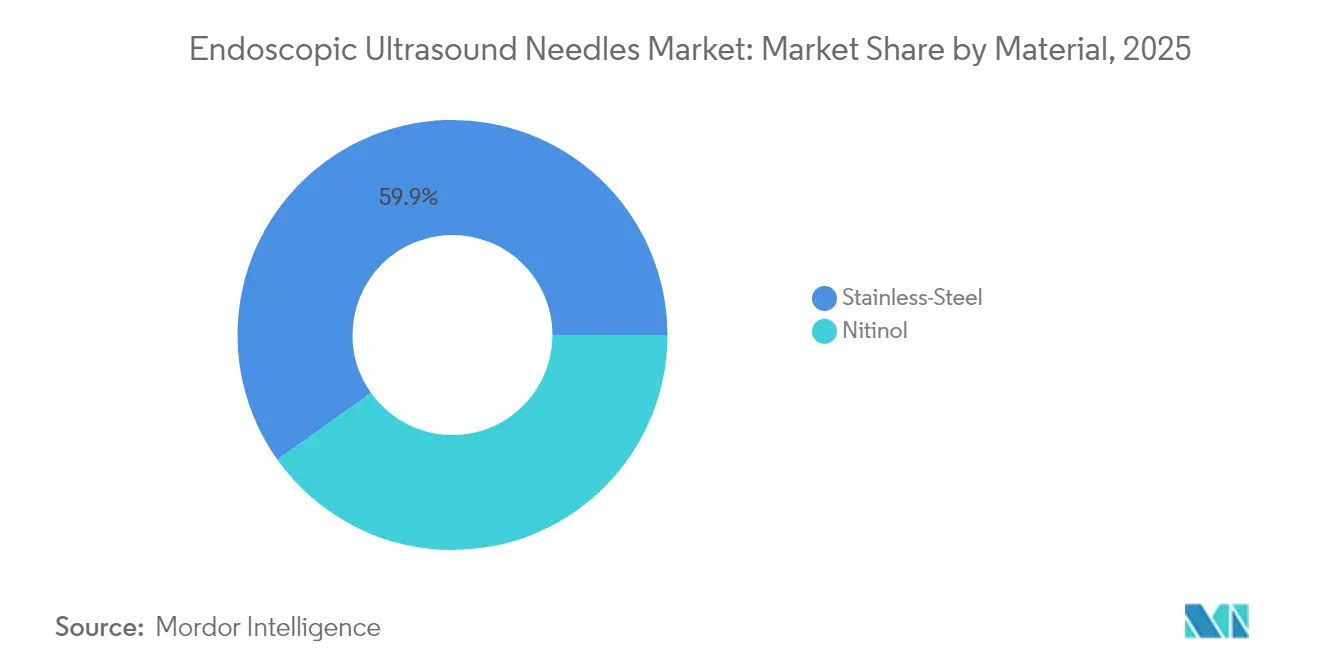
Stainless steel held 59.86% share in 2025 due to cost advantages and well-understood mechanical behavior. Nitinol grows at 7.38% CAGR by offering flexibility and shape memory that preserve tip sharpness through multiple passes. Endoscopic ultrasound needles market share for nitinol climbs fastest in centers that tackle tortuous anatomy such as pancreatic tail lesions.
ISO 13485 quality frameworks guide alloy consistency, corrosion resistance, and manufacturing traceability, building clinician trust in these premium devices.
By End User – Ambulatory Centers Capture Market Momentum
Hospitals retained a 42.98% share in 2025, but ambulatory surgical centers posted a robust 8.74% CAGR through 2031. Medicare reimbursement parity and consumer preference for outpatient care boost procedure migration. The endoscopic ultrasound needles market size within ambulatory centers is expected to expand as compact cart-based EUS platforms become more prevalent in suburban clinics.
Specialty cancer clinics leverage high throughput to negotiate bulk prices, sustaining demand for single-use needles that avoid reprocessing overhead. Device makers now tailor packaging and accessory kits for same-day discharge workflows, strengthening their positioning with facility administrators.
Geography Analysis
North America Endoscopic Ultrasound Needles Market
North America generated 41.95% of global revenue in 2025, buoyed by CPT codes 43238 and 43242 that secure reimbursement in both hospital and ambulatory settings. Academic networks funnel constant clinical trials, which accelerates early adoption of AI-guided targeting and nitinol needles. Canadian centers follow U.S. protocols, while Mexican medical tourism funnels additional volumes from uninsured U.S. patients seeking lower procedure costs.
APAC Endoscopic Ultrasound Needles Market
Asia-Pacific records the fastest 7.29% CAGR, driven by government oncology initiatives, growing specialist training pipelines, and urban hospital expansion. China’s cancer screening plan funds EUS suites in provincial centers, while Japan’s aging demographics propel demand for gentler diagnostics. Private hospitals in India add premium EUS services for overseas patients, broadening the endoscopic ultrasound needles market footprint. Diverse regulatory regimes require tailored submissions, but recent alignment of China’s National Medical Products Administration with ISO standards eases entry for global brands.
Europe Endoscopic Ultrasound Needles Market
Europe exhibits steady growth anchored in evidence-based guidelines and well-funded universal healthcare. Germany, the United Kingdom, and France lead installations, often pairing high-end needles with AI-assisted imaging upgrades. Southern Europe trails slightly yet benefits from EU Medical Device Regulation harmonization, which streamlines purchasing decisions. Real-world evidence programs across university hospitals further validate performance claims, reinforcing clinician confidence in new designs.
Regulatory Landscape
Endoscopic ultrasound (EUS) needles are predominantly regulated as Class II medical devices in the United States, with market entry commonly supported through the FDA 510(k) premarket notification route and alignment to recognized consensus standards for biocompatibility and performance. Recent clearances under this pathway continue to refresh competition, including FDA clearance for Cook Ireland, Ltd. EchoTip AcuCore EUS Biopsy Needle (K241209) in July 2024.
In Europe, compliance is shaped by Regulation (EU) 2017/745 (EU MDR) and the progressive operationalization of EUDAMED. Following the European Commission Decision (EU) 2025/2371 confirming functionality of key EUDAMED modules in November 2025, four modules (Actor registration, UDI/Device registration, Notified Bodies and Certificates, and Market surveillance) became mandatory as of May 28, 2026, increasing the importance of accurate device and economic-operator registrations for ongoing commercialization. Biological evaluation expectations also tightened with ISO 10993-1:2025, which was published in November 2025 and later recognized by the FDA as a consensus standard, reinforcing cross-market alignment on biocompatibility evidence packages.
Value Chain Analysis
The value chain for endoscopic ultrasound needles spans specialty alloy and polymer inputs (notably stainless steel and nitinol), precision component fabrication, assembly, sterilization, packaging, and distribution through direct sales and channel partners into hospitals, ambulatory surgical centers, and specialty clinics. Major participants such as Boston Scientific, Olympus, Cook Medical, and Medtronic compete not only on tip geometry and gauge breadth but also on dependable, high-throughput micro-manufacturing and inspection systems, as even small defects can become clinically relevant during tissue acquisition.
Recent field actions highlight how quality and supply continuity influence procurement and switching decisions in this category. Olympus initiated a voluntary global removal in September 2025 for certain ViziShot 2 FLEX (19G) EBUS-TBNA needles manufactured prior to May 12, 2025, citing manufacturing inspection failures, and expanded the removal in January 2026 to all lots due to reports of component detachment during procedures. Cook Medical also implemented a field safety corrective action in April 2024 for certain EchoTip Ultra HD and EchoTip Ultra needles related to elevated bacterial endotoxin levels. These events reinforce the role of sterilization validation, endotoxin control, incoming-material qualification, and automated inspection as critical value-chain differentiators, alongside bundled ecosystem selling where needles are purchased in conjunction with proprietary endoscopic ultrasound platforms and accessories.
Competitive Landscape
The endoscopic ultrasound needles industry shows moderate fragmentation. No single vendor exceeds a one-third share, and the top five together control under 50%, creating space for mid-sized specialists. Boston Scientific and Olympus leverage integrated scope-to-needle ecosystems that encourage bundled procurement contracts. Cook Medical focuses on core-biopsy geometry, while Fujifilm and Pentax rely on channel partnerships to expand regional reach.
Differentiation centers on proprietary tip designs, alloy composition, and AI-enabled positioning software. Vendors file continuous 510(k) submissions to sustain product cadence, knowing minor performance gains can sway hospital value analyses. Strategic collaborations, such as the 2024 STARmed-Olympus alliance, combine materials engineering with distribution muscle to accelerate market penetration.
New entrants emphasize ultra-fine pediatric gauges, reusable handle systems with disposable sheaths, and software modules that overlay lesion maps on live ultrasound feeds. These niche offerings seek to exploit unmet needs rather than confront incumbents head-on. Over the planning horizon, consolidation remains plausible if dominant imaging vendors pursue bolt-on acquisitions to close technology gaps.
Endoscopic Ultrasound Needles Industry Leaders
-
Medtronic PLC
-
CONMED Corporation
-
Olympus Corporation
-
Boston Scientific Corporation
-
Cook Group Incorporated
- *Disclaimer: Major Players sorted in no particular order
Endoscopic Ultrasound Needles Market Companies Covered in this Report
- ACE Medical Devices
- Boston Scientific
- Conmed
- Cook Group
- Endo-Flex
- FUJIFILM
- GI Supply
- Hakko Co. Ltd
- Laborie Medical Technologies
- Lishen Scientific
- Medi-Globe
- Medtronic
- Micro-tech
- Olympus
- Pentax Medical (HOYA)
- Sono Scape Medical
- South-Pioneer Technology
- Steris Endoscopy
- Taewoong Medical Co.
- US Endoscopy
Market Opportunities and Future Outlook
A clear opportunity sits in premium single-use fine needle biopsy (FNB) devices that improve core tissue capture while navigating tortuous anatomy, aligning with oncology-driven requirements for intact tissue suitable for molecular profiling. Olympus moved this theme forward with its January 2026 U.S. launch of the SecureFlex single-use FNB device, emphasizing a nitinol-based design and availability across 19G, 22G, and 25G sizes. Product roadmaps that combine nitinol flexibility with differentiated cutting geometries and enhanced ultrasound visibility address first-pass success and procedure-time pressure in both hospitals and ambulatory settings.
Platform-adjacent device extensions also broaden whitespace in EUS accessory portfolios. In June 2026, Boston Scientific received FDA 510(k) clearance (K260428) for the RIVOS EUS Access Device under product code ODG, underlining continued investment in procedure-enabling accessories that can be bundled alongside needles and scopes. Separately, published clinical work continues to differentiate outcomes by needle design, including clinical evaluations where Franseen configurations show higher diagnostic accuracy than forward bevel designs, supporting continued commercialization focus on geometry-specific performance claims. Together, these developments point to near-term commercial focus on higher-yield tissue acquisition and accessory ecosystems, while quality-system robustness remains central due to recent removals and corrective actions impacting supply reliability.
Recent Industry Developments in Endoscopic Ultrasound Needles Market
- June 2026: Boston Scientific received FDA 510(k) clearance (K260428) for the RIVOS EUS Access Device under product code ODG. The clearance expands its EUS procedure accessory portfolio and supports bundled selling alongside endoscopic ultrasound platforms and compatible sampling tools. It signals a cadence of U.S. regulatory filings that can tighten competition around integrated procedure workflows.
- January 2026: Olympus announced the U.S. commercial launch of the SecureFlex single-use fine needle biopsy device, offered in 19G, 22G, and 25G sizes. The launch strengthens Olympus positioning in premium FNB needles designed for tissue acquisition in challenging anatomy, supporting both hospital and outpatient biopsy workflows. It also increases competitive pressure on differentiated tip geometries and nitinol-based designs in the United States.
- July 2024: Cook Medical (Cook Ireland, Ltd.) received FDA 510(k) clearance for the EchoTip AcuCore EUS Biopsy Needle (K241209). The clearance added another regulated biopsy-needle option to the U.S. market under the established Class II pathway, reinforcing the role of iterative design upgrades and substantial-equivalence submissions in product refresh cycles. This type of clearance supports broader provider access to core-biopsy tools used for oncology-driven tissue requirements.
Endoscopic Ultrasound Needles Market Report Scope and Research Methodology
Market Definition and Coverage
This market covers revenue generated from endoscopic ultrasound guided needles that are used to collect tissue or fluid samples during EUS procedures in clinical settings. It includes aspiration and biopsy needles sold for use across major care sites where EUS is performed.
Scope exclusions: We exclude ultrasound consoles, endoscopes, guidewires, accessories other than EUS needles, and procedure service revenue from hospitals and clinics.
Segments Covered in This Report
- By Product Type
- Aspiration Needles
- Biopsy Needles
- By Needle Gauge
- 19G
- 22G
- 25G
- By Tip Design
- Lancet
- Franseen
- Fork-Tip
- Side-Beveled
- By Application
- Pancreatic Lesions
- Gastrointestinal Wall Lesions
- Bronchial / Mediastinal Lesions
- Biliary Lesions
- By Material
- Stainless-Steel
- Nitinol
- By End-User
- Hospitals
- Ambulatory Surgical Centers
- Specialty Clinics
- Geography
- North America
- United States
- Canada
- Mexico
- Europe
- Germany
- United Kingdom
- France
- Italy
- Spain
- Rest of Europe
- Asia-Pacific
- China
- Japan
- India
- Australia
- South Korea
- Rest of Asia-Pacific
- Middle East & Africa
- GCC
- South Africa
- Rest of Middle East & Africa
- South America
- Brazil
- Argentina
- Rest of South America
- North America
Data Sources, Market Sizing, and Validation
Desk Research
Desk work starts with mapping how EUS procedures translate into needle demand, since one procedure does not always mean one needle and reuse rules vary by facility. We anchor the basics using public sources such as the World Health Organization cancer statistics, the International Agency for Research on Cancer, and national health agencies such as the US CDC, which help us understand the diagnosis and screening pool behind EUS usage.
We also refer to regulator and trade signals, such as the US FDA device database and recalls, and customs or trade portals where available for medical device import and export patterns. To keep assumptions realistic, we review company annual reports, investor decks, and reputable medical society or journal publications that discuss EUS-FNA and EUS-FNB adoption and biopsy quality requirements. In a few places, paid subscriptions are used only for company financials and patent checks so we can cross-check product activity and timing. The sources listed above are illustrative and not exhaustive, and many other references were also used for data collection, validation, and clarification.
Primary Interviews and Surveys
Primary work focuses on validating procedure trends, typical needle mix (aspiration versus biopsy), and realistic pricing moves across geographies, followed by checks on how purchasing happens across hospitals, ambulatory centers, and specialty clinics. We speak with a blend of manufacturers, distributors, and clinicians, and then we reconcile differences by region so demand indicators match local practice patterns and reimbursement realities.
Distribution of primary research fieldwork respondents
| Company type | Respondent position | Region |
|---|---|---|
| Top tier: 28% | CXOs: 14% | APAC: 45% |
| Mid tier: 55% | Functional/Unit leaders: 36% | EMEA: 34% |
| Smaller Players: 17% | Managers: 50% | Americas: 21% |
Market-Sizing & Forecasting
Sizing is built using a top-down and bottom-up combination where the demand pool is first reconstructed from EUS procedure volumes and the share of procedures that require sampling, and then converted into needle units and value. To keep the model grounded, the totals are corroborated through selective bottom-up approximations, such as rolling up a sample of supplier revenues, channel checks on hospital purchasing, and a simple ASP times volume cross-check before finalizing the number.
A few inputs carry the model because they explain most of the spend movement year to year. These include the split between EUS-FNA and EUS-FNB use, average needles per procedure, the mix by common gauges (19G, 22G, 25G), and the shift in tip designs used for core tissue quality needs. We also factor changes in oncology and pancreatic lesion workup volumes, care site mix (hospital versus ambulatory centers), and pricing pressure versus premium adoption for specialty needles. Where a bottom-up view is incomplete for smaller suppliers or fragmented distribution, we fill gaps by applying verified mix shares and conservative ASP bands from interviews, and then we test whether resulting shares look reasonable against trade and regulatory activity.
Forecasting is done using scenario analysis supported by simple multivariate relationships between procedure growth, indication mix shifts, and pricing progression, since these drivers move together and are easier to explain and re-check. Assumptions are stress-tested with expert feedback so the final forecast does not depend on a single aggressive adoption curve.
Data Validation & Update Cycle
Validation is handled through repeated triangulation between the modeled market value, expected procedure based needle demand, and independent signals such as regulatory activity and public company commentary. When a large variance shows up, we re-check the driver that caused it, and if needed we re-contact respondents to confirm whether the change is real or timing related.
Before sign-off, the model goes through a multi-step review where another analyst checks inputs, units, and currency handling, followed by a final consistency pass across regions and years. The report is refreshed annually, and interim updates are triggered when material events occur, such as a major reimbursement change or a meaningful product safety action. Right before delivery, a fresh review is completed so clients receive the latest updated view rather than an older snapshot.
Mordor Intelligence's Endoscopic Ultrasound Needles Market Size Versus Other Published Estimates
Published market values for EUS needles can differ more than expected because groups do not always count the same products, years, or demand signals. Some studies focus mainly on aspiration needles or on a limited set of care sites, while others expand the definition to adjacent accessories, which changes the final value.
By tracking procedure-to-needle conversion rates and refreshing gauge and FNA versus FNB mix assumptions with clinician and distributor checks, Mordor Intelligence keeps the number tied to EUS needle sales rather than broader endoscopy device spending. The biggest gap drivers we typically see are whether the study uses 2024 or 2025 as the current year, how it treats mix shifts into biopsy needles, and whether currency conversion timing is applied consistently across regions.
Benchmark comparison
| Source | Market Size | Gaps in Research Methodology |
|---|---|---|
| Mordor Intelligence | USD 162.08 M (2025) | |
| Industry Advisory A | USD 174.94 M (2024) | Uses a 2024 base year and broader application groupings, which can shift the implied needles-per-procedure and the assumed split between aspiration and biopsy needles. |
| Global Research Desk B | USD 195.00 M (2024) | Starts from a higher 2024 value and appears to apply stronger near-term pricing and biopsy mix uplift, which can raise the current-year total if procedure growth and unit conversion are not re-checked. |
The table shows that the spread is mainly explained by year selection and by how needle mix and pricing are handled in the current year. When the scope is kept to EUS needles and the procedure and unit logic is checked step by step, the resulting market size is easier to trace and repeat in planning discussions.
Key Questions Answered in the Report
How big is the Global Endoscopic Ultrasound Needles Market?
The Global Endoscopic Ultrasound Needles Market size is expected to reach USD 172.62 million in 2026 and grow at a CAGR of 6.50% to reach USD 236.49 million by 2031.
What is the current Global Endoscopic Ultrasound Needles Market size?
In 2026, the Global Endoscopic Ultrasound Needles Market size is expected to reach USD 172.62 million.
Who are the key players in Global Endoscopic Ultrasound Needles Market?
Medtronic PLC, CONMED Corporation, Olympus Corporation, Boston Scientific Corporation and Cook Group Incorporated are the major companies operating in the Global Endoscopic Ultrasound Needles Market.
Which is the fastest growing region in Global Endoscopic Ultrasound Needles Market?
Asia Pacific is estimated to grow at the highest CAGR over the forecast period (2026-2031).
Which region has the biggest share in Global Endoscopic Ultrasound Needles Market?
In 2026, the North America accounts for the largest market share in Global Endoscopic Ultrasound Needles Market.
What years does this Global Endoscopic Ultrasound Needles Market cover, and what was the market size in 2025?
In 2025, the Global Endoscopic Ultrasound Needles Market size was estimated at USD 172.62 million. The report covers the Global Endoscopic Ultrasound Needles Market historical market size for years: 2019, 2020, 2021, 2022, 2023 and 2024. The report also forecasts the Global Endoscopic Ultrasound Needles Market size for years: 2026, 2027, 2028, 2029, 2030 and 2031.