
Electroceuticals/Bioelectric Medicine Market Size and Share
Market Overview
| Study Period | 2020 - 2031 |
|---|---|
| Market Size (2026) | USD 27.46 Billion |
| Market Size (2031) | USD 38.74 Billion |
| Growth Rate (2026 - 2031) | 7.12 % |
| Fastest Growing Market | Asia-Pacific |
| Largest Market | North America |
| Market Concentration | Medium |
Major Players *Disclaimer: Major Players sorted in no particular order Image © Mordor Intelligence. Reuse requires attribution under CC BY 4.0. | |
Electroceuticals/Bioelectric Medicine Market Analysis by Mordor Intelligence
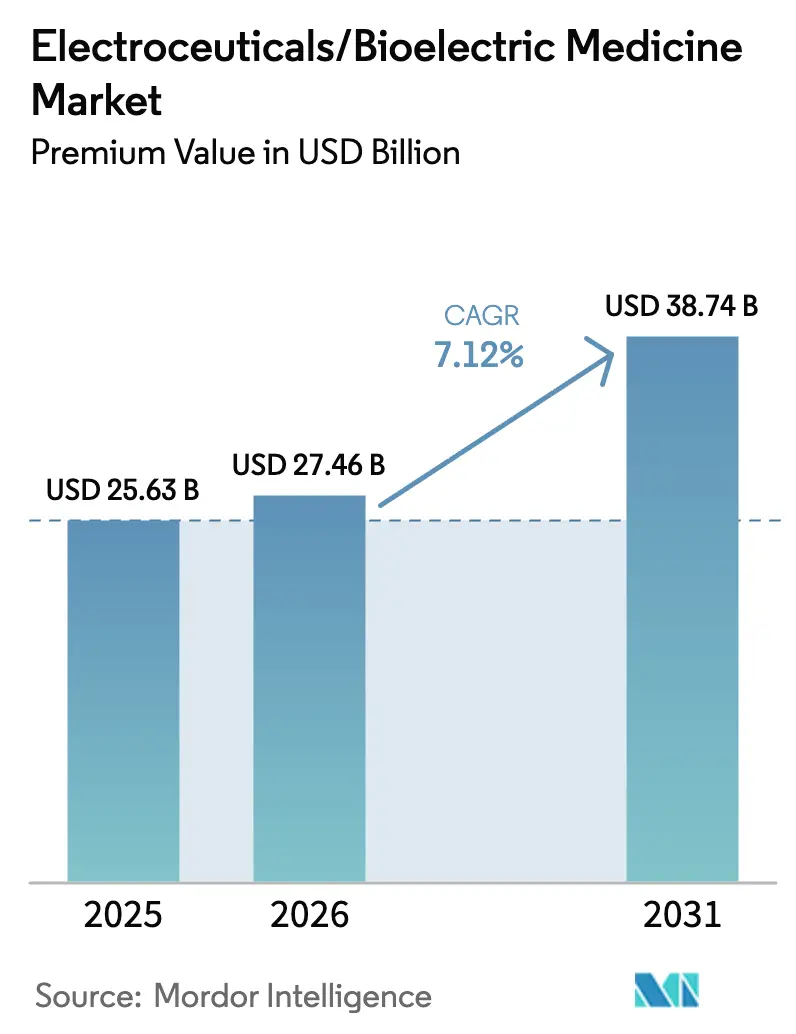
The electroceuticals/bioelectric medicine market size was valued at USD 25.63 billion in 2025 and estimated to grow from USD 27.46 billion in 2026 to reach USD 38.74 billion by 2031, at a CAGR of 7.12% during the forecast period (2026-2031). Closed-loop sensing, miniaturized hardware and on-board artificial intelligence now let devices fine-tune stimulation dozens of times per second, opening the door to precision therapy for complex neurological and cardiovascular disorders. Competitive positioning depends less on production scale and more on technological differentiation; firms able to combine adaptive algorithms with reliable power management are taking share. Regulatory agencies in the United States, the European Union and Japan continue to streamline breakthrough-device pathways, accelerating time-to-market for novel platforms while keeping safety thresholds high. Meanwhile, payers are shifting toward value-based reimbursement, favoring device therapies that can document real-world outcome improvements and lower lifetime treatment costs compared with chronic drug regimens.
Key Report Takeaways
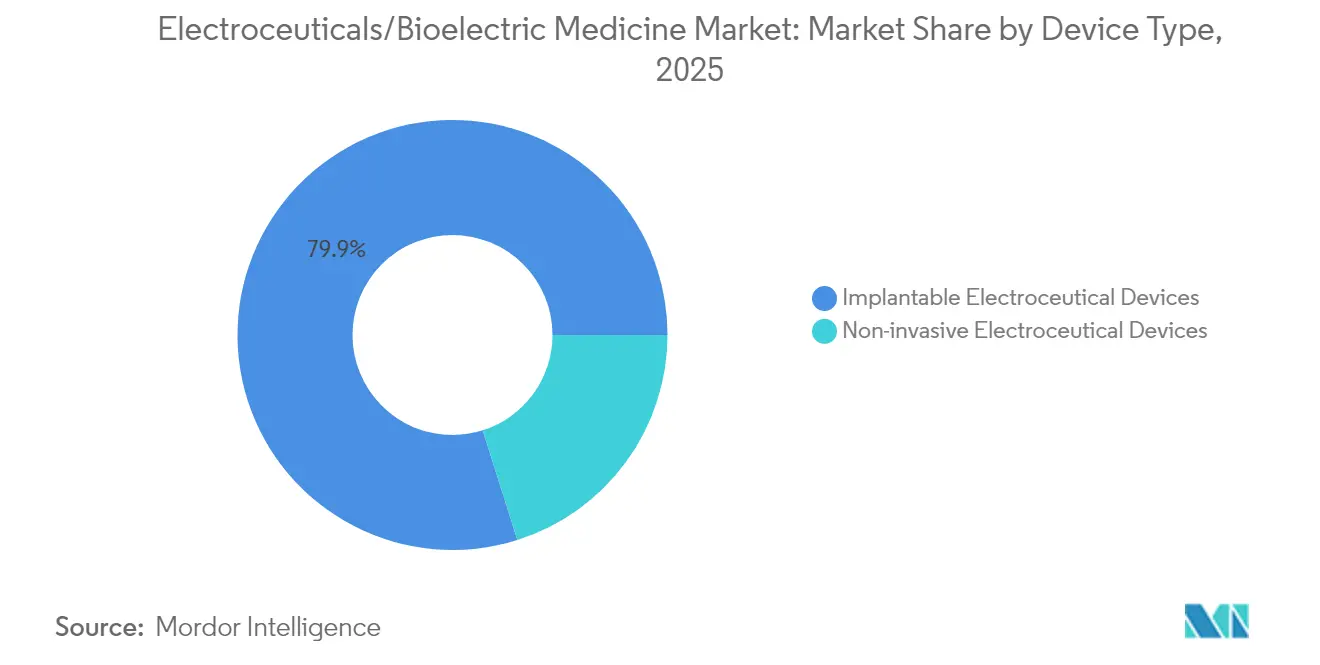
- By device type, implantable systems held 79.88% of electroceuticals/bioelectric medicine market share in 2025, whereas non-invasive devices are forecast to expand at a 9.32% CAGR through 2031.
- By product, pacemakers led with 34.10% revenue share in 2025; vagus nerve stimulators record the fastest projected CAGR at 9.46% to 2031.
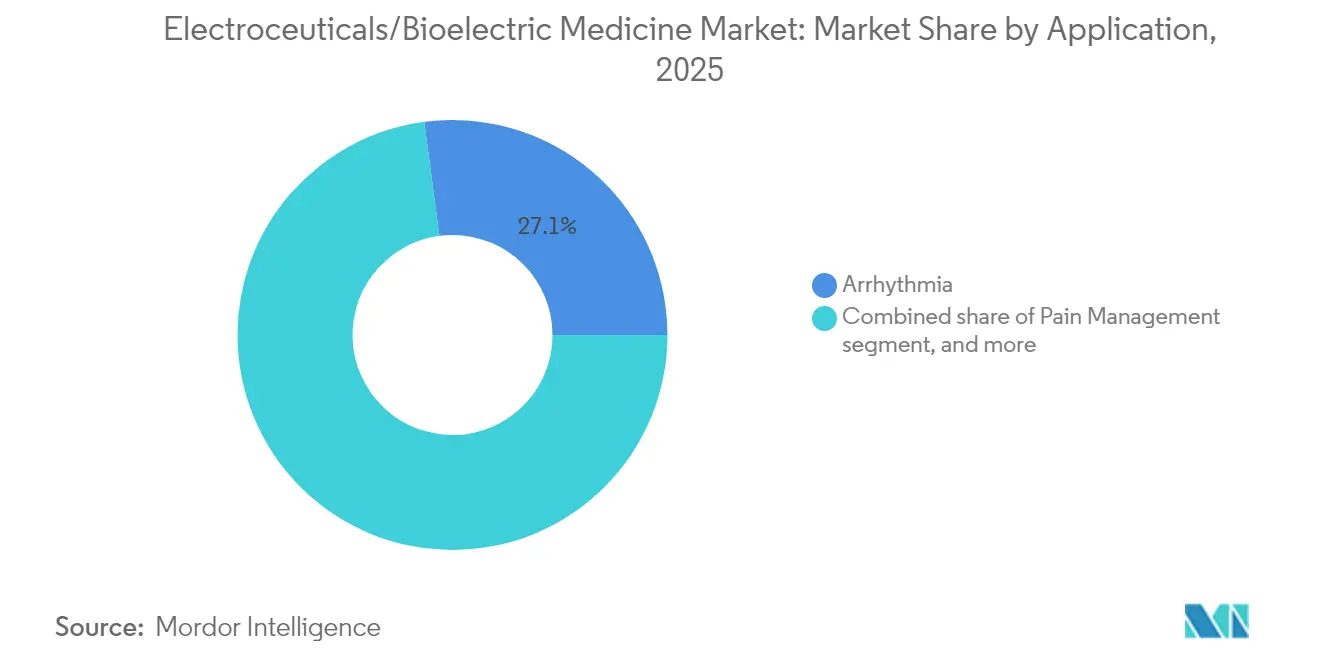
- By application, arrhythmia treatments accounted for 27.10% of the electroceuticals/bioelectric medicine market size in 2025, while depression applications are advancing at a 9.98% CAGR.
- By end user, hospitals retained 61.85% share in 2025, yet home-care settings are growing at 10.05% CAGR as remote monitoring gains traction.
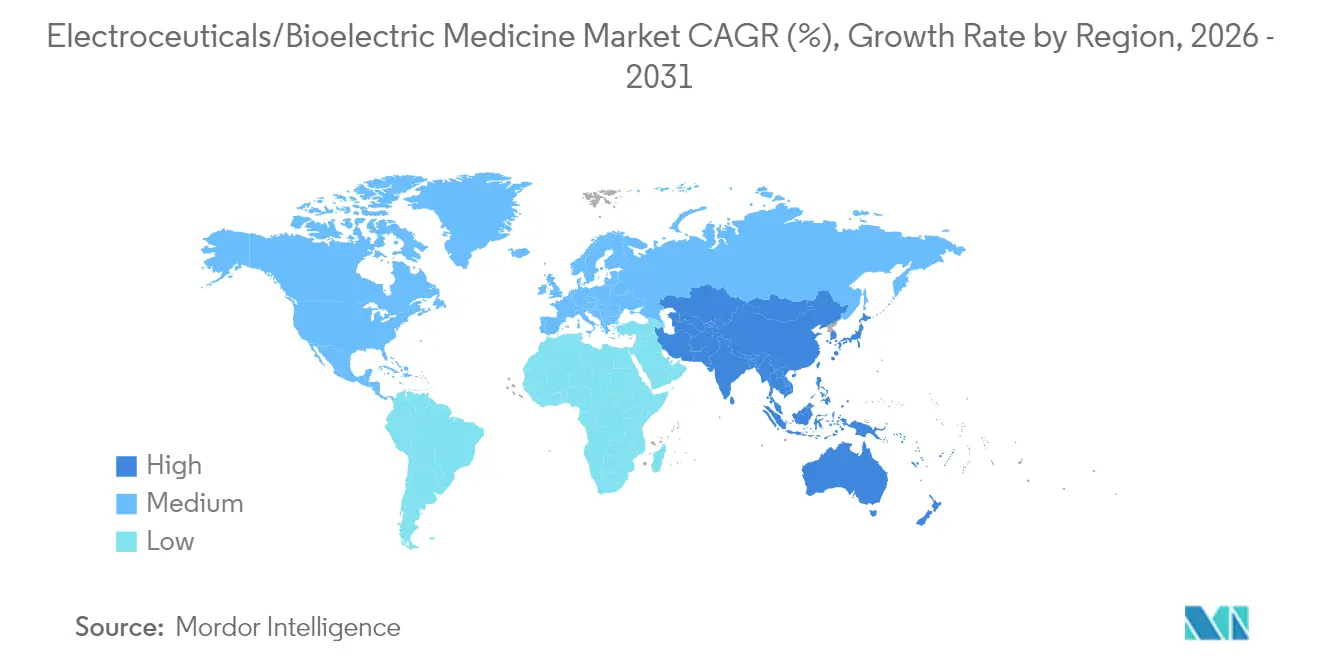
- By geography, North America captured 42.10% market share in 2025; Asia-Pacific represents the fastest-growing region with an 8.38% CAGR through 2031.
Note: Market size and forecast figures in this report are generated using Mordor Intelligence’s proprietary estimation framework, updated with the latest available data and insights as of 2026.
Market Trends and Insights
Drivers Impact Analysis of Electroceuticals/Bioelectric Medicine Market*
| Driver | % Impact on CAGR Forecast | Geographic Relevance | Impact Timeline |
|---|---|---|---|
| Growing burden of chronic neurological & cardiovascular diseases | +1.8% | North America, Europe, global spill-over | Long term (≥ 4 years) |
| Continuous technological innovations in implantable & non-invasive devices | +1.5% | North America, EU, expanding to Asia-Pacific | Medium term (2-4 years) |
| Expansion of clinical indications across multiple therapeutic areas | +1.2% | Global | Medium term (2-4 years) |
| Increasing preference for device-based therapies over pharmaceuticals | +1.0% | North America, EU, emerging in Asia-Pacific | Long term (≥ 4 years) |
| Rising healthcare expenditure & favorable government initiatives | +0.8% | Asia-Pacific core, spill-over to Middle East & Africa | Short term (≤ 2 years) |
| Advancements in miniaturization & battery technologies | +0.9% | Global | Medium term (2-4 years) |
| Source: Mordor Intelligence | |||
Growing Burden of Chronic Neurological and Cardiovascular Diseases
Worsening prevalence of refractory epilepsy, Parkinson’s disease and heart rhythm disorders is pushing clinicians toward bioelectric interventions able to bypass pharmacological limitations. Real-world evidence shows vagus-nerve stimulation delivered meaningful symptom relief to 71% of treatment-resistant depression patients and cut hospital days significantly[1]Frontiers in Psychiatry, “Vagus Nerve Stimulation for Treatment-Resistant Depression,” frontiersin.org. Closed-loop spinal cord stimulation achieved 93% pain-reduction success in chronic cases, outperforming conventional approaches. As developed-market populations age, multi-morbid patients seek therapies with lower systemic side-effect profiles, reinforcing demand across hospital and outpatient settings.
Continuous Technological Innovations in Implantable and Non-Invasive Devices
The latest generation of stimulators can adjust output 50 times per second, turning therapy from reactive to proactive care. Medtronic’s Inceptiv closed-loop spinal cord stimulator won FDA clearance in April 2024 and has already demonstrated superior outcomes via automatic dose optimization. Miniaturization breakthroughs have yielded pacing modules smaller than a grain of rice; Northwestern University’s light-activated pacemaker eliminates lead-related complications while maintaining efficacy. Focused-ultrasound and transcutaneous platforms now offer near-implant precision without surgery, broadening eligibility to patients previously unable or unwilling to undergo invasive procedures.
Expansion of Clinical Indications Across Multiple Therapeutic Areas
Evidence continues to accumulate for oncology, metabolic and autoimmune uses. Tumor Treating Fields improved overall survival in glioblastoma by 70% when paired with immunotherapy, underscoring the potential of electrical fields to disrupt cancer cell division. In gastroenterology, targeted vagal modulation is alleviating inflammatory bowel diseases, while electric dressings cut wound-healing times by 30%. Psychiatric care is a fast-emerging frontier, with transcutaneous auricular stimulation easing borderline personality disorder symptoms in early trials. This diversification shields manufacturers from reimbursement headwinds in any single indication.
Increasing Preference for Device-Based Therapies Over Pharmaceuticals
Long-term medication often brings cumulative toxicity and escalating cost, prompting stakeholders to explore durable implant- or patch-based alternatives. Spinal cord stimulators have delivered better pain control at lower lifetime expenditure and sharply cut opioid reliance. Patient surveys report 88% preference for adaptive neurostimulators that demand fewer clinic visits and provide individualized dosing. Value-based care contracts amplify this shift, rewarding interventions with documented quality-of-life gains and reduced downstream spending.
Restraints Impact Analysis of Electroceuticals/Bioelectric Medicine Market*
| Restraints Impact Analysis | (~) % Impact on CAGR Forecast | Geographic Relevance | Impact Timeline |
|---|---|---|---|
| High capital & procedural costs of electroceutical therapies | −1.2% | Global, especially acute in developing regions | Short term (≤ 2 years) |
| Complex & stringent regulatory approval processes | −0.8% | Worldwide with regional variability | Medium term (2-4 years) |
| Limited reimbursement coverage in developing regions | −0.6% | Asia-Pacific, Latin America, parts of Africa | Short term (≤ 2 years) |
| Data security & patient privacy concerns in connected devices | −0.5% | North America, Europe, spreading to other connected-health markets | Medium term (2-4 years) |
| Source: Mordor Intelligence | |||
High Capital and Procedural Costs of Electroceutical Therapies
Initial expenditure ranges from USD 310 for clinic-based transcutaneous sessions to nearly USD 60,000 for complex implantable pulse generators, straining budgets in cost-sensitive systems. CMS reimbursement caps still confine auricular vagus stimulation to restricted indications, forcing providers to absorb part of the expense. Alongside the device, hospitals shoulder additional outlays for imaging, programming consoles and specialized staff, while patients may face follow-up revision surgeries if leads migrate or batteries deplete. These front-loaded costs, though often offset by long-term drug-savings, slow uptake in markets with constrained capital cycles.
Complex and Stringent Regulatory Approval Processes
Fragmented global rules add years and millions to development timelines. Japan’s well-documented “device lag” persists despite its USD 40 billion market and a 5.5% forecast CAGR[2]U.S. Department of Commerce, “Japan Medical Device Market,” trade.gov. China’s 2024 revision of its device law tightens safety reviews yet promises longer dossiers, raising hurdles for smaller innovators. Divergent risk-classification and post-market surveillance frameworks oblige firms to run overlapping trials, duplicate audits and adapt labeling for every jurisdiction. Although groups such as the International Medical Device Regulators Forum promote harmonization, meaningful convergence remains a mid-decade prospect.
*Our forecasts treat driver/restraint impacts as directional, not additive. The impact forecasts reflect baseline growth, mix effects, and variable interactions.
Electroceuticals/Bioelectric Medicine Market Segment Analysis
By Device Type:
Implantables Hold Sway as Non-Invasive Platforms AccelerateImplantable systems commanded 79.88% share of the electroceuticals/bioelectric medicine market in 2025, reflecting their unmatched ability to deliver continuous, high-precision stimulation deep within neural or cardiac tissue. Leadless pacemakers, injectable electrodes and micro-battery advances have trimmed incision sizes and reduced infection risk, keeping implants attractive for high-acuity cases. Epiminder’s Minder, the first implantable continuous EEG monitor cleared by the FDA in April 2025, illustrates how sensing and therapy now coexist inside a single platform.
Non-invasive devices are progressing at a 9.32% CAGR to 2031, buoyed by payer enthusiasm for outpatient-friendly solutions and patient demand for needle-free care. Focused ultrasound, transcutaneous magnetic stimulation and next-generation wearables have tightened the efficacy gap with implants for several mental-health and pain indications. Over the forecast horizon, R&D pipelines suggest a convergence: implants will become less traumatic, while surface devices will gain targeting depth through adaptive waveform modeling, crowding the mid-invasiveness continuum.



By Product:
Pacemakers Retain Leadership while Vagus Nerve Stimulators SurgePacemakers held 34.10% product revenue in 2025, an anchor position built on decades of clinical evidence and clear reimbursement coding. The electroceuticals/bioelectric medicine market size for pacemakers grows steadily as dual-chamber leadless models such as Abbott’s AVEIR DR secure 97% atrio-ventricular synchrony and simplify implant workflows. At the same time, vagus nerve stimulators are expanding at 9.46% CAGR, propelled by new protocols for depression, rheumatoid arthritis and even obesity.
Defibrillators and deep-brain stimulators keep advancing through smarter arrhythmia detection and adaptive frequency delivery, yet vagus platforms presently set the innovation pace. Studies showing 71% responder rates in drug-resistant depression are driving fresh clinical guideline endorsements. As software-defined therapy grows, manufacturers differentiate less on hardware and more on algorithm accuracy, cloud analytics and machine-learning-guided titration.
By Application:
Arrhythmia Dominance Gives Way to Mental-Health MomentumArrhythmia therapies led the electroceuticals/bioelectric medicine market with 27.10% share in 2025, supported by well-established cardiology care pathways and public screening initiatives. Growth, however, is moderating as penetration nears saturation in high-income nations. In contrast, depression applications are scaling at 9.98% CAGR, catalyzed by rising mental-health awareness and inconsistent efficacy of pharmacological antidepressants.
Pain management remains a large installed base where closed-loop spinal cord systems have shown 93% functional improvement rates. Parkinson’s disease care took a step forward in February 2025 when the FDA cleared the first adaptive deep-brain stimulation platform that adjusts current based on real-time neural signals. Oncology use cases, particularly Tumor Treating Fields, hint at a future where bioelectric modulation works alongside immunotherapy to slow tumor proliferation.
By End User:
Hospitals Command Volume as Home-Care Uptake QuickensHospitals controlled 61.85% of 2025 system placements, a function of surgical complexity and the need for multidisciplinary intraoperative teams. Teaching centers also dominate early adoption of investigational protocols, reinforcing institutional share. Yet home-care channels are on track for a 10.05% CAGR as wireless telemetry, smartphone-based dashboards and auto-titration software simplify patient self-management.
Ambulatory centers bridge these models, handling day-case leadless pacemaker implants and generator exchanges that once demanded overnight stays. The electroceuticals/bioelectric medicine market size flowing through non-hospital sites will rise steadily as reimbursement codes for remote programming and virtual follow-up mature. The COVID-19 era normalized telehealth consults, giving payers and regulators a blueprint for remote neuro-stimulation supervision.
Geography Analysis
North America Electroceuticals/Bioelectric Medicine Market
North America retained 42.10% market share in 2025 on the back of an innovation-friendly regulatory regime, high disposable income and payer openness to device-based disease management. The FDA’s April 2025 authorization of Epiminder’s Minder illustrates how breakthrough pathways bring sensor-rich implants to clinics faster than in most regions. Provider familiarity with neuromodulation keeps pacemaker and spinal-cord-stimulator volumes rising, while veterans’ health programs accelerate uptake of closed-loop pain solutions.
Europe Electroceuticals/Bioelectric Medicine Market
Europe remains a cornerstone for evidence-driven adoption. Harmonized CE-Mark protocols create a single entry point, yet the Medical Device Regulation has tightened clinical-data expectations, lengthening dossiers but bolstering patient confidence. Boston Scientific’s FARAPULSE won Japanese clearance in September 2024 after European roll-out, demonstrating Europe’s role as a proving ground for pulsed-field ablation.
APAC Electroceuticals/Bioelectric Medicine Market
Asia-Pacific is the growth engine with an 8.38% CAGR outlook. Japan’s USD 40 billion device market continues to liberalize reimbursement for neuromodulation despite persistent approval lag. China’s revised device law, enacted October 2024, integrates risk-based review but increases documentation depth, prompting local-international joint ventures to navigate submission complexities. Rising chronic-disease prevalence and rapidly expanding private insurance pools in India and Southeast Asia further enlarge the prospective user base.
MEA and South America Electroceuticals/Bioelectric Medicine Market
Middle East & Africa and South America hold smaller revenue but sizable runway. Gulf Cooperation Council states finance specialized cardiac-rhythm programs, stressing implant success metrics to guide tender awards. In Brazil, tele-stimulation pilots for chronic pain are under evaluation at federal teaching hospitals, which may seed broader adoption once efficacy and cost-benefit are demonstrated locally.

Regulatory Landscape
Regulation for electroceuticals/bioelectric medicine continues to sit across device, drug, and combination-product frameworks, with approval pathways shaped by the product's primary mode of action. In the United States, the FDA assigns combination products to a lead center (CDRH, CDER, or CBER) and applies combination-product current good manufacturing practice requirements under 21 CFR Part 4, creating added quality-system and documentation obligations for developers that blend stimulation hardware with drug-like claims or components.
In Europe, products combining a medicinal substance and a device can fall under EU pharmaceutical legislation or the Medical Device Regulation (MDR) depending on primary mode of action, and MDR Article 117 requires integral drug-device marketing authorization applications to include evidence of device conformity. Compliance packages are increasingly aligned to international standards used for safety and risk management, including ISO 14971 and the updated ISO 10993-1:2025 for biological evaluation, alongside active-implant related standards used to support design, verification, and post-market expectations across jurisdictions.
Competitive Landscape
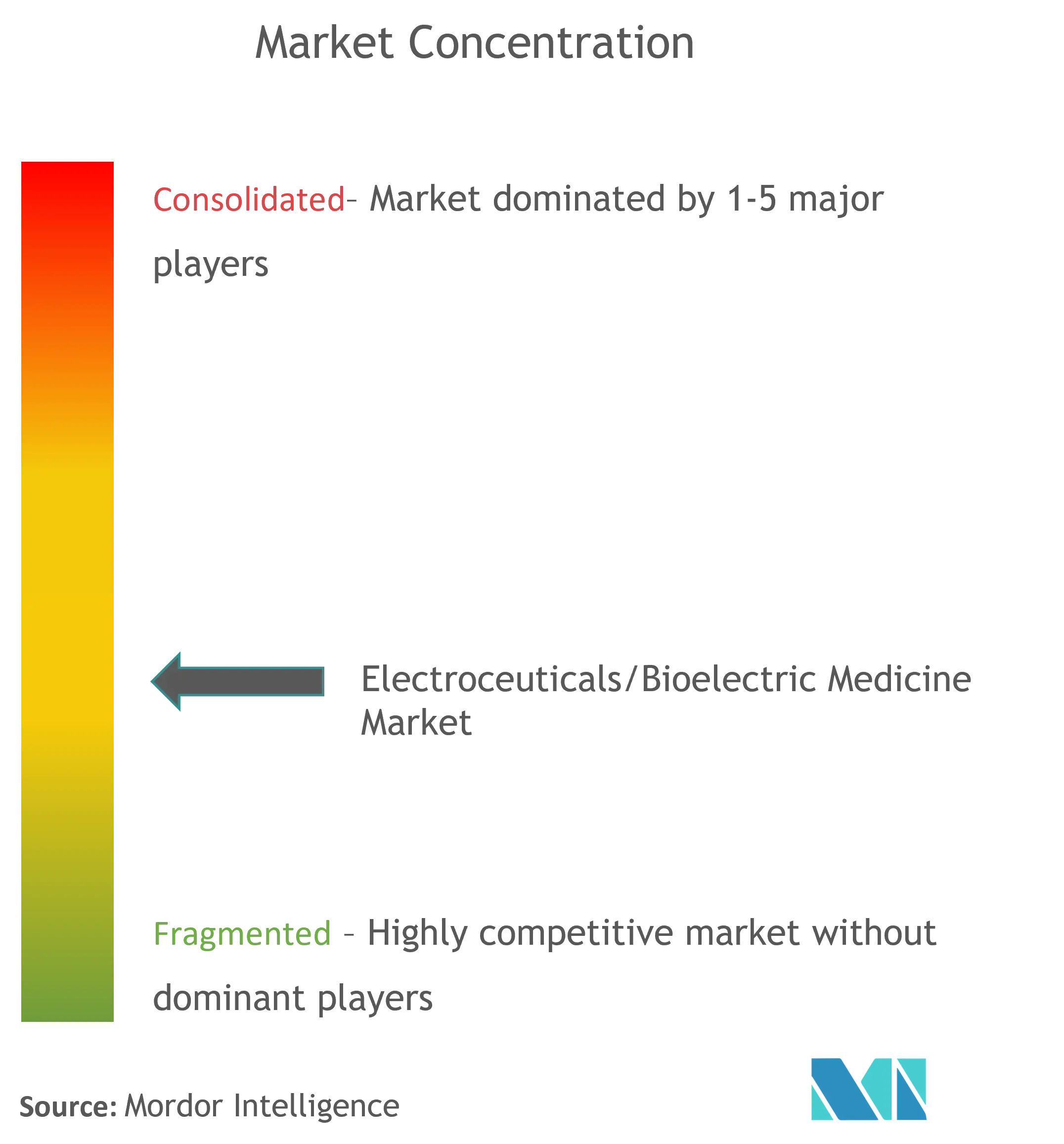
Market concentration sits at a moderate level: the top five manufacturers collectively hold well over half of revenue, yet niche start-ups continue to attract funding for unaddressed indications. Boston Scientific booked 13.6% organic revenue growth and USD 1.208 billion profit in 2024, crediting pulsed-field ablation for part of the gain[3]University of Nebraska, “Boston Scientific 2024 Financial Report,” unl.edu. The February 2025 acquisition of pain-stim specialist Nevro by Globus Medical for USD 250 million underscores the premium placed on closed-loop neuromodulation know-how. Medtronic, Abbott and Boston Scientific remain the scale leaders, leveraging integrated manufacturing, global service networks and extensive clinical-trial portfolios.
Challengers carve out beachheads in mental health, metabolic regulation and wound care, often partnering with university labs for proof-of-concept studies before courting strategic investors. Venture capital continues to back early-stage neuro-tech, although rising capital-efficiency demands tilt funding toward platforms with scalable software and remote-upgrade capability. Competitive focus has shifted from hardware miniaturization alone to data-driven outcome analytics, cybersecurity safeguards and cloud-based over-the-air firmware updates. As payer models migrate toward longitudinal bundled payments, suppliers that can document durable efficacy over multi-year horizons are poised to win formulary preference.
The intellectual-property landscape remains active, with hundreds of patents filed annually around bio-signal detection, adaptive waveform libraries and energy-harvesting power modules. Litigation risk is climbing in markets where device classes converge, prompting firms to seek cross-licensing deals that secure freedom-to-operate while keeping R&D on schedule.
Electroceuticals/Bioelectric Medicine Industry Leaders
Boston Scientific Corporation
Medtronic
Biotronik SE & Co. KG
Koninklijke Philips N.V.
Abbott Laboratories
- *Disclaimer: Major Players sorted in no particular order
Electroceuticals/Bioelectric Medicine Market Companies Covered in this Report
- Medtronic
- Abbott Laboratories
- Boston Scientific
- Cochlear
- LivaNova
- BIOTRONIK
- Nevro
- ElectroCore
- NeuroPace
- Sonova
- Koninklijke Philips
- SetPoint Medical
- Sky Medical Technology
- Cala Health
- WEINMANN Emergency Medical Technology
- Galvani Bioelectronics
- Stimwave Technologies
- BioSig Technologies
- Stryker
- Nexeon MedSystems
Read Analysis of Electroceuticals/Bioelectric Medicine Companies

Market Opportunities and Future Outlook
Opportunity is building around neuromodulation and cardiac electrotherapy platforms that pair stimulation with sensing, software, and evidence generation, as regulators and providers emphasize real-world outcomes alongside safety. In the United States, FDA pathways used across neurological devices (including 510(k), PMA, and the Q-Submission program) provide a structured route for companies bringing closed-loop or connected electroceuticals into clinical practice, while FDA-recognized safety standards for stimulators (for example IEC 60601-2-10) support product development and procurement conversations.
Recent 2025-2026 actions show where investment and whitespace are concentrating. Abbott received FDA approval in December 2025 for the Volt Pulsed Field Ablation (PFA) System to treat atrial fibrillation, and then presented additional late-breaking clinical data across multiple electrophysiology trials at Heart Rhythm Society 2026, reinforcing a playbook that links approvals with broad clinical evidence. Consolidation and portfolio build-out also point to tighter focus on chronic pain and adaptive stimulation, with Medtronic completing the acquisition of SPR Therapeutics in July 2026 to expand peripheral nerve stimulation, and BIOTRONIK Neuro acquiring spinal cord stimulation intellectual property in July 2026 to deepen data-driven, adaptive waveforms. These moves raise competitive pressure on standalone offerings and increase demand for differentiated algorithms, remote monitoring, and payer-ready outcomes data.
Recent Industry Developments in Electroceuticals/Bioelectric Medicine Market
- July 2026: Medtronic completed the acquisition of SPR Therapeutics for USD 650 million, expanding its peripheral nerve stimulation portfolio for chronic and acute pain. The deal strengthens Medtronic's position in minimally invasive neuromodulation and broadens its pathway to serve non-opioid pain management use cases across care settings.
- December 2025: Abbott received U.S. FDA approval for the Volt Pulsed Field Ablation (PFA) System to treat patients with atrial fibrillation. The clearance adds another scaled competitor in cardiac electrotherapy and supports wider hospital adoption by pairing a named platform with a defined regulatory indication.
- November 2024: The FDA approved the VARIPULSE catheter-ablation platform for paroxysmal atrial fibrillation. The approval expanded treatment options in electrophysiology and reinforced continued regulator support for newer ablation modalities competing with established rhythm-management workflows.


Electroceuticals/Bioelectric Medicine Market Report Scope and Research Methodology
Market Definition and Coverage
In this study, the electroceuticals medicine market is defined as revenues generated from medical devices and related systems that deliver electrical stimulation or bioelectric signals to diagnose, manage, or treat diseases across clinical settings.
Scope exclusions: We exclude pharma drug revenues, general wellness wearables not used as medical therapies, and non-medical consumer electronics.
Segments Covered in This Report
- By Device Type
- Implantable Electroceutical Devices
- Non-invasive Electroceutical Devices
- By Product
- Defibrillators
- Pacemakers
- Stimulators
- Cochlear Implants
- Others
- By Application
- Arrhythmia
- Pain Management
- Parkinson's Disease
- Depression
- Other Applications
- End User
- Hospitals
- Ambulatory Surgical Centers
- Home Care Settings
- Other End Users
- Geography
- North America
- United States
- Canada
- Mexico
- Europe
- Germany
- United Kingdom
- France
- Italy
- Spain
- Rest of Europe
- Asia-Pacific
- China
- Japan
- India
- Australia
- South Korea
- Rest of Asia-Pacific
- Middle East & Africa
- GCC
- South Africa
- Rest of Middle East & Africa
- South America
- Brazil
- Argentina
- Rest of South America
- North America
Data Sources, Market Sizing, and Validation
Desk Research
Desk work was used to set the base demand pool, clarify what is counted as an electroceutical therapy, and build the first pass of country level splits. We leaned on public sources such as the US FDA device databases and FDA safety notices, the US Centers for Medicare and Medicaid Services (CMS) procedure and payment files, and the World Health Organization (WHO) health statistics to understand adoption signals and treatment settings.
We also reviewed sources such as OECD health data and UN Comtrade trade flows for relevant medical device categories, where device coding can act as a practical proxy, plus peer reviewed clinical literature to link indications to procedure volumes and replacement cycles. Company filings, annual reports, investor decks, and reputable press helped us align product portfolios to indication coverage and map any major launches or recall events that could distort a single year. Alongside these, we used paid subscriptions for company financials and intelligence, news and financials, patent databases, and import-export shipment level data to confirm directional trends and fill gaps where public series were not timely. These desk sources are illustrative and not exhaustive, and many other references were used to collect data, validate assumptions, and clarify open questions.
Primary Interviews and Surveys
Primary work focused on checking the real world split between implantable and non-invasive therapies, typical pricing corridors, and how fast procedures are being adopted across major care sites. We spoke with a mix of device makers, distributors, hospital procurement and clinical users, and service partners across APAC, EMEA, and the Americas, so demand signals, replacement behavior, and reimbursement realities could be aligned before finalizing the model.
Distribution of primary research fieldwork respondents
| Company type | Respondent position | Region |
|---|---|---|
| Top tier: 27% | CXOs: 15% | APAC: 46% |
| Mid tier: 54% | Functional/Unit leaders: 27% | EMEA: 29% |
| Smaller Players: 19% | Managers: 58% | Americas: 25% |
Market-Sizing & Forecasting
Market sizing was built using a top-down and bottom-up logic, where treated patient pools and procedure volumes were first reconstructed by indication and care setting, then translated into device demand using replacement cycles and utilization patterns. To keep it practical, we anchored the demand side with signals such as implant rates, procedure counts for stimulation therapies, installed base replacement timing, average selling price ranges by device class, and reimbursement coverage breadth in major countries.
Those totals were then corroborated using selective bottom-up checks, including supplier revenue splits from public filings, sampled ASP times volume calculations for key device groups, and channel discussions that help verify how much revenue is recognized through hospitals versus other care sites. When bottom-up data was thin in smaller countries, we used proxy drivers like cardiac rhythm disorder burden, neurology procedure penetration, and hospital infrastructure indicators to avoid overfitting. Forecasts were produced using scenario analysis supported by primary inputs, where adoption curves and price erosion were stress tested under faster and slower reimbursement expansion. We selected the final path only after it matched the clinical and procurement feedback we gathered.
Data Validation & Update Cycle
Validation was handled through multiple cross checks so the final totals do not rely on one dataset or one interview set. We compared outputs against independent signals like procedure trends, installed base logic, and trade movement where relevant, and any large variance triggered a return to assumptions and a recheck of country splits.
Before sign-off, anomaly checks were run at the country and device class level, followed by a second analyst review to confirm that growth rates and pricing progressions stay consistent with the evidence trail. Reports are refreshed annually, and interim updates are done when material events occur, such as a major recall, reimbursement change, or a step change in procedure adoption. Right before delivery, a final pass is completed so clients receive the most current version of the numbers and commentary.
Mordor Intelligence's Electroceuticals Medicine Market Size Compared Against Other Published Estimates
Published market sizes for electroceuticals often do not line up because firms do not always count the same device families, do not apply the same pricing progression, and can use different year cutoffs for currency conversion and revenue recognition. Differences also show up when one estimate leans on shipment proxies, while another leans on treated procedures and installed base replacement timing.
Consumer wellness electrical stimulators sold without a medical indication sit outside Mordor Intelligence's scope, which is one reason our 2025 value can look lower than estimates that blend medical and wellness demand. Another common gap comes from how analysts handle implantable cardiac devices versus broader electrical stimulation categories, and whether they apply aggressive penetration ramps in markets where reimbursement is still uneven. We also see spreads when sources apply constant dollars versus current dollars, or when they roll up regional totals using older base-year splits that have not been rechecked with recent procedure momentum.
Benchmark comparison
| Source | Market Size | Gaps in Research Methodology |
|---|---|---|
| Mordor Intelligence | USD 25.63 B (2025) | |
| Trade Journal A | USD 33.60 B (2024) | Often presented as a broad electroceuticals headline that can fold in adjacent wellness stimulation and uses a different base year, which makes direct comparison to medical-only revenues less clean. |
| Industry Research Brief B | USD 24.61 B (2025) | Typically relies on limited disclosed splits and a simplified device taxonomy, and it can undercount smaller indications and service channel impacts where procedure and replacement timing matter. |
Looking across the table, most of the spread is explained by scope boundaries around wellness versus medical use, plus differences in base year and how pricing and penetration are carried forward. Our approach stays traceable to procedure driven demand, replacement behavior, and realistic pricing bands, which makes the final number easier to defend and update when new clinical or reimbursement signals appear.


Key Questions Answered in the Report
What is the current size of the electroceuticals medicine market?
The electroceuticals medicine market size reached USD 27.46 billion in 2026 and is forecast to hit USD 38.74 billion by 2031 at a 7.12% CAGR.
Which device category dominates the market?
Implantable electroceutical systems hold 79.88% share, reflecting clinician confidence in their precision and durability.
What is the fastest-growing product segment?
Vagus nerve stimulators are advancing at a 9.46% CAGR as clinical protocols expand from epilepsy to mental-health and inflammatory disorders.
How quickly are home-care electroceutical therapies growing?
Home-care adoption is rising at 10.05% CAGR thanks to wireless monitoring and simplified user interfaces that support self-management.
Which region offers the highest growth potential?
Asia-Pacific leads in growth, expected to post an 8.38% CAGR through 2031, driven by aging populations and improving reimbursement.
What major trend will shape competition over the next five years?
Integration of real-time sensing with AI-driven adaptive algorithms is set to become the primary differentiator, shifting competition from hardware specs to data-enabled outcomes.
Page last updated on:





