
Commercial Vinyl Flooring Market Size and Share
Market Overview
| Study Period | 2020 - 2031 |
|---|---|
| Market Size (2026) | USD 15.64 Billion |
| Market Size (2031) | USD 20.75 Billion |
| Growth Rate (2026 - 2031) | 5.82 % |
| Fastest Growing Market | Asia-Pacific |
| Largest Market | North America |
| Market Concentration | Medium |
Major Players *Disclaimer: Major Players sorted in no particular order Image © Mordor Intelligence. Reuse requires attribution under CC BY 4.0. | |
Commercial Vinyl Flooring Market Analysis by Mordor Intelligence
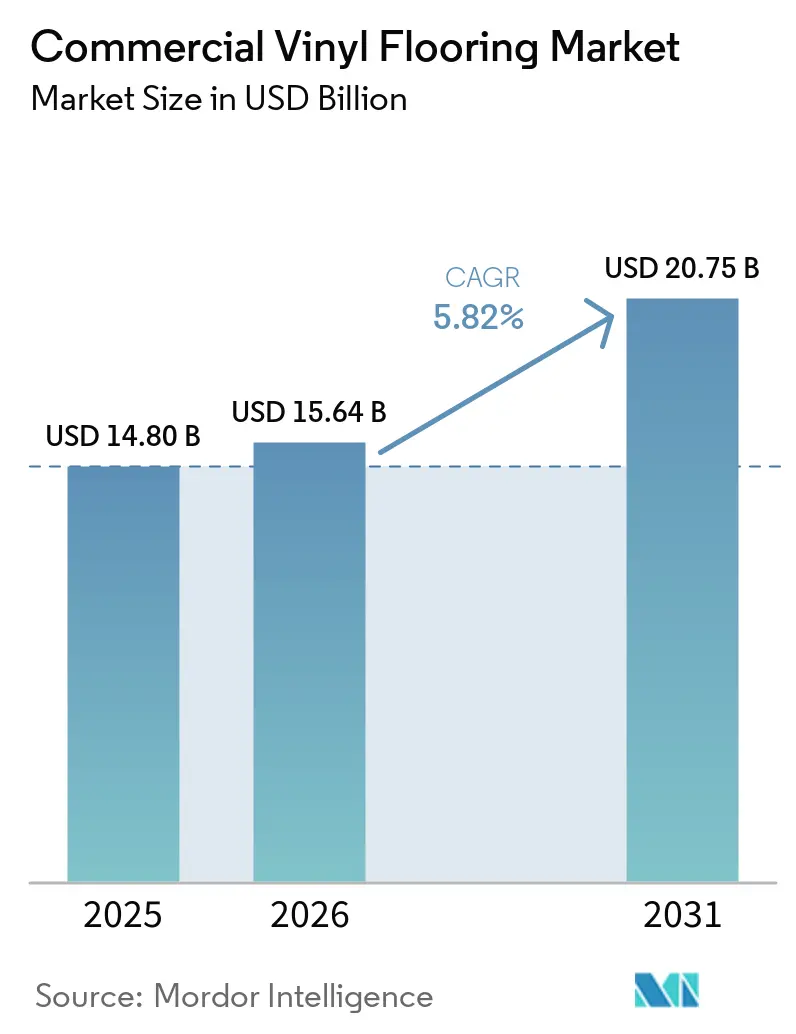
The commercial vinyl flooring market size was valued at USD 14.80 billion in 2025 and is estimated to grow from USD 15.64 billion in 2026 to reach USD 20.75 billion by 2031, at a CAGR of 5.82% during the forecast period (2026-2031). Key products include luxury vinyl tile, vinyl composition tile, sheet vinyl, and rigid core products, catering to offices, healthcare, retail, hospitality, and education. The market is driven by the replacement of older materials with low-maintenance, moisture-resistant, and flexible designs, alongside workplace redesigns, healthcare hygiene needs, and demand for low-emission, phthalate-free flooring. Manufacturers are expanding capacity, upgrading products, and strengthening domestic supply chains to meet demand.
Remodeling and retrofitting dominate in mature regions, while new construction is growing in the Asia-Pacific and the Middle East, driven by hospitality and institutional projects[1]. Glue-down products remain popular in heavy-traffic areas, while interlocking systems are gaining traction for easier replacement. Raw material volatility, especially in PVC resin and plasticizers, poses risks, alongside compliance with emissions and recycled material standards. Despite challenges, the market outlook remains positive, supported by refurbishment cycles, innovation, and operational efficiency.
Key Report Takeaways
- By product type, luxury vinyl tile led with a 60.40% share in 2025 and is also forecast to record the fastest growth at a 6.77% CAGR through 2031.
- By installation type, glue-down accounted for 41.30% of the market share in 2025, while interlocking vinyl tiles are projected to expand at a 6.24% CAGR through 2031.
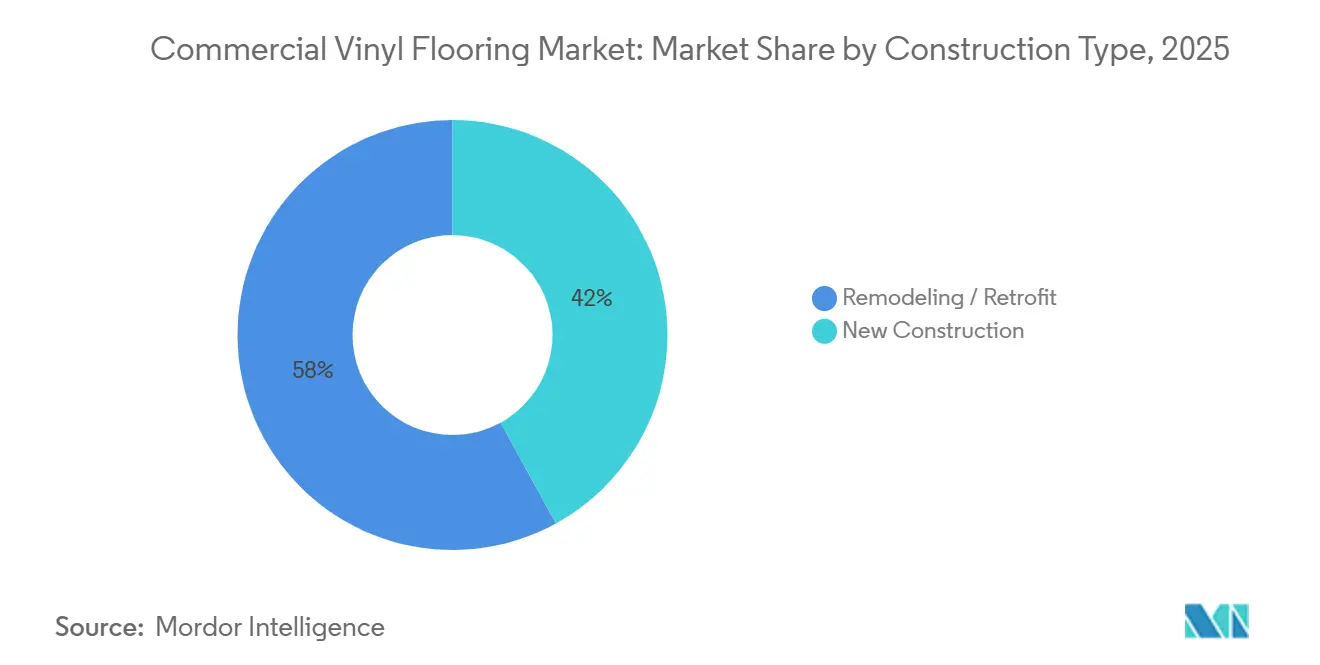
- By construction type, remodeling and retrofit held 58.00% share in 2025, while new construction is expected to grow at a 6.52% CAGR through 2031.
- By end-user, office buildings and corporate spaces captured 27.90% share in 2025, while healthcare facilities are projected to grow at a 6.84% CAGR through 2031.
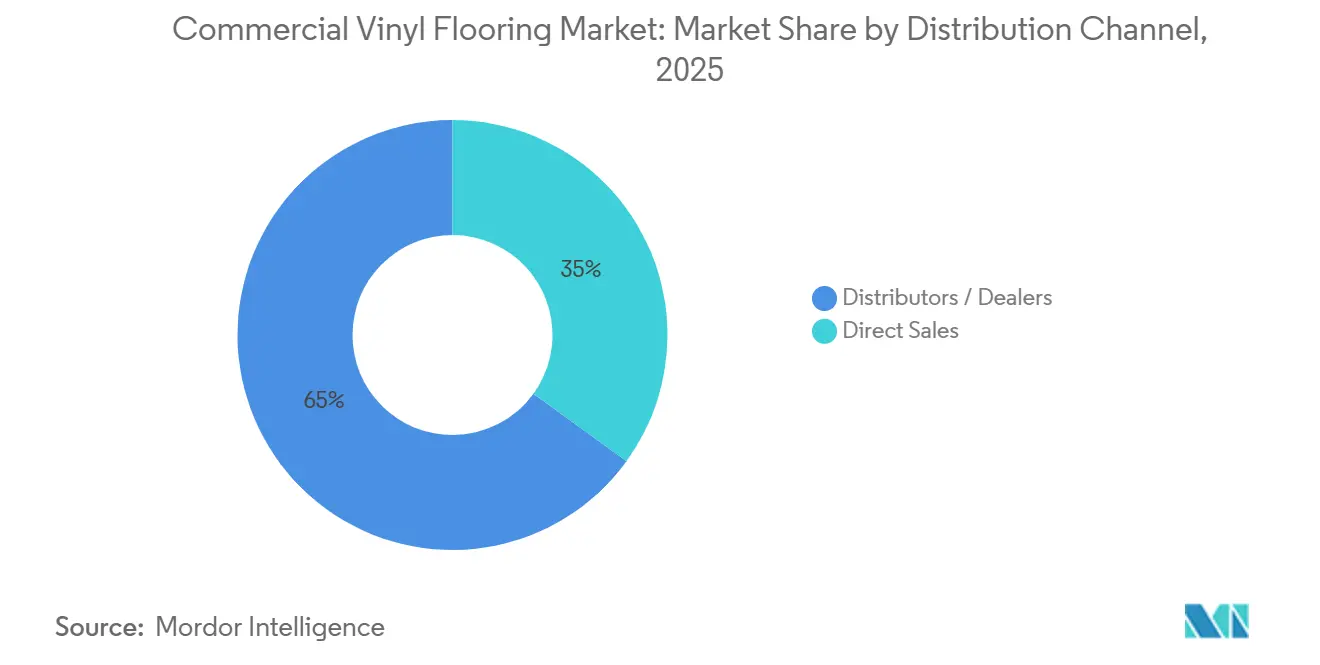
- By distribution channel, distributors and dealers accounted for 65.00% of the market in 2025, while direct-to-consumer (D2C) sales are forecast to grow at a 7.16% CAGR through 2031.
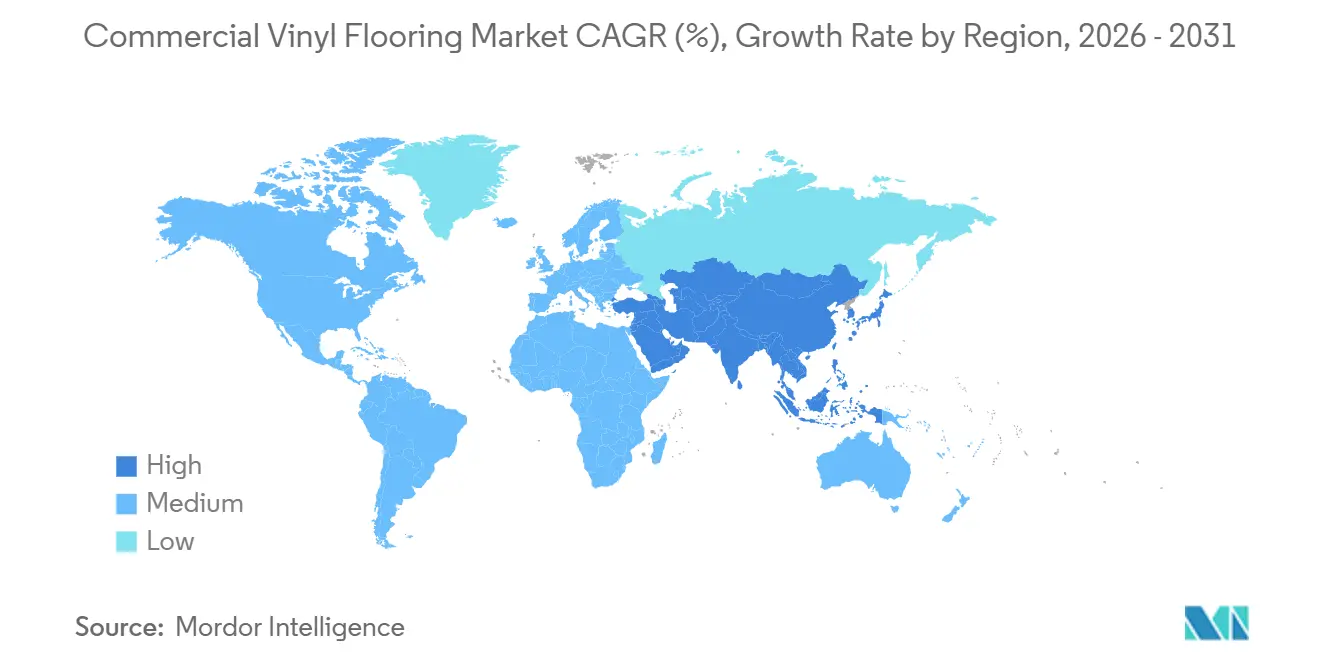
- By geography, North America held the largest share at 35.60% in 2025, while Asia-Pacific is projected to expand at the fastest pace with a 7.60% CAGR through 2031.
Note: Market size and forecast figures in this report are generated using Mordor Intelligence’s proprietary estimation framework, updated with the latest available data and insights as of January 2026.
Market Trends and Insights
Drivers Impact Analysis of Commercial Vinyl Flooring Market*
| Driver | (~) % Impact on CAGR Forecast | Geographic Relevance | Impact Timeline |
|---|---|---|---|
| LVT displacing ceramic/wood in commercial fit-outs due to lifecycle cost, durability, waterproof performance, and design realism | +1.2% | Global, early in North America and Western Europe | Medium term (2-4 years) |
| Rapid adoption of rigid core LVT (SPC/WPC) for dimensional stability and faster installs over imperfect subfloors | +1.5% | North America and Asia-Pacific, spill-over to MEA | Short term (≤ 2 years) |
| Non-residential renovation cycles in offices, healthcare, education, and retail are accelerating resilient specifications | +0.9% | North America, Europe, select Asia-Pacific metros | Medium term (2-4 years) |
| Asia-Pacific construction growth and a deep vinyl manufacturing base are expanding commercial availability and adoption | +1.3% | Asia-Pacific with export effect to MEA and Latin America | Long term (≥ 4 years) |
| Spec-driven switch to low-VOC and PVC-free resilient in healthcare/education and European Union public tenders | +0.6% | European Union, North America, healthcare, and education | Medium term (2-4 years) |
| Digital print-driven brand refreshes in retail/hospitality, enabling micro-collection rollouts at scale | +0.5% | Global retail and hospitality, strongest in North America and Europe | Short term (≤ 2 years) |
| Source: Mordor Intelligence | |||
LVT Displacing Ceramic and Wood in Commercial Fit-Outs Due to Lifecycle Cost, Durability, Waterproof Performance, and Design Realism
Owners and operators in offices, healthcare, education, retail, and hospitality continue to favor LVT over ceramic and engineered wood because it reduces the total cost of ownership while maintaining high aesthetic standards. LVT’s waterproof performance mitigates risk in spill-prone corridors and front-of-house areas and simplifies cleaning protocols in environments that run strict hygiene routines[2]. Modern direct digital printing and high-definition texturing deliver wood and stone visual parity alongside large choice sets, allowing designers to meet brand and project objectives without premium material sourcing. Third-party IAQ certifications, such as FloorScore and GREENGUARD Gold, are available across many commercial LVT lines, support LEED and WELL goals, and streamline submittals for public tenders. The operational savings from skipping strip-and-wax cycles, combined with selective plank replacement, continue to outweigh the initial premium over VCT in heavy traffic zones. The balance of product performance and lifecycle cost strengthens LVT’s position as the default surface in mainstream commercial reconfigurations across North America and Europe in 2026.
Rapid Adoption of Rigid Core LVT (SPC/WPC) for Dimensional Stability and Faster Installs Over Imperfect Subfloors
Rigid core technologies bridge subfloor irregularities and reduce telegraphing, which improves outcomes in retrofit projects and high-mobility areas. Click-lock systems allow faster installation than wet-set glue-down and permit immediate space turnover, a priority in operating healthcare corridors and open retail units. Adhesive-free or low-adhesive approaches reduce site constraints tied to cure times and VOC submissions, improving project scheduling and simplifying compliance documentation. Acoustically focused WPC options help facility teams maintain comfort in open-plan workspace layouts and collaborative zones without the need for separate underlayments, as required in many specifications. Manufacturers have expanded their rigid core lines with diverse formats and wear layers to cover back-of-house, front-of-house, and patient care settings under single-brand programs, reducing complexity for specifiers. The cumulative advantages in speed, stability, and acoustic control continue to pull share from legacy glue-down LVT and institutional VCT in 2026.
Non-Residential Renovation Cycles in Offices, Healthcare, Education, and Retail Accelerating Resilient Specifications
Post-pandemic workplace redesign has prioritized modular flooring that can pivot with hoteling and collaboration use cases while minimizing downtime during phased changeovers. In healthcare, heat-welded sheet and antimicrobial LVT coatings support infection-management protocols while balancing durability and cleanability, which aligns with strict procurement criteria. Education projects favor acoustic LVT that lowers impact sound and meets durability targets in corridors and multipurpose spaces, supporting improved learning environments and longer refresh cycles. Retail and hospitality programs use digital printing to execute brand-refresh rollouts in shorter windows, enabling consistent visuals with fewer tooling constraints and lower minimums. Facility teams emphasize lifecycle value in bid evaluations, favoring resilient systems that avoid recurring strip-and-wax schedules and enable selective plank or tile replacement. These fit-out dynamics have made resilient specifications a core lever for budgets that prioritize speed to reopen, lower maintenance, and flexible reconfiguration.
Asia-Pacific Construction Growth and Deep Vinyl Manufacturing Base Expanding Commercial Availability and Adoption
Asia-Pacific’s dominance combines scale manufacturing with broad format diversity, supporting fast-track projects and export orders at competitive pricing. Regional suppliers have refined digital printing, embossing, and EIR synchronization to deliver wood and stone realism at volume for domestic and global programs. Closer proximity to PVC feedstock and mature extrusion ecosystems helps stabilize lead times, which supports international developers seeking reliable delivery for programmatic openings. The region’s installation volumes in healthcare, education, and commercial venues have reinforced demand for low-VOC resilient materials that simplify compliance across varied policy regimes. Logistics and port infrastructure improvements across multiple Asia-Pacific hubs have also shortened transit times into growth markets, further strengthening the procurement case for rigid LVT lines. The result is a powerful combination of cost, speed, and product breadth that continues to shape the commercial vinyl flooring market in 2026.
Restraints Impact Analysis of Commercial Vinyl Flooring Market*
| Restraint | (~) % Impact on CAGR Forecast | Geographic Relevance | Impact Timeline |
|---|---|---|---|
| PVC resin/plasticizer price volatility and trade actions pressuring costs and margins | -0.8% | Global, acute in import-reliant markets | Short term (≤ 2 years) |
| Environmental/health scrutiny (phthalates, VOC/IAQ standards) is raising the compliance burden | -0.5% | European Union, North America, healthcare, and education | Medium term (2-4 years) |
| Supply risk from the relocation of rigid LVT capacity across Asia, impacting lead times | -0.3% | Global, acute for Asia-Pacific-dependent importers | Medium term (2-4 years) |
| Adhesive/VOC and moisture-mitigation requirements are adding installation complexity and time in sensitive facilities | -0.2% | North America and the European Union healthcare and cleanrooms | Long term (≥ 4 years) |
| Source: Mordor Intelligence | |||
PVC Resin and Plasticizer Price Volatility and Trade Actions Pressuring Costs and Margins
Resin and plasticizer prices have shown sharp swings tied to energy markets and regional supply outages, complicating pricing strategies and squeezing margins for import-reliant producers [3]. Non-phthalate plasticizers command higher input costs than legacy alternatives, forcing reformulation or tighter cost controls without eroding commercial-grade durability. Where suppliers lack long-term resin agreements, exposure to spot markets can challenge price stability in large retail programs and private-label channels. Shifts in country-of-origin trade policies can add transit time and increase logistics complexity, undermining just-in-time inventory models in fast-turn programs. Domestic production footprints can buffer volatility and reduce tariff risks, which has encouraged incremental capacity additions in North America. The resulting environment rewards scale, supply diversification, and proactive contracting to protect contribution margins in 2026.
Environmental/health scrutiny (phthalates, VOC/IAQ standards) is raising the compliance burden.
Procurement policies and certifications are tightening across public and institutional channels, demanding transparency and documentation around material contents and emissions. Manufacturers pursuing healthcare and education projects need to maintain multiple certifications and product declarations, which raises testing and renewal costs across SKUs. Adhesive choices face stricter VOC thresholds on sensitive sites, which can increase installation times or require climate controls that increase labor inputs. Buyers are moving toward suppliers that invest in recyclable and PVC-free platforms with takeback programs to align with circularity goals in 2026. These requirements lift barriers to entry and favor integrated producers that can scale compliance across large portfolios without compromising performance. The trend consolidates awarded bids among brands that can prove compliance and service durability warranties over long cycles.
*Our forecasts treat driver/restraint impacts as directional, not additive. The impact forecasts reflect baseline growth, mix effects, and variable interactions.
Commercial Vinyl Flooring Market Segment Analysis
By Product Type:
LVT Holds Leadership Across Commercial ApplicationsLuxury vinyl tile held 60.40% of product-type revenue in 2025 and is projected to grow at a 6.77% CAGR through 2031. That combination is notable because the leading format in most building-material categories usually slows as smaller formats gain momentum. In the commercial vinyl flooring market, LVT continues to strengthen its position, now covering a broad range of commercial needs. It works across office lobbies, healthcare corridors, hospitality interiors, and industrial spaces with a performance range that fits both light-traffic and heavy-duty use. Product innovation is also keeping the category competitive at the premium end. AHF Products’ Armstrong Natural Creations LVT, launched in April 2026 with Diamond 10 Technology and a 30-year commercial warranty, demonstrates how suppliers are raising durability standards while preserving LVT’s mainstream appeal [4].
Vinyl composition tile, once a common institutional choice, is steadily losing relevance as facility managers place greater weight on maintenance costs and ongoing labor needs. Sheet vinyl still holds a strong position in the most demanding healthcare settings where seamless installation and chemical resistance remain essential. Rigid core vinyl, including SPC and WPC, is also gaining preference in projects that require better dimensional stability over imperfect subfloors and faster installation. These formats are especially useful in commercial settings where downtime, floor durability, and ease of replacement all matter. At the higher end of the category, competition is also shifting toward recyclability, environmental disclosures, and take-back programs rather than focusing only on initial cost or wear performance. Tarkett’s iQ Motion launch in April 2026 clearly reflects that shift.


By Installation Type:
Glue-Down Remains Established While Interlocking Gains GroundInterlocking vinyl tiles are projected to grow at a 6.24% CAGR through 2031, making them the fastest-growing installation type, even though glue-down remained the largest format in 2025 with a 41.30% share. This reflects a change in how buyers assess flooring over their full service life. Glue-down systems are still valued for permanence and familiarity, especially in heavy-traffic commercial spaces. At the same time, that permanence can make later replacement more difficult and more expensive. Interlocking systems offer a practical advantage because they allow damaged planks to be replaced without disturbing surrounding areas. That flexibility is especially useful in retail, hospitality, and office environments where layouts and visual requirements change more frequently.
Self-adhesive vinyl tiles still serve as a middle option for buyers looking for quicker installation than wet-set glue-down. However, they do not offer the same long-term flexibility as interlocking systems in demanding environments. Adhesive-free and loose-lay systems are also becoming more relevant where fast occupancy and lower-emission installation matter. Forbo’s Modul’up is a good example of how installation innovation is aligned with circularity goals and tighter project schedules. Certification requirements also influence installation choices more than before. Low-VOC adhesive rules on environmentally sensitive projects can add complexity to installation, strengthening the case for systems that reduce or eliminate adhesive dependence.
By Construction Type:
Retrofit Leads Demand While New Construction Supports GrowthRemodeling and retrofit accounted for 58.00% of construction-type revenue in 2025, making it the largest source of demand in the market. This reflects the large volume of aging commercial building stock in North America and Europe that still uses older flooring materials. Vinyl flooring continues to fit these projects well because it supports easier maintenance, faster upgrades, and less disruption during refurbishment. Post-pandemic workplace redesign has also made modular flooring more practical, especially where phased renovation is preferred over a full shutdown. In this environment, reliable supply and predictable pricing carry real value for project owners. Mannington Commercial’s domestic manufacturing position helped reinforce that point during recent supply-chain volatility.
New construction is projected to grow at a 6.52% CAGR through 2031 and remains an important growth path, especially in non-Western markets. Hospitality, mixed-use, and institutional projects in Asia-Pacific and the Middle East continue to support demand for fast-track flooring solutions. In these cases, buyers often value delivery speed, installation efficiency, and stable product performance across varied site conditions. Rigid core products fit well into this market segment because they combine durability with ease of installation. Over time, retrofit activity is likely to remain the more stable revenue base, while new construction continues to create faster growth opportunities. This is making manufacturers think more carefully about whether they are better positioned for renovation dependability or for speed in new-build programs.
By End-User:
Offices Lead Share While Healthcare Advances FasterOffice buildings and corporate spaces held 27.90% of end-user revenue in 2025 and continue to represent the largest share of demand. Even so, demand from offices is changing in character as hybrid work and flexible layouts reshape floor planning. Buyers increasingly want flooring that supports visual zoning, phased replacement, and design consistency across changing work areas. Retail and hospitality operators also continue to favor digitally driven design options that allow faster brand refreshes with less procurement complexity. Education and industrial settings remain important as well, though each follows a different need pattern. Schools are more focused on acoustic control and durability, while industrial spaces prioritize rolling-load performance and resistance to wear.
Healthcare facilities are projected to grow at a 6.84% CAGR, making them the fastest-growing end-user segment. Flooring choices in healthcare now carry greater operational weight because hygiene, cleanability, and material transparency are under closer review than before. In operating rooms and sterile processing spaces, seamless sheet vinyl remains difficult to replace because it meets strict infection-control requirements. At the same time, antimicrobial surfaces, phthalate-free formulations, and stronger environmental documentation are becoming more common in clinical procurement requirements. Tarkett’s iQ Motion, introduced in April 2026, reflects how healthcare flooring is increasingly evaluated on sustainability credentials, durability, and hygiene. This has raised the importance of documentation and compliance in supplier selection.
By Distribution Channel:
Distributors Remain Central While D2C ExpandsDistributors and dealers accounted for 65.00% of commercial vinyl distribution revenue in 2025, underscoring the technical and consultative nature of the commercial flooring process. Large, institutional, and performance-driven projects continue to rely on channel partners for specification guidance, technical documentation, and installation coordination. This makes distributors an essential part of the commercial route to market, especially in secondary and regional locations. At the same time, direct-to-customer channels are projected to grow at a 7.16% CAGR through 2031. That growth reflects stronger digital engagement and a rising share of smaller commercial projects that value speed, easier selection, and visual confirmation before purchase.
The distribution structure is becoming more layered rather than less dependent on intermediaries. Larger and more complex projects still move through high-support channels because they involve greater performance and documentation requirements. Smaller projects are more open to direct digital ordering and simplified procurement. As a result, manufacturers are investing in both digital tools and distributor training rather than choosing one route over the other. AHF Products’ Kaleido Color Lab is a good example of this approach, where digital customization strengthens engagement without replacing the commercial channel structure. The market is gradually moving toward a two-track model built around project complexity and buyer expectations.
Geography Analysis
North America Commercial Vinyl Flooring Market
North America led global commercial vinyl flooring revenue in 2025 with a 35.60% share. The region’s lead reflects its mature commercial real estate base, long use of resilient flooring systems, and strong focus on lifecycle value in specification decisions. Commercial property owners across offices, hospitals, schools, and retail centers continue to favor flooring solutions that offer durability, easier upkeep, and better support for hygiene requirements. Growth in the region remains supported by renovation activity in healthcare and education, even as office vacancy in some secondary markets slows momentum. Domestic manufacturing also strengthens the region’s position by improving supply stability and reducing exposure to trade-related disruptions. Canada benefits from steady trade links with the United States, while Mexico continues to add demand through industrial and commercial construction in key urban corridors.
APAC Commercial Vinyl Flooring Market
Asia-Pacific is the fastest-growing geography with 7.60% through 2031, supported by public refurbishment activity, hospitality development, and expanding corporate real estate in major urban centers. China remains central to this growth because urban renewal programs continue to support healthcare and education upgrades, where quick-install vinyl flooring is well-suited. The region also benefits from a deep manufacturing base that supports competitive pricing, broad product availability, and faster delivery across commercial projects. That manufacturing strength has also improved access to supply for nearby regions that depend on specification-grade vinyl products. Vietnam and Thailand are becoming more important as part of the regional supply network as producers diversify manufacturing locations and improve logistics resilience. Asia-Pacific’s growth is being shaped not only by new construction, but also by policy-backed modernization programs that keep demand steady across commercial end uses.
EMEA and South America Commercial Vinyl Flooring Market
Europe continues to stand out as the region most influenced by sustainability regulation and material transparency requirements. Environmental compliance, phthalate restrictions, and circularity expectations are shaping competition more directly there than in many other markets. This has strengthened the position of integrated manufacturers, enabling them to more clearly document recycled content, emissions, and end-of-life pathways. The Middle East shows a different growth pattern, with hospitality and mixed-use development driving demand for high-performance flooring in demanding climate conditions. Sub-Saharan Africa is seeing more institution-led demand, especially in schools and hospitals, while South America continues to show replacement potential despite economic and political volatility. Across these regions, the pace and nature of demand differ, but resilient flooring continues to gain importance in commercial applications.
Competitive Landscape
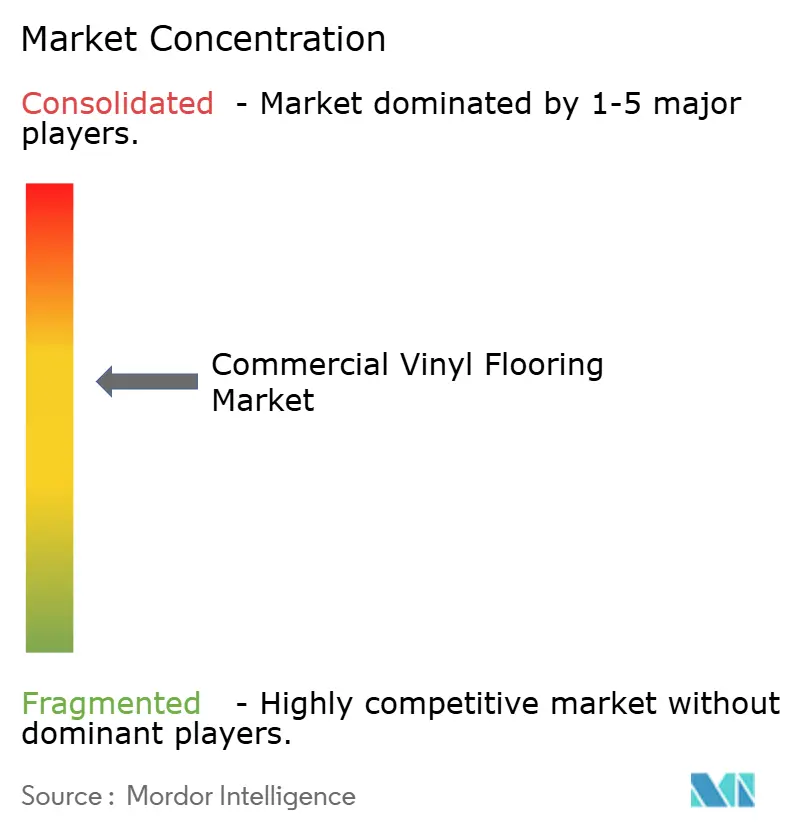
The commercial vinyl flooring market shows moderate concentration. The regional specialists and Asian OEMs remain active through direct-to-distributor and white-label channels. Scale players have prioritized platform investments to expand capacity and introduce next-generation, resilient lines that meet institution-grade requirements. Shaw has expanded domestic SPC and LVT lines to improve product availability and address small-run specifications with shorter lead times. Tarkett has continued to launch solutions with strong hygiene and recyclability characteristics, reflecting demand from healthcare and education buyers. Forbo’s adhesive-free sheet systems target circularity and speed-to-service in European Union retrofits where emissions and downtime drive decisions.
Digital printing remains a differentiator for brands that serve retail and hospitality refresh cycles, where day-to-day operations and brand expression both matter. Unilin’s click technologies enable faster installs and immediate occupancy, which continues to influence specifications beyond residential use. Mohawk’s public disclosures and product updates reflect a push toward resilient lines that satisfy both design and maintenance needs in high-use commercial settings. Suppliers with multi-site takeback programs and recycling partnerships also win points in tenders that track end-of-life options. Collectively, platform breadth, compliance infrastructure, and installed-base service capabilities shape competitive outcomes in 2026.
Mergers and adjacent capability expansions continue to refine portfolios and deepen engagement with A&D and owner networks. Product launches from mainstream brands address specific commercial performance gaps, like scratch and stain resistance, acoustic control, and quick-turn installation that accommodates live environments. Healthcare remains a battleground for ESG and hygiene credentials, as non-vinyl, resilient, and recyclable LVT platforms compete for attention on both performance and sustainability. Across these moves, the commercial vinyl flooring market shows steady innovation rooted in speed, durability, cleanability, and verifiable IAQ performance that map to decision criteria in public and private projects alike.
Commercial Vinyl Flooring Industry Leaders
-
Mohawk Industries
-
Shaw Industries Group
-
Tarkett
-
Forbo Flooring Systems
-
Gerflor Group
- *Disclaimer: Major Players sorted in no particular order
Commercial Vinyl Flooring Market Companies Covered in this Report
- Mohawk Industries
- Shaw Industries Group
- Tarkett
- Forbo Flooring Systems
- Gerflor Group
- Mannington Mills (Mannington Commercial)
- Interface
- AHF Products (Armstrong Flooring brand)
- Karndean Designflooring
- LX Hausys (LG Hausys)
- Beaulieu International Group (B.I.G.)
- Polyflor (James Halstead)
- Novalis Innovative Flooring (AVA)
- Altro
- HMTX Industries (Teknoflor, Aspecta)
- Fatra (Agrofert)
- Responsive Industries
- NOX Corporation
- Metroflor (HMTX)
- Amtico (Mannington group company)
Recent Industry Developments in Commercial Vinyl Flooring Market
- April 2026: AHF Products debuted next-generation Armstrong Natural Creations LVT featuring Diamond 10 Technology, a coating incorporating real diamonds for superior scratch, stain, and scuff resistance, achieving a perfect 10 on the Mohs scale of mineral hardness.
- April 2026: AHF Products launched the Armstrong Flooring Kaleido Color Lab at NeoCon 2026, a digital design tool enabling architects and designers to customize luxury vinyl tile (LVT) color, pattern, and scale for floors and walls in commercial settings.
Global Commercial Vinyl Flooring Market Report Scope
Segmentation Overview
| Luxury Vinyl Tile (LVT) | Stone Plastic Composite (SPC) |
| Wood Plastic Composite (WPC) | |
| Luxury Vinyl Plank (LVP) | |
| Sheet Vinyl | |
| Others |
| Self-Adhesive Vinyl Tiles |
| Glue-Down |
| Interlocking Vinyl Tiles |
| Others |
| New Construction |
| Remodeling / Retrofit |
| Office Buildings / Corporate Spaces |
| Retail Stores / Shopping Malls |
| Healthcare Facilities |
| Hospitality & Leisure |
| Education |
| Industrial / Warehouses |
| Others |
| Direct Sales |
| Distributors / Dealers |
| North America | Canada |
| United States | |
| Mexico | |
| South America | Brazil |
| Peru | |
| Chile | |
| Argentina | |
| Rest of South America | |
| Europe | United Kingdom |
| Germany | |
| France | |
| Spain | |
| Italy | |
| BENELUX (Belgium, Netherlands, Luxembourg) | |
| NORDICS (Denmark, Finland, Iceland, Norway, Sweden) | |
| Rest of Europe | |
| Asia-Pacific | India |
| China | |
| Japan | |
| Australia | |
| South Korea | |
| South-East Asia | |
| Rest of Asia-Pacific | |
| Middle East & Africa | United Arab Emirates |
| Saudi Arabia | |
| South Africa | |
| Nigeria | |
| Rest of Middle East & Africa |
| By Product Type | Luxury Vinyl Tile (LVT) | Stone Plastic Composite (SPC) |
| Wood Plastic Composite (WPC) | ||
| Luxury Vinyl Plank (LVP) | ||
| Sheet Vinyl | ||
| Others | ||
| By Installation Type | Self-Adhesive Vinyl Tiles | |
| Glue-Down | ||
| Interlocking Vinyl Tiles | ||
| Others | ||
| By Construction Type | New Construction | |
| Remodeling / Retrofit | ||
| By End-user | Office Buildings / Corporate Spaces | |
| Retail Stores / Shopping Malls | ||
| Healthcare Facilities | ||
| Hospitality & Leisure | ||
| Education | ||
| Industrial / Warehouses | ||
| Others | ||
| By Distribution Channel | Direct Sales | |
| Distributors / Dealers | ||
| By Geography | North America | Canada |
| United States | ||
| Mexico | ||
| South America | Brazil | |
| Peru | ||
| Chile | ||
| Argentina | ||
| Rest of South America | ||
| Europe | United Kingdom | |
| Germany | ||
| France | ||
| Spain | ||
| Italy | ||
| BENELUX (Belgium, Netherlands, Luxembourg) | ||
| NORDICS (Denmark, Finland, Iceland, Norway, Sweden) | ||
| Rest of Europe | ||
| Asia-Pacific | India | |
| China | ||
| Japan | ||
| Australia | ||
| South Korea | ||
| South-East Asia | ||
| Rest of Asia-Pacific | ||
| Middle East & Africa | United Arab Emirates | |
| Saudi Arabia | ||
| South Africa | ||
| Nigeria | ||
| Rest of Middle East & Africa | ||
Key Questions Answered in the Report
What is the commercial vinyl flooring market expected to reach by 2031?
The commercial vinyl flooring market is projected to reach USD 20.75 billion by 2031, rising from USD 14.80 billion in 2025 and USD 15.64 billion in 2026.
What is the projected CAGR for commercial vinyl flooring from 2026 to 2031?
The market is expected to grow at a 5.82% CAGR during the 2026 to 2031 period.
Which product type leads commercial vinyl flooring demand?
Luxury vinyl tile is the leading product type, with a 60.40% share in 2025, and is also the fastest-growing product segment, with a 6.77% CAGR.
Which installation format is growing the fastest?
Interlocking vinyl tiles are the fastest-growing installation format, projected to expand at a 6.24% CAGR through 2031.
Which end-user group is driving the fastest growth?
Healthcare facilities are expected to grow the fastest, with a 6.84% CAGR, supported by a strong focus on hygiene, cleanability, and low-emission materials.
Which region leads the market, and which region is growing fastest?
North America held the largest share in 2025 at 35.60%, while Asia-Pacific is projected to grow the fastest at a 7.60% CAGR through 2031.