
Bangladesh Tyre Market Size and Share
Market Overview
| Study Period | 2019 - 2031 |
|---|---|
| Forecast Data Period | 2026 - 2031 |
| Base Year Market Size (2025) | USD 0.22 Billion |
| Market Size (2026) | USD 0.23 Billion |
| Market Size (2031) | USD 0.29 Billion |
| Growth Rate (2026 - 2031) | 5.12 % |
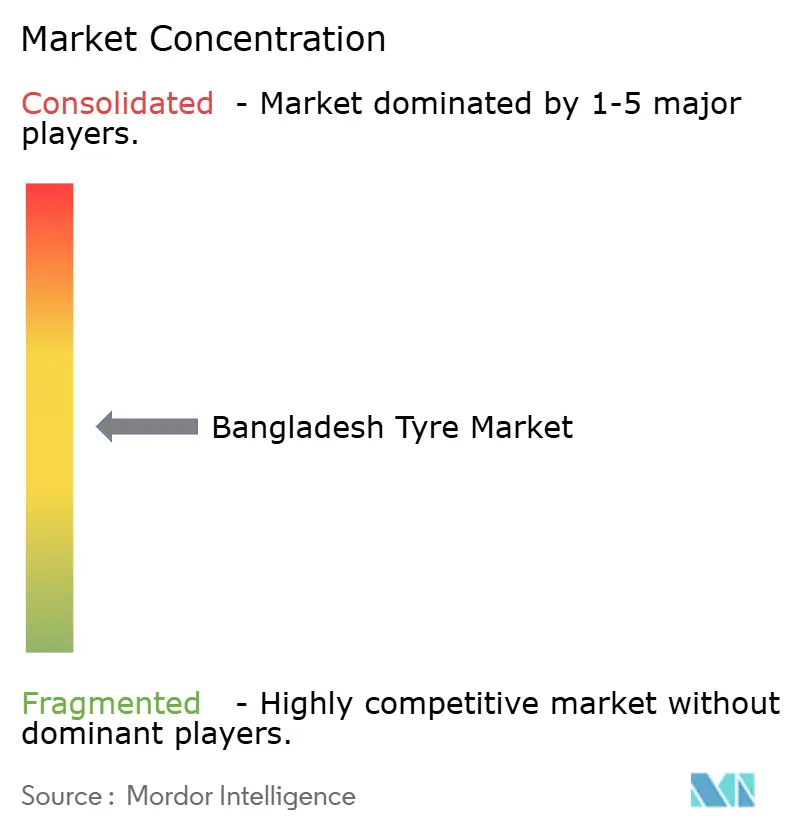
| Market Concentration | Medium |
Major Players *Disclaimer: Major Players sorted in no particular order Image © Mordor Intelligence. Reuse requires attribution under CC BY 4.0. | |
Bangladesh Tyre Market Analysis by Mordor Intelligence
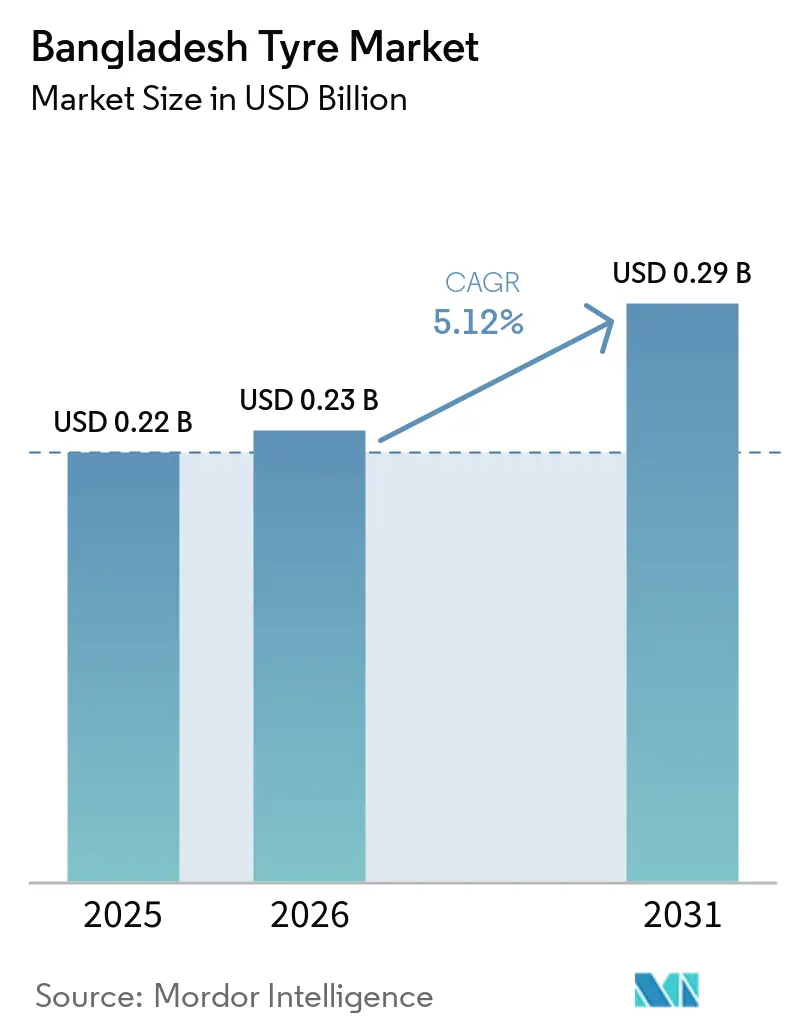
The Bangladesh tyre market size was valued at USD 0.22 billion in 2025 and is estimated at USD 0.23 billion in 2026, and is projected to reach USD 0.29 billion by 2031 at a 5.12% CAGR over 2026-2031. The Bangladesh tyre market is driven by increasing vehicle ownership, large-scale road infrastructure projects, and steady income growth, which collectively support market expansion. However, the market faces challenges such as exchange-rate fluctuations, import duties, and political disruptions, which continue to exert pressure on cost structures. Despite these challenges, the market benefits from robust replacement cycles, driven by rough road conditions, rising cross-border freight activities, and the sustained dominance of two-wheelers, which collectively contribute to resilient volume demand. Furthermore, emerging trends such as premiumization, the adoption of radial tires, and the growing electrification of vehicles are creating high-margin opportunities for market players. This combination of price-sensitive mass demand and technology-driven advancements positions the Bangladesh tire market as a significant growth area within South Asia's automotive supply chain, offering substantial opportunities for stakeholders across the value chain.
Key Report Takeaways
- By season, the all-season segment held 49.33% of the Bangladesh tyre market share in 2025, and winter models are expected to rise at a 6.15% CAGR.
- By tire design, radial products led with 73.15% of the Bangladesh tyre market share in 2025 and are expected to post the fastest 5.75% CAGR over the forecast period.
- By vehicle type, two-wheelers held 41.25% of the Bangladesh tyre market share in 2025, while passenger cars are projected to advance at a 6.74% CAGR through 2031.
- By application, on-road type held 82.55% of the Bangladesh tyre market share in 2025, and is projected to advance at a 5.44% CAGR through 2031.
- By end user, the aftermarket captured 79.13% of the Bangladesh tyre market share in 2025, whereas the OEM channel is set to grow at a 7.08% CAGR to 2031.
- By rim size, the 15-20 inch category accounted for a 52.44% of the Bangladesh tyre market share in 2025, while above 20 inch sizes are projected to expand at a 7.28% CAGR up to 2031.
- By propulsion, internal-combustion vehicles commanded 91.33% of the Bangladesh tyre market share in 2025, yet battery-electric vehicles are forecast to register a 10.65% CAGR through 2031.
Note: Market size and forecast figures in this report are generated using Mordor Intelligence’s proprietary estimation framework, updated with the latest available data and insights as of January 2026.
Bangladesh Tyre Market Trends and Insights
Drivers Impact Analysis*
| Driver | (~) % Impact on CAGR Forecast | Geographic Relevance | Impact Timeline |
|---|---|---|---|
| Vehicle Fleet and Motorization Increase | +1.2% | Dhaka, Chittagong, Sylhet | Medium term (2-4 years) |
| Road Infrastructure Build-Out Accelerates | +0.9% | Dhaka-Chittagong, SASEC routes | Long term (≥ 4 years) |
| Rough Roads Boost Aftermarket | +0.8% | Rural and semi-urban networks | Short term (≤ 2 years) |
| OEMs Shift to Radial Tires | +0.6% | Commercial hubs | Medium term (2-4 years) |
| Two-Wheeler Electrification Drives Demand | +0.4% | Urban EV clusters | Long term (≥ 4 years) |
| Trade Growth Boosts Load-Index | +0.5% | Benapole, Akhaura, Teknaf | Medium term (2-4 years) |
| Source: Mordor Intelligence | |||
Rising Vehicle Parc and Income-Led Motorization
Vehicle registrations are witnessing consistent growth as middle-income households increasingly perceive ownership as a fundamental requirement for mobility rather than a symbol of aspiration. This shift is driving an upsurge in both original equipment manufacturer (OEM) sales and replacement volumes. In Bangladesh, logistics-intensive sectors are expanding their operations by adding new trucks to their fleets, while motorcycles are gaining significant traction as a preferred mode of transport in densely populated urban areas. Concurrently, passenger car ownership is experiencing steady growth in suburban regions. Additionally, the entry of a young workforce into their peak earning years is contributing to predictable replacement cycles, which is a critical factor supporting the long-term stability and growth of the Bangladesh tyre market.
Accelerated Road-Infrastructure Build-Out for Logistics Corridors
Highway infrastructure projects valued at over USD 7 billion, including the Dhaka-Chittagong corridor and SASEC links, are significantly increasing the demand for high-durability truck tyres in Bangladesh. The expansion of longer routes has resulted in higher vehicle miles traveled, which, in turn, is driving overall tyre consumption despite the marginal extension of tread life due to improved road surfaces. Furthermore, the development of industrial zones near Kushtia is contributing to a rise in commercial traffic, thereby reinforcing long-haul transportation patterns and further influencing the growth trajectory of the Bangladesh tyre market.
After-Sales Boom from Rough Road Conditions Driving High Replacement Cycles
Roads in rural areas, unlike those in developed regions, are significantly impacted by factors such as monsoon damage, seasonal flooding, and frequent overloading. These conditions contribute to a reduced operational lifespan, creating a consistent demand for durable and efficient replacement solutions [1]“Bangladesh Road Transport in the Monsoon,” World Bank, wits.worldbank.org. To mitigate these challenges, rural transport operators rely extensively on well-established and dense dealer networks to facilitate quick and efficient replacements. Furthermore, the higher incidence of failures has been driving consumers toward premium product offerings. Although these premium products come with a higher initial cost, they are increasingly preferred due to their ability to deliver a lower total cost of ownership over their lifecycle.
OEM Shift to Radial Technology in Truck and Bus Segment
Tata Motors, a prominent assembler, incorporates radials as a standard feature, emphasizing advantages such as improved fuel efficiency and extended service intervals [2]“Bangladesh Truck Line-Up Highlights Radial Standardization,” Tata Motors, tatamotors.com. The growing familiarity of fleet operators with radial tires is driving their increased adoption in the aftermarket, thereby raising technical entry barriers for specialists focused on bias tires. Furthermore, regulatory incentives aimed at reducing emissions and enhancing operational efficiency are reinforcing the dominance of radial tires within the Bangladesh tyre market.
Restraints Impact Analysis*
| Restraint | (~) % Impact on CAGR Forecast | Geographic Relevance | Impact Timeline |
|---|---|---|---|
| Political Unrest Disrupts Factory Capacity | -0.9% | Gazipur, Savar, Chittagong | Short term (≤ 2 years) |
| Volatile Rubber Prices Squeeze Margins | -0.7% | Nationwide | Short term (≤ 2 years) |
| High Import Duties Inflate Prices | -0.5% | Nationwide | Medium term (2-4 years) |
| Lack Of Local Rubber Increases Risk | -0.4% | Nationwide | Long term (≥ 4 years) |
| Source: Mordor Intelligence | |||
Political Unrest and Factory Vandalism Disrupting Domestic Capacity
In 2024, civil unrest at Gazi Auto Tyres caused damages exceeding BDT 1,000 crore (approximately USD 82 million) and displaced an estimated 2,000 to 3,000 workers. This incident has led investors to reassess their expansion strategies by incorporating higher security costs, which have significantly delayed the implementation of critical capacity upgrades. These delays are anticipated to hinder the growth trajectory of Bangladesh's tyre market in the short to medium term. The increased focus on security measures highlights the challenges faced by the industry in maintaining operational stability and meeting rising demand, further emphasizing the need for strategic planning to mitigate such risks in the future.
Volatile Imported Rubber Prices Squeezing Margins
Thailand and Malaysia account for the sourcing of nearly all natural rubber, making them critical suppliers for the global tyre industry. In Bangladesh's value-sensitive tyre market, fluctuations in natural rubber prices necessitate challenging decisions, such as absorbing increased costs or raising retail prices, which could impact consumer demand. Furthermore, currency depreciation against the taka exacerbates these pressures, reducing profit margins. The lack of adequate hedging tools further limits the ability of market participants to effectively manage these risks, creating additional operational challenges for stakeholders in the market.
*Our forecasts treat driver/restraint impacts as directional, not additive. The impact forecasts reflect baseline growth, mix effects, and variable interactions.
Segment Analysis
By Season: All-Season Dominance Amid Winter Growth
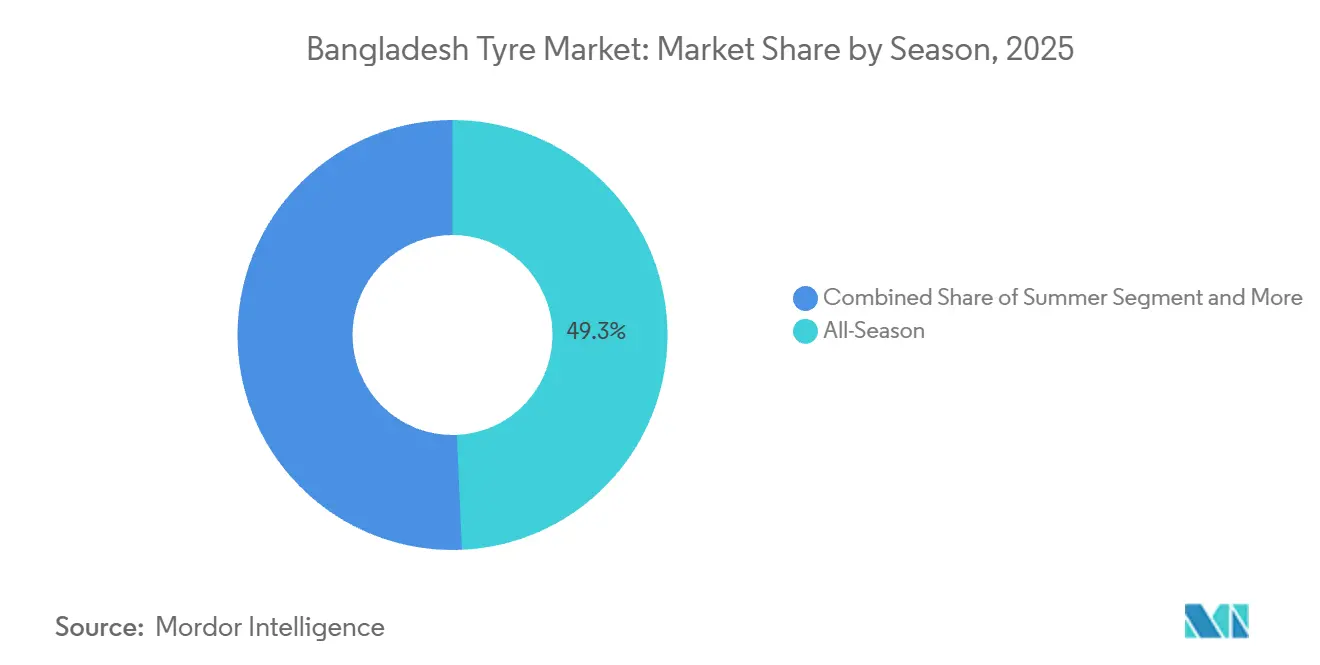
In 2025, all-season products accounted for a 49.33% share of Bangladesh's tyre market. The country's stable road-temperature profiles result in most motorists opting not to rotate tyres seasonally. However, winter tyre lines are witnessing significant growth, registering a 6.15% CAGR. This growth is attributed to increasing safety awareness among consumers and the cooler months experienced in northern districts. While commercial fleets continue to prioritize the durability and versatility of all-season tyres, premium passenger-car owners are increasingly adopting monsoon-optimized treads to address aquaplaning risks. As a result, the market for winter tyres in Bangladesh is expanding from a relatively small base, creating opportunities for manufacturers that develop silica-rich compounds designed to enhance wet grip performance.
Ongoing urbanization is driving commercial fleets to standardize their tyre selections to a smaller number of SKUs, ensuring operational efficiency. On the other hand, private motorists, influenced by exposure to global brands, are exploring specialized tyre options to meet specific driving needs. Retailers are capitalizing on this trend by actively promoting winter tyre options, often bundling them with value-added services such as warranties and emergency assistance. Despite the challenges posed by tariff burdens on imports, local tyre manufacturers are increasingly pursuing joint ventures to access advanced compound technologies. These collaborations are expected to enhance local production capabilities and expand the competitive landscape within Bangladesh's tyre market.



By Tire Design: Radial Technology Transformation
In 2025, radial tyres accounted for a significant 73.15% share of Bangladesh's tyre market. With a CAGR of 5.75%, this trend highlights a consistent transition from bias tyre formats. Fleet operators have reported that the fuel efficiency and mileage improvements offered by radial tyres outweigh their higher upfront costs, reinforcing their dominance, particularly in buses and heavy trucks. The adoption of radial technology by original equipment manufacturers (OEMs) has further accelerated learning curves within domestic manufacturing facilities, thereby improving economies of scale and enhancing profit margins for key market players. Consequently, the market share of bias tyres in Bangladesh has been declining. However, bias tyres continue to play a vital role in low-speed rural haulage applications, where their cost-effectiveness and durability remain relevant.
Airless tyre prototypes are emerging as a promising innovation in the mining and construction sectors, offering immunity to punctures. Pilot deployments by Eicher Trucks and Buses indicate increasing traction in demanding operational environments. However, the high unit costs associated with airless tyres are delaying their widespread adoption. Simultaneously, advancements in radial tyre technology, such as the development of low-rolling-resistance belts designed for electric vehicles (EVs), are attracting substantial research and development (R&D) investments. These technological advancements underscore the potential for sustained innovation in Bangladesh's tyre market, positioning it as a dynamic and evolving industry throughout the decade.
By Vehicle Type: Two-Wheeler Leadership with Passenger-Car Acceleration
In 2025, two-wheelers constituted a 41.25% share of Bangladesh's tyre market, highlighting their significance in providing cost-effective mobility solutions in densely populated urban areas. The expansion of motorbike financing options continues to sustain strong sales. Furthermore, a steady replacement demand for commuter bikes supports the baseline volume within the country's tyre market. On the other hand, passenger cars are projected to experience the fastest growth, with a CAGR of 6.74%, driven by rising disposable incomes and the development of suburban road infrastructure. Light commercial vans are increasingly facilitating e-commerce deliveries, while heavy trucks are benefiting from infrastructure upgrades that enhance connectivity between ports and inland depots.
Ride-hailing fleets, which replace their tyres more frequently compared to private vehicle owners, are contributing to a growing demand for higher-specification compounds that optimize grip and durability. Although the penetration of sports-utility vehicles remains limited, their gradual rise is driving an increase in average rim sizes and introducing a more premium product mix. Consequently, the Bangladesh tyre market is characterized by volume stability driven by two-wheelers, alongside value growth stemming from the expanding car and truck segments, reflecting a balanced market dynamic.
By Application: On-Road Dominance with Specialized Growth
In 2025, on-road applications accounted for the largest share of the Bangladesh tyre market, representing 82.55% of the total market. This segment is anticipated to grow at a compound annual growth rate (CAGR) of 5.44% during the forecast period, driven by the critical role of road freight as the backbone of domestic logistics. The implementation of highway infrastructure projects is reducing transit times, thereby increasing average annual mileage and leading to a higher frequency of tyre replacements. Although off-road segments, such as those catering to quarry and farm operations, command higher price points per unit, they contribute a relatively smaller volume to the overall market.
The surge in construction activities around economic zones is creating intermittent spikes in demand for off-road tyres. To capitalize on this premium segment within the Bangladesh tyre market, manufacturers are focusing on product differentiation through innovations such as cut-resistant treads and reinforced sidewall armor. Furthermore, the increasing adoption of telematics in long-haul fleet operations is driving the implementation of predictive maintenance practices. This trend is encouraging uniform brand usage across fleets, thereby enhancing aftermarket retention rates for leading suppliers in the market.
By End User: Aftermarket Strength with OEM Acceleration
In 2025, the aftermarket accounted for a significant 79.13% share of Bangladesh's tyre market, highlighting the high frequency of replacements necessitated by adverse climatic conditions and challenging road surfaces. Independent dealers continued to dominate channel outreach; however, organized retail chains are progressively expanding their presence into tier-2 towns, aiming to capture a larger customer base. The OEM segment is anticipated to grow at a CAGR of 7.08%, driven by the scaling of domestic assembly operations. This growth is further supported by anchor contracts secured by global brands that are increasingly localizing production to cater to the domestic market.
Retread activities remain strong, particularly among heavy-duty fleet operators seeking cost-effective solutions. With regulatory authorities tightening oversight on product integrity, professional retreaders are increasingly adopting advanced curing presses that comply with stringent safety standards. Additionally, as vehicle manufacturers enhance trim levels, consumer brand awareness at the point of purchase is rising. This growing awareness significantly influences replacement decisions, effectively integrating OEM and aftermarket strategies within the Bangladesh tyre market. The interplay between these segments is expected to shape the market dynamics further during the forecast period.
By Rim Size: Mid-Range Leadership with Premium Growth
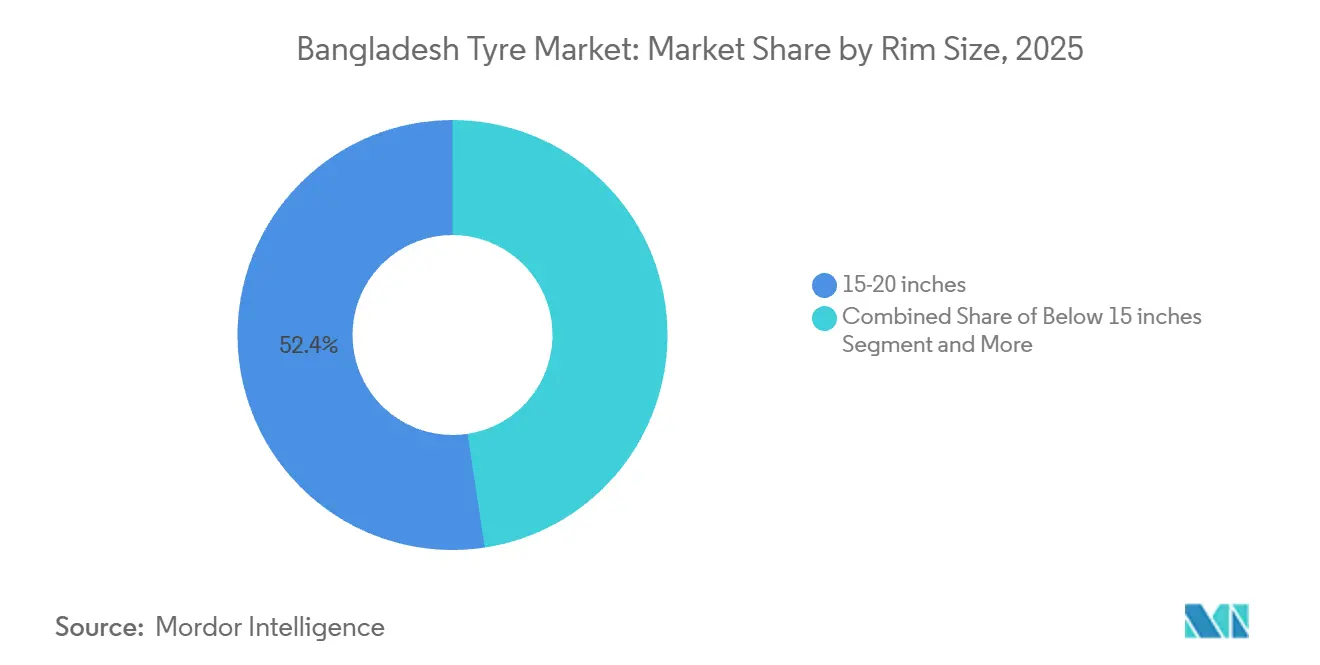
In 2025, tyres ranging from 15 to 20 inches accounted for a significant 52.44% share of the Bangladesh tyre market, primarily serving mainstream passenger cars and mid-weight trucks. This segment reflects the widespread adoption of these vehicles in the country. Meanwhile, the demand for tyres exceeding 20 inches is projected to grow at a CAGR of 7.28%, driven by the increasing preference for larger wheel diameters in premium sedans and container tractors. These upgrades are motivated by the need for improved performance and enhanced aesthetics. Additionally, heavy commercial platforms, which are now frequently equipped with 22.5-inch tyre sets, are playing a pivotal role in supporting this upward trend.
Tyres under 15 inches remain a critical segment, catering to scooters and compact hatchbacks. However, this category faces intense price competition, which could impact its growth potential. Manufacturers are likely to rationalize supply by concentrating production capacity on mid-sized and larger tyres to capitalize on higher profit margins. This strategic realignment is expected to drive an increase in the Bangladesh tyre market's overall value, even if the growth in unit sales remains relatively moderate.
By Propulsion: ICE Dominance with Electric Acceleration
In 2025, internal combustion engines accounted for a significant 91.33% share of the Bangladesh tyre market. This dominance was primarily supported by the availability of an established fuel infrastructure and the relatively lower upfront costs of internal combustion engine vehicles. However, government-led incentives and initiatives aimed at reducing urban pollution are driving the adoption of battery-electric two-wheelers and three-wheelers, which are projected to grow at a notable CAGR of 10.65% during the forecast period. The initial adoption of electric vehicles (EVs) is concentrated in delivery fleets and ride-share bikes, where the high daily mileage highlights the total-cost-of-ownership benefits of EVs.
Tyre designs are undergoing significant advancements, incorporating stiffer constructions to accommodate the instant torque of electric drivetrains and achieving lower noise levels to complement the quieter operation of EVs. Although hybrid vehicles and fuel-cell technology remain niche segments within the market, they represent a growing technological diversity that is expanding the range of compound requirements for tyres. This increasing complexity within the market is creating new revenue opportunities for premium-tier products, further enhancing the growth potential of the Bangladesh tyre market.
Geography Analysis
Dhaka-Chittagong, characterized by high vehicle density, port-centric commerce, and relatively smoother highways, has established itself as a significant consumption hub within the Bangladesh tyre market. In urban traffic conditions, shorter replacement intervals drive higher per-vehicle spending, even as improved road surfaces help mitigate tread wear. Sylhet is experiencing rapid growth, supported by remittance inflows that enable private car purchases. This trend is compelling local distributors to diversify their stock with a wider range of SKUs, tailored to meet the demands of hill roads and the region's wet microclimates.
Western divisions, such as Kushtia, are projected to witness accelerated demand as the planned economic zone becomes operational. Freight fleets transporting raw materials to newly established factories are expected to adopt high-load radial tyres, thereby increasing the market share of tyres exceeding 20 inches in these corridors. Border districts, including Benapole, are recording significant truck tyre demand, driven by the expansion of Indo-Bangla trade. The liberalization of transit protocols has reduced turnaround times, creating a preference for tyres with premium durability to meet the rigorous demands of cross-border logistics.
Coastal Khulna faces unique challenges due to exposure to saline air and frequent flooding, which accelerate rim corrosion and sidewall degradation, creating distinct replacement triggers. Government initiatives aimed at extending asphalt roads into rural agrarian interiors are gradually unlocking latent demand for two-wheelers, while also encouraging the repositioning of dealer networks further inland. As connectivity improves, tyre manufacturers are scaling up flexible warehousing solutions to address seasonal monsoon disruptions, ensuring consistent last-mile supply to low-lying delta villages. These developments collectively highlight the evolving dynamics and growth opportunities within the Bangladesh tyre market.
Competitive Landscape
The Bangladesh tyre market remains moderately fragmented, with the top five suppliers accounting for a significant share of the overall revenue. Gazi Tyres, a prominent local player, continues to lead the economy segment by employing aggressive pricing strategies and maintaining an extensive network of dealer relationships. Meghna Group's MTF plant, following a substantial investment of BDT 1,300 crore (~USD 106.8 million) in 2024, is leveraging its newly expanded truck-bus capacity to actively pursue original equipment manufacturer (OEM) contracts [3]“Meghna Group Injects Tk1,300 crore into Tyre Plant,” Daily Sun, daily-sun.com.
International participants are focusing on premium and radial segments to establish their presence. Bridgestone and Michelin are targeting car owners in Dhaka by distributing their products through multibrand showrooms. On the other hand, CEAT and Apollo are concentrating on commercial fleets and have recently strengthened their local footprint through assembly partnerships with IFAD Motors. Chinese manufacturers are intensifying competition by offering mid-tier radials at highly competitive terms, compelling established players to revamp and refresh their value product lines to maintain market share.
The strategic focus within the market is shifting towards advancements in compound research and development (R&D), the adoption of digital order platforms, and the enhancement of field services. Apollo has introduced a telematics bundle for fleet care, which includes predictive maintenance features, thereby fostering stronger customer retention. Gazi Tyres has initiated pilot projects involving recycled rubber to mitigate the impact of raw material price volatility. Overall, the Bangladesh tyre market is evolving rapidly, with technology adoption and the development of omnichannel distribution networks emerging as critical areas of competition and growth.
Bangladesh Tyre Industry Leaders
Gazi Tyres
MTF Tyres (Meghna Group)
CEAT Limited
Apollo Tyres Limited
Bridgestone Corporation
- *Disclaimer: Major Players sorted in no particular order

Recent Industry Developments
- June 2026: Bangladesh's FY2026–27 budget proposed a 20% supplementary duty on imported light-truck tyres (HS Code 4011.20.00), targeting tyres used on light commercial trucks and related vehicles. The proposal would increase total tax incidence on affected tyres from 64.25% in FY2025–26 to 96.10% in FY2026–27.
- September 2025: Meghna Innova Rubber Company Ltd, a concern of Meghna Group, began producing truck, bus, and agricultural tyres at its expanded Mirzapur facility in Tangail. This is expected to fill the gap left by the now-closed Gazi Auto Tyres.
- December 2024: In December 2024, Double Horse Tyre, a division of Jamuna Tyre and Rubber Industry Ltd, successfully completed upgrades to its production line and commenced the manufacturing of 11.00 R20 truck tyres. This development marks a significant milestone in the company's production capabilities.


Bangladesh Tyre Market Report Scope
The Bangladesh tyre market is segmented by season, tire design, vehicle type, application, end user, rim size, and propulsion. By season, the market is segmented into summer, winter, and all-season tires. By tire design, the market is segmented into radial, bias, and non-pneumatic/airless tires. By vehicle type, the market is segmented into two-wheelers, passenger cars, light commercial vehicles, heavy commercial trucks and buses, and off-the-road and specialty vehicles, including OTR, agriculture, mining, and racing applications. By application, the market is segmented into on-road and off-road. By end user, the market is segmented into OEM and aftermarket. By rim size, the market is segmented into below 15 inches, 15 to 20 inches, and above 20 inches. By propulsion, the market is segmented into internal-combustion vehicles, battery-electric vehicles, and hybrid and fuel-cell vehicles. The report offers market size and forecasts in value (USD) and volume (Units) for all the above-mentioned segments.
| Summer |
| Winter |
| All-Season |
| Radial |
| Bias |
| Non-pneumatic/Airless |
| Passenger Cars |
| Light Commercial Vehicles |
| Heavy Commercial Trucks & Buses |
| Two-Wheelers |
| Off-the-Road and Specialty (OTR, Agriculture, Mining, Racing) |
| On-Road |
| Off-Road (Construction, Mining, Agriculture) |
| OEM |
| Aftermarket (Replacement and Retread) |
| Below 15 inches |
| 15 – 20 inches |
| Above 20 inches |
| Internal-Combustion Vehicles |
| Battery-Electric Vehicles |
| Hybrid & Fuel-Cell Vehicles |
| By Season | Summer |
| Winter | |
| All-Season | |
| By Tire Design | Radial |
| Bias | |
| Non-pneumatic/Airless | |
| By Vehicle Type | Passenger Cars |
| Light Commercial Vehicles | |
| Heavy Commercial Trucks & Buses | |
| Two-Wheelers | |
| Off-the-Road and Specialty (OTR, Agriculture, Mining, Racing) | |
| By Application | On-Road |
| Off-Road (Construction, Mining, Agriculture) | |
| By End User | OEM |
| Aftermarket (Replacement and Retread) | |
| By Rim Size | Below 15 inches |
| 15 – 20 inches | |
| Above 20 inches | |
| By Propulsion | Internal-Combustion Vehicles |
| Battery-Electric Vehicles | |
| Hybrid & Fuel-Cell Vehicles |


Key Questions Answered in the Report
What is the current value of the Bangladesh tyre market?
The Bangladesh tyre market size is USD 0.22 billion in 2025 and is projected to reach USD 0.29 billion by 2031.
How fast is passenger-car tyre demand growing in Bangladesh?
Passenger-car tyres are expected to register a 6.74% CAGR through 2031, the fastest among vehicle categories.
Which tyre design leads the Bangladesh market?
Radial tyres dominate with 73.15% share and will maintain the highest growth at 5.75% CAGR.
How significant is the aftermarket channel?
The aftermarket accounts for 79.13% of national tyre sales due to frequent replacement cycles linked to rough roads.
Page last updated on:


 Your data is secure and never sold or shared.


