
Automotive Fuel Rail Market Size and Share
Market Overview
| Study Period | 2019 - 2031 |
|---|---|
| Market Size (2026) | USD 4.32 Billion |
| Market Size (2031) | USD 5.31 Billion |
| Growth Rate (2026 - 2031) | 4.21 % |
| Fastest Growing Market | Asia Pacific |
| Largest Market | Asia Pacific |
| Market Concentration | Medium |
Major Players *Disclaimer: Major Players sorted in no particular order Image © Mordor Intelligence. Reuse requires attribution under CC BY 4.0. | |
Automotive Fuel Rail Market Analysis by Mordor Intelligence
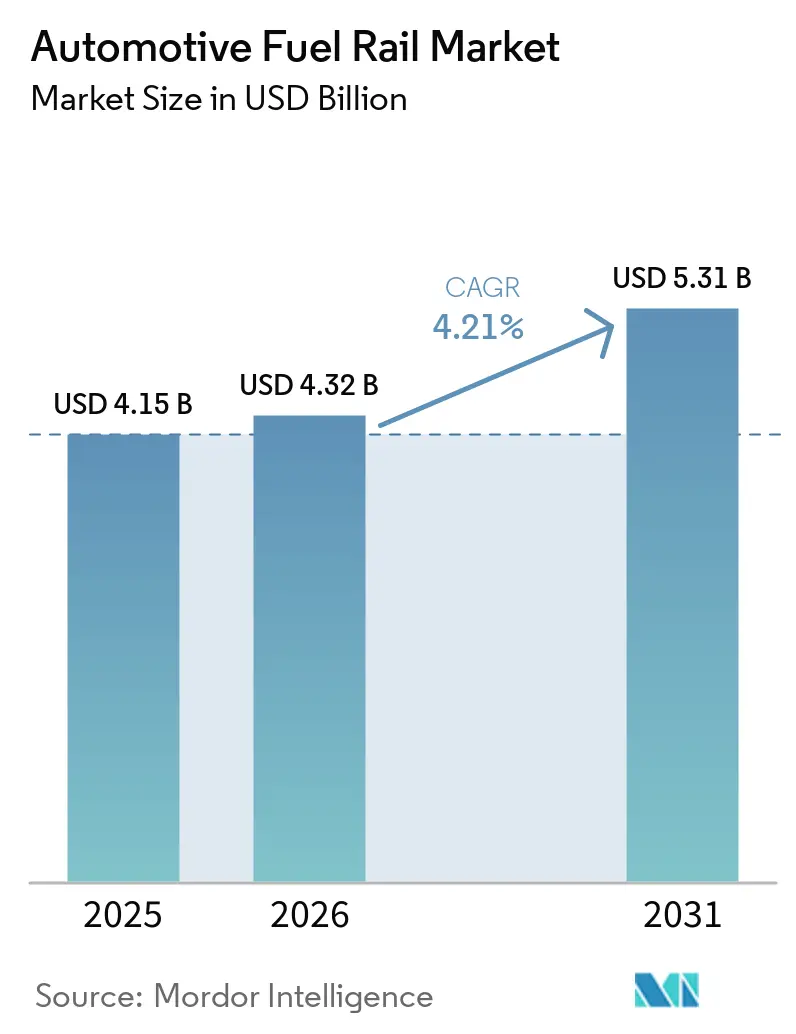
The Automotive Fuel Rail Market size was valued at USD 4.15 billion in 2025, expected to reach USD 4.32 billion in 2026, and is projected to reach USD 5.31 billion by 2031, growing at a CAGR of 4.21% over 2026-2031. Accelerating adoption of 350-bar gasoline direct-injection (GDI) systems, aggressive lightweighting programs that swap stainless steel for aluminum, and the rapid production rebound in Asia-Pacific anchor near-term volume growth. At the same time, Europe’s Fit-for-55 roadmap and China’s dual-credit scheme force original equipment manufacturers (OEMs) to balance the costs of high-pressure rails against battery-electric transition timelines. Suppliers with integrated rail, pump, and injector portfolios capture share as OEMs consolidate sourcing to de-risk emissions compliance and warranty exposure. Material substitution brings fresh competitive dynamics, with aluminum forgings absorbing demand that once defaulted to duplex stainless grades. Regulatory scrutiny on particulate-number emissions keeps pressure on technology in focus even as electrification advances.
Key Report Takeaways
- By engine configuration, inline engines led with a 56.17% revenue share of the automotive fuel rail market in 2025 and are expected to grow at a CAGR of 4.23% through 2031.
- By material type, aluminum alloy is projected to expand at a 4.43% CAGR through 2031, the fastest among materials, whereas stainless steel accounted for 47.26% of the automotive fuel rail market share in 2025.
- By pressure system, high-pressure rails captured 68.26% of the automotive fuel rail market share in 2025 and are advancing at a 4.27% CAGR through 2031.
- By vehicle type, passenger cars accounted for a 61.24% share of the automotive fuel rail market in 2025 and are forecast to grow at a 4.41% CAGR through 2031.
- By fuel type, gasoline accounted for 56.15% of the automotive fuel rail market share in 2025, while hydrogen fuel rails are projected to grow at the fastest rate, with a 4.29% CAGR between 2026 and 2031.
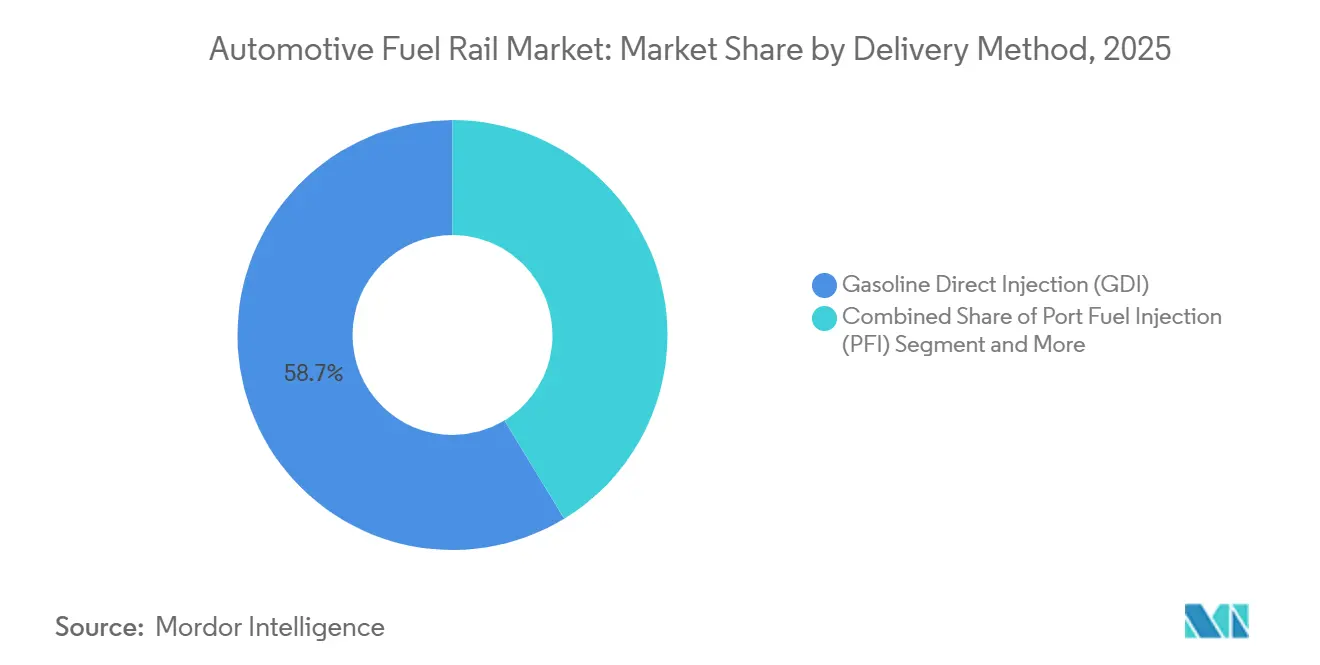
- By delivery method, gasoline direct injection (GDI) systems accounted for 58.73% of 2025 revenue, and the same GDI technology is forecast to post the highest growth, at a 4.33% CAGR through 2031.
- By distribution channel, OEM factory-fitted rails captured 73.36% of 2025 demand, whereas the aftermarket replacement segment is expected to advance at a 4.31% CAGR over 2026-2031
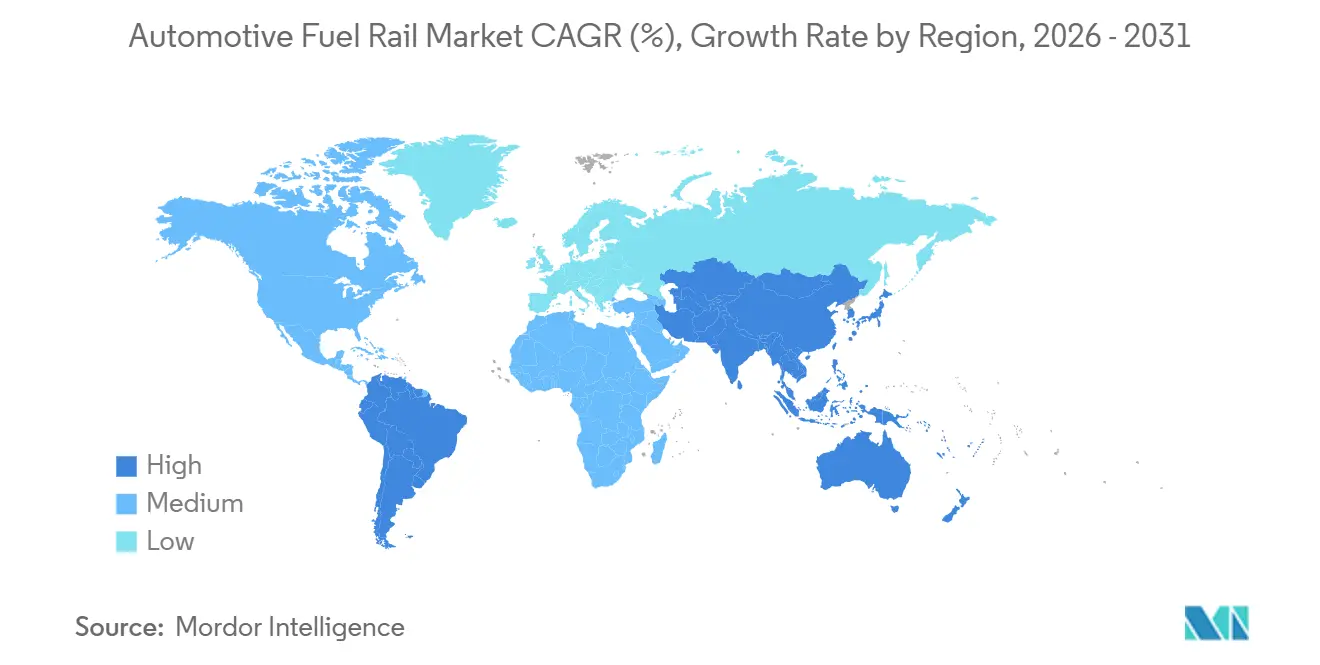
- By geography, Asia-Pacific accounted for 38.83% of the 2025 volume and will post the fastest regional CAGR of 4.37% through 2031.
Note: Market size and forecast figures in this report are generated using Mordor Intelligence’s proprietary estimation framework, updated with the latest available data and insights as of January 2026.
Market Trends and Insights
Drivers Impact Analysis of Automotive Fuel Rail Market*
| Driver | (~) % Impact on CAGR Forecast | Geographic Relevance | Impact Timeline |
|---|---|---|---|
| Tightening Euro 6d, China VI-b and US LEV III Emissions Norms Spur High-Pressure Rails | +0.9% | Europe, China, North America | Medium term (2-4 years) |
| OEM Drive Toward 350-Bar GDI for 15% Lower Fuel Burn in Downsized Engines | +0.7% | Global, with early adoption in Germany, Japan, South Korea | Short term (≤ 2 years) |
| Rapid Asia-Pacific Light-Vehicle Production Recovery | +0.6% | China, India, Japan, South Korea | Short term (≤ 2 years) |
| Stainless-to-Aluminum Rail Light-Weighting | +0.5% | Europe, North America | Medium term (2-4 years) |
| Surge in Ethanol/E85 Flex-Fuel Programs | +0.4% | Brazil, India, US Midwest | Medium term (2-4 years) |
| Hydrogen ICE Pilots Require Novel High-Pressure Rails | +0.2% | Japan, North America, with pilot programs in Europe | Long term (≥ 4 years) |
| Source: Mordor Intelligence | |||
Tightening Euro 6d, China VI-b, and US LEV III Emissions Norms Spur High-Pressure Rails
Governments are now measuring particulate numbers (PN) under real-world driving conditions. This has compelled OEMs to adopt high-pressure injection systems, which atomize fuel finely enough to significantly reduce PN compared to traditional port fuel injection [1]“High-Pressure Gasoline Injection Systems,” Delphi Technologies, delphi.com . European standards have set stringent limits on particulate emissions, a benchmark reflected in China's regulations, while the United States has further tightened its domestic gasoline standards. Duplex stainless grades, known for their superior strength, enable the production of thinner walls. This innovation not only reduces overall weight but also ensures compliance with the high-pressure requirements [2]“Pressurfect XP Duplex Stainless Rail Tubes,” Alleima AB, alleima.com . Tier-1 suppliers, leveraging their advanced metallurgy expertise and system-level validation capabilities, are successfully securing contracts. Meanwhile, smaller firms face difficulties in financing the necessary tooling and extensive testing cycles required to meet.
OEM Drive Toward 350-Bar GDI for 15% Lower Fuel Burn in Downsized Engines
Automakers are transitioning from larger, naturally aspirated engines to smaller, turbocharged alternatives equipped with advanced fuel systems. This change significantly reduces fuel consumption, contributing to improved efficiency and helping manufacturers avoid penalties associated with corporate average fuel economy standards. Examples of this global trend include Stellantis’ innovative inline-six engine, Hyundai’s advanced fuel system development program, and Bosch’s high-performance platforms, all of which highlight the widespread adoption of this approach. With a relatively low additional cost, these advanced fuel systems offer a more cost-effective solution compared to hybrid technologies, which require a much higher investment per vehicle. Consequently, demand is increasingly concentrated among suppliers capable of providing integrated solutions, including injectors, pumps, and fuel rails, as complete and compatible systems.
Rapid APAC Light-Vehicle Production Recovery Post-2023 Chip Crunch
In 2025, China recorded significant growth in light vehicle production, while India registered a steady increase, reflecting the region’s expanding automotive manufacturing capabilities. Stabilized semiconductor supplies helped restore production lines and increased demand for OEM fuel-rail fitments. India’s E20 ethanol initiative, scheduled for implementation in April 2026, presents a critical materials challenge. Fuel rails will require advanced polymers and specialized coatings to withstand the higher ethanol content in fuel blends. Although Asia is rapidly progressing toward electrification, hybrid vehicles continue to dominate cost-sensitive market segments. This trend is expected to sustain fuel rail demand throughout the decade, despite the ongoing transition to electric mobility.
Stainless-to-Aluminum Rail Lightweighting to Offset Heavier After-Treatment
Euro 6d particulate filters, three-way catalysts, and sensors add significant weight to vehicles. Aluminum fuel rails provide a notable weight reduction compared with stainless steel alternatives while maintaining high-pressure capabilities. This transition enables a faster return on investment and meets required durability standards. Aluminum’s appeal is further supported by its lower density and the continued decline in scrap material costs. Meanwhile, manufacturers such as Linamar and TI Automotive are rapidly expanding their forging capacities to address rising demand from original equipment manufacturers. Currently, the substitution cycle is the most dynamic and fastest-growing segment of the automotive fuel rail market. This trend is expected to continue until pressure requirements reach a level at which stainless steel alternatives regain their competitive advantage.
Restraints Impact Analysis of Automotive Fuel Rail Market*
| Restraint | (~) % Impact on CAGR Forecast | Geographic Relevance | Impact Timeline |
|---|---|---|---|
| EV Share Above 30% of New Sales in Europe by 2030 Curbs ICE Rail Demand | -0.8% | Europe, with spillover to China | Medium term (2-4 years) |
| Raw-Material Price Volatility for Nickel-Bearing Stainless Grades | -0.4% | Global | Short term (≤ 2 years) |
| Technician Skill Gap for Above 350-Bar Service Raises Warranty Costs | -0.3% | Global, most acute in Southeast Asia, Latin America, Africa | Medium term (2-4 years) |
| Counterfeit Aftermarket Rails in South-East Asia Undermining Brand Trust | -0.2% | Southeast Asia, with emerging issues in Latin America, Africa | Short term (≤ 2 years) |
| Source: Mordor Intelligence | |||
EV Share Above 30% of New Sales in Europe by 2030 Curbs ICE Rail Demand
The EU’s Fit for 55 plan aims to significantly increase the adoption of battery-electric vehicles (BEVs) over the next decade and phase out internal combustion engines (ICEs) in the near future. This transition is expected to gradually reduce Europe’s addressable fuel-rail volume in the coming years. In Central European economies, where fuel-rail assembly accounts for a substantial share of manufacturing GDP, suppliers must adapt by shifting toward hybrid or hydrogen platforms to avoid plant closures. Although global firms can mitigate risks by reallocating capacity to regions such as Asia and Latin America, European fabricators that rely solely on traditional manufacturing methods face an increased risk of obsolescence.
Raw-Material Price Volatility for Nickel-Bearing Stainless Grades
At the beginning of 2024, LME nickel prices remained relatively low but increased notably by the end of the first quarter. Indonesia’s suspension of operations at a major mine and its announcement of potential export taxes drove this increase. As Indonesia accounts for a substantial share of global nickel supply, its actions significantly influence prices. Stainless steel rail product manufacturers, particularly those dependent on specific nickel grades, faced immediate pressure on profit margins. The EU’s Carbon Border Adjustment Mechanism (CBAM), which imposes taxes on imports with high carbon footprints, further intensified these challenges. In response, many suppliers are shifting toward aluminum alternatives or implementing hedging strategies to mitigate raw material price volatility. However, smaller businesses with limited capacity to absorb market volatility are increasingly pursuing consolidation opportunities to maintain viability.
*Our forecasts treat driver/restraint impacts as directional, not additive. The impact forecasts reflect baseline growth, mix effects, and variable interactions.
Automotive Fuel Rail Market Segment Analysis
By Engine Configuration:
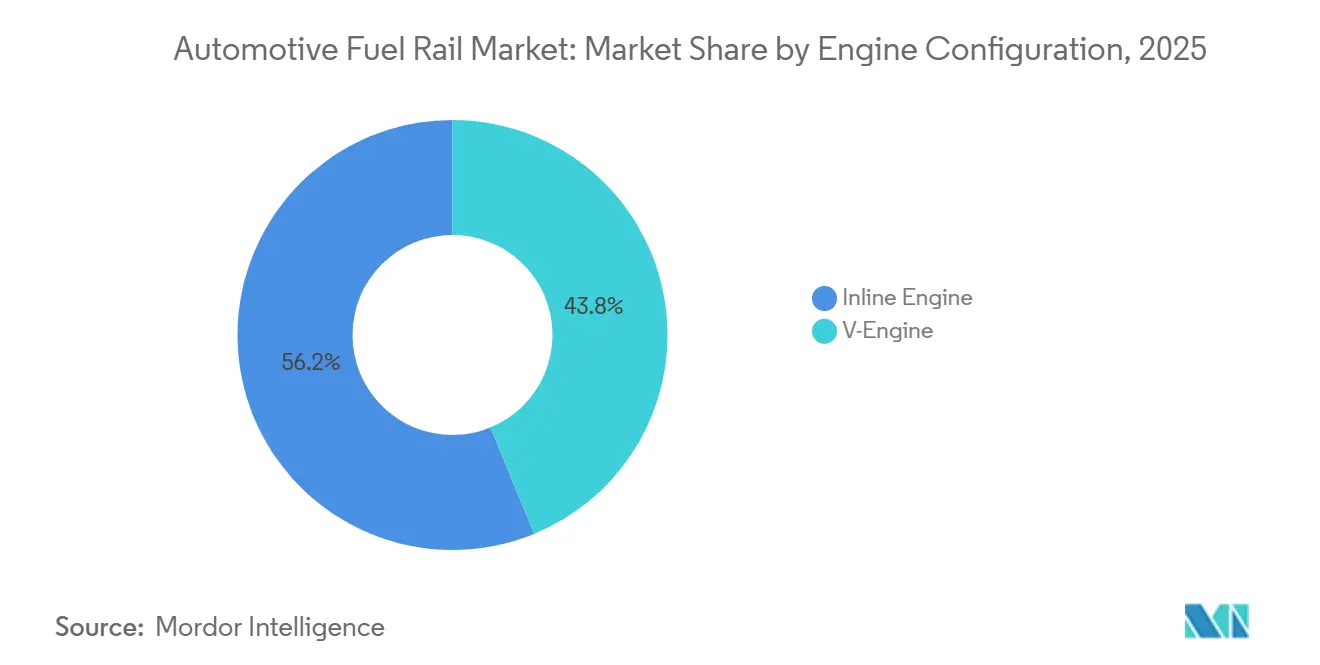
Inline Layouts Consolidate Share on Packaging AdvantagesInline engines accounted for 56.17% of the 2025 volume in the automotive fuel rail market and are forecast to grow at a 4.23% CAGR through 2031. They allow a single rail to feed all cylinders, thereby trimming tube length and reducing material costs. Inline designs fit transverse front-wheel-drive platforms that dominate global passenger-car output, and they simplify emissions certification because a single downstream sensor monitors all injectors.
Turbocharged inline-fours and inline-sixes also underpin downsizing strategies. Stellantis replaced large V8S with its Hurricane inline-six, slashing rail count and cost. Toyota’s hydrogen-fueled GR Corolla shows the architecture can adapt to alternative fuels, sustaining demand even under zero-carbon rules. As SUVs migrate to front-drive architectures in China and India, inline dominance will rise further.


By Material Type:
Aluminum Alloy Emerges as the Lightweighting WinnerStainless steel made up 47.26% of 2025 shipments, and aluminum alloy will post a 4.43% CAGR, the fastest of any material line in the automotive fuel rail market. At a density of 2.7 g/cm³, aluminum reduces the rail mass by almost half compared to stainless steel. OEMs recoup that saving quickly because after-treatment adds 20-30 kg and forces design trade-offs elsewhere.
Stainless retains relevance in ultra-high-pressure prototypes above 500 bar, yet duplex advances cannot offset aluminum’s density edge and raw-material cost swings tied to nickel. Suppliers investing in extrusion presses, friction-stir welding, and automated leak-test lines report order books stretching into 2030, confirming the aluminum structural demand tailwind.
By Pressure System:
High-Pressure Rails Dominate Compliance PathwaysHigh-pressure variants (≥ 250 bar) accounted for 68.26% of 2025 output and are set for a 4.27% CAGR through 2031, reflecting global convergence toward 350-bar GDI norms. These rails can efficiently reduce particulate-number emissions and help OEMs delay adoption of gasoline particulate filters.
Low-pressure rails remain in flex-fuel and port-injected segments, especially in Brazil, where ethanol blends rose to 30% in 2025. Yet as pressure climbs, warranty and service complexity grow: replacement of one-time-use crush washers and specialized gauges lifts repair bills above USD 3,500. Integrated suppliers that can certify pumps, rails, and injectors as a single system, therefore capture the lion’s share of new programs.
By Vehicle Type:
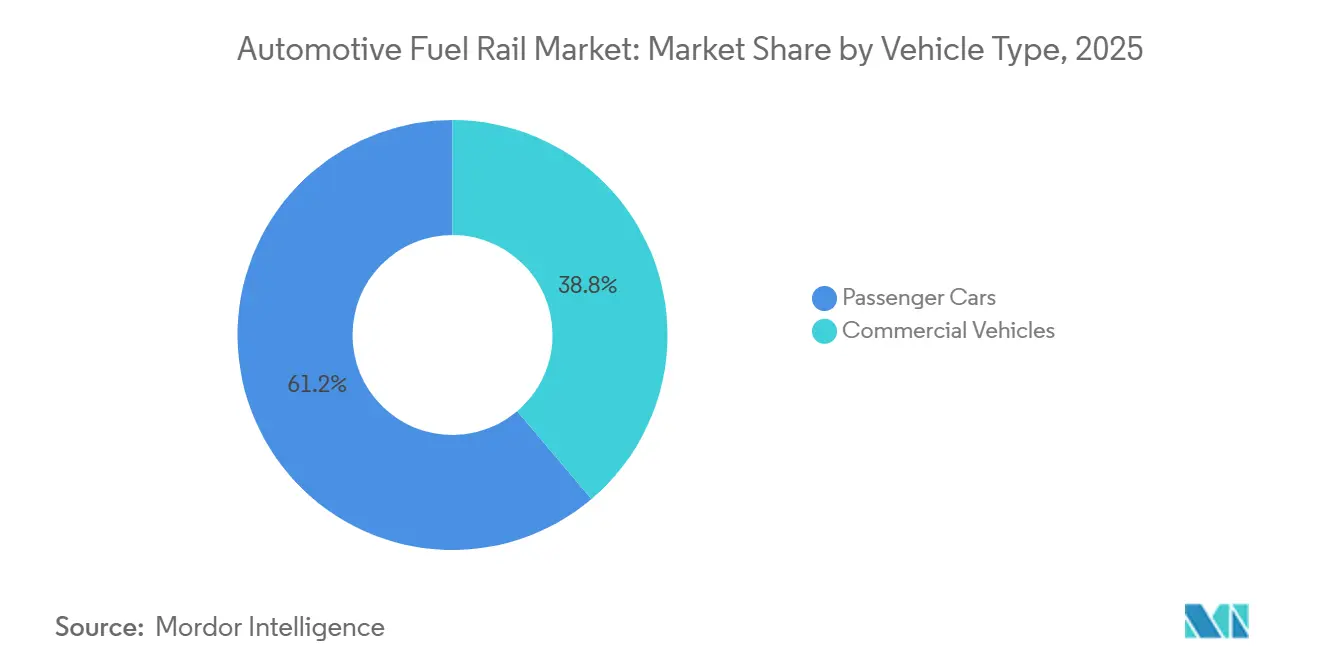
Passenger Cars Remain the Volume AnchorPassenger cars accounted for 61.24% of revenue in 2025 and are projected to grow at a 4.41% CAGR through 2031 in the automotive fuel rail market. Compact and midsize SUVs dominate incremental demand, particularly in China and India, where hybrids rather than BEVs form the growth spine in the short term.
Commercial vehicles still rely on common-rail diesel systems, but Cummins' hydrogen ICE pilots indicate a long-term diversification path. Coupes and specialized performance models, though below 3% share, showcase high-pressure dual-injection systems that push the limits of downsizing without sacrificing torque.
By Fuel Type:
Hydrogen Registers the Fastest CAGR from a Small BaseGasoline retained 56.15% share in 2025, yet hydrogen rails will record a 4.29% CAGR through 2031, the top rate among fuel categories. Toyota has doubled pump durability for liquid-hydrogen track vehicles, while Cummins has validated Euro 7-compliant hydrogen diesels.
Flex-fuel rails are growing alongside ethanol mandates in Brazil and India, requiring polymer liners and stainless-steel end fittings to mitigate corrosion. Diesel rail demand declines in European passenger cars but persists in heavy-duty fleets.
By Delivery Method:
GDI Extends Its Lead with Dual-Injection HybridsGDI systems accounted for 58.73% of 2025 installations and will expand at 4.33% CAGR through 2031. Dual PFI+DI set-ups join the mainstream for premium brands that need low-load efficiency and high-load power. PFI lingers in cost-driven markets and cylinder-deactivation hybrids, while common-rail diesel governs trucks and off-highway gear.
Maintenance needs scale with pressure: malfunctioning GDI injectors can raise PM by 45%, forcing early diagnostics. Workshops equipped with 250-bar bench testers and rail pressurization rigs are carving an aftermarket niche that will only grow.

By Distribution Channel:
Aftermarket Overtakes OEM Fitment GrowthIn 2025, OEM lines accounted for 73.36% of rail shipments. However, as the global vehicle fleet surpasses the 9-year mark, replacement volumes are projected to outpace OEM shipments, growing at a 4.31% CAGR through 2031. The increasing need for maintenance and replacement parts in aging vehicles drives this growth.
Southeast Asia grapples with counterfeit injectors, leading fleet owners to turn to Tier-1 sources for validated aftermarket parts to ensure quality and reliability. Meanwhile, makers of diagnostic tools are seizing the opportunity, introducing GDI-specific testers tailored for affordability by independent garages, enabling them to efficiently service modern gasoline direct injection systems.
Geography Analysis
APAC Automotive Fuel Rail Market
Asia-Pacific supplied 38.83% of 2025 demand and is tracking a 4.37% CAGR through 2031, the fastest regional growth rate. China’s production rebound, India’s E20 initiative, and low EV penetration across ASEAN economies are supporting internal combustion engine (ICE) vehicle volumes. Product plans continue to prioritize hybridization over full electrification, keeping fuel-rail content per vehicle largely intact despite powertrain evolution.
Europe and Africa Automotive Fuel Rail Market
In the medium term, Europe holds a significant share of market volume. However, as the battery electric vehicle (BEV) segment is expected to surpass a critical threshold later in the decade, the region is preparing for a contraction. The Carbon Border Adjustment Mechanism is increasing stainless steel prices, while plants in Central Europe linked to ICE platforms face the risk of underutilization. In response to changes in EU policy, suppliers with operations in North Africa and Turkey are strategically adjusting their export routes.
The Americas and MEA Automotive Fuel Rail Market
During the same period, North and South America collectively account for a substantial share of shipments. The United States prioritizes high-pressure gasoline direct injection (GDI) systems for large trucks and SUVs. Meanwhile, Brazil’s ethanol-reliant vehicle fleet requires corrosion-resistant low-pressure rails. In Canada, EV incentives are reducing the assembly of new ICE vehicles, although hybrid pickups remain a key driver of rail orders. Argentina and Colombia both rely on aftermarket conversions to sustain demand amid economic challenges. The Middle East and Africa account for the remaining market share. Production in the region is concentrated in Turkey and South Africa, while Saudi Arabia is attracting OEMs through duty-free zones that support completely knocked-down (CKD) assembly.

Competitive Landscape
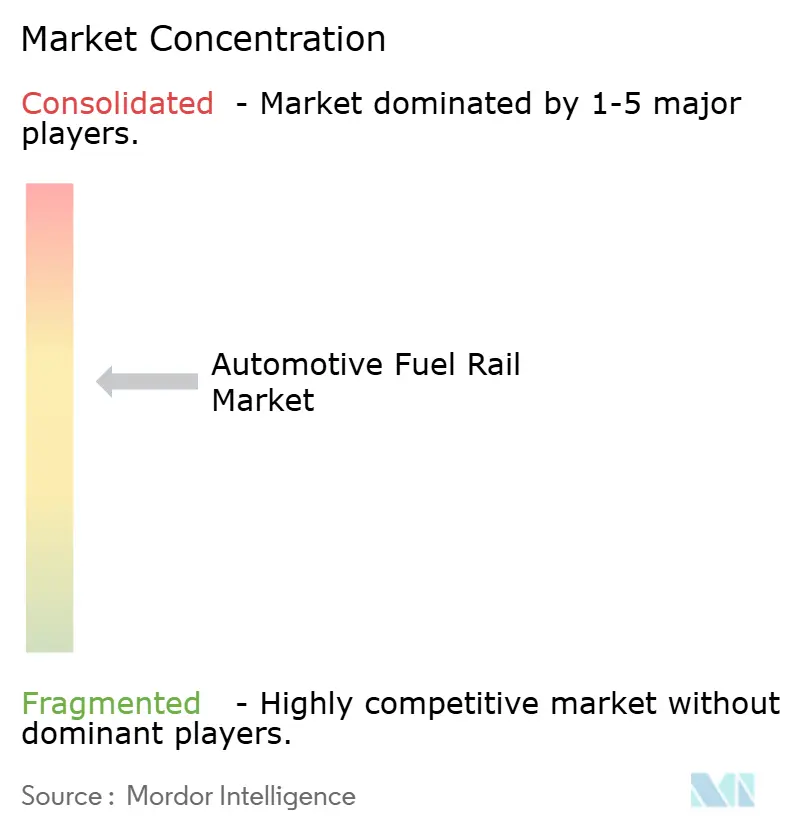
The automotive fuel rail market is moderately concentrated, with leading suppliers—Bosch, Denso, Continental, Aptiv, and Magneti Marelli—accounting for a substantial share of global output capacity. Bosch leads the high-pressure gasoline direct injection (GDI) segment, while Denso’s hydrogen-ready rails benefit from Toyota’s track validation. Continental is investing in aluminum extrusion lines in Hungary to mitigate nickel-related risks. Aptiv integrates fuel rails with software-controlled injectors that support over-the-air calibration updates.
Niche suppliers, including USUI and Linamar, specialize in ultra-lightweight aluminum forgings and serve premium applications in luxury hybrid vehicles. Stanadyne and TI Automotive offer modular pump-rail-injector kits that accelerate low- to mid-volume OEM programs. Hitachi Astemo’s planned investment in Michigan positions the company to supply fuel rails alongside inverter and drive-motor packages for hybrid trucks.
Competitive rivalry centers on three key factors: achieving high-pressure durability targets, designing rails for corrosive ethanol blends, and incorporating hydrogen-compatible seals. Intellectual property barriers are increasing as suppliers patent leak-down detection algorithms and adaptive pressure-relief valves. M&A activity is likely to accelerate as stainless-steel specialists without aluminum or hydrogen capabilities pursue strategic exits.
Automotive Fuel Rail Industry Leaders
Robert Bosch GmbH
Denso Corporation
Continental AG
Aptiv PLC
Magneti Marelli
- *Disclaimer: Major Players sorted in no particular order
Automotive Fuel Rail Market Companies Covered in this Report
- Robert Bosch GmbH
- Denso Corporation
- Continental AG
- Aptiv PLC
- Magneti Marelli
- USUI Co. Ltd.
- Linamar Corporation
- Hitachi Astemo
- TI Automotive
- Aisin Corporation
- BorgWarner Inc.
- Stanadyne LLC
- Valeo SA

Recent Industry Developments in Automotive Fuel Rail Market
- August 2025: Mahindra is engineering flex-fuel engines calibrated for E30, adding ethanol sensors and fuel-rail heaters to guarantee cold starts and corrosion resistance.
- April 2025: Ford recalled 33,000 Escape and Bronco Sport SUVs to update powertrain control software that detects rail-pressure drops and disables the pump, mitigating injector crack-related fire risk.


Global Automotive Fuel Rail Market Report Scope
The scope of the report includes Engine Configuration (Inline Engine and V-Engine), Material Type (Stainless Steel and More), Pressure System (High-Pressure Fuel Rail and Low-Pressure Fuel Rail), Vehicle Type (Passenger Cars and Commercial Vehicles), Fuel Type, Delivery Method, Distribution Channel, and Geography.
| Inline Engine |
| V-Engine |
| Stainless Steel |
| Aluminum Alloy |
| Plastic |
| Steel Forged |
| High-Pressure Fuel Rail |
| Low-Pressure Fuel Rail |
| Passenger Cars | Hatchback |
| Sedan | |
| SUV | |
| Coupe | |
| Commercial Vehicles | LCV |
| MCV | |
| HCV |
| Gasoline |
| Diesel |
| Flex Fuel (E10-E85) |
| CNG/LPG |
| Biofuel/Synthetic |
| Hydrogen |
| Gasoline Direct Injection (GDI) |
| Port Fuel Injection (PFI) |
| Common-Rail Diesel Injection |
| OEM (Factory-Fitted) |
| Aftermarket (Replacement) |
| North America | United States |
| Canada | |
| Rest of North America | |
| South America | Brazil |
| Argentina | |
| Rest of South America | |
| Europe | United Kingdom |
| Germany | |
| Spain | |
| Italy | |
| France | |
| Russia | |
| Rest of Europe | |
| Asia-Pacific | India |
| China | |
| Japan | |
| South Korea | |
| Rest of Asia-Pacific | |
| Middle East and Africa | United Arab Emirates |
| Saudi Arabia | |
| Turkey | |
| Egypt | |
| South Africa | |
| Rest of Middle East and Africa |
| By Engine Configuration | Inline Engine | |
| V-Engine | ||
| By Material Type | Stainless Steel | |
| Aluminum Alloy | ||
| Plastic | ||
| Steel Forged | ||
| By Pressure System | High-Pressure Fuel Rail | |
| Low-Pressure Fuel Rail | ||
| By Vehicle Type | Passenger Cars | Hatchback |
| Sedan | ||
| SUV | ||
| Coupe | ||
| Commercial Vehicles | LCV | |
| MCV | ||
| HCV | ||
| By Fuel Type | Gasoline | |
| Diesel | ||
| Flex Fuel (E10-E85) | ||
| CNG/LPG | ||
| Biofuel/Synthetic | ||
| Hydrogen | ||
| By Delivery Method | Gasoline Direct Injection (GDI) | |
| Port Fuel Injection (PFI) | ||
| Common-Rail Diesel Injection | ||
| By Distribution Channel | OEM (Factory-Fitted) | |
| Aftermarket (Replacement) | ||
| By Geography | North America | United States |
| Canada | ||
| Rest of North America | ||
| South America | Brazil | |
| Argentina | ||
| Rest of South America | ||
| Europe | United Kingdom | |
| Germany | ||
| Spain | ||
| Italy | ||
| France | ||
| Russia | ||
| Rest of Europe | ||
| Asia-Pacific | India | |
| China | ||
| Japan | ||
| South Korea | ||
| Rest of Asia-Pacific | ||
| Middle East and Africa | United Arab Emirates | |
| Saudi Arabia | ||
| Turkey | ||
| Egypt | ||
| South Africa | ||
| Rest of Middle East and Africa | ||


Key Questions Answered in the Report
What is the automotive fuel rail market size in 2026?
The automotive fuel rail market is expected to be valued at USD 4.32 billion in 2026.
How fast will the market grow through 2031?
Global revenue is forecast to expand at a 4.21% CAGR between 2026 and 2031, reaching about USD 5.31 billion.
Which region will add the most incremental demand?
Asia-Pacific leads, advancing at 4.37% CAGR on the back of China and India’s vehicle production rebound.
What segment holds the largest automotive fuel rail market share today?
High-pressure gasoline direct-injection rails command 68.26% of 2025 shipments.
Which material will gain popularity fastest?
Aluminum alloy rails are projected to post the highest growth at 4.43% CAGR through 2031.
How will electrification affect fuel rail suppliers?
BEV adoption above 30% in Europe after 2028 will shrink ICE rail demand, but hybrids, flex-fuel, and hydrogen programs offset the decline elsewhere.
Page last updated on:





