
Market Overview
| Study Period | 2020 - 2031 |
|---|---|
| Forecast Data Period | 2026 - 2031 |
| Base Year Market Size (2025) | USD 83.02 Million |
| Market Size (2026) | USD 88.17 Million |
| Market Size (2031) | USD 119.16 Million |
| Growth Rate (2026 - 2031) | 6.21 % |
| Market Concentration | Medium |
Major Players *Disclaimer: Major Players sorted in no particular order Image © Mordor Intelligence. Reuse requires attribution under CC BY 4.0. | |
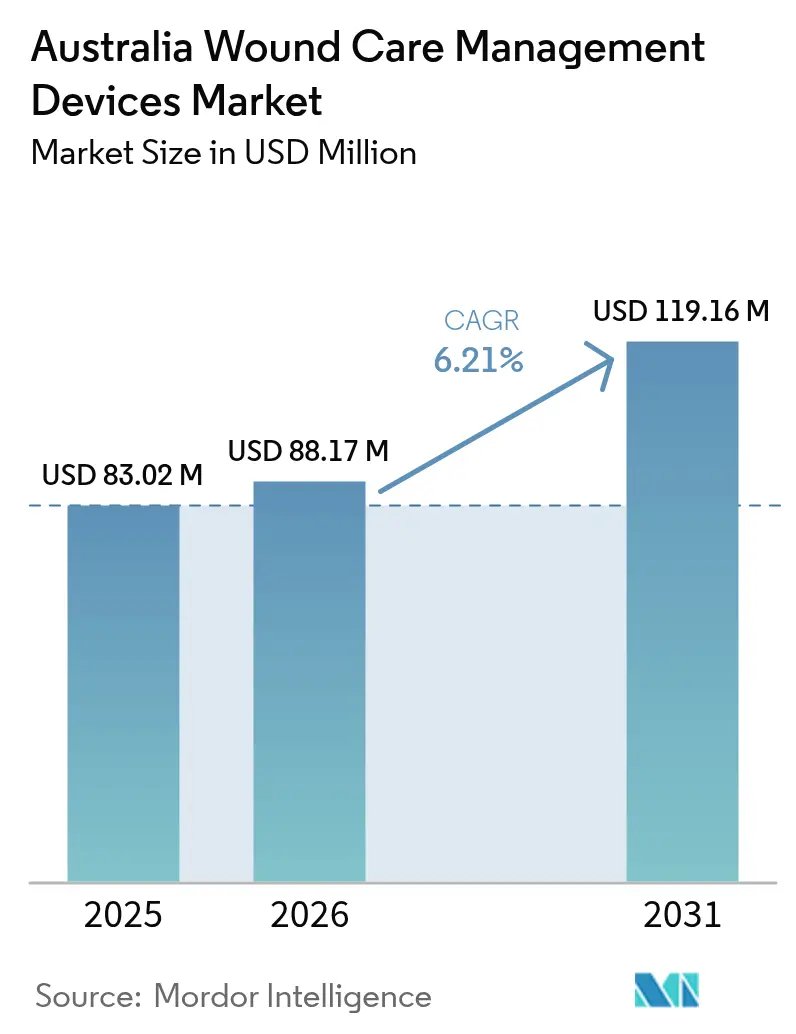
Australia Wound Care Management Devices Market Analysis by Mordor Intelligence
Australia Wound Care Management Devices Market size in 2026 is estimated at USD 88.17 million, growing from 2025 value of USD 83.02 million with 2031 projections showing USD 119.16 million, growing at 6.21% CAGR over 2026-2031.
The COVID-19 pandemic caused severe issues with the provision of wound care. Due to several comorbidities, wound patients were more likely to experience COVID-19 effects; fewer hospital admissions and reduced diagnoses affected the biologics used in wound care. According to the International Journal of Medicine, published in July 2021, during the COVID-19 pandemic, patients who had recovered from an ulcer were switched to telephone consultations. The number of in-person visits for patients with an active DFU was decreased using a telephone consultation in between occasions of treatment. To reduce their exposure to COVID-19, some patients with active DFU preferred telephone consultations. Additionally, the risk of pressure ulcers is high in the COVID population. Thus, COVID-19 has significantly impacted the market studied.
Certain factors driving the growth of the market include rising incidences of chronic wounds, including venous ulcers, arterial ulcers, diabetic ulcers, and pressure ulcers, growing demand for faster recovery of wounds, and an increase in surgeries.
According to the Journal of Foot and Ankle Research published in July 2022, up to 50,000 Australians have diabetes-related foot ulcers (DFU), and another 300,000 might be at risk for developing DFUs. Chronic wounds remain a largely hidden and poorly supported problem in the Australian community. However, the awareness regarding the condition and the demand for fast recovery of these wounds have been observing a significant rise over the past few years, thus generating a significant opportunity for the growth of the market in the country.
The growing desire for faster wound recovery forces market participants to implement technological advancements that enhance wound care management in Australia. For instance, in December 2021, Western NSW Primary Health Network, Australian Unity, the University of Technology Sydney, CSIRO, and Coviu, Australia's top telehealth solution, worked together to develop a comprehensive digital toolkit for telehealth wound care. Such initiatives support market expansion in the country.
Growing awareness among individuals about wound care management further supports the market's growth. For instance, in July 2021, the most significant annual campaign of Wounds Australia, Wound Awareness Week 2021 (WAW21), ran to increase public awareness about chronic wounds and change public policy on wound care.
All aforementioned factors are expected to drive the growth of the market over the forecast period. However, the high cost of the procedure and lack of reimbursement restrain the market growth.
Note: Market size and forecast figures in this report are generated using Mordor Intelligence’s proprietary estimation framework, updated with the latest available data and insights as of 2026.
Australia Wound Care Management Devices Market Trends and Insights
Negative Pressure Wound Therapy (NPWT) System is Expected to Dominate the Market Over the Forecast Period
Negative-pressure wound therapy (NPWT) is a therapeutic technique using a suction dressing to remove excess exudation and promote healing in acute or chronic wounds and second-and third-degree burns. The segment is expanding as the prevalence of burns and chronic wounds both rise. According to Wound Australia Report in January 2022, over 420,000 Australians experience a persistent wound each year. The average patient with persistent wounds pays over USD 4,000 out of pocket. Hence, the high expenditure associated with chronic wounds is expected to propel the demand for cost-effective wound management devices in the coming years.
NPWT applies sub-atmospheric pressure inside a closed dressing to create a positive pressure that draws fluid and infection from a burn wound's surface. The pediatric burn centers in Australia treat more than 4000 kids for acute burns each year. Compared to traditional silver dressings, NPWT for burns has demonstrated faster healing times, an average of 22%, 60% lower referral risk for long-term scar treatment, and lower costs per patient. Thus, the benefits of NPWT in the treatment of burns and chronic wounds are anticipated to drive the growth of the segment.
People over 65 are more susceptible to chronic wounds because of age-related problems; thus, with the growing aging population in the country, the burden of chronic wounds is expected to increase over the forecast period. For instance, according to the Australian Institutes of Health and Welfare, in November 2021, the percentage of people 65 and older in Australia was 16.2%. Australians over the age of 65 will make up a huge portion of the population by 2066, reaching a peak of about 20.7%. Hence, the increasing burden of chronic wounds and the growing adoption of these products are the major factors propelling the growth of the wound care market.
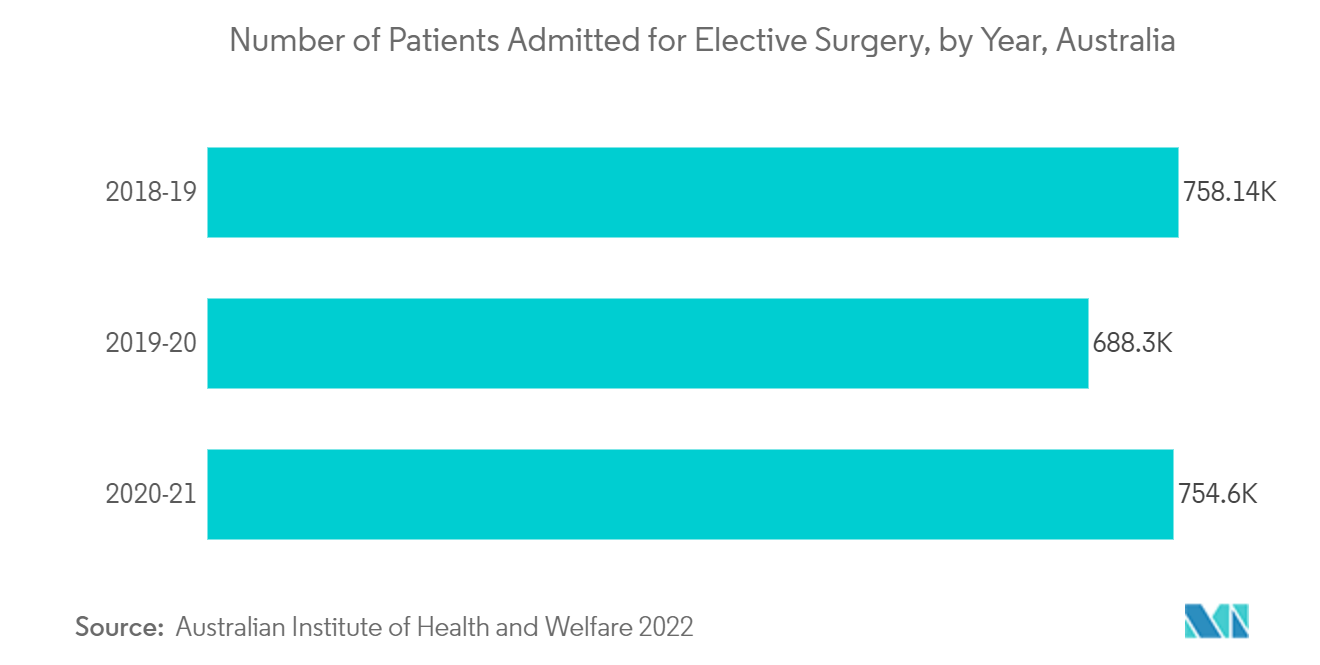


Foam Dressing is Expected to Witness Significant Growth During the Forecast Period
Foam dressing is used as a primary and secondary dressing for various types of wounds to provide absorption and insulation. The presence of various companies providing foam dressings in Australia and the rising burden of chronic wounds are some of the leading factors contributing to the segment's growth.
Some of the key companies operating in the Australia foam dressing segment include Smith and Nephew, 3M, Hartman AG, inHealth Group, and Cardinal Health, among others. One of the leading suppliers of foam dressing in Australia includes Vital Medical Supplies. As per the data from the Journal of Foot and Ankle Research published in May 2022, the Australian guidelines on wound healing interventions include foam dressing as a crucial wound management tool in a heavily exuding neuropathic diabetic foot ulcer. The data also stated that foam dressing is widely used across Australian hospitals for the management of wounds with heavy drainage.
Per the Wounds Australia 2022 report, over USD 3 billion from the nation's aged care and healthcare budgets is spent on chronic wounds. Per the data from the Australian Institute of Health and Welfare updated in November 2022, there was around 33,600 hospitalization in Australia due to injuries. The data indicated that there is a growing burden of injuries in the country, accounting for around 8.4% of the total burden of diseases in Australia. Hence, considering the support and initiatives proposed by the government and the rising burden of injuries in the country, the demand for wound care products in Australia is likely to witness growth over the forecast period.
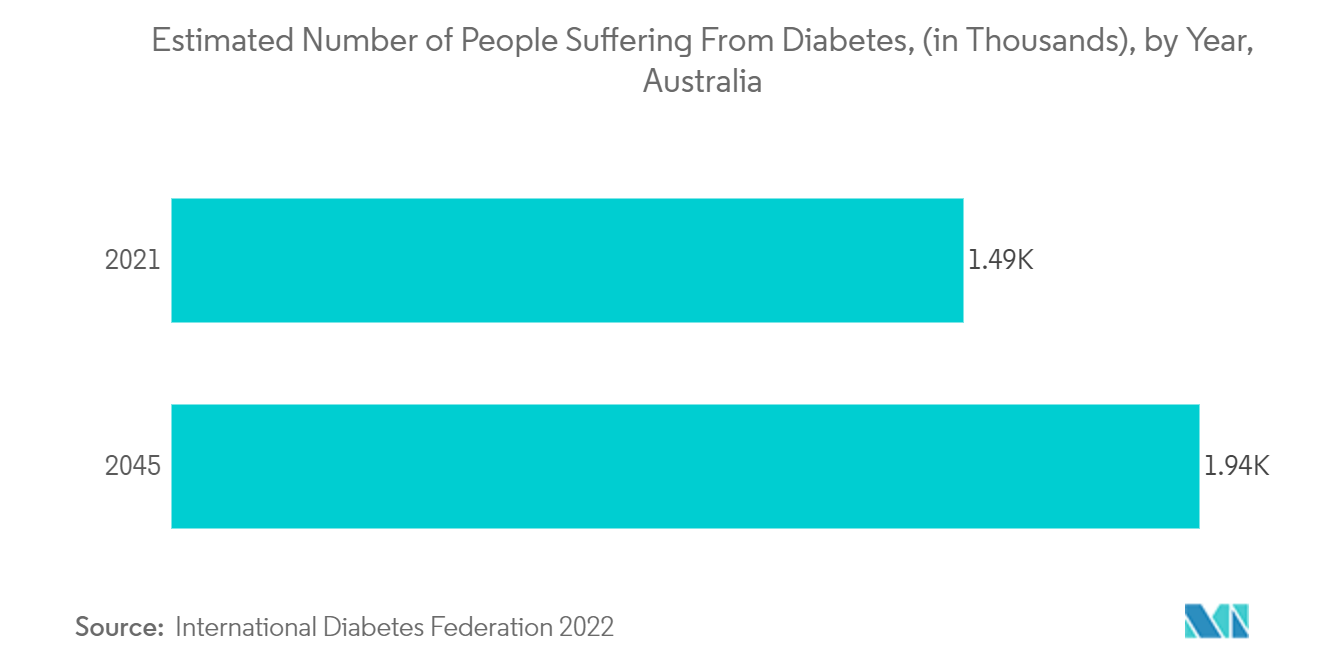
Competitive Landscape
The Australian market for wound care management devices is highly competitive and consists of several major players. Companies such as 3M Health Care Ltd, Coloplast AS, ConvaTec Inc., Covidien PLC, Hollister Incorporated, Johnson & Johnson, Medline Industries Inc., and Smith & Nephew PLC, among others, hold a substantial market share.
Australia Wound Care Management Devices Industry Leaders
3M Health Care Ltd
Medtronic PLC
Medline Industries Inc.
Smith & Nephew PLC
Johnson & Johnson
- *Disclaimer: Major Players sorted in no particular order
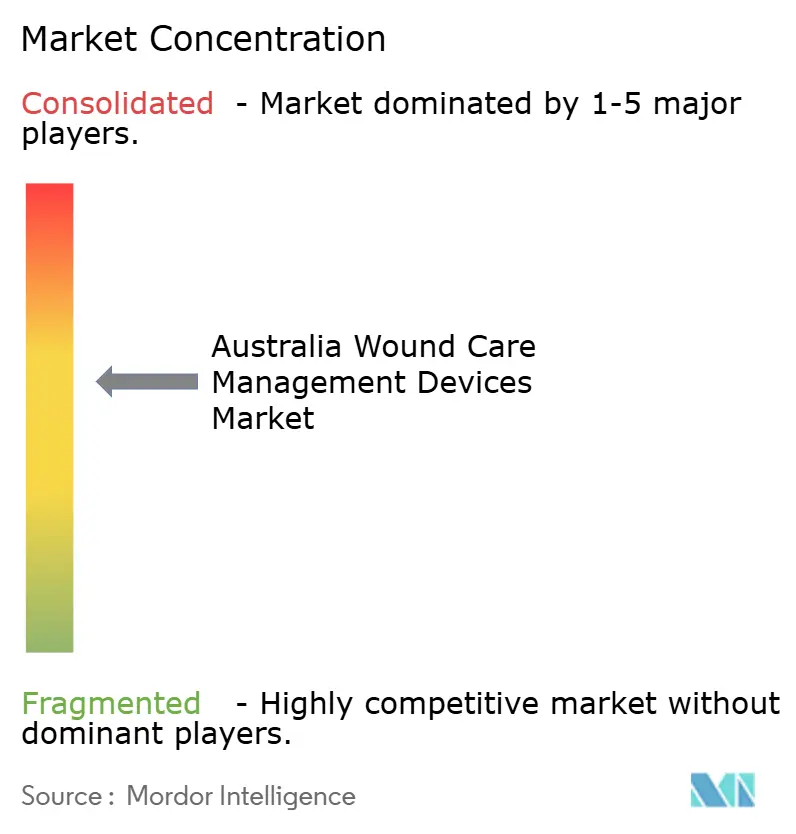

Market Opportunities and Future Outlook
A key demand-side whitespace is the move away from fragmented out-of-pocket purchasing toward structured access pathways for chronic wound consumables. In June 2025, the Australian Government launched the Chronic Wound Consumables Scheme (CWCS). The scheme covers the full cost of eligible wound care products for qualifying older Australians with diabetes, with a lower age threshold for First Nations people, and it uses an online portal for approved health professionals to order against a defined product list. With the scheme estimated to support around 20,000 Australians annually, suppliers that align their portfolios to the CWCS Product List and support clinician ordering workflows gain a clearer route to adoption in high-burden chronic wound cohorts, including through required training and access via PRODA and HPOS.
On the supply and technology side, regulatory and traceability requirements are tightening as advanced wound and burn solutions continue to enter the market through the TGA pathway. Unique Device Identification (UDI) requirements commence from 1 July 2026 for some medical devices, starting with higher-risk classes (IIb and III), which will require manufacturers and importers to upgrade labelling, data capture, and distribution traceability. At the same time, recent TGA certifications and ARTG inclusions for burn and complex wound technologies (including Avita Medicals RECELL GO and PolyNovos NovoSorb MTX) reflect ongoing product innovation and give hospitals and specialist services another basis to broaden use of device-enabled wound management alongside established dressing and therapy categories.
Recent Industry Developments
- April 2026: Avita Medical received Therapeutic Goods Administration (TGA) certification in Australia for the RECELL GO system used in burn and trauma wound treatment. The clearance improves access to device-enabled skin regeneration workflows in Australian burn care and increases competitive pressure on advanced wound and burn management offerings.
- September 2025: MediWound secured TGA marketing authorization in Australia for NexoBrid, an enzymatic debridement product for removal of eschar in thermal burn patients. The approval supports wider clinical adoption of standardized, non-surgical debridement approaches and underpins partner-led commercialization plans in Australia.
- March 2025: PolyNovo received Australian Register of Therapeutic Goods (ARTG) inclusion for NovoSorb MTX (2 mm thickness) and commercially launched the product in Australia. The addition expands options for managing deep soft tissue defects and reinforces the role of locally established suppliers in advanced wound solutions.


Research Methodology Framework and Report Scope
Market Definition and Coverage
For this study, the market covers revenues generated in Australia from devices and consumables used to prevent, treat, and manage acute and chronic wounds across care settings, where product use directly supports wound closure, healing, or infection control.
Scope exclusions: We exclude general hospital consumables not intended for wound management, along with clinical services and staffing costs tied to wound clinics.
Segmentation Overview
- Product
- Advanced Wound Management
- Advanced Wound Dressing
- Foam Dressing
- Hydrocolloid Dressing
- Film Dressing
- Alginate Dressing
- Hydrogel Dressing
- Other Advanced Wound Dressings
- Wound Therapy Device
- Pressure Relief Device
- Negative Pressure Wound Therapy (NPWT) System
- Oxygen and Hyperbaric Oxygen Equipment
- Electrical Stimulation Device
- Other Wound Therapy Devices
- Active Wound Care
- Suture and Staple
- Topical Agents
- Advanced Wound Dressing
- Surgical Wound Care
- Tissue Adhesives, Sealants, and Glues
- Anti-infective Dressing
- Traditional/Basic Wound Care
- Medical Tapes
- Dressings
- Cleansing Agents
- Advanced Wound Management
Data Sources, Market Sizing, and Validation
Desk Research
Desk research helped us set the guardrails for Australia specific demand and healthcare delivery patterns before any calculations were finalized. We used public sources such as the Australian Institute of Health and Welfare, Australian Bureau of Statistics population tables, Medicare Benefits Schedule items relevant to wound procedures, and Therapeutic Goods Administration listings to understand what products are registered and how care is funded.
To shape assumptions, we also reviewed hospital and health department publications and peer reviewed clinical literature on chronic wounds. For external signals, we pulled customs or trade statistics for relevant medical device imports where classification allowed useful indicators. These inputs were then cross checked using company annual reports, investor presentations, and trusted news coverage to confirm product launches and channel shifts. We also relied on a paid subscription for company financials and a patent database view to support coverage mapping. The sources noted here are illustrative rather than exhaustive, and other public references were used to collect, validate, and clarify inputs.
Primary Interviews and Surveys
Primary work focused on validating how wound care products are actually used and purchased in Australia, and on pressure testing the sizing inputs that desk sources do not show clearly. We spoke with a mix of manufacturers and distributors, procurement and clinical stakeholders, and channel partners to confirm adoption by care setting, price movement, and substitution trends between advanced and basic products.
Since Australia has different funding and protocol pathways across hospital and community care, we also checked assumptions on utilization, treatment duration, and the pace of uptake for newer therapies. We then reconciled these inputs back into the model so the final totals stayed consistent.
Distribution of primary research fieldwork respondents
| Company type | Respondent position |
|---|---|
| Top tier: 27% | CXOs: 13% |
| Mid tier: 53% | Functional/Unit leaders: 28% |
| Smaller Players: 20% | Managers: 59% |
Market-Sizing & Forecasting
The sizing starts with a top-down build that reconstructs Australia demand using treated patient pools and care activity signals, which are then translated into device use through typical treatment pathways. For example, chronic wound prevalence, procedure volumes, aging population trends, and the split of care across hospitals, outpatient clinics, and home care were used to form the demand pool, before applying product mix and replacement frequency assumptions.
To keep the totals realistic, we then checked the results with selective bottom-up approximations, including sampled price points by product category and channel checks on volumes moving through major distribution routes. Where product level data was incomplete, gaps were handled by using adjacent category ratios confirmed in interviews and by aligning to observed import and registration signals. For forecasting, scenario analysis was used around variables that can shift faster, such as advanced dressing penetration, negative pressure therapy adoption, and pricing changes from procurement cycles. The final trajectory was reconciled to the most consistent expert consensus.
Data Validation & Update Cycle
Validation was done through repeated cross checks between the model outputs and independent signals, like procedure activity trends, category level import patterns, and known shifts in care settings. When a variance looked too wide, assumptions were revisited, and targeted re-contacts were triggered to confirm whether the change was real or caused by a data boundary issue.
Before sign-off, the work went through multi step analyst reviews that included logic checks, unit consistency checks, and year-on-year sanity tests to catch outliers early. The report is refreshed annually, and interim updates are made when material events occur, such as reimbursement changes or large pricing resets. Right before delivery, a final pass is completed so clients receive the latest updated view.
Mordor Intelligence's Australia Wound Care Management Devices Market Sizing Compared With Other Published Estimates
Published market sizes for wound care in Australia often do not match, and the difference is usually caused by what is counted as a device market versus broader wound care spend, along with the base year chosen and how prices are converted and updated.
The benchmark table shows a wide spread mainly because some estimates bundle services and a wider product universe, or they combine Australia with nearby geographies, which inflates totals. In Mordor Intelligence's model, the value is restricted to Australia wound care management devices and is kept consistent across advanced wound management, surgical wound care, and traditional or basic wound care categories. This avoids mixing in clinic services or wider ANZ totals.
Benchmark comparison
| Source | Market Size | Gaps in Research Methodology |
|---|---|---|
| Mordor Intelligence | USD 83.02 M (2025) | |
| Industry Publisher A | USD 153.10 M (2024) | Uses a different base year and appears to apply broader device coverage assumptions, which can raise totals if adjacent wound closure and therapy items are grouped together under one umbrella number. |
| Market Platform B | USD 573.02 M (2023) | Reports an Australia and New Zealand wound care market value and includes products, services, and care practices, so the scope is much wider than an Australia only device market. |
Looking across the three figures, most of the gap is explained by geography and scope choices first, and only then by growth or pricing assumptions. By keeping the demand pool and product boundary clear, and by re-checking price and utilization inputs with field feedback, we end up with a number that is easier to trace and repeat year to year.


Key Questions Answered in the Report
How big is the Australia Wound Care Management Devices Market?
The Australia Wound Care Management Devices Market size is expected to reach USD 88.17 million in 2026 and grow at a CAGR of 6.21% to reach USD 119.16 million by 2031.
What is the current Australia Wound Care Management Devices Market size?
In 2026, the Australia Wound Care Management Devices Market size is expected to reach USD 88.17 million.
Who are the key players in Australia Wound Care Management Devices Market?
3M Health Care Ltd, Medtronic PLC, Medline Industries Inc., Smith & Nephew PLC and Johnson & Johnson are the major companies operating in the Australia Wound Care Management Devices Market.
What years does this Australia Wound Care Management Devices Market cover, and what was the market size in 2025?
In 2025, the Australia Wound Care Management Devices Market size was estimated at USD 83.02 million. The report covers the Australia Wound Care Management Devices Market historical market size for years: 2022, 2023, 2024 and 2025. The report also forecasts the Australia Wound Care Management Devices Market size for years: 2026, 2027, 2028, 2029, 2030 and 2031.
Page last updated on:





