
Market Overview
| Study Period | 2021 - 2031 |
|---|---|
| Forecast Data Period | 2026 - 2031 |
| Base Year Market Size (2025) | USD 34.87 Billion |
| Market Size (2026) | USD 36.32 Billion |
| Market Size (2031) | USD 44.53 Billion |
| Growth Rate (2026 - 2031) | 4.16 % |
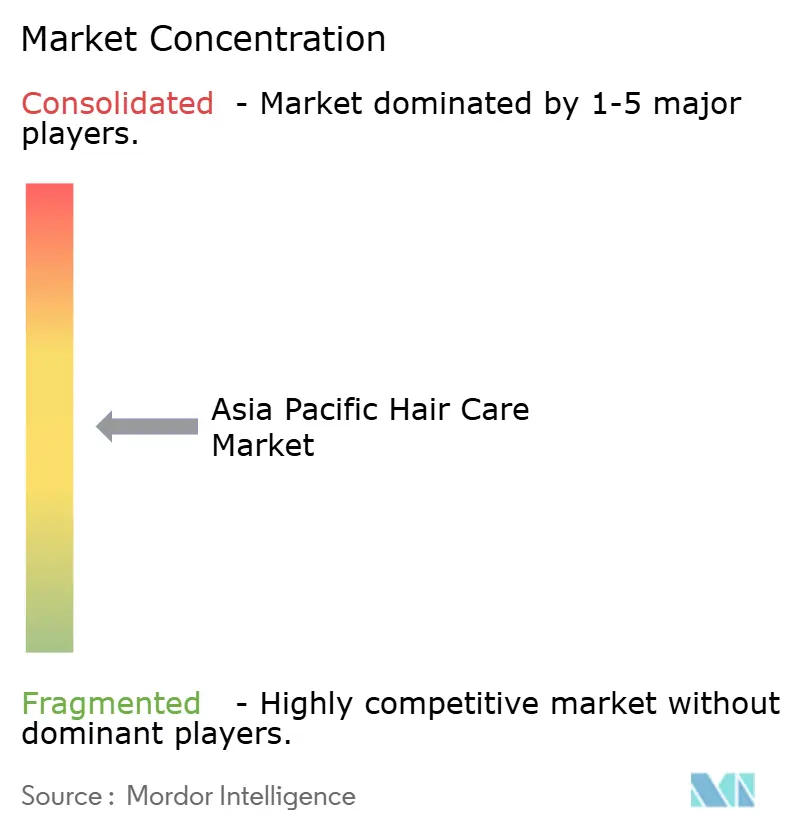
| Market Concentration | Medium |
Major Players *Disclaimer: Major Players sorted in no particular order Image © Mordor Intelligence. Reuse requires attribution under CC BY 4.0. | |
Asia-Pacific Hair Care Market Analysis by Mordor Intelligence
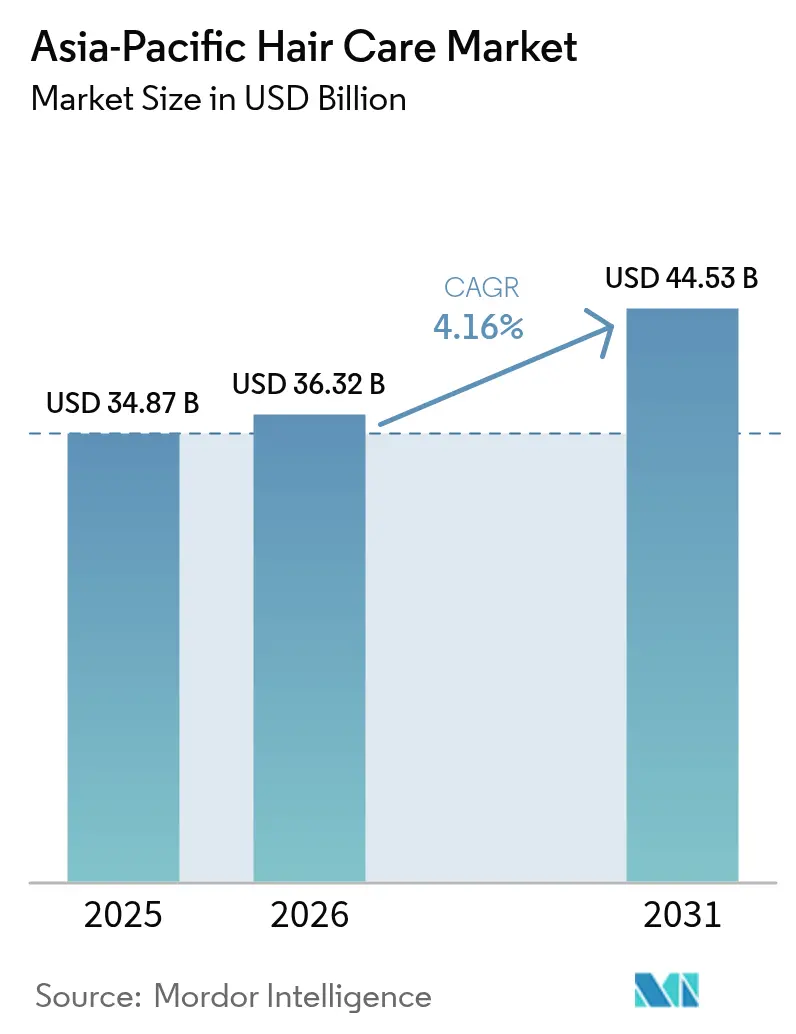
The Asia Pacific Hair Care Market size is expected to grow from USD 34.87 billion in 2025 to USD 36.32 billion in 2026 and is forecast to reach USD 44.53 billion by 2031 at 4.16% CAGR over 2026-2031. This growth trajectory reflects the region's evolving consumer preferences toward premium formulations and multifunctional products that address scalp health alongside traditional cleansing needs. The growth outlook reflects premiumization, multifunctional product adoption, and an accelerated pivot toward scalp-health solutions. China holds the lion’s share of regional revenue, supported by rising disposable incomes and sophisticated digital commerce ecosystems. South Korea is the fastest-growing national market due to strong innovation competencies and K-beauty’s cultural influence. Category momentum is most visible in conditioners, scalp-focused treatments, and professional-grade styling lines that address humidity and pollution challenges. Distribution continues to migrate online, with social commerce and AI-driven recommendations reshaping product discovery. Regulatory pressure surrounding microplastics and packaging waste is catalyzing innovation in biodegradable ingredients and recyclable formats, even as patent activity in hair-loss cosmetics surges.
Key Report Takeaways
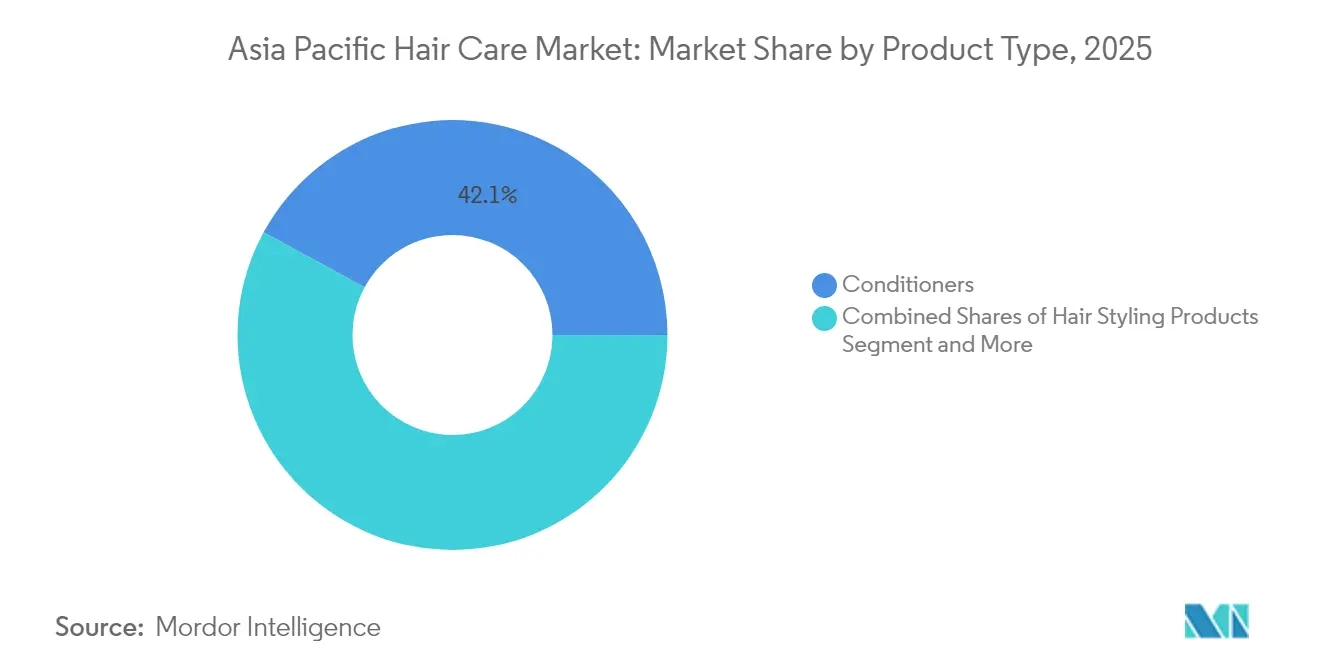
- By product type, conditioners led with 42.08% revenue share in 2025; hair styling products are projected to expand at a 5.03% CAGR through 2031.
- By category, conventional formulations commanded 78.30% of the Asia Pacific hair care market share in 2025, while natural and organic lines are advancing at a 6.33% CAGR to 2031.
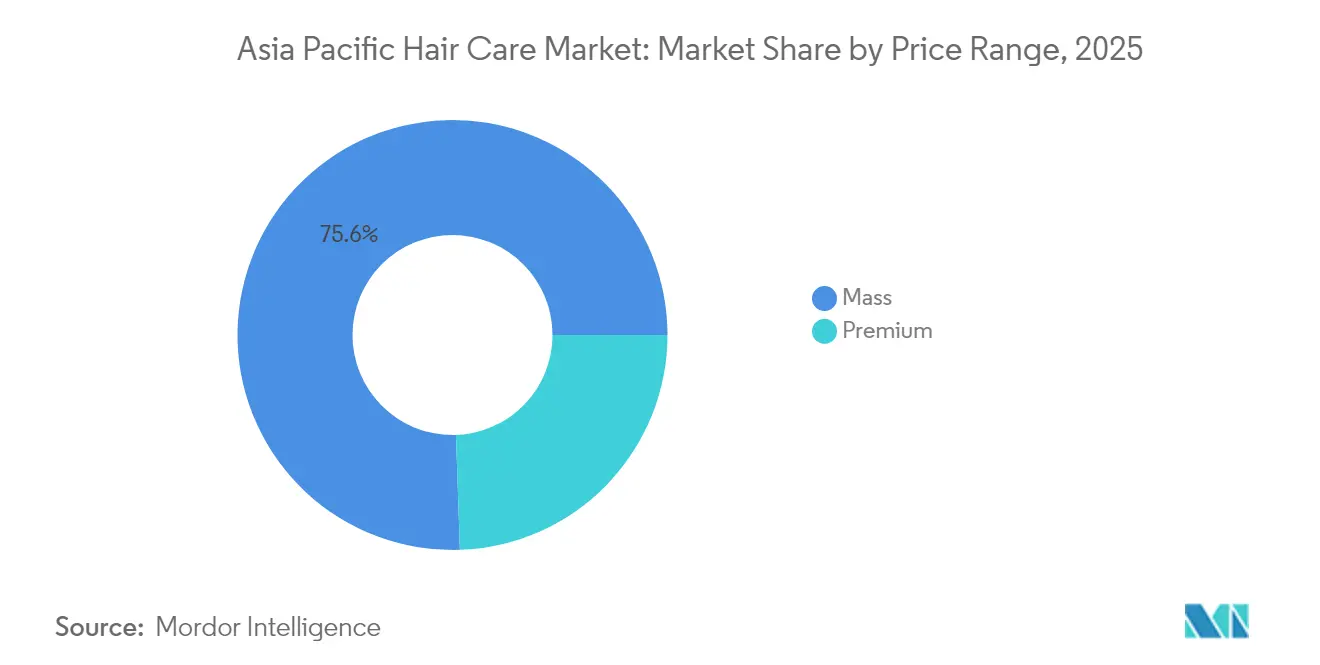
- By price range, the mass-market segment accounted for 75.55% of the Asia Pacific hair care market size in 2025; premium offerings are forecast to rise at a 5.74% CAGR to 2031.
- By distribution channel, supermarkets and hypermarkets held 33.22% share in 2025; online retail stores are set to grow at a 6.42% CAGR through 2031.
- By geography, China contributed 35.62% of regional revenue in 2025; South Korea is on track for a 5.76% CAGR to 2031.
Note: Market size and forecast figures in this report are generated using Mordor Intelligence’s proprietary estimation framework, updated with the latest available data and insights as of 2026.
Market Trends and Insights
Drivers Impact Analysis of Asia-Pacific Hair Care Market*
| Driver | (~) % Impact on CAGR Forecast | Geographic Relevance | Impact Timeline |
|---|---|---|---|
| Natural and Organic Ingredient Preference | +1.2% | Global, strongest in Australia, Japan, Singapore | Medium term (2-4 years) |
| Scalp Health and Dandruff Solution Demand | +1.5% | China, India, Japan core markets | Short term (≤ 2 years) |
| Social Media and Influencer Promotion Trends | +0.8% | South Korea, Thailand, Singapore urban centers | Short term (≤ 2 years) |
| Innovative Multifunctional Hair Care Solutions | +1.1% | Japan, South Korea, urban China | Medium term (2-4 years) |
| Rising Popularity of Hair Colorants | +0.7% | Japan, South Korea, urban APAC markets | Medium term (2-4 years) |
| Premium Hair Care and Luxury Product Growth | +1.0% | China, Japan, Australia, Singapore | Long term (≥ 4 years) |
| Source: Mordor Intelligence | |||
Natural and Organic Ingredient Preference
Consumer demand for natural and organic hair care formulations is reshaping product development strategies across Asia Pacific. This preference stems from rising awareness of synthetic ingredient risks and cultural affinity for traditional botanical remedies, particularly in markets like India and Thailand where Ayurvedic and herbal formulations command premium pricing. Japan leads per-capita hair care spending globally at JPY 5,470 annually, with over 40% of consumers prioritizing natural ingredients in their purchasing decisions. The trend is accelerating adoption of fermented ingredients, with companies like Wella incorporating high-purity squalane from skincare applications into hair treatments to address lipid replenishment needs. Regulatory frameworks in Australia and New Zealand increasingly favor certified organic formulations, creating competitive advantages for brands that achieve COSMOS, ECOCERT, or ACO certifications while maintaining performance standards comparable to conventional alternatives.
Scalp Health and Dandruff Solution Demand
The scalp care segment is experiencing unprecedented growth as consumers adopt "scalp-as-skin" treatment philosophies, driven by rising awareness of scalp microbiome health and its impact on hair quality. China's premium scalp care market expanded 190% to over 33 billion RMB, with Unilever's CLEAR brand launching the SCALPCEUTICALS PRO RANGE featuring three patented technologies targeting cellular-level scalp repair. This shift reflects deeper consumer understanding of scalp health's role in hair loss prevention, with nearly 90% of China's population reporting hair or scalp problems according to the 2023 National Scalp Health White Paper. Innovation focuses on combining traditional anti-dandruff actives like selenium disulfide with advanced delivery systems and scalp barrier repair technologies. The trend is particularly pronounced in aging demographics, where post-COVID hair loss concerns have elevated demand for preventive scalp treatments that address telogen effluvium and stress-related hair thinning issues.
Social Media and Influencer Promotion Trends
Digital marketing transformation is fundamentally altering hair care discovery and purchase patterns, with 60% of Asia Pacific consumers using social media for product discovery and 46% engaging with livestream shopping experiences. Instagram usage among beauty shoppers reaches 80% daily in Japan, while 62% turn to influencers for new product recommendations, creating powerful amplification effects for brands that master social commerce integration. China's beauty market, projected to reach USD 78 billion by 2025, increasingly relies on Douyin and XiaohongShu platforms where livestreaming accounts for approximately 10% of e-commerce sales by 2022. The Korean beauty influence extends beyond skincare into hair care, with K-beauty market dynamics driving adoption of multi-step hair routines and ingredient transparency. Social proof through user-generated content and authentic reviews has become essential for brand credibility, particularly among Gen Z and millennial consumers who prioritize brands with social and environmental commitments.
Innovative Multifunctional Hair Care Solutions
The convergence of skincare and hair care technologies is creating new product categories that address multiple concerns in single formulations, responding to consumer demand for simplified routines and enhanced value propositions. Asia Pacific consumers increasingly favor multifunctional cosmetics, with 57% in the region viewing multi-benefit products as good value according to GlobalData's 2024 Q3 Consumer Survey. Innovation examples include L'Oréal Paris Elseve 72H Moisture Filling Shampoo in Malaysia incorporating hyaluronic acid for scalp hydration, and anti-dandruff formulations combining salicylic acid with piroctone olamine for dual-action efficacy. Korean startup Polyphenol Factory's Grabity brand exemplifies this trend with LiftMax 308 technology delivering immediate 140% hair volume increase while providing anti-hair loss benefits through polyphenol complexes. The approach extends to packaging innovations, with brands adopting solid formats and waterless formulations that combine sustainability benefits with concentrated active delivery systems.
Restraints Impact Analysis of Asia-Pacific Hair Care Market*
| Restraint | (~) % Impact on CAGR Forecast | Geographic Relevance | Impact Timeline |
|---|---|---|---|
| Competition from Minimalist Hair Care Routines | -0.9% | Japan, South Korea, urban Australia | Short term (≤ 2 years) |
| Concerns Over Chemical Additives Rise | -0.7% | Australia, New Zealand, Singapore | Medium term (2-4 years) |
| Packaging Waste and Microplastic Environmental Concerns | -1.1% | Malaysia, Thailand, Indonesia, Philippines | Medium term (2-4 years) |
| High Brand Switching and Low Loyalty | -0.5% | China, India, emerging Asia-Pacific markets | Short term (≤ 2 years) |
| Source: Mordor Intelligence | |||
Competition from Minimalist Hair Care Routines
The minimalist beauty movement is challenging traditional multi-step hair care routines, particularly in mature markets where consumers are simplifying their daily regimens to focus on fewer, higher-quality products. This trend reflects broader lifestyle changes toward conscious consumption and time efficiency, with Japanese consumers increasingly adopting streamlined routines despite the country's historically complex beauty traditions. The shift impacts product categories differently, with basic shampoo and conditioner combinations gaining favor over specialized treatments, serums, and styling products. Brands are responding by developing concentrated formulations that deliver multiple benefits in single applications, though this approach risks commoditization and margin pressure. The trend is particularly pronounced among younger demographics who prioritize authenticity and sustainability over-elaborate routines, creating challenges for brands that have built portfolios around step-by-step regimens. Economic pressures in some markets are amplifying this trend, as consumers seek value through product consolidation rather than premium pricing for specialized solutions.
Packaging Waste and Microplastic Environmental Concerns
Environmental regulations targeting cosmetic packaging and microplastic ingredients are creating compliance costs and reformulation pressures across Asia Pacific markets. Southeast Asian countries face severe microplastic contamination, with studies showing Malaysia, Thailand, and Philippines in 'danger' or 'extreme danger' categories for polymer hazard indices due to personal care product contributions. Vietnam's Ho Chi Minh City alone releases an estimated 1.3 billion microbeads annually from facial and body scrubs, despite growing regulatory attention to marine plastic pollution. The European Union's microplastic restrictions, phasing out plastic microbeads through 2027-2035, are influencing Asia Pacific regulatory frameworks and forcing reformulation toward biodegradable alternatives like alginate, chitosan, and PLA-based substitutes. Compliance with Extended Producer Responsibility frameworks requires significant investment in sustainable packaging development, recycling infrastructure, and supply chain transparency, creating barriers for smaller brands while favoring established players with resources to navigate complex regulatory landscapes.
*Our forecasts treat driver/restraint impacts as directional, not additive. The impact forecasts reflect baseline growth, mix effects, and variable interactions.
Asia-Pacific Hair Care Market Segment Analysis
By Product Type:
Conditioners Drive Market While Styling Innovations AccelerateConditioners command 42.08% market share in 2025, reflecting their essential role in Asia Pacific hair care routines where humidity and pollution create heightened needs for protective and reparative formulations. The dominance stems from cultural preferences for smooth, manageable hair textures and growing awareness of cuticle protection benefits in tropical climates. Hair styling products emerge as the fastest-growing segment at 5.03% CAGR through 2031, driven by professional-grade formulations entering consumer markets and rising demand for humidity-resistant hold technologies. Noveon's introduction of Fixate Superhold polymer demonstrates this trend, providing superior humidity resistance specifically for Asian markets where high moisture conditions challenge traditional styling polymers.
Shampoo maintains steady market position despite commoditization pressures, with innovation focusing on specialized formulations like Unilever's CLEAR SCALPCEUTICALS PRO RANGE featuring patented selenium disulfide and piroctone olamine technologies. Hair loss treatment products benefit from aging demographics and stress-related hair concerns, particularly in markets like Korea where patent filings for hair-loss cosmetics lead globally at 42.9% of total applications. Hair colorants experience moderate growth as consumers seek salon-quality results at home, with innovations like sunlight-induced permanent dyeing using polydopamine offering eco-friendly alternatives to conventional chemical processes. Other product types including sprays, gels, serums, and masks capture growing market share through multifunctional positioning and premium ingredient integration.



By Category:
Conventional Products Dominate Despite Natural GrowthThe conventional/synthetic category maintains 78.30% market share in 2025, supported by established supply chains, proven efficacy profiles, and cost advantages that appeal to price-sensitive consumers across emerging Asia Pacific markets. However, natural/organic alternatives are expanding at 6.33% CAGR through 2031, driven by rising environmental consciousness and cultural preferences for traditional botanical ingredients. This growth reflects successful positioning of natural formulations as premium alternatives rather than direct substitutes, allowing brands to command higher margins while addressing sustainability concerns. Australia and Japan lead natural product adoption, with over 40% of Japanese consumers prioritizing natural ingredients despite the country's historically synthetic-focused beauty industry.
Innovation in natural formulations increasingly incorporates biotechnology applications, including fermented ingredients and plant stem cell technologies that deliver performance comparable to synthetic alternatives. The organic shampoo market specifically targets Asia Pacific as the fastest-growing region due to cultural affinity for herbal and Ayurvedic ingredients, particularly in India and Thailand where traditional medicine influences consumer preferences. Regulatory frameworks in developed markets favor certified organic formulations, creating competitive advantages for brands that achieve COSMOS, ECOCERT, or regional certifications while maintaining efficacy standards. The category evolution suggests a bifurcated market where conventional products serve mass market needs while natural alternatives capture premium segments and environmentally conscious demographics.
By Price Range:
Mass Market Stability Supports Premium ExpansionMass market products hold 75.55% market share in 2025, providing accessible hair care solutions across diverse income levels and maintaining volume growth through population expansion and urbanization trends. This segment benefits from established distribution networks, economies of scale in manufacturing, and brand recognition built over decades of market presence. Premium products accelerate at 5.74% CAGR through 2031, reflecting rising disposable incomes, aging demographics seeking advanced solutions, and premiumization trends that favor efficacy-driven formulations over basic cleansing products.
The premium segment increasingly incorporates advanced technologies like AI-powered personalization, biotechnology-derived actives, and clinical-grade formulations that justify higher price points through demonstrated efficacy. Japanese consumers lead global per-capita hair care spending at JPY 5,470 annually, creating a sophisticated market for premium innovations that combine traditional ingredients with modern delivery systems. Korean brands like Polyphenol Factory's Grabity demonstrate premium positioning through patented technologies and clinical validation, achieving secondary market prices up to USD 190 per bottle due to limited availability and proven performance. The price segmentation reflects market maturation where consumers increasingly differentiate between basic functional needs and advanced treatment solutions.
By Distribution Channel:
Digital Transformation Accelerates Retail EvolutionSupermarkets and hypermarkets maintain 33.22% market share in 2025, leveraging extensive physical presence, competitive pricing, and convenience factors that appeal to routine purchase behaviors. These channels benefit from high foot traffic, impulse buying opportunities, and the ability to showcase product ranges through in-store displays and promotions. Online retail stores emerge as the fastest-growing channel at 6.42% CAGR through 2031, driven by digital adoption, personalized recommendations, and subscription models that enhance customer retention. The shift reflects changing consumer behaviors where 46% use online shopping for better deals and 40% accept AI-powered product recommendations.
Social commerce integration transforms online retail effectiveness, with livestreaming accounting for 46% of purchase conversions and shoppable pins driving 45% of social media-influenced sales across Asia Pacific markets. Specialty stores maintain relevance through expert consultation, premium product curation, and experiential services that online channels cannot replicate, particularly for high-value treatments and professional-grade products. The channel evolution creates opportunities for brands that master omnichannel strategies, combining physical touchpoints with digital convenience and personalization capabilities. Indonesia's e-commerce regulations requiring imported products to comply with local notification and halal certification before online sale illustrate the regulatory complexity that brands must navigate in digital expansion.
Geography Analysis
China and South Korea Hair Care Market
China commands 35.62% market share in 2025, representing the single largest national market with projected revenue of USD 60.7 billion and accounting for nearly 70% of Asia Pacific regional growth through 2025. The market benefits from rising disposable incomes, premiumization trends, and sophisticated digital commerce infrastructure that enables livestreaming and social commerce integration. South Korea accelerates as the fastest-growing market at 5.76% CAGR through 2031, driven by innovation leadership in beauty technology, strong export performance, and cultural influence that extends K-beauty trends across the region.
APAC Hair Care Market
Japan maintains significant market presence despite demographic headwinds, with the highest per-capita spending globally creating opportunities for premium and anti-aging formulations. India and Southeast Asian markets including Thailand, Singapore, and the Philippines represent emerging growth opportunities where urbanization, rising incomes, and increasing beauty consciousness drive market expansion. Australia and New Zealand provide developed market dynamics with emphasis on natural and organic formulations, regulatory compliance, and sustainability credentials that influence broader regional trends.
East and ASEAN Hair Care Market
The geographic distribution reflects varying stages of market maturity, from China's sophisticated digital commerce ecosystem to emerging markets where basic infrastructure development supports volume growth. Vietnam's regulatory environment illustrates the evolving compliance landscape, with microplastic concerns driving policy development that may influence product formulation requirements across the region. The Asia-Pacific region demonstrates significant disparities in market development, with countries like Japan and South Korea showcasing advanced distribution networks and digital integration, while nations such as Indonesia and Philippines focus on expanding their basic retail infrastructure. These market variations create distinct opportunities and challenges for industry participants, requiring tailored strategies for each geographic segment.
Regulatory Landscape
Hair care products across Asia-Pacific largely operate under the ASEAN Cosmetic Directive (ACD) framework and country-level implementations that set ingredient, labeling, and notification requirements. In ASEAN markets, 2026 updates to the ACD annexes (covering prohibited/restricted substances, UV filters, preservatives, and colorants) and national circulars such as Malaysia NPRA Circular No. 1/2026 and the Philippines FDA Circular No. 2026-0001 reinforce the need for ongoing formula and claims compliance management, particularly for colorants and preservative systems used in shampoos, conditioners, and scalp treatments.
China remains a major regulatory anchor for the region, with the National Medical Products Administration (NMPA) issuing multiple 2026 actions that affect innovation and cross-border trade. NMPA Announcement No. 48 of 2026 updates safety and technical standards for cosmetics with new or revised substance limits (effective July 1, 2026), while NMPA Announcement No. 59 of 2026 revises registration and filing requirements for new cosmetic ingredients (effective July 15, 2026). On the trade side, the General Administration of Customs (GACC) issued Announcement No. 61 of 2026 to standardize inspection and quarantine requirements for imported and exported cosmetics (effective December 1, 2026), raising the importance of documentation readiness for companies serving China via regional manufacturing hubs.
Competitive Landscape
The Asia Pacific hair care market exhibits moderate fragmentation, creating space for both established multinationals and innovative regional players to compete through differentiated strategies. Market leaders leverage global scale advantages in R&D investment, regulatory compliance, and distribution network development, while emerging companies exploit niche opportunities through specialized formulations, direct-to-consumer models, and technology-enabled personalization.
Patent activity reveals strategic focus areas, with Korea leading global hair-loss cosmetic filings at 42.9% share, indicating substantial R&D investment in functional ingredients and biotechnology applications that challenge traditional approaches. Technology adoption is reshaping competitive dynamics, with AI-powered diagnostics, personalized formulation platforms, and social commerce integration becoming essential capabilities for market success.
Companies like Opal Cosmetics Group demonstrate this evolution through AI-enabled "Skinification" approaches that provide personalized scalp analysis and product recommendations, while Korean startups like Polyphenol Factory achieve premium positioning through patented polyphenol technologies and clinical validation. Opportunities exist in sustainable packaging solutions, microplastic-free formulations, and biotechnology-derived actives that address regulatory pressures while delivering superior performance. The competitive landscape increasingly rewards companies that combine scientific innovation with sustainability credentials and digital marketing expertise, creating barriers for traditional players that rely solely on brand heritage and distribution scale.
Asia-Pacific Hair Care Industry Leaders
L'Oréal S.A.
Kao Corporation
Procter & Gamble
Unilever
Johnson & Johnson
- *Disclaimer: Major Players sorted in no particular order
Asia-Pacific Hair Care Market Companies Covered in this Report
- L'Oréal S.A.
- Unilever
- Procter & Gamble
- Kao Corporation
- Henkel AG & Co. KGaA
- Shiseido Company, Limited
- Beiersdorf AG
- Johnson & Johnson
- Amorepacific Corporation
- Himalaya Global Holdings Ltd.
- Mandom Corporation
- Kose Corporation
- Dabur India Ltd
- Marico Limited
- The Estée Lauder Companies Inc.
- Revlon Inc.
- Hoyu Co. Ltd
- Church & Dwight Co Inc
- Avon Products Inc
- Natura &Co Holding S.A.

Market Opportunities and Future Outlook
Scalp health and functional hair and scalp solutions continue to open premium whitespace in Asia-Pacific, supported by visible consumer-problem incidence and brand activity. China provides a demand anchor, with the premium scalp care market cited as having expanded 190% to over 33 billion RMB and nearly 90% of the population reporting hair or scalp problems per the 2023 National Scalp Health White Paper, pushing brands toward higher-efficacy anti-dandruff, hair fall, and microbiome-positioned regimens. At the same time, the region is absorbing tighter compliance requirements for higher-risk categories such as hair colorants, including India CDSCO direction in June 2026 requiring hair color products to comply with BIS specifications (including IS 4707 Part 1 and Part 2) for safety, purity, and labeling, and South Korea MFDS draft amendments (January 2026) targeting hair dye ingredient lists and related test methods. Together, these steps reward suppliers and brands that can industrialize compliant formulations, support evidence-backed claims, and run fast reformulation cycles.
Manufacturing and ingredient supply investments point to active localization and capacity build-out, supporting opportunities for contract manufacturers, specialty ingredient suppliers, and brands scaling regionally. Clariant expanded production capabilities at Daya Bay, China (November 2025), adding reactor capacity relevant to mild surfactants used in hair cleansing and scalp-care formats, aligning with the market shift toward gentler and multifunctional products. On the OEM/ODM side, investment and capacity announcements in South Korea and Southeast Asia, including C&C Internationals large-scale plant investment agreement (November 2025) and Cosmaxs new Thailand facility (targeted full-scale operations in September 2026), indicate a platform for faster product rollouts across ASEAN and nearby markets. For branded players, these moves align with online-first distribution growth and social commerce discovery dynamics already visible across Asia-Pacific, which supports quicker testing of premium scalp treatments, humidity-resistant styling lines, and compliant hair color innovations at scale.
Recent Industry Developments in Asia-Pacific Hair Care Market
- July 2026: Kao Corporation announced a plan to build Liese into Asia’s No. 1 fashion hair color brand, with a new series rollout starting in August 2026 across seven Asian countries and regions. The announcement positions hair color as a strategic growth pillar and points to deeper regional portfolio localization in markets where at-home coloring is gaining traction.
- May 2026: Marico Limited expanded Parachute Advansed into the hair cleansing category with the launch of Parachute Advansed Protein Shampoo in India. Extending a trusted hair-oil-led franchise into shampoo supports cross-category bundling and helps the brand capture a larger share of routine wash occasions in the mass segment.
- February 2024: Kao Corporation launched its new brand melt as part of a broader business transformation to build its hair care business into a growth driver. Introducing a distinct hair care platform supports premiumization and creates room for technology-led product upgrades across core routines such as cleansing, conditioning, and treatment.


Asia-Pacific Hair Care Market Report Scope and Research Methodology
Market Definition and Coverage
For this study, the Asia Pacific hair care market is defined as the retail value of products used for cleansing, conditioning, coloring, styling, and treating hair, sold through offline and online channels across Asia Pacific.
Scope exclusions: This sizing excludes salon service revenue, hair tools and electrical appliances, and prescription drugs for scalp or hair conditions.
Segments Covered in This Report
- By Product Type
- Shampoo
- Conditioner
- Hair loss treatment products
- Hair Colorants
- Hair Styling Products
- Other Product Types
- By Category
- Natural/Organic
- Conventional/Synthetic
- By Price Range
- Mass
- Premium
- By Distribution Channel
- Supermarkets/ Hypermarkets
- Specialty Stores
- Online Retail Stores
- Other Distribution Channels
- By Geography
- China
- India
- Japan
- Australia
- New Zealand
- South Korea
- Thailand
- Singapore
- Rest of Asia-Pacific
Data Sources, Market Sizing, and Validation
Desk Research
Desk research started by mapping the category boundaries and the country coverage, and then collecting reference indicators that link to demand. We relied on public sources such as national statistics offices in key Asia Pacific countries, UN Comtrade trade statistics, World Bank macro series, OECD consumer and retail indicators, and published notices from cosmetics regulators where available.
After the public data was organized, it was cross-checked with company annual reports, investor presentations, and brand portfolio disclosures to understand how revenue is reported across hair care lines and channels. In addition, our analysts used paid subscriptions for company financials and intelligence, patent databases, and a shipment-level import and export dataset to sanity check supplier presence and cross-border flows for selected product groups. These desk sources are illustrative, and we also used other public and paid references to fill gaps, validate assumptions, and clarify open points.
Primary Interviews and Surveys
Primary work was used to pressure-test where desk indicators were not enough to explain category outcomes, including channel mix shifts, pricing ladders, and how quickly consumers move from mass to premium and treatment-led products. We spoke with manufacturers, distributors, retailers, and industry specialists across major Asia Pacific markets, then compared country patterns and normalized them into one regional view.
Distribution of primary research fieldwork respondents
| Company type | Respondent position |
|---|---|
| Top tier: 25% | CXOs: 12% |
| Mid tier: 55% | Functional/Unit leaders: 40% |
| Smaller Players: 20% | Managers: 48% |
Market-Sizing & Forecasting
Market sizing was built using a top-down demand pool reconstruction, where retail spending patterns were converted into category value by applying hair care penetration, per capita usage, and observable price ladders at the country level, followed by a roll-up to Asia Pacific. The totals were then corroborated with selective bottom-up checks, such as sampled brand and channel price points multiplied by expected volumes, and supplier revenue disclosures where product reporting was clear.
A few practical inputs that were used in the model include population by age bands, urbanization and disposable income direction, modern trade and e-commerce share progression, observed unit price inflation for mass and premium ranges, and the adoption trend of treatment and scalp-care routines. When a country had thin public datapoints for a sub-category, the gap was handled by using proxy ratios from comparable markets and then validating the direction with interview feedback before it was locked.
For forecasting, scenario analysis was used because pricing, channel shifts, and premiumization move at different speeds across countries. Each scenario was tied back to a small set of drivers (income, channel mix, and pricing) that primary respondents were comfortable signing off on, which kept the forward curve realistic and explainable.
Data Validation & Update Cycle
Outputs were validated through a sequence of checks, starting with internal consistency tests across countries, channels, and product groups, and then moving to variance reviews against independent signals such as retail trade direction, import intensity for selected items, and company commentary on category growth. When the model showed an unusual jump in a country or a sharp price swing, the assumptions were reopened and, where needed, experts were re-contacted to confirm what changed and why.
Before sign-off, the full workbook is reviewed in more than one analyst pass so calculation logic, unit handling, and currency conversions are aligned across the time series. Reports are refreshed annually, and interim updates are triggered when material events occur, such as regulatory changes that affect packaging and formulation, or sudden channel disruptions. Right before delivery, a final update sweep is done so the client receives the most current view available.
Mordor Intelligence's Asia Pacific Hair Care Market Market Size Compared Against Other Published Estimates
Published market values for Asia Pacific hair care can differ even when the same geography name is used, because the product boundary, the year basis, and the way pricing is carried forward are not always consistent. Differences also show up when one estimate leans more on retail sell-out signals, while another leans more on production and trade proxies.
The key gap drivers we usually see are whether professional salon-linked revenue is included, how online channel growth is assumed to flow into total value, and whether pricing is modeled as a single inflation factor or is separated into mass and premium price ladders. Currency timing also matters, since countries in the region can move differently in a given year, and that changes the USD total even when local growth looks steady.
Benchmark comparison
| Source | Market Size | Gaps in Research Methodology |
|---|---|---|
| Mordor Intelligence | USD 34.87 B (2025) | |
| Regional Consultancy A | USD 34.20 B (2024) | Uses an earlier base year and a different inflation carry-forward, and the category basket is not clearly separated between retail hair care and adjacent professional or service-linked spend in all countries. |
| Trade Journal B | USD 47.93 B (2030) | Shows a longer-horizon projection with a higher growth curve, and the method appears to apply a single regional CAGR without rebalancing country-level channel mix and price ladder shifts year by year. |
The table shows that the spread is mostly explained by year selection and how the category boundary is drawn. In Mordor Intelligence's model, only retail product sales across core hair care categories are counted in USD terms by country before rolling up, which reduces double counting that can happen when professional activity and retail products are blended. With country-by-country drivers kept visible, the final number stays traceable to clear variables and can be repeated when new inputs arrive.


Key Questions Answered in the Report
What is the current value of the Asia-Pacific hair care market?
The region’s market value is USD 36.32 billion in 2026.
Which product type generates the most revenue?
Conditioners lead, accounting for 42.08% of category sales in 2025.
Which country is growing fastest in hair care sales?
South Korea is forecast to grow at a 5.76% CAGR through 2031.
How big is the premium segment relative to mass products?
Premium offerings represent 24.45% of sales and are expanding at a 5.74% CAGR, outpacing mass-market growth.
Page last updated on:





