
Argentina Pet Veterinary Diets Market Size and Share
Market Overview
| Study Period | 2021 - 2032 |
|---|---|
| Forecast Data Period | 2027 - 2032 |
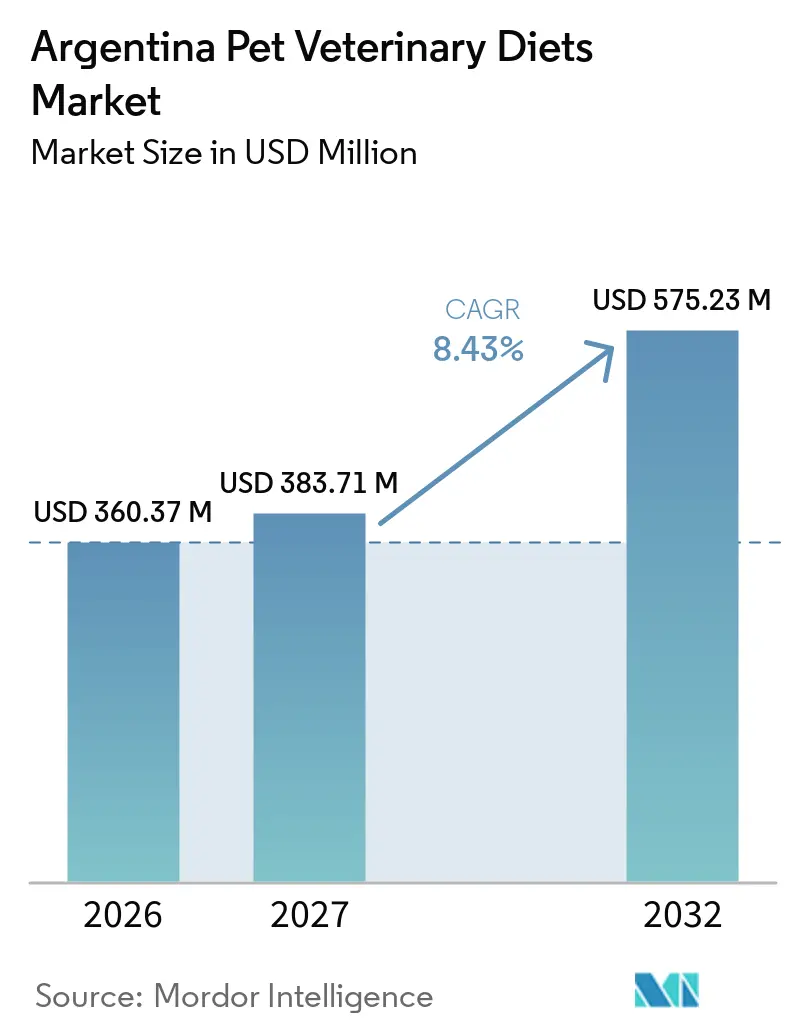
| Base Year Market Size (2026) | USD 360.37 Million |
| Market Size (2027) | USD 383.71 Million |
| Market Size (2032) | USD 575.23 Million |
| Growth Rate (2027 - 2032) | 8.43 % |
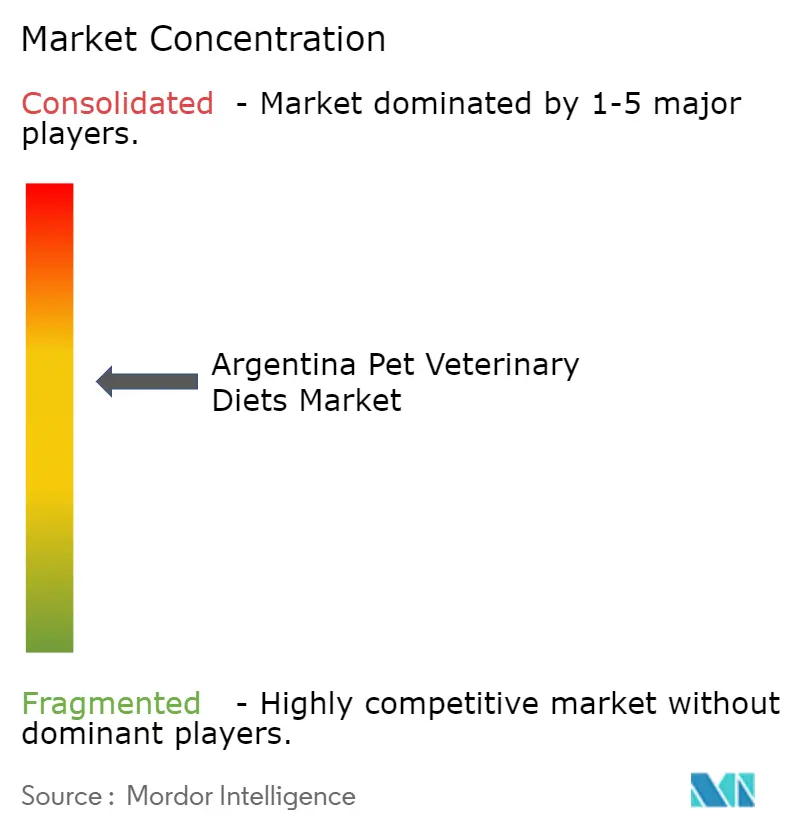
| Market Concentration | Medium |
Major Players *Disclaimer: Major Players sorted in no particular order Image © Mordor Intelligence. Reuse requires attribution under CC BY 4.0. | |
Argentina Pet Veterinary Diets Market Analysis by Mordor Intelligence
The Argentina pet veterinary diets market was valued at USD 360.37 million in 2026 and is projected to grow from USD 383.71 million in 2027 to USD 575.23 million by 2032, at a CAGR of 8.43% from 2027 to 2032. This growth is driven by the increasing adoption of prescription-based nutritional management for chronic pet health conditions, including renal disorders, urinary tract diseases, obesity, diabetes, digestive sensitivities, and dermatological issues. Veterinary clinics play a key role in influencing product selection, driving demand for condition-specific diets with clinically supported formulations. Additionally, the market benefits from rising awareness of preventive pet healthcare, the growing acceptance of therapeutic nutrition for long-term disease management, and expanded availability through veterinary and specialty retail channels. Regulatory oversight of animal feed products is also promoting higher product quality and compliance standards, while local manufacturing capabilities enhance supply stability and nationwide product accessibility.
Key Report Takeaways
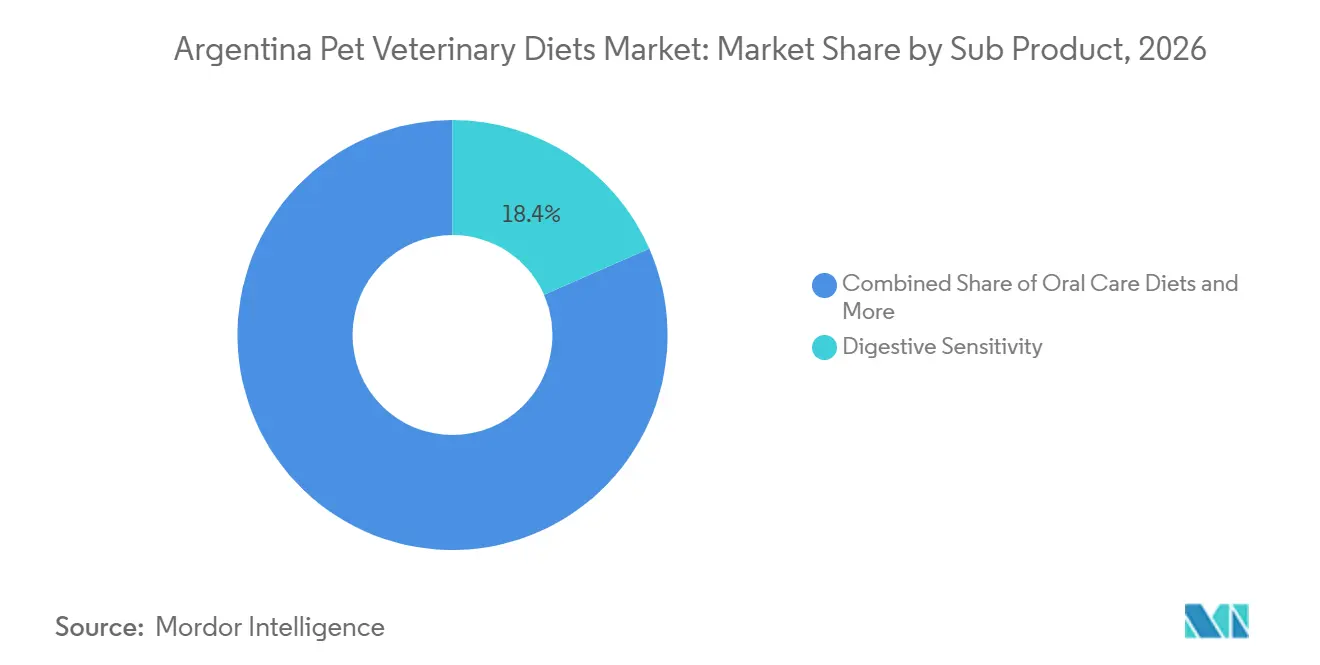
- By sub product, the Argentina pet veterinary diets market share for the digestive sensitivity segment accounted for the largest 18.4% in 2026, while oral care diets are forecast to grow at the fastest CAGR of 9.5% from 2027 to 2032.
- By pets, dogs held the largest share at 58.1% in 2026, while the Argentina pet veterinary diets market size for cats is forecast to grow at the fastest CAGR of 10.2% from 2027 to 2032.
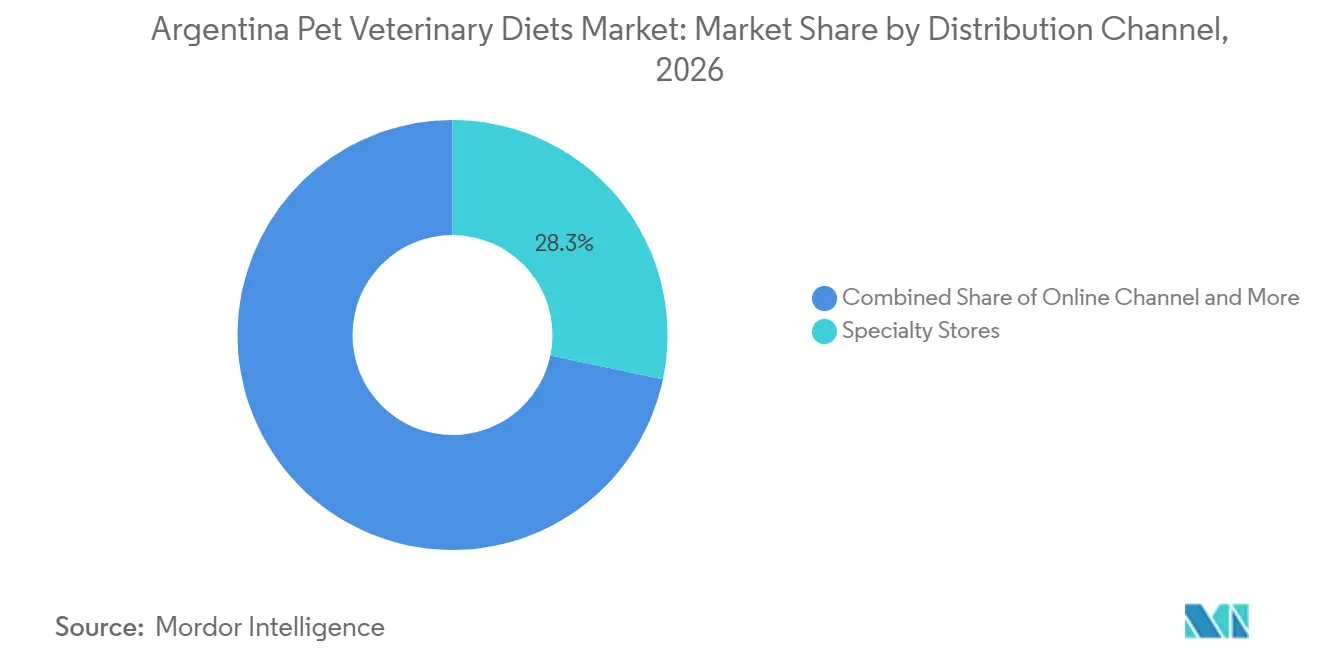
- By distribution channel, specialty stores led with the largest share at 28.3% in 2026, while the online channel was projected to grow at the fastest CAGR of 11.5% from 2027 to 2032.
Note: Market numbers in this report are based on Mordor Intelligence's proprietary estimation framework, which combines nine months of actuals with Q4 projections for base year 2026.
Argentina Pet Veterinary Diets Market Trends and Insights
Drivers Impact Analysis*
| Driver | (~) % Impact on CAGR Forecast | Geographic Relevance | Impact Timeline |
|---|---|---|---|
| Rising Chronic Disease Screening and Vet-Led Nutrition Adoption | +2.1% | Buenos Aires, Ciudad Autónoma de Buenos Aires (CABA), and Gran Buenos Aires (GBA), with spillover to Córdoba and Rosario | Long term (≥ 4 years) |
| Expansion of Prescription Diet Availability in Clinic and Direct-to-Consumer Channels | +1.9% | Buenos Aires metropolitan area, with digital reach extending to all provinces | Medium term (2-4 years) |
| Premiumization of Pet Nutrition in Urban Households | +1.6% | Ciudad Autónoma de Buenos Aires (CABA), Gran Buenos Aires (GBA), Córdoba, and Rosario | Medium term (2-4 years) |
| Local Manufacturing and Formulation Agility Reducing Import Dependence | +1.3% | National, with production advantages centered in domestic manufacturing hubs | Long term (≥ 4 years) |
| Science-Led Launches in Wet Prescription Diets | +1.0% | Major urban centers with specialist clinic access | Short term (≤ 2 years) |
| Rising Preference for Premium and Veterinarian-Recommended Pet Nutrition | +0.8% | Buenos Aires metropolitan area, Córdoba, and Rosario | Medium term (2-4 years) |
| Source: Mordor Intelligence | |||
Rising Chronic Disease Screening and Vet-Led Nutrition Adoption
Increasing awareness of chronic health conditions in companion animals is prompting veterinarians to focus more on early diagnosis and nutrition-based disease management. Therapeutic nutrition is being progressively integrated into treatment plans for conditions such as gastrointestinal disorders, renal diseases, food sensitivities, obesity, and other chronic health issues, indicating a growing emphasis on preventive and supportive care. Pet owners are increasingly accepting veterinarian-recommended dietary interventions to enhance health outcomes and improve the quality of life for their pets. In Argentina, this shift in companion animal healthcare practices is driving demand for prescription and condition-specific veterinary diets, contributing to steady market growth.
Expansion of Prescription Diet Availability in Clinic and Direct-to-Consumer Channels
Increasing digital integration between veterinary services and online retail is improving access to prescription pet diets across Argentina. Currently, Nestlé Purina Argentina enables pet owners to purchase Purina Pro Plan Veterinary Diets through its Purina Vet Direct platform using a Veterinarian ID (Vet ID) for prescription verification, with direct home delivery supporting access to therapeutic nutrition[1]. This digital model improves treatment continuity, reduces reliance on repeated clinic visits for prescription diet refills, and extends the availability of specialized nutrition beyond major urban centers. As omnichannel distribution expands, adoption of prescription veterinary diets is anticipated to increase across the Argentine market.
Local Manufacturing and Formulation Agility Reducing Import Dependence
Regulatory updates aimed at improving operational flexibility for domestic manufacturers in Argentina are driving growth. In December 2024, the Servicio Nacional de Sanidad y Calidad Agroalimentaria (SENASA) implemented Resolution 1415/2024, which introduced a registration system based on a sworn declaration for animal feed products, including pet veterinary diets, and their establishments. This system replaces the earlier approval framework[2]. The new approach assigns greater responsibility to operators, enabling products to enter the market under a compliance-based system, with subsequent verification and inspection. This regulatory change allows manufacturers to adapt more efficiently to formulation updates and market demands, ensuring better product availability within specialized veterinary diet categories.
Rising Preference for Premium and Veterinarian-Recommended Pet nutrition
Rising consumer preference for higher-quality pet nutrition is supporting demand for premium veterinary diets in Argentina. Pet owners are increasingly prioritizing nutritional quality, veterinarian recommendations, and functional health benefits when selecting pet food. According to the Pet Food Shopper Argentina 2026 study by Triplethree International, published by Petfood Industry, the "Functional-Economic Canine Shopper" segment aspires to purchase premium pet food, places strong trust in veterinarians, and values functional nutrition despite economic constraints[3]. This evolving purchasing behavior reflects a growing willingness among Argentine households to invest in premium and clinically formulated pet nutrition, supporting the adoption of veterinary prescription diets.
Restraints Impact Analysis*
| Restraint | (~) % Impact on CAGR Forecast | Geographic Relevance | Impact Timeline |
|---|---|---|---|
| High Relative Price Versus Standard Pet Food | -1.8% | National, with the strongest effect in lower-income provinces and peri-urban areas of Gran Buenos Aires (GBA) | Medium term (2-4 years) |
| Economic Volatility and Spending Downtrading | -1.5% | National, with sharper pressure in interior provinces and lower-income urban belts | Short term (≤ 2 years) |
| Limited Veterinary Prescription Reach Outside Major Urban Centers | -0.9% | Interior provinces including Tucumán, Salta, Misiones, Chaco, and Corrientes | Long term (≥ 4 years) |
| Low Wet Therapeutic Diet Penetration and Limited Trial Rates | -0.7% | National, especially in areas with limited specialist retail | Medium term (2-4 years) |
| Source: Mordor Intelligence | |||
Limited Veterinary Prescription Reach Outside Major Urban Centers
The market is primarily concentrated in urban areas with well-established small-animal clinical infrastructure. In regions outside major cities, the availability of prescription diets is limited due to a lower number of companion animal specialists and underdeveloped specialty retail channels. Consequently, access to these diets depends not only on pet owners' willingness to purchase but also on veterinarians' ability to accurately diagnose and manage dietary plans. This disparity is particularly evident in interior provinces, where clinic density is lower, and pet care spending tends to be less focused on premium products. While digital authorization has the potential to enhance access over time, it cannot fully substitute the need for in-person diagnosis and ongoing case management.
Low Wet Therapeutic Diet Penetration and Limited Trial Rates
The limited availability of wet therapeutic diets and low consumer familiarity with these formulations continue to restrain the growth of Argentina's veterinary diets market. Dry pet food remains the preferred feeding format, limiting opportunities for veterinarians and manufacturers to promote wet prescription diets despite their clinical benefits for hydration, palatability, and treatment compliance. Manufacturers continue to prioritize dry product development, resulting in a narrower range of wet therapeutic options across veterinary and retail channels. This imbalance reduces product visibility, discourages trial among pet owners, and slows the adoption of specialized wet veterinary diets, constraining overall market expansion.
*Our forecasts treat driver/restraint impacts as directional, not additive. The impact forecasts reflect baseline growth, mix effects, and variable interactions.
Segment Analysis
By Sub Product: Digestive Sensitivity Leads, Oral Care Grows Fastest
Digestive sensitivity accounted for the largest 18.4% of Argentina pet veterinary diets market share in 2026. This segment benefits from the critical role of nutritional intervention in managing chronic gastrointestinal disorders, food intolerances, and nutrient absorption issues in companion animals. Therapeutic digestive formulations are widely recommended for their compatibility with long-term treatment plans and daily feeding routines, which cause minimal disruption. Veterinary professionals often utilize dietary management as a primary or complementary approach for gastrointestinal conditions, ensuring consistent demand. The segment's strong clinical familiarity, extensive product availability, and recurring purchase patterns further solidify its position within the therapeutic nutrition market.
Oral care diets are projected to grow at the fastest CAGR, 9.5%, from 2027 to 2032. This growth is driven by increasing awareness of the link between dental health and overall animal wellness, prompting veterinarians to recommend preventive nutritional solutions alongside routine dental care. Specialized formulations designed to reduce plaque buildup and support oral hygiene are gaining prominence in companion animal healthcare programs. Additionally, manufacturers are expanding their condition-specific nutrition portfolios beyond traditional renal and digestive applications, enhancing awareness of oral health management through diet. This trend is reinforcing the importance of oral care nutrition within therapeutic feeding strategies.

By Pets: Dogs Lead While Cats Gain Ground
Dogs accounted for the largest share, at 58.1%, in 2026. This dominance is attributed to the broader range of clinical conditions commonly managed with therapeutic nutrition, including gastrointestinal disorders, renal disease, obesity, food sensitivities, urinary conditions, and metabolic disorders. Canine patients benefit from a wider selection of prescription diet formulations across multiple health categories, which supports higher product utilization. Additionally, veterinarians frequently integrate nutritional management into long-term canine treatment protocols, driving demand for specialized diets. The extensive availability of therapeutic solutions and the diverse healthcare needs of dogs continue to reinforce their leading position in the prescription nutrition market.
The Argentina pet veterinary diets market size for cats is projected to grow at the fastest CAGR of 10.2% from 2027 to 2032. This growth is driven by a growing veterinary focus on feline-specific conditions in which nutritional management significantly impacts treatment outcomes. Key areas contributing to the adoption of therapeutic diets for cats include urinary tract health, kidney disease management, digestive disorders, and weight control. Longer lifespans and heightened awareness of preventive healthcare are also promoting the consistent use of prescription nutrition throughout the animal care journey. As specialized feline formulations continue to expand, therapeutic feeding is becoming an integral part of companion animal healthcare.
By Distribution Channel: Specialty Stores Lead as Online Channel Reshapes Prescription Fulfillment
Specialty stores held the largest 28.3% share in 2026. This dominance is attributed to the advisory-driven nature of therapeutic nutrition, where product selection often requires detailed explanations, condition-specific guidance, and alignment with veterinary recommendations. These stores typically offer a wider range of prescription diet options compared to conventional retail channels and provide an environment tailored to specialized healthcare products. Pet owners value the availability of knowledgeable staff and targeted nutritional solutions, particularly when managing chronic health conditions in animals. The combination of extensive product offerings, educational support, and service-oriented retailing reinforces the critical role of specialty stores in the distribution of therapeutic nutrition.
The online channel is forecast to grow at the fastest CAGR of 11.5% from 2027 to 2032. Digital platforms are increasingly significant in therapeutic nutrition as they facilitate repeat purchases and enhance access to specialized products across broader geographic regions. Online purchasing supports long-term treatment adherence by streamlining the refill process for pet owners managing chronic conditions. Features such as subscription programs, automated replenishment options, and integrated prescription verification systems further boost the appeal of digital fulfillment. As omnichannel healthcare ecosystems evolve, online distribution is solidifying its role in the delivery of veterinary nutritional products.
Geography Analysis
The Buenos Aires metropolitan area remains the leading center for therapeutic pet nutrition adoption due to its concentration of veterinary services, specialty pet retailers, and higher-value companion animal healthcare spending. The region benefits from stronger access to advanced diagnostics, specialist veterinary care, and prescription nutrition recommendations, creating favorable conditions for long-term therapeutic diet utilization. It also serves as the primary launch market for new veterinary nutrition products because manufacturers and distributors can reach a dense base of companion animal owners through established clinical and retail networks. The combination of healthcare accessibility and premium purchasing behavior continues to support market development across the metropolitan area.
Córdoba and Rosario represent the second tier of demand, supported by expanding urban pet ownership and improving access to specialized veterinary healthcare services. These cities are increasingly important for the distribution of prescription nutrition products because they connect major metropolitan demand with broader regional markets. Growing awareness of preventive animal healthcare and chronic disease management is encouraging wider adoption of therapeutic feeding programs. Veterinary clinics and specialty retail outlets in these urban centers are also strengthening product availability and owner education, helping expand the reach of condition-specific nutritional solutions beyond the country's primary commercial hub.
Interior provinces such as Mendoza, Tucumán, Salta, Misiones, Chaco, Corrientes, Formosa, Jujuy, and parts of Patagonia remain underpenetrated in therapeutic pet nutrition despite a substantial companion animal population. According to a 2026 Argentine pet ownership study reported by All Pet Food, 6 out of 10 pet-owning households in the country have one dog, highlighting the broad geographic presence of companion animals beyond major metropolitan centers. While this creates a sizeable addressable base for veterinary diets, access to specialized veterinary services and prescription nutrition products remains more limited in many provincial markets. Consequently, therapeutic diet adoption continues to be concentrated in larger urban areas with stronger clinical and retail infrastructure.
Competitive Landscape
The market is moderately consolidated in 2026, with key participants including Nestlé S.A., Mars, Incorporated, Hill's Pet Nutrition, Inc. (Colgate-Palmolive Company), Alican Alimentos S.A., and Virbac S.A., operating across veterinary nutrition and therapeutic pet care categories. Competition is influenced by factors such as clinical credibility, relationships with veterinarians, product quality, and the availability of condition-specific nutritional solutions. Global players benefit from established prescription diet portfolios, robust research capabilities, and strong veterinary engagement programs, while regional companies capitalize on local market expertise and distribution networks. The competitive landscape is shaped by delivering scientifically validated nutritional solutions that address specific health conditions and support long-term treatment adherence.
Product innovation remains a critical competitive strategy as manufacturers aim to meet increasingly complex clinical needs through specialized nutrition. Companies are moving beyond traditional single-condition diets to develop formulations addressing multiple concurrent health concerns, aligning with evolving veterinary treatment practices. Competitive differentiation increasingly hinges on factors such as scientific validation, therapeutic efficacy, palatability, and long-term treatment compliance. Additionally, digital veterinary support tools, client education resources, and prescription management platforms are gaining importance as they enhance veterinarian engagement and improve refill continuity. These tools enable suppliers to strengthen relationships with veterinary clinics and companion animal owners.
Product innovation and clinically targeted nutritional therapies are intensifying competition in Argentina's pet veterinary diets market. Companies with broader therapeutic portfolios are better positioned to address complex health conditions while expanding their presence through veterinary prescription channels. In 2026, Hill's Pet Nutrition, Inc. (Colgate-Palmolive Company) introduced Prescription Diet k/d + Derm Complete for dogs and Prescription Diet k/d + z/d Hydrolyzed for cats, expanding renal and dermatological nutrition solutions for pets with concurrent kidney disease and skin sensitivities. These additions enhance the company's specialized veterinary diet portfolio available in the global market, including Argentina, reinforcing its competitive position and supporting the adoption of advanced therapeutic nutrition across the market.
Argentina Pet Veterinary Diets Industry Leaders
-
Nestlé S.A.
-
Mars, Incorporated
-
Hill's Pet Nutrition, Inc. (Colgate-Palmolive Company)
-
Alican Alimentos S.A.
-
Virbac S.A.
- *Disclaimer: Major Players sorted in no particular order
Recent Industry Developments
- June 2026: Hill's Pet Nutrition, Inc. (Colgate-Palmolive Company), introduced Prescription Diet k/d + Derm Complete for dogs and Prescription Diet k/d + z/d Hydrolyzed for cats. These products expand renal and dermatological diet solutions for pets with concurrent kidney disease and skin sensitivities. This launch strengthens the company's therapeutic nutrition portfolio in specialized veterinary diets and targets veterinary prescription channels in Argentina.
- June 2025: Mars partnered with Big Idea Ventures, Bühler Group, AAK AB, and Givaudan SA to launch the Next Generation Pet Food Innovation Program, an initiative focused on advancing sustainable pet food innovation through novel ingredients, sustainable fats and proteins, and innovative processing technologies.
- March 2025: Cooperativa Agrícola Ganadera Limitada Guillermo Lehmann entered Argentina’s pet food market by launching its LOKAL brand and inaugurating a pet food manufacturing facility in San Jerónimo Norte, Santa Fe, Argentina. The project focuses on producing dry food for dogs and cats.
Argentina Pet Veterinary Diets Market Report Scope
Pet veterinary diets are therapeutic pet foods specifically formulated to aid in the dietary management of health conditions such as renal disease, obesity, diabetes, digestive disorders, and urinary tract issues, under veterinary supervision.
The Argentina pet veterinary diets market report is segmented by sub-product (urinary tract disease, diabetes, renal, digestive sensitivity, oral care diets, other veterinary diets, derma diets, and obesity diets), by pets (cats, dogs, and other pets), and by distribution channel (convenience stores, online channel, specialty stores, supermarkets and hypermarkets, and other channels). The market forecasts are provided in terms of value (USD) and volume (metric tons).
| Urinary tract disease |
| Diabetes |
| Renal |
| Digestive Sensitivity |
| Oral Care Diets |
| Other Veterinary Diets |
| Derma Diets |
| Obesity Diets |
| Cats |
| Dogs |
| Other Pets |
| Convenience Stores |
| Online Channel |
| Specialty Stores |
| Supermarkets/Hypermarkets |
| Other Channels |
| By Sub Product | Urinary tract disease |
| Diabetes | |
| Renal | |
| Digestive Sensitivity | |
| Oral Care Diets | |
| Other Veterinary Diets | |
| Derma Diets | |
| Obesity Diets | |
| By Pets | Cats |
| Dogs | |
| Other Pets | |
| By Distribution Channel | Convenience Stores |
| Online Channel | |
| Specialty Stores | |
| Supermarkets/Hypermarkets | |
| Other Channels |
Key Questions Answered in the Report
What is the projected value of Argentina pet veterinary diets by 2032?
The Argentina pet veterinary diets market is forecast to reach USD 575.23 million by 2032.
Which pet category leads spending on veterinary diets in Argentina?
Dogs led with the largest 58.1% share in 2026 because they account for a broader range of commonly treated therapeutic conditions.
Which distribution channel is growing the fastest for veterinary diets in Argentina?
The online channel is the fastest-growing route, with an 11.5% CAGR from 2027 to 2032.
Which sub product segment is expanding the fastest?
Oral care diets are projected to grow at the fastest 9.5% CAGR from 2027 to 2032.