
Apple Cider Vinegar Market Size and Share
Market Overview
| Study Period | 2021 - 2031 |
|---|---|
| Market Size (2026) | USD 1.49 Billion |
| Market Size (2031) | USD 2.27 Billion |
| Growth Rate (2026 - 2031) | 8.78 % |
| Fastest Growing Market | Asia Pacific |
| Largest Market | North America |
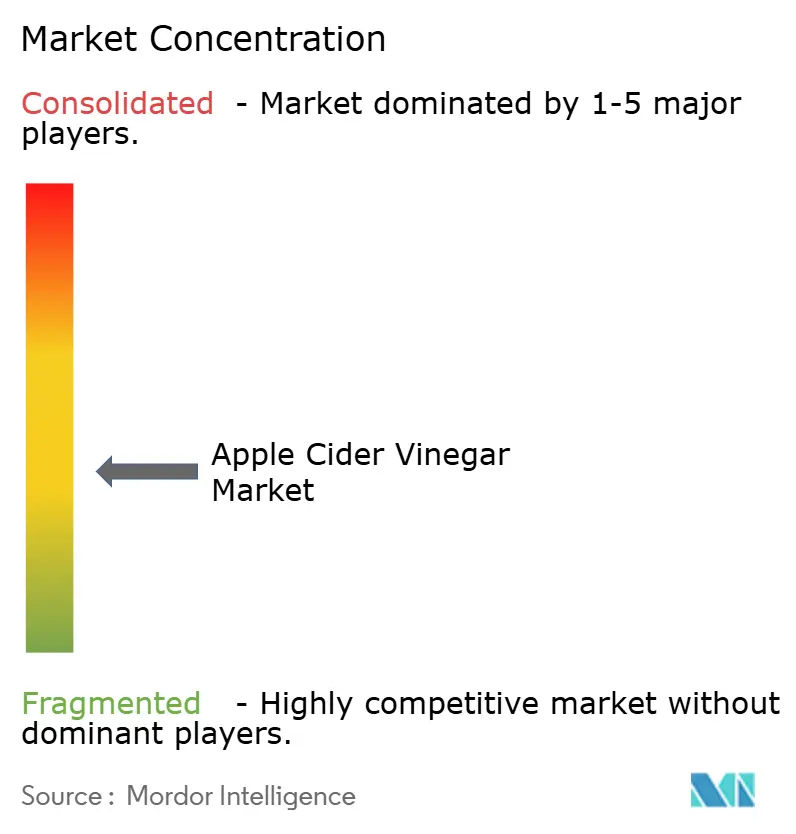
| Market Concentration | Medium |
Major Players *Disclaimer: Major Players sorted in no particular order Image © Mordor Intelligence. Reuse requires attribution under CC BY 4.0. | |
Apple Cider Vinegar Market Analysis by Mordor Intelligence
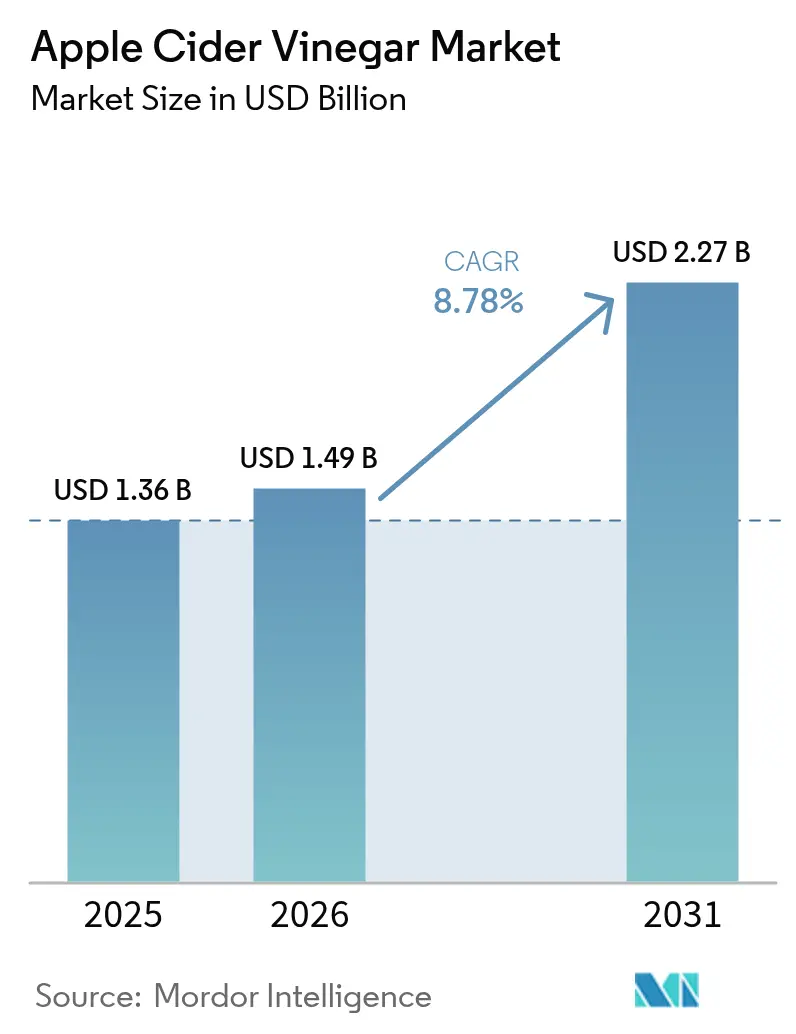
The apple cider vinegar market size is expected to grow from USD 1.36 billion in 2025 to USD 1.49 billion in 2026 and is forecast to reach USD 2.27 billion by 2031 at 8.78% CAGR over 2026-2031. Continued consumer focus on preventive health, expanding format choices, and rising demand for clean-label products are shifting spending away from reactive pharmaceuticals toward functional pantry items. Liquid products still dominate shelves, yet capsules, tablets, and gummies are expanding the addressable audience by removing taste barriers and aligning with busy lifestyles. Certified-organic SKUs are winning shelf space as the United States Department of Agriculture’s incentives stabilize certified acreage and narrow retail price gaps. Geographic expansion in Asia-Pacific and product diversification into beauty, personal care, and household cleaners cushion growth against a maturing North American segment.
Key Report Takeaways
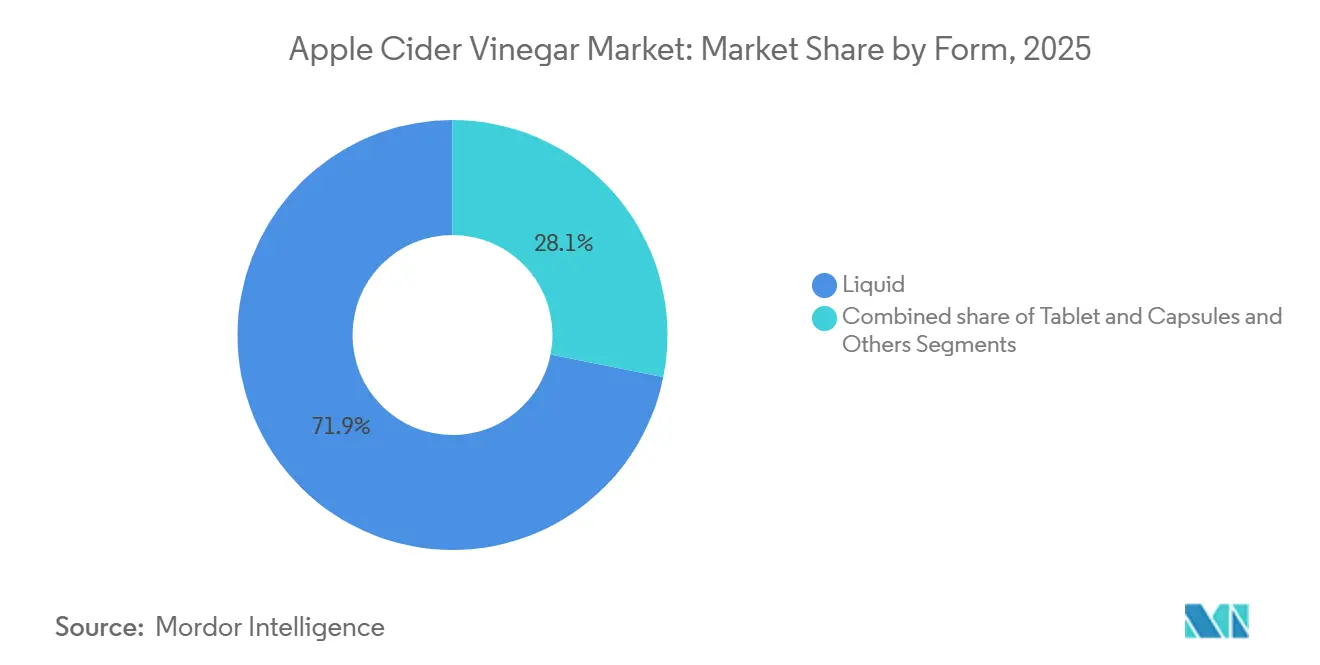
- By form, liquid accounted for 71.87% of revenue in 2025, while capsules and tablets are projected to advance at a 9.61% CAGR through 2031, the highest among all formats.
- By category, conventional products held 67.81% apple cider vinegar market share in 2025, whereas the certified-organic tier is forecast to expand at 9.96% CAGR by 2031.
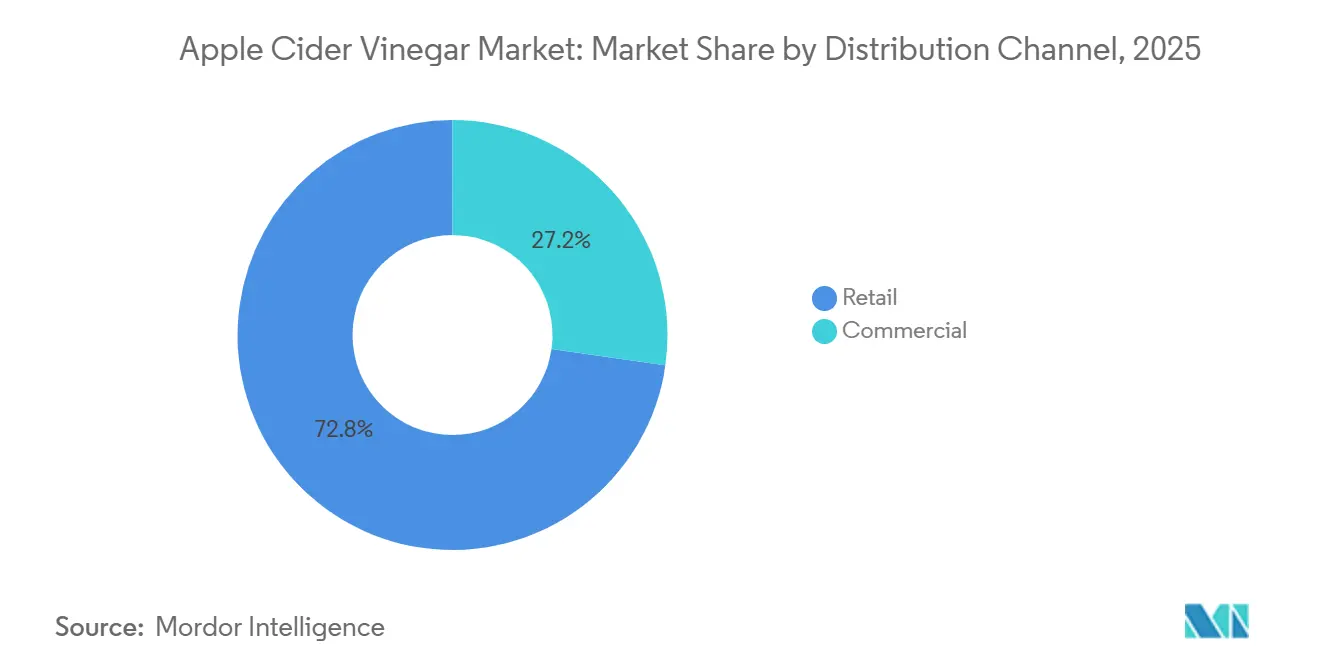
- By distribution channel, retail contributed 72.76% of sales in 2025, but commercial uses, including foodservice and beauty, are growing at a 9.33% CAGR through 2031.
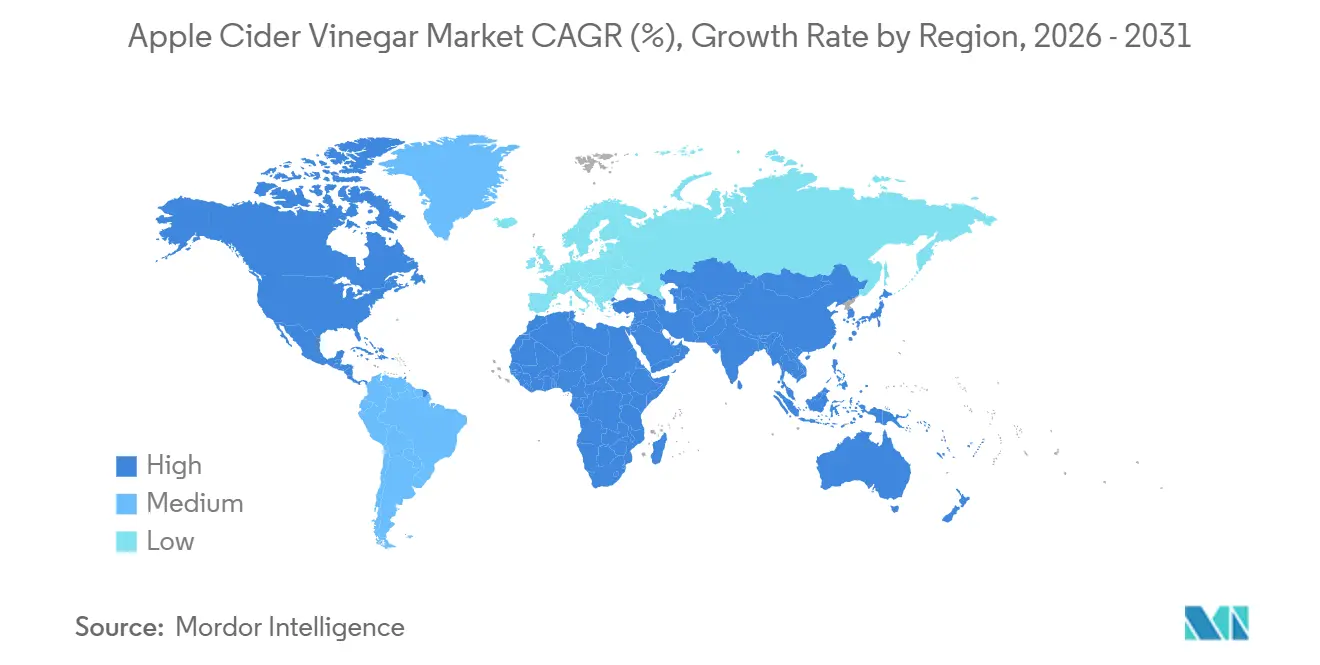
- By geography, North America led with 33.38% of global revenue in 2025, while Asia-Pacific is poised for the fastest CAGR of 10.22% through 2031.
Note: Market size and forecast figures in this report are generated using Mordor Intelligence’s proprietary estimation framework, updated with the latest available data and insights as of 2026.
Market Trends and Insights
Drivers Impact Analysis of Apple Cider Vinegar Market*
| Drivers | (~) % Impact on CAGR Forecasts | Geographic Relevance | Impact Timeline |
|---|---|---|---|
| Growing consumer focus on preventive healthcare and functional foods | +1.8% | Global, strongest in North America and Europe | Medium term (2-4 years) |
| Expansion of ACV-based product formats | +1.5% | Global, led by North America | Short term (≤ 2 years) |
| Increasing popularity of gut health and microbiome-supporting ingredients | +1.3% | Global, notably North America and Australia | Medium term (2-4 years) |
| Rising demand for natural, organic, and minimally processed products | +1.2% | North America and Europe | Long term (≥ 4 years) |
| Rising incorporation of ACV in beauty, personal care, and household products | +0.9% | North America and Japan | Medium term (2-4 years) |
| Influence of social media wellness trends | +0.8% | Global, highest in digitally connected markets | Short term (≤ 2 years) |
| Source: Mordor Intelligence | |||
Growing Consumer Focus on Preventive Healthcare and Functional Foods
Preventive healthcare spending is reshaping demand for functional ingredients as consumers allocate discretionary income toward products that promise long-term wellness rather than acute symptom relief. The FDA's updated "healthy" nutrient content claim rule, finalized in 2024, now permits manufacturers to highlight specific bioactive compounds, such as acetic acid, on labels, provided they meet revised thresholds for added sugars and sodium, thereby legitimizing ACV's positioning as a functional food rather than a folk remedy[1]. This regulatory clarity has emboldened brands to invest in clinical substantiation, with several filing for qualified health claims related to glycemic response and satiety. The shift is particularly pronounced among consumers aged 25-45 who prioritize ingredient transparency and view ACV as a hedge against metabolic syndrome, a condition affecting over 1 in 3 U.S. adults according to CDC surveillance data. Functional food penetration in emerging markets remains constrained by price sensitivity, but the proliferation of single-serve sachets and diluted ready-to-drink formats is lowering trial barriers in India, Indonesia, and Brazil.
Expansion of ACV-Based Product Formats
Format diversification is decoupling growth from the liquid segment's inherent limitations, taste aversion, portability challenges, and concerns about enamel erosion. Bragg's January 2025 launch of 750-milligram acetic acid capsules at Sprouts Farmers Market exemplifies this pivot, targeting consumers who reject the pungency of liquid while preserving the brand's organic positioning. Gummy formulations, though less prevalent, are gaining traction among younger demographics who associate chewable supplements with lifestyle brands rather than clinical interventions. Tablet and capsule formats are projected to expand at a 9.61% CAGR through 2031, outpacing liquid's 8.5% growth as manufacturers leverage contract encapsulation facilities to scale production without capital-intensive fermentation infrastructure. The format shift also enables premium pricing: per-serving costs for capsules exceed those for liquids by 40-60%, yet conversion rates remain robust due to perceived convenience. This dynamic suggests that brands prioritizing margin over volume will continue fragmenting the category into specialized delivery systems, each optimized for distinct consumption occasions.
Increasing Popularity of Gut Health and Microbiome-Supporting Ingredients
Gut microbiome research has elevated ACV from a niche tonic to a scientifically plausible intervention, even as clinical evidence remains inconclusive for many claims. The ingredient's acetic acid content is hypothesized to modulate gastric pH and short-chain fatty acid production, mechanisms that resonate with consumers familiar with probiotic and prebiotic narratives. While ACV itself does not contain live cultures after pasteurization, brands marketing "with the mother" unpasteurized variants containing acetobacter capitalize on this perception, despite limited peer-reviewed support for efficacy. The FDA has not issued warning letters specifically targeting ACV gut health claims in 2024-2026, suggesting a regulatory gray zone that brands exploit through careful language like "supports digestive wellness" rather than "treats dysbiosis." This ambiguity has attracted both established supplement manufacturers and wellness influencers launching direct-to-consumer brands, intensifying competition for shelf space in the digestive health aisle. The trend is self-reinforcing: as more products enter the market, consumer familiarity grows, which in turn validates further investment in gut-centric positioning.
Influence of Social Media Wellness Trends
Social media platforms, particularly TikTok and Instagram, have amplified ACV's visibility through user-generated content that blurs the line between testimonial and advertising. Influencers promote morning ACV rituals, often pairing the ingredient with lemon juice or honey, generating millions of views and driving search traffic to e-commerce platforms. The Federal Trade Commission has intensified scrutiny of endorsement disclosures in 2024-2025, issuing guidance that requires influencers to clearly label paid partnerships, yet enforcement remains inconsistent across platforms[2]. This regulatory ambiguity allows brands to seed products with micro-influencers at lower cost than traditional advertising, effectively outsourcing customer acquisition to creators with niche followings. The impact is most pronounced among Gen Z and millennial cohorts, who trust peer recommendations over brand messaging. However, the trend's sustainability is uncertain: as ACV content saturates feeds, engagement rates may decline, forcing brands to identify the next ingredient narrative or risk commoditization.
Restraints Impact Analysis of Apple Cider Vinegar Market*
| Restraint | (~) % Impact on CAGR Forecast | Geographic Relevance | Impact Timeline |
|---|---|---|---|
| High production and certification costs | -1.2% | Global, with acute impact on small producers in North America and Europe | Medium term (2-4 years) |
| Regulatory scrutiny on health claims | -0.9% | North America, Europe, with emerging enforcement in Asia-Pacific | Short term (≤ 2 years) |
| Fluctuating raw material prices | -0.7% | Global, with highest volatility in regions dependent on apple imports | Medium term (2-4 years) |
| Quality control and consistency issues | -0.6% | Global, particularly affecting smaller producers and contract manufacturers | Long term (≥ 4 years) |
| Source: Mordor Intelligence | |||
High Production and Certification Costs
Organic certification and fermentation infrastructure impose fixed costs that disproportionately burden smaller producers, constraining supply growth and limiting competitive intensity. USDA organic certification requires annual fees, third-party audits, and traceability documentation, with compliance costs ranging from USD 1,500 to USD 5,000 for small operations[3]. Fermentation itself demands temperature-controlled facilities and acetobacter cultures, which smaller brands often outsource to contract manufacturers, sacrificing margin and control over production timelines. These barriers favor vertically integrated players like Bragg and Kraft Heinz, who amortize certification and capital expenses across diversified product lines, effectively raising the floor for new entrants. The dynamic is self-perpetuating: as incumbents capture organic shelf space, retailers allocate limited slots to proven brands, leaving challengers to compete on price in the conventional tier where margins are thinner. This cost structure suggests that market fragmentation will remain limited, with the top 5 players maintaining disproportionate market share absent disruptive business models such as co-fermentation cooperatives or blockchain-enabled traceability that reduce compliance overhead.
Regulatory Scrutiny on Health Claims
The FDA and FTC have intensified enforcement of health claims and advertising disclosures in 2024-2026, creating compliance risks for brands that overstate ACV's benefits. The FDA's structure-function claim framework permits manufacturers to describe effects on normal body processes, such as "supports digestive wellness", without pre-market approval, but prohibits disease claims like "treats diabetes" unless substantiated through the qualified health claim petition process. The FTC has issued warning letters to supplement brands for deceptive advertising, particularly those leveraging influencer endorsements without clear disclosure of material connections. This dual oversight creates a compliance minefield: brands must balance persuasive marketing with legal defensibility, often erring toward vague language that sacrifices differentiation. The scrutiny is most acute in North America and Europe, where regulatory agencies have dedicated resources for digital monitoring, whereas enforcement in Asia-Pacific and Latin America remains inconsistent. For multinational brands, this patchwork necessitates region-specific labeling and promotional strategies, inflating go-to-market costs and slowing product rollouts.
*Our forecasts treat driver/restraint impacts as directional, not additive. The impact forecasts reflect baseline growth, mix effects, and variable interactions.
Apple Cider Vinegar Market Segment Analysis
By Form:
Capsules Gain Ground on ConvenienceLiquid ACV held 71.87% of market share in 2025, reflecting entrenched consumer familiarity and retail dominance, yet tablet and capsule formats are projected to expand at 9.61% CAGR through 2031, outpacing liquid's growth as brands address taste aversion and portability constraints. Bragg's January 2025 launch of 750-milligram acetic acid capsules at Sprouts Farmers Market signals a strategic pivot toward consumers who prioritize convenience over the ritualistic aspects of liquid consumption. Capsules also enable precise dosing and eliminate the enamel-erosion concerns dentists associate with undiluted liquid, positioning the format as a safer daily supplement. Tablets, though less prevalent, appeal to cost-conscious buyers seeking lower per-serving prices than capsules, while gummies target younger demographics through flavor masking and lifestyle branding. Other forms, including powders and single-serve sachets, remain niche but are gaining traction in Asia-Pacific, where on-the-go consumption aligns with urbanization trends.
The format shift is reshaping value chains, as capsule production requires contract encapsulation facilities rather than fermentation infrastructure, lowering barriers for brands without manufacturing assets. This outsourcing model enables rapid SKU proliferation but sacrifices margin, as contract manufacturers capture 30-40% of wholesale prices. Liquid producers, conversely, benefit from vertical integration, controlling fermentation, bottling, and distribution, which preserves margin but limits format experimentation. The divergence suggests that the market will bifurcate into liquid specialists who compete on authenticity and organic certification, and format innovators who prioritize convenience and premium pricing. Regulatory influence remains minimal in this segmentation, as the FDA treats capsules and liquids identically under dietary supplement or food condiment classifications, depending on label claims.

By Category:
Organic Premiums Compress Yet Growth PersistsConventional ACV commanded 67.81% of 2025 revenues, anchored by price-sensitive retail buyers and foodservice operators who prioritize cost over certification, yet organic variants are expanding at 9.96% CAGR through 2031, driven by USDA-certified supply stabilization and retail buyers' clean-label mandates. The organic segment's growth reflects a broader shift in consumer spending toward products perceived as safer and more sustainable, even as retail premiums compress from 40-50% in 2020 to 20-30% in 2025 due to increased competition and supply normalization, according to the USDA. Conventional products retain dominance in commercial channels, spanning foodservice, industrial food processing, and household cleaning, where organic certification offers limited functional advantage, and buyers resist premium pricing.
The USDA's Organic Transition Initiative, which allocated funding to support farmers converting to organic practices, has begun stabilizing domestic apple supply chains, reducing dependence on imported organic concentrate from Europe and South America. However, certification costs remain a barrier for smaller producers, favoring vertically integrated players like Bragg and Eden Foods, who amortize compliance expenses across diversified portfolios. This dynamic suggests that organic market share gains will accrue disproportionately to incumbents with established certification infrastructure, leaving smaller entrants to compete on price in the conventional tier. The category segmentation also intersects with distribution channels: organic products dominate natural food retailers and e-commerce, while conventional variants hold share in mass merchandisers and dollar stores, reflecting distinct customer demographics and purchasing behaviors.
By Distribution Channel:
Retail Dominance Masks Commercial MomentumRetail channels accounted for 72.76% of 2025 distribution, driven by supermarkets, hypermarkets, and online platforms that offer broad assortments and promotional visibility. Commercial applications are expanding at a 9.33% CAGR through 2031, reflecting ACV's migration into foodservice, beauty formulations, and household cleaning products. Supermarkets and hypermarkets remain the largest retail sub-segment, leveraging high foot traffic and impulse purchase opportunities, though their share is eroding as online retail grows at double-digit rates, propelled by subscription models and influencer-driven discovery. Convenience stores capture incremental demand from consumers seeking single-serve formats, while other retail channels, including natural food stores and pharmacies, serve niche audiences prioritizing organic certification or therapeutic positioning.
Commercial channels, though smaller in absolute terms, offer superior margins and reduced promotional intensity, as buyers in foodservice and industrial applications prioritize consistency and bulk pricing over brand equity. Beauty and personal care manufacturers incorporate ACV into hair rinses and skincare toners, positioning the ingredient as a natural pH balancer, while household cleaning brands market ACV-based sprays as eco-friendly alternatives to synthetic disinfectants. This diversification reduces the market's dependence on dietary supplement cycles and exposes ACV to retail channels with different promotional calendars and margin structures. The shift is particularly pronounced in North America and Europe, where clean beauty and eco-friendly cleaning movements have achieved mainstream penetration, whereas Asia-Pacific adoption remains nascent outside Japan and South Korea.
Geography Analysis
North America Apple Cider Vinegar Market
North America held 33.38% of global market share in 2025, anchored by mature wellness infrastructure, established retail penetration, and high per-capita consumption of functional foods, yet the region's growth is moderating as the market saturates and promotional intensity compresses margins. The United States dominates regional demand, driven by widespread availability in supermarkets, natural food stores, and e-commerce platforms, while Canada and Mexico contribute incremental volume through cross-border retail chains and rising health consciousness. The FDA's updated "healthy" nutrient content claim rule, finalized in 2024, has legitimized ACV's positioning as a functional food, emboldening brands to invest in clinical substantiation and qualified health claim petitions. However, the region faces headwinds from regulatory scrutiny on influencer marketing and health claims, with the FTC intensifying enforcement of endorsement disclosures in 2024-2025. North American brands are responding by diversifying into non-ingestible applications across beauty, personal care, and household cleaning to capture demand beyond the dietary supplement category.
APAC Apple Cider Vinegar Market
Asia-Pacific is expanding at a 10.22% CAGR through 2031, the fastest among all regions, propelled by rising disposable incomes, urbanization, and the integration of fermented foods into modern dietary patterns. India and China lead regional growth, with domestic brands like Dabur, Patanjali, and Kapiva leveraging Ayurvedic positioning and e-commerce distribution to capture middle-class consumers. Japan and South Korea exhibit higher per-capita consumption, driven by established wellness cultures and retail infrastructure that supports premium organic products. Australia's market mirrors North America in maturity, with strong penetration of natural food retailers and online subscription models. The region's growth is tempered by fragmented regulatory frameworks: India's FSSAI and China's CFDA enforce distinct labeling and health claim standards, complicating multinational rollouts and inflating compliance costs. Southeast Asian markets, including Indonesia, Thailand, and Singapore, remain nascent but are attracting investment from regional distributors seeking first-mover advantage in functional foods.
Europe Apple Cider Vinegar Market
Europe accounted for a significant share in 2025, driven by Germany, the United Kingdom, France, and Italy, where organic food movements and clean-label preferences have achieved mainstream penetration. The European Union's organic regulations, which mandate traceability and third-party certification, create a high-compliance environment that favors established brands with robust supply chain documentation. Germany leads regional consumption, supported by a dense network of natural food retailers and consumer willingness to pay premiums for certified products. The United Kingdom's market has grown despite Brexit-related supply chain disruptions, as e-commerce platforms enable direct-to-consumer distribution that bypasses traditional retail gatekeepers. Southern European markets, including Spain and Italy, exhibit lower per-capita consumption but are expanding as wellness trends diffuse from urban centers. The region's growth is constrained by economic headwinds and consumer price sensitivity, which have compressed organic premiums and intensified promotional activity. Eastern European markets, including Poland and the Czech Republic, remain underpenetrated but are attracting investment from regional distributors seeking growth beyond saturated Western markets.
MEA and South America Apple Cider Vinegar Market
South America and Middle East and Africa represent emerging opportunities, with Brazil, Argentina, and South Africa leading regional adoption driven by rising health consciousness and retail modernization. Brazil's market benefits from a large population and growing middle class, though economic volatility and currency fluctuations create demand uncertainty. Argentina and Chile exhibit higher per-capita consumption, supported by wellness cultures and retail infrastructure that accommodates premium products. The Middle East's market is concentrated in the United Arab Emirates and Saudi Arabia, where expatriate populations and high disposable incomes drive demand for imported organic products. Africa's market remains nascent, with South Africa and Nigeria accounting for the majority of regional volume, though distribution challenges and price sensitivity limit penetration. These regions face common challenges: fragmented retail infrastructure, limited organic certification frameworks, and regulatory inconsistency that complicates multinational market entry. However, the proliferation of e-commerce platforms and mobile payment systems is lowering barriers, enabling brands to bypass traditional distribution and reach consumers directly.
Regulatory Landscape
Apple cider vinegar is regulated across food and dietary-supplement frameworks, so labeling requirements, food safety controls, and claim substantiation are the main compliance levers. In the United States, FDA oversight covers vinegar guidance and acidified foods requirements, including controls around finished equilibrium pH (4.6 or lower) for acidified products under 21 CFR Part 114, while acetic acid use is addressed in FDA regulations and guidance. Legacy vinegar definitions also shape category expectations, including minimum acidity conventions used in trade and consumer contexts.
In the European Union, vinegar positioning is governed by food information rules under Regulation (EU) No 1169/2011, alongside additive-related classification updates (including the listing of vinegars and diluted acetic acid within EU food additive categorizations). This framework drives region-specific label and formulation discipline for multinational brands, particularly where the same brand family spans food condiments, RTD beverages, and dietary supplements, with different triggers for claims, compositional statements, and consumer-facing particulars.
Competitive Landscape
The apple cider vinegar market operates with moderate concentration, with established multinational players coexisting alongside regional specialists and direct-to-consumer disruptors. Kraft Heinz, Bragg, and Molson Coors (Aspall) leverage vertically integrated supply chains, organic certification infrastructure, and retail distribution agreements to defend share, while regional brands like Dabur and Patanjali in India capitalize on Ayurvedic positioning and e-commerce penetration to capture middle-class consumers. Competition centers on format innovation, organic certification, and direct-to-consumer e-commerce rather than on price wars, as evidenced by Bragg's January 2025 launch of 750-milligram acetic acid capsules at Sprouts Farmers Market, targeting consumers who reject the taste profile of liquids.
The proliferation of gummy, tablet, and powder formats suggests incumbents are defending share by fragmenting the category into micro-segments, each with distinct margin structures and customer acquisition costs. White-space opportunities exist in commercial applications, spanning foodservice, beauty formulations, and household cleaning, where ACV's functional properties offer differentiation beyond dietary supplements. Emerging disruptors include celebrity-backed wellness brands and influencer-led direct-to-consumer labels that leverage social media for customer acquisition, bypassing traditional retail gatekeepers and capturing margin that incumbents sacrifice to distributors. These entrants often outsource fermentation and encapsulation to contract manufacturers, enabling rapid SKU proliferation without capital-intensive infrastructure, though this model sacrifices margin and control over quality.
Technology adoption remains limited, with few brands investing in blockchain traceability or real-time fermentation monitoring, suggesting that operational excellence rather than digital innovation differentiates leaders. The FDA's Current Good Manufacturing Practice regulations apply to dietary supplements but not to vinegar sold as a food condiment, creating a regulatory gap that some brands exploit by avoiding supplement registration. This inconsistency becomes a competitive liability as consumers share negative experiences on social media, eroding the category's credibility and rewarding brands that invest in vertical integration and quality assurance.
Apple Cider Vinegar Industry Leaders
-
The Kraft Heinz Company
-
Bragg Live Food Products LLC
-
Hive and Wellness Australia Pty Ltd
-
Carl Kuhne KG
-
Molson Coors Beverage Company (Aspall)
- *Disclaimer: Major Players sorted in no particular order
Apple Cider Vinegar Market Companies Covered in this Report
- The Kraft Heinz Company
- Bragg Live Food Products LLC
- Hive and Wellness Australia Pty Ltd
- Carl Kuhne KG
- National Fruit Product Company, Inc. (White House Foods )
- Molson Coors Beverage Company (Aspall)
- Dabur India Ltd
- Manzana Products Co. Inc.
- NOW Health Group Inc.
- Global Export Marketing Co. Ltd (American Garden)
- CiderBears
- Frontier Co-op
- Green Jeeva LLC
- Nutraceutical International Corp (Dynamic Health)
- Patanjali Ayurved Limited
- Eden Foods, Inc.
- Windmill Organics Ltd (Biona Organic)
- The Hain Celestial Group, Inc. (Spectrum Organics)
- Kapiva Pvt. Ltd.
- De Nigris 1889 Sr
Market Opportunities and Future Outlook
Opportunities are emerging as apple cider vinegar shifts beyond traditional liquid condiments into functional RTD and single-serve formats that reduce taste barriers and better match modern consumption occasions. The category already shows practical evidence through 2026 product activity: in China, Lv Jie introduced ready-to-drink apple cider vinegar with added inulin in 15 ml sachets and 200 ml cans aimed at Southeast Asian markets, pointing to cross-border extensions that combine ACV with prebiotics and convenience packaging.
Manufacturing and packaging upgrades also offer a tangible route to cost, consistency, and broader distribution, especially for commercial and bulk-adjacent pack sizes. In July 2026, Conservas La Costena expanded vinegar bottling capability by installing an Enoberg HEVF series filling and capping system for 3.75-liter and 7.6-liter HDPE containers, which reflects investment demand for high-throughput lines designed for foodservice and industrial customers. On the process side, smart fermentation systems highlighted in 2026, including Donghae Aqua's VINE7, support tighter microbial control and shorter production cycles, which can help brands standardize output as they diversify across supplements, beverages, and adjacent applications such as beauty, personal care, and household.
Recent Industry Developments in Apple Cider Vinegar Market
- April 2026: Bragg launched On-The-Go Apple Cider Vinegar Pouches in a single-serve format designed for portability and daily use occasions outside the kitchen. The rollout expands ACV presence in convenience-led consumption and supports higher-frequency usage compared with traditional bottles.
- May 2025: Bragg expanded distribution of its Apple Cider Vinegar Salad Dressings to 1,589 Walmart stores. This placement brings ACV into mainstream meal solutions and increases category visibility beyond wellness-focused retailers.
- March 2024: Apeal World introduced a new RTD sparkling apple cider vinegar flavor, Organic Lemon and Mint, expanding its flavor lineup for the beverage segment. The launch reinforces product diversification into ready-to-drink formats that compete for functional beverage shelf space and trial-led purchases.
Apple Cider Vinegar Market Report Scope and Research Methodology
Market Definition and Coverage
The apple cider vinegar market is defined as the sale of apple-based vinegar products consumed for culinary use and wellness-led intake, across standard liquid bottles and ingestible formats sold through commercial and retail channels.
Scope exclusions: We exclude non-apple vinegars and vinegar-based household cleaners or personal care products where apple cider vinegar is not the primary sold ingredient.
Segments Covered in This Report
- By Form
- Liquid
- Tablet and Capsule
- Other Forms
- By Category
- Organic
- Conventional
- By Distribution Channel
- Commercial
- Retail
- Supermarkets/Hypermarkets
- Convenience Stores
- Online Retail Stores
- Others Retail Channels
- By Geography
- North America
- United States
- Canada
- Mexico
- Rest of North America
- Europe
- Germany
- United Kingdom
- Italy
- France
- Spain
- Netherlands
- Poland
- Belgium
- Sweden
- Rest of Europe
- Asia-Pacific
- China
- India
- Japan
- Australia
- Indonesia
- Thailand
- Singapore
- South Korea
- Rest of Asia-Pacific
- South America
- Brazil
- Argentina
- Colombia
- Chile
- Peru
- Rest of South America
- Middle East and Africa
- South Africa
- Saudi Arabia
- United Arab Emirates
- Nigeria
- Egypt
- Morocco
- Turkey
- Rest of Middle East and Africa
- North America
Data Sources, Market Sizing, and Validation
Desk Research
Desk work starts with pinning down the demand pool and the units that matter, so we do not mix culinary vinegar, supplements, and adjacent vinegar types. Public sources help with this framing, such as USDA food availability and price series, USITC trade statistics for vinegar shipments, Eurostat production and trade tables, and FAO-style food balance data where apple and processed food conversions are needed.
We also review regulator and standards touchpoints that influence labeling and sales channels, along with peer reviewed nutrition research that explains why consumption spikes show up in certain cohorts. On the supply side, we use company annual reports, investor presentations, and reputable press coverage to understand product form mix, channel shifts (especially online retail), and packaging trends. When needed, paid subscriptions for company financials and news intelligence, plus patent databases, are referenced to cross-check business activity signals. These examples are not exhaustive, and many other public sources were also used to collect, validate, and clarify data points.
Primary Interviews and Surveys
Primary work focuses on validating what portion of vinegar demand is truly apple cider vinegar, and how that splits across liquid versus tablets or capsules, organic versus conventional, and retail versus commercial use. We speak with producers, ingredient distributors, brand and channel managers, and category buyers, and then align the input across APAC, EMEA, and the Americas so pricing and channel mix assumptions stay realistic for each region.
Distribution of primary research fieldwork respondents
| Company type | Respondent position | Region |
|---|---|---|
| Top tier: 36% | CXOs: 14% | APAC: 46% |
| Mid tier: 48% | Functional/Unit leaders: 33% | EMEA: 34% |
| Smaller Players: 16% | Managers: 53% | Americas: 20% |
Market-Sizing & Forecasting
Sizing is built mainly using a top-down demand reconstruction where food consumption patterns and packaged food channel sales signals are used to isolate the apple cider vinegar portion, and then translated into value using region-specific price ladders. To keep the totals grounded, the model is corroborated with selective bottom-up checks, such as sampled brand and private label price points across key channels and a supplier roll-up for a few large consuming countries.
Inputs that matter for this market include the split of liquid versus tablets and capsules, the organic share by region, the retail versus commercial mix, average pack sizes and typical dosage equivalents, and observed price dispersion between mass retail and online listings. We also track signals that move volumes, including shifts in online retail penetration, seasonal wellness demand spikes, and apple and vinegar input cost pressure that can lift or compress realized prices. For the forecast, we use scenario analysis because growth is sensitive to wellness-driven adoption and channel expansion, and those drivers do not move evenly each year. Where bottom-up coverage is thin (for example, smaller countries with limited reporting), we apply proxy ratios from similar markets and then re-check the implied per-capita consumption with interview feedback before finalizing.
Data Validation & Update Cycle
Validation is done in steps so the final number is not driven by one data stream. We compare outputs against independent signals like vinegar trade flows, category level retail movement, and the implied price per liter or per equivalent serving, and then investigate outliers that do not fit channel realities. If a region shows a sharp jump, we re-check whether it is a real demand change or a price or currency effect that needs to be normalized.
Before sign-off, the model and assumptions are reviewed by another analyst, and follow-up calls are triggered when a key variable changes beyond a reasonable band. The report is refreshed annually, and interim updates are made when material events occur, such as major labeling actions or sudden shifts in retail pricing. Right before delivery, a fresh pass is completed so clients receive the latest updated view rather than an older snapshot.
Mordor Intelligence's Apple Cider Vinegar Market Size Versus Other Published Estimates
Published market sizes for apple cider vinegar can look far apart, even when they use similar forecast years, because the market is often stretched into nearby categories. Differences typically come from what gets counted as apple cider vinegar, how ingestible formats are treated, and whether pricing is based on shelf prices, wholesale values, or blended averages.
The main gap comes from whether tablets, capsules, and other ingestible formats are counted alongside liquid bottles and whether both retail and commercial channels are captured. This is also where Mordor Intelligence sets the scope as apple cider vinegar sales across forms and channels, with region-specific price ladders checked against channel mix rather than a single global average.
Benchmark comparison
| Source | Market Size | Gaps in Research Methodology |
|---|---|---|
| Mordor Intelligence | USD 1.36 B (2025) | |
| Global Consultancy A | USD 0.67 B (2025) | This figure appears to apply a narrower value basis and can undercount the market if parts of the channel mix are treated as supplements only, or if pricing is derived from a limited set of retail-heavy assumptions that do not reflect broader commercial flows. |
| Industry Research Group B | USD 0.90 B (2024) | The estimate uses a different base year and may apply a faster growth lens, which can shift the curve upward when wellness adoption is assumed to accelerate without being re-checked against form mix, pack sizes, and realistic price progression by region. |
Looking across the figures, most of the spread can be explained by scope choices (forms and channels) and by how average selling prices are blended across regions and routes to market. By keeping the inputs tied to observable channel behavior and then re-testing them with expert feedback, the final sizing stays traceable to clear variables and repeatable steps.
Key Questions Answered in the Report
What is the projected value of the apple cider vinegar market by 2031?
The market is expected to reach USD 2.27 billion by 2031.
Which region will post the fastest growth through 2031?
Asia-Pacific is forecast to expand at 10.22% CAGR, the quickest among all regions.
Why are capsules gaining popularity over liquid apple cider vinegar?
Capsules remove vinegar’s strong taste, travel well, and provide precise dosing, leading to a 9.61% CAGR forecast for the format.
How large is the organic segment compared with conventional products?
Organic products held 32.19% of 2025 revenue and are growing faster at 9.96% CAGR as certification costs fall.
Which companies lead the competitive landscape?
Kraft Heinz, Bragg, and Molson Coors (Aspall) are among the top players, collectively controlling close to 28% of global sales.