
Anti-aging Supplements Market Size and Share
Market Overview
| Study Period | 2020 - 2031 |
|---|---|
| Market Size (2026) | USD 6 Billion |
| Market Size (2031) | USD 8.96 Billion |
| Growth Rate (2026 - 2031) | 8.35 % |
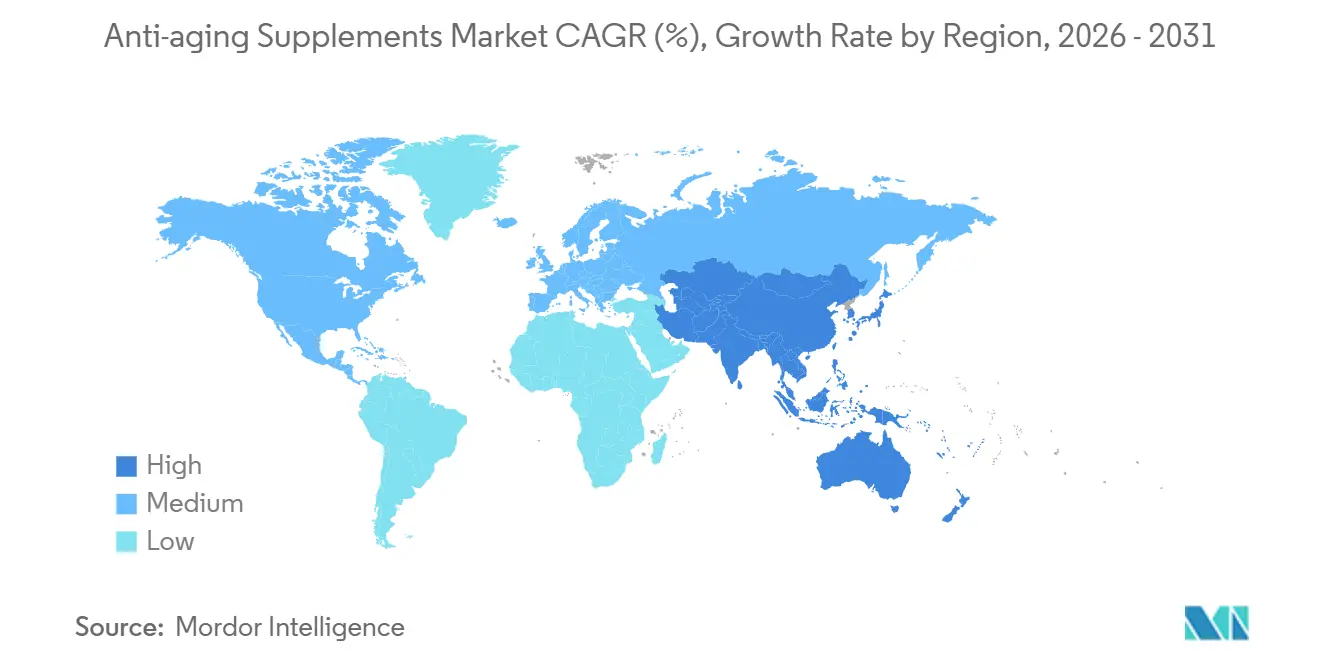
| Fastest Growing Market | Asia-Pacific |
| Largest Market | North America |
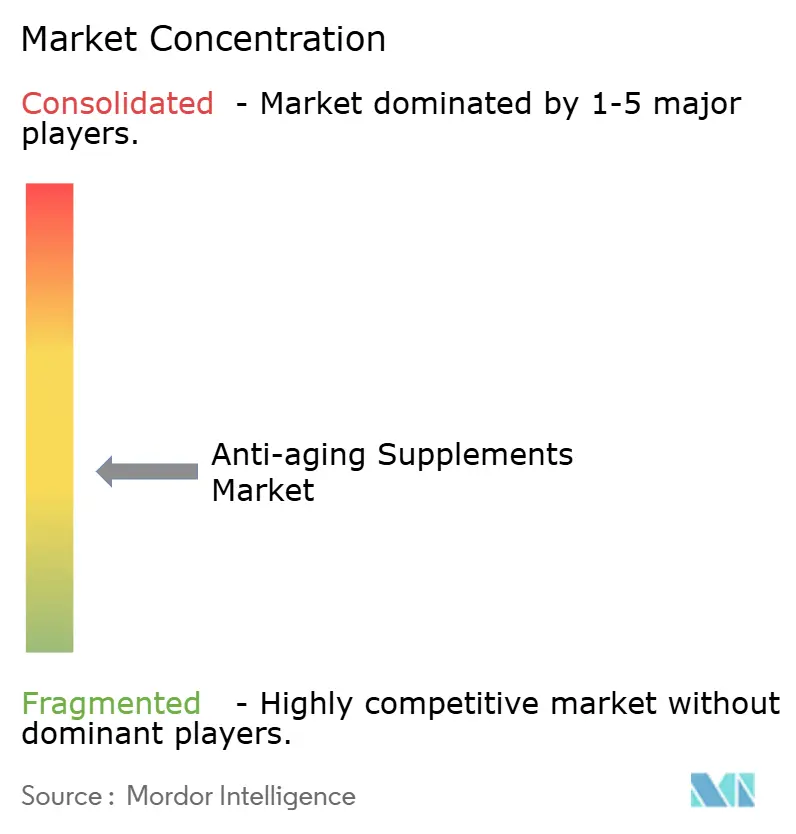
| Market Concentration | Medium |
Major Players *Disclaimer: Major Players sorted in no particular order Image © Mordor Intelligence. Reuse requires attribution under CC BY 4.0. | |
Anti-aging Supplements Market Analysis by Mordor Intelligence
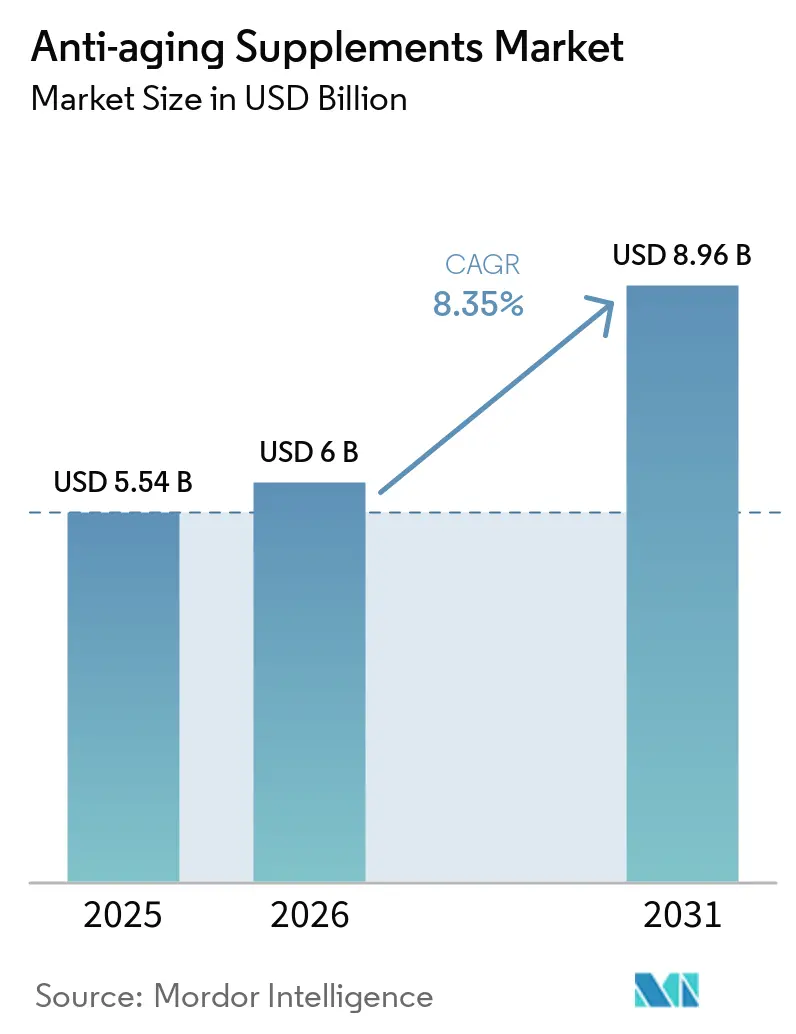
The Anti-aging Supplements Market size is expected to increase from USD 5.54 billion in 2025 to USD 6 billion in 2026 and reach USD 8.96 billion by 2031, growing at a CAGR of 8.35% over 2026-2031.
The anti-aging supplements market is experiencing growth as consumers shift toward preventive health, focusing on long-term benefits over short-term relief. The market is expanding beyond older demographics, with individuals in their 30s and 40s increasingly purchasing products targeting skin quality, energy, recovery, and cellular health. The rising use of GLP-1 for weight loss is influencing demand for supplements centered on muscle support, recovery, and metabolic resilience. Regulatory advancements for NMN in the United States and Europe are boosting confidence among brands, retailers, and investors, driving the market toward broader commercialization. Competition remains moderately fragmented, with established companies and science-driven specialists utilizing clinical validation, premium positioning, and direct-to-consumer strategies to enhance brand credibility.
Key Report Takeaways
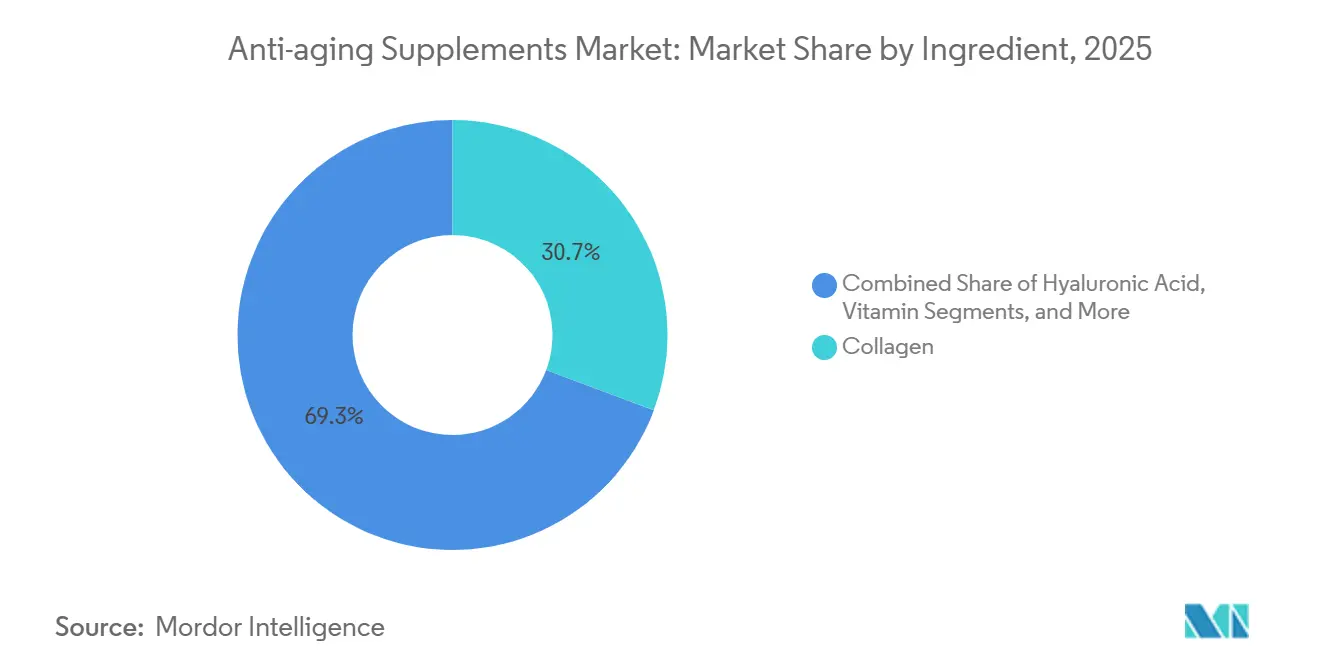
- By ingredient, collagen held 30.73% of the anti-aging supplements market share in 2025, while hyaluronic acid is projected to expand at a 9.10% CAGR through 2031.
- By application, hair, skin, and nail care accounted for 34.88% of the market in 2025 and is also the fastest-growing application at a 9.45% CAGR through 2031.
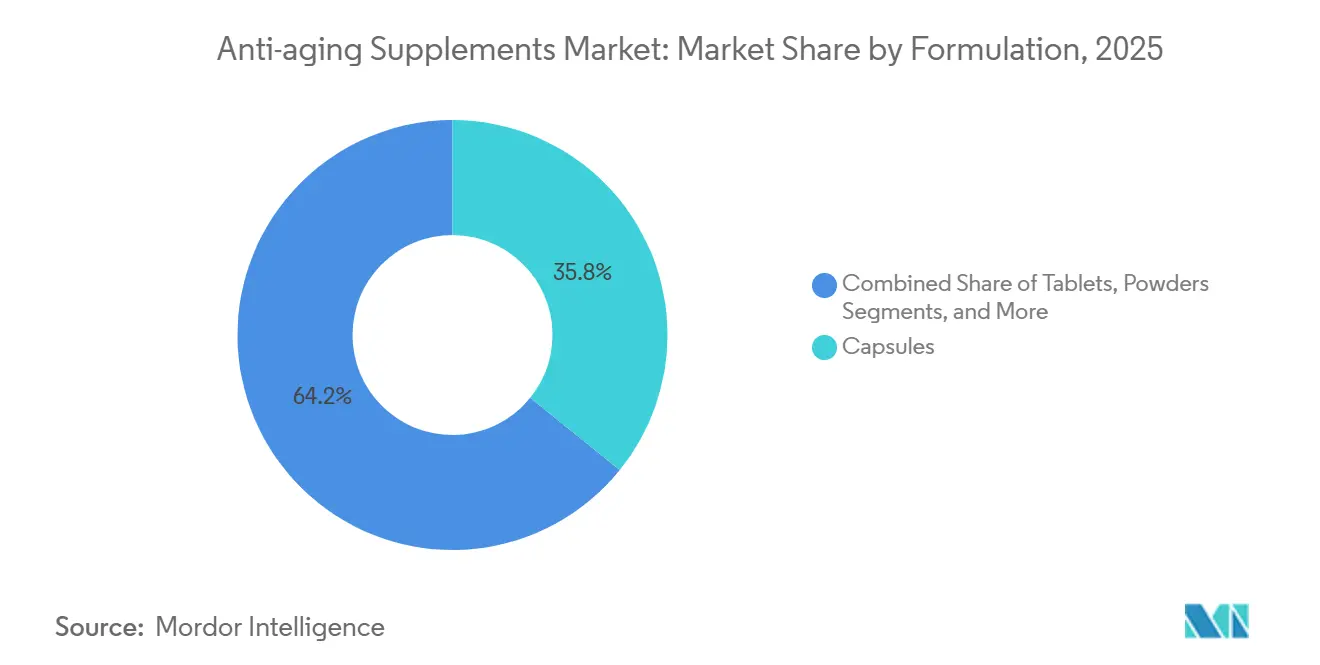
- By formulation, capsules led with 35.79% revenue share in 2025, while powders are expected to grow at a 10.67% CAGR through 2031.
- By distribution channel, pharmacies and drugstores captured 37.90% share in 2025, while e-commerce and D2C are projected to advance at an 8.95% CAGR through 2031.
- By geography, North America captured 40.12% share in 2025, and Asia-Pacific is projected to advance at an 10.12% CAGR through 2031.
Note: Market size and forecast figures in this report are generated using Mordor Intelligence’s proprietary estimation framework, updated with the latest available data and insights as of January 2026.
Market Trends and Insights
Drivers Impact Analysis of Anti-aging Supplements Market*
| DRIVER | (~) % IMPACT ON CAGR FORECAST | GEOGRAPHIC RELEVANCE | IMPACT TIMELINE |
|---|---|---|---|
| Aging population and supplement adoption | +2.8% | Global | Long term (≥ 4 years) |
| Beauty-from-within demand for collagen regimens | +2.0% | North America, Europe, APAC core | Medium term (2-4 years) |
| E-commerce and subscription accessibility | +1.5% | Global, accelerating in APAC and MEA | Medium term (2-4 years) |
| Clean-label and clinically backed premiumization | +0.9% | North America, EU | Long term (≥ 4 years) |
| U.S. NMN regulatory reopening | +0.8% | North America, with spillover to APAC | Short term (≤ 2 years) |
| Healthspan-oriented cellular aging formulations | +1.0% | North America, Europe, APAC | Long term (≥ 4 years) |
| Source: Mordor Intelligence | |||
Aging Population With High Supplement Adoption Anchors Demand
The anti-aging supplements market benefits from strong demand among older consumers. Between August 2021 and August 2024, 73% of U.S. adults aged 60 and above used dietary supplements, highlighting their integration into later-life health routines.[1] A 16-year study also showed supplement use among older adults increased from 10.4% to 21.1%, reflecting growing adoption over time. This trend supports repeat-use categories and premium products, as aging consumers prioritize maintaining mobility, appearance, and independence.[2]
Beauty-From-Within Demand for Collagen-Led Regimens
Consumers are increasingly opting for ingestible beauty solutions, driving demand for collagen-based regimens. Collagen remains the leading ingredient, with Hair, Skin, and Nail Care as the top application, reflecting a focus on visible wellness outcomes like skin elasticity and appearance. Collagen’s versatility across beauty, active aging, and recovery categories enhances its marketability. This adaptability allows brands to command premium pricing and improve shelf visibility, especially when paired with complementary actives.
E-Commerce and Subscription-Led Accessibility
Digital platforms are transforming the anti-aging supplements market by improving accessibility and retention. iHerb reported USD 2.9 billion in net sales in fiscal 2025, fulfilling over 44 million orders and serving 15 million customers globally. A 370% year-over-year increase in AutoShip and Save subscriptions highlights the growing preference for habit-forming models. These models support long-term product use, enhance repeat purchase rates, and reduce reliance on promotional cycles, strengthening brand margins.
U.S. NMN Regulatory Reopening
The FDA reinstated NMN as a lawful dietary supplement in September 2025, reducing uncertainty for brands in the NAD+ precursor segment. In May 2026, EFSA approved NMN at 300 mg/day for adults, paving the way for EU authorization. These regulatory advancements boost confidence among suppliers, brands, and retailers, enabling broader adoption of cellular-health formulations. This shift positions such products for mainstream acceptance beyond niche longevity markets.
Restraints Impact Analysis of Anti-aging Supplements Market*
| RESTRAINT | (~) % IMPACT ON CAGR FORECAST | GEOGRAPHIC RELEVANCE | IMPACT TIMELINE |
|---|---|---|---|
| Anti-aging claim substantiation scrutiny | -1.2% | North America, EU | Medium term (2-4 years) |
| Premium pricing for clinically backed actives | -0.7% | North America, Western Europe | Long term (≥ 4 years) |
| Novel-ingredient regulatory volatility | -0.6% | EU, APAC, South America | Short term (≤ 2 years), Medium term (2-4 years) |
| Heterogeneous clinical endpoints and trust gaps | -0.5% | Global | Long term (≥ 4 years) |
| Source: Mordor Intelligence | |||
Anti-Aging Claim Substantiation Scrutiny
The anti-aging supplements market faces increased scrutiny when claims extend beyond basic wellness benefits. Brands emphasizing visible or functional outcomes attract attention from regulators, retailers, and consumer watchdogs. This necessitates stronger evidence, refined language, and rigorous internal reviews, leading to higher development costs and slower commercialization. Mid-sized brands, with limited clinical budgets compared to larger players, are particularly impacted, making credibility a critical factor for compliance and consumer trust.
Premium Pricing for Clinically Backed Actives
High pricing remains a challenge in the anti-aging supplements market, especially for products featuring newer, clinically validated ingredients. For example, Niagen Bioscience launched Tru Niagen Beauty in November 2025 at USD 62 per unit or USD 49.60 on subscription, highlighting the premium nature of such offerings. This pricing shifts spending into discretionary wellness rather than routine budgets, creating a divide where premium brands target affluent consumers, while affordable alternatives attract broader audiences. Similar product formats across brands further increase the risk of private-label substitution.
*Our forecasts treat driver/restraint impacts as directional, not additive. The impact forecasts reflect baseline growth, mix effects, and variable interactions.
Anti-aging Supplements Market Segment Analysis
By Ingredient:
Collagen Holds the Revenue Base While Newer Actives Expand the Premium LayerIn 2025, collagen held a 30.73% share of the anti-aging supplements market, maintaining its leadership among ingredient categories. Its dominance is driven by consumer familiarity and its relevance across beauty, mobility, and active aging applications. Hyaluronic acid, with a projected 9.10% CAGR through 2031, is the fastest-growing ingredient, reflecting the rising demand for premium beauty combinations. This trend enhances the value of multi-ingredient bundles, combining established ingredients like collagen with emerging actives.
A diverse ingredient mix, including vitamins, minerals, omega-3 fatty acids, probiotics, postbiotics, resveratrol, and NAD+ precursors, supports market expansion. These ingredients enable brands to target beauty, recovery, energy, cognition, or metabolic support while aligning with healthy aging themes. Regulatory advancements, such as the FDA's 2025 decision on NMN and EFSA's 2026 safety opinion, have improved the commercial potential of NAD+ precursors. This regulatory clarity is accelerating the adoption of cellular-health products alongside traditional proteins and antioxidants.

By Application:
Beauty-Led Use Cases Continue to Deepen Consumer SpendingHair, Skin, and Nail Care accounted for 34.88% of the anti-aging supplements market in 2025 and is projected to grow at a 9.45% CAGR through 2031. Consumers prioritize visible and easily measurable outcomes, making this segment both the largest and fastest-growing. Major brands continue to support beauty-led subcategories due to their everyday relevance and strong repeat-purchase potential. Bone and Joint Health remains a key secondary application, while Energy and Cellular Health, Cognitive Health, and Cardiometabolic Support are gaining traction.
Recent product launches reflect this demand. In 2026, USANA introduced Glow, a cellular-level skin supplement combining collagen support with antioxidant protection. Nature's Bounty launched Age-Defying Skin Renewal, targeting five visible signs of aging with ceramides and green tea extract. These innovations highlight the focus on advanced wellness and beauty-from-within solutions.
By Formulation:
Capsules Lead Current Sales While Powders Build the Next Growth LayerCapsules led the anti-aging supplements market in 2025 with a 35.79% revenue share, driven by their familiar dosing, retail acceptance, and versatility across price points. They allow brands to expand portfolios with minimal supply chain adjustments. Powders, however, are forecast to grow at a 10.67% CAGR through 2031, reflecting increased adoption of higher-dose routines and daily rituals. Powders offer flexible serving sizes, sensory branding, and compatibility with subscription models, making them a strong contender for premium positioning and effective ingredient delivery.
Non-pill formats like gummies, chews, powders, and stick packs are gaining popularity, with convenience and scientific backing influencing purchase decisions. While gummies are convenient, powders and hybrid drink formats are better suited for high-dose anti-aging formulations, offering a significant growth opportunity in the market.
By Distribution Channel:
Traditional Health Retail Keeps Scale While Digital Models Improve RetentionPharmacies and drugstores accounted for 37.90% of the anti-aging supplements market in 2025, reflecting consumer preference for health-oriented retail settings that emphasize trust and product credibility. Specialty nutrition and health stores play a vital role in premium product discovery, while supermarkets cater to high-volume, simpler formulations like collagen and vitamins. Digital channels, including e-commerce and D2C, are growing at an 8.95% CAGR through 2031, driven by subscription models, direct brand education, and improved customer retention.
iHerb reported significant growth in subscription-based sales in 2025, while Niagen Bioscience expanded access to its products through healthcare-linked spending options. These innovations in distribution are broadening the customer base for clinically framed, premium-priced anti-aging supplements, further shaping the market's dynamics.
Geography Analysis
North America Anti-aging Supplements Market
In 2025, North America accounted for 40.12% of the anti-aging supplements market, making it the largest regional player. The region's leadership is driven by strong supplement penetration, a developed specialty retail network, and a mature direct-to-consumer system supporting both mass and premium brands. The United States plays a pivotal role, leveraging its scale across pharmacies, nutrition stores, practitioner recommendations, and digital platforms. iHerb's fiscal 2025 sales of USD 2.9 billion and a 370% rise in subscription enrollments highlight the strength of the digital supplement infrastructure. The FDA's September 2025 NMN ruling further boosted the market by reducing brand hesitancy in the cellular-health segment.
APAC Anti-aging Supplements Market
Asia-Pacific is the fastest-growing region, with the anti-aging supplements market projected to grow at a 10.20% CAGR through 2031. This growth is fueled by demographic aging and increasing consumer acceptance of preventive nutrition. The region's diverse consumer base, spanning beauty-focused users, older adults, and younger professionals, supports expansion across both premium and mass categories. Asia-Pacific's rapid growth makes it a key target for companies seeking to diversify beyond slower Western markets.
EMEA and South America Anti-aging Supplements Market
Europe remains a significant market for anti-aging supplements, though regulatory requirements for newer ingredients have shaped its growth. EFSA's positive May 2026 safety opinion on NMN is expected to improve the outlook for ingredient authorization. The European market offers a high-trust environment post-regulatory clearance, despite slower product rollouts. South America and the Middle East and Africa, while smaller in revenue, present growth opportunities as healthy aging awareness and modern retail access improve. Overall, markets with strong consumer trust, retail access, and regulatory clarity drive the anti-aging supplements sector.
Competitive Landscape
The anti-aging supplements market remains moderately fragmented, with no single company holding more than an estimated 10% to 12% of revenue. Competition includes large wellness and supplement companies with broad distribution networks and specialist brands focusing on fewer products with strong science-based positioning. This structure fosters competition among multiple brands based on credibility, product formats, and channel strategies. Major players like Amway, Herbalife, USANA, Nature's Bounty, Haleon, and GNC leverage scale, brand recognition, and retail reach, while specialist brands such as Niagen Bioscience, Elysium Health, and Life Extension emphasize differentiated active ingredients and targeted customer education.
Recent developments highlight a focus on refining brand positioning over expanding shelf presence. Niagen Bioscience launched Tru Niagen Beauty in November 2025, connecting NAD+ science with skin-focused supplementation through a premium pricing strategy. USANA introduced Glow in April 2026, extending its cellular nutrition platform into beauty-linked supplements. Nature's Bounty launched Age-Defying Skin Renewal in May 2026, showcasing mainstream brands' push toward visible anti-aging outcomes with clinically supported ingredients.
Channel strategy is becoming a critical competitive tool in the anti-aging supplements market. Brands with strong direct-to-consumer capabilities can educate consumers effectively, maintain direct customer relationships, and enhance retention through subscription models. Niagen's 2026 partnership with Truemed exemplifies this approach by linking product access to HSA and FSA spending, offering a more medicalized purchasing route. Companies that combine trusted ingredients, compliant claims, premium positioning, and sustainable customer acquisition models are expected to achieve significant growth in this market.
Anti-aging Supplements Industry Leaders
-
Amway Corp.
-
Haleon plc
-
Herbalife Ltd.
-
Nature’s Bounty
-
Swanson Health Products, Inc.
- *Disclaimer: Major Players sorted in no particular order
Anti-aging Supplements Market Companies Covered in this Report
- Amway Corp.
- Ancient Nutrition, Inc.
- Blackmores Limited
- Elysium Health, Inc.
- Garden of Life, LLC
- GNC Holdings, LLC
- Haleon plc
- Herbalife Ltd.
- Jamieson Wellness Inc.
- Life Extension Foundation Buyers Club, Inc.
- Mannatech, Incorporated
- Nature's Bounty
- NeoCell
- New Nordic Healthbrands AB (publ)
- Niagen Bioscience, Inc.
- Nu Skin Enterprises, Inc.
- Nutrawise Health & Beauty dba Youtheory
- Puritan's Pride, LLC
- Swanson Health Products, Inc.
- USANA Health Sciences, Inc.
Recent Industry Developments in Anti-aging Supplements Market
- May 2026: EFSA approved EffePharm's β-NMN as safe for adults at 300 mg/day, enabling EU novel-food authorization within 5 to 7 months. The decision grants initial commercialization rights to EffePharm and sets a regulatory precedent for the NMN category.
- May 2026: Nature's Bounty launched the Age-Defying Skin Renewal supplement with ceramides for skin reinforcement and green tea extract for antioxidants. The product targets 5 visible aging signs with a 30-day results claim and is available through major retailers.
- April 2026: USANA Health Sciences introduced Glow, a skincare supplement supporting collagen production and offering antioxidant protection. This launch expands USANA's cellular nutrition platform into the beauty-from-within segment.
- January 2026: Niagen Bioscience partnered with Truemed to allow U.S. consumers to purchase Tru Niagen products using HSA and FSA funds. This initiative enhances affordability and strengthens healthcare-linked direct-to-consumer channels.
- November 2025: Niagen Bioscience launched Tru Niagen Beauty, the first NAD+ skincare supplement in the U.S., featuring patented nicotinamide riboside. The product is priced at USD 62 per unit or USD 49.60 with a subscription, emphasizing premium pricing and science-driven branding.
Global Anti-aging Supplements Market Report Scope
As per the scope of the report, anti-aging supplements are ingestible vitamins, minerals, or compounds marketed to slow or target the cellular and physical effects of aging. They cannot stop the aging process entirely, but they aim to support the body by reducing oxidative stress, lowering inflammation, and promoting overall cellular health.
The anti-aging supplements market is segmented by ingredient, application, formulation, and distribution channel. By ingredient, the market includes collagen, hyaluronic acid, nicotinamide mononucleotide (NMN) and other NAD+ precursors, resveratrol and other polyphenols, vitamins, minerals and trace elements, omega-3 fatty acids, probiotics and postbiotics, and others. By application, the market is categorized into hair, skin, and nail care; bone and joint health; energy and cellular health; cognitive health; cardiometabolic and healthy weight support; immune health; and others. By formulation, the market is segmented into capsules, tablets, powders, gummies, softgels, and others. By distribution channel, the market is analyzed across pharmacies and drugstores, specialty nutrition and health stores, supermarkets and hypermarkets, e-commerce and direct-to-consumer (D2C), and others. The report offers the market sizes and forecasts in terms of value (USD) for the above segments.
Segmentation Overview
| Collagen |
| Hyaluronic Acid |
| Nicotinamide Mononucleotide (NMN) and Other NAD+ Precursors |
| Resveratrol and Other Polyphenols |
| Vitamins |
| Minerals and Trace Elements |
| Omega-3 Fatty Acids |
| Probiotics and Postbiotics |
| Others |
| Hair, Skin, and Nail Care |
| Bone and Joint Health |
| Energy and Cellular Health |
| Cognitive Health |
| Cardiometabolic and Healthy Weight Support |
| Immune Health |
| Others |
| Capsules |
| Tablets |
| Powders |
| Gummies |
| Softgels |
| Others |
| Pharmacies and Drugstores |
| Specialty Nutrition and Health Stores |
| Supermarkets and Hypermarkets |
| E-commerce and D2C |
| Others |
| North America | United States |
| Canada | |
| Mexico | |
| Europe | Germany |
| United Kingdom | |
| France | |
| Italy | |
| Spain | |
| Rest of Europe | |
| Asia-Pacific | China |
| India | |
| Japan | |
| Australia | |
| South Korea | |
| Rest of Asia-Pacific | |
| Middle East and Africa | GCC |
| South Africa | |
| Rest of Middle East and Africa | |
| South America | Brazil |
| Argentina | |
| Rest of South America |
| By Ingredient | Collagen | |
| Hyaluronic Acid | ||
| Nicotinamide Mononucleotide (NMN) and Other NAD+ Precursors | ||
| Resveratrol and Other Polyphenols | ||
| Vitamins | ||
| Minerals and Trace Elements | ||
| Omega-3 Fatty Acids | ||
| Probiotics and Postbiotics | ||
| Others | ||
| By Application | Hair, Skin, and Nail Care | |
| Bone and Joint Health | ||
| Energy and Cellular Health | ||
| Cognitive Health | ||
| Cardiometabolic and Healthy Weight Support | ||
| Immune Health | ||
| Others | ||
| By Formulation | Capsules | |
| Tablets | ||
| Powders | ||
| Gummies | ||
| Softgels | ||
| Others | ||
| By Distribution Channel | Pharmacies and Drugstores | |
| Specialty Nutrition and Health Stores | ||
| Supermarkets and Hypermarkets | ||
| E-commerce and D2C | ||
| Others | ||
| By Geography | North America | United States |
| Canada | ||
| Mexico | ||
| Europe | Germany | |
| United Kingdom | ||
| France | ||
| Italy | ||
| Spain | ||
| Rest of Europe | ||
| Asia-Pacific | China | |
| India | ||
| Japan | ||
| Australia | ||
| South Korea | ||
| Rest of Asia-Pacific | ||
| Middle East and Africa | GCC | |
| South Africa | ||
| Rest of Middle East and Africa | ||
| South America | Brazil | |
| Argentina | ||
| Rest of South America | ||
Key Questions Answered in the Report
What is the current value of the anti-aging supplements market?
The anti-aging supplements market stands at USD 6.00 billion in 2026 and is forecast to reach USD 8.96 billion by 2031, growing at a CAGR of 8.35%.
Which application area leads anti-aging supplement demand?
Hair, Skin, and Nail Care is the leading application, with 34.88% share in 2025, and it is also the fastest-growing application at a 9.45% CAGR through 2031.
Which ingredient category holds the largest share?
Collagen is the largest ingredient category, with 30.73% share in 2025, reflecting sustained demand tied to beauty, structural support, and active aging use cases.
Which sales channel is growing the fastest?
E-commerce and D2C is the fastest-growing channel, with an 8.95% CAGR through 2031, supported by subscriptions, direct education, and better customer retention.
Which region is strongest for anti-aging supplements?
North America held 40.12% share in 2025, making it the largest region, while Asia-Pacific is the fastest-growing region at a 10.20% CAGR through 2031.
What is shaping competition in this space?
Competition is being shaped by clinical credibility, premium ingredient positioning, and direct-to-consumer models, with brands such as Niagen, USANA, and Nature's Bounty expanding through targeted product launches and access innovations.